Are You Mentally Ill? If You Drink Too Much You Are, Says Big Pharma
By Martha Rosenberg | Dissident Voice | October 8th, 2011
It’s no secret that Pharma is trying to replace its declining pill franchise with optional vaccines like the HPV vaccine which Texas Gov. Rick Perry tried to mandate for adolescent girls. Vaccines are expensive, can be mass marketed to vast swathes of the population and are usually immune to generic competition, pun intended.
One reason for the switch away from pills is that doctors are increasingly wary of prescribing new “blockbuster” drugs after the recalls of Vioxx, Bextra, Baycol, Meridia, Trovan, Fen Phen and new warnings on asthma, epilepsy, pain, bone and hormone drugs.
And there are new wrinkles in compensation. Private and government insurers are becoming less willing to “cough up money for an expensive new drug–particularly when a cheap and reliable generic is available,” the Wall Street Journal reported recently.
So it’s no wonder that Pharma and its benefactors at the National Institutes of Health are mining a new revenue source: the nation’s millions of alcoholics and drugs addicts who need a “vaccine.”
“Sixty percent of people with a substance abuse disorder also suffer from another form of mental illness, says a recent New York Times’ Science Times. (Another?) They are “wired differently” and may have a “developmental brain disorder,” says the article, next to a photo of Amy Winehouse, lest anyone miss The Point.
“We now know that addiction is a disease that affects both brain and behavior,” says Nora D. Volkow, director of the National Institute on Drug Abuse, in an National Institutes of Health newsletter. “We have identified many of the biological and environmental factors and are beginning to search for the genetic variations that contribute to the development and progression of the disease.”
Of course, Pharma’s stratagems to grow its “mentally ill” franchise are well known. People with occasional anxiety are really depressed, then bipolar, then suffering from an assortment of amorphous “spectrum” diseases and dysrythmias with no known cause, no cure, no diagnostic tests and no turnoff valve on the pharmacy spigot.
The situation is even worse for children because they’re given drugs against their will by parents, teachers and doctors. Toddlers are diagnosed with ADHD, conduct disorders, depression, bipolar disorder, oppositional defiant disorder, mood disorders, obsessive-compulsive disorders, mixed manias, social phobia, anxiety, sleep disorders, borderline disorders, irritability, aggression, pervasive development disorders, personality disorders and (pant, pant) even schizophrenia–all of which require expensive medication cocktails.
But the picture gets scarier when researchers start identifying “biological factors” in “animal models” of addiction and depression at major primate research centers. (There are eight including the University of Washington, Seattle; the University of California, Davis; the University of Wisconsin, Madison; Emory University; Harvard University; the Southwest Foundation for Biomedical Research; Oregon Health Sciences University; and Tulane University.)
Scarier for people that is. It’s already pretty scary for animals.
Because even though “proof” of mental illness in animal and human brain matter is as accurate as phrenology, it allows Brave New World diagnoses in which people suffer from – or are at risk of – psychiatric illness in the absence of symptoms. On the basis of a brain scan! Because we have a drug to treat it.
Already drugs for pre-asthma, pre-diabetes, pre-mental illness, pre-cardiovascular conditions and pre-osteoporosis are a big part of Pharma’s arsenal. (And bone measuring machines that “prove” risk for osteoporosis, are in doctors’ offices.)
Pharma’s “early treatment” ruse — especially insidious in children who aren’t given the chance to grow up without drugs — is accelerated by disinformation that the mongered “silent” diseases are progressive: the longer you wait to treat them, the sicker you get! But who knows whether the drugs were ever needed, since they’re taken before symptoms appear?
Of course, the first problem with Pharma’s plan to treat alcoholic and drug addicts’ mental illness with a vaccine is that they are not mentally ill or suffering from a vaccine deficiency. But, secondly, alcoholism and drug addiction are diseases of denial in which sufferers want to drink. Hello? (Can anyone imagine Amy Winehouse asking for a vaccine?) That’s why Antabuse, a drug that makes people violently sick if they drink on it, fails.
Thirdly, doctors have long recognized that alcoholism and drug addiction are not strictly medical problems that can be treated by practitioners. “If a doctor is honest with himself, he must sometimes feel his own inadequacy. Although he gives all that is in him, it often is not enough,” wrote William D. Silkworth, MD, in 1939. “We physicians must admit we have made little impression upon the problem as a whole. Many types do not respond to the ordinary psychological approach.”
The only treatment that works for alcoholics and addicts — much to Pharma’s chagrin — is non-medical, non-pharmaceutical and free — administered in self-help groups run by other alcoholics and addicts. Which brings us to the fourth reason Pharma can’t cash in on its new chosen customers: for alcoholics and addicts, drugs are not the solution they are the problem!
~
Martha Rosenberg is a columnist/cartoonist who writes about public health. Her first book, tentatively titled Born with a Fritos Deficiency: How Flaks, Quacks and Hacks Pimp the Public Health, will be published by Amherst, New York-based Prometheus Books next year.She can be reached at: martharosenberg@sbcglobal.net.
Fukushima and the Battle for Truth
By Paul Zimmerman | Global Research | September 27, 2011
Fukushima’s nuclear disaster is a nightmare. Ghostly releases of radioactivity haunt the Japanese countryside. Lives, once safe, are now beset by an ineffable scourge promising vile illness and death.
Large sectors of the population are accumulating significant levels of internal contamination, setting the stage for a public health tragedy.
A subtle increase in the number of miscarriages and fetal deaths will be the first manifestation that something is amiss. An elevated incidence of birth defects will begin in the Fall and continue into the indefinite future. Thyroid diseases, cardiac diseases and elevated rates of infant and childhood leukemia will follow. Over the next decade and beyond, cancer rates will soar.
Chernobyl was the harbinger of this heartbreaking scenario. It taught mankind the inescapable biological truths that emerge within populations internally contaminated by heightened levels of fission products. And yet, government and industry schemers attack these truths as unfounded scare-mongering. With cold indifference, they deny that Chernobyl was a mass casualty event. They turn a blind eye to a huge body of research and deviously proclaim that no evidence exists that more than a handful of people suffered harm from the Ukrainian disaster. They publish propaganda, draped in the guise of science, that dismisses the hazard of low levels of internal contamination. Believing their subterfuge to have been successful and intoxicated by their hubris, they are already positioning themselves to stage-manage the public’s perception of Fukushima.
Japan’s government, its Nuclear Safety Commission, and the Tokyo Electric Power Company have already demonstrated that they will do everything in their power to keep citizens ignorant of what is taking place. The emerging health crisis is scheduled to be erased. Following a time-tested blueprint worked out by prior radiation releases around the world, data relevant to assessing the medical impact of the accident will not be gathered. Radiation doses to the population will be woefully underestimated. The hazards associated with low levels of internal contamination will be obliterated from all discussions of risk. Academic journals that support the nuclear agenda will be flooded with bogus studies demonstrating that no health detriment was suffered by the population. The heightened incidence of childhood leukemia will be attributed to some as yet unidentified virus unleashed by population mixing following the evacuations caused by the tsunami. (This theory is currently in vogue to deny that the heightened incidence of leukemia among children under five years of age living nearby to nuclear reactors is radiation induced.) The birth defects will be summarily dismissed as impossible because the risk models upheld by the International Commission on Radiological Protection don’t predict them. The possibility that the models are fraudulently constructed escapes consideration. (See a Betrayal of Mankind by the Radiation Protection Agencies, available as a free download)
How is TRUTH to gain ascendancy when blocked by this institutionalized matrix of deceit? What agency can possibly take the lead to accurately document the full scope of the disaster, identify its victims and those at risk, and publish trustworthy public health information? Who is going to take responsibility to protect the children? To wait for the government to come to the rescue is naive. The history of radiation accidents testifies that governments routinely betray their citizens in deference to their nuclear weapons program and the nuclear industry. No, only one alternative is open to the people of Japan. They must become proactive. They must seize the initiative and wrest control, from government and industry, of the “perception” of the catastrophe.
The accident at Fukushima demands that a peoples’ campaign be initiated to produce an honest assessment of the current situation, catalog the medical consequences as they emerge, and offer accurate advice as to how citizens can protect themselves. Using the internet as a platform, scientists from all relevant disciplines must band together with interested laypeople with something valid to contribute to create a widely distributed open source research project. The evolving online encyclopedia will archive all pertinent data and preserve it from future tampering. The accident from its inception must be documented. With published reports frequently in conflict with one another, all available information, whether from government sources, citizen investigators or eyewitnesses, must be gathered for future evaluation. Worldwide meteorological data since March 11 must be assembled. All official and unofficial measurements of radiation in the environment, both in Japan and worldwide, must be collected and collated. This is essential information required for future epidemiological studies. Contaminated agricultural areas must be identified. Samples of all edible material for human and animal consumption must be evaluated for safety. As suspected radiation-induced illness begins to appear in the population, healthcare providers and victims must make public their experiences. Initially, this information will be anecdotal but nonetheless invaluable. It will identify emerging trends of morbidity and mortality and define population subgroups requiring more systematic scientific investigation. Researchers working alone or in groups must seize the initiative to pursue study in their fields of expertise and interest. (One excellent suggestion by Gordon Edwards of the Canadian Coalition for Nuclear Responsibility is the widespread collection of babies’ teeth to provide objective data on the geographic dispersion and uptake of strontium-90 [1].) Methodologies, data and results need be posted online as they become available. Free access to the whole body of work must be guaranteed so as to allow scrutiny by people from all over the world. Transparency must be paramount. An open dialogue will allow divergent points of view to be fairly represented. Disagreements over research protocols or the interpretation of results will point the way to new avenues of investigation where clarification and consensus might be achieved. Objective investigation via the scientific method will be the final arbitrator of truth. The ultimate goal of this effort will be to produce an unbiased determination of the public health consequences of radiation released into the environment, assess the accuracy of current standards of radiation safety and identify how improvements can be made for the common welfare of humanity.
It is urgent that this initiative commence immediately. Data must be captured while it is remains untainted. Of particular importance is the securing of pre-accident health statistics for the population of Japan. Rates for various pregnancy outcomes; the frequency of different types of birth defects; the incidence of thyroid diseases, heart diseases, cancers and so forth, all must be cataloged. There is good reason why this baseline data need be preserved. The history of radiation accidents is littered with examples of the outright falsification of data that has prevented an honest evaluation of the effects of low levels of internal contamination on human health. For instance, evidence exists that morbidity and mortality data published by the U.S. Government’s Public Health Service was altered in the wake of radiation releases from nuclear weapon production facilities and commercial nuclear power plants so as to hide cancer deaths in the population [2]. The accident at Three Mile Island, persistently painted by government and industry spokesmen as a benign event, in fact produced illness and death among humans and farm animals downwind [3,4]. After the accident at Chernobyl, hundreds of thousands of so-called “liquidators” participated in cleanup operations in close proximity to the destroyed reactor and also built a concrete sarcophagus around the reactor building to entomb the radiation. According to the European Committee on Radiation Risk (ECRR), in subsequent years this population was reported as having a lower rate of leukemia than the general population. Only later did it come to light that Soviet doctors were forbidden from recording leukemia in their diagnoses [5]. The Wales Cancer Registry was cited by the ECRR as excising cases of cancer from its database so as to prevent the Sellafield nuclear fuel reprocessing facility in the U.K. from being blamed for causing illness to the population. Also mentioned by ECRR was the alteration of infant mortality figures in Germany after Chernobyl so as to mask the impact of the accident on public health [5].
Mischief has not been confined to falsifying health records. In 1957, a fire broke out in the graphite reactor at Windscale, England on the site now occupied by the Sellafield facility. The amount of radiation released and the incidence of cancer induced in the population of Ireland has remained fiercely contentious issues. According to the ECRR, at some point after the fire, meteorological records were altered “with the apparent motive of concealing the likely location of any effects” [5]. Similarly, the Monju prototype fast-breeder reactor in Tsuruga, Japan suffered a devastating fire in 1995. Prefecture and city officials found that the operator had tampered with video images of the fire to hide the scale of the disaster [6].
If an accurate documentation of the health consequences of Fukushima is to succeed, one condition is paramount: the project MUST retain its independence from the international agencies that currently dominate the discussion of radiation effects. The tacit mandate of these organizations is to support nuclear weapons programs and the nuclear industry, and they do so by publishing fraudulent scientific studies that downplay the hazards to health of radioactive material released into the environment. For example, the World Health Organization (WHO), the International Atomic Energy Agency (IAEA), the United Nations Scientific Committee on the Effects of Atomic Radiation (UNSCEAR) and other UN organizations jointly published Chernobyl’s Legacy: Health, Environmental and Socio-economic Impacts [7]. This study is routinely cited as proof that Chernobyl had little impact on public health. It concluded that only twenty-eight first responders died from acute radiation syndrome and 4,000 children developed thyroid cancer, fifteen of whom died by 2002. In addition, it estimated that an additional 4,000 fatal cancers might arise in the overall population. This sanitized version of the catastrophe was reached by the devious method of consulting only 350 sources of information, mostly published in English, while ignoring 30,000 publications and 170,000 sources of information available in languages other than English [8]. A summary of this large body of literature, published as Chernobyl: Consequences of the Catastrophe for People and Nature, concluded that radiation-induced casualties approached 980,000 [9].
To offer a second example, a number of prestigious institutions have published disinformation on the hazards to health of depleted uranium weapons. These include WHO, IAEA, the European Commission, the Royal Society in the U.K., the Agency for Toxic Substances and Disease Registry in the U.S., the Rand Corporation, and the Health Physics Society [10,11,12,13,14,15,16]. All concluded that weaponized uranium creates no adverse health effects when internalized by soldiers on the battlefield and downwind populations. Justification for this conclusion came from a survey of the scientific literature regarding uranium contamination among workers in the uranium and nuclear industries and populations exposed to elevated levels of uranium in their drinking water. Historically, the only two types of adverse health effects documented among these populations is altered kidney function due to uranium’s chemical toxicity and cancer due to uranium’s radioactivity. But studies of veterans suffering from Gulf War Syndrome reveals no evidence of kidney disease. And according to models promulgated by the International Commission on Radiological Protection (ICRP), the radiation dose from battlefield uranium is too low to initiate cancer. The conclusion? Case closed! DU cannot be a factor in the severe suffering of veterans or the increased incidence of cancer and birth defects in Fallujah and other areas of Iraq. As convincing as the logic of these studies attempt to be, they all suffer from fatal flaws. They all fail to acknowledge that combustion-derived micro- and nano-sized particles of uranium have unique biokinetics when internalized that are not comparable to historical types of uranium exposure, and they quite cleverly fail to take into account the most up-to-date research on the toxicology of uranium. New research conducted since the first Gulf War has demonstrated that uranium is genotoxic (capable of damaging DNA), cytotoxic (poisonous to cells), mutagenic (capable of inducing mutations), teratogenic (capable of interfering with normal embryonic development) and neurotoxic (capable of harming nerve tissue). This research has yet to dislodge the stale mantra that uranium is only capable of causing kidney disease and cancer. (For a thorough disclosure of the fraudulent science used to discount the hazards of DU and a summary of recent research on the toxicology of uranium, see this author’s “The Harlot of Babylon Unmasked: Fraudulent Science and the Cover-Up of the Health Effects of Depleted Uranium” in A Primer in the Art of Deception [17]. )
Mischief also infects the radiation protection community. The Radiation Effects Research Foundation in Hiroshima conducts ongoing medical research on the health of the survivors of the atomic bombings at the end of WWII. The Life Span Study is the single most important piece of evidence used by the ICRP for setting worldwide guidelines for radiation safety. That radiation safety for all types of exposure and all manner of radiation-induced illnesses relies so heavily on this research is incredibly disturbing because the Life Span Study is deeply and irreparably flawed. Initiated five years after the bombings, after tens of thousands of victims succumbed to unidentified levels of radiation exposure, results are hopelessly skewed in favor of finding radiation less hazardous than it in fact is. Further, the study can provide no meaningful information on the birth outcomes to fetuses exposed in utero. More problematic is the fact that both the study and the control groups were internally contaminated by the black rain that showered down upon the destroyed cities after the blasts. This unacknowledged contamination of the control group hopelessly compromises any meaningful conclusions of the rates of radiation-induced illnesses in the study group. The Life Span Study is plagued by numerous other flaws that raise serious questions as to why it has become the centerpiece of radiation standards. (For further information on this topic, consult Exhibit C in the aforementioned free download at http://www.du-deceptions.com/downloads/Betrayal_Chap6.pdf.)
The Japanese have been victimized by nuclear horror more than any other people on Earth. Today they are immersed in an imperceptible tragedy that will slowly but inevitably bring disease and heartbreak to millions. In response to this crime, a rare and courageous opportunity exists. By undertaking a national campaign to honestly document the disaster that is engulfing them, they can lead all of humanity to break through the quagmire of deception and deceit that has allowed nuclear weapons and reactors to flourish. Truth finally has an opportunity to triumph over falsehood. In some small but significant way, this would be fitting repayment for the malevolence of Hiroshima, Nagasaki and Fukushima.
Notes
[1] Gordon Edwards. Tepco Confirms the Presence of Radioactive Plutonium and Strontium Contamination. Email newsletter from Gordon Edwards of the Canadian Coalition of Nuclear Responsibility (http://www.ccnr.org/). September 4, 2011.
[2] Jay Gould, Benjamin Goldman. Deadly Deceit: Low Level Radiation, High Level Cover-Up. New York: Four Walls Eight Windows; 1990.
[3] Sue Sturgis. “Fooling with Disaster? Startling Revelations About Three Mile Island Raise New Doubts Over Nuclear Plant Safety.” Counterpunch. April 3-5, 2009. http://www.counterpunch.org/sturgis04032009.html
[4] Katagiri Mitsuru, Aileen M. Smith. Three Mile Island: The People’s Testament. (1989), a series of interviews with approximately 250 Three Mile Island (TMI) area residents from 1979 to 1988.
http://www.tmia.com/witness , http://www.tmia.com/node/118
[5] European Committee on Radiation Risk (ECRR). Recommendations of the European Committee on Radiation Risk: the Health Effects of Ionising Radiation Exposure at Low Doses for Radiation Protection Purposes. Regulators’ Edition. Brussels; 2003. http://www.euradcom.org.
[6] Hiroko Tabuchi. Japan Strains to Fix a Reactor Damaged Before Quake. New York Times. June 17, 2011.
[7] The Chernobyl Forum. Chernobyl’s Legacy: Health, Environmental
and Socio-economic Impacts. Austria: International Atomic Energy Agency; April, 2006. http://www.iaea.org/Publications/Booklets/Chernobyl/chernobyl.pdf
[8] Janette D. Sherman. Chernobyl, 25 Years Later. CounterPunch. March 4-6, 2011. http://www.counterpunch.org/2011/03/04/chernobyl-25-years-later/
[9] A. V. Yablokov, V. B., Nesterenko and A. V. Nesterenko. Chernobyl: Consequences of the Catastrophe for People and Nature. The New York Academy of Science. 2009. http://books.google.com/books/about/Chernobyl.html?id=g34tNlYOB3AC
[10] World Health Organization (WHO). Depleted Uranium: Sources, Exposure and Health Effects. Department of Protection of the Human Environment. WHO/SDE/PHE/01.1. Geneva: WHO; 2001.
[11] International Atomic Energy Agency. Features: Depleted Uranium.
http://www.iaea.org/newscenter/features/du/du_qaa.shtml
[12] European Commission, Directorate General of Environment. Opinion of the Group of Experts Established According to Article 31 of the Euratom Treaty: Depleted Uranium. March 6, 2001.
[13] Royal Society. Health Hazards of Depleted Uranium Munitions: Part I. London: Royal Society, March 2002. http://royalsociety.org/uploadedFiles/Royal_Society_Content/policy/publications/2001/10023.pdf
Royal Society. Health Hazards of Depleted Uranium Munitions: Part II. London: Royal Society, March 2002. http://royalsociety.org/policy/publications/2002/health-uranium-munitions-ii/
[14] Agency for Toxic Substances and Disease Registry (ATSDR). Toxicological Profile for Uranium. U.S. Department of Health and Human Services; 1999.
http://www.atsdr.cdc.gov/toxprofiles/tp.asp?id=440&tid=77
[15] Naomi H. Harley, Ernest C. Foulkes, Lee H. Hilborne, Arlene Hudson, C.R. Anthony. A Review of the Scientific Literature as it Pertains to Gulf War Illnesses: Volume 7 – Depleted Uranium. Santa Monica: Rand National Defense Research Institute; 1999.
[16] Health Physics Society. http://hps.org/publicinformation/ate/q746.html
[17] Paul Zimmerman. A Primer in the Art of Deception: The Cult of Nuclearists, Uranium Weapons and Fraudulent Science. 2009. http://www.du-deceptions.com/
Paul Zimmerman is the author of A Primer in the Art of Deception: The Cult of Nuclearists, Uranium Weapons and Fraudulent Science. A more technical, fully referenced presentation of the fraudulent nature of current radiation standards and the coverup of the effects of depleted uranium weapons can be found within its pages. Excerpts, free to download, are available at http://www.du-deceptions.com.
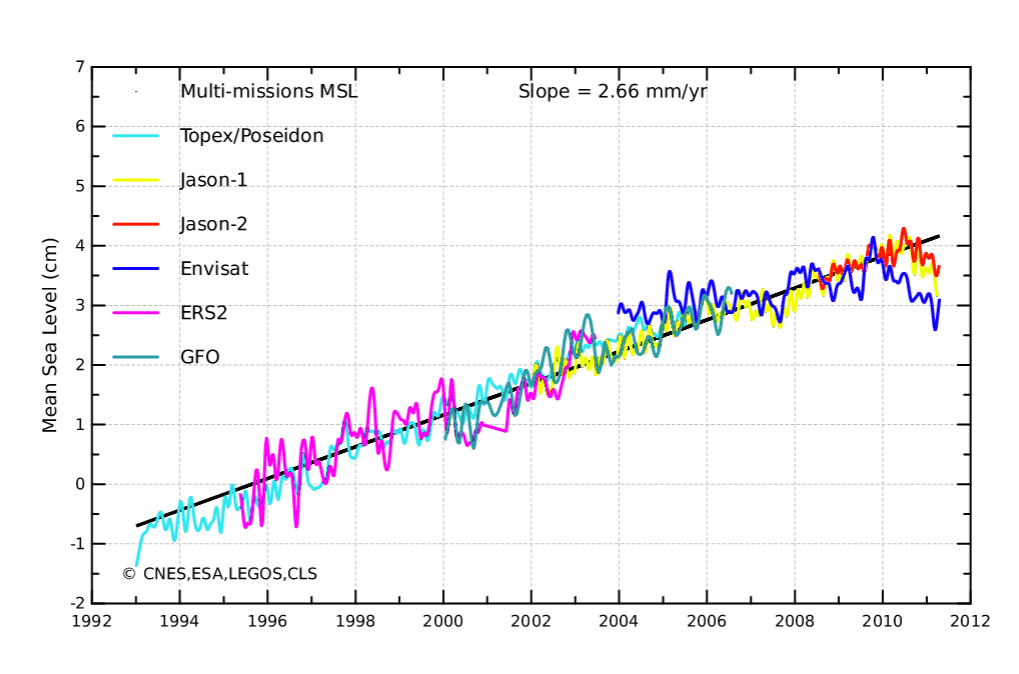
Hiding The Decline In Sea Level
By Steven Goddard | June 19, 2011
When warmists don’t like data, they simply throw it out – or hide it best they can. A great example is the Aviso “multi-mission” sea level graph, which purports to support the idea that sea level is rising almost 3 mm/year.
 http://www.aviso.oceanobs.com/

But if you look closely at the graph, you can see that the most sophisticated satellite (Envisat) has been painted an almost invisible shade of light yellow.
Below, I hue shifted the same graph, and it becomes clear why they did this trickery. There has been essentially no sea level rise for the last seven years.
Clinging to the Nuclear Option
A Reckless Denial of Reality
By RUDI H. NUSSBAUM | CounterPunch | May 30, 2011
The national organization Physicians for Social Responsibility (PSR), committed to protecting public health, demands the de-commissioning of all currently operating nuclear plants in the US and urges members of Congress to refuse to subsidize the construction of new ones with loan guarantees and liability insurance. Why? Here is the scientific/common sense justification for such an uncompromising position:
1. After the accident at the Three Mile Island (TMI) plant, the official Columbia U. study found no increased health effects among the surrounding population, consistent with the officially accepted exposure levels as estimated by the TMI plant operators and applying the internationally accepted radiation risk factors, derived from the long-term follow-up of the externally exposed A-bomb survivors. Contradicting these findings, a subsequent study by Wing et al found statistically significant excess cancers. These cancers have affected the lives of real persons. Yet, Wing’s results were angrily dismissed by the radiation establishment and government health agencies because risk assessments, based on “current radiological science,” precluded that the officially accepted, very low levels of population exposures (doses) released from the TMI reactor could induce the observed excess cancers. The possibility that combining flawed dose estimates with flawed risk models could predict flawed numbers of cancers that might be off by several orders of magnitude (factors of ten), was never considered by the Columbia U. investigators.
Following a tradition illustrated nearly 400 years ago by Gallileo’s fate, accepted beliefs and supporting theoretical models, combined with vested interests, trumped observation. Questioning assumptions in adopted radiobiological models and radiation risk assessments would be equivalent to heresy.
2. All over the former Soviet Union increased incidence of cancers and a multiplicity of other serious health detriment, associated with varying levels of environmental radioactivity from the Chernobyl disaster, have been documented by clinical reports and public health statistics. Until recently, the majority of those studies, however, could only be published in Russian scientific/medical journals and these were arrogantly ignored by the Western radiation health establishment. Instead, the nuclear technology promoting United Nation’s (UN) agency: International Atomic Energy Agency (IAEA) (the World Health Organization (WHO) is not permitted to conduct independent studies on radiation health) published report after report with estimated numbers of Chernobyl radiation victims that are orders of magnitude smaller than those observed and documented in the recently published compendium of the Russian data in English (Yablokov et al., Annals of the NY Academy of Sciences, 2009, usefully summarized by the German equivalent of PSR). The UN Scientific Committee on the Effects of Atomic Radiation (UNSCEAR) (and the WHO) had accepted IAEA assertions of very low numbers of radiation victims, purportedly based on the world’s most reliable current radiobiological and radiation risk models. Thus, mainstream radiation health scientists proclaim that the variously documented large numbers of radiation-associated health effects after the Chernobyl catastrophe in the former Soviet Union “cannot be caused” by radiation, rather they must be the result of psychosomatic traumas.
Similarly, in far away Western European countries for which UNSCEAR had estimated very low fallout doses after the Chernobyl explosion, a multitude of excess health effects have been reported in refereed medical/scientific journals, such as neo-natal mortality, Down’s syndrome or lowering of child IQ. However, mainstream radiation regulating and protection agencies, quoting the IAEA/WHO reports, deny any causal relationship between Chernobyl fallout and most of those observations. Vested political and financial interests, cherished theoretical models, mixed with intolerable arrogance, again trump reality.
3. Several years ago, the German government commissioned a team of prestigious government-employed health scientists to design a state-of-the-art study of children <5 years who lived in the proximity of any of the 16 German normally operating nuclear power reactors. Presumably, the study was meant to assuage with maximum credibility the continuing citizens’ concerns about observed childhood leukemia clusters around some of these reactors. Therefore, to my knowledge, it is the only government-sponsored radiation study ever that was designed with full input from and oversight by an independent scientific commission, including several members who had publicly supported the citizens’ concerns. Contrary to their expectations, the government scientists found irrefutable evidence that for <5 year old children there exists an association between residence within 10 km of any of these reactors and a more than doubling of risk for contracting leukemia or other cancers. This amazing finding caused quite a stir in the German media (and remains underreported and unacknowledged in the US), but it has never been credibly refuted. Some defensive (“ecologic”) studies with negative outcomes around power reactors in France and England claim to have cast doubt on the German results, but critical analysis of their data shows them to lack the necessary statistical power (i.e. sensitivity to detect an effect) to invalidate the German findings. Desperate for an “out,” the government researchers, the health agencies involved and the German government then declared these excess cases of early childhood leukemia and cancers in the proximity of nuclear plants to be “inexplicable” at this time. They claim that according to “currently accepted radiobiological models” the initiation of these excess malignancies would require levels of radioactive emissions to be three orders of magnitude larger (1,000 times) than what the reactor operators claimed to have been released. However, (1) officially accepted radiation risk factors do not take into account the extreme radio-sensitivity of the developing fetus and of very young children (R.H. Nussbaum and I. Fairlie).
Also, (2) the officially assumed levels of radioactive emissions ignored, e.g., large releases of radioactive Noble Gases (e.g. Krypton) and of Tritium (radioactive hydrogen). Both of these radioisotopes can easily enter the human body via the food chain. Equally important is the fact (3) that the traditional measure of radiation exposure, the concept of dose (absorbed energy averaged over a unit mass of exposed human tissue), which is a fundamental macroscopic concept in current radiation risk estimates, is clearly inadequate to describe a variety of known injurious microscopic cellular/molecular mechanisms that can be triggered, in particular, by internally lodged radioactivity.
Those who deny or deceptively play down the catastrophic threats to public health from all phases of the nuclear power cycle, from mining to the lack of any proven solution to permanent and safe disposal of very long-term deadly spent nuclear fuel, recklessly ignore the medical/scientific lessons we should have learned from current and previous nuclear accidents. The international radiation health science establishments, such as IAEA or ICRP, many of whose members are solidly enmeshed with nuclear arms and nuclear energy production, have for decades deliberately ignored observed detriment from radioactive emissions. Their estimates of the public health impact from environmental radioactivity are based on partially outdated and flawed theoretical models that had been developed decades ago to quantify the effects of exposures to external radiation, such as those suffered by the Japanese A-bomb survivors. In agencies that are mandated to protect public health a mindset that denies reality is intolerable.
In addition to unacceptable long lasting effects on public health, even if operating normally (see section 3), nuclear energy technology can only be financed by taxpayers worldwide because private capital considers it too risky and refuses to underwrite it. The nuclear power industry holds citizens hostage to protect its profits. The industry’s safety claims and its new marketing gimmick of modular design reactors are largely deceptive, since it has nothing to offer in terms of safe disposal of spent nuclear fuel rods.
It is particularly tragic that the current Japanese population is again a study cohort for the devastating effects of a very different mix of environmental radioactive contamination.
Rudi H. Nussbaum is a Professor emeritus of Physics and Environmental Sciences at Portland State University.
TEPCO now confirms nuclear meltdown in Fukushima reactor No. 1
By Mike Adams | NaturalNews | May 12, 2011
TEPCO has now publicly admitted it wasn’t telling the truth about the severity of the damage to Fukushima reactor No. 1. We’re now being told what we’ve suspected all along — that nuclear fuel rods in that reactor are totally exposed and have suffered a nuclear meltdown, releasing vast amounts of radiation comparable to Chernobyl. As Bloomberg now reports, the water level in reactor No. 4 is one meter below the fuel assembly itself. This means, of course, that the water isn’t high enough to cover the fuel rods, which is why those fuel rods have suffered a nuclear meltdown. (http://www.bloomberg.com/news/2011-…)
The Associated Press is also reporting that “other fuel has slumped to the bottom of the pressure vessel and is thought to be covered in water.” This statement is astonishing all by itself because it means the fuel rods were in a total meltdown hot enough to cause their metal containment cylinders to “slump” and melt their way down to the lower levels of the coolant pools. Notably, AP carefully avoids using the term “melt” and instead says the fuel rods “slumped.” This is all part of the AP’s determined downplaying of the Fukushima catastrophe (see below).
Not surprisingly, as AP now reports, “The findings also indicate a greater-than-expected leak in that vessel.” But the laws of nuclear physics don’t care what you “expect,” you see. They don’t care about media spin or power company B.S. The laws of physics simply follow their natural course, regardless of what you hope they do.
And in the case of Fukushima, the laws of physics led directly to a core fuel meltdown that now even the mainstream media cannot deny (although they still aren’t calling it a “nuclear meltdown”). As AP reports:
Nuclear Industrial and Safety Agency officials said the new data indicates that it is likely that partially melted fuel had fallen to the bottom of the pressurized vessel that holds the reactor core together and possibly leached down into the drywell soon after the March 11 quake and tsunami that struck Japan’s northeastern coast.
Undeniable meltdown
What AP is describing, of course, is a nuclear meltdown. It doesn’t get any more obvious than this: The fuel reached melting temperature and melted down. Along with this, there would have had to be a massive release of radiation into the containment vessel, which just happens to have numerous holes in it that allow highly radioactive water to leak directly into the environment. No wonder TEPCO discovered its radiation detectors had all maxed out there and become non-functional. No wonder TEPCO had to selectively stop reporting radiation releases — it was in the middle of a Chernobyl-like core fuel meltdown!
The Telegraph in the UK is refreshingly printing the truth on this story: “One of the reactors at the crippled Fukushima Daiichi power plant did suffer a nuclear meltdown, Japanese officials admitted for the first time today, describing a pool of molten fuel at the bottom of the reactor’s containment vessel.” (http://www.telegraph.co.uk/news/wor…)
But the mainstream media in the U.S. has obviously been instructed by the White House to avoid using the term “nuclear meltdown” in describing what happened at Fukushima. There is a rather blatant downplaying of the facts going on behind the scenes at the media giants.
Some of this spin can only be called blatant lies, by the way. In the same story linked above, AP claims “Unit 4 contained no fuel rods at the time of the earthquake…”
Huh? No fuel rods in reactor No. 4? This what on Earth is this video showing? http://www.youtube.com/watch?v=jKHW…
I love how the media admits it has been misreporting the truth of the situation all along, and then it comes up with new fairytale spin stories in practically the same sentence. They might as well just report, “There was no nuclear fuel in Fukushima at the time of the tsunami, and that’s why governments have stopped monitoring radiation levels.”
TEPCO once again meets Murphy’s Law
In any case, this sudden revelation that reactor No. 4 has already experienced a nuclear fuel meltdown is, not surprisingly, causing considerable setbacks to TEPCO’s plan to have the whole facility deactivated by Christmas. Just as NaturalNews publicly predicted, the Christmas shutdown plan was little more than a combination of fantasyland thinking and industry spin.
“What this means is this is probably going to be a much more difficult cleanup than they originally planned for,” said particle physicist Paul Padley in a Bloomberg story (http://www.bloomberg.com/news/2011-…). The government and Tepco “have consistently appeared to be underestimating the severity of the situation.”
And that’s the story of modern science: Arrogant in its confidence over the laws of nature, yet utterly dishonest in reporting the truth when its Tower of Babel crumbles to the ground. No wonder the reputation of the conventional scientific community continues to plummet as people realize just how dangerous these people really are.
Sources for this story include:
http://hosted.ap.org/dynamic/storie…
Featured Video

Can the U.S. Afford to Annihilate Iran?
or go to
Aletho News Archives – Video-Images
Book Review
The Genetic Deception — now in paperback (Second Edition)
Lies are Unbekoming | October 2, 2026
The genes the field promised were never there.
The genetic story of disease is a cover story.
The twenty-first century runs on it. Paediatric clinics. Cancer centres. Forensic laboratories. Family-planning counsel. It is used to explain illness, to assign blame, to foreclose questions. It protects the industries whose products and practices are what actually caused the harm.
It isn’t true.
In 2010, Jonathan Latham and Allison Wilson looked at over seven hundred genome-wide association studies covering some eighty common diseases. The genes the field had promised were not there. The field invented a term, “missing heritability”, to explain the absence, and has quietly worked to bury the finding ever since.
The Genetic Deception is a book about what Latham and Wilson found. What the field did with it. And what the public was told instead. … continue
Blog Roll
 Aletho News
- Are Europe’s Smallest Nations Dragging the Continent into War?
- EU draws up contingency plans for possible Merz exit
- G7 caves to US blackmail, announces ‘massive’ release of diesel reserves
- Reporting of the RAF Fairford arrests blows the idea of a ‘free press’ out of the water
- US increasing Middle East military buildup – AP
- Flydubai scenario: Netanyahu’s plot to drag US to war with Iran, stay in power
- The Genetic Deception — now in paperback (Second Edition)
- Can the U.S. Afford to Annihilate Iran? /Seyed M. Marandi
- Elmo Sold mRNA Jabs to Your Toddler. Now They Are “Off-Label.”
- British state targets Palestine Action with yet another crooked trial
- If Americans Knew
- New Google Maps images reveal massive scale of devastation in Gaza
- Jewish supremacy, anti-Palestinian bigotry on display in Israel – Daily Update
- Israeli Soldiers Abduct At Least 22 Across Occupied West Bank
- Eight Palestinians Killed in Israeli Attacks on Gaza
- Israeli former leaders and security chiefs threaten legal action over ‘Jewish terrorism’
- Israel map in LA Times ad includes all land from the river to the sea
- Inside Lebanon’s 200-page dossier on Israeli war crimes
- Flydubai, genocide, settler violence, Trump abuse of power to deport – Daily Update
- Counting Antisemitic Incidents: What the ADL Audit Reveals — and Obscures
- Mamdani releases plan to combat antisemitism and hate crimes in New York City
- No Tricks Zone
- Green Energy Debacle: German Expert Professor Fritz Vahrenholt Warns Of Severe Economic And Social Consequences
- Two More Paleo Reconstructions Affirm Meters-Higher Sea Levels Across Ireland, Brazil 7000-6000 Years Ago
- New Study: Earth And Venus Surface Warmth Largely Explained By Convection And Lapse Rate, Not CO2 Or Radiation
- 2025 Nature Paper Claiming Worsening Global Drought Gets RETRACTED …Heavily Flawed
- New Study: ‘Global Drought Shows No Detectable Recent Acceleration Under Climate Warming’
- Economic Masterminds: German Socialists Suggest Taxing Productivity Gains Stemming From Using AI
- The South China Sea Has Not Been Cooperating With The Climate Change Narrative
- Energy Crisis: Germany Enters Heating Season With Historically Low Gas Reserve Fill Levels
- New Study: The Antarctic Ice Sheet Gained Mass From 2020-2024 Due To Staggering Snow And Ice Accumulation
- Study: Ocean Heating Rates From Thousands Of Years Ago ‘Dwarf’ Modern Ocean Heating Rates


