Running from Climate Change: The Obama Administration’s Changing Rhetoric
By Graciela Kincaid | Climate Development Laboratory | December 22, 2011
At both President Obama’s “job speech” to the Joint Session of Congress and his speech at the Clinton Global Initiative last September, one issue was shockingly absent from the agenda: climate change. The term was scarcely mentioned in either speech, and more surprisingly, the administration also failed to deliver on the more popular message of clean energy. For all the talk of job creation and economic growth, the role of green jobs and a potential transition to a green economy were missing from the dialogue. In fact, lately the green jobs issue has taken a serious hit because green innovation has not been proven to create enough immediate “boots, jeans and helmets” jobs.
The phrases “climate change” and “global warming” have become all but taboo on Capital Hill. These terms are stunningly absent from the political arena, and have been since 2010. As Senator Sheldon Whitehouse (D-RI) said on October 13th, “It has become no longer politically correct in certain circles in Washington to speak about climate change or carbon pollution or how carbon pollution is causing our climate to change.” Why?
As part of a Brown University research project this summer, I conducted a comparative analysis of the Obama administration’s use of climate change and clean energy rhetoric, and how they were changing. We examined 1,606 speeches by administration officials over three and a half years (January 2008-July 2011), assembling keyword counts from a campaign speech database and the White House Speeches and Remarks Archive. Rhetoric was sorted by categories: “climate” and “energy.”
The results were dramatic:

The ratio of the administration’s usage of “climate change” versus “energy” has changed significantly since Obama’s 2008 campaign days. “Climate change” rhetoric saw its brief heyday in 2009, thanks to the popularity of the President, the streamlined message of unified party government, and the hope for legislative action before the United Nations climate change negotiations in Copenhagen. Climate change rhetoric was most prominent during 2009, when it was mentioned 246 times and the months with highest frequency were April and November. Interestingly, the only point at which these two levels were equivalent was in November of 2009–the month the Copenhagen Conference began. Since then, the ratio of energy to climate rhetoric has steadily increased, and the phrase “climate change” is routinely omitted in favor of clean energy-related diction.
The difference in magnitude for the two classes of rhetoric usage is striking. The overall ratio for this 3.5-year period is 7.6:1; energy is mentioned over seven times for each mention of climate change. The ratio of energy to climate rhetoric usage was 9.6 in 2008, 5.0 in 2009, 10.6 in 2010, and 14.6 in the first half of 2011. These ratios climbed since President Obama took office–tripling between 2009 and 2011–revealing the administration’s urgency to outpace the depressing “climate change” imagery with the more upbeat promise of “clean energy.” Noteworthy are the State of the Union speeches, meant to be indicators of the president’s agenda. These speeches regularly favor energy to climate change messages. In 2009, climate change was mentioned only once while energy came up 14 times; in 2010, climate change was mentioned three times to energy’s 15; and in 2011 while energy was mentioned 9 times, climate change was not mentioned at all.
What has caused this significant shift in rhetoric? Climate change is apparently politically tainted, a doomsday issue, and the administration has re-branded it under a clean energy and energy independence discourse. The administration has clearly responded to increasing hostility (on one end of the political spectrum) towards the effort to address climate change, scrubbing out words like global warming, cap-and-trade, and climate change from agency communication. Surveys are showing drops in public concern for the issue, and since 2010 House Republicans have directed an increasingly right-wing agenda against it, striking down climate change legislation and funding at every opportunity. Climate change is a hard sell amidst the economic downturn, and the environment always loses to job concerns. By contrast, the push for clean energy seems bipartisan, positive, and more difficult to publicly oppose. The political calculus seems clear: job creation, national security, and oil independence all seem to be credible, patriotic, and appealing reasons to promote the green sector.
As the calendars flip once again into campaign season, we may see a different strategy from the Obama administration as it seeks to distinguish itself from its Republican challengers. We have already seen more proactive rhetoric from Obama, with digs such as this at Governor Rick Perry: “I mean, has anybody been watching the debates lately? You’ve got a governor whose state is on fire denying climate change.” However, the UNFCCC climate change negotiations in Durban this month saw little effort by the president to shift attention to the issue—Obama chose to send Secretary of State Hillary Clinton to Busan, Korea for a conference on foreign aid instead of to South Africa for COP17. The president’s intentions are revealed by his weak rhetoric and avoidance of anything tainted with the terms climate change or global warming.
Climate FAIL from A to Z presented at Durban
By Marc Morano – Climate Depot
INTRODUCTION:
Many of the proponents of man-made global warming are now claiming that climate change is worse than they predicted. According to an October 18, 2011 Daily Climate article, global warming activists claim that the “evidence builds that scientists underplay climate impacts” and “if anything, global climate disruption is likely to be significantly worse than has been suggested.”
But this exclusive Climate Depot exhaustive A-Z Climate Reality Check report on the scientific reality of the failure of man-made global warming shatters any such illusions that the climate is “worse than we thought.” As the real world evidence mounts that global warming claims are failing, the climate activists have ramped up predictions of future climate change impacts to declare that it is “worse than we thought.” But a prediction or projection of 50-100 years into the future is not “evidence.” Recent scientific data and developments reveal that Mother Nature is playing a cruel joke on the promoters of man-made climate fears.
The scientific reality is that on virtually every claim — from A-Z — the claims of the promoters of man-made climate fears are failing, and in many instances the claims are moving in the opposite direction. The global warming movement is suffering the scientific death of a thousand cuts. This Climate Depot special report categorizes and indexes the full range of climate developments in a handy A-Z reference guide. The A-Z report includes key facts, peer-reviewed studies and the latest data and developments with links for further reading, on an exhaustive range of man-made global warming claims.
The Antarctic sea ice extent has been at or near record extent in the past few summers and the ice is expanding, the Arctic has rebounded in recent years since the low point in 2007, polar bears are thriving, sea level is not showing acceleration and is actually dropping, Cholera and Malaria are failing to follow global warming predictions, Mount Kilimanjaro melt fears are being made a mockery by gains in snow cover, global temperatures have been holding steady for a decade or more and many scientists are predicting global cooling is ahead, deaths due to extreme weather are radically declining, global tropical cyclone activity is near historic lows, the frequency of major U.S. hurricanes has declined, the oceans are missing their predicted heat content, big tornados have dramatically declined since the 1970s, droughts are not historically unusual nor caused by mankind, there is no evidence we are currently having unusual weather, scandals continue to rock the climate fear movement, the UN IPCC has been exposed as being a hotbed of environmental activists, former Vice President Al Gore is now under siege by his fellow global warming activists for attempting to link every bad weather event to man-made global warming and scientists from around the world continue to dissent from man-made climate fears at a rapid pace.
Climate Depot’s new A-Z report reveals that the great man-made global warming catastrophe that was predicted – has been cancelled.
In addition to the scientific collapse of anthropogenic global warming fears, the political collapse has been just as stunning. President Obama has been criticized by former Vice President Al Gore for failing to do enough when it comes to climate change legislation. The now defunct and “scientifically meaningless” Congressional climate bill failed because the Democrats realized it was political suicide. The new political expediency in Washington is global warming skepticism. The UN global warming treaty process lay in shambles. See: Democrat Walter Russell Mead analyzes Gore: Gore steered the green movement ‘into a tsunami of defeat that…will loom as one of the greatest failures of civil society in all time.’
Proponents of anthropogenic climate change have been reduced to making outlandish claims of a mythical 97% or 98% consensus. See: Global Warming: A ’98% Consensus Of Nothing’: ‘Only shameless activists or statistically ignorant claim that survey of 77 anonymous scientists’ is proof of 98% ‘consensus’. Once esteemed science groups like the National Academy of Sciences (NAS) have now corrupted and have used taxpayer money to lobby for the passage of climate bills. See: Ralph Cicerone’s Shame: NAS Urges Carbon Tax, Becomes Advocacy Group — ‘political appointees heading politicized scientific institutions that are virtually 100% dependent on gov’t funding’ & NAS Pres. Ralph Cicerone Turns Science Org. into political advocacy group: $6 million NAS study is used to lobby for global warming bill & MIT’s Richard Lindzen: ‘Cicerone of NAS is saying that regardless of evidence the answer is predetermined. If gov’t wants carbon control, that is the answer that the NAS will provide’
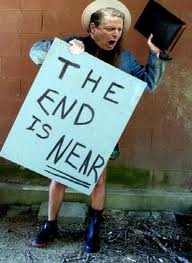 Movement ‘was bound to fail’
A movement that had Al Gore – one of the most divisive political figures – as the face of the movement, was bound to fail. A movement that utilized the scandal ridden United Nations – which is massively distrusted by the American people – as the repository of science, was doomed to fail. Gore and the UN IPCC are now reduced to pointing to every storm, flood, hurricane or tornado as proof of man-made global warming. The UN has been reduced to blaming man-made global warming for prostitution. See: Climate Astrology — ‘It Has Been Foretold’ of Extreme Weather: ‘UN IPCC science has a status similar to interpretations of Nostradamus and the Mayan calendars’ & Climate Astrology borrows from the past: ‘Before That Witch Moved Into The Neighborhood, We Never Had Bad Weather Or Disease’
But a scientific moment of clarity is now prevailing: The UN and the U.S. Congress do not have the power to legislate, tax or regulate the weather. See: Princeton University Physicist Dr. Will Happer: ‘The idea that Congress can stop climate change is just hilarious’ – Warns of ‘climate change cult’ – July 8, 2009 – Prominent scientists continue to challenge the alleged “consensus.” See: Nobel Prize-Winning Physicist Who Endorsed Obama Dissents! Dr. Ivar Giaever Resigns from American Physical Society Over Group’s Promotion of Man-Made Global Warming
‘Climate change is governed by hundreds of factors, or variables’
The idea that CO2, a trace essential gas in the atmosphere that humans exhale from their mouths, is the main climate driver is now being challenged by peer-reviewed studies, data and scientists from around the globe. It is not simply, the sun or CO2 when looking at global temperatures, it is the Sun, volcanoes, tilt of the Earth’s axis, water vapor, methane, clouds, ocean cycles, plate tectonics, albedo, atmospheric dust, Atmospheric Circulation, cosmic rays, particulates like Carbon Soot, forests and land use, etc. Climate change is governed by hundreds of factors, or variables, not just CO2.
Professor Emeritus of Biogeography Philip Stott of the University of London explained the crux of the entire global warming debate when he rebutted the notion that CO2 is the main climate driver.
“As I have said, over and over again, the fundamental point has always been this: climate change is governed by hundreds of factors, or variables, and the very idea that we can manage climate change predictably by understanding and manipulating at the margins one politically-selected factor (CO2), is as misguided as it gets,” Stott wrote.
Even the global warming activists at RealClimate.org admitted to this key climate reality in a September 20, 2008 article. “The actual temperature rise is an emergent property resulting from interactions among hundreds of factors,” RealClimate.org explained.
The global warming movement continues to lose scientists, many formerly with the UN IPCC. See: More Than 1000 International Scientists Dissent Over Man-Made Global Warming Claims – Challenge UN IPCC & Gore
The future does not look bright for global warming activists as more scandals continue to rock the movement. See: Climate Depot’s Exclusive Round Up of Climategate 2.0 – Read about the most comprehensive report on the latest global warming scandal – Even warmists are lamenting that Climate 2.o may be ‘devastating’: ‘These [emails] sound worse than I thought at first – their impact will be devastating’
MIT climate scientist Dr. Richard Lindzen has observed that “Ordinary people see through man-made climate fears — but educated people are very vulnerable.”
Full PDF report is available here.
Climategate 2.0: “Scientists” at the heart of the global warming movement exposed as doubting their claims
Aletho News | November 22, 2011
Early today FOIA.org released a zip file of 5,000 additional emails similar to those released two years ago in November 2009 and coined Climategate. All of the central characters are here including Michael Mann, Phil Jones, Ben Santer, Tom Wigley, Kevin Trenberth and Keith Briffa.
Select examples:
<1939> Thorne/MetO:
Observations do not show rising temperatures throughout the tropical troposphere unless you accept one single study and approach and discount a wealth of others. This is just downright dangerous. We need to communicate the uncertainty and be honest. Phil, hopefully we can find time to discuss these further if necessary […]
<3066> Thorne:
I also think the science is being manipulated to put a political spin on it which for all our sakes might not be too clever in the long run.
<1611> Carter:
It seems that a few people have a very strong say, and no matter how much talking goes on beforehand, the big decisions are made at the eleventh hour by a select core group.
<2884> Wigley:
Mike, The Figure you sent is very deceptive […] there have been a number of dishonest presentations of model results by individual authors and by IPCC […]
<4755> Overpeck:
The trick may be to decide on the main message and use that to guid[e] what’s included and what is left out.
<3456> Overpeck:
I agree w/ Susan [Solomon] that we should try to put more in the bullet about “Subsequent evidence” […] Need to convince readers that there really has been an increase in knowledge – more evidence. What is it?
<3373> Bradley:
I’m sure you agree–the Mann/Jones GRL paper was truly pathetic and should never have been published. I don’t want to be associated with that 2000 year “reconstruction”.
<0310> Warren:
The results for 400 ppm stabilization look odd in many cases […] As it stands we’ll have to delete the results from the paper if it is to be published.
<1682> Wils:
[2007] What if climate change appears to be just mainly a multidecadal natural fluctuation?
<5315> Jenkins/MetO:
would you agree that there is no convincing evidence for kilimanjaro glacier melt being due to recent warming (let alone man-made warming)?
<2292> Jones:
[tropical glaciers] There is a small problem though with their retreat. They have retreated a lot in the last 20 years yet the MSU2LT data would suggest that temperatures haven’t increased at these levels.
<1788> Jones:
There shouldn’t be someone else at UEA with different views [from “recent extreme weather is due to global warming”] – at least not a climatologist.
<4693> Crowley:
I am not convinced that the “truth” is always worth reaching if it is at the cost of damaged personal relationships
<2733> Crowley:
Phil, thanks for your thoughts – guarantee there will be no dirty laundry in the open.
<2095> Steig:
He’s skeptical that the warming is as great as we show in East Antarctica — he thinks the “right” answer is more like our detrended results in the supplementary text. I cannot argue he is wrong.
<0953> Jones:
This will reduce the 1940-1970 cooling in NH temps. Explaining the cooling with sulphates won’t be quite as necessary.
<4944> Haimberger:
It is interesting to see the lower tropospheric warming minimum in the tropics in all three plots, which I cannot explain. I believe it is spurious but it is remarkably robust against my adjustment efforts.
<4262> Klein/LLNL:
Does anybody have an explanation why there is a relative minimum (and some negative trends) between 500 and 700 hPa? No models with significant surface warming do this
<0896> Jones:
I think the urban-related warming should be smaller than this, but I can’t think of a good way to argue this. I am hopeful of finding something in the data that makes by their Figure 3.
<0044> Rean:
[…] we found the [urban warming] effect is pretty big in the areas we analyzed. This is a little different from the result you obtained in 1990.
[…] We have published a few of papers on this topic in Chinese. Unfortunately, when we sent our comments to the IPCC AR4, they were mostly rejected.<4789> Wigley:
there are some nitpicky jerks who have criticized the Jones et al. data sets – we don’t want one of those [EPRI/California Energy Commission meeting].
Jones:
The jerk you mention was called Good(e)rich who found urban warming at all Californian sites.
<1601> Jones:
I think China is one of the few places that are affected [urban heat]. The paper shows that London and Vienna (and also New York) are not affected in the 20th century.
<2939> Jones:
[…] every effort has been made to use data that are either rural and/or where the urbanization effect has been removed as well as possible by statistical means. There are 3 groups that have done this independently (CRU, NOAA and GISS), and they end up with essentially the same results.
[…] Furthermore, the oceans have warmed at a rate consistent with the land. There is no urban effect there.<1583> Wilson:
any method that incorporates all forms of uncertainty and error will undoubtedly result in reconstructions with wider error bars than we currently have. These many be more honest, but may not be too helpful for model comparison attribution studies. We need to be careful with the wording I think.
<4165> Jones:
what he [Zwiers] has done comes to a different conclusion than Caspar and Gene! I reckon this can be saved by careful wording.
<3994> Mitchell/MetO
Is the PCA approach robust? Are the results statistically significant? It seems to me that in the case of MBH the answer in each is no
<4369> Cook:
I am afraid that Mike is defending something that increasingly can not be defended. He is investing too much personal stuff in this and not letting the science move ahead.
<5055> Cook:
One problem is that he [Mann] will be using the RegEM method, which provides no better diagnostics (e.g. betas) than his original method. So we will still not know where his estimates are coming from.
<0999> Hulme:
My work is as Director of the national centre for climate change research, a job which requires me to translate my Christian belief about stewardship of God’s planet into research and action.
<3653> Hulme:
He [another Met scientist] is a Christian and would talk authoritatively about the state of climate science from the sort of standpoint you are wanting.
<3111> Watson/UEA:
I’d agree probably 10 years away to go from weather forecasting to ~ annual scale. But the “big climate picture” includes ocean feedbacks on all time scales, carbon and other elemental cycles, etc. and it has to be several decades before that is sorted out I would think. So I would guess that it will not be models or theory, but observation that will provide the answer to the question of how the climate will change in many decades time.
<5131> Shukla/IGES:
[“Future of the IPCC”, 2008] It is inconceivable that policymakers will be willing to make billion-and trillion-dollar decisions for adaptation to the projected regional climate change based on models that do not even describe and simulate the processes that are the building blocks of climate variability.
<2423> Lanzante/NOAA:
While perhaps one could designate some subset of models as being poorer in a lot of areas, there probably never will be a single universally superior model or set of models. We should keep in mind that the climate system is complex, so that it is difficult, if not impossible to define a metric that captures the breath of physical processes relevant to even a narrow area of focus.
<1982> Santer:
there is no individual model that does well in all of the SST and water vapor tests we’ve applied.
<0850> Barnett:
[IPCC AR5 models] clearly, some tuning or very good luck involved. I doubt the modeling world will be able to get away with this much longer
<4443> Jones:
Basic problem is that all models are wrong – not got enough middle and low level clouds.
<4085> Jones:
GKSS is just one model and it is a model, so there is no need for it to be correct.
<2440> Jones:
I’ve been told that IPCC is above national FOI Acts. One way to cover yourself and all those working in AR5 would be to delete all emails at the end of the process
<2094> Briffa:
UEA does not hold the very vast majority of mine [potentially FOIable emails] anyway which I copied onto private storage after the completion of the IPCC task.
<2459> Osborn:
Keith and I have just searched through our emails for anything containing “David Holland”. Everything we found was cc’d to you and/or Dave Palmer, which you’ll already have.
<1473> McGarvie/UEA Director of Faculty Administration:
As we are testing EIR with the other climate audit org request relating to communications with other academic colleagues, I think that we would weaken that case if we supplied the information in this case. So I would suggest that we decline this one (at the very end of the time period)
<1577> Jones:
[FOI, temperature data] Any work we have done in the past is done on the back of the research grants we get – and has to be well hidden. I’ve discussed this with the main funder (US Dept of Energy) in the past and they are happy about not releasing the original station data.
FOIA 2011 gives us this commentary which should shed light on their motive in leaking these emails:
Over 2.5 billion people live on less than $2 a day.
Every day nearly 16.000 children die from hunger and related causes.
One dollar can save a life” — the opposite must also be true.
Poverty is a death sentence.
Nations must invest $37 trillion in energy technologies by 2030 to stabilize greenhouse gas emissions at sustainable levels.
Today’s decisions should be based on all the information we can get, not on hiding the decline.
Stay tuned for analysis of these and many more damning emails.
Why I want Mike Mann’s Emails
By Dr. David Schnare | Watts Up With That | November 14, 2011
N.B., Dr. Schnare is the lead attorney in the UVA-Mann email case.
This week Nature Magazine published an editorial suggesting that “access to personal correspondence is a freedom too far” and that Michael Mann, whom they favorably compare to Galileo, should have his emails, written and received while he was a young professor at the University of Virginia, protected from public release on the core basis that to do otherwise would “chill” the work of scientists and academics. I note Galileo was forced to keep his work private. Had he the opportunity, he would have published it far and wide. Mann is quite the opposite. He wants to keep secrets and let no one know what he did and how he did it.
Nature, unfamiliar with the facts, law and both academic and university policy as applies in this case, conflates too many issues and misunderstands the transparency questions we raise.
The facts of the case include that these emails are more than five years old; that they contain none of the email attachments, no computer code, no data, no draft papers, no draft reports; that the university has already released over 2,000 of them, some academic and some not; that when they were written Mann knew there was no expectation of privacy; that all emails sent or received by a federal addressee are subject to the federal FOIA, and many have already been released; and that nearly 200 of the emails the University refuses to release were released by a whistleblower in England.
That latter group of emails, part of the “Climategate” release, do more than merely suggest Mann engaged in academic improprieties. They show he was a willing participant in efforts to “discriminate against or harass colleagues” and a failure to “respect and defend the free inquiry of associates, even when it leads to findings and conclusions that differ from their own.” Other emails document Mann’s communications were not “conducted professionally and with civility.”
Thus, emails already available to the public demonstrate that Michael Mann failed to comply with the University of Virginia Code of Ethics and the American Association of University Professors Statement on Professional Ethics.
A question, not mine, but asked by many who are interested in the history of this period, is not whether Mann failed to live up to the professional code expected of him. It is to what degree he failed to do so and to what lengths the university will go to hide this misbehavior. If we merely sought to expose Mann’s failure to display full academic professionalism, we would not need these emails. Those already in the public eye are more than sufficient for any such purposes.
I want those emails for a very different reason. Our law center seeks to defend good science and proper governmental behavior, and conversely to expose the converse. Without access to those kinds of emails, and, notably, research records themselves, it is not possible for anyone to adequately credit good behavior and expose bad behavior. This is one of two reasons we prosecute this case. It is the core purpose of a freedom of information act. Because the public paid for this work and owns this university, it has not merely a right to determine whether the faculty are doing their jobs properly; it has a duty to do so. This is not about peer review; it is about citizens’ acting as the sovereign and taking any appropriate step necessary to ensure those given stewardship over an arm of the Commonwealth are faithfully performing.
The second reason we bring this case is to defend science and the scientific process. Anyone who has taken a high school science laboratory course knows that the research or experimental process begins with recording what was done and what was observed. As UVA explains in its Research Policy RES-002, “The retention of accurately recorded and retrievable results is of the utmost importance in the conduct of research.” Why? “To enable an investigator to reproduce the steps taken.”
Currently public emails show Mann was unable to provide even his close colleagues data he used in some of his papers and could not remember which data sets he used. A query to UVA shows the university, who owns “the data and notebooks resulting from sponsored research,” had no copy of Mann’s logbooks and never gave him permission to take them with him when he left UVA. The university refused to inquire within Mann’s department as to whether anyone there knew whether he even kept a research logbook, so it’s impossible for me to know whether he stole the logbook or just never prepared one in the first place.
The emails ATI seeks are all that appears to be left of a history of what he did and how. Absent access to those emails, anyone seeking to duplicate his work, using the exact same data and methods, has no way to do so. That is in direct conflict with both good science and the UVA research policy.
Nor should access to these kind of emails “chill” the academic process.
As a former academic scientist, I understand the need and desire to keep close the research work while it is underway. Both I and the university have a proprietary interest in that work, while it is ongoing. Once completed, however, I have a duty to share not only the data and methods with the academic community, I also have a duty to share the mistakes, the blind alleys, the bad guesses and the work and theories abandoned.
Science advances knowledge by demonstrating that a theory is wrong. All the mistakes, blind alleys and bad guesses are valuable, not just to the scientist himself, but to his colleagues. By knowing what did not work, one does more than simply save time. One gains direction. One mistake revealed often opens a vista of other ideas and opportunities. The communications between scientists during a period of research are the grist for the next generation of work. Ask any doctoral candidate or post-doc how important being part of the process is on the direction of their future research. They will tell you that these unpublished communications are as much an important scientific contribution as the final papers themselves. Anyone who wishes to hide those thoughtful discussions hides knowledge.
If anything is “chilling” it is the thought that a neo-Galileo is hiding knowledge.
Featured Video

Can the U.S. Afford to Annihilate Iran?
or go to
Aletho News Archives – Video-Images
Book Review
The Genetic Deception — now in paperback (Second Edition)
Lies are Unbekoming | October 2, 2026
The genes the field promised were never there.
The genetic story of disease is a cover story.
The twenty-first century runs on it. Paediatric clinics. Cancer centres. Forensic laboratories. Family-planning counsel. It is used to explain illness, to assign blame, to foreclose questions. It protects the industries whose products and practices are what actually caused the harm.
It isn’t true.
In 2010, Jonathan Latham and Allison Wilson looked at over seven hundred genome-wide association studies covering some eighty common diseases. The genes the field had promised were not there. The field invented a term, “missing heritability”, to explain the absence, and has quietly worked to bury the finding ever since.
The Genetic Deception is a book about what Latham and Wilson found. What the field did with it. And what the public was told instead. … continue
Blog Roll
 Aletho News
- G7 caves to US blackmail, announces ‘massive’ release of diesel reserves
- Reporting of the RAF Fairford arrests blows the idea of a ‘free press’ out of the water
- US increasing Middle East military buildup – AP
- Flydubai scenario: Netanyahu’s plot to drag US to war with Iran, stay in power
- The Genetic Deception — now in paperback (Second Edition)
- Can the U.S. Afford to Annihilate Iran? /Seyed M. Marandi
- Elmo Sold mRNA Jabs to Your Toddler. Now They Are “Off-Label.”
- British state targets Palestine Action with yet another crooked trial
- Americans are paying the price to preserve Israel’s nuclear hegemony
- Resistance factions are necessary to ensure a permanent US Iraq withdrawal
- If Americans Knew
- New Google Maps images reveal massive scale of devastation in Gaza
- Jewish supremacy, anti-Palestinian bigotry on display in Israel – Daily Update
- Israeli Soldiers Abduct At Least 22 Across Occupied West Bank
- Eight Palestinians Killed in Israeli Attacks on Gaza
- Israeli former leaders and security chiefs threaten legal action over ‘Jewish terrorism’
- Israel map in LA Times ad includes all land from the river to the sea
- Inside Lebanon’s 200-page dossier on Israeli war crimes
- Flydubai, genocide, settler violence, Trump abuse of power to deport – Daily Update
- Counting Antisemitic Incidents: What the ADL Audit Reveals — and Obscures
- Mamdani releases plan to combat antisemitism and hate crimes in New York City
- No Tricks Zone
- Green Energy Debacle: German Expert Professor Fritz Vahrenholt Warns Of Severe Economic And Social Consequences
- Two More Paleo Reconstructions Affirm Meters-Higher Sea Levels Across Ireland, Brazil 7000-6000 Years Ago
- New Study: Earth And Venus Surface Warmth Largely Explained By Convection And Lapse Rate, Not CO2 Or Radiation
- 2025 Nature Paper Claiming Worsening Global Drought Gets RETRACTED …Heavily Flawed
- New Study: ‘Global Drought Shows No Detectable Recent Acceleration Under Climate Warming’
- Economic Masterminds: German Socialists Suggest Taxing Productivity Gains Stemming From Using AI
- The South China Sea Has Not Been Cooperating With The Climate Change Narrative
- Energy Crisis: Germany Enters Heating Season With Historically Low Gas Reserve Fill Levels
- New Study: The Antarctic Ice Sheet Gained Mass From 2020-2024 Due To Staggering Snow And Ice Accumulation
- Study: Ocean Heating Rates From Thousands Of Years Ago ‘Dwarf’ Modern Ocean Heating Rates

