Chernobyl region to be put back under the plow for EU biodiesel mandate
RIA NOVOSTI | November 12, 2010
Ukrainian officials are studying the possibility of growing crops in the 30-km zone of radioactive pollution near the Chernobyl Nuclear Power Plant, the site of the world’s worst nuclear disaster, a popular Russian daily said on Friday.
A number of Ukrainian services and departments are conducting numerous studies to establish “areas that could be used for agriculture, some partially and some in full,” Nezavisimaya Gazeta quoted acting head of the Ukrainian Emergencies Ministry Mykhailo Bolotskykh, as saying.
An explosion at the Chernobyl nuclear power plant in 1986 resulted in highly radioactive fallout in the atmosphere over an extensive area. A 30-kilometer (19-mile) exclusion zone was introduced following the accident.
Vast areas, mainly in the three then-Soviet republics of Ukraine, Belarus and Russia, were contaminated by the fallout from the major nuclear meltdown. Some 200,000 people were relocated after the accident.
The agriculture revival plan, initiated by the European Union, proposes cultivating rapeseed, also known as canola oil and widely seen as the most popular primary product to produce biodiesel, in the contaminated area. Similar plans have earlier been voiced by Belarus, another country severely affected by the Chernobyl disaster.
“This crop has great potential, with the European Union, the U.A.E., Turkey and Pakistan expressing their readiness to buy it from Ukraine. This is really profitable,” a source close to the Ukrainian government told the newspaper.
Ukraine is currently among Europe’s largest rapeseed producers.
“The problem is that rapeseed depletes the soil. It may be grown only as part of a five-year crop rotation cycle. Or, it may be grown on lands which have no agricultural importance,” he said.
The government did not comment on the information.
The paper quotes an expert as saying that scientists have developed mechanisms of rehabilitating nuclear-polluted soil, which include growing certain crops and combining various types of fertilizers.
“Experiments show that… areas where rehabilitation measures were conducted can produce crops with almost normal radionuclide levels, hundreds of times lower than those where such measures were not taken,” the unnamed scientist told Nezavisimaya Gazeta.
But many experts say that any attempt to cultivate crops in Chernobyl is “simply a crime,” saying that many dangerous isotopes buried in soil could be released back into the air and water when the polluted soil is ploughed.
“It is simply a crime – increasing air and water pollution by turning over polluted soil,” a former official with the country’s radiation and ecology watchdog said.
The plan is expected to be officially announced in March 2011, shortly before the 25th anniversary of the Chernobyl disaster.
Weapons of mass destruction labs promote GMO’s under the pretext of fighting ‘global warming’
Friends of the Earth denounces algae biofuel development
By James Cartledge – 10/04/10
Pressure group Friends of the Earth has declared war on the development of new strains of algae and bacteria to produce biofuels. The group released a report last week warning of the dangers that genetically-modified microbes could pose if released into nature.
With warnings of “devastating results” if organisms escape into the oceans, including formation of “large dead zones”, Friends of the Earth demanded a moratorium on work to produce synthetic algae strains.
The group suggested that based on the previous spread of genetically-modified crops in the environment, the public health could be at risk. Friends of the Earth also cast doubt on the efficiency of producing biofuels from algae.
Moratorium
Friends of the Earth Biotechnology Policy Campaigner Eric Hoffman said: “Synthetic microbes have no natural predators, and if they escape they may disrupt ecosystems and harm public health. Our report concludes that the federal government should put a complete moratorium on the release and commercial use of synthetic organisms… Full article
###
Genetically altered trees, plants could help counter global warming
Study evaluates prospects for boosting carbon sequestration from the atmosphere by modifying natural biological processes and deploying novel food and fuel crops
Forests of genetically altered trees and other plants could sequester several billion tons of carbon from the atmosphere each year and so help ameliorate global warming, according to estimates published in the October issue of BioScience.
The study, by researchers at Lawrence Berkeley National Laboratory and Oak Ridge National Laboratory, outlines a variety of strategies for augmenting the processes that plants use to sequester carbon dioxide from the air and convert it into long-lived forms of carbon, first in vegetation and ultimately in soil.
Besides increasing the efficiency of plants’ absorption of light, researchers might be able to genetically alter plants so they send more carbon into their roots–where some may be converted into soil carbon and remain out of circulation for centuries. Other possibilities include altering plants so that they can better withstand the stresses of growing on marginal land, and so that they yield improved bioenergy and food crops. Such innovations might, in combination, boost substantially the amount of carbon that vegetation naturally extracts from air, according to the authors’ estimates.
The researchers stress that the use of genetically engineered plants for carbon sequestration is only one of many policy initiatives and technical tools that might boost the carbon sequestration already occurring in natural vegetation and crops.
The article, by Christer Jansson, Stan D. Wullschleger, Udaya C. Kalluri, and Gerald A. Tuskan, is the first in a Special Section in the October BioScience that includes several perspectives on the prospects for enhancing biological carbon sequestration. Other articles in the section analyze the substantial ecological and economic constraints that limit such efforts. One article discusses the prospects for sequestering carbon by culturing algae to produce biofuel feedstocks; one proposes a modification of the current regulatory climate for producing genetically engineered trees in the United States; and one discusses societal perceptions of the issues surrounding the use of genetically altered organisms to ameliorate warming attributed to the buildup of greenhouse gases.
Monsanto and the big fat lie of food safety
By M. Gray | Food Freedom | November 7, 2010
Vandana Shiva doesn’t mince words. Food safety is food fascism:
“Risk Assessment in the hands of centralized corruptible agencies is no protection for consumers as the disease and health epidemic in the U.S. linked to over processed, industrial foods show. Even while the U.S. is at the epicenter of the food related public health crises, the U.S. government is trying to export its Food laws which deregulate the industry and over regulate ordinary citizens and small enterprise. This deregulation of the big and toxic and over regulation of the small and ecological is at the core of Food Fascism …”
The Nazi Minister of Propaganda, Joseph Goebbels, is equally straightforward:
“If you tell a lie big enough and keep repeating it, people will eventually come to believe it. The lie can be maintained only for such time as the State can shield the people from the political, economic and/or military consequences of the lie. It thus becomes vitally important for the State to use all of its powers to repress dissent, for the truth is the mortal enemy of the lie, and thus by extension, the truth is the greatest enemy of the State.”
What’s the truth?
Michael Taylor, the Monsanto executive who gave this country rBGH, deregulated GMOs, and kept GMOs all unlabeled, thanks to Obama, is “The Food Safety Czar” at the FDA.
That Czar, “[t]he person who may be responsible for more food-related illness and death than anyone in history,” has been using “food safety” as a weapon against small local farms and local food co-ops. (For any who missed the Rawesome Raid, here’s the video on youtube.)
The consequences of the lie can no longer be hidden. They are showing up in Missouri, South Dakota, Pennsylvania, Georgia, New York, Michigan, Ohio, Vermont, California, Massachusetts, Maine, Wisconsin, and most recently in Washington.
The places being shut down are providing the most wholesome and nutritious food available and their tests come back clean, but the places are closed down regardless, often with no means of reopening. The problem is they are not within a just or even rational legal framework but one run by Monsanto, a company which devised a means to sue farmers for labeling their milk honestly, as rBGH-free.
Requirements farmers are being asked to meet include such violations of civil and human rights as keeping the names, addresses and phone numbers of customers and limits of on how much milk they can produce (If the milk is safe, on what basis does the state limit how much can be produced? And what other food has limits on production?). They face closings over missing a single page of pasteurization information, and shutting down of a food club with demands for paper work and names of customers even without charges being filed.
There are no “food safety” violations here, only the violation of a corporation shutting people down who are providing safe food and cutting off people depending on them for that food.
The list of raids since Obama came in is incomplete. It comes on top of SWAT team raids that occurred under Bush – also without reasonable cause, and repeatedly against a single farmer, and sometimes without any cause.
Food (especially milk products), equipment and personal computers are seized by state agents without a warrant and destroyed (sometimes running into hundreds of thousands of dollars of losses) which is followed by destruction of the farmers’ own food, stored for the family for the year. None is replaced and the farmer is not compensated.
Under such an FDA regime, “food safety” has lost all meaning. It is a farce of paperwork and a complex, irrelevant (to true safety of food) regulations which allow for governmental discretion in how standards must be met or maliciously assuring they can never be met, and in how penalties are applied. It is an arrangement that keeps doors wide open to willful government injustices. Lost in this complicated, pretense-filled, science-sounding bureaucratic system is the fact that “food safety” has nothing whatever to do with the actual safety of the food.
When it comes to literal food safety, the FDA, tasked to protect food, has illegally allowed antibiotics, hormones and slaughterhouse waste (all banned for years in Europe) to enter the food supply, along with pesticides and GMOs, with none ever having been tested for safety in humans. And those toxic items remain there today despite decades of studies (by scientists outside the FDA) proving their danger conclusively. How many people have died from this exposure, and not from acute infections but from chronic diseases such as cancer, diabetes, heart disease and more?
Those toxic substances are all corporate products and the bases of the immense profits to Monsanto, agribusiness in general, the food industry, and especially to the pharmaceutical industry which both sells the toxins and many of the food “additives” and then, after the food is consumed, swoops in like a vulture to pick the bones clean from perhaps the most profitable aspect of all – the steadily increasing diseases it and its brother corporations are assuring.
America does produce safe food but it is produced outside of the industrial [model] based on drugs chemicals, animal confinement, and GMOs. It comes only from the farms Monsanto is working to shut down.
That the FDA is concerned with “food safety” is a fiction propped [up] by propaganda. This is perhaps best exemplified by the raids occurring now, most of them involving raw milk.
The “food safety” stage was set by a long standing government smear campaign around raw milk’s alleged threat to health, giving the public the impression that the FDA was on the job protecting them from dangerous pathogens on farms. The public was unaware of how often the government accused farmers of producing milk with salmonella or another pathogen, shut the farmer down for a few weeks, and put that scare-mongering news in the media. But when the tests came back clean, that did not make the news. In the meantime, the farmer’s reputation was damaged and weeks of income were lost. Farmers, to defend themselves, began taking samples at the same time the government did, and having independent labs quickly confirm the milk was safe, undermining the government ruse.
In any case, the false accusations did not dampen the rapidly growing demand for raw milk. Perhaps because the milk is clean and the rigmarole of testing wasn’t offering a means to shut down dairy farmers Monsanto is now shutting them and food buying clubs down anyway, dropping all pretense of cause.
This becomes yet more absurd and unjust since the reality is that raw milk is the cleanest milk in the country whereas pasteurized milk in supermarkets contains pesticides, hormones, antibiotics, pus and GMOs. And pathogens. For while the FDA is accusing raw milk of being unsafe, in truth, the FDA is ignoring 5 to 20% of pasteurized milk in supermarkets, coming from the dairy industry, can be cultured for the Crohn’s bacterium. It is contaminated with a disease bacterium. The FDA has known this for more than a decade and done nothing about it, not even informing researchers and doctors searching for the cause that pasteurized milk is a likely source.
And to make the FDA’s actions more ludicrous in terms of “food safety,” the raw milk they are trying to get rid of is sought after by many in order to treat Crohn’s disease.
“Food safety” under Monsanto is Orwellian regulations enlarged to the specter of a Howitzer, easy to swing around and aim at small farms and food co-ops providing incontrovertibly safe, nutritious food, in order to shut them down. But somehow the big gun is permanently jammed when it comes pointing at giant corporate facilities sending out contaminated food to millions, sickening and even killing people. Those facilities, despite deaths, have not been closed for a single day.
The FDA (Monsanto) claims it can’t deal with the big corporate offenders without more fire power, so it wants a much, much bigger weapon and total discretion to act whenever and however it decides. The farmers and local food producers, wide-eyed, call out to the country, “Look who their target has been! Look who their target is now!” Given Monsanto overriding existing legal constraints to shut down people doing everything right, their intent is clear as is their drive. With the force and scope of what the “food safety” bills contain, Monsanto would be freed up to obliterate small farming and all local food systems in the US.
Colbert has done a show on the armed FBI raid in LA, and Olbermann did a show on a proposed Miami law that would use “food safety” to criminalize donating to the homeless. Word is starting to get out that something serious is occurring around food and Americans’ rights to produce it and use it freely. Monsanto would probably agree, since it has been appearing in court (as FDA’s “food safety” division) to try to remove human rights around food and health.
Realizing that who is behind FDA “food safety” (Monsanto of documentary fame) begins to lift the veil from the FDA’s claims that it must have more power to go after corporate violators, to reveal the Howitzer beneath, one which Monsanto is using only against hard-working people providing exactly what the country says it wants – a local food economy, safe food, local jobs, food security, and little carbon footprint.
Vandana Shiva says this partnership between the state and corporations is corporate rule. Is that the truth about “food safety”?
Chemical Engineer Mark Basile discusses his discovery of thermite in WTC dust
ae911truth | October 26, 2010
Chemical Engineer Mark Basile – The first scientist who found thermite in the World Trade Center dust discusses in depth his process of discovery using the scientific method.
This interview is some raw footage of one of the world class experts appearing in architects and engineer’s upcoming hard hitting documentary “9/11:Explosive Evidence – Experts speak out”
Antarctic Ocean: The Big Kahuna of glacial period carbon sinks
October 25, 2010 by Anthony Watts

UF research gives clues about carbon dioxide patterns at end of Ice Age
GAINESVILLE, Fla. — New University of Florida research puts to rest the mystery of where old carbon was stored during the last glacial period. It turns out it ended up in the icy waters of the Southern Ocean near Antarctica.
The findings have implications for modern-day global warming, said Ellen Martin, a UF geological sciences professor and an author of the paper, which is published in this week’s journal Nature Geoscience.
“It helps us understand how the carbon cycle works, which is important for understanding future global warming scenarios,” she said. “Ultimately, a lot of the carbon dioxide that we’re pumping into the atmosphere is going to end up in the ocean. By understanding where that carbon was stored in the past and the pathways it took, we develop a better understanding of how much atmospheric carbon dioxide the oceans can absorb in the future.”
Scientists know that during the transition from the last glacial period to the current inter-glacial period about 14,000 years ago, carbon dioxide levels rose very quickly at the same time that the age of the carbon dioxide in the atmosphere fell, as measured by radiocarbon data. That suggests carbon dioxide had been stored in the ocean and suddenly released, she said.
One idea holds that it was building up in the Southern Ocean around Antarctica, where extensive sea ice on the surface of the ocean initially prevented the exchange of gasses into the atmosphere, Martin said. The other possibility is that the same process occurred in the Northern Hemisphere with ice sheets in the North Pacific Ocean, she said.
In her lab, Martin and lead author Chandranath Basak, a UF graduate student in geological sciences; Keiji Horikawa, a UF postdoctoral fellow in geological sciences; and Thomas Marchitto, a University of Colorado geology professor, studied that question by using a technique to measure isotopes of neodymium, a rare earth element not commonly found in marine sediments but preserved in microscopic fossil fish teeth. The isotopic signature of a water mass, which is captured in the fish teeth, reflects the location where the water mass came from, she said.
“It’s essentially what we call a water mass tracer,” Martin said. “You can tell where the water masses have formed and where they have moved to by using this tracer.”
The researchers took samples that had been shown to have old carbon in them and measured the neodymium isotopes on fish teeth from the sediments to see if they could reconstruct whether they had come from the North Pacific or the Southern Ocean, she said.
“When we did this, we got a signal that looks very much like the Southern Ocean,” she said. “It implies that all the carbon was being stored in the Southern Hemisphere and as the ice sheet melted back, it released that carbon dioxide into the atmosphere, causing part of the big increase in carbon dioxide and introducing old carbon back into the atmosphere.”
By giving information about environmental conditions during the last glacial period, the research findings can help scientists to reconstruct what the world was like at that time, she said.
The implications are that while large amounts of carbon could be stored in the ocean when there was a great deal of sea ice, the opposite is the case in a world that is warming, with less ice, which allows more carbon dioxide to be released into the atmosphere, Martin said. Thus, in a warming scenario the oceans may not be able to store as much carbon dioxide as they could under glacial conditions
The oceans are a critical part of the carbon dioxide cycle, Martin said. “The oceans have 60 times more carbon dioxide in them than the atmosphere, so when we worry about what’s happening with carbon dioxide in the atmosphere, we often look to the oceans as a potential source or sink.”
The concentration of carbon dioxide in the atmosphere during the glacial periods was about 200 parts per million, compared with 280 parts per million during a typical interglacial period, Martin said. Today that level has soared to about 380 parts per million, she said.
The time period that encompasses the last glacial period to the current interglacial period when carbon dioxide levels went up very quickly is often referred to as the “mystery interval” because scientists hadn’t known where the carbon was stored, Martin said.
“Now we have a better understanding of how the system worked,” she said.
The Case Against Fluoride: Toxifying the Tap
By Rady Ananda | Global Research | October 15th, 2010
In July of this year, the United Nations declared access to clean water a human right. The United States was among 41 nations that abstained from supporting the resolution. Since October 15th is Blog for Water Day, a close inspection of a common US practice – fluoridating city water supplies – is in order.
The subject of water fluoridation has been controversial for decades, but a new book, The Case Against Fluoride, won the accolades of a Nobel Laureate:
Sweden rejected fluoridation in the 1970s and, in this excellent book, these three scientists have confirmed the wisdom of that decision. Our children have not suffered greater tooth decay, as World Health Organization figures attest, and in turn our citizens have not borne the other hazards fluoride may cause. In any case, since fluoride is readily available in toothpaste, you don’t have to force it on people.
~ Arvid Carlsson, Nobel Laureate in Medicine or Physiology (2000) and Emeritus Professor of Pharmacology, University of Gothenburg
Published on October 7th, “The Case Against Fluoride: How Hazardous Waste Ended Up in Our Drinking Water and the Bad Science and Powerful Politics That Keep It There,” by Paul Connett, James Beck, and Spedding Micklem, warns that water fluoridation “receives no oversight from the Food and Drug Administration, and the Environmental Protection Agency takes no responsibility for the practice.”
Carl Hays (a Booklist Online reviewer) also applauded the book:
On the eve of the new millennium, the Centers for Disease Control (CDC), listed water fluoridation as one of the twentieth-century’s 10 greatest public-health achievements. Yet according to the authors of this painstakingly researched expose of fluoridation’s overall ineffectiveness and toxicity, endorsements such as these from the CDC and other health organizations are motivated more by face-saving politics than credible research.
Fluoridation advocates who have previously branded detractors as conspiracy theorists and shills for junk science will be hard pressed to debunk the hundreds of peer-reviewed studies and sound scientific reasoning presented here.
In March of this year, the issue again made news when workers in the Amesbury, Massachusetts water plant found that the bags of fluoride the city had bought from China contained an unknown, non-soluble substance. It comprised 40% of the product.
This month, the video caught the attention of bloggers who focused on the warning label on the sodium fluoride bag seen in the video:
TARGET ORGANS: Heart, Kidneys, Bones, Central Nervous System, Gastrointestinal System, Teeth. Do not get in eyes or on skin. Do not ingest or inhale.
Why are they putting this in our water?
Many scientists oppose adding such a toxic substance to our main drinking supply, yet powerful forces keep our water fluoridated. A short 30-minute film, Professional Perspectives on Water Fluoridation, provides some chilling information.
Even assuming that the given reason for fluoridating our water – to prevent tooth decay – is legitimate, pharmacologists, toxicologists, dentists, and medical doctors explain how mass drugging a population violates medical ethics since it lacks informed consent.
Among the 2,000-plus professionals who call for the ban of this practice, Dr Carlsson states: “It’s absolutely obsolete.” Modern pharmacology recognizes that individuals react differently to the same dosage of a given drug.
Now in this case, you have it in the water and people are drinking different amounts of water. So you have huge variations in the consumption.
Dr Phyllis Mullenix concurs. “The whole name of the game [of pharmacology] is to deliver the right dose to the right person at the right time. And that’s not what fluoridation does.”
Any benefit from fluoride on teeth is only topical. As one scientist put it, “If you want to prevent sunburn, you don’t drink suntan lotion. You put it on your skin.”
Yet, fluoridated municipal water exposes our internal organs to a toxic substance. Children are especially vulnerable, because the blood-brain barrier is not fully developed. Fluoride lowers intelligence. One in three US adults has arthritis, which is a symptom of skeletal fluorosis. Fluoride also causes depression and lethargy, they report.
The World Health Organization advised that a third of US children suffer from dental fluorosis caused by too much fluoride intake.
Professionals in the film also cite a 2006 report by the National Research Council, which urges the U.S. Environmental Protection Agency to reduce the maximum amount of fluoride allowed in drinking water.
In the Amesbury news report, we saw bags of sodium chloride. But the form of fluoride added to most municipal water supplies is hexafluorosilicic acid, a waste product of the agricultural phosphate industry. It is not pharmaceutical grade sodium fluoride.
Both the book, The Case Against Fluoride, and the film, Professional Perspectives on Water Fluoridation, provide citizens with sound science to use when demanding that city officials end this “unethical, unnecessary, ineffective and dangerous” practice.
Meanwhile, fluoride filtration systems can be purchased for home installation, ranging from around $50 a year to several hundred dollars.
Click here for more information.
The Case Against Fluoride
How Hazardous Waste Ended Up in Our Drinking Water and the Bad Science and Powerful Politics That Keep It There
By Paul Connett, James Beck, Spedding Micklem – Chelsea Green
“Sweden rejected fluoridation in the 1970s and, in this excellent book, these three scientists have confirmed the wisdom of that decision. Our children have not suffered greater tooth decay, as World Health Organization figures attest, and in turn our citizens have not borne the other hazards fluoride may cause. In any case, since fluoride is readily available in toothpaste, you don’t have to force it on people.”—Arvid Carlsson, Nobel Laureate in Medicine or Physiology (2000) and Emeritus Professor of Pharmacology, University of Gothenburg
When the U.S. Public Health Service endorsed water fluoridation in 1950, there was little evidence of its safety. Now, six decades later and after most countries have rejected the practice, more than 70 percent of Americans, as well as 200 million people worldwide, are drinking fluoridated water. The Center for Disease Control and the American Dental Association continue to promote it–and even mandatory statewide water fluoridation–despite increasing evidence that it is not only unnecessary, but potentially hazardous to human health.
In this timely and important book, Dr. Paul Connett, Dr. James Beck, and Dr. H. Spedding Micklem take a new look at the science behind water fluoridation and argue that just because the dental and medical establishments endorse a public health measure doesn’t mean it’s safe. In the case of water fluoridation, the chemicals that go into the drinking water that more than 180 million people drink each day are not even pharmaceutical grade, but rather a hazardous waste product of the phosphate fertilizer industry. It is illegal to dump this waste into the sea or local surface water, and yet it is allowed in our drinking water. To make matters worse, this program receives no oversight from the Food and Drug Administration, and the Environmental Protection Agency takes no responsibility for the practice. And from an ethical standpoint, say the authors, water fluoridation is a bad medical practice: individuals are being forced to take medication without their informed consent, there is no control over the dose, and no monitoring of possible side effects.
At once painstakingly documented and also highly readable, The Case Against Fluoride brings new research to light, including links between fluoride and harm to the brain, bones, and endocrine system, and argues that the evidence that fluoridation reduces tooth decay is surprisingly weak.
About the Authors

Paul Connett
Dr. Paul Connett is the Director of the Fluoride Action Network (FAN), and the Executive Director of its parent body, the American Environmental Health Studies Project (AEHSP). He has spoken and given more than 2,000 presentations in forty-nine states and fifty-two countries on the issue of waste management. He holds a bachelors degree from the University of Cambridge and a Ph.D. in chemistry from Dartmouth College and is a retired professor of environmental chemistry and toxicology at St. Lawrence University. He lives in Canton, New York.

James Beck
Dr. James S. Beck is a Professor Emeritus of Medical Biophysics at the University of Calgary and holds doctorates in medicine from Washington University School of Medicine and biophysics from the University of California, Berkeley. He lives in Calgary, Alberta, Canada.
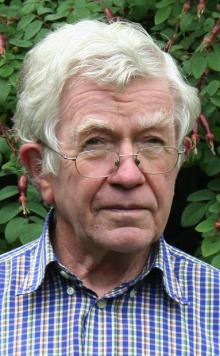
Spedding Micklem
H. Spedding Micklem is a Professor Emeritus in the School of Biological Sciences at the University of Edinburgh. He holds a D.Phil from the University of Oxford. He lives in Edinburgh, Scotland.
Genetic Engineering Has Failed to Significantly Boost U.S. Crop Yields Despite Biotech Industry Claims
Increases over last decade largely due to traditional breeding and conventional agricultural improvements
Union of Concerned Scientists | April 14, 2009
For years, the biotechnology industry has trumpeted that it will feed the world, promising that its genetically engineered crops will produce higher yields.
That promise has proven to be empty, according to a new report by the Union of Concerned Scientists (UCS). Despite 20 years of research and 13 years of commercialization, genetic engineering has failed to significantly increase U.S. crop yields.
“The biotech industry has spent billions on research and public relations hype, but genetically engineered food and feed crops haven’t enabled American farmers to grow significantly more crops per acre of land,” said Doug Gurian-Sherman, a biologist in the UCS Food and Environment Program and author of the report. “In comparison, traditional breeding continues to deliver better results.”
The report, “Failure to Yield: Evaluating the Performance of Genetically Engineered Crops,” is the first to closely evaluate the overall effect genetic engineering has had on crop yields in relation to other agricultural technologies. It reviewed two dozen academic studies of corn and soybeans, the two primary genetically engineered food and feed crops grown in the United States. Based on those studies, the UCS report concluded that genetically engineering herbicide-tolerant soybeans and herbicide-tolerant corn has not increased yields. Insect-resistant corn, meanwhile, has improved yields only marginally. The increase in yields for both crops over the last 13 years, the report found, was largely due to traditional breeding or improvements in agricultural practices.
The UCS report comes at a time when food price spikes and localized shortages worldwide have prompted calls to boost agricultural productivity, or yield—the amount of a crop produced per unit of land over a specified amount of time. Biotechnology companies maintain that genetic engineering is essential to meeting this goal. Monsanto, for example, is currently running an advertising campaign warning of an exploding world population and claiming that its “advanced seeds … significantly increase crop yields….” The UCS report debunks that claim, concluding that genetic engineering is unlikely to play a significant role in increasing food production in the foreseeable future.
The biotechnology industry has been promising better yields since the mid-1990s, but “Failure to Yield” documents that the industry has been carrying out gene field trials to increase yields for 20 years without significant results.
“After more than 3,000 field trials, only two types of engineered genes are in widespread use, and they haven’t helped raise the ceiling on potential yields,” said Margaret Mellon, a microbiologist and director of UCS’s Food and Environment Program. “This record does not inspire confidence in the future of the technology.”
“Failure to Yield” makes a critical distinction between potential—or intrinsic—yield and operational yield, concepts that are often conflated by the industry and misunderstood by others. Intrinsic yield refers to a crop’s ultimate production potential under the best possible conditions. Operational yield refers to production levels after losses due to pests, drought and other environmental factors.
The study reviewed the intrinsic and operational yield achievements of the three most common genetically altered food and feed crops in the United States: herbicide-tolerant soybeans, herbicide-tolerant corn and insect-resistant corn (known as Bt corn, after the bacterium Bacillus thuringiensis, whose genes enable the corn to resist several kinds of insects).
Herbicide-tolerant soybeans, herbicide-tolerant corn and Bt corn have failed to increase intrinsic yields, the report found. Herbicide-tolerant soybeans and herbicide-tolerant corn also have failed to increase operational yields, compared with conventional methods.
Meanwhile, the report found that Bt corn likely provides a marginal operational yield advantage of 3 to 4 percent over typical conventional practices. Since Bt corn became commercially available in 1996, its yield advantage averages out to a 0.2 to 0.3 percent yield increase per year. To put that figure in context, overall U.S. corn yields over the last several decades have annually averaged an increase of approximately 1 percent, which is considerably more than what Bt traits have provided.
In addition to evaluating genetic engineering’s record, “Failure to Yield” considers the technology’s potential role in increasing food production over the next few decades. The report does not discount the possibility of genetic engineering eventually contributing to increase crop yields. It does, however, suggest that it makes little sense to support genetic engineering at the expense of technologies that have proven to substantially increase yields, especially in many developing countries. In addition, recent studies have shown that organic and similar farming methods that minimize the use of pesticides and synthetic fertilizers can more than double crop yields at little cost to poor farmers in such developing regions as Sub-Saharan Africa.
The report recommends that the U.S. Department of Agriculture, state agricultural agencies, and universities increase research and development for proven approaches to boost crop yields. Those approaches should include modern conventional plant breeding methods, sustainable and organic farming, and other sophisticated farming practices that do not require farmers to pay significant upfront costs. The report also recommends that U.S. food aid organizations make these more promising and affordable alternatives available to farmers in developing countries.
I Am So Tired of Malthus
By Willis Eschenbach | Watts Up With That? | September 8, 2010
Daily we are deluged with gloom about how we are overwhelming the Earth’s ability to sustain and support our growing numbers. Increasing population is again being hailed as the catastrophe of the century. In addition, floods and droughts are said to be leading to widespread crop loss. The erosion of topsoil is claimed to be affecting production. It is said that we are overdrawing our resources, with more people going hungry. Paul Ehrlich and the late Stephen Schneider assure us that we are way past the tipping point, that widespread starvation is unavoidable.
Is this true? Is increasing hunger inevitable for our future? Are we really going downhill? Are climate changes (natural or anthropogenic) making things worse for the poorest of the poor? Are we running out of food? Is this what we have to face?
Fortunately, we have real data regarding this question. The marvelous online resource, the UN Food and Agriculture Organization (FAO) statistics database called FAOSTAT, has data on the amount of food that people have to eat.
Per capita (average per person) food consumption is a good measure of the welfare of a group of people because it is a broad-based indicator. Some kinds of measurements can be greatly skewed by a few outliers. Per capita wealth is an example. Since one person can be a million times wealthier than another person, per capita wealth can be distorted by a few wealthy individuals.
But no one can eat a million breakfasts per day. If the per capita food consumption goes up, it must perforce represent a broad-based change in the food consumption of a majority of the population. This makes it a good measure for our purposes.
The FAOSTAT database gives values for total food consumption in calories per day, as well as for protein and fat consumption in grams per day. (Fat in excess is justly maligned in the Western diet, but it is a vital component of a balanced diet, and an important dietary indicator.) Here is the change over the last fifty years:

Figure 2. Consumption of calories, protein, and fat as a global average (thin lines), and for the “LDCs”, the Least Developed Countries (thick lines) . See Appendix 1 for a list of LDCs.
To me, that simple chart represents an amazing accomplishment. What makes it amazing is that from 1960 to 2000, the world population doubled. It went from three billion to six billion. Simply to stay even, we needed to double production of all foodstuffs. We did that, we doubled global production, and more. The population in the LDCs grew even faster, it has more than tripled since 1961. But their food consumption stayed at least even until the early 1990s. And since then, food consumption has improved across the board for the LDCs.
Here’s the bad news for the doomsayers. At this moment in history, humans are better fed than at any time in the past. Ever. The rich are better fed. The middle class is better fed. The poor, and even the poorest of the poor are better fed than ever in history.
Yes, there’s still a heap of work left to do. Yes, there remain lots of real issues out there.
But while we are fighting the good fight, let’s remember that we are better fed than we have ever been, and take credit for an amazing feat. We have doubled the population and more, and yet we are better fed than ever. And in the process, we have proven, once and for all, that Malthus, Ehrlich, and their ilk were and are wrong. A larger population doesn’t necessarily mean less to eat.
Of course despite being proven wrong for the nth time, it won’t be the last we hear of the ineluctable Señor Malthus. He’s like your basic horror film villain, incapable of being killed even with a stake through the heart at a crossroads at midnight … or the last we hear of Paul Ehrlich, for that matter. He’s never been right yet, so why should he snap his unbeaten string?
APPENDIX 1: Least Developed Countries
Africa (33 countries)
Angola
Benin
Burkina Faso
Burundi
Central African Republic
Chad
Comoros
Democratic Republic of the Congo
Djibouti
Equatorial Guinea
Eritrea
Ethiopia
Gambia
Guinea
Guinea-Bissau
Lesotho
Liberia
Madagascar
Malawi
Mali
Mauritania
Mozambique
Niger
Rwanda
São Tomé and Príncipe
Senegal
Sierra Leone
Somalia
Sudan
Togo
Tanzania
Uganda
Zambia
Eurasia (10 countries)
Afghanistan
Bangladesh
Bhutan
Cambodia
East Timor
Laos
Maldives
Myanmar
Nepal
Yemen
Americas (1 country)
Haiti
Oceania (5 countries)
Kiribati
Samoa
Solomon Islands
Tuvalu
Vanuatu
Wind Energy’s House of Cards
By Steve Goreham | August 31, 2010
The International Energy Agency (IEA) recently issued their 2009 Wind Energy Report. Brian Smith, chair of the IEA Wind Executive Committee, states that wind member countries “installed more than 20 gigawatts of new wind capacity” (nameplate capacity). The report was written by representatives of 20 member countries, consisting of 14 European nations, Australia, Canada, Japan, Korea, Mexico, and the United States.
The report is very optimistic about wind energy’s prospects. Member nations report on “how they have progressed in the deployment of wind energy, how they are benefitting from wind energy deployment, and how they are devising strategies and conducting research to increase wind’s contribution to world energy supply.” But a deeper analysis shows that the wind industry is a house of cards built on a foundation of sand.
The house of cards is a global industry based entirely on subsidies, price guarantees, and mandates. Wind generation systems are not deployed anywhere in the world without extensive government financial or mandated support. Fourteen of the 20 IEA member nations use feed-in tariffs (FITs) to force utility companies to buy electricity from wind farms at above market rates. Examples are FITs used by Finland, Germany, Greece, Netherlands, Portugal and Spain, which are set in the range of 7.8-12.1 Eurocents per kilowatt-hour, equal to 11.2-17.4 U.S. cents per kilowatt-hour. These are subsidized wholesale prices, yet significantly above the average U.S. retail price of 9.7 cents per kilowatt-hour. Nine of the twenty nations mandate that utilities supply a percentage of electricity from renewables. Nations that have provided little government support for wind, such as Japan, Korea, Mexico, and Norway, have seen little growth in installations.
In the U.S., the 2009 Recovery Act authorizes a direct cash grant of 30% of the total value to wind projects. Alternatively, the federal government provides a 30% investment tax credit, or a 2.1 cents per kW-hr production subsidy. State governments add loan guarantees, further investment tax credits, and the forbearance of property and sales taxes. Twenty-nine states have enacted Renewable Portfolio Standards to force utilities to purchase renewable energy, primarily wind. These mandates raise the price of wind energy, a further subsidy to the industry. In total, taxpayers are subsidizing 30-50% of the price U.S. wind energy installations. Wind must be subsidized because it is much more expensive than electricity from coal, natural gas, hydroelectric, and nuclear sources. According to the U.S. Department of Energy, wind-generated electricity is about 80% more expensive than coal-fired power, and off-shore wind is significantly more expensive. The IEA representatives from Denmark and the United Kingdom estimate costs for offshore wind at roughly double the cost of onshore wind. The planned Cape Wind project in Nantucket Sound reportedly will deliver electricity at a whopping 27 cents per kW-hour, compared to the Massachusetts average price of 16 cents per kW-hour and the U.S. average of 9.7 cents.
Advocates claim that subsidies are needed to help wind energy move down the learning curve to become cost competitive with other technologies. But wind turbines have been deployed for more than 20 years. As of 2009, the United States had installed about 33,000 wind turbine towers. World installations have exceeded 140,000 turbines. When will this cost competitiveness be achieved?
Despite the growing number of installations, total wind energy costs are increasing. Wind installation costs per kilowatt-hour decreased from the early 1990s until 2001, but have been rising since. For example, U.S. installations reached a cost low of $1,285 per kw-hr in 2001, but have since risen steadily to $2,080 per kw-hr in 2009, an increase of 62%. It’s unlikely that electricity from wind will ever be competitive with conventional fuel sources.
A close read of the IEA Wind Report reveals issues with actual wind turbine operating lifetimes and maintenance. Wind turbines that were installed in the 1990s are now being replaced in Denmark, Germany, Netherlands, and other nations. In the harsh weather environments of high-wind corridors, many of these turbines have not reached the 20-year lifetimes claimed by manufacturers. In comparison, operating lifetimes for coal-fired power plants consistently reach 50 years.
Very costly repairs are often required to maintain wind turbine operation. Japan reports that lightning hits and typhoons have damaged “a considerable number of wind turbines,” finding that on average, each turbine will fail three times over its 20-year life. Denmark reports that each turbine’s gearbox must be replaced on average four times during its lifetime, costing about 20% of the price of a wind turbine.
The story of Denmark is illustrative. Over the last 20 years, Denmark has installed 5,100 wind towers, one for every thousand citizens. A map with a black dot for each wind farm shows that 300-foot-high steel and concrete towers can be seen from almost every field, farm, hill, and seashore of this nation. In 2009, these towers provided only 767 megawatts of electricity, less than the output of a single conventional coal-fired power plant. This single power plant would occupy the space of one black dot on the map.
Wind towers provide only about 10% of Denmark’s electricity, but contribute to electricity rates of 28 Eurocents per kilowatt-hour, the highest in Europe and four times the U.S. price. Yet, Danish government officials are proud of their wind system. Why would they install 5,000 towers instead of one coal plant? It’s because they believe they are reducing global warming.
In fact, the global wind industry is built on a foundation of sand—the hypothesis that man-made global warming is destroying Earth’s climate. The IEA report contains repeated statements about carbon emissions saved by wind installations in each nation. Yet, mounting satellite temperature data, new studies of ocean cycles such as the Pacific Decadal Oscillation, and research on solar activity, show that global warming is due to natural cycles of the Earth,not man-made greenhouse gas emissions. Should global warming alarmism fail in its efforts to promote wind energy, the subsidies will disappear, and the house of cards will collapse. Then the world will be left with 140,000 silent monuments to Climatism.
Steve Goreham is Executive Director for the Climate Science Coalition of America and author of Climatism! Science, Common Sense, and the 21st Century’s Hottest Topic.
Featured Video

Can the U.S. Afford to Annihilate Iran?
or go to
Aletho News Archives – Video-Images
Book Review
The Genetic Deception — now in paperback (Second Edition)
Lies are Unbekoming | October 2, 2026
The genes the field promised were never there.
The genetic story of disease is a cover story.
The twenty-first century runs on it. Paediatric clinics. Cancer centres. Forensic laboratories. Family-planning counsel. It is used to explain illness, to assign blame, to foreclose questions. It protects the industries whose products and practices are what actually caused the harm.
It isn’t true.
In 2010, Jonathan Latham and Allison Wilson looked at over seven hundred genome-wide association studies covering some eighty common diseases. The genes the field had promised were not there. The field invented a term, “missing heritability”, to explain the absence, and has quietly worked to bury the finding ever since.
The Genetic Deception is a book about what Latham and Wilson found. What the field did with it. And what the public was told instead. … continue
Blog Roll
 Aletho News
- Are Europe’s Smallest Nations Dragging the Continent into War?
- EU draws up contingency plans for possible Merz exit
- G7 caves to US blackmail, announces ‘massive’ release of diesel reserves
- Reporting of the RAF Fairford arrests blows the idea of a ‘free press’ out of the water
- US increasing Middle East military buildup – AP
- Flydubai scenario: Netanyahu’s plot to drag US to war with Iran, stay in power
- The Genetic Deception — now in paperback (Second Edition)
- Can the U.S. Afford to Annihilate Iran? /Seyed M. Marandi
- Elmo Sold mRNA Jabs to Your Toddler. Now They Are “Off-Label.”
- British state targets Palestine Action with yet another crooked trial
- If Americans Knew
- Jordan Has Had Enough: King Abdullah’s Scathing Warning to Israel
- Israeli Colonizers (i.e. Settlers) Kill Palestinian Man Near Salfit
- New Google Maps images reveal massive scale of devastation in Gaza
- Jewish supremacy, anti-Palestinian bigotry on display in Israel – Daily Update
- Israeli Soldiers Abduct At Least 22 Across Occupied West Bank
- Eight Palestinians Killed in Israeli Attacks on Gaza
- Israeli former leaders and security chiefs threaten legal action over ‘Jewish terrorism’
- Israel map in LA Times ad includes all land from the river to the sea
- Inside Lebanon’s 200-page dossier on Israeli war crimes
- Flydubai, genocide, settler violence, Trump abuse of power to deport – Daily Update
- No Tricks Zone
- Green Energy Debacle: German Expert Professor Fritz Vahrenholt Warns Of Severe Economic And Social Consequences
- Two More Paleo Reconstructions Affirm Meters-Higher Sea Levels Across Ireland, Brazil 7000-6000 Years Ago
- New Study: Earth And Venus Surface Warmth Largely Explained By Convection And Lapse Rate, Not CO2 Or Radiation
- 2025 Nature Paper Claiming Worsening Global Drought Gets RETRACTED …Heavily Flawed
- New Study: ‘Global Drought Shows No Detectable Recent Acceleration Under Climate Warming’
- Economic Masterminds: German Socialists Suggest Taxing Productivity Gains Stemming From Using AI
- The South China Sea Has Not Been Cooperating With The Climate Change Narrative
- Energy Crisis: Germany Enters Heating Season With Historically Low Gas Reserve Fill Levels
- New Study: The Antarctic Ice Sheet Gained Mass From 2020-2024 Due To Staggering Snow And Ice Accumulation
- Study: Ocean Heating Rates From Thousands Of Years Ago ‘Dwarf’ Modern Ocean Heating Rates

