Police shooting of Jean Charles De Menezes was lawful, rules ECHR
RT | March 30, 2016
Strasbourg’s European Court of Human Rights has ruled it was ‘right not to charge’ police over the 2005 shooting of Brazilian Jean Charles De Menezes.
Brazilian electrician De Menezes died in 2005 after he was pinned down by police on a London train and shot 11 times. Strasbourg’s European Court of Human Rights ruled on Wednesday that the killing was lawful.
The shooting took place nearly 11 years ago in the tense days following the 7/7 terror attacks in which 56 Londoners died.
De Menezes, 27, was pursued by armed police into Stockwell Underground Station, South London, on July 22, 2005. They allegedly believed he was a terrorist fugitive.
The electrician, who lived in the same block of flats as several of the [alleged] 7/7 bombers, was shot 11 times at close range.
The decision brings an end to a decade-long legal battle in which the De Menezes family argued the threshold for police use of lethal force was too low, meaning the 27-year-old was killed despite a lack of evidence suggesting he posed a security threat.
The deceased’s cousin Patricia Armani Da Silva in 2008 had challenged an earlier ruling by Britain’s Crown Prosecution Service (CPS), which said none of the officers should face charges.
A 2006 report by the Independent Police Complaints Commission (IPCC) suggested a number of command mistakes had led to the killing. It identified several instances that may constitute criminal acts, including gross negligence and murder.
However, the CPS decided not to press charges at the time, saying there was a low possibility of conviction.
A 2008 inquest rejected the official account of the killing, but returned an open verdict arguing it was not within the power of the jury to push for unlawful killing prosecutions.
Mystery still surrounds the involvement of a shadowy military Special Forces unit called the Special Reconnaissance Regiment (SRR) in the events leading up to the killing.
The unit had been tailing De Menezes. But in the immediate aftermath of the killing Whitehall sources told the Guardian their roles had been purely surveillance, and that there was “no direct military involvement in the shooting.”
Israeli bill on prison sentences for minors ‘targets Palestinian children’
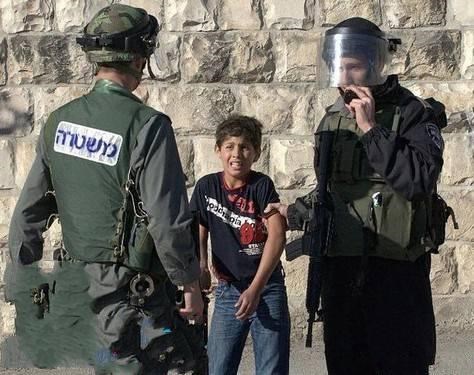
By Chloe Benoist – Ma’an – March 29, 2016
BETHLEHEM – The Israeli Knesset on Tuesday approved the first reading of a bill which would allow Israeli courts to hand down prison sentences to minors under the age of 14 — legislation critics say is targeted at Palestinian children.
A recent amendment to the bill, which would apply to children convicted of murder, attempted murder, and homicide, reportedly declared that the prison terms would be postponed until the accused minors turn 18.
If passed into law after two more successful readings in the Knesset, the legislation would apply to residents of Israel and occupied East Jerusalem, whereas Palestinians in the occupied West Bank are tried in military courts.
According to prisoners’ rights group Addameer, at least 108 Palestinian minors under the age of 16 were being held by Israel as of February.
“Unfortunately, terrorism does not have an age, and today there are no punishments matching the cruel reality we face,” The Jerusalem Post quoted Israeli Justice Minister Ayelet Shaked as saying on Sunday. “In order to create deterrence and change the situation around us, we must adopt the suggested new amendments to the law.”
Shaked first proposed the bill in November, after two Palestinian children ages 12 and 13 allegedly stabbed and injured an Israeli security guard on Jerusalem’s light rail near the illegal Israeli settlement of Pisgat Zeev.
An increase in violence in the occupied Palestinian territory and Israel has led to the death of more than 200 Palestinians and nearly 30 Israelis since October, with a wave of small-scale attacks and attempted attacks, the majority carried out by Palestinian individuals on Israeli military targets.
Knesset member Yousef Jabareen of the Joint Arab List has criticized the bill as an affront to international law.
“Israel is a party to the International Convention on the Rights of the Child, and this change contradicts Israel’s obligation to this convention,” the politician, a Palestinian citizen of Israel, told Ma’an.
The convention states that “the arrest, detention or imprisonment of a child shall be in conformity with the law and shall be used only as a measure of last resort and for the shortest appropriate period of time.”
According to Jabareen, Shaked’s statements regarding the bill leave little doubt as to who will be the main targets of such legislation.
“This bill targets Palestinian children,” he said. “Of course the bill is written in objective terms, but everyone knows the context in which it is being presented, and I doubt it will be used in other contexts.”
“This is an integrant part of a wave of bills introduced in the past few months which are harshening punishments for Palestinian children and families, especially in East Jerusalem,” Jabareen added.
The MK notably mentioned a law passed by the Knesset in July which made penalties for stone-throwing more severe, allowing for stone-throwers to receive a 20-year prison sentence where intent to harm could be proven, and 10 years where it could not.
Jabareen said he believed the bill would likely pass into law.
“Unfortunately, in the current atmosphere, there is a good chance the bill will pass,” he said. “Even some opposition MKs support the bill.”
However, he expressed doubts that the legislation would effectively act as a deterrent.
“The (Israeli) government is attempting to oppress and suppress the Palestinian resistance, but everybody knows that without a serious proposal for advancing the political process, they are doomed to fail.”
Israeli forces demolish 2 homes in Bethlehem

Ma’an – March 28, 2016
BETHLEHEM – Israeli forces on Monday morning demolished a number of buildings belonging to Palestinians, including two houses, in the southern occupied West Bank town of Bethlehem, their owner told Ma’an.
Khader al-Jirashi said Israeli forces demolished two homes, a large metal barn, and a multi-purpose playground he owns near the Israeli separation wall and military checkpoint known as “Checkpoint 300” in northern Bethlehem.
The two homes, he said, measured 350 square meters and 200 square meters, while the barn measured around 400 square meters.
Al-Jirashi added that after carrying out the demolition, the Israeli bulldozers and excavators, which were escorted by Israeli military vehicles, proceeded to level a tract of land measuring more than four acres.
He said the demolition was carried out without prior notice, and he only realized it was underway when a neighbor called to let him know.
He said the structures were built legally after obtaining the necessary permits from the Palestinian Authority, and that he has official ownership documents.
“This land has always been part of Bethlehem,” al-Jirashi said in a video showing the demolition.
While demolitions are frequent in Area C — the 62 percent of the occupied West Bank that comes under full Israeli military and civil control — demolitions in Area A, in which Bethlehem is located, are less common and are not permitted under the 1993 Oslo Accords.
The Coordinator of Government Activities in the Territories (COGAT), the Israeli authority in the Palestinian Territory, did not immediately respond to a request for comment.
As of mid-February, the number of Palestinians displaced due to Israeli demolitions in 2016 was already equivalent to over half of the total number displaced in all of 2015, a senior UN official said last month.


Two Palestinians shot and injured by Israeli forces in Qalqiliya
Ma’an – March 27, 2016
 QALQILIYA – Israeli forces shot and injured two Palestinians with rubber-coated steel bullets — one seriously injured — late Saturday in the al-Naqqar area of Qalqiliya in the northern occupied West Bank.
Palestinian Red Crescent head Munther Nazzal told Ma’an that Palestinian Red Crescent paramedics rushed Islam Shoaib, 22, to a hospital after he was shot in the chest.
Mohammed Majid Haj Hassan,19, was detained by Israeli forces for at least 15 minutes after being shot in the knee and thigh and suffered from severe bleeding without being given medical treatment. He was then released to paramedics who transferred him to the Qalqiliya hospital, where he has been in serious condition.
An Israeli army spokesperson told Ma’an that Israeli forces fired warning shots at the two Palestinians as they were “attempting to damage” the Israeli separation wall in Qalqiliya, and fired shots at the “lower extremities,” confirming at least one hit.
Over 1,300 Palestinians have been injured by Israeli forces since the start of this year, the majority during clashes that broke out with the Israeli military during protests in the occupied West Bank, according to the UN Office for the Coordination of Humanitarian Affairs.
UN rights monitor to the occupied Palestinian territory Makarim Wibisono last week condemned excessive use of force used by Israeli military forces and urged the Israeli authorities to comply with international law regarding the use of force and firearms.
Israeli settlers threaten Palestinian who filmed Hebron ‘execution’

Ma’an – March 25, 2016
HEBRON – Israeli settlers on Friday gathered outside the home of a human rights worker in Hebron to hurl abuse at him, a day after he captured on camera an Israeli soldier’s killing of a wounded Palestinian that has sparked international outcry. Imad Abu Shamsiya, a staff member with Israeli human rights group B’Tselem, told Ma’an after settlers threatened him: “I now fear for my life and the life of my family. I’m afraid they might attack my house and do me harm.”
He added that he fears the possibility of suffering the same fate as the Dawabsha family, who were killed in an arson attack committed by settlers last year in the village of Duma in the occupied West Bank.
Palestinian residents of Hebron Abed al-Fattah Yusri al-Sharif and Ramzi Aziz al-Qasrawi, both 21 years old, were shot down Thursday after allegedly stabbing and moderately wounding an Israeli soldier near a military checkpoint in Hebron’s Old City.
Shamsiya recorded rare video footage of an Israeli soldier shooting al-Sharif in the head at point-blank range in plain view of the medical team after he had already been shot at least once and left motionless on the ground.
The incident has brought a barrage of condemnations from the Israeli leadership and led Israel’s army to detain the soldier responsible and launch an investigation.
The release of the graphic video has called attention to what rights groups, international leaders, and Palestinian officials call a policy of “extrajudicial executions” by Israel against Palestinians, since a wave of unrest swept the occupied Palestinian territory and Israel last October.
UN Special Coordinator for the Middle East Peace Process Nickolay Mladenov said Friday he strongly condemned the apparent “extrajudicial execution” of al-Sharif.
“This was a gruesome, immoral, and unjust act that can only fuel more violence and escalate an already volatile situation,” Mladenov said.
Tel Rumeida — where Shamsiya’s house is located and the site of the Thursday’s incident — has been a flashpoint for tensions between Palestinians and Israeli settlers and military, and is near the illegal settlement of Beit Yishai.
Mistreatment of Palestinians in the Hebron area has been common since the city was divided in the 1990s after a US-born settler, Baruch Goldstein, massacred 29 Palestinians inside the Ibrahimi Mosque.
The majority of the city was placed under the jurisdiction of the Palestinian Authority, while the Old City and surrounding areas were placed under Israeli military control in a sector known as H2.
The area is home to 30,000 Palestinians and around 800 Israeli settlers who live under the protection of Israeli forces. Hebron residents frequently report attacks and harassment by the settlers carried out in the presence of the forces.
Illegal settlers celebrate Purim after cold-blooded murder of Palestinian youths
International Solidarity Movement | March 24, 2016
Hebron, Occupied West Bank – On the 24th March, Israeli settlers from the illegal settlements in occupied al-Khalil (Hebron) celebrated the holiday of ‘Purim’. The settlers marched through the Old City of al-Khalil, starting off from the spot where just a few hours before, Israeli forces gunned down two Palestinian youth and then executed one of them in cold blood.
In the morning, Israeli forces shot and severely injured two Palestinian youth in the Tel Rumeida neighbourhood and then left them lying on the ground seriously injured while Israeli medics were attending to a slightly injured Israeli soldier. Palestinian ambulances, that are not allowed to drive on this road that is only for settlers use, were prevented by Israeli forces from reaching the injured Palestinian youth. In a video published by B’Tselem, a soldier can clearly be seen shooting one of the youth in the head at point-blank range even though he is lying on the ground and is not posing a threat to anyone.
Only a few hours after this extrajudical execution, settlers started their joyous march, dressed up in costumes, with music blasting from a bus, dancing in the same spot where the two Palestinians were murdered in cold blood.

Illegal settlers celebrating in the exact spot where two Palestinians were murdered in cold-blood
Photo credit: Youth Against Settlements
The procession of settlers then proceeded down Shuhada Street, where the main illegal Israeli settlements in the heart of the city are located, before turning towards the Ibrahimi mosque. Shuhada Street, except for a tiny strip, has been completely closed for Palestinians, who are not allowed to even walk there – unlike the illegal settlers who can walk and drive. When the march reached the vicinity of Ibrahimi mosque, Israeli forces started closing off the area to all Palestinians, physically pushing back children behind barriers and preventing Palestinians from accessing the area, even if they were residents, in order to create a space free of Palestinians for the celebrations of the settlers to take place.

Settler children. One drinking wine, one holstering a machine gun and another aiming a pistol at onlookers

Israeli settlers celebrating while Palestinians are denied walking down the street

Palestinians and Internationals are not allowed to pass
One of the settlers, of which many were dressed up in costumes, was seen in a shirt flashing a raised fist on a yellow background, which is the symbol of the ‘Kach’, a party of extremist Israeli fundamentalist settlers, deemed a terrorist group even by the Israeli government. The party was founded by Meir Kahane, who publicly called for the expulsion of Palestinians and to end culture relations between Jewish and Palestinian students. On Tuesday, two days before, during celebrations for the same holiday, the loudspeakers of the Ibrahimi mosque were mis-used to broadcast hate-speech calling for the expulsion of Palestinians from al-Khalil.

Israeli settlers with a Kahane-shirt (settler in the middle)
One of the settler children dancing on top of a bus was playing with a pistol. Even though the police realized this, they merely took the weapon from him – but then gave it back shortly adfter. If a Palestinian of any age had been seen with anything resembling a weapon, the person would likely be shot immediately.

The settlers’ celebrations kept going uninterrupted with Israeli forces ensuring that Palestinians would not cross the way of the settlers, forcing them to stay back, and even closing Ibrahimi mosque checkpoint to ensure no one would even come close.

Palestinian civilians stopped by Israeli forces after they opened the street for Palestinians again while settlers freely pass the checkpoint
Israeli forces also used the roof of a Palestinian family home in the vicinity of the mosque as a look-out point. This is just another small example of the impunity and supremacy settlers enjoy with the active support of the Israeli forces, while Palestinians are systematically humiliated, oppressed and killed in cold blood under the Israeli military occupation.
Murder Epidemic Halts Colombia’s Peace Process
By W. T. Whitney | CounterPunch | March 24, 2016
Paramilitaries and armed thugs have long sullied politics in Latin America, most notably in Colombia and recently in Honduras. A recent increase in politically motivated killings in Colombia coincided with final preparations for signing a peace agreement between the Revolutionary Armed Forces of Colombia (FARC) and the Colombian government, at war for 50 years. The much anticipated accord never materialized.
In Honduras the murder of longtime environmental and indigenous rights activist Berta Cáceres caps a wave of killings there of journalists, teachers, women, and especially of agrarian rights activists.
Governments and private parties serving predatory interests evidently regard terror at the hands of thugs or paramilitary forces as useful for maintaining dominion. Colombia’s paramilitary phenomenon warrants a look now because paramilitary attacks have brought Colombia’s peace process to a halt. Fortunately documentation of paramilitary offenses in Colombia provides much by way of details and particulars, more so than in Honduras, for instance. That’s because Colombian paramilitaries have long met resistance and gained special notoriety.
On March 23, after 40 months of talks in Havana, negotiators on both sides in the Colombian peace talks were to have announced a “Final Agreement,” one covering five agenda items they had set out to discuss. But an impasse developed over the last one, designated as “end of conflict.” It entails a “bilateral and definitive cease of fire and hostilities” and laying down arms.
FARC negotiators held back; an epidemic of killings during March revived long-held FARC concerns about the safety of ex-guerrillas in a time of peace. Others worry too.
The Executive Committee of the Patriotic Union (UP), a leftist political party, reported March 18 that in the previous three weeks “unknown armed men,” presumably paramilitaries, had carried out 11 politically motivated killings and “disappeared” three other people – whose bodies were found later.
Speaking to reporters, Aída Avella, the UP president, accused business leaders of financing the resurgence of paramilitaries. She also accused military leaders of being “immersed” in paramilitary operations. Avella herself went into foreign exile for 17 years in 1996 after a rocket destroyed the car in which she was a passenger.
In an open letter to Colombian President Juan Manuel Santos, Andrés Gil, a leader of the Patriotic March, condemned the assassinations. “[I]f we continue to be killed,” he wrote, “then the conclusion will be that really there’s no room for anyone on the left…. You will pass into history not as the president for peace but as the one who didn’t take the fight against paramilitaries seriously.”
Referring to the flood of paramilitary victims, the FARC peace delegation released a statement asking, “How can this be in the midst of a peace process now approaching the signing of a final accord?” Colombian authorities, the FARC said, “can no longer delay clearing away the phenomenon of paramilitarism.”
The FARC has reason to be alarmed. Many FARC guerrillas left the insurgency in 1985 in accordance with an agreement signed with President Belisario Betancur. They engaged in electoral politics as candidates for the UP party. That provoked a massacre; some say almost 5000 UP activists have since been murdered.
FARC negotiator Carlos Antonio Lozada may have been thinking of that experience when he told reporters March14 that, “[W]e have to take measures to avoid being betrayed and attacked as happened in the past.” He noted that the government recently dismissed a technical sub-commission report, already agreed upon, calling for “a bilateral and definitive ceasefire.”
The FARC negotiating team took the occasion of Secretary of State John Kerry’s visit with them on March 21 to seek help in regard to the paramilitary problem. Kerry had accompanied President Obama on his historic visit to Cuba. The negotiators released a communication saying, “Mr. Kerry, we ask through you that the United States help curb paramilitary violence, which in the midst of the peace process keeps mowing down the lives of defenders of human rights and social leaders.”
The request is not without irony. The United States provides funds for the Colombian army, known to facilitate paramilitary operations. And in the early 1960s U.S. military experts advised the Colombian government to utilize paramilitaries to augment its campaign then of pushing back against leftist guerrillas.
In a joint press conference February 4 with President Santos in Washington, President Obama introduced a U. S. plan called “Peace Colombia.” The two leaders had met to celebrate the upcoming peace accord and the end after 15 years of Plan Colombia, that U.S. mechanism for supporting counterinsurgency and drug-war efforts in Colombia.
For Voz newspaper editor Carlos Lozano, the name of the new venture signifies a “Pax Romana, or peace of the graveyard.” He lamented that “within Peace Colombia there’s not one entry for combating paramilitarism, which is the principal obstacle to peace in Colombia.”
Trivializing the FARC and thereby perhaps signaling the guerrillas’ irrelevance in a Colombia at peace, the New York Times recently headlined a reporter’s story thus: “Inside a Rebel Camp in Colombia, Marx and Free Love Reign.” It celebrated the collapse of communism by likening the supposed decline of the FARC to the fall of the Berlin Wall.
To the extent that such triumphalism extends to official U.S. attitudes, prospects for peace in Colombia are diminished.
Nevertheless, neither Colombia’s government nor the United States will likely have the final say in regard to disruptions at the hands of paramilitaries. Other forces, powerful and based on realities, are in play, and have been. A voice on their behalf is heard from, of all places, inside prison.
Political prisoner Húbert Ballesteros joined the Communist Party and Patriotic Union in 1986. More recently he’s been a leader of both the Fensuagro agricultural workers’ union and the CUT labor federation. Writing on March 12, he reflects upon “the killings in Antioquia, Sur de Bolívar, Arauca, Bogotá, and Cauca; the jailing of social leaders in Cauca, and the spread of paramilitary bands the length and breadth of the country.” According to Ballesteros, “We can no longer continue assuming that this oligarchy wants peace [other than] a cheap peace, a silencing of the guns.”
He knows what to do: “[W]hile we are building scenarios of peace, we must organize the people for resistance, and do so massively and convincingly so that this government understands that people are no longer content to live under its domination.” We must deal with “the true problems of the country, which are unemployment, poverty, corruption, and social and political marginalization.”
W.T. Whitney Jr. is a retired pediatrician and political journalist living in Maine.
Raul Castro Should Ask Obama: What About U.S. Political Prisoners?
A Black Agenda Radio commentary by Glen Ford | March 22, 2016
President Obama knew it was impolitic to play his hypocritical human rights game while in the presence of Cuban President Raul Castro, in Havana, this week. So Obama had one of his kiss-up White House reporters do the sneak attack for him. CNN’s Jim Acosta, the son of a Cuban exile, asked President Castro why his country kept political prisoners. Castro replied, “What political prisoners?” and asked Acosta to provide a list of such people. It was an awkward moment – not diplomatic at all – but Obama was clearly enjoying it. And, well he might, because neither Jim Acosta nor any of the other corporate mouthpieces in the White House press corps would dare, or even think, to ask a U.S. president about the plight of American political prisoners.
The U.S. media traveling with Obama have easy access to all sorts of lists of Cubans who are supposedly in prison for opposition to the their government – although even Amnesty International says that the Cubans released their last political prisoner, back in September.
The United States, on the other hand, is still holding scores of political prisoners, many of them captured in the 1960s and 70s. Their numbers are decreasing only because they are dying of old age – accelerated by the inhuman conditions and practices of the world’s largest prison system. If the corporate media were really concerned about political prisoners, they could go to the web site of the Jericho Movement and see the pictures of 50 of them. Eighteen were members of the Black Panther Party, the Black Liberation Army or the Republic of New Africa, including Mumia Abu Jamal, whose life hangs by a thread because the State of Pennsylvania refuses to treat his Hepatitis C. Black Panther Romaine “Chip” Fitzgerald has been incarcerated since 1969. There are men and women from the MOVE organization, all with the last name “Africa,” whose children were killed and their home bombed by the Philadelphia police. There are Native American activists from the First Nation group and American Indian Movement, including Leonard Peltier, who has been behind bars since 1976. There are white Class war, Anti-imperialist and Anarchist Hacker political prisoners, and, Marie Mason, a white Earth Liberation Front woman and Black female community activist Rev. Joy Powell.
No Truce in This War
There are prisoners who became political after they were imprisoned – which is why they are still there. There are Chicano political prisoners and the great Puerto Rican independence fighter, Oscar Lopez Rivera. There is the former H. Rap Brown, who’s doing life without parole as Imam Jamil Al-Amin. There are members of the Portland 7 and the Virgin Island 5 and the Ohio 7. There is the brilliant Mutulu Shakur, father of Tupac Shakur, who the feds say masterminded the escape and exile to Cuba of Assata Shakur. If Obama could somehow get her back behind bars in the U.S., he’d claim she wasn’t a political prisoner, either.
The Jericho Movement’s pictures do not include lots of other political prisoners, like Rev. Edward Pinkney, who’s serving up to ten years in prison for non-violently standing up for the people of Benton Harbor, Michigan.
President Obama this week told the Cuban people, “I Have Come Here To Bury The Last Remnant Of The Cold War.” But he won’t end the long war against Black people in the United States, a war that has sent millions to prison under a political policy of mass Black Incarceration. In that sense, they are all political prisoners.
Glen Ford can be contacted at Glen.Ford@BlackAgendaReport.com.
Palestinians face severe restrictions during Jewish holiday
Ma’an – March 23, 2016
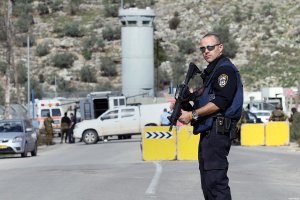 BETHLEHEM – Palestinians faced severe movement restrictions on Wednesday, as Israeli authorities shut down all movement through checkpoints in and out of the occupied West Bank and Gaza Strip ahead of the Jewish holiday of Purim.
An Israeli army spokesperson said that beginning at 1 a.m. on Wednesday and lasting until midnight Saturday, the checkpoints would be closed to all Palestinians with the exception of humanitarian cases.
Palestinian citizens of Israel, as well as holders of foreign passports, would still be allowed to pass through the checkpoints, she said, noting: “They’re only closed for Palestinians.”
She said Palestinians could seek to arrange “special circumstances” with Israel’s Coordination of Government Activities in the Territories (COGAT).
Sources inside the Palestinian liaison department confirmed the measures would be extended to the Kerem Shalom and Erez crossings into the Gaza Strip, with only humanitarian cases and a limited number of Palestinian Christians allowed to leave the blockaded coastal enclave.
Israeli police spokesperson Luba al-Samri said there would be heightened security measures, including a number of police patrols, across occupied East Jerusalem and the West Bank throughout the holiday.
Palestinian access has also been restricted to the Al-Aqsa Mosque compound, with all Palestinian men younger than 50 denied entry to the site, which is the third holiest in Islam.
Access restrictions to the mosque compound during a succession of Jewish holidays last September played a major role in triggering a wave of unrest that has since left more than 200 Palestinians and nearly 30 Israelis dead.
Tensions were running high in the West Bank on Wednesday morning after Israeli forces escorted hundreds of Israelis, including settlers, to holy sites there, with clashes breaking out nearby Joseph’s Tomb near Nablus.
The Jewish holiday of Purim, which commemorates the Biblical account of the saving of the Jewish people from Haman, an ancient Persian vizier, begins Wednesday evening and ends late Thursday this year.
Israeli troops raid West Bank village day after funeral of slain Palestinians
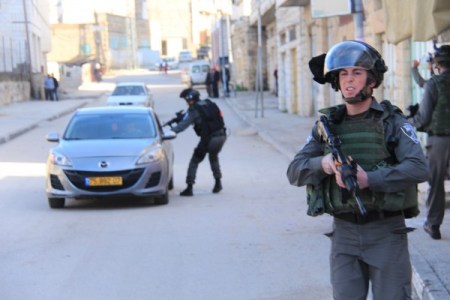
Ma’an – March 21, 2016
BETHLEHEM – Israeli troops raided the village of Beit Fajjar east of Bethlehem early on Monday, storming several houses and detaining two Palestinians.
The raid took place a day after the funerals of Ali Abd al-Rahman al-Kar Thawabta, 20, and Ali Jamal Muhammad Taqatqa, 19, who were killed by Israeli forces on Thursday after carrying out a stab attack that injured an Israeli soldier near the illegal Israeli settlement of Ariel in the northern occupied West Bank. Local sources said that Israeli troops raided Thawabta’s house and detained his brother Muhammad, 24.
They also detained Muhammad Akram Taqatqa, 22. Witnesses said Israeli excavators escorted by Israeli troops raided the al-Mahajer neighborhood of Beit Fajjar, seizing equipment and detaining workers in the area.
Israeli forces have shut down most roads leading to Beit Fajjar since Thursday, except for one between the villages of Sair and al-Manshiya.
An Israeli army spokesperson told Ma’an all roads to Beit Fajjar were open, but that residents between the ages of 15 and 25 were barred from entering or leaving, “except in case of medical emergencies.” She also confirmed that Israeli forces detained two Palestinians in Beit Fajjar overnight.
Bethlehem district governor Jibril al-Bakri condemned on Friday Israeli sanctions against Beit Fajjar, noting that such actions qualify as “collective punishment” of the village’s over 10,000 residents in violation of international law.
Over 200 Palestinians and just under 30 Israelis have been killed since October, and attempts to quell the violence by the international community have subsequently failed.
Earlier this year, UN Secretary-General Ban Ki-Moon condemned the wave of attacks, but said that Israeli security measures were failing to “address the profound sense of alienation and despair driving some Palestinians — especially young people.”
He added: “As oppressed peoples have demonstrated throughout the ages, it is human nature to react to occupation, which often serves as a potent incubator of hate and extremism.”
Rani Burnat from Bil’in
International Solidarity Movement | March 15, 2016
Bil’in, occupied Palestine – Rani Burnat is an extraordinary human being in more ways than one. He was left paralysed from an injury sustained during the second intifada, learned to live the remainder of his life in a wheelchair, fathered three children (triplets) and now continues to resist the occupation through peaceful means to this day. His story is inspiring and a prime example of the will of the Palestinian people and their ongoing resistance to an illegal occupation.

Rani Burnat
On the 30th September 2000, Rani Burnat was going to Ramallah from his home town of Bil’in for a driving lesson. When he got there he noticed a protest gathering to protest Ariel Sharon’s entry into the sacred Al-Aqsa mosque (this of course was the beginning of the second intifada). Rani spotted friends of his from Bil’in and with time to spare decided to join in.
As the protest gathered the Israeli army illegally entered the Ramallah area and cleared the guests out of a nearby hotel, then used the hotel roof as a vantage point and placed snipers. The Israeli military claims that their illegal entry onto Palestinian land was to protect a nearby illegal Israeli settlement that the protest was nearing.
Rani and fellow friends were at the front of the protest when a sniper opened fire using a unique bullet, known as a butterfly bullet, designed to continue spinning upon impact while opening out and inflicting massive damage upon entry and exit.
The bullet entered through the left-hand side of Rani’s neck, puncturing his main artery. It continued through to the right hand side of his body, severing his spinal chord between the third and fourth vertebrae on exit.
As sniper fire continued and pandemonium erupted, Rani was left bleeding on the ground. Fortunately fellow bystanders assisted by applying pressure to the wound on his neck to limit the massive amounts of blood that he was losing. He was then put into a car and driven to the nearby hospital where he was promptly seen by doctors. Rani was the first victim of the second intifada to be treated. Anyone coming into hospital later in the intifada with his severe wounds would undoubtedly have died as staff and resources failed to cope with the influx of wounded.
The doctors applied a stint to Rani’s neck to where the artery had been severed, which remains to this day. He was put into an induced coma for two days, during which time doctors concluded that with the facilities they had they could not keep Rani alive along with the massive numbers of victims that were now being admitted to the hospital as the second intifada intensified.
It was decided that Rani must be transferred to another hospital with more facilities, one capable of taking care of someone in such a serious condition, the only hospital possible was in Jordan. Given his condition he could not make the journey by land and so a helicopter was arranged from the rooftop of the parliament building in Ramallah.
On admission to hospital in Jordan, his loss of blood was so great that he required massive blood donations from a number of donors. Rani would spend the next seven months in that hospital undergoing operations and combatting repeated infections. He says ‘The most important thing for me at that time was that I was alive. The doctors in Jordan made this possible”.
After seven months in Jordan, Rani was able to come back to Palestine for rehabilitation, back at home in Bil’in seeing friends and family who had missed him, and whom he had missed so much in Jordan.
He then had to go back into hospital in Ramallah for another seven grueling months of rehabilitation. It was during this time that the severity of his situation became clear to him. “It was an extremely difficult situation to come to terms with, that I would now have to spend the rest of my life in a wheelchair, paralysed on the right side of my body.” Rani is the oldest of ten siblings with four brothers and five sisters. He had wanted to be an electrician and he talks about the helplessness he felt at that time. But despite this he added, “The personal pain I felt was nothing compared to the pain I was feeling for my family.” However, a huge positive in Rani’s life amidst so much trauma was when he married shortly after the intifada and became father to triplets.
As time passed, Rani learned to deal with the injuries he had sustained, but one thing that he was not ready for was what happened in his home village next as the Israeli government began to illegally confiscate villagers’ land to construct the apartheid wall and enclose illegal settlements.
At this point Rani decided to become a photographic journalist so he could report on and show the world the ugly truths of the Israeli occupation and what it does to the Palestinian people. He says he will only stop when he is dead or the occupation has ended.
Every week he is able, Rani makes the trip up the rocky road in his wheelchair, gas mask and camera at the ready. His wife worries for him every time he leaves but understands that this is what he must do. Rani himself admits that every Friday he leaves he fears he will not come home to his loving wife and children but he continues to go to show the world what is happening.
Fellow activists from Israel who come frequently to the Bil’in demonstrations have translated for Rani what the Israeli army is saying about him, things like “shoot the guy in the wheelchair” whilst laughing amongst themselves. Rani has been shot with rubber bullets, countless amounts of tear gas, had many cameras broken, two wheelchairs wrecked and has even been pulled out of his wheelchair and thrown onto the ground. “The occupying forces have no morals,” he adds.
Two months ago Rani was shot in the stomach with a foam bullet, which releases a liquid that burns the skin on impact. A month later he was shot in the knee cap and also singled out by soldiers and shot in both shoulders with tear gas canisters. Despite all this he continues moving forward.
In 2005 Rani organised a unique demonstration in Bil’in for all the people who have been injured or disabled since the second intifada. He explains that the Israeli army used the most tear gas he has ever seen used, firing directly into the group of people, many of whom were restricted to wheelchairs, and causing many of them to pass out from tear gas inhalation including himself. “This is occupation” says Rani.
He doesn’t believe Israel can continue like this and he hopes an end is near, as do all Palestinians. Rani tells of how he wishes to be able to travel to Jenin with no checkpoints and how he wants to take his children to see the sea. Every Palestinian who has been suppressed by the occupation has their own particular dreams of life without Israeli occupation.
“Palestine is a state of peace, Israelis should be able to come and live harmoniously in peace – against occupation”.
“If you come to my house in peace I will welcome you… but if you come to my house to take it from my family, I will fight until my dying breath with all means necessary to defend it”.
Targeting of children and residents in Ni’lin
International Solidarity Movement | March 19, 2016
Ni’lin, Occupied Palestine – On 18th March 2016, Palestinian villagers of Ni’lin protested against the Israeli land-theft and illegal settlements and the continuous violence Israeli forces use to stifle the weekly non-violent protests. Villagers commemorated Rachel Corrie, an American activist killed by Israeli forces in Gaza, and Tristan Anderson, an American activist left with severe permanent physical and cognitive impairments after being shot in the head with a high-velocity tear gas canister in Ni’lin.
Israeli forces again used excessive force, inundating not only the protestors, but the whole village in tear gas. Whereas the last two weeks Israeli forces showered a public park with a playground in tear gas, causing several cases of excessive tear gas inhalation of small children playing there; this Friday they deliberately targeted civilian homes inside the village with tear gas, as well covering the public park in tear gas. The heavy iron tear gas canisters broke windows of 7 houses and the shops in the center of the village, causing civilians to suffer from the effects of tear gas inhalation. As family homes were targeted with tear gas, dozens of children and elderly had to be treated for tear gas inhalation. 8 people, including an 87-year old man had to be treated for excessive tear-gas inhalation. Throughout the West Bank, Israeli forces have increased the use of long-range tear gas canisters, that can reach up to 1000m and are silent when shot. These kind of tear gas canisters increase the risk of serious and / or deadly injuries as they can’t be heard and are iron-clad and thus extremely hard. Furthermore 2 people were treated after being hit and injured with rubber-coated steel bullets during the protest.

Medics treating an elderly man suffering from excessive tear gas inhalation
Luckily, no one was directly hit with one of the tear-gas canisters shot into Palestinian family homes. On the 12th of March, a 17-year old boy was shot in the neck with one of these heavy tear-gas canisters, causing a skull fracture. He had to undergo surgery and only after a week in intensive care his condition is now stable.
The continuous targeting of civilians, families and children by the Israeli forces is not only common in the village of Ni’lin, but also throughout the occupied West Bank.
Featured Video
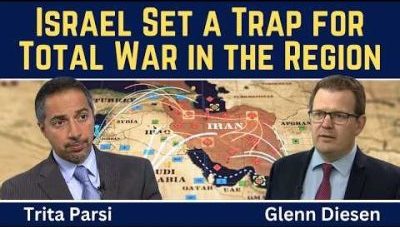
Trita Parsi: Israel Set a Trap for Total War in the Region
or go to
Aletho News Archives – Video-Images
Book Review
Why the War on Conspiracy Theories Is Bad Public Policy
By Kevin Barrett • Unz Review • February 1, 2019
 A Review of Conspiracy Theories and Other Dangerous Ideas by Cass Sunstein (based on an earlier paper co-authored with Adrian Vermeule); In Defense of Troublemakers: The Power of Dissent in Life and Business by Charlan Nemeth; and Conspiracy Theories and the People Who Believe Them, edited by Joseph E. Uscinski
On January 25 2018 YouTube unleashed the latest salvo in the war on conspiracy theories, saying “we’ll begin reducing recommendations of borderline content and content that could misinform users in harmful ways—such as videos promoting a phony miracle cure for a serious illness, claiming the earth is flat, or making blatantly false claims about historic events like 9/11.”
At first glance that sounds reasonable. Nobody wants YouTube or anyone else to recommend bad information. And almost everyone agrees that phony miracle cures, flat earthism, and blatantly false claims about 9/11 and other historical events are undesirable.
But if we stop and seriously consider those words, we notice a couple of problems. First, the word “recommend” is not just misleading but mendacious. YouTube obviously doesn’t really recommend anything. When it says it does, it is lying. … continue
Blog Roll
 Aletho News
- Araghchi blasts ‘parasitic’ alliance as US taxpayers pay for Israel’s war on Iran
- Easy fix for Europe’s chaos? Stop fueling war against Russia
- Putin’s key remarks on peace talks and Europe’s ‘schizophrenia’
- Trita Parsi: Israel Set a Trap for Total War in the Region
- Trump’s Iran war is on an Israeli leash
- Saudi oil boss issues global supply warning
- Riyadh Says Its Oil System Is Intact. The Numbers Say Otherwise.
- Trump and Netanyahu Want to “Finish the Job” on Iran
- US ‘one-sided dictation’ not Iran’s beliefs makes rational talks impossible: Baghaei
- Iran’s Next Strike May Not Explode. It Could Shut You Down /Col Doug Macgregor
- If Americans Knew
- DAILY UPDATE: Latest essential news on Palestine, Israel, & region
- The Israel Lobby’s Changing Fortunes
- AIPAC has become such a political liability that it’s shifting to a more “nimble” approach to buying politicians
- At least 160 Israeli settler attacks in 2 weeks
- Will Gaza’s Ancient Christian Community Disappear Forever?
- Israel’s vision of regional security rests on keeping Arab states weak
- Heidi Levine recounts how Palestinian youths helped save her in settler attack
- DAILY UPDATE: Latest essential news on Palestine, Israel, & region
- Trump’s Intensifying Sabotage of the ICC, for Israel’s Sake
- Israeli military detain US and UK volunteers in West Bank including Democratic NY politician Brad Lander
- No Tricks Zone
- E-Cars Reduce CO2 Emissions By Only 41% Compared To Internal Combustion Engine Vehicles
- Predictions Made By Renowned Climate Professor Over Past Decades Have Been Proven To Be Poor
- New Study Suggests Large Regions Of The Pacific Ocean Have Been Cooling For The Last 80 Years
- Germany’s Green Energy Debacle: High Energy Costs Force Kahla Porzellan to Close After 182 Years!
- New Study: 50 Years Of The Most Aggressive ‘Net Zero’ Policies Can Only Affect The Global Climate By 0.03°C
- US September “Heat” Was No Record…Many Records Set Decades Ago
- Latest European Green Energy Debacle; Portugal’s Largest Flagship Solar Park Insolvent!
- Green Energy Debacle: German Expert Professor Fritz Vahrenholt Warns Of Severe Economic And Social Consequences
- Two More Paleo Reconstructions Affirm Meters-Higher Sea Levels Across Ireland, Brazil 7000-6000 Years Ago
- New Study: Earth And Venus Surface Warmth Largely Explained By Convection And Lapse Rate, Not CO2 Or Radiation


