Egypt seizes cement bound for Gaza
Ma’an – July 16, 2011
EL-ARISH, Egypt — Egyptian border guards thwarted an attempt to smuggle more than 20 tons of cement into Gaza via tunnels along the border, security sources told Ma’an.
Palestinian and Egyptian smugglers were involved in the effort to bring large amounts of building materials into the besieged enclave, they added. The smugglers fled the scene.
Forces raided the area and seized 430 bags of cement, the security officials said. The cement will be sold at auction and the tunnel will be blocked by stones, they added.
Crackdowns, Torture and Intimidation in Bahrain
By Stephen Lendman | July 16, 2011
Largely ignored by Washington, Western governments, and America’s media, the ruling Al Khalifa monarchy continues cracking down brutally against nonviolent protesters since civil resistance began last February.
On July 14, UK Telegraph writer Richard Spencer headlined, “Bahraini woman poet tells of torture while in custody,” saying:
Incarcerated after reciting a poem critical of government policies, “Ayat al-Qurmezi (age 20) became one of the symbols of the (ongoing) protests…. After she was arrested….she was beaten, electro(shocked) and threatened with sexual assault while in custody.”
On July 11, the Bahrain Center for Human Rights (BCHR) headlined, “Teachers ordeal in Bahrain: arrested, tortured, sacked, suspended and prosecuted,” saying:
Teachers and Bahrain Teachers Association (BTA) members participated in protest demonstrations, demanding respect for human rights and democratic change. As a result, they faced “arbitrary arrests, military prosecution, torture, suspensions, salary cuts, and investigation.”
BTA board members were arrested, held incommunicado with no access to family or lawyers. A month later, some were released. Others are still detained, including BTA President Mahdi Abu Deeb, charged with:
“deliver(ing) speeches haranguing and instigat(ing) protesters and inciting them against the political regime, flouting the real voluntary and lofty goals of the association.”
On June 6, Deeb and BTA Vice President Jaleela Al Salman were tried in military court charged with:
“inciting others to commit crimes, calling for the hatred and overthrow of the ruling system, holding pamphlets, disseminating fabricated stories and information, leaving work on purpose and encouraging others to do so and taking part at illegal practices.”
So far, at least 66 teachers were arrested. In addition, riot police repeatedly targeted 15 or more girls’ schools. Teachers and students were arbitrarily arrested, detained, and “physically abused.”
Other schools were also attacked. Many teachers were arrested, interrogated, intimidated, abused, charged with going on strike, participating in peaceful protests, and inciting anti-regime sentiment.
In custody, they were beaten and tortured. One female teacher said:
“Around 10 policewomen were asking me and beating me at the same time. Then they handcuffed me and kept beating me on the head and back while kicking me and stepping on my feet.”
Others were threatened with rape and beaten. A woman who had major back surgery was repeatedly kicked there after explaining her medical condition.
Many faced secretive military trials and convicted. More trials are expected. Many others were arbitrarily suspended from positions or sacked. More remain under investigation. Intimidation throughout Bahrain is pervasive.
On June 14, Human Rights Watch headlined, “Bahrain: Stop Military Court Travesty of Justice,” saying:
HRW called for ending military tribunal injustice, and “free(ing) everyone (including opposition politicians, medical professionals, students, teachers, journalists, and human rights activists) held solely for exercising their rights to free speech and peaceful assembly.”
HRW’s Middle East director Joe Stork said:
“Most defendants hauled before Bahrain’s special military court are facing blatantly political charges and (unfair) trials.”
Human Rights First (HRF) on Bahrain
On July 14, a HRF press release headlined, “NEW REPORT: Despite National Dialogue Crackdown Continues in Bahrain,” saying:
The Bahraini government “continues to intimidate, torture, and detain human rights defenders, and shoot at civilians.” According to HRF’s Brian Dooley:
“Human rights defenders with whom we spoke are wary that the dialogue is (nothing) more than elaborate play-acting for the international community’s benefit.”
The report titled, “Bahrain: A Tortuous Process” presented findings based on a July 6 – 12 fact-finding mission. It included interviews with human rights defenders, other activists, victims and their families, dozens of recently released detainees, journalists, medical professionals, students, and Bahraini government officials.
In addition, HRF personnel “witnessed riot police firing on unarmed women without warning with a variety of weapons.”
Nonetheless, peaceful marches and protests continue, despite security force attacks, using sound bombs, tear gas, rubber bullets, and live fire.
Human rights defenders are prime targets, facing arrests, detentions, torture, and illegitimate trials. In fact, (on June 21) prominent activist Abdulhadi Al Khawaja received life in prison in one of many show trials.
Others like him express views anonymously, fearing reprisals if go public. They also assume their phones are tapped and goings monitored. A Bahrain Youth Society for Human Rights member said:
“We live under the constant fear of arrest. They can come at any time for us.”
Another activist said homes and other facilities are regularly raided, adding:
“I still wake up scared. I have clothes ready, next to the bed. I get up sometimes in the middle of the night and look out the window if I hear a noise, thinking it’s them again. It’s a permanent fear that they could come at any time, day or night.”
Human rights defenders complained about Washington’s double standard, muting its regime criticism, stressing Bahrain’s an important regional partner, ally, and home to the US Navy’s Fifth Fleet.
Disingenuously on July 2, Obama welcomed Bahrain’s National Dialogue, calling it “an important moment of promise….The United States commends King Hamad bin Isa Al Khalifa for his leadership in initiating the dialogue.”
In contrast, one participant told HRF:
“There are four halls, each having between 50 to 80 participants” allowed five minutes to speak. “The session ends while some still have not talked. Nothing is known about how all these chaotically dispersed talks will end up….” King Hamad has final say.
“You have it all predetermined and the final document has already been decided. These meetings are nothing more than a camouflage. It is a joke to call it a dialogue to start with.”
Based on numerous interviews, HRF reported “credible, consistent accounts of torture,” other forms of abuse and humiliation, including detainees forced to kiss photos of the king, belly dance, make animal noises, and sign confessions.
One former detainee said he was blindfolded for weeks, forced to stand for hours, wasn’t allowed to wash or pray, and was even beaten when permitted to use the toilet. Others had similar horror stories. Injured detainees were also abused, including on their wounds. Intimidation, humiliation, and forced confessions are routine.
On July 6, HRF’s Brian Dooley witnessed riot police attacking peaceful pedestrians, saying:
“People were standing in doorways, chatting….It was a calm, chatty atmosphere…. (S)uddenly riot police (with) shields appeared behind us.” With no warning, they opened fire, using “sound bombs, tear gas canisters, and rubber bullets.”
People started screaming. Some were struck, including by shrapnel. “I could see people ahead of us running, panicking. The police kept on firing at us….We were not part of a rally, or even near (one). There were a few dozen people spread out along the length of the street in small groups like ours, and the police just appeared and attacked us.”
Others told HRF similar stories, police firing on unarmed, peaceful civilians without warning. People not in detention face harassment. No one feels safe. Abuses continue regularly.
Protected by Washington, Bahrain is a lawless police state, targeting anyone seen challenging regime authority and many others for being in the wrong place at the wrong time.
Nonetheless, peaceful protests continue, despite punitive reprisals, including arrests, detentions, torture, show trials, and imprisonment. Nary a word from Washington complains.
A Final Comment
A new Zogby International Arab American Institute poll shows unfavorable attitudes about America. In fact, Obama’s 10% or lower approval rating surpasses Bush’s lowest level. In fact, he scores worst on Palestine and engagement with the Muslim world.
In five of six countries surveyed, Washington scored lower than Turkey, China, France or Iran. Specifically, “US interference in the Arab world” is called the greatest obstacle to regional peace and stability after Israel’s occupation of Palestine.
Libya perhaps was one war too many. Waging it increased negative perceptions about America and Obama.
Stephen Lendman lives in Chicago and can be reached at lendmanstephen@sbcglobal.net.
Also visit his blog site at sjlendman.blogspot.com
Gaza Rejects Greek Government Charity
The following letter was delivered to the Greek Government on July 12, 2011 making it clear that the people of Gaza seek freedom and respect for their human rights, including their right to lead a dignified life, not charity. Seemingly deaf to their call, yesterday a spokesman for the Greek Ministry of Foreign Affairs, Mr. Delavekouras, repeated the Greek Government’s “generous offer” to deliver limited humanitarian aid to the people of Gaza – instead of helping them gain the freedom that Israel continues to deny them.
12 July 2011
Dear Prime Minister Papendreou,
Dear Foreign Minister Lambrinidis
We, members of Palestinian civil society in Gaza, have been watching the actions your government has taken to block Freedom Flotilla 2 from setting sail towards the biggest open air prison – the Gaza Strip – to challenge Israel’s criminal blockade. Israel’s closure of Gaza has deprived us of things that most people take for granted, first and foremost, our freedom of movement. We are not allowed to pursue adequate health care or educational opportunities because we cannot travel freely. We are cut off from our families in other parts of the occupied territory and abroad; and we are not allowed to invite people to visit us in Gaza. Now, you have imported this restriction on the people whose main mission is to stand in solidarity with us.
The people of Gaza are not only in need of humanitarian aid because we are prevented from building our economy. We are not allowed to import raw materials or to export; our fishermen and farmers get shot at when attempting to fish or to harvest their crops. As a result of deliberate Israeli policy, 80% of our people have become food aid dependent, our infrastructure is in shambles, and our children cannot imagine a day when they will know freedom.
Your offer to deliver the cargo of the Freedom Flotilla entrenches the notion that humanitarian aid will solve our problems and is a weak attempt to disguise your complicity in Israel’s blockade.
We are so sorry not to accept your charity. The organizers and participants of the Freedom Flotilla recognize that our plight is not about humanitarian aid; it is about our human rights. They carry with them something more important than aid; they carry hope, love, solidarity and respect. Your offer to collude with our oppressors to deliver aid to us is totally REJECTED.
While it is clear that you have been under enormous political pressure to comply with the will of the Israeli regime, to collaborate with Israel in violating international law and legitimizing the siege, we refuse to accept your breadcrumbs. We crave freedom, dignity and the ability to make choices in our daily lives. We urge you to immediately reconsider and to let the Freedom Flotilla sail.
Finally we recognize the historical relations between our people and your country’s support for our legitimate rights. With this history in mind and your previous acknowledgment of the freedoms denied to us, we are calling on you to allow the freedom flotilla boats to leave for Gaza, thus challenging Israel’s illegal blockade of the Gaza Strip and illegal occupation of Palestinian land.
Sincerely,
Palestinian Network of NGOs (PNGO)
Representing over 60 non-governmental organizations in Gaza
Palestinian International Campaign to End the Siege on Gaza
General Society for Rehabilitation
Deir Al-Balah Cultural Centre for Women and Children
Maghazi Cultural Centre for Children
Al-Sahel Centre for Women and Youth
Rachel Corrie Centre, Rafah
Rafah Olympia City Sisters
Al Awda Centre, Rafah
Al Awda Hospital, Jabaliya Camp
Ajyal Association, Gaza
Al Karmel Centre, Nuseirat
Local Initiative, Beit Hanoun
Beit Lahiya Cultural Centre
Al Awda Centre, Rafah
Middle East Children’s Alliance – Gaza office
Alshomoa Club for Women
General Union for Public Services Workers
General Union for Health Services Workers
General Union for Petrochemical and Gas Workers
General Union for Agricultural Workers
General Union of Palestinian Syndicates
General Union of Palestinian Women
Palestinian Congregation for Lawyers
Palestinian General Federation of Trade Unions (PGFTU)
Union of Health Work Committees
Union of Synergies—Women Unit
Union of Women’s Work Committees
Palestinian Association for Fishing and Maritime
Palestine Sailing Federation
Fishing and Marine Sports Association
Palestinian Women Committees
Progressive Students’ Union
Israel navy attacks international boat in Gaza
Ma’an – 14/07/2011
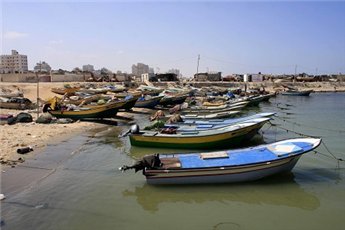
BETHLEHEM — Israeli naval forces attacked an international third party monitor on Wednesday in Gazan territorial waters.
Civil Peace Service Gaza works as part of a non-violent initiative to monitor human rights abuses in Gaza.
Israeli forces fired at the CPS Gaza monitoring boat, the Oliva, with water cannons on Wednesday at 12.05 p.m local time, a statement by the organization said.
There were four people aboard at the time, two CPS Gaza members, the captain and a journalist.
“We were fewer than two miles away from the Gaza coast when they fired at us. We saw them firing water at some fishing boats so we headed to the area. When we got close, the warships left the fishing boats, and turned on us.
“They attacked us for about ten minutes, following us as we tried to head to shore and eventually lagged when we reached about one mile off the Gaza coast,” British human rights worker Ruqaya Al-Samarrai said.
A fishing boat was also fired at and damaged with live rounds.
An Israeli army spokesman said he was unaware of the incident.
The Gazan fishing community is often similarly targeted and the fishing limit is enforced with comparable aggression, with boats shot at or rammed as near as 2 nautical miles to the coast by Israeli gunboats, CBS Gaza added.
A marine blockade imposed by Israel restricts Gazan fisherman from accessing eighty five percent of Gaza’s fishing waters as agreed upon under the Oslo agreements.
Following the capture of Israeli soldier Gilad Shalit in 2006 the Israeli navy imposed a complete sea blockade on the Gaza Strip for several months.
After Hamas took control of the coastal enclave in 2007, Israel limited fishing access to 3 nautical miles from the coast.
During the Oslo accords negotiators had agreed upon 20 nautical miles of fishing access along Gaza’s coastline.
Rights groups have condemned the blockade of Gaza as a form of collective punishment of the 1.6 million residents.
Irish delegation to visit Bahrain
Press TV – July 11, 2011
An Irish delegation plans to visit the Bahraini capital Manama to attempt to determine the fate of 47 doctors and nurses arrested during the anti-government protests in the Persian Gulf state.
The delegation, headed by Professor Damian McCormack, includes Member of the European Parliament (MEP) Marian Harkin, Fianna Fail Senator Averil Power, former foreign affairs minister David Andrews, and representatives from the Irish Nurses and Midwives Organization (INMO).
Bahrain has released 34 doctors and paramedics who were detained during the brutal crackdown on massive demonstrations in March but announced that they would soon be tried in special military courts. Many of the doctors have stated that they were coerced to sign confessions through torture while in police custody.
The delegation, which plans to leave for Manama on July 12, has requested to hold talks with Bahraini King Hamad bin Isa Al Khalifa through Bahrain’s embassy in London.
“It’s quite extraordinary for doctors to be arrested in any country. These doctors were arrested for doing their jobs,” the Herald quoted Senator Power as saying.
One dead as strike halts commerce in Dominican Republic
Dominican Today | July 11, 2011
SANTO DOMINGO. – The barrio organization FALPO on Monday rebuked the Sunday night killing of Julian Felix Plasencia in the central city of Bonao, allegedly by a National Police patrol, prior to the start of the 24 hour strike that began 6 a.m. Monday, as commerce halts to a standstill.
Falpo national coordinator Milcíades Geraldo said he was told that Felix, 52, was killed late last night in the Bonao barrio Prosperidad, when a police patrol violently entered the area firing their weapons.
He said Felix’s death has infuriated Bonao’s residents and created extreme tension in the entire municipality, for which Falpo will intensify the protests to demand justice. “As we had warned the government line is to stoke anarchy and plant violence amid the national strike to traumatize the people, trying to stop this spiraling nationwide fight that we’ll continue.”
“Falpo rebukes the murder of Julian Felix Plasencia and will also demands to investigate the crime and that the members of the patrol are taken to justice,” Geraldo said.
He called on the Government and the ruling PLD party to control its followers and put a stop to the repression in Bonao, and warned that the town will fight them firmly in the streets, by expanding the protests for a dignified life, with justice and fairness.
Palestinian Woman Wounded After Army Fired At Homes In Northern Gaza
By Saed Bannoura | IMEMC & Agencies | July 10, 2011
Palestinian medical sources reported on Saturday night that Israeli soldiers, based near the northern Gaza border, opened automatic fire at a number of Palestinian homes wounding a young Palestinian woman and inflicting damage to property.
Adham Abu Salmiyya, spokesperson of the Higher Committee of Medical Emergency Services in Gaza, reported that soldiers based near the border of Beit Lahia, opened random fire at nearby homes.
Abu Salmiyya added that the young woman was hit by bullet fragments in different parts of her body. Medics rushed to the scene and evacuated the woman to a nearby hospital.
In related news, the Israeli Air Force carried out, on Saturday at night, an air-strike targeting a brick factory, east of Gaza city.
Eyewitnesses reported that at least one missile directly hit the factory causing excessive damage, and also inflicting damage to nearby homes.
68 Hamas members arrested since unity deal
Ma’an – 06/07/2011
GAZA CITY — Palestinian security forces have been cracking down on Hamas members in the West Bank despite the implementation of a reconciliation deal, Hamas leaders said Wednesday.
Hundreds of supporters of the party and Hamas leaders have been summoned by Palestinian Authority forces and 68 members have been arrested, a statement by Hamas said.
“Thirty-nine of those who were arrested were ex-prisoners freed from Israeli jails, while seven political prisoners were brought to military trials.”
The Palestinian Authority has also violated reconciliation principles by dismissing four teachers from Jenin and Nablus schools and by closing down charities in the West Bank, the statement added.
Medical aid convoy lands in Gaza
Palestine Information Center – 07/07/2011
GAZA — A medical aid convoy sent by the Arab Medical Union has delivered some five tons of aid to the Gaza Strip after landing on Wednesday.
The convoy, headed by the AMU emergency committee secretary-general Ibrahim al-Za’faraani, entered through Rafah crossing on the Strip’s border with Egypt.
On board were 24 drugs which ran out in the Strip. The total value of the shipment is 290,000 dollars.
The Gaza Strip has been suffering a medical crisis due to Israel’s siege. Dozens of medicines and medical consumables have been out of stock there.
Israeli Occupation Forces destroy nine water tanks in parched Palestinian village
By Sean O’Neill | +927 | July 6, 2011
Late Tuesday morning, July 5, around 11:30am, a convoy of IDF, Civil Administration, and Border Police arrived in the Palestinian village of Amniyr accompanying a flatbed truck with a front end loader and a backhoe. Israeli settlers having a picnic at the settlement outpost next to the Susiya archaeological site looked on as the army destroyed nine large tanks of water and a tent.

(Photo: Joe Yoder, Chrstian Peacemakers Team)
Amniyr is a small village of 11 families in the South Hebron Hills, just northeast of the Palestinian village of Susiya and the Israeli settlement of the same name. The village of shepherds and farmers, like most villages in the area, is totally dependent in the summer on tanks of water.
That water does not come cheap. Costs of transportation, due to the poor infrastructure in the area – Palestinians are normally not permitted to build roads in Area C of the West Bank and have restricted access to Israeli roads – mean the cost of water is much higher than normal. A cubic meter of water in the nearby town of Yatta costs 6 shekels. In Amniyr it cost 35. The tanks themselves cost 1000 shekels each, and each tank held 2 cubic meters of water, yielding a total of over 10,000 shekels in damage, which for many in the area is equivalent to a half year’s work.
This is the fifth demolition in Amniyr in the last year, according to village residents and Nasser Nawaja, a B’Tselem worker. One month ago the army destroyed 11 houses and two cisterns full of water. The cisterns had also been destroyed 5 months ago and rebuilt with the help of Israeli activists from Ta’ayush. The ruins of houses from previous demolitions is still present, broken stones and twisted metal. Located just south of the archaeological site of old Susiya, the Israeli government claims it is state land.
Ten of the families now sleep in Yatta and come during the day to tend to their olive and almond trees as they have no place to stay and no water. But Mohammed Hussain Jabour and his wife Zaffra refuse to leave. The morning after the demolition they were making tea on an open fire next to their tent. “I’ve been here with my father and our sheep since I was a little boy,” he said, with visible indignation. “Now I’m an old man. And now Israel tells me I can’t be here. I’m not leaving.”
“What are we supposed to do?” Zaffra asked. “What will we drink? We can’t live without water.”
The demolition comes on the heels of the demolition of 6 tent homes and a lavatory in the village of Bir al Eid, two kilometers to the south, two weeks ago. Both incidents are the latest in a long history of demolitions of Palestinians homes and buildings in the area by the Israeli army, affecting both these villages and the villages of Susiya and Imneizel, a village south of Susiya.
Sean O’Neill worked for Christian Peacemaker Teams from 2006-2009 in the South Hebron Hills supporting Palestinian-led nonviolent resistance to Israeli occupation and continued settlement expansion. He is currently an MA candidate at New York University in Near Eastern Studies and Journalism. He is in Israel/Palestine this summer researching for his masters’ thesis.
Born at a checkpoint
IRIN – 05/07/2011
LONDON — For three years now a UK medical journal, the Lancet, has been working with Palestinian health professionals and researchers to document the effects of stressful living – coping with economic difficulties and shortages, restrictions on movement, political tensions and fear of outside attack – and has just published its latest findings.
Restrictions on movement are an everyday irritant in the occupied Palestinian territories. Apart from tedious and humiliating searches at checkpoints, residents never know for sure how long their journeys will take, or whether, indeed, they can be made at all. But in a medical emergency these restrictions can be a matter of life or death.
Last year the Lancet’s collaborators described vividly the terror of women waiting to give birth during Israeli bombing raids on Gaza in early 2009: They knew they might need urgent medical care at a time when they were trapped in their homes during the attacks. This year another of their researchers has looked at what happens to women already in labor who are caught at checkpoints.
Halla Shoaibi of Ann Arbor University in the USA estimates that in the period she studied (2000-2007) 10 percent of pregnant Palestinian women were delayed at checkpoints while traveling to hospital to give birth. One result has been a dramatic increase in the number of home births, with women preferring to avoid road trips while in labor for fear of not being able to reach the hospital in time.
Their fears are well founded. Ms Shoaibi says 69 babies were born at checkpoints during those seven years. Thirty-five babies and five of the mothers died, an outcome which she considers to amount to a crime against humanity.
When the Lancet group held their first meeting in March 2009, Gaza was still reeling from the Israeli attacks known as Operation Cast Lead, which led to the deaths of over 1,400 people. In the latest publication, researchers return to that period, with further analysis of survey material about the effects of the attack on the civilian population.
The disruption to normal life was great. Forty-five percent of those surveyed had to leave their homes and move in with other people for at least 24 hours; 48 percent had other people moving in with them; 48 percent of homes were damaged. Nearly everyone had power cuts all or part of the time, and many also suffered disruption to other services – telephone, water supply and rubbish collection.
Psychological effects
In terms of psychological effects, over 80 percent reported a family member screaming or crying or having nightmares. Loss of appetite was also commonly reported.
But although Gaza is a relatively small area, the effects varied considerably according to where the respondents lived, with the governorates of Gaza and North Gaza the most, and Khan Younis and Rafah (near the border with Egypt) the least affected.
Another study looked at the feelings of insecurity which remained, even six months after the end of the attacks. Women felt more nervous and insecure than men. The groups who reported lower levels of insecurity were those who were better educated, and had a better standard of living, and also older people, those over 65.
Featured Video

New positive ivermectin evidence
or go to
Aletho News Archives – Video-Images
From the Archives
Fanatical Followers of the Covid Regime: A Jim Jones-Style Cult?
By Professor Roger Watson and Dr. Niall McCrae | The Daily Sceptic | November 15, 2021
As scholars at leading British universities over recent decades, we witnessed the replacement of critical thinking and debate by narrative: facts are discrimination and scientific method is imperialism; truth, instead, is derived from ‘progressive’ values. This educational trend may be a major contributory factor to the ease in which society has been inculcated to the Covid ‘new normal’ of masking, testing, and repeated doses of vaccines for a disease of similar risk to severe influenza.
One doesn’t need much critical reasoning to observe the flawed logic of some vaccination enthusiasts, such as people who respond to experiencing any side effects, however debilitating, by saying “at least I know it’s working”, or, after contracting the disease despite their promised inoculation (over 90% effective, according to initial drug company claims), “I’d have been worse off without the jab.” … continue
Blog Roll
 Aletho News
- Merck Virologists Admitted to Falsely Certifying Vaccine Efficacy
- Mandatory Folic Acid for every man, woman & child
- Pro-Palestine protesters arrested outside UK’s ruling Labour Conference in Liverpool
- Mauritius denies landing permit to flight from Israel, forcing cancellation: Tour operator
- Israeli finance minister calls for genocidal war on West Bank, annexation of south Lebanon
- 12 Things Your Psychiatrist Was Trained Not to Tell You
- From Unipolar Universalism to Multipolar Civilizational Distinctiveness
- RSF military group defects, joins Sudanese army: State media
- Ireland goalkeeper refuses to play ‘Israel’ as squad weighs boycott
- China pushes back against US on Cuba, Iran
- If Americans Knew
- Israel forces Gazans to live in constant peril – Daily Update
- Deconstructing Netanyahu’s pants-on-fire UN rant – Daily Update
- Trump betrayed voters with his campaign lies and prioritized a foreign country once he took office
- Netanyahu calls Israel’s war in Gaza ‘opposite of genocide’ in UN speech to near-empty hall
- Settler Kidnappings: Torture, Sexual Abuse and Terrorisation of Palestinian Abductees as Israel Deepens Annexation of West Bank
- Gaza winter nears as 162,000 tents become unusable, raising fears of humanitarian crisis
- Netanyahu says, “It’s the opposite of genocide”; UN says Gaza economy is world’s ‘most severe crisis on record’ – Daily Update
- Israel’s US-Backed Assault on Gaza Has Created the ‘World’s Most Severe Economic Crisis on Record’: UN
- ‘Protecting U.S. Citizens’… From Israel
- ‘This is where I live now, the back of a truck’: a day in the life of a grandmother in Gaza
- No Tricks Zone
- New Study: Earth And Venus Surface Warmth Largely Explained By Convection And Lapse Rate, Not CO2 Or Radiation
- 2025 Nature Paper Claiming Worsening Global Drought Gets RETRACTED …Heavily Flawed
- New Study: ‘Global Drought Shows No Detectable Recent Acceleration Under Climate Warming’
- Economic Masterminds: German Socialists Suggest Taxing Productivity Gains Stemming From Using AI
- The South China Sea Has Not Been Cooperating With The Climate Change Narrative
- Energy Crisis: Germany Enters Heating Season With Historically Low Gas Reserve Fill Levels
- New Study: The Antarctic Ice Sheet Gained Mass From 2020-2024 Due To Staggering Snow And Ice Accumulation
- Study: Ocean Heating Rates From Thousands Of Years Ago ‘Dwarf’ Modern Ocean Heating Rates
- Climate Extremists Target, Attack Large-Scale Power Grid Infrastructure In Germany!
- New Study: Antarctic Ice Melt Has Contributed Less Than 1 Centimeter To Sea Level Rise In The Last 30 Years

