More Freedom Flotilla Members Confirm They Faced Rape And Torture While In Israeli Captivity
The Dissident | January 2, 2026
Recently, the German journalist Anna Liedtke, who was part of the Freedom Flotilla initiative, which broke the Israeli starvation siege of Gaza and brought aid, revealed that she was raped when she was detained by Israeli authorities.
At a conference, Liedtke revealed that, “I was part of the Freedom Flotilla as a journalist, and I was on the journalist and medical boat … around 100 nautical miles away from the coast of Gaza, we were intercepted and we were put into prison for five days, we were transferred from one prison to another, and during the strip search, I was raped”.
Since her testimony, the Freedom Flotilla Coalition has revealed that, “Anna is not the only flotilla participant to have suffered sexual violence at the hands of Israeli police and prison officials. Italian journalist Vincenzo Fullone, who was also aboard the Conscience, was subjected to repeated sexual violations amounting to rape while unlawfully detained, as was Australian activist Surya McEwen.”
The coalition provided testimony from the three victims of Israeli rape and sexual torture, writing that Anna Liedtke said, “After I was kidnapped by Israeli forces, I was subjected to repeated physical and sexual abuse. During a forced strip search, I was raped by Israeli female guards. I am coming forward not for myself, but for all the women who have endured sexual violence and sexual torture in Israeli prisons—for those who did not survive these attacks, for those who are experiencing this abuse now, and for those who cannot speak about it”.
The report also quoted Italian journalist Vincenzo Fullone saying, “In three separate occasions, I was ordered to enter a small, specially arranged room where I was completely stripped and subjected to invasive and painful anal searches. I remained silent each time to avoid provoking further violence and to deny the guards the satisfaction of my suffering. During the third search, the pain became unbearable and was compounded by mockery, verbal abuse—including the words, ‘Don’t you like it, Hamas whore?’—and the photographing of my body. I am still unable to find peace because if they were willing to do this to me, I can’t imagine what they’ve done – and continue to do – to the Palestinians under their complete control.”
The report quoted Australian activist Surya McEwen saying, “I was stripped naked and sexually assaulted by Israeli officers while being held hostage. One held a gun to my head, angrily threatening that he would kill me, while the other yanked and pulled on my genitals, perversely and almost gleefully. While there is a psychic cost to this experience, I absolutely refuse to feel shamed, lessened, or stained by it, as these all belong solely to the perpetrators. This small taste of the sadism that Zionist colonisers inflict en masse on Palestinians has not weakened my commitment, but rather strengthened my resolve to work toward liberation”.
As the Freedom Flotilla Coalition noted, “The horrific assault on flotilla volunteers must be understood in the broader context of an entrenched system of violence in which Israeli soldiers, police, and prison guards have long operated with impunity. Sexual violence, including rape, gang-rape, humiliating strip searches, and other forms of sexual torture, has been repeatedly committed against Palestinians in Israeli custody and documented by Israeli, Palestinian, and international human rights organizations. While we are committed to offering care and support for flotilla volunteers who have suffered sexual violence, we recognize that Palestinians–activists, children, women, men, and elderly detainees– have endured far more pervasive and systematic sexual violence and torture by Israel, with no credible accountability mechanisms.”
Indeed, the testimony from the Freedom Flotilla Coalition members matches harrowing testimony that has emerged from released Palestinian hostages from Israel’s torture dungeons.
Testimony taken by the Palestinian Centre for Human Rights reveals an “organized and systematic practice of sexual torture, including rape, forced stripping, forced filming, sexual assault using objects and dogs, in addition to deliberate psychological humiliation aimed at crushing human dignity and erasing individual identity entirely.”
The new testimony from the Freedom Flotilla Coalition provides further evidence that Israel and Israeli authorities have used rape and sexual torture as official policy against detainees as a broader part of the overall genocide in Gaza.
Cover-Up Is an Indispensable Chronicle of American Overreach
A new documentary about the journalist Seymour Hersh uncovers the pathologies of U.S. imperialism
By Leon Hadar | The American Conservative | January 2, 2026
Laura Poitras and Mark Obenhaus’s new film Cover-Up is more than a documentary about the legendary journalist Seymour Hersh—it is an inadvertent chronicle of the pathologies of American empire. As a foreign policy analyst who has long advocated for realist restraint in U.S. international engagement, I find this film both vindicating and deeply troubling. It documents, through one journalist’s extraordinary career, the pattern of deception, overreach, and institutional rot that has characterized American power projection for over half a century.
What makes Hersh’s reporting invaluable from a realist perspective is that it consistently exposed the gap between stated intentions and actual policy outcomes. CIA domestic surveillance, the My Lai massacre, the secret bombing of Cambodia, Abu Ghraib—each revelation demonstrated what realists have long understood: that idealistic rhetoric about spreading democracy and protecting human rights often masks cruder calculations of power, and that unchecked executive authority in foreign affairs inevitably leads to abuse.
The documentary’s treatment of Hersh’s Cambodia reporting is particularly instructive. Here was a case where the American government conducted a massive bombing campaign against a neutral country, killing tens of thousands of civilians, while lying to Congress and the public. This wasn’t an aberration, but the logical consequence of what happens when a superpower faces no effective constraints on its use of force abroad. In exposing the scandal, Hersh also documented how empire actually functions when stripped of its legitimating myths.
Where Cover-Up excels is in revealing the architecture of official deception. Watching archival footage of government officials denying what later became undeniable, one sees the machinery of the national security state at work. These weren’t rogue actors—they were operating within institutional incentives that reward secrecy, punish dissent, and systematically mislead democratic oversight.
From a realist standpoint, this raises fundamental questions about American foreign policy. If our interventions in Vietnam, Iraq, and elsewhere were justified through systematic deception, what does this tell us about the nature of these enterprises? Realism suggests that states act according to their interests, but when those interests must be concealed from the public through elaborate cover-ups, we must question whether these policies serve genuine national interests or merely the institutional imperatives of the national security bureaucracy.
The film’s examination of Hersh’s Abu Ghraib investigation is devastating. What began as a story about individual soldiers torturing prisoners became, through Hersh’s reporting, an indictment of a policy apparatus that had systematically authorized abuse. The documentary shows how torture wasn’t an accident of war. Rather, it was deliberate policy, approved at the highest levels and then denied when exposed.
This validates a core realist insight: hegemonic projects, particularly those involving regime change and nation-building, create perverse incentives that corrupt institutions and individuals. The George W. Bush administration’s Iraq war, launched on false pretenses and executed with imperial hubris, produced precisely the kind of moral catastrophes that realists warned against.
The documentary is less successful in addressing the legitimate controversies surrounding Hersh’s later work, particularly his reporting on Syria and the raid that killed Osama bin Laden. As someone who believes the U.S. should be far less involved in Middle Eastern affairs, I’m sympathetic to questioning official narratives. However, the epistemological challenges of relying on anonymous sources while contradicting extensive documented evidence deserve more rigorous examination than this film provides.
This isn’t to dismiss Hersh’s skepticism toward official accounts—realists should always question the state’s narratives about its foreign adventures. But the documentary would have been strengthened by a more thorough engagement with these critiques. Even iconoclasts must be subject to scrutiny, especially when their reporting has significant geopolitical implications.
What Cover-Up illuminates, perhaps unintentionally, is the deterioration of the institutional ecosystem that made Hersh’s journalism possible. The New Yorker’s willingness to support lengthy investigations, to back reporters against government pressure, and to publish material that angered powerful interests—these conditions were products of a specific historical moment. Today’s fragmented media landscape, where institutional backing has weakened and partisan sorting has intensified, makes such work increasingly difficult.
This matters because realist foreign policy critique depends on investigative journalism to pierce official narratives. Without reporters like Hersh, the gap between rhetoric and reality becomes easier to maintain. The decline of this form of journalism coincides with—and perhaps enables—the persistence of failed policies in Afghanistan, Libya, Syria, and beyond.
The most powerful moments in Cover-Up are the intimate ones: Hersh describing meetings with sources who risked their careers and freedom to expose wrongdoing, the personal toll of challenging the national security establishment, the isolation that comes with being proven right in ways the powerful never forgive. These moments humanize what could otherwise be an abstract discussion of policy failures.
But they also highlight something crucial: Individual courage, while necessary, isn’t sufficient. Hersh exposed My Lai, yet the war continued for years. He revealed CIA abuses, yet the agency faced minimal accountability. He documented Abu Ghraib, yet the architects of the Iraq war faced no consequences. This pattern suggests systemic dysfunction that transcends individual malfeasance.
From a realist perspective, Cover-Up offers a sobering lesson: American foreign policy has been consistently characterized by overreach justified through deception. Whether in Vietnam, Iraq, or countless covert operations, U.S. policymakers have systematically misled the public about the nature, costs, and outcomes of military interventions.
This isn’t a partisan critique—the pattern spans administrations of both parties. It reflects structural features of how American power operates: an imperial presidency with minimal congressional oversight, a national security bureaucracy with institutional interests in threat inflation, and a foreign policy establishment committed to global primacy regardless of costs or consequences.
Hersh’s greatest contribution, documented powerfully in this film, was in providing the empirical record that supports a realist critique of American foreign policy. His reporting demonstrated that idealistic justifications for intervention—spreading democracy, protecting human rights, combating terrorism—often mask more cynical calculations and catastrophic failures.
Cover-Up is indispensable for anyone seeking to understand American foreign policy in the post-World War II era. It’s not a perfect documentary—the pacing occasionally lags, and it’s insufficiently critical of some of Hersh’s more controversial recent work—but its core achievement is significant: It documents how one journalist, through dogged investigation and institutional support, repeatedly exposed truths that powerful interests desperately wanted hidden.
For realists who have long argued for restraint in American foreign policy, this film provides historical validation. The pattern Hersh documented—overreach, deception, failure, cover-up—has repeated itself with depressing regularity. The question is whether contemporary institutions still possess the capacity to hold power accountable in the way that Hersh’s reporting once did.
In an era when American foreign policy debates remain dominated by interventionist assumptions, Cover-Up serves as a crucial reminder of where such thinking leads. It deserves the widest possible audience, particularly among those who shape and influence U.S. foreign policy. The lessons it documents remain urgent and, tragically, largely unlearned.
Israel arrested 42 Palestinian journalists in 2025
MEMO | January 2, 2026
The Palestinian Journalists Syndicate said on Thursday that the Israeli army arrested 42 Palestinian journalists during 2025, including eight women, in the occupied West Bank, Jerusalem and inside what it called “the 1948 territories”.
In a report, the union said Israeli authorities continued a policy of systematic targeting through arbitrary and administrative detention, physical assault, deportation, seizure of equipment and forced interrogation. It said these actions aim to “silence coverage and break the national media structure”.
The syndicate’s freedoms committee warned of what it described as a “dangerous shift” in arrest practices. It said this includes focusing on the most influential journalists, repeatedly arresting the same journalist, expanding the use of administrative detention without charge, and using physical and psychological violence as a means of deterrence.
The report documented dozens of cases in which journalists were arrested while working in the field and covering military raids. It said this is used as a way to “empty the field of witnesses”.
The union also reported a rise in raids on journalists’ homes and their arrest from among their families, which it said is intended to “break them psychologically and socially”.
German journalist says she was sexually assaulted in Israeli custody
ILKA | December 26, 2025
A German journalist detained by Israeli forces following the interception of a Gaza-bound aid vessel has accused Israeli prison authorities of sexually assaulting her while in custody, triggering renewed outrage over Israel’s treatment of international activists and detainees.
Anna Liedtke, who was aboard the humanitarian ship Conscience as part of the Freedom Flotilla initiative, said she was raped during a strip search while being transferred between Israeli detention facilities. The flotilla was attempting to challenge Israel’s naval blockade of the Gaza Strip, which human rights groups have long described as illegal and collectively punitive.
Liedtke was held for five days after Israeli forces seized the vessel in late 2025. In her first public testimony, she said the alleged assault did not occur in isolation but was part of repeated abuses during multiple prison transfers.
“We were transferred from one prison to another, and during the strip searches I was raped,” Liedtke said, describing the experience as deeply traumatic and humiliating.
Her account has sparked condemnation from prisoner rights organisations and human rights advocates, who say the allegations fit a long-established pattern of abuse, sexual violence, and mistreatment within Israel’s detention system. Advocacy groups argue that such practices have been systematically used to intimidate, degrade, and silence Palestinians and international solidarity activists alike.
Rights organisations stressed that while Palestinians have for years reported sexual violence, invasive searches, and torture in Israeli prisons, cases involving foreign nationals underscore that Israel’s abusive detention practices extend beyond occupied populations to anyone who challenges its policies.
“The testimony of Anna Liedtke reinforces what Palestinian prisoners, especially women, have been saying for decades,” one rights advocate said. “Israeli detention facilities operate with near-total impunity.”
Calls are now growing for an independent international investigation into the allegations, with activists urging the United Nations and international human rights bodies to intervene. They argue that Israel’s internal investigative mechanisms lack credibility and routinely fail to hold perpetrators accountable.
The Freedom Flotilla coalition said the assault allegation highlights the risks faced by activists attempting to break the siege on Gaza and accused Israel of using violence and sexual abuse as tools of repression. The coalition renewed its demand for an end to the blockade, which has devastated Gaza’s civilian population for more than a decade.
Human rights groups say the case exposes the broader reality of Israel’s detention regime, where activists, journalists, and Palestinians are subjected to violence with little oversight. They warn that without sustained international pressure, such abuses will continue unchecked, further eroding international law and basic human dignity.
Lebanese Detainees in Israeli Prisons: When Silence Becomes Surrender

Al-Manar | December 18, 2025
This is no longer a humanitarian file delayed by bureaucracy. It is a national test that Lebanon is failing in slow motion. Lebanese detainees remain locked inside Israeli prisons while their names circulate in press statements, their families count months without news, and the state responds with restraint that borders on abdication. When citizens are taken, hidden, denied Red Cross visits, and subjected to abuse, silence is not prudence. It is complicity by omission.
For an audience that understands the cost of confrontation and the meaning of deterrence, the facts are unmistakable: “Israel” is not holding detainees because it must, but because it can—because the political cost remains low.
File That Refuses to Close
The number of Lebanese detainees currently held by the occupation stands at 19 to 20, based on the latest confirmations from released Palestinian prisoners who encountered Lebanese captives previously listed as missing. The uncertainty itself is revealing. It is the result of deliberate Israeli obstruction, including the ongoing ban on Red Cross visits and the refusal to provide any official accounting. A large group of civilians—fishermen, a shepherd, and workers arrested in their fields—some of whom were detained after the ceasefire was declared.
These are not arrests justified by war. They are acts of abduction, carried out under the cover of “security,” and sustained by international inaction and local hesitation.
The ceasefire of November 27, 2024, was supposed to mark an end. Instead, it marked a shift in method.
Ali Younes was detained after the so-called cessation of hostilities.
Ali Tarhini was arrested inside the Lebanese town of Odeisseh on January 28, 2025.
Mohammad Ali Jheir—a fisherman from Naqoura—was shot with a rubber bullet and taken from his boat by Israeli naval forces, then transferred to Ofer Prison and placed in solitary confinement.
These are not isolated incidents. They form a pattern: ‘Israel’ exploits calm to seize civilians, converting ceasefires into opportunities for leverage. Months later, families still have no official information. The International Committee of the Red Cross has confirmed that Israeli authorities are blocking access to Lebanese detainees. This is not procedural delay—it is policy.
Testimonies from released prisoners speak of severe beatings, humiliation, and sexual abuse—violations that meet the definition of war crimes. The denial of visits is meant to do one thing: keep these crimes out of sight. A prison without witnesses is not detention. It is a black site.
Families Carrying What the State Will Not
With the state moving cautiously, families stepped forward forcefully. From protests outside ESCWA to meetings in Baabda, they have said what officials have not: This is not a humanitarian appeal. It is a demand.
Former detainee Abbas Qabalan spoke of civilians arrested while farming their land.
The mother of Mohammad Abdul Karim Jawad—a civilian nurse—has waited more than a year without a single official update. The wife of Ali Younes called for action “through every legal, diplomatic, and political means.” The mother of Ali Tarhini named the date and place of her son’s arrest—inside Lebanon.
These families are not guessing. They are documenting publicly because the file has been left on their shoulders. Officials have called the detainee file a “priority.” But priorities are measured by action, not vocabulary. So far, the issue has been confined to the so-called mechanism committee, a framework chaired and constrained by U.S. oversight—hardly a venue known for pressuring ‘Israel.’ Rather than securing releases, it has allowed the occupation to freeze the issue while continuing violations.
The Ministry of Foreign Affairs, which should have escalated the file internationally, remains largely absent. No sustained UN campaign. No legal offensive. No international naming and shaming.
This is not incapacity. It is a political choice.
Human rights researcher Ghina Ribaai was direct: Lebanese detainees are paying the price for a state that wasted leverage. The handover of an Israeli detainee without any reciprocal release sent a dangerous message—that ‘Israel’ can detain Lebanese citizens without consequence. That message still stands.
Detainees as Bargaining Chips ‘Israel’ has made its strategy clear. Lebanese detainees are not prisoners—they are hostages, to be traded against unrelated political files: borders, negotiations, “working groups.” Lebanon has rejected this logic rhetorically. But rejection without pressure is empty. ‘Israel’ responds only to cost—political, legal, and strategic.
What Must Change—Now
This file cannot remain seasonal. It requires:
• A clear sovereign decision
• An aggressive diplomatic and legal campaign
• International escalation, not quiet mediation
• Continuous media pressure that keeps the issue alive
For an audience that understands resistance, this truth is familiar: rights are not returned through patience alone. The detainee file is not a test of sympathy. It is a test of statehood.
‘Israel’ does not release prisoners because it is reminded of morality. It releases them when detention becomes expensive. As long as Lebanese detainees remain an afterthought—raised in speeches but not imposed as a cost—’Israel’ will continue to detain, abuse, and bargain.
The families have said it plainly, and history confirms it:
A nation that does not fight for its detainees forfeits a core element of its sovereignty.
In a country whose modern identity was shaped by the principle that prisoners are never abandoned, failure here is not neutrality. It is surrender by silence.
Who gets to be a hostage? The language that legitimises Palestinian captivity
By Jwan Zreiq | MEMO | December 17, 2025
The answer lies deeply entangled within global biases in how violence and captivity are framed. Consider two seemingly similar terms: “hostage” and “prisoner.” Hostage evokes an image of innocence violated; a life unjustly taken. Prisoner implies process, legality, perhaps even guilt. A prisoner, after all, tells us less about the person held captive than about the system that confines them. But what happens when the system itself is one of oppression and racial apartheid? Should we blindly adopt these terms without questioning the power structures that deploy them?
The answer here lies within the global biases in how violence and captivity are framed. For instance, consider Israeli soldiers like Matan Angrest, who were captured from his tank following October 2023. International media outlets, such as The New York Times, consistently describe these incidents like Matan as being “kidnapped from his tank,” a phrase that emphasises personal vulnerability while intentionally sidestepping the soldier’s combatant status. This framing shifts focus, drawing on narratives of personal suffering rather than the broader political and military context. As these soldiers are released, they are often publicly reintegrated as civilians and family figures, and some, like Edan Alexander, announced their intent to resume his service in the Israel Defense Forces (IDF). These statements and the media’s celebration of their return shape perceptions of their humanity, painting IDF prisoners of war as victims of violence rather than active participants in the system of oppression and apartheid against Palestinians.
In contrast, the media reduces Palestinians to the category of “prisoners,” a term that pretends to give legality while erasing the reality of their captivity. Across the West Bank, Israeli forces routinely conduct raids targeting men, women, children and the elderly with neither charges nor trials, a process that is at once arbitrary and normalised. Israeli forces take these individuals hostage through a system designed to make indefinite imprisonment routine under the legal label of “security measures” and “administrative detention.” Violence, home demolitions and the deliberate cultivation of fear accompany these operations, while Israel systematically takes over the surrounding lands to expand its settler colonies.
Right now, thousands of Palestinians remain hostages in Israeli prisons, where they endure systematic torture. The numbers speak for themselves. Prior to recent releases, more than 10,000 Palestinians were held in Israeli prisons, including at least 3,500 in administrative detention without trial. The number of political prisoners had doubled, rising from 5,250 to nearly 10,000. From rape and torture to electric shocks and the full range of degradation that no human being should ever endure, this constant assault on the Palestinian body and soul is inseparable from the system that detains them. Yet, despite overwhelming evidence that Israeli forces arbitrarily hold many Palestinians, the world calls them merely “prisoners.”
One might wonder why Israel bothers with even putting up with the terms of legality; after all, this is a regime whose very logic is apartheid and colonisation. Each raid, each detention, is a small yet indispensable step in the relentless machinery of land seizure. Israel maintains the fiction of legality because international law requires it. The label “prisoner” thus functions to sanitise violations of international law that are, in reality, structural and deliberate. This terminology transforms oppression into procedure, erases the moral weight of captivity and normalises systemic violence. It governs not only how we perceive the victims of violence but whose pain we deem worthy of recognition.
In this discourse, the Palestinian experience is characterised by collective endurance, an abstract suffering with little room for individual human stories. By contrast, Israeli suffering is personalised, humanised and sanctified. Such language, which distinguishes between “hostage” and “prisoner,” produces profound inequalities in empathy and legitimacy, reinforcing power imbalances and shaping international opinion and perception.
The Red Ribbon Movement rejects the sanitised language that permits this violence to continue. The red ribbon is visible refusal, a refusal to accept the terms “administrative detention” and “security measures” for what amounts to collective hostage-taking designed to terrorise an entire population and facilitate ongoing dispossession.
Dr Mustafa Barghouti calls on people worldwide to join the Red Ribbon Movement to wear red ribbons in solidarity with Palestinian hostages held in Israeli prisons. This visible act of refusal demands that we interrogate the language that permits this violence to continue.
The urgency of this moment demands immediate action and solidarity. We return to the question the labels themselves preserve: who is deemed human enough to be a hostage, and who is simply a statistic?
The red ribbon answers: Palestinians held in Israeli prisons are hostages of apartheid, and the world must recognise this truth now, not later, not eventually, but in this moment of ongoing violence and captivity.
Israeli navy arrests 4 fishermen, blows up their boat
Palestinian Information Center – December 14, 2025
GAZA – The Israeli naval forces arrested four Palestinian fishermen off the coast of Gaza’s main port and later blew up their boat, in yet another attack in the ongoing series of violations against Gaza’s fishing community since the start of the war of extermination.
Zakaria Bakr, head of Gaza’s Fishermen’s Union, confirmed the arrests and the destruction of the boat, adding that the Israeli navy has killed around 230 fishermen since the war began. He also noted that 28 fishermen remain in Israeli detention.
According to Bakr, Israel has banned the entry of engines and fishing equipment into Gaza since the beginning of the assault, effectively crippling the fishing sector and depriving roughly 5,000 families who depend on it for their livelihood.
He estimated that the fishing industry is losing $5 million monthly, with total losses exceeding $70 million since the start of the war, due to the destruction of ports, boats, and fishing tools.
The Fishermen’s Union said the sector has suffered systematic destruction, with over 90% of fishing infrastructure, equipment, and private property wiped out in what it described as a campaign to eliminate this vital economic sector and starve thousands of Palestinian families.
Meanwhile, on Sunday morning, Israeli air and artillery strikes targeted areas inside the ceasefire zones in Gaza. Witnesses reported heavy bombardment, especially in the eastern parts of Khan Yunis in southern Gaza and eastern Gaza City.
Israeli naval forces also opened fire indiscriminately off the coast of Khan Yunis, sparking panic among fishermen and local residents.
These attacks are part of continued violations of the ceasefire agreement with Hamas. Since October 11, these breaches have resulted in 391 Palestinians killed and 1,063 injured.
Indiscriminate killings: New footage refutes Israel’s pretext for Palestinian teen’s killing

17-year-old Palestinian, Ahmed Khalil Rajabi, who was killed by Israeli forces in the occupied West Bank
Press TV – December 12, 2025
New footage has emerged that challenges Israel’s justification for the killing of a Palestinian teenager last week in the occupied West Bank, which Israeli troops described as a car-ramming attack.
The footage shows 17-year-old Ahmed Khalil Rajabi approaching Israeli soldiers who signaled for him to stop. His car paused briefly, but as the occupation soldiers advanced, one aimed a gun at his vehicle.
In a bid to save his life, Rajabi reversed and made contact with one of the soldiers. And they reportedly chased him and shot him dead.
Al Jazeera’s Nour Odeh, reporting from Ramallah, said, “The teenager was injured and fled towards Hebron. He was later found and killed inside a car. The body is now being withheld by Israeli forces in what is now standard operating procedure.”
The Israeli forces also shot dead a 55-year-old municipal sanitation worker, Ziad Na’im Jabara Abu Dawud, who was in the area during the incident.
Child rights group Defense for Children International – Palestine (DCIP) also questioned Israel’s narrative and quoted Ahmed’s father as saying his son was “visiting a patient at the hospital and was on his way home” when he was shot.
Israeli forces have withheld the body of Rajabi, refusing to allow his family to bury him.
The Israeli regime has escalated its West Bank violence since October 7, 2023, when it launched a genocidal war on Gaza. Since then, Israeli forces and settlers have killed hundreds of Palestinians in the occupied territory.
10 injured as Israeli occupation escalates raids across West Bank

Al Mayadeen | November 26, 2025
Ten Palestinians were injured on Wednesday after Israeli occupation forces violently beat them during a large-scale military raid in the governorate of Tubas, marking a new escalation in ongoing operations throughout the occupied West Bank.
According to Kamel Bani Odeh, Director of the Prisoners Club in Tubas, the occupation forces detained 34 Palestinians during raids in Tubas, the towns of Aqaba and Tammun, and the village of Tayaseer. Several homes were turned into military posts used for field interrogations and searches, he added.
Meanwhile, in al-Khalil, Israeli settlers assaulted three Palestinians in the town of Yatta, under the protection of occupation soldiers. The attack is another example of the growing settler violence targeting Palestinian residents and their property.
Further north, the Israeli occupation forces’ bulldozers and heavy machinery advanced toward the Nur Shams refugee camp, east of Tulkarem. The camp has been under a strict siege for 291 days, with most of its residents still prevented from returning to their homes after being forcibly displaced.
In addition, occupation forces continued uprooting olive trees and bulldozing agricultural land in Turmusayya, north of Ramallah, as part of a wider expansionist policy aimed at seizing more Palestinian land.
Large-scale aggression hits West Bank
The Israeli occupation army, in cooperation with the Shin Bet security service, initiated a large-scale “military operation” in the northern occupied West Bank around midnight on Tuesday-Wednesday.
Palestinian locals reported that some of their homes had been turned into military positions.
The governor of Tubas, southeast of Jenin, said that the occupation army had erected earthen barriers around the area, explaining that these barriers had paralyzed traffic in the city. He estimated that the operation would last several days.
According to the Israeli Public Broadcasting Authority, three brigades are participating in the operation, working in parallel with support from the police aerial unit and the air force.
The campaign involves search operations and detentions, as well as the seizure of weapons and the monitoring of weapons-manufacturing workshops, in an attempt to thwart the formation of Resistance cells and gather intelligence, according to Israeli media.
Palestinian leader Barghouti subjected to brutal torture in Israeli prison, says advocacy group
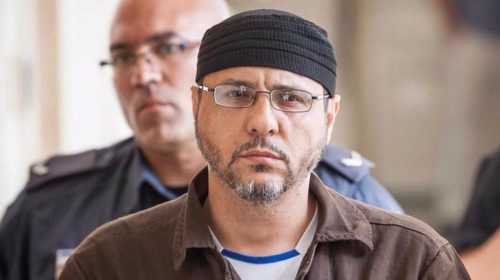
Jailed Palestinian leader Abdullah Barghouti
Press TV – November 18, 2025
A Palestinian prisoners’ advocacy group says jailed Hamas leader Abdullah Barghouti has faced extreme physical and psychological torture at the maximum-security Gilboa Prison in the northern part of the Israeli-occupied territories since his abduction more than two decades ago.
The Asra Media Office (AMO) announced in a statement on Monday that 53-year-old Barghouti is currently enduring conditions that have been described as “a form of slow execution,” aimed at one of the leading figures of the Palestinian Captive Movement. Concerns have been raised that his life could be at risk at any moment.
The statement disclosed that the prison administration has been systematically and repeatedly targeting Barghouti with assaults for more than 25 months.
Prison guards storm his cell relentlessly, day and night, often accompanied by dogs. They taunt him, claiming they missed assaulting him, before three of them restrain him and viciously attack him with batons. The beating leaves him with severe injuries, including bleeding and deep wounds.
His fellow inmates are left to care for him, using torn fabric and rudimentary cleaning supplies to tend to his wounds.
Barghouti, currently serving 67 life sentences, is enduring severe, untreated injuries. These include fractures in his right elbow and hand that have persisted for more than three months, a broken pinky finger on his left hand, two fractured ribs, torn tendons, and a drastic weight loss of approximately 35 kilograms caused by starvation and inadequate nutrition.
The rights group added that guards have doused him with water before subjecting him to electrocution and confined him to a cell infested with scabies, resulting in painful boils all over his body. To minimize the risk of further infection, he now resorts to sleeping on the floor.
Barghouti currently struggles with significant difficulty in moving his hands, with one almost completely paralyzed. Despite his condition, Israeli prison authorities deny him any form of medical treatment, including pain relief, and block human rights organizations from reaching out to him.
The AMO asserted that Barghouti’s suffering is part of a broader campaign against the leadership of the Captive Movement.
It emphasized that the mistreatment he endures surpasses mere punishment, amounting to a calculated effort to end his life, underscoring the urgent need for international intervention.
The circumstances surrounding the detention of Palestinian inmates by Israel are unacceptable and characterized by inadequate hygiene standards. Moreover, Palestinian detainees have endured persistent torture, harassment, and oppression.
Palestinian detainees have consistently participated in indefinite hunger strikes to express their frustration over their unjust imprisonment.
Human rights organizations say that Israel continues to violate the rights and freedoms granted to abductees as stipulated by the Fourth Geneva Convention and international laws.
According to the Palestine Detainees Studies Center, around 60 percent of Palestinian detainees in Israeli prisons suffer from chronic illnesses, with many having passed away either during their incarceration or after their release due to the seriousness of their health issues.
Red ribbons in London: A silent uprising bringing Palestinian hostages back into view
By Adnan Hmidan | MEMO | November 16, 2025
Walking through Westminster, in the quiet rush of central London, flashes of red caught my attention — ribbons tied to lampposts, railings, and street fixtures. They were not adverts or campaign posters, but dense, symbolic gestures: spontaneous in form, unmistakable in meaning. They returned to public sight faces that have long been hidden behind prison walls — Palestinian hostages abducted by the occupation from homes and hospitals, held without trial under a system that resembles nothing but the law of the jungle.
These ribbons seemed like individual efforts, small and uncoordinated, yet unified in what they were trying to say: that the Palestinian hostage file remains locked in darkness, despite being one of the most devastating human crises. Thousands have been torn from their lives with no charges, no legal process, no daylight.
Of the nearly 9,100 Palestinians currently detained, it is estimated that almost a third are effectively treated as hostages; abducted and denied even the bare minimum of legal rights or guarantees.
A language that must reclaim its meaning
For years, the word “prisoner” has been used broadly. But what the occupation practises is not detention — it is abduction. People are taken from their beds or hospital rooms and disappear for indefinite periods, without charges, court hearings, or the most basic procedural rights.
The figures alone reveal the scale of the crisis:
3,544 held under administrative detention without trial
400 children
53 women
16 doctors
117 Palestinian hostages killed in the past two years alone during the genocide in Gaza
These individuals cannot honestly be called “prisoners.” They are hostages in every legal and moral sense — seized outside any legitimate framework by a state whose own foundations rest on dispossession and violation.
Red… a colour that bears witness, not beauty
The choice of red is self-explanatory. It is the colour of spilled blood, of injustice endured, of wounds that never fully heal.
These ribbons may hang quietly across London, but the question they raise is anything but quiet:
How can thousands of people be abducted in this way, while the world remains unable — or unwilling — to see them?
No one is asked to lead a campaign or become an activist. What is needed is recognition, a wider awakening to a file packed with human lives, daily suffering, families searching, and children growing up in absence.
Stories hanging from lampposts… so memory does not fade
Seeing the ribbons brought back the painful stories that fill this file:
The child pulled from his bed because soldiers deemed him a “threat,”
The woman taken from her home in front of her children,
The doctor who vanished from an operating room and never returned,
Those subjected to torture and enforced disappearance,
And the testimonies of rape and sexual abuse recently documented by international organisations.
These stories need no embellishment; their truth is weight enough. They also echo Steve Biko’s famous line:
“The most potent weapon in the hands of the oppressor is the mind of the oppressed.”
These red ribbons feel like a modest attempt to unsettle that weapon.
Catherine Connolly’s victory: Europe’s moral rebellion against the Israeli occupation
When execution becomes a celebration
It is difficult to grasp that the occupation’s National Security Minister, Itamar Ben-Gvir, celebrated inside the Knesset after passing a law permitting the execution of Palestinian detainees.
More troubling still is how easily such a moment can pass as a routine political step — as though it were merely another debate rather than a descent into deeper, institutionalised brutality.
When a state legalises killing those it has abducted without trial, imprisonment ceases to resemble detention. It becomes just one point on a chain that runs from abduction to torture to death.
The rising number of Palestinians dying inside Israeli prisons is not an exaggeration — it is an expanding reality.
Preserving memory before preserving the body
Red ribbons do not claim to liberate anyone, nor do they replace political or legal work. But they accomplish something essential: they return faces to public view and stop stories from being buried in darkness.
The Palestinian hostage file needs wider adoption and genuine engagement. It is a file overflowing with pain and heavy with violations, yet among the least addressed internationally.
Ribbons cannot break iron bars.
But they can remind the world that behind every statistic is a human being waiting to be rescued from disappearance.
Justice begins when we choose to see.
And sometimes, the first step toward that justice is nothing more than a small red thread tied to a lamppost in a distant city.
Featured Video

Iran’s Next Strike May Not Explode. It Could Shut You Down
or go to
Aletho News Archives – Video-Images
From the Archive
Zionism’s Violent Legacy
By Donald Neff | Washington Report On Middle East Affairs | January 1996
On January 4, 1948, Jewish terrorists drove a truck loaded with explosives into the center of the all Arab city of Jaffa and detonated it, killing 26 and wounding around 100 Palestinian men, women and children.[1] The attack was the work of the Irgun Zvai Leumi – the “National Military Organization,” also known by the Hebrew letters Etzel – the largest Jewish terrorist group in Palestine. The Irgun was headed by Revisionist Zionist Menachem Begin and had been killing and maiming Arabs, Britons and even Jews for the previous ten years in its efforts to establish a Jewish state.
This terror campaign meant that at the core of Revisionist Zionism there existed a philosophical embrace of violence. … continue
Blog Roll
 Aletho News
- Trump’s Iran war is on an Israeli leash
- Saudi oil boss issues global supply warning
- Riyadh Says Its Oil System Is Intact. The Numbers Say Otherwise.
- Trump and Netanyahu Want to “Finish the Job” on Iran
- US ‘one-sided dictation’ not Iran’s beliefs makes rational talks impossible: Baghaei
- Iran’s Next Strike May Not Explode. It Could Shut You Down /Col Doug Macgregor
- Iran: US political targets legitimate if assassinations return
- Iraq shuts key border crossing with Iran under US pressure: Report
- Undersea Internet cables could be targeted in retaliation for attacks on Iran: IRGC deputy chief
- EU sending ‘biased’ observers to interfere in Serbian election – president
- If Americans Knew
- The Israel Lobby’s Changing Fortunes
- AIPAC has become such a political liability that it’s shifting to a more “nimble” approach to buying politicians
- At least 160 Israeli settler attacks in 2 weeks
- Will Gaza’s Ancient Christian Community Disappear Forever?
- Israel’s vision of regional security rests on keeping Arab states weak
- Heidi Levine recounts how Palestinian youths helped save her in settler attack
- DAILY UPDATE: Latest essential news on Palestine, Israel, & region
- Trump’s Intensifying Sabotage of the ICC, for Israel’s Sake
- Israeli military detain US and UK volunteers in West Bank including Democratic NY politician Brad Lander
- Americans at National Conservatism Conference held in Israel this year criticize Israel
- No Tricks Zone
- E-Cars Reduce CO2 Emissions By Only 41% Compared To Internal Combustion Engine Vehicles
- Predictions Made By Renowned Climate Professor Over Past Decades Have Been Proven To Be Poor
- New Study Suggests Large Regions Of The Pacific Ocean Have Been Cooling For The Last 80 Years
- Germany’s Green Energy Debacle: High Energy Costs Force Kahla Porzellan to Close After 182 Years!
- New Study: 50 Years Of The Most Aggressive ‘Net Zero’ Policies Can Only Affect The Global Climate By 0.03°C
- US September “Heat” Was No Record…Many Records Set Decades Ago
- Latest European Green Energy Debacle; Portugal’s Largest Flagship Solar Park Insolvent!
- Green Energy Debacle: German Expert Professor Fritz Vahrenholt Warns Of Severe Economic And Social Consequences
- Two More Paleo Reconstructions Affirm Meters-Higher Sea Levels Across Ireland, Brazil 7000-6000 Years Ago
- New Study: Earth And Venus Surface Warmth Largely Explained By Convection And Lapse Rate, Not CO2 Or Radiation

