Demand action to free British citizen Fayez Sharary from Israeli prison

Samidoun Palestinian Prisoner Solidarity Network – December 11, 2016
Fayez Sharary, a British citizen of Palestinian descent, has now been held in Israeli prisons for nearly three months. He traveled with his wife Laila and their daughter, Aya, 3, to Palestine, to visit Laila’s widowed mother and to mark Eid al-Adha in Jerusalem, reports Inminds, the British organization currently leading a campaign to free Sharary. As the family attempted to leave Palestine on 15 September at the bridge to Jordan, they were stopped by Israeli forces; they had a flight scheduled for 17 September to return to the UK.
Sharary was separated from his wife and daughter, while he was interrogated for five hours while his daugher was refused access to a toilet. Laila’s mobile phone was confiscated and Sharary was detained; when she attempted to refuse to leave and stay with her husband, Israeli soldiers screamed at her.
Sharary was held for three weeks in Petah Tikva interrogation center and subject to ill-treatment, abuse and torture throughout that time. He was denied access to a lawyer until he signed a forced confession on 6 October and was moved to Ofer prison. Sharary’s torture by Israeli forces was further substantiated by Judge Azriel Levi, who ordered his release in a hearing in Ofer military court on 26 October, citing his confession as a result of “the method of interrogation, which included pained and prolonged shackling, threats, and a blatant exploitation of the defendant’s demonstrated weakness.” The military judge further said that the confession had a value of “less than zero” and that some of the allegations against Sharary were not prosecutable in the military courts.
However, as is frequently the case when on the rare occasion a military judge orders the release of a detainee, the Israeli military prosecution appealed and Sharary has remained imprisoned ever since.
Daniel Zeichner, the British Labour Party’s Shadow Minister for Transport, raised a parliamentary question regarding the involvement of the British consulate in providing support for Sharary’s case; Tobias Ellwood, under-secretary of State for Foreign and Commonwealth Affairs, replied that “Our Embassy in Tel Aviv has raised, and continues to raise, the detention of Mr Sharary with the Israeli authorities, most recently on 15 November. Consular officials continue to provide consular support to Mr Sharary and his family.”
Laila Sharary has participated in several protests in London demanding that the UK government act to free her imprisoned husband, 49, who has lived in the UK for 23 years. Sharary is allegedly accused of “contact with an enemy organization,” “services to an illegal organization,” and “bringing money into the region from an enemy.” Part of these allegations allegedly relate to Sharary’s time in Lebanon in 1993 or earlier; Sharary is not a resident of Palestine. The initial judge in the case who ordered Sharary released also dismissed the allegations of financial involvement due to irrelevant claims by the military prosecutor.
Despite these flimsy charges and his experience of torture – all too common, but publicly confirmed in this case by an Israeli military judge – Sharary remains imprisoned and will face a military court in Ofer on Wednesday, 14 December.
TAKE ACTION:
Please take action to urge the UK government to intervene and pressure Israel to release torture victim Fayez Sharary. This includes asking for UK representatives to attend the hearing in Sharary’s case at Ofer Military Court.
Email the Foreign and Commonwealth Office at fcocorrespondence@fco.gov.uk and the British Consulate in Jerusalem at britain.jerusalem@fco.gov.uk to express your concern about the case of Fayez Sharary.
You can use the sample letter below or write your own letter:
SAMPLE LETTER
To whom it may concern,
I am writing in regard to the urgent case of Fayez Sharary, a British citizen currently imprisoned by Israel in its military court system for the occupied Palestinian territories. Sharary, 49, was previously ordered released due to the torture he experienced under interrogation.
Nonetheless, he remains imprisoned and will once again face a military court at Ofer prison on Wednesday, 14 December from 8:00 am to 1:00 pm.
It is critical that the British government support its citizen Fayez Sharary by pressuring Israel for his immediate release. It is particularly critical that there is a British official presence at the military court hearing on 14 December.
Israeli military trials do not meet international standards for fair trials and can rely on evidence obtained through torture. Please act to release Fayez Sharary and reunite him with his wife and family in Britain.
Sincerely,
Hundreds of torture complaints against Shin Bet, no investigations
MEMO | December 9, 2016
Hundreds of complaints of torture against Shin Bet agents have produced not a single criminal investigation, according to a report in Haaretz.
Of the 598 complaints filed between 2001 and 2008, every single case was closed by the Israeli authorities without a criminal investigation.
A department within the Ministry of Justice, Mivtan, is responsible for handling such complaints, yet employs just one investigator.
According to Haaretz, “the unit does not interfere with the Shin Bet’s work, even though complainants have reported harsh and prohibited forms of torture – including severe beatings and extensive sleep deprivation.”
The paper adds that while “Mivtan does not reveal how many complaints it receives, only how many inquiries it conducts; however, attorney Efrat Bergman-Sapir of the Public Committee Against Torture in Israel said her organisation had submitted more than 1,000 complaints since 2001.”
Palestinian youth activist re-arrested one week after release from Israeli prison
Samidoun Palestinian Prisoner Solidarity Network – December 5, 2016
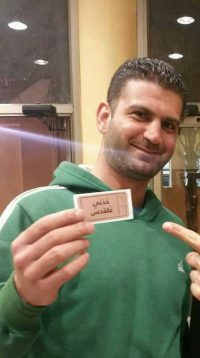 Palestinian youth organizer Daoud Ghoul was among 14 Palestinians seized overnight by Israeli occupation forces, one week after his release from Israeli prison. Ghoul, 33, is the director of youth programs for the Health Work Committees and the Kanaan Network of Palestinian civil society organizations. He has been subject for over two years to repeated Israeli harassment and intimidation. His home was raided at 4:00 am and his personal belongings and electronics confiscated; he is currently being held at the Moskobiyeh interrogation center in Jerusalem.
On Sunday, 27 November, Ghoul was released after serving an 18-month sentence, accused by the Israeli occupation of affiliation with a “prohibited organization,” the Popular Front for the Liberation of Palestine. After a visit to Brussels, Belgium in November 2014 in which he presented before the European Parliament about Israeli ethnic cleansing of Palestinians in Jerusalem, threats to Palestinian life in the city, and attacks on Palestinian health workers, he was banned from his home city of Jerusalem by an Israeli military order. He was then banned from the West Bank and from international travel, and was forced to move to Haifa from his hometown of Silwan in East Jerusalem. On 15 June 2015, he was seized by occupation military forces one month after his HWC Jerusalem office was forcibly closed by the occupation military.
After serving his 18 month sentence ordered against him by a military court, Ghoul was welcomed last Sunday by his friends and family and by supporters around the world who had long demanded his release. The sudden re-arrest of Daoud Ghoul one week after his release recalls similar cases like that of student Bahaa al-Najjar, released from administrative detention in early November only to once again be imprisoned without charge or trial one week later, or Bilal Kayed, ordered to six months in administrative detention without charge or trial immediately following the expiration of his 14.5-year sentence.
Ghoul’s case is also similar to those of other youth activists persecuted by the Israeli occupation, as well as part of the ongoing attacks on Palestinians in Jerusalem, including mass arrests, harsh sentencing of children and the stripping of Jerusalem IDs of Palestinian Legislative Council members.
Ghoul was among six young Palestinians, many former prisoners, arrested in Jerusalem last night. All of their computers and mobile phones were confiscated and Amjad Abu Assab said that the pretext of “incitement via social media” was cited in at least some of the cases. Among those arrested were Uday Abu Saad and Mohammed Salah of Shuafat refugee camp, Jihad Amira and Amin Hamad from Sur Baher, and Saleh Muhaisen from the village of Issawiya, in addition to Ghoul.
Three more Palestinians from Qabatiya, south of Jenin, Mahmoud Abu Ein, Louay Ziad Zakarneh and Musa Abdel-Salam Kamil, were seized by occupation forces, as were Bilal Anas Abu Eid and Munir Hussein Briggah of al-Khalil. More Palestinian young people were arrested in Jericho and in Beit Fajar, south of Bethlehem.
Palestinian university student sentenced to eight months for student activities
Samidoun Palestinian Prisoner Solidarity Network – November 24, 2016
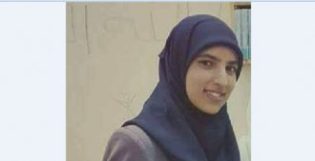 Palestinian student Noor Darwish, 22, a student at Al-Quds University in Abu Dis, was sentenced to eight months in Israeli prison and a fine of 2000 NIS (approximately $500) on Wednesday, 23 November.
From the village of Deir Abu Mashal near Ramallah, Darwish was arrested with two other female students, Hala Bitar, 19, and Salam Abu Sharar, 21, on 19 April. The three were arrested among an escalated series of arrests targeting Palestinian students around the time of annual student council elections at Palestinian universities. All three were charged with participation in the public student activities of the Islamic Bloc at the university, including organizing a book fair.
Bitar was earlier sentenced to four months in prison, while Abu Sharar was sentenced to 10 months in Israeli prison. Darwish has been held in Damon prison, which requires a three-day trip to the Ofer military court, which pronounced her sentence. Her case involved six hearings, each accompanied by the lengthy “bosta” travel from the prison to the military court and back.
Academic among 7 Palestinians from West Bank kidnapped by Israeli forces
Palestine Information Center – November 24, 2106
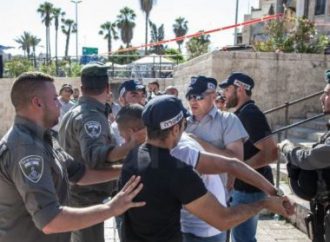 WEST BANK – The Israeli occupation army (IOF) kidnapped seven Palestinians, including an academic, from West Bank provinces at dawn Thursday.
A PIC news correspondent said the IOF rolled into the An-Najah Campus dormitory in al-Maajin neighborhood, in western Nablus, and wreaked havoc on the apartment of lecturer Issam Rashed al-Ashqar, 57, before they kidnapped him and seized his car.
Al-Ashqar, an ex-prisoner, is a lecturer at the Physics Department at An-Najah University. He had previously been sentenced to several prison-terms, mostly in administrative detention, without charge or trial. He has also been diagnosed with health disorders.
The Israeli occupation army further kidnapped the two Palestinian citizens Amjad Abu Sbeih and Yazen al-Basiti from their own family homes in Jerusalem’s Old City.
The IOF stormed Jenin’s western towns of Anin and Zabouba and cracked down on Palestinian drivers in the eastern outskirts of the city.
A PIC reporter quoted eyewitnesses as stating that the IOF kidnapped the citizen Abdul Nasser Mohamed Yassin, 42, from Anin village after they ravaged his home and subjected the family to intensive questioning.
A military checkpoint was pitched by the IOF near the main entrance to Zabouba town.
The campaign culminated in the abduction of other Palestinians from Nablus, al-Khalil, and Bethlehem’s town of Beit Fajjar.
Journalist Omar Nazzal, Shadi Jarrar among Palestinians ordered to additional imprisonment without charge
Samidoun Palestinian Prisoner Solidarity Network – November 21, 2016
 Omar Nazzal, prominent Palestinian journalist and member of the General Secretariat of the Palestinian Journalists’ Syndicate, was ordered on Monday, 21 November to three additional months in administrative detention by the Israeli occupation military. One of dozens of imprisoned journalists, Nazzal was seized by occupation forces on 23 April 2016 as he attempted to cross the al-Karameh/Allenby bridge to Jordan to participate in the General Meeting of the European Federation of Journalists in Sarajevo, Bosnia and Herzegovina. Since that time, he was ordered first to four months in administrative detention without charge or trial, then again to another three months of arbitrary imprisonment before his detention was again renewed today. Nazzal’s case has drawn international condemnation at the targeting of a prominent Palestinian journalist without charge or trial on the basis of so-called “secret evidence.”
 Nazzal was not the only Palestinian political prisoner ordered to additional imprisonment without charge or trial. Palestinian prisoner Shadi Jarrar, 36, from Wadi Burkin west of Jenin, was ordered to four months in administrative detention for the third time consecutively. He has spent eight months in administrative detention since his seizure by Israeli occupation forces on 12 March as he passed a military checkpoint between Ramallah and Nablus. Jarrar is held in the Negev desert prison. He previously spent 13 years in Israeli jails before his release in 2014 as a Palestinian political prisoner.
 Also ordered once more to administrative detention was Louay Daoud, 41, of Qalqilya, for the fourth time, for four months. Arrested by Israeli occupation forces when they invaded his home on 9 December 2015, he has now been ordered to administrative detention four times consecutively, without charge or trial. Daoud is also a former prisoner who spent 12 years in Israeli prisons until his release in 2003.
 Ashraf Jibril, 23, of Qalqilya, was also ordered imprisoned without charge or trial for an additional four months – the third consecutive administrative detention order against him. His home was raided on 10 November 2015 by Israeli occupation forces; he was twice ordered to six months in administrative detention and now an additional four months. The Israeli occupation authorities also renewed the administrative detention of Palestinian prisoner Qusai Hassan Khaliliya, 22, of Jaba village south of Jenin, for the second consecutive time for six months of imprisonment without charge or trial. Khaliliya was seized by occupation forces on 23 May in a pre-dawn raid on his Jaba home by occupation forces, who ransacked his belongings.
There are over 700 Palestinians held without charge or trial out of a total of 7,000 Palestinian political prisoners in Israeli jails. Administrative detention orders can be issued for one to six months at a time and are indefinitely renewable. Many Palestinian prisoners have spent years at a time imprisoned under repeatedly-extending administrative detention orders. Administrative detention has been used to target political leaders, influential community members, members of the Palestinian Legislative Council, and other prominent Palestinian figures. Ahmad Abu Fara and Anas Shadid are currently on hunger strike for the 57th day against their own imprisonment without charge or trial.
Egypt jails 3 anti-coup presenters for ‘false news’
MEMO | November 20, 2016
An Egyptian court on Saturday slapped three anti-coup TV presenters with a 3-year jail term each in absentia for spreading false news.
Egyptian authorities accuse Mohamed Naser, a presenter at the Mekameleen satellite channel, and two other colleagues of incitement and spreading false news.
The presenters, for their part, say they expose human rights abuses committed by Egypt’s military-backed authorities.
Saturday’s verdict, which still can be appealed, came shortly after an Egyptian court slapped the head of Egypt’s press syndicate and two board members with a 2-year jail term each for harbouring two journalists sought by the authorities at the syndicate’s headquarters.
In May, police raided the syndicate’s premises in Cairo, arresting the two journalists for allegedly “inciting protests” and “plotting to overthrow the ruling regime”.
Syndicate officials have decried the raid – the first in the syndicate’s history – as a “blatant assault on journalists’ dignity” and have demanded the interior minister’s dismissal.
Egyptian authorities have launched a harsh crackdown on dissent following the 2013 coup against Mohamed Morsi, Egypt’s first freely elected president.
Last year, the New York-based Committee to Protect Journalists (CPJ) said more than 20 journalists had been detained by Egyptian authorities since the coup.
Russia withdraws signature from ICC
The BRICS Post | November 16, 2016
The Russian foreign Ministry on Wednesday said it was withdrawing its signature from the founding document that established the International Criminal Court (ICC).
Saying that it was acting on orders from Russian President Vladimir Putin, the ministry accused the court of failing to “live up to the hopes associated with it” and that it “did not become truly independent”.
The foreign ministry said that Russia cooperated with the ICC in the hopes that it would “become an important factor in consolidating the rule of law and stability in international relations,” but that this failed to happen.
Russia had in 2000 signed the Rome Statute which created the ICC, but never ratified the treaty, which entered into force in 2002.
Russia said it was dissatisfied with the way the ICC approached the conflict with Georgia in 2008 and accused the court of being one-sided and negligent about aggression committed by other parties, including the killing of Russian peacekeepers which was left to local courts under Georgian jurisdiction to investigate.
But Russia may also be voicing displeasure with an ICC report earlier this week which did not recognize the referendum voted by Crimea to join Russia and instead classified it as a military conflict.
Russia’s move comes a week after several African nations including South Africa withdrew from the ICC having accused it of being subjective and unfairly targeting their continent.
Meanwhile, the Pentagon has rejected as unwarranted and inappropriate findings of the ICC chief prosecutor that US troops may have committed war crimes in their treatment of prisoners during the occupation of Afghanistan.
“Members of US armed forces appear to have subjected at least 61 detained persons to torture, cruel treatment, outrages upon personal dignity on the territory of Afghanistan between 1 May 2003 and 31 December 2014,” the report said.
Israel re-arrests British citizen after he is cleared by military court
MEMO | November 12, 2016
An Israeli appeal court has ordered the re-arrest of a British citizen after he was cleared of assisting terrorist organisations by a military court, Anadolu reported on Friday.
It was alleged that the “confession” of Faiz Mahmoud Ahmed Sherari, a 49 year-old British-Lebanese citizen, was obtained by “coercion” by the internal security agency Shin Bet. He was arrested during a four-day visit to the West Bank in September and accused of providing cash and mobile phones to Hamas, the Guardian said in a previous report.
Israel Radio said that the court of appeal challenged the ruling of the first court in the occupied West Bank. It did not say what will happen to Sherari.
The judge in the trial earlier this month, Lieutenant Colonel Azriel Levy, criticised the pressure put on Sherari by Shin Bet, noting that his rights had been violated. Reports revealed that he had been handcuffed painfully for an extended period as well as threatened. He was also prevented from seeing lawyer.
“There is no doubt that the defendant’s confession, which was given an hour after the end of his Shin Bet interrogation, was dramatically influenced by the method of interrogation,” the judge said in his ruling. “This included pained and prolonged shackling, threats and a blatant exploitation of the defendant’s demonstrated weakness.”
BDS leader Salah Khawaja ordered to 8 more days interrogation, blindfolded, denied access to lawyer
Samidoun Palestinian Prisoner Solidarity Network – November 10, 2016
Leading Palestinian BDS activist and organizer Salah Khawaja was ordered to an additional eight days of interrogation at a hearing at the Israeli military court in Petah Tikva on Wednesday, 9 November, where he was kept blindfolded throughout the hearing.
Khawaja, 45, the Secretary of the Boycott, Divestment and Sanctions National Committee (BNC) and a leader of the Palestinian Grassroots Anti-Apartheid Wall Campaign (Stop the Wall), was seized from his home on 26 October by Israeli occupation military forces. Since that time, he has been held under interrogation in Petah Tikva and barred from speaking with a lawyer.
His lawyer, Jehad Abu Raya, attended the military court hearing only to continue to be prohibited to speak with his client. Abu Raya noted that Khawaja “looked like he was emerging from a grave” and that he was blindfolded throughout the hearing. In 15 days, Israeli intelligence have conducted 27 rounds of “practically non-stop interrogation” with Salah, reported the Stop the Wall Campaign. In fact, Abu Raya noted that Khawaja has lost weight and is visibly sleep deprived and suffering the effects of over two weeks of ill-treatment and duress.
Front Line Defenders, Unadikum and Stop the Wall have issued calls for action in support of Khawaja and urging international attention to support this case of a Palestinian human rights defender targeted for his activism. … More
AL-KHALIL (HEBRON): A week in photos 25-31 October 2016
CPT | November 4, 2016
|
|
|

|
|
|
|

|
|
|
|

|
|
|
|

|
|
|
|

|
|
|
|

|
|
|
|

|
Featured Video

Trita Parsi: Israel Set a Trap for Total War in the Region
or go to
Aletho News Archives – Video-Images
Book Review
Why the War on Conspiracy Theories Is Bad Public Policy
By Kevin Barrett • Unz Review • February 1, 2019
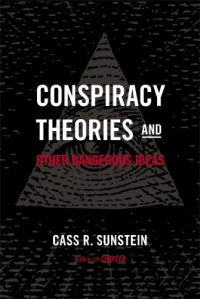 A Review of Conspiracy Theories and Other Dangerous Ideas by Cass Sunstein (based on an earlier paper co-authored with Adrian Vermeule); In Defense of Troublemakers: The Power of Dissent in Life and Business by Charlan Nemeth; and Conspiracy Theories and the People Who Believe Them, edited by Joseph E. Uscinski
On January 25 2018 YouTube unleashed the latest salvo in the war on conspiracy theories, saying “we’ll begin reducing recommendations of borderline content and content that could misinform users in harmful ways—such as videos promoting a phony miracle cure for a serious illness, claiming the earth is flat, or making blatantly false claims about historic events like 9/11.”
At first glance that sounds reasonable. Nobody wants YouTube or anyone else to recommend bad information. And almost everyone agrees that phony miracle cures, flat earthism, and blatantly false claims about 9/11 and other historical events are undesirable.
But if we stop and seriously consider those words, we notice a couple of problems. First, the word “recommend” is not just misleading but mendacious. YouTube obviously doesn’t really recommend anything. When it says it does, it is lying. … continue
Blog Roll
 Aletho News
- Trita Parsi: Israel Set a Trap for Total War in the Region
- Trump’s Iran war is on an Israeli leash
- Saudi oil boss issues global supply warning
- Riyadh Says Its Oil System Is Intact. The Numbers Say Otherwise.
- Trump and Netanyahu Want to “Finish the Job” on Iran
- US ‘one-sided dictation’ not Iran’s beliefs makes rational talks impossible: Baghaei
- Iran’s Next Strike May Not Explode. It Could Shut You Down /Col Doug Macgregor
- Iran: US political targets legitimate if assassinations return
- Iraq shuts key border crossing with Iran under US pressure: Report
- Undersea Internet cables could be targeted in retaliation for attacks on Iran: IRGC deputy chief
- If Americans Knew
- The Israel Lobby’s Changing Fortunes
- AIPAC has become such a political liability that it’s shifting to a more “nimble” approach to buying politicians
- At least 160 Israeli settler attacks in 2 weeks
- Will Gaza’s Ancient Christian Community Disappear Forever?
- Israel’s vision of regional security rests on keeping Arab states weak
- Heidi Levine recounts how Palestinian youths helped save her in settler attack
- DAILY UPDATE: Latest essential news on Palestine, Israel, & region
- Trump’s Intensifying Sabotage of the ICC, for Israel’s Sake
- Israeli military detain US and UK volunteers in West Bank including Democratic NY politician Brad Lander
- Americans at National Conservatism Conference held in Israel this year criticize Israel
- No Tricks Zone
- E-Cars Reduce CO2 Emissions By Only 41% Compared To Internal Combustion Engine Vehicles
- Predictions Made By Renowned Climate Professor Over Past Decades Have Been Proven To Be Poor
- New Study Suggests Large Regions Of The Pacific Ocean Have Been Cooling For The Last 80 Years
- Germany’s Green Energy Debacle: High Energy Costs Force Kahla Porzellan to Close After 182 Years!
- New Study: 50 Years Of The Most Aggressive ‘Net Zero’ Policies Can Only Affect The Global Climate By 0.03°C
- US September “Heat” Was No Record…Many Records Set Decades Ago
- Latest European Green Energy Debacle; Portugal’s Largest Flagship Solar Park Insolvent!
- Green Energy Debacle: German Expert Professor Fritz Vahrenholt Warns Of Severe Economic And Social Consequences
- Two More Paleo Reconstructions Affirm Meters-Higher Sea Levels Across Ireland, Brazil 7000-6000 Years Ago
- New Study: Earth And Venus Surface Warmth Largely Explained By Convection And Lapse Rate, Not CO2 Or Radiation

