These days superpower nuclear-weapons controversies hardly elicit the excitement that once inspired such bumper-sticker slogans as, “you can’t hug children with nuclear arms.” The “no nukes!” movement has gone the way of the Cold War and MTV playing music videos, right?
In the 21st century, the 2002 Treaty of Moscow and 2010’s New START (Strategic Arms Reduction Treaty) were supposed set the clock on bilateral warhead reduction, and there are no plans for the production of more nuclear weapons. Pretty cut and dried, one would think. But like everything radiating out of Washington, the atomic drawdown is not what it seems.
Despite a deficit reduction plan to cut $1.2 trillion in federal spending over 10 years and ongoing negotiations by the so-called supercommittee to identify cuts of $1.5 trillion more, members of Congress are pushing an expanded plutonium storage and production assistance facility at Los Alamos National Laboratory in New Mexico. Critics say the facility is unnecessary, poorly designed, and dangerous—there are fault lines throughout the Los Alamos property—and its cost has ballooned from $375 million in 2001 to an estimated $5.5 billion today.
It hasn’t been built yet—in fact, the designs aren’t even finished after 10 years. But the Chemistry and Metallurgy Research Replacement Nuclear Facility (CMRR-NF) has been soaking up taxpayer money all the same as the scope of the project has metastasized.
“The country doesn’t have money to pour into an unnecessary, giant boondoggle that has grown beyond all original expectations,” charges Greg Mello, executive director of the Los Alamos Study Group, probably the toughest grassroots opposition the CMRR-NF project faces right now. “When the cost of a facility increases by more than a factor of ten, even as the fundamental purposes are evaporating, it’s important to stop, to pause and to question whether this is the right thing to do.”
There is no doubt that the budget-cutting imperative is clashing with the old way of doing business on Capitol Hill, as pet projects and earmarks come under more scrutiny than ever. Bureaucratic institutions used to getting their way by easing expensive, potentially controversial programs under the radar are finding themselves squarely in critics’ sights.
That includes CMRR-NF, which has never been the subject of a public congressional hearing or passionate floor speech—much less a heated debate on cable TV or talk radio—but has been controversial nonetheless.
“I think the key is, it appears to be a huge waste of money and particularly in our current fiscal situation there is no need to hurry this thing at all,” says Peter Stockton, senior investigator for the Project on Government Oversight, which is currently working on its own CMRR-NF report.
• • •
The mission of National Nuclear Security Administration (NNSA), which is a semi-autonomous agency of the U.S. Department of Energy, is to “improve national security through the military application of nuclear energy.” It oversees Los Alamos and is in charge of the CMRR project.
Initially, the NNSA was merely focused on renovating the parts of Los Alamos’s old Chemistry and Metallurgy Research (CMR) building that were outmoded and deteriorating by the late 1990s. Tests had found faults running under the property that could cause dangerous earthquakes.
After President George W. Bush was elected, plans to improve and upgrade salvageable portions of the nearly 60-year-old CMR were scrapped, and NNSA set about designing a “simple” replacement facility with two buildings about a mile away. One, the Radiological Laboratory Utility Office Building, is not controversial and almost complete. The other—the NF in CMRR-NF—is a new nuclear facility that would support Los Alamos’s nuclear-weapons mission, including plutonium storage, and assist in the production of plutonium-based “pits,” the fissile cores of nuclear weapons. This currently takes place at the existing TA-55/PF-4 nuclear facility next to the proposed site.
The nuclear facility, according to its critics, has become a monster. Aside from the runaway cost estimates, according to Mello the envisioned facility would give TA-55/PF-4 the capacity to double the number of pits Los Alamos produces each year and could store up to six metric tons of plutonium, “enough to rebuild the entire U.S. strategic arsenal.” This when there are thousands of pits already in storage and a treaty with the Russians sharply limits the nuclear arsenal.
Even if the increase in pit production were necessary—and as Mello and others point out, with much of the information classified or otherwise unavailable to the public, it is hard to know—the existing lab could be upgraded to carry out Los Alamos’s publicly stated mission to refurbish the current stockpile. NNSA, critics complain, has so far refused to seriously consider any alternative.
“We think there are simpler, cheaper, faster alternatives to accomplishing their stated mission, though their stated missions are aggrandized to begin with,” says Los Alamos Study Group President Peter Neils, who was on Capitol Hill in late October to get the word out about CMRR-NF. He blames the out-of-control designs and spiraling cost on a mix of Cold War ideology, over-reliance on contractors, and the self-sustaining mentality of all bureaucracies.
Simply put, says Mello, “the warhead establishment and the Cold War hawks cannot let go of designing and building new kinds of warheads, to create what they call ‘end-to-end’ work for the weapons complex.”
• • •
As of June, the Federation of American Scientists reports, the U.S. had 1,950 operational strategic nuclear warheads, plus approximately 200 deployed on behalf of allied countries—Belgium, Turkey, Netherlands, Italy and Germany—and 2,850 in reserve. In addition, some 3,500 retired warheads are awaiting dismantlement. This all jibes with numbers issued by the State Department in 2010. START demands that the U.S. bring those deployed numbers down closer to 1,550 by 2018.
At its peak in 1967 during the Cold War, the nuclear stockpile was at 31,225 warheads. America had 22,217 when the Berlin Wall fell in 1989. If the Cold War were still on, say critics, we might need additional capacity to build pits. But as it is there are thousands of usable pits already in reserve, and the scientific consensus says the plutonium parts of the pits have a lifespan of at least 100 years. The U.S. arsenal is well stocked in this regard.
The new CMRR-NF would help Los Alamos’s TA-55/PF4 site boost production to a conservative estimate of 125 pits a year on a double shift, according to observers.
Thisis as outrageous as it is unnecessary, claims Frank von Hippel, a professor and principal investigator at Princeton University’s Program on Science and Global Security, in an affidavit for the Los Alamos Study Group, which is trying to force NNSA’s hand in court.
“There is no anticipated need to produce new pits for U.S. nuclear weapons for several decades,” he writes. The oldest pit produced in the U.S. is 32 years old, he added, noting the current TA-55/PF-4’s production rate of 10 pits per year would be adequate for any replacements necessary during the modernization and maintenance that is already going on under the auspices of NNSA.
Critics say the entire landscape of nuclear-weapons production has changed since CMRR-NF was conceived—all in the direction of reducing the nuclear stockpile—yet every adjustment in the facility’s blueprints has resulted in more capacity to store plutonium and build additional pits.
Most notably, the Reliable Replacement Warhead, a new family of warheads conceived in 2004 and used as a chief justification for modernizing Los Alamos’s nuclear-weapons complex, was defunded by Congress and cancelled by the Obama Administration in 2009.
CMRR-NF “is being built to increase capacity for pit production, even though pit production is not what we need,” the Project on Government Oversight’s Stockton charges. NNSA did not respond to several phone calls for comment on these and other charges lobbed by the opposition.
A three-page “Questions and Answers Regarding the CMRR Project” issued by NNSA before the Reliable Replacement Warhead was canceled maintains that the “primary mission of CMRR will be to support the current nuclear weapons stockpile through surveillance and life-extension programs necessary for the nuclear weapons complex” and “the size of CMRR remains the same.” It blames the soaring expense on poor initial estimates, cost increases in “the construction industry worldwide,” and requirements relating to the seismic risks, nuclear quality assurance, and security. The words “fissile core” or “pit” are never mentioned.
NNSA also contends it has put alternatives up for public comment, most recently when it amended the plans under its Final Supplemental Environmental Impact Statement, which the agency says has incorporated “updated seismic safety design information.” (The Los Alamos Study Group disagrees and has filed a second lawsuit against NNSA, contending that it’s relying on outdated feasibility and impact studies, among other charges.)
Critics say that if the new facility’s mission is merely to help maintain the stockpile, the job could be handled at an improved and upgraded TF-22/P4 facility or elsewhere at a fraction of the cost. As for size, Mello says NNSA can longer say the facility is “the same”—the square footage might be, but the installation’s scope has certainly grown since 2001.
• • •
CMRR-NF is not without detractors on Capitol Hill. Over the years, its budget and plans have been questioned for all of the reasons already cited and more. Indeed, today’s fiscal environment has bolstered the criticism, with results that can be seen in competing House and Senate appropriations bills. (Some $450 million has been appropriated to CMRR since 2002.)
Calling it a “cost reduction strategy,” the House in July cut $100 million from NNSA’s $300 million request for CMRR-NF as part of the overall $30.6 billion Fiscal Year 2012 Water and Energy Appropriations package. “The [House and Water and Energy Subcommittee] fully supports the Administration’s plans to modernize the infrastructure, but intends to closely review the funding request for new investment to ensure those plans adhere to good project management practices,” the final bill reads.
By trimming the agency’s request by a third, the House is refusing to provide “the additional funding to support early construction” and would not do so until NNSA resolves “major seismic issues with design” and tames CMRR’s cost.
The Senate subcommittee, too, has expressed concerns. Pointing to the growing expense, its FY 2012 appropriations bill demands NNSA submit a contingency plan that would identify the cost and consequences of delaying the implementation of CMRR, as well as a planned Uranium Processing Facility at Oak Ridge, Tennessee—another project that has gone from an estimated $1.5 billion to upwards of $6.5 billion in the last five years. The committee also proposes to cut $60 million from the NNSA’s $300 million request for CMRR, but allows for preliminary “site preparation”—in other words, construction may begin on a project whose designs are not yet finished.
Mello and Neils have tried to convince lawmakers to put a permanent stop to CMRR-NF. It’s a difficult task, they say. Many legislators are hearing about the issue for the first time and might not be willing to plough through intimidating scientific and technical jargon to get at why this project is bad news.
And CMRR-NF already has momentum. Mike Lofgren, who spent 28 years on Capitol Hill as an aide on defense issues for the House and Senate Budget Committees, says this is bureaucracy in action, and anything relating to weapons systems is going to be expensive.
“It doesn’t surprise me that after a requirement has gone away, or the need has been severely curtailed, they would just continue on with this thing,” Lofgren tells TAC. “These projects get front-loaded by optimistic projections of their cost and overstatements of, ‘hey, we really need this thing,’ so you front-load them and politically engineer them by getting the local congressmen all hyped up by saying it’s going to create new jobs.”
When lawmakers start asking whether a particular project is really worth it, the response, Lofgren says, is always, “it’s too early to tell or too late to stop” and the effort will go on until the money is gone, mission accomplished or not. One need look no further than the $65 billion fleet of F-22 Raptors, which was grounded from May to August because of operational problems and has never seen a day of combat.
It’s hard to get a firm handle on how CMRR-NF has come to be apparently unstoppable because no wants to talk—neither the detractors on the Energy and Water Development Subcommittees, nor the project’s proponents, who have long been led by figures like Sen. John Kyl (R-Ariz.). In fact, reports at the time of Senate negotiations over New START indicate that as Republican Senate whip, Kyl was successful in obtaining additional funds for CMRR-NF in exchange for Senate GOP support for Obama’s treaty with the Russians. Kyl’s office did not return calls for comment.
A spokeswoman for Sen. Jeff Bingaman (D-NM), known as a longtime supporter of the CMRR project, responded with a statement from the senator that hardly sounded like a ringing endorsement.
“The CMRR is an important project for [Los Alamos National Laboratory] and for New Mexico, but it is also important to be sure environmental and cost issues are fully addressed,” Bingaman said. “My top concern as the project has been developed continues to be safety and security of the proposed facility.”
Contractors, post-Cold War ideologues, and bureaucracy may keep the CMRR-NF project going, but those interests appear to be clashing directly with the forces of fiscal restraint and new environmental concerns. After the earthquake-spawned Fukushima nuclear power plant disaster in Japan last spring, fears over seismic hazards at Los Alamos have only grown.
Meanwhile, the Los Alamos Study Group insists its goal is not to stop the U.S. nuclear program, but to make it safer, more efficient and less expensive.
The nuclear-weapons establishment “could do their job more efficiently and more cheaply if they didn’t infuse their work with so much ideology and were just more practical and straightforward,” says Mello. And CMRR-NF is not the only program that might demand additional scrutiny. According to the New York Times, the facility is just one of a host of modernization projects that could cost taxpayers over $600 billion in the next decade.
Kelley Beaucar Vlahos is a Washington, D.C.-based freelance reporter and a columnist for Antiwar.com.
A matrix of closely tied university-based strategic studies ventures, the so-called Grand Strategy Programs (GSP), have cropped up on a number of elite campuses around the country, where they function to serve the national security warfare state.
In tandem with allied institutes and think tanks across the country, these programs, centered at Yale University, Duke University, the University of Texas at Austin, Columbia University, Temple University and, until recently, the University of Wisconsin-Madison, illustrate the increasingly influential role of a new breed of warrior academics in the post-9/11 United States. The network marks the ascent and influence of what might be called the “Long War University.”
Ostensibly created to train an up-and-coming elite to see a global “big picture,” this grand strategy network has brought together scores of foreign policy wonks heavily invested – literally and figuratively – in an unending quest to maintain US global supremacy, a campaign which they increasingly refer to as the Long War.
Hertog additionally served on the executive committee of the influential, neoconservative and pro-Israel Washington Institute for Near East Policy (WINEP), and has been a major financial contributor to Taglit-Birthright Israel.
Respected in various circles as a patron of the arts and culture, of libraries and archives, Hertog was awarded a National Humanities Medal by then-president George W. Bush in November 2007. The ceremonial citation praised him as one, “[whose] wisdom and generosity have rejuvenated institutions that are keepers of American memory.”
As a man in the business of shaping intellectual environments, Hertog has been described as the “the epitome of the conservative benefactor who bases his politics on conservative intellectualism and moves patiently and strategically to create, support and distribute his ideas.” Norman Podhoretz, the former editor of Commentary, said of his longtime friend that, “Roger thinks of philanthropic endeavors as investments. The return he expects is long range.”
Hertog has been a staunch advocate of a conservative, results-based “new philanthropy” – the replacement of open-ended funding for endowed university chairs with money for selected projects, made available on a two- or three-year basis. He makes little distinction between the nonprofit and for-profit ventures that he funds, and has spoken of “retail” and “strategic philanthropy” as “leverage” to transform American universities.
Its founders were the influential conservative “dean of cold war historians,” John Lewis Gaddis, global historian Paul Kennedy and “diplomat-in-residence” Charles Hill, the former State Department careerist forced into retirement for concealing the role of his boss, then-secretary of state George Schultz, during the Reagan-era Iran-contra scandal.
Yale’s GSP became the centerpiece of International Securities Studies (ISS), “a center for teaching and research in grand strategy,” founded in 1988. Kennedy was the ISS’s first director. It was initially funded, in the main, by the John M. Olin and Smith Richardson Foundations, two major financial backers of numerous conservative and right-wing public and foreign policy causes.
The plans for the Yale GSP evolved out of a series of discussions between Kennedy, Hill, Gaddis and others, including the New York Times’ Thomas Friedman, in early 1999. Central to their thinking, according to Gaddis, was their shared concern “to deliberately … train the next generation of world leaders.”
According to Gaddis, the original ideas shaping the program’s curriculum were drawn from the efforts of an earlier generation of strategic planners, such as Henry Kissinger, and stemmed from his experience as a mid-1970s faculty member at the US Naval War College.
The first, Nicholas Brady, had been US secretary of the Treasury under presidents Ronald Reagan and George H.W. Bush, and was a former director of the Mitre Corporation, the privately contracted manager of federally funded research and development projects for the Department of Defense (DoD) and other agencies.
Increasingly well-endowed over time, the Yale GSP continued to acquire new associates, among them an additional “diplomat-at-large,” John Negroponte, the former national security adviser, US envoy to the United Nations (UN) and controversial US ambassador to Honduras during the 1980s contra war against Nicaragua.
While the identities of those associated with the Yale program certainly speak volumes, the actual program these people devised is far more revealing, especially since it provided the prototype for future efforts elsewhere.
Aspiring Grand Strategy students are required to write application essays, and the cross-discipline pool of graduate students and undergraduates is carefully vetted. The year-long program comprises a focus on “real world practice” and includes the study of “classics” in strategic thinking, from ancient Chinese general and “The Art of War” author Sun Tzu and Greek historian Thucydides to Prussian military strategist Karl von Clausewitz and Kissinger himself.
In addition to their formal studies, students are required to complete summer projects that have included internships at the European Union’s (EU) Institute for Security Studies and the National Security Agency (NSA). Students completing the program have gone on to careers with the US Department of State, the CIA, the Department of Homeland Security (DHS), and the DoD’s subcontracted Institute for Defense Analyses (IDA).
The year-long GSP course concludes with a “crisis simulation” session, in which teams of students prepare “emergency rapid response” scenarios as if preparing for a “real time” meeting of the National Security Council (NSC) and the president. Role-playing the president and other administration officials, the presenters are then grilled by program faculty who critique their work.
The simulations and seminars have included numbers of exclusive “outside guests.” CIA head David Petraeus, at the time general in command of the US military operations in the Middle East, paid an unpublicized visit to the Yale GSP’s students and faculty in March 2010.
In February 2009, US Marine Corps officers met with GSP faculty and students. The representatives from the “Combat Development Command and the Corp Commandant’s Strategic Initiatives Group” briefed the Yalies and other invited guests on the Marine’s “Vision and Strategy 2025,” a planning document describing “how the Marine Corps’ role and posture in national defense will change in the future global environment.”
Gaddis, in fact, told Yale Alumni Magazine in 2003 that, ” … We now offer workshops in grand strategy at the war colleges and service academies, recreating a connection with the highest levels of the military … And Washington has taken notice.”
Perhaps most significantly, a core of Gaddis and Kennedy students have gone on to become either directors of Grand Strategy projects and related institutes, or to work as closely connected faculty associates elsewhere.
In September, 2008, some 20 historians and political scientists from around the country gathered at an unpublicized location, a private club nearby Yale. The participants, carefully chosen by the university’s GSP directors, had been invited to meet with Hertog.
The financial management mogul told those at the Yale meet-up that he was willing to spend as much as $10 million over the coming years to fund scholars interested in inaugurating GSPs at their respective campuses. He requested short, three-page proposals from the professors-on-the-rise detailing how they would use his seed money.
He urged them to think about how to connect their projects with others around the country to leverage their collective impact, and cautioned that he did not necessarily want exact replicas of Yale’s venture. The subsequent GSPs and allied programs evolved with his financial assistance.
Long War at Duke
One of the recipients of Hertog “strategic philanthropy” has been the Program in American Grand Strategy at Duke University, headed by Peter D. Feaver, a significant figure in strategic planning circles and an important player within the Long War University. A political scientist with a Harvard PhD, he also is the director of Triangle Institute for Security Studies (TISS), the well-established strategic policy consortium with affiliates at Duke, the University of North Carolina-Chapel Hill and North Carolina State University.
The homepage for the Duke GSP reads, “American grand strategy is the collection of plans and policies by which the leadership of the United States mobilizes and deploys the country’s resources and capabilities, both military and non-military, to achieve its national goals.”
In fulfillment of its mission, Feaver has brought in a number of national security state notables, among them, in September 2010, then-secretary of defense Robert Gates, who gave a public address on the all-volunteer military in an age of the Long War and also taught a session of Feaver’s Grand Strategy class.
The Duke GSP and TISS co-sponsored a talk a year earlier by Brig. Gen. H.R. McMaster on “Counterinsurgency and the War in Afghanistan.” McMaster served in both Iraq wars and worked on the team that designed the Iraq “surge,” and, at the time of his talk, directed a key division of the Army’s warfare planning center at Ft. Monroe, Virginia.
A CENFAD newsletter stated that Temple had been chosen “as a site for replicating Yale University’s ‘Grand Strategy’ course – a yearlong seminar on military strategy taught by Charles Hill, John Lewis Gaddis, and Paul Kennedy … ”
The same article pointed out that Hertog did not believe in making unrestricted gifts to academe, but rather believed in setting benchmarks to ensure the goals he envisioned. It went on to state, “that CENFAD, its associates, and students will expend every effort to meet this challenge to make sure that the Hertog Seminar in Grand Strategy remains at Temple.”
Housed at Temple’s History Department, CENFAD was founded in 1993 and “fosters interdisciplinary faculty and student research on the historic and contemporary use of force and diplomacy in a global context.”
CENFAD is currently directed by Immerman, best known in scholarly circles for his historical writing on the CIA. Immerman served from 2007 to 2008 as assistant deputy director of national intelligence, analytic integrity and standards, and analytic ombudsman at the office of the director of national intelligence, an oversight position created to ensure the standards and accuracy of national intelligence documents.
Columbia University’s Long War
Columbia University’s variant of the Hertog-funded strategic studies program, the aforementioned Hertog Global Strategy Initiative had its start in 2010 under the direction of the Yale alumnus and former Gaddis student, the historian Connelly.
In many ways, the program clearly resembles that developed by Gaddis at Yale. Students spend the first three weeks of the summer in “total immersion,” training in the methods of international history. Eight weeks are then spent conducting independent and team projects, followed by a final week where the students present their research, develop future scenarios and participate in a crisis simulation exercise
Visitors to Columbia’s GSP have included the likes of Kissinger, former Deputy Secretary of State James B. Steinberg (also the former dean of the University of Texas-Austin’s Lyndon B. Johnson School of Public Affairs, under whose auspices sits the Robert S. Strauss Center of International Security and Law), and Philip Zelikow, a senior foreign policy official in the Bush administration and former director of the 9/11 Commission.
For their final week’s simulation exercise in summer 2010, seminar students were led by Dr. Betty Sue Flowers, a leading expert in “future forecasting” and the guiding force behind Shell Oil’s Global Scenarios, a much emulated standard for corporate and government scenario projects including the National Intelligence Council’s Global Trends Reports.
The Longhorn Long Warriors
In May 2010, Suri, the man behind the now-defunct GSP at the University of Wisconsin-Madison, announced that he was taking a job offer for a joint appointment at the University of Texas-Austin, including a position at the prestigious Strauss Center. A brief survey of the roster there suggests that Suri’s move to Austin was the perfect decision for Madison’s former wunderkind and “rising star.”
The Center has been home for two other Long War intellectuals with high-level national security state ties. One is Philip Bobbitt, concurrently with the Roger Hertog Program on Law and National Security at the Columbia University Law School and a senior fellow at the Strauss Center. The other is Bobby Ray Inman, who recently became the head of the board of directors of Xe Services (formerly known as Blackwater USA), the transnational private military and security firm. He formerly served two terms as dean of the aforementioned home of the Strauss Center, the Lyndon B. Johnson School of Public Affairs.
Bobbitt, once described by Henry Kissinger as “the outstanding political philosopher of our time,” and by London’s Independent as the “president’s brain,” formerly served as the counselor for international law at the State Department during the George H. W. Bush administration, and at the NSC, where he was director for intelligence programs. He also was senior director for critical infrastructure and senior director for strategic planning under President Bill Clinton.
Inman wore multiple hats before joining Xe’s board. He was a member of the board of directors of the infamous coal company Massey Energy; deputy director of the CIA; director of the NSA; director of naval intelligence; vice director of the Defense Intelligence Agency; and former director of Wackenhut Corporation, another transnational security firm and mercenary contractor. He had also been slated to become President Bill Clinton’s Secretary of Defense before withdrawing his name from nomination in 1994.
In August, 2010 key members of the Long War grand strategist fraternity gathered for a”Workshop on the Teaching of Grand Strategy” at the Naval War College (NWC) at Newport, Rhode Island. It was only logical that they meet there rather than at some university.
The NWC, with its long history of strategic planning dating back to an earlier age of global naval power, had earlier developed the curriculum that became the model for the grand strategies discipline employed at Yale and subsequently elsewhere. For some attendees, such as Gaddis, who spent part of his early teaching career there, the summer return to Newport must have seemed like a homecoming.
The conclave was designed to bring together “some of the nation’s most influential thinkers to explore how they design courses on grand strategy.” The meet-up’s list of attendees read like an abbreviated “who’s who” of warrior academics and national security state intellectuals.
Those in attendance included Gaddis, Hill and Kennedy, as well as their Yale disciples, Columbia’s Connelly, Duke’s Hal Brands, and then-UW-Madison’s Suri.
Among the others were Middle East expert Michael Doran, a Roger Hertog senior fellow at the Saban Center, former deputy assistant secretary of defense under George W. Bush and fellow at the Council on Foreign Relations.
Also present was Peter Mansoor, the current chair of military history at Ohio State University and a former Army colonel who served as an assistant to then- general Petraeus while he was commander of the US occupation forces in Iraq. Also in the mix was Aaron Friedberg, who served as national security adviser to then-vice president Dick Cheney, and Georgetown’s Robert J. Lieber, member of the ultraconservative Committee on the Present Danger.
A follow-up thank-you email from the NWC’s lead organizer spoke of his “hope that we will stay connected and assist each other in our common enterprise.” The same note addressed to the workshop’s participants contained an e-mail address likely belonging to Lewis “Scooter” Libby, senior vice president of the Hudson Institute and a past frequent volunteer at the NWC. As Dick Cheney’s former chief of staff, Libby was convicted in connection with the federal investigation into the “PlameGate” affair.
The NWC conclave might best be described as an imperial war hawk’s “how-to” teach-in. Geared to instruction on how to teach grand strategy to military men, government officials and university students, its sessions included “‘Great Books’ on Strategy,” “Economics and Grand Strategy,” “Strategic Leadership,” which explored “the relationship of political and military leadership in strategic decision making” and “Great Power Wars,” which discussed how to teach “the strategic significance of the commons – maritime, aerospace, and information.”
The closing session looked at “how to stay connected with each other,” the “sharing of information about courses,” “ways to promote cooperation and break down barriers,” and “how to promote courses in the professional military and the universities.”
The Long War on Campus
The so-called “Grand Strategy Programs” represent but one small component of a proliferating Long War University complex. The number of university programs connected to the national security state, the imperial foreign policy establishment and military planners is vast; so, too, are the numbers of campus-based think tanks and related institutes – well funded by foundations, individual “philanthropy” or federal spending – in service to empire.
“Grand strategy” is little more than imperial doctrine, a “soft” public relations term for strategic studies, a growing academic discipline with origins in the war ministries of an earlier era’s imperial powers.
That more robust notion of COIN has come to occupy a central place in the thinking of those semi-warrior intellectuals informing one another and an upcoming generation of their students. Sharing a broad consensus on America’s role in the world and imbued with a sense of American “exceptionalism,” the Long War intellectuals at the national warfare state universities have joined in preparation for permanent war.
Because some of the primary source material gathered for this two-part series was obtained via the Wisconsin Open Records Law, the materials are available upon request.
GAZA CITY – Farmers continue to grow produce in the Gaza Strip despite Israel’s ban on exports, but productivity has plummeted.
Israel bans all exports from Gaza aside from a few trucks of berries and flowers each day during winter under an agreement with the Dutch government. Farmers are denied access to lucrative markets in Israel and the West Bank.
Meanwhile, Israel has leveled vast areas of arable land in the coastal enclave over the last decade.
But farmers continue to produce strawberries, carnations, cherry tomatoes and bell peppers to export in limited quantities to Europe, although shipping fees reduce the profit margins.
Mahmoud Ikhlayyil, chairman of the strawberry and carnation association in Gaza, says farmers used to plant 2,500 dunams of strawberries before Israel’s siege, but only plant between 900 – 1,000 dunams today.
This year, farmers avoided growing potatoes after a disastrous season in 2010 when no potatoes were exported, Ikhlayyil said.
“Farmers paid storage fees equal to 1.5 shekels ($0.40) per kilo, and in the end they sold it in the local market for 1 shekel per kilo.”
In 2010, 25,000 dunams of fields had been planted with potatoes, he added.
In 2009, Gaza flower and berry growers suffered big losses when Israel delayed export permission by two months.
The Palestinian Bureau of Statistics says the enclave’s exports in 2005 were worth $41 million.
The figure plummeted to $30,000 in 2006 and $20,000 in 2007 and there was no significant export trade in 2008.
Archaeological surveys and test digs authorized by we, elders of the Kanien’keha:ka Nation, have been conducted at the former Mohawk Institute Indian residential school since October 1.
This past week, while on the grounds of the school, our researchers along with Kevin Annett -Rawennatshani, who acts with our approval, have unearthed what has been described as human remains. One bone among sixteen uncovered has been identified, through preliminary visual examination by a competent archaeologist, as that of a young child. This bone sample is described by the same archaeologist as “definitely human”.
A test dig in a twenty square foot area on grounds adjoining the former Mohawk Institute have revealed a considerable number of bones, as well as buttons which have been confirmed to be part of the children’s school uniforms. Large deposits of coal were also found associated with these remains, all at a depth of barely two feet. Several of the bones have also been cut up, suggesting that the bodies may have been deliberately dismembered, while other bones were broken.
We declare the area on and near the former Mohawk Institute to be a crime site under our jurisdiction, and we will not allow representatives of the Crown or Church of England, or the government of Canada, access to these excavations because of their complicity in this crime.
These institutions have consistently refused to disclose the evidence they possess regarding the Mohawk Institute and the deaths of children under their legal care, and therefore, we are proceeding to charge these bodies with crimes against humanity in international courts of justice, based in part on the forensic evidence we have uncovered.
We now call upon our community and the world to rally behind our efforts to bring recognition to the remains of children buried on the Mohawk Institute grounds, and our work to excavate this site. Prior to any possible repatriation of these remains, and because these remains may include children from other indigenous nations, we look to those nations to participate with us in this work and welcome their input, and we urge them to begin their own excavations at local Indian residential schools.
We appeal to other nations to send archaeological and forensic specialists and international observers and peacekeepers to our territory to operate under our Mohawk jurisdiction, to assist with our inquiry and protect the burial sites until the remains can be accorded a proper burial according to our diverse traditions. Until these experts arrive to conduct a professional archeological excavation of these graves, we are temporarily suspending our excavations.
As our investigation continues, the bone samples will be subjected to further forensic tests, and this data about the human remains uncovered at the Mohawk Institute will be prepared in a final report to be delivered in the spring of 2012 to human rights courts and Parliamentarians in Europe, as part of a campaign to bring charges of genocide against the Crown of England, the government of Canada, the Anglican Church in Canada and other guilty parties.
The Mohawk Institute inquiry is held under the auspices of the Onkwehon:we (Mohawk) Nation and Kevin Annett (Rawennatshani) of the International Tribunal into Crimes of Church and State, who has our full authority and protection.
Back in March, we wondered when U.S. corporate news outlets would find U.S./NATO killing of Afghan kids newsworthy. Back then, it was nine children killed in a March 1 airstrike. This resulted in two network news stories on the evening or morning newscasts, and two brief references on the PBS NewsHour.
On November 25, the New York Times reported–on page 12–that six children were killed in one attack in southern Afghanistan on November 23. This news was, as best I can tell, not reported on ABC, CBS, NBC or the PBS NewsHour.
There were, on the other hand, several pieces about U.S. soldiers eating Thanksgiving dinners.
Salon columnist Glenn Greenwald was one of the few commentators to write about the latest killings. As he observed:
We’re trained simply to accept these incidents as though they carry no meaning: We’re just supposed to chalk them up to regrettable accidents (oops), agree that they don’t compel a cessation to the war, and then get back to the glorious fighting. Every time that happens, this just becomes more normalized, less worthy of notice. It’s just like background noise: Two families of children wiped out by an American missile (yawn: at least we don’t target them on purpose like those evil Terrorists: we just keep killing them year after year after year without meaning to). It’s acceptable to make arguments that American wars should end because they’re costing too much money or American lives or otherwise harming American strategic interests, but piles of corpses of innocent children are something only the shrill, shallow and unSerious–pacifists!–point to as though they have any meaning in terms of what should be done.
The Non-Aligned Movement (NAM) and China issued a statement on the first day of the 16th International Chemical Weapons Convention (CWC) confab calling on US and Russia to destroy their chemical weapons arsenals, Press TV reports.
The statement was released on Tuesday noting that the weapons of mass destruction posed a serious threat to international peace and security.
The signatories also declared their readiness to work for the realization of complete international disarmament.
They also emphasized the necessity of unbiased and complete implementation of the content of CWC.
Regretting Washington’s recent decision to keep its chemical weapons arsenal, which it should have destroyed by April 29, 2010, the signatories called on the US and Russia, as the main holders of chemical weapons, to abide by international obligations and destroy their chemical weapons before the deadline set by the Organization for the Prohibition of Chemical Weapons (OPCW).
The NAM and China also warned that failing to meet the deadline by the US and Russia will undermine the credibility and integrity of CWC.
They also backed Iran’s initiative, which had been first brought up in the 15th CWC conference in 2010, to establish a global network in order to support the victims of chemical weapons.
The 16th international Chemical Weapons Convention (CWC) kicked off in the Hague on Tuesday, November 29, at the OPCW’s headquarters with the elimination of chemical weapons across the world as its main focus.
According to its mission statement, the CWC prohibits the development, production, stockpiling, and use of chemical weapons.
A total of 188 countries have so far acceded to the convention.
The convention required signatory states to destroy all their stockpiles of such weapons by April 29, 2007. But the United States has asked for the deadline to be extended by an entire decade.
According to the CWC’s directive, any country found to be in non-compliance will have to be referred to the United Nations Security Council.
As one of the main victims of chemical weapons, Iran has repeatedly asked Washington to abide by the international law, calling for the removal of its stockpiles of the arms.
Palestinians confront verbally the Israeli soldiers during the weekly demonstration against the occupation and settlements in the West bank village of An Nabi Salih, Palestine, 25.11.2011. During the demonstration, the Israeli army attacked the unarmed protesters and invaded the village; spreading foul-smelling liquid at houses, shootings scores of tear gas canisters and rubber bullets and metal-coated rubber bullets. One protester was injured in the head.
The lead story in yesterday’s New York Times was titled “U.S. Urges Egypt to let Civilians Govern Quickly” and was about a new stance by the Obama administration pressuring Tantawi and the SCAF to get out of the way of the Egyptian people.
Well nine times in that piece, reporter Helene Cooper states what the American government cares about most, the treaty with Israel. In fact, the last word in the article is Israel.
Here are the nine references, starting with the second paragraph:
the Egyptian military which, perhaps more than any other entity in the region, has for 30 years served as the bulwark protecting a critical American concern in the Middle East: the 1979 Camp David peace treaty between Egypt and Israel….
the beginning of a shift in how the United States deals with a fast-changing Arab region and tries to preserve the Egypt-Israel peace accord.
…— the Islamists — who might not be as wedded to the peace treaty as the military,” Mr. Indyk said. [Martin Indyk, Israel supporter, former ambassador]
The Obama administration appears now to be openly hedging its bets, trying to position the United States in such a way that regardless of who comes out on top — the army or the protesters — it will still maintain some credibility, and ability, to influence the government and ensure a level of stability in Egypt, and to continue to uphold the Egyptian-Israeli peace deal, which the United States views as central to stability in the region as a whole….
For more than 30 years, the United States has viewed the Egyptian military as the safeguard of the Camp David peace accord that was signed by Menachim Begin and Anwar Sadat in 1979. When President Obama broke with Mr. Mubarak this year, administration officials at the same time sought assurances that the Egyptian military would guide the transition to democracy and continue to uphold the treaty.
Since then, Egyptian democracy advocates and the country’s opposing political parties, including the Islamist Muslim Brotherhood, have mostly indicated that they, too, would continue to uphold the treaty, albeit with some possible modifications, like the number of troops in the Sinai.
But there remains uncertainty over whether a new civilian Egyptian government will be as wedded to the treaty as the Egyptian military has been, which is why the administration has trod so carefully in Egypt. ..
Of all of the countries undergoing tumult in the Middle East this year, there is none more central to American interests than Egypt. …
Egypt is different. “In terms of the weight of any single country, Egypt outweighs them all,” said Rob Malley, program director for the Middle East and North Africa with the International Crisis Group. “The reason why is because of its size, its population, the historical role its played in influencing Arab public opinion, and, of course, from the U.S. point of view, because of its peace agreement with Israel.”
It makes me wonder, is the self-determination of the 85 million Egyptian people less important than the maintenance of a Jewish-majority state and Jewish government in Israel. Yes. Were decades of Egyptian dictatorship worth it to preserve Israel? I guess so. Is this really the relationship we want with the Arab world?
And no I don’t like instability. I want peaceful transition. But what if the Egyptian people hate the Gaza siege and hate the occupation? What if they want to isolate Israel further? These could be good things. They could hasten freedom in Palestine, whose oppression afflicts the world.
When the Occupy Wall Street protests began to attract attention in the fall, everyone wanted to know where the idea to set up a permanent protest at the heart of Manhattan’s financial district came from. The answer was the mind of Kalle Lasn, the co-editor (along with Micah White) of the anti-consumerist “culture jamming” magazine Adbusters. It was Adbusters, calling for an American “Tahrir moment,” that originally put out the call to occupy Wall Street on September 17.
But not all the attention Lasn and his magazine received was positive, though. It was the New York Times coverage of Adbusters and Lasn’s role in the Occupy movement that caused him the most grief by smearing them as anti-Semitic.
“For me, the New York Times is really important right now, because it was one of the most ugly experiences of my year, where they took a couple of quick swipes at my magazine and me personally,” Lasn told Mondoweiss in a recent phone interview. “I have such huge respect for the New York Times and I subscribe to it and I’ve been reading it every morning for the last ten years of my life.”
Mondoweiss recently caught up with Lasn for an extended interview with the sixty-nine year old activist to discuss Occupy Wall Street, Palestine, the Israel lobby and more.
Alex Kane: Tell me about yourself, I’ve read some, but details about your life and what you’re doing at Adbusters.
Kalle Lasn: Well, I don’t think my history’s all that fascinating, but I think the really fascinating thing about Adbusters magazine and what I’m doing right now is this Occupy movement that we helped to spark a couple of months ago and the possibilities for where this movement could—the possibility it could fizzle out, but it could also blossom into this powerful kind of force on the political left that could change not just the way we think about financial speculators and fat cats on Wall Street, but all kinds of arenas as well, including the political and foreign policy arenas. So, yeah, that’s sort of the big thing in my life right now, just thinking about that and trying to infuse our magazine and our website and our tactical briefings with this spirit of this youthful revolt that the Occupy movement represents.
AK: How do you see Adbusters’ role in the Occupy movement?
KL: Well you know, we were the people who were lucky enough to sort of spark the whole thing just at the right moment with some of the posters we came up with and that hashtag Occupy Wall Street [#occupywallstreet], choosing that magical date, September 17th, that seemed to absolutely be the right moment. When a movement is ripe, then all it takes is one spark, and I think that spark did happen on September the 17th, and after that of course, the movement started to have a life of its own, and all we’ve really been doing is churning out our tactical briefings and trying to, to the extent that it’s possible, to sort of have influence on a movement like this, to infuse our Adbusters’ tactical ideas into the movement and trying to keep our finger in the pie, so to speak.
KL: Let me enlarge the conversation a little bit. I think one of the interesting things about this Occupy movement is that I think it will come back, after hibernating for the winter, it will come back next spring and it will get involved in more than just economics. It will start playing around with politics and possibly launching third political parties and all kinds of political energy will come out of this movement. And one of the arenas that I think it may have some influence on is this—kind of a, what Adbusters long ago started calling the United States of Amnesia—this fact that most of the people in America actually aren’t getting the information that they need to make wise decisions about foreign policy and political matters. I think from my perspective, it seems like American political thinking is being distorted by a number of bubbles, and one of those bubbles is that AIPAC bubble, which is a very powerful, probably the most powerful lobby in America, and it has the power to intimidate politicians and get them to never say anything negative about Israel, and it’s got to the point where even the president of the United States is intimidated by this lobby and forced to do all kinds of things that he wouldn’t normally do.
I think another one of the bubbles is a media bubble, because there’s a special sensitivity to this issue, and the Holocaust, and it’s such an emotionally charged thing, and I think the media is quite often pro-Israeli in a knee-jerk way. For example, when Ehud Barak visited the United States of America last week, he went on the Charlie Rose Show, and with Fareed Zakaria, and he basically blitzed the media, and he left the impression that somehow it would be absolutely perfectly okay for us to attack Iran. Some of the other ways of looking at it—like this idea that Israel also has nukes, and that maybe a smarter strategy would be to fight for a nuclear-free Middle East rather than bomb the hell out of Iran, and some of the historical nuances about American CIA involvement back there a long time ago that started this unholy business that has been unfolding these past 30, 40, 50 years—those things were completely missing from the media. And then even newspapers like the New York Times, which is one of the great newspapers of the world, has Ethan Bronner and Isabel Kershner, a couple of their main people who write about the Middle East and Israeli/Palestine matters, and these two people are so obviously biased in favor of Israel, that it’s really disheartening to see the New York Times not mixing it up a little bit more and allowing more of a Palestinian perspective into what they write.
And David Brooks had a quick swipe at Adbusters, and then Joseph Berger took an even more vicious anti-Semitic swipe at Adbusters, and when we wrote them back a letter demanding a right of reply, they wouldn’t even print it, because we weren’t just talking about Ethan Bronner and Isabel Kershner and David Brooks, but we actually pointed out in our letter that the New York Times has got an anti-Palestinian bias to it, and they didn’t want to run that letter, I don’t know why. I hope you can phone them up and ask them. I did send an envelope to everybody at the New York Times giving them this back and forth e-mail exchange that I had fighting for my right of reply.
So there’s an AIPAC bubble, there’s a media bubble, but I think one of the even more powerful bubbles that exists in America in addition, is what I call the neocon bubble, and this is a very powerful, quite often very highly pro-Israeli bunch of intellectuals who have sort of been keeping all of us on our toes and they were instrumental in pushing a lot of policies, very heavily pro-Israeli policies, they were instrumental in pushing for the Iraq War and now they’re also instrumental in pushing for an attack on Iran. We have three big bubbles in America, and this is what we here at Adbusters have been kind of fighting against for the last 15 years.
AK: Right. It’s interesting, because what connects all those bubbles, really, is a devotion to Israel. But the article that David Brooks and Commentary criticized Adbusters for was pointing out the very simple fact that many neoconservatives are Jewish, and it’s a sensitive subject for many reasons obviously. But what are your thoughts on how all these questions relate to Jewish privilege and influence in the United States?
KL: Well, I’m not quite sure what you’re asking here, I mean, as I pointed out in my right of reply letter, David Brooks wrote an article last year where he pointed out that x percent of Pulitzer Prize winners were Jewish, and he had sort of a litany of a half-dozen percentages that all pointed out how intellectually powerful and creative the Jewish people are. And in my right of reply letter, I wanted to ask David Brooks, well, if he can quote those percentages, then why can’t Adbusters point out that a percentage of the neocons are also Jewish?
But for me, I think the really big point is, that article we wrote—that was written seven years ago. It was a half-page article in a copy of Adbusters seven years ago, and it has caused us a lot of grief—grief because we were attacked for being anti-Semitic, because if you start defending yourself against anti-Semitism, I found, then it’s a losing proposition. It’s like defending yourself against rabies; it’s like defending yourself against smallpox. The more you defend yourself, the more excited you get about defending yourself against it, the more people think, well this is suspicious, maybe the guy does have rabies, maybe the guy does have smallpox, maybe he is anti-Semitic.
So defending yourself against anti-Semitism is really a game, and I played that game for the first few months, and years after that article came out, I always lost. So I’ve decided I’m not going to play that game anymore. I would like to now go on the offensive, and I would like to talk about AIPAC, and I’d like to talk about the New York Times and Ethan Bronner and Isabel Kershner and David Brooks, and I’d like to, above all, start popping these three bubbles. The people who feel that American foreign policy has been distorted by the neocons, by the media and by AIPAC, it’s time for us to stop arguing about it and start going on the offensive. Stop defending yourself and go on the offensive right now and start popping those three bubbles. And I’m hoping that a lot of people of like mind from this Occupy movement will move into this area, and we will be as aggressive as AIPAC, as aggressive as some of these neocons have been, and fighting back against them. What I’m saying is, we need a hashtag, #occupytheneocons, we need a hashtag, #occupyAIPAC.
AK: You said the charges of anti-Semitism caused you at Adbusters a lot of grief. Was this personal grief, was this professional grief? Obviously, the charge of anti-Semitism can be a powerful one, and it can be career wrecking for some people.
KL: Oh yeah, it has ruined a lot of careers. And it’s damaged many of them. I really sympathize with people like Norman Finkelstein and even President Carter, who dare to use words like apartheid, or who dare to speak back against these neocons, and suddenly found themselves vilified, they found themselves pilloried in the media, and so it is a very, very dangerous thing to stand up and speak the way that Adbusters and many other people have done, because it can be career destroying, for a politician it could mean you’re not going to get elected next time around, and it’s for a lot of people, it’s just like a lose-lose proposition. It takes a lot of courage, and I hope that from now on the political left will have more of that courage, because why we’ve been losing these political battles for so long, and why American foreign policy has been so distorted by the dual-loyalties of many neocons. It’s because we’re always on the defensive, we’re scared to go on the offensive and we’re scared to actually expose one by one these neocons and actually point out where their loyalties lie and so on. And we’re scared to really rabidly go after AIPAC because it’s such a huge, big opponent that can do us in. So yes, I think we need more courage on the political left.
AK: You live in Canada, correct?
KL: Yes.
AK: And you know, Palestine, when it comes up in the Occupy movement, in New York at least, there’s been some controversy about it—kind of the old dividing line in left and anti-war movements. Where you live—I know Canada has become extremely right-wing in its support for Israel—but is the discourse the same where you live, or is it different?
KL: I think it’s very similar. Especially right now, we have a prime minister who is very right-wing and the discourse is very, very similar, I think it’s kind of a North American discourse, and I don’t think there’s a huge different between the Canadian discourse and the U.S. discourse. It’s just very, very similar, and the situation here is the same. Like for example, when we published an article that Canadian Jewish groups here found disturbing or offensive, then they were instrumental in convincing the biggest magazine distributor in Canada to pull 3,000 issues of Adbusters and not to allow Adbusters to distribute our magazine in their hundreds of stores around Canada. So this is the sort of power they have and this is the grief that they can cause for people. Quite apart from some people getting offended and canceling their subscription, which is just par for the course when you run a magazine, but the Jewish lobby, the pro-Israeli lobby in Canada and the U.S., has this power to really make magazines like us pay a price for speaking back.
AK: What do you make of the fact that there has been controversy, at least some and obviously Palestine doesn’t play a big part in the Occupy movement, but the fact that there has been at least some online controversy about Palestine in the Occupy movement. What does that say to you?
KL: Oh, I haven’t thought too much about that, I don’t really think about stuff like that. I mean, for me, it’s a more simple kind of situation, I don’t really bother with smaller skirmishes. I mean, for me, it’s about Israel behaving badly, and it’s about the Palestinian freedom fight, which I really believe in. I believe that the Palestinian freedom fight is one of the great freedom fights of our time, and I want to support it in any way that I can.
AK: And you were saying before, as the Occupy movement expands, you want and you think and you’re interested in seeing whether the Occupy movements take on U.S. foreign policy. Can you talk more about that?
KL: You know, well, I think that the political left has been whining and complaining and being kind of useless, in the sense that the Berlin Wall fell back in 1989, and we basically have been very ineffectual. And here at Adbusters we have been saying for a long, long time that we have to jump over the dead body of the old left, and we’ve been trying to do that but now with this Occupy movement I think it is finally possible to jump over the dead body of the old left, and for some of these Young Turks who are coming out of the Occupy movement, for us to start having our own powerful, kind of a, intellectual group of people that can stand up to the neocons, and can infuse the American media with different perspectives than what we’re getting right now and we can sort of engage with AIPAC in a way where they don’t always win. So I think that many of the occupiers will not agree with me that the Palestinian freedom fight is one of the great freedom fights of all time and they should be supported, I mean they will have their own perspective, but I think, and do feel, that now that it’s kind of “cool” to be left again, there will be some powerful lefty political discourse starting to come out of this movement. And I think it has the power to start popping some of these bubbles that I’ve been talking about and giving the people of America more information to make wise decisions about whether we should support an attack on Iran, or whether we should cut off the money supply to the Palestinians, or whether we should allow Netanyahu to build more settlements, and stuff like that.
AK: I know you said your personal background wasn’t pertinent, but I was reading that you were born in Estonia. Is that correct?
KL: That’s correct. If you’re looking for some sort of, bit of a hint from my history for where I’m coming from, is that, yeah, I was born in Estonia and when the Russians came in my family caught the last [way] out and spent the next five years in various displaced persons’ camps in Europe and Germany, and I remember the first few years of my life were full of emotional, political discourse. I went to sleep every night listening to the adults argue about the Nazis and the Russians and so I’m a highly politicized human being right from the start. And I’ve always believed in, I’ve always taken the side of, I hate bullies. I hate bullies and I love freedom fights.
AK: How has that experience shaped your politics on Israel/Palestine?
KL: Yeah. When I see Israel acting so arrogant and so tough—here’s one of the most powerful military forces in the world, they have nukes—and when I see them cordoning off Gaza the way they do and when they attack Gaza the way they did, it just fills me with rage because this is a powerful bully that is basically turning Gaza into kind of a turkey shoot. I really see it in this kind of very visceral way, like how could they possibly get away with doing this? For me, it’s almost a very black and white battle where, let’s stop arguing about who’s right and who’s wrong, let’s just take sides and start fighting for the human rights and the other rights that the Palestinians should have, and let’s not allow the bully to always win. I mean, it’s time to stop the bully.
On November 25, two days after a failed German government bond auction in which Germany was unable to sell 35 per cent of its offerings of 10-year bonds, the German finance minister, Wolfgang Schaeuble said that Germany might retreat from its demands that the private banks that hold the troubled sovereign debt from Greece, Italy, and Spain must accept part of the cost of their bailout by writing off some of the debt. The private banks want to avoid any losses, either by forcing the Greek, Italian, and Spanish governments to make good on the bonds by imposing extreme austerity on their citizens, or by having the European Central Bank print euros with which to buy the sovereign debt from the private banks. Printing money to make good on debt is contrary to the ECB’s charter and especially frightens Germans, because of the Weimar experience with hyperinflation.
Obviously, the German government got the message from the orchestrated failed bond auction. As I wrote at the time, there is no reason for Germany, with its relatively low debt to GDP ratio compared to the troubled countries, not to be able to sell its bonds. If Germany’s creditworthiness is in doubt, how can Germany be expected to bail out other countries? Evidence that Germany’s failed bond auction was orchestrated is provided by troubled Italy’s successful bond auction two days later.
Strange, isn’t it. Italy, the largest EU country that requires a bailout of its debt, can still sell its bonds, but Germany, which requires no bailout and which is expected to bear a disproportionate cost of Italy’s, Greece’s and Spain’s bailout, could not sell its bonds.
In my opinion, the failed German bond auction was orchestrated by the US Treasury, by the European Central Bank and EU authorities, and by the private banks that own the troubled sovereign debt.
My opinion is based on the following facts. Goldman Sachs and US banks have guaranteed perhaps one trillion dollars or more of European sovereign debt by selling swaps or insurance against which they have not reserved. The fees the US banks received for guaranteeing the values of European sovereign debt instruments simply went into profits and executive bonuses. This, of course, is what ruined the American insurance giant, AIG, leading to the TARP bailout at US taxpayers’ expense and Goldman Sachs’ enormous profits.
If any of the European sovereign debt fails, US financial institutions that issued swaps or unfunded guarantees against the debt are on the hook for large sums that they do not have. The reputation of the US financial system probably could not survive its default on the swaps it has issued. Therefore, the failure of European sovereign debt would renew the financial crisis in the US, requiring a new round of bailouts and/or a new round of Federal Reserve “quantitative easing,” that is, the printing of money in order to make good on irresponsible financial instruments, the issue of which enriched a tiny number of executives.
Certainly, President Obama does not want to go into an election year facing this prospect of high profile US financial failure. So, without any doubt, the US Treasury wants Germany out of the way of a European bailout.
The private French, German, and Dutch banks, which appear to hold most of the troubled sovereign debt, don’t want any losses. Either their balance sheets, already ruined by Wall Street’s fraudulent derivatives, cannot stand further losses or they fear the drop in their share prices from lowered earnings due to write-downs of bad sovereign debts. In other words, for these banks big money is involved, which provides an enormous incentive to get the German government out of the way of their profit statements.
The European Central Bank does not like being a lesser entity than the US Federal Reserve and the UK’s Bank of England. The ECB wants the power to be able to undertake “quantitative easing” on its own. The ECB is frustrated by the restrictions put on its powers by the conditions that Germany required in order to give up its own currency and the German central bank’s control over the country’s money supply. The EU authorities want more “unity,” by which is meant less sovereignty of the member countries of the EU. Germany, being the most powerful member of the EU, is in the way of the power that the EU authorities desire to wield.
Thus, the Germans bond auction failure, an orchestrated event to punish Germany and to warn the German government not to obstruct “unity” or loss of individual country sovereignty.
Germany, which has been browbeat since its defeat in World War II, has been made constitutionally incapable of strong leadership. Any sign of German leadership is quickly quelled by dredging up remembrances of the Third Reich. As a consequence, Germany has been pushed into an European Union that intends to destroy the political sovereignty of the member governments, just as Abe Lincoln destroyed the sovereignty of the American states.
Who will rule the New Europe? Obviously, the private European banks and Goldman Sachs.
The new president of the European Central Bank is Mario Draghi. This person was Vice Chairman and Managing Director of Goldman Sachs International and a member of Goldman Sachs’ Management Committee. Draghi was also Italian Executive Director of the World Bank, Governor of the Bank of Italy, a member of the governing council of the European Central Bank, a member of the board of directors of the Bank for International Settlements, and a member of the boards of governors of the International Bank for Reconstruction and Development and the Asian Development Bank, and Chairman of the Financial Stability Board.
Obviously, Draghi is going to protect the power of bankers.
Italy’s new prime minister, who was appointed not elected, was a member of Goldman Sachs Board of International Advisers. Mario Monti was appointed to the European Commission, one of the governing organizations of the EU. Monti is European Chairman of the Trilateral Commission, a US organization that advances American hegemony over the world. Monti is a member of the Bilderberg group and a founding member of the Spinelli group, an organization created in September 2010 to facilitate integration within the EU.
Just as an unelected banker was installed as prime minister of Italy, an unelected banker was installed as prime minister of Greece. Obviously, they are intended to produce the bankers’ solution to the sovereign debt crisis.
Greece’s new appointed prime minister, Lucas Papademos, was Governor of the Bank of Greece. From 2002-2010. He was Vice President of the European Central Bank. He, also, is a member of America’s Trilateral Commission.
Jacques Delors, a founder of the European Union, promised the British Trade Union Congress in 1988 that the European Commission would require governments to introduce pro-labor legislation. Instead, we find the banker-controlled European Commission demanding that European labor bail out the private banks by accepting lower pay, fewer social services, and a later retirement.
The European Union, just like everything else, is merely another scheme to concentrate wealth in a few hands at the expense of European citizens, who are destined, like Americans, to be the serfs of the 21st century.
~
Paul Craig Roberts was an editor of the Wall Street Journal and an Assistant Secretary of the U.S. Treasury. His latest book, HOW THE ECONOMY WAS LOST, has just been published by CounterPunch/AK Press. He can be reached at: PaulCraigRoberts@yahoo.com
Memogate and the U.S. attack on the Pakistani border post that killed 28 Pakistani soldier increases the chance of Imran Kahn’s Tehrik-e-Insaaf (Movement for Justice) party to win the next Pakistani election. Kahn is against the U.S. Pakistan alliance. It also increases the risk of a coup by some lower rank officers in Pakistan.
This is all well known by the U.S. and that is why there is something with the deadly attack which I do not get:
A NATO spokesman, Brig. Gen. Carsten Jacobson, offered details suggesting that allied and Afghan troops operating near the border came under fire from unknown enemies and summoned coalition warplanes for help.“In the early night hours of this morning, a force consisting of Afghan forces and coalition forces, in the eastern border area where the Durand Line is not always 100 percent clear, got involved in a firefight,” General Jacobson said […]
“Air force was called in into this activity,” he said, “and we have to look into this situation of what actually happened on the ground.”
The Pakistani border post that was attacked is on a high point some 1.5 miles within Pakistani territory. The actual border line is not always clear, there are no markings, and at 2:00am in the middle of the night no patrol in the area will be able to tell on which side of the border it really is.
So why are the U.S. and Afghan forces patrolling there at all?
Why not pull back the troops like five miles away from the border and establish the surveillance and defense line against infiltrations from Pakistan there? Except where the roads cross the border there is nothing of value or interest in the immediate border area. A pull back would allow for full use of indirect weapons (mortar, planes etc) against any infiltrating enemy while being sure that no Pakistani land and troops will get hurt in such a response.
Declare a no man’s land and free fire zone in the buffer on the Afghan side and have at it. Wouldn’t that be the sensible thing to do if one wants to avoid such incidence with Pakistan?
Then again – maybe such incidents are intended. But for what purpose?
Yesterday I did a shocked post about the fact that Ed Rendell, the telegenic former governor of Pennsylvania, a favorite of Chris Matthews and MSNBC, did a fundraiser for the Israeli army in Philadelphia, at which he said it was the obligation of American Jews to support Israel thru thick and thin. Help!
Well, my wife and I have a houseguest from Philly for Thanksgiving, and he shocked me a little bit more by telling me about David Cohen.
Cohen is Rendell’s longtime political guru, his David Axelrod. Cohen is executive vice president of Comcast, the company that bought NBC and MSNBC in 2009.
Not surprisingly, David Cohen is close to Barack Obama. A few months ago, he raised $1.2 million for Obama in a heartbeat, at his Philadelphia home.
Later in the evening, Comcast’s executive vice president, David L. Cohen, hosted about 120 people in his home for a dinner, each of the attendees giving at least $10,000 for Obama’s reelection campaign.
He believes that there is historic precedent for Jews “rallying to Federation” during times of crisis. “Whenever Israel’s physical security is threatened, people turn to Federation to provide support,” he says, adding “we must ignite this same Jewish passion to meet local needs addressed by Federation and its partner agencies.”
As the owner of NBC, Cohen sits at the right hand of his old friend, and Rendell’s old friend, Brian Roberts. Roberts’s father Ralph started Comcast, and Brian is today chairman of Comcast.
Big surprise– Brian Roberts is also very close to the president. Last summer Barack Obama visited Brian Roberts’s house on Martha’s Vineyard. The media industrial complex!
Is Roberts also pro-Israel? I don’t know, but I suspect he is; he participated in several Israeli athletic events in the 80s and 90s according to Wikipedia: the Maccabiah games, the Jewish Olympics. And he received an award from the Simon Wiesenthal Center.
What is the Israel lobby? It is the force inside our discourse that defends the special relationship between the U.S. and Israel, forever. Are all Jews part of the Israel lobby? Of course not. There is growing diversity inside the Jewish community, bucking the commandment, Thou must support Israel. But Ed Rendell is certainly part of the lobby, witness his participation in that Israeli army fundraiser. And I think Cohen is part of it, too, given his former role at the Federations. I don’t know about Roberts. But I wonder how he’d feel about, say, Palestinian solidarity types speaking on his network.
Call me cynical, but this proves the old adage, Freedom of the press belongs to he who owns one. And it explains why Chris Matthews keeps his mouth shut on Israel/Palestine. Matthews is from Philadelphia. His brother lives in Chestnut Hill, not far from Brian Roberts and David Cohen. And Chris Matthews is a shrewdy, as my grandmother used to say.
Walter Russell Mead silenced Glenn Loury at bloggingheads the other day by saying it’s anti-semitic to speak about the Jewish presence in the media, and the Jewish presence in the Israel lobby. I would counter that while these issues are uncomfortable, responsible intellectuals simply cannot avoid them if they want to make sense of our society and our foreign policy. Brian Roberts and David Cohen are two of the most powerful figures in our media, they are both Jewish, and one of them has inhaled the pro-Israel religion, as has his dear friend, Ed Rendell, who is on their network all the time. Imagine for one minute if Catholics played this role in a media organization, and it was by and large against abortion. Would liberals be afraid to talk about religious identity and ideology? Of course not.
This is what happens when you demand speedy production in an era of politicized regulation
By Meryl Nass, MD | February 12, 2022
All these tragedies have been due to failures of testing or failures in manufacturing processes. Most occurred before vaccine manufacturers were given virtually complete protection from liability in 1987.
With the duration of patent exclusivity determining how much new products earn, products are rushed to market as quickly as possible, most using a shortened path for FDA review. Recalls and market removals of approved products are much more common than they used to be. We can only expect more of these disasters in the future, especially if the products are mandated for everyone. … continue
This site is provided as a research and reference tool. Although we make every reasonable effort to ensure that the information and data provided at this site are useful, accurate, and current, we cannot guarantee that the information and data provided here will be error-free. By using this site, you assume all responsibility for and risk arising from your use of and reliance upon the contents of this site.
This site and the information available through it do not, and are not intended to constitute legal advice. Should you require legal advice, you should consult your own attorney.
Nothing within this site or linked to by this site constitutes investment advice or medical advice.
Materials accessible from or added to this site by third parties, such as comments posted, are strictly the responsibility of the third party who added such materials or made them accessible and we neither endorse nor undertake to control, monitor, edit or assume responsibility for any such third-party material.
The posting of stories, commentaries, reports, documents and links (embedded or otherwise) on this site does not in any way, shape or form, implied or otherwise, necessarily express or suggest endorsement or support of any of such posted material or parts therein.
The word “alleged” is deemed to occur before the word “fraud.” Since the rule of law still applies. To peasants, at least.
Fair Use
This site contains copyrighted material the use of which has not always been specifically authorized by the copyright owner. We are making such material available in our efforts to advance understanding of environmental, political, human rights, economic, democracy, scientific, and social justice issues, etc. We believe this constitutes a ‘fair use’ of any such copyrighted material as provided for in section 107 of the US Copyright Law. In accordance with Title 17 U.S.C. Section 107, the material on this site is distributed without profit to those who have expressed a prior interest in receiving the included information for research and educational purposes. For more info go to: http://www.law.cornell.edu/uscode/17/107.shtml. If you wish to use copyrighted material from this site for purposes of your own that go beyond ‘fair use’, you must obtain permission from the copyright owner.
DMCA Contact
This is information for anyone that wishes to challenge our “fair use” of copyrighted material.
If you are a legal copyright holder or a designated agent for such and you believe that content residing on or accessible through our website infringes a copyright and falls outside the boundaries of “Fair Use”, please send a notice of infringement by contacting atheonews@gmail.com.
We will respond and take necessary action immediately.
If notice is given of an alleged copyright violation we will act expeditiously to remove or disable access to the material(s) in question.
All 3rd party material posted on this website is copyright the respective owners / authors. Aletho News makes no claim of copyright on such material.
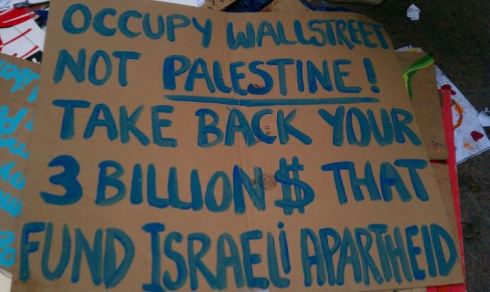

 Aletho News

