A drone that Iranian officials claimed to have shot down may be an unarmed U.S. reconnaissance aircraft that went missing over western Afghanistan late last week, according to U.S.-led forces in that country.
“The operators of the UAV [unmanned aerial vehicle] lost control of the aircraft and had been working to determine its status,” NATO’s International Security Assistance Force in Afghanistan said in a statement.
Iranian media reported Sunday that the country’s armed forces had shot down a U.S. drone that they said violated Iranian airspace along the eastern border. Iran borders Afghanistan and Pakistan in the east.
An Iranian military official quoted by the official Islamic Republic News Agency said the aircraft suffered minor damage and was in the possession of the armed forces. He identified the aircraft as an “RQ170″ type drone and said Iranian forces were “fully ready to counter any aggression.”
When the existence of the RQ-170 first entered the public domain after it was photographed in Afghanistan, it quickly got dubbed the “Beast of Kandahar.”
As a highly classified stealth aircraft the question was: why would the US be flying a drone designed to evade radar when the Taliban have no radar? Speculation suggested that its areas of operation were more likely over Pakistan and perhaps spying on nuclear facilities in Iran.
In May this year the Washington Post reported that this aircraft had indeed been used to “fly dozens of secret missions deep into Pakistani airspace and monitor the compound where Osama bin Laden was killed.”
So how did the operators manage to lose such valuable piece of equipment last week? Someone fell asleep at the wheel? Very unlikely during such a critical intelligence operation. A technical malfunction? Maybe, but in such an event it would seem more likely that the aircraft would have crashed and been destroyed.
Another possibility is that “lost control” is another way of saying hijacked. In other words, U.S. remote pilots lost control as Iranians took control.
There may be a connection with another drone story — this one about a drone that Israel lost.
Late last month, Richard Silverstein “revealed” that an Israeli drone brought down over Southern Lebanon by Hezbollah had been booby-trapped and later unwittingly taken to a weapons depot where it was remotely detonated. It was a story so implausible that it seemed like Israeli intelligence could only feed it to a scoop-hungry blogger since most journalists simply wouldn’t take it seriously.
If the story was indeed an Israeli fabrication then it was probably concocted in order to cover up a much more important story: that Hezbollah has managed to refine its tools of electronic warfare to a point that puts in jeopardy all of Israel’s drone missions over Lebanon.
If that was the case this would have serious consequences since it is widely assumed that in the event of an Israeli attack on Iran’s nuclear facilities, reprisal attacks on Israel from Lebanon would swiftly follow. In such a situation, Israel could not afford to have lost one of its most valuable intelligence gathering tools — the means on which it might depend to prevent missile strikes on Tel Aviv.
In other words, if Israel’s ability to defend itself from attacks from Lebanon has been significantly degraded, it might need to be a bit more cautious about threatening to attack Iran.
Israel is flying less sophisticated drones than the RQ-170, but even so, whatever skills Hezbollah has been acquiring in its counter-drone operations it has very likely been sharing with Iran’s Revolutionary Guard.
Might this provide part of the explanation about how the U.S. lost and Iran found a drone that supposedly went “missing”?
From September 1939 to December 1941, Americans debated the role the United States should play in World War II, which was then ravaging Europe. Should America actively support the Allies, especially Britain, by providing direct financial and indirect military aid? Or should America maintain its traditional role of nonintervention? (World War I had been the sole exception.)
In 1941, the dispute intensified into what has been called the Great Debate, although the term is sometimes used to describe the entire discussion. Throughout most of the year, conflict raged in Congress, over radio waves, in print, on soap boxes, in lecture halls, from pulpits, and over kitchen tables.
Those who wanted to intervene had the great advantage of presidential power, but it is not clear which side would have prevailed had the debate continued. But on the morning of December 7, 1941, the Japanese bombed the U.S. Naval base at Pearl Harbor, Hawaii. On December 8, the United States declared war on Japan. On the 11th, Germany and Italy declared war on the United States; America reciprocated. Discussion was effectively over.
Defining the debate
In general terms, those who wanted to intervene argued that American security rested on defeating Germany, and so America should actively assist Britain and the Allied powers, largely through supplying their war needs (few called for military involvement before Pearl Harbor). The other side argued that America had no vital interest in the conflict. Active assistance would draw America directly into the war and, so, deeply damage America economically, politically, and in terms of lives lost.
The debate is often portrayed as “internationalists” versus “isolationists,” but this characterization is misleading. The so-called internationalists were often sympathetic to only a few favored nations. They were often “isolationist” or protectionist in other areas such as trade, where they advocated high tariffs to favor domestic goods and labor. Moreover, their definition of internationalism sometimes devolved to an advocacy of American dominance rather than that of global partnership.
So-called isolationists often sought to increase foreign trade, endorsed noncoercive forms of international organization, fostered cultural interchange, and supported relief and recovery. In fact, they might take pains to deny they were isolationists, preferring the name anti-interventionist, neutralist, or nationalist.
What united them was a common opposition to America’s entry into World War II. The reasons for opposition varied as widely as did their political makeup, which spanned from far Right to far Left.
A more accurate description of the debate, therefore, is interventionist versus anti-interventionist.
The timing of the debate was significant in at least two ways.
First: Around the globe — e.g., in Germany, Italy, Japan, and the Soviet Union — national-security states were consolidating. These were states at perpetual war with “the enemy,” both external (hostile nations) and internal (dissident citizens). America would either be drawn into a scenario created by such states or it would maintain neutrality and, so, remain American. Many noninterventionists believed that war would replace the free American system with government control in the form of labor conscription, monopolies, military-industrial corporations, price controls, and so on.
Second: Franklin Delano Roosevelt (FDR) had assumed the presidency (1933–1945) with a clear focus upon domestic policy, especially the economy. Only as fascism spread across Europe and communism across Asia did FDR’s attention significantly shift to foreign policy.
Then, on September 1, 1939, Germany invaded Poland. Two days later, Britain and France declared war on Germany. Prior to the invasion of Poland, FDR’s foreign policy had stressed the protection of America’s strategic and economic interests in Europe. Afterward, America’s position remained officially neutral but FDR clearly favored the Allies. For example, in a September 3rd “fireside chat” broadcast, he declared neutrality, but he also waited two days before invoking the Neutrality Acts, so that the Allies could quickly buy the war materials they needed without impediment.
Prelude to the great debate
On September 21, FDR asked a special session of Congress to revise the Neutrality Acts to allow a policy of “cash-and-carry.” The policy allowed America to sell war materials to any belligerent who paid up front and assumed all risk of transportation. In effect, however, cash-and-carry assisted Britain and not Germany because the latter was cash-strapped and unable to travel safely across a British-dominated Atlantic. Thus the policy preserved a veneer of neutrality while aiding Britain and boosting the American economy.
Prominent anti-interventionists openly challenged FDR. Today, the best remembered of these voices may be Senator Robert A. Taft, but back then the one man with sufficient public appeal to counter FDR’s own was the renowned aviator Charles Lindbergh. In September, Lindbergh began broadcasting a series of speeches over the radio. The first, entitled “America and European Wars” argued that “by fighting for democracy abroad we may end by losing it at home.” Lindbergh also published articles in popular print venues such as Reader’s Digest. Although he was far from alone in his advocacy — for example, Senator Gerald P. Nye vociferously opposed the cash-and-carry policy — it was Lindbergh who was its popular voice.
During this time, the conflict in Europe entered a phase now known as the Phoney War. This period of inactivity spanned the winter 1939–1940.
In April 1940, the Phoney War ended when Germany invaded Denmark and Norway. Shortly afterward, Belgium, Holland, and France were invaded. Thus, an urgency suffused the debate.
At the same time, the British had taken huge losses in the materials they were shipping home due to German U-boat attacks; they could no longer afford a cash-and-carry arrangement. At a December 17 press conference, FDR proposed another policy, called Lend-Lease. FDR described Lend-Lease in terms of watching a neighbor’s house burn down. He asked, “What do I do in such a crisis? I don’t say … ‘Neighbor, my garden hose cost me $15; you have to pay me $15 for it’ — I don’t want $15 — I want my garden hose back after the fire is over.”
The policy aimed at giving the President broad power to “sell, transfer title to, exchange, lease, lend, or otherwise dispose of” war materials. This would have allowed FDR to give war material to Britain (and others) without immediate payment. Instead, the recipients would give the materials back after the war or simply pay for them then in some manner. A September 1940 agreement called Destroyers for Bases provided one precedent; 50 U.S. WWI destroyers were exchanged for leases on several military bases to which Britain held rights.
In his 1941 State of the Union address, FDR reiterated Lend-Lease and confirmed the fears of anti-interventionists who believed war would destroy the free American economy. FDR declared, “To change a whole nation from a basis of peacetime production of implements of peace to a basis of wartime production of implements of war is no small task.”
And, yet, the American people were in favor of actively assisting Britain. What they opposed was any direct entry into the war. A February 1941 Gallup poll found 54 percent of Americans approved of Lend-Lease without qualification; 15 percent approved with qualifications such as avoiding war; and 22 percent were absolutely against Lend-Lease.
In February, 1941, the Lend-Lease bill arrived at Congress, where it faced stiff opposition from Republicans. Nevertheless, the Democrat-dominated House voted along party lines and passed the bill; the Senate also secured passage. On March 11, the bill was signed into law. In April, the program was expanded to include China. America was now what FDR proudly called “the arsenal of democracy.” Neutrality was now a technicality.
The America First Committee
No organization better expresses the anti-interventionist side of the Great Debate than the America First Committee (AFC).
The immensely influential AFC was rooted in a student organization founded in 1940 by Yale Law School student and future CEO of Quaker Oats R. Douglas Stuart Jr., along with several other students, including future Supreme Court Justice Potter Stewart and future President Gerald Ford. By September 7, the AFC announced its nationwide status and established headquarters in Chicago. It attracted high-profile activists including Lindbergh; Robert E. Wood, the chairman of Sears, Roebuck and Company; Alice Roosevelt Longworth, daughter of former President Theodore Roosevelt; John T. Flynn, a well-known journalist and founder of the New York chapter; Norman Thomas, a prominent socialist and pacifist; as well as Senators Burton K. Wheeler (D), David I. Walsh (D) and Gerald P. Nye (R).
On December 17, when FDR first proposed a Lend-Lease bill, the anti-interventionists were galvanized. The AFC aggressively criticized the policy as well as FDR the man. Calling FDR a liar, it petitioned nationwide for the enforcement of the Neutrality Act and to force FDR to fulfill his earlier pledge to stay out of war. The AFC announced four key principles to ensure America’s neutrality:
The United States must build an impregnable defense for America.
No foreign power, nor group of powers, can successfully attack a prepared America.
American democracy can be preserved only by keeping out of the European war.
“Aid short of war” weakens national defense at home and threatens to involve America in war abroad.
Passage of the Lend-Lease bill created more debate. For example, when Germany invaded the Soviet Union, the Lend-Lease program was extended to that nation; the AFC protested vehemently that Stalin was no better than Hitler. When FDR attempted to assist British ships in the Atlantic by ordering the U.S. Navy to fire upon German submarines, the AFC accused him of waging war against Germany without a congressional declaration. At every step toward war, the AFC positioned itself as a barrier.
It sponsored rallies in small towns and cities, it promoted lectures and radio broadcasts, it distributed useful data to members of Congress and published rousing literature. One circular asked “Are you willing to give up democracy?” and referred to Lend-Lease as a “war dictatorship bill” that handed “absolute power” to FDR.
With some genuine success, Edgar J. Hoover and the FBI countered the AFC’s momentum; they attempted to smear its members as pro-Nazi, anti-Semitic or subversive. Nevertheless, the organization continued to grow, simply because the majority of Americans did not want to enter the war. At its peak, AFC boasted approximately 800,000 members in several hundred chapters.
And then Pearl Harbor occurred. Popular opinion turned on a dime and favored the rapid declaration of war. On December 11, the same day Germany and Italy declared war on America, the AFC disbanded and released the statement,
Our principles were right. Had they been followed, war could have been avoided. No good purpose can now be served by considering what might have been, had our objectives been attained. We are at war.
Today, it is common to view the anti-interventionists as “isolationists” who naively under-estimated Hitler or espoused Fortress America. But, as Doenecke observed,
They were presenting a competing world vision … that force, separated from abstract principles of international law and self-determination of nations, merely institutionalized chaotic and destructive power politics.
Anti-interventionists were also presenting a competing domestic vision
that lengthy foreign conflicts would only weaken a nation, limiting the freedom and opportunities of Americans in ways that they thought crucial. In short, real dangers were internal, centering on the nature of the American republic as they had understood and experienced it.
Word that the Los Angeles Police, who sent in 1200 officers in riot gear to violently rout a few hundred Occupy Movement demonstrators from their LA encampment last week, had earlier sent 12 young undercover officers into the peaceful occupation camp to spy on the activists should come as no surprise.
Nor should wild and unsubstantiated claims–clearly bogus–that these spies overheard some of the protesters supposedly planning to sharpen bamboo sticks to use as weapons against police, come as a surprise either. Since the national Occupy Movement is by design rigorously non-violent, and since there has been not one example of occupiers using violence against police, even when attacked, if any of the police spies really heard such talk it had to have been coming either from some provocateur on the payroll of the FBI or one of the plethora of other federal intelligence agencies, or from another of the 12 LAPD undercover cops which were so well disguised they didn’t recognize each other. (No such handmade weapons were in evidence during the police assault on the occupation, and no arrests were made of anyone allegedly making such plans.)
The LAPD has a long, sordid history of undercover activity, including provocateur activity, being used against peaceful protesters and anti-establishment groups, dating to the early part of the last century. More recently, the late LAPD police chief Daryl Gates famously operated, first under Chief Ed Davis, when Gates was director of the so-called Public Disorder Intelligence Division (PDID) and later as chief of the department, a massive spying operation that boasted dozens and perhaps over 100 officers working undercover. These cop spies were used not to attack organized or serious crime, but to monitor and gather dossiers on nonviolent political activists, nearly entirely on the left.
In the 1950s, LAPD spies regularly infiltrated leftist labor and political organizations considered to be Communist or “fellow travelers” of the CP, as well as civil rights organizations. In the ‘60s, the PDID was used extensively to infiltrate anti-war organizations and black nationalist organizations.
In the mid-1970s, as the anti-war movement faded away, the PDID spy net widened substantially. I had my own experience with the broad reach of this LAPD’s spy unit, when I was a co-founder of a non-sectarian leftist alternative weekly newspaper, the Los Angeles Vanguard.
The LAPD Red Squad spy operation has a long ugly history of repression
I and my fellow Vanguard members learned, several years after our venture had folded for economic reasons, that the PDID had sent a young officer tasked to it who was just out of the Police Academy to join our staff as a volunteer. The woman, Connie Milazzo, posed as a journalist wannabe, and asked for assignments, which we dutifully gave her. She also often volunteered to answer the phones in our office when we’d go to lunch — which gave her an opportunity to talk to our sources if they called, and also to rifle our files, which of course were left on our desks.
Even worse, the LAPD, we later learned, went to the executive of an ad agency we had hired to sell corporate ad space for us, and used the drug arrest of his son to extort him and get him to have the person assigned to sell ads for us only pretend to be trying to do so, while collecting a significant part of our weekly revenues. This deceitful tactic succeeded in driving us out of business, as we simply concluded that we could not generate enough co-op ads to support the operation, and folded it in 1978.
When we finally learned, long after the paper had been shut down, of Milazzo’s true identity, and it became clear she had also infiltrated a number of other left groups, it led to a lawsuit by the ACLU of Southern California which uncovered the truth that the PDID had sent out 20 such young officers as spies to infiltrate 200 Los Angeles organizations, including such “dangerous” outfits as the National Organization for Women, the Democratic Socialist Organizing Committee, and the office of Los Angeles City Councilman Zev Yaroslavsky!
Much of what the PDID did in its heyday was laughable, in retrospect, but much of it was truly horrible. One undercover operative actually wormed his way into membership in a left-wing political party, and became the live-in lover of a woman member of that group for nearly a year–a long sexual and “romantic” relationship which of course was simply a cynical sham and a cover for the operative (with privileges). This is the depth to which the LAPD can sink.
The disclosure that the LAPD, with its long history of abuses, was infiltrating the Occupy Movement should lead to an immediate lawsuit against the department to ferret out exactly what these undercover cops actually did. How much of their activity was simply intelligence gathering — bad enough of a violation of the civil rights and First Amendment freedoms of the activists, who were committing no crimes–and how much was provocateur-type work, trying to set the movement, or people in it, up for planning violence against property or the police? We need to know. Hopefully, in addition to filing a lawsuit, the LA Occupy activists will simultaneously conduct an investigation among themselves to try and ascertain who those cops were and what they were saying and doing as they posed as activists.
But the revelation that the LAPD was spying should also alert the Occupy Movement groups across the country that they too were and probably still are being infiltrated and spied on. The pattern of attacks on occupation encampments around the country over the last two weeks has been so similar, and the information about national coordination so convincing already, that it seems almost certain to me at least that it is as likely that police everywhere were spying and perhaps engaging in provocateur activities as we know it was that they shared strategies like attacking encampments at night, using overwhelming numbers, force and violence, applying weapons like pepper spray, rubber bullets and batons, and keeping the press at bay.
It is all of a piece.
My suggestion at this point is that the Occupation Movement, at least in cities where there is a Federal Reserve Bank, which would include San Francisco, New York, Dallas, Kansas City, Minneapolis, Chicago, St. Louis, Atlanta, Richmond, Washington, Philadelphia and Boston, move their operations to those federal properties. That puts the onus for future repression out of the hands of local police and directly on the Obama administration. If nothing else, it eliminates any chance of the Democratic Party trying to co-opt the movement, since any attacks on those encampments would be directly tied to the Obama Administration’s “Justice” Department and Homeland Security Department. Federal Reserve Banks are protected by Federal Reserve Police, who after 9-11 were designated by an act of Congress as Federal Law Enforcement officers. As such they are answerable to the Homeland Security Department and ultimately to the White House.
Like other federal and local police, these guys can be heavily armed. They are also authorized to carry pepper spray, which seems to be the popular weapon of choice for the new American gestapo to use against demonstrators against capitalism’s crimes, so demonstrators should be prepared.
But at least by forcing the federal government to be the assailant in confrontations over demonstrations and occupation encampments, the real enemy will be made more clear. It is not, after all, city governments that have been catering to, empowering and fawning on the corporate oligarchy, but rather the federal government–both Congress and the White House.
An additional benefit of adopting the tactic of occupying federal property is that it would make the charges filed against activists federal, instead of local, and would put the cases in federal courts, where there is at least more of a likelihood than in corrupt state and municipal courts of getting a decent judge who respects the Constitution and its protection of the right of assembly, free speech and address of grievances. This is particularly true in relatively liberal districts like San Francisco, Chicago, Philadelphia, Boston and New York.
Ankara – The report just issued by the UN Human Rights Council’s ‘independent international commission of inquiry on the Syrian Arab Republic’ is now being passed along the line to the UN Security Council, with the recommendation by the UN Human Rights Commissioner, Navi Pillay, that the Syrian government be referred to the International Criminal Court for prosecution.
In its terms of reference the commission describes itself as a ‘fact-finding body’ based on the standard of ‘reasonable suspicion’. Yet if there is anything that characterizes this document, it is the lack of attention to fact. The report is based on accusations, allegations and claims against the Syrian government which it does not even attempt to verify. It repeats the claim that the Syrian government’s security forces are responsible for the deaths of 3500 people – the figure usually given – when there is strong prima facie evidence that a large number of the dead, civilians as well as soldiers, have been the victims of armed gangs operating across the country. It does not even say where it picked up this figure, since increased to 4000 by Navi Pillay, or whether it has any independent evidence that it is accurate.
Two central questions needed to be dealt with if this commission wanted to get at the facts. First, how much truth is there in the allegations being made against the Syrian government and its security forces? Here the commission records the allegations but makes no attempt to verify them. Thus the facts remain unknown. Second, how much truth is there in the allegations made by the Syrian government? Here the commission does not even deal with the allegations. Despite this bias, the result is the same: the facts remain unknown.
The commission says it interviewed 223 victims and witnesses of alleged human rights violations, ‘including civilians and defectors from the military and security forces’. It does not say who these people are, where it got their names from, why they were chosen and who covered the costs of their travel and accommodation. It indicates that other sources of its information include ‘non-government organizations, human rights defenders, journalists and experts’. As this same group is the source of many of the unsubstantiated if not patently false accusations (i.e. dead people who have turned up alive) appearing in the mainstream media, it is obviously important to know precisely which organizations and individuals helped the commission and what the information was that they supplied, but the commission does not say.
The commission regrets that the Syrian government, ‘despite many requests’, failed to engage in dialogue ‘and grant the commission access to the country’. But as the Syrian government points out, in a letter printed as an annex to this report, it had established its own Independent Special Legal Commission, with sub-commissions operating across Syria since the end of March, and therefore would not be able to provide the UN commission with the material it wanted until it had concluded its own inquiries. However, because it could not accommodate itself to the commission’s timetable, it is accused of failing to cooperate.
On September 12 the president of the Human Rights Council (Laura Dupuy Lasserre) appointed three ‘high level experts’ as members of the commission of inquiry: Paulo Pinheiro (chairman), Yakin Ertürk and Karen Koning AbuZayd. They were required to produce their report by the end of November, with an update to be handed in by March, 2012. There is no indication of why the end of November was chosen for the deadline and not December or January, giving the commission more time to investigate the allegations being made. The time frame was extremely constricted given the work load. Within the space of six weeks (end of September to the middle of November), 223 witnesses were interviewed and a report prepared. The commission’s mandated task was ‘to investigate all alleged violations of international human rights law since March 2011 in the Syrian Arab Republic, to establish the facts and circumstances that may amount to such violations and of the crimes perpetrated and where possible to identify those responsible with a view of ensuring that perpetrators of violations, including those that may constitute crimes against humanity, are held accountable’. This clearly could not be done in six weeks. The apparent rush to get the report out will raise questions in many minds about timing, given the way in which the net is being closed around the Syrian government by those who want to bring it down.
The commission presents one side of the story throughout. For virtually every claim it makes there is a counter narrative which it ignores. One such claim involves the use of snipers. The commission says or implies that they were state security forces. There is countervailing evidence of armed civilians shooting at demonstrators to throw the blame on to the state. Perhaps there is truth in both versions, but both versions needed to be considered. The fact remains that the identity of these snipers is not known.
The report alleges that roadblocks and security checks were set up to prevent people from joining demonstrations but makes no mention of allegations of roadblocks being set up by armed gangs and the consequent kidnapping and killing of civilians. It refers to killings and arrests at Jisr al Shughur but not the evidence of the massacre of soldiers and civilians around the town in July: even if only prima facie it deserved to be considered. It produces claims of torture and killing ‘reportedly’ taking place in Homs military hospital ‘by security forces dressed as doctors and allegedly acting with the complicity of medical personnel’. Such a serious charge surely needs more to back it up than ‘reportedly’. The report mentions the raid on a mosque in Dar’a early in the protest movement but not the stockpile of weapons found there. It refers to the torture and murder in custody of two teenage boys and claims that up to November 9, ‘reliable sources’ indicated that 256 children had been killed by state forces. This is such a serious accusation that some corroborative evidence was needed but there is nothing, not the name even of one of these children and not the circumstances in which they were allegedly killed.
It quotes a ‘defector’ (no evidence that this person actually is one) as being told by his commander to ‘disperse the crowd or eliminate everybody including children’. There is no supporting evidence for this accusation. The state security forces are accused of rape but there is no mention of the cases of rape reported by the Syrian authorities to have been committed by armed gangs as part of their project to terrorize and intimidate the civilian population. The army is accused of using tanks and heavy weapons against residential buildings. These accusations are denied by the government. Furthermore, if they were used, were the civilians inside those buildings armed and shooting at the army, as seems to have been the case at Homs and probably elsewhere? The commission does not mention the use of heavy weapons by armed men against the army. Apparently it has not seen the videos of the charred bodies of soldiers lying beside burnt-out tanks. The commission’s statement that it is ‘aware of acts of violence committed by demonstrators’ is a minor point beside the violence of the armed gangs. The substantial body of evidence of their crimes surely needed to be considered if the human rights of all Syrians and not just those who have died at the hands of state security forces are to be taken into account.
In short, this report does not even meet its own ‘lower standard of proof’. In fact, and this seems to be the only fact insofar as this report is concerned, there is little proof of anything. The commission perhaps needed to be reminded that the ‘defectors’ and the Syrian National Council do not represent the Syrian people. Bashar al Assad’s personal popularity plays out well for his government amongst a normally skeptical people. His face has been the focal point of demonstrations of support by millions of people in recent months. If anything, sanctions imposed by the US, the EU, the Arab League and Turkey, along with the constant threat of force, seem to have strengthened public support for Bashar and his government. The commission certainly would have had no difficulty in finding Syrians prepared to come to Geneva to tell another side of the story. Apparently there was no room for them and no interest in what they had to say.
We have just seen what has been done to Libya in the name of human rights and the ‘responsibility to protect’. Uncounted thousands of Libyans were killed in eight months of bombing and missile attacks by French, British and American warplanes. There is prima facie evidence that war crimes were committed but there is not even the suggestion that someone will be held accountable. Further back stands Iraq, invaded in 1991 and then subjected to a decade of sanctions which ended the lives of about one million Iraqis, including hundreds of thousands of children. The second war launched in 2003 brought the overall civilian death toll since 1991 to somewhere between 1.5 and two million Iraqis. Again, prime facie evidence of war crimes and crimes against humanity without any of the perpetrators being punished. The kind of lies told before the attacks of 1991 (babies being thrown out of their incubators in Kuwait) and 2003 (weapons of mass destruction) were duplicated in the propaganda war which preceded the aerial assault on Libya this year (mass killing and Viagra-fueled rape).
To their eternal shame, the Arab League and governments which sell themselves on their Muslim credentials took part in or came in behind this war on a Muslim country by three non-Muslim governments. Now a third Arab country is being laid out on the chopping board, not in North Africa but at the very heart of the Middle East. The US, France, Britain and their Arab allies can sense that a momentous victory is at hand and they are pushing as hard as they can, using every weapon at their disposal. At the end of the road lies the possibility of armed intervention through the declaration of a ‘no fly’ zone and a cross-border operation to establish a ‘buffer zone’ or what the French Foreign Minister, Alain Juppé, prefers to call a ‘humanitarian corridor’. These are propaganda phrases, of course. What the advocates of intervention are talking about is war and everything it entails – widespread destruction and the death of thousands of people.
Reconstructed Syria’s future is already being written. A leading figure in the Syrian National Council, Burhan Ghaliun, has said that a new government would break relations with Iran and would overturn the present strategic relationship with Hizbullah. The connections of other members of this council with the Gulf States, the US State Department and Israel’s lobbyists in Washington are further evidence of how Syria is to be remolded if the present government can be brought down. Short of the toppling of the Islamic government in Iran, it would be hard to think of a greater triumph for ‘the West’ and its reactionary allies across the Middle East, not to mention the benefits for Israel. Are those Arabs joining the chorus against the Syrian government in the name of human rights even thinking about this?
~
Jeremy Salt teaches the history of the modern Middle East in the Department of Political science, Bilkent University, Ankara. He previously taught at Bogazici (Bosporus) University in Istanbul and the University of Melbourne. His publications include The Unmaking of the Middle East: A History of Western Disorder in Arab Lands (University of California Press, 2008).
“The bullets made the water splash up in my face. The soldiers shouted at us to take off our shirts and trousers. We had to jump into the water and swim towards them one by one” says 17-year old Mohammed Bakr, as he recounts how Israeli naval forces detained him from his family’s fishing boat, together with his cousin and uncle.
Mohammed Wisam Lutfi Bakr is the oldest of 9 children. He is from a fisherman’s family living in Gaza City’s Remal neighbourhood. He has been helping out on his father’s fishing boat since he was 7 years old. As he explains what happened to him, his cousin, and their uncle on the early morning of 10 November he relives the fear he felt during the initial attack, arrest and subsequent detention.
Like every morning when the weather allows, Mohammed, his cousin Abdul Kader Wael Bakr (17), and their uncle Arafat Lutfi Bakr (28) went out fishing off the shore of Gaza City, leaving at approximately 03.00. At around 03.30, when they were approximately 2 nautical miles off Gaza City’s shore, they were suddenly approached by a large Israeli gunboat. Without warning soldiers started firing shots in the water around them, very close to the boat. “The bullets made the water splash up in my face. The soldiers shouted at us to take off our shirts and trousers. We had to jump into the water and swim towards them one by one” Mohammed recalls. His uncle Arafat went first. Mohammed watched how his uncle was pulled on board of the gunboat by the soldiers. Then his cousin Abdul Kader followed. “I went last” says Mohammed, “they handcuffed us with plastic straps and blindfolded Arafat. There were at least 5 soldiers. They kicked and beat me on my arms and legs. They did the same to my cousin. I’m almost sure they gave our uncle even worse treatment, but I could not see him because they took him out of our sight”. All three of them were taken to a detention facility in Ashdod and held there blindfolded. “It was very dirty. At some point I said I needed to go to the toilet. Then they put me in an open area where everyone could see me. There was not even a toilet.”
Around 12.00h Mohammed and Abdul Kader were transferred to Erez checkpoint, between Israel and the Gaza Strip. There the two cousins were held and questioned until 22.30h. Then the soldiers at the Erez called Mohammed’s father and grandfather to tell them that they released the two cousins. The two men had been waiting for news about the boys since noon, when a fisherman told them they had been taken by soldiers. The father and grandfather had heard shots being fired while they were in the mosque for morning prayers. Later they realized they had heard the attack on Mohammed, Abdul Kader and Arafat.
Mohammed cannot stop thinking about his uncle, who is still being held in Israeli detention; “Arafat and I would go everywhere together and do all the fishing together. I am very worried about him. The soldiers even said; ‘you always go fishing with Arafat’. I am very afraid for how they are treating him.” Arafat is a member of the Palestinian Naval Police.
On the day of the arrest, the family’s fishing boat, including the motor and net, were confiscated. The boat was passed from Mohammed’s grandfather to his father and has been the livelihood of the extended family for as long as Mohammed can remember: “we have no money for a new boat, motor, and net. Altogether it would cost us around 46,000 NIS.” With the confiscation Mohammed and many of his relatives lost their only source of income.
Mohammed is in his last year of high school and is preparing for the final tawjihi exams; “all my classmates take extra classes for the tawjihi but it costs a lot of money, which my family doesn’t have.” Mohammed would like to take the extra classes too but with the loss of the family income, that has become an impossible challenge.
The Israeli army violence against the fishermen has a major impact on Mohammed and his family: “last year my twenty year old cousin, Mohammed Mansour Bakr, was attacked by the Israeli army while fishing. The soldiers shot him and he died. The army is merciless. We stopped fishing for a little while but eventually we had no choice but to get back to our work. We are attacked a lot by the soldiers. They harass us. During this year’s Ramadan they chased and harassed us seven times. It feels like they want to disturb us more during our holy month. At sea the thoughts of risks are constantly in my head. Everyone can feel the same fear at sea. It feels like watching a frightening movie”. However, there is no other option for Mohammed and his family but to continue fishing; “There is no other work for us. Where can we possibly get other work from in Gaza? Even though our work is very dangerous, there is no other choice but to go back to the see because we need the money. If and when we get another boat, I will go again.”
For the past two decades the fishing waters of the Gaza Strip have gradually shrunk by access restrictions imposed as a result of the Oslo agreement and more recently by illegal unilateral restrictions imposed by Israel. Even within the currently enforced 3 nautical mile limit, the Israeli navy regularly attacks, arrests, and sometimes even kills fishermen. This year at least 32 fishermen were arrested, 17 in the month of November. Another 5 fishermen were injured and at least 20 boats were confiscated. In conjunction with the restriction on fishing waters, the income of Gaza’s fishing community (8,200 fishermen and workers in the fishing sector) has steadily decreased. By 2010 the fishing catch had decreased by 37% compared to 2008 and this amounted to only half of the 1999 fishing catch. The sardine catch, which makes up 70% of Gaza’s total fishing catch, now only reaches 20% of the sardine catch that existed before the restrictions, representing a loss of $10 million. Finally, according to the Fisherman’s Syndicate, around 60% of the small fishing boats and 22% of trawler boats in the Gaza Strip are not used because of the high risks involved and the limited catch.
The center of Hebron is surreal and terrifying. It is strange and overwhelming to see this schizophrenic place with my own eyes. As I walk along the streets, my senses are heightened yet I cannot fully process what I see. It feels like I am walking in a dream or on an empty movie set. The legacy of violence is stark and in your face and I am reminded of the ruins and craters that I saw when visiting Srebrenica in Bosnia several years ago. Yet, unlike Srebrenica, there has been no attempt to move past the divisions in Hebron. Instead, the divisions have been frozen and institutionalized and today Hebron is relatively quiet only because people are kept physically apart.
A handful of Jewish settlers – 800, in a city of 170 000 – have moved into the heart of the city and to protect them the Israeli army has created “sterilized zones” where the movement, residence and business of Palestinians are sharply restricted. On parts of some streets Palestinians are allowed to pass but when they do so they walk swiftly with their heads down to escape notice by Israeli settlers and soldiers. Other streets are closed to Palestinians, who cannot work or walk there. Technically, they are allowed to live in some buildings but the front doors of these buildings have been bolted shut and the residents are able to enter and leave them only through back windows or over rooftops.
Some Jewish settlers living nearby harass the Palestinians regularly with impunity. The Israeli army division stationed in Hebron is there to protect Jewish settlers and is not authorized to defend Palestinians against settler violence which is frequent and vicious. Five hundred Israeli soldiers are deployed to protect eight hundred Jewish settlers. And since the Palestinian police are not allowed to enter the sterilized zones there is little or no safeguarding of Palestinian rights. Most Palestinians who could escape the zones have escaped. Only the poorest families – and the criminals seeking a refuge – remain.
In one courtyard, where a thick stench of trash and rotting food hangs in the air fifty Palestinian families used to live. Today only two remain. They live in a building scarred by violence, where the front door is blocked and the windows covered with iron bars and metal nets. They enter and exit through a back window leading to the Arab part of the city. The courtyard in front of their apartment used to be full of life but is now covered in trash. Alleyways leading from the courtyard are blocked with slabs of concrete and giant rolls of barbed wire. An Israeli soldier is standing nearby, eyeing us uneasily as we move around listening to our guide explaining the history and nature of the conflict in Hebron.
My visit to Hebron was arranged by the Israeli NGO Breaking the Silence, a veterans organisation which collects and publishes testimonies of Israeli soldiers about the abuses they have committed in the occupied Palestinian territories. The founder of this organization, Yehuda Shaul – a bearded Jewish man who wore a kippa and described himself as Orthodox – guided us around the deserted streets of the now Jewish parts of Hebron, showing us destroyed architecture, boarded-up Palestinian homes and the ubiquitous presence of the Israeli army. He had himself taken part in the occupation, serving as a grenade launcher operator with the IDF in Hebron during the Second Intifada (2000-4).
Explaining the military logic of the occupation, Shaul stressed two messages. First, he insisted that there is no such thing as a “good occupation” and that the Israeli public is simply soothing its conscience with the myth that the Israeli Defense Force is enforcing a moral occupation. On the contrary, he argued, an occupation cannot be effective without involving serious abuses of the rights of the local people. This is irrespective of the virtues and morality of the individual soldier. The logic and pressures of the situation will lead soldiers to treat certain categories as security threats and hence deprived of certain rights. Add to this, he noted, the psychological stress that many soldiers suffer on account of being stationed in hostile territory and the widespread atmosphere of impunity around them and you have a combustible mix.
Shaul went on to say that many of the abuses committed by the Israeli army have a clear military purpose. They are not the result of indiscipline or frustration but part and parcel of the very strategy of the occupation. He gave as an example that Israeli forces systematically disrupt the daily life of local Palestinians in order to keep them on their toes and thereby discourage them from engaging in organized violence. He also recalled from his own military service in Hebron that Israeli soldiers would repeatedly break into Palestinian homes to snatch with them young boys that they would force to walk in front of their vehicles during patrols. This was not an act of cruelty but an effective tactic to prevent other Palestinians from throwing stones at them.
Shaul’s central message was that the occupation, despite the lofty rhetoric surrounding it, carries a dark underside, and it is this underside that Breaking the Silence wants to expose and bring to the attention of the Israeli public. He emphasized that Israelis must take responsibility for the crimes committed in their name. There is a large moral price tag to the occupation, Shaul insisted, and the Israeli people must face up to this.
Unsurprisingly, our tour group was not greeted warmly by many Hebron settlers. Many shouted abuse at us, and at one point a group of children, aged 7-8 years, took a hose and sprayed us with water as we passed a settlement. Two of them ran after us and punched, kicked and jumped on Shaul, calling him names. I was disgusted, not because of their obvious hatred, but because they were so steeped in a sense of self-righteousness and impunity that they felt safe and entitled to attack a group of adult visitors.
It is difficult not to be outraged by the situation in Hebron. The visit brought home some of the injustice and intractability of the Israel-Palestine conflict, and the structural logic and powerful interests that sustain it.
– Markus Balázs Göransson is currently studying for a PhD in International Politics at Aberystwyth University. He has previously worked as a conflict researcher and written on conflicts in the Philippines, the Balkans and the Middle East.
Regime Change, Inc. has come home to America — and they’ve just hinted who they’d like to be their presidential candidate in 2012.
Former New Jersey Gov. Christie Todd Whitman, who is leading a group to draft a third-party presidential candidate, is encouraging Jon Huntsman to make an independent bid for the White House.
The group is Americans Elect backed by multi-millionaire Peter Ackerman, whom I’ve written about as “The Junk Bond ‘Teflon Guy’ Behind Egypt’s Nonviolent Revolution.”
Ackerman is a veritable pauper, however, by comparison with one of Huntsman’s other backers. As Jeff Zeleny wrote on June 22 in the New York Times:
Jon M. Huntsman Jr. opened his day on Tuesday by formally declaring his candidacy for the Republican presidential nomination. He closed it by accomplishing an equally important task: collecting $1.2 million for his campaign.
A dinner in Manhattan, hosted by Lynn Forester de Rothschild, was the venue to kickoff Mr. Huntsman’s fund-raising effort. It was the first stop in a weeklong fund-raising sprint, as Mr. Huntsman tries to catch up with the rest of the Republican presidential field that is locked in a cutthroat scramble to sign up high-dollar donors.
Lynn Forester de Rothschild is the chief executive officer of E.L. Rothschild, a holding company she owns with her husband, Sir Evelyn Robert de Rothschild, a member of the Rothschild banking family. The company manages investments in The Economist Group, owner of The Economist magazine, as well as real estate, agricultural and food interests.
In mid July it became known that the CIA had used a fake vaccination campaign in Abbottabad in Pakistan in an attempt to get the DNA of Osama Bin Laden’s children who were suspected to be there with him.
[T]his, now public, stunt will jeopardize many legitimate vaccination drives like the ones UNICEF and the WHO are organizing in Afghanistan.
…
So far the Taliban cooperated with such vaccination campaigns. From now on they will not trust these anymore. The abuse of such medical services for spying operations will be deadly for many children.
The United Nations says a reportedly fake vaccination campaign conducted to help hunt down Osama bin Laden has caused a backlash against international health workers in some parts of Pakistan and has impeded efforts to wipe out polio in the country.
…
Some 1,700 families living in Mohabatabad, a poor area of 20,000 people on the outskirts of Mardan, a town in Pakistan’s northwestern Khyber-Pakhtunkhwa province, have refused vaccinations after local Islamic seminaries launched a countercampaign to discourage vaccinations, health workers say.
…
Ghulam Rasool, a laborer from Khyber, found out in March that his 18-month-old son had polio after militants had warned off health workers.
…
Pakistan is one of the last significant polio reservoirs in the world, imperiling global eradication efforts, Unicef warns.
Those kids are just some of those uncounted and innocent casualties of the futile war of terror. How many more will have to die before that war ends?
New York – In October, the Alameda County Sheriff’s Department turned parts of the campus of the University of California in Berkeley into an urban battlefield. The occasion was Urban Shield 2011, an annual SWAT team exposition organized to promote “mutual response,” collaboration and competition between heavily militarized police strike forces representing law enforcement departments across the United States and foreign nations.
At the time, the Alameda County Sheriff’s Department was preparing for an imminent confrontation with the nascent “Occupy” movement that had set up camp in downtown Oakland, and would demonstrate the brunt of its repressive capacity against the demonstrators a month later when it attacked the encampment with teargas and rubber bullet rounds, leaving an Iraq war veteran in critical condition and dozens injured. According to Police Magazine, a law enforcement trade publication, “Law enforcement agencies responding to…Occupy protesters in northern California credit Urban Shield for their effective teamwork.”
Training alongside the American police departments at Urban Shield was the Yamam, an Israeli Border Police unit that claims to specialize in “counter-terror” operations but is better known for its extra-judicial assassinations of Palestinian militant leaders and long record of repression and abuses in the occupied West Bank and Gaza Strip. Urban Shield also featured a unit from the military of Bahrain, which had just crushed a largely non-violent democratic uprising by opening fire on protest camps and arresting wounded demonstrators when they attempted to enter hospitals. While the involvement of Bahraini soldiers in the drills was a novel phenomenon, the presence of quasi-military Israeli police – whose participation in Urban Shield was not reported anywhere in US media – reflected a disturbing but all-too-common feature of the post-9/11 American security landscape.
The Israelification of America’s security apparatus, recently unleashed in full force against the Occupy Wall Street Movement, has taken place at every level of law enforcement, and in areas that have yet to be exposed. The phenomenon has been documented in bits and pieces, through occasional news reports that typically highlight Israel’s national security prowess without examining the problematic nature of working with a country accused of grave human rights abuses. But it has never been the subject of a national discussion. And collaboration between American and Israeli cops is just the tip of the iceberg.
Having been schooled in Israeli tactics perfected during a 63 year experience of controlling, dispossessing, and occupying an indigenous population, local police forces have adapted them to monitor Muslim and immigrant neighborhoods in US cities. Meanwhile, former Israeli military officers have been hired to spearhead security operations at American airports and suburban shopping malls, leading to a wave of disturbing incidents of racial profiling, intimidation, and FBI interrogations of innocent, unsuspecting people. The New York Police Department’s disclosure that it deployed “counter-terror” measures against Occupy protesters encamped in downtown Manhattan’s Zuccotti Park is just the latest example of the so-called War on Terror creeping into every day life. Revelations like these have raised serious questions about the extent to which Israeli-inspired tactics are being used to suppress the Occupy movement.
The process of Israelification began in the immediate wake of 9/11, when national panic led federal and municipal law enforcement officials to beseech Israeli security honchos for advice and training. America’s Israel lobby exploited the climate of hysteria, providing thousands of top cops with all-expenses paid trips to Israel and stateside training sessions with Israeli military and intelligence officials. By now, police chiefs of major American cities who have not been on junkets to Israel are the exception.
“Israel is the Harvard of antiterrorism,” said former US Capitol Police Chief Terrance W. Gainer, who now serves as the US Senate Sergeant-at-Arms. Cathy Lanier, the Chief of the Washington DC Metropolitan Police, remarked, “No experience in my life has had more of an impact on doing my job than going to Israel.” “One would say it is the front line,” Barnett Jones, the police chief of Ann Arbor, Michigan, said of Israel. “We’re in a global war.”
Karen Greenberg, the director of Fordham School of Law’s Center on National Security and a leading expert on terror and civil liberties, said the Israeli influence on American law enforcement is so extensive it has bled into street-level police conduct. “After 9/11 we reached out to the Israelis on many fronts and one of those fronts was torture,” Greenberg told me. “The training in Iraq and Afghanistan on torture was Israeli training. There’s been a huge downside to taking our cue from the Israelis and now we’re going to spread that into the fabric of everyday American life? It’s counter-terrorism creep. And it’s exactly what you could have predicted would have happened.”
Changing the way we do business
The Jewish Institute for National Security Affairs (JINSA) is at the heart of American-Israeli law enforcement collaboration. JINSA is a Jerusalem and Washington DC-based think tank known for stridently neoconservative policy positions on Israel’s policy towards the Palestinians and its brinkmanship with Iran. The group’s board of directors boasts a Who’s Who of neocon ideologues. Two former JINSA advisors who have also consulted for Israeli Prime Minister Benjamin Netanyahu, Douglas Feith and Richard Perle, went on to serve in the Department of Defense under President George W. Bush, playing influential roles in the push to invade and occupy Iraq.
Through its Law Enforcement Education Program (LEEP), JINSA claims to have arranged Israeli-led training sessions for over 9000 American law enforcement officials at the federal, state and municipal level. “The Israelis changed the way we do business regarding homeland security in New Jersey,” Richard Fuentes, the NJ State Police Superintendent, said after attending a 2004 JINSA-sponsored Israel trip and a subsequent JINSA conference alongside 435 other law enforcement officers.
During a 2004 LEEP trip, JINSA brought 14 senior American law enforcement officials to Israel to receive instruction from their counterparts. The Americans were trained in “how to secure large venues, such as shopping malls, sporting events and concerts,” JINSA’s website reported. Escorted by Brigadier General Simon Perry, an Israeli police attaché and former Mossad official, the group toured the Israeli separation wall, now a mandatory stop for American cops on junkets to Israel. “American officials learned about the mindset of a suicide bomber and how to spot trouble signs,” according to JINSA. And they were schooled in Israeli killing methods. “Although the police are typically told to aim for the chest when shooting because it is the largest target, the Israelis are teaching [American] officers to aim for a suspect’s head so as not to detonate any explosives that might be strapped to his torso,” the New York Timesreported.
Cathy Lanier, now the Chief of Washington DC’s Metropolitan Police Department, was among the law enforcement officials junketed to Israel by JINSA. “I was with the bomb units and the SWAT team and all of those high profile specialized [Israeli] units and I learned a tremendous amount,” Lanier reflected. “I took 82 pages of notes while I was there which I later brought back and used to formulate a lot of what I later used to create and formulate the Homeland Security terrorism bureau in the DC Metropolitan Police department.”
Some of the police chiefs who have taken part in JINSA’s LEEP program have done so under the auspices of the Police Executive Research Forum (PERF), a private non-governmental group with close ties to the Department of Homeland Security. Chuck Wexler, the executive director of PERF, was so enthusiastic about the program that by 2005 he had begun organizing trips to Israel sponsored by PERF, bringing numerous high-level American police officials to receive instruction from their Israeli counterparts.
PERF gained notoriety when Wexler confirmed that his group coordinated police raids in 16 cities across America against “Occupy” protest encampments. As many as 40 cities have sought PERF advice on suppressing the “Occupy” movement and other mass protest activities. Wexler did not respond to my requests for an interview.
Lessons from Israel to Auschwitz
Besides JINSA, the Anti-Defamation League (ADL) has positioned itself as an important liaison between American police forces and the Israeli security-intelligence apparatus. Though the ADL promotes itself as a Jewish civil rights group, it has provoked controversy by publishing a blacklist of organizations supporting Palestinian rights, and for condemning a proposal to construct an Islamic community center in downtown New York, several blocks from Ground Zero, on the basis that some opponents of the project were entitled to “positions that others would characterize as irrational or bigoted.”
Through the ADL’s Advanced Training School course on Extremist and Terrorist Threats, over 700 law enforcement personnel from 220 federal and local agencies including the FBI and CIA have been trained by Israeli police and intelligence commanders. This year, the ADL brought 15 high-level American police officials to Israel for instruction from the country’s security apparatus. According to the ADL, over 115 federal, state and local law enforcement executives have undergone ADL-organized training sessions in Israel since the program began in 2003. “I can honestly say that the training offered by ADL is by far the most useful and current training course I have ever attended,” Deputy Commissioner Thomas Wright of the Philadelphia Police Department commented after completing an ADL program this year. The ADL’s relationship with the Washington DC Police Department is so cozy its members are invited to accompany DC cops on “ride along” patrols.
The ADL claims to have trained over 45,000 American law enforcement officials through its Law Enforcement and Society program, which “draws on the history of the Holocaust to provide law enforcement professionals with an increased understanding of…their role as protectors of the Constitution,” the group’s website stated. All new FBI agents and intelligence analysts are required to attend the ADL program, which is incorporated into three FBI training programs. According to official FBI recruitment material, “all new special agents must visit the US Holocaust Memorial Museum to see firsthand what can happen when law enforcement fails to protect individuals.”
Fighting “crimiterror”
Among the most prominent Israeli government figure to have influenced the practices of American law enforcement officials is Avi Dichter, a former head of Israel’s Shin Bet internal security service and current member of Knesset who recently introduced legislation widely criticized as anti-democratic. During the Second Intifada, Dichter ordered several bombings on densely populated Palestinian civilian areas, including one on the al-Daraj neighborhood of Gaza that resulted in the death of 15 innocent people, including 8 children, and 150 injuries. “After each success, the only thought is, ‘Okay, who’s next?’” Dichter said of the “targeted” assassinations he has ordered.
Despite his dubious human rights record and apparently dim view of democratic values, or perhaps because of them, Dichter has been a key figure in fostering cooperation between Israeli security forces and American law enforcement. In 2006, while Dichter was serving at the time as Israel’s Minister of Public Security, he spoke in Boston, Massachusetts before the annual convention of the International Association of Chiefs of Police. Seated beside FBI Director Robert Mueller and then-Attorney General Alberto Gonzalez, Dichter told the 10,000 police officers in the crowd that there was an “intimate connection between fighting criminals and fighting terrorists.” Dichter declared that American cops were actually “fighting crimiterrorists.” The Jerusalem Post reported that Dichter was “greeted by a hail of applause, as he was hugged by Mueller, who described Dichter as his mentor in anti-terror tactics.”
A year after Dichter’s speech, he and then-Secretary of the Department of Homeland Security Michael Chertoff signed a joint memorandum pledging security collaboration between America and Israel on issues ranging from airport security to emergency planning. In 2010, Homeland Security Secretary Napolitano authorized a new joint memorandum with Israeli Transport and Road Safety Minister Israel Katz shoring up cooperation between the US Transportation Security Agency – the agency in charge of day-to-day airport security – and Israel’s Security Department. The recent joint memorandum also consolidated the presence of US Homeland Security law enforcement personnel on Israeli soil. “The bond between the United States and Israel has never been stronger,” Napolitano remarked at a recent summit of AIPAC, the leading outfit of America’s Israel lobby, in Scottsdale, Arizona.
The Demographic Unit
For the New York Police Department, collaboration with Israel’s security and intelligence apparatus became a top priority after 9/11. Just months after the attacks on New York City, the NYPD assigned a permanent, taxpayer-funded liaison officer to Tel Aviv. Under the leadership of Police Commissioner Ray Kelly, ties between the NYPD and Israel have deepened by the day. Kelly embarked on his first trip to Israel in early 2009 to demonstrate his support for Israel’s ongoing assault on the Gaza Strip, a one-sided attack that left over 1400 Gaza residents dead in three weeks and led a United Nations fact-finding mission to conclude that Israeli military and government officials had committed war crimes.
Kelly returned to Israel the following year to speak at the Herziliya Conference, an annual gathering of neoconservative security and government officials who obsess over supposed “demographic threats.” After Kelly appeared on stage, the Herziliya crowd was addressed by the pro-Israel academic Martin Kramer, who claimed that Israel’s blockade of Gaza was helping to reduce the numbers of “superfluous young men of fighting age.” Kramer added, “If a state can’t control these young men, then someone else will.”
Back in New York, the NYPD set up a secret “Demographics Unit” designed to spy on and monitor Muslim communities around the city. The unit was developed with input and intensive involvement by the CIA, which still refuses to name the former Middle East station chief it has posted in the senior ranks of the NYPD’s intelligence division. Since 2002, the NYPD has dispatched undercover agents known as “rakers” and “mosque crawlers” into Pakistani-American bookstores and restaurants to gauge community anger over US drone strikes inside Pakistan, and into Palestinian hookah bars and mosques to search out signs of terror recruitment and clandestine funding. “If a raker noticed a customer looking at radical literature, he might chat up the store owner and see what he could learn,” the Associated Press reported. “The bookstore, or even the customer, might get further scrutiny.”
The Israeli imprimatur on the NYPD’s Demographics Unit is unmistakable. As a former police official told the Associated Press, the Demographics Unit has attempted to “map the city’s human terrain” through a program “modeled in part on how Israeli authorities operate in the West Bank.”
Shop ‘til you’re stopped
At Israel’s Ben Gurion International Airport, security personnel target non-Jewish and non-white passengers, especially Arabs, as a matter of policy. The most routinely harassed passengers are Palestinian citizens of Israel, who must brace themselves for five-hour interrogation sessions and strip searches before flying. Those singled out for extra screening by Shin Bet officers are sent to what many Palestinians from Israel call the “Arab room,” where they are subjected to humiliating questioning sessions (former White House Health and Human Services Secretary Donna Shalala encountered such mistreatment during a visit to Israel last year). Some Palestinians are forbidden from speaking to anyone until takeoff, and may be menaced by Israeli flight attendants during the flight. In one documented case, a six-month-old was awoken for a strip search by Israeli Shin Bet personnel. Instances of discrimination against Arabs at Ben Gurion International are too numerous to detail – several incidents occur each day – but a few of the more egregious instances were outlined in a 2007 petition the Association for Civil Rights in Israel filed with the country’s Supreme Court.
Though the Israeli system of airline security contains dubious benefits and clearly deleterious implications for civil liberties, it is quietly and rapidly migrating into major American airports. Security personnel at Boston’s Logan International Airport have undergone extensive training from Israeli intelligence personnel, learning to apply profiling and behavioral assessment techniques against American citizens that were initially tested on Palestinians. The new procedures began in August, when so-called Behavior Detection Officers were placed in security queues at Logan’s heavily trafficked Terminal A. Though the procedures have added to traveler stress while netting exactly zero terrorists, they are likely to spread to other cities. “I would like to see a lot more profiling” in American airports, said Yossi Sheffi, an Israeli-born risk analyst at the Massachusetts Institute of Technology Center for Transportation and Logistics.
Israeli techniques now dictate security procedures at the Mall of America, a gargantuan shopping mall in Bloomington, Minnesota that has become a major tourist attraction. The new methods took hold in 2005 when the mall hired a former Israeli army sergeant named Mike Rozin to lead a special new security unit. Rozin, who once worked with a canine unit at Ben Gurion Airport in Israel, instructed his employees at the Mall of America to visually profile every shopper, examining their expressions for suspicious signs. His security team accosts and interrogates an average of 1200 shoppers a year, according to the Center for Investigative Reporting.
One of the thousands who fell into Rozin’s dragnet was Najam Qureshi, a Pakistani-American mall vendor whose father accidentally left his cell phone on a table in the mall food court. A day after the incident, FBI agents appeared at Qureshi’s doorstep to ask if he knew anyone seeking to harm the United States. An army veteran interrogated for two hours by Rozin’s men for taking video inside the mall sobbed openly about his experience to reporters. Meanwhile, another man, Emile Khalil, was visited by FBI agents after mall security stopped him for taking photographs of the dazzling consumer haven.
“I think that the threat of terrorism in the United States is going to become an unfortunate part of American life,” Rozin remarked to American Jewish World. And as long as the threat persists in the public’s mind, Israeli securitocrats like Rozin will never have to worry about the next paycheck.
“Occupy” meets the Occupation
When a riot squad from the New York Police Department destroyed and evicted the “Occupy Wall Street” protest encampment at Zuccotti Park in downtown Manhattan, department leadership drew on the anti-terror tactics they had refined since the 9/11 attacks. According to the New York Times, the NYPD deployed “counterterrorism measures” to mobilize large numbers of cops for the lightning raid on Zuccotti. The use of anti-terror techniques to suppress a civilian protest complemented harsh police measures demonstrated across the country against the nationwide “Occupy” movement, from firing tear gas canisters and rubber bullets into unarmed crowds to blasting demonstrators with the LRAD sound cannon.
Given the amount of training the NYPD and so many other police forces have received from Israel’s military-intelligence apparatus, and the profuse levels of gratitude American police chiefs have expressed to their Israeli mentors, it is worth asking how much Israeli instruction has influenced the way the police have attempted to suppress the Occupy movement, and how much it will inform police repression of future upsurges of street protest. But already, the Israelification of American law enforcement appears to have intensified police hostility towards the civilian population, blurring the lines between protesters, common criminals, and terrorists. As Dichter said, they are all just “crimiterrorists.”
“After 9/11 we had to react very quickly,” Greenberg remarked, “but now we’re in 2011 and we’re not talking about people who want to fly planes into buildings. We’re talking about young American citizens who feel that their birthright has been sold. If we’re using Israeli style tactics on them and this stuff bleeds into the way we do business at large, were in big trouble.”
Alternate Focus interviews Nurit Peled-Elhanan, author of the forthcoming book Palestine in Israeli School Books: Ideology and Propaganda in Education. Nurit Peled-Elhanan argues that the textbooks used in the school system are laced with a pro-Israel ideology, and that they play a part in priming Israeli children for military service. She analyzes the presentation of images, maps, layouts and use of language in History, Geography and Civic Studies textbooks, and reveals how the books might be seen to marginalize Palestinians, legitimize Israeli military action and reinforce Jewish-Israeli territorial identity.
Book V of Aristotle’s Politics describes the eternal transition of oligarchies making themselves into hereditary aristocracies – which end up being overthrown by tyrants or develop internal rivalries as some families decide to “take the multitude into their camp” and usher in democracy, within which an oligarchy emerges once again, followed by aristocracy, democracy, and so on throughout history.
Debt has been the main dynamic driving these shifts – always with new twists and turns. It polarizes wealth to create a creditor class, whose oligarchic rule is ended as new leaders (“tyrants” to Aristotle) win popular support by cancelling the debts and redistributing property or taking its usufruct for the state.
Since the Renaissance, however, bankers have shifted their political support to democracies. This did not reflect egalitarian or liberal political convictions as such, but rather a desire for better security for their loans. As James Steuart explained in 1767, royal borrowings remained private affairs rather than truly public debts. For a sovereign’s debts to become binding upon the entire nation, elected representatives had to enact the taxes to pay their interest charges.
By giving taxpayers this voice in government, the Dutch and British democracies provided creditors with much safer claims for payment than did kings and princes whose debts died with them. But the recent debt protests from Iceland to Greece and Spain suggest that creditors are shifting their support away from democracies. They are demanding fiscal austerity and even privatization sell-offs.
This is turning international finance into a new mode of warfare. Its objective is the same as military conquest in times past: to appropriate land and mineral resources, also communal infrastructure and extract tribute. In response, democracies are demanding referendums over whether to pay creditors by selling off the public domain and raising taxes to impose unemployment, falling wages and economic depression. The alternative is to write down debts or even annul them, and to re-assert regulatory control over the financial sector.
Near Eastern rulers proclaimed clean slates for debtors to preserve economic balance
Charging interest on advances of goods or money was not originally intended to polarize economies. First administered early in the third millennium BC as a contractual arrangement by Sumer’s temples and palaces with merchants and entrepreneurs who typically worked in the royal bureaucracy, interest at 20 per cent (doubling the principal in five years) was supposed to approximate a fair share of the returns from long-distance trade or leasing land and other public assets such as workshops, boats and ale houses.
As the practice was privatized by royal collectors of user fees and rents, “divine kingship” protected agrarian debtors. Hammurabi’s laws (c. 1750 BC) cancelled their debts in times of flood or drought. All the rulers of his Babylonian dynasty began their first full year on the throne by cancelling agrarian debts so as to clear out payment arrears by proclaiming a clean slate. Bondservants, land or crop rights and other pledges were returned to the debtors to “restore order” in an idealized “original” condition of balance. This practice survived in the Jubilee Year of Mosaic Law in Leviticus 25.
The logic was clear enough. Ancient societies needed to field armies to defend their land, and this required liberating indebted citizens from bondage. Hammurabi’s laws protected charioteers and other fighters from being reduced to debt bondage, and blocked creditors from taking the crops of tenants on royal and other public lands and on communal land that owed manpower and military service to the palace.
In Egypt, the pharaoh Bakenranef (c. 720-715 BC, “Bocchoris” in Greek) proclaimed a debt amnesty and abolished debt-servitude when faced with a military threat from Ethiopia. According to Diodorus of Sicily (I, 79, writing in 40-30 BC), he ruled that if a debtor contested the claim, the debt was nullified if the creditor could not back up his claim by producing a written contract. (It seems that creditors always have been prone to exaggerate the balances due.) The pharaoh reasoned that “the bodies of citizens should belong to the state, to the end that it might avail itself of the services which its citizens owed it, in times of both war and peace. For he felt that it would be absurd for a soldier … to be haled to prison by his creditor for an unpaid loan, and that the greed of private citizens should in this way endanger the safety of all.”
The fact that the main Near Eastern creditors were the palace, temples and their collectors made it politically easy to cancel the debts. It always is easy to annul debts owed to oneself. Even Roman emperors burned the tax records to prevent a crisis. But it was much harder to cancel debts owed to private creditors as the practice of charging interest spread westward to Mediterranean chiefdoms after about 750 BC. Instead of enabling families to bridge gaps between income and outgo, debt became the major lever of land expropriation, polarizing communities between creditor oligarchies and indebted clients. In Judah, the prophet Isaiah (5:8-9) decried foreclosing creditors who “add house to house and join field to field till no space is left and you live alone in the land.”
Creditor power and stable growth rarely have gone together. Most personal debts in this classical period were the product of small amounts of money lent to individuals living on the edge of subsistence and who could not make ends meet. Forfeiture of land and assets – and personal liberty – forced debtors into bondage that became irreversible. By the 7th century BC, “tyrants” (popular leaders) emerged to overthrow the aristocracies in Corinth and other wealthy Greek cities, gaining support by cancelling the debts. In a less tyrannical manner, Solon founded the Athenian democracy in 594 BC by banning debt bondage.
But oligarchies re-emerged and called in Rome when Sparta’s kings Agis, Cleomenes and their successor Nabis sought to cancel debts late in the third century BC. They were killed and their supporters driven out. It has been a political constant of history since antiquity that creditor interests opposed both popular democracy and royal power able to limit the financial conquest of society – a conquest aimed at attaching interest-bearing debt claims for payment on as much of the economic surplus as possible.
When the Gracchi brothers and their followers tried to reform the credit laws in 133 BC, the dominant Senatorial class acted with violence, killing them and inaugurating a century of Social War, resolved by the ascension of Augustus as emperor in 29 BC.
Rome’s creditor oligarchy wins the Social War, enslaves the population and brings on a Dark Age
Matters were more bloody abroad. Aristotle did not mention empire building as part of his political schema, but foreign conquest always has been a major factor in imposing debts, and war debts have been the major cause of public debt in modern times. Antiquity’s harshest debt levy was by Rome, whose creditors spread out to plague Asia Minor, its most prosperous province. The rule of law all but disappeared when publican creditor “knights” arrived. Mithridates of Pontus led three popular revolts, and local populations in Ephesus and other cities rose up and killed a reported 80,000 Romans in 88 BC. The Roman army retaliated, and Sulla imposed war tribute of 20,000 talents in 84 BC. Charges for back interest multiplied this sum six-fold by 70 BC.
Among Rome’s leading historians, Livy, Plutarch and Diodorus blamed the fall of the Republic on creditor intransigence in waging the century-long Social War marked by political murder from 133 to 29 BC. Populist leaders sought to gain a following by advocating debt cancellations (e.g., the Catiline conspiracy in 63-62 BC). They were killed. By the second century AD about a quarter of the population was reduced to bondage. By the fifth century Rome’s economy collapsed, stripped of money. Subsistence life reverted to the countryside.
Creditors find a legalistic reason to support parliamentary democracy
When banking recovered after the Crusades looted Byzantium and infused silver and gold to review Western European commerce, Christian opposition to charging interest was overcome by the combination of prestigious lenders (the Knights Templars and Hospitallers providing credit during the Crusades) and their major clients – kings, at first to pay the Church and increasingly to wage war. But royal debts went bad when kings died. The Bardi and Peruzzi went bankrupt in 1345 when Edward III repudiated his war debts. Banking families lost more on loans to the Habsburg and Bourbon despots on the thrones of Spain, Austria and France.
Matters changed with the Dutch democracy, seeking to win and secure its liberty from Habsburg Spain. The fact that their parliament was to contract permanent public debts on behalf of the state enabled the Low Countries to raise loans to employ mercenaries in an epoch when money and credit were the sinews of war. Access to credit “was accordingly their most powerful weapon in the struggle for their freedom,” Richard Ehrenberg wrote in his Capital and Finance in the Age of the Renaissance (1928): “Anyone who gave credit to a prince knew that the repayment of the debt depended only on his debtor’s capacity and will to pay. The case was very different for the cities, which had power as overlords, but were also corporations, associations of individuals held in common bond. According to the generally accepted law each individual burgher was liable for the debts of the city both with his person and his property.”
The financial achievement of parliamentary government was thus to establish debts that were not merely the personal obligations of princes, but were truly public and binding regardless of who occupied the throne. This is why the first two democratic nations, the Netherlands and Britain after its 1688 revolution, developed the most active capital markets and proceeded to become leading military powers. What is ironic is that it was the need for war financing that promoted democracy, forming a symbiotic trinity between war making, credit and parliamentary democracy which has lasted to this day.
At this time “the legal position of the King qua borrower was obscure, and it was still doubtful whether his creditors had any remedy against him in case of default.” (Charles Wilson, England’s Apprenticeship: 1603-1763: 1965.) The more despotic Spain, Austria and France became, the greater the difficulty they found in financing their military adventures. By the end of the eighteenth century Austria was left “without credit, and consequently without much debt,” the least credit-worthy and worst armed country in Europe, fully dependent on British subsidies and loan guarantees by the time of the Napoleonic Wars.
Finance accommodates itself to democracy, but then pushes for oligarchy
While the nineteenth century’s democratic reforms reduced the power of landed aristocracies to control parliaments, bankers moved flexibly to achieve a symbiotic relationship with nearly every form of government. In France, followers of Saint-Simon promoted the idea of banks acting like mutual funds, extending credit against equity shares in profit. The German state made an alliance with large banking and heavy industry. Marx wrote optimistically about how socialism would make finance productive rather than parasitic. In the United States, regulation of public utilities went hand in hand with guaranteed returns. In China, Sun-Yat-Sen wrote in 1922: “I intend to make all the national industries of China into a Great Trust owned by the Chinese people, and financed with international capital for mutual benefit.”
World War I saw the United States replace Britain as the major creditor nation, and by the end of World War II it had cornered some 80 per cent of the world’s monetary gold. Its diplomats shaped the IMF and World Bank along creditor-oriented lines that financed trade dependency, mainly on the United States. Loans to finance trade and payments deficits were subject to “conditionalities” that shifted economic planning to client oligarchies and military dictatorships. The democratic response to resulting austerity plans squeezing out debt service was unable to go much beyond “IMF riots,” until Argentina rejected its foreign debt.
A similar creditor-oriented austerity is now being imposed on Europe by the European Central Bank (ECB) and EU bureaucracy. Ostensibly social democratic governments have been directed to save the banks rather than reviving economic growth and employment. Losses on bad bank loans and speculations are taken onto the public balance sheet while scaling back public spending and even selling off infrastructure. The response of taxpayers stuck with the resulting debt has been to mount popular protests starting in Iceland and Latvia in January 2009, and more widespread demonstrations in Greece and Spain this autumn to protest their governments’ refusal to hold referendums on these fateful bailouts of foreign bondholders.
Shifting planning away from elected public representatives to bankers
Every economy is planned. This traditionally has been the function of government. Relinquishing this role under the slogan of “free markets” leaves it in the hands of banks. Yet the planning privilege of credit creation and allocation turns out to be even more centralized than that of elected public officials. And to make matters worse, the financial time frame is short-term hit-and-run, ending up as asset stripping. By seeking their own gains, the banks tend to destroy the economy. The surplus ends up being consumed by interest and other financial charges, leaving no revenue for new capital investment or basic social spending.
This is why relinquishing policy control to a creditor class rarely has gone together with economic growth and rising living standards. The tendency for debts to grow faster than the population’s ability to pay has been a basic constant throughout all recorded history. Debts mount up exponentially, absorbing the surplus and reducing much of the population to the equivalent of debt peonage. To restore economic balance, antiquity’s cry for debt cancellation sought what the Bronze Age Near East achieved by royal fiat: to cancel the overgrowth of debts.
In more modern times, democracies have urged a strong state to tax rentier income and wealth, and when called for, to write down debts. This is done most readily when the state itself creates money and credit. It is done least easily when banks translate their gains into political power. When banks are permitted to be self-regulating and given veto power over government regulators, the economy is distorted to permit creditors to indulge in the speculative gambles and outright fraud that have marked the past decade. The fall of the Roman Empire demonstrates what happens when creditor demands are unchecked. Under these conditions the alternative to government planning and regulation of the financial sector becomes a road to debt peonage.
Finance vs. government; oligarchy vs. democracy
Democracy involves subordinating financial dynamics to serve economic balance and growth – and taxing rentier income or keeping basic monopolies in the public domain. Untaxing or privatizing property income “frees” it to be pledged to the banks, to be capitalized into larger loans. Financed by debt leveraging, asset-price inflation increases rentier wealth while indebting the economy at large. The economy shrinks, falling into negative equity.
The financial sector has gained sufficient influence to use such emergencies as an opportunity to convince governments that the economy will collapse if they it do not “save the banks.” In practice this means consolidating their control over policy, which they use in ways that further polarize economies. The basic model is what occurred in ancient Rome, moving from democracy to oligarchy. In fact, giving priority to bankers and leaving economic planning to be dictated by the EU, ECB and IMF threatens to strip the nation-state of the power to coin or print money and levy taxes.
The resulting conflict is pitting financial interests against national self-determination. The idea of an independent central bank being “the hallmark of democracy” is a euphemism for relinquishing the most important policy decision – the ability to create money and credit – to the financial sector. Rather than leaving the policy choice to popular referendums, the rescue of banks organized by the EU and ECB now represents the largest category of rising national debt. The private bank debts taken onto government balance sheets in Ireland and Greece have been turned into taxpayer obligations. The same is true for America’s $13 trillion added since September 2008 (including $5.3 trillion in Fannie Mae and Freddie Mac bad mortgages taken onto the government’s balance sheet, and $2 trillion of Federal Reserve “cash-for-trash” swaps).
This is being dictated by financial proxies euphemized as technocrats. Designated by creditor lobbyists, their role is to calculate just how much unemployment and depression is needed to squeeze out a surplus to pay creditors for debts now on the books. What makes this calculation self-defeating is the fact that economic shrinkage – debt deflation – makes the debt burden even more unpayable.
Neither banks nor public authorities (or mainstream academics, for that matter) calculated the economy’s realistic ability to pay – that is, to pay without shrinking the economy. Through their media and think tanks, they have convinced populations that the way to get rich most rapidly is to borrow money to buy real estate, stocks and bonds rising in price – being inflated by bank credit – and to reverse the past century’s progressive taxation of wealth.
To put matters bluntly, the result has been junk economics. Its aim is to disable public checks and balances, shifting planning power into the hands of high finance on the claim that this is more efficient than public regulation. Government planning and taxation is accused of being “the road to serfdom,” as if “free markets” controlled by bankers given leeway to act recklessly is not planned by special interests in ways that are oligarchic, not democratic. Governments are told to pay bailout debts taken on not to defend countries in military warfare as in times past, but to benefit the wealthiest layer of the population by shifting its losses onto taxpayers.
The failure to take the wishes of voters into consideration leaves the resulting national debts on shaky ground politically and even legally. Debts imposed by fiat, by governments or foreign financial agencies in the face of strong popular opposition may be as tenuous as those of the Habsburgs and other despots in past epochs. Lacking popular validation, they may die with the regime that contracted them. New governments may act democratically to subordinate the banking and financial sector to serve the economy, not the other way around.
At the very least, they may seek to pay by re-introducing progressive taxation of wealth and income, shifting the fiscal burden onto rentier wealth and property. Re-regulation of banking and providing a public option for credit and banking services would renew the social democratic program that seemed well underway a century ago.
Iceland and Argentina are most recent examples, but one may look back to the moratorium on Inter-Ally arms debts and German reparations in 1931. A basic mathematical as well as political principle is at work: Debts that can’t be paid, won’t be.
After the alleged Iranian government plot to assassinate the Saudi Arabian ambassador in Washington, the White House issued a finding to the intelligence community authorizing stepped-up covert action against Iran. A “finding” is top-level approval for secret operations considered to be particularly politically sensitive.
An earlier finding of the Bush administration already permitted the use of intelligence assets to disrupt Iranian Revolutionary Guard activity in border zones—the areas adjacent to Pakistan inhabited by ethnic Baluchis, the Kurdish region of northern Iraq, and the ethnically Arab province of Khuzistan, which borders southeastern Iraq. Activity in the Kurdish region was limited and was partially run by Israelis due to sensitivities in dealing with the Turks. That effort was abandoned altogether in 2009, when the Obama administration decided to increase intelligence and military cooperation with Ankara against the Kurdish Workers’ Party (PKK). Attacks in Baluchistan and the Arab region over the past seven years, which have killed a large number of Revolutionary Guards and even more civilians, were part of the program authorized under the earlier finding.
The new finding extends those existing initiatives and adds involvement with the Azeris, who inhabit northwestern Iran and share a common border, language, and culture with their fellow tribesmen in Azerbaijan. Twenty million ethnic Azeris in Iran comprise nearly 25 percent of the population. When combined with the 2 percent who are Baluchis, 7 percent Kurds, and 3 percent Arabs, Iran has a significant ethnic problem along its borders. This is precisely what the covert action will seek to exploit by encouraging ethnic fragmentation and supplying dissidents with communications equipment, training, and weapons.
Not at all coincidentally, the foreign minister of Azerbaijan, Elmar Mammadyarov, visited Brussels in October to discuss issues of common concern with NATO. He met with U.S. officials and received private intelligence briefings on the “Iranian threat.” Azeris inside Iran are generally well assimilated—Grand Ayatollah Ali Khamenei is himself half-Azeri—but there is a small movement to join the Azeri region of Iran with the existing state of Azerbaijan. The central government in Tehran is unpopular among Azeris. In February 2007, tens of thousands of Azeris marched against Iranian state-sponsored suppression of their language and culture. But there is little evidence that many Azeris would take up arms against Tehran to advance their cause.
The Obama administration’s new finding is partially in response to reports that Israel might attack Iran itself if American sanctions and covert operations are not increased. The U.S. is already cooperating with Israel on the development of a new version of the Stuxnet computer virus, which crippled the Iranian nuclear program’s computers in 2010.
Philip Giraldi, a former CIA officer, is executive director of the Council for the National Interest.
This is what happens when you demand speedy production in an era of politicized regulation
By Meryl Nass, MD | February 12, 2022
All these tragedies have been due to failures of testing or failures in manufacturing processes. Most occurred before vaccine manufacturers were given virtually complete protection from liability in 1987.
With the duration of patent exclusivity determining how much new products earn, products are rushed to market as quickly as possible, most using a shortened path for FDA review. Recalls and market removals of approved products are much more common than they used to be. We can only expect more of these disasters in the future, especially if the products are mandated for everyone. … continue
This site is provided as a research and reference tool. Although we make every reasonable effort to ensure that the information and data provided at this site are useful, accurate, and current, we cannot guarantee that the information and data provided here will be error-free. By using this site, you assume all responsibility for and risk arising from your use of and reliance upon the contents of this site.
This site and the information available through it do not, and are not intended to constitute legal advice. Should you require legal advice, you should consult your own attorney.
Nothing within this site or linked to by this site constitutes investment advice or medical advice.
Materials accessible from or added to this site by third parties, such as comments posted, are strictly the responsibility of the third party who added such materials or made them accessible and we neither endorse nor undertake to control, monitor, edit or assume responsibility for any such third-party material.
The posting of stories, commentaries, reports, documents and links (embedded or otherwise) on this site does not in any way, shape or form, implied or otherwise, necessarily express or suggest endorsement or support of any of such posted material or parts therein.
The word “alleged” is deemed to occur before the word “fraud.” Since the rule of law still applies. To peasants, at least.
Fair Use
This site contains copyrighted material the use of which has not always been specifically authorized by the copyright owner. We are making such material available in our efforts to advance understanding of environmental, political, human rights, economic, democracy, scientific, and social justice issues, etc. We believe this constitutes a ‘fair use’ of any such copyrighted material as provided for in section 107 of the US Copyright Law. In accordance with Title 17 U.S.C. Section 107, the material on this site is distributed without profit to those who have expressed a prior interest in receiving the included information for research and educational purposes. For more info go to: http://www.law.cornell.edu/uscode/17/107.shtml. If you wish to use copyrighted material from this site for purposes of your own that go beyond ‘fair use’, you must obtain permission from the copyright owner.
DMCA Contact
This is information for anyone that wishes to challenge our “fair use” of copyrighted material.
If you are a legal copyright holder or a designated agent for such and you believe that content residing on or accessible through our website infringes a copyright and falls outside the boundaries of “Fair Use”, please send a notice of infringement by contacting atheonews@gmail.com.
We will respond and take necessary action immediately.
If notice is given of an alleged copyright violation we will act expeditiously to remove or disable access to the material(s) in question.
All 3rd party material posted on this website is copyright the respective owners / authors. Aletho News makes no claim of copyright on such material.

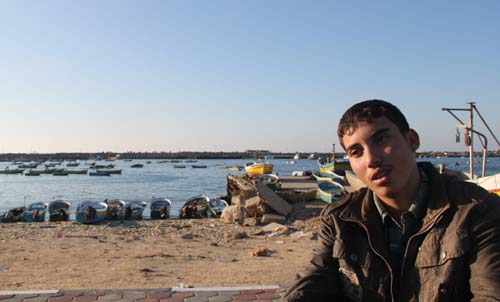


 Aletho News

