From the start of the vaccine rollout, I was adamant that I would not have it. It was rushed out too fast and I was wary of taking something that was being pushed so aggressively.
I was full of energy, ate healthy foods, did not smoke or drink and would wake up in the middle of the night for a five-mile run. I would cycle 15 miles and then go for a three-mile run, I loved life and was on no medications at all.
In July 2021 I got a job in a care setting and really enjoyed what I was doing. The management believed in the efficacy of the vaccine and made it known that they would like everyone who worked there to have the jab. I did tell them I did not want it and why, but the managers believed they worked and were mostly double jabbed themselves. Due to pressure and against my better judgement, I had a dose of Moderna on December 21, 2021.
Two weeks later my symptoms started. I had fatigue, nerve pain, ‘electric shocks’ in my legs and lower back pain. A month after the jab, I tested positive for Covid due to an outbreak at work and I had to take two weeks off as I was very ill. I know my body and knew something was not right. I contacted my GP in February and told him I thought my symptoms were an inflammatory response to the vaccine. He said he had never heard of any reaction like mine and he had personally vaccinated a few thousand people over the last year. He did the standard blood tests and when these came back normal he took no further action.
Over the next two months the nerve pain in my lower half got worse and I also developed paresthesia (a burning or prickling sensation). I got tinnitus in both ears and continuous brain fog. My back pain spread to my entire back and I was in so much pain I went to see an osteopath. She sent me for a lumbar spine MRI and this came back normal. I then saw a private neurologist who said he thought my symptoms were caused by the vaccine and catching Covid, and said I needed to see an NHS neurologist due to the tests needed. I saw a different GP and she made the referral with a waiting time of at least 8 months. I managed to get seen within a month by emailing the neurology secretary and explaining the severity of my situation. My spine MRI also came back normal, as did other blood tests that I have since had. The only thing my GP has done is prescribe Nortriptyline and Gabapentin to hide the nerve pain, but not to address it.
During these months I felt alone and had no idea where to go to get help or support. I wanted to heal and understand my symptoms, not hide them. I found a supplement list in April on a site called Real Not Rareand these cured my back pain within a week. They were anti-inflammatory supplements. I still had brain fog. I was able to work but I was getting worse and the fatigue was relentless. In October I was taken to hospital with tachycardia and low blood pressure during a 12-hour shift at work. I kept looking online for others like me and then found UK CV Family. This group has been a lifesaver. I met others like myself and was not alone any more. I discovered that the gaslighting was now a normal thing and that the range of adverse events were not rare, indeed in some cases they were downright debilitating to an extent I had not realised. Through this group I discovered the Frontline Critical Care Covid Alliance (FLCCC) and a UK-based doctor who was willing to listen to me and help me.
The drugs he gave me have cleared my brain fog in four days and are now starting to help with my nerve pain. For the first time since this whole nightmare started I can see some light at the end of the tunnel. I have some hope that I can maybe heal from all of this. As well as feeling better I have met some great people in the group and have met up with some of them to have a meal and a chat. To be able to connect with others in the same situation is an amazing thing and makes a big difference. We all feel ignored, dismissed and pushed to one side when needing treatment. All we want is to be heard, believed and to get the early treatment we need to be able to heal effectively. Delays in proper treatment are causing people to develop illnesses that are not curable, treatable or that will cause them a long-term diminished quality of life.
Looking back over the past year I consider myself lucky. I am still able to work although I have had to take six weeks off sick. I can still function to a high level and am aware that so many others cannot. I do not know if any other symptoms will crop up or if things will ever get worse but I will deal with that if they arise. I wish I had trusted my instincts and not had this experimental medical therapy, because it is not a vaccine by any stretch of the imagination. I would like others to hear my story and think before they have this or another booster. Adverse events are real and when they happen you are mostly left to figure things out yourself. The NHS has no idea how to help us. We have to help ourselves. With the help of the UKCV Family I am able to do this and also to take part in helping and supporting others. It’s a great community to have come out of so much suffering.
Despite this, any talk of what the CIA “does” in China is never truly covered by the mainstream media, and those who report on it are often dismissed as “fringe” or conspiracy theorists. Similarly, China’s warning of “external forces” manipulating its politics is also never taken seriously, and moreover any arrest by China on charges of espionage are also dismissed as illegitimate and politically motivated. So is the CIA there, or is it not?
In the realm of confirmed public knowledge, the CIA only truly exists in terms of history. That is, we learn about some of the things it has done from documents declassified years later, but we never get to know what it is doing now. We can read, for example, about how the CIA infiltrated countries such as Iraq and Afghanistan and bribed officials to defect in anticipation of coming invasions, or how it launched coups in countries throughout the world. But the key is, we don’t hear about these events at the time they happen, that is relegated to secrecy, and hence all the things the CIA does at the time of happening are framed as efforts for freedom, democracy, etc.
It is no surprise that, despite offhand comments such as this by Burns, it is an unequivocal truth that the mainstream media simply pretends the CIA does not exist, and its actions in the present are never behind any kind of event or development. Those who seek to whistleblow and expose its activities, such as Julian Assange, are hunted down and subjected to brutal punishment. When a new leak revealed that the CIA under Mike Pompeo planned to go as far as even assassinating him, it was widely ignored by the media, excluding the BBC reporting on it in Somali language just for the purposes of plausible deniability.
Given this background, China’s caution and vigilance towards the CIA is widely dismissed as paranoia and an unsubstantiated excuse for oppression. If China takes action against firms it deems linked to potential espionage, such US consultancies, the mainstream media responds by framing Beijing as unreasonable, closed, insecure and therefore, as every narrative pertaining to Beijing always concludes these days, “bad for business.” It is ironic that, while the US media bends to dismiss every single inclination that Beijing may have about American spying (despite comments such as Burns’), it simultaneously ramps up fear of Chinese spying to a hysterical scale and has no limitations or logic on what it may accuse of operating as an espionage tool on behalf of Beijing.
But the fact that China has successfully purged CIA networks in the past, and is tightening the space for spies to operate, indicates that it is not experiencing paranoid delusions, but has correct judgement. It is logical that, with the US having designated China as its primary rival and foreign policy objective, the CIA will, as Burns says, increase its focus and activities in China. So the fears are not unfounded. The real question, of course, is what the CIA is doing to “rebuild” its presence. First, it wants to spy on China’s leaders, deciphering their moves, intentions, and strategies. Second, it wants to spy on China’s industries and technologies. Third, it wants to be able to instigate dissent and unrest in China’s society in order to try and weaken the government, which includes trying to buy the loyalty of officials to betray the state.
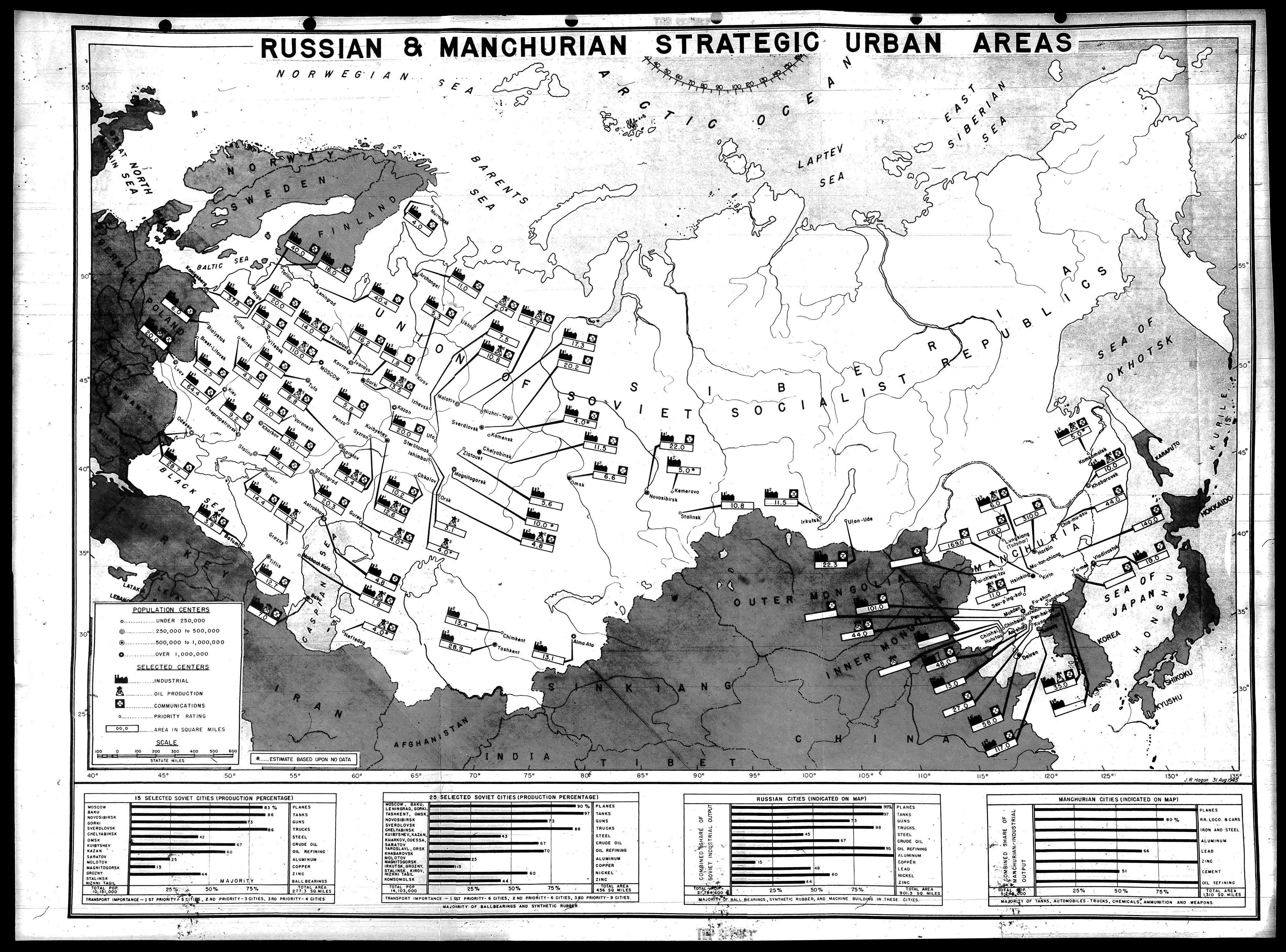
Explicit interventions by the CIA have included a focus on regions such as Xinjiang and Tibet, but also more explicitly stirring up unrest and insurrection in Hong Kong, an accusation which is still currently being dismissed as Beijing’s “authoritarian paranoia.” But, of course, when decades pass, the truth will eventually come out, and the “taboo” imposed on public discourse that dismisses all reference to CIA activities as “conspiracy theories” will be lifted. Either way, it remains true that China is prepared to do everything it can to root out and nip the CIA network in the bud as it emerges, because as much as some people are in denial about it, the lessons of history don’t lie. The CIA infiltrates, subverts, interferes and undermines countries, both friends and foes, in the name of US geopolitical objectives. Now, it has China in its sights, but its success is far from guaranteed.
Today is the 70th anniversary of the armistice that ended the fighting between North and South Korea. Almost 40,000 American soldiers died pointlessly in that conflict. If politicians and policymakers were honest and prudent, the Korean War would have vaccinated America against the folly and evil of foreign intervention. Instead, the war was retroactively redefined. As Barack Obama declared in 2013, “That war was no tie. Korea was a victory.”
The war began with what Harry Truman claimed was a surprise invasion on June 25, 1950, by the North Korean army crossing the dividing line with South Korea that was devised after World War II. But the U.S. government had ample warnings of the pending invasion. According to the late Justin Raimondo, co-founder of Antiwar.com, the conflict actually started with a series of attacks by South Korean forces, aided by the U.S. military:
“From 1945-1948, American forces aided [South Korean President Syngman] Rhee in a killing spree that claimed tens of thousands of victims: the counterinsurgency campaign took a high toll in Kwangju, and on the island of Cheju-do—where as many as 60,000 people were murdered by Rhee’s U.S.-backed forces.”
The North Korean army quickly routed both South Korean and U.S. forces. A complete debacle was averted after General Douglas MacArthur masterminded a landing of U.S. troops at Inchon. After he routed the North Korean forces, MacArthur was determined to continue pushing northward regardless of the danger of provoking a much broader war. By the time the U.S. forces drove the North Korean army back across the border, roughly 5,000 American troops had been killed. The Pentagon had plenty of warning that the Chinese would intervene if the U.S. Army pushed too close to the Chinese border. But the euphoria that erupted after Inchon blew away all common sense and drowned out the military voices who warned of a catastrophe. One U.S. Army colonel responded to a briefing on the Korea situation in Tokyo in 1950 by storming out and declaring, “They’re living in a goddamn dream land.”
The Chinese military attack resulted in the longest retreat in the history of America’s armed forces—a debacle that was valorized in the 1986 Clint Eastwood movie, Heartbreak Ridge. By 1951, the Korean War had become intensely unpopular in the United States—more unpopular than the Vietnam War ever was. Truman insisted on mislabeling the war as a “police action,” but it destroyed his presidency regardless. When the ceasefire was signed in 1953, the borders were nearly the same as at the start of the war.
While the friends of leviathan paint Truman as the epitome of an honest politician, he was as demagogic on Korea as Lyndon Johnson was on Vietnam. When Republicans criticized the Korean War as useless, President Harry Truman condemned “reckless and irresponsible Republican extremists” and “the false version of history that has been copyrighted by the extremists in the Republican Party.”
Perhaps the biggest disaster of the Korean war was that intellectuals and foreign-policy experts succeeded in redefining the Korean conflict as an American victory. As Georgetown University professor Derek Leebaert noted in his book Magic and Mayhem, “What had been regarded as a bloody stalemate transformed itself in Washington’s eyes; ten years later it had become an example of a successful limited war. Already by the mid-1950s, elite opinion began to surmise that it had been a victory.” Leebaert explained, “Images of victory in Korea shaped the decision to escalate in 1964-65 helping to explain why America pursued a war of attrition.” Even worse, the notion that “‘America has never lost a war’ remained part of the national myth, and the notion of having ‘prevailed’ in Korea became a justification for going big in Vietnam.” But as Leebaert noted, “in Vietnam, [the U.S. Army] had forgotten everything it had learned about counterinsurgency in Korea as well.”
On last year’s armistice anniversary, President Joe Biden proclaimed, “During the Korean War, nearly 1.8 million Americans answered the call to serve and defend the freedoms and universal values that the people of South Korea enjoy today.” The “call to serve” mostly came from summons from draft boards for military conscription. American media commemorations of the Korean War have almost entirely ignored perhaps the war’s most important lesson: the U.S. government has almost unlimited sway to hide its own war crimes.
During the war, Americans were deluged with official pronouncements that the U.S. military was taking all possible steps to protect innocent Korean civilians. Because the evils of communism were self-evident, few questions arose about how the United States was thwarting Red aggression. When a U.S. Senate subcommittee appointed in 1953 by Senator Joseph McCarthy (R-WI) investigated Korean War atrocities, the committee explicitly declared that “war crimes were defined as those acts committed by enemy nations.” This same standard prevailed in Vietnam, Iraq, Afghanistan, and practically any other place where the U.S. has militarily intervened.
In 1999, forty-six years after the cease fire in Korea, the Associated Press exposed a 1950 massacre of Korean refugees at No Gun Ri. U.S. troops drove Koreans out of their village and forced them to remain on a railroad embankment. Beginning on July 25, 1950, the refugees were strafed by U.S. planes and machine guns over the following three days. Hundreds of people, mostly women and children, were killed. The 1999 AP story was widely denounced by American politicians and some media outlets as a slander on American troops.
The Pentagon promised an exhaustive investigation. In January 2001, the Pentagon released a 300-page report purporting to prove that the No Gun Ri killings were merely “an unfortunate tragedy” caused by trigger-happy soldiers frightened by approaching refugees.
President Bill Clinton announced his “regret that Korean civilians lost their lives at No Gun Ri.” In an interview, he was asked why he used “regret” instead of “apology.” He declared, “I believe that the people who looked into it could not conclude that there was a deliberate act, decided at a high-enough level in the military hierarchy, to acknowledge that, in effect, the Government had participated in something that was terrible.” Clinton specified that there was no evidence of “wrongdoing high-enough in the chain of command in the Army to say that, in effect, the Government was responsible.”
But the atrocities against civilians had been common knowledge among U.S. troops 50 years earlier. As Charles Hanley, Sang-Hun Choe, and Martha Mendoza noted in their 2001 book, The Bridge at No Gun Ri, the Pentagon in 1952 “withdrew official endorsement from RKO’s One Minute to Zero, a Korean War movie in which an Army colonel played by actor Robert Mitchum orders artillery fire on a column of refugees.” The Pentagon fretted that “this sequence could be utilized for anti-American propaganda” and banned the film from being shown on U.S. military bases.
In 2005, Sahr Conway-Lanz, a Harvard University doctoral student, discovered a letter in the National Archives from the U.S. Ambassador to Korea, John Muccio, sent to Assistant Secretary of State Dean Rusk on the day the No Gun Ri massacre commenced. Muccio summarized a new policy from a meeting between U.S. military and South Korean officials: “If refugees do appear from north of U.S. lines they will receive warning shots, and if they then persist in advancing they will be shot.” The new policy was radioed to Army units around Korea on the morning the No Gun Ri massacre began. The U.S. military feared that North Korean troops might be hiding amidst the refugees. The Pentagon initially claimed that its investigators had never seen Muccio’s letter. Louis Caldera, who was Army secretary in 2001, declared, “Millions of pages of files were reviewed and it is certainly possible they may have simply missed it.” But Muccio’s letter was in the specific research file used for the official exoneration report.
Conway-Lanz’s 2006 book Collateral Damage: Americans, Noncombatant Immunity, and Atrocity after World War II quoted an official U.S. Navy history of the first six months of the Korean War stating that the policy of strafing civilians was “wholly defensible.” An official Army history noted, “Eventually, it was decided to shoot anyone who moved at night.” A report for the aircraft carrier USS Valley Forge justified attacking civilians because the Army insisted that “groups of more than eight to ten people were to be considered troops, and were to be attacked.”
In 2007, the Army recited its original denial: “No policy purporting to authorize soldiers to shoot refugees was ever promulgated to soldiers in the field.” But the Associated Press exposed more dirt from the U.S. archives: “More than a dozen documents—in which high-ranking U.S. officers tell troops that refugees are ‘fair game,’ for example, and order them to ‘shoot all refugees coming across river’—were found by the AP in the investigators’ own archived files after the 2001 inquiry. None of those documents was disclosed in the Army’s 300-page public report.” A former Air Force pilot told investigators that his plane and three others strafed refugees at the same time of the No Gun Ri massacre; the official report claimed that “all pilots interviewed…knew nothing about such orders.” Evidence also surfaced of massacres like No Gun Ri. On September 1, 1950, the destroyer USS DeHaven, at the Army’s insistence, “fired on a seaside refugee encampment at Pohang, South Korea. Survivors say 100 to 200 people were killed.”
Slaughtering civilians en masse became routine procedure after the Chinese army intervened in the Korean War in late 1950. MacArthur spoke of turning North Korean-held territory into a “desert.” The U.S. military eventually “expanded its definition of a military target to any structure that could shelter enemy troops or supplies.” General Curtis LeMay summarized the achievements: “We burned down every town in North Korea… and some in South Korea, too.”Yet, despite the hit-anything-still-standing bombing policy, most Americans believed the U.S. military acted humanely in Korea. Historian Conway-Lanz noted: “The issue of intention, and not the question of whose weapons literally killed civilians or destroyed their homes, became the morally significant one for many Americans.”
A million civilians may have been killed during the war. A South Korean government Truth and Reconciliation Commission uncovered many previously unreported atrocities and concluded that “American troops killed groups of South Korean civilians on 138 separate occasions during the Korean War,” The New York Times reported.
Truth delayed is truth defused. The Pentagon strategy on Korean War atrocities succeeded because it left facts to the historians, not the policymakers. The truth about No Gun Ri finally slipped out—ten presidencies later. Even more damaging, the Rules of Engagement for killing Korean civilians were covered up for four more U.S. wars. If U.S. policy for slaying Korean refugees (or anyone who “moved at night”) had been exposed during that war, it might have curtailed similar killings in Vietnam (many of which were not revealed until decades after the war).
Former congressman and decorated Korean War veteran Pete McCloskey (R-CA) warned, “The government will always lie about embarrassing matters.” The same shenanigans permeate other U.S. wars. The secrecy and deceit surrounding U.S. warring has had catastrophic consequences in this century. The George W. Bush administration exploited the 9/11 attacks to justify invading Iraq in 2003, and it was not until 2016 that the U.S. government revealed documents exposing the Saudi government’s role in financing the 9/11 hijackers (15 of 19 whom were Saudi citizens). The Pentagon covered up the vast majority of U.S. killings of Iraqi civilians until Bradley Manning and WikiLeaks exposed them in 2010.
When politicians or generals appear itching to pull the United States into another foreign war, remember that truth is routinely the first casualty. Governments that recklessly slay masses of civilians won’t honestly investigate and announce their guilt to the world. Self-government is a mirage if Americans do not receive enough information to judge killings committed in their name.
Jim Bovard is the Junior Fellow for The Libertarian Institute. He is the author of Public Policy Hooligan (2012), Attention Deficit Democracy (2006), Lost Rights: The Destruction of American Liberty (1994), and 7 other books.
In a lot of history’s conflicts, the combatants come from adjacent countries, or even different parts of the same one, and they fight to settle ownership of territory, borders, access to strategic materials or communications, or even who will control some third political entity. But there is another kind of warfare, which we might call expeditionary warfare or power projection, which aims at preparing forces, projecting them some distance, having them perform a military operation, and extracting and recovering them, hopefully intact or largely so. It is, in fact, this latter model which has been common among western powers since 1945, and the norm for the last thirty years, and much of modern western weaponry, tactics and training have been designed around it. But there are several reasons to think that this type of warfare is rapidly becoming obsolete and impossible, with political ramifications that we have hardly begun to think about. Here’s why.
Fighting requires contact with the enemy, either directly or, more frequently these days, remotely. Historically, armies did not always have to move very far to make contact, and when they did, it was generally on foot. Whilst the fighting could extend over considerable distances (Napoleon’s campaign in Russia, for example) and armies could move back and forth over large areas, fundamentally, each had a national capital and a logistic capacity and lines of communication to fall back on. Even the herculean struggle between Germany and the Soviet Union between 1941 and 1945 was fought continuously from the centre of Poland as far as Moscow, and then back to Berlin.
But there have also been occasions, and even entire campaigns, that have been fought at a distance. Here, some technology is used to move troops and equipment a long way from home, in order to attack forces you were not originally in contact with. Sometimes, entire wars are in effect expeditionary: the Crimean and Boer Wars, for example, or more recently the wars in Korea, Vietnam and Iraq.
Traditional wars of conquest were not generally expeditionary, because the soldiers set out from a secure base, and in most cases just marched or rode in one direction until they met an enemy to fight, or a city to sack, and, if successful, continued on to the next. Alexander the Great’s soldiers simply marched as far as India. The Arab conquests mostly involved light cavalry and infantry sweeping progressively through the Middle East and Africa as far as the Maghreb. Even then, there were exceptions: the disastrous attempted expedition to Sicily by the Athenians in 415-13 BC is one early example of expeditionary warfare. On the other hand, some expeditions were both large-scale and successful: the First Crusade involved the movement of perhaps 100,000 people, including non-combatants, by land and sea across the whole width of Europe, followed by battles which (temporarily) expelled the Arab invaders from the Holy Land.
These last two examples demonstrate the most fundamental requirement for expeditionary warfare: technologies for transporting combatants to where you want them, and then sustaining them while they are there. The earliest and most obvious technology is, of course, the horse, which enabled longer-distance expeditions to be mounted from early on, though not usually at large scale. But the most important early technology for power projection, especially to meet threats on the borders, was actually the humble paved road. Both the Achaemenid (Persian) and the Roman Empires emphasised the building of good roads, which enabled them quickly to move forces to where they were needed, and return them quickly when the fighting was over. Even today, as we have seen in Ukraine, control of metalled roads is critical for forces to be moved around quickly. Subsequently, railway systems were constructed to facilitate not only deployment of troops around the country itself but, as with Prussia, quickly positioning them for offensive strikes into enemy countries. (Even today, the vast majority of military transport on land is by rail.)
But true expeditionary warfare, from the Athenians onwards, requires the ability to cross long distances, through areas which you do not necessarily control in peacetime. The classic method of doing this has always been by ship. This could be done on a massive scale: some 350,000 British troops served in the Boer War, virtually all transported by ships, that also kept them supplied with logistics. In the Second World War, millions of troops were deployed around the world that way. As late as the Gulf Wars, whilst personnel often deployed by air, anything heavy had to go by ship as well. In such a situation, control of the medium you are passing through is obviously essential. The attempted Spanish invasion of England in 1588, for example, was unsuccessful, because the Armada, sent from Spain could not defeat the English fleet, control the Channel and so permit the transport of Spanish troops from the Low Countries. The Germans faced the same problem in 1940 with the added complication of the need to have air superiority.
One reason why the Persians and the Romans built good roads was to improve communications. Your ability to react to threats on the frontier, or take advantage of opportunities, largely depended on the speed with which information could be passed to the capital. Likewise, it was important to know what your forces were doing, and what success they were having, in case it was necessary to send reinforcements to rescue the situation or take advantage of an opportunity. By contrast, expeditionary forces sent by sea were effectively out of contact with their national capitals for weeks or months, so Nelson, for example, would have departed with only very general instructions. The position was revolutionised with the laying of submarine cables from the 1850s, and British expeditionary operations became much easier with the completion of the network linking all its major colonies before the First World War. These days, commanders and political leaders can micro-manage individual operations from the comfort of their offices: you may recall the photographs of Hilary Clinton watching live the killing of Osama Bin Laden, a rictus of glee and excitement on her face.
And finally, of course, the force you send has to be capable of doing its job, and armed with suitable weapons to defeat the enemy. With the galloping increase in the importance of military technology over the last 150 years, this element has become critical: in the two Gulf Wars, massive and complex heavy armoured forces had to be transported across long distances, and aircraft and their logistics moved to forward air bases.
In theory, western armies after 1945 were equipped and trained for an anticipated titanic armoured clash with the Warsaw Pact in central Europe. Although there would have been flanking operations by both sides, the assumption was that the main event would be an apocalyptic armoured confrontation between forces which had been in position for decades, and which had substantial and reliable logistic backup. The reality was somewhat different. Where western militaries were actually engaged in active operations, it tended to be at a distance: everything from colonial wars to UN operations to counter-insurgency, to expeditionary wars such as Vietnam. Mass armoured warfare was theoretically taught in most countries, but it was not practiced: now, it is not even taught because the West has no large armoured formations above Brigade level to deploy. And since the end of the Cold War, the West (and its entire modern generation of military leaders) have grown up with the experience, and the permanent assumption, of a permissive environment into which to operate, adequate communications and logistics, and overwhelming superiority in combat power.
It is true that reality has not always matched this rosy picture. Both Gulf Wars revealed logistic problems, and the second showed that the reliance on civilian contractors, increasing all the time, could be dangerous unless complete security could be assured. Afghanistan was also tricky in places: there was no sea-coast, and the main airport in Kabul could not take large aircraft. The Coca Cola for US troops came by lorry across the frontiers from Pakistan, and ironically the drivers often had to pay the Taliban for permission to pass through check-points. Not all weapons performed as advertised, and in many cases highly-sophisticated and expensive weapons were used in place of simpler and cheaper ones, because it was all that was available.
Nonetheless, after the Libyan adventure of 2011, western leaders came to take for granted the ability to intervene effectively anywhere in the world, without casualties or repercussions, against ascriptive enemies who in practice could not resist seriously. The Russian involvement in Syria after 2015 did, in fact, bring a little more realism to this attitude, but in general western technology and western militaries were simply assumed to be superior to anything that might be encountered anywhere in the world. Two things happened (or to be more precise became known) in recent years, that put this cosy judgement in question.
First, projecting power requires platforms, in the sense that defending against projected power doesn’t, necessarily. This may sound obvious, but in fact a lot of western writing has confused the picture by assuming that western weapons (combat aircraft, aircraft carriers) would be engaged in a series of duels with the equivalent equipment of the other side, and the western equipment would win. But of course attack and defence don’t necessarily work like that. More normally, two sides use asymmetric tactics, because they have different objectives. In Kosovo in 1999 for example, the West’s objective was to force Serbia to hand over control of Kosovo, and thus bring down the current Serbian government. They tried to do that through air and missile bombardment, because a land campaign would have been too difficult and costly. But the Serbs, as well as using air defence missiles, put into action plans honed over forty years to hide and protect their equipment and command and control: most of the targets struck by western aircraft and missiles were dummies, and it was only Russian political pressure on Serbia that eventually saved NATO.
But the projecting power (the aggressor if you will) always needs platforms to launch weapons. Now a platform can be many things, from a soldier on horseback to an aircraft carrier, but usually a platform is employed to put some distance been the aggressor and possible retaliation. The defender, on the other hand, has simply to survive the weapons and, if possible destroy the platforms. In addition, because the attacker is often less motivated than the defender, it is not necessary to defeat all the platforms: just enough damage needs to be done, or threatened, to make aggression unattractive and for the aggressor to return home. The current classic example of this is North Korea. When did you last hear even the most hawkish neoconservative talk about attacking North Korea? Probably never, because, whilst the country’s conventional forces are largely obsolescent, they do include thousands of well-protected long-range artillery pieces and rockets, most of which would survive an attack by the West, and could be then used to wipe out the major cities of Korea and Japan. Quite what the status of the nuclear weapon programme is, I doubt if more than a handful of people know, but there is enough uncertainty about it to make the West think twice about aggression. There is thus no need for North Korea to invest in sophisticated modern weapons and platforms, even if it had the resources, in order to ensure its security.
All this creates conceptual problems for the West in its force projection plans. Western procurement policy over the last fifty years has steadily moved in the direction of smaller and smaller numbers of increasingly powerful systems, costing much more than their predecessors, produced much more slowly, and expected to be in service for a very long time. The original basis for this was the Cold War, where any fighting was expected to be short and brutal, probably finishing with the use of nuclear weapons. Not able to match the numbers of Warsaw Pact platforms, the West instead went for quality, on the assumption that it would lose all or most of its weapons, but would nonetheless “prevail.”
Even in those days, though, this logic was questionable. Soviet doctrine then, like Russian doctrine now, emphasised quantity over quality: it was better to have very large numbers of “good enough” weapons than a small number of complex and sophisticated ones. (Indeed, as good Marxists, the Red Army considered that an increase in quantity could actually have a qualitative effect.) At the end of the day, reasoned the Soviets, if you have a thousand obsolescent tanks left, but your opponent has no tanks left at all, you have won. In any event, it was simply not feasible for western democracies to run a wartime economy in peacetime for forty years as the Soviet Union did, even had the desire been there. So in practice, from the 1970s onwards, the West produced smaller and smaller numbers of more and more sophisticated weapons, and expected them to be more and more versatile and capable of different missions. Combat aircraft were the classic example: the Tornado aircraft of the 1980s was produced in two quite different variants (Air Defence and Interdiction/Strike) using the same airframe. And significantly, it was a tri-national collaborative project, in an attempt to spread the cost.
Nobody really spent much time thinking about what the aftermath of a war with the Warsaw Pact would actually be like, and certainly not its military aspects. Even assuming a NATO victory, or at least anything less than a WP victory, there would be other things to worry about. A stock of equipment and armaments all destroyed and used up would be one of the less pressing problems after a nuclear war. Of course, countries that once embraced this logic cannot easily escape from it. It is a logic which leads to smaller and smaller forces, fewer and fewer installations, more and more sophisticated equipment and, in turn, less and less flexibility across your forces. This is fair enough if you are planning for a single, apocalyptic battle, but less obvious if you are planning for decades of small operations around the world. What the West has, and has had for some time now, is a single-shot military. One serious campaign, whether finally won or lost, would disarm the West for a decade.
So far, this has not mattered, because equipment losses in operations around the world have been very limited. For the most part, the targets have not been able to shoot back effectively. But for reasons we will go into in a moment, this may be about to change.
As well as the fragility of western forces and the difficulty of replacing them, the second complicating factor is the consequences of the assumptions against which they were designed. Now here, we have to bear in mind timescales. The West is currently using a generation of tanks originally designed in the 1980s for the above-mentioned apocalyptic battle with the Warsaw Pact, although upgrades and new variants have been produced since. Now it’s fair enough to criticise, but at least that generation—Leopard 2s, Challenger 2s, M-1s— was produced according to a coherent military requirement of some kind. The basic principles of high firepower, relatively low mobility and as much protection as possible were logical enough for tanks that were fighting a defensive battle and falling back on their lines of supply. But after the end of the Cold War, there was literally no military logic to guide the upgrade and development of existing tanks, and still less the production of new ones. Who were we going to fight? Where and for what purpose? How were we going to get there? So in practice, given the inertia of defence programmes and the length of time for which equipment is intended to stay in service, things have continued as they were, with new variants and upgrades of tanks essentially designed for a short vicious war in Europe, except in much smaller numbers and with much less sustainability. And over there, the Russians have all the time continued to plan and prepare for the kind of war which is happening now, which explains why NATO is scared to death to fight them.
The situation with combat aircraft is actually worse, because the aircraft currently in service with western air forces were designed at the end of the Cold War, (and in some cases even earlier) against a level of threat that was anticipated to develop perhaps 10-15 years in the future. The sheer cost and sophistication of such aircraft has meant that they can only be produced in small numbers, but also that, when military missions arrive, these aircraft have to be used because there is nothing else. Thus, in conflicts such as those in Afghanistan and Mali, enormously sophisticated and complex aircraft, requiring hours of maintenance between flights at modern airbases, were used at long range to drop bombs on militia groups armed with automatic weapons. But at least the militia groups couldn’t shoot back.
And of course naval forces have followed the same logic: countries around the world have invested in aircraft carriers, because they are the basic tool of force-projection. A carrier is not just a floating airfield, it’s also a floating command and control centre, a floating barracks, a floating helicopter park, and many other things. Yet carriers are immensely costly, and getting costlier, and even the richest nations can only afford to buy small numbers of them. That said, any projection of your forces outside home waters, and outside the range of shore-based aircraft, absolutely requires some form of carrier capability, even if only for humanitarian evacuations, as in Lebanon in 2006.
We also need to understand the assumptions behind the high specification of much military equipment still in use today. In particular, much of it was designed on the assumption that it would need to be better than the equivalent Soviet equipment expected to be fielded in ten or twenty years’ time. So Main Battle Tanks were designed to defeat their expected Soviet equivalents, aircraft were designed to shoot down their Soviet equivalents in air superiority contests, and so forth. Of course, obvious changes in the threat, such as the profusion of man-portable anti-air and anti-tank missiles had to be taken into account to some extent, but western equipment was overwhelmingly designed using its Soviet equivalents as a reference, thus implicitly assuming that the Soviet Union would fight much as we would.
There are always exceptions of course; Britain and France developed light, portable equipment for operations out of area or counter-insurgency, and more recently the US has followed. But precisely because these equipments are light and portable, they are not suited to any serious conflict, let alone a conflict with a peer enemy, or to one armed with modern weapons. For the last thirty, years the dominance of western air power has been such that when western light forces encounter opposition, they have been able to call on aircraft to blow it away. But this is in the process of changing.
Nonetheless, most serious western weaponry traces its origin to assumptions about what Soviet equipment in the 2010s would look like, and how to defeat it. This could have some curious results. The most obvious example is the manned fighter aircraft, which has been a cult object in western air forces for a century or more. Fighter aircraft were popularly visualised as engaging each other in one-on-one duels like knights of old. Actually, this didn’t make sense, although it goes back to the use of primitive fighters in “patrols” in World War I, which sounded good but achieved nothing except dead pilots. In theory, these patrols established “air superiority,” but in practice this was never achievable and, had it been possible, technology at the time was too primitive to take advantage of it. Roll forward to the next war, and we realise that the images of Spitfires and Hurricanes tangling with Messerschmitts in 1940 is misleading: the British were not after the fighter escorts, they were trying to shoot down the bombers. But the image of the high-technology “knight in the sky” is an extremely persistent one.
In the Cold War, even air defence using manned aircraft was questionable. It was assumed, rightly or wrongly, that in the early days of a conventional war the Soviet Union would try to attack targets in Europe with manned bombers, and that western aircraft would try to penetrate the fighter screen around them and destroy them. But what was clear, even if it was seldom articulated, was that there could be no question of the West having air superiority over the battlefield itself, not because of aircraft but because of missiles. It’s worth backing up here a second. Control of air space is only an enabler: by itself it doesn’t win battles. In Normandy in 1944, the Allies had undisputed command of the air, and they used it to provide massive support to their ground forces, which nonetheless still took months to break through the German defences. Without getting into the technical vocabulary, air superiority means that you can be sure that you can conduct air operations against an enemy, albeit with the possibility of losses, whereas the enemy is largely inhibited from conducting operations against you. This is what the Russians have had in Ukraine for some time, but note that this superiority does not always have to be the result of duels in the sky. For the Germans in France in 1940, it had much more to do with command and control and with the deployment of light anti-aircraft systems well forward. Individually, French aircraft were at least as good as those of the Luftwaffe.
In Ukraine, the Russians are making use of their traditional skills with artillery to achieve air superiority through missiles and radars. This would probably have been true even in the Cold War, since there was no sign that the Soviet Union was anticipating fighter duels over the battlefield, or anywhere much else. But it’s important to understand what this means today: highly expensive and sophisticated fighter aircraft looking vainly for a target to fight, while being vulnerable to long range missile attack. Much military technology resembles the children’s’ game of scissors-stone-paper: no individual weapon or technology is dominant under all circumstances. If the enemy does not want to play air combat between aircraft, your shiny new fighter is just a target for missiles: you thought it was the scissors that would cut the paper but in practice it’s the scissors that are blunted by the stone. (Much the same was true of main battle tanks. Throughout the Cold War, there was a fixation with tank-on-tank action, and whether western tanks were “better” than Soviet ones, although in any real conflict the situation would have been much more complicated than that.)
This is a very fundamental point, but I see no sign that it has been grasped. Its most important consequence is that the primary method of air control, and by extension dominance of the ground battle, is by missiles and drones, as we see today in Ukraine. This makes the side which is conducting defence at the tactical/operational level dominant, and makes an attacker vulnerable. It isn’t just a question of relative technologies, it’s also a question of costs and numbers. Even very sophisticated missiles are in absolute terms relatively cheap, and relatively quick to build. Moreover, any aircraft is in the end nothing more than a platform for weapons and sensors, and it is the weapons that do the damage. Thus, a new generation aircraft capable of launching two long range missiles would have to survive perhaps thirty to fifty missions before it had launched enough missiles to justify its unit cost as a platform. This is, to put it mildly, not typical of modern air warfare, and it’s likely that aircraft and pilot would be gone at the end of two to three missions, with no guarantee that the missiles would even strike their target. Moreover, new aircraft take months to build and new pilots take years to train, whereas missiles take only a few days. What this suggests is that we are now seeing the development of a new type of warfare, in which missiles and drones will both provide a cheap method of precision strike, and also be able to control large areas of terrain.
But it isn’t just a question of numbers, either, it’s also a question of politics. Back in the Cold War, as I have pointed out, war games assumed a single, apocalyptic battle, after which there would be nothing left of anything. Equipment would have been destroyed and forces annihilated, but it was hoped that nonetheless, the West would have “won.” But significant losses of major platforms in expeditionary wars of choice are simply not feasible politically. Forty years ago, UK public opinion, perhaps more robust than it is now, was still shaken by the loss of a number of frigates, destroyers and aircraft in the Falklands War.
Most western societies have come to believe in recent years that their armed forces are all-powerful and effectively invulnerable, except for attacks by mines and bombs. The loss of even a squadron or two of high-performance aircraft in a hypothetical small clash with Russia or China would be a political shock that the average western government would probably not survive, unless a population could somehow be convinced that the very survival of the nation was at stake, which seems unlikely. And of course the financial and industrial consequences would be severe as well, not to mention the strategic cost of having lost part of an air force. Major air warfare against either of these nations is unthinkable politically, especially since the western aircraft involved would perish at the hands of missile operators, not as a result of knightly combat in the sky. Even the United States would effectively be disarmed after a significant clash with either nation, and would take between a decade and a generation to reconstitute its forces, assuming that were indeed possible. No nation today can afford such an outcome.
Which brings us to the last point: surface combatants, and especially aircraft carriers. Carriers are often dismissed as outdated and vulnerable, which makes it all the more curious that so many nations are investing in them. The real point about carriers, though, is power projection: there is no other way in which a nation can project any kind of serious power beyond shore-based air cover, and to give up carriers is to publicly give up any ambition to do so. Military forces serve many political purposes in addition to their combat functions, of course, and one of those is demonstrating that you are a serious player in the strategic area. That is why nations newly acquiring blue-water navies, like South Africa and South Korea, made a point of arranging ship deployments and port visits, to heighten their political profile. The capacity to take part in anti-piracy or embargo operations can have political benefits as well.
The problem comes when these deployments are into a hostile environment. We still tend to think of the carrier battles of the Second World War as the norm: fleets that never saw each other fighting largely with aircraft, targeting each others’ carriers. But not only has technology changed, with a preponderance now of long-range anti-shipping missiles, there is also no reason to suppose that a putative naval enemy (presumably China) would agree to fight that way. To take the well-worn example of an invasion or a blockade of Taiwan, the Chinese Navy would almost certainly wait in home waters for the West to come to it, and seek to win largely with missiles. Thus, whilst naval experts may well be right that the US would “win” a fleet to fleet contest on the high seas, there is no reason to suppose that the Chinese would oblige them with such a scenario. And “winning” is extremely relative as a concept. For example, it is hard to see the American public being prepared to tolerate the loss of a single aircraft carrier to “defend” Taiwan, let alone two or three. History suggests that being prepared to go to war is one thing, but a willingness to tolerate significant casualties is quite another. A large part of today’s collective western political ego anyway comes from a sense of impunity and invulnerability. But such feelings are brittle (not to mention unrealistic anyway) and the political consequences of the end of such a delusion are likely to be profound.
So we may be at a turning point not simply in the technical aspects of warfare, but more importantly in the politics of the use of force abroad. For more than a generation now, western policy has assumed that such use would be essentially casualty-free, and especially that major platforms would not be at risk. After all, would NATO have attacked Libya in 2011 if in the news every day there had been reports of another aircraft shot down? I rather think not. The spread of relatively cheap and simple but effective air defence systems around the world, which seems virtually certain now, will change the power projection equation fundamentally, as will the wider use of anti-shipping missiles and missiles for attacking ground targets, like the Iskander. How would the air war in Yemen have gone, for example, if a Russian anti-aircraft destroyer had just happened to be on a deployment in the region?
Now of course war games will continue to show that a western attack on small counties will “succeed”, and that copious use of air power will eventually establish air superiority and enable other weapon systems to be hunted down and destroyed. But that’s not really the point: western public opinion may accept punishment beatings of small countries, but not actual wars where western forces suffer significant losses. The consequences of this are wide-ranging enough to need a separate essay, but I think we can already see a future in which the West decides it’s more prudent to stay at home, and let the locals sort out their own problems. Not everybody will feel that’s a bad thing.
Perhaps one of the most unsettling narrative relationships during the covid pandemic lockdowns was the assertion by various governments, think-tanks and media pundits that the mandates weren’t just good for “stopping the spread,” they were also good for “saving the environment” from what they claim will be inevitable Apocalyptic climate change. While the covid agenda has all but disappeared thanks to millions of people and half the states in the US rejecting the restrictions, climate hysteria is still alive and well.
One of the most obnoxious trends in covid propaganda was the constant TikTok dance videos. Dancing politicians, dancing talk show hosts and dancing nurses all telling us to comply while frolicking around like maniacs. Well, it’s not over, because the dancing covid nurses are back, and now they’re here to tell us that accepting carbon controls is just as important as the mandates.
Beyond the numerous question on how nurses managed to have time to make so many group TikToks if the hospitals were “overrun” with patients dying of covid as the media asserted for the first year of the pandemic, we must also ask: If they lied about the effectiveness of the mandates, why should we listen to them about climate change?
Not one draconian policy enforced by governments made any difference whatsoever in the transmission of the covid virus. The lockdowns were pointless. The masks were pointless. Social distancing was pointless. And the official median Infection Fatality Rate of covid is a mere 0.23%, which means that 99.8% of people were never under any threat from the disease anyway. These facts were well known by medical professionals by early 2021, yet many of them continued to push the mandates.
Invariably, as the summer heats up so does the hype surrounding climate controls which would do little or nothing to shift the existing state of the Earth’s temps. “Record temps” are often touted, but these records are limited to a short time from of around 140 years of official data (since the 1880s). But what about before then? When we look at the real history of the Earth’s climate, the temps today are incredibly mild. Not only that, but the global warming events of the past all occurred without human involvement.
One has to wonder, if this is the case, why are no carbon control proponents or climate scientists talking about it? Is the situation much like covid, where they tell you to “believe the science” except for the science that contradicts their claims? And let’s not forget, these same people have been telling us the Earth is on the verge of burning for a very long time.
People stopped idolizing nurses after the pandemic scare. Dancing for the climate feels more like a desperate act to regain relevancy, rather than legitimate activism.
A recently released study exposes the “widespread dispersion” of radioactive fallout and devastation caused by the US government’s first detonation of a nuclear weapon. The “Trinity” atomic bomb test which caused “environmental contamination and population exposures” was carried out in New Mexico on July 16th, 1945. This new research shows within 10 days of the explosion, which saw a mushroom cloud as high as 50,000 – 70,000 feet, radioactive deposits were dispersed across 46 states, and even parts of Canada as well as Mexico.
The study covers the Trinity test as well as dozens more, above-ground, “atmospheric” nuclear tests, conducted as a result of the Manhattan Project. Not included in the study are the myriad underground nuclear weapons tests. Between 1951 and 1998, Washington blew up more than 800 subterranean nuclear weapons.
Utilizing a combination of data previously unavailable during past studies, the researchers used “high-resolution reanalyzed historical weather fields, U.S. government data, and complex atmospheric modeling to try to chart the distribution of radioactive fallout in the days following historical nuclear tests,” reports Gizmodo. The study was led by Sébastien Philippe, a scientist and researcher from Princeton University’s Program on Science and Global Security. “Our results show the significant contribution of the Trinity fallout to the total deposition density across the contiguous U.S. … and in New Mexico in particular,” the study reads.
During the time period analyzed by the researchers, there were 101 nuclear tests conducted. Since Trinity, there were subsequently 93 more atmospheric tests in Nevada which saw nuclear fallout distributed across the country yet again by radioactive mushroom clouds. The US government also launched 45 “airburst” tests, which saw nuclear bombs, tipped on rockets, detonated within the Earth’s upper atmosphere.
40,000 people lived within 50 miles of Trinity’s blast, many of the victims and their relatives have been afflicted with various cancers ever since. Washington has never compensated these Americans. “When the initial shock wore off, [locals] returned to their daily lives. They drank from cisterns full of radioactive debris, ate beef from cattle that had grazed on the dust for weeks on end, and breathed air full of tiny plutonium particles. Only later would the real impact become clear,” as Responsible Statecraft’s Connor Echols notes. The test site was chosen by Robert Oppenheimer.
As a result of the Trinity test, infant mortality in New Mexico increased by 56% between 1944 and 1945. Locals, including those who saw the explosion themselves, were lied to by US officials with a cover story that this was all an accident which occurred at a nearby ammunition depot.
Connor Freeman is the assistant editor and a writer at the Libertarian Institute, primarily covering foreign policy. He is a co-host on Conflicts of Interest. You can follow him on Twitter @FreemansMind96
A bit over half a century ago, the United States under the Nixon administration sent its then-State Secretary Henry Kissinger to China in order to exploit the infamous Sino-Soviet split that nearly escalated into a full-blown war between Moscow and Beijing. The “cold war” between the two previously closely allied communist powers was a strategic gift to the US-led political West, as the belligerent thalassocracy was terrified of the prospect of facing a giant Eurasian monolith spanning from East Germany to Vietnam. The brewing ideological conflict between the post-Stalinist Soviet Union and Maoist China was heavily (ab)used by the US to somewhat soften the consequences of the humiliating defeat of America’s genocidal aggression in Indochina, where millions were killed in its indiscriminate attacks on Vietnam, Laos and Cambodia.
Henry Kissinger is often credited as the instrumental figure in engineering the Sino-American detente that gave the US much-needed geopolitical breathing room in the late 1970s and much of the 1980s after the belligerent thalassocracy pulled back to “lick its Vietnam wounds”. However, it should be noted that, despite Kissinger’s vast diplomatic experience and knowledge, the very fact that the early 1970s China was still largely isolationist, as well as in the process of recovering from the consequences of WWII and the Cultural Revolution, made his efforts significantly easier. Still, thanks to Kissinger, the Nixon administration achieved a major diplomatic win that lasted until the very end of the Cold War and was completely nullified only by the recent suicidal US foreign policy.
Back in the 1970s, it would’ve been almost entirely unimaginable that Henry Kissinger, quite literally a historical figure at this point, not only due to his Cold War-era achievements, but also his advanced age (now in triple digits), would have to engage in his “shuttle” and “triangular diplomacy” concepts once again. However, precisely this happened last week, culminating with Kissinger’s meeting with Xi Jinping himself on July 20. The Chinese President even called the centenarian “an old friend of China”. Owing to the Asian giant’s great attention to detail, particularly when it comes to diplomatic protocols, the meeting was held at the Villa 5 of the Diaoyutai State Guesthouse, the exact same place where Kissinger met the then-Chinese Premier Zhou Enlai in 1971.
Precisely that meeting was instrumental in preparing Richard Nixon’s visit to China the next year. However, that’s where the historical parallels end. Despite the reputation, influence and respect that he enjoys in China and worldwide, Kissinger went to Beijing in an unofficial capacity. Not representing the US anymore, he was largely relieved of the burden and responsibility for America’s diplomatic standing in China, a far cry from what it used to be during the (First) Cold War. The situation has changed drastically since Kissinger’s tenure, as the Asian giant is anything but a poor, underdeveloped nation with major ideological identity issues that could be exploited to further US interests. On the contrary, precisely Washington DC is the side that’s been going through major internal issues and waning global influence.
Although the Joe Biden administration and much of the major media contend that Russia’s invasion of Ukraine has nothing to do with NATO expansion, U.S. Army Col. Douglas Macgregor (ret.) told Valuetainment Founder Patrick Bet-David that Vladimir Putin has opposed “the movement of NATO to his borders” for “at least 15 years” because he sees such expansion “as a threat.”
Macgregor’s view is shared by the University of Chicago’s Distinguished Service Professor John Mearsheimer, considered one the world’s leading scholars on “realist” foreign policy. He argues that Russia considers NATO expansion into Ukraine as an “existential threat,” a position it has publicly held since at least 2008.
Yet U.S. Secretary of State Antony Blinken says the conflict “was never about NATO enlargement” or “about some threat to Russia’s security.” Blinken also claims that Russia’s assertion that it was promised NATO would not spread eastward after the collapse of the USSR is false.
So who is telling the truth? Let’s look at the record.
On Bet-David’s June 28 PBD Podcast, Macgregor explained that Putin has “been talking at least for 15 years about his opposition to the movement of NATO to his borders. He’s made it very clear that he regarded it as a threat. One of the reasons he moved into Crimea was that he saw that becoming a NATO naval base principally for the U.S. Navy, obviously in the Black Sea. So, he moved on that first and then said, look, this has got to stop.”
Declassified documents in the National Security Archive at George Washington University show that former Soviet leader Mikhail Gorbachev, starting in 1990, was given many assurances by U.S. and European leaders that they would not expand NATO eastward to Russia. “Not one inch eastward,” said then-Secretary of State James Baker.
Ukraine, the cradle of Kievan Rus (Russia), is on Russia’s western border, and western Ukraine borders Poland, Hungary, and Romania.
The archives document that one of the earliest assurances to Gorbachev came from a speech by the German foreign minister, Hans-Dietrich Genscher, in January 1990. In a cable to Washington, DC, the U.S. Embassy stated that Genscher made clear that NATO should rule out an “expansion of its territory towards the east, i.e., moving it closer to Soviet borders.”
In a February 10, 1990 meeting between German Chancellor Helmut Kohl and Gorbachev, the archive reports that the “West German leader achieved Soviet assent in principle to German unification in NATO, as long as NATO did not expand to the east.”
The archive further states, “Not once, but three times, [U.S. Secretary] Baker tried out the ‘not one inch eastward’ formula with Gorbachev…He agreed with Gorbachev’s statement in response to the assurances that ‘NATO expansion is unacceptable.’”
Baker also assured Gorbachev that “not only for the Soviet Union but for other European countries as well it is important to have guarantees that if the United States keeps its presence in Germany within the framework of NATO, not an inch of NATO’s present military jurisdiction will spread in an eastern direction.” [Emphasis added]
After being briefed by Baker, Chancellor Kohl told Gorbachev, “We believe that NATO should not expand the sphere of its activity.”
On May 31, 1990, President George H.W. Bush said to Gorbachev, “[W]e have no intention, even in our thoughts, to harm the Soviet Union in any fashion. That is why we are speaking in favor of German unification in NATO…Such a model, in our view, corresponds to the Soviet interests as well.”
In 1991, British Prime Minister John Major assured Gorbachev, “We are not talking about the strengthening of NATO.” As for NATO inclusion of East European countries, Major said, “Nothing of the sort will happen.”
After a meeting in July 1991 with NATO Secretary General Manfred Woerner, a Russian memo reads, “Woerner stressed that the NATO Council and he are against the expansion of NATO (13 of 16 NATO members support this point of view).”
The archive article concluded, “Thus, Gorbachev went to the end of the Soviet Union assured that the West was not threatening his security and was not expanding NATO.”
After Gorbachev, Boris Yeltsin became the first president of the Russian Federation, serving from 1991 to 1999. Vladimir Putin became president in May 2000, serving until 2008. He then returned to the presidency in 2012.
According to Professor Mearsheimer, author of “Why the Ukraine Crisis is the West’s Fault: The Liberal Delusions That Provoked Putin,” “Since the mid-1990s, Russian leaders have adamantly opposed NATO enlargement and in recent years, they have made it clear that they would not stand by while their strategically important neighbor turned into a Western bastion.”
“For Putin, the illegal overthrow [in 2014] of Ukraine’s democratically elected and pro-Russian president—which he rightly labeled a ‘coup—was the final straw,” said Mearsheimer. “He responded by taking Crimea, a peninsula he feared would host a NATO naval base, and working to destabilize Ukraine until it abandoned its efforts to join the West.”
“The United States pushed forward policies towards Ukraine that Putin and his colleagues see as an existential threat to their country, a point they have made repeatedly for many years,” Mearsheimer said in a June 2022 speech at the European Union Institute. “Specifically, I am talking about America’s obsession with bringing Ukraine into NATO and making it a Western bulwark on Russia’s border.”
“The United States is not seriously interested in finding a diplomatic solution to the war, which means the war is likely to drag on for months, if not years,” added Mearsheimer. “The United States and its allies are helping lead Ukraine down the primrose path.”
Mearsheimer made those remarks one year ago. Today, the Ukraine-Russia war is still ongoing and the U.S. has made no serious effort to broker a peace deal.
President Biden, Secretary Blinken, and their cheerleaders in the major media relentlessly deny that potential NATO expansion into Ukraine had anything to do with Russia’s invasion in 2022. Such an assertion, they claim, is Putin propaganda. However, the historical record does not support their story, “not one inch” of it.
Michael W. Chapman, a longtime writer on Russian-American relations, is the former managing editor of CNSNews.com
The six months after the United States declared war on Japan in December 1941 were disastrous. Political treachery and military incompetence led to a series of major military defeats despite years of preparation. Official American history portrays President Franklin Roosevelt and his team of Admirals and Generals as great professionals. Actual history proves they were incompetent clowns who caused embarrassing defeats that the American media covered up. Most of this history remains hidden to this day, especially in school and college textbooks.
_______________________________
HIGHLIGHTS OF MOBILIZATION, WORLD WAR II, 1938-1942; Office of the Chief of Military History; Department of the Army; Dr. Stetson Conn; 10 March 1959; https://history.army.mil/documents/WW…
Related Tale: “The Attack on Pearl Harbor Was No Surprise”; also watch Part II; • The Attack on Pea…
Related Tale: “U-boats Slaughtered Americans in 1942”; defenses did not exist; • U-boats Slaughter…
Related Tale: “The Lost Victory on Wake Island”; cowardly Admiral Pye withdraws three carriers; • The Lost Victory …
Related Tale: “The Empire’s Disastrous Defeat in 1942”; MacArthur’s rapid defeat in the Philippines; • The American Empi…
Related Tale: “Treachery of US Army Generals in World War II”; treason and incompetence in the Philippines; • Treachery by US A…
Related Tale: “The Destruction of the Asiatic Fleet”; twenty American warships were sunk in a disorganized defensive effort; • The Destruction o…
Related Tale: “World War II Suicide Missions”; The Doolittle Raid failed; • World War II Suic…
I sit here in the silence of the awakening dawn’s stillness stunned by the realization that I exist. I wonder why. It is my birthday. The first rays of the rising sun bleed crimson over the eastern hills as I imagine my birth. The house and my family sleep.
Someday I will die and I wonder why. This is the mystery I have been contemplating since I was young. That and the fact that I was born in a time of war and that when my parents and sisters were celebrating my first birthday, my country’s esteemed civilian and military leaders celebrated another birth: the detonation of the first atomic bomb code-named Trinity.
Trinity has shadowed my life, while the other Trinity has enkindled my days.
Sick minds play sick word games as they inflict pain and death. They nicknamed this death bomb “the Gadget,” as if it were an innocent little toy. They took and blasphemed the Christian mystery of the Trinity as if they were mocking God, which they were. They thought they were gods.
Now they are all dead gods, their fates sealed in their tombs.
Where are they now?
Where are all their victims, the innocent dead of Hiroshima and Nagasaki?
Where are the just and the unjust?
Where are the living now, asleep or awake as Trinity’s progenitors in Washington, D.C. and the Pentagon prepare their doomsday machines for a rerun, the final first-strike run, the last lap in their race to annihilate all the living? Will they sing as they launch the missiles – “So long, farewell, auf Wiedersehen, good night?”
Joseph Biden, the second Roman Catholic president, while mocking the essence of Jesus’s message, pushes the world toward a nuclear holocaust, unlike JFK, the first Catholic president, who was assassinated by the CIA for pushing for the elimination of nuclear weapons and the end of the Cold War.
The wheel turns. We count the years. We wonder why.
Years ago I started my academic life by writing a thesis entitled “Dealing With Death or Death Dealing.” It was a study of the transformation of cultural symbol systems, death, and nuclear weapons. The last hundred years and more have brought a transformation and disintegration of the traditional religious symbol system – the sacred canopy – that once gave people comfort, meaning, and hope. Science, technology, and nuclear weapons have changed all that. Death has been socially relocated and we live under the nuclear umbrella, a sinister “safeguard” that is cold comfort. The ultimate power of death over all life has been transferred from God to men, those controlling the nuclear weapons. This subject has never left me. I suppose it has haunted me. It is not a jolly subject, but I think it has chosen me.
Was I born in a normal time? Is war time our normal time? It is. I was.
But to be born at a time and place when your country’s leaders were denouncing their German and Japanese enemies as savage war criminals while execrably emulating them and then outdoing them is something else again. With Operation Paperclip following World War II, the United States government secretly brought 1,600 or more Nazi war criminals into the U.S. to run our government’s military, intelligence, space, chemical, and biological warfare programs. We became Nazis. Lewis Mumford put it this way in The Pentagon of Power:
By the curious dialectic of history, Hitler’s enlargement and the refurbishment of the Nazi megamachine gave rise to the conditions for creating those counter-instruments that would conquer it and temporarily wreck it. In short, in the very act of dying the Nazis transmitted their disease to their American opponents; not only the methods of compulsive organization or physical destruction, but the moral corruption that made it feasible to employ those methods without stirring opposition.
There are always excuses for such moral corruption. When during WW II the U.S. firebombed almost all Japanese cities, Dresden and Cologne in Germany, and then dropped atomic bombs on Hiroshima and Nagasaki killing hundreds of thousands of innocent civilians in gratuitously savage attacks, these were justified and even celebrated as necessary to defeat evil enemies. Just as Nazi war criminals were welcomed into the U.S. government under the aegis of Allen Dulles who became the longest running CIA director and the key to JFK’s assassination and coverup, the diabolic war crimes of the U.S. were swept away as acts of a moral nation fighting a good war. What has followed are decades of U.S. war crimes from Korea through Vietnam and Iraq, etc. A very long list.
The English dramatist Harold Pinter, in his Nobel Address, put it bluntly:
It never happened. Nothing ever happened. Even while it was happening it wasn’t happening. It didn’t matter. It was of no interest. The crimes of the United States have been systematic, constant, vicious, remorseless, but very few people have actually talked about them. You have to hand it to America. It has exercised a quite clinical manipulation of power worldwide while masquerading as a force for universal good. It’s a brilliant, even witty, highly successful act of hypnosis.
Nothing could be truer. When in 2014 the U.S. engineered the coup in Ukraine (coups being an American specialty), it allied itself with neo-Nazi forces to oppose Russia. This alliance should have shocked no one; it is the American way. Back in the 1980s when the U.S. was supporting death squads in Central America, Ronald Reagan told the world that “The Contras are the moral equivalent of the Founding Fathers.” Now the Ukrainian president Zelensky is feted as a great hero, Biden telling him in an Oval Office visit that “it’s an honor to be by your side.” Such alliances are not anomalies but the crude reality of U. S. history.
But let me return to “Trinity,” the ultimate weapon of mass destruction since I was reading a recent article about it.
Kai Bird, the coauthor of American Prometheus: The Triumph and Tragedy of J. Robert Oppenheimer, the book that inspired the new film Oppenheimer about J. Robert Oppenheimer, the scientist credited as “the father of the atomic bomb” and the man who named the first atomic bomb Trinity, has written an Op Ed piece in The New York Times titled, “The Tragedy of J. Robert Oppenheimer.” True in certain respects, this article is an example of how history can be slyly used to distort the present for political purposes. In typical NY Times fashion, Bird tells certain truths while concealing, distorting, and falsifying others.
I do not consider Oppenheimer a tragic figure, as does Bird. Complicated, yes; but he was essentially a hubristic scientist who lent his services to a demonic project, and afterwards, having let the cat out of the bag by creating the Bomb, guiltily urged the government that used it in massive war crimes to restrain itself in the future. Asking for such self-regulation is as absurd as asking the pharmaceutical or big tech industries to regulate themselves.
Bird rightly says that Oppenheimer did not regret his work inventing the atomic bomb, and he correctly points out the injustice of his being maligned and stripped of his security clearance in 1954 in a secret hearing by a vote of 2 to 1 of a security panel of The Atomic Energy Commission for having communist associations. “Celebrated in 1945 as the ‘father of the atomic bomb,’” Bird writes, “nine years later he would become the chief celebrity victim of the McCarthyite maelstrom.” A “victim,” I should add, who named names to save his own reputation.
But tucked within his article, Bird tells us: “Just look at what happened to our public health civil servants during the recent pandemic.” By which he means these officials like Anthony Fauci were maligned when they gave the public correct scientific information. This is absurd. Fauci – “attacks on me quite frankly are attacks on science” – and other government “civil servants” misinformed the public and lied over and over again, but Bird implies they too were tragic figures like Oppenheimer.
He writes:
We stand on the cusp of another technological revolution in which artificial intelligence will transform how we live and work, and yet we are not yet having the kind of informed civil discourse with its innovators that could help us to make wise policy decisions on its regulation. Our politicians need to listen more to technology innovators like Sam Altman and quantum physicists like Kip Thorne and Michio Kaku.
Here too he urges “us” to listen to the very people responsible for Artificial Intelligence, just as “we” should have listened to Oppenheimer after he brought us the atomic bomb. Implicit here is the belief that science just marches progressively on and there’s no stopping it, and when dangerous technologies emerge from scientists’ work, we should trust them to control them. Nowhere does Bird suggest that scientists have a moral obligation before the fact to not pursue a certain line of research because of its grave possible consequences. Maybe he has never read Mary Shelley’s Frankenstein, only written over two hundred years ago.
Finally, and most importantly, Bird begins his concluding paragraph with these words:
Today, Vladimir Putin’s not-so-veiled threats to deploy tactical nuclear weapons in the war in Ukraine are a stark reminder that we can never be complacent about living with nuclear weapons.
This is simply U.S. propaganda. The U.S. has provoked and fueled the war in Ukraine, broken all nuclear weapon treaties, surrounded Russia with military bases, stationed nuclear weapons in Europe, engaged in nuclear blackmail with its first strike policy and threats, etc. Putin has said in response that if – and only if – the very existence of the Russian state and land is threatened with extinction would the use of nuclear weapons be considered.
A little history is informative.
“Barely six weeks after the Hiroshima-Nagsaki bombings,” Michel Chossudovsky tells us, “the US War Department [Pentagon] issued a blueprint (September 15, 1945) to ‘Wipe the Soviet Union off the Map’(66 cities with 204 atomic bombs), when the US and the USSR were allies. This infamous project is confirmed by declassified documents.” (For further details see Chossudovsky, 2017)
Below is the image of the 66 cities of the Soviet Union which had been envisaged as targets by the US War Department.
But back to Bird, who, in writing a piece about Oppenheimer’s “tragedy” and defending science, has also subtly defended a trinity of other matters: the government “science” on Covid, the transformative power coming from AI, and the U.S. propaganda about Russia and nuclear weapons. There is no mention of JFK’s call to abolish nuclear weapons. This is how the “paper of record” does its job.
I sit here now at the end of the day. Shadows are falling and I contemplate such trinities. I am stunned by the fact that we exist, but under a terrifying Shadow that many wish to ignore. Jung saw this shadow side as not just personal but social, and when it is ignored, the collective evils of modern societies can autonomously erupt.
Bird argues that nuclear weapons are the result of a scientific quest that is unstoppable. He writes that Oppenheimer “understood that you cannot stop curious human beings from discovering the physical world around them [and then making nuclear bombs or designer babies].”
This is the ideology of progress that brooks no opposition since it is declared inevitable. It is a philosophy that believes there should be no limits to human knowledge, which would include the knowledge of good and evil, but which can then be ignored since it and all thought and beliefs are considered a priori to be relative. The modern premise that everything is relative is of course a contradiction since it is an absolute statement. Many share this philosophy of despair disguised as progress as it has crept into everything today. It is tragic, for if people accept it, we are doomed to follow a Faustian pact with the devil and all hell will follow.
I think of Bob Dylan singing :
I just don’t see why I should even care
It’s not dark yet, but it’s gettin’ there
But I do care, and I wonder why. As night comes on, I sit here and wonder.
The Omission of Israeli Terrorism in the Occupied Palestinian Territories
By Karin Brothers | Global Research | December 6, 2014
… The Israeli settlements — all of which are illegal – have been identified as a major impediment to peace. The refusal of a major “global” terrorism report to name the Israeli settlers as one of the groups most responsible for terrorism not only misrepresents a major source of regional violence but exposes the Global Terrorism Index as a propaganda tool that supports a U.S. agenda.
In recent years, governments have been attempting to thwart terrorism by blocking supportive fund-raising. When it comes to Israeli settlements, however, the US and Canada actually encourage fund-raising by giving organizations (such as Christian Friends of Israeli Communities (CFOIC) and the Jewish National Fund) financial support in the form of donor tax-deductions.
Charities which provide funds for the Israeli settlements should be regarded as terror-financing organizations. They should not only lose their tax-deductible status, but they should be banned because they support the violation of international humanitarian law. The terror-financing laws that are being strictly enforced for Muslim charities should be applied to Christian and Jewish charities as well. … Read full article
This site is provided as a research and reference tool. Although we make every reasonable effort to ensure that the information and data provided at this site are useful, accurate, and current, we cannot guarantee that the information and data provided here will be error-free. By using this site, you assume all responsibility for and risk arising from your use of and reliance upon the contents of this site.
This site and the information available through it do not, and are not intended to constitute legal advice. Should you require legal advice, you should consult your own attorney.
Nothing within this site or linked to by this site constitutes investment advice or medical advice.
Materials accessible from or added to this site by third parties, such as comments posted, are strictly the responsibility of the third party who added such materials or made them accessible and we neither endorse nor undertake to control, monitor, edit or assume responsibility for any such third-party material.
The posting of stories, commentaries, reports, documents and links (embedded or otherwise) on this site does not in any way, shape or form, implied or otherwise, necessarily express or suggest endorsement or support of any of such posted material or parts therein.
The word “alleged” is deemed to occur before the word “fraud.” Since the rule of law still applies. To peasants, at least.
Fair Use
This site contains copyrighted material the use of which has not always been specifically authorized by the copyright owner. We are making such material available in our efforts to advance understanding of environmental, political, human rights, economic, democracy, scientific, and social justice issues, etc. We believe this constitutes a ‘fair use’ of any such copyrighted material as provided for in section 107 of the US Copyright Law. In accordance with Title 17 U.S.C. Section 107, the material on this site is distributed without profit to those who have expressed a prior interest in receiving the included information for research and educational purposes. For more info go to: http://www.law.cornell.edu/uscode/17/107.shtml. If you wish to use copyrighted material from this site for purposes of your own that go beyond ‘fair use’, you must obtain permission from the copyright owner.
DMCA Contact
This is information for anyone that wishes to challenge our “fair use” of copyrighted material.
If you are a legal copyright holder or a designated agent for such and you believe that content residing on or accessible through our website infringes a copyright and falls outside the boundaries of “Fair Use”, please send a notice of infringement by contacting atheonews@gmail.com.
We will respond and take necessary action immediately.
If notice is given of an alleged copyright violation we will act expeditiously to remove or disable access to the material(s) in question.
All 3rd party material posted on this website is copyright the respective owners / authors. Aletho News makes no claim of copyright on such material.
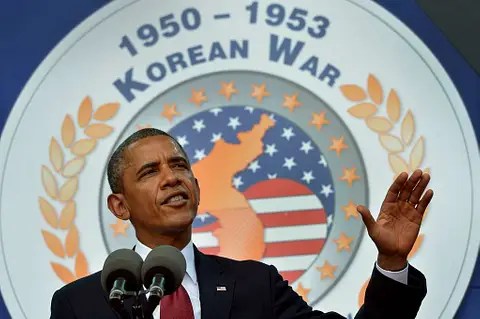
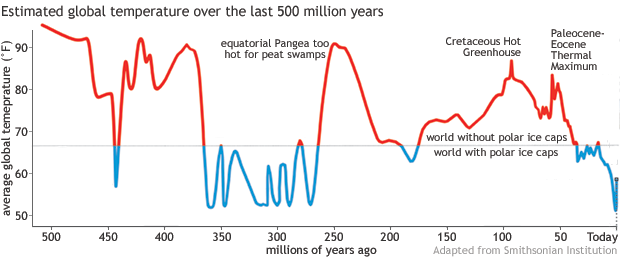

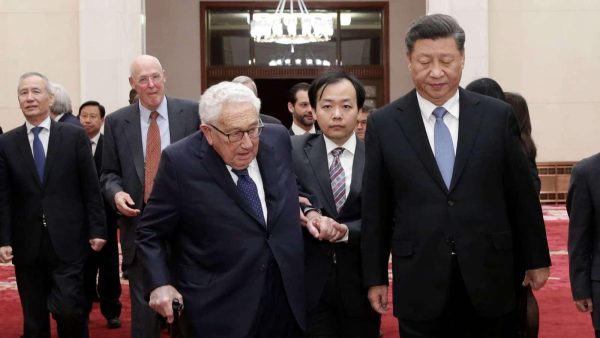
 • The Attack on Pea…
 Aletho News
 Aletho News