Australian MP George Christensen’s anti-lockdown speech was removed by Facebook for violating the platform’s COVID-19 misinformation policy.
Governments across Australia are inflicting extreme lockdowns on citizens, with the nation’s capital city, Canberra, going into strict lockdown in the last 24 hours after only one case of COVID-19 was detected.
On Tuesday, Christensen was at the center of controversy after he told the Australian parliament that lockdowns and masks were not effective in stopping the virus.
“When will the madness end? How many more freedoms will we lose due to fear of a virus, which has a survivability rate of 997 out of 1,000,’’ Christensen said.
“It’s time we stopped spreading fear and acknowledge some facts: masks do not work. Fact. It has been proven that masks make no significant difference in stopping the spread of COVID-19,” he said.
“Lockdowns don’t work. Fact. Lockdowns don’t destroy the virus but they do destroy people’s livelihoods and people’s lives. Studies have shown they can even increase mortality rates.”
Christensen posted his speech in parliament on Facebook. The video was swiftly removed by the social media platform for containing “harmful health information,” that violated the policies on COVID-19 misinformation.
Christensen criticized the platform, claiming it censored his “speech calling for freedom.”
Christensen’s speech was criticized by other legislators and even Prime Minister Scott Morrison. Although the PM did not directly mention Christensen in his speech, he said that the government did not condone “misinformation” “in any way, shape, or form.”
In an appearance on 2GB Radio on Wednesday, Christensen defended his remarks, arguing that at some point we would have to “live with” the coronavirus.
He acknowledged that in some situations a lockdown is necessary “for an extremely short period of time,” but noted that lockdowns harm the community more than they help.
August 12, 2021
Posted by aletho |
Civil Liberties, Full Spectrum Dominance, Science and Pseudo-Science, Timeless or most popular, Video | Covid-19 |
Leave a comment
AN insight into the propaganda currently putting our world at risk of a Covid vaccine disaster was provided by a BBC News report yesterday, dismissing fears that the vaccines could harm fertility or cause miscarriages.
The report especially criticises Dr Mike Yeadon, the former Pfizer senior researcher who last week reiterated his concerns about particular risks from the vaccines to women of child-bearing age.
As so often in these acrimonious arguments, some of the report’s targets are ‘Aunt Sallies’ drawn from the internet. People who cannot believe their governments could be so foolhardy as to medicate millions with an experimental product post angry and often exaggerated claims.
Yesterday’s BBC ‘reality check’, however, begins by mentioning a relevant Japanese study that has caused several leading researchers (see here, here and here) much concern. So let’s fact-check the BBC fact-checker.
Most governments, in line with World Health Organisation guidance, have not required manufacturers to show what happens to their vaccine once injected into the body. Japan appears to have been unique in requiring such a ‘biodistribution’ study, performed mainly on rats.
Under the heading ‘A study shows the vaccine accumulating in the ovaries – False’, the BBC report claims:
1. The theory comes from a misreading of the study, which ‘involved giving rats a much higher dose of vaccine than that given to humans (1,333 times higher)’.
In fact, the study (commissioned by Pfizer) used a 50 microgram dose, hardly more than the 30 micrograms standard dose in Pfizer’s human trial. Even if we acknowledge that rats are more than 100 times smaller than humans, the figure of 1,333 times higher is FALSE. Besides, if the study in rats was to give meaningful results, the researchers could be expected to use a proportionately larger dose in these tiny animals.
2. ‘Only 0.1 per cent of the total dose ended up in the animals’ ovaries, 48 hours after injection. Far more – 53 per cent after one hour and 25 per cent after 48 hours – was found at the injection site. The next most common place was the liver (16 per cent after 48 hours), which helps get rid of waste products from the blood.’
No mention of the study’s finding that the jab was cleared at a vastly lower rate from the ovaries, in particular, as well as from the spleen and adrenals, compared with the injection site and the liver. So there IS accumulation in the ovaries. Verdict: FALSE.
3. ‘The vaccine is delivered using a bubble of fat containing the virus’s genetic material, which kick-starts the body’s immune system. Those promoting this claim cherry-picked a figure which actually referred to the concentration of fat found in the ovaries. Fat levels in the ovaries did increase in the 48 hours after the jab, as the vaccine contents moved from the injection site around the body. But, crucially, there was no evidence it still contained the virus’s genetic material.’
In fact, the study itself states that the distribution in the body of the vaccine’s active component ‘is considered to depend on the LNP distribution’ – the lipid nanoparticles, or ‘bubbles of fat’ as the BBC reassuringly calls them. So once again, the BBC’s assertion is FALSE.
4. Finally, the BBC ‘fact-checker’ challenges the claim that the study was leaked, ‘though it was in fact publicly available online’.
It is available now, but it certainly wasn’t. It was obtained through a request by international researchers to the Japanese regulatory agency. Anyone who actually looks at it will see immediately that every page is marked ‘Pfizer confidential’. And the translation is poor, indicating that it is a far from official release. Verdict: FALSE.
The BBC report goes on to criticise Yeadon, described as ‘a scientific researcher who has made other misleading statements about Covid’, for claiming that the spike protein produced by the vaccines is similar to one involved in forming the placenta. One of his concerns is that the protein might produce antibodies that could block pregnancy.
The BBC quotes a US fertility doctor who has not seen any such effect in a study of 143 of his patients, and who says he can’t see why antibodies produced in response to the vaccine could harm fertility while antibodies from a natural infection would not.
Apart from the tiny number of patients involved, compared with the billions taking the vaccine, it seems obvious that an injection now known to distribute a toxic component throughout the body could bring risks not present in a person whose immune system meets and deals with the virus naturally.
Yeadon worked for 32 years in the drug industry, leaving Pfizer ten years ago as the most senior scientist in charge of respiratory research. He went on to found his own biotechnology company, which he sold for hundreds of millions of dollars, and has been a consultant to 30 biotech start-ups.
He has said that the small minority of people who risk being killed by Covid-19 are probably better off taking the vaccine rather than not. But he spoke out again last week, at a Truth for Health Foundation conference called Stop The Shot, about the special dangers to women of child-bearing age from the gene-based vaccines.
‘We’re being lied to . . . The authorities are not giving us full information about the risks of these products,’ Yeadon said, listing three concerns about the impact of the vaccines in reproductive health, fertility and pregnancy.
‘The first is that we never, ever give experimental medicines to pregnant women.’ The thalidomide tragedy of the 1950s and 60s, in which a new product for morning sickness gave rise to at least 10,000 birth malformations, ‘taught us that babies are not safe and protected inside the uterus, which is what we used to think’. Interference by a chemical or something else at a critical stage of development could lead irreparable damage.
‘Our government is urging pregnant women and women of childbearing age to get vaccinated, and they’re telling them they’re safe. And that’s a lie, because those studies have simply not been done. Reproductive toxicology has not been undertaken with any of these products, certainly not a full battery of tests that you would want.
‘That’s bad enough. Because it tells me there’s recklessness. No one cares. The authorities do not care what happens. But it’s much worse than that.’
Yeadon said he had seen a copy of the biodistribution report obtained from the Japanese regulator. ‘I’m entirely able to read and interpret it. And to my horror, what we find is the vaccine doesn’t just distribute around the body and then wash out again, which is what you’d hope. It concentrates in the ovaries of rats, at least 20-fold over the concentration in other background tissues like muscles. And a general rule of thumb in toxicology is: if you don’t have any data to contradict what you’ve learned [from the animal studies], that’s the assumption you make for humans.
‘So my assumption at the moment is that these vaccines are concentrating in the ovaries of every female who has been given them. We don’t know what that will do, but it cannot be benign and it could be seriously harmful.’
His third concern, shared by a German doctor in a petition to the European Medicines Agency eight months ago, is that the spike protein produced by the vaccine ‘is faintly similar – not very strongly – to an essential protein in your placenta, something that’s absolutely required for both fertilisation and formation and maintenance of the placenta.’
The worry was that an immune response to the spike protein might cause antibodies to bind to the placental protein as well.
He said a study has just come out which reinforces that concern. Researchers drew blood samples every few days from 15 women given the Pfizer vaccine. ‘They measured antibodies against the spike protein, which took several weeks to appear. They also measured antibodies against the placenta, and they found within the first one to four days an increase of two and a half to three times – so, 300 per cent – in the antibodies against their own placenta.
‘I think you can only expect that that is happening in every woman of childbearing potential. What the effect will be, we can’t be certain, but it can’t be benign.
‘So I’m here to warn you that if you are of child-bearing potential or younger, so not at menopause, I would strongly recommend you do not accept these vaccines.’
Pfizer themselves say on their website that available data on their Covid vaccine administered to pregnant women ‘are insufficient to inform vaccine-associated risks in pregnancy.’
That, at least, is TRUE.
August 12, 2021
Posted by aletho |
Mainstream Media, Warmongering, Science and Pseudo-Science, Timeless or most popular | BBC, COVID-19 Vaccine |
Leave a comment
By Doug E. Steil | Aletho News | August 12, 2021
Two days ago Merkel and the Bavarian minister announced stringent new measures directed against those who refuse to get their clot shot. For the past few weeks specific media have been inciting hatred against this group, based on lies, more specifically implicit premises that are untrue, as well as illogical or unwarranted conclusions:
• People who got the clot shot are immune to being infected.
• Hence, they are also incapable of infecting others.
• Asymptomatic viral transfer (with high viral load but no sickness) is very common.
• Nearly everyone with no clot shot is at equal risk to get acute viral symptoms.
• At least a 85% “vaccination rate” is required for herd immunity to end the pandemic.
• Those refusing the clot shot are guilty of prolonging the pandemic, harming society.
• These skeptics not going along are parasites who should be shunned from public life.
The recent graph from the central reporting authority in Berlin, the Robert Koch Institute, depicts a 26 week period that highlights the situation very well. The histogram data show gene sequencing information from sampling valid PCR test results, so all the false positives they got are not included here. The government pays labs 200 EUR to sequence a sample.

The gray shades represent the percentage per week that constitutes the derivatives of the virus that emerged in Wuhan, upon which the trial data associated with the clot shot temporary emergency use authorization are based. The blue shades refer to the British variant, and the red to the Indian variant, which have been renamed to get Greek letters. The South African and Brazilian variants barely play a role here.
From an epidemiological perspective it is clear that in Germany the original and British variants have essentially already been eradicated, what one would call “herd immunity” has been attained. Based on information from other countries farther along in the mass experiment, as well as recent admission by the CDC, the clot shot has no effect on the Indian (delta) variant.
Under these circumstances a plausible perception management approach could thus have been:
• Proclaim the experiment was a success because two key variants were wiped out.
• Acknowledge the clot shot is not effective against stemming the Indian variant.
• Discontinue any further inoculations, due to their potential adverse harm.
• Assert that the remaining variant has mild effects and can easily be dealt with.
• Declare an end to the so-called pandemic and the associated restrictive measures.
• Treat all people the same way, yet monitor possible viral spread with thermometers.
However, this was not done because the issue is not about public health but about instituting a totalitarian system that wants to deal harshly with those who are skeptical or critical about the false premises used to bring it on and staunchly refuse to go along with the clot shot experiment. Therefore, the consequences for those not already contaminated twice by the clot shot were instead, as follows:
• The threshold level to get an antigen test for basic activities (haircut, restaurant) was lowered from 50 to 35 (incidences per 100K population per week, based on flawed PCR test).
• People needing to get tested must pay for such tests out of their own pocket beginning October 11.
• In the future, they will likely be excluded altogether from participating in public life. It was suggested they should be shunned by private businesses (restaurants, hotels, cultural venues) as unwelcome customers.
The chosen policy is short-sighted. As the virtuous (obedient) people continue to spread the virus among each other, the skeptics will be blamed for the spread, while those newly infected who thought they were immune will be told that the clot shot is not quite 100% effective, so they will soon need to get a booster shot. Thus, another cycle of madness will be perpetuated, as the totalitarian grip tightens. Authorities want to get rid of the experimental control group consisting of those who did not consent.
August 12, 2021
Posted by aletho |
Civil Liberties, Deception, Science and Pseudo-Science, Timeless or most popular | Covid-19, COVID-19 Vaccine, European Union |
Leave a comment
As a number of politicians push for ‘vaccine passports’ amid fears that a new brand of medical apartheid is coming, a re-surfaced CDC publication advocating internment camps for the ‘high-risk’ has some people fearing the worst.
Last year, the Centers for Disease Control and Prevention (CDC) released a paper that floated the totally not suspicious idea of relocating “high-risk” individuals into green zone “camps.” While the proposal didn’t attract much attention at the time, as draconian anti-Covid measures are beginning to ramp up, and basic human rights and liberties are coming under attack, the document has attracted newfound attention. And not without reason, it seems.
The very first line of the document discusses the implementation of a “shielding approach in humanitarian settings… focused on camps, displaced populations and low-resource settings.” Essentially, and this will be important later on, ‘humanitarian settings’ is just another way of saying ‘camps’. Many people are quick to associate the idea of camps with the containment of refugees, for example, or illegal aliens who have breached the border. Yet the only time the word ‘refugee’ is mentioned in the paper is in reference to a camp in Kenya. At the same time, ‘camp’ and ‘camps’ are referred to about 20 times.
There is another ambiguous thing about this document, and that involves its description of “high-risk” individuals and the “general population.”
The paper reads: “In most humanitarian settings [i.e. camps], older population groups make up a small percentage of the total population. For this reason, the shielding approach suggests physically separating high-risk individuals from the general population to prioritize the use of the limited available resources and avoid implementing long-term containment measures among the general population.”
In other words, the CDC is saying that older people being held in camps (humanitarian settings), because they are in the ‘high-risk’ category, should be separated from the ‘general population’ in these facilities so as to reduce the ‘containment measures’. OK, fine. But the document never explains who makes up the general population inside the camps, and why these ‘low-risk’ individuals are being held in these humanitarian ‘green zones’ in the first place.
Either due to a careless lack of clarity or deliberate deceptiveness on the part of the CDC, it is not difficult to see how some people could interpret the inclusion of high-risk groups into these ‘humanitarian settings’ to mean the unvaccinated. But even if there is no evil intent to intern the anti-vax crowd in camps, the conditions set down for these humanitarian settings leave much to be desired. Indeed, to be avoided at all costs.
In one passage, it is stated that “monitoring includes both adherence to protocols and potential adverse effects or outcomes due to isolation and stigma. It may be necessary to assign someone within the green zone, if feasible, to minimize movement in/out of green zones.”
Would that ‘someone’ by any chance be the local police or even the US military? The document offers no clues. However, several lines later, the CDC advises that “isolation/separation from family members, loss of freedom and personal interactions may require additional psychosocial support structures/systems.”
Admitting that confinement in these settings would entail “the loss of freedom and personal interactions” strongly suggests that these individuals are being held in these facilities against their will. In fact, reading through the document, one might get the impression the CDC is talking about a maximum-security prison for the criminally insane.
Anyone who thinks being detained in one of these facilities for the ‘high-risk’ would be all fun and games may wish to take particular heed from this line, which warns: “this shielding approach may have an important psychological impact and may lead to significant emotional distress, exacerbate existing mental illness or contribute to anxiety, depression, helplessness, grief, substance abuse, or thoughts of suicide among those who are separated or have been left behind.”
Left behind? Left behind from what, exactly? The Rapture?
Finally, the authors of this document seem fully aware that their warm and cuddly humanitarian setting, which seems to more resemble a gulag than a health retreat, will not be welcomed by all members of the general population. Gee, I wonder why.
“While the shielding approach is not meant to be coercive, it may appear forced or be misunderstood in humanitarian settings,” advises the CDC, which appears overly concerned about public perceptions. “As with many community interventions meant to decrease COVID-19 morbidity and mortality, compliance and behavior change… are difficult in developed, stable settings; thus, they may be particularly challenging in humanitarian settings which bring their own set of multi-faceted challenges that need to be taken into account.”
The CDC paper references heavily from a March 2020 study authored by one Caroline Favas, entitled ‘Guidance for the Prevention of COVID-19 Infections among High-Risk Individuals in Camps and Camp-like Settings.’ Once again, any hope for clarity is dashed, as this paper, which mentions the words ‘camp’ and ‘camps’ 73 times, is written for “the displaced community itself, humanitarian actors and camp coordination/management authorities.” Few details are given as to who the ‘displaced community’ may be.
(Note: The Favas study provides a broad definition of ‘camp’ or ‘camp-like settings’ as “forcibly displaced population, including refugees and internally displaced living in high density formal or unformal settlements, under collective or individual shelters”).
What follows in the Favas study, which was published by the London School of Hygiene & Tropical Medicine, occasionally comes off as one of those jargon-riddled medical tracts that are almost as painful to read as a doctor’s handwritten medical prescription. Yet, just as with the CDC paper, the Favas study is crystal clear when it acknowledges that these camps will be viewed negatively by many members of the population.
“Conversely, it is likely that the approach will not be successful if it is perceived as coercive, misunderstood or used by authorities as a pretext for forms of oppression.”
So, who will get to determine who is at high risk of Covid infection and who is not? On this tricky point, Favas, as well as the CDC, wash their hands of the process, leaving it up to ‘community members’ to decide who should be detained in these ‘humanitarian settings’.
“Identification of high-risk community members should be a community-led process, which supports and promotes community ownership of the approach,” Favas avers. “The purpose of the shielding approach and the inclusion criteria should be clearly communicated and explained to the community, so that each household can identify who among them is at risk and should be shielded, on a voluntary basis.”
Favas provides some options for how the detainees could be isolated from their families and communities, none of them terribly comforting. The first involves providing a green zone at the household level. While it may not seem so bad keeping grandma confined to a back room, the author describes the “household shelter” as either a “single shelter” or a “multi-shelter compound.”
The next type of facility is a group of shelters (with maximum 5-10 households), within a small camp area.
Finally, there are the full blown “sector” camps that would accommodate 15,000 or more people. It would be difficult to imagine a camp of such scale that would not require a high police presence, as well as virtually all of the rules and regulations of a prison.
Many people would probably scoff at the thought of Covid camps, dismissing them as the fevered dream of a ‘conspiracy theorist’. And perhaps they would be right. After all, just last month, the Associated Press debunked the claim floated in a satirical publication that Joe Biden was planning to send the unvaccinated to quarantine camps until they agreed to take the shot. Yet the increasingly befuddled US leader has made false claims in the past, like promising that Americans would be free from their mask bondage if they agreed to be vaccinated. That promise evaporated last month as the CDC backtracked, mandating mask wearing in places experiencing spikes in Covid levels, even among the vaccinated.
While some may find it irrelevant to discuss a paper that was released by the CDC last year, they may want to ask why the CDC and Caroline Favas were already discussing the possibility of ‘humanitarian settings’, i.e. camps for high-risk individuals, in early 2020, when the outbreak was still in its early stages. Some might say that was jumping the gun.
In any case, now that the CDC document has made a splash one year after its release, it would be a good time for an explanation regarding some of its more ambiguous and even outrageous suggestions. At a time when a feeling of general distrust and even paranoia of Covid measures is sweeping the globe, people need assurances that their real enemy is not the very people they elected to protect them.
Robert Bridge is an American writer and journalist. He is the author of ‘Midnight in the American Empire,’ How Corporations and Their Political Servants are Destroying the American Dream.
August 11, 2021
Posted by aletho |
Civil Liberties, Timeless or most popular | CDC, Covid-19, COVID-19 Vaccine, Human rights, United States |
Leave a comment
We are not “anti-VAXers.” We were vaccinated because we believed we were being told the truth. Now we know better.
Unfortunately, the current gene-based vaccines (all vaccines on the US market today) were rushed to market without proper testing. They are dangerous and appear to have killed over 30,000 previously healthy Americans so far and disabled an equivalent number.
The Phase 3 trials were structured so that the results looked good because they were allowed to exclude unfavorable data (such as Maddie de Garay, a 12-year old girl who participated in the Pfizer trial and who is now permanently paralyzed due to the vaccine). People with a bad first reaction were allowed to drop out which doesn’t reflect the reality of “full vaccination” requirements of workplaces and schools.
We should stop the current gene-based vaccines ASAP. The risk/benefit justification isn’t there for any age group due to the poor safety profile of these vaccines compared with the alternatives.
Based on analysis of VAERS death data for vaccine deaths and CDC death data for COVID deaths, the younger you are, the less sense vaccination makes. If early treatments didn’t work at all, the toxicity of the current vaccines would only make sense for those over 30 (based data to date). However, the vaccines are too toxic and don’t meet the <50 deaths stopping criteria that we’ve used for the past 30 years, so they should never be used because we have better alternatives available today that can achieve the same goals.
We should never be giving vaccines that disable or kill previously healthy people in huge numbers if safer alternatives are available that can achieve all the same objectives.
Why would anyone in America choose to have lipid nanoparticles which deliver a toxic protein into your brain and where the long term effects are unknown, when safer alternatives are available? What parent would choose to experiment on their kids this way when safer and more effective options are available?
It is tragic that schools are requiring students to be vaccinated in order to attend classes. I’ve asked our top universities for the risk-benefit analysis to justify this action and have received nothing. If the vaccines were perfectly safe, no analysis would be needed. But they aren’t.
The rate of severe life-changing side effects appears to be well in excess of 25,000 people (the number reported disabled is comparable to the number dead). The fact that Facebook groups of vaccine victims had 200,000 users suggests that more than 1 in 1,000 are suffering from significant long-term impacts; people with minor temporary reactions have little incentive to seek out and sign up for a vaccine side-effects group.
People who claim “the clinical trials showed no significant side effects so it must be safe” have a tough time explaining how these facebook groups were so large before they were deleted. If you think the vaccines are so safe, show me the severity analysis of the 200,000 people there. These groups don’t appear with the influenza vaccine. You never see neurological effects like this in such high volume with a safe vaccine.
Some have cited the emergence of the Delta variant as changing the math to favor vaccination even if the vaccine is unsafe. But the case fatality rate (CFR) of the Delta variant is only 0.1 percent compared to the CFR of 1.9 percent for the original virus (alpha) according to UK government data. The argument that the lower CFR of delta is due to the higher number of vaccinated people isn’t very credible since the Eta variant has a 2.7 percent CFR.

Early treatments are a more effective and safer option than the current vaccines. We can achieve all of the objectives of the current vaccination program (herd immunity, eradication of the virus, re-opening our economy, ditching of masks) with fewer deaths and near zero serious side effects. In addition, we would have less problem with variants since variants are less likely to be generated if everyone is naturally immune. So why not promote early treatments? Why not give them a try for a month while we hit the pause button on the vaccines? Would that be so bad?
Allowing natural infection will impart broad natural immunity. We should instruct the population how to treat early with early treatment protocols as soon as they believe they are infected. People should have the drugs on-hand so that treatment can be started without delay after speaking with their doctor. This results in superior risk reduction in terms of fewer fatalities and side effects compared to the current vaccines.
There was never a need for masking or social distancing as COVID is very treatable when treated early. Nobody has to die or be hospitalized. We can get to herd immunity quickly this way. The key is to treat the virus early with a proven early treatment cocktail of repurposed drugs, adding novel antivirals if/when available.
Unfortunately, the NIH has unethically suppressed all early treatments in order to push the vaccine narrative. This is clear with the publication of a systematic review of ivermectin, the highest level of evidence possible. Yet the NIH and WHO pretend that it never happened. It isn’t even acknowledged that the systematic review came out. There has never been a peer-reviewed systematic review that was later overturned. This is why they are the top of the evidence pyramid.
Early treatments were never funded. When evidence came in they worked, the NIH ignored it. The corruption at the NIH and FDA should be corrected by Congress. Now.
To prove the point about the unethical suppression of early treatments, I offered $2M to anyone who could show that the NIH got it right. Nobody stepped forward.
Similarly, I offered $1M to anyone who could show that the vaccines are safe. No takers, not even the drug companies.
If a safe sterilizing vaccine can be developed, we should test it adequately for safety before deploying it. We should not cut corners on safety again; with early treatments, there is no need to rush this.
Major medical journals have lost objectivity in publishing papers that go against the “safe” narrative. For example, the NEJM rejected a Letter to the Editor pointing out a flaw in a paper showing vaccines were safe for pregnant women. The Letter showed an alarming statistic. The NEJM refused to reveal their reasoning for the rejection. Three editors quit a journal after a peer-reviewed paper was published that showed that vaccination may cause more harm than good. Those who quit provided no evidence that the paper was in error.
The censorship of legitimate medical information on social networks must end. These networks are the new “public square” and should be regulated so that people are free to express their opinions to anyone who chooses to listen. There should be heavy monetary penalties for suppressing medical information that has the potential to save lives. Social networks should be required to compensate all those people who have been harmed by their actions.
Never again should we deploy a vaccine on the American public without proper testing and without informed consent. Databases such as V-SAFE that track safety data should be made transparent. Am I the only person who thinks that is a problem?
VAERS reporting should be required and the VAERS system should be modernized so that it is easy to use and results in records with consistent field coding. There should be a smaller lag time to get records into the database, all false reports should be 100% enforced as a criminal act, and the safety signal monitoring should be much stronger.
The cost-benefit analysis of the current gene-based vaccines for anyone of any age is at best a wash according to the scientific literature (new paper published June 24, 2021). This peer-reviewed paper looked at the real cost-benefit analysis and concluded that “This lack of clear benefit should cause governments to rethink their vaccination policy.” As far as I know, this is the most optimistic of all the papers looking at actual death rates of COVID vs. the vaccine. All the other ones are even worse for the vaccine.
Independent analysis by a statistician friend shows a similar effect. Like me, Mathew has no axe to grind here, just trying to get at the truth of the risk/benefit for the current vaccines. His conclusion: “More importantly, I also still disagree with the mass vaccination program. In particular, nearly all lives saved are in the high risk group. While vaccinating those in the low risk group might decrease spread into the high risk group, that’s asking young healthy people to act as human shields.
I also believe that when the vaccine deaths and adverse events are finally tallied and compared to either a ring vaccination strategy or combination ring vaccination and early treatment strategy, the current plan will look quite foolish and possibly even nefarious.”
Since the focus today is on getting kids vaccinated, I ran the numbers in the VAERS database for 20-24 year olds and 25-29 year olds. In both age ranges, the number of deaths caused by the vaccine outnumber the number of deaths saved. The vaccines caused 1.89 deaths per 100,000 (ages 25-29) and 1.74 deaths per 100,000 (ages 20-24).
This means the vaccines are net killing machines since they kill more people than they save (.3 to 1.0 lives per 100K saved according to the most recent CDC presentation). My calculations are in the body of this document and the calculations show no net benefit for any age group based on real-world data from the US and UK.
The comparison is even more extreme if we tell kids to ignore the current CDC advice and use an early treatment program. In that case, we can reduce the death rate by more than two orders of magnitude from COVID, so that the number of lives saved by the vaccine is fewer than 1 in 10M. This means the vaccines need to be less toxic than the influenza vaccine (which has a death rate of 1 in 10M) in order to be considered. They are not even close to that. Not by a country mile.
For older people, the numbers don’t work out either. We looked at the UK data for <50 and >50 and we found that the absolute death rate is very small for <50 group. There was a high relative risk reduction, but the absolute deaths were small. If the vaccine kills more than 1 in 1 million, it’s game over for the vaccine being useful. For age >50, the UK data shows that even if the vaccines killed nobody, it is not beneficial. So when you factor the death rate of the vaccines and early treatment as the other option, the case is extremely lopsided.
In short, because the current vaccines are so dangerous and early treatment is so effective (relative risk reduction of 100 or more with no permanent side effects), there is no reasonable case that can be made for vaccinating any age group.
Although we just looked at deaths in the analysis above, the same can be true for other side effects as well: the range and intensity of side effects from the vaccine dwarf anything seen in natural COVID. It’s even a more stark contrast when early treatment is added to the mix.
Long term, untreated vax patients and untreated COVID patients are virtually identical in terms of symptoms (thanks to Ram Yogendra for that insight). By vaccinating patients, we are essentially giving a portion of those vaccinated long hauler COVID.
The case numbers in the UK (one of the most heavily vaccinated countries) are now climbing. It suggests we should have listened to the arguments of Geert Vanden Bossche, one of the most famous scientists in the vaccine field, which are further clarified in this excellent video by Chris Martenson which points out that there are really only two ways out of the pandemic: a sterilizing vaccine (using the complete virus as the antigen) or allowing infection and treating with early treatment leading to natural immunity.
The Yellow Card system in the UK showed a similar safety signal. Independent analysis of that data by an expert in medical evidence concluded that the vaccines are unsafe for use in humans. It wasn’t a close call. The death rates from the vaccines are far greater than any absolute risk reduction.
This is taken from a very long article. Read the rest here: docs.google.com
August 11, 2021
Posted by aletho |
Corruption, Deception, Full Spectrum Dominance, Science and Pseudo-Science, Timeless or most popular | CDC, COVID-19 Vaccine, FDA, NIH |
Leave a comment
Welcome to Vaccination Decisions Newsletter 280. This is my global newsletter sent from Perth, Western Australia that has enabled me to contribute my university research to the global debate on vaccines for the last eight years.
This came to an end on 10th October 2020 when MailChimp censored my newsletter by disabling my account. Did you know that Mailchimp has been in partnership with the US CDC since 2018?
In 2015 I completed a PhD investigating the reasons for the decline in deaths and hospitalisations (risk) to infectious diseases by 1950 in Australia – and in all developed countries. This included an investigation into the role that vaccines played in this decline.
I set up this newsletter in 2012 when I recognised that this public interest science was being suppressed from public debate in all the official channels. This is the result of powerful industry-lobby groups in Australia (and globally) that are influencing all media outlets and research institutions.
Due to this global newsletter my PhD has now been downloaded thousands of times and in March 2020 my book, “Vaccination: Australia’s Loss of Health Freedom”, became available just as everyone globally was being locked down.
This happened because in 2020-21 all the traditional measures for controlling infectious diseases were reversed for the first time in history by the World Health Organisation (WHO). This organisation, advised by the corporate-public partnerships in the GAVI alliance, including the Federation of Pharmaceutical Companies, falsely claimed that healthy (asymptomatic) people are a ‘risk’ to the community if the virus is identified in their body.
This was stated by the WHO scientists in March 2020 even though the WHO had no data to base this claim on in March 2020. Remember, this novel Coronavirus 2019 (SARS-Cov-2) only appeared in January 2020 and there was no evidence provided to support the statement that healthy people without symptoms were a risk to the community.
It was being assumed that a positive PCR result, a test that cannot diagnose disease, indicated an asymptomatic ‘case’ of disease.
This assumption has led to journalists and health departments reporting healthy people as a ‘case’ of disease in 2020-21, wildly inflating the risk from this alleged new flu virus in the media. This false assumption has led to healthy people being locked up in quarantine for two weeks as well as to the unnecessary masking of healthy people, social distancing and isolating of the elderly.
The mainstream media is not required to list the symptoms of the ‘cases’ of disease they are reporting, and this has enabled the government to hide this fact. This allows the media to frighten the public with cases of disease that are healthy people (no symptoms), and deaths that are elderly people with co-morbidity, that die with the flu every year. The difference is that this year, the media is reporting these deaths – normally you do not hear about them.
The fact that the WHO did not have any evidence in March 2020 to support the claim that ‘asymptomatic’ people are a risk to society, is provided by Dr. Maria Van Kerkhove, on 8 June 2020 – only three months after the ‘pandemic’ was declared. This WHO spokesperson appears to understand the traditional measures of controlling infectious diseases because she states that you isolate the people with symptoms and trace their contacts to prevent transmission.
However, even though she states that asymptomatic transmission is ‘very rare’, because the WHO doesn’t have any data to claim otherwise, she concludes that the WHO still advises that ‘some people without symptoms can still transmit the virus on.’
The flaw in this WHO statement is that there is a difference between transmitting the virus and transmitting disease. Whilst the virus can be passed on from a sub-clinical infection this does not lead to disease in the majority of cases in countries with good public health infrastructure.
Infection only leads to disease when there are poor environmental conditions or poor host characteristics. Hence, asymptomatic people do not transmit disease in the population, they transmit infection that is mostly beneficial when good conditions exist: asymptomatic ‘cases’ generate natural herd immunity.
This is the reason why the WHO changed the definition of ‘herd immunity’ in December 2020.
It was to claim that only vaccine created herd immunity would be successful with COVID19 disease. This was claimed without any risk-benefit data for the COVID19 vaccine: this drug had not been trialled in humans in December 2020.
The WHO changed this definition without providing any scientific evidence to support the claim that ‘vaccines can create herd immunity’ and without any scrutiny from the scientific community. Therefore, the claim has not been validated and it has been done to support the WHO’s desired outcome; to make the world reliant on vaccines.
Viruses are around us all the time and we do not need to eradicate them to live without disease. This is because viruses on their own cannot cause disease: the cause of disease from infectious agents is multifactorial.
This is where the GAVI/ WHO partnerships have deceived the public in 2020. Scientists have known since 1950 that viruses mostly cause sub-clinical infections, that never develop disease symptoms, due to improvements in public health infrastructure and nutrition.
It is these sub-clinical infections that resulted in herd immunity in the population of developed countries by 1950/60. This led public health officials to claim that ‘infectious deaths fell before widespread vaccination was implemented’ (Fiona Stanley, Australian of the Year for Public Health, 2003). Even smallpox of cases with symptoms was not controlled until after 1950 when isolation of cases with symptoms and case-tracing strategies played a significant role in the decline of this disease.
The fraudulent claims that are being made by the WHO are effectively manipulating public behaviour because the corporate-sponsored mainstream media and big tech companies are working together to censor public debate.
If this was a conspiracy theory, as the mainstream media would like you to believe, I would have hoped that the industry-lobby groups who petitioned to have my PhD removed in 2016 – after it was published on the University website – were successful. But they weren’t.
The University stood by this thesis because it provided the evidence to support the fact that global health policy is being designed by a collaboration of industry-partners. This is also supported by the extreme censorship of many doctors, scientists, and activists also providing this evidence to you in 2021. Science is only validated when it stands up to scrutiny from the community, so human health is at serious risk until we have this scientific debate.
August 11, 2021
Posted by aletho |
Deception, Full Spectrum Dominance, Science and Pseudo-Science, Timeless or most popular | Covid-19, WHO |
Leave a comment
DOCTORS, lawyers and other patient advocates around the world are challenging the legality, ethics and scientific basis of the global drive to vaccinate the entire population, including children, against Covid-19. But even as they raise their voices, the intensity of censorship is increasing.
The latest victim is cardiologist, internal disease specialist, epidemiologist and academic researcher Dr Peter McCullough, editor-in-chief of two medical journals and author of over 600 peer-reviewed publications in the US National Library of Medicine, more than 45 of them dedicated to Covid-19. He has managed the care of more than 100 Covid patients as well as advising on hundreds more worldwide.
When this top American doctor spoke out on the effectiveness of early treatment, and raised questions over the safety and effectiveness of the vaccines, he began to find himself a pariah among colleagues.
He now faces what he calls ‘a dark cloud of censorship and reprisal’, including a legal action against which his attorneys were filing a defence last week.
Google his name, and you find at the top of the list an outrageously biased stand-alone item about the lawsuit, in which the online journal Medpage Today accuses him of ‘Dishing Out Vax Falsehoods’.
An information war is under way, and though most of the weapons are in the hands of governmental and drug company-funded sources, the resistance movement is growing.
McCullough has prepared what he calls ‘five key messages of scientific truth that I want everybody to understand about the virus and the pandemic.’ He has all the necessary scientific back-up to support his claims.
If his messages were to be emblazoned across every media outlet in this land and abroad, there would be a chance of ending the socially and economically destructive policies that have so far cost UK taxpayers an incredible £400billion in additional public spending directly attributable to Covid-19.
The five messages are:
1. The virus is not spread asymptomatically. That is, only sick people give it to other people.
2. We should stop testing symptomless people. That just generates false positives – creating extra ‘cases’ and extra concerns. ‘There shouldn’t be a single person on Earth that should undergo an asymptomatic test or a test done on a routine basis. For any reason. People ought to just walk past these testing stations. They have absolutely no standing whatsoever.’
3. Natural immunity is robust, complete, and durable. It cannot be improved by vaccination, or any other method. A person who has developed immunity after exposure to the virus is at minimal risk of becoming seriously ill again from Covid. Where apparent cases of that kind have been reported, a misinterpretation in the test procedure has been responsible.
Even with loosely defined cases, 11 studies involving 650,000 individuals showed a long-term recurrence rate of only 0.2 per cent. ‘Someone who is naturally immune can walk up to someone who has Covid-19, get a big cough in the face, and they are not going to get the illness.’
4. Covid-19, no matter what the variant, is easily treatable at home with simple, available drugs. About 88 per cent of hospitalisation and death is avoidable with early treatment. ‘The only way people end up in hospital and have a miserable time is when they receive no treatment.’
It’s easy to treat the illness early on, when the symptoms are mild. It has three major components: Viral replication, inflammation, and thrombosis – blood clots. Once these develop, they lower oxygen levels in the lungs and are hard to reverse.
5. The current Covid vaccines – AstraZeneca, Johnson and Johnson, Pfizer, and Moderna – are obsolete. ‘They do not cover the new variants. Patients are being hospitalised and getting sick, despite having the vaccines.’ And because of the record levels of deaths and injuries reported after the jabs, they should be considered ‘unsafe and unfit for human use.’
McCullough delivers this message in a four-minute video posted on LifeSite News.
It could save many lives, and perhaps even avoid any further fall into lockdown lunacy, if the link were to be sent to every doctor and every home in the UK.
To all who come across this article, please take a look at the video and judge for yourself: Is this some anti-vax maniac pushing a self-serving agenda? Or a highly-experienced, concerned doctor offering valuable insights into Covid realities, and fighting for a more rational, science-based treatment approach?
This treatment guide, co-authored by McCullough and Dr Elizabeth Lee Vliet, president and CEO of the Truth for Health Foundation (THF), a Christian-based US charity founded by doctors, could also be widely distributed. Vliet is a past director of the Association of American Physicians and Surgeons.
Last week McCullough was among a team of physicians, scientists, clergy and patient advocates presenting ‘factual scientific and medical data previously kept from people around the world’ at the LifeSite-sponsored THF conference called Stop The Shot.
The foundation said the aim was ‘to help all of us be able to save lives and expose the threats to human health with these “shots” being forced on people without proper informed consent.’
Americans have not seen a single press briefing on vaccine safety, despite more than 100,000 people having died or been hospitalised in the wake of the jab, McCullough said.
‘My patients ask me: Doctor, am I going to be someone who dies after being hospitalised? I tell them: I don’t know, because our government is not telling us anything.
‘I had patients ask me today: Doctor, I hear the vaccine is failing. My friends have gotten the vaccine, but they’re getting sick with Covid, the Delta variant. Which vaccine is the best? Which one protects best against Delta? I say: I don’t know, because our government hasn’t told us anything.
‘So part of this conference is to have everyone start to really get on edge and demand of their government officials, their representatives, their hospital representatives, information – fair information.
‘If somebody gets on TV and says the vaccines are safe and effective, that’s misinformation. There’s nothing to suggest that these vaccines are safe and there’s nothing to suggest right now, based on the reports that we’re seeing, that they’re effective. We’re almost seeing a wholesale failure of the vaccine programme. So we have to take action now with early treatment.’
The situation is similar in the UK, where nearly 340,000 adverse reactions of varying severity, including 1,500 deaths, have been reported. With 84million shots administered, regulators insist that apart from local reactions to the jab, most of the deaths and injuries are coincidental.
That stand is highly questionable. In Germany, the Federation of Pathologists is urging that more autopsies should be conducted when people die in the wake of vaccination, to either exclude or prove a cause-and-effect link.
The call follows a study by Dr Peter Schirmacher, acting chairman of the German Society of Pathology, in which he performed autopsies on 40 people who had died within two weeks of the jab.
He found that 30-40 per cent of the deaths could be directly attributed to rare but serious adverse effects from the vaccine such as a blood clot in the brain, or autoimmune disease. He believes there may be many such cases in which the deaths go unnoticed, because doctors don’t make the link with the vaccine and certify the death as from natural causes.
August 11, 2021
Posted by aletho |
Deception, Science and Pseudo-Science, Timeless or most popular | Covid-19, COVID-19 Vaccine, UK |
Leave a comment

If we ignore all of the alarmist rhetoric in the IPCC’s Summary for Policymakers, the real nitty gritty lies in these four sections:
1) Extreme Rainfall


In fact there are only two areas with sufficient data:
a) Central North America
It is certainly true that rainfall has increased there during recent decades, but that is in comparison with the devastating droughts which used to affect the region up to the 1960s.
In other words, heavy rainfall there has been greatly beneficial.

b) Northern Europe (ie Scandinavia)
Where I strongly suspect it would make any real difference!
As for floods, this is what the as yet unpublished Full Report has to say:

So, some areas are experiencing more floods, and others less!
2) Droughts


Again, there are just two areas with sufficient data:
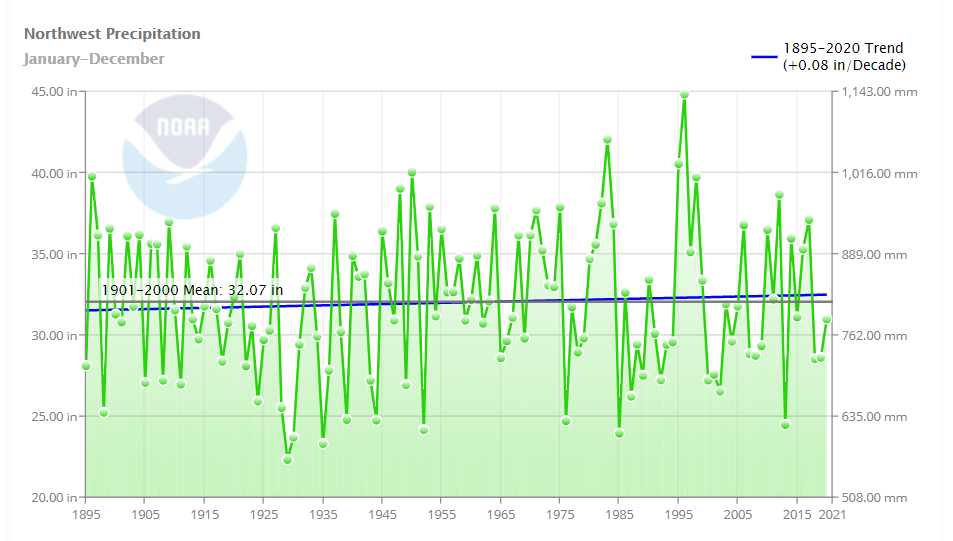
a) West North America
Since the mid 20thC, rainfall appears to have declined, but since the start of records in 1895, there is actually a slightly increasing trend in precipitation:

b) Mediterranean
This appears to be the only region where there is any confidence of a long term trend, and only medium confidence at that.
What is apparent is that the widespread drought shown in this section is at odds with the increased precipitation in the first section. It is also plainly nonsense to claim that drought is increasing in India, for instance, where we know monsoon rainfall has increased significantly since the disastrous droughts of the 1960s and 70s.
3) Tropical Cyclones

The strengthening of hurricanes in the last four decades is an effect of the AMO, as NOAA explain:

As the IPCC admit, they cannot find any longer term trends. Equally there is no actual evidence to back up claims of the heavier rainfall, which attribution studies allege is happening.
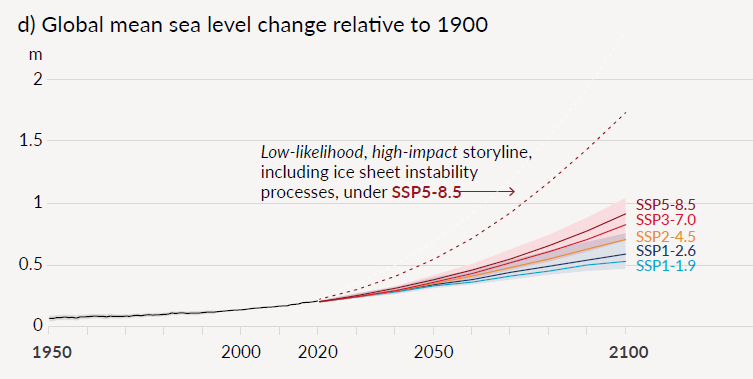
4) Sea Level Rise

I think the IPCC’s own chart highlights what a nonsense their projections are!
Conclusion
The reality is that our weather is no worse now than it was 150 years ago. Indeed I would strongly suggest that governments all around the world would be terrified if they were told we were going back to the climate Little Ice Age.
Think I’m kidding? This was exactly what scientists thought was going to happen during the global cooldown in the 1970s, and governments were genuinely alarmed.
All that is left in the IPCC report is a host of highly subjective projections of what might happen in the future.
August 10, 2021
Posted by aletho |
Science and Pseudo-Science, Timeless or most popular |
Leave a comment
The medical and scientific community and the world have known for 20 years that vaccines which only treat symptoms without terminating the virus result in more infectious and dangerous disease and higher overall deaths.
Abstract:
… Here we show that vaccines designed to reduce pathogen growth rate and/or toxicity diminish selection against virulent pathogens. The subsequent evolution leads to higher levels of intrinsic virulence and hence to more severe disease in unvaccinated individuals. This evolution can erode any population-wide benefits such that overall mortality rates are unaffected, or even increase, with the level of vaccination coverage. These findings have policy implications for the development and use of vaccines that are not expected to provide full immunity, such as candidate vaccines for malaria. …
~S Gandon 1 , M J Mackinnon, S Nee, A F Read, Institute of Cell, Animal and Population Biology, The University of Edinburgh, Edinburgh EH9 3JT, UK.
Nature.2001 Dec 13;414(6865):751-6. doi: 10.1038/414751a.
In other words, this is the Antibody-Dependent Enhancement (ADE) and immune escape described by brave doctors and scientists who are being blocked by social and mainstream media and ignored by governments and others with sworn duty to protect public health.
August 10, 2021
Posted by aletho |
Science and Pseudo-Science, Timeless or most popular | Covid-19, COVID-19 Vaccine |
Leave a comment
You are not alone! As of 28 July 2021, 29% of Canadians have not received a COVID-19 vaccine, and an additional 14% have received one shot. In the US and in the European Union, less than half the population is fully vaccinated, and even in Israel, the “world’s lab” according to Pfizer, one third of people remain completely unvaccinated. Politicians and the media have taken a uniform view, scapegoating the unvaccinated for the troubles that have ensued after eighteen months of fearmongering and lockdowns. It’s time to set the record straight.
It is entirely reasonable and legitimate to say ‘no’ to insufficiently tested vaccines for which there is no reliable science. You have a right to assert guardianship of your body and to refuse medical treatments if you see fit. You are right to say ‘no’ to a violation of your dignity, your integrity and your bodily autonomy. It is your body, and you have the right to choose. You are right to fight for your children against their mass vaccination in school.
You are right to question whether free and informed consent is at all possible under present circumstances. Long-term effects are unknown. Transgenerational effects are unknown. Vaccine-induced deregulation of natural immunity is unknown. Potential harm is unknown as the adverse event reporting is delayed, incomplete and inconsistent between jurisdictions.
You are being targeted by mainstream media, government social engineering campaigns, unjust rules and policies, collaborating employers, and the social-media mob. You are being told that you are now the problem and that the world cannot get back to normal unless you get vaccinated. You are being viciously scapegoated by propaganda and pressured by others around you. Remember; there is nothing wrong with you.
You are inaccurately accused of being a factory for new SARS-CoV-2 variants, when in fact, according to leading scientists, your natural immune system generates immunity to multiple components of the virus. This will promote your protection against a vast range of viral variants and abrogates further spread to anyone else.
You are justified in demanding independent peer-reviewed studies, not funded by multinational pharmaceutical companies. All the peer-reviewed studies of short-term safety and short-term efficacy have been funded, organized, coordinated, and supported by these for-profit corporations; and none of the study data have been made public or available to researchers who don’t work for these companies.
You are right to question the preliminary vaccine trial results. The claimed high values of relative efficacy rely on small numbers of tenuously determined “infections.” The studies were also not blind, where people giving the injections admittedly knew or could deduce whether they were injecting the experimental vaccine or the placebo. This is not acceptable scientific methodology for vaccine trials.
You are correct in your calls for a diversity of scientific opinions. Like in nature, we need a polyculture of information and its interpretations. And we don’t have that right now. Choosing not to take the vaccine is holding space for reason, transparency and accountability to emerge. You are right to ask, ‘What comes next when we give away authority over our own bodies?’
Do not be intimidated. You are showing resilience, integrity and grit. You are coming together in your communities, making plans to help one another and standing for scientific accountability and free speech, which are required for society to thrive. We are among many who stand with you.
Angela Durante, PhD
Denis Rancourt, PhD
Claus Rinner, PhD
Laurent Leduc, PhD
Donald Welsh, PhD
John Zwaagstra, PhD
Jan Vrbik, PhD
Valentina Capurri, PhD
August 9, 2021
Posted by aletho |
Civil Liberties, Science and Pseudo-Science, Timeless or most popular | Canada, COVID-19 Vaccine |
Leave a comment
Mainstream media is waking up that despite billions invested in renewable energy, oil and coal use are surging:
Forget About Peak Oil – We Haven’t Even Reached Peak Coal Yet
David Blackmon, Senior Contributor Energy
Aug 2, 2021,09:18am EDT
Despite all the heavy dissemination of narratives and talking points about a “climate emergency” and the “energy transition” during 2021, the ongoing economic recovery from the COVID-19 pandemic proves that the world still heavily relies on fossil fuels to provide its constantly growing energy needs. Indeed, as the pushers of Peak Oil demand theory try in vain to revive their own always-wrong narrative, it now appears that the world has yet to even meet the peak of demand for the least environmentally friendly fuel of all, coal.
This is especially true in China, India and much of Asia, where thousands of coal-fired power plants have seen record usage levels in the face of a major heat wave this summer. … Read more
Just to add to the fun, talking about peak oil and peak coal as if they are different targets is fundamentally wrong.
As the NAZIs proved in WW2, when they lost access to good oil fields, you can run an economy on coal liquefaction technologies, well proven technologies for converting coal into oil.
The only holdup is liquefied coal is more expensive than conventional oil, it doesn’t become economical until oil prices exceed $100 ($145 / barrel according to one estimate I saw). Though China runs a significant volume of coal liquefaction plants, those plants are likely more for high value added chemical synthesis than fuel oil.
The threat of cheaper coal liquefaction technologies is likely the real reason OPEC tries to keep oil prices low. OPEC are terrified of “demand destruction”, the possibility that high oil prices will stimulate a switchover to EVs, or more investment in developing non-OPEC oil resources, but they are also concerned it will stimulate research into cutting the cost of coal liquefaction. A coal liquefaction research breakthrough could permanently cap OPEC’s conventional oil at an uncomfortably low price.
So the reality is, there is zero chance we shall see peak oil supply in our lifetime, or even our grandchildren’s lifetime, not only because there are vast reserves of oil, but because there are centuries worth of coal reserves just sitting in the ground waiting to be mined. We shall all have a plentiful supply of oil at an affordable price, for as long as we need it.
August 8, 2021
Posted by aletho |
Economics, Malthusian Ideology, Phony Scarcity, Timeless or most popular | China, India |
Leave a comment








 Aletho News
