Don’t know much about history
A friend of mine recently commented that if the current trend to reduce the study of history in schools to easily digestible politically correct soundbites that are being successfully pushed by social justice warriors continues, we will soon be limited to discussing how horrible slavery was, the Stonewall Inn riots and the so-called holocaust. Indeed, it seems that those who complain the loudest are the only ones listened to and no one complains more often or at greater volume than American Jewish groups intent on preserving the benefits that are derived from always being able to claim their perpetual victimhood.
Recent media accounts from Florida detail how low pandering to Israeli and Jewish interests can go. A high school principal identified as Dr. Willian Latson was removed from his position after he revealed to a parent that he considered the holocaust to be a belief and not a demonstrated fact. According to statement made by the school district, the action was taken “out of an abundance of concern” for students and staff after Latson had “made a grave error in judgment.” It added that “In addition to being offensive, the principal’s statement is not supported by either the School District Administration or the School Board.”
The story took place in the School District of Palm Beach County. Latson, now the ex-principal of Spanish River High School in West Palm Beach, presided over his school in a heavily Jewish district that includes Boca Raton. Latson is currently being considered for reassignment by the school district though there are have also been recurring calls from county and state legislators to fire him, which will undoubtedly occur.
The tale is somewhat convoluted and there are some disagreements about what actually took place, but it goes basically like this: roughly one year ago a high school parent, unidentified but presumably Jewish, emailed Latson asking him to confirm that holocaust education was a top priority in Spanish River H.S. He responded by email that the school has a “variety of activities” for holocaust education but “Not everyone believes the Holocaust happened. And you have your thoughts, but we are a public school and not all of our parents have the same beliefs.” He added that an educator has “the role to be politically neutral but support all groups in the school… I can’t say the Holocaust is a factual, historical event because I am not in a position to do so as a school district employee.”
After the emails were revealed to school officials, presumably by the parent, a year-long investigation commenced in which Latson apologized for having caused offense, saying his emails “did not accurately reflect my professional and personal commitment to educating all students about the atrocities of the Holocaust.” The school board initially ruled that he had not done anything meriting disciplinary action or a reprimand, but the story did not end there. Simultaneously, an online petition which eventually included 6,000 signatures was initiated demanding Latson’s replacement and he was subsequently removed from his position. The school board officials justified their change of course by citing his apparent unwillingness to comply with instructions, stating that they previously had ordered him to “expand the Holocaust curriculum at Spanish River and ordered him to spend ‘several days at the United States Holocaust Museum to increase his personal knowledge.’”
Latson responded that his emails and comments were not “accurately relayed” to the media: “I have been reassigned to the district office due to a statement that was not accurately relayed to the newspaper by one of our parents. It is unfortunate that someone can make a false statement and do so anonymously and it holds credibility but that is the world we live in.”
His statement implicitly blaming a school parent generated new problems for Latson with two Palm Beach County state lawmakers and the Anti-Defamation League (ADL) calling for his firing because he had not groveled sufficiently. ADL stated that “ADL had hoped his apology was sincere and Latson could learn from his mistakes. Given that he cannot take responsibility for his actions, Latson should resign, and if not we believe the district should end his employment.”
The two state officials, Senator Kevin Rader and Representative Tina Polsky issued a statement saying “By his latest email, Dr. Latson has shown no remorse for his actions and we call on the district to immediately terminate him.”
The publication of Latson’s comments also unleashed heavy criticism from a broad range of other Florida public officials. Governor Ron DeSantis, who calls himself the most pro-Israel governor in American, joined in with “Look, to act like the Holocaust is a matter of debate, I mean, is just absurd.”
Senator Rick Scott called Latson’s comments anti-Semitism and tweeted that the “fact that someone charged with educating children would be unable to speak unequivocally on the realities & horrors of the holocaust is incredibly concerning.” Jewish State Representative Randy Fine, who recently introduced legislation officially banning “anti-Semitism” in Florida public schools, said “the law does not allow a Holocaust-denier to serve as a public school principal.” In a published statement he expanded on that point, writing that “anti-Semitism by public employees in our K-20 public education system must be treated the same as racism.”
The controversy inadvertently revealed the extent to which state law now requires the holocaust to be taught in all Florida public schools. Ironically, Spanish River High has one of the country’s most rigorous holocaust education programs with the subject being taught both in ninth- and 10th-grade English classes as well as a component of both U.S. and world history. There is also an elective course as well regular holocaust assemblies for the entire school featuring keynote speakers. After the Latson controversy started, the school district required all 10th graders to read “Night” by Elie Wiesel. There are now plans to add multiple annual assemblies for students in every grade in the school district this year.
So, if you go to school in Florida your English and history courses will be about the holocaust and you will have to attend holocaust assemblies just in case some alleged atrocity has not been described extensively enough in class. Well, when does it end? When does the almost incessant pandering to Zionists and Jewish groups become too much for the deliberately kept-in-ignorance American public to tolerate?
The so-called holocaust was an historical event that took place in Europe seventy-five years ago. It has an established but very debatable narrative that pretty much has been contrived over the past fifty years for political reasons, see Professor Norman Finkelstein’s brilliant deconstruction of it in his book “The Holocaust Industry: Reflections on the Exploitation of Jewish Suffering.” Those inconsistencies in the holocaust story and its general lack of credibility may have been what Latson was referring to.
The imposed holocaust narrative is full of holes and contradictions in terms of who was killed and how, but it is impossible for genuine academics to critique it if they want to stay employed. Books like Wiesel’s “Night” are largely works of fiction. The narrative exists to perpetuate the belief in Jewish suffering, which brings with it a number of practical advantages. First, it is regularly deployed to excuse the horrific treatment of the Palestinian people by Israel – Jewish suffering means that the creation of a homeland is a debt that all the world owes to the Jews without regard to what has been done to the area’s other inhabitants. Second, guilt over the alleged holocaust means that reparations from countries involved must be continued indefinitely. Currently the Poles are resisting new Jewish claims while the Germans have been paying for years. It is now being asserted that the descendants of so-called holocaust survivors have been genetically psychologically damaged, in the womb as it were, so reparations will presumably continue forever.
Third, holocaust guilt is used in the United States to counter any criticism of what Israel and Jewish groups are up to, as they use their wealth and access to power to corrupt America’s institutions and drive the country to needless wars. One might well ask, when confronted by the taxpayer funded holocaust museums that appear to spring up like mushrooms, why so much interest in a possible crime that has nothing to do with the United States? Where are the museums and courses in Florida schools discussing the mass killing that happened on our own shores, the genocide of the native Americans?
Lest we forget, the holocaust industry operates everywhere in America, particularly in the education system. Eight states already have laws mandating holocaust education (California, New York, New Jersey, Rhode Island, Florida, Illinois, Indiana and Michigan) and there is considerable pressure to make it universal in the United States. An alarmed World Jewish Congress (WJC) is urging required holocaust education for everyone everywhere “citing statistics from a 2018 poll revealing half of millennials can’t name a single Nazi concentration camp.”
A currently circulating WJC petition in Congress expresses concern over the rise in anti-Semitism, with a warning that “the horrors of the Holocaust are fading from our collective memory…” A bill to brainwash students so they will not forget, ‘The Never Again Education Act’, is currently making the rounds in the House of Representatives. It would make holocaust study mandatory in public schools and set up a Department of Education program that would train teachers to properly instruct students about the story of Jewish suffering.
Yes, the “Never Again Education Act” will soon be sucking up taxpayer money like an enormous vacuum cleaner and creating lots of new jobs for holocaust instructors, who will, of course, all be Jewish. Public schools will be teaching the next generation about what a great place Israel is and how the holocaust justifies vigilant groups like AIPAC and ADL, though it will not mention how they have corrupted the U.S. government and turned America’s foreign policy into an Israeli wag-the-dog. But who’s complaining? It’s good for the Jews, isn’t it?
So Dr. William Latson will be unemployed and possibly unemployable because he spoke the truth, a lesson to all of us that one must never cross the red lines established by the wielders of Jewish power in America. One might reasonably currently expect that serial pedophile Jeffrey Epstein will use the holocaust get-out-of-jail-free card in his defense, claiming that his recollection of the event has so traumatized him that he did bad things that he would not have otherwise considered. Poor Jeffrey. He has suffered so much.
Philip M. Giraldi, Ph.D., is Executive Director of the Council for the National Interest, a 501(c)3 tax deductible educational foundation (Federal ID Number #52-1739023) that seeks a more interests-based U.S. foreign policy in the Middle East. Website is councilforthenationalinterest.org, address is P.O. Box 2157, Purcellville VA 20134 and its email is inform@cnionline.org
July 15, 2019
Posted by aletho |
Civil Liberties, Ethnic Cleansing, Racism, Zionism, Full Spectrum Dominance, Timeless or most popular | United States, Zionism |
Leave a comment
The UK’s sprawling nuclear processing Sellafield plant in Cumbria has a powerful claim to fame, dubbed the “most hazardous industrial building in western Europe”.
There have been 25 safety breaches reportedly logged at the huge Sellafield nuclear waste plant in the UK over the past two years, according to The Sun on Sunday.
The cited incidents include radiation ominously leaking from a water pipe, a nuclear waste container for some reason not welded completely shut, spilt uranium powder and a burst pipe found to be leaking acid, to name just a few.
Logs show a bomb squad was summoned in October 2017 after potentially unstable chemicals sparked a scare, while just a month later it was revealed that a worker had been exposed to a low level of radiation.
Earlier this year, when a high-voltage cable was sliced, causing a power loss, the Office for Nuclear Regulation was swift to hit Sellafield with an improvement notice.
The Cumbria compound has a 140 tonne plutonium stockpile and takes in radioactive waste from the UK’s working reactors.
As bosses insist nuclear safety is an “overriding priority”, the 6km long, razor-wired site has, nonetheless, been dubbed the most hazardous place in Europe.
Locals live in constant fear of a serious incident happening there, said Janine Smith, from the campaign group Cumbrians Opposed to a Radioactive Environment.
“One safety breach is one too many. There just shouldn’t be any. Just one error could be catastrophic. The buildings at Sellafield are all so close together that if something was to happen at that site it would be a disaster. It could be worse than Chernobyl”, said Smith.
In response to the nuclear security scares, Sellafield Ltd said it is “never complacent about safety.”
“None of the events recorded in the past two years have been above the lowest level of classification. In line with our commitment to openness and transparency, we investigate all incidents and report details on our website,” said a spokesman.
The Chernobyl disaster occurred on 26 April 1986 at the No. 4 nuclear reactor in the Chernobyl Nuclear Power Plant, near the city of Pripyat in the north of the Ukrainian SSR. The meltdown generated a blast [radiation] equivalent to the detonation of 500 nuclear bombs when a reactor exploded and burned.
It is one of just two nuclear energy disasters rated at the maximum severity level of 7, with the other being the 2011 Fukushima Daiichi nuclear disaster in Japan.
July 14, 2019
Posted by aletho |
Environmentalism, Militarism, Nuclear Power, Timeless or most popular | UK |
Leave a comment

Leader of the Islamic Revolution Ayatollah Seyyed Ali Khamenei waves to tens of thousands of Basij members from Tehran province at Azadi Stadium, Oct. 4, 2018. (Photo by Khamenei.ir)
Part 1 of this article discussed why the recent US sanctions on Leader of the Islamic Revolution Ayatollah Seyyed Ali Khamenei provoked laughter in Iran, and derision even from Iranophobic Western mainstream media.
Beyond Ayatollah Khamenei, I can very briefly explain how and why the West can persist with its “Millionaire Mullah” mythology:
There are many economic principles that guide the Iranian economy which have no basis in the West – they are, after all, “revolutionary”. Many are based on the principles of Islamic charity and of Islamic finance; many are also based on the anti-capitalist principles which were obviously drawn from the 20th century socialism. There are almost too many to list, but in Part 2 of this 3-part article I will pick a few key ones which specifically relate to the clergy, and which – when added with Iranophobia – create such widespread and ignorant propaganda.
One of the five pillars of Islam is to give to charity (zakat), but one of the five additional pillars of Shia theology is that businessmen must give 20% of their profits to charity (khums). Thus, it should be clear why some say that Iran has an “alms-based economy”. That’s an exaggeration, because there are state taxes as well, but this money goes directly to religious authorities and has gone there for over 1,000 years.
For example, Ayatollah Khamenei was raised in a family (lower middle class clerics on both sides of his parents) which would have never received this money directly – they would have been the recipients of this charity from the much higher-ranking clergy.
Ayatollah Khamenei, through hard work, sacrifice and other virtues, is now a “Marja’” (top religious authority). He now heads various religious foundations which receive – and redistribute downwards – this zakat and khums money.
Of course, he heads these foundations, but this money cannot (and is not) be used by him to buy a Ferrari for his favourite nephew, for example. The Iranian press would die of happiness at the sales prospects caused by such a sensational, unheard-of event! These are “religious foundations” not “The Clinton Foundation”: These foundations serve the poor – they do not trade high-level political access and favours in return for funding a jet-set lifestyle. Of course, most Western media cynically assume that everyone – even a Marja’ as publicly present as Ayatollah Khamenei – secretly operates on shameless Western capitalist principles.
Let’s clarify two key issues: zakat and khums are individual choices – they are not compelled to go to Ayatollah Khamenei. Iranians can send their charity to a Marja’ in Iraq if they like, and many do. Secondly, drastically changing this historic process of zakat and khums would certainly constitute a major revolution in Iran – however, for many it would constitute a rather “un-Islamic Revolution”, and there is no doubt that the democratic majority wanted an “Islamic Revolution”.
Therefore, Islamic charity is a reality of modern economics and finance in Iran. It is not something which non-Muslims can easily comprehend, perhaps, but the failure to do so will help fuel nonsense like “Millionaire Mullahs”. Unlike neoliberalism in the West, these financial principles have the virtue of being democratically-supported, and I can easily argue that they have the additional virtue of far more efficiently increasing economic equality than neoliberalism does.
Ayatollah Khamenei, as the Supreme Leader, is also often listed as the head of companies simply out of respect by the company’s founders. It is often purely honorary. Ayatollah Khamenei is not, for example, giving ideas on product improvement or production strategies to such companies (now the rare ex-president Rafsanjani – rare because he was an Iranian Islamic Revolutionary cleric from a rich, business-oriented background – might have gotten involved, but Ayatollah Khamenei has evinced no such interest)and he is absolutely not in any control of the companies’ assets. He is there in name only as a sign of respect for him, Islam, Iran, etc. Of course, this is distorted/misunderstood by Western pro-capitalist papers.
The Iranian Islamic Revolution also did something which no doubt enrages Western imperialist-capitalists, and about which they have no desire to spread honest information: the revolution took a huge chunk of the factories and industries owned by the Shah and his tiny coterie and gave them to charity.
These are called the bonyads, and they are an estimated 15-20% of the entire Iranian economy. A staggeringly revolutionary concept, no?
The bonyads are thus different from the Islamic charity I have described, and the Islamic foundations which administer that charity, because the bonyads were expressly charged with getting involved in economic production.
The bonyads are not designed for capitalist profit, but are cooperatives which exist to create low-cost goods and jobs for Iranians. This planned” inefficiency” – in attaining maximum profit, but not in social cohesion and equality – is falsely branded as“corruption” by raging Western capitalists, sadly.
Ayatollah Khamenei heads some bonyads, and this gives him economic influence, of course, because the popular, democratic, openly-debated decision to award a significant chunk of the Iranian economy to the administration of religious authorities was a popular, democratic, openly-debated decision of the Iranian people. Oppose decisions arrived at in this manner, and you oppose democracy for Iran.
Bonyads are not specifically proscribed in the Qur’an, unlike zakat and the ubiquitous concepts of charity and anti-usury (high interest/compound interest), but if one tries to overturn them, well, all I can say is – prepare for a serious fight. If you think the millions of bonyad workers and recipients of bonyad lower-cost goods want all that to be replaced by (mostly-Western) stockholders, good luck with your efforts.
Very obvious, but of course not perfect, parallels can be made elsewhere: the lower class supporters of Chavismo’s collectivos have won an unprecedented number of votes (and street battles) to preserve similar anti-neoliberal economic concepts and structures. Iran is not nearly as susceptible to Washington’s meddling, in large part because such gains have been consolidating democratic support for the government for a generation longer than in Venezuela. Cuba adopted similar (though not Islamic-influenced) concepts a generation earlier than Iran did. China is a generation up on Cuba, and aren’t they doing rather well? China doesn’t have bonyads, of course, but Beijing and Tehran have such a strong and long-term alliance because they obviously have much in common.
The common threat here is modern economic solutions designed to fight imperialism, and also those forms of capitalism which are rapacious and undemocratic.
So, between zakat, khums, the bonyads, generalized Iranophobia and a desire to denigrate any economic thought which is not far-right neoliberal capitalism, this is how we have arrived at Western nonsense like “Millionaire Mullahs”, and the propaganda is unrelenting.
Like, for example, the 2013 Reuters report on Setad, a bonyad headed by the Leader, was absurdly titled, “Khamenei controls massive financial empire built on property seizures”.
Part 3 will examine this report, which is still being cited today despite its obvious bias, misrepresentations and clear goal of spreading Iranophobic and Islamophobic propaganda.
Ramin Mazaheri is the chief correspondent in Paris for PressTV and has lived in France since 2009. He has been a daily newspaper reporter in the US, and has reported from Iran, Cuba, Egypt, Tunisia, South Korea and elsewhere. He is the author of “I’ll Ruin Everything You Are: Ending Western Propaganda on Red China”.
July 14, 2019
Posted by aletho |
Economics, Fake News, Mainstream Media, Warmongering, Timeless or most popular | Iran |
Leave a comment
On August 1, 1914, as dreadful war was breaking out in Europe, the German ambassador Prince Lichnowsky paid a visit to Britain’s Foreign Secretary Sir Edward Grey. Dr Rudolf Steiner commented as follows upon this meeting – in a 1916 lecture which he gave in Switzerland:
‘A single sentence and the war in the West would not have taken place.’
At that meeting, he averred that, with just one sentence, ‘this war could have been averted.’[1]
To examine that outrageous-sounding claim, we delve into what is a bit of a mystery, that of the first conflict between Germany and Britain for a thousand years: two nations bound by the same royal family, with every statesman in Europe loudly proclaiming that peace is desired, that war must at all costs be avoided; and then the bloodbath takes place, terminating the great hopes for European civilization and extinguishing its bright optimism, as what were set up as defensive alliances mysteriously flipped over and became offensive war-plans.
The ghastly ‘Schlieffen plan’ became activated, as the master-plan of Germany’s self-defense, which as it were contained the need for the dreadful speed with which catastrophe was precipitated. France and Russia had formed a mutual defense agreement (everyone claimed their military alliances were defensive). While Bismarck the wise statesman who founded Germany had lived, this was avoided, such an alliance being his darkest nightmare. But Kaiser Wilhelm did not manage to avoid this, and so Germany’s neighbors to East and West formed a mutual military alliance. The Schlieffen plan was based on the premise that Germany could not fight a war on two fronts but might be able to beat France quickly; so in the event of war looming against Russia in the East, its troops had to move westwards, crashing though Belgium as a route into France. It all had to happen quickly because Germany’s army was smaller than that of Russia.
The timing over those crucial days shows its awful speed: Russia mobilized its army on July 29th, in response to hostilities breaking out between Austro-Hungary and Serbia; two desperate cables were sent by the Kaiser to the Tsar on the 29th and 31st, imploring him not to proceed with full mobilisation of his army because that meant war; the French government ‘irreversibly decided’ to support Russia in the war on the evening of 31st, cabling this decision to the Russian foreign minister at 1 am on August 1st [2]; then, on the afternoon of that same day Germany proceeded to mobilise and declared war on Russia, and two days later went into Belgium. Britain’s House of Commons voted unanimously for war on 5th August, viewing Germany as the belligerent warmonger.
Kaiser Wilhelm’s Nemesis
The Kaiser had enjoyed the reputation of a peacemaker:
Now … he is acclaimed everywhere as the greatest factor for peace that our time can show. It was he, we hear, who again and again threw the weight of his dominating personality, backed by the greatest military organisation in the world – an organisation built up by himself – into the balance for peace wherever war clouds gathered over Europe. ‘(‘William II, King of Prussia and German Emperor, Kaiser 25 years a ruler, hailed as chief peacemaker,’ New York Times, 8 June, 1913. [3])
A former US President, William Howard Taft, said of him: ‘The truth of history requires the verdict that, considering the critically important part which has been his among the nations, he has been, for the last quarter of a century, the single greatest force in the practical maintenance of peace in the world.’ ([4],[5]). That is some tribute! In 1960 a BBC centenary tribute to the Kaiser was permitted to say: ‘Emphasis was placed on his love of England and his deep attachment to Queen Victoria,’ his grandmother.
A lover of peace …. skilled diplomat … deep attachment to Queen Victoria .. so remind me what the Great War was for, that took nine million lives?
Might the war have been averted if the Kaiser had, perhaps, focussed a bit more on the art of war – how to refrain from marching into Belgium? There was no ‘plan B’! In later days the Kaiser used to say, he had been swept away by the military timetable. Who wanted the war which locked Europe into such dreadful conflict? Did a mere sequence of interlocking treaties bring it on?
On the night of 30-31st of July, feeling entrapped by a seemingly inevitable march of events, Kaiser Wilhelm mused to himself doomily:
Frivolity and weakness are going to plunge the world into the most frightful war of which the ultimate object is the overthrow of Germany. For I no longer have any doubt that England, Russia and France have agreed among themselves – knowing that our treaty obligations compel us to support Austria – to use the Austro-Serb conflict as a pretext for waging a war of annihilation against us… In this way the stupidity and clumsiness of our ally [Austria] is turned into a noose. So the celebrated encirclement of Germany has finally become an accepted fact… The net has suddenly been closed over our heads, and the purely anti-German policy which England has been scornfully pursuing all over the world has won the most spectacular victory which we have proved ourselves powerless to prevent while they, having got us despite our struggles all alone into the net through our loyalty to Austria, proceed to throttle our political and economic existence. A magnificent achievement, which even those for whom it means disaster are bound to admire.’ [6]
‘Those dreadful fields of senseless carnage’
Did hundreds of thousands of young men, the flower of England, want to go out to muddy fields, to fight and die? Shells, bayonets, gas, machine guns – what was the point? In no way were they defending their country or its Empire – for no-one was threatening it. No European nation benefitted: it spelt ruin for all of them. Do we need to fear the imbecility of the poet’s words:
If I should die, think only this of me
There is some corner of a foreign field
That is forever England’? (Rupert Brooke)
A leading British pacifist, E.D. Morel, was widely vilified for the views expressed in his book Truth and the War (1916), and had his health wrecked (as Bertrand Russell described) by being put into Pentonville jail. In haunting words of insight, his book described how: ‘Those dreadful fields of senseless carnage’ had been brought about by ‘futile and wicked Statecraft’ – by ‘an autocratic and secret foreign policy’ carried out by those ‘who by secret plots and counter-plots … hound the peoples to mutual destruction.’ Of the war’s outbreak, Morel wrote: ‘It came therefore to this. While negative assurances had been given to the House of Commons, positive acts diametrically opposed to these assurances had been concerted by the War Office and the Admiralty with the authority of the Foreign Office. All the obligations of an alliance had been incurred, but incurred by the most dangerous and subtle methods; incurred in such a way as to leave the Cabinet free to deny the existence of any formal parchment recording them, and free to represent its policy at home and abroad as one of contractual detachment from the rival Continental groups.’ [7] A total analogy exists here with Blair taking Britain into the Iraq war, making a deal with Bush while continually denying back home that any such deal existed. Two Cabinet members resigned in August 1914, once the central importance of this concealed contract became evident: Viscount Morley and John Burns.
A more orthodox, deterministic view was given by Winston Churchill: ‘the invasion of Belgium brought the British Empire united to the field. Nothing in human power could break the fatal chain, once it had begun to unroll. A situation had been created where hundreds of officials had only to do their prescribed duty to their respective countries to wreck the world. They did their duty’. [8] That necessary chain leading to ruin began only after the crucial discussion alluded to by Dr Steiner, we observe.
Considering that Germany went into Belgium on the 3rd of August, whereas Churchill and Mountbatten, the First and Second Sea Lords, had ordered the mobilising of the British fleet over July 26 -30th, so that by days before the 3rd much of the world’s biggest navy was up north of Scotland all ready to pounce on Germany – his words may appear as some kind of extreme limit of hypocrisy. The mobilising of the British fleet was a massive event which greatly pre-empted political discussion, a week before Britain declared war. [9], [10]
A Secret Alliance
Britain was obliged by no necessity to enter a European war, having no alliance with France that the people of Britain or its parliament knew about, and having a long indeed normal policy of avoiding embroilment in European conflicts. However, ministers especially Grey the Foreign Minister had covertly made a deal with France. To quote from Bertrand Russell’s autobiography: ‘I had noticed during previous years how carefully Sir Edward Grey lied in order to prevent the public from knowing the methods by which he was committing us to the support of France in the event of war.’ [11] Would Britain be dragged into a European war on the coat-tails of France – for centuries, its traditional enemy – given that France had signed a treaty obligation to enter war in consequence of a German-Russian conflict? France was keen to avenge past grievances over the French-German border, aware of the superiority of troops which it and Russia combined had against Germany – and convinced that it could drag Britain into the fray.
On 24 March 1913, the Prime Minister had been asked about the circumstances under which British troops might land on the Continent. He replied, ‘As has been repeatedly stated, this country is not under any obligation not public and known to parliament which compels it to take part in any war’ – a double negative which concealed a hidden but then-existing accord!
Last Hope of Peace
We turn now to the question put, on August 1st by Germany’s ambassador to Britain’s Foreign Secretary, normally omitted from history books on the subject. If war and peace did indeed hinge upon it – as Dr Steiner averred – it may be worth quoting a few judgements about it. Here is Grey’s own letter, written that day:
Grey’s letter to the British ambassador in Berlin: 1 August, concerning his meeting with Prince Lichnowsky:
‘He asked me whether, if Germany gave a promise not to violate Belgian neutrality we would engage to remain neutral. I replied that I could not say that: our hands were still free, and we were considering what our attitude should be….I did not think that we could give a promise on that condition alone. The ambassador pressed me as to whether I could formulate conditions on which we would remain neutral. He even suggested that the integrity of France and her colonies might be guaranteed. I said that I felt obliged to refuse definitely any promise to remain neutral on similar terms, and I could only say that we must keep our hands free.’ [12],[13]
Swiss author George Brandes summarised this meeting:
‘Now Prince Lichnowsky, the German Ambassador in London, asked whether England would agree to remain neutral if Germany refrained from violating Belgium’s neutrality. Sir Edward Grey refused. Britain wanted to retain ‘a free hand’ (‘I did not think we could give a promise of neutrality on that condition alone’). Would he agree if Germany were to guarantee the integrity of both France and her colonies? No.’ [14]
The US historian Harry Elmer Barnes: ‘The only way whereby Grey could have prevented war, if at all, in 1914 would have been by declaring that England would remain neutral if Germany did not invade Belgium…,’ but Grey ‘refused to do’ this: ‘After Grey had refused to promise the German Ambassador that England would remain neutral in the event of Germany’s agreeing not to invade Belgium, the German ambassador asked Grey to formulate the conditions according to which England would remain neutral, but Grey refused point-blank to do so, though he afterwards falsely informed the Commons that he had stated these conditions’. [15] Barnes commended the editorial of the Manchester Guardian July 30th – opposing the pro-war jingoism of The Times – which declared: ‘not only are we neutral now, but we are and ought to remain neutral throughout the whole course of the war.’
The British judge and lawyer Robert Reid was the Earl of Loreburn as well as the Lord Chancellor of England from 1905 to 1912, so he should know what was going on. His book ‘How the War Came’ described how it was the secret deal with France which wrecked everything:
The final mistake was that when, on the actual crisis arising, a decision one way or the other might and, so far as can be judged, would have averted the Continental war altogether … The mischief is that Sir Edward Grey slipped into a new policy, but without either Army, or treaty, or warrant of Parliamentary approval … This country has a right to know its own obligations and prepare to meet them and to decide its own destinies. When the most momentous decision of our whole history had to be taken we were not free to decide. We entered a war to which we had been committed beforehand in the dark, and Parliament found itself at two hours’ notice unable, had it desired, to extricate us from this fearful predicament… If the government thought that either our honour or our safety did require us to intervene on behalf of France, then they ought to have said so unequivocally before the angry Powers on the Continent committed themselves to irrevocable steps in the belief that we should remain neutral. Instead of saying either, they kept on saying in the despatches that their hands were perfectly free, and told the Commons the same thing. The documents show conclusively that till after Germany declared war our Ministers had not made up their minds on either of the two questions, whether or not they would fight for France, and whether or not they would fight for Belgium. Of course Belgium was merely a corridor into France, and unless France was attacked Belgium was in no danger. [16]
After it was over, US President Woodrow Wilson in March of 1919 summed up its avoidability: ‘We know for a certainty that if Germany had thought for a moment that Great Britain would go in with France and Russia, she would never have undertaken the enterprise.’ (p.18, Lorenburn). That was the sense in which Britain precipitated the dreadful conflict. Clear words of truth could have avoided it – had that been desired.
We remind ourselves of Dr Steiner’s comparison: that the British Empire then covered one-quarter of the Earth’s land-surface; Russia one-seventh; France and her colonies one-thirteenth; and Germany, one thirty-third. (Karma, p.11)
Upon receiving a telegram from Prince Lichnowsky earlier in the day of August 1, the Kaiser ordered a bottle of champagne to celebrate, as if there might be hope of reaching a deal with Britain. Even though he was just that afternoon signing the order for mobilisation of the German army, he could in some degree have recalled it … but, it was a false hope, and a telegram from King Edward later that day explained to him that there had been a ‘misunderstanding’ between Britain’s Foreign Secretary and the German ambassador. [17]
Gray’s Duplicity
On the 26th or 27th, Grey told the Cabinet that he would have to resign, if it did not support his initiative to take Britain into war in support of ‘our ally,’ France. He would not be able to go along with British neutrality. Over these days up until the 1st, or 2nd, when the war was just starting, all the Cabinet of Britain’s Liberal Party government except for Churchill and Grey favoured British neutrality. It was those two who dragged Britain into war. Grey did not yet know whether the Belgian government would say ‘no’ to the German request to be allowed to pass through. To get his war, Grey had to swing it on the ‘poor little Belgium’ angle. Once Belgium had said ‘No’ and yet Germany still went in – as its only way to enter France – a cabinet majority would then became assured.
On August 2nd, Grey gave to the French ambassador what amounted to British assurance of war-support. On August 3rd, Grey gave the Commons an impassioned plea in favour of British intervention on behalf of France – making no mention of the German peace-offer. The MP Phillip Morrell spoke afterwards in the sole anti-war speech that day, and pointed out that a guarantee by Germany not to invade France had been offered, on condition of British neutrality, and spurned. As to why Grey did not mention the German offer, the view was later contrived that the German ambassador had merely been speaking in a private capacity! [18]
The supposed neutrality of Belgium was a sham, as ministers of that country had secretly drawn up detailed anti-German war-plans with Britain and France. No wonder the Kaiser had a sense of being ‘encircled’ by enemies, because ‘“neutral” Belgium had in reality become an active member of the coalition concluded against Germany’ [19] – i.e. it had plotted against a friendly nation. Quoting the commendably insightful George Bernard Shaw, ‘The violation of Belgian neutrality by the Germans was the mainstay of our righteousness; and we played it off on America for much more than it was worth. I guessed that when the German account of our dealings with Belgium reached the United states, backed with an array of facsimiles of secret diplomatic documents discovered by them in Brussels, it would be found that our own treatment of Belgium was as little compatible with neutrality as the German invasion.’ [20]
Steiner’s View
Rudolf Steiner’s judgement in his December 1916 lecture (during which Britain was declining a peace offer from Germany) was:
‘Let me merely remark, that certain things happened from which the only sensible conclusion to be drawn later turned out to be the correct one, namely that behind those who were in a way the puppets there stood in England a powerful and influential group of people who pushed matters doggedly towards a war with Germany and through whom the way was paved for the world war that had always been prophesied. For of course the way can be paved for what it is intended should happen. ..it is impossible to avoid realising how powerful was the group who like an outpost of mighty impulses, stood behind the puppets in the foreground. These latter are of course, perfectly honest people, yet they are puppets, and now they will vanish into obscurity …. [21]
Grey and Churchill were the two consistently pro-war cabinet ministers. The Conservative Party was solidly pro-war, and Churchill was ready to offer them a deal if perchance too many of the Liberal-party cabinet were going to resign rather than go to war. Steiner here remarked:
‘Anyone [in England] voicing the real reasons [for war] would have been swept away by public opinion. Something quite different was needed – a reason which the English people could accept, and that was the violation of Belgian neutrality. But this first had to be brought about. It is really true that Sir Edward Grey could have prevented it with a single sentence. History will one day show that the neutrality of Belgium would never have been violated if Sir Edward Grey had made the declaration which it would have been quite easy for him to make, if he had been in a position to follow his own inclination. But since he was unable to follow his own inclination but had to obey an impulse which came from another side, he had to make the declaration which made it necessary for the neutrality of Belgium to be violated. Georg Brandes pointed to this. By this act England was presented with a plausible reason. That had been the whole point of the exercise: to present England with a plausible reason! To the people who mattered, nothing would have been more uncomfortable than the non-violation of Belgian territory!’ [22]
Could powers behind Grey have wanted war, and steered events towards that end? Steiner argued against the widespread view of an inevitable slide into war: ‘You have no idea how excessively irresponsible it is to seek a simple continuity in these events, thus believing that without more ado the Great World War came about, or had to come about, as a result of Austria’s ultimatum to Serbia. (p.82)
We are here reminded of Morel’s account, of how secret plotting had paralysed debate:
‘The nemesis of their own secret acts gripped our ministers by the throat. It paralysed their sincere and desperate efforts to maintain peace. It cast dissension amongst them… They could not afford to be honest neither to the British people nor to the world. They could not hold in check the elements making for war in Germany by a timely declaration of solidarity with France and Russia, although morally committed to France.. In vain the Russians and the French implored them to make a pronouncement of British policy while there was still time.’ [23]
On August 4th, Britain declared war, and that same night cut through the transatlantic undersea telephone cables coming out of Germany, [24] enabling British atrocity propaganda to work largely unchallenged. Quoting a recent work on the subject, ‘The hallmark of Britain’s successful propaganda efforts were alleged German atrocities of gigantic proportions that strongly influenced naive Americans yearning for a chivalrous war from afar’. [25] Such consistent, intentional mendacity was fairly innovative, which was why it worked so well: ‘In that war, hatred propaganda was for the first time given something like organised attention’. [26] Thus, a nemesis of what Morel described as ‘futile and wicked statecraft’ here appeared, in that British soldiers were motivated to fight, by a nonstop torrent of lies – from their own government. [27]
In conclusion, can we agree with Dr Steiner? Quoting Barnes, ‘It is thus apparent that the responsibility for the fatal Russian mobilisation which produced the war must be shared jointly, and probably about equally, by France and Russia.’ This was because of the French cabinet’s general encouragement, then its final decision to embark upon war on the 29th July, of which Barnes remarked: ‘The secret conference of Poincaré, Viviani and Messimy, in consultation with Izvolski, on the night of 29th of July, marks the moment when the horrors of war were specifically unchained in Europe.’ (pp.328, 242) This had to be the time, it was the only opportunity, because these war-plotters would have known of the mobilisation of the world’s biggest navy, that of Great Britain, over these fateful days, all ready for war. The Russian generals browbeat the Tzar into signing the documents giving his assent – for a war he didn’t want [28]. On the 31st one more desperate telegram arrived from the Kaiser about how ‘The peace of Europe may still be maintained’ if only Russia would stop its mobilisation, but the Tzar no longer had that ability. Germany placed itself at a military disadvantage by refraining from declaring war or taking steps to mobilise until the afternoon of August 1st, much later than any of the other great powers involved. Had a deal been reached in London on that afternoon, a conflict in Eastern Europe would presumably still have taken place, but it would have been limited and diplomats could have dealt with it: yes, a world war could have been averted.
Essential texts:
- Alexander Fuehr, The Neutrality of Belgium, NY 1915
- E.D. Morel, Truth and the War, 1916
- The Earl Lorenburn, How the War Came, 1919
- Harry Elmer Barnes, The Genesis of the World War an Introduction to the Problem of War Guilt, 1926
- British documents on the origins of the war 1898-1914, Vol XI, HMSO 1926.
- Memorandum on Resignation by John Viscount, Morley, 1928, 39pp.
- Alfred von Wegerer, A Refutation of the Versailles War Guilt Thesis, 1930
- Winston Churchill, The Great War Vol. 1, 1933
- Captain Russell Grenfell, Unconditional Hatred, German War Guilt and the Future of Europe (mainly about WW2) NY, 1954
- M. Balfour, The Kaiser and His Times, 1964
- Stewart Halsey Ross, Propaganda for War, How the United States Was Conditioned to Fight the Great War of 1914-18, 2009.
Notes:
[1] Rudolf Steiner, The Karma of Untruthfulness Vol. 1 (13 lectures at Dornach, Switzerland, 4-31st December 1916), 1988, p.19. NB it’s available online as a Google-book, with the same pagination as here used. The new 2005 edition (subtitled Secret Societies, the Media, and Preparations for the Great War) has a fine Introduction by Terry Boardman.
[2] Barnes 1926, pp.284-8.
[3] Balfour, 1964, p.351.
[4] Ross, 2009, p.9. For a letter by US diplomat and presidential advisor Colonel E.House, concerning the pacific philosophy of the Kaiser, after a visit he paid in July 1914, see Barnes, p.523. For the ex-Kaiser’s view on ‘proof of Germany’s peaceful intentions’ i.e. how Germany had not prepared for war or expected it, see: My Memoirs, 1878-1918 by Ex-Kaiser William II, 1992, Ch.10 ‘The Outbreak of War.’
[5] Morel, p.122: Germany had ‘for forty and four years kept the peace when war broke out in August … No other Great Power can boast such a record.’ (Morel’s book may be viewed online)
[6] Balfour, 1964, p.354
[7] Morel, 1916, pp.6, 8, 13 and 42.
[8] Churchill, 1933, Vol. 1, p.107.
[9] Churchill, ibid., has the British fleet secretly mobilised over the night of 29-30th July. Hugh Martin, in Battle, the Life-story of the Rt Hon. Winston Churchill, 1937: ‘Churchill, upon his own responsibility and against the express decision of the Cabinet, ordered the mobilisation of the Naval Reserve’ On the 27th, ‘the fleet [was] sent North to prevent the possibility of it being bottled up,’ p.105. A ‘Test Mobilisation’ of the entire Royal Navy paraded before the King on July 26th, at Spitalhead, after which the Navy was held full battle-readiness (The Life and Times of Lord Mountbatten, John Terrence 1968, p11-14); then, ‘On July 29th Churchill secretly ordered the core of the fleet to move north to its protected wartime base .. riding at top speed and with its lights out, it tore through the night up the North sea.’ (To End All Wars, How WW1 Divided Britain, 2011, Adam Hochschild, p.85).
[10] The first indication for the Kaiser of war-imminence, was when he learned that the English fleet ‘had not dispersed after the review at Spitalhead but had remained concentrated.’ (My Memoirs, p.241).
[11] Bertrand Russell, Autobiography, Vol. 1, 1967, p.239. H.G. Wells judged that: ‘I think he (Gray) wanted the war and I think he wanted it to come when it did … The charge is, that he did not definitely warn Germany, that we should certainly come into the war, that he was sufficiently ambiguous to let her take a risk and attack, and that he did this deliberately. I think that this charge is sound.’ (Experiment in an Autobiography, II, 1934, p.770)
[12] Edward Grey letter Aug 1st: Britain’s ‘Blue Book,’ HMSO, 1926, p.261. See also Morley 1928, p.38-9.
[13] The noncommittal attitude expressed by Grey on August 1st to the German ambassador had been endorsed by the Cabinet and Prime Minister: Roy Jenkins, Asquith 1964, p.363.
[14] Steiner, Karma, p.18: Georg Brandes, Farbenblinde Neutralität, Zurich 1916 (Brandes was Danish). Steiner quotes extensively from it, Karma, pp. 14-23.
[15] Barnes, 1926, p.497.
[16] Loreburn, 1919, pp.15-19.
[17] Annika Mombauer, Helmuth von Moltke and the Origins of the First World War 2001 CUP p.219-223: Lichinowsky’s telegram misunderstood (NB I’m not endorsing her thesis of German war-guilt).
[18] Grey told cabinet about talk with Lichinowsky on 3rd, with a claim that the latter’s views were ‘merely personal and unauthorised.’ (Morley, pp.13-14) If so, why was the conversation recorded and published in Britain’s ‘White Book’ of key wartime documents? How could a German Ambassador make a merely personal proposal? Other such ‘White Book’ documents were recorded as personal, but not this one. As Morel pointed out (pp.26-7), the UK’s ‘Blue Book’ published its account of this interview with no hint that the Ambassador was merely acting privately – and Lichinowsky’s telegram to his Government dated 8.30 pm, August 1, indicated that he had been acting on ‘instructions.’ His offer was generally concordant with telegrams then being sent by the Kaiser and German Minister of Foreign Affairs. (Morel, p.26)
[19] Fuehr, 1915, pp.90, 117. (For comments on Fuehr see Ross 2009, pp.116-7: Fuehr’s account was ‘certainly biased’ but ‘well-documented.’) For the incriminating documents, see Ross p.300, note 55. The Kaiser recalled how piles of British army-coats and maps of Belgium were found concealed around the Belgian border, in anticipation of the war: My Memoirs, p.251-2.
[20] Ross, 2009, p.42.
[21] Steiner, Karma, pp.84-5.
[22] Ibid, p.86.
[23] Morel 1916, p.297.
[24] Ross, 2009, pp.15, 27.
[25] Ibid, p.3.
[26] Grenfell, 1954, p.125.
[27] Likewise from the French government: Barnes, …For a general comment see Georges Thiel, Heresy: ‘One grows dizzy at the listing of all those lies [against Germany] which, afterwards, were demolished one after the other.’ Historical Review Press, 2006, p.31.
[28] For the Ex-Kaiser’s account of how, as he later learned, his telegrams considerably affected Tzar Nicholas in those crucial days, see: My Memoirs, Ch.10.
July 13, 2019
Posted by aletho |
Militarism, Timeless or most popular |
Leave a comment
Former FBI Director Robert Mueller and a number of top-level Department of Justice officials may find themselves “caught up” in the Jeffrey Epstein sex scandal, say Wall Street analyst Charles Ortel and the US lawyer known by alias Techno Fog on Twitter.
Billionaire paedophile Jeffrey Epstein was arrested on 6 July and charged with sex trafficking of minors by federal prosecutors in the Southern District of New York (SDNY). According to the indictment, the financier, who pleaded not guilty, “sexually exploited and abused dozens of minor girls” at his mansions in Manhattan and Palm Beach from 2002 to 2005.
The Epstein sex scandal first caught the headlines in the 2000s. In May 2006, Palm Beach police filed a probable cause affidavit stating that Epstein should be charged with four counts of unlawful sexual activity with a minor and a lewd and lascivious molestation count.
However, the Palm Beach County state attorney referred the case to a grand jury, which indicted the billionaire on the lesser count in July 2006, as The New York Times revealed at the time, citing the Palm Beach police concerns over a potential “preferential treatment”. The police sent the case to the FBI, which launched an investigation into Epstein in July 2006.
Meanwhile, in 2007-2008 Epstein lawyers managed to reach an agreement with federal prosecutors led by then-US attorney for the Southern District of Florida Alex Acosta and Department of Justice (DOJ) officials. According to the non-prosecution agreement, Epstein pleaded guilty for state charges of solicitation of prostitution and served just a 13-month sentence instead of possible 10 years in prison. He was also registered as a sex offender. It is still unclear how the FBI inquiry ended and whether the bureau also reached a deal with Epstein.
Epstein Sex Scandal & FBI Directors Robert Mueller and James Comey
Not only the sex trafficking scandal but also the controversial plea deal concluded by the DOJ with Jeffrey Epstein in 2008 is likely to become the focus of federal prosecutors from the Southern District of New York, according to Wall Street and investigative journalist Charles Ortel. The analyst suggested that Robert Mueller and James Comey apparently were well-informed about the first Epstein scandal.
“The indictment revealed on 8 July covers alleged crimes that began in 2002, when Robert Mueller headed the FBI, and while James Comey was US Attorney in the Southern District of NY [in 2002-2003 and then Deputy Attorney General from 2003 to 2005 – Sputnik], where today’s charges were unsealed”, Ortel pointed out. “Mueller was still head of the FBI when Epstein’s attorneys appear to have brokered a highly favourable resolution that allowed Epstein to plead guilty to state crimes and avoid prosecution for federal crimes. One wonders what records may exist concerning Mueller’s and/or the FBI’s analysis of this resolution?”
Citing reports that the Epstein case is being handled by the SDNY Public Corruption Unit (PCU), Ortel presumed that “authorities aim to convict not only Epstein, but many other powerful people and they are taking extra care and time to build their cases and develop their lines of attack so as to cast the widest net possible”.
“One wonders how much damaging information Epstein had already shared with the FBI by 2008, and then, whether the FBI swiftly acted upon this damaging information, or chose to sit on it, or use it as leverage”, the investigative journalist remarked.
The Wall Street analyst noted that the FBI and DOJ’s failure to hold Epstein accountable for abusing minors evokes strong memories of former FBI director James Comey’s oversight of the Hillary Clinton emailgate case and Robert Mueller’s apparent negligence with regard to the Clinton Foundation controversy and a number of other peculiar cases which deserves further scrutiny, according to Ortel.
“Numerous decisions made at the FBI while Robert Mueller was director, and afterwards under James Comey, need to reassessed including the Uranium One case, the Anna Chapman case, the Epstein case and the failure to prosecute the Clinton ‘charity’ network when the FBI might easily have added the Justice Department in mounting unassailable arguments for convictions of many back as early as 2001”, Ortel, who has been looking into the Clinton Foundation’s alleged fraud for the past three years, pointed out.
‘DOJ Had More Than Enough Evidence to Prosecute Epstein for Sex Trafficking in 2008’
While the MSM is blaming the controversial plea deal largely on Alex Acosta, the US administration labour secretary who announced his resignation on 12 July, Alan Dershowitz, Jeffrey Epstein’s lawyer admitted in his January tweet that “the plea bargain went through numerous levels of approval at main justice”.
Techno Fog, a pseudonym for a US lawyer, who has long been looking into the Epstein case, presumes that the whole Department of Justice (DOJ) was involved in the controversial plea deal up to its eyeballs.
”Consider for a moment that this is the DOJ covering its ass for the prior sweetheart deal”, he said, commenting on the reopening of the case in 2019 and referring to conservative activist Mike Cernovich and The Miami Herald journalists’ relentless work as the trigger for the case.
”Court documents demonstrate that the DOJ had more than enough evidence to prosecute Epstein for trafficking young girls. This included witness interviews, bank records, travel records, and victim interviews. We know for certain that Epstein was a cooperating witness”, he emphasised.
The American lawyer did not rule out that Epstein could have had “intelligence ties (not to mention powerful friends) that protected him from more serious charges by the DOJ and the State of Florida”.
In 2018, Techno Fog suggested that the FBI, then headed by Robert Mueller, struck a separate deal with Epstein in 2007-2008 citing FBI Vault documents. One of them, dated 18 September 2008 said: “Epstein has also provided information to the FBI as agreed upon”. The lawyer asked rhetorically whether “pedophile Jeffrey Epstein an informant for Mueller’s FBI”.
He also drew attention to the fact that the non-prosecution agreement was signed by Epstein on 27 September 2007, while on 31 October 2007 emails indicated that at that time, FBI agents had still not interviewed all the victims.
”Per court records, we have determined that the FBI continued to investigate the case after the NPA was signed because the terms of the NPA were not yet executed by Epstein”, the lawyer said. “How legitimate was the Epstein deal? Legally it’s legitimate. Morally it’s bankrupt”.
As for the reports that the Epstein case is now being handled by the SDNY Public Corruption Unit (PCU), Techno Fog noted that “it’s very possible that the PCU is looking into whether corrupt acts contributed to the original Epstein deal”.
“This is no guarantee that they’ll find anything illegal. Federal prosecutors have a great deal of leeway in making their decisions”, he added.
The scandal resurfaced after 12 years, in February 2019, when US Senator Ben Sasse, a member of the Senate Judiciary Committee, announced that the DOJ had responded to his numerous requests and opened a probe into the handling of Epstein’s prosecution.
On 6 July 2019, Epstein was arrested at Teterboro Airport in New Jersey charged with sex trafficking. It was ordered on 8 July that he would be held in custody without bail pending a detention hearing on 15 July.
July 13, 2019
Posted by aletho |
Corruption, Deception, Timeless or most popular | FBI, United States |
Leave a comment
Given international complicity, is cutting ties with Israel possible?
UN Special Rapporteur Michael Lynk has suggested that the international community should consider cutting ties with Israel if it goes ahead with further colonial settlement expansion and annexation, according to a report by Al Jazeera. Non-binding requests or suggestions from the UN, however, are unlikely to go beyond rhetoric, given the international community’s political investment in Israel and complicity in the colonial occupation itself.
Had Israel been a country marked for foreign intervention, the international community would have no qualms about implementing Lynk’s suggestions. However, the persistent, non-binding nature of UN recommendations will only serve to create further ambiguous discourse when it comes to Israel and human rights violations.
“The international community has to look at the available menu of countermeasures that is commonly used to a wide range of countries involving gross human rights violations and has to decide what are the appropriate ones to consider to use with respect to Israel,” Lynk told Al Jazeera. Yet the UN is failing repeatedly to consider Israeli colonialism as a “gross human rights violation”. Indeed, the international organisation has served as a platform for Israeli ventures, especially since the state has started to market itself to African countries with regard to sustainable development and agriculture practices. The UN has perpetually excused Israel’s massacres and adopted the colonial entity’s purported security and “self-defence” narrative. In fact, like other entities, the UN has singled out settlement expansion as the only violation worth speaking about.
This begs the question, is the UN seeking out safe measures when it decides to push forward, at least in discourse, the need for punitive measures when it comes to Israel?
Settlement expansion in UN narratives is completely dissociated from the 1948 Nakba and the ongoing colonisation of Palestinian land. It is a subject which enjoys international consensus and which focuses strictly on buildings rather than the ideology and political context behind their construction. When the international community speaks about settlement expansion, it does not draw attention to the resultant Palestinian dispossession, nor does it bring into question the fate of Palestinians and how the right of return for the Palestinian people must be revised to cater for a perpetual, intentional, forced displacement.
Lynk’s argument that Israel’s military occupation will become further entrenched if there is no international economic pressure is not completely accurate. Having positioned and marketed itself to developing countries, Israel has sought to expand its economic possibilities globally. It has prepared itself for possibilities which might see it fall out of favour by extending its reach to countries rich in natural resources. Meanwhile, diplomatically and politically, Israel has gained enough ground to assure itself of minimum repercussions if a hypothetical fallout does occur, which is, by the way, unlikely in any meaningful sense.
Lynk has also suggested the possibility of suspending Israel’s UN membership. This move would be instrumental in implementing the first divide between the international community and the self-styled “Jewish state”. However, Israel is also the UN’s lasting colonial project. As a facilitator of colonialism, it is not in a position to set the rules that penalise Israel. Of course, the Israelis know this. They also know that the UN is much more likely to take measures which restrict Palestinians’ political demands in order to continue its two-state diplomacy. The global level of conspiracy, once again, provides Israel with its greatest level of impunity.
July 12, 2019
Posted by aletho |
Ethnic Cleansing, Racism, Zionism, Timeless or most popular | Human rights, Israel, Palestine, United Nations, Zionism |
Leave a comment
“Penguin Random House is proud to be a leading supporter of the American Booksellers for Free Expression and Banned Books Week, during which thousands of libraries, schools, bookstores and community centers across the nation and the world unite to celebrate the freedom to read and exercise our right to do so without interference or censorship.”
This is the position Penguin Random House publishers took in the autumn of 2018. They understood, then, the importance of freedom of literary expression and the right of readers to choose their own reading material. Yet, less than one year later, in June of 2019, we saw Penguin go the route of censorship when it announced it would no longer print or continue to ship editions of Col. Pedro Banos’s best-selling book, “How They Rule the World”. The book, originally published in Spanish, lays out the 22 secret strategies of global power. According to Banos, war and conflict are the central strategy of geopolitics. This sounds plausible enough, especially when you consider the author is a (reserves) Colonel of Infantry of the Spanish Army. He is also an expert in geopolitics, intelligence, terrorism, strategy, international relations, defense and security.
I’ll preface by saying I haven’t read the book. My first order was cancelled due to the book allegedly being out of stock and my current order isn’t due to arrive until the end of July. I confess I have a sweet tooth for banned books, so I’m anxiously awaiting its arrival.
Penguin came under fire when UK Zionist pressure organization, Campaign Against Antisemitism (CAA), charged that Banos’s book was antisemitic. They accused Penguin of perpetuating antisemitic tropes by publishing the book. It’s my understanding that there are references in a single chapter to the Rothschild banking dynasty and it is on that which the accusation is based. The very powerful Jewish family, that according to some is known for investing in both sides of wars, is tagged as being a central player in geopolitics but according to the CAA, and others, pointing out this fact equates to condemnation of all Jews. There has been no legitimate refutation given to counter the Rothschilds family power other than to decry antisemitism, and simply mentioning the role they played is enough to get one labeled an anti-Semite. Is the CAA suggesting the Rothschilds represent all Jews, and if so, are they, then, guilty of antisemitism? A more crucial question is why are Jews upset when goyim read about the Rothschilds? Is it because the current modus operandi of the Israel lobby is reminiscent of Rothschildian tactics? Are they trying to conceal the present by suppressing the discussion of the past? Is the attempt to eradicate the discussion of the Rothschild Dynasty designed to mask a Jewish continuum? This is indeed an interesting dilemma because the attempt to control the discussion is, in and of itself, an example of a Jewish continuum. This leads us back to what is the meaning of Jewish power so eloquently expressed by Gilad Atzmon: Jewish power is the capacity to suppress criticism of Jewish power. In practice, we see a powerful Jewish organization stifling discussion of Jewish power.
While the book is an international best seller, there was some criticism of the Spanish text but no attempts to ban it until it was translated into English. This is when the CAA and a British author, Jeremy Duns, got involved. Duns compared the English translation against the Spanish audible version and noticed the passages mentioning the Rothschilds family were omitted from the English translation of the text. To Duns, this was proof positive that the book was antisemitic and the omission was some sort of a cover up. So, now we see people not only being attacked for what is written, but also for what is not written. Duns also had a problem with the book’s cover, which is an image of octopus tentacles. Apparently, octopi have been used to depict Jews negatively in the past, so it’s been tagged as an antisemitic symbol, right up there with a swastikas, rats and roaches. I’m a scuba diver and on the rare occasions I’ve been lucky enough to spot one of these lovely creatures, I solemnly swear Jews and Rothschilds did not come to mind. Possibly Duns and the CAA could provide goyim with a list of unacceptable symbols and words to avoid in the future. Maybe everything on earth should be passed to a local synagogue for approval, first, as clearly even the most innocuous things can hit a nerve.
Penguin, who initially defended the book but eventually succumbed to relentless pressure by Campaign Against Antisemitism, who wanted the book banned, conducted an external review, which was led by rabbi Julia Neuberger and two Spanish antisemitism experts. I’m not quite sure how one becomes an expert on this topic. Is there a degree for this? In any event, the findings were “echoes of Jewish conspiracy theories” but ultimately, neither the Spanish nor English versions were found to be antisemitic. So, how then, do we arrive at ceasing printing or shipping of the book? Are we not permitted to discuss the tactics of certain dynasties, are we asked not to speak of unethical or criminal behavior if the perpetrator is Jewish? If, for instance, a Jew is offended by a content of a book, is no one else entitled to read it? Might I suggest this is how the notion of conspiracies is born. Keeping information in the shadows is what makes it a conspiracy.
All this begs the question, where are the voices of opposition to this book burning? Where are the Blumenthals, the racially exclusive JVL, Jeremy Corbyn? British Labour MP, Chris Williamson, defended the text. Predictably, he was accused of defending antisemites. That Penguin felt compelled to sanitize the text of Banos’s book to appease Jewish sensitivities speaks to just how powerful are these groups. Ironically, it validates the legitimacy of the very text they are working day and night to suppress.
Banning books and covering up historical fact is hardly an effective path to quash Jewish conspiracy theories. In reality, it only serves to reinforce them. Something the CAA and its supporters may want to think about.
July 12, 2019
Posted by aletho |
Book Review, Civil Liberties, Full Spectrum Dominance, Timeless or most popular |
Leave a comment

* Left photo: Jeffrey Epstein and partner, Ghislaine Maxwell, with Donald and Melania Trump at Mar-a-Lago in 2000. Right photo: Ghislaine Maxwell at Chelsea Clinton’s wedding.
The extent of Israeli spying directed against the United States is a huge story that is only rarely addressed in the mainstream media. The Jewish state regularly tops the list for ostensibly friendly countries that aggressively conduct espionage against the U.S. and Jewish American Jonathan Pollard, who was imprisoned in 1987 for spying for Israel, is now regarded as the most damaging spy in the history of the United States.
Last week I wrote about how Israeli spies operating more-or-less freely in the U.S. are rarely interfered with, much less arrested and prosecuted, because there is an unwillingness on the part of upper echelons of government to do so. I cited the case of Arnon Milchan, a billionaire Hollywood movie producer who had a secret life that included stealing restricted technology in the United States to enable development of Israel’s nuclear weapons program, something that was very much against U.S. interests. Milchan was involved in a number of other thefts as well as arms sales on behalf of the Jewish state, so much so that his work as a movie producer was actually reported to be less lucrative than his work as a spy and black-market arms merchant, for which he operated on a commission basis.
That Milchan has never been arrested by the United States government or even questioned about his illegal activity, which was well known to the authorities, is just one more manifestation of the effectiveness of Jewish power in Washington, but a far more compelling case involving possible espionage with major political manifestations has just re-surfaced. I am referring to Jeffrey Epstein, the billionaire Wall Street “financier” who has been arrested and charged with operating a “vast” network of underage girls for sex, operating out of his mansions in New York City and Florida as well as his private island in the Caribbean, referred to by visitors as “Orgy Island.” Among other high-value associates, it is claimed that Epstein was particularly close to Bill Clinton, who flew dozens of times on Epstein’s private 727.
* Alex Acosta (L) Jeffrey Epstein (R)
Epstein was arrested on July 8th after indictment by a federal grand jury in New York. It was more than a decade after Alexander Acosta, the top federal prosecutor in Miami, who is now President Trump’s secretary of labor, accepted a plea bargain involving similar allegations regarding pedophilia that was not shared with the accusers prior to being finalized in court. There were reportedly hundreds of victims, some 35 of whom were identified, but Acosta deliberately denied the two actual plaintiffs their day in court to testify before sentencing.
Acosta’s intervention meant that Epstein avoided both a public trial and a possible federal prison sentence, instead serving only 13 months of an 18-month sentence in the almost-no-security Palm Beach County Jail on charges of soliciting prostitution in Florida. While in custody, he was permitted to leave jail for sixteen hours six days a week to work in his office.
Epstein’s crimes were carried out in his $56 million Manhattan mansion and in his oceanside villa in Palm Beach Florida. Both residences were equipped with hidden cameras and microphones in the bedrooms, which Epstein reportedly used to record sexual encounters between his high-profile guests and his underage girls, many of whom came from poor backgrounds, who were recruited by procurers to engage in what was euphemistically described as “massages” for money. Epstein apparently hardly made any effort to conceal what he was up to: his airplane was called the “Lolita Express.”
The Democrats are calling for an investigation of the Epstein affair, as well as the resignation of Acosta, but they might well wind up regretting their demands. Trump, the real target of the Acosta fury, apparently did not know about the details of the plea bargain that ended the Epstein court case. Bill and Hillary Clinton were, however, very close associates of Epstein. Bill, who flew on the “Lolita Express” at least 26 times, could plausibly be implicated in the pedophilia given his track record and relative lack of conventional morals. On many of the trips, Bill refused Secret Service escorts, who would have been witnesses of any misbehavior. On one lengthy trip to Africa in 2002, Bill and Jeffrey were accompanied by accused pedophile actor Kevin Spacey and a number of young girls, scantily clad “employees” identified only as “massage.” Epstein was also a major contributor to the Clinton Foundation and was present at the wedding of Chelsea Clinton in 2010.
With an election year coming up, the Democrats would hardly want the public to be reminded of Bill’s exploits, but one has to wonder where and how deep the investigation might go. There is also a possible Donald Trump angle. Though Donald may not have been a frequent flyer on the “Lolita Express,” he certainly moved in the same circles as the Clintons and Epstein in New York and Palm Beach, plus he is by his own words roughly as amoral as Bill Clinton. In June 2016, one Katie Johnson filed lawsuit in New York claiming she had been repeatedly raped by Trump at an Epstein gathering in 1993 when she was 13 years old. In a 2002 New York Magazine interview Trump said “I’ve known Jeff for fifteen years. Terrific guy… he’s a lot of fun to be with. It is even said that he likes beautiful women as much as I do, and many of them are on the younger side. No doubt about it – Jeffrey enjoys his social life.”
Selective inquiries into wrongdoing to include intense finger pointing are the name of the game in Washington, and the affaire Epstein also has all the hallmarks of a major espionage case, possibly tied to Israel. Unless Epstein is an extremely sick pedophile who enjoys watching films of other men screwing twelve-year-old girls the whole filming procedure smacks of a sophisticated intelligence service compiling material to blackmail prominent politicians and other public figures. Those blackmailed would undoubtedly in most cases cooperate with the foreign government involved to avoid a major scandal. It is called recruiting “agents of influence.” That is how intelligence agencies work and it is what they do.
That Epstein was perceived as being intelligence-linked was made clear in Acosta’s comments when being cleared by the Trump transition team. He was asked “Is the Epstein case going to cause a problem [for confirmation hearings]?” … “Acosta had explained, breezily, apparently, that back in the day he’d had just one meeting on the Epstein case. He’d cut the non-prosecution deal with one of Epstein’s attorneys because he had ‘been told’ to back off, that Epstein was above his pay grade. ‘I was told Epstein belonged to intelligence and to leave it alone.’”
Questions about Epstein’s wealth also suggest a connection with a secretive government agency with deep pockets. The New York Times reports that “Exactly what his money management operation did was cloaked in secrecy, as were most of the names of whomever he did it for. He claimed to work for a number of billionaires, but the only known major client was Leslie Wexner, the billionaire founder of several retail chains, including The Limited.”
But whose intelligence service? CIA and the Russian FSB services are obvious candidates, but they would have no particular motive to acquire an agent like Epstein. That leaves Israel, which would have been eager to have a stable of high-level agents of influence in Europe and the United States. Epstein’s contact with the Israeli intelligence service may have plausibly come through his associations with Ghislaine Maxwell, who allegedly served as his key procurer of young girls. Ghislaine is the daughter of Robert Maxwell, who died or possibly was assassinated in mysterious circumstances in 1991. Maxwell was an Anglo-Jewish businessman, very cosmopolitan in profile, like Epstein, a multi-millionaire who was very controversial with what were regarded as ongoing ties to Mossad. After his death, he was given a state funeral by Israel in which six serving and former heads of Israeli intelligence listened while Prime Minister Yitzhak Shamir eulogized: “He has done more for Israel than can today be said”

* Trump (left) with Robert Maxwell (right) at an event.
Epstein kept a black book identifying many of his social contacts, which is now in the hands of investigators. It included fourteen personal phone numbers belonging to Donald Trump, including ex-wife Ivana, daughter Ivanka and current wife Melania. It also included Prince Bandar of Saudi Arabia, Tony Blair, Jon Huntsman, Senator Ted Kennedy, Henry Kissinger, David Koch, Ehud Barak, Alan Dershowitz, John Kerry, George Mitchell, David Rockefeller, Richard Branson, Michael Bloomfield, Dustin Hoffman, Queen Elizabeth, Saudi King Salman and Edward de Rothschild.
Mossad would have exploited Epstein’s contacts, arranging their cooperation by having Epstein wining and dining them while flying them off to exotic locations, providing them with women and entertainment. If they refused to cooperate, it would be time for blackmail, photos and videos of the sex with underage women.
It will be very interesting to see just how far and how deep the investigation into Epstein and his activities goes. One can expect that efforts will be made to protect top politicians like Clinton and Trump and to avoid any examination of a possible Israeli role. That is the normal practice, witness the 9/11 Report and the Mueller investigation, both of which eschewed any inquiry into what Israel might have been up to. But this time, if it was indeed an Israeli operation, it might prove difficult to cover up the story since the pedophile aspect of it has unleashed considerable public anger from all across the political spectrum. Senator Chuck Schumer, self-described as Israel’s “protector” in the Senate, is loudly calling for the resignation of Acosta. He just might change his tune if it turns out that Israel is a major part of the story.
* Credit: Davidoff Studios/Getty Images
July 11, 2019
Posted by aletho |
Corruption, Deception, Timeless or most popular, Wars for Israel | Mossad, United States, Zionism |
Leave a comment

© Global Look / Sebastian Gollnow
The Pentagon has put out a call for virtual reality training environments with “radiological/nuclear considerations” – another sign that the US’ unhealthy obsession with nuclear warfare isn’t going away anytime soon.
The Defense Threat Reduction Agency, a Department of Defense division focused on countering weapons of mass destruction, is looking for virtual reality systems it can use to train combat forces in a “battlefield nuclear warfare environment.” The agency issued a “sources sought notice” last week, seeking technical specs and other market information on “virtual training and testing programs” for combat troops “performing radiological threat objects find and interdict operations” – as well as fighting on the nuclear “battlefield.”
“AR/VR capabilities will not replace field training requirements,” the notice states, adding that its “purpose is to test warfighter scenarios and decision-making to provide users realistic outcomes to support training and course-of-action selection when faced with radiological/nuclear threats.” It may also be used for “planning training scenarios” and “equipment testing events.” While the addition of a realistic VR overlay of post-nuclear devastation could make soldiers more reluctant to push the big red button, that decision has never been left to the rank-and-file, and it’s unlikely their commanders will be lining up to experience even the most high-tech post-apocalyptic training module.
The US military is increasingly relying on training simulators, which carry obvious advantages including cost – avoiding the need to transport troops to the countries they’re training to occupy – and safety. The army awarded two contracts for training simulators last month with the goal of ultimately generating 400 different location-specific training environments. And virtual reality is the only way to provide soldiers with training in a post-nuclear scenario – for now, at least.
It’s the duty of a nation’s military to be prepared, and the Pentagon’s nuclear prepping wouldn’t be nearly so sinister if it hadn’t posted, then removed, a Joint Chiefs of Staff strategy paper last month providing “principles and guidance to plan, execute, and assess nuclear operation.” The chilling document matter-of-factly suggests “using nuclear weapons could create conditions for decisive results and the restoration of strategic stability.” Nor was that an isolated burst of nuclear cheerleading. Last month, Air Force Chief of Staff David Goldfein suggested that the military piggyback its nuclear command and control function on the ever-growing network of commercial satellites.
The US pulled out of the Intermediate-Range Nuclear Forces Treaty earlier this year, immediately embarking on the development of missiles that had been banned under the agreement. When the only military that has ever used nuclear weapons suggests there’s ever an acceptable time and place for their deployment, it’s understandable why the rest of the world might worry.
July 10, 2019
Posted by aletho |
Militarism, Timeless or most popular | United States |
Leave a comment
Those who are still hoping that the new American agenda on Palestine and Israel is temporary, or reversible, should abandon this false hope. Washington’s complete adoption of Israel’s messianic, extremist policies regarding Occupied Palestine has been a long time in the making. And it is here to stay.
Despite the unmistakable clarity in the American political discourse regarding Palestine, the Palestinian Authority (PA) is still trapped in a 25-year long, ineffectual political paradigm. Unable to move past their disproportionate reliance on American validation, and lacking any real strategic vision of their own, PA President Mahmoud Abbas and his men are operating within a clichés-centered trajectory of a “negotiated peace” – a discourse that was, itself, invented and championed by Washington and its allies.
Newly-appointed (not elected) Palestinian Prime Minister, Mohammad Shtayyeh, conveyed this very sentiment in his June 24 interview with CNN’s Christiane Amanpour. “If you look at the literature, if you look at the statements, our president has been working by the book,” he said.
What book was Shtayyeh referring to? Certainly not the book of international and humanitarian law, which has devised a clear path aimed at achieving Palestinian freedom, rights and territorial sovereignty.
It is, rather, a book that is written by Washington, from which brazen pro-Israel agenda has preceded the Donald Trump administration by decades.
This is, in fact, the core ailment of Palestinian politics, as practiced by the PA. Throughout the years, the PA has received hundreds of millions in American funds, in exchange for sidelining the UN in favor of a complete American hegemony over the so-called “peace process”. Abbas’ recent attempts at reviving the role of the UN and its affiliated institutions is a belated attempt at correcting a historical mistake.
What will it take for Shtayyeh, and his boss in Ramallah, to abandon the American option and, instead, to develop a rounded strategy that is founded on national unity, democratic representation and international solidarity? Much precious time has been lost subscribing to the one-sided American book, which has no room for a Palestinian discourse of national liberation, unconditional freedom and basic human rights.
While Trump’s advisor and son-in-law, Jared Kushner, was referring to Palestinians as “hysterical and erratic”, following the two-day Bahrain economic conference June 25-26), US Middle East ‘peace envoy’, Jason Greenblatt, was challenging the very terminology used by the entire international community regarding the illegal Israeli Jewish colonies in Occupied Palestine.
“People (should) stop pretending (that) settlements, or what I prefer to call ‘neighborhoods and cities,’ are the reason for the lack of peace,” the American envoy told participants at the “Israel Hayom Forum for US-Israeli Relations”.
For the record, the widely-circulated right-wing Israeli newspaper, Israel Hayom which sponsored the conference, is financed by pro-Israel American casino mogul, Sheldon Adelson. The latter is known to be the primary advocate behind Trump’s misguided policies in Palestine, including Washington’s recognition of occupied Palestinian East Jerusalem as part of Israel’s capital.
Greenblatt is but one of several unabashedly pro-Israel American politicians, who have taken the already biased US foreign policy to a whole new low. This clique also includes former US ambassador to the UN, Nikki Haley, and Washington’s Ambassador to Israel, David Friedman.
In an interview, also with Israel Hayom on June 11, Haley tried to assure Israelis that “Israel should not be worried,” about having to make any political concessions in exchange for Trump’s recognition of Jerusalem as Israel’s capital or of Israel’s sovereignty over the occupied Syrian Golan Heights.
“Through the Middle East plan [so-called ‘Deal of the Century’], one of the main goals that Jared Kushner and Jason Greenblatt focused on was to not hurt the national security interests of Israel,” Haley said. “They understand the importance of security; they understand the importance of keeping Israel safe.”
While Haley’s, Kushner’s and Greenblatt’s statements can be viewed as part of the ever-skewed, pro-Israel language emanating from Washington, one must not be too hasty. The fact is, Washington has now fully embraced the Zionist Israeli discourse without the slightest attempt at playing the role of the impartial arbitrator.
It is as if Haley et al are now members of Israeli Prime Minister Benjamin Netanyahu’s right-wing Likud party.
But no one represents this blatant American realignment into the Israeli camp better than Ambassador Friedman, who has, in an interview with the New York Times, on June 8, backed any future Israeli annexation of parts of the Occupied West Bank.
A few weeks later, in a disturbing and highly symbolic gesture, the American ambassador carried a sledgehammer and broke open a tunnel that snakes underneath the East Jerusalem Palestinian neighborhood of Silwan. The tunnel, part of Israel’s expansionistic policy in Occupied Jerusalem, has already damaged the foundation of over 80 Palestinian homes.
The determined and gratified look on Friedman’s face spoke volumes about the “hysterical, erratic” and extremist US foreign policy under Trump.
So what hope is left for the PA in Ramallah, now that Washington has taken all the political, financial and every other practical step to sideline Palestinians, to marginalize their rights and push them into submission? And what good will appealing to American sensibilities through CNN and any other platform do, considering that Washington’s strategy is deeply entrenched and irrevocable?
Much can be said about Palestinian failure to change course when it became repeatedly clear since the signing of the Oslo Accord in 1993 that Washington has no interest in pressuring Israel to end illegal settlement construction and to respect international law. Worse, while Washington paid lip service to “peace”, it supported the Israeli war machine, military occupation and settlement construction with billions of dollars.
While it is good that the PA is finally waking up to the fact that subscribing to Washington’s foreign policy book is a historic mistake, mere awareness is simply not enough.
It is time for the Palestinians to write their own book, one that is guided by the concept of national liberation, not endless negotiations; one that is predicated on unity, not mortifying factionalism; one that appeals to the whole global community, not to American handouts.
– Ramzy Baroud is a journalist, author and editor of Palestine Chronicle. His last book is ‘The Last Earth: A Palestinian Story’ (Pluto Press, London).
July 10, 2019
Posted by aletho |
Ethnic Cleansing, Racism, Zionism, Illegal Occupation, Timeless or most popular | Human rights, Israel, Palestine, United States, Zionism |
Leave a comment
Over half a century after the decolonisation movements of the 20th century, one set of western institutions continues to repress the spirit of freedom and equality within post-colonial societies. Whilst seemingly benign, western universities continue to poison the minds of thousands in post-colonial societies who believe that the sole gateway to an enlightened mind can be found in the halls of western universities. Before progressing, it must be made clear that universities in any country teaching the hard sciences are excluded from this criticism. Instead, the criticism lies at the feet of the so-called “humanities” – a morass of self-inflicted liberal brainwashing that bears no relationship to an actual understanding of the subjects purportedly being taught.
Western universities are in fact based on once proud theological institutions whose origins lie in an era of high church feudalism. Such a model is not only removed from the histories of Asian and African societies but it is also highly remote from the realities of modern democratic western nations that have long abandoned feudalism and are increasingly if not totally secular in terms of their social environment.
Even though the Christianity has been largely expunged from once predominately Christian theological institutions, a new religion of liberal elitism continues to be preached and proselytised with the same vigour of a Medieval inquisitor.
Perhaps because liberalism is now being taught as a religion in the same way in which Christian theology was once taught, the university graduate of today is filled with the same dogma that might have once served priests well but which today is a supreme detriment bordering on psychological retardation when it it serves to indoctrinate aspiring politicians, policy commentators or worse yet, journalists.
Politics is nothing if not problem solving and problem solving skills are learned in the actual sciences rather than in the humanities. As such, if aspiring Asian and African rulers, businessmen, journalists and social commentators decided to attain a university degree (in any country) in mathematics, it could very likely serve them well in the vocations they seek to enter. The same is true of computer programming, physics, chemical engineering and medicine. Maths do not lie but liberal dogmatists do little else other than lie.
It is true that a bad education can be easily overcome by real life experience which is and has always been the finest teacher of all. The trouble is that the attitudes which individuals from developing countries exhibit when exiting western universities represent not that of pragmatic patriots but that of arrogant colonisers. Thus, the humanities departments colonise the minds of gullible Asian and African elites and later these same elites to the use these psychological weapons to hold back the progress of their countrymen who haven’t had the same experience of liberal indoctrination that they had.
For those who understand that western universities once prepared missionaries to accompany the militant conquerors of foreign lands, it will be that much more obvious to realise that today’s western universities are doing something eerily similar by conquering the minds of aspiring post-colonial rulers.
There is a further and deeply important factor in this entire poisonous pattern. Because those in post-colonial societies/developing nations who receive an education at western universities often do so because they foolishly believe that it is preparing them for a career as a political leader or policy marker, they inflict on their fellow countrymen a superiority complex in the same way that in ancient times, common tribesmen would worship a holyman even if such holymen were nothing but cunning frauds.
The very idea that someone ought to be treated as a superior being within society by virtue of the fact that he or she received a piece of paper from a western university is not only insulting to even the vaguest notions of democracy, social equality, economic opportunity and free speech, but it is downright absurd to think that those offering nothing but unreconstructed liberalism are somehow in a position to solve the practical problems within developing and post-colonial nations.
It is all too unfortunate that many ordinary decent people in Asia and Africa do not realise that westerners with university degrees in the “humanities” are often ignored, ridiculed or mocked in their own societies. In the United States in particular, the tradition of free speech granted by the 1st amendment to the constitution has led to a growth of a culture that has never been very interested in the proclamations coming from individuals housed in universities modelled on a style of European feudalism that the United States was formed to explicitly reject.
In Europe too, whilst some people still have romanticised conceptions of places like Oxford and Cambridge, when it comes to politics, more and more people throughout Europe are rejecting the “wisdom” of university types and are turning towards more pragmatic and more democratic leaders who understand that life for ordinary decent working people is very different from that of the overly educated elites.
Therefore, few people in western countries and hardly any normal people in America care about what happens in universities. Moreover, the more that university types take liberalism to new extremes, the more such people are openly mocked by democratically minded populations.
As such, one of the few places where a degree from a western university matters is in developing and post-colonial societies where ordinary people have been browbeaten into silent submission by men and women with degrees which are more or less meaningless in the western countries in which they got the degrees in the first place.
With this in mind, the ordinary decent people of Asian and African societies ought to reject the liberal elitist and incredibly foreign dogmas delivered to them by arrogant recipients of university degrees form western countries. The next great step in the anti-colonial movement will be taken only after liberal academic colonialism is expunged from the nation-states of Asia and Africa.
As President Duterte said of the colonial mentality in politics:
”… I am a President of a sovereign state. And we have long ceased to be a colony of the United States. I do not have any master except the Filipino people. Nobody but nobody….. Son of a bitch…. I will swear at you.”
When people in countries like The Philippines begin to reject the elitism ensconced within minds colonised by foreign liberal universities, true freedom will be within reach.
July 10, 2019
Posted by aletho |
Progressive Hypocrite, Supremacism, Social Darwinism, Timeless or most popular |
Leave a comment
Victims of the 1989 US invasion of Panama are calling for compliance with a ruling of the Inter-American Commission on Human Rights (IACHR).
In November 2018, the IACHR determined that the United States had violated the human rights of civilians during its invasion of Panama between December 1989 and January 1990.
The US Armed Forces conducted the military operation in order to overthrow governing General Manuel Antonio Noriega, who was accused by Washington of drug trafficking. According to the ruling, the United States should provide physical and psychological assistance to the victims, as well as provide them with material compensation.
According to Panamanian NGOs, about 5,000 people were killed. There have also been reports of disappearances and people buried in mass graves, in addition to the damage to property and forced displacement of families.
Gilma Camargo is a lawyer who represents the survivors and relatives of those who died during the US invasion of Panama.
“The IACHR has explained that the American Declaration of Human Rights is a fundamental document. The advantages we have in this matter imply an extraterritorial responsibility of the US”, Camargo said.
Prior to this international instance, the survivors have for years been appealing for justice for their country, albeit without success.
“Panama was occupied, and now thanks to declassification we know that because of ‘Operation Just Cause’ the country was under US occupation until 1994. There was no functioning judicial system”, the lawyer explained.
The “Frente Salas” was created in order to implement the recommendations and make the consequences of the invasion visible.
“We are working together with the survivors. They have accumulated some evidence; and now we are going to present it in the Frente Salas, which is supervised by the IACHR”, Camargo said.
“One of the most Machiavellian invasion plans was to displace the victims. There are 16 displaced communities in two parts of the country. But it seems that there are no victims here; the relatives of those missing don’t have any channels to present charges. The commission formed under the Varela government [Juan Carlos, the outgoing president] turned out to be a failure”, the lawyer concluded.
July 10, 2019
Posted by aletho |
Illegal Occupation, Militarism, Timeless or most popular, War Crimes | Human rights, Latin America, Panama, United States |
Leave a comment
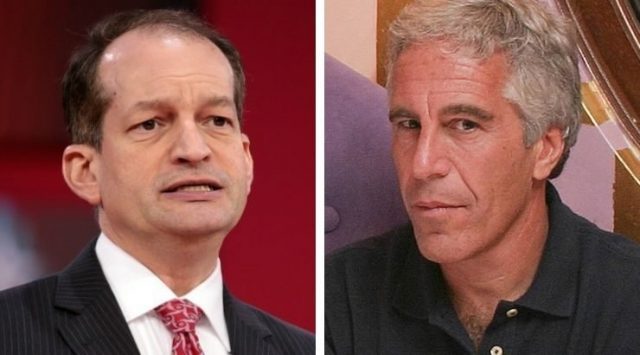

 Aletho News
