President Trump excited many non-interventionists when he publicly announced that he was ordering an immediate withdrawal of U.S. troops from Syria. Quite quickly, however, Trump bent to pressure and agreed to extend the withdrawal deadline to four months. That caused me to write an article on January 2 entitled “It’s Too Soon to Celebrate Trump’s Syria Withdrawal.”
Then came the stunning announcement by National Security Advisor John Bolton declaring that no U.S. troops would be withdrawn from Syria until ISIS has been totally defeated and only after Turkey has promised not to attack Kurdish forces, which have assisted Trump with his Syria intervention. Bolton’s announcement necessarily means that Trump’s deadline has now been extended far beyond the four-month extension. Indeed, for all practical purposes it implies that U.S. troops are going to remain in Syria indefinitely, the very thing that Trump initially said he was going to end immediately.
The question naturally arises: Who’s in charge here — Trump or Bolton? Wouldn’t one ordinarily think that it’s the president, not the person working for the president, who gives the orders with respect to U.S. troops?
The real answer is that neither Bolton nor Trump is in charge. The entity in charge of U.S. foreign policy is the national-security establishment, which consists of the Pentagon, the CIA, and the NSA. They, not Trump or Bolton, decide whether and when U.S. troops will be withdrawn from Syria or anywhere else. They are clearly the ones who have decided that U.S. troops shall remain in Syria.
I highly recommend a book entitled National Security and Double Government by Michael J. Glennon: professor of law at Tufts University. The book explains how the national-security branch is where the real power of the federal government lies. The Pentagon, the CIA, and the NSA permit the other three branches to maintain the veneer of power and permit them some latitude but in the final analysis, it is the national-security branch that is actually calling the shots.
It never really made sense that Trump would hire Bolton. He’s one of the fiercest foreign interventionists in the conservative movement. While Trump never professed to be a principled non-interventionist during his presidential campaign, his perspectives on foreign interventionism were extremely at odds with those of Bolton.
By the same token, the fact that Trump immediately surrounded himself with generals after taking office didn’t make much sense either, given Trump’s anti-foreign-wars, America First campaign rhetoric.
So, why did Trump do it? Why did he hire Bolton and all those generals rather than hire people whose views more closely resembled those of Trump?
There exists the possibility that Bolton and those generals weren’t hired by Trump — that they were instead hired by the national-security establishment and sent to work in the White House to keep a tight rein on Trump. That would certainly explain why Bolton would feel comfortable issuing an order contradicting the president. If he was placed in his White House position by the Pentagon and the CIA, he wouldn’t have to concern himself with upsetting the president by issuing a contradictory order. He would simply be carrying out the orders of his real boss, the Pentagon, the CIA, and the NSA.
It is extremely difficult for any of us to realize the tremendous pressure that the national-security establishment can bring against a president to ensure that he doesn’t go off the national-security state reservation.
Consider the federal judiciary. It wasn’t long after the U.S. government was converted into a national-security state after World War II that the judiciary caved and adopted a policy of extreme deference to the national-security establishment. That’s why we have ended up with a government that wields the totalitarian powers of kidnapping, indefinite detention, torture, coups, regime-change operations, and even assassination, all legal thanks to the federal judiciary, which simply decided to overlook the fact that none of those actions are authorized by the U.S. Constitution.
Consider the members of Congress. They don’t dare take on the national-security establishment. The military will threaten to cancel projects or close bases in their districts, which will cause the local media to go ballistic and label that member of Congress as ineffective.
The only president who has had the courage and fortitude to take on the national-security establishment directly was President Kennedy. Not only did he reputedly vow to tear the CIA into a thousand pieces after its Bay of Pigs fiasco, he also threw down the gauntlet at his Peace Speech at American University in June 1963, where, without consulting or advising the Pentagon or the CIA, he publicly declared an end to the Cold War and then proceeded to enter into secret negotiations with Soviet Premier Nikita Khrushchev and Cuban President Fidel Castro to normalize relations between the United States and the communist world. He also ordered a partial withdrawal of 1,000 troops from Vietnam, which was considered much worse than Trump’s Syria withdrawal, and told close aides that he intended to pull all of them out after winning the 1964 election.
It’s not difficult to understand the extremely adverse reaction of the national-security establishment to Kennedy’s actions. They considered him to be an incompetent, foolish, cowardly, and even treasonous president who was leading America to disaster at the hands of the communists. Take the U.S. national-security establishment’s current anti-Russia mindset with respect to Trump and multiply it by about 1,000 to see how they felt about Kennedy. Also, see FFF’s ebook JFK’s War with the National Security Establishment: Why Kennedy Was Assassinated by Douglas Horne.
Kennedy was fully aware of the danger of taking on the national-security establishment in such a direct way, especially with respect to foreign policy and its official attitude toward Russia and the rest of the Soviet Union. For one thing, he had listened to President Eisenhower’s Farewell Address, where Ike warned about the dangers that the “military-industrial complex” posed to the liberties and democratic processes of the American people. Kennedy had also played a major role in causing the novel Seven Days in May, which posited a military takeover by the Pentagon, to be made into a Hollywood movie. He wanted the movie to serve as a warning to the American people. During the Cuban Missile Crisis, his brother Robert Kennedy told a Soviet diplomat that the president was facing the possibility of a military coup over his handling of the crisis. And Kennedy had once told a friend that if the national-security establishment were to conclude that he was unable or unwilling to take a strong enough stand against the Soviet Union, they wouldn’t hesitate to remove him from office. And, of course, the CIA had done precisely that to the prime minister of Iran in 1953, the president of Guatemala in 1954, and the president of Congo in 1961.
While Trump is periodically willing to make waves, he clearly does not want to go as far as Kennedy did in confronting the national-security establishment. Just look at how he has folded on Syria.
Soon after the social media “purge” of independent media sites and pages this past October, a top neoconservative insider — Jamie Fly — was caught stating that the mass deletion of anti-establishment and anti-war pages on Facebook and Twitter was “just the beginning” of a concerted effort by the U.S. government and powerful corporations to silence online dissent within the United States and beyond.
While a few, relatively uneventful months in the online news sphere have come and gone since Fly made this ominous warning, it appears that the neoconservatives and other standard bearers of the military-industrial complex and the U.S. oligarchy are now poised to let loose their latest digital offensive against independent media outlets that seek to expose wrongdoing in both the private and public sectors.
As MintPress News Editor-in-Chief Mnar Muhawesh recently wrote, MintPress was informed that it was under review by an organization called Newsguard Technologies, which described itself to MintPress as simply a “news rating agency” and asked Muhawesh to comment on a series of allegations, several of which were blatantly untrue. However, further examination of this organization reveals that it is funded by and deeply connected to the U.S. government, neo-conservatives, and powerful monied interests, all of whom have been working overtime since the 2016 election to silence dissent to American forever-wars and corporate-led oligarchy.
More troubling still, Newsguard — by virtue of its deep connections to government and Silicon Valley — is lobbying to have its rankings of news sites installed by default on computers in U.S. public libraries, schools, and universities as well as on all smartphones and computers sold in the United States.
In other words, as Newsguard’s project advances, it will soon become almost impossible to avoid this neocon-approved news site’s ranking systems on any technological device sold in the United States. Worse still, if its efforts to quash dissenting voices in the U.S. are successful, Newsguard promises that its next move will be to take its system global.
Red light, green light . . .
Newsguard has received considerable attention in the mainstream media of late, having been the subject of a slew of articles in the Washington Post, the Hill, the Boston Globe, Politico, Bloomberg, Wired, and many others just over the past few months. Those articles portray Newsguard as using “old-school journalism” to fight “fake news” through its reliance on nine criteria allegedly intended to separate the wheat from the chaff when it comes to online news.
Newsguard separates sites it deems worthy and sites it considers unreliable by using a color-coded rating — green, yellow, or red — and more detailed “nutrition labels” regarding a site’s credibility or lack thereof. Rankings are created by Newsguard’s team of “trained analysts.” The color-coding system may remind some readers of the color-coded terror threat-level warning system that was created after 9/11, making it worth noting that Tom Ridge, the former secretary of Homeland Security who oversaw the implementation of that system under George W. Bush, is on Newsguard’s advisory board.
As Newsguard releases a new rating of a site, that rating automatically spreads to all computers that have installed its news ranking browser plug-in. That plug-in is currently available for free for the most commonly used internet browsers. NewsGuard directly markets the browser plug-in to libraries, schools and internet users in general.
According to its website, Newsguard has rated more than 2,000 news and information sites. However, it plans to take its ranking efforts much farther by eventually reviewing “the 7,500 most-read news and information websites in the U.S.—about 98 percent of news and information people read and share online” in the United States in English.
A recent Gallup study, which was supported and funded by Newsguard as well as the Knight Foundation (itself a major investor in Newsguard), stated that a green rating increased users likelihood to share and read content while a red rating decreased that likelihood. Specifically, it found 63 percent would be less likely to share news stories from red-rated websites, and 56 percent would be more likely to share news from green-rated websites, though the fact that Newsguard and one of its top investors funded the poll makes it necessary to take these findings with a grain of salt.
However, some of the rankings Newsguard itself has publicized show that it is manifestly uninterested in fighting “misinformation.” How else to explain the fact that the Washington Post and CNN both received high scores even though both have written stories or made statements that later proved to be entirely false? For example, CNN falsely claimed in 2016 that it was illegal for Americans to read WikiLeaks releases and illegally colluded with the DNC to craft presidential debate questions.
In addition, in 2017, CNN published a fake story that a Russian bank linked to a close ally of President Donald Trump was under Senate investigation. That same year, CNN was forced to retract a report that the Trump campaign had been tipped off early about WikiLeaks documents damaging to Hillary Clinton when it later learned the alert was about material already publicly available.
The Washington Post, whose $600 million conflict of interest with the CIA goes unnoted by Newsguard, has also published false stories since the 2016 election, including one article that falsely claimed that “Russian hackers” had tapped into Vermont’s electrical grid. It was later found that the grid itself was never breached and the “hack” was only an isolated laptop with a minor malware problem. Yet, such acts of journalistic malpractice are apparently of little concern to Newsguard when those committing such acts are big-name corporate media outlets.
Furthermore, Newsguard gives a high rating to Voice of America, the U.S. state-funded media outlet, even though its former acting associate director said that the outlet produces “fluff journalism” and despite the fact that it was recently reformed to “provide news that supports our [U.S.] national security objectives.” However, RT receives a low “red” rating for being funded by the Russian government and for “raising doubts about other countries and their institutions” (i.e., including reporting critical of the institutions and governments of the U.S. and its allies).
Keeping the conversation safe for the corporatocracy
Newsguard describes itself as an organization dedicated to “restoring trust and accountability” and using “journalism to fight false news, misinformation and disinformation.” While it repeatedly claims on its website that its employees “have no political axes to grind” and “care deeply about reliable journalism’s pivotal role in democracy,” a quick look at its co-founders, top funders and advisory board make it clear that Newsguard is aimed at curbing voices that hold the powerful — in both government and the private sector — to account.
Newsguard is the latest venture to result from the partnership between Steven Brill and Louis Gordon Crovitz, who currently serve as co-CEOs of the group. Brill is a long-time journalist — published in TIME and The New Yorker, among others — who most recently founded the Yale Journalism Initiative, which aims to encourage Yale students who “aspire to contribute to democracy in the United States and around the world” to become journalists at top U.S. and international media organizations. He first teamed up with Crovitz in 2009 to createJournalism Online, which sought to make the online presence of top American newspapers and other publishers profitable, and was also the CEO of the company that partnered up with the TSA to offer “registered” travelers the ability to move more quickly through airport security — for a price, of course.
While Brill’s past does not in itself raise red flags, Crovitz — his partner in founding Journalism Online, then Press+, and now Newsguard — is the last person one would expect to find promoting any legitimate effort to “restore trust and accountability” in journalism. In the early 1980s. Crovitz held a number of positions at Dow Jones and at the Wall Street Journal, eventually becoming executive vice president of the former and the publisher of the latter before both were sold to Rupert Murdoch’s News Corp in 2007. He is also a board member of Business Insider, which has received over $30 million from Washington Post owner Jeff Bezos in recent years.
In addition to being a member of the Council on Foreign Relations, Crovitz proudly notes in his bio, available on Newsguard’s website, that he has been an “editor or contributor to books published by the American Enterprise Institute and Heritage Foundation.” Though many MintPress readers are likely familiar with these two institutions, for those who are not, it is worth pointing out that the American Enterprise Institute (AEI) is one of the most influential neoconservative think tanks in the country and its “scholars,” directors and fellows have included neoconservative figures like Paul Wolfowitz, Richard Perle, John Bolton and Frederick Kagan.
During the George W. Bush administration, AEI was instrumental in promoting the invasion and subsequent occupation of Iraq and has since advocated for militaristic solutions to U.S. foreign policy objectives and the expansion of the U.S.’ military empire as well as the “War on Terror.” During the Bush years, AEI was also closely associated with the now defunct and controversial neoconservative organization known as the Project for a New American Century (PNAC), which presciently called, four years before 9/11, for a “new Pearl Harbor” as needed to rally support behind American military adventurism.
The Heritage Foundation, like AEI, was also supportive of the war in Iraq and has pushed for the expansion of the War on Terror and U.S. missile defense and military empire. Its corporate donors over the years have included Procter & Gamble, Chase Manhattan Bank, Dow Chemical, and Exxon Mobil, among others.
Crovitz’s associations with AEI and the Heritage Foundation, as well as his ties to Wall Street and the upper echelons of corporate media, are enough to make any thinking person question his commitment to being a fair watchdog of “legitimate journalism.” Yet, beyond his innumerable connections to neoconservatives and powerful monied interest, Crovitz has repeatedly been accused of inserting misinformation into his Wall Street Journal columns, with groups like the Electronic Frontier Foundation accusing him of “repeatedly getting his facts wrong” on NSA surveillance and other issues. Some of the blatant falsehoods that have appeared in Crovitz’s work have never been corrected, even when his own sources called him out for misinformation.
For example, in a WSJopinion piece that was written by Crovitz in 2012, Crovitz was accused of making “fantastically false claims” about the history of the internet by the very people he had cited to support those claims.
Almost everyone he [Crovitz] sourced or credited to support his argument that the internet was invented entirely privately at Xerox PARC and when Vint Cerf helped create TCP/IP, has spoken out to say he’s wrong. And that list includes both Vint Cerf, himself, and Xerox. Other sources, including Robert Taylor (who was there when the internet was invented) and Michael Hiltzik, have rejected Crovitz’s spinning of their own stories.”
The oligarch team’s deep bench
While Brill and Crovitz’s connections alone should be enough cause for alarm, a cursory examination of Newsguard’s advisory board makes it clear that Newsguard was created to serve the interests of American oligarchy. Chief among Newsguard’s advisors are Tom Ridge, the first Secretary of Homeland Security under George W. Bush and Ret. General Michael Hayden, a former CIA director, a former NSA director and principal at the Chertoff Group, a security consultancy seeking to “advise corporate clients and governments, including foreign governments” on security matters that was co-founded by former Homeland Security Secretary Michael Chertoff, who also currently serves as the board chairman of major weapons manufacturer BAE systems.
Another Newsguard advisor of note is Richard Stengel, former editor of Time magazine, a “distinguished fellow” at the Atlantic Council and Undersecretary of State for Public Diplomacy under President Barack Obama. At a panel discussion hosted last May by the Council on Foreign Relations, Stengel described his past position at the State Department as “chief propagandist” and also stated that he is “not against propaganda. Every country does it and they have to do it to their own population and I don’t necessarily think it’s that awful.”
Other Newsguard advisors include Don Baer, former White House communications director and advisor to Bill Clinton and current chairman of both PBS and the influential PR firm Burson Cohn & Wolfe as well as Elise Jordan, former communications director for the National Security Council and former speech-writer for Condoleezza Rice, as well as the widow of slain journalist Michael Hastings — who was writing an exposé on former CIA director John Brennan at the time of his suspicious death.
A look at Newguard’s investors further illustrates the multifarious connections between this organization and the American political and corporate elite. While Brill and Crovitz themselves are the company’s top investors, one of Newsguard’s most important investors is the Publicis Groupe. Publicis is the third largest global communications company in the world, with more than 80,000 employees in over 100 countries and an annual revenue of over €9.6 billion ($10.98 billion) in 2017. It is no stranger to controversy, as one of its subsidiaries, Qorvis, recently came under fire for exploiting U.S. veterans at the behest of the Saudi government and also helped the Saudi government to “whitewash” its human rights record and its genocidal war in Yemen after receiving $6 million from the Gulf Kingdom in 2017.
Furthermore, given its size and influence, it is unsurprising that the Publicis Groupe counts many powerful corporations and governments among its clientele. Some of its top clients in 2018 included pharmaceutical giants Eli Lilly, Merck, Pfizer and Bayer/Monsanto as well as Starbucks, Procter & Gamble, McDonalds, Kraft Heinz, Burger King, and the governments of Australia and Saudi Arabia. Given its influential role in funding Newsguard, it is reasonable to point out the potential conflict of interest posed by the fact that sites that accurately report on Publicis’ powerful clients — but generate bad publicity — could be targeted for such reports in Newsguard’s ranking.
In addition to the Publicis Groupe, another major investor in Newsguard is the Blue Haven Initiative, which is the venture capital “impact investment” fund of the wealthy Pritzker family — one of the top 10 wealthiest families in the U.S., best known as the owners of the Hyatt Hotel chain and for being the second largest financial contributors to Hillary Clinton’s 2016 presidential campaign.
Other top investors include John McCarter, a long-time executive at U.S. government contractor Booz Allen Hamilton, as well as Thomas Glocer, former CEO of Reuters and a member of the boards of pharmaceutical giant Merck & Co., financial behemoth Morgan Stanley, and the Council on Foreign Relations, as well as a member of the Atlantic Council’s International Advisory Board.
Through these investors, Newsguard managed to raise $6 million to begin its ranking efforts in March of 2018. Newsguard’s actual revenues and financing, however, have not been disclosed despite the fact that it requires the sites it ranks to disclose their funding. In a display of pure hypocrisy, Newsguard’s United States Securities and Exchange Commission Form D — which was filed March 5, 2018 — states that the company “declined to disclose” the size of its total revenue.
Why give folks a choice?
While even a quick glance at its advisory board alone would be enough for many Americans to decline to install Newsguard’s browser extension on their devices, the danger of Newsguard is the fact that it is diligently working to make the adoption of its app involuntary. Indeed, if voluntary adoption of Newsguard’s app were the case, there would likely be little cause for concern, given that its website attracts barely more than 300 visits per month and its social-media following is relatively small, with just over 2,000 Twitter followers and barely 500 Facebook likes at the time of this article’s publication.
To illustrate its slip-it-under-the-radar strategy, Newsguard has gone directly to state governments to push its browser extension onto entire state public library systems, even though its website suggests that individual public libraries are welcome to install the extension if they so choose. The first state to install Newsguard on all of its public library computers across its 51 branches was the state of Hawaii — which was the first to partner with Newsguard’s “news literacy initiative,” just last month.
According to local media, Newsguard “now works with library systems representing public libraries across the country, and is also partnering with middle schools, high schools, universities, and educational organizations to support their news literacy efforts,” suggesting that these Newsguard services targeting libraries and schools are soon to become a compulsory component of the American library and education system, despite Newsguard’s glaring conflicts of interest with massive multinational corporations and powerful government power-brokers.
Notably, Newsguard has a powerful partner that has allowed it to start finding its way into public library and school computers throughout the country. As part of its new “Defending Democracy” initiative, Microsoft announced last August that it would be partnering with Newsguard to actively market the company’s ranking app and other services to libraries and schools throughout the country. Microsoft’s press release regarding the partnership states that Newsguard “will empower voters by providing them with high-quality information about the integrity and transparency of online news sites.”
Since then, Microsoft has now added the Newsguard app as a built-in feature of Microsoft Edge, its browser for iOS and Android mobile devices, and is unlikely to stop there. Indeed, as a recent report in favor of Microsoft’s partnership with Newsguard noted, “we could hope that this new partnership will allow Microsoft to add NewsGuard to Edge on Windows 10 [operating system for computers] as well.”
Newsguard, for its part, seems confident that its app will soon be added by default to all mobile devices. On its website, the organization notes that “NewsGuard will be available on mobile devices when the digital platforms such as social media sites and search engines or mobile operating systems add our ratings and Nutrition Labels directly.” This shows that Newsguard isn’t expecting its rating systems to be offered as a downloadable application for mobile devices but something that social media sites like Facebook, search engines like Google, and mobile device operating systems that are dominated by Apple and Google will “directly” integrate into nearly every smartphone and tablet sold in the United States.
A Boston Globe article on Newsguard from this past October makes this plan even more clear. The Globewrote at the time:
Microsoft has already agreed to make NewsGuard a built-in feature in future products, and [Newsguard co-CEO] Brill said he’s in talks with other online titans. The goal is to have NewsGuard running by default on our computers and phones whenever we scan the Web for news.”
This eventuality is made all the more likely given the fact that, in addition to Microsoft, Newsguard is also closely connected to Google, as Google has been a partner of the Publicis Groupe since 2014, when the two massive companies joined Condé Nast to create a new marketing service called La Maison that is “focused on producing engaging content for marketers in the luxury space.” Given Google’s power in the digital sphere as the dominant search engine, the creator of the Android mobile operating system, and the owner of YouTube, its partnership with Publicis means that Newsguard’s rating system will soon see itself being promoted by yet another of Silicon Valley’s most powerful companies.
Furthermore, there is an effort underway to integrate Newsguard into social media sites like Facebook and Twitter. Indeed, as Newsguard was launched, co-CEO Brill stated that he planned to sell the company’s ratings of news sites to Facebook and Twitter. Last March, Brill told CNN that “We’re asking them [Facebook, Twitter, Microsoft and Google] to pay a fraction of what they pay their P.R. people and their lobbyists to talk about the problem.”
On Wednesday, Gallup released a poll that will likely be used as a major selling point to social media giants. The poll — funded by Newsguard and the Knight Foundation, which is a top investor in Newsguard and has recently funded a series of Gallup polls relating to online news — seems to have been created with the intention of manufacturing consent for the integration of Newsguard with top social media sites.
This is because the promoted findings from the study are as follows:“89% of users of social media sites and 83% overall want social media sites and search engines to integrate NewsGuard ratings and reviews into their news feeds and search results” and “69% would trust social media and search companies more if they took the simple step of including NewsGuard in their products.” However, a disclaimer at the end of the poll states that the results, which were based on the responses of 706 people each of whom received $2 to participate, “may not be reflective of attitudes of the broader U.S adult population.”
With trust at Facebook nose-diving and Facebook’s censorship of independent media already well underway, the findings of this poll could well be used to justify its integration into Facebook’s platform. The connections of both Newsguard and Facebook to the Atlantic Council make this seem a given.
Financial censorship
Another Newsguard service shows that this organization is also seeking to harm independent media financially by targeting online revenue. Through a service called “Brandguard,” which it describes as a “brand safety tool aimed at helping advertisers keep their brands off of unreliable news and information sites while giving them the assurance they need to support thousands of Green-rated [i.e., Newsguard-approved] news and information sites, big and small.”
At the time the service was announced last November, Newsguard co-CEO Brill stated that the company was “in discussions with the ad tech firms, leading agencies, and major advertisers” eager to adopt a blacklist of news sites deemed “unreliable” by Newsguard. This is unsurprising given the leading role of the Publicis Groupe, one of the world’s largest advertising and PR firms, has in funding Newsguard. As a consequence, it seems likely that many, if not all, of Publicis’ client companies will choose to adopt this blacklist to help crush many of the news sites that are unafraid to hold them accountable.
It is also important to note here that Google’s connection to Publicis and thus Newsguard could spell trouble for independent news pages that rely on Google Adsense for some or all of their ad-based revenue. Google Adsense has long been targeting sites like MintPress by demonetizing articles for information or photographs it deemed controversial, including demonetizing one article for including a photo showing U.S. soldiers involved in torturing Iraqi detainees at the infamous Abu Ghraib prison.
Since then, Google — a U.S. military contractor — has repeatedly tried to shutter ad access to MintPress articles that involve reporting that is critical of U.S. empire and military expansion. One article that has been repeatedly flagged by Google details how many African-Americans have questioned whether the Women’s March has aided or harmed the advancement of African-Americans in the United States. Google has repeatedly claimed that the article, which was written by African-American author and former Washington Post bureau chief Jon Jeter, contains “dangerous content.”
Given Google’s already established practice of targeting factual reporting it deemed controversial through Adsense, Brandguard will likely offer the tech giant just the excuse it needs to cut off sites like MintPress, and other pages equally critical of empire, altogether.
An action plan for the genuine protection of journalism
Though it is just getting started, Newsguard’s plan to insert its app into every device and major social-media network is a threat to any news site that regularly publishes information that rubs any of Newsguard’s investors, partners or advisors the wrong way. Given its plan to rank the English-language U.S. news sites that account for 98 percent of U.S. digital news consumption, Newsguard’s agenda is of the utmost concern to every independent media page active in the United States and beyond — given Newsguard’s promise to take its project global.
By linking up with former CIA and NSA directors, Silicon Valley Giants, and massive PR firms working for some of the most controversial governments and corporations in the world, Newsguard has betrayed the fact that it is not actually seeking to “restore trust and accountability” in journalism, but to “restore trust and accountability” in news outlets that protect the existing power structure and help shield the corporate-led oligarchy and military-industrial complex from criticism.
Not only is it trying to tank the reputations of independent media through its biased ranking system, Newsguard is also seeking to attack these alternative voices financially and by slipping its ranking system by default onto all computers and phones sold in the U.S.
However, Newsguard and it agenda of guarding the establishment from criticism can be stopped. By supporting independent media and unplugging from social media sites committed to censorship, like Facebook and Twitter, we can strengthen the independent media community and keep it afloat despite the unprecedented nature of these attacks on free speech and watchdog journalism.
Beyond that, a key way to keep Newsguard and those behind it on their toes is to hold them to account by pointing out their clear conflicts of interest and hypocrisy and by derailing the narrative they are carefully crafting that Newsguard is “non-partisan,” “trustworthy,” and true guardians against the scourge of “fake news.”
While this report has sought to be a starting point for such work, anyone concerned about Newsguard and its connections to the war machine and corrupt corporations should feel encouraged to point out the organization’s own conflicts of interests and shady connections via its Twitter and Facebook pages and the feedback section on Newsguard’s website. The best way to defeat this new tool of the neocons is to put them on notice and to continue to expose Newsguard as a guardian of empire, not a guardian of journalism.
Whitney Webb is a staff writer for MintPress News and a contributor to Ben Swann’s Truth in Media. Her work has appeared on Global Research, the Ron Paul Institute and 21st Century Wire, among others. She has also made radio and TV appearances on RT and Sputnik. She currently lives with her family in southern Chile.
Justin Trudeau likes making high-minded sounding statements that make him seem progressive but change little. The Prime Minister’s declaration marking “Haiti’s Independence Day” was an attempt of the sort, which actually demonstrates incredible ignorance, even antipathy, towards the struggle against slavery.
In his statement commemorating 215 years of Haitian Independence, the Prime Minister failed to mention slavery, Haiti’s revolution and how that country was born of maybe the greatest example of liberation in the history of humanity. From the grips of the most barbaric form of plantation economy, the largely African-born slaves delivered a massive blow to slavery, colonialism and white supremacy.
Before the 1791 revolt the French colony of Saint Domingue was home to 450,000 people in bondage. At its peak in the 1750s the ‘Pearl of the Antilles’ provided as much as 50 per cent of France’s GNP. Super profits were made from using African slaves to produce sugar, cocoa, coffee, cotton, tobacco, indigo and other commodities.
The slaves put a stop to that with a merciless struggle that took advantage of divisions between ‘big white’ land/slave owners, racially empowered though poorer ‘small whites’ and a substantial ‘mulatto’ land/slave owning class. The revolt rippled through the region and compelled the post-French Revolution government in Paris to abolish slavery in its Caribbean colonies. Between 1791 and 1804 ‘Haitians’ would defeat tens of thousands of French, British and Spanish troops (Washington backed France financially), leading to the world’s first and only successful large-scale slave revolution. The first nation of free people in the Americas, Haiti established a slave-free state 60 years before the USA’s emancipation proclamation. (It wasn’t until after this proclamation ending slavery that the US recognized Haiti’s independence.)
The Haitian Revolution’s geopolitical effects were immense. It stimulated the Louisiana Purchase and London’s 1807 Act for the Abolition of the Slave Trade. The revolutionary state also provided important support to South American independence movements.
Canada’s rulers at the time opposed the slave revolt. In a bid to crush the ex-slaves before their example spread to the English colonies, British forces invaded Haiti in 1793. Halifax, which housed Britain’s primary naval base in North America, played its part in London’s efforts to capture one of the world’s richest colonies (for the slave owners). Much of the Halifax-based squadron arrived on the shores of the West Indies in 1793, and many of the ships that set sail to the Caribbean at this time were assembled in the town’s naval yard. Additionally, a dozen Nova Scotia privateers captured at least 57 enemy vessels in the West Indies between 1793 and 1805. “Essential tools of war until the rise of large steam navies”, the privateersalso wanted to protect the British Atlantic colonies’ lucrative Caribbean market decimated by French privateers. For a half-century Nova Scotia and Newfoundland generated great wealth selling cheap, high-protein cod to keep millions of “enslaved people working 16 hours a day”.
A number of prominent Canadian-born (or based) individuals fought to capture and re-establish slavery in the French colonies. Dubbed the “Father of the Canadian Crown”, Prince Edward Duke of Kent departed for the West Indies aboard a Halifax gunboat in 1793. As a Major General, he led forces that captured Guadalupe, St. Lucia and Martinique. Today, many streets and monuments across the country honour a man understood to have first applied the term “Canadian” to both the English and French inhabitants of Upper and Lower Canada.
Other “Canadians” played a part in Britain’s effort to corner the lucrative Caribbean slave plantations. Born into a prominent Québec military family, Charles Michel Salaberry “was part of successful invasions of Saint-Dominique [Haiti], Guadeloupe and Martinique.” A number of monuments commemorate Salaberry, including the city in Québec named Salaberry-de-Valleyfield.
To commemorate Haitian independence the Secretary General of the Caribbean Community, Irwin LaRocque, also released a statement. Unlike Trudeau, LaRocque “congratulated” Haiti and described the day as “a timely reminder of the historic importance of the Haitian Revolution and its continued significance as a symbol of triumph over adversity in the quest for liberty, equality and control of national destiny.”
Trudeau should have said something similar and acknowledged Canadians’ role in the slave trade and crimes against the free people of Haiti.
It was supposed to be a slam-dunk proof of “collusion” with Russia: President Donald Trump’s former campaign manager Paul Manafort shared polling data with a “Kremlin-linked oligarch,” the NY Times reported. Except he hadn’t.
Documents submitted by Manafort’s lawyers in Special Counsel Robert Mueller’s “Russiagate” probe, unsealed Tuesday, were redacted improperly and showed that Manafort was in communication with Konstantin Kilimnik, a Russian-Ukrainian whom the FBI has “assessed” has “connections” with Russian intelligence based on where he went to college in the 1980s.
That was old news, however, so the Times needed something even more bombastic: citing an anonymous source described as “a person knowledgeable about the situation,” the paper reported that Kilimnik passed the data on to Oleg Deripaska, “a Russian oligarch close to the Kremlin.”
“This is the closest thing we have seen to collusion,” the Times quoted Clint Watts, one of the professional Russiagate alarmists. And then… oops.
On Wednesday, the Times corrected the story: Manafort wanted the information sent not to Deripaska, but to “two Ukrainian oligarchs, Serhiy Lyovochkin and Rinat Akhmetov.” In the edited article, the two are described as people who had “financed Russian-aligned Ukrainian political parties that had hired Mr. Manafort as a political consultant.”
The very same anonymous person quoted about Deripaska is also the source for the claim that some of the polling data shared with – well, whoever – was “developed by a private polling firm working for the campaign.”
By pure coincidence, news outlets across the West also breathlessly reported on Tuesday about the unsealed indictment against Natalia Veselnitskaya – making sure they mention “Trump Tower” even though the charges against the Russian attorney had nothing to do with that 2016 meeting, but with a case involving notorious tax dodge Bill Browder. It all seemed like a perfect storm of “Russiagate” stories, on the eve of Trump’s address to the nation amid the ongoing government shutdown.
Even as the Times was trying to correct its own record, Trump’s critics in the media-political sphere were picking up the original story and running with it. Senator Mark Warner (D-Virginia), ranking member on the Intelligence Committee and one of the driving forces of Russiagate on Capitol Hill, echoed the quote Watts gave to the Times almost verbatim on CNN, declaring that “This appears as the closest we’ve seen yet to real, live, actual collusion.”
That is actually a shocking admission by Warner, since he’s claimed for years that the so-called Russian collusion is a proven fact, rather than a figment of conspiracy theorists’ rich imagination, driven by projection and profits to be made from “securing our democracy” in the wake of the 2016 presidential election.
If a semi-retracted New York Times story, relying on an unreliable anonymous source and mistaking Ukrainians for Russians, is the “closest” thing to proof of collusion, perhaps there is no ‘there’ there after all.
Full Measure with Sharyl Attkisson | January 6, 2019
Today we investigate one of the biggest medical controversies of our time: vaccines. There’s little dispute about this much– vaccines save many lives, and rarely, they injure or kill. A special federal vaccine court has paid out billions for injuries from brain damage to death. But not for the form of brain injury we call autism. Now—we have remarkable new information: a respected pro-vaccine medical expert used by the federal government to debunk the vaccine-autism link, says vaccines can cause autism after all. He claims he told that to government officials long ago, but they kept it secret.
As promised, I want to round off my pieces on the Salisbury case by looking at what I consider to be the major issues and flaws with the case presented to the public by the British Government and the Metropolitan Police, as well as the role played by the mainstream media. I have chosen 10 major points (not in any particular order), although there are many more issues than these.
This is a necessarily lengthy piece and I wouldn’t blame you if you gave up half way through to go and do something more profitable with your time, such as reading a decent book, cooking a good meal, or horsing around with your children. But on the offchance that you are of a mind to stick it out to the end (or even to split it up in between slices of something more profitable), consider this my attempt to show why any person endowed with powers of reason, logic and a commitment to facts and truth should not believe the case that has been put to the general public as to what happened in Salisbury on 4th March, 2018.
1. Verdict First; Investigation Afterwards
I was bound to be interested in this case from the off, since it took place in the city where I reside, just a few hundred yards from my home. But what really sparked my interest into writing about the case for so long, was the response of the British Government. Within 48 hours of the incident, before the investigation had properly begun, and before any of the facts of the matter had been established, certain Government ministers were already pointing the finger of blame at the Russian state. Too quick. Something’s up.
Then on 12th and 14th March, little more than a week after the incident, and still with almost no facts of what actually happened having been established by investigators, the British Prime Minister, Theresa May, not only formally accused the Russian Government in the House of Commons, but also announced a series of responsive measures. Much too quick. Something’s definitely up.
So quick were the accusations and verdict, that anyone interested in understanding the truth of what happened, rather than making blithe, fact-free assumptions, could not fail to have had their suspicions aroused.
There are three things to note about this.
The first is that the idea of reaching a verdict before an investigation puts the British Government firmly in Alice in Wonderland territory. Quite apart from being plainly ludicrous, it also meant that the investigation was both politicised and prejudiced right from the start. The possibility of an impartial investigation was dead in the water just a week or so after the incident, and it was the British Government that killed it off. One can’t help but wonder whether that was the very point they were hoping to achieve.
The second issue with their reckless accusations is seen in their paltry response to what they say happened. You might think that this is a ridiculous statement to make, given that the response included the expulsion of diplomats, not only in Britain but also in a number of other countries. But it absolutely is not. What is alleged is that a chemical weapon was used, by a foreign Government, on the territory of Britain. Moreover, it is also alleged that the two suspects allegedly left at least one of their two bottles of “Novichok” lying around in the city (yes two bottles – see point 5 below), the contents of which was apparently enough to kill thousands, if not tens of thousands of people.
If this is what reallyhappened, I would expect a rather more robust response than the expulsion of a few diplomats. I would expect the expulsion of all diplomats, the closure of the Embassy, and pretty much any and every measure possible short of a declaration of war. Basically, I would expect everything those folks at the “Integrity Initiative” were calling for back in 2015!
As it was, the actual response was pathetically inadequate to the charge being made, namely that the Russian Government was responsible for the use of a chemical weapon on the streets of a British city, which was left there to potentially kill thousands of innocent people. The feeble nature of the “response” to what could have been considered an act of war is, in my view, a big clue that those making the accusations and taking the responsive measures do not really believe the story they have told, and that there was an awful lot of theatre going on.
But the third, and by far the most important point about the British Government’s initial accusations,is this: the accusation and verdict came over two weeks before the door handle theory was first mooted, and over three weeks before it was officially confirmed as the place of poisoning (on 28th March). This is VERY important.
In his only interview on the subject, the CEO of Porton Down, Gary Aitkenhead, stated that the organisation he heads was not able to identify the origin of the substance used. To do so, he said, required “other inputs,” some of them intelligence-based, that the Government had access to.
“As the Prime Minister has set out in a number of statements to the Commons since 12 March, this includes our knowledge that within the last decade, Russia has investigated ways of delivering nerve agents — probably for assassination — and as part of this programme has produced and stockpiled small quantities of novichoks.”
As an aside, if this were really the case, then the British Government had an obligation to inform the OPCW of their intelligence, especially since the OPCW had declared in November 2017 that Russia had eliminated its entire stock of chemical weapons. So why did they not?
But the claim made by the spokesperson presents a glaring problem. What was this knowledge that “Russia has investigated ways of delivering nerve agents”? The answer was of course subsequently given to us: the infamous alleged FSB manual, which apparently included details of how to deliver nerve agents via door handles. Yet if this is the case, it gives rise to the following question:
If the British Government came to the conclusion that the Russian Government was behind the attack by 14th March, and if this was based in part on the existence of intelligence showing the delivery of nerve agents via door handles, why was the door handle not identified as a possible place of poisoning until more than a week later, and only officially confirmed on 28th March?
That question will never be answered, of course, because to do so would … all together now … “compromise national security.” There is, however, a quite plausible explanation, but you can probably work that out for yourselves.
2. CCTV, CCTV everywhere, but not a clip to see
It is a curious fact about what was almost certainly the biggest police investigation in British history, that the amount of CCTV footage shown to the public by the police of events on 4th March totals less than one minute. However, it should be noted that even this footage was only aired in November — more than eight months after the event —, and was very obviously highly selective in terms of fixing certain thoughts in people’s minds and excluding others. Let’s just say that it was more interesting for what it didn’t show than for what it did.
It is an even more curious fact that not one second of footage has ever been shown of the Skripals on that day, unless you include a few seconds of a car driving along a couple of roads.
Curiouser still, the only bit of CCTV footage of “the Skripals” that was released, showing them walking through Market Walk at 15:47, turned out not to be the Skripals at all. You might say that it turned out not to be anyone at all, since the footage was ridiculously grainy, the couple impossible to identify, and the pair in question, who the media and the police said were the Skripals, have been quietly forgotten about, as if they never were, even though they are almost certainly persons of interest in the case. Remember, you never saw them.
What should we make of this?
The response I have sometimes received when pointing this out is that the police have no obligation to show any CCTV footage in public. They are the ones investigating, and they need not do anything for the benefit of armchair sleuths. Fair enough. But then nor does any reasonable person have any obligation whatsoever to believe that they have been carrying out a genuine and impartial investigation. Why so?
Simply because on numerous occasions, the Metropolitan Police appealed for members of the public to come forth with information about what they may have seen on that day, and yet they steadfastly refused to let the public see any images of the two main people involved in the case, Sergei and Yulia Skripal. The public still don’t know what they were wearing on that day, or the colour of Yulia’s hair.
Ordinarily, when a police force appeals for members of the public to come forward with information, if there is CCTV footage that is relevant to the case, and which might help to jog people’s memories, it will be shown. Obviously. But not in this case. Instead, the Salisbury public were asked to wrack their brains to try and remember whether they may or may not have seen anything of interest, but without so much as being allowed to see a single second of what Mr Skripal and his daughter were wearing that day.
Yet such footage does exist. For example, there exists what has been described to me personally as “real clear footage” of Mr Skripal feeding ducks near the Avon Playground with some local boys at 13:45, with Yulia Skripal standing nearby carrying a red bag. Why has this not been aired? Remember, the Metropolitan Police allege that the pair were poisoned almost an hour before this, at his home, and so there can be no “reasons of national security” for not showing it, can there? Oh but there is. You see, that particular piece of footage blows a gaping hole in the poisoning by door handle explanation, which would immediately become obvious to all if it were ever aired in public (see point 6 below for more details). Which is why you will probably never see it.
3. Don’t ask any hard questions — you’re a journalist
The Salisbury poisonings show that the idea that Britain has a properly free press is dead. When I say free press, I am not talking about the ability and willingness of the media to print salacious gossip and pointless tittle tattle about celebrities, which they seem to excel at. No, I’m talking about the will and ability to hold the authorities to account on issues which those authorities would rather they were not challenged on. That, in my understanding, is the essence of a free press and one of the things that marks out free countries from tyrannies.
Right from the beginning of this case, three things were very apparent about the media response:
Firstly, despite the fact that there was deep scepticism in the public about the narrative that was being touted (this could be seen by scrolling to the bottom of articles on the case, where you would find comment after comment often ridiculing the official line), not one mainstream media organisation was prepared to ask the obvious and most basic questions that needed to be asked. True, there were some notable and noble individual exceptions, such as Mary Dejevsky writing in the Independent and Simon Jenkins in the Guardian. But other than the faint glimmer of light here and there, no media organisation in Britain was either able or willing to question the claims being made by public officials, even when they were nonsensical and riddled with holes.
Secondly, no media organisation was prepared to defy the Government when DSMA notices were slapped on the case, especially in relation to Mr Skripal’s Salisbury handler, and the connection he had to Christopher Steele, author of the “Trump Dossier”. And in case anyone is inclined to defend them by saying that it would have been a huge risk for them to defy the Government, well that is one thing, but it certainly does not excuse the fact that they all then fell into line, refusing to ask any of the sorts of questions that proper journalists should have been asking.
Thirdly, many of these organisations were prepared to report one set of “facts” on one day, only to report an entirely contradictory set of “facts” on another, without so much as an acknowledgement that this is what they had done. Many of them simply ignored their own reporting, even on the occasions when it was accurate, and instead went with the “new reality” put forward by officials. Memory Holes are clearly a fundamental part of the office equipment in these so-called news organisations! Here are three such examples:
Firstly, all media organisations reporting on the case in the first week or so stated that the Skripals went to Zizzis restaurant followed by the Mill pub. This was based on their own interviews with numerous witnesses, and such is the number of people who corroborated this order of things that there can be no doubt that it is correct (this is more fully discussed in point 7 below). Yet when the Metropolitan Police published its timeline on 13th March, updated on 17th March (and since disappeared from its website), it had the order the other way around. What did those same media organisations do when they saw their own interviews and reports summarily dismissed with no evidence presented as to why this was so? Why, they completely ignored it and duly began reporting the new reality. Of course. That’s just what journalists do, isn’t it?
Secondly, it was reported in a number of places on 25th March, such as (The Mirror, The Mail and Metro for instance), that Sergei Skripal had been feeding ducks next to the Avon Playground (this is in The Maltings, about 50 yards from the bench). Crucially, these reports said that he had given bread to some local boys. The Sun then followed this up on 28th March, with an interview with the parents of one of the boys. This is one of the most significant occurrences of that day, and yet after The Sun piece appeared, to my knowledge no mainstream media organisation has reported on it, and the Metropolitan Police have never mentioned it in their timeline. Perhaps there’s a DSMA Notice — Duck’s Shan’t be Mentioned Again — on the incident, but regardless of the lack of reporting, the fact is it DID happen, and IT IS one of the most compelling pieces of evidence that the Skripals were not poisoned at the place and the time that officials claim (see point 6 below for more details).
Thirdly, no media organisation has bothered to seriously question what Detective Sergeant Nicholas Bailey was doing, where he went, and at what time, even though official accounts have contradicted one another on this on numerous occasions. Mr Bailey has been a first responder at the bench (according to a number of officials, including Theresa May and Amber Rudd). Yet he was never even at the bench when the Skripals were there (according to Mr Bailey). He entered Mr Skripal’s house at around 5pm. Yet he didn’t enter it until around midnight. He was wearing a body camera with his uniform. He was plainclothes. He was wearing a forensic suit. He was admitted to hospital on the Sunday. He was admitted to hospital on the Monday. He was admitted to hospital on the Tuesday. Perhaps all three. He entered the house by the front door. He entered the house by the back door because he couldn’t get in the front.
In short, almost no two accounts of Mr Bailey’s actions and movements can be reconciled with one another, and yet the media either hasn’t noticed, or doesn’t care. Is there a DSMA Notice on him as well as the ducks (Detective Sergeant Movement Anomalies)?
All in all, it seems that although our vaunted “free press” is able and willing to comment on the attire and habits of irrelevant celebrities, it is neither able or willing to ask serious questions of officialdom when officialdom has decided that a certain issue can’t be questioned or is something to do with “National Security”. There’s a word for a press like that, but it ain’t “free”. And in terms of this case, it raises obvious questions about the veracity of the claims being made, since truth isn’t usually afraid of being held up to scrutiny.
4. Petrov and Boshirov — Spetsnaz-trained muppets?
Much was made of Petrov and Boshirov’s interview with RT’s Margarita Simonyan, and how their account somehow proved their guilt. What I find strange about this reaction is why those who pronounced case closed after the interview don’t apply the same level of critical analysis when it comes to the claims made against the men. For the record, I have little doubt that the account given by the pair was by no means the whole truth of what they were doing that day, but I also have little doubt that the claims made against them are also far from the truth.
Why do I not believe their account? Nothing to do with the snow and the slush, which was apparently enough to prove their guilt in the minds of many. On that point, their account was indeed correct. There was loads of snow in Salisbury on Saturday 3rd March, and I have photographs dating from that day which prove it. No, my incredulity at their story is primarily due to the fact that they arrived in Salisbury on 3rd March at 2:25pm, apparently expecting to go to Stonehenge. Well, unless they are particularly dense, this claim is absurd. In the winter, last admittance to the site is at 3pm. Anyone travelling from London to see the monument would surely have checked this out beforehand, which means that according to the two men, they gave themselves 35 minutes after departing from the train to wait for a bus, board it, and be driven there before closing time. No chance, regardless of whether it was or wasn’t open.
That being said, what of the case against them? Just as I find their “we were only tourists” line to be risible, I find the “they were deadly assassins” line to be even more absurd. Nothing about their movements on the two days in question indicate that they were carrying out an assassination attempt using the world’s most lethal nerve agent:
Firstly, they flew in on the same plane from Moscow, not from different locations as you would expect intelligence agents carrying out an assassination to do
Secondly, they then travelled, walked and stayed together at all times, not separately, which is again contrary to how we would expect people involved in such a mission to act
Thirdly, they apparently left their two bottles of “Novichok” unguarded in a dingy hotel all day on the Saturday, whilst they took themselves off to Salisbury
Fourthly, they drew attention to themselves on the Saturday evening by cavorting with a prostitute and smoking dope (which could have seen the police called in)
Fifthly, they made absolutely no effort whatsoever to hide themselves from CCTV
Sixthly, they were in Salisbury in daylight and allegedly carried out their crime in the middle of the day
Seventhly, they apparently did their deed with the Skripals in the house and the car parked outside in the drive (why not dose the car door handle?)
Eighthly, they did not get the first available train back to London after the alleged poisoning, but apparently decided to hang around, strolling across town after their alleged deed was done, taking pictures and looking in coin shops, at a time when — according to the allegations against them — they could well have expected a major police manhunt to begin
This may be many things, but it is absolutely not the actions of Spetsnaz trained GU assassins. But what of The Metropolitan Police’s specific claims against the two men?
Firstly, it should be noted that in The Met’s description of what the men did in Salisbury on 3rd and 4th March (now disappeared from their website), there was astonishingly little detail. There was in fact more detail about their movements in London than in Salisbury.
Secondly, The Met states that the two men were in Salisbury on Saturday 3rd March for what it calls reconnaissance. I find this laughable. Reconnaissance of what? Salisbury? There’s always Google maps. Mr Skripal’s house? Of course! So where is the evidence that they went there that day, and if they did, why didn’t they poison the door handle then, since Mr Skripal was out of the house at the time and it would have been far less risky to do it then, rather than when he was in the house. Besides, the men stated that they spent most of the time in the station café, a quite specific claim that could easily be debunked if false.
But the biggest claim made by The Met, and in my view the most misleading of all, is this:
“CCTV shows them in the vicinity of Mr Skripal’s house.”
This was confirmed by Deputy Assistant Commissioner Dean Haydon, who stated on the BBC Panorama programme, Salisbury Nerve Agent Attack: The Inside Story:
“What the CCTV shows is the two suspects on the way to Christie Miller Road. On the way to the Skripals home.”
Oh no it doesn’t. The CCTV referred to (of the two men on the Wilton Road at 11:58 on Sunday 4th March) does not in fact show them in the vicinity of the Mr Skripal’s house, and nor does it show them on the way to Christie Miller Road. What it actually shows is the two men around 500-600 yards from Mr Skripal’s house, on a completely different road, and not looking at all as if they are interested in crossing the road to get to Christie Miller Road, either via Montgomery Gardens or Canadian Avenue (I’m very grateful to Brendan, one of the commentators on this site, who has put together a fuller explanation of this which you can see here).
For all I know, they may have gone to Christie Miller Road after being seen on the Shell garage CCTV. But this particular piece of footage of them in no way indicates this, and to suggest to the public that it does is simply misleading and disingenuous. Indeed, if this is the best evidence The Met has against the pair, it is worse than flimsy and would convince no jury with its wits intact.
So if not tourists and not assassins, what were they? Here is the one part of this piece when I indulge in a little speculation. To me it seems that the best explanation for their actions and movements is that they were couriers of some sort. That they were either taking something to Mr Skripal, or receiving something from him, or perhaps both. Their pattern of behaviour is far more in keeping with such a mission. I can well imagine the Russian intelligence services instructing two people involved in such a venture to act like tourists, to keep together, look normal, take pictures, don’t try to hide. What I can’t imagine is them instructing two people sent on an assassination mission with a deadly nerve agent to act in this way. That’d be really, really dumb, wouldn’t it?
5. The other bottle of “Novichok”
According to the explanation given by The Metropolitan Police (who incidentally still have not confirmed the “real names” of the two suspects as unearthed by the Atlantic Council-linked organisation, Bellingcat), Petrov and Boshirov brought two bottles of “Novichok” with them on a plane, left those two bottles of “Novichok” in their hotel room on Saturday 4th March whilst they travelled to and from Salisbury, had those two bottles of “Novichok” in their hotel room when smoking dope and using the services of a prostitute, took those two bottles of “Novichok” with them on a train on Sunday 4th March, used one of those bottles of “Novichok” to spray the oily substance on Mr Skripal’s door handle. And then what? Why, they marched across to the other side of Salisbury, dumped the other bottle of “Novichok” — the one they hadn’t used — in a bin, and either took the one they had used in their bag back to Moscow, or dumped it elsewhere.
Come on, come on, you say. The Met has never said all that.
Absolutely they haven’t. But it is the inescapable conclusion of their case. They never talk about the “other” bottle, because it is inconvenient to do so. It kind of messes things up. And yet, according to their own case, there must have been another bottle. How so? Because in one of his interviews, Charlie Rowley explicitly said that the box he found had a cellophane wrapping on it, which he had to cut open. Which means that it can’t have been the bottle that Petrov and Boshirov are alleged to have used on the door handle of 47 Christie Miller Road, can it? They can’t have taken the bottle apart, put it back in its box, cellophane wrapped it, and then dumped it in a bin over the other side of town, can they? Did you notice a cellophane-wrapping-machine-sized-lump sticking out of their backpack? No, me neither.
So what does The Met think? Can they explain why two men, apparently on a mission to kill Mr Skripal at the door handle of his house, brought two bottles with them (especially since they tell us there was enough in one bottle to kill thousands of people)? Can they explain why, after using one of the bottles, they then went over to the other side of town and dumped the fresh, unopened bottle of Novichok in a bin? And can they explain whether they think the men took the opened bottle with them back to Moscow, or left that in Salisbury too? I very much doubt whether The Met can explain these things, or that the British media is ever going to ask them.
And so we must apparently be satisfied with the explanation — implied by The Met’s claims — that the men inexplicably dumped an unopened bottle of “Novichok” in a bin, in cellophane wrapping, and did who knows what with the other.
Oh and something else that bothers me: can they tell us whether they ever found the gloves the two men used when allegedly doing their deed? I mean, they did use gloves, didn’t they? They must have done. Well, wouldn’t these have been dumped somewhere in a bush near Mr Skripal’s house? It’s unlikely that they would want to risk putting these potentially nerve agent-contaminated items back into their backpack. So where are the gloves, and where is the other bottle? Or is that a case of asking people who know what really happened to tell us how the thing that didn’t happen, happened?
6. Duck’s are still a’ dabbling, up tails all (and the boys are okay too)
I’ve mentioned the duck feed above, and I want to emphasise here just how crucial it is to the whole case. The Metropolitan Police allege that Mr Skripal and Yulia became contaminated with “Novichok” by touching the handle of his front door. This would have been sometime around 13:30, a few moments before his car was seen on CCTV in India Avenue and Devizes Road, driving towards Salisbury City Centre.
According to the official timeline (which has now conveniently disappeared from The Met’s website), they are said to have parked the car on the top floor of the Sainsbury’s car park at 13:40 and:
“At some time after this, they go to the Bishops Mill Pub in the town centre.”
At some time after? Bit woolly isn’t it? Yes it is, and that may be because there’s something missing. After parking his car, Mr Skripal and his daughter did not go to the pub or restaurant, but took a little detour, across The Maltings, to the Avon Playground, where they fed ducks for a while.
As I mentioned in point 3, this incident was first reported on 25th March, and then subsequently in The Sun on 28th March. In those pieces, it was stated that during the duck feed, Mr Skripal shared his bread with some local boys, with one of them even eating a piece. The purpose of these articles was clearly to show just how callous those behind the poisoning were, since it could have led to the poisoning of these boys. But because none of the boys became ill in the slightest, inadvertently what these articles actually ended up showing is something else entirely.
When I first read those pieces, my assumption was that the incident had taken place after the Skripals had left Zizzis, and that they may even have taken some garlic bread from the restaurant with them. However, a parent of one of the boys confirmed to me that they had been shown “real clear” CCTV of the incident, and that the timestamp on the footage was 13:45. In other words, the incident was before the visit to either Zizzis or The Mill.
This is extremely significant. The table at Zizzis was taken away to be destroyed (destruction of evidence?) apparently because it was contaminated with nerve agent (although somehow the pair managed to enter through the door without contaminating it). And yet prior to this, Mr Skripal took pieces of bread in his hand, fed ducks with some, and gave other pieces to a group of young boys, one of whom ate a piece, but suffered no ill effects.
Three simple questions:
1. If Mr Skirpal was so contaminated that the table at Zizzis had to be destroyed, how come none of those boys were poisoned, particularly the one who ate the bread, since the duck feed happened before the visit to the restaurant?
2. Why is this incident absent from the Metropolitan Police timeline, despite the fact that they know it happened and when it happened?
3. Why have the media organisations that reported it not followed it up, especially given that it took over two weeks after the incident for the police to inform the parents of the boys?
The duck incident alone casts huge doubt on the idea that Mr Skripal’s hand was contaminated with “Novichok” prior to 13:45. As such, it calls into question the whole official narrative. Perhaps this is why it, along with many other events, has been disappeared down the Memory Hole.
7. It’s the wrong timeline
I mentioned above the timeline of events in Salisbury that day. There is a simple rule of thumb here, and it is this: if investigators cannot get the timeline right, you have every right to doubt that they have got other things right. If you were sitting on a jury, and the defence lawyers were able to show you that the police had not only missed important parts of the timeline out, but had in fact got the order of events wrong, you would be unlikely to convict, wouldn’t you? In fact, you would have a duty to not convict, since the prevalence of errors in the investigation would leave you with reasonable doubt about the case for the prosecution.
There are four basic problems with the Met’s timeline. Let’s look at them in ascending order of importance.
The first is that some of their timings are just plain wrong and — frankly — rather silly. For instance, according to The Met’s caption above the pictures of the two men coming into Gatwick Airport, they entered at 3pm. This is impossible, however, since the airplane they were on did not land until nearly 4pm.
The second is that some of their timings are inexplicably vague. For instance, in the timelines they released on 13th and 17th March (no longer on their website), the following was stated regarding Mr Skripal’s car on the morning of Sunday 4th March:
09.15hrs on Sunday, 4 March: Sergei’s car is seen in the area of London Road, Churchill Way North and Wilton Road.
So it was in three places at once? Why were they unable to be more specific, since the CCTV cameras would all have had timestamps?
I believe there was a reason for this, and once again it gives little confidence in the investigation. At the time that the initial timelines were issued, The Met issued appeals for information on the whereabouts of the Skripals that morning. The impression given was that the Skripals drove to the cemetery at around 9:15, and were then out for most of the morning, but their whereabouts was unknown.
Yet if you read the timeline carefully, and this order was also stated verbally by Assistant Commissioner Neil Basu, and if you couple this with a little local geographical knowledge, a quite different picture emerges. Both in Mr Basu’s statement and in the timeline, the order given was this: London Road, Churchill Way, Wilton Road. But this is not travel from the home to the cemetery; rather it is the opposite: from the cemetery towards the house.
In other words, the Skripals did not go tothe cemetery at 9:15 or thereabouts; they actually came back home from the cemetery at that time. But if that’s the case — and it is strongly implied by The Met’s order of roads — why were they appealing for information about what the pair were doing on that morning? I submit that it was known all along that they were in the house from about 9:15 onwards, yet the reason it was not cleared up is that it presented something of a problem in terms of the allegations against Petrov and Boshirov. If those allegations were true, the Skripals would have been at home at the time, with the car in the drive. If it seems absurd that the assassination should be carried out in broad daylight, then this scenario makes it all the more so.
The third problem with the timeline is one I have mentioned above — the missing Duck Feed — and so there is no need to repeat the details of that here.
The final error in the timeline, and in my opinion the most egregious of all, is the order of events regarding the Skripals’ visit to the Zizzis restaurant and The Mill Pub. As I mentioned above, all of the early media reports, which were compiled after interviewing witnesses, agree that the Skripals first visited the restaurant, then went on to the pub. Here is a selection of those reports:
“Sergei Skripal went for a drink with his daughter at 3pm at The Mill in Salisbury after eating at a Zizzi Italian restaurant. In the pub, they ordered two glasses of wine before Mr Skripal went to use the toilet. The witness, who did not want to be named, said that when he returned he appeared as if he was drunk. He said Mr Skripal and his daughter Yulia then left immediately without finishing their drinks.” https://www.pressreader.com/uk/daily-mail/20180310/281625305816856
“It is not clear when the Skripals were confronted, having left a branch of Italian restaurant chain Zizzi between 2pm and 3pm. After leaving the restaurant, they are thought to have gone to a nearby a pub called The Mill. They were then seen walking through a shopping precinct and found on a bench overlooking the Avon shortly after 4pm.” http://www.dailymail.co.uk/news/article-5473177/Woman-40s-taken-hospital.html
“Witnesses have said that after eating at Zizzi’s restaurant they went to the Mill pub where Mr Skripal appeared unsteady on his feet, as if “drunk” – even though he had only ordered a single glass of white wine – suggesting the effects of the nerve agent were rapidly taking effect.” https://www.telegraph.co.uk/news/2018/03/10/poisoned-police-officer-not-hero-just-job/
“Steve Cooper, who was at the Mill pub with his wife and dog for a couple of hours last Sunday afternoon, told the BBC he was outraged. Some of his friends, who had been in the pub at the same time and seen Mr Skripal head to the toilet, could not remember what they had been wearing that day, he added. https://www.bbc.com/news/uk-43362673
When was Mr Cooper in The Mill? Here’s what he said in an interview with ITV:
‘We’d been sitting on the very bench at around 3pm and then moved onto The Mill Pub and left there at 4:45pm where we saw the air ambulance.’” https://www.facebook.com/itvnewsmeridian/videos/1699234906804241/
There were other reports, but I trust you get the picture. Zizzis first, from about 2pm onwards; Mill second.
And yet for some inexplicable reason, the timeline released by The Met on 13th March, updated on 17th (no longer available on their website), reversed this order. Here is what it said:
13:40hrs: Sergei and Yulia arrive in Sainsbury’s upper level car park at the Maltings. At some time after this, they go to the Bishops Mill Pub in the town centre.
14.20hrs: They dine at Zizzi Restaurant.
15:35hrs: They leave Zizzi Restaurant.
On what basis has the cloud of witnesses been dismissed? What evidence does The Met have that those witnesses were wrong?
This is very serious stuff. An investigation that not only ignores the testimony of multiple witnesses, but without explanation gives an official version of reality that completely contradicts what these members of the public stated in all honesty is … oh what shall we call it? Orwellian? Yes, Orwellian will do, since in that great man’s dystopias, officialdom is always right — even when it is wrong and distorts and dismisses reality.
Quite simply, if investigators are prepared to leave crucial events out of their timeline, and mess with reality in others, as has been done, reasonable people not only have a right to disbelieve their conclusions, I would say they have a duty. Anything else is to invite the very future that Orwell taught us to fear.
8. The Impossible Door Handle
The theory that Mr Skripal and his daughter were poisoned at the handle of his front door is impossible. I do not use that word lightly, and nor do I use it because of any fancy of my own. Rather, I do it because the official version of events, which tries to establish the door handle as the place of poisoning, actually refutes itself.
Much of what I’m about to say is a summary of what I have set out in more detail back here. But the basic points are as follows.
In the BBC Panorama programme, Salisbury Nerve Agent Attack: The Inside Story, much was made about the toxicity of the substance that has been called “Novichok”, and the minuscule amount needed to kill a person that comes into contact with it (As an aside, albeit an important one, there is in fact no such substance called “Novichok”. This is merely the name used by Western Governments for the group of chemicals that the Soviet Union was trying to create back in the 1970s and 80s. The reason this is important is that neither the UK Government or Porton Down have ever, to my knowledge, officially named the substance they say was used. Instead, they keep referring to “Novichok”, which as a definition is as broad and as loose as they want it to be). Here are the claims made in the programme:
“It’s very unique in its ability to poison individuals at quite low concentrations.” – Porton Down Professor Tim speaking about Novichok.
“The Russians called it Novichok. Thought to be 10X more toxic than any nerve agent created before or since.” – Jane Corbin.
“To kill a person, you need only 1mg. To be sure, 2mg.” – Vil Mirzyanov, who worked on the Foliant project.
“The Russians weaponised Novichok for the battlefield. The tiniest dose can be fatal.”– Jane Corbin.
“It’s difficult to say, you know, possibly into the thousands.” – Deputy Assistant Commissioner Dean Haydon when asked how many people could have been killed by the substance in the bottle.
This programme, which was clearly endorsed by The Met, since it featured the likes of Deputy Assistant Commissioner, Dean Haydon, wanted its viewers to know three things about “Novichok”: That it is extraordinarily deadly; that a dose of just 2mg is enough to produce certain death in a person; and that the two suspects had enough of the substance in their two bottles to kill 1,000s of people.
But the problem with this, of course, is that the people who allegedly became contaminated at the door handle, did not die. In fact, not only did they not die, but they spent the next few hours feeding ducks, eating a meal and going for a drink.
To square this particular circle, the BBC invited Mr Mirzyanov to give it his best shot. Here was his explanation:
“Maybe the dose was not high enough. Salisbury was rainy and muggy. Novichok breaks down in damp conditions, reducing its toxicity. It’s the Achilles Heel of Novichok.”
The first part of his answer is obvious nonsense. This is the same person who on the same programme claimed that just 2mg of “Novichok” is enough to be sure of killing a person. And given that Mr Skripal allegedly contaminated a number of places around Salisbury, including the table in Zizzis that apparently needed to be destroyed, we can be sure that had he been contaminated at the door handle, as the official line has it, the dose must have been far in excess of 2mg.
So it must be the damp conditions then? Er no. Not possible. Why? Well, I could point out that the “Novichok” would have been on the door handle for a maximum of 80 minutes (between 12:10pm and 13:30pm), and that during this time the weather was fine. The only thing it would have come into contact with would have therefore been the air, and it barely seems worth pointing out that it is beyond unlikely that a nerve agent apparently designed for the battlefield would degrade so quickly. And if it did, how likely is it that the chosen method of assassination would have been to spray such a substance on an exposed door handle in a country that is notoriously damp?
But there is something far more fundamental than this. Something that, as I say, makes the claim impossible. It is this: According to the Organisation for the Prevention of Chemical Weapons (OPCW), in a statement on 4th May:
“The samples collected by the OPCW Technical Assistance Visit team concluded that the chemical substance found was of high purity, persistent and resistant to weather conditions.”
So the BBC, backed up by officialdom, puts forth an explanation as to why the Skripals did not die, which is that the substance, of which 2mg is enough to surely kill someone, degraded so much in just 80 minutes due to the damp conditions that a dose far in excess of 2mg wasn’t enough to kill them. But cometh the OPCW, over 25,000 minutes later (on 22nd March), and what they apparently found was the same substance, but in a state of high purity and totally unaffected by weather conditions.
Do you now see the impossibility of this? The dose wasn’t too low. Mr Mirzyanov tells us just 2mg of the substance will surely kill. And it can’t have been degraded by the weather, because the OPCW found a substance that hadn’t been degraded by the weather.
There is no way of squaring this circle. No way of getting 2 + 2 to = 5 no matter how hard you try. It is impossible. Let me say that again, it is impossible. Let me repeat it one more time, just to make sure the point is made: The idea that Sergei and Yulia Skripal were poisoned by “Novichok” on the handle of his front door is IMPOSSIBLE.
9. The Silence of the Skripals
Yulia Skripal has been heard from a number of times. There were statements made in her name, there was the “interview” she did with Reuters, and there were the calls she made to her cousin, Viktoria. But all that stopped in late July, and in the last known contact she had with her cousin at that time, she apologised for having previously accused her of messing up her plans to return to Russia, saying that she now had access to the internet, and now understood everything.
Just pause there for a moment and think. Yulia Skripal wants to return to Russia? To the place where the people who ordered the attack on her father are in Government? Does she not understand what they did, and what they might do to her again if she were to go back?
Actually, one of my contentions is that she did not have any idea about what the British Government and Metropolitan Police were saying about the case in public until July. You can read a more detailed piece on why this is so here, suffice it to say that the only way to make sense of her rant at her cousin in early July, that she had messed up her chances of going back to Moscow by going on TV talk shows, and her subsequent apology later in July together with the comment that she had seen the internet and now understood everything, is that she wasn’t actually aware of what was being said in public before. Think about it: if the British authorities had told her she and her father had been poisoned by the Russian state, and that this had led to a huge international outcry, she can hardly have wanted to go back to Russia, and she can hardly have thought that her cousin was the reason she couldn’t return.
Anyway, since Yulia has not been seen or heard of since she “got the internet”, and since on many occasions she expressed the desire to return to her home, I’m afraid that until we hear otherwise, it is reasonable to conclude that she is not a free person.
But what about Sergei? Here, we have something even more interesting and obvious. When was the last time you saw Sergei? When was the last time you heard him? When was the last time you read a statement put out in his name? The answer to all three questions is you haven’t. He hasn’t been seen, nor heard from, nor so much as a statement put out on his behalf at any time since 4th March.
Isn’t this a tad strange? Yulia was allowed to speak. She was allowed to read out a pre-prepared statement to Reuters back in May. But not a peep from Sergei. Why not?
A big clue may well come from the BBC reporter, Mark Urban. In his book, he claimed that Mr Skripal was initially reluctant to accept that the Russian Government was behind the poisoning. He never got around to telling us whether Mr Skripal did eventually accept it, but I suspect not, since had he done so, I am quite sure that the authorities would have had him in front of the cameras, testifying to what had happened to him, essentially backing up the official story. But so far he has been silent.
But much more ominous, he has not been in contact with his ailing mother since before 4th March. We are talking about a man who was apparently in the habit of speaking to her once a week, and yet since March 2018, according to his niece, Viktoria, he has not contacted his mother even once. Why is this? If what happened to Mr Skripal is as the British authorities allege, what possible reason could there be for his not being in contact with his mother? It isn’t because his health won’t allow it. In a call to her cousin back in July, Yulia stated that although his voice was too weak to speak on the phone, he would be able to in a matter of days. And yet since then, nothing. Silence.
By itself, this of course proves nothing. Yet it is not by itself. It must be seen in the light of the other points made above. When we put it together with all those oddities, anomalies and impossibilities, I’m afraid that it looks suspiciously like the reason Mr Skripal hasn’t spoken to his mother, is that he is not allowed to. Like Yulia, until shown otherwise, it is reasonable to conclude that his silence is not a voluntary silence.
10. The lethal substance that can be treated with baby wipes
All the pre-2018 literature about the “Novichok” nerve agents leave us in no doubt about their toxicity. For instance:
“In 1982, the Soviets began a secret CW development program codenamed Foliant. The program had the apparent goal of developing new binary nerve agent weapons. Novichok has been described as a new toxic agent and it is very difficult to treat the poisoning (practically impossible; the toxicity was about ten times greater than VX agent).”
We even have the testimony of one of the substance’s creators, Vladimir Uglev (who is no friend of the current Russian Government, by the way), who gave the following account of what happened after he got a tiny amount of this agent on his hand:
“‘I rinsed my hands with sulfuric acid and then put them under tap water,’ he said, adding it was the only way to survive. Another researcher who was contaminated in 1987 died of multiple illnesses five years later [my emphasis].”
So the only way to survive is by taking action as drastic as rinsing your hands with sulphuric acid?
Now, remember in their report of 4th May, the OPCW said that the substance they found on the door handle of Mr Skripal’s house, which was apparently the same substance Mr Uglev got on his hands, was of “high purity”. When Mr Uglev got it on his hands, he knew he only had seconds or at the most minutes to wash it off — with acid — otherwise face certain death. And yet when Sergei and Yulia Skripal apparently got the same substance on their hands, nothing happened to them for hours and they went to feed ducks, eat a meal and go for a drink.
Can a rational person really believe that the substance Mr Uglev describes is the same one that apparently affected the Skripals? I don’t think so. And yet this is what those investigating the case want you to believe. This is odd, however, since Public Health England’s advice to Salisbury residents in March this year kind of gave the game away that it was not the same substance at all:
“Wipe personal items such as phones, handbags and other electronic items with cleansing or baby wipes and dispose of the wipes in the bin (ordinary domestic waste disposal) … Please thoroughly wash your hands with soap and water after cleaning any items.”
So the substance that one of its creators says needed to be washed off very quickly with sulphuric acid, and which another of its creators (Vil Mirzyanov) tells us that 2mg is enough to lead to certain death, can be dealt with by using baby wipes?
I’m sorry, but this is just bonkers. Imagine going back in time to pre-March 2018, and hearing an announcement that the armed forces were being protected against possible nerve agent attacks by being supplied with baby wipes. What would you have thought? You’d have thought that someone somewhere had lost the plot, wouldn’t you? And you’d have been right. Whatever those who were hospitalised on 4th March this year were poisoned with, it cannot have been the same substance that Mr Uglev describes, can it? And yet the official narrative says it was. Draw your own conclusions.
Conclusion
You will have noticed from the above that what I have not attempted to do, is to advance a theory of what happened on 4th March 2018. The reason for this is that I simply don’t know, and whilst I may have certain speculative ideas, I don’t know nearly enough to be certain of writing them down.
What I have done, is simply to take the claims made by the authorities, and subject them to the kind of scrutiny that I would have hoped our so-called free press might have done. And I believe that when a light is shone on these claims, the inescapable conclusion is that they are found wanting. They are full of holes, they don’t add up, and despite much trying, they can’t be made to make sense.
Even as I was finishing this piece off, yet another round of nonsense was unleashed; this time, the news that the roof of 47 Christie Miller Road (including the roof of the study) is to be taken off and replaced. Remember, we’re talking about a substance that can be cleansed with baby wipes. Remember, we’re talking about a substance that apparently breaks down after 80 minutes of exposure to the air. But 11 months later, it is again so deadly, that a whole roof needs replacing!
Of course the media is not bothering to ask the obvious questions about this action, such as:
How exactly could the roof timbers have become contaminated?
Who could have contaminated them? D.S. Bailey?
But why would he have been in the attic?
Why is the ceiling / roof in Zizzis not being replaced?
Why has the roof in The Mill not been dismantled?
What was really in the attic?
Obvious questions, yet none of them will be asked.
In conclusion, I think it abundantly clear that what we have been told about what took place on 4th March in the beautiful city of Salisbury is not, in fact, true. It is clear that something else happened, and much of what we have seen since then has been theatre and an attempt to cover up what actually took place. It is my earnest hope and prayer that the truth will soon be revealed.
“Justice is turned back, and righteousness stands far away; for truth has stumbled in the public squares, and uprightness cannot enter. Truth is lacking, and he who departs from evil makes himself a prey. The Lord saw it, and it displeased him that there was no justice.”
(Isaiah 59:14-15)
Postscript: Some of the commenters on this site are setting up a new forum to continue sharing information on the case in the future. When that site is up and running, I will post a short piece pointing people towards it.
As I have said, it is my intention that this will be my last piece on the case. However, that comes with the caveat that if there are any other major developments, I may well decide to write about them. Amongst other things, I will probably also be writing from time to time about events and issues that may well be connected to the Salisbury case, such as the so-called Integrity Initiative, which the British media doesn’t seem to have heard about yet. But for now, That’s All Folks.
Chris Williamson MP discusses the new Integrity Initiative leaks revelations including the organisation infiltrating Bernie Sanders’ campaign, it’s efforts to influence the entertainment industry and it’s attacks on Jeremy Corbyn’s Labour Party.
Defense for Children International Palestine (DCIP) paints a bleak prospect for Palestinian children in revealing that in 2018, at least 56 were killed by Israel. Individuals who witnessed some of the murders have insisted that the targeted children were unarmed and posed no threat to the state or its citizens.
Palestinian children have been killed by Israeli army snipers, drones and security forces across the occupied Palestinian territories. Five of the murdered children were under 12 years of age. In Gaza, 49 children were murdered by Israel in activities pertaining to the Great March of Return protests.
Live ammunition was used by Israel in 73 percent of the fatalities documented by DCIP, which also recorded “140 cases of Palestinian children who were detained by Palestinian forces.” Israeli forces also arrested 120 children within the occupied West Bank. In both groups, the detained children suffered abuse at the hands of the security forces holding them, whether the PA or the Israeli military.
These tactics show that Israel’s colonial collaboration with the Palestinian Authority is targeting a very vulnerable segment of Palestinian society. What’s more, the killing and wounding of Palestinian children by Israeli snipers at the Great March of Return is a direct maiming of the generation which can carry on the anti-colonial struggle.
Citing international law is pointless when Israel, and even the Palestinian Authority, have extended the parameters for an ongoing cycle of abuse against Palestinian children. International law is only relevant when used to point out that violations are taking place and the Palestinians are facing a UN member state which treats international law with contempt, while the international community gives its tacit agreement to the abuse and is, in some cases, complicit.
DCIP’s research establishes the fact that Israel killed an average of more than one child per week in 2018. Earlier shocking official statistics revealed that between 2000 and 2014 Israel killed a Palestinian child every three days on average, for fourteen years. Throughout the year there was ongoing discussion about Israel’s genocidal intent and actions which were mostly discarded due to the monopoly over the term in reference to the Holocaust. Yet, Article II of the UN Convention on the Prevention and Punishment of the Crime of Genocide defines the term as “acts committed with the intent to destroy, in whole or in part, a national, ethnical, racial or religious group.” What else is Israel doing to the people of Palestine, “in whole or in part”?
The international community’s responses are so predictable that Israel finds no obstacles in maneuvering beyond the limits set by international law; it is allowed to act with impunity. The “drip, drip” rate of the killing of Palestinian children and the almost routine nature of their detention sneaks under the radar of human rights violations. As the international community fails to respond to Israeli violations within its established framework, Israel succeeds in bridging the gap between violations and rights.
To speak of Israel’s violations now is, in fact, also to speak of the international community’s irresponsibility. Yet neither are scrutinized and held to account; the result is the regular yet somewhat reluctant citing of what should happen according to international law being juxtaposed against Israeli breaches of the law. Accountability, however, has long since absconded from the scene of the crime. If Israel wants to kill Palestinian children (or women and men, come to that), it will kill because it has decided, quite deliberately, to do so.
Meanwhile, the international community will steer clear from ever associating Israeli actions with genocide, preferring instead to rely on “alleged war crimes”, the perpetrators of which will never be brought to justice. Palestinian children killed by Israel over many years, last year included, have been forgotten by the world.
President Trump and his national-security establishment are celebrating the Pentagon’s latest assassination, this one killing Jamel Ahmed Ali Al-Badawi, who was accused of having participated in the terrorist attack on the USS Cole, during a refueling stop in Yemen, in October 2000. The attack killed 17 sailors and wounded 39 others. Referring to the assassination, Trump tweeted:
Our GREAT MILITARY has delivered justice for the heroes lost and wounded in the cowardly attack on the USS Cole. We have just killed the leader of that attack, Jamal al-Badawi. Our work against al Qaeda continues. We will never stop in our fight against Radical Islamic Terrorism!
The Pentagon confirmed the kill, and an unnamed U.S. official told CNN that that the assassination was the result of a joint U.S. military and intelligence operation. That, of course, means that it was likely that the CIA was involved, especially since it has long been the premier assassination organization in the world, at least since the 1960s.
According to the Daily Caller, Navy Commander Kirk Lippold, who was commanding the USS Cole during the attack, told Fox News that he felt “extremely gratified” for the killing. He stated:
It sends a strong signal the U.S. government is still willing to invest the time, intelligence assets, and, most importantly, the ordinance that if you kill or harm Americans, we’re going to find you, and we’re going to hold you accountable. We wait for the moment — patiently, thoughtfully, deliberately—and then when the opportunity presents itself, like it evidently did in this case when he was along outside the capital, we got him with a drone strike.
Trump and the U.S. national-security establishment are wrong, however. Al Badawi’s assassination does that reflect that justice was done. Instead, it reflects how the national-security establishment and its interventionist foreign policy and perpetual war on terrorism have nullified the U.S. Constitution and fundamentally altered the criminal-justice principles on which America was founded.
The first thing to keep in mind is that as a terrorist act, the bombing of the USS Cole was a criminal act, not an act of war. How do we know this? Several ways:
Terrorism is listed in the U.S. Code as a federal criminal offense.
In 2003, the U.S. Justice Department secured a federal criminal indictment against al-Badawi, charging him with the federal criminal offense of having participated in the bombing of the Cole.
The Justice Department offered a $5 million reward for information leading to al-Badawi’s arrest.
U.S. military prosecutors have charged another man, Abd al Rahim al-Nashiri, with murder for allegedly having planned the attack on the Cole. The Pentagon has kept him incarcerated at Guantanamo Bay for 12 years without a trial but with the ostensible aim of ultimately providing him with a criminal trial before a military tribunal.
To put things in a historical context, the U.S. Constitution brought into existence a limited-government republic, a type of governmental system that is the opposite of the type of governmental system under which Americans today live, which is a “national-security state.”
At the time the Constitution was being proposed to the American people, Americans were extremely leery, especially since then had been operating under the Articles of Confederation for some 13 years, which provided for a federal government with very weak and few powers. Americans were concerned about calling into existence a government that might end up wielding vastly new and dangerous powers.
Among people’s concerns was that this new government might start killing people who were suspected of criminal offenses without first giving the victims due process of law, a procedural protection that stretched all the way back to Magna Carta in 1215. Due process requires the government to provide a person with notice of the charges against him, such as with a grand-jury indictment, and then the opportunity to defend himself against such charges, such as with a trial by jury.
That’s why Americans demanded the enactment of the Bill of Rights, specifically the Fourth, Fifth, Sixth, and Eighth Amendments. They wanted to be sure that federal officials clearly understood that before they could kill anyone, including foreign citizens, they would have to comply with the restrictions and requirements in those amendments, including the right to be notified of the charges (e.g., through grand-jury indictment) and the right of trial by jury.
That’s the way things stood for more than 150 years, until the U.S. government was converted after World War II from a constitutionally limited-government republic to a national-security state, which is a type of governmental structure that is inherent to totalitarian regimes. A national-security state consists of a vast, powerful military-intelligence establishment that wields omnipotent powers, including the power to assassinate people without due process of law.
Practically from its beginning in 1947, the CIA began specializing in the art of assassination as well as the cover-up of its role in state-sponsored assassinations. In fact, in the 1990s, during the term of the Assassination Records Review Board, which was charged with enforcing the release of official records relating to the assassination of President Kennedy, people discovered a top-secret assassination manual that the CIA was developing and using as far back as 1953, in the run-up to its Guatemala regime-change operation, which targeted Guatemalan officials with assassination.
Under our system of government, the only way to legally change the Constitution is through constitutional amendment. An act of Congress won’t do it. Neither will a decree of the president. That’s because the Constitution is the higher law that controls the actions of Congress and the president.
Yet, as a practical matter, that’s precisely what the conversion of the federal government to a national-security state did. It effectively amended the Constitution by empowering the Pentagon, the CIA, and the NSA to nullify the Bill of Rights, so long as their actions related to protecting “national security.”
No better example of this phenomenon could be found than Al-Badawi’s assassination. Here you have a criminal defendant, one charged by a civilian federal grand jury with terrorism and murder. Under our system of government, Al-Badawi is presumed innocent. The federal government bore the burden of bringing him to trial and proving his guilt with competent evidence beyond a reasonable doubt. He had the right of trial by jury and the right to defend himself.
Yet, the Pentagon and the CIA short-circuited that process by simply deciding to use military force to snuff the man’s life out. Damn that federal indictment. It’s just a technicality. We know he’s guilty. We don’t need no stinking jury trial and no pesky criminal-defense attorneys. We know what’s best for national security. Fire the missile and kill the bastard. That’s the mindset of Trump and the national-security establishment. That’s the way things now operate in the United States of America.
And make no mistake about it: The federal judiciary will do nothing about it except confirm and support it. Ever since the Kennedy assassination and maybe even before, the federal judiciary has shown an extreme deference to the supremacy and authority of the Pentagon, the CIA, and the NSA. When it comes to issues of national security, the federal courts have effectively held, the national-security establishment trumps the Constitution, especially when it comes to actions like coups, assassinations, torture, indefinite detention, and assassination.
Trump and the national-security establishment are clearly viewing the killing of Al-Badawi as vengeance for what he supposedly did in the bombing of the USS Cole. But let’s not confuse vengeance for justice. Moreover, a dark irony in all this is that the terrorists who attacked the Cole did so in vengeance for what the U.S. national-security establishment had been doing in the Middle East prior to that time, including killing hundreds of thousands of Iraqi children with sanctions as well, no doubt, U.S. Ambassador Madeleine Albright’s infamous public line in 1996 that the deaths of half-a-million Iraqi children from the sanctions were “worth it.”
What will happen if people in the Middle East seek vengeance for Al-Badawi’s assassination by, say, attacking another U.S. warship thousands of miles away from American shores? That act of vengeance will be blamed on hatred for America’s “freedom and values,” and more extra-judicial assassinations will be carried out in vengeance by the US. national security establishment. And the perpetual war on terrorism will continues onward, along with the ever-increasing taxpayer-funded largess to pay for it all.
I want to give you a concrete example of how the UK government deliberately sets out to manufacture false sexual allegations against people it considers a threat. I do so to educate those who view this concept as an unthinkable “conspiracy theory”. I write of a case of which I have expert knowledge; it is my own case.
I became an “enemy of the state” when, as British Ambassador, I protested against UK and US complicity in torture and extraordinary rendition in Uzbekistan. As detailed in Murder in Samarkand, I very quickly found myself suspended and subject to civil service investigation of disciplinary allegations against me, the worst of which was that I extorted sex from visa applicants. Blair’s No. 10 quickly leaked this allegation against me to the Daily Mail.
I was in a state of complete shock. I had no idea at all what could have led to such allegations. The Kafkaesque nightmare deepened when I was presented with the evidence against me.
The case was of a young woman named Albina Safarova. I was shown her visa application documents by the investigating officer. These included her passport photo, and she was a strikingly beautiful young woman. On the back of her visa application the Visa Officer had written “HMA (Her Majesty’s Ambassador, i.e. me) authorises issue”. The investigation had obtained a statement from the Visa Officer, in which she stated that she had issued the Visa after being informed by two British diplomats that Ms Safarova was a friend of mine. To complete the evidence, the original application was supported a letter by Ms Safarova’s sponsor, a Mr Dermot Hassett, who stated in the application that the circumstances of the application were known to the British Ambassador, Mr Craig Murray.
All of which seems firm and damning evidence of, at the least, unwarranted interference in visa issues.
Except for this. Not only had I never had any form of sexual encounter with Ms Albina Safarova, I had never met her or even heard of her. The same was true of Mr Dermot Hassett. Not only were they not my friends, I had no idea they existed.
After I left the FCO, I gave the papers to a veteran investigative reporter, Bob Graham, who contacted Dermot Hassett. Graham told me that Hassett explained that a British diplomat – one of the two who had told the Visa Officer Ms Safarova was my friend – had instructed him to write my name into the visa application, with the assurance that the visa would be granted.
So the British government had put substantial effort into the preparation of fake documents connecting me to Ms Safarova and Mr Hassett and this visa application. Yet the whole thing was entirely fake. Those British diplomats had lied, and convinced Mr Hassett and the Visa Officer to produce “independent” documents corroborating those lies.
Interestingly, they never produced any allegation from Ms Safarova that a sexual relationship was involved. In the absence of this and of any evidence that I had ever met Safarova, and in view of the fact the Visa Officer’s evidence crucially stated it was other British diplomats, not me, who told her Safarova was my friend, I was acquitted. No other incident was ever alleged. But mud sticks, and the smear was used to discredit my evidence on torture and extraordinary rendition, and has been so used ever since.
Alex Salmond is far more of a threat to the British establishment than I ever was. So is Julian Assange and so is Tommy Sheridan. Anybody who looks at any of these examples, and does not understand that the state will actually fabricate allegations and fabricate evidence to back them, is a fool.
Jason Bermas of Pulse Change joins us to discuss the recently released “9/11 papers.” What new information is in this release, and does it tell us anything of value about 9/11? Can the documents be verified?
The state of Israel seems to share at least some of the responsibility for the latest shift of U.S. Syria policy — as National Security Adviser John Bolton announced on Sunday that President Donald Trump’s call to withdraw U.S. troops from Syria would now be “coordinated” with Israel, after meeting with top Israeli officials including Israeli Prime Minister Benjamin Netanyahu.
Israel’s main motivation in preventing a swift U.S. exit from Syria was also made explicit by Netanyahu, who openly stated on Twitter that Israel’s push to obtain sovereignty over the occupied Golan Heights – which is internationally recognized as part of Syria – was the driving factor behind Israel’s recent efforts to dramatically slow down Trump’s plan for an “immediate” withdrawal of U.S. troops currently occupying Syrian territory illegally.
As MintPress noted at the time of Trump’s withdrawal announcement, Israel’s influence on Trump’s Middle East policy and Israel’s push towards containing “Iranian influence” in Syria would mean that Trump’s plan to withdraw troops over the alleged defeat of ISIS would likely never materialize if it was opposed by Tel Aviv.
This was apparently and not surprisingly the case as, soon after Trump’s announcement that he planned to bring U.S. troops home from Syria last month, Israel’s government announced that it would dramatically rev up its direct involvement in the Syrian conflict in the U.S.’ absence. That involvement had so far been limited to hundreds of unilateral airstrikes on Syrian government and military targets over the course of the nearly eight-year-long war. Israel’s threat of escalation revealed Israel’s unwillingness to see foreign pressure on Damascus reduced.
Israel’s military — currently headed by Netanyahu, who is also serving as Israel’s defense minister — made good on this promise to increase its military involvement in Syria soon after, using civilian airplanes as cover to launch airstrikes on Syria on Christmas Day.
However, Israel’s reaction to Trump’s announcement appears to have been much more extensive than its decision to increase its airstrikes targeting Syrian territory. After meeting with Netanyahu and the director of Israeli intelligence, Bolton noted on Twitter that the “U.S. drawdown in Syria” would now be “coordinated” with Israel. Also on Sunday, Bolton announced that the U.S. had no timetable for troop withdrawal from Syria and that the troop withdrawal was also conditional.
This is just the latest indication that the state of Israel is acquiring unprecedented influence over U.S. troop deployments in the region, as the commander of U.S. European Command (EURCOM) noted last year that Israeli generals — not American generals — have the power to deploy U.S. troops to Israel to fight on Israel’s behalf. Now, Bolton — after meeting with Israeli officials — has stated that Israel’s government will also wield tremendous influence over whether or not U.S. troops will be leaving Syria.
Spotlight on the Golan Heights
In publicly discussing his meeting with Bolton on Twitter, Netanyahu noted that a key topic of ongoing discussion with Bolton regarding Syria would involve Israel’s claim to the Golan Heights, a plateau bordering Israel, Lebanon and Syria that Israel has occupied since 1967 and later annexed in 1981.
Netanyahu announced that he and Bolton would be traveling together to the area on Monday and added:
The Golan Heights is tremendously important for our security. When you’re there you’ll be able to understand perfectly why we’ll never leave the Golan Heights and why it’s important all countries recognize Israel’s sovereignty over it.”
As MintPress has noted in the past, understanding the significance of the Golan Heights is in many ways key to understanding why the Syrian conflict was engineered by foreign powers in the first place. This is because, with the Golan Heights in mind, Israel hatched a plan in 2006 to overthrow Syrian President Bashar al-Assad by creating sectarian strife in the country with the hopes that whoever succeeded Assad would be willing to relinquish Syria’s claim to the territory.
Yet, this plan was never designed to be enacted by Israel but instead by the United States. The U.S. eventually adopted the plan and the communications of former Secretary of State Hillary Clinton revealed it was a driving factor in U.S. policy leading up to the genesis of the Syrian conflict. One of her leaked emails, published by WikiLeaks, stated that “the best way to help Israel deal with Iran’s growing nuclear capability is to help the people of Syria overthrow the regime of Bashar Assad.”
That same email also noted that “a successful intervention in Syria would require substantial diplomatic and military leadership from the United States.” It added that “arming the Syrian rebels and using Western air power to ground Syrian helicopters and airplanes is a low-cost high-payoff approach.”
Unsurprisingly, official recognition of Israel’s annexation of the Golan was prominent among the regime-change promises touted by Syrian “rebels.” Over the course of the war, rebels have, in their bid to overthrow Assad, offered to “trade” or sell the Golan Heights to Israel in exchange for military aid or an Israeli-imposed “no-fly zone.”
This also helps explain why Israel was so eager to fund, arm and aid “rebel” groups along the Syria-Israel border, as it offered the justification for the Israeli occupation of a “buffer zone” that, according to Syrian opposition sources and Israeli-American NGOs, was “intended to keep the Syrian army and its Iranian and Lebanese allies as far away from Israel’s border as possible, as well as solidify Israel’s control over the occupied Golan Heights.” However, the success of the Syrian military’s efforts in southern Syria forced Israel to abandon its buffer zone and seek other means to strengthen its claim to the territory.
The Golan: What’s in it for Israel?
Israel created this plan to weaken or overthrow the Syrian state largely because it is eager to cement its claim to the Golan Heights. In order to accomplish that, regime change in Syria is essential, as the international community still refuses to recognize Israel’s seizure and continued occupation of the Golan as legal. This bars Israel from commercially developing the area’s rich resources, which explains Israel’s willingness to go to war over a seemingly small and insignificant tract of land. However, a new Syrian government, one more “friendly” to Israeli interests, could officially relinquish Syria’s claim to the Golan, paving the way for the complete and official annexation of the territory by Israel.
At the time the plan was created, the main motivator for Israel was the Golan’s freshwater reserves, as the Golan is one of three sources of freshwater available to the Israeli state — and is the largest in size and most abundant, as it includes the mountain streams that feed Lake Kinneret (the Sea of Galilee) and the headwaters of the Jordan river.
This makes this area even more important to Israel, given that Israel is in its sixth year of a drought so massive that a NASA study called it the worst drought in the region in nearly 900 years. Thus, the water resources of the Golan Heights are essential to Israel’s existence as well as its expansionist ambitions.
Though recent Israeli investment in desalination plants have since reduced its dependence on Golan water resources, the discovery of oil in the Golan in 2015 dramatically strengthened Israel’s resolve to gain complete sovereignty over the occupied territory.
The oil reserve discovered in the Golan Heights is estimated to contain “billions of barrels” of crude oil that could turn Israel – which currently imports the vast majority of its fuel – into a net oil exporter. Yet, because the Golan Heights are internationally recognized as being under occupation and not an official part of Israel, the commercial extraction and export of this vast oil reserve cannot move forward — until this status changes.
As a result, only exploratory wells have been drilled, mostly by a division of Genie Energy Co., a U.S.-based oil company connected to Rupert Murdoch, Jacob Rothschild, Dick Cheney and former CIA Director James Woolsey, among other powerful individuals in the U.S. and the U.K. The involvement of such influential figures in future oil extraction endeavors in the Golan Heights – dependent as they are on Israel acquiring sovereignty over the territory — likely explains why the U.S., as well as the U.K., has been so willing to help initiate and then perpetuate the Syrian conflict, which is soon to enter its eighth year.
Geopolitics First: The America-Israel Mideast axis
While Netanyahu’s statements show that the Golan Heights is a key driver for Israel in its refusal to let the Syrian conflict wind down, it is important to note that Israel and its allies abroad are also interested in the partitioning of Syria in order to keep the country weak and conflict-ridden for the foreseeable future. This call to partition Syria as well as other countries in the region, such as Iraq, dates back to the Yinon Plan that was developed in 1982 and seeks to partition and weaken other regional states through the engineering of sectarianism, in order to allow Israel to emerge as the region’s sole superpower.
This is worth pointing out, given Israel’s recent effort to take control of the U.S. troop pull-out (or lack thereof) from Syria, as the U.S. State Department is also promoting a plan as of this past weekend that would push for the partition of northeastern Syria were U.S. troops to begin to withdraw from Syrian territory.
Thus, the announcement that the troop “withdrawal” will now be coordinated with Israel and that the U.S.’ new policy for northeastern Syria will involve partition shows that another “America First” Trump policy has quickly morphed instead into an “Israel First” plan.
Whitney Webb is a staff writer for MintPress News and a contributor to Ben Swann’s Truth in Media. Her work has appeared on Global Research, the Ron Paul Institute and 21st Century Wire, among others. She has also made radio and TV appearances on RT and Sputnik. She currently lives with her family in southern Chile.
By Ali Salaam | American Herald Tribune | July 31, 2017
The New York Times, owned by the Zionist Jewish supremacist Ochs-Sulzberger family, has no problem with Iraqi suffering as long as Iran is not the one behind it.
The Iraq War was a genocide of the Iraqi people by Zionist supremacists in the Bush administration. Over 1 million innocent people were killed based on a lie. American soldiers died in an Israeli war and now an average of 22 soldiers commit suicide every day because their consciences cannot cope with the fact they committed crimes in an illegal war that served no purpose other than to benefit Israel, not America.
Benjamin Netanyahu, Prime Minister of the Zionist regime, once said “We are benefiting from one thing, and that is the attack on the Twin Towers and Pentagon, and the American struggle in Iraq.”
Paul Wolfowitz had his sights on Iraq since his time in the first Bush administration. Former Israeli official and Bush administration official Richard Perle had his eyes on Iraq since at least his authorship of the Clean Break white paper. The Zionist regime had their eyes on Iraq since the 1980s when strategist Oded Yinon wrote his white paper in support of dividing the Arab-Muslim world along ethnic and sectarian lines. The global Zionist lobby has had their eyes on Iraq since Theodor Herzl stated that Eretz Israel’s true borders go from the Nile River in Egypt to the Euphrates River in Iraq. … continue
This site is provided as a research and reference tool. Although we make every reasonable effort to ensure that the information and data provided at this site are useful, accurate, and current, we cannot guarantee that the information and data provided here will be error-free. By using this site, you assume all responsibility for and risk arising from your use of and reliance upon the contents of this site.
This site and the information available through it do not, and are not intended to constitute legal advice. Should you require legal advice, you should consult your own attorney.
Nothing within this site or linked to by this site constitutes investment advice or medical advice.
Materials accessible from or added to this site by third parties, such as comments posted, are strictly the responsibility of the third party who added such materials or made them accessible and we neither endorse nor undertake to control, monitor, edit or assume responsibility for any such third-party material.
The posting of stories, commentaries, reports, documents and links (embedded or otherwise) on this site does not in any way, shape or form, implied or otherwise, necessarily express or suggest endorsement or support of any of such posted material or parts therein.
The word “alleged” is deemed to occur before the word “fraud.” Since the rule of law still applies. To peasants, at least.
Fair Use
This site contains copyrighted material the use of which has not always been specifically authorized by the copyright owner. We are making such material available in our efforts to advance understanding of environmental, political, human rights, economic, democracy, scientific, and social justice issues, etc. We believe this constitutes a ‘fair use’ of any such copyrighted material as provided for in section 107 of the US Copyright Law. In accordance with Title 17 U.S.C. Section 107, the material on this site is distributed without profit to those who have expressed a prior interest in receiving the included information for research and educational purposes. For more info go to: http://www.law.cornell.edu/uscode/17/107.shtml. If you wish to use copyrighted material from this site for purposes of your own that go beyond ‘fair use’, you must obtain permission from the copyright owner.
DMCA Contact
This is information for anyone that wishes to challenge our “fair use” of copyrighted material.
If you are a legal copyright holder or a designated agent for such and you believe that content residing on or accessible through our website infringes a copyright and falls outside the boundaries of “Fair Use”, please send a notice of infringement by contacting atheonews@gmail.com.
We will respond and take necessary action immediately.
If notice is given of an alleged copyright violation we will act expeditiously to remove or disable access to the material(s) in question.
All 3rd party material posted on this website is copyright the respective owners / authors. Aletho News makes no claim of copyright on such material.
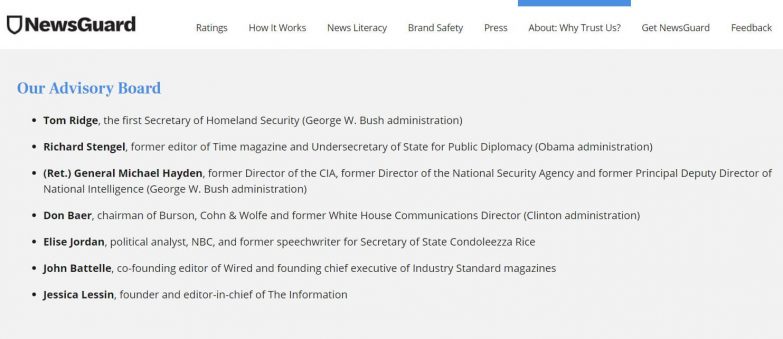

 Aletho News
