500 innocent Americans are murdered by police every year (USDOJ). 5,000 since 9/11, equal to the number of US soldiers lost in Iraq.
In 1994 the US Government passed a law authorizing the Pentagon to donate surplus Cold War era military equipment to local police departments.
In the 20 years since, weaponry designed for use on a foreign battlefield, has been handed over for use on American streets… against American citizens.
The “War on Drugs” and the “War on Terror” replaced the Cold War with billions in funding and dozens of laws geared towards this new “war” against its own citizens.
This militarization of the police force has created what is being called an “epidemic of police brutality” sweeping the nation.
RELEASE US
a short film by Charles Shaw
featuring the track ‘RELEASE” by Random Rab
and excerpts from the films
“THE EXILE NATION PROJECT” by Charles Shaw
P.A.T.R.I.O.T. Act I, II & III (2001, 2004, 2010)
Homeland Security Act (2002)
Enhanced Border Security, Visa Entry Reform and
Immigrant Deportation Act (2002)
The Intelligence Reform and Terrorism Prevention
Act (2004)
Military Commissions Act (2006, 2009)
The FISA Amendments Act (2008)
The National Defense Authorization Act (NDAA)
A former Mossad director opposed to the assassination of world leaders says the case of Iranian President Mahmoud Ahmadinejad is different.
Meir Amit, who died in July at the age of 88, shared some of “his fears for the future of the Middle East” in an interview published by The Media Line.
Amit, who directed some of the most notorious Mossad operations while he was the organization’s chief, said he viewed Iran’s nuclear activities as a path leading to World War III.
“I look at the situation as World War III,” he said.
“Namely, all the Muslims, all over the world, are united. Unfortunately, the Western world is not united. Russia is not cooperating, China is not cooperating. Israel is just a small thing in the picture. We have to look at that as a global war and act accordingly,” Amit added.
He went on to talk about his familiarity with the political structure of Iran, explaining that he had been sent on special missions to the country in the 1960′s while Israel maintained ties with Iranian leaders.
“At that time we had very good relations with Iran. I was meeting the Shah once a month. We were sitting and chatting and appraising the situation,” Amit said.
The former Mossad chief added that while he did not advocate the assassination of political figures, he believed otherwise in the case of the Iranian president.
“Personally I am against assassinating leaders and all my life I was against it when I was head of Mossad. But Ahmadinejad has crossed the line. With all he is doing on the nuclear front, saying Israel should be wiped off the map and arranging a conference on the Holocaust where he said it never happened. From my point of view, he is somebody who shouldn’t be with us,” Amit said.
The remarks were disclosed as earlier, Iran’s former intelligence minster Gholam-Hossein Mohseni-Eje’i said Israel, in collaboration with Iranian terrorist groups, planned to assassinate President Ahmadinejad.
“The Zionist regime had met with the MKO on the sidelines of the Sharm el-Sheikh meeting in Egypt and in Paris to assassinate Mr. Ahmadinejad,” Mohseni-Ejeie was quoted by Fars News Agency as saying earlier in July.
The terrorist group had, however, set conditions for carrying out the assassination, the minister added. “They had asked that the US and the West remove their name from their blacklists.”
Over the weekend, the New York Times’ public editor, Margaret Sullivan, published a piece investigating the Times’ thirteen month delay in the publication of a bombshell report on the Bush Administration’s domestic mass surveillance program back in 2004 and 2005. Sullivan’s revisitation of the issue in light of what we’ve learned since this summer about the NSA was a great public service.
We now know that the government lied to the New York Times about the legality of its spying to delay the publication of the story that would eventually win the Pulitzer Prize, hiding a tremendous fight inside the government about the legality of the spying. The report also contains an important new admission from former NSA chief—and its current public booster—General Michael Hayden, that “he can’t prove any harm to national security from the publication of the eavesdropping stories — then or now.” We hope Mr. Hayden will now revise the many hyperbolic statements he has made to the contrary.
Yet as the folks who, along with the ACLU, have been leading the lawsuits against NSA spying since early 2006, we need to point out a big problem with the New York Times’ characterization of the current mass spying.
The piece quotes Eric Lichtblau as saying that, as a result of the revelations, Congress made “all this stuff” legal, then adds: “There may be public outrage over the latest wave of surveillance revelations, but the government has a helpful defense: Hey, it’s legal.”
Not so. The government’s claims of “legality” are wrong, have been strongly criticized by national security law professors, and are currently being challenged in court by EFF, ACLU, and EPIC, among others. The Times dis-serves its audience by repeating them as if they were true.
In fact, the ACLU has a hearing in New York on Friday, November 22, in its key challenge to one of those “legal” claims: that the NSA’s indiscriminately collecting telephone records is “legal” under a convoluted interpretation of the section 215 of the 2001 Patriot Act that mentions neither telephone records nor the NSA. To try to make it fit, the government attempts to redefine the limits on production of “relevant” things to allow the collection of massive amounts of “irrelevant” information. In other words, by a plain reading of the statute, what the NSA is currently doing in collecting massive amounts of telephone records on an ongoing basis is not legal.
And that’s not even addressing the Fourth Amendment problems with mass, suspicionless seizure of records of our calls with doctors, business associates, churches, friends and lovers, records that can create an extremely intimate portrait of our lives and political activities. The government’s claim that the Fourth Amendment is not triggered by the ongoing collection of this sensitive information in an untargeted mass is far from settled.
The Fourth Amendment isn’t even the only amendment the NSA is violating. EFF focused on the First Amendment in our motion for partial summary judgment against the mass telephone records collection program we filed in California last Wednesday. The motion features declarations from 22 associations, from the California Gun Owners to Patient Privacy Rights to People for the American Way to the First Unitarian Church of Los Angeles, attesting to the First Amendment chilling effect from the collection of telephone records.
Also not “legal” is the mass collection of communications, including content, that the government claims is justified by section 702 of the FISA Amendments Act. That’s the law Lichtblau references, passed in 2008 after the Times revelations. Section 702 also doesn’t say that mass, untargeted surveillance of Americans is allowed. To the contrary, 702 expressly forbids the government from intentionally acquiring any communications that are purely domestic. The NSA’s “upstream” access, tapping into the domestic fiber optic cables of AT&T and other carriers that carry the content of our emails, web searches, social networking posts and many of our phone calls, plainly violates section 702 and also violates the Constitution. EFF will be presenting these arguments before an open, adversarial public federal court starting in the spring.
These points were made well by former EFF attorney Jennifer Granick of Stanford and Professor Christopher Sprigman of the University of Virgnia in a piece in the Times in June, so it’s surprising that the Times simply repeated the government’s conclusions without question.
In short, nowhere in federal law, before or after the Times story in 2005, has Congress ever openly authorized the mass spying on Americans that is taking place. EFF is still fighting to force the release of the key FISA Court rulings, so we don’t know the specifics, but the fact that the government has convinced the secret, non-adversarial Foreign Intelligence Surveillance Court to sign off, apparently based on contorted statutory interpretation, doesn’t change that. These questions need to be presented in the public courts where rule of law and due process rules are clear.
The piece admits that the Times was taken in by claims of “legality” in 2004. It shouldn’t get fooled again by government claims of “legality” of mass surveillance.
The list of US spying targets now includes the Organization of the Petroleum Exporting Countries, a new report reveals.
The US National Security Agency and the UK’s Government Communications Headquarters infiltrated OPEC’s computer systems to access an internal study in the organization’s research division, the German newspaper Der Spiegel reported, citing documents provided by American whistleblower Edward J. Snowden.
A list of individuals targeted for surveillance included “Saudi Arabia’s OPEC governor”.
The Foreign Intelligence Surveillance Court approved the targeting.
Der Spiegel said the information on OPEC had been available to the NSA for years, but in 2008 the agency infiltrated the organization, and has since been able to access Relevant Products/Services information specifically regarding oil exporting countries and the price of oil.
The infiltration however, was not easy for the NSA. A document from GCHQ, released in 2010, announced that after a long period of meticulous work, the two spying agencies had finally infiltrated the systems.
There is no national security justification for the spying effort. But the US needs the information to maintain its economic dominance in the world, some experts say.
OPEC has twelve members and is dedicated to coordinating the policies of the oil-exporting countries.
The American public, some IT corporations, and foreign leaders are all targets of the US super spying agency over the past years, according to documents released by Snowden, who is now in Russia where he was granted temporary asylum. Snowden is wanted in America for espionage charges.
As usual on Veteran’s Day, we are urged to honor our “heroes” and salute their martial courage, while ignoring the murderous imperial role they play in “fighting for their country.”
This really cannot be done. A professional army is by definition an organized band that kills on command. This can only be justified on the grounds that its mission is purely defensive, designed to repel invasion of the national territory the troops are sworn to protect and defend.
But this is hardly the role of the U.S. armed forces today, when Washington maintains hundreds of major military bases around the world, and thousands of smaller military installations, all of them dedicated to maintaining an economic and political status quo increasingly protested by popular majorities seeking a freer, more democratic world. In short, in spite of its multicultural and bi-gender facade, the U.S. military is an anti-democratic force. And there is nothing heroic about suppressing democracy.
Yes, our troops often display spectacular physical courage under fire. But so did soldiers defending Nazism and Communism, Japanese soldiers defending a brutal empire, and Confederate soldiers fighting to preserve chattel slavery. We do not ordinarily consider these soldiers heroes, no matter how great their martial courage, because we rate the missions they were sent on as illegitimate or evil.
We cannot have it both ways. If military service is value neutral, then it does not matter what cause soldiers fight for, we must salute their courage under fire. But if the value of physical courage is inextricably bound up with the legitimacy of the mission a soldier is sent on, then we must withhold hero status from imperial soldiers who fight – not to defend us from evil – but merely to preserve and extend the hegemony of empire. In the latter case, their bravery is stained and diminished by the ignoble cause they have been commanded to serve.
Actually, these days a soldier does not even have to demonstrate physical courage to be designated a hero. Cheap praise is heaped on our soldiers merely for being in the military, quite apart from anything they may do on a field of battle. This is directly related to a steady decline in public support for imperial military missions, which the architects of empire resist by equating anti-war sentiment with hostility to soldiers. “Support our troops” actually means “support the mission,” no matter how illegitimate.
This we must not do. The grotesque barbarity displayed at Abu Ghraib – hardly ancient history – was neither heroic, nor accidental. In fact, it was deliberately sanctioned policy, extensively pre-tested by Israel, to associate all resistance to foreign invasion with sexual humiliation. In short, it was an attempt to make legitimate heroism impossible for Iraqis, to stain public memory of resistance with images of utter disgrace. To invoke “support our troops” in this context is to embrace complete moral degeneracy.
A better option would be to widely publicize and critique the civilian leaders who craft such policies, and degrade our troops in the name of honoring them. “Support our troops – dispatch Donald Rumsfeld to jail,” should have been a national slogan years ago. Today, we have just as much reason to call for the same for Barack Obama – our first African-American president, who overthrew a Libyan government with the highest standard of living in Africa, leaving the country to the mercy of murderous and plundering gangs.
Service? Honor? Respect? What have any of these words to do with the role of the U.S. military in the world today? What is honorable about occupying Afghanistan in the service of a government so corrupt it makes the Taliban seem preferable? How is respect cultivated by mass murder of civilians by drones? What kind of “service” is involved in establishing an international network of torture centers in defiance of international law and basic morality?
Yes, let’s honor our troops, not by continuing the atrocities that degrade them, but by abolishing the imperial military and developing a real national defense policy to replace it.
Even as there have been indications around the globe that perhaps we’ve had enough copyright term extension and it’s time to move back in the other direction, over in the UK, they just put in place a big new copyright extension which increases the term from 50 years to 70 years for sound recordings and performers’ rights. We had discussed the EU decision two years ago to seize the public domain by retroactively pulling works out of the public domain, and now it’s officially gone into effect.
While we’ve pointed out for years that when people claim that infringing works are “stolen,” they’re using the wrong word, since nothing is missing, that is not the case here. Here, things are absolutely missing. The entire purpose of copyright law is to provide the incentives to have the work created in the first place. As such, it’s a deal, where the public grants the creators an exclusive right for a number of years, in return for getting the work (in a limited fashion) for a period of time and then having that work become public domain at the end. Retroactive copyright extension is a unilateral change in that deal — directly taking the work away from the public domain without any recompense to the public the work has been stolen from. This makes absolutely no sense. Clearly, since the work was created, the incentive was good enough at the time of creation. Adding on more years that the public doesn’t get it at the end does nothing to incentivize the work that was already created fifty years ago.
There is simply no reason to have done this, and to have taken these works out of the public domain. Scholars have pointed out that there is no legitimate reason to do this, no evidence that it does anything useful at all. Instead, there’s plenty of evidence that the cost to the public is tremendous — somewhere around a billion euros. The cost to culture in general is even worse, because the longer copyright terms are, the more works disappear entirely, and the more it harms the dissemination of knowledge. It’s basically a disaster all the way around — except for some old record labels that still have the copyrights.
Well, I have… and so have a million or so other people.
It’s not unusual for political activists, writers or even humble bloggers, who even become a bit visible to be the target of threats, if they attack the interests of corrupt people.
But there is one area of political opposition, where you can be absolutely certain to be on the receiving end of all kinds of threats – from losing your job, your livelihood to being sued, physically harmed or even killed – and this area is everything connected to the state of Israel.
Human Rights activists in Palestine, either Palestinian or Internationals receive death-threats on a daily basis, of course, mainly by settlers: “Nazi, I’ll kill you.”
Threatening is part of the Moshe-Dayan-Method. The former Israeli Defence Minister Moshe Dayan once said: “Israel must be like a mad dog, too dangerous to bother.”
The Jewish settlers in the West-bank are one side of this “mad-dog” appearance, the Israeli army in Gaza is another side, the Israeli prison and torture system is the third and Mossad covered operations abroad the forth side of this “game”.
The settlers are not independent of the Israeli state. They act as the forefront in the land robbing operations. They are like the ugly war paint used in earlier ages by invading tribes to scare the native population to surrender or leave the area.
The recklessness of the soldiers in Gaza, who first commit horrible war crimes, and then make t-shirts portraying a pregnant Palestinian woman as a target, saying “one shot, two kills”, is another example.
Israelis are telling the world with this seemingly insane behavior, they do not have to care what others think about their country:
“International law does not apply to the state of Israel. And nobody can do anything about it. Since this nation is too dangerous for anybody else to bother.”
Fanatical supporters of the state of Israel and influential Zionists have been threatening people for a long time.
Edwin M.Wright, who had worked as an assistant and expert of the Middle East in the State Department for two decades, describes in an oral history of the Truman Library, how Washington’s career politicians from the early 1940′s on were brought under control on the subject of Israel, by using threats and intimidation:
One day I was sitting next to Mr. Henderson, he had his notes out and was dictating to me some letters when the telephone rang. It was Mr. Niles of the White House, and Mr. Niles told him (I got the story later on) that the night before some member of the State Department had been at a dinner party and had criticized President Truman’s statement on a Jewish state.
Mr. Niles said, “We are not going to tolerate any criticism of the President on this issue, and you let your staff know that if this happens again they must be disciplined.”
Mr. Henderson called a meeting of the staff and told them of the message of Mr. Niles.
He said, “None of you people are to speak in public about this issue, because if you do we’ll have to send you off to some Siberia if any of you, publicly express your private opinions, even to private groups, and it gets to the White House, you will be purged.”
There were a number of these people that were purged. I can mention them, Stuart Rockwell, Robert Munn. They tried to purge me in every way.
I can’t understand why I survived, and this is one of the strange things in my history, for they had me on their list as an anti-Semitic force operating in the State Department. The American Zionist, which is the paper of the American Zionist organization, came out with a full page attacking me, claiming that I was a source of anti-Semitism. I was called in frequently and told I must not speak on this subject because it was so controversial and I was too indiscrete.
One day George McGhee, who later on was Assistant Secretary of State, called me in. Jacob Blanstein, president of AMOCO had just come in to see him, and somehow or another had picked up the story I was anti-Semitic. He told George McGhee,
“Why do you keep this fellow here?”
There were influences to get rid of anyone who was called “pro-Arab.”
They were not pro-Arab, I must insist upon this, they were acting in accordance with America’s larger interests in the Middle East. The Zionists gave them the title “pro-Arab” and that was enough to destroy them. You had to be pro-Zionist or keep quiet in order to stay in the State Department, and the net result was a whole generation of officers who are simply “Uncle Toms.” They don’t dare to speak or publish things. They are afraid that they will be sent off to Africa, or who knows to some other part of the world, and will stay there the rest of their lives.
After the State-Department, the American Congress was “purged ” of everyone who tried to be fair-minded in regard to the Middle East, mainly through the influence of Israel-friends in campaign financing offices of the two major parties.
Paul Findley, while discussing the book “The Israel Lobby” by Havard Scholars Mearsheimer and Walt, describes it like this:
I know what it is like to be targeted in this way. In the last years of my long service in Congress, I spoke out, making many of the points now presented in the Mearsheimer-Walt book. In 1980, my opponent charged me with anti-Semitism, and money poured into his campaign fund from every state in the Union. I prevailed that year but two years later lost by a narrow margin. In 1984, Sen. Charles Percy, then chairman of the Foreign Relations Committee and an occasional critic of Israel, was defeated. Leaders of the Israel lobby claimed credit for defeating both Percy and me, claims that strengthened lobby influence in the years that followed.
Journalists critical of Israel face a quite real threat for their careers. Only few will take the risk, and even fewer will survive with their journalistic career intact.
Politicians and journalists aren’t the only ones vulnerable to those threats. Everyone working in professional positions in corporations or in public services can be threatened by loss of job and reputation by being called an “Anti-Semite”.
As seen in the case of John Pilger in the above Alan-Hart-program, life, health and families can be threatened as well.
While threats against people’s livelihoods are often followed up by actions, are death threats also to be taken seriously?
Another group who has to take death-threats very seriously are Revisionists, people who question certain aspects of the “Holocaust”, people like Professor Faurisson and many others.
While Faurisson survived the attacks on his life by Zionist fanatics others did not.
And still, every attack on somebody’s life carries the risk of death. Thousands of people all over the world have been threatened, only few threats can actually be followed through.
Revisionists become easy targets, since they have already been maligned so badly, that some media outlet or other can say “he deserved it”, when a revisionist is being attacked and seriously hurt the reporter will get away with blaming the victim.
She had attempted to get her European counterparts to cut European Union ties to Israel until it would finally agree to a just settlement with the Palestinian people.
Anna Lind also had stated publicly how frustrated she was about Israel’s crimes against Palestine:
“Sometimes the Israeli-Palestinian conflict makes me so angry that I kick the wastepaper bin in my office or throw things around,”
She had described Sharon as a “maniac” and said on Swedish television that she would not buy Israeli goods and fruits sold in Swedish markets.
Hanan Ashrawi, the Palestinian professor and negotiator, wrote after the murder:
“Sweden’s effect on the Middle East has been consistently constructive, positive, and human with a deep-seated tradition of fairness, justice, and peaceful intervention.
Unfortunately, three such Swedish champions had met with violent and untimely deaths, each a tragedy unto itself, but a national and global loss in the larger scheme of things.”
When Anna Lind was murdered in a Stockholm shopping-center, it would have been a well-planned assassination. The real assassin had to be given a good escape plan while a patsy was being prepared to take the fall.
The planners would have to gain close access to the police investigation, to have the patsies DNA transferred to the murder-weapon. They must have had insiders in the Swedish legal system to get the trial shortened and all the eye-witness testimonies, but a single one, to be dismissed. (All other eye-witnesses refuted the claim that the chosen patsy looked actually like the real assassin, and the he had been coming from the direction the prosecution claimed the murderer had come from.)
They must have had a very skilled defense councilor at hand, who was able to persuade the patsy to confess to the crime.
Although the suspect had refused to confess during many weeks of police interrogation, his own defense attorney got the confession out of him. How he did that, isn’t quite clear. He might have promised his client to get him off on an insanity plea, or might have planted even false memories.
Creating false memories is actually not very hard, when you know how memory is normally created and manipulated in the brain. It’s even easier, if you have a psychological vulnerable individual, who might even have been under the influence of mind-altering psychiatric drugs.
The defense attorney was working at the time for the law firm, which just had done the defended the defendant in a case of military espionage against Sweden. The espionage was done on behalf of the Russian Mafia.
In my opinion, Anna Lind was killed, because the Israeli power-elite saw her as a threat to Israeli interests, and because she was indeed an influential politician.
Her death surely scared other European politicians, the Moshe Dayan method worked…. temporarily.
The plotters got away with it in 2002 and in the subsequent trial.
I doubt, they would have such an easy time in 2009.
The fact, that a vast corruption scandal in New Jersey involving Jewish rabbis and an Israel link is being investigated and publicly revealed in the media means, that even in New York and New Jersey in the USA, Israel is losing it’s influence on law enforcement and the judiciary.
Intimidation works to a point on many people, but eventually the true “spirit of humanity” will break through in some of us. And this spirit is more catching than fear ever was.
Whenever I receive threats, I tell enough people about them, even on the risk of seeming paranoid to friends and acquaintances. In this way, it will become riskier for those who consider following up on their threats.
Apart from that, I tell myself to see it logically:
On my own I actually have no influence whatsoever, which means going after me would neither be worth the risk nor the effort. Threatening people, especially with veiled threats, is relatively risk-free, just another form of hasbara (Israeli propaganda).
But I have become part of an ever-growing movement of people in the hundreds of millions, who oppose Israel’s crimes against her neighbors. This is what will indeed threaten the criminal, warmongering project of Zionism.
And no matter how they try Moshe Dayan’s “mad-dog” game, they just can’t kill us all.
The Palestinian issue has been uniting all Muslims for 65 years. Syrian rebels succeeded in their mission – they made the world forget about the Palestinian issue.
The militants pulled Palestinians out of refugee camps; they are killing them or using these people as human shields. And the media are silent about it, while the Syrian opposition keeps screaming about the “oppressive Assad regime.”
It’s been a year since Syrian rebels raided the largest Palestinian refugee camp in Syria – Yarmouk, near Damascus. Up until recently it was the duty of Israeli soldiers to persecute Palestinians, now this is done by Syrian rebels with their Muslim slogans. The media are not saying anything about it.
What is the life of Palestinians like, now that the Syrian conflict made them refugees again?
‘Nobody is helping us – neither Europe, nor the UN’
Abu-Badr, head of Beirut’s Bourj al-Barajneh refugee camp People’s Committee, gathered representatives of all Palestinian parties. They all keep regular contacts with camps in Syria.
A year after Palestinian camps and Palestinians were attacked, the heads of these organizations are saying that the Syrian war is a staged conflict, and its goal is to distract everybody from the Palestinian problem.
A total of 760,000 Palestinian refugees lived in Syria before the war, and about 550,000 in Lebanon. Palestinians had equal rights in Syria, and virtually no rights in Lebanon. For example, they were not allowed to work in 72 professional capacities.
Abu-Badr says, “There are over 1,000 Palestinian families from Syria in our camp. Nobody is helping us – not Europe, not the UN. The Red Cross came twice. The refugees are renting housing on their own.”
To rent a place to live is a big problem for a Palestinian, especially at the camp. And to pay rent, they have to find a job, which is extremely difficult in Lebanon.
He says that according to the authorities, there are about 120,000 Palestinian refugees from Syria living south of Tripoli. So every tenth refugee is a Palestinian.
Turkey and Jordan don’t accept Palestinians.
Kafar is a young mother of two. She used to live in Syria’s Yarmouk with her family. Now she is struggling to survive in Bourj al-Barajneh in Lebanon.
She fled Yarmouk at the end of 2012, when the rebels took over the camp and made it their foothold to carry out attacks on Damascus.
Yarmouk is one of the largest Palestinian camps in Syria. Before the war it had 150,000 residents, which was almost one-quarter of all Palestinian refugees in Syria. The camp is very close to the Damascus city limits, and there were subdivisions where regular Syrians lived.
Refugee camps are extraterritorial places. Police and army are not allowed there, the residents don’t have citizenship, they don’t vote and don’t serve in the army. Camps are self-governed by representatives of all Palestinian political parties. Unlike all other countries, Syria allowed refugees to leave camps and enjoy all rights and freedoms.
A Syrian family named Lakud brought the fighters to Yarmouk. Palestinians didn’t support the rebels then, and they are not supporting them now. Some parts of the camp are still controlled by the opposition.
A human shield for militants
Kafar recalls: “The entire camp left in a snap back then, when armed militants entered it. They were inside, shooting bullets into the air – they always act the same way. They ordered the residents to leave having placed their orders on different websites and having sent emails. Nobody stayed there.”
In December 2012, some started trying to come back. There are even a few families that decided to stay in the camp, hoping it would get better soon. Kafar says all the houses have been looted – they have taken everything, including electrical wires.
She says the militants were shooting those Palestinians who went out to take part in demonstrations. They wouldn’t let people return to their homes, but in case they did come back home, they couldn’t leave their houses again.
“If the militants went away, we would come back. Sometimes we can contact those inside the camp. They tell us about the blockade – they feel like they live in a cage, they lack food. There is no escape – they are kept as a human shield for the militants,” Kafar says.
She tells us about her relative who went to find her children, but ended up as a hostage in the camp.
“The militants won’t let you come in, but if one has entered – he would be kept there by force. They have established checkpoints. They deprive the people of food and beat the women who try to sneak inside, bringing something to their relatives to eat,” Kafar says.
A handout picture released by the Syrian Arab News Agency (SANA) on May 15, 2013, shows protestors crying after unidentified armed groups opened fire on demonstrators as they marched in the Syrian capital Damascus in support of the right to return of Palestinian refugees who fled their homes or were expelled during various conflicts. (AFP/SANA)
Hitting a woman in public is considered absolutely unlawful among Muslims. But Kafar says that the militants in Yarmouk have their own vision of everything.
“We are not afraid of war, but they won’t even feed the people. The al-Nusra militants are tall, wear long beards and look like foreigners. Probably, there are Syrians among them but none of my relatives have ever seen one,” Kafar says.
One blanket for five
Palestinians from Syria in Lebanon are in even more dire straits.
“They humiliate us – we are constantly being insulted,” the woman tells us.
She is showing us around her tiny apartment with two rooms and a kitchen. The ceiling leaks when it rains.
“The rent is $300. If I don’t find money by Sunday, we’ll have to leave for Syria.”
Apart from the rent, they pay $70 for water.
Her father-in-law was killed. Her mother-in-law returned to Syria and now lives with their relatives there.
“I’ll go to Syria and wait there until I can come back home. Staying here is humiliating,” Kafar says.
Her husband takes up any job he can, be it a laborer, carrier or loader.
They have no warm clothes – all their belongings were stolen in Yarmouk. This family doesn’t belong to any group. They got help from different organizations such as Hamas, the Popular Front or some voluntary organizations. But it can hardly be called help – it is more like a mere pittance.
“They gave us one blanket for five people. But we are living creatures,” Kafar says, showing us a thin grey synthetic blanket. She thinks it looks like a cloth that is used to wrap a dead body when burying it.
The family has no money to buy food. They sometimes receive help from neighbors, who share their food with them. I saw them bring some bread and crisps.
‘In Syria, Palestinians are treated better than brothers’
Kafar complains about how the refugee work is organized.
“They distribute some humanitarian aid, but the process is humiliating to us every step of the way. There is fighting in Syria, but Palestinians are respected there. And here they call us Syrian dogs.”
“We had a good life under Assad, not lacking anything. We will go back and live in Syria, even if we have to live in tents. Syrians treat us as equal, they help us,” says Kafar.
In the last year they received help twice – from Hamas and from people from Qatar – about $300 per family, which is less than one dollar a day. But not everybody gets even these payments. There are lists of those who suffer the most in these camps.
She tells us how the process of distributing this aid works.
“A family gets a check for $150 from Qatar. But there wasn’t enough for everybody on the list. So people are humiliated even more. The place where these checks are given is near Beirut, you have to take a taxi to get there and spend half of the money on the ride. They give food stamps for certain food items, which can only be bought in one supermarket. And this store is also far away.”
“You can’t buy meat with these food stamps. Do they think children can go for a year without meat?” the woman asks.
“We are convinced that Syria will welcome us back. They loved us there, treated us like brothers, even better than brothers. We lived better than Syrians themselves,” Kafar says.
She knows that the Lebanese have closed the border for Palestinian refugees. So they can’t go anywhere.
“They accepted us in Syria. When we lost everything, they took care of us. They asked us what we needed. Six blankets? Food? They gave us everything. They didn’t blame us, even though life was difficult for everyone.”
She thinks her family made a mistake when it moved to Lebanon. “We were told life would be good here. Now we regret the decision.”
Her husband came six months earlier, he thought they would be safe here while there is fighting.
‘There is no Palestinian issue for Syrian rebels’
“We Palestinians have played no part in Syria’s distress. We didn’t participate in street protests, and our people did not join the rebels,” says Kafar. She admits to having heard that some Palestinians have, in fact, taken up arms against the Syrian government. But she is certain that is a rare exception.
“Those people must have been seduced by money, or befuddled with drugs, and with false promises. Only the poorest and the most destitute of the Palestinians have gone to fight for money, and it took them 18 months to get that desperate.
“Such people have nothing to eat, so they join the rebels hoping to make some money to sustain their families, and then desert at the first opportunity.”
“We cannot admit to supporting the regime, for fear of being killed on the spot. Those rebels do not consider the Palestinian issue to be of primary importance. There is no Palestinian issue for the rebels at all,” says Kafar.
Every night, the inhabitants of Bourj al-Barajneh go to sleep fearing that al-Nusra militants may descend on the Palestinian refugee camp and start asserting their rule, the way they did at Yarmouk. There is talk that al-Nusra men were spotted recently inside Nahr al-Barrid, another Palestinian camp. Since then, the People’s Committee instituted vigilante patrols across the entire camp.
“Our people control every in and out,” Kafar tells us. “They keep watch at night to make sure no strangers come upon us as we sleep. That’s how it happened in Yarmouk.”
The Syrian army has also set up checkpoints guarding the entrance to each camp.
‘They butchered a family to make the others serve as a human shield’
Yarmouk was not the only Palestinian camp captured and cleared of refugees by insurgents. Moreover, no one can assess the number of Palestinians killed in the process.
A Palestinian woman named Gusun was forced to flee camp Duma near Damascus on September 23, 2012, together with her husband, their three kids, and her husband’s brother.
“There were plenty of olive groves next to our camp. We lived in peace for a long time, until the fighting drew close to our camp. Then, rebels started taking shelter in our camp, hiding in our houses during firefights, and shooting through our windows. And we found ourselves between the hammer and the anvil. So one day, we slipped out at five in the morning and ran away through the olive grove,” Gursun tells me.
“The rebels had killed many people in our camp unflinchingly. They butchered a married couple who were my husband’s kin – they cut their throats, so that the other Palestinians would stay in the camp and serve as their human shield, while the government was commanding us to flee.”
Gusun went back to check on Duma some four months ago.
“I found my home thoroughly looted, its roof smashed,” she recalls. “And the FSA and al-Nusra are still entrenched in the camp.”
“Once their men spotted me at Duma, they came up and questioned me to make sure I was from that camp. They let me go, but they kept watching me. Later, when I went out to a grocery store, I noticed a car tailing me. Then I got scared and ran away from the camp,” says Gusun.
“The rebels I saw were tall and fair-skinned. There are some who don’t speak Arabic, and there are some who do. People have also told me there are black rebels, but I have never seen one. Some rebels wear black vests, some wear masks, some wear short pants, and others wear normal trousers. There are many fair-skinned men among them, those are foreigners.
“When we walked around the camp, we would try not to look them in the face, for fear that they might do us harm,” Gusun says.
‘Palestinians, get out of Syria’
The world’s mainstream media, who have closely followed the insurgency and its war on Assad, have proven squeamish when it comes to covering the way rebels treat Palestinians. In the spring of 2011, they would refute news reports that opposition activists wave Israeli flags and chant anti-Palestinian slogans at their rallies.
This stands to reason: two years ago, the Palestinian issue was still the No. 1 concern for the Muslim world, and an anti-Palestinian stance would have done serious harm to the rebels’ reputation. All the more so as Egyptian revolutionaries at Tahrir Square had been pronouncedly pro-Palestinian, despising Hosni Mubarak for his support for the Israeli blockade of the Gaza Strip.
The women at Bourj al-Barajneh are perplexed at the world’s ignorance of how Syrian insurgents really feel about Palestinians.
“At the onset of the revolution, slogans were like, ‘Carrots belong with carrots and cabbage with cabbage, and this is no land for Palestinians’,” says Gusun, who is shocked that no media have ever reported that the Syrian rebels had initially been against the Palestinians.
“Under these slogans, the armed rebels marched along the streets, angered by the local Palestinians’ reluctance to turn against the regime,” says Gusun.
“In about a year and a half, some Palestinians were in this way or another made to join the rebels. But that didn’t change much the rebels’ opinion of the Palestinians,” remarks Gusun, adding that even now the Palestinians on the side of the rebels are few and far between.
She can’t understand the reason why the Lebanese are treating Palestinians like that. After all, Syria did give shelter to 1 million Lebanese and Palestinian refugees after the 2006 Israeli attack.
“During the 2006 war we welcomed the Palestinians like family. But now we are being treated as outsiders.”
At that time, all the refugees from Lebanon found home, food and clothes straight on arrival.
Gusun was lucky to have found a job, and so was her husband. “I had to work as a cleaning lady. I’d never done anything like that before. But we had to survive somehow. The UN gives only $30 once every four months.’
It was crucial for the sponsors of the anti-Syrian campaign to shift the focus of one and a half billion Muslims from Palestine to the war against Assad. And their mission almost succeeded.
The issue of Palestine used to bring everyone together: Communists and atheists, the Sunni and the Shia, Christians and Muslims, left- and right-wingers, anti-globalists and nationalists. Now the war in Syria has torn them all apart.
Fast forward two years, there are no more rallies against the occupation of Jerusalem, no ships trying to break through the Gaza Strip and the West Bank blockade. In the meantime, this blockade has grown even tougher after the military coup in Egypt, with the abuse of Palestinians in the West Bank escalating into ethnic cleansing.
The sponsors of the war repeatedly tried to get Palestinians to back intervention into Syria. But their efforts failed: from Hamas to the Palestinian Islamic Jihad to the Popular Front to Fatah, not a single Palestinian organization has ever supported the campaign.
Nadezhda Kevorkova is a war correspondent who has covered the events of the Arab Spring, military and religious conflicts around the world, and the anti-globalization movement.
Iran was once a great power, and though invaded by Greeks, Arabs, Turks, and Mongols and exploited by imperialist powers in the modern era, it has continued to assert its national identity and its people have developed a special sensitivity to interference with its sovereign rights. This concern on the part of Iran does not represent some overwrought sensitivity but is actually a realistic assessment of its history over the past century, as this article will delineate. While professing idealistic principles in international relations, European powers ignored these principles in their violations of Iran’s sovereign rights, which in at least one case led to human suffering on par with the most tragic events of the twentieth century.
(In the outside world Iran was known as “Persia” until 1935, although people within the country used the term “Iran.” This article will use the term “Iran” except when using actual names or quoting from other sources.)
During the nineteenth century, Russia and Britain competed for power and influence in Central Asia, in what was known as the Great Game. Needless to say, it was neither great nor a game for those countries, such as Iran, which were treated like pawns on a chessboard by the two great powers. By the turn of the twentieth century, Russia had come to dominate the northern part of Iran while Britain dominated the south. The two powers formalized this division in the Anglo-Russian Convention of 1907, which segmented Iran into three parts—a Russian zone in the north, in which Russia was to have exclusive political and economic control; a British zone in the southeast, in which Britain had the sole right to exercise political and economic control; and a neutral “buffer” zone in the rest of the country, in which both the British and the Russians shared power.
This agreement was intended to put an end to open conflict between the two powers and establish stability in the country. With the dramatic rise in power of Germany in Europe, which was also starting to penetrate Central Asia, Britain and Russia realized that it was necessary if not to completely put away their rivalry, then at least to lessen tensions. This development, however, did not bode well for Iranian sovereignty since the formal division made it appear that the imperial control would be lasting.
This foreign domination essentially meant that the resources of Iran were under the control of the two imperial powers and that the purpose of whatever economic development took place was primarily for the benefit of those powers and not the Iranian state or people. The central government in Tehran did not even have the power to select its own ministers without the approval of the British and Russian consulates.
While Iran had traditionally been an absolute monarchy, revolutionary agitation in 1905 forced the Shah to allow for a relatively free press and accept a constitution reducing his power. The elected parliament, the Majlis, would formally have considerable power, although in actuality government decisions had to be amenable to the two dominant powers who essentially controlled what took place within their respective zones and heavily influenced developments elsewhere in the country.
Both Britain, with some qualifications, and Russia looked negatively on this new liberal political body, preferring to deal with a small number of people who could more easily be coerced or bribed to advance their imperialist goals, which very likely went against public opinion in Iran that shaped the new parliamentary body. Although the imperial powers could, if they exerted themselves, overcome opposition from the Majlis, it did make things more troublesome.
In 1911, Iran’s nascent constitutional government appointed an American, E. Morgan Shuster, anoted lawyer, civil servant, and financial expert, to help organize the country’s finances, which were in a perilous situation at that time due largely to heavy indebtedness to Russia and Britain. While his proposed reforms were embraced by the Iranians, they were vehemently opposed by the two European powers who feared that these might serve to reduce Iranian dependence on them.
Almost immediately upon arriving in Iran, Shuster became involved in a dispute with Russia over customs policy, in which he requested, and was given, plenary powers by the parliament. At Russia’s behest, backed up by its moving troops to Tehran (which was within the Russian zone), he was ultimately forced to leave Iran in January 1912. Upon his return to the United States, he wrote a heated indictment of Russian and British exploitation of Iran, titled “The Strangling of Persia,” which he dedicated to “The Persian People.” In a much-quoted passage, Shuster summed up the malicious impact of the two Great Powers thus: “[I]t was obvious that the people of Persia deserve much better than what they are getting, that they wanted us to succeed, but it was the British and the Russians who were determined not to let us succeed.”
As bad as it was for Iran at the beginning of the twentieth century, things would become infinitely worse during World War I. Hoping to avoid entanglement in the war, Iran declared its neutrality on November 1, 1914. (The British and Russians had entered the war against Germany and Austria two months earlier.) Nevertheless, the country became a battleground between Russia and Britain (who were allies), and Turkey (a German ally) and its local Muslim supporters. And when the Turks were not in the country, the two European powers were involved in fighting against tribes and groups of nationalists who were stirred into action by the war and the occupiers’ wartime depredations.
According to historian Mohammed Gholi Majd: “World War One was unquestionably the greatest calamity in the history of Persia, far surpassing anything that happened before. It was in WWI that Persia suffered its worst tragedy in its entire history, losing some 40% of its population to famine and disease, a calamity that was entirely due to the occupation of Persia by the Russian and British armies, and about which little is known. Persia was the greatest victim of WWI: no country had suffered so much in absolute and relative terms. As I have shown in another study there are indications that 10 million Persians were lost to starvation and disease. Persia was the victim of one of the largest genocide [sic] of the twentieth century. (Majd, “Persia in World War I and Its Conquest by Great Britain,” 2003, pp. 3-4)
What caused a famine of such horrific proportions? The Russians and, even more so, the British used Iran as a base for their war effort; and Majd finds the British to be principally responsible for the famine. Local transportation, land and river, was taken over by the British for the movement of war materials, which meant that farmers had a difficult time marketing their produce inside Iran. At the same time, significant amounts of food were purchased or confiscated by the British to supply British troops, both within Iran and in the Middle East region as a whole. Moreover, Britain prohibited Iran from importing food from its neighbors—India and Mesopotamia (Iraq), where grain was plentiful–and from the United States. The British used various reasons, including the alleged sabotage of an oil pipeline, to justify the withholding of most oil revenue to the Iranian government (Iran had recently become a major oil producer) during the war years, which reduced the ability of Iran to purchase food. (Majd, “The Great Famine & Genocide in Iran: 1917-1919,” Second Edition, Chapters 5-7.)
It seems unlikely, however, that the British intentionally sought to commit genocide against the Iranian population, as Majd sometimes implies, but rather that the British were solely concerned about their own war effort, pursuing it at the expense of the Iranian people, who died off in the process. But there is no need to debate British intent, or their degree of culpability, to illustrate the point that Iran endured appalling suffering from the actions of other countries during World War I. The same could be said if the death figures Majd provides are excessive and did not actually exceed Holocaust-like levels, though Majd’s analysis of population statistics, which indicate a huge decline in population between 1910 and 1920, seems to substantiate his numbers. (Majd, “Great Famine & Genocide in Iran: 1917-1919,” pp. 77-87)
Furthermore, Majd does show that other observers noted that Iranian civilians perished as a result of the war in massive numbers, if not necessarily in the astronomically high numbers that Majd arrives at. A report submitted by the Iranian delegation to the General Assembly of the League of Nations, dated December 6, 1920, states: “At the beginning of the war of 1914-1918, the Persian government, anxious to continue its historic traditions, solemnly declared its neutrality . . . . Despite her neutrality, Persia has been a battlefield during the world cataclysm. Her richest provinces in the north and north-east have been ravaged, divided and disorganized by the Turco-Russian forces. Many are the ruins which cover Persian territory from Makou (a town lying in the extreme north of Persian province Azerbaijan), to the very south. Towns and villages have been pillaged and burned, and hundreds of thousands of men were compelled to say a lasting farewell to their beloved homes and to find death from hunger and cold far from their native provinces. At Teheran, a city of about 500,000 inhabitants, 90,000 persons died of famine for want of bread; since the big lines of communication were cut by the invaders. All the governments which followed each other during the war were faced with insurmountable difficulties which arose from the violation of Persian neutrality. The food providing provinces of Persia –such as Mazenderan, Gilan, Azerbaijan, Hamadan and Kirmanshahan— which were rich in corn, rice and other cereals, were unable to produce anything, owing to the lack of labour and the want of security: famine, that pitiless scourge, ruled over the greater part of the country and spread ruin and death among its people . . . . It is with deep emotion that we mention the high figure of our loss in man-power—a cruel loss of 300,000 men, massacred by the sword of the invader.” (Majd, “Great Famine & Genocide in Iran: 1917-1919,” p. 8)
In his 1934 biography of the British Foreign Secretary, Lord Curzon, Harold Nicolson, who had served as a British diplomat in Iran during the 1920s, wrote:“Persia, during the war, had been exposed to violations and sufferings not endured by any other neutral country.” (Majd, “Great Famine & Genocide in Iran,” p. 8, quoted from Nicolson, “George Curzon: The Last Phase,” 1934, p. 129)
In a memorandum of August 13, 1941, the Chief of the Division of Near Eastern Affairs at the U.S. Department of State, Wallace Smith Murray, wrote: “During the late World War, despite Iran’s declared neutrality, she was invaded by both the Great Powers, which resulted in untold misery to the Persian people. It is estimated that during the famine of 1917-1918, caused by the chaotic conditions of the country, approximately one third of the population perished.” (Majd, “Great Famine & Genocide in Iran,”p. 8). In a note to Secretary of State Cordell Hull, dated August 21, 1941, which includes Iran’s reply to the Anglo-Russian ultimatum of August 16, 1941, the Iranian minister to Washington, Mohammad Schayesteh, wrote: “The Iranians remember with sorrow the great misfortunes of the last war, the unbelievable number of the population which died as a result of famine and epidemics caused by foreign interference in Iran.” (Majd, “Great Famine & Genocide in Iran,”pp. 8-9)
That virtually no one in the United States, and much of the overall West, would know about the famine in Iran is quite understandable. Britain controlled the news about the war and most of the American elite that shaped the news tended to be Anglophile. Once America entered the war, Britain was an ally. And World War I was considered a great moral crusade. It was the war to make the world safe for democracy; it was the war to save civilization. It was, in short, a Manichean war of good versus evil. Atrocities —real, exaggerated, or imagined– could only be attributed to members of the Central Powers. Thus, Germans supposedly engaged in the raping of nuns, the crucifixion of priests and the bayoneting of babies in their invasion and occupation of Belgium. And much was made of the Turks engaging in mass murder against the Armenians—an atrocity that has, in recent decades, been de-emphasized and debated in the United States as Turkey has become an American ally.
As the partisanship of World War I died down, no one in the United States really knew or cared much about the strange, faraway country of Iran. And Britain remained a close ally of America’s in the fight against the Axis and during the Cold War. Today as the American government and an American media (both heavily influenced by the Israel lobby) have presented U.S. war policy in the Middle East in a good versus evil dichotomy, the depiction of Iran as the victim at any time in its history would not mesh with current policy needs.
With the revolution in Russia in March 1917, the provisional government of Alexander Kerensky would forswear all concessions made to Tsarist Russia in Iran. The armistice agreement between Bolshevik Russia and the Central Powers was concluded on December 15, 1917, which included the provision that Russia would evacuate its forces from Iran, which did take place. (Martin Sicker, “The Bear and the Lion: Soviet Imperialism and Iran,”1988, p. 29.) With the fall of the Central Powers in November1918, however, Bolshevik Russia would state that the terms of the Brest-Litovsk Treaty, which ended Russia’s war with those countries, were null and void, though continuing to profess that it did not have designs on Iran. Some of its actions, however, as we shall see, would soon belie this pledge of non-interference.
With Soviet Russia’s official departure, Britain was now by default the overwhelmingly dominant foreign influence in Iran. By virtue of this monopoly power and bribery, Britain was able to get the Iranian government to sign the Anglo-Iranian Agreement of 1919, which essentially would make Iran a protectorate of Britain. In return for a loan of two million pounds for the development of Iran’s railroad system (and also financial inducements to leading government officials), the treaty would give Britain a monopoly over the supply of arms, military training, infrastructure construction, and advisers for Iran. It also would have the sole right to develop a committee to revise the Iranian tariff–which would, of course, be to Britain’s advantage. Influenced by popular outcries by all segments of the Iranian population, the Majlis refused to ratify the treaty. Nonetheless, the British acted as if the treaty were in effect, as they shaped the Iranian army and developed a tariff law that favored British imports.
It should be pointed out that, during this period of British dominance, Soviet Russia, though pulling out its troops and officially renouncing the imperialist concessions held by the Tsarist government, did not lack interest in Iran. The new Bolshevik government, with its professed belief of world revolution, sought to spread radical revolution to Asia, including Iran, which was illustrated by the First Congress of the Peoples of the East, which was held in Baku, capital of Azerbaijan Soviet Socialist Republic, in September 1920.
After the collapse of Tsarist Russia, an Azerbaijan Democratic Republic came into being on May 28, 1918 in what had been part of the Russian Empire. It would be invaded by Soviet Russia on April 25, 1920 and in three days would be under the complete control of Moscow, though Soviet Russia retained the fiction that although Azerbaijan had become a Soviet state, it had remained independent.
The Baku Congress brought together Communists and radical nationalist forces in Asia and discussed a united effort between the two groups in support of national revolutions against foreign imperialism, though the Communists saw this as a necessary stage for the ultimate sovietization of these lands. Iran, in large part because of its proximity to the Indian subcontinent, was seen by a number of Russian Bolshevik thinkers as the key to the spread of radical revolution in Asia. For example, Konstantin Troyanovsky, in his book “Vostok i Revolutsiya” (“The East and the Revolution”), published in 1918, wrote: “The Persian revolution may become the key to the revolution of the whole Orient, just as Egypt and the Suez Canal are the key to English domination in the Orient . . . . The political conquest of Persia . . . is what we must accomplish first of all. This precious key to all other revolutions in the Orient must be in our hands, come what may.” (Quoted in Shireen Hunter, “Islam in Russia: The Politics of Identity and Security,” 2004, 316-17)
Soviet policy toward Iran thus would essentially run on two tracks. One track, reflecting the Communist’s official repudiation of traditional Western imperialism, consisted of establishing good official state-to-state relations between the Soviet government and the Iranian government, in which the latter was formally treated as an equal, sovereign nation. The other track involved support for the revolutionary nationalist movements in northern Iran closest to Soviet Russia, the most important of which was the Persian Socialist Soviet Republic (widely known as the Soviet Republic of Gilan) in the Iranian province of Gilan, which lasted from June 1920 until September 1921.
The densely forested mountainous region of Gilan and Mazanderan provinces along the shores of the Caspian Sea had been beyond the control of the Iranian government for some time. It was here that the Jangal (Jungle or Forest) movement arose, which was anti-Western, pan-Islamic, socially radical and fought against both the foreign occupiers and the Iranian government in Tehran. It was led by a charismatic land owner and Muslim cleric, Mirza Kouchek Khan.
The Soviet conquest of what had been the Russian portion of Azerbaijan would serve as a springboard for moving into northern Iran. The Soviet army, which had departed Iran in 1919, would reappear there in 1920 at about the same time as preparations were being made for the Baku conference. The reason given for this military action was to apprehend the remnants of the counterrevolutionary White army of Admiral Deniken, which had fled Russia after being defeated in the Russian Civil War and found sanctuary under British protection in the Gilan port city of Enceli on the Caspian Sea, which was not yet under the control of the Jingali secessionists. Claiming that the White army remained a threat to Soviet Russia, the Soviet army attacked. Facing a much superior force, the British retreated and the Whites once again fled. The Soviet army then would move through Gilan province and link up with Kouchek Khan’s Jingali.
Soviet Russia provided arms and soldiers to help Kouchek Khan in his revolutionary endeavor. By the end of 1920, his military force was so successful that it was preparing to march on Tehran. (Ervand Abrahamian, “Iran between Two Revolutions,” 1982, p. 116)
Faced with this threat from the military forces of the Soviet Republic of Gilan, with its large Soviet Russian contingent, along with discontent and rebelliousness in other parts of the country, a crisis feeling developed in Tehran among Iranian supporters of the national government and the British. Concerned about the weakness of the existing Iranian government and its seeming inability to suppress Soviet-backed revolutionaries, the British supported a coup d’état by a military officer named Reza Khan who entered Tehran on February 21, 1921 with a force of 3000 soldiers and seized control of the government, assuring the Shah that he took this action to protect the monarchy from revolution.
Meanwhile, in the Soviet Republic of Gilan, strong differences arose between the non-Communist Jangali and the Iranian Communist Party, causing Mirza Kouchek Khan to quit the government and withdraw with his group back into the forest. The Communists now were in charge and, influenced by ideologues from Soviet Russia, tried to establish a full-scale dictatorship of the proletariat that soon alienated much of the local population.
However, at this time higher level officials in Moscow, including Lenin, saw this open support for revolutionary action in northern Iran as premature and counterproductive to the long-term success of world revolution. They were especially interested in improving state-to-state relations with non-communist states in order to strengthen Soviet Russia; for example, the Soviets were negotiating a loan from Britain, which could be undermined by such overt revolutionary action. (Sicker, p.43)
This new position of the Soviet Union and that of the new government of Iran under Reza Shah harmonized and they made a treaty of friendship, as the latter nullified the highly unpopular 1919 treaty with Britain (which had never been ratified by the Majlis). In the Soviet-Iranian Treaty of 1921, the Soviet Union pledged to withdraw its military forces from Gilan and officially cancelled the Iranian debt and concessions to the Tsarist regime. As quid pro quo, Iran guaranteed that its territory would not be used for attacks on the Soviet state.
From the Iranian perspective, there was one discordant note in this otherwise favorable treaty, for it granted Soviet Russia the right to intervene in Iran if it considered events there to be threatening to its own national security. Obviously, this could be used by Soviet Russia not only to defend itself from counterrevolutionary threats but for offensive reasons as well. The possibility that the Soviets might use this provision to justify an attack on Iran was disturbing to members of the Iranian government and they demanded an explanation from the Soviet government, but they were willing to accept an unwritten, oral response that the Soviet Union would not intervene unless there were some overt military threat to its security. (Sicker, p. 44-45)
Lacking the critical support from the Red Army, the Soviet Republic of Gilan fell to the military forces of the Iranian government. And after the fall of the Gilan, the Communist Party of Iran would follow the Soviet party line and support the strengthening of the central government in Tehran, which was now perceived as being beneficial to the Soviet Russia. (Abrahamian, “Iran between Two Revolutions,” p.128). In 1923, for example, while Reza was Prime Minister, the Comintern had praised him for “his progressive and anti-imperialist orientation.” (Quoted in Sicker, p. 47) Though an anti-Communist, Reza, as a nationalist, temporarily served Soviet interests because he sought to reduce British influence in southern Iran and the Persian Gulf—and the Soviet Union then regarded Britain as its primary foe. Moreover, heavy trade existed between the Soviet Union and Iran, with the Soviets being Iran’s major trading partner until 1939. But while the Soviet Union put aside its interest in Iranian territory for the present, it had not been abandoned and would resurface during World War II.
In voiding the (never ratified) Anglo-Iranian Agreement of 1919, the Iranian government placated the British by requesting that British advisers remain behind to help reorganize the Iranian army and civilian administration. Moreover, the Anglo-Persian Oil Company (APOC), which was partly owned by the British government and a major provider of oil for the British Navy, still controlled the oil industry in southern Iran. This was about as much influence as Britain could expect to exercise since being deeply in debt from World War I, the British government, pursuing a policy of economic austerity, removed its troops from Iran in 1921.
Reza Khan gradually consolidated his power, ultimately proclaiming himself monarch in 1926 under the name Reza Shah Pahlavi. Reza Shah sought to establish a modern, centralized state, with Kemal Atatürk’s Turkey serving as a model. His programs helped to bring about improvements in agriculture, public health, education, transportation and industry and women’s rights while curtailing the power of the Islamic religious leaders. In achieving these ends, however, Reza Shah exercised ruthless, dictatorial powers, turning Iran into a despotic state.
In regard to foreign relations, Reza Shah sought a modern industrial third party state to serve as an economic counterweight to the Soviet Union and Britain, both of whom he regarded as threats to Iranian sovereignty, despite the existence of treaties of amity. His first choice was the United States, but it did not show much interest. After that he looked to Germany, which had shown interest in Iran since the first decade of the twentieth century.
Nazi Germany responded positively. Germany certainly sought profitable commercial relations with any country, especially one open to large scale investment such as Iran. Furthermore, Iran could provide the oil which Germany desperately needed. Moreover, economic connections could be used to enhance German political and military interests. Iran provided a strategic location from which German agents could stir up oppressed Muslim and other Third World nationalities under the control of the Soviet and British empires. Consequently, by the eve of World War II, Germany had become Iran’s largest trading partner. And an influx of German technicians and consultants had entered the country.
On September 4, 1939, three days after the war commenced, Iran officially declared its neutrality. And five days after Nazi Germany’s invasion of the Soviet Union on June 21, 1941, Iran reaffirmed its neutrality in the conflict.
Nonetheless, Soviet and British troops invaded Iran on August 25, 1941, on the grounds that Iran was harboring German agents. Reza Shah appealed to U.S. President Franklin Roosevelt under the idealistic Atlantic Charter, which Roosevelt (and Churchill) piously claimed would be the basis for the future world order, and which included such ideals as the protection of smaller and weaker countries from the powerful. The U.S., however, failed to respond positively to the Shah’s request and, without any outside support, the limited resistance put forth by Iran was overwhelmed by Soviet and British forces in less than a week.
Shortly after the invasion, Reza Shah, being perceived as pro-German, was pressured to abdicate and was replaced by his son Mohammed, only 21 years old, and a constitutional monarchy was reestablished. Political parties were allowed to operate and a multitude of parties arose reflecting various segments of the Iranian population. The removal of Reza Shah “unleashed pent-up social grievances” that could not be expressed during his reign. (Ervand Abrahamian, “Iran between Two Revolutions,”1982, p. 169) However, while elections took place, Iranian government officials were not allowed to interfere with the rule of the occupying powers.
While using the alleged existence of numerous German agents to justify the invasion, Britain and the Soviet Unionhad decided to occupy Iran for multiple reasons. Iran was a major producer of oil, which the Allies wanted to exploit and concomitantly prevent Germany from accessing. Furthermore, in a region seething with anti-colonial passions, Allied control of Iran would serve to protect India, which was an indispensable cog in the British Empire. And most importantly, Iran provided a secure conduit for sending vital war supplies to the beleaguered Soviet Union, which had very few other access routes, and none as viable.
Although Britain and Russia guaranteed Iran’s sovereignty, they took over most significant functions of the country, many of which had heretofore been in private hands. First, they exercised control of all political institutions in their respective zones. And important economic activities —such as banking, oil production, and transportation— fell under their dominion. Furthermore, the occupying powers commandeered food products, fuel, and other essentials, causing famine in the land—though nothing comparable to the human catastrophe that took place duringWorld War I. Once again, Iran was being used as a mere instrument for the interests of foreign countries.
Now it might be assumed that the Allies were fighting for the universal interests of all humanity (the “Good War” concept), and that this took precedence over Iranian sovereignty and its rights as a neutral—that Iran should have willingly acquiesced to this greater good. But it needs to be pointed out that the United States never accepted this concept when it was a weak country and the great powers of that day violated American neutral rights in order to purportedly advance some higher principles. The United States was not even willing to accept a curtailment of its right to trade with belligerents, much less accede to an occupation by foreign countries.
For example, republican France in the 1790s saw itself fighting for the rights of mankind and expected support (though not demanding direct military involvement) from its fellow republic, the United States, in its war of survival against the monarchical powers of Europe; but no such support was forthcoming, even though the two countries had a formal “perpetual” alliance concluded during the American Revolutionary War, in which France had played a major role in bringing about American independence. Instead, the United States, emphasizing its rights as a neutral, continued to trade with monarchical Britain and ultimately fought an undeclared naval war with France —the Quasi-War, 1798-1800— because of French naval efforts to interfere with that wartime trade.
Similarly, during the Napoleonic wars, Britain presented itself as fighting for ordered liberty and the independence of other countries against Napoleon’s tyrannical effort to control Europe, but the United States claimed the right to trade with France, opposing British naval interference, and ultimately going to war with Britain in 1812 — a war that lasted until the end of 1814— thus from the British perspective, aiding Napoleon.
The Tehran Conference (28 November to 1 December 1943), which was the first of the major World War II conferences in which the leaders of the three main Allied powers –Joseph Stalin, Franklin D. Roosevelt, and Winston Churchill— met together, focused on the broad issues of the war and the future peace, but also included a declaration that they all shared a “desire for the maintenance of the independence, sovereignty, and territorial integrity of Iran.”
Stalin, however, had somewhat different plans for Iran. As the German threat to the Soviet Union receded, the Soviets virtually sealed off the northernprovinces from officials from Britain, the United States, and even Iran. After 1942 no member of the foreign media was allowed to enter the Soviet zone to report on conditions there. Moreover,the Soviet Union gave open support to the Communist Party of Iran, which used the press to promote pro-Soviet propaganda, a considerable proportion of which attacked the Iranian government in Tehran. It would justify its control of Iranian territory by citing the 1921 treaty with Iran that gave it the right to intervene in Iran in order to protect its own security. (Sicker,pp. 61-80)
When the war ended, the U.S. and Britain would withdraw their troops from Iran, but Soviet forces would remain. Moreover, the Soviet Union was organizing separatist movements in its northern zone that could be used to declare independence and join the Azerbaijan SSR.
“Decree of the CC CPSU Politburo to Mir Bagirov CC Secretary of the Communist Party of Azerbaijan, ‘Measures to Organize a Separatist Movement in Southern Azerbaijan and Other Provinces of Northern Iran’” July 06, 1945, History and Public Policy Program Digital Archive,
“Secret Soviet Instructions on Measures to Carry out Special Assignments throughout Southern Azerbaijan and the Northern Provinces of Iran in an attempt to set the basis for a separatist movement in Northern Iran.,” July 14, 1945, History and Public Policy Program Digital Archive,
Thus, the Soviets installed the Communist Cafer Pisaveri as the head of the secessionist Autonomous Republic of Azerbaijan, which declared its independence on December 12, 1945. Pisaveri had played a role in the Republic of Gilan of the post-World War I years and later found refuge in the Soviet Union during part of the interwar period. (Sicker, pp. 70-71) Pisaveri was Communist and, despite anAzeri nationalist inclination, saw therevolutionary government in Azerbaijan as the first step toward Communist revolution throughout the rest of Iran. (M. Reza Ghods, “Iran in the Twentieth Century,” 1989, p. 172)
Also supported by the Soviet Union, a Kurdish independence movement emerged in the region around the town of Mahabadin northwestern Iran, and in December 1945, a Kurdish Peoples Republic was established there under Soviet auspices. (p.71, Sicker) The Kurdish Peoples Republic’s emphasis was on Kurdish nationalism rather than on Communism with the establishment of Kurdish as the national language. Although there was redistribution of unoccupied land, the republic lacked the social radicalism that would loom large in the Autonomous Republic of Azerbaijan.
Although these secessionist regimes had substantial support from their inhabitants, at least in their early stages, archival evidence shows that the Soviet Union was directly behind the development of these governments and was necessary for their perpetuation.
It should be observedthat the Soviet Union was following its usual modus operandi toward the two secessionist states. In most of central and eastern Europe occupied by the Red Army after World WarII, Communist regimes and societies were not established immediately but came into being by a gradual process, so that this would not indicate the lack of Soviet control of the two secessionist states nor the Soviet Union’s ultimate goal of sovietization.
The United States and Britain started to become deeply disturbed by the Soviet actions in northern Iran and supported efforts on the part of the Iranian government to reestablish its control in those break-away areas. However, when Iranian military forces tried to move into Azerbaijan and Kurdistan, they were blocked by Soviet forces.
On January 19, 1946, Iran lodged a complaint to the newly-established United Nations Security Council that the Soviet Union was aiding the Azeri and Kurdish secessionists and thus was illegally interfering in Iran’s internal affairs. The Soviet Union responded that it was simply acting in accord with the Soviet-Iranian Treaty of 1921, which gave it the right to intervene if there were threats coming from Iran, and thus it was legal for its military to remain there to protect Azerbaijan’s petroleum, which, it claimed, was endangered.
After lengthy negotiations, the Iranian government and the Soviet Union made a sweeping agreement in which the Soviets would receive a 51% share of the petroleum in northern Iran in exchange for the withdrawal of its troops from Iran. The agreement also stated that the Soviets would establish joint petroleum companies with Iran and accept the secessionist uprisings as strictly Iranian domestic matters in which it would not interfere. The oil agreement, however, would not be put into effect until after its approval by the Iranian Majlis.
Believing that it had received what it wanted, the Soviet Union started to withdraw its troops from Iran on May 9, 1946. Without Soviet military support, the secessionist regimes, against which large-scale popular rebellions had broken out, surrendered to the Iranian government in December 1946. (M. Reza Ghods, “Iran in the Twentieth Century,” 1989, p. 175)
During this time period, elections took place in Iran and the newly-elected Majlis wasn’t able to come together effectively until 1947 to vote on the oil agreement with the Soviet Union. The U.S. government, fearful of Soviet control of Iranian petroleum, informed Iran that if it would reject the petroleum agreement, and the Soviet Union then pressured and made threats against it, America would come to its defense. With this pledge of protection, the Majlis refused to ratify the Soviet oil agreement on October 22, 1947 by the overwhelming vote of 102 to 2.
The Soviet Union essentially accepted this decision, although not without strong threats and some minor hostile acts toward Iran. The reason for Stalin not doing more is beyond the purview of this essay. But it can be briefly stated that Stalin, at that time, apparently did not want to intensify anti-Soviet feeling in the United States or Iran, because of the negative impact this would have on other objectives deemed more important than the petroleum agreement, and that the ultimate unpopularity of the secessionist governments in northern Iran would have made their restoration much more difficult than their initial creation.
The history of the twentieth century has clearly illustrated that Iran has been forced to relinquish its sovereign rights in order to serve the needs and desires of other, more powerful nations, often couched in the name of some universal good, and that it has suffered severely as a consequence. It is thus understandable why Iran would resist this approach at the present, and expect to have the same rights as those who would try to place restrictions on theirs, with the United States and Israel being the major countries currently taking this anti-Iranian stance. Furthermore, while the past suffering of Jews is continually mentioned in the West and is often used to justify special privileges for Israel —for instance, its right to have a Jewish supremacist state and nuclear weapons— the past suffering of Iran caused by other countries is completely ignored and thus plays no part in international decision-making today. Simple justice would seem to dictate that the United States change its current approach and allow all countries to have the same sovereign rights as guaranteed by international law—no more and no less.
Peter Beinart’s new book, The Crisis of Zionism, tries hard—really, really hard—to distinguish between what he calls “non-democratic Israel”, i.e. the occupation and settlements, and “democratic Israel”, which seems somehow in his and other liberal Zionists’ brains as immune from the theft, murder, and grinding ethnic cleansing of the big-o Occupation.
It’s a charming but silly, ahistorical attitude. The fiction of “democratic Israel”, based on a solid Jewish demographic majority, was artificially constructed via violent as well as legalistic ethnic cleansing of Palestine.
Consider this story, as recounted by a Jewish soldier present at the time of the massacres in al-Duwayima, Palestine, 1948:
“I wish to submit to you an eyewitness report given to me by a soldier who was in al-Duwayma on the day following its occupation… The man is one of us [member of the United Workers’ Party (MAPAM)]…
“He opened his heart to me because there are not many hearts these days that are willing to listen. He arrived in al-Duwayma immediately after its occupation. The conquering army was the 89th battalion… They killed some 80–100 Arabs, women and children. The children were killed by smashing their skulls with clubs. There was not a single house without dead. The second wave of the army consisted of the battalion of the soldier who gave this eyewitness report… In the village there remained Arab women and men who were put in houses without food or drink. Then the sappers came to blow up the houses. One officer order a sapper to put the two old women into the house he was about to blow up. The sapper refused, and said that he would obey only such orders as were handed down to him by his immediate commander. So the officer ordered his own soldiers to put the women in, and the atrocity was carried out. Another soldier boasted he had raped an Arab women and then shot her. Another Arab woman with a day-old baby was employed in cleaning jobs in the yard… She worked for one or two days in the service, and then she was shot, together with her baby…
Cultured and well-mannered commanders who are considered good fellows… have turned into low murderers, and this happened not on the storm of the battle and blind passion, but because of a system of expulsion and annihilation. The fewer Arabs that remain the better.”
Quoted by Eyal Kafkafi, ‘A Ghetto Attitude in the Jewish State’, Davar, 6 September 1979, as cited by Uri Davis in Apartheid Israel: Possibilities for the Struggle Within.
This is why when Israeli right-wingers flyer Jerusalem with ads saying “All of Israel is a settlement”, they are way more precise and honest than is Beinart about the brutal history of Zionism. The difference between the land-obsessed colonialism, ethnic cleansing and violence of “democratic” and “non-democratic” Israel is merely the pace at which the crime is committed.
This is why the artificial distinction between “democratic” and “nondemocratic” Israel can only exist through a historical amnesia that “liberal Zionists” seem far more willing to make—surprise!—than Palestinians.
On November 6, several news outletsreported that the widow of former Palestine Liberation Organization (PLO) Chairman Yasser Arafat announced that the results of a Swiss investigation into her late husband’s death concluded he was poisoned with polonium, a radioactive substance.
In November 2012, Arafat’s body was exhumed in order for medical examiners to take samples of his remains to test for polonium, part of a murder investigation launched by French authorities at the request of Suha Arafat following the discovery last summer of traces of the highly toxic substance on some of his personal effects. In October 2004, after enduring a two-year siege by the Israeli military in his West Bank headquarters, Arafat fell seriously ill. Two weeks later he was transported to a French military hospital where he died. Doctors concluded he died from a stroke caused by a mysterious blood disorder.
At the time, many Palestinians suspected that Arafat was murdered. Over the years, he had survived numerous assassination attempts by Israel, and just six months before his death then-Israeli Prime Minister Ariel Sharon said that an agreement he had made with US President George W. Bush promising that Israel wouldn’t kill Arafat was no longer valid, stating: “I released myself from the commitment in regard to Arafat.”
Two years prior to that statement, in an interview published in February 2002, Sharon told an Israeli journalist that he regretted not killing Arafat when he had the chance during Israel’s invasion of Lebanon in 1982, stating: “I am sorry that we did not liquidate him.” In 2002, current Israeli Prime Minister Benjamin Netanyahu, then in the opposition following his first term as prime minister (1996-1999), told the Likud party Central Committee: “We must completely and totally eradicate Arafat’s regime and remove him from the vicinity… This one thing must be understood: If we do not remove Arafat and his regime, the terror will return and increase. And only if we do remove them is there any chance of turning a new leaf in our relationship with the Palestinians.” When Arafat died, Netanyahu was serving as Minister of Finance in Sharon’s government.
PARTIAL LIST OF ISRAELI ASSASSINATIONS OF PALESTINIANS
2012 – On November 14, two days after Palestinian factions in Gaza agree to a truce following several days of violence, Israel assassinates the leader of Hamas’ military wing, Ahmed Jabari, threatening to escalate the violence once again after a week in which at least six Palestinian civilians are killed and dozens more wounded in Israeli attacks. Although Israeli officials know that Jabari is in the process of finalizing a long-term truce, and that he is one of the few people in Gaza who can enforce it, they kill him anyway, marking the start of a week-long assault on Gaza that kills more than 100 Palestinian civilians, including at least 33 children, and wounds more than 1000 others.
2012 – On March 9, Israel violates an Egyptian-brokered ceasefire and assassinates the head of the Gaza-based Popular Resistance Committees, Zuhair al-Qaisi, sparking another round of violence in which at least two dozen Palestinians are killed, including at least four civilians, and scores more wounded. As it usually does, Israel claims it is acting in self-defense, against an imminent attack being planned by the PRC, while providing no evidence to substantiate the allegation.
Following the assassination, Israeli journalist Zvi Bar’el writes in the Haaretz newspaper:
“It is hard to understand what basis there is for the assertion that Israel is not striving to escalate the situation. One could assume that an armed response by the Popular Resistance Committees or Islamic Jihad to Israel’s targeted assassination was taken into account. But did anyone weigh the possibility that the violent reaction could lead to a greater number of Israeli casualties than any terrorist attack that Zuhair al-Qaisi, the secretary-general of the Popular Resistance Committees, could have carried out?
“In the absence of a clear answer to that question, one may assume that those who decided to assassinate al-Qaisi once again relied on the ‘measured response’ strategy, in which an Israeli strike draws a reaction, which draws an Israeli counter-reaction.”
2010 – In January, suspected Israeli assassins kill senior Hamas leader Mahmoud al-Mabhouh in a Dubai hotel room. As in the past, the Israeli agents believed to have carried out the killing use forged and stolen foreign passports from western countries, including Britain, France, Ireland and Germany, causing an international uproar.
2009 – On January 15, an Israeli airstrike kills Said Seyam, Hamas’ Interior Minister and member of the Palestinian Legislative Council.
2009 – On January 1, an Israeli airstrike on the home of senior Hamas military commander Nizar Rayan kills him and 15 family members, including 11 of his children.
2006 – On June 8, Israel assassinates Jamal Abu Samhadana, founder of the Popular Resistance Committees and Interior Minister of the Hamas-led Palestinian Authority government, killing three other members of the PRC in the process.
2004 – On April 17, Israel assassinates Abdel Aziz Rantisi, a co-founder of Hamas and its leader since the assassination of Hamas spiritual leader Sheik Ahmed Yassin a month earlier. Rantisi is considered a moderate within Hamas.
2004 – On March 22, Israel assassinates the 67-year-old wheelchair-bound spiritual leader and co-founder of Hamas, Sheik Ahmed Yassin, as he leaves prayers at a mosque in Gaza, killing nine innocent bystanders in the process.
2003 – On March 8, Israel assassinates Ibrahim Maqadma, one of the founders of Hamas and one of its top military commanders.
2002 – On July 23, hours before a widely reported ceasefire declared by Hamas and other Palestinian groups is scheduled to come into effect, Israel bombs an apartment building in the middle of the night in the densely populated Gaza Strip in order to assassinate Hamas leader Salah Shehada. Fourteen civilians, including nine children, are also killed in the attack, and 50 others wounded, leading to a scuttling of the ceasefire and a continuation of violence.
2002 – On January 14, Israel assassinates Raed Karmi, a militant leader in the Fatah party, following a ceasefire agreed to by all Palestinian militant groups the previous month, leading to its cancellation. Later in January, the first suicide bombing by the Fatah linked Al-Aqsa Martyr’s Brigade takes place.
2001 – On November 23, Israel assassinates senior Hamas militant, Mahmoud Abu Hanoud. At the time, Hamas was adhering to an agreement made with PLO head Yasser Arafat not to attack targets inside of Israel. Following the killing, Israeli military correspondent of the right-leaning Yediot Ahronot newspaper, Alex Fishman, writes in a front-page story:
“We again find ourselves preparing with dread for a new mass terrorist attack within the Green Line [Israel’s pre-1967 border]… Whoever gave a green light to this act of liquidation knew full well that he is thereby shattering in one blow the gentleman’s agreement between Hamas and the Palestinian Authority; under that agreement, Hamas was to avoid in the near future suicide bombings inside the Green Line…”
2001 – On August 27, Israel uses US-made Apache helicopter gunships to assassinate Abu Ali Mustafa, secretary general of the leftist Popular Front for the Liberation of Palestine. In response, PFLP members assassinate Israel’s Tourism Minister and notorious right-wing hardliner, Rehavam Ze’evi, who advocated the ethnic cleansing of Palestinians from the West Bank and Gaza.
2001 – On August 15, undercover Israeli soldiers assassinate Emad Abu Sneineh, a member of the Fatah linked Tanzim militia, opening fire on him at close range.
2001 – On August 5, Israeli forces assassinate Hamas member Amer Mansour Habiri in the West Bank city of Tulkarem, firing missiles at his car from helicopter gunships.
2001– On July 29, Israel assassinates Jamal Mansour, a senior member of Hamas’ political wing.
2001 – On July 25, as Israeli and Palestinian Authority security officials are scheduled to meet to shore up a six-week-old ceasefire amidst the violence of the Second Intifada, Israel assassinates a senior Islamic Jihad member, Salah Darwazeh in Nablus.
1997 – In September, the Israeli government of Prime Minister Benjamin Netanyahu attempts to assassinate Khaled Meshaal, the chairman of Hamas’ political bureau, in Amman, Jordan. Israeli agents using fake Canadian passports attempt to kill Meshaal by injecting poison into his ear. The would-be assassins are quickly captured and in the ensuing diplomatic uproar Jordan’s King Hussein threatens to cut off relations with Israel and publicly try and hang the Israeli agents unless Israel provides the antidote to the poison. The Netanyahu government turns over the antidote, saving Meshaal’s life. As part of the deal, Israel also releases Hamas spiritual leader Ahmed Yassin from prison.
1996 – On January 5, Israel assassinates Hamas military commander Yahya Ayash, known as “The Engineer,” detonating explosives in a cell phone he is using. Over the next two months, Hamas responds by launching four suicide bombings that kill more than 50 Israelis. Israeli intelligence later concludes: “the attacks were most probably a direct reaction to the assassination of Ayash.”
1995 – In October, Israeli gunmen assassinate Fathi Shiqaqi, a founder of Islamic Jihad, in Malta, as he leaves his hotel in Valletta.
1994 – On November 2, Israel assassinates journalist Hani Abed, who has ties to Islamic Jihad, using a bomb rigged to his car.
1988 – On April 16, Israel assassinates senior PLO leader Khalil al-Wazir in Tunisia, even as the Reagan administration is trying to organize an international conference to broker peace between Israelis and Palestinians. The US State Department condemns the murder as an “act of political assassination.” In ensuing protests in the occupied territories, a further seven Palestinians are gunned down by Israeli forces.
1986 – On June 9, Khalid Nazzal, Secretary of the Democratic Front for the Liberation of Palestine, is shot dead by Israeli agents in Athens, Greece.
1983 – On August 21, senior PLO official and top aid to Yasser Arafat, Mamoun Meraish, is shot and killed by Israeli agents in Athens, Greece. According to later Israeli press reports, future Foreign Minister (currently Minister of Justice) Tzipi Livni is involved in Meraish’s killing.
1978 – On March 28, Wadie Haddad, a senior member of the Popular Front for the Liberation of Palestine, dies in East Germany from slow-acting poison ingested several months earlier. It is later revealed that Israeli agents were behind his murder.
1972 – On July 8, Palestinian author and intellectual Ghassan Kanafani and his 17-year-old niece are killed in Beirut by a car bomb, believed to have been planted by Israeli agents. A member of the left-wing Popular Front for the Liberation of Palestine, Kanafani was considered a major literary figure in the Arab world and beyond.
1972 – During the 1970s, Israel carries out a series of assassinations against Palestinians they accuse of being involved with the Black September militant organization, which is responsible for the hostage taking of Israeli athletes at the 1972 Olympics in Munich, Germany, resulting in the deaths of 11 Israeli athletes and officials. On October 16, 1972, Wael Zwaiter, a renowned Palestinian intellectual and the PLO representative to Italy, is shot and killed by Israeli agents in Rome. Israel accuses him of being involved with Black September, a charge strenuously denied by PLO officials and those who knew him, who pointed out that Zwaiter was a pacifist.
Slava Zilber: Sam, three years ago, you appeared on Talk Nation Radio with David Swanson and spoke about the case of the GCHQ whistleblower Katharine Gun. You pointed out that the people involved in the spying on the UN and the people authorizing the Iraq War were not held accountable:
“Virtually everybody who went along with the war, whether it is Kerry or Clinton, of course, the Bush administration themselves has falsified their own records in terms of why, what they did, when they did, why they did it, to the extent that they’ve been scrutinised at all.”
You also address it in a recent article. And recently, Joe Biden has been lying about his position on the Iraq War. How can such an important issue escape meaningful scrutiny? … continue
This site is provided as a research and reference tool. Although we make every reasonable effort to ensure that the information and data provided at this site are useful, accurate, and current, we cannot guarantee that the information and data provided here will be error-free. By using this site, you assume all responsibility for and risk arising from your use of and reliance upon the contents of this site.
This site and the information available through it do not, and are not intended to constitute legal advice. Should you require legal advice, you should consult your own attorney.
Nothing within this site or linked to by this site constitutes investment advice or medical advice.
Materials accessible from or added to this site by third parties, such as comments posted, are strictly the responsibility of the third party who added such materials or made them accessible and we neither endorse nor undertake to control, monitor, edit or assume responsibility for any such third-party material.
The posting of stories, commentaries, reports, documents and links (embedded or otherwise) on this site does not in any way, shape or form, implied or otherwise, necessarily express or suggest endorsement or support of any of such posted material or parts therein.
The word “alleged” is deemed to occur before the word “fraud.” Since the rule of law still applies. To peasants, at least.
Fair Use
This site contains copyrighted material the use of which has not always been specifically authorized by the copyright owner. We are making such material available in our efforts to advance understanding of environmental, political, human rights, economic, democracy, scientific, and social justice issues, etc. We believe this constitutes a ‘fair use’ of any such copyrighted material as provided for in section 107 of the US Copyright Law. In accordance with Title 17 U.S.C. Section 107, the material on this site is distributed without profit to those who have expressed a prior interest in receiving the included information for research and educational purposes. For more info go to: http://www.law.cornell.edu/uscode/17/107.shtml. If you wish to use copyrighted material from this site for purposes of your own that go beyond ‘fair use’, you must obtain permission from the copyright owner.
DMCA Contact
This is information for anyone that wishes to challenge our “fair use” of copyrighted material.
If you are a legal copyright holder or a designated agent for such and you believe that content residing on or accessible through our website infringes a copyright and falls outside the boundaries of “Fair Use”, please send a notice of infringement by contacting atheonews@gmail.com.
We will respond and take necessary action immediately.
If notice is given of an alleged copyright violation we will act expeditiously to remove or disable access to the material(s) in question.
All 3rd party material posted on this website is copyright the respective owners / authors. Aletho News makes no claim of copyright on such material.

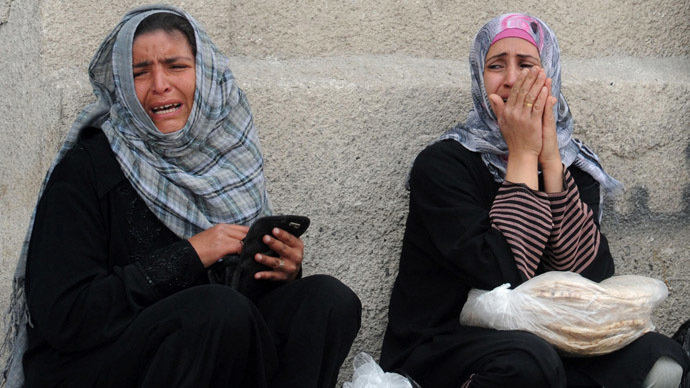

 Aletho News

