The Ecological Importance of California’s Rim Fire
By Chad Hanson | John Muir Project

Photo: Doug Bevington
Since the Rim fire began in the central Sierra Nevada on August 17, there has been a steady stream of fearful, hyperbolic, and misinformed reporting in much of the media. The fire, which is currently 188,000 acres in size and covers portions of the Stanislaus National Forest and the northwestern corner of Yosemite National Park, has been consistently described as “catastrophic”, “destructive”, and “devastating.” One story featured a quote from a local man who said he expected “nothing to be left”. However, if we can, for a moment, set aside the fear, the panic, and the decades of misunderstanding about wildland fires in our forests, it turns out that the facts differ dramatically from the popular misconceptions. The Rim fire is a good thing for the health of the forest ecosystem. It is not devastation, or loss. It is ecological restoration.
What relatively few people in the general public understand at present is that large, intense fires have always been a natural part of fire regimes in Sierra Nevada forests. Patches of high-intensity fire, wherein most or all trees are killed, creates “snag forest habitat,” which is the rarest, and one of the most ecologically important, forest habitat types in the entire Sierra Nevada. Contrary to common myths, even when forest fires burn hottest, only a tiny proportion of the aboveground biomass is actually consumed (typically less than 3 percent). Habitat is not lost. Far from it. Instead, mature forest is transformed into “snag forest”, which is abundant in standing fire-killed trees, or “snags,” patches of native fire-following shrubs, downed logs, colorful flowers, and dense pockets of natural conifer regeneration.
This forest rejuvenation begins in the first spring after the fire. Native wood-boring beetles rapidly colonize burn areas, detecting the fires from dozens of miles away through infrared receptors that these species have evolved over millennia, in a long relationship with fire. The beetles bore under the bark of standing snags and lay their eggs, and the larvae feed and develop there. Woodpecker species, such as the rare and imperiled black-backed woodpecker (currently proposed for listing under the Endangered Species Act), depend upon snag forest habitat and wood-boring beetles for survival.
One black-backed woodpecker eats about 13,500 beetle larvae every year — and that generally requires at least 100 to 200 standing dead trees per acre. Black-backed woodpeckers, which are naturally camouflaged against the charred bark of a fire-killed tree, are a keystone species, and they excavate a new nest cavity every year, even when they stay in the same territory. This creates homes for numerous secondary cavity-nesting species, like the mountain bluebird (and, occasionally, squirrels and even martens), that cannot excavate their own nest cavities. The native flowering shrubs that germinate after fire attract many species of flying insects, which provide food for flycatchers and bats; and the shrubs, new conifer growth, and downed logs provide excellent habitat for small mammals. This, in turn, attracts raptors, like the California spotted owl and northern goshawk, which nest and roost mainly in the low/moderate-intensity fire areas, or in adjacent unburned forest, but actively forage in the snag forest habitat patches created by high-intensity fire — a sort of “bedroom and kitchen” effect. Deer thrive on the new growth, black bears forage happily on the rich source of berries, grubs, and small mammals in snag forest habitat, and even rare carnivores like the Pacific fisher actively hunt for small mammals in this post-fire habitat.
In fact, every scientific study that has been conducted in large, intense fires in the Sierra Nevada has found that the big patches of snag forest habitat support levels of native biodiversity and total wildlife abundance that are equal to or (in most cases) higher than old-growth forest. This has been found in the Donner fire of 1960, the Manter and Storrie fires of 2000, the McNally fire of 2002, and the Moonlight fire of 2007, to name a few. Wildlife abundance in snag forest increases up to about 25 or 30 years after fire, and then declines as snag forest is replaced by a new stand of forest (increasing again, several decades later, after the new stand becomes old forest). The woodpeckers, like the black-backed woodpecker, thrive for 7 to 10 years after fire generally, and then must move on to find a new fire, as their beetle larvae prey begins to dwindle. Flycatchers and other birds increase after 10 years post-fire, and continue to increase for another two decades. Thus, snag forest habitat is ephemeral, and native biodiversity in the Sierra Nevada depends upon a constantly replenished supply of new fires.
It would surprise most people to learn that snag forest habitat is far rarer in the Sierra Nevada than old-growth forest. There are about 1.2 million acres of old-growth forest in the Sierra, but less than 400,000 acres of snag forest habitat, even after including the Rim fire to date. This is due to fire suppression, which has, over decades, substantially reduced the average annual amount of high-intensity fire relative to historic levels, according to multiple studies. Because of this, and the combined impact of extensive post-fire commercial logging on national forest lands and private lands, we have far less snag forest habitat now than we had in the early twentieth century, and before. This has put numerous wildlife species at risk. These are species that have evolved to depend upon the many habitat features in snag forest — habitat that cannot be created by any other means. Further, high-intensity fire is not increasing currently, according to most studies (and contrary to widespread assumptions), and our forests are getting wetter, not drier (according to every study that has empirically investigated this question), so we cannot afford to be cavalier and assume that there will be more fire in the future, despite fire suppression efforts. We will need to purposefully allow more fires to burn, especially in the more remote forests.
The black-backed woodpecker, for example, has been reduced to a mere several hundred pairs in the Sierra Nevada due to fire suppression, post-fire logging, and commercial thinning of forests, creating a significant risk of future extinction unless forest management policies change, and unless forest plans on our national forests include protections (which they currently do not). This species is a “management indicator species”, or bellwether, for the entire group of species associated with snag forest habitat. As the black-backed woodpecker goes, so too do many other species, including some that we probably don’t yet know are in trouble. The Rim fire has created valuable snag forest habitat in the area in which it was needed most in the Sierra Nevada: the western slope of the central portion of the range. Even the Forest Service’s own scientists have acknowledged that the levels of high-intensity fire in this area are unnaturally low, and need to be increased. In fact, the last moderately significant fires in this area occurred about a decade ago, and there was a substantial risk that a 200-mile gap in black-backed woodpeckers populations was about to develop, which is not a good sign from a conservation biology standpoint. The Rim fire has helped this situation, but we still have far too little snag forest habitat in the Sierra Nevada, and no protections from the ecological devastation of post-fire logging.
Recent scientific studies have caused scientists to substantially revise previous assumptions about historic fire regimes and forest structure. We now know that Sierra Nevada forests, including ponderosa pine and mixed-conifer forests, were not homogenously “open and parklike” with only low-intensity fire. Instead, many lines of evidence, and many published studies, show that these areas were often very dense, and were dominated by mixed-intensity fire, with high-intensity fire proportions ranging generally from 15 percent to more than 50 percent, depending upon the fire and area. Numerous historic sources, and reconstructions, document that large high-intensity fire patches did in fact occur prior to fire suppression and logging. Often these patches were hundreds of acres in size, and occasionally they were thousands — even tens of thousands — of acres. So, there is no ecological reason to fear or lament fires like the Rim fire, especially in an era of ongoing fire deficit.
Most fires, of course, are much smaller, and less intense than the Rim fire, including the other fires occurring this year. Over the past quarter-century fires in the Sierra Nevada have been dominated on average by low/moderate-intensity effects, including in the areas that have not burned in several decades. But, after decades of fear-inducing, taxpayer-subsidized, anti-fire propaganda from the US Forest Service, it is relatively easier for many to accept smaller, less intense fires, and more challenging to appreciate big fires like the Rim fire. However, if we are to manage forests for ecological integrity, and maintain the full range of native wildlife species on the landscape, it is a challenge that we must embrace.
Encouragingly, the previous assumption about a tension between the restoration of more fire in our forests and home protection has proven to be false. Every study that has investigated this issue has found that the only way to effectively protect homes is to reduce combustible brush in “defensible space” within 100 to 200 feet of individual homes. Current forest management policy on national forest lands, unfortunately, remains heavily focused not only on suppressing fires in remote wildlands far from homes, but also on intensive mechanical “thinning” projects — which typically involve the commercial removal of upwards of 80 percent of the trees, including mature trees and often old-growth trees —that are mostly a long distance from homes. This not only diverts scarce resources away from home protection, but also gives homeowners a false sense of security because a federal agency has implied, incorrectly, that they are now protected from fire — a context that puts homes further at risk.
The new scientific data is telling us that we need not fear fire in our forests. Fire is doing important and beneficial ecological work, and we need more of it, including the occasional large, intense fires. Nor do we need to balance home protection with the restoration of fire’s role in our forests. The two are not in conflict. We do, however, need to muster the courage to transcend our fears and outdated assumptions about fire. Our forest ecosystems will be better for it.
Chad Hanson, the director of the John Muir Project (JMP) of Earth Island Institute, has a Ph.D. in ecology from the University of California at Davis, and focuses his research on forest and fire ecology in the Sierra Nevada. He can be reached at cthanson1@gmail.com, or visit JMP’s website at www.johnmuirproject.org for more information, and for citations to specific studies pertaining to the points made in this article.
Source: Earth Justice Network
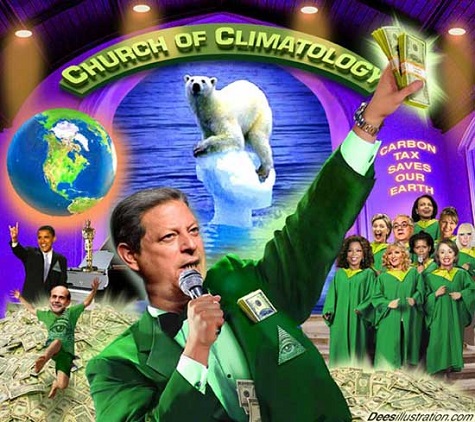
CAGW memeplex
By Andy West | Climate Etc. | November 1, 2013
The hypothesis for a single, simple, scientific explanation underlying the entire complex social phenomenon of CAGW.
Whatever is happening in the great outdoors regarding actual climate, inside the minds of men overwhelming evidence indicates that Catastrophic Anthropogenic Global Warming is a self-sustaining narrative that is living off our mental capacity, either in symbiosis or as an outright cultural parasite; a narrative that is very distanced from physical real-world events. The social phenomenon of CAGW possesses all the characteristics of a grand memetic alliance, like numerous similar structures before it stretching back beyond the reach of historic records, and no doubt many more cultural creatures that have yet to birth.
Having painted a picture CAGW from a memetic perspective in fiction last December [link], I realized that many people instinctively sense the memetic characteristics of CAGW, and typically express this in blogs or articles as relatively casual comments that cite memes or religion. Yet these folks appear to have no real knowledge of how truly meaningful and fundamental their observations are. Hence I have written a comprehensive essay which attempts to fill in this knowledge gap, and indeed proposes that the entire complex social phenomenon of CAGW is dominated by memetic action, i.e. CAGW is a memeplex.
Note: a ‘meme’ is a minimal cultural entity that is subject to selective pressures during replication between human minds, its main medium. A meme can be thought of as the cultural equivalent to a gene in biology; examples are a speech, a piece of writing (‘narratives’), a tune or a fashion. A memeplex is a co-adapted group of memes that replicate together and reinforce each other’s survival; cultural or political doctrines and systems, for instance a religion, are major alliances of self-replicating and co-evolving memes. Memetics101: memeplexes do not only find shelter in the mind of a new host, but they will change the perceptions and life of their new host.
Because the memetic explanation for CAGW rests upon social and evolutionary fundamentals (e.g. the differential selection of self-replicating narratives, narrative alliances, the penetration of memes into the psyche causing secondary phenomena like motivated reasoning, noble cause corruption and confirmation bias etc.) it is not dependent upon politics or philosophies of any stripe, which tend to strongly color most ‘explanations’ and typically rob them of objectivity. Critically, a memetic explanation also does not depend on anything happening in the climate (for better or for worse). CO2 worry acted as a catalyst only; sufficient real-world uncertainties at the outset (and indeed still) provided the degree of freedom that let a particular ‘ability’ of memeplexes take hold. That ability is to manipulate perceptions (e.g. of real-world uncertainty itself), values, and even morals, which means among other things that once birthed the CAGW memeplex rapidly insulated itself from actual climate events.
Homo Sapiens have likely co-evolved with memeplexes essentially forever (Blackmore), therefore they are a fundamental part of us, and indeed no characteristic of CAGW appears to be in the slightest bit new, quite the contrary. Underlining this ancient origin, one class of memeplexes folks are familiar with is: ‘all religions’. Yet these fuzzy structures are by no means limited to religion; science has triggered memetic themes before and extreme politics frequently does so, and there have even been historic memeplexes centered on climate. This does not mean CAGW is precisely like a religion, but being similarly powered by self-replicating narratives creates the comparable characteristics that many have commented upon.
Using a great deal of circumstantial evidence from the climate blogosphere and support from various knowledge domains: neuroscience, (economic) game theory, law, corporate behavior, philosophy, biological evolution and of course memetics etc., the essay maps the primary characteristics of CAGW onto the expected behavior for a major memeplex, finding conformance. Along the way, contemporary and historic memeplexes (mainly religious) are explored as comparisons. The essay is long, book-sized, because the subject matter is large. I guess an essay describing all of climate science would be very long, so one exploring the entire memetic characteristics of CAGW plus I hope enough context for readers to make sense of that, is similarly so.
The context is extremely broad, ranging from why pyramid building evolved in Egypt to a passionate cry against kings, priests, and tyranny in a radical women’s journal of the early nineteenth century. From the impact of memeplexes on the modern judicial system courtesy of Duke Law, to the ancient purpose of story-telling and contemporary attempts to subvert this, along with a plot analysis of the film Avatar. From the long and curious tale of an incarnation of ‘the past is always better’ meme currently rampant on the internet, to the evolutionary selection of fuzzy populations in biology and the frankenplex multi-element cultural creature that is CAGW. From the conflict related death-rates in primitive tribes versus modern states, to analysis of corporate social responsibilities after the Enron and banking sector crises. From memetic chain letters that stretch back to the hieroglyphs (Letters from Heaven), to the analysis of social cross-coalitions via game theory within the perspective of economics. From the concept of ‘the Social Mind’ courtesy of neuro-scientist Michael Gazzaniga, to pressure upon religions by aggressive atheism as promoted by Richard Dawkins. From modification of theistic memes in the Old to the New Testament, to notions of Gaia and telegraph wires and wing-nuts. Plus memetic sex, witchcraft, cults, Cathars, concepts of salvation, Communism, hi-jacking altruism, Lynsenkoism, lichen, psychologizers, National Socialism, de-darwinisation, that ugly term ‘denier’, and much more.
The reason for this huge breadth and depth is that memeplexes are deeply integrated into both our psyche and our societies; this level of vision and historical context is necessary to uncover the entities, to identify their actions with as much distancing from what remains of ‘ourselves’ as can be achieved.
In counter-weight to this very broad context, the essay is richly laced throughout with quotes from many of the main players and commenters in the climate blogosphere (plus from newspapers and other publications too), much of which will be pretty familiar to followers of the climate debate. These quotes cover luke-warmers, skeptics and Consensus folks, plus politicians, philosophers, psychologists and others as regards their views on CAGW, yet all are chosen and brought together for their focus on the memetic aspects of the phenomenon. There are also plenty of deeper topics specific to the sociological aspects of CAGW that most denizens of the climate blogosphere will recognize and can get their teeth into, some contentious. For instance, a look at Richard Dawkins’ immersion within a rampant memeplex (while this would seem to be both controversial and ironic, when one realizes that we’re all immersed to some extent in several memeplexes, irony tends to morph to introspection). A brief view of a different Stephan Lewandowski paper (i.e. NOT either of the ‘conspiracy ideation’ ones) in which he highlights the very type of inbuilt cultural bias that has then led him blindly to produce those very challenged and troubled works! An exposé of memetically induced cultural bias in a recent paper on ‘Professionals’ Discursive Construction of Climate Change’, that in my opinion undermines the objectivity of the work and robs the conclusions of any real meaning. A very interesting take on Mike Hulme’s stance as revealed by the memetic perspective. A glimpse of the ‘shall-we shan’t-we dance’ tentative cross-coalition between the Christian and CAGW memeplexes. The constant references to grandchildren within CAGW advocacy texts. Both the laudable and the lurking memetic content in philosopher Pascal Bruckner’s essay ‘Against Environmental Panic’. Numerous views of sociological comment by atmospheric scientist Judith Curry or at her blog Climate Etc from a memetic perspective. Plus a delve into one of pointman’s very interesting climate related essays, strong language and classic climate quotes explained via memetics, and more…
While CAGW skeptics might at first blush celebrate the possibility of a single, non-climate related, non-partisan, science-based theory that explains the whole complex range of CAGW’s social characteristics, acceptance of this theory also requires acceptance of a couple of pretty uncomfortable truths, and the ditching of at least one touchstone used by many (but by no means all) climate change skeptics. These issues are all expounded in the essay, but I summarize here:
- Acceptance of the memeplex explanation requires us to rethink what ‘self’ means, and how our opinions, perceptions, and even morals are formed and maintained, with an implication that our ‘self’ is much more about the societal groups we’re immersed in than about what’s intrinsically inside our heads. The fact that we don’t really ‘own’ ourselves, is challenging.
- Acceptance of the memeplex explanation requires a rejection of the ‘scam’ or ‘hoax’ theory as a root cause of the CAGW phenomenon, and as a primary motivator for the vast majority of CAGW ‘adherents’. (Note this does not rule out the fact that scams / hoaxes and other negative social phenomena may be attached to the memeplex as secondary structures – this is in fact common for major memeplexes). The essay spends quite some length saying why this is so.
- Whatever downsides are observed to stem from the social phenomenon of CAGW, memeplexes in general often contribute major net advantages to their host societies, sometimes very major. The balance between positive and negative aspects of a major memeplex are not easy to determine except long in retrospect and with access to the ‘big picture’ (all attributes and all impacts across all of society). Hence we cannot yet know the balance of this equation for CAGW. The positive aspects are not typically intuitive.
- As already mentioned, the memetic explanation is virtually independent of actual climate events. Hence dangerous climate scenarios are not ruled out. It simply means that no scenarios are ruled out, from the very dangerous to the utterly benign, and it is very much in the memeplex’s interests to keep the situation that way. Memeplexes wallow in uncertainty and confusion.
Many commenters in the climate blogosphere have written to the effect that: ‘it isn’t and never was about the science’. I happen to agree, very little of the CAGW phenomenon is about the science. The memetic perspective reveals why this is; not in terms of political or financial motivations but in the objective terms of the underlying social mechanisms, which are independent of (and enable) all such motivations.
Despite the essay’s length, I hope you will take the journey to acquiring a memetic perspective. Here [ memeplex summary ] is a very distilled summary of each section of the essay below this text, with a list of references, in which a few regular contributors might find their names. Please note that the work is not a ‘paper’, containing no proofs or supporting mathematics, excepting a couple of references to Game Theory and the Price Equation. And merely for convenience, I have written as though the memeplex hypothesis is true, i.e. that CAGW is a memeplex and that this characteristic dominates the social effects. It is just extremely cumbersome throughout hundreds of references to make them all conditional – so I haven’t. Yet by no means does that mean the hypothesis is true, or at least wholly true in the sense that the memetic effects are dominant. Readers must form their own opinions regarding that, no doubt which opinions will be colored by the memeplexes they’re already immersed in J. I think most folks will find it an interesting and enjoyable ride though. The complete essay is here [link]: (Note: this Post text doubles as the essay Foreword, so you can skip that).
P.S. while I intend to issue further Revs of the essay with some extensions plus feedback / corrections applied, in practice this may only happen on a very long timescale, or possibly not at all as my time is extremely pressured. Please keep an eye on www.wearenarrative.wordpress.com for any up-Revs or additional information. Note: the novella Truth from the WUWT post above is now available (free) at Smashwords here: https://www.smashwords.com/books/view/273983 or within the anthology ‘Engines of Life’ also at Smashwords here: https://www.smashwords.com/books/view/334834, or at Amazon here.
Why the WHO report on congenital anomalies in Iraq is a disgrace
By Christopher Busby | RT | September 28, 2013
The recently published World Health Organization report on its study of congenital birth anomalies in Iraq is nothing short of a disgrace.
There have been an increasing number of reports about childhood cancers, adult cancers and birth defects in Iraq. Public pressure and media attention to this catastrophic situation prompted a joint study by the World Health Organization (WHO) and the Iraqi Health Ministry to determine the prevalence of birth defects in the country. The study began in May-June 2012 and was completed in early October 2012. But it was not made public until recently. And I have to say that those who designed and carried out the study were well aware that the method they chose could not possibly give correct answers to the question of congenital anomaly rates, since they had consulted with me before they started, and I had pointed out why their method was unsafe, even sending them a report suggesting a method that would work.
In May 2011, I was asked to travel to Geneva by the Union of Arab Jurists to make my first presentation at the UN Human Rights Council, reporting our preliminary findings of extraordinarily high rates of cancer, infant mortality and sex ratio perturbations in the population of Fallujah, which we published in the International Journal of Environment and Public Health in 2010. I met with the director of the Human Rights Council, and also with the director of the International Red Cross, and made the case for intervention.
There was massive anecdotal evidence of these genetic damage effects of the US uranium weapons since the mid-1990s and in Fallujah after the 2004 war, but no one had carried out any study. We collected some money from individuals (about £4,000) and marched in. What we found made headlines in The Daily Telegraph, Le Monde and all over the world. In that study, we examined infant mortality rather than congenital birth defects, for reasons we gave in the paper and I will review here.
Later we also published two other follow-up studies based on hospital data, one analyzing 52 elements in the hair of the parents of children with congenital anomalies, the other giving the congenital anomaly rates and types. Both were based on prospective collection of data by the pediatricians from Fallujah General Hospital, and so we could be sure of the types of anomaly and the numbers.
I have to say that the fear generated by these discoveries made it extremely difficult to get the results published. The Lancet threw the papers out without sending them for review. The International Journal of Environment and Public Health was attacked after the first one, by various individuals they refused to name – and they wouldn’t publish the second one, which was published by Conflict and Health. The third one was also rejected by The Lancet and various other frightened journals and eventually was published by the Journal of the Islamic Medical Association, and then only after I asked them what Allah would think of their pusillanimous behavior. So much for scientific truth.
I pointed out to the WHO representative who contacted me in January 2011, Syed Jaffar Hussein, asking if I would join the WHO project, that the kind of questionnaire study that WHO were proposing would fail for two reasons. The first and most critical is that parents will not have sufficient knowledge to diagnose a congenital anomaly in their baby. For example, in the absence of hospital involvement at a high technical level (e.g. Fallujah Hospital) the baby will just die of what seems to the parents to be pneumonia, or failure to thrive, or the child will die for no apparent reason. In terms of congenital heart defects, or kidney defects, or many neurological defects there is no observable sign. And the type of monstrous defect, the Cyclops eye, the lack of arms, all the pictures on the Internet, these are a minor fraction of all the congenital defects that are fatal at birth. Generally the mother is not allowed to see such a baby and she is told it has died. It is the heart defects that make up the majority, and these are only diagnosable in a hospital pediatric unit.
The second problem I know about, since I have designed and carried out several questionnaire epidemiology studies since the pilot one in Carlingford, Ireland in 2000, is that people can’t remember back even five years, let alone 15 years. And in a situation like Iraq, where having a child with a congenital defect means that you yourself are contaminated and damaged, the likelihood is that you will shortly be dead from cancer and a whole range of illnesses generated by the causes that killed your baby. So the questionnaire study loses cases as you go back in time. The WHO results clearly show this, since the rates they report are actually lower than expected, suggesting that living in Iraq is good for birth outcomes. They seem surprised by this.
So a hospital-based prospective study is the only way. And since this is such a political issue, I said I would only be involved if I could have a hands-on role so that the numbers could be checked, and that was the end of our communication.
The result is very shoddy procedure which would not make it into peer-review. The WHO says that its work and the report was peer-reviewed by senior epidemiologists at the London School of Hygiene and Tropical Medicine, but if this is true these reviewers should be sent packing. The WHO report fails to refer to any of the studies, like our follow-up papers on uranium in Conflict and Health and the IMANA congenital anomaly rates one. There, for example, we looked at the uranium content along long strands of hair in mothers of birth-defect children and showed that the concentrations increased back to the time of the US attacks.

It is fairly easy to show that the WHO results are ridiculous. There was a previous similar study under Saddam’s regime for the period 1994-1999 which is of interest. This study also was not cited in the WHO report but was discussed in our paper which they must have read. The Iraqi child and maternal mortality survey covered 46,956 births in Iraq from 1994-1999. Results were obtained by questionnaires filled out by the mothers and results were given for all children aged 0-4 who died in 1994-1999. Effects found in this period, if due to environmental agents, would, of course, follow exposures in and following the first Gulf War. Using data presented in the tables in this publication it is easy to show that the results indicated a marked increase in deaths in the first year of life with an infant mortality (0-1) rate of 93 per 1,000 live births. Fifty-six percent of deaths in all the children aged 0-5 occurred in the first month after birth, but since the results were from self-reporting, it was difficult to draw conclusions as to the underlying causes of death except in the case of oncology/hematology. For example, the largest reported proportion of deaths in the neonates were listed as “cough/difficulty breathing” which might result from many different underlying causes. The low rates from congenital malformation reported are hardly credible. However, using data published in the report it appeared that the cancer and leukemia death rates in the entire all-Iraq 0-4 group were about three or four times the levels found in Western populations for this age group. These rates were three times higher in the south where depleted uranium was employed in the major tank battles near the Kuwait border (53 per 100,000 per year) than in the north (18 per 100,000 per year) where there was less fighting and where depleted uranium was not employed to such an extent. Furthermore, cancer and leukemia rates were highest in the 0-1 year group, which is unusual; the main peak in childhood cancer is generally found at age 4.
Despite all that can be said about the methodology, it is extremely hard to reconcile the WHO study’s finding of an overall congenital anomaly rate of 23.6 with the rate of 147 we found in Fallujah General Hospital, reported by us in. In Table 2, I copy the full results which were submitted in this congenital anomaly paper. It is clear from this that the majority of conditions could not be recognized by mothers of children who died at or shortly after birth. Of 291 babies with congenital abnormalities in our Fallujah hospital study, 113 were cardiovascular, 40 digestive, 9 genitourinary and 44 chromosomal defects, few of which could be recognized as congenital anomalies by mothers, and would need specialized diagnoses in a top hospital to classify.
It is shown in Table 2 that the rate for congenital heart effects alone is twice the rate reported in the WHO study. Of particular concern is the outcome of the “Expert Peer Group” meeting on 27-28 July, 2013, which apparently endorsed this epidemiologically unsafe approach and its results.
I have written and given presentations on scientific dishonesty. The truth can be established by science, but not if it is dishonest and political. And it seems that this report, and the events and decisions that preceded it, and particularly the London School of Hygiene and Tropical Medicine peer review meeting, are a classical example of scientific dishonesty. The use of the London School of Hygiene and Tropical Medicine reminds me of the use of the Royal Society to produce a disgraceful report on depleted uranium in 2001. Since the outcome is intended to exonerate the US and UK military from what are effectively war crimes, and since the result will be employed to defend the continued use of uranium weapons, all concerned in this chicanery should be put before a criminal court and tried for what they have done. Their actions are responsible for human suffering and death and cannot be forgiven. This is a human rights issue. I returned to the issue of Fallujah when I was invited a second time to make a presentation at the UN Human Rights Council in September 2011. I said then it was time to make a legal stand and I presented the human rights petition I had developed with the International Committee for Nuclear Justice. This issue will be taken forward by the Low Level Radiation Campaign in the next six months, so watch this space.
Finally, we should not forget that the WHO signed an agreement in 1959 with the International Atomic Energy Agency to keep their noses out of any research that has a connection with radiation or radioactivity. This agreement is still in force and is a matter of deep concern.
Christopher Busby is an expert on the health effects of ionizing radiation and Scientific Secretary of the European Committee on Radiation Risk.
Featured Video

Russia Helping Build a New Middle East /Trita Parsi
or go to
Aletho News Archives – Video-Images
From the Archives
Sam Husseini: The entire US establishment helped lie their way into the Iraq war
By Slava Zilber | American Herald Tribune | October 14, 2019
Sam Husseini is a senior analyst with the Institute for Public Accuracy, independent journalist and contributor to The Nation and FAIR.
Slava Zilber: Sam, three years ago, you appeared on Talk Nation Radio with David Swanson and spoke about the case of the GCHQ whistleblower Katharine Gun. You pointed out that the people involved in the spying on the UN and the people authorizing the Iraq War were not held accountable:
“Virtually everybody who went along with the war, whether it is Kerry or Clinton, of course, the Bush administration themselves has falsified their own records in terms of why, what they did, when they did, why they did it, to the extent that they’ve been scrutinised at all.”
You also address it in a recent article. And recently, Joe Biden has been lying about his position on the Iraq War. How can such an important issue escape meaningful scrutiny? … continue
Blog Roll
 Aletho News
- Russia Helping Build a New Middle East /Trita Parsi
- Barghouti: ‘Netanyahu has fallen,’ era of Smotrich, Ben-Gvir over
- China slams US policy on Iran as Russia rejects legality of nuclear meeting at UN
- The Mecca Pact Courts Iran: Containment Comes Full Circle
- Oman FM: Persian Gulf states, Iran, Iraq should form security pact excluding US
- Trump peddles fresh falsehoods, claims Iran ‘started the war’ as US aggression drags on
- Ukraine quagmire? Yes, but it’s for NATO, not Russia
- US intelligence hypes Chinese, Russian space threats while accelerating its own military buildup in orbit
- Iran FM Araghchi: “Hormuz Will No Longer Be the Same”
- EU facing trillion-euro debt hole while seeking more cash for Kiev
- If Americans Knew
- Israel blocks international visitors from West Bank – what is it trying to hide?
- ‘There are no dreams here’: How Israel’s outgoing gov’t remade the West Bank
- Netanyahu, Katz Blocked IDF Plan to End Hebron Raids, Allow Locals to Return
- Mamdani’s NYPD is poised to sign a three-year, $750,500 no-bid contract with Israeli surveillance firm
- Israel Votes Today: What the Election Means for Americans and How Netanyahu’s Rivals Differ
- DAILY UPDATE: Latest essential news on Palestine, Israel, & region
- Israeli media analysis: 2 Paths to War With Iran Loom Over Israel’s Election
- Diaspora Jewish leaders stress Israel ties — no matter the outcome of tomorrow’s elections
- Israeli forces kill 14 in Gaza as UN commission says genocide continues
- The Israeli elections have become a fight over October 7, but only Zionist opinions are allowed
- No Tricks Zone
- Sudden Stratospheric Warming, Powerful El Niño Combination May Lead To Extreme Europe Cold, Energy Crisis!
- Two New Studies Find Thwaites Glacier Melt Cannot Be Driven By Human Activity Or A Warming Ocean
- E-Cars Reduce CO2 Emissions By Only 41% Compared To Internal Combustion Engine Vehicles
- Predictions Made By Renowned Climate Professor Over Past Decades Have Been Proven To Be Poor
- New Study Suggests Large Regions Of The Pacific Ocean Have Been Cooling For The Last 80 Years
- Germany’s Green Energy Debacle: High Energy Costs Force Kahla Porzellan to Close After 182 Years!
- New Study: 50 Years Of The Most Aggressive ‘Net Zero’ Policies Can Only Affect The Global Climate By 0.03°C
- US September “Heat” Was No Record…Many Records Set Decades Ago
- Latest European Green Energy Debacle; Portugal’s Largest Flagship Solar Park Insolvent!
- Green Energy Debacle: German Expert Professor Fritz Vahrenholt Warns Of Severe Economic And Social Consequences


