The first month of the genocide trial of former Guatemalan dictator Efrain Rios Montt has elicited chilling testimony from Mayan survivors who – as children – watched their families slaughtered by a right-wing military that was supported and supplied by U.S. President Ronald Reagan.
As the New York Timesreported on Monday, “In the tortured logic of military planning documents conceived under Mr. Ríos Montt’s 17-month rule during 1982 and 1983, the entire Mayan Ixil population was a military target, children included. Officers wrote that the leftist guerrillas fighting the government had succeeded in indoctrinating the impoverished Ixils and reached ‘100 percent support.’”
President Ronald Reagan meeting with Guatemalan dictator Efrain Rios Montt.
So, everyone was targeted in these scorched-earth campaigns that eradicated more than 600 Indian villages in the Guatemalan highlands. But this genocide was not simply the result of a twisted anticommunist ideology that dominated the Guatemalan military and political elites. This genocide also was endorsed by the Reagan administration.
A document that I discovered recently in the archives of the Reagan Library in Simi Valley, California, revealed that Reagan and his national security team in 1981 agreed to supply military aid to the brutal right-wing regime in Guatemala to pursue the goal of exterminating not only “Marxist guerrillas” but people associated with their “civilian support mechanisms.”
This supportive attitude toward the Guatemalan regime’s brutality took shape in spring 1981 as President Reagan sought to ease human-rights restrictions on military aid to Guatemala that had been imposed by President Jimmy Carter and the Democratic-controlled Congress in the late 1970s.
As part of that relaxation effort, Reagan’s State Department “advised our Central American embassies that it has been studying ways to restore a closer, cooperative relationship with Guatemala,” according to a White House “Situation Room Checklist” dated April 8, 1981. The document added:
“State believes a number of changes have occurred which could make Guatemalan leaders more receptive to a new U.S. initiative: the Guatemalans view the new administration as more sympathetic to their problems [and] they are less suspect of the U.S. role in El Salvador,” where the Reagan administration was expanding support for another right-wing regime infamous for slaughtering its political opponents, including Catholic clergy.
“State has concluded that any attempt to reestablish a dialogue [with Guatemala] would require some initial, condition-free demonstration of our goodwill. However, this could not include military sales which would provoke serious U.S. public and congressional criticism. State will undertake a series of confidence building measures, free of preconditions, which minimize potential conflict with existing legislation.”
The “checklist” added that the State Department “has also decided that the administration should engage the Guatemalan government at the highest level in a dialogue on our bilateral relations and the initiatives we can take together to improve them. Secretary [of State Alexander] Haig has designated [retired] General Vernon Walters as his personal emissary to initiate this process with President [Fernando Romeo] Lucas [Garcia].
“If Lucas is prepared to give assurances that he will take steps to halt government involvement in the indiscriminate killing of political opponents and to foster a climate conducive to a viable electoral process, the U.S. will be prepared to approve some military sales immediately.”
But the operative word in that paragraph was “indiscriminate.” The Reagan administration expressed no problem with killing civilians if they were considered supporters of the guerrillas who had been fighting against the country’s ruling oligarchs and generals since the 1950s when the CIA organized the overthrow of Guatemala’s reformist President Jacobo Arbenz.
Sympathy for the Generals
The distinction was spelled out in “Talking Points” for Walters to deliver in a face-to-face meeting with General Lucas. As edited inside the White House in April 1981, the “Talking Points” read: “The President and Secretary Haig have designated me [Walters] as [their] personal emissary to discuss bilateral relations on an urgent basis.
“Both the President and the Secretary recognize that your country is engaged in a war with Marxist guerrillas. We are deeply concerned about externally supported Marxist subversion in Guatemala and other countries in the region. As you are aware, we have already taken steps to assist Honduras and El Salvador resist this aggression.
“The Secretary has sent me here to see if we can work out a way to provide material assistance to your government. … We have minimized negative public statements by US officials on the situation in Guatemala. … We have arranged for the Commerce Department to take steps that will permit the sale of $3 million worth of military trucks and Jeeps to the Guatemalan army. …
“With your concurrence, we propose to provide you and any officers you might designate an intelligence briefing on regional developments from our perspective. Our desire, however, is to go substantially beyond the steps I have just outlined. We wish to reestablish our traditional military supply and training relationship as soon as possible.
“As we are both aware, this has not yet been feasible because of our internal political and legal constraints relating to the use by some elements of your security forces of deliberate and indiscriminate killing of persons not involved with the guerrilla forces or their civilian support mechanisms. I am not referring here to the regrettable but inevitable death of innocents through error in combat situations, but to what appears to us a calculated use of terror to immobilize non politicized people or potential opponents. …
“If you could give me your assurance that you will take steps to halt official involvement in the killing of persons not involved with the guerrilla forces or their civilian support mechanism … we would be in a much stronger position to defend successfully with the Congress a decision to begin to resume our military supply relationship with your government.”
In other words, though the “talking points” were framed as an appeal to reduce the “indiscriminate” slaughter of “non politicized people,” they amounted to an acceptance of scorched-earth tactics against people involved with the guerrillas and “their civilian support mechanisms.” The way that played out in Guatemala – as in nearby El Salvador – was the massacring of peasants in regions considered sympathetic to leftist insurgents.
The newly discovered documents – and other records declassified in the late 1990s – make clear that Reagan and his administration were well aware of the butchery underway in Guatemala and elsewhere in Central America.
According to one “secret” cable also from April 1981 — and declassified in the 1990s — the CIA was confirming Guatemalan government massacres even as Reagan was moving to loosen the military aid ban. On April 17, 1981, a CIA cable described an army massacre at Cocob, near Nebaj in the Ixil Indian territory, because the population was believed to support leftist guerrillas.
A CIA source reported that “the social population appeared to fully support the guerrillas” and “the soldiers were forced to fire at anything that moved.” The CIA cable added that “the Guatemalan authorities admitted that ‘many civilians’ were killed in Cocob, many of whom undoubtedly were non-combatants.” [Many of the Guatemalan documents declassified in the 1990s can be found at the National Security Archive’s Web site.]
Dispatching Walters
In May 1981, despite the ongoing atrocities, Reagan dispatched Walters to tell the Guatemalan leaders that the new U.S. administration wanted to lift the human rights embargoes on military equipment that Carter and Congress had imposed.
The “Talking Points” also put the Reagan administration in line with the fiercely anticommunist regimes elsewhere in Latin America, where right-wing “death squads” operated with impunity liquidating not only armed guerrillas but civilians who were judged sympathetic to left-wing causes like demanding greater economic equality and social justice.
Despite his aw shucks style, Reagan found virtually every anticommunist action justified, no matter how brutal. From his eight years in the White House, there is no historical indication that he was morally troubled by the bloodbath and even genocide that occurred in Central America while he was shipping hundreds of millions of dollars in military aid to the implicated forces.
The death toll was staggering — an estimated 70,000 or more political killings in El Salvador, possibly 20,000 slain from the Contra war in Nicaragua, about 200 political “disappearances” in Honduras and some 100,000 people eliminated during a resurgence of political violence in Guatemala. The one consistent element in these slaughters was the overarching Cold War rationalization, emanating in large part from Ronald Reagan’s White House.
Despite their claims to the contrary, the evidence is now overwhelming that Reagan and his advisers knew the extraordinary brutality going on in Guatemala and elsewhere, based on their own internal documents.
According to a State Department cable on Oct. 5, 1981, when Guatemalan leaders met again with Walters, they left no doubt about their plans. The cable said Gen. Lucas “made clear that his government will continue as before — that the repression will continue. He reiterated his belief that the repression is working and that the guerrilla threat will be successfully routed.”
Human rights groups saw the same picture. The Inter-American Human Rights Commission released a report on Oct. 15, 1981, blaming the Guatemalan government for “thousands of illegal executions.” [Washington Post, Oct. 16, 1981]
But the Reagan administration was set on whitewashing the ugly scene. A State Department “white paper,” released in December 1981, blamed the violence on leftist “extremist groups” and their “terrorist methods” prompted and supported by Cuba’s Fidel Castro.
What the documents from the Reagan Library make clear is that the administration was not simply struggling ineffectively to rein in these massacres – as the U.S. press corps typically reported – but was fully on board with the slaughter of people who were part of the guerrillas’ “civilian support mechanisms.”
U.S. intelligence agencies continued to pick up evidence of these government-sponsored massacres. One CIA report in February 1982 described an army sweep through the so-called Ixil Triangle in central El Quiche province.
“The commanding officers of the units involved have been instructed to destroy all towns and villages which are cooperating with the Guerrilla Army of the Poor [the EGP] and eliminate all sources of resistance,” the report said. “Since the operation began, several villages have been burned to the ground, and a large number of guerrillas and collaborators have been killed.”
The CIA report explained the army’s modus operandi: “When an army patrol meets resistance and takes fire from a town or village, it is assumed that the entire town is hostile and it is subsequently destroyed.” When the army encountered an empty village, it was “assumed to have been supporting the EGP, and it is destroyed. There are hundreds, possibly thousands of refugees in the hills with no homes to return to. …
“The army high command is highly pleased with the initial results of the sweep operation, and believes that it will be successful in destroying the major EGP support area and will be able to drive the EGP out of the Ixil Triangle. … The well documented belief by the army that the entire Ixil Indian population is pro-EGP has created a situation in which the army can be expected to give no quarter to combatants and non-combatants alike.”
On Feb. 2, 1982, Richard Childress, one of Reagan’s national security aides, wrote a “secret” memo to his colleagues summing up this reality on the ground:
“As we move ahead on our approach to Latin America, we need to consciously address the unique problems posed by Guatemala. Possessed of some of the worst human rights records in the region, … it presents a policy dilemma for us. The abysmal human rights record makes it, in its present form, unworthy of USG [U.S. government] support. …
“Beset by a continuous insurgency for at least 15 years, the current leadership is completely committed to a ruthless and unyielding program of suppression. Hardly a soldier could be found that has not killed a ‘guerrilla.’”
The Rise of Rios Montt
However, Reagan remained committed to supplying military hardware to Guatemala’s brutal regime. So, the administration welcomed Gen. Efrain Rios Montt’s March 1982 overthrow of the thoroughly bloodstained Gen. Lucas.
An avowed fundamentalist Christian, Rios Montt impressed Official Washington where the Reagan administration immediately revved up its propaganda machinery to hype the new dictator’s “born-again” status as proof of his deep respect for human life. Reagan hailed Rios Montt as “a man of great personal integrity.”
By July 1982, however, Rios Montt had begun a new scorched-earth campaign called his “rifles and beans” policy. The slogan meant that pacified Indians would get “beans,” while all others could expect to be the target of army “rifles.” In October, Rios Montt secretly gave carte blanche to the feared “Archivos” intelligence unit to expand “death squad” operations in the cities. Based at the Presidential Palace, the “Archivos” masterminded many of Guatemala’s most notorious assassinations.
The U.S. embassy was soon hearing more accounts of the army conducting Indian massacres, but ideologically driven U.S. diplomats fed the Reagan administration the propaganda spin that would be best for their careers. On Oct. 22, 1982, embassy staff dismissed the massacre reports as communist-inspired “disinformation campaign,” concluding that “that a concerted disinformation campaign is being waged in the U.S. against the Guatemalan government by groups supporting the communist insurgency in Guatemala.”
Reagan personally joined this P.R. campaign seeking to discredit human rights investigators and others who were reporting accurately about massacres that the administration knew, all too well, were true.
On Dec. 4, 1982, after meeting with Rios Montt, Reagan hailed the general as “totally dedicated to democracy” and added that Rios Montt’s government had been “getting a bum rap” on human rights. Reagan discounted the mounting reports of hundreds of Maya villages being eradicated.
In February 1983, however, a secret CIA cable noted a rise in “suspect right-wing violence” with kidnappings of students and teachers. Bodies of victims were appearing in ditches and gullies. CIA sources traced these political murders to Rios Montt’s order to the “Archivos” in October to “apprehend, hold, interrogate and dispose of suspected guerrillas as they saw fit.”
Despite these grisly facts on the ground, the annual State Department human rights survey praised the supposedly improved human rights situation in Guatemala. “The overall conduct of the armed forces had improved by late in the year” 1982, the report stated.
A different picture — far closer to the secret information held by the U.S. government — was coming from independent human rights investigators. On March 17, 1983, Americas Watch condemned the Guatemalan army for human rights atrocities against the Indian population.
New York attorney Stephen L. Kass said these findings included proof that the government carried out “virtually indiscriminate murder of men, women and children of any farm regarded by the army as possibly supportive of guerrilla insurgents.”
Rural women suspected of guerrilla sympathies were raped before execution, Kass said, adding that children were “thrown into burning homes. They are thrown in the air and speared with bayonets. We heard many, many stories of children being picked up by the ankles and swung against poles so their heads are destroyed.” [AP, March 17, 1983]
Putting on a Happy Face
Publicly, senior Reagan officials continued to put on a happy face. In June 1983, special envoy Richard B. Stone praised “positive changes” in Rios Montt’s government, and Rios Montt pressed the United States for 10 UH-1H helicopters and six naval patrol boats, all the better to hunt guerrillas and their sympathizers.
Since Guatemala lacked the U.S. Foreign Military Sales credits or the cash to buy the helicopters, Reagan’s national security team looked for unconventional ways to arrange the delivery of the equipment that would give the Guatemalan army greater access to mountainous areas where guerrillas and their civilian supporters were hiding.
On Aug. 1, 1983, National Security Council aides Oliver North and Alfonso Sapia-Bosch reported to National Security Advisor William P. Clark that his deputy Robert “Bud” McFarlane was planning to exploit his Israeli channels to secure the helicopters for Guatemala. [For more on McFarlanes’s Israeli channels, see Consortiumnews.com’s “How Neocons Messed Up the Mideast.”]
“With regard to the loan of ten helicopters, it is [our] understanding that Bud will take this up with the Israelis,” wrote North and Sapia-Bosch. “There are expectations that they would be forthcoming. Another possibility is to have an exercise with the Guatemalans. We would then use US mechanics and Guatemalan parts to bring their helicopters up to snuff.”
However, more political changes were afoot in Guatemala. Rios Montt’s vengeful Christian fundamentalism had hurtled so out of control, even by Guatemalan standards, that Gen. Oscar Mejia Victores seized power in another coup on Aug. 8, 1983.
Despite the power shift, Guatemalan security forces continued to murder with impunity, finally going so far that even the U.S. Embassy objected. When three Guatemalans working for the U.S. Agency for International Development were slain in November 1983, U.S. Ambassador Frederic Chapin suspected that “Archivos” hit squads were sending a message to the United States to back off even mild pressure for human rights.
In late November, in a brief show of displeasure, the administration postponed the sale of $2 million in helicopter spare parts. The next month, however, Reagan sent the spare parts anyway. In 1984, Reagan succeeded, too, in pressuring Congress to approve $300,000 in military training for the Guatemalan army.
By mid-1984, Chapin, who had grown bitter about the army’s stubborn brutality, was gone, replaced by a far-right political appointee named Alberto Piedra, who favored increased military assistance to Guatemala. In January 1985, Americas Watch issued a report observing that Reagan’s State Department “is apparently more concerned with improving Guatemala’s image than in improving its human rights.”
It was not until 1999, a decade after Ronald Reagan left office, that the shocking scope of the atrocities in Guatemala was publicly revealed by a truth commission that drew heavily on U.S. government documents that President Bill Clinton had ordered declassified.
On Feb. 25, 1999, the Historical Clarification Commission estimated that the 34-year civil war had claimed the lives of some 200,000 people with the most savage bloodletting occurring in the 1980s. The panel estimated that the army was responsible for 93 percent of the killings and leftist guerrillas for three percent. Four percent were listed as unresolved.
The report documented that in the 1980s, the army committed 626 massacres against Mayan villages. “The massacres that eliminated entire Mayan villages … are neither perfidious allegations nor figments of the imagination, but an authentic chapter in Guatemala’s history,” the commission concluded.
The army “completely exterminated Mayan communities, destroyed their livestock and crops,” the report said. In the northern highlands, the report termed the slaughter “genocide.” [Washington Post, Feb. 26, 1999]
Besides carrying out murder and “disappearances,” the army routinely engaged in torture and rape. “The rape of women, during torture or before being murdered, was a common practice” by the military and paramilitary forces, the report found.
The report added that the “government of the United States, through various agencies including the CIA, provided direct and indirect support for some [of these] state operations.” The report concluded that the U.S. government also gave money and training to a Guatemalan military that committed “acts of genocide” against the Mayans. [NYT, Feb. 26, 1999]
During a visit to Central America, on March 10, 1999, President Clinton apologized for the past U.S. support of right-wing regimes in Guatemala dating back to 1954. “For the United States, it is important that I state clearly that support for military forces and intelligence units which engaged in violence and widespread repression was wrong, and the United States must not repeat that mistake,” Clinton said. [Washington Post, March 11, 1999]
Impunity for Reagan’s Team
However, back in Washington, there was no interest in holding anyone accountable for aiding and abetting genocide. The story of the Guatemalan butchery and the Reagan administration’s complicity quickly disappeared into the great American memory hole.
For human rights crimes in the Balkans and in Africa, the United States has demanded international tribunals to arrest and to try violators and their political patrons for war crimes. In Iraq, President George W. Bush celebrated the trial and execution of Iraqi dictator Saddam Hussein for politically motivated killings.
Even Rios Montt, now 86, after years of evading justice under various amnesties, was finally indicted in Guatemala in 2012 for genocide and crimes against humanity. The first month of his trial has added eyewitness testimony to the atrocities that the Guatemalan military inflicted and that Ronald Reagan assisted and covered up.
On Monday, the New York Timesreported on some of this painful testimony, but – as is almost always the case – the Times did not mention the role of Reagan and his administration. However, what the Times did include was chilling, including accounts from witnesses who as children fled to mountain forests to escape the massacres:
“Pedro Chávez Brito told the court that he was only six or seven years old when soldiers killed his mother. He hid in the chicken coop with his older sister, her newborn and his younger brother, but soldiers found them and dragged them out, forcing them back into their house and setting it on fire.
“Mr. Chávez says he was the only one to escape. ‘I got under a tree trunk and I was like an animal,’ Mr. Chávez told the court. ‘After eight days I went to live in the mountains. In the mountain we ate only roots and grass.’”
Lawyers for Rios Montt and his co-defendant, former intelligence chief José Mauricio Rodríguez Sánchez, have maintained that the pair did not order the killings, which they instead blamed on over-zealous field commanders.
However, the Times reported that “prosecution witnesses said the military considered Ixil civilians, including children, as legitimate targets. ‘The army’s objective with the children was to eliminate the seed for future guerrillas,’ Marco Tulio Alvarez, the former director of Guatemala’s Peace Archives, testified last week. ‘They used them to get information and to draw their parents to military centers where they arrested them.’
“In a study of 420 bodies exhumed from the Ixil region and presumed to date from the Ríos Montt period, experts found that almost 36 percent of those who were killed were under 18 years old, including some newborns.
“Jacinto Lupamac Gómez said he was eight when soldiers killed his parents and older siblings and hustled him and his two younger brothers into a helicopter. Like some of the children whose lives were spared, they were adopted by Spanish-speaking families and forgot how to speak Ixil.”
Though some belated justice may still be possible in Guatemala, there is no talk in the United States about seeking any accountability from the Reagan administration officials who arranged military assistance to this modern genocide or who helped conceal the atrocities while they were underway.
There has been no attention given by the mainstream U.S. news media to the new documents revealing how the Reagan administration gave a green light to the slaughter of Guatemalans who were considered part of the “civilian support mechanisms” for the Mayan guerrillas resisting the right-wing repression.
Ronald Reagan, the U.S. official most culpable for aiding and abetting the Guatemalan genocide, remains a hero to much of America with his name attached to Washington’s National Airport and scores of other government facilities. U.S. officials and many Americans apparently don’t want to disrupt their happy memories of the Gipper.
~
Investigative reporter Robert Parry broke many of the Iran-Contra stories for The Associated Press and Newsweek in the 1980s. You can buy his new book, America’s Stolen Narrative, either in print here or as an e-book (from Amazon and barnesandnoble.com).
Few with any sense of intellectual or historical integrity would still question the bloody massacre that took place in the village of Deir Yassin 65 years ago, claiming the lives of over 100 innocent Palestinians. Attempts at covering up the massacre have been dwarfed by grim details by well-respected historians, including some of Israel’s own.
Even narratives offered by historians such as Benny Morris – an honest researcher who remained committed to Zionism despite the ghastly history he had himself uncovered – presented a harrowing version of the events that unfolded on that day: “Whole families were riddled with bullets… men, women, and children were mowed down as they emerged from houses; individuals were taken aside and shot. Haganah intelligence reported ‘there were piles of dead. Some of the prisoners moved to places of incarceration, including women and children, were murdered viciously by their captors…”
It was the Irgun Zionist militias of Menachem Begin and the Stern Gang (Lehi) lead by Yitzhak Shamir that took credit for the infamy of that day; and both were rewarded generously for their ‘heroism’. The once wanted criminals rose to prominence to become Israeli Prime Ministers in later years.
The importance of the Deir Yassin massacre to historians often obscures important facts. One amongst them is that Deir Yassin was one of many massacres perpetrated by Zionist troops, including Haganah units. Another is that these militias had jointly formed the Israeli Defense Forces (IDF) following the official Israeli Declaration of Independence on May 14, 1948 despite their supposed differences during the conquest of Palestine. David Ben-Gurion had made his decision on May 26 and hesitated little to include both the Irgun and Lehi, alongside the Haganah. Not only did the leaders of the terrorist militias command respect and enjoy prestige within Israeli society, armed forces and the political elite, but the very murderers who butchered innocent men, women and children were empowered with bigger guns and continued to ‘serve’ and terrorize for many more years. Another often overlooked fact is that what started at Deir Yassin never truly finished. Sabra and Shatila, Jenin, Gaza and many more are only recreations of the same event.
But another sad reality also emerged and crystalized in the last 65 years. Since then the right to credible narration has still largely been reserved for Israeli historians. Most of these historians, whether sympathetic or otherwise, either played no part in that history, were privileged by its outcome or were themselves active participants. Still, it would take an Israeli historian to ‘discover’ a Palestinian massacre in some village at some point in time. For example, only when Israeli journalist Amir Gilat chose to run a story in Ma’ariv newspaper a few years ago, citing the research of Israeli master’s degree student Theodore Katz, did western media acknowledge the Tantura massacre. It mattered little that the descendants and relatives of 240 victims of that grief stricken village who were killed in cold blood by Alexandroni troops, never ceased remembering their loved ones. A ‘massacre’ is only a massacre when half-heartedly acknowledged by an Israeli historian no matter how long it takes for that admission to resurface.
Even Palestinian historians, at least those who are held accountable to the rules of western media and academia, find themselves borrowing mostly from Israeli sources, aggrandizing Israeli writers and celebrating Israeli historians who are supposedly more trustworthy than Palestinians. The logic has it that a sympathetic Israeli narrative would win greater acceptance by American or British audiences than one told by a Palestinian, even if the Palestinian historian had lived the event and experienced its every gory detail.
It is a travesty for the Palestinian narrative to live on borrowed analogies, borrowed histories and borrowed historians in order to enjoy an iota of credibility. This is just the tip of the iceberg and the problem runs much deeper than this.
In my last book, My Father Was a Freedom Fighter: Gaza’s Untold Story, I charted a detailed account of the Massacre of Beit Daras, when scores of inhabitants of that brave village, located in southern Palestine, were gunned down by Haganah troops only weeks after Deir Yassin inhabitants were massacred in a similar fashion. Beit Daras is the village from which my family was dispossessed to subsist in an impoverished refugee camp in Gaza.
Although Beit Daras was located at the north eastern part of the Gaza District in southern Palestine, it was high on the Zionist leadership agenda as early as the first months of conquest. The small village was one of a few villages and towns marked for destruction in Operation Nachshon and Harel aimed to completely cut off the Jaffa-Jerusalem landmass. The war for Beit Daras began early, as heavy shelling began between March 27-28, 1948, killing 9 villagers and destroying large areas of the village’s crops.
Several attempts had failed to drive the resilient villagers out. What turned out to be the last battle took place in mid-May. Um ‘Adel and Um Mohammed were two young girls in Beit Daras at the time. Now old women in Khan Younis refugee camp in Gaza, they helped me connect some of the pieces regarding what happened on that day. I provided their historically consistent accounts in my book on Gaza. Here are few excerpts:
Um ‘Adel recalls: “The women and children were told to leave because the news of the Deir Yassin massacre was spreading and with it lots of fear. We were told that the Jews not only massacre people, but rape women. The women had to be sent away, but the men wouldn’t leave. But so many of them were killed. The men fought like lions, and many were killed as well, including Abu Mansi Nassar and his two brothers, Ali Mohammed Hussain al-Osaji, and four youth from al-Maqadima.”
Um Mohammed elaborated: “The town was under bombardment, and it was surrounded from all directions. There was no way out. They surrounded it all, from the direction of Isdud, al-Sawafir and everywhere. We wanted to pursue a way out. The armed men (the Beit Daras fighters) said they were going to check on the road to Isdud, to see if it was open. They moved forward and shot few shots to see if someone would return fire. No one did. But they (the Zionist forces) were hiding and waiting to ambush the people. The armed men returned and told the people to evacuate the women and children. The people went out (including) those who were gathered at my huge house, the family house. There were mostly children and kids in the house.
“The armed men came and said, ‘the road to Isdud is open, evacuate the people.’ The Jews let the people get out, and then they whipped them with bombs and machine guns. More people fell than those who were able to run. My sister and I… started running through the fields; we’d fall and get up. My sister and I escaped together holding each other’s hand. The people who took the main road were either killed or injured, and those who went through the fields. The firing was falling on the people like sand. The bombs from one side and the machine guns from the other. The Jews were on the hill; there was a school and a water reservoir for people and the vegetables. They showered the people with machine guns. A lot of the people died and got injured.
But many fighters remained in Beit Daras. Not even a massacre would weaken their resolve. The wounded were gathered in many houses, but with little medical care to count on. Some of the dead were hurriedly buried. Many others were unreachable, lying in the sun amidst the blooming fields of spring.
– Ramzy Baroud’s latest book is: My Father was A Freedom Fighter: Gaza’s Untold Story (Pluto Press).
American hospitals are financially discouraged from properly caring for their patients because, as a new study reveals, surgical complications and extra medical care result in higher profits generated from insurance companies.
The study’s results were published Tuesday in The Journal of the American Medical Association. In an editorial accompanying the findings, the authors recommended changing the American payment structure to put an end to a system that rewards hospitals that provide poor care.
Without such reforms, hospitals need to look no further than their bottom line to see that there’s no incentive to improve.
“It’s been known that hospitals are not rewarded for quality,” said study author and Harvard School of Public Health director Atul Gawande. “But it hadn’t been recognized exactly how much more money they make when harm is done.
“We found clear evidence that reducing harm and improving quality is perversely penalized in our current health care system,” said study author Sunil Eappen, who serves as the chief medical officer of the Massachusetts Eye and Ear Infirmary. Other authors hailed from the Boston Consulting Group, Harvard University School of Medicine, and the nonprofit Texas Health Resources.
It’s estimated that Americans and their insurance providers or government benefit programs spend $400 billion on surgery annually. Privately insured patients with surgery complications net hospitals 330 per cent more profit than privately insured patients who have a successful surgery. Elderly and disabled patients under a government Medicare plan provide hospitals with 190 per cent higher profit when their surgeries go wrong.
“If you personalize this and a relative is having a heart surgery, which gets complicated by pneumonia, I don’t think we would want a hospital’s profit to go up as a result of that pneumonia,” study co-author Barry Rosenberg, a partner in Boston Consulting Group’s health care practice, told the Washington Post.
The results highlight the longstanding problem with the American health care system’s for-profit foundation, which pays doctors for every service they provide – even if it’s done wrong.
“We have never seen hospitals that are actively trying to cause complications to make a profit,” said Gawande. “But we’ve seen a lot of hospitals where you say, ‘Why aren’t you investing in reducing risk, the way other industries do?’”
The results are based on the analysis of the records of 34,256 patients who had surgery in 2010 at one of 12 hospitals. Of that total, 1,820 people left surgery with one or more preventable complication including pneumonia, blood clots or infected incisions. The median stay of those patients would then quadruple to 14 days – whereupon insurers would average an additional $30,500.
“This is a clear indication that health care payment reform is necessary,” Gawande said. “Hospitals should gain, not lose, financially from reducing harm.”
Back in 2009, Google CEO and now Executive Chairman Eric Schmidt, already under heavy fire for his company’s strategy to collect, store, and mine every shred of personal data out there, said on CNBC, “If you have something that you don’t want anyone to know, maybe you shouldn’t be doing it in the first place.”
It makes sense. Why worry about surveillance if you haven’t done anything wrong? This, in his unvarnished manner, is what he thinks about privacy. There is none. You don’t need it. You don’t want it. It’s not good for you. It just makes you appear guilty. It’s the philosophy under which police states operate.
Google has no compunction about reading emails of its Gmail users, browsing through user details in its social network services, tracking people throughout their searches, purchases, and reading patterns. It draws conclusions and combines it all with other data into a beautiful whole. For people with Android mobile devices, there is little Google doesn’t know.
Google isn’t the only data hog out there, and perhaps not even the one with the most intimate data – that would probably be Facebook – but it has some unique non-internet tools. Its Street View cars for example. They record visually what is going on in every neighborhood in the world – while also picking up wireless data from home or business networks. So when its new “privacy policy” took effect last year, it caused a lot of fretting. “Calling this a ‘privacy policy’ is Orwellian doublespeak,” lamented John Simpson of Consumer Watchdog. It should instead be called a “spy policy.” But the ruckus, like so many things, subsided after a few weeks.
But suddenly, Schmidt got all riled up about privacy issues of devices that Google doesn’t control through its software and that can access and record promising details of life: civilian drones. Including the toy-like “everyman” minidrones, such as multi-rotor helicopters. He wants them banned outright. And if they can’t be banned, he wants them regulated. To make his point, he dragged out an unfortunate example of a neighbor with an axe to grind:
“How would you feel if your neighbor went over and bought a commercial observation drone that they can launch from their back yard,” he said. “It just flies over your house all day. How would you feel about it?” He didn’t like that prospect. Not at all. “It’s got to be regulated,” he said, he whose company fights regulations wherever it encounters them. “It’s one thing for governments, who have some legitimacy in what they’re doing, but have other people doing it … It’s not going to happen.”
An unfortunate example because an insidious and at once funny Google moment of this type erupted in a village in France. A guy was urinating in his yard. We know he did; just then a Street View car drove by. Its camera, mounted on a rooftop post, could see over the closed gate and the perimeter enclosure and caught the hapless dude in flagrante delicto.
He didn’t know it at the time. And he didn’t know it when the scene appeared on Street View. His neighbors discovered the photo of him in his yard, relieving himself, face slightly blurred. It was only after he’d become the laughingstock of his village that he learned about it. Sure, in Schmidt’s surveillance-state words, he “shouldn’t be doing it in the first place.”
So the difference between a Street View car and a drone is one of degrees. One can only capture what’s visible from its elevated equipment; the other can fly. One is an essential part of its business model; the other should be banned? Why his sudden handwringing about privacy when it comes to drones? Especially since Google is plowing a fortune into cars that drive themselves – road-bound drones, so to speak. The next step would be devices that fly. The mapping and control software would by then be on the shelf.
In a couple of years, the FAA will take up the delicate matter of drones used by civilians and companies. Perhaps by then, Google Ventures will fund a company that is developing the latest and greatest unmanned multi-rotor helicopters the size of a briefcase to replace the awkward Street View cars. They’d take pictures of the insides of homes, to show what a neighborhood is really like, beyond the facades. Users would love it. Software will blur the faces of the people inside to guard their “privacy,” very helpful, as the hapless dude in France found out. And then Google will oppose vigorously any regulation that doesn’t suit it. Because Airborne Street View would be the next leap forward for Google – and Schmidt must already be fantasizing about it.
Eyebrows have been raised around the world to see Brits in their thousands dancing through the night in spontaneous street parties following the death of 1980s Prime Minister ‘Iron Lady’ Margaret Thatcher.
As the nickname suggests, she had a fearsome reputation round the world for hitting hard for Britain, but at home it was a different story. In the industrial North most knew several families who lost their livelihood on her watch. Londoners saw ominous shifting sands, homeless youngsters begging on the streets whom her regime had turned it’s back on.
The taboo not a single commentator has broached though is the shadowy ‘advisory’ role played throughout her premiership by European banking fraternity’s Labour peer Lord Victor Rothschild. He was revealed in the book the Thatcher government tried to suppress, Peter Wright’s Spycatcher, to be behind London’s top secret service appointments. In 1986 Rothschild penned ‘Paying for Local Government’ the policy paper that led to the notorious Poll Tax that fell hardest on the poorest, and which brought Britons onto the streets of London in their hundreds of thousands in 1990, riots echoing London’s Poll Tax revolt of 1381.
And according to the then BBC Chairman Marmaduke Hussey, Lord Victor also initiated the sacking in 1987 of the last independent-minded Director General of the BBC, a castration from which the corporation never quite recovered.
One word captures the essence of the Thatcher legacy; ‘privatisation’. As an exasperated former Tory Prime Minster Harold Macmillan put it “she’s selling off the family silver!”. And so tens of mind-boggling billions of pounds of silver were auctioned off to the highest bidders, mostly to Rothschild’s kith and kin. From shipyards and public housing to telephones, steel, oil, gas and water, anyone in the world was free to own the infrastructure and manufacturing heart of Britain that was once collectively ‘ours’.
Was this to pay the USA Lend-Lease second world war debts? To repay Britain’s humiliating 1976 IMF loan? Or simply to fill the hole left in the national accounts after Thatcher dropped income tax on Britain’s richest by more than half from 83% to 40%? Or was it just daylight robbery? When she refused to join the EMU, the forerunner to the vice-like Euro, she was promptly knifed in the back by those who sing her praises today.
Since Thatcher, City institutions have bought up much of our politics and mass media, leaving a post-industrial wasteland ‘museum’ of a nation where the Joseph Rowntree Foundation recently estimated six-and-a-half million British adults are being cruelly blamed, punished and made destitute for ‘not wanting’ full-time jobs, that don’t exist.
Today the cracks that Margaret and Victor’s turbo-charged crowbar opened up have become a chasm which is reawakening this nation’s anger at injustice. The £10 million of taxpayers money being spent on Lady Thatcher’s state funeral, by the millionaires for the millionaires, is rubbing salt in the wounds. Hundreds of thousands of Britons who know right from wrong will turn away and raise a solemn glass to the damnation of Margaret Thatcher and her ‘rehabilitation of greed’ this week, demanding better. The sleeping giant of the British public is rousing from its slumber.
As millionaire Prime Minister David Cameron reads the Christian eulogy at Lady Thatcher’s lavish funeral, those of Britain’s ruling class who still have something resembling a conscience will do well to heed them.
Britain’s first woman Prime Minister – the Margaret Thatcher timeline
1925 October 13 – Margaret Thatcher is born in the market town of Grantham, Lincolnshire 1947 – Thatcher graduates from Oxford with a Chemistry degree 1954 June 1 – Qualifies as a lawyer 1970 – Enters the Cabinet as Education Secretary 1975 February 11 – Elected Conservative Party leader, beating Edward Heath. 1975-9 – Leader of the Opposition 1979 May 4 – The Conservative Party wins the general election, Thatcher succeeds James Callaghan as PM 1979 December 13 – Abolition of Exchange Controls 1980 – Buses deregulated and bus routes privatised 1980 – British Aerospace partly privatised 1980 – April – Local Government stopped from building council homes and tenants given the right to buy 1981 – March Prisoners at Northern Ireland’s Maze Prison go on hunger strike to regain status as political prisoners 1981 – April-July Urban rioting in Brixton in London, Toxteth in Liverpool and St. Pauls in Bristol. 1982 – January Unemployment tops 3 million 1982 – April-June Falklands War 1983 – Associated British Ports (ABP) privatised 1983 – British Shipbuilding privatised 1983 June 9 – Second term as PM begins; the Conservatives secure a landslide election victory 1984-5 – Miners strike, amid the closure and privatisation of coal mines 1984 – British Leyland car manufacturers privatised 1984 October 12 – Narrowly escapes death after the IRA bombs the Conservative party conference in Brighton, killing 5 1984 November – British Telecom (BT) the old Post Office Telecommunications is privatised 1985 – Attempted suppression of former MI5 officer Peter Wright’s autobiography ‘Spycatcher’ which is then published in Australia & Scotland. 1985 June 1 – Battle Of The Beanfield, Britain’s traveller peace convoy destroyed near Stonehenge, Wiltshire by violent police action as recorded in the ‘Operation Solstice’ documentary 1986 – January Wapping dispute as Rupert Murdoch embraces electronic publishing and breaks the power of print unions, depicted in the documentary ‘Despite The Sun’ 1986 – British Airports Authority (BAA) privatised 1986 – March Abolition of Ken Livingstone’s opposition Labour controlled Greater London Council or GLC 1986 October 27 – Big Bang deregulation of the City of London financial sector which many believe contributed to the 2008 financial crisis 1986 December – British Gas privatised 1987 January – After several TV and radio programmes critical of the Thatcher government Victor Rothschild & Marmaduke Hussey sack BBC Director General Alasdair Milne 1987 February – British Airways privatised 1987 – Majority share in British Petroleum (BP) privatised 1987 – Rolls Royce aero engines privatised 1987 June 11 – Wins third term as Prime Minister 1988 – British Steel privatised 1989 – British Aerospace fully privatised 1989 – Water Boards privatised 1990 – The Electricity Act began the complex privatisation of electricity (except nuclear) 1990 March 31 – Poll tax riots culminate in a 200,000 strong march on central London, as portrayed in The Battle Of Trafalgar documentary 1990 October 30 – Thatcher No!, No!, No! speech in Commons makes it clear she is set against European Monetary and Political Union 1990 November 13 – Geoffrey Howe resigns in protest at Thatcher’s refusal to agree a timetable for European Monetary Union 1990 November 14 – Former cabinet minister Michael Heseltine challenges Margaret Thatcher for the party leadership 1990 November 28 – Thatcher resigns, despite having won the first ballot. She is succeeded by John Major 1992 – Thatcher leaves the House of Commons, joins the Lords as Baroness Thatcher 1994 – Praises Tony Blair and New Labour as her proudest achievement 2013 April 8 – Lady Thatcher dies in The Ritz hotel owned by Daily Telegraph proprietors the Barclay twins.
Beginning his working life in the aviation industry and trained by the BBC, Tony Gosling is a British land rights activist, historian & investigative radio journalist.
It’s a sign of how well relentless propagandizing works that Joe Stiglitz has to devote a lengthy op-ed in the New York Times to debunking the idea that our income tax system, whose salient characteristic is low tax burdens for the rich, is good for anyone other than the rich. Economists have increasingly taken note of the fact that the U.S. experiment in lowering taxes produced the opposite of the outcomes that were claimed for it, namely, spurring growth and increasing incomes in all cohorts (the barmy “trickle down” theory). Cross-country comparisons show that advanced economies with higher growth rates, like Germany, typically tax their wealthy more, showing that high taxes on the rich are not a negative for growth. Instead, giving tax breaks to the rich has turbo-charged rentier capitalism:
Remember, the low tax rates at the top were supposed to spur savings and hard work, and thus economic growth. They didn’t. Indeed, the household savings rate fell to a record level of near zero after President George W. Bush’s two rounds of cuts, in 2001 and 2003, on taxes on dividends and capital gains. What low tax rates at the top did do was increase the return on rent-seeking. It flourished, which meant that growth slowed and inequality grew. This is a pattern that has now been observed across countries. Contrary to the warnings of those who want to preserve their privileges, countries that have increased their top tax bracket have not grown more slowly. Another piece of evidence is here at home: if the efforts at the top were resulting in our entire economic engine’s doing better, we would expect everyone to benefit. If they were engaged in rent-seeking, as their incomes increased, we’d expect that of others to decrease. And that’s exactly what’s been happening. Incomes in the middle, and even the bottom, have been stagnating or falling.
Stiglitz provides a compelling summary of how the rich get favored treatment:
The richest 400 individual taxpayers, with an average income of more than $200 million, pay less than 20 percent of their income in taxes – far lower than mere millionaires, who pay about 25 percent of their income in taxes, and about the same as those earning a mere $200,000 to $500,000. And in 2009, 116 of the top 400 earners – almost a third – paid less than 15 percent of their income in taxes….
With such low effective tax rates – and, importantly, the low tax rate of 20 percent on income from capital gains – it’s not a huge surprise that the share of income going to the top 1 percent has doubled since 1979, and that the share going to the top 0.1 percent has almost tripled, according to the economists Thomas Piketty and Emmanuel Saez. Recall that the wealthiest 1 percent of Americans own about 40 percent of the nation’s wealth, and the picture becomes even more disturbing.
Stiglitz points out that not only are our tax rates on top earners strikingly low by OECD standards, but the income level at which they kick in are also higher than in most other advanced economies. And that is before you factor in that the rich for the most part don’t make their money through income but capital gains, which are taxed at lower rates. That preferable treatment has been exploited flagrantly by the hedge fund and private equity industries, which have been able to structure their funds so that the overwhelming majority of the income they get from managing the funds, which is labor income, is taxed at capital gains rates. And the worst is that the Masters of the Universe act as if that is perfectly reasonable. Stiglitz objects:
Some Wall Street financiers are able to pay taxes at lower capital gains tax rates on income that comes from managing assets for private equity funds or hedge funds. But why should managing financial assets be treated any differently from managing people, or making discoveries? Of course, those in finance say they are essential. But so are doctors, lawyers, teachers and everyone else who contributes to making our complex society work. They say they are necessary for job creation. But in fact, many of the private equity firms that have excelled in exploiting the carried interest loophole are actually job destroyers; they excel in restructuring firms to “save” on labor costs, often by moving jobs abroad.
And then the good professor turns to corporate tax breaks, citing poster child GE, which has paid on average less than 2% of its income in taxes since 2002. The picture is likely even worse than these figures suggest since corporations and wealthy individuals can hide income tax havens. … Full article
Syrian Information Minister Omran al-Zoubi has dismissed as unfounded London’s claim that a soil sample smuggled out of the country proves the use of chemical weapons there saying only sampling by international authorities by Damascus’s authorization is valid.
Media reports said on Saturday that British military scientists have examined soil smuggled back to Britain by the British spy agency MI6 that contains evidence of chemical weapons use.
“The testing of Syrian soil, if not performed by an official and international organization and done without the consent of the Syrian government, has no political or legal value,” Syrian Minister for Information Omran al-Zoubi said.
The Times said on Saturday that soil samples from an area near Damascus holds evidence of chemical weapons use by Syrian militia or government forces.
Zoubi, however, said Turkey, Britain and France are behind the use of chemical weapons in Syria by arming the militia groups.
“Where did those who brought the rockets into Khan al-Assal get them from? Where did they get the chemical weapons from? They should ask Turkey, Britain, France and the other states about the source of these chemical weapons,” Zoubi said.
This comes as the United Nations said on Thursday that Western governments have “hard evidence” of chemical weapons use at least once in Syria but did not point to the details.
To understand Iran’s real stance toward the issue of the Holocaust, it is worth reviewing President Mahmoud Ahmadienjad’s remarks.
In an interview with NBC NEWS’s Brian Williams on Sept 19, 2006, Ahmadinejad raised three questions about the Holocaust:
1) In the Second World War, over 60 million people (at least 50 million civilians) lost their lives. They were all human beings. Why is it that only a select group of those who were killed have become so prominent and important?
2) If this event (Holocaust) happened, and if it is a historical event, then we should allow everyone to research it and study it. The more research and studies are done, the more we can become aware of the realities that happened. We still leave open to further studies absolute knowledge of science or math. Historical events are always subject to revisions, and reviews and studies…Why is it that those who ask questions are persecuted? Why is every word so sensitivity or such prohibition on further studies on the subject? Where as we can openly question God, the prophet, concepts such as freedom and democracy?
3) If this happened, where did it happen? Did the Palestinian people have anything to do with it? Why should the Palestinians pay for it now? Five million displaced Palestinian people is what I’m talking about. Over 60 years of living under threat. Losing the lives of thousands of dear ones. And homes that are destroyed on a daily basis over people’s heads. You might argue that the Jews have the right to have a government. We’re not against that. But where? At a place where their people were — several people will vote for them, and where they can govern. Not at the cost of displacing a whole nation. And occupying the whole territory.
As Iran’s President has frequently asserted, if the Holocaust happened in Europe, what is the fault of the Palestinian people? The Palestinian people’s lives are being destroyed today in the pretext of the Holocaust. Lands have been occupied, usurped. But what is their fault? What role did they play in the Holocaust?
“Well, assuming that the Holocaust happened, then, what does it have to do with the Palestinian people?”
So, What Are Iran doubts?
Let’s review some major points Iran has raised about the Holocaust:
1. The evidence of the honoured history of each nation is always open to study; you have never heard of a ban on studying war crimes; for instance Iran has always presented evidence and proof to the world of what Iraq did to Iran’s people, as most countries do; but the Holocaust is the only part of history, which is kept out of questioning!
2. Let’s consider that the Holocaust is true, and as they say, “six million Jews during World War II, were murdered by Nazi Germany, led by Adolf Hitler and the Nazi Party, throughout German-occupied territory.” Still we need to ask: Why Palestinians should pay the price?
Though the solution to this dispute is not very complicated! (Churchill once said: “Study history, study history. In history lies all the secrets of statecraft.”) Iran suggests that the Holocaust events should be further investigated by independent and impartial parties;
Iran is against using the Holocaust to justify the behaviour of Israel in the region, and this is a merely a political and humanitarian argument, nothing to do with Jews and cannot be interpreted as anti – Semitic.
Jews, like other minorities are living peacefully in Iran. Jews are protected in the Iranian constitution and a seat is reserved for a Jew in the Majlis (Iran’s Parliament). Iran hosts the largest Jewish population of any Muslim-majority country. And it is home to the second-largest Jewish population in the Middle East.
The good news is that the cellulosic ethanol industry—turning trees and woody plants into liquid fuels—has yet to take off. And without an endless stream of taxpayer handouts to develop this polluting and environmentally destructive energy source, it probably never will.
Under the guise of taking action on climate change, the US Environmental Protection Agency (EPA) launched the Renewable Fuel Standard (RFS) under the Energy Policy Act of 2005, expanding it under the Energy Independence and Security Act (EISA) of 2007.
According to Institute for Energy Research, the RFS “mandates the production of ethanol to the level of 36 billion gallons by 2022, where 15 billion gallons is to be corn-based and the remainder is to come from advanced forms of biofuels, including cellulosic ethanol.
“The advanced biofuel contribution starts at 0.6 billion gallons in 2009 increasing to 1.35 billion gallons in 2011, 2.0 billion gallons in 2012 and eventually to 21.0 billion gallons in 2022.”
At first, the advanced biofuels component was set at an optimistic 0.6 billion gallons by 2009, 1.35 billion by 2011, 2.0 billion by 2012, and an obscene 21.0 billion by 2022. Yet the industry’s repeated botched attempts to break down wood cellulose into a usable fuel combined with overwhelming investor uncertainty—in the wake of corn ethanol’s recent fall from grace—meant refiners weren’t able to get their hands on anywhere near the EPA’s desired amount.
“Because cellulosic ethanol was not yet commercial, EPA issued changes to the original act that requires four separate standards including 1.0 billion gallons of biomass-based diesel by 2012 and 16 billion gallons of cellulosic biofuels by 2022.”
The requirement for motor fuel from cellulose was initially set at 250 million gallons by 2011 and 500 million by 2012. When that proved impossible, the EPA lowered the bar to 6.6 million gallons by 2011 and 8.65 million by 2012.
When big biofuels still couldn’t make the cut in 2011, the EPA fined refiners $6.8 million. Yet in January 2013, the DC District Court of Appeals struck down the mandate, ruling that it was unfair of the EPA to put refiners in an “impossible position” by punishing them for not buying and blending biofuels that didn’t exist. The EPA repaid the fines.
Wally Tyner, agricultural economist at Purdue University, claims in a Science Insider article that the court decision doesn’t entirely gut the RFS. Tyner concludes that if more cellulosic ethanol comes online in the future, the EPA will then be able to issue their beloved “blending mandates.”
Which won’t happen anytime soon. In 2012 the entire US biofuels industry brewed up only 20,069 gallons of cellulosic ethanol, according to Climatewire.
But the elusive nature of the magic tree gas hasn’t stopped some of the more enterprising bio-profiteers from cashing in. Rodney Hailey, owner of Maryland-based Clean Green Fuel, LCC, sold $9 million in “renewable fuel credits” for biofuels his company never even produced. In February 2013, a US District Court Judge sentenced Hailey to twelve years in the slammer for his sins.
Florida, Georgia, and Oregon have been the site of the industry’s latest casualties. Even the heaping fortunes of fossil fuels giant British Petroleum (BP) weren’t enough to make a go of a $350 million forest-to-fuels facility in Highlands County, Florida—which went belly up in 2012.
A $37 million federal grant and $235 million loan guarantee couldn’t prevent major financial difficulties that ultimately forced ZeaChem, a cellulosic ethanol company in Boardman, Oregon to “scale back plant operations…and let go a number of our valued employees” in March 2013. Only a few weeks before, the company had produced its first and only batch of ethanol. While ZeaChem insists they’re not throwing in the paper towel yet, a recent Oregonian article suggests otherwise.
Perhaps the highest profile bio-failure to date—dubbed the “Solyndra of biofuels” by some—is the shuttering of Range Fuels’ wood-to-ethanol factory in Treutlen County, Georgia. The corporation broke ground in 2007 with promises to produce 100 million gallons of ethanol, seducing the US Department of Energy (DOE) to fork over a $76 million grant. As one of his final acts as president, George W. Bush also doled out an $80 million loan guarantee. The facility was completed in 2010—after having absorbed $46.3 million of the DOE grant and $42 million of the loan—when Range Fuels jumped ship and sold the facility in 2011 for a mere $5.1 million—without having brewed up a single tank of gasoline.
Range Fuels and the company that snatched it up for pennies on the taxpayer subsidized dollar, LanzaTech, are financed by investment company Khosla Ventures. “Billionaire Vinod Khosla, who is known for investing in so-called black swan ideas and innovation that could disrupt markets, also sits on the LanzaTech board,” according to Smart Planet.
Despite the industry’s repeated losses right out of the gate, investors like Khosla keep betting on the same horse. In a fit of either desperation or supreme optimism, Khosla is also backing a Columbus, Mississippi cellulosic ethanol factory that produced its first shipment in March 2013, with plans to build another plant in Natchez, Mississippi later this year.
More ominously, Khosla invested through Mascoma Corporation in a proposal to build a cellulosic ethanol biorefinery in Kinross, Michigan, in the state’s Upper Peninsula. When Mascoma struggled to find sufficient funding, Valero—the largest US refiner of traditional gasoline and the company that would process the dirty tar sands oil at the end of the yet-to-be-constructed Keystone pipeline in Texas—dropped $50 million into the project while agreeing to purchase up to 40 million gallons of the stuff.
Even with Khosla’s millions, in March 2013 Mascoma withdrew its registration for a $100 million initial public offering (IPO)—when a company goes from private to publicly trading on the stock market—blaming “market conditions.” Now the facility is being solely managed by Valero and its disturbingly long track record of Clean Air Act violations.
Pat Egan, area resident and former owner and publisher of the local daily newspaper, is fearful that with Valero acting as sugar daddy the Kinross facility stands a fairly good chance of creating a “commercial and viable product.” Add to this a $26 million grant from the feds, $80 million from DOE and $26 million from the state of Michigan, the facility is certainly a contender.
Before jumping ship, Mascoma conjured up a process called consolidated bioprocessing (CBP) to “develop genetically-modified yeasts and other microorganisms to reduce costs and improve yields in the production of renewable fuels and chemicals.” It’s evident that commercial scale cellulosic biofuels can’t happen without the equally controversial—if not more so—practice of genetic engineering.
Perhaps the unholiest of marriages between the biofuels and genetic manipulation industries involves ArborGen, the progenitor of genetically modified freeze-tolerant eucalyptus trees to convert into paper pulp and biofuels. The US Department of Agriculture is accepting public comments until April 29 in its consideration whether or not to allow the Franken-company to sell hundreds of millions of the experimental life form across Texas, Florida, Alabama, Louisiana, Mississippi, South Carolina, and Georgia.
In order for the Kinross project to work, according to Egan, the facility has to cut all its wood within a 150 mile radius. If you look at a map and draw a circle around the facility, Egan points out that one-third of it is water, including Lake Superior and Lake Michigan, and one-third of it is Canada. Egan believes a significant portion of the grant and development money will migrate north to Canada.
The facility would require a “phenomenal” amount of wood—1.1 million green tons per year to produce 20 million gallons, according to Egan. In comparison, a 50 megawatt biomass power incinerator burns about 500,000 green tons per year. The wood for Kinross would come primarily from pulpwood or whole trees in Michigan and Ontario, sixty to seventy cordwood trucks a day, said Egan.
Upper Peninsula-based Longyear Forestry, a partner in the project, is slated to be providing many of the trees to chip and convert into ethanol and has provided the land to site the facility. 56% of the wood would come from private land owners and the rest from public land, cutting down wild forests and monocrop tree plantations alike, including willow and aspen, explained Egan.
The Michigan Department of Natural Resources is “already changing their ten year forest plan to create more fast growing use of land,” said Egan. Two national forests, the Hiawatha National Forest and the Superior National Forest are within 150 miles. “All the state and federal sustainable cuts would still offer less than half of the wood supply the project may need.”
A Michigan State University Department of Forestry study acknowledged a limited woodshed in the region, admitting that already “wood-fired electric power plants consume large quantities of wood throughout Michigan and in the Kinross supply region.”
The Kinross biorefinery would provide about fifty to sixty five jobs, said Egan. Yet those numbers don’t include the loss of jobs from businesses competing for the same wood source—that don’t have the taxpayer subsidies to pay top dollar—such as fiberboard.
Not long ago, Pat thought the “bottom” use of wood was for electricity, but now believes “this ethanol thing can be even worse on per job basis.” He points to an area paper mill that employs 1,100. “All of a sudden the paper industry is looking like the good old days,” he said, worried that the refinery’s commandeering of local wood could knock the mill out of business. It’s a perfect example of the government “picking winners and losers.”
Egan refers to the potential biomass boom as the “third big cut”—the first cut being the initial land clearing by settlers in the 1800’s and the second cut taking place in the 20th century for lumber to build houses. Instead of trees growing to 80 to 120 years for high quality lumber, Egan warns that the biomass industry will only be waiting ten to twenty five years between cuts.
“People die” in refinery accidents, said Egan, including Valero’s refinery explosions in March 2012 in Memphis, Tennessee that killed one and injured two. It’s ironically cheaper to pay those fines—$63,000 in the case of Memphis—than make the preventative safety changes, said Egan. Though asked for an emergency plan, the developers have yet to deliver. The ethanol plant would be located within a few hundred yards of a Sioux Tribal Housing facility, with hundreds of residents living across the road. Down the road a couple miles are three state prisons with their captive population of thousands.
Egan is worried that, while so many other ethanol plants have gone bust, Kinross just might make it. He points to Mascoma’s experimental plant in Utica, New York where they claim to have “perfected” the process—burning through 25 million taxpayer dollars in the process. “As soon as they figure out non-food source ethanol and make it saleable and gasoline prices stay high,” warned Egan, they’ll be putting up “cookie cutter plants” all around the country.
So who would buy the ethanol? “If somebody can crack this nut and find the holy grail of commercial cellulosic biofuels, they have a ready made customer in the military,” said Egan. The US Department of Defense is aiming for 40% of their energy to come from biofuels by 2023. In 2012, the US Air Force tested its first ethanol in jets.
“Taking carbon traps, trees that grab carbon out of the air and grow and do so much more in terms of biodiversity,” Egan cautioned, “taking those down and releasing carbon is doing two horrible things.”
Kinross resident Larry Klein—who lives two miles from the proposed refinery site—is fighting the refinery in the courts, with the help of the Sierra Club of Michigan, suing through the NEPA process in regards to the Department of Energy’s $80 million grant. In November 2012, a judge threw out the case, which is now in appeals court in Cincinnati.
The U.S. government views itself as the global arbiter of human rights, righteously throwing stones at other nations for their misbehavior and most recently imposing sanctions on a group of Russians accused of human rights crimes. That move prompted a tit-for-tat response from Moscow, barring 18 current and former U.S. officials from entering Russia.
The predictable response from the U.S. news media to the Russian retaliation was to liken it to the Cold War days when the United States would catch a Soviet spy and Moscow would retaliate by grabbing an American and arranging a swap.
But several of the Americans targeted by Moscow this time were clearly guilty of human rights crimes. John Yoo and David Addington were former legal advisers to President George W. Bush and Vice President Dick Cheney, respectively. The two lawyers were famous for inventing new excuses for torture. Two other Americans on Moscow’s list – Major General Geoffrey D. Miller and Rear Admiral Jeffrey Harbeson – commanded the extralegal detention center at Guantanamo Bay, Cuba.
In particular, Yoo and Addington stand out as smug apologists for torture who twisted law and logic to justify waterboarding, painful stress positions, forced nudity, sleep deprivation and other techniques that have been historically defined as torture. In a society that truly respected human rights, they would have been held accountable – along with other practitioners of the “dark side” – but instead have been allowed to walk free and carry on their professional lives almost as if nothing had happened.
The Russians were polite enough only to include on the list these mid-level torture advocates and enablers (as well as some prosecutors who have led legal cases against Russian nationals). They left off the list many culpable former senior officials, such as Defense Secretary Donald Rumsfeld, National Security Advisor Condoleezza Rice, CIA Director George Tenet, Cheney and Bush. Obviously, the Russian government didn’t want an escalation.
It’s also undeniably true that Moscow does not come to the human rights issue with clean hands. But neither does the United States, a country that for generations has taken pride in its role as the supposed beacon of human rights, the rule of law, and democratic principles.
Acting as a prosecutor at the Nuremberg Tribunals after World War II, Supreme Court Justice Robert Jackson famously denied that punishing the Nazi leaders as war criminals was simply victor’s justice. He insisted that the same principles would apply to the nations sitting in judgment, including the United States and the Soviet Union. However, that has turned out not to be the case.
The real principles of today’s international law could be described as dragging petty warlords from Africa or Eastern Europe off to The Hague for prosecution by the International Criminal Court, while letting leaders of the Big Powers – with far more blood on their hands – off the hook. Jackson’s “universal principles” of human rights now only apply to the relatively weak.
A History of Double Standards
Of course, one could argue that double and triple standards have always been the way of the world. What often seems to really matter is who has the most powerful friends, the best P.R. team, and the greatest number of “news” organizations in their pocket. Plus, lots of cognitive dissonance helps, too.
For instance, you must forget the role of the New York Times’ Thomas Friedman, the Washington Post’s Fred Hiatt and other mainstream media stars in rallying the American people to get behind the U.S. invasion of Iraq in 2002-2003 – when the same pundits now fold their arms in disgust at some other nation’s violation of international law.
It’s also handy if you can forget much of American history. You can fondly recall the stirring words about liberty from the Founding Fathers, but it’s best to forget that many owned African-Americans as slaves and that their lust for territorial expansion led them and their descendants to wage a cruel genocide against Native Americans.
There also were the repeated military interventions in Latin America and the brutal counterinsurgency campaign in the Philippines (which applied some of the same tactics that the U.S. military had perfected in crushing uprisings by Native Americans). Then, there were the militarily unnecessary atomic bomb attacks on Hiroshima and Nagasaki; the mass slaughters in Indochina in the 1960s and 1970s; and the “death squad” operations in South and Central America in the 1970s and 1980s.
One can trace a direct correlation from American sayings like “the only good Indian is a dead Indian” in the 19th Century to “kill them all and let God sort them out” in the 20th Century. And U.S. respect for human rights hasn’t improved much in the new century with George W. Bush’s “war on terror” and his invasions of Afghanistan and Iraq and with Barack Obama’s extrajudicial killings by drone attacks.
So, when the United States strides from its glass house to hurl stones at Russians over repression in Chechnya, it’s not at all surprising that the Russians would return the volley by singling out some of the Americans clearly implicated in war crimes under George W. Bush. The only real question is why did the Russians stop with a handful of apparatchiks? Probably they didn’t want to escalate this exchange of Big Power hypocrisies.
The hard truth is that if the United States had a functioning criminal justice system for the powerful – not just for run-of-the-mill offenders – former Vice President Cheney and ex-President Bush would have convicted themselves with their own public comments defending their use of torture.
For instance, in February 2010, on ABC’s “This Week,” Cheney pronounced himself “a big supporter of waterboarding,” a near-drowning technique that has been regarded as torture back to the Spanish Inquisition and that has long been treated by U.S. authorities as a serious war crime, such as when Japanese commanders were prosecuted for using it on American prisoners during World War II.
Cheney was unrepentant about his support for the technique. He answered with an emphatic “yes” when asked if he had opposed the Bush administration’s decision to suspend the use of waterboarding. He added that waterboarding should still be “on the table” today.
Admitting the Sham
But Cheney went further. Speaking with a sense of legal impunity, he casually negated a key line of defense that senior Bush officials had hidden behind for years – that the brutal interrogations were okayed by independent Justice Department legal experts who gave the administration a legitimate reason to believe the actions were within the law.
However, in the interview, Cheney acknowledged that the White House had told the Justice Department lawyers what legal opinions to render. In other words, the opinions amounted to ordered-up lawyering to permit the administration to do whatever it wanted.
In responding to a question about why he had so harshly attacked President Obama’s counterterrorism policies, Cheney explained that he was concerned about the new administration prosecuting some CIA operatives who had handled the interrogations and “disbarring lawyers with the Justice Department who had helped us put those policies together. … I thought it was important for some senior person in the administration to stand up and defend those people who’d done what we asked them to do.”
Cheney’s comment about the Justice lawyers who had “done what we asked them to do” was an apparent reference to John Yoo and his boss, Jay Bybee, at the Office of Legal Counsel (OLC), a powerful Justice Department agency that advises the President on the limits of his power.
In 2002, Yoo – while working closely with White House officials – drafted legal memos that permitted waterboarding and other brutal techniques by narrowly defining torture. He also authored legal opinions that asserted virtual dictatorial powers for a President during war, even one as vaguely defined as the “war on terror.” Yoo’s key memos were then signed by Bybee.
In 2003, after Yoo left to be a law professor at the University of California at Berkeley and Bybee was elevated to a federal appeals court judgeship in San Francisco, their successors withdrew the memos because of the sloppy scholarship. However, in 2005, President George W. Bush appointed a new acting chief of the OLC, Steven Bradbury, who restored many of the Yoo-Bybee opinions.
In the years that followed, Bush administration officials repeatedly cited the Yoo-Bybee-Bradbury legal guidance when insisting that the “enhanced interrogation” of “war on terror” detainees – as well as prisoners from the Iraq and Afghan wars – did not cross the line into torture.
In essence, the Bush-Cheney defense was that the OLC lawyers offered honest opinions and that everyone from the President and Vice President, who approved use of the interrogation techniques, down to the CIA interrogators, who conducted the torture, operated in good faith.
If, however, that narrative is indeed false – if the lawyers had colluded with the policymakers to create legal excuses for criminal acts – then the Bush-Cheney defense would collapse. Rather than diligent lawyers providing professional advice, the picture would be of Mob consiglieres counseling crime bosses how to skirt the law.
Hand in Glove
Though Bush administration defenders have long denied that the legal opinions were cooked, the evidence has long supported the conspiratorial interpretation. For instance, in his 2006 book War by Other Means, Yoo himself described his involvement in frequent White House meetings regarding what “other means” should receive a legal stamp of approval. Yoo wrote:
“As the White House held its procession of Christmas parties and receptions in December 2001, senior lawyers from the Attorney General’s office, the White House counsel’s office, the Departments of State and Defense and the NSC [National Security Council] met a few floors away to discuss the work on our opinion. … This group of lawyers would meet repeatedly over the next months to develop policy on the war on terrorism.”
Yoo said meetings were usually chaired by Alberto Gonzales, who was then White House counsel and later became Bush’s second Attorney General. Yoo identified other key players as Timothy Flanigan, Gonzales’s deputy; William Howard Taft IV from State; John Bellinger from the NSC; William “Jim” Haynes from the Pentagon; and David Addington, counsel to Cheney.
In his book, Yoo described his work swatting down objections from the State Department’s lawyer and the Pentagon’s judge advocate generals – who feared that waiving the Geneva Conventions in the “war on terror” would endanger U.S. soldiers – Yoo stressed policy concerns, not legal logic.
“It was far from obvious that following the Geneva Conventions in the war against al-Qaeda would be wise,” Yoo wrote. “Our policy makers had to ask whether [compliance] would yield any benefit or act as a hindrance.”
What Yoo’s book and other evidence make clear is that the lawyers from the Justice Department’s OLC weren’t just legal scholars handing down opinions from an ivory tower; they were participants in how to make Bush’s desired actions “legal.” They were the lawyerly equivalents of those U.S. intelligence officials, who – in the words of the British “Downing Street Memo” – “fixed” the facts around Bush’s desire to invade Iraq.
Redefining Torture
In the case of waterboarding and other abusive interrogation tactics, Yoo and Bybee generated a memo, dated Aug. 1, 2002, that came up with a novel and narrow definition of torture, essentially lifting the language from an unrelated law regarding health benefits.
The Yoo-Bybee legal opinion stated that unless the amount of pain administered to a detainee led to injuries that might result in “death, organ failure, or serious impairment of body functions” then the interrogation technique could not be defined as torture. Since waterboarding is not intended to cause death or organ failure – only the panicked gag reflex associated with drowning – it was deemed not to be torture.
The “torture memo” and related legal opinions were considered so unprofessional that Bybee’s replacement to head the OLC, Jack Goldsmith, himself a conservative Republican, took the extraordinary step of withdrawing them after he was appointed in October 2003. However, Goldsmith was pushed out of his job after a confrontation with Cheney’s counsel Addington. Bradbury then enabled the Bush White House to reinstate many of the Yoo-Bybee opinions.
Cheney’s frank comments on “This Week” in 2010 – corroborating that Yoo and Bybee “had done what we asked them to do” – reflected the confidence that former Bush administration officials felt by then that they would face no accountability from the Obama administration for war crimes.
Surely, if a leader of another country had called himself “a big supporter of waterboarding,” there would have been a clamor for his immediate arrest and trial at The Hague. That Cheney felt he could speak so openly and with such impunity was a damning commentary on the rule of law in the United States, at least when it comes to the nation’s elites.
John Yoo apparently shares Cheney’s nonchalance about facing accountability. This weekend, when Yoo was asked about the Russians banning him as a human rights violator, he joked about the athletic skills of Russian President Vladimir Putin. “Darn,” Yoo wrote in an e-mail, “there goes my judo match with Putin.”
Perhaps the ultimate measure of America’s current standing as a promoter of human rights is that it’s difficult to judge which government is the bigger hypocrite: the one in Moscow or the one in Washington.
~
Investigative reporter Robert Parry broke many of the Iran-Contra stories for The Associated Press and Newsweek in the 1980s. You can buy his new book, America’s Stolen Narrative, either in print here or as an e-book (from Amazon and barnesandnoble.com).
Earlier this month, entertainers Jay-Z and Beyoncé were given a license by the US government to travel to Cuba. Because it is not otherwise legal for Americans to travel to Cuba, this trip was only permitted as a “cultural exchange” by the US Treasury Department. Many suspect that the permission was granted at least partly due to the fame, wealth, and political connections of the couple.
Some Members of Congress who continue to support the failed Cuba embargo, demanded that the Administration explain why these two celebrities were allowed to visit Cuba. The trip looked suspiciously like tourism, they argued in a letter to the White House, and American tourism is still not allowed in Cuba. They were photographed eating at the best restaurants, dancing, and meeting with average Cubans, which these Members of Congress frowned on.
Perhaps it is true that this couple used their celebrity status and ties to the White House to secure permission to travel, but the real question is, why can’t the rest of us go?
The Obama administration has lifted some of the most onerous restrictions on travel to Cuba imposed under the previous Bush administration, but for the average American, travel to the island is still difficult if not impossible.
However, even those who are permitted to go to Cuba are not allowed to simply engage in tourist activities — to spend their money as they wish or relax on a beach.
The US government demands that the few Americans it allows to travel to Cuba only engage in what it deems “purposeful travel,” to “support civil society in Cuba; enhance the free flow of information to, from, and among the Cuban people; and help promote their independence from Cuban authorities.” They must prove that they maintain a full-time schedule of educational activities, according to Treasury guidelines for “people-to-people” travel.
Leave it to the federal government to make the prospect of visiting that sunny Caribbean island sound so miserable.
The reason the US so severely restricts and scripts the activities of the few Americans allowed to travel to Cuba is that it believes travel must promote the goal of taking “important steps in reaching the widely shared goal of a Cuba that respects the basic rights of all its citizens.”
Although I have no illusions about the Cuban government – or any government for that matter — it is ironic that the US chose to locate a prison at Guantanamo Bay, Cuba because the indefinite detention and torture that took place there would have been illegal on US soil. Further, the US government continues to hold more than 100 prisoners there indefinitely even though they have not been found guilty of a crime and in fact dozens are “cleared for release” but not allowed to leave.
Does the administration really believe that the rest of the world is not annoyed by its “do as we say, not as we do” attitude?
We are told by supporters of the Cuba embargo and travel ban that we must take such measures to fight the communists in charge of that country. Americans must be prohibited from traveling to Cuba, they argue, because tourist dollars would only be used to prop up the unelected Castro regime. Ironically, our restrictive travel policies toward Cuba actually mirror the travel policies of the communist countries past and present. Under communist rule in the former Soviet Union and elsewhere it was only the well-connected elites who were allowed to travel overseas – people like Jay-Z and Beyoncé. The average citizen was not permitted the right.
Although the current administration’s slight loosening of the restrictions is a small step in the right direction, it makes no sense to continue this nearly half-century old failed policy. Freedom to travel is a fundamental right. Restricting this fundamental right in the name of human rights is foolish and hypocritical.
Tom Hurndall was shot through the head by the Israeli army. We follow his grieving family who came to Gaza to see what their son was doing. Five-year-old Salamah was one of three children Tom was attempting to rescue when he was shot. He had frozen in fear when soldiers began firing at him. Another young peace campaigner, Brian Avery, is lucky to be alive after a burst of machine gun fire ripped off half his face. He now lies in hospital with horrific scars barely able to talk. The Israelis are cracking down on foreigners entering the Gaza Strip.
The volcanic mineral medicine will not patent — for the toxic burden medicine will not name
Lies are Unbekoming – October 30, 2026
Zeolite is old. It is in Roman concrete that has held for two thousand years. It’s in the water filters of ancient cisterns. It’s in the stomachs of Pacific livestock whose keepers knew, somehow, that this grey crumbling rock made the animals healthier. It’s in Soviet clinical protocols from the 1960s. It’s in the standard emergency response to the Chernobyl explosion.
In 1986, after the Chernobyl reactor failure, the Soviet Union manufactured and distributed natural zeolite at industrial scale — for soil remediation, for livestock feed, for human consumption, for the cleanup itself. Karl Hecht, who had been director of the Institute for Experimental and Clinical Pathophysiology at the Charité of Humboldt University Berlin, spent the six decades after that building the clinical research base — on silicon’s role in human health, on zeolite’s clinical safety, on its applications in ageing. In 2018, Pavelić and colleagues published a comprehensive clinical safety review of natural clinoptilolite in Frontiers in Pharmacology. In 2019, Mastinu analysed its binding affinities. In the Western medical literature, these works sit largely uncited.
What has not been treated at book length, until now, is how a volcanic mineral with six decades of Soviet clinical work behind it, two major peer-reviewed Western reviews, and ongoing clinical use across the former Eastern Bloc, remains almost entirely absent from Western medical practice — and what the toxic burden it’s meant to address actually is.
The Zeolite Book gathers the Soviet clinical record, the Western peer-reviewed studies, three contemporary practitioner voices, and three serious counterviews into one honest treatment. That’s why the book runs to seven appendices. 288 pages, four parts, three practitioner voices, three counterviews, seven appendices. The honest treatment is the argument.
This site is provided as a research and reference tool. Although we make every reasonable effort to ensure that the information and data provided at this site are useful, accurate, and current, we cannot guarantee that the information and data provided here will be error-free. By using this site, you assume all responsibility for and risk arising from your use of and reliance upon the contents of this site.
This site and the information available through it do not, and are not intended to constitute legal advice. Should you require legal advice, you should consult your own attorney.
Nothing within this site or linked to by this site constitutes investment advice or medical advice.
Materials accessible from or added to this site by third parties, such as comments posted, are strictly the responsibility of the third party who added such materials or made them accessible and we neither endorse nor undertake to control, monitor, edit or assume responsibility for any such third-party material.
The posting of stories, commentaries, reports, documents and links (embedded or otherwise) on this site does not in any way, shape or form, implied or otherwise, necessarily express or suggest endorsement or support of any of such posted material or parts therein.
The word “alleged” is deemed to occur before the word “fraud.” Since the rule of law still applies. To peasants, at least.
Fair Use
This site contains copyrighted material the use of which has not always been specifically authorized by the copyright owner. We are making such material available in our efforts to advance understanding of environmental, political, human rights, economic, democracy, scientific, and social justice issues, etc. We believe this constitutes a ‘fair use’ of any such copyrighted material as provided for in section 107 of the US Copyright Law. In accordance with Title 17 U.S.C. Section 107, the material on this site is distributed without profit to those who have expressed a prior interest in receiving the included information for research and educational purposes. For more info go to: http://www.law.cornell.edu/uscode/17/107.shtml. If you wish to use copyrighted material from this site for purposes of your own that go beyond ‘fair use’, you must obtain permission from the copyright owner.
DMCA Contact
This is information for anyone that wishes to challenge our “fair use” of copyrighted material.
If you are a legal copyright holder or a designated agent for such and you believe that content residing on or accessible through our website infringes a copyright and falls outside the boundaries of “Fair Use”, please send a notice of infringement by contacting atheonews@gmail.com.
We will respond and take necessary action immediately.
If notice is given of an alleged copyright violation we will act expeditiously to remove or disable access to the material(s) in question.
All 3rd party material posted on this website is copyright the respective owners / authors. Aletho News makes no claim of copyright on such material.
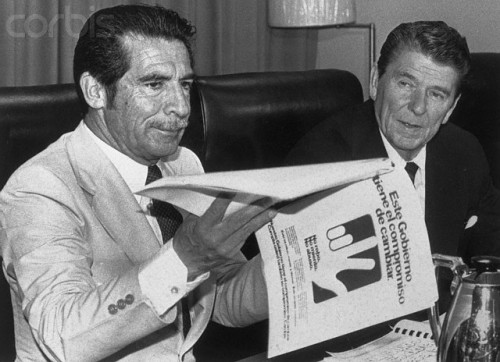


 Zeolite is old. It is in Roman concrete that has held for two thousand years. It’s in the water filters of ancient cisterns. It’s in the stomachs of Pacific livestock whose keepers knew, somehow, that this grey crumbling rock made the animals healthier. It’s in Soviet clinical protocols from the 1960s. It’s in the standard emergency response to the Chernobyl explosion.
 Aletho News

