An Illegal Anniversary
By Robert Jensen | Dissident Voice | March 20th, 2013
On the 10th anniversary of the United States’ illegal invasion of Iraq, we can expect the war’s supporters to argue that military action seemed necessary at that moment, while critics will remind us of the suffering that resulted from that tragic miscalculation.
But amid the rationalizations and critiques, we should linger on this uncomfortable term: “illegal invasion”.
No matter how much we all ignore it, here is the reality: The U.S. invasion of Iraq was unlawful. The leaders who planned and executed the war are criminals. U.S. citizens bear some responsibility for not holding those leaders accountable.
The charter of the United Nations is clear about when the use of force in international relations is legal. War must be authorized by the U.N. Security Council, and in this case the council rejected a resolution authorizing war. The only other condition under which a member state can go to war is in self-defense when attacked, a principle that is extended to the right to respond to an imminent attack, what is sometimes called “the customary right of anticipatory self-defense.”
The basic principles are uncontroversial and clearly articulated in articles 39 and 51 of the U.N. Charter, though there is debate among legal experts about interpreting terms such as “imminent” and “anticipatory.” But whatever one’s position in those debates, there is no way to stretch the facts of this invasion to justify a self-defense claim.
At this point, many people respond by dismissing international law as irrelevant. Because U.S. policymakers’ first job is to protect Americans, they argue, our leaders shouldn’t be constrained by international law—the Constitution trumps international law or treaties.
But a small problem arises: Article VI of the U.S. Constitution states that “all Treaties made, or which shall be made, under the Authority of the United States” are part of “the supreme Law of the Land.” Since the United States signed the U.N. Charter (and, in fact, wrote most of it), to reject international law in this matter is to express contempt for the plain meaning of the U.S. Constitution. No patriot would dare.
So, back to those uncomfortable conclusions: A decade ago, U.S. leaders launched what under the principles of the Nuremberg Tribunal is called a “crime against peace.” Whether in the course of that crime, U.S. forces also committed war crimes can be debated. For example, should the deliberate bombing of the civilian infrastructure of a country be considered a war crime? What about the use of cluster munitions in ways that predictably kill civilians? I believe both are criminal, but let’s put those more complicated issues aside. The illegality of the invasion itself is not a tough question.
In my travels outside the United States, I have found that the vast majority of people agree that the U.S. invasion was unlawful. Within the United States, mentioning this worldwide consensus typically is considered idealistic and irrelevant. But while we can ignore evidence and logic, and even ignore the world, we can’t escape the implications of those choices.
The moral force of law, domestic or international, lies in the consistent application of clear standards. When laws are applied only to the poor and the rich act with impunity, for example, we understand that as a perversion of the law.
Over and over in the United States, we proclaim our commitment to the rule of law—we are a nation of laws not men. If that were the case, we would turn over to the International Court of Justice high-ranking figures from the Bush administration, which initiated the war; from the Obama administration, which continued the war; from Congress, which enabled the war; and from the military, which prosecuted the war. We would determine the amount of reparations we owe Iraq and begin to make payments. And we would apologize to the Iraqi people, and to the world.
Why is that unthinkable in our political culture? Perhaps it is because we worship power rather than respect law. Perhaps it is because we have no intention of acting on the moral principles we routinely impose on others.
Perhaps it is because we are not the people we tell ourselves we are.
~
Robert Jensen is a professor of journalism at the University of Texas at Austin and and board member of the Third Coast Activist Resource Center in Austin. His latest book is We Are All Apocalyptic Now: On the Responsibilities of Teaching, Preaching, Reporting, Writing, and Speaking Out (Monkey Wrench Books). Jensen is also co-producer of the documentary film Abe Osheroff: One Foot in the Grave, the Other Still Dancing (Media Education Foundation, 2009), which chronicles the life and philosophy of the longtime radical activist. An extended interview Jensen conducted with Osheroff is online. He can be reached at: rjensen@austin.utexas.edu. Twitter: @jensenrobertw.
March 21, 2013 Posted by aletho | Militarism, Progressive Hypocrite, Timeless or most popular, War Crimes | 2003 invasion of Iraq, International Court of Justice, Iraq, Robert Jensen, United Nations, United Nations Charter, United States | Leave a comment
British anti-war activists blockade weapons manufacturing company

Press TV – March 20, 2013
British anti-war activists have sealed off a weapons manufacturing company in Brighton to mark 10 years after the UK government joined the U.S.-led invasion on Iraq on March 2003.
The protesters, who had gathered in front of the EDO MBM weapons manufacturing plant from dawn, fastened themselves to the front gates with superglue and bicycle locks.
Two arrests were made by police forces during the six-hour standoff, but the whole gathering continued without violence, according to British media reports.
The anti-war activists from Smash EDO lashed out at engineers of the factory for churning out millions of pounds worth of bomb racks, arming units and parts for aircraft weapon systems every year.
EDO MBM is one of several companies supplying Paveway missiles used in Iraq and Afghanistan, as well as a component for U.S. planes carrying cluster bombs banned under an international treaty signed by Britain in 2008.
Smash EDO’s Chloe Marsh described the day’s protest as a memorial to Iraq’s dead as well as a direct action.
“The case for war was put to people in the UK on the basis of an immediate threat from Iraqi ‘weapons of mass destruction.’
“This turned out, as expected, to be a lie. As a result, according to the Lancet, over a million Iraqi citizens have died.”
Fellow protester Andrew Beckett said: “We are here to commemorate those who died in the aerial bombardment of Iraq and to resist EDO MBM’s continued supply of components to the US/UK military.”
Related article
- Iraq: Decade of war ‘based on lies’ (morningstaronline.co.uk)
March 20, 2013 Posted by aletho | Illegal Occupation, Militarism, Solidarity and Activism, Timeless or most popular, War Crimes | Afghanistan, Anti-war movement, Britain, Government of the United Kingdom, Iraq War | Leave a comment
Plan Cóndor: The Search for Justice
By Emily Tarbuck | The Argentina Independent | March 20, 2013
Earlier this month, a trial of monumental historic significance commenced in Argentina. A trial that will see a group of military leaders prosecuted for their involvement in the ‘Plan Cóndor’ campaign; an agreement between the right-wing dictatorships of South America which led to the disappearance and murder of up to 80,000 people during the 1970s and 1980s.
In what is expected to last two years, and call upon over 500 witnesses, the trial represents a significant step towards achieving justice for crimes against humanity committed at the hands of the Southern Cone’s brutal collusion.
The History
The brutal right-wing military dictatorships that raged terror and political oppression across the continent defined the 1970s and 1980s in South America. The exact number of victims is disagreed upon, but it is estimated that the era saw the ‘disappearance’ of over 60,000 people in the fight to eradicate communist influence on the continent.
The sprawling dictatorships across the continent led to the clandestine kidnapping, torture, and murder of thousands of Latin Americans, with the aim of “eliminating Marxist subversion”, from Argentina, to the Augusto Pinochet-ruled Chile.
Targets of the eradication were officially stated as members of left-wing armed groups such as the MIR (Chile), the Montoneros (Argentina), and the Tupamaros (Uruguay), although the operation targeted trade unionists, family members, and anyone remotely considered a ‘political opponent’.
The formation of ‘Plan Cóndor’ – or ‘Operation Condor’ in English– was paramount to the continuation and reach of the dictatorships. The collusion of Argentina, Chile, Uruguay, Paraguay, Bolivia, and Brazil (and later Ecuador and Peru) enabled leaders to obtain resources and allies, thus continuing their left-wing eradication.
Set in the context of the Cold War, there was a palpable communist fear felt across the globe; something that enabled the dictatorships to garner significant funding and assistance from the United States. Declassified CIA documents –thousands of which were released in 1999 (here, here, here, and here)- show the key role the US played in the proliferation of the dictatorships. Politicians such as former Secretary of State, Henry Kissinger have been heavily implicated as having been fundamental in the realisation of the kidnapping, torture, and murder of political enemies.
Argentina in particular saw one of the highest cases of ‘disappearances’ during the period of mass military dictatorships, with human rights’ organisations estimating the figure to stand at 30,000. Justice for the crimes against humanity committed during this period of state terrorism arguably began with the Juicio a las Juntas in 1985. The trial proved the crimes of the dictatorship for the first time, and led to the imprisonment of key figures such as Jorge Videla and Emilio Massera, both of whom received life imprisonment sentences, along with numerous others.
However, the work of the historic trial was largely undone, or at least heavily marred, by the amnesty laws passed during Raul Alfonsin’s government, which protected military officers from allegations and prosecution for crimes against humanity. This was followed by President Carlos Menem’s pardoning of the junta leaders in 1989. Protests and campaigning by organisations such as the Madres of Plaza de Mayo were fundamental in the repeal of the amnesty laws by the Argentine Supreme Court in 2005 under the government of Néstor Kirchner.
The Trial
For the first time, the collusion between governments and dictators under the ‘Plan Cóndor’ campaign will be investigated. Twenty five defendants are on trial in Buenos Aires in what has been described as a ‘mega-trial’, expected to last two years and scheduled to hear 500 witness statements. Lawyer Carolina Varsky described the trial as: “historic as it’s the first to deal with the repression coordinated between Latin American dictatorships.”
All suspects being tried are Argentine, with the exception of Uruguayan Manuel Cordero, who is accused of participating in death squads and torture at the Orletti clandestine detention centre in the city. Cordero was extradited by Brazil, where he was living prior to the trial. The list of defendants features 22 Argentine military intelligence officers and agents, including former de facto presidents Jorge Videla and Reynaldo Bignone, both of whom are already serving life imprisonment sentences, which they will most likely not outlive.
Argentine political scientist Ariel Raidan spoke with The Argentina Independent about the significance of the commencement of the trial, and said how it signifies the government’s focus on “building a more just society, where truth and justice come first, overcoming years of impunity.”
“The countries of the continent are beginning to revise its tragic past. Both advances and setbacks have occurred in the fight for justice over the years, but this trial has a clear conviction to expose as many facts as possible” continued Raidan.
The trial will investigate the cases of over 170 victims, including 65 who were imprisoned at the infamous Orletti torture centre in Buenos Aires. Victims were often kidnapped from their home country and transported to the facilities of a neighbouring country; a practice made possible by the collusion of governments in the Southern Cone. Much evidence to be examined in the trial, and what prosecutors are heavily basing their case upon, comes from the now declassified US documents, obtained by the non-governmental organisation National Security Archive. Released under the Freedom of Information Act, the documents detail how Henry Kissinger and many other high-ranking officials in the US not only gave full support and funding to the Argentine military junta, but also urged the country to accelerate protocol and finish their operations before the US Congress cut aid. The documents, featuring signatures of many high-ranking officials, have led to accusations that the US was a secret collaborator, partner, and sponsor of the operation.
Additionally, documents identified as the ‘Archives of Terror’, discovered in a police station in 1992, were significant in the uncovering of the role of Colombia, Peru, and Venezuela. These countries provided intelligence information that had been requested by ‘Plan Cóndor’ participating countries.
The victims are comprised of approximately 80 Uruguayans, 50 Argentines, 20 Chileans, and a dozen from Paraguay, Bolivia, Peru, and Ecuador. The disappearance of two Cuban consulate officials will also form part of the proceedings. Out of the 170 victims, 42 survived the dictatorship’s brutal treatment and many of them are expected to give first hand accounts during their testimonies in court. The remaining victims were murdered or ‘disappeared’ at the hands of the Cóndor agreement.
John Dinges, author of ‘The Condor Years: How Pinochet and his Allies Brought Terrorism to Three Continents’, said that, “this is historic in the sense that we’re going to hear from 500 witnesses. And really, in the Latin American legal system, it’s unusual. It’s really only coming to the fore now that you hear witnesses, as opposed to just seeing them give their testimony to judges in a closed room, and then later on people like me might go and read those testimonies, but really it doesn’t become public. This is all public. And apparently, a lot of it is being videotaped. So this is the first time that the general public is going to hear the details of this horrible, horrible list of atrocities that killed so many people.”
Alcira Ríos, the lawyer representing a Paraguayan victim whose case is to be tried in the coming months, said “we’re delighted that after years of struggle this has finally come to trial… the ‘disappeared’ deserve justice.”
The Future
Raidan spoke of his hope that “the trial will shed light on the specific articulation and coordination of the military juntas that ruled the countries of the Southern Cone”. The hope of many is to see clandestine details released that have for so long been shrouded in secrecy and cover-ups. The culmination of new documents, evidence, and witness statements has created a strong sense of hope that further justice will be achieved over the course of the trial. “The documents are very useful in establishing a comprehensive analytical framework of what Operation Condor was,” said Pablo Enrique Ouvina, the lead prosecutor in the case.
Miguel Angel Osorio, federal prosecutor in the case, has said that he is convinced of the existence of Operation Condor and that he believes it will be clearly proved, as well as “the actions of those implicated [in the plan] which prove that there was a illicit agreement to move people from one country to another”.
Perhaps closure will not be fully achieved over the brutal repression and crimes against humanity committed during this era, but there is a palpable sense surrounding the case that some semblance of a resolution will be achieved; that justice will be reached.
March 20, 2013 Posted by aletho | Civil Liberties, Subjugation - Torture, Timeless or most popular | Argentina, Brazil, Chile, Henry Kissinger, Human rights, Jorge Rafael Videla, Operation Condor, Paraguay, South America, United States, Uruguay | Leave a comment
Former Argentine Dictator Calls for Coup Against Cristina Kirchner’s Government
By Sara Kozameh | CEPR Americas Blog | March 19, 2013
On Saturday March 16th, a weekly newspaper from Spain, Cambio16, published an interview with jailed former Argentine dictator Jorge Rafael Videla. Videla is serving two life sentences, another 50-year sentence, and continues to stand trial, for crimes against humanity, kidnapping, torture, and the unlawful appropriation of babies (that were taken from female prisoners who gave birth in captivity before they were murdered). These were crimes that he and fellow junta leaders committed following the 1976 coup d’état that they directed and that was responsible for the kidnapping, torture and deaths of an estimated 30,000 Argentines.
When his interviewer, Ricardo Angoso, whom Página/12 points out is a stated opponent of the Kirchner government and far-right journalist, asked him what he would say to his “comrades” also serving time in prison for similar convictions, he stated:
I want to remind each one of them, especially the younger ones, who today on average fall between the ages of 58-68, and are still physically capable of combat, that in the case that this unjust imprisonment and slandering of the republic’s basic values continues, you reserve the duty of arming yourselves again in defense of the republic’s basic institutions, which are today being trampled upon by the Kirchner regime, led by president Cristina and her henchmen.*
According to Página/12, Videla also accuses the current government of wanting to turn towards a “failed communism of the Cuban sort.” He then declares that “it will again be the security and armed forces who, along with the people –from which they [the security and armed forces] originate- will impede it”.
As most people who pay attention to international economics can easily tell, the Kirchners’ economic and social policies fall far from this characterization of “failed communism,” and are in actuality those of a democratic western-style capitalist economy with some elements of a social-democratic state.
But that did not stop Videla from calling the armed forces to combat: he issued a plea for the “citizenry to reject the dictators of Kirchnerism and its henchmen” and to make the “sole totalitarianism that currently governs… bite the dust forever” in Argentina. Finally, he called out the current opposition, accusing them of having “succumbed to fear and the bribes that the government imposes in all areas”.
Videla’s comments come at a time when Argentina and its government are being praised internationally for human rights trials that have convicted and brought to justice scores of perpetrators of human rights abuses during the dictatorship. Most recently, the trial against perpetrators of “Plan Condor” –a coordinated effort by the militaries of several South American countries to wipe out all opposition to their dictatorships- is under way as Argentina’s largest human rights trial yet.
Major news outlets from all ends of the political spectrum in Argentina covered Videla’s interview, with headlines such as “A golpista provocation by Videla from Prison” in the conservative and opposition newspaper El Clarín, and “Videla Called for an Armed Uprising by the Armed Forces” in the anti-government La Nación.
Former dictator Videla has also been in the news lately as the election of the new pope, from Argentina, has revived debate over accusations against Pope Francis and his ties to the dictatorship, and the well-established complicity of much of the Argentine Catholic Church in the regime’s repression.
*All translations were made by the author of this post.
Related article
- Historic ‘Plan Cóndor’ Trial Underway (alethonews.wordpress.com)
March 20, 2013 Posted by aletho | Militarism, Subjugation - Torture, Timeless or most popular | Argentina, Human rights, Jorge Rafael Videla, Kirchnerism, Operation Condor, Videla | Leave a comment
Genocide trial of former Guatemala dictator Rios Montt opens
Press TV – March 20, 2013
The trial of former Guatemalan dictator Gen. Efrain Rios Montt on charges of genocide and crimes against humanity has finally started in the Central American country.
The trial for crimes, which the US-backed strongman allegedly committed during his 1982-1983 rule, opened on Tuesday in a Guatemala City courtroom. The three-judge panel is hearing the case.
“It’s historic,” Attorney General Claudia Paz y Paz said ahead of the trial. “We cannot leave thousands of deaths unpunished. We must deliver justice to the victims.”
Rios Montt was not prosecuted for decades since he was protected as a congressman by a law that grants immunity to public officials in Guatemala.
The 86-year-old left Congress in January 2012 and was ordered to stand trial. On January 26, 2012, Rios Montt appeared in court and was formally indicted for genocide and crimes against humanity.
Prosecutors allege Rios Montt turned a blind eye as army soldiers used rape, torture, and arson against leftist rebels of the Guatemalan National Revolutionary Unity (URNG) and targeted indigenous people during a counterinsurgency offensive that killed at least 1,771 members of the Ixil group of Mayan Indians.
Prosecutors argued that Rios Montt’s regime put indigenous people in concentration camps and ordered soldiers to use rape and torture as a means of terrifying the population.
Rios Montt’s defense lawyer accused one of the judges of being hostile to his client. Francisco Garcia Gudiel was dismissed from the case by chief judge Iris Yasmin Barrios.
More than 200,000 civilians, most of them of Mayan descent, were killed during the 1960-1996 civil war.
“This is the first time anywhere in the world that a former head of state is being put on trial for genocide by a national tribunal,” United Nations High Commissioner for Human Rights Navi Pillay said in a statement on Tuesday.
“Until quite recently, no one believed a trial like this could possibly take place in Guatemala, and the fact that it is happening there… should give encouragement to victims of human rights violations all over the world,” she added.
Related article
- Ríos Montt and the Need for International Accountability for War Crimes in Guatemala (alethonews.wordpress.com)
March 20, 2013 Posted by aletho | Ethnic Cleansing, Racism, Zionism, Timeless or most popular, War Crimes | Efraín Ríos Montt, Guatemala, Rios Montt | Leave a comment
The Second Iran Hostage Crisis
By NILE BOWIE | CounterPunch | March 19, 2013
From talk of “red lines” and cartoon bombs to having “all options on the table”, an undeniably delusional logic emanates from leadership in Washington and Tel Aviv regarding the alleged threat posted by Iran’s nuclear program. When Israeli Prime Minister Benjamin Netanyahu famously took to the stage of the UN General Assembly with his doodled explosive, he claimed that Iran would soon have the capability to enrich uranium to 90 percent, allowing them to construct a nuclear weapon by early-mid 2013. In his second administration, Obama, who recently said a nuclear-Iran would represent a danger to Israel and the world, appears to be seeing eye-to-eye with Netanyahu, despite previous reports of the two not being on the same page. For whatever its worth, these two world leaders have taken the conscious decision to entirely ignore evidence brought forward by the US intelligence community, as well as appeals from nuclear scientists, policy-advisers, and IAEA personnel who claim that the “threat” posed by Iran is exaggerated and politicized.
It’s common knowledge that Washington’s own National Intelligence Estimate (NIE) on Iran, which reflects the intelligence assessments of America’s 16 spy agencies, confirmed that whatever nuclear weapons program Iran once had was dismantled in 2003. Mr. Netanyahu has not corrected his statements insinuating that Iran was nearing the red line of 90 percent enrichment, even when recent UN reports that show Tehran has in fact decreased its stockpiles of 20 percent fissile material, far below the enrichment level required to weaponize uranium. Hans Blix, former chief of the International Atomic Energy Agency (IAEA), has challenged previous IAEA reports on Iran’s nuclear activities, accusing the agency of relying on unverified intelligence from the US and Israel. Flynt Leverett and Hillary Mann Leverett, former Washington insiders and analysts in the Clinton and Bush administrations, recently authored a book titled “Going to Tehran”, arguing that Iran is a coherent actor and that evidence for the bomb is simply not there.
Clinton Bastin, former director of US nuclear weapons production programs, has commented on the status of Iran’s capacity to produce nuclear weapons, stating:
“The ultimate product of Iran’s gas centrifuge facilities would be highly enriched uranium hexafluoride, a gas that cannot be used to make a weapon. Converting the gas to metal, fabricating components and assembling them with high explosives using dangerous and difficult technology that has never been used in Iran would take many years after a diversion of three tons of low enriched uranium gas from fully safeguarded inventories. The resulting weapon, if intended for delivery by missile, would have a yield equivalent to that of a kiloton of conventional high explosives”.
Bastin’s assessments corroborate reports that show Iran’s nuclear program is for civilian purposes; he further emphasizes the impracticality of weaponizing the hexafluoride product of Tehran’s gas-centrifuges, as the resulting deterrent would yield a highly inefficient nuclear weapon.
The fact that Iran’s Supreme Leader Ayatollah Ali Khamenei issued several fatwas (a religious prohibition) against the production of nuclear weapons doesn’t seem to have helped much either. An unceasing combination of Islamophobia-propaganda, a repetitive insistence that Tehran is edging closer to the threshold, and devastatingly negligent misreporting of Iran and its pursuit of domestic nuclear power has created a situation where the country is viewed as an irrational actor. In the court of Western mainstream opinion, Iran is grouped in the same category as bellicose North Korea, despite the fact that it is a law-abiding signatory to the Nuclear non-Proliferation Treaty (NPT) that has consistently cooperated with the IAEA while publically renouncing the use of nuclear weapons. This leads to the current scenario, where Iran and its people are punished under an unethical barrage of economic sanctions for possessing a weapon that they do not possess.
The severity of economic sanctions against Iran and the fabricated allegations of it possessing nuclear weapons serve as a disturbing parallel to the invasion and destruction of Iraq during the Bush administration. From the perspective of this observer, the US does not actually want to go to war with Iran – such an ordeal would bring about an array of overwhelmingly negative ramifications that Obama would probably want to avoid. What the US does want to do however, is to dismantle the foundations of the Islamic Republic by completely destroying its economy through sanctions, prompting the population to rise up and overthrow the regime – so basically, Obama is happy to conduct war by other means. Ayatollah Khamenei’s recent proclamations of the US holding a gun to the head of the Iranian nation can only be perceived as entirely accurate.
Its easy to see why the Supreme Leader has doubts over the prospect of negotiations with the US; the deal put forward at the most recent meeting of the P5+1 essentially argued that the US would roll back sanctions that prevent Iran from trading gold and precious metals in exchange for Iran completely shutting down its uranium enrichment plant at Fordo. The substance of this offer appears like it was deliberately drafted to be rejected by the Iranian side, given the fact that it would mandate Iran to shutdown one of its main facilities while keeping in place the most punishing sanctions that have destroyed the Iranian currency and made life-saving medications unaffordable for most – its more of an insult than an offer. For the average Iranian business owner and worker, US-led sanctions and currency devaluation have affected everyday transactions that provide paychecks and economic viability for millions of people.
From urban shopkeepers to rural restaurant owners, many have been forced to close their businesses because they are unable to profit from reselling imported goods purchased with dollars. Isolation from the global banking system has made it increasingly more difficult for Iranian students studying abroad to receive money from their families. Sanctions targeting Iran’s central bank aim to devastate the Iranian export economy, affecting everyone from oil exporters to carpet weavers and pistachio cultivators. By crippling Iranian people’s livelihoods and hindering their ability to pursue education and afford necessities, the Obama administration believes such measures will erode public confidence in the government and challenge its legitimacy. It is important to recognize that these sanctions are not only aimed against Iran’s government, but at its entire population, especially to the poor and merchant population. An unnamed US intelligence source cited by the Washington Post elaborates, “In addition to the direct pressure sanctions exert on the regime’s ability to finance its priorities, another option here is that they will create hate and discontent at the street level so that the Iranian leaders realize that they need to change their ways.”
These sanctions, which are Obama’s throwback to ham-fisted Bush-Cheney era policies, must be seen as part of a series of measures taken to coax widespread social discontent and unrest. US sanctions have broadened their focus, targeting large swaths of the country’s industrial infrastructure, causing the domestic automobile production to plummet by 40 percent, while many essential medical treatments have more than doubled in price. Patients suffering from hemophilia, thalassemia, and cancer have been adversely affected, as the foreign-made medicines they depend on are increasingly more difficult to get ahold of. Over the past two years, general supermarket goods have seen a price hike between 100 to 300 percent. For the first time in the world, a media ban has been imposed, on PressTV, Iran’s state-funded English language international news service. Ofcom, a UK-based communications regulator linked to the British government, spearheaded the prohibition. The European Union has also imposed a travel ban on Press TV CEO Mohammad Sarafraz and eight other officials.
While editorials and commentators in the New York Times and Washington Post regularly accuse Iran of violating international law, the editors of these papers have shown no willingness to scrutinize the US and Israel by holding them accountable when they violate international law, namely, a prohibition of “the threat or use of force” in international relations unless a nation is attacked or such force is authorized by the UNSC, as embodied in the United Nations Charter. It is undeniable that by failing to question the brutal tactics meted out by Washington and Tel Aviv, these papers and the commentators affiliated with them, endorse policies that intimidate and coerce civilian populations in addition to employing terrorist tactics such as targeted cyber-strikes and extrajudicial assassinations – all of which the Iranian nation has been subjected to in utter defiance of the standards and rules of international law and their fundamental bedrock of protecting civilians.
The facts have been proven time and time again, Iran seeks economic development, technological advancement, and energy independence – it wants domestic nuclear power and the freedom to enrich uranium to 20 percent for the medical development of radiopharmaceuticals and industrial isotopes, as it is entitled to as an NPT signatory. Washington’s threats to impose “secondary” sanctions against third-country entities doing business with the Islamic Republic represents a mafia-mentality so characteristic of the unipolar reality in which the US sees itself. Washington has recently threatened energy-hungry Pakistan with sanctions over its partnership with Tehran in a $7.5-billion gas pipeline between the two nations, a project that would do infinite good by promoting regional stability and delivering energy to poverty stricken regions in Pakistan. Washington’s sanctions regime will collapse if the US Congress insists that China sharply cut its energy trade and relations with Iran. China will not adhere to such stringent foreign interference into its trade relationships, and Washington is in no position to sanction China because it buys oil from Iran.
If Beijing calls Washington’s bluff, other growth-focused non-Western economies like India, Malaysia, and South Korea will be less fearful of conducting business and buying oil from Tehran. Obama has taken some cues from the revolutionary students of 1979 and his administration has come up with a hostage crisis of its own, involving holding captive the civilian population of Iran – and Washington looks keen to let the sanctions bite until either the regime bows down, or the people rise up. One of the best examples of the perverted logic behind the US position on Iran comes from Vice President Joe Biden, who recently stated, “We have also made clear that Iran’s leaders need not sentence their people to economic deprivation”. Such a statement embodies the upside-down logic of Washington policy-makers who claim the moral high ground while enabling terrorism and engaging in unethical campaigns of economic and military warfare – the present state of affairs simply cannot continue.
Nile Bowie is an independent political analyst and photographer based in Kuala Lumpur, Malaysia. He can be reached at nilebowie@gmail.com
Related articles
- Ever-Closing Windows and Biden Time on Iran at AIPAC (alethonews.wordpress.com)
- ‘Iran can’t covertly produce atomic bomb’ – US intelligence chief (alethonews.wordpress.com)
- Massimo Calabresi’s ‘Path To War’ (alethonews.wordpress.com)
March 19, 2013 Posted by aletho | Economics, Progressive Hypocrite, Timeless or most popular, War Crimes | Benjamin Netanyahu, International Atomic Energy Agency, Iran, Israel, National Intelligence Estimate, Obama | Leave a comment
The Not-So-Imminent Iranian Nuke: A Year Away for a Decade
By Nima Shirazi | Wide Asleep in America | March 18, 2013

According to official estimates, the Islamic Republic of Iran is now roughly a year away from acquiring a nuclear bomb. Well, that is, if it were actually building a nuclear bomb. Which it’s not.
“Right now, we think it would take over a year or so for Iran to actually develop a nuclear weapon, but obviously we don’t want to cut it too close,” President Barack Obama told an Israeli television station on March 14, 2013. In order to stop Iran, Obama vowed to “continue to keep all options on the table,” a euphemism for engaging in an unprovoked military attack, thus initiating a war of aggression, the “supreme international crime.”
Obama’s statement came just two days after his own Director of National Intelligence told a Senate committee that the Iranian government had not made a decision to weaponize its legal, safeguarded civilian nuclear energy program. “We do not know if Iran will eventually decide to build nuclear weapons,” DNI James Clapper said. Even if it did, he added, Iran wouldn’t be able to secretly divert any of its stockpiled and safeguarded enrichment uranium to a weapons program.
The American president failed to make this distinction in his interview, instead saying only that a nuclear-armed Iran would be “dangerous for the world. It would be dangerous for U.S. national security interests.”
Repeating his administration’s main talking point, Obama told his Israeli interviewer, “What I have also said is that there is a window, not an infinite period of time, but a window of time where we can resolve this diplomatically and it is in all of our interests.”
But this window has already been open for decades and Iran has supposedly been only a year away from a bomb for the past ten years.
In November 2003, then Mossad chief Meir Dagan told the Knesset Foreign Affairs and Defense Committee that Iran’s nuclear program would be at a “point of no return” within the next year and would then “have the potential to produce 10 nuclear bombs a year.” Israeli Defense Minster Shaul Mofaz repeated the one year “point of no return” timeline in early 2005, a claim reinforced by other Israeli officials throughout that year.
Similar estimates were made in 2006, 2007 and 2008. Oh, and 2009.
In April 2010, Ronald Burgess, director of the U.S. Defense Intelligence Agency, told the Senate Armed Services Committee that the “general consensus” was that Iran could develop a single nuclear bomb within a year if the leadership decided to do so, despite maintaining that Iran didn’t have an active nuclear weapons program.
As the years have passed, this assessment has held fast.
In late January 2011, Aviv Kochavi, director of Israeli Military Intelligence, admitted Iran was not actively working on a nuclear weapon, but claimed it could build one in “a year or two” once “the leader decides to begin enriching at 90 percent.”
A year later, in January 2012, Defense Secretary Leon Panetta told 60 Minutes, “The consensus is that, if they decided to do it, it would probably take them about a year to be able to produce a bomb.”
Just few days later, Kochavi told a panel at the Herzliya security conference that “Iran has enough nuclear material for four bombs,” adding, “We have conclusive evidence that they are after nuclear weapons. When Khamenei gives the order to produce the first nuclear weapon – it will be done, we believe, within one year.”
Last week, addressing the very same conference, Kochavi was back with a new prediction – actually, it was the same one as before. He claimed that, in the coming year, the Iranian “leadership would like to find itself in the position of being able to break out to an atomic weapon stage in a short period of time, according to the IDF’s intelligence assessments. However, he said that Iran has not yet decided to build the bomb.”
Greg Thielmann, a former U.S. intelligence analyst now with the Arms Control Association, recently explained that “calculating such a time line involves a complicated set of likely and unlikely assumptions,” telling journalist Laura Rozen, “If Iran decided today to build nuclear weapons, it would require years, not weeks or months, to deploy a credible nuclear arsenal.”
Meanwhile, with Obama set to visit Israel this week, Reuters now notes that “Netanyahu has not publicly revised the spring-to-summer 2013 dating for his ‘red line’,” the stated point at which the Iranian nuclear program advances far enough to automatically trigger an Israeli attack, a threat laid down by the Israeli Prime Minister last September. “But several Israeli officials privately acknowledged it had been deferred, maybe indefinitely,” Reuters adds before quoting an anonymous official: “The red line was never a deadline,” he said.
Clearly, when it comes to propagandistic prognostications about the imminence of an Iranian bomb, they never really are.
Related articles
- Ever-Closing Windows and Biden Time on Iran at AIPAC (alethonews.wordpress.com)
- ‘Iran can’t covertly produce atomic bomb’ – US intelligence chief (alethonews.wordpress.com)
March 19, 2013 Posted by aletho | Militarism, Progressive Hypocrite, Timeless or most popular, Wars for Israel | Iran, Israel, Meir Dagan, Obama, United States, United States Senate Committee on Armed Services | Leave a comment
Ever-Closing Windows and Biden Time on Iran at AIPAC
By Nima Shirazi | Wide Asleep in America | March 17, 2013
After a brief respite from incessant warmongering nonsense following the reelection of Barack Obama in November 2012, it appears old rhetorical devices have reemerged. With a vengeance.
Israeli Prime Minster Benjamin Netanyahu, addressing his minions at AIPAC via video chat on March 4, spent a bunch of his time saying supposedly scary things about “Iran’s pursuit of nuclear weapons” and dismissing negotiations.
“I have to tell you the truth,” he told the fawning crowd. “Diplomacy has not worked. Iran ignores all these offers. It is running out the clock.” He continued:
Iran enriches more and more uranium. It installs faster and faster centrifuges. It’s still not crossed the red line I drew at the United Nations last September. But Iran is getting closer to that line, and it’s putting itself in a position to cross that line very quickly once it decides to do so.
Netanyahu deliberately ignored the fact that Iran’s stockpile of enriched uranium remains far from weapons-grade and that Iran has, for over a year now, been systematically converting much of its 19.75% enriched stock to fuel plates that precludes the possibility of being diverted to military purposes.
Of course, the fact that Iran has an inalienable legal right to a fully-functioning nuclear energy program – including the indigenous mastery of the nuclear fuel cycle – was not addressed at all. For Netanyahu and his acolytes, any Iranian nuclear program is synonymous with a weapons program – and not only that, but a weapons program designed to “exterminate” Israel’s “Jewish people.” Facts remain irrelevant. Hasbara reigns.
Netanyahu once again demonstrated his complete disregard for the tenets of the United Nations Charter by calling for Iran to be explicitly threatened with a military attack if it doesn’t comply with absurd Israeli demands. He insisted “with the clarity of my brain” (whatever that means) that “words alone will not stop Iran. Sanctions alone will not stop Iran. Sanctions must be coupled with a clear and credible military threat if diplomacy and sanctions fail.”
Addressing the same audience, Vice President Joe Biden also spoke at length about “Iran’s dangerous nuclear weapons program,” which the U.S. intelligence community and its allies, including Israel, have long assessed doesn’t exist.
The consensus view of all 16 American intelligence agencies has maintained since 2007 that Iran ceased whatever research into nuclear weaponization it may have conducted by 2003, and has never resumed that work. The NIE has been consistently reaffirmed ever since (in 2009, 2010, and again in 2011).
In early 2012, James Clapper, Director of National Intelligence, stated in testimony before the Senate Armed Services Committee, “We do not know…if Iran will eventually decide to build nuclear weapons.” The same day, Defense Intelligence Agency Director Ronald Burgess said that “the agency assesses Iran is unlikely to initiate or intentionally provoke a conflict” and maintained that Iran’s military doctrine is defensive in nature and designed only for deterrence.
Clapper repeated this conclusion verbatim just last week before the Senate Intelligence Committee.
Moreover, the IAEA itself continually confirms that Iran has no active nuclear weapons program and has stated it has “no concrete proof that Iran has or has ever had a nuclear weapons program.”(emphasis added)
Undeterred by facts or reason, Biden continued to tell the AIPAC fanatics that “Iraq’s [sic] acquisition of a nuclear weapon not only would present an existential threat to Israel, it would present a threat to our allies and our partners — and to the United States. And it would trigger an arms race — a nuclear arms race in the region, and make the world a whole lot less stable.” Biden made sure to repeat the mantra that “all options, including military force, are on the table” when it comes to Iran.
First, Biden’s Iraq/Iran slip wasn’t merely Freudian. Since the Iraq script from a decade ago is nearly identical to the Iran script now, it’s unsurprising that Biden can’t keep his manufactured threats straight. One need only recall Biden’s claims on Meet The Press in August 2002 that Saddam Hussein constituted “a long term threat and a short term threat to our national security” and “an extreme danger to the world.” Consequently, said Biden, “We have no choice but to eliminate the threat.”
Years later, on the same program, Biden stood by his statements. When asked by Tim Russert about weapons of mass destruction that didn’t exist, Biden blithely insisted that “everyone in the world thought he had them. The weapons inspectors said he had them. He catalogued—they catalogued them. This was not some, some Cheney, you know, pipe dream. This was, in fact, catalogued. They looked at them and catalogued. What he did with them, who knows?”
Biden was lying, of course.
International weapons inspectors had been perfectly clear about what “he did with them.” After losing the Gulf War in 1991, Iraq’s weapons programs were subject to intrusive inspections and international sanctions. By 1998, the IAEA concluded that “there is no indication that Iraq possesses nuclear weapons or any meaningful amounts of weapon-useable nuclear material.” The next year, the UN Security Council affirmed that UN weapons inspectors “have been effective in uncovering and destroying many elements of Iraq’s proscribed weapons programmes,” adding, “The bulk of Iraq’s proscribed weapons programmes has been eliminated.”
In 2000, UN inspector Scott Ritter explained that “as early as 1997” it was possible “to determine that, from a qualitative standpoint, Iraq had been disarmed. Iraq no longer possessed any meaningful quantities of chemical or biological agent…and the industrial means to produce these agents had either been eliminated or were subject to stringent monitoring. The same was true of Iraq’s nuclear and ballistic missile capabilities.”
In July 2002, as calls for war grew louder, Ritter wrote in the Boston Globe that “the Bush administration provides only speculation, failing to detail any factually based information to bolster its claims concerning Iraq’s continued possession of or ongoing efforts to acquire weapons of mass destruction. To date no one has held the Bush administration accountable for its unwillingness – or inability – to provide such evidence.”
When, days later, then Senate Foreign Relations Committee chairman Joe Biden convened hearings to assess the threat posed by Iraq and implications of a potential U.S.-led attack, Ritter called the hearings a “sham” and said the Delaware Senator and “most of the Congressional leadership have pre-ordained a conclusion that seeks to remove Saddam Hussein from power regardless of the facts, and are using these hearings to provide political cover for a massive military attack on Iraq.”
Such is Joe Biden’s penchant for telling the truth. Returning to his comments at AIPAC, Biden’s recent fear-mongering hypotheticals about Iran are also wrong.
Beyond being obvious that Iran poses literally no threat to the United States, numerous Israeli military and intelligence officials openly reject the notion that a nuclear-armed Iran would “present an existential threat to Israel.” Former Mossad chief Ephraim Halevy recently told the UK Zionist Federation that Israel’s existence “is not in danger and shouldn’t be questioned.”
Furthermore, Biden’s axiomatic contention that an Iranian nuclear bomb would spark a regional arms race has also been rejected for years by less hysterical analysts. In fact, Biden made his comments soon after the publication of a new report by the Center for a New American Security which judged the scenario extremely unlikely.
For obvious reasons, Biden claimed that the United States is “not looking for war” and prefers “a diplomatic solution” to the impasse over Iranian nuclear program. Still, he said, the “window is closing” for a negotiated outcome, after which military action would be taken.
This formulation has been echoed by senior Obama officials of late, including both Secretary of State John Kerry and Secretary of Defense Chuck Hagel.
The window has apparently been closing for some time now and yet, incredibly, Iran never gets any closer to actually having the nuclear weapon it isn’t building and that it constantly insists it doesn’t want.
In early June 2009, Israeli Defense Minister Ehud Barak privately told a visiting Congressional delegation in Tel Aviv that there was an estimated “window between 6 and 18 months from now in which stopping Iran from acquiring nuclear weapons might still be viable.” A month later, Joint Chiefs chairman Mike Mullen warned that the “window is closing” on preventing Iran from acquiring a nuclear weapon. He declared that Iran was only one to three years away from successfully building a nuclear weapon and “is very focused on developing this capability.”
With history repeating itself (remember in early 2001 when the Department of Defense reported, that “Iraq would need five or more years and key foreign assistance to rebuild the infrastructure to enrich enough material for a nuclear weapon”?), it remains crucial to assess facts rather than blindly accept propaganda, to recall the lessons of the past in order to avoid future blunders and to know – unequivocally – that the implications and consequences of the pathological Iraqization of Iran inevitably lead to the commission of murderous war crimes, not merely Freudian slips.
March 18, 2013 Posted by aletho | Deception, Mainstream Media, Warmongering, Timeless or most popular, Wars for Israel | AIPAC, Iran, Iraq, Israel, Joe Biden | Leave a comment
NAFTA at 20: The New Spin
By Manuel Perez-Rocha and Javier Rojo | Foreign Policy in Focus | March 14, 2013
Only a few years ago, analysts were warning that Mexico was at risk of becoming a “failed state.” These days, the Mexican government appears to be doing a much better PR job.
Despite the devastating and ongoing drug war, the story now goes that Mexico is poised to become a “middle-class” society. As establishment apostle Thomas Friedman put it in the New York Times, Mexico is now one of “the more dominant economic powers in the 21st century.”
But this spin is based on superficial assumptions. The small signs of economic recovery in Mexico are grounded largely on the return of maquiladora factories from China, where wages have been increasing as Mexican wages have stagnated. Under-cutting China on labor costs is hardly something to celebrate. This trend is nothing but the return of the same “free-trade” model that has failed the Mexican people for 20 years.
The North American Free Trade Agreement (NAFTA), which was ratified in 1993 and went into effect in 1994, was touted as the cure for Mexico’s economic “backwardness.” Promoters argued that the trilateral trade agreement would dig Mexico out of its economic rut and modernize it along the lines of its mighty neighbor, the United States.
The story went like this:
NAFTA was going to bring new U.S. technology and capital to complement Mexico’s surplus labor. This in turn would lead Mexico to industrialize and increase productivity, thereby making the country more competitive abroad. The spike in productivity and competitiveness would automatically cause wages in Mexico to increase. The higher wages would expand economic opportunities in Mexico, slowing migration to the United States.
In the words of the former President Bill Clinton, NAFTA was going to “promote more growth, more equality and better preservation of the environment and a greater possibility of world peace.” Mexico’s president at the time, Carlos Salinas de Gortari, echoed Clinton’s sentiments during a commencement address at MIT: “NAFTA is a job-creating agreement,” he said. “It is an environment improvement agreement.” More importantly, Salinas boasted, “it is a wage-increasing agreement.”
As the 20th anniversary of NAFTA approaches, however, the verdict is indisputable: NAFTA failed to spur meaningful and inclusive economic growth in Mexico, pull Mexicans out of unemployment and underemployment, or reduce poverty. By all accounts, it has done just the opposite.
The Verdict Is In
Official statistics show that from 2006 to 2010, more than 12 million people joined the ranks of the impoverished in Mexico, causing the poverty level to jump to 51.3 percent of the population. According to the United Nations, in the past decade Mexico saw the slowest reduction in poverty in all of Latin America.
Rampant poverty in Mexico is a product of IMF and World Bank-led neoliberal policies—such as anti-inflationary policies that have kept wages stagnant—of which “free-trade” pacts like NAFTA are part and parcel. Another factor is the systematic failure to create good jobs in the formal sectors of the economy. During Felipe Calderon’s presidency, the share of the Mexican labor force relying on informal work—such as selling chewing gum and other low-cost products on the street—grew to nearly 50 percent.
Even the wages in the manufacturing sector, which NAFTA cheerleaders argued would benefit the most from trade liberalization, have remained extremely low. According to the Bureau of Labor Statistics, Mexican manufacturing workers made an average hourly wage of only $4.53 in 2011, compared to $26.87 for their U.S. counterparts. Between 1997 and 2011, the U.S.-Mexico manufacturing wage gap narrowed only slightly, with Mexican wages rising from 13 to 17 percent of the level earned by American workers. In Brazil, by contrast, manufacturing wages are almost double Mexico’s, and in Argentina almost triple.
Mexico’s stagnant wages are celebrated by free traders as an opportunity for U.S. businesses interested in outsourcing. According to one report by the McKinsey management consulting firm, “for a company motivated primarily by cost, Mexico holds the most attractive position among the Latin American countries we studied. … Mexico’s advantages start with low labor costs.”
But even as the damning evidence against NAFTA continues to roll in, entrenched advocates of the trade agreement have been busy crafting new arguments. In his recent book, Mexico: A Middle Class Society, NAFTA negotiator Luis De la Calle and his co-author argue that the trade agreement has given rise to a growing Mexican middle class by providing consumers with higher quality, U.S- made goods. The authors proclaim that “NAFTA has dramatically reduced the costs of goods for Mexican families at the same time that the quality and variety of goods and services in the country grew.”
Most of the economic indicators included in the book conveniently fail to account for the 2008-2009 financial crisis, which hit Mexico worse than almost any other Latin American country. The result has been skyrocketing inequality. As the Guardian reported last December, “ever more Mexican families have acquired the trappings of middle-class life such as cars, fridges, and washing machines, but about half of the population still lives in poverty.”
The indicators of consumption that suggest the rise of Mexico’s middle class also exclude the dramatic increase in food prices in recent years, which has condemned millions of Mexicans to hunger. Twenty-eight million Mexicans are facing “food poverty,” meaning they lack access to sufficient nutritious food. According to official statistics, more than 50,000 people died of malnutrition between 2006 and 2011. That’s almost as many as have died in Mexico’s drug war, which dramatically escalated under Calderon and has continued under President Enrique Peña Nieto.
The food crisis has coincided with the “Walmartization” of the country. In 1994 there were only 14 Walmart retail stores in all of Mexico. Now there are more than 1,724 retail and wholesale stores. This is almost half the number of U.S. Walmarts, and far more than any other country outside the United States. The proliferation of Walmart and other U.S. big-box stores in Mexico since NAFTA came into effect has ushered in a new era of consumerism—in part through an aggressive expansion built on political bribes and the destruction of ancient Aztec ruins.
The arguments developed prior to the signing of NAFTA focused primarily on the claim that the trade agreement would make Mexico a nation of producers and exporters. These initial promises failed to deliver. Throughout the NAFTA years, the bulk of Mexico’s manufacturing “exports” have come from transnational car and technology companies. Not surprisingly, Mexico’s intra-industry trade with the United Sates is the highest of any Latin American country. Yet the percentage of Mexican companies that are actually exporters is vanishingly small, and imports of food into Mexico have surged.
Same Snake Oil, Different Pitch
Because their initial promises utterly failed to deliver, the NAFTA pushers are now hyping “consumer benefits” to justify new trade agreements, including the Trans-Pacific Partnership. One of the most extreme examples of this spin is an article in The Washington Post that celebrates a “growing middle class” in Mexico that is “buying more U.S. goods than ever, while turning Mexico into a more democratic, dynamic and prosperous American ally.” Devoid of all logic, it goes on to say that “Mexico’s growth as a manufacturing hub is boosted by low wages.” How can low wages make people more prosperous?
The Post also boasts that in “Mexico’s Costco stores, staples such as tortilla chips and chipotle salsa are trucked in from factories in California and Texas that produce for both sides of the border.” Is this something to celebrate? The influx of traditional Mexican food staples, starting with maize, and goods from the United States has displaced and dislocated millions of Mexican small-scale farmers, producers, and small businesses. And not only that, Mexicans’ increasing consumption of processed foods and beverages from the United States has made the country the second-most obese in the world.
In essence, NAFTA advocates have been reduced to saying: “so maybe NAFTA didn’t help Mexico reduce poverty or increase wages. But hey! At least it gave it Walmart, Costcos, and sweat shops.”
The bankruptcy of NAFTA’s promises is only compounded by the poverty of this consolation.
Related article
- Facing the Threat of the Trans-Pacific Treaty (ips-dc.org)
March 17, 2013 Posted by aletho | Deception, Economics, Mainstream Media, Warmongering, Timeless or most popular | Bill Clinton, Carlos Salinas de Gortari, Latin America, Mexico, NAFTA, New York Times, North American Free Trade Agreement, United States | Leave a comment
Venezuelan Post-Chavez Roadmap to the Middle East
By Massimo Di Ricco | Al-Akhbar | March 17, 2013
As interim Venezuelan President, Nicolas Maduro’s first protocol act was to hold talks with a Chinese delegation, in order to reinforce economic ties with the People’s Republic. Following the meeting on March 8, Maduro declared that “China is the biggest economic driving force of the new world and a main political actor in world decisions.” The meeting was broadcast live on local Venezuelan media and on big screens around the military academy, where Chavistas were paying an emotional farewell to their leader Hugo Chavez.
The meeting concealed a double meaning: It served as a public political cover against anyone interested in destabilizing the Bolivarian revolution, as had occurred in 2002 with the failed coup against Chavez. Officials in Washington likely took note. The second implicit meaning was to reinforce the spirit of the Chavista revolution. It represents a continuity with Chavez’s foreign policy: the Bolivarian revolution which started 14 years ago will pursue Chavez’s main personal goal of creating a multipolar world grounded on strong anti-imperialism.
In his speech at the funeral ceremony, Maduro lightly opened up to the United States, who had dispatched two low-profile delegates to the ceremony, but clearly stated that his future duty would lie in “shap[ing] a world where there are no hegemonic powers, especially here in America.”
Under Hugo Chavez’s presidential mandates, Venezuela attempted to establish a multipolar world order in order to challenge US hegemony. Since 1999, Chavez increased Venezuela bilateral relations with countries such as China, Russia, Belarus, Iran, Syria and Libya. He personally built a bridge between leftist countries in Latin America and this multi-polar world.
Chavez’s international relations were indeed very much self-oriented and grounded in strong friendships. Most of these friendly countries assisted with high profile delegations at the funeral and considered Chavez’s death a personal loss more than the passing of a mere political ally.
Chavez’s Legacy and the Middle East
However, the main focus of Chavez’s foreign policy has been the Middle East and especially the Arab cause, which was considered a priority. Chavez found in the Middle East a common ground for his anti-imperialist policy and good allies not fearful to speak out against US hegemony. In the last decade, Venezuela signed several agreements with Middle Eastern countries, especially Syria, Libya and Iran, concerning natural resources, housing and trade, but mainly preparatory in order to reinforce the political alliance.
The future of these strong ties between Venezuela and Middle Eastern countries hostile to United States represents the main question after Chavez’s death.
Several delegations from the Middle East arrived in Venezuela to pay their condolences to the Venezuelan president. Syrian President Bashar al-Assad sent a telegram to Maduro and a delegation to assist with the funeral. Iranian President Mahmoud Ahmadinejad spent around 24 hours in Caracas and attracted much attention from Venezuelan media. During the ceremony, Ahmadinejad kissed several times the coffin and finally raised his fist in homage to his political ally and close friend.
Venezuelan media followed him around until his last steps on Venezuelan soil at the airport of Maiquetia. The relationship between Venezuela and Iran was solidified with Ahmadenijad’s rise to power in Iran in 2005, and with the consolidation of the Bolivarian political project in Latin America. Ahmadinejad traveled to Latin America on several occasions and received numerous visits from Latin American leaders.
On the other side, Chavez opened Latin America to Ahmadinejad as well, especially in terms of ideological and trade relations with other leftist governments in the region and especially with the members of the ALBA (Bolivarian Alliance for the Americas).
Facing international media speculations on the Venezuelan vacuum and about the end of bilateral relations between Iran and Venezuela after Chavez’s death, Ahmadinejad declared upon landing in Iran that “the Iranian nation has strong ties with revolutionary nations and we will help strengthening these ties. Thus, nobody should believe that our relations will be weaker because of the death of Chávez.”
The Iranian state PressTV also reported the declaration of Iran’s Vice-President for International Affairs Ali Saeedlou affirming that the death of Venezuelan leader Hugo Chavez would not undermine relations between Tehran and Caracas, and that it was wrong to consider ties with Venezuela as based merely on a personal relationship.
Beside the condolences from regional heads of states and the rush to discredit speculations, the main question remains after Chavez death: Will his successor be able to manage such a self-oriented foreign policy and stance toward the Middle East?
The Arab Spring and Venezuela Last Stances on the Middle East
In the last months, Hugo Chavez and Nicolas Maduro publicly supported China and Russia’s veto against UN Security Council resolutions to sanction Syria. In previous years, Chavez’s government expelled the Israeli ambassador as consequence of Operation Cast Lead in the Gaza Strip, and he vehemently criticized foreign intervention in Libya, supporting instead his close friend Muammar Gaddafi against what he considered another imperial aggression.
The Arab Spring destabilized Chavez’s relations with some Middle Eastern countries, and Libya was the first loss. But Adriana Boersner, director of the Venezuelan think tank Diploos, is skeptical that the Arab Spring represented any serious inconvenience for Venezuela: “the bilateral relations with Libya were merely related to an ideological component and they were very pragmatic in terms of trade, social, educational and cultural agreements. Of these 150 treaties, only 10 were being ratified by the assembly. Definitely the death of Gaddafi did not greatly affect Venezuela.”
Gaddafi’s death instead affected Hugo Chavez on a personal level. According to Reinaldo Bolivar, vice-minister of foreign affairs for Africa, “Venezuela lost contact with Libya but maintains good relations with other countries in the area.”
Indeed, Venezuela managed to maintain good relations with other countries from the region even if with different perspectives on the events in the Middle East – at least on an official level. That is the case especially with Qatar. The honeymoon between the emir and the comandante was mainly motivated by Chavez’s attempt to emulate the al-Jazeera model with his own creation, TeleSUR.
With the spreading of the Arab Spring to Syria, the agreements between the channels almost faded. But Venezuelan criticism toward al-Jazeera and Qatar’s role in Syria was left to low profile ministers and grassroots groups or individuals. The government publicly remained silent.
According to Reinaldo Bolivar, “in terms of Venezuelan politics toward the Middle East and North Africa, Maduro’s government will act in perfect continuity with Chavez’s mandate. Venezuelan foreign policy will be coherent with the Plan de la Patria of 2013-2019, which basically aims to create a multipolar world, express international solidarity with the oppressed people of the world, the defense of sovereignty and the complete rejection of foreign intervention.”
The Plan de La Patria is to be considered a road map for the coming years of the Bolivarian revolution and it was written a few months before Chavez’s death. It indicates that Venezuela’s prerogative in foreign policy is to shape a multipolar world which aims to preserve peace based on the principle of respect for all countries’ sovereignty.
Maduro, the Chavistas and the Middle East
Doubts persist if Maduro will be able to continue Chavez’s multipolar path and will be able to keep political alliances strongly based on friendship. Maduro was directly chosen by Chavez as his successor in his last public speech on December 8, before he traveled to Cuba for medical treatment against cancer.
Venezuelan analysts have different perspectives on the future of their country’s relations with the Middle East. Carlos Romero, professor at the Universidad Central de Venezuela, reminds us that “even if Chavez established very strong and personal relations with Middle East leaders, Maduro was his minister of foreign affairs for seven years before becoming vice president. He personally knows all these country’s leaders, and probably the relationship with the Middle East will be even deeper in the next years.”
Adriana Boersner instead maintains that after Chavez’s death “Venezuelan foreign policy will be deeply affected. During Chavez’s self-oriented mandates, the foreign ministry was reduced to a merely bureaucratic institution and it did not participate actively and autonomously in shaping international relations with other countries.”
Chavez’s self-oriented relationship with Middle Eastern countries is evident, too, from the limited awareness in terms of foreign policy at the grassroots level of the Bolivarian revolution.
Roso Grimau, delegate of the Venezuelan Communist Party and member of the Committee of International Solidarity in the Venezuelan Assembly considered that “Chavez personally accelerated Venezuela’s relations with the Middle East and Arab nations, because he considered it a right cause. Relations have never much been at the popular level, but now it is the duty of the Venezuelan people to engage and internationalize at its grass root’s basis, the Bolivarian revolution, by expanding ties with people who are facing imperialist aggressions, especially in the Middle East.”
That work needs to be done already. And beside this internationalist stance, Chavistas in the streets in the days of his funeral were sincerely unaware of who Mahmoud Ahmadinejad was when he was interviewed on local television. The basis of the Bolivarian revolution seems definitively uninterested in foreign policy and the Middle East, in particular at this stage.
The Future Bolivarian Roadmap to the Middle East
Maduro will probably win the next elections and act with greater pragmatism. It is not clear if other Latin American leftist leaders such as Evo Morales, Rafael Correa, Raul Castro or Daniel Ortega will follow in Chavez’s footsteps. Chavez’s path toward the Middle East was based on direct confrontation with the United States in the background, and not all these leaders seem interested or able to support that stance.
On the other side, the popular basis of the revolution neither appears ready nor interested in conducting and building solid relations with their counterparts in the Middle East.
The key lies in Maduro’s strength on the international scene. According to Carlos Romero, “Maduro will definitely continue on the path established by Chavez and he will maintain the basic axis of Venezuelan foreign policy for the Middle East, which is based on the support for a nuclear Iran, the rejection of foreign intervention in Syria and the condemnation of the occupation in Palestine.”
At least in the near future, the shadow of Hugo Chavez will guarantee the maintenance of strong relations between Venezuela and Middle East countries. Chavez was an extraordinary charismatic figure, but he shaped strong friendships that will be difficult to replace.
Related
- Venezuela says far-right US plot targeted opposition leader Capriles
- Venezuela’s Oil Refinery Blaze: Seven Good Reasons to Suspect Sabotage
- Inside the Revolution: A Journey into the Heart of Venezuela
March 17, 2013 Posted by aletho | Solidarity and Activism, Timeless or most popular | Chavez, Hugo Chávez, Latin America, Middle East, Nicolás Maduro, Palestine, United States, Venezuela | Leave a comment
How Many People Believe 911 Was an Inside Job Now (Feb 2013)?
March 17, 2013 Posted by aletho | Deception, False Flag Terrorism, Timeless or most popular, Video | Leave a comment
Record radiation found in fish near Fukushima nuclear plant
RT | March 17, 2013
A record quantity of radioactive cesium – 7,400 times the country’s limit deemed safe for human consumption – has been detected in a greenling fish in the waters near the crippled Fukushima plant, two years after the nuclear disaster.
Tokyo Electric Power Co (TEPCO), which runs the Fukushima Daiichi Nuclear Power Station, discovered a record 740,000 becquerels per kilogram of radioactive cesium in the fish, Kyodo News reported.
The operator installed a net on the seafloor of the port exit near the plant to prevent the fish from escaping.
The bottom-dwelling greenling fish was found in a cage set up by TEPCO inside the port next to the Fukushima Daiichi plant, a utility official told AP on condition of anonymity.
The company also indicated that the previous record of cesium concentration in fish was 510,000 becquerels per kilogram detected in another greenling caught in the same area, TEPCO said.
In January, a fish containing over 2,500 times Japan’s legal limit for radiation in seafood was caught in the vicinity of the nuclear plant, the facility’s operator reported.
The March 11, 2011, earthquake and tsunami damaged the plant, causing meltdowns that spewed radiation into the surrounding soil and water. The disaster forced the evacuation of 170,000 local residents.
Some experts have speculated that radioactive water may be seeping from the plant into the ocean; this may have been confirmed after bluefin tuna caught off the coast of California tested positive for radiation poisoning at the end of February.
Most fish along the Fukushima coast are banned from market.
Related article
- Record cesium level detected in fish caught near Fukushima nuclear plant (japantimes.co.jp)
March 17, 2013 Posted by aletho | Environmentalism, Nuclear Power, Timeless or most popular | Caesium, Fukushima, Fukushima Daiichi Nuclear Power Plant, Fukushima Prefecture, Japan, Tokyo Electric Power Company | Leave a comment
Featured Video
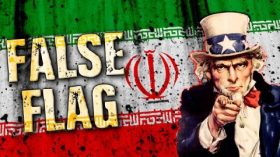
or go to
Aletho News Archives – Video-Images
Book Review
The Zeolite Book — First Edition, 2026, Paperback
The volcanic mineral medicine will not patent — for the toxic burden medicine will not name
Lies are Unbekoming – October 30, 2026
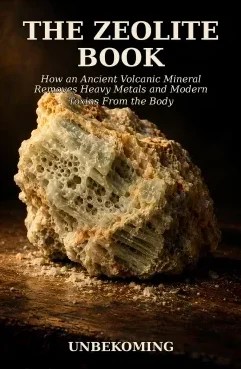 Zeolite is old. It is in Roman concrete that has held for two thousand years. It’s in the water filters of ancient cisterns. It’s in the stomachs of Pacific livestock whose keepers knew, somehow, that this grey crumbling rock made the animals healthier. It’s in Soviet clinical protocols from the 1960s. It’s in the standard emergency response to the Chernobyl explosion.
In 1986, after the Chernobyl reactor failure, the Soviet Union manufactured and distributed natural zeolite at industrial scale — for soil remediation, for livestock feed, for human consumption, for the cleanup itself. Karl Hecht, who had been director of the Institute for Experimental and Clinical Pathophysiology at the Charité of Humboldt University Berlin, spent the six decades after that building the clinical research base — on silicon’s role in human health, on zeolite’s clinical safety, on its applications in ageing. In 2018, Pavelić and colleagues published a comprehensive clinical safety review of natural clinoptilolite in Frontiers in Pharmacology. In 2019, Mastinu analysed its binding affinities. In the Western medical literature, these works sit largely uncited.
What has not been treated at book length, until now, is how a volcanic mineral with six decades of Soviet clinical work behind it, two major peer-reviewed Western reviews, and ongoing clinical use across the former Eastern Bloc, remains almost entirely absent from Western medical practice — and what the toxic burden it’s meant to address actually is.
The Zeolite Book gathers the Soviet clinical record, the Western peer-reviewed studies, three contemporary practitioner voices, and three serious counterviews into one honest treatment. That’s why the book runs to seven appendices. 288 pages, four parts, three practitioner voices, three counterviews, seven appendices. The honest treatment is the argument.
Blog Roll
-
Join 2,366 other subscribers
Visits Since December 2009
- 7,793,221 hits
Looking for something?
Archives
Calendar
Categories
Aletho News Civil Liberties Corruption Deception Economics Environmentalism Ethnic Cleansing, Racism, Zionism Fake News False Flag Terrorism Full Spectrum Dominance Illegal Occupation Mainstream Media, Warmongering Malthusian Ideology, Phony Scarcity Militarism Progressive Hypocrite Russophobia Science and Pseudo-Science Solidarity and Activism Subjugation - Torture Supremacism, Social Darwinism Timeless or most popular Video War Crimes Wars for IsraelTags
Afghanistan Africa AIPAC al-Qaeda Australia BBC Benjamin Netanyahu Brazil Canada CDC Central Intelligence Agency China CIA CNN Covid-19 COVID-19 Vaccine Donald Trump Egypt European Union Facebook FBI FDA France Gaza Germany Google Hamas Hebron Hezbollah Hillary Clinton Human rights Hungary India Iran Iraq ISIS Israel Israeli settlement Japan Jerusalem Joe Biden Korea Latin America Lebanon Libya Middle East National Security Agency NATO New York Times North Korea NSA Obama Pakistan Palestine Poland Qatar Russia Sanctions against Iran Saudi Arabia Syria The Guardian Turkiye Twitter UAE UK Ukraine United Nations United States USA Venezuela Washington Post West Bank WHO Yemen Zionism
 Aletho News
- Wrong, AP and NPR: Europe’s 50,000 Heat Deaths Are a Computer-Model Estimate, Not a Real Body Count
- Questioning Your Doctor Is Now Considered A Psychological Problem (Seriously)
- London tourism expo promotes Israeli agency linked to theft of Palestinian land
- Dockworkers launch global strike against Israeli and US military shipments
- Europe facing gas price shock – Gazprom chief
- Ukraine continues recruiting people with disabilities
- Weaponized Journalism: 2021 Sayer Ji Interview with NPR
- Beyond Netanyahu: what Israel’s election means for Palestinians
- Lithuania plans universal conscription
- Lies, Damn Lies, and Ukraine News
- If Americans Knew
- An error has occurred; the feed is probably down. Try again later.
- No Tricks Zone
- Germany’s Green Energy Transition Becoming Increasingly Expensive…Another 6 Trillion Euros!
- Sudden Stratospheric Warming, Powerful El Niño Combination May Lead To Extreme Europe Cold, Energy Crisis!
- Two New Studies Find Thwaites Glacier Melt Cannot Be Driven By Human Activity Or A Warming Ocean
- E-Cars Reduce CO2 Emissions By Only 41% Compared To Internal Combustion Engine Vehicles
- Predictions Made By Renowned Climate Professor Over Past Decades Have Been Proven To Be Poor
- New Study Suggests Large Regions Of The Pacific Ocean Have Been Cooling For The Last 80 Years
- Germany’s Green Energy Debacle: High Energy Costs Force Kahla Porzellan to Close After 182 Years!
- New Study: 50 Years Of The Most Aggressive ‘Net Zero’ Policies Can Only Affect The Global Climate By 0.03°C
- US September “Heat” Was No Record…Many Records Set Decades Ago
- Latest European Green Energy Debacle; Portugal’s Largest Flagship Solar Park Insolvent!
Contact:
atheonews (at) gmail.com
Disclaimer
This site is provided as a research and reference tool. Although we make every reasonable effort to ensure that the information and data provided at this site are useful, accurate, and current, we cannot guarantee that the information and data provided here will be error-free. By using this site, you assume all responsibility for and risk arising from your use of and reliance upon the contents of this site.
This site and the information available through it do not, and are not intended to constitute legal advice. Should you require legal advice, you should consult your own attorney.
Nothing within this site or linked to by this site constitutes investment advice or medical advice.
Materials accessible from or added to this site by third parties, such as comments posted, are strictly the responsibility of the third party who added such materials or made them accessible and we neither endorse nor undertake to control, monitor, edit or assume responsibility for any such third-party material.
The posting of stories, commentaries, reports, documents and links (embedded or otherwise) on this site does not in any way, shape or form, implied or otherwise, necessarily express or suggest endorsement or support of any of such posted material or parts therein.
The word “alleged” is deemed to occur before the word “fraud.” Since the rule of law still applies. To peasants, at least.
Fair Use
This site contains copyrighted material the use of which has not always been specifically authorized by the copyright owner. We are making such material available in our efforts to advance understanding of environmental, political, human rights, economic, democracy, scientific, and social justice issues, etc. We believe this constitutes a ‘fair use’ of any such copyrighted material as provided for in section 107 of the US Copyright Law. In accordance with Title 17 U.S.C. Section 107, the material on this site is distributed without profit to those who have expressed a prior interest in receiving the included information for research and educational purposes. For more info go to: http://www.law.cornell.edu/uscode/17/107.shtml. If you wish to use copyrighted material from this site for purposes of your own that go beyond ‘fair use’, you must obtain permission from the copyright owner.
DMCA Contact
This is information for anyone that wishes to challenge our “fair use” of copyrighted material.
If you are a legal copyright holder or a designated agent for such and you believe that content residing on or accessible through our website infringes a copyright and falls outside the boundaries of “Fair Use”, please send a notice of infringement by contacting atheonews@gmail.com.
We will respond and take necessary action immediately.
If notice is given of an alleged copyright violation we will act expeditiously to remove or disable access to the material(s) in question.
All 3rd party material posted on this website is copyright the respective owners / authors. Aletho News makes no claim of copyright on such material.

