“The Architecture of Destruction” by Richard Gage is the companion video to “Science & Society” by Steven Jones. Presented in Sydney, Australia, November 14, 2009, it is a relaxed presentation by an animated, engaged and engaging Richard Gage. This is an update to his most famous video, “Blueprint for Truth” as part of the highly successful “Hard Evidence Tour Down Under”
—
This film is available for any Public Access TV station in the country – and world – to broadcast. Phone your local public access TV station and ask them to broadcast this film. The station can download the film from PEGMedia.org for broadcast to your local community.
—
See more 911TV films here
An Associated Press report from this past week demonstrates how plain facts and provable, documented historical events are often described as subjective perceptions and matters of perspective in the mainstream media whenever an honest presentation and assessment of those facts would serve to reduce the fear-mongering propaganda over Iran’s nuclear energy program.
Writing from Tehran on January 15, 2013, AP‘s Iran correspondent Ali Akbar Dareini reported that Iranian Foreign Ministry spokesman Ramin Mehmanparast had declared Iran’s intention to register its long-stated (and officially binding) prohibition on nuclear weapons as a legally-recognized, secular, international document.
“Mehmanparast could not be more definitive in dispelling suspicions that Iran may ultimately develop a nuclear weapon,” Dareini wrote, before explaining that while Iran is confident that “any ambiguities or concerns” regarding its nuclear program can be addressed and resolved as long as “a structured approach” is first agreed upon.
Dareini continues:
Iranians say they have a bitter memory of allowing IAEA inspections and providing replies on a long list of queries over its nuclear program in the past decade. Now, Tehran says such queries should not be revived or remain open-ended once the IAEA has verified them.
Mehmanparast said Iran provided detailed explanations to IAEA questions on six outstanding issues in the past but instead of giving Iran a clean bill of health, the agency leveled new allegations on the basis of “alleged studies” provided by Iran’s enemies.
Iran uses that term to refer to a list of questions including a dispute at Parchin, a military site southeast of Tehran, where the agency suspects Iran ran explosive tests needed to set off a nuclear charge.
Note the repeated use of the same basic construction: “Iranians say…” and “Tehran says…” and “Mehmanparast said…” and “Iran uses…” The statements made after this routine prefix are therefore presented as subjective declarations coming from Iran and are never qualified or substantiated as facts. In short, they are used as disclaimers, readily understood by a suspicious and ill-informed audience.
The readers of this AP report are therefore intentionally left with the perception that these are simply Iranian contentions and therefore automatically suspect, dubious, disputed or otherwise easily dismissed; after all, the comments all came out of an Iranian government spokesman’s mouth and the mainstream media (and politicians, of course) has spent decades training its readers to believe nothing the Iranian government says or does can be trusted.
While Dareini writes that “Mehmanparast said Iran provided detailed explanations to IAEA questions on six outstanding issues in the past,” he omits that this isn’t just a claim made by the Iranian government. Amazingly, the “bitter memory” that Iranians have about cooperating with the IAEA inquiries only to receive international sanctions and more military threats from the world’s most well-armed and aggressive states is not merely some crazy Persian fantasy! No, it actually happened.
In August 2007, Iran and the IAEA agreed to a “Work Plan” which defined modalities and a timetable in order to “clarify the outstanding issues” in relation to Iran’s nuclear program. With regard to the memorandum of understanding itself, IAEA Director General Mohammad ElBaradei pointed out at the time that although “these outstanding issues are the ones that have led to the lack of confidence, the crisis,” he confirmed, “We have not come to see any undeclared activities or weaponization of their programme.” This conclusion was reached after two years of Iran’s voluntary implementation of the IAEA’s Additional Protocol, including a complete suspension of its enrichment program, which allowed intrusive and unfettered access to Iranian facilities for its inspectors.
Despite the constant allegations of nuclear weapons work, the IAEA has confirmed both that “[t]o date, there is no evidence that the previously undeclared nuclear material and activities referred to above were related to a nuclear weapons programme” and found that “all the declared nuclear material in Iran has been accounted for, and therefore such material is not diverted to prohibited activities.”
It too should be remembered that Iran only suspended its voluntary implementation of the Additional Protocol after the EU-3 (now referred to as the P5+1) failed to offer any substantive proposals and reneged on its agreement to acknowledge Iran’s inalienable right to enrich uranium as part of a peaceful, safeguarded nuclear energy program. The proposal eventually brought to Iran by Western negotiators has been described as “vague on incentives and heavy on demands,” and even dismissed by one EU diplomat as “a lot of gift wrapping around an empty box.”
Regarding the Work Plan itself, it affirmed that the “[t]hese modalities cover all remaining issues and the Agency confirmed that there are no other remaining issues and ambiguities regarding Iran’s past nuclear program and activities” and that that IAEA had “agreed to provide Iran with all remaining questions according to the above work plan. This means that after receiving the questions, no other questions are left. Iran will provide the Agency with the required clarifications and information.”
In October 2007, ElBaradei confirmed, “I have not received any information that there is a concrete active nuclear weapons program going on right now [in Iran],” adding, “Have we seen Iran having the nuclear material that can readily be used into a weapon? No. Have we seen an active weapons program? No.”
By February 2008, due to Iranian cooperation and efforts at transparency, ElBaradei was able to report, “We have managed to clarify all the remaining outstanding issues, including the most important issue, which is the scope and nature of Iran’s enrichment programme” and the IAEA continued “to verify the non-diversion of declared nuclear material in Iran.”
Nevertheless, the so-called “alleged studies” – information provided to the IAEA by Western and Israeli intelligence agencies that accuses Iran of engaging in research regarding uranium conversion, high-explosives testing that could be linked to the creation of a nuclear-weapon trigger, and ballistic missile designs that might be capable of accommodating a nuclear warhead – remains the sole point of contention and is often pointed to by Iran alarmists and the mainstream press as evidence of Iranian duplicity and intransigence.
As Iran itself has repeatedly noted, according to the Work Plan, the IAEA was obligated to submit “all related documents” regarding these “alleged studies” to Iran and, in return, while reiterating its insistence that these accusations were “politically motivated and baseless,” Iran would “review and inform the Agency of its assessment,” which was acknowledged “as a sign of [Iran’s] good will and cooperation.”
As per this agreement between Iran and the IAEA, “no visit, meeting, personal interview, [or] swipe sampling were foreseen for addressing this matter.” Still, in yet another example of constantlymoving goalposts, after Iran examined the documents it was allowed to see (far from the “all related documents” as promised in the Work Plan) and delivered a detailed “117-page assessment in which it asserted that the documentation was forged and fabricated,” the IAEA dismissed the evaluation as being too “focused on form rather than substance” and “requested Iran to provide a substantive response.”
That Iran’s assessment wasn’t as substantive as the IAEA may have hoped is perhaps unsurprising considering that the IAEA didn’t provide Iran with “all related documents” as required. In fact, the IAEA openly admitted to concealing most of the alleged documentation from Iran, claiming that it had “received much of this information only in electronic form and was not authorised to provide copies to Iran” and revealing that while “the Agency had been shown the documents that led it to these conclusions, it was not in possession of the documents and was therefore unfortunately unable to make them available to Iran.”
Furthermore, the IAEA itself “noted that the [IAEA] currently has no information – apart from the uranium metal document – on the actual design or manufacture by Iran of nuclear material components of a nuclear weapon or of certain other key components, such as initiators, or on related nuclear physics studies.” The alleged “uranium metal document” referred to is identical to one produced by Pakistan, was neither commissioned nor requested by Iran and, along with other alleged documents, dates to “the late 1970s and early to mid-1980s.”
The IAEA also repeatedlyemphasized that, despite all the allegations, “the Agency has not detected the use of nuclear material in connection with the alleged studies, nor does it have credible information in this regard” but still “urged Iran to engage actively with the Agency in a more detailed examination of the documents available about the alleged studies which the Agency has been authorized to show to Iran.”
In a reasonable world, that the IAEA lacks both full access to and authorization over any alleged documentation purporting to show past weaponization research and testing and upon which is based its own claims that it demand Iran substantively explain would cast considerable doubt on the authenticity of such information and clearly demonstrates the dubious integrity and political nature of the allegations themselves. As the Iranian Mission to the IAEA has noted:
The Agency has not delivered to Iran any official and authenticated document which contained documentary evidence related to Iran with regard to the Alleged Studies.
The Government of the United States has not handed over original documents to the Agency since it does not in fact have any authenticated document and all it has are forged documents. The Agency didn’t deliver any original documents to Iran and none of the documents and materials that were shown to Iran have authenticity and all proved to be fabricated, baseless allegations and false attributions to Iran.
Iran has also wondered, “How can one make allegations against a country without provision of original documents with authenticity and ask the country concerned to prove its innocence or ask it to provide substantial explanations?”
In his own memoir, published in 2011, former IAEA head Mohammad ElBaradei echoed that question:
Absurdly, we were limited with regard to what documentation we permitted to show Iran. I constantly pressed the source of the information to allow us to share copies with Iran. How can I accuse a person, I asked, without revealing the accusations against him? The intelligence crowd refused, continuing to say they needed to protect their sources and methods.
Iran, for its part, continued to dismiss most of the allegations as fabrications. Since the Iranians’ cooperation on the work plan had been rewarded with yet more Security Council sanctions, their cooperation on the alleged weaponization studies had been minimal. Their predicament, they said, was that proving the studies were unrelated to nuclear activities would expose a great deal about their conventional weaponry, particularly their missile program. (p. 291)
ElBaradei also lamented the “willingness, on the part of Israel and the West, to treat allegations as fact,” admitting that the IAEA “did not have the tools or expertise, however, to verify the authenticity of documents.” (p. 290)
It should also be remembered that, in early 2007, an unnamed senior official at the IAEA revealed to the Los Angeles Times, “Since 2002, pretty much all the intelligence that’s come to us [from the United States about the Iranian nuclear program] has proved to be wrong” and has never led to significant discoveries inside Iran. Additionally, the paper noted that “U.S. officials privately acknowledge that much of their evidence on Iran’s nuclear plans and programs remains ambiguous, fragmented and difficult to prove.”
When, in 2009, “the Israelis provided the IAEA with documentation of their own, purportedly showing that Iran had continued with nuclear weapon studies until at least 2007,” in order to “create the impression that Iran presented an imminent threat, perhaps preparing the grounds for the use of force,” ElBaradei has written that the IAEA’s “technical experts, however, raised numerous questions about the document’s authenticity.” He also pointed out that “[t]he accuracy of these [Israeli] accusations has never been verified; however, it is significant that the conclusions of the U.S. National Intelligence Estimate were not changed, indicating that they, at least, did not buy the ‘evidence’ put forward by Israel.” (p. 291)
This history of IAEA allegations and Iranian assessments is completely absent from the recent Associated Pressreport, leading readers to believe Iran is making claims that can’t be backed up with evidence.
Also, that reporter Dareini states that the “alleged studies” referred to by Mehmanparast is a term used by Iran “to refer to a list of questions including a dispute at Parchin,” gives the distinct impression that this term is not an official one and that only Iran claims the studies in questions are merely “alleged” to have taken place rather than “proven,” “corroborated,” and “authenticated.”
But the term “alleged studies,” is not an Iranian creation. Rather, that phrase is a construction of the IAEA itself; Iran didn’t make it up. The first informal use of the term, referring to “topics which could have a military nuclear dimension” appears to be found in an IAEA Safeguards report on Iran from February 26, 2006.
It is unsurprising, then, that IAEA chief ElBaradei once stated, “The IAEA is not making any judgment at all whether Iran even had weaponisation studies before because there is a major question of authenticity of the documents.”
The IAEA continued to use the term informally throughout 2006 and early 2007, before elevating the term to an official section heading in its August 30, 2007 report. It was subsequently used as such until May 26, 2008, when the more alarmist phrase “Possible Military Dimensions” superseded “Alleged Studies” in IAEA nomenclature. These allegations, unverified and long considered to have questionable authenticity by the IAEA’s leadership, were suddenly resurrected and “assessed by the Agency to be, overall, credible,” when Yukiya Amano (the America’s man in Vienna who has proudly boasted of being, not an objective arbiter of truth and evidence, but as “solidly in the U.S. court on every key strategic decision”) took over stewardship of the agency and began secretly meeting with White House and National Security Council officials before presenting biased IAEA reports on Iran.
Back to the AP report: While Dareini notes that “Tehran has in the past allowed IAEA inspectors twice into Parchin,” he fails to explain that because Parchin is not a nuclear facility, but rather a military complex not safeguarded by the IAEA, it is therefore off-limits legally to its inspectors. When Iran voluntarily allowed two rounds of inspections of Parchin by IAEA personnel in 2005, the agency revealed that its inspectors “did not observe any unusual activities in the buildings visited, and the results of the analysis of environmental samples did not indicate the presence of nuclear material at those locations.”
Regarding the current accusations centered around an alleged detonation chamber located at the site (a charge made in documents provided to the IAEA by Israel), nuclear expert and former IAEA inspector Robert Kelley has explained, “The IAEA is stretching its mandate to the limit in asking for access to a military site based on tenuous evidence.” Kelley also called the Parchin impasse “a secondary issue” that is deliberately serving Israel and the West as “a distraction for the negotiations between Iran and the five permanent members of the United Nations Security Council plus Germany (the ‘P5+1’).” He adds (and explores in depth) that “the case for visiting the Parchin site—a matter on which the IAEA continues to insist—is not as clear-cut or compelling as some experts and officials portray it.”
It is undeniable that AP‘s Dareini is nowhereclose to the propagandist that his colleague George Jahn is. Considering Jahn contributed “additional reporting” to Dareini’s article, perhaps the problematic sections were his work.
Regardless, for the Associated Press to omit crucial and easily accessible information from its characterizations of Iran’s nuclear program is irresponsible and serves to continually misinform (or under-inform) the public on the facts. And when facts aren’t important, innuendo, allegations and demonization take over, inevitably setting the stage for something far more dangerous: an uncritical and unscrupulouspress, aiding and abetting (wittingly or not) the dissemination of propaganda, dutifully presenting a manufactured justification for the supreme international crime, the initiation of (yetanother) a war of aggression.
From its very beginning, gun control — the attempt to regulate the possession of means of self-defense by the ordinary populace — has been closely associated with class rule and the class state.
In early modern England, regulation of firearm ownership was closely intertwined with the struggle by the landed classes and capitalist agriculture to restrict the laboring classes’ access to independent subsistence from the land. This included enclosure of common woodland, fen and waste — in which landless and land-poor peasants had previously hunted small game — for sheep pasturage or arable land. It also included exclusion of the common people from forests via the Game Laws and restriction of hunting to the gentry.
Under the slaveocracy of the American south, firearm ownership was prohibited by Black Codes that regulated free blacks. And after Emancipation, whenever the old landed gentry managed to successfully assert its power against the Reconstruction regime, former slaves were disarmed by house-to-house patrols, either under the Black Codes or by such irregular bodies as the Klan.
The same was true of the Civil Rights struggle a century later, after World War II. In areas where armed self-defense efforts by civil rights activists were widespread, they significantly improved the balance of power against the Klan and other racist vigilante movements. Numerous armed self-defense groups — e.g. the Deacons for Defense and Justice, whose members used rifles and shotguns to repel attacks by white vigilantes in Louisiana in the 1960s — helped equalize the correlation of forces between civil rights activists and racists in many small towns throughout the south.
Especially notable was Robert Williams, who in 1957 organized an armed defense of the Monroe, NC NAACP chapter president’s home against a Klan raid and sent the vigilantes fleeing for their lives. Williams’s book Negroes With Guns later inspired Huey Newton, a founder of the Black Panthers Party.
Speaking of the Black Panthers, no discussion of the origins of modern American gun control would be complete without recognizing their role in inspiring the modern right-wing gun control agenda.
Foreshadowing current groups like Copwatch and Cop Block, the Panthers in 1966 organized armed patrols of Oakland streets with rifles and shotguns, stopping to witness police interactions with local residents and provide information and offers of legal assistance when necessary.
In 1967 Republican state assemblyman Don Mulford of Oakland, a vocal enemy of the Berkeley Free Speech Movement and the Black Panthers, responded with a bill to prohibit publicly carrying firearms in California. The BPP’s Bobby Seale protested the bill by leading a Panther detachment, armed with .357 Magnums, 12-gauge shotguns and .45-caliber pistols, up the steps of the statehouse (“All right, brothers, we’re going inside”), through its doors, and into the public viewing area. There Seale read a statement denouncing Mulford’s bill as an attempt “at keeping the black people disarmed and powerless at the very same time that racist police agencies throughout the country are intensifying the terror and repression of black people,” and warning that “the time has come for black people to arm themselves against this terror before it is too late.”
Mulford’s gun control bill was signed into law three months later by Governor Ronald Reagan.
Irregular workers’ militias and armed defense formations played a significant role in labor history, both in the US and abroad. During the Copper Wars at the turn of the 20th century, the governors of several Rocky Mountain states instituted martial law — including door-to-door confiscation of firearms from workers’ homes and striker encampments. In some cases, as with the West Virginia Coal Wars and the Homestead strike, workers fought pitched battles against Pinkertons, state militia and sheriffs’ deputies.
In Spain it was largely owing to workers’ militias, organized under the auspices of the CNT trade union federation and the parties of the Left, that Franco’s July 1936 coup attempt failed. In the areas of southern and eastern Spain where Franco’s forces failed to carry the day, workers’ militias often played a decisive role. In some areas armed workers drove Franco’s troops back into their barracks after pitched battles and burned them alive inside.
From its beginnings the state has been an executive committee of the economic ruling class and an instrument of armed force by the owners of the means of production, enabling them to extract surplus labor from the rest of us. I can’t imagine why anyone would expect the state’s gun control policies to display any less of a class character than other areas of policy.
Regardless of the “liberal” or “progressive” rhetoric used to defend gun control, you can safely bet it will come down harder on the cottagers than on the gentry, harder on the workers than on the Pinkertons, and harder on the Black Panthers than on murdering cops.
Meet the new boss who, upon his inauguration, declared that the right to life is unalienable. Let me be clear, that does not mean he cannot take yours.
In fact, he runs through a list of men, women, and children on Tuesdays, hung over from inaugurations or not, and picks whom to murder and murders them.
We are not supposed to call it murder, of course, because it is properly assassination. Except that no public figures are being assassinated; 98% of those killed are not targeted at all; some are targeted for suspicious behavior without knowing their names; one type of suspicious behavior is the act of retrieving the dead and wounded from a previous strike; and those targeted are not targeted for politics but for resisting illegal occupations. Moreover, an assassination is a type of murder.
We’re not supposed to call it murder, nonetheless, because it sounds more objective to call it killing. But murder is a type of killing, specifically unlawfully killing a person especially with malice aforethought. Killing by accident is not murder and not what the president is doing. Killing legally is not murder and not what the president is doing – at least not as far as anyone knows or according to any interpretation of law put forward. Killing indirectly by encouraging poverty or environmental destruction or denial of healthcare may be things the president is doing, but they are not murder and not drone wars.
Imagine if a non-president went through a list of everyone in your local elementary school, picked out whom to kill, and ordered them killed. You would call it murder. You would call it mass-murder. You would call it conspiracy to commit mass murder. Why would electing that mass murderer president change anything? Why would moving the victims abroad change anything?
KILL ANYTHING THAT MOVES
Kill Anything That Moves is the title of an important new book from Nick Turse, covering the mass-murdering enterprise known in Vietnam as the American War, and in the United States as the Vietnam War. Turse documents that policy decisions handed down from the top led consistently, over a period of years, to the ongoing slaughter of millions of civilians in Vietnam.
Much of the killing was done by hand or with guns or artillery, but the lion’s share came in the form of 3.4 million combat sorties flown by US and South Vietnamese aircraft between 1965 and 1972. Air strikes are President Obama’s primary instrument of foreign relations as well; he ordered 20,000 air strikes in his first term.
The well-known My Lai massacre in Vietnam was not an aberration, but an almost typical incident and by no means the worst of them. Turse documents a pattern of ongoing atrocities so pervasive that one is compelled to begin viewing the war itself as one large atrocity. Something similar could be done for the endless war on everywhere that we are currently living through. Scattered atrocities and scandals in Afghanistan and Iraq are interpreted as freak occurrences having nothing to do with the general thrust of the war. And yet they are its essence.
Kill anything that moves, was an order given to US troops in Vietnam indoctrinated with racist hatred for the Vietnamese. “360 degree rotational fire” was a command on the streets of Iraq given to US troops similarly conditioned to hate, and similarly worn down with physical exhaustion.
Dead children in Vietnam resulted in comments like “Tough …, they grow up to be VC.” One of the US helicopter killers in Iraq heard in the Collateral Murder video says of dead children, “Well it’s their fault for bringing their kids into a battle.”
In Vietnam anyone dead was the enemy, and sometimes weapons would be planted on them. In drone wars, any dead males are militants, and in Iraq and Afghanistan weapons have often been planted on victims.
The US military during the Vietnam War shifted from keeping prisoners toward murdering prisoners, just as the Endless War on Everywhere has shifted from incarceration toward murder with the change in president from Bush to Obama.
In Vietnam, as in Iraq, rules of engagement were broadened until the rules allowed shooting at anything that moved. In Vietnam, as in Iraq, the US military sought to win people over by terrorizing them. In Vietnam, as in Afghanistan, whole villages were eliminated.
In Vietnam, refugees suffered in horrible camps, while in Afghanistan children are rapidly freezing to death in a refugee camp near Kabul.
Torture was common in Vietnam, including water-boarding. But it wasn’t at that time yet depicted in a Hollywood movie as a positive occurrence.
Napalm, white phosphorus, cluster bombs, and other widely despised and banned weapons were used in Vietnam as in the current war.
Vast environmental destruction was part of both wars.
Gang rape was a part of both wars.
The mutilation of corpses was common in both wars.
Bulldozers flattened people’s villages in Vietnam, not unlike what US-made bulldozers do now to Palestine.
Mass murders of civilians in Vietnam, as in Afghanistan, tended to be driven by a desire for revenge.
New weaponry allowed US troops in Vietnam to shoot long distances, resulting in a habit of shooting first and investigating later, a habit now developed for drone strikes.
Self-appointed teams on the ground and in helicopters went “hunting” for natives to kill in Vietnam as in Afghanistan.
And of course, Vietnamese leaders were targeted for assassination.
Then, as now, the atrocities and “war crimes” were committed with impunity as part of the crime that was the war itself. Or perhaps it would be more accurate to say: because there was impunity then, it remains today.
Turse discovered that the military investigated numerous accusations, documented incidents, and then buried the reports. So did others in the government. So did the media, including Newsweek which buried a major investigation. Those who engaged in that cover-up don’t have on their hands the blood that had already been spilled, but do have on their hands the blood that has been spilled since in similar wars that might have been prevented. … Full article
On January 14th, a day marking the one-year anniversary of his administration, Guatemalan president Otto Pérez Molina presented his first annual report on the state of the country. In his speech, Pérez Molina, a former general, graduate of the School of the Americas and accused of being a war criminalimplicated in the systematic use of torture and acts of genocide, hailed a “historic 10 percent reduction in violent crime” and “an almost five point drop in the homicide rate per every 100,000 inhabitants” from the previous year. Guatemala currently has one of the highest murder rates in the world (41 murders per every 100,000 inhabitants); it had a total of 5,122 murders in 2012. Ironically, while President Pérez Molina was reporting back to the nation on crime statistics and murder rates that morning, the mayor of the town of Jutiapa had just been shot down, dying almost immediately of sixteen bullet wounds.
In the 1980s, the “scorched-earth” campaign of the Guatemalan military tortured, slaughtered and massacred entire villages, resulting in the deaths of over 200,000 people. Under the dictatorship of General Efraín Ríos Montt from 1982-83 state violence in Guatemala has been said to have been the most brutal. A year ago, after years of attempts by human rights defenders to put him on trial, Ríos Montt was charged with genocide in Guatemalan courts. He has since filed two petitions to acquire amnesty from the law, the second of which is still awaiting a ruling. Last month Pérez Molina, who himself served under General Ríos Montt during the 1980s, issued and then suspended a decree stating that it would stop adhering to the Inter-American Court of Human Rights on cases of crimes against humanity and genocide that occurred before 1987, which human rights defenders say could be an attempt to prevent legal challenges from taking place.
In 2011, when presidential elections were held, Guatemalan and international human rights organizations warned of the danger in electing a former general implicated in “scorched earth” campaigns and extrajudicial executions, pointing out that militarization and repression would likely escalate if Pérez Molina were to win.
On October 4th 2012, those fears were realized as military forces once again attacked, shooting indiscriminately into a crowd of peaceful protesters in the Mayan K’iché community of Totonicapán, and effectively carrying out a massacre. When the ordeal was over, at least six protestors had been killed and another 34 wounded in the first military massacre since the 1996 peace accords were signed. The 3,000 unarmed indigenous protestors had blocked a section of the Inter-American Highway in order to protest rising energy prices, a new educational reform and to negotiate a constitutional reform.
Seven days later, an investigation by the Public Ministry and the National Institute of Forensic Sciences confirmed that the 5.56 caliber bullets that killed and wounded protestors had come from the Galil rifles used by the military. Until then, Pérez Molina had steadfastly denied that his soldiers had been armed or had fired, and attempted to misrepresent details of the incident, finally insisting that soldiers had only fired into the air, and attributing the first shot fired at protestors to a private security guard.
After Pérez Molina was forced to retract his denials about the incident, the officer in charge, Coronel Chiroy, and eight of his soldiers were arrested and charged with “extrajudicial execution”.
In response to international criticism about the incident days after its occurrence, Guatemalan Foreign Minister Harold Caballeros dismissed the murder of the indigenous protestors, stating that: “With sadness, I recognize that in some parts of the world eight deaths is a very big deal, but, although it sounds bad to say this, … every day we have double that number of deaths [from violence]. So, it’s not something that we should make a big deal about.”
At a time when militarization in the region is on the rise and violent repression of dissent has returned, a president accused of war crimes who denies that genocide ever took place in his country, and who has attempted to cover up an obvious massacre, it is difficult to take with much optimism the news that 526 less homicides were reported in 2012 than in 2011. And it begs the question; does the Guatemalan government include its own murders in that calculation? Or does the massacre at Totonicapán actually put the 2012 total at 5,128?
This isn’t “Everything You Wanted to Know About Alan Gross, But Were Afraid to Ask.” Unanswered questions about Gross abound more than three years after Cuban authorities nabbed him in Havana.
The Agency for International Development dispatched the American development worker to Cuba on a highly sensitive mission in 2009. Cuban authorities followed his movements at first, then arrested him and deposited him in jail. Discovering how he got there, ever so far from his home in Maryland, is a winding trail of money, bureaucracy and barely intelligible acronyms.
Below is a post aimed at answering some basic questions in the case and adding context to new details that emerged this month in court records, confidential memos and other documents (see links to source material at end of post).
Who hired Alan Gross?
A global development company, Development Alternatives Inc., or DAI, based in Bethesda, Md., and with offices in London, Islamabad and other cities. The company had revenue of nearly $300 million in 2012.
What’s DAI’s connection to USAID?
DAI is one of USAID’s top contractors. USAID has awarded more than $4 billion in contracts to DAI since 2000.
On Sept. 27, 2005, USAID signed a $25,000 contract with DAI as part of the agency’s “Instability, Crisis and Recovery Programs.”
The contract description shown in federal records is cryptic: CMM IQC.
Planning and implementation of meetings and other duties.
What does that have to do with Cuba?
Under the 2005 contract, DAI became one of USAID’s go-to contractors for a range of tasks. So when USAID wanted to assign a sensitive Cuba project in August 2008, it turned to DAI.
What was that project called?
The Cuba Democracy and Contingency Planning Program, or CDCPP.
How did Alan Gross get involved?
By 2008, Gross was in debt and had evidently been trying to land a Cuba-related contract for at least a year. He had been to the island before and knew key people who were handling U.S. government-financed projects in Cuba.
Key people? Any names?
Gross was in contact with Marc Wachtenheim, then director and founder of the Cuba Development Initiative at the Pan American Development Foundation, or PADF, another big USAID contractor.
José Manuel Collera
In 2004, Wachtenheim had asked Gross to deliver a video camera and other items to José Manuel Collera, former head of the Freemasons fraternal organization in Cuba. Gross delivered the package and the PADF paid him $400.
What was Gross doing in Cuba in 2004?
At his 2011 trial, Gross testified that he went to the island as a tourist in 2004. He stayed at the four-star Hotel Raquel in Havana. It’s unclear if he traveled to Cuba again before 2009. His 2006 company tax records cited ongoing humanitarian work in Cuba.
Anything special about Collera?
Collera was an important contact for Wachtenheim, but turned out to be a spy. In 2011, Collera revealed that he was a state security agent known as “Agent Gerardo.”
Wachtenheim, left, and Collera in surveillance video.
What became of Wachtenheim?
Cuban state security agents secretly caught Wachtenheim on surveillance video while he met with Collera and others. Presumably, agents could have detained Wachtenheim, but they did not interfere with his travels to the island.
Wachtenheim reached out to Gross again in 2007. He gave him $5,500 and asked him to buy a Hughes model 9201 satellite terminal that was to be taken to Cuba. The equipment allows users to send information over the Inmarsat Broadband Global Area Network, or BGAN, satellite network. It’s not clear who delivered it and how it was used. The equipment may have been tied to an unrelated PADF program. Raúl Capote, a Cuban professor who worked for Cuban state security, said James Benson, a U.S. official in Havana, delivered a portable BGAN terminal to him and said, “Marc Wachtenheim sends you this.”
That same year, Gross pitched a Cuba proposal to Wachtenheim. He called it “Information and Communications Technology for Cuba: A Pilot Project.”
Wachtenheim didn’t bite. Cuban authorities found out about the project because information about it was on a flash drive Gross had when he was arrested in December 2009.
Marc Wachtenheim
How did Gross finally get the DAI subcontract?
In 2008, Gross learned that DAI had received a Cuba-related contract, described as a “Washington, DC-based project focused on promoting democratic governance in Cuba.”
One version of the story is that Gross then contacted John McCarthy, chief of party for the Cuba project at DAI, and told him he wanted in. Gross told a different story at his trial, saying DAI had asked him to submit a proposal for an upcoming project that he “knew nothing about.”
Whatever the case, Gross got the job even though he didn’t speak Spanish, was not a Cuba specialist and didn’t appear to have extensive experience on the island.
What happened to McCarthy?
He was promoted. He is now DAI’s Global Practice Leader.
So why did DAI hire Gross?
Gross’s connections certainly didn’t hurt. A DAI official who recommended him to USAID on Oct. 21, 2008, wrote:
I can comment on Alan Gross as a former colleague (we overlapped at Nathan from the late 1980s to the early 1990s) and general acquaintance (we stayed in touch over the years) with whom I have exchanged insights about economic development and new business opportunities in this arena every few months.
Alan is a very conscientious and trustworthy individual. He is particularly strong in situational and issues analysis, brokering of technologies and programmatic concepts, and the identification of business opportunities (and this last is a reference to business start-ups, pilots, and innovative ways of overcoming constraints to business growth). I cannot comment on JBDC, as I have never contracted services directly from his company.
Back up. What’s the reference to Nathan?
Gross was a senior partner at Robert R. Nathan Associates from 1987 to 1991.
What about JBDC?
Joint Business Development Center, Inc., was a business and economic development group that Gross founded and ran.
Who designed DAI’s Cuba project?
The project was “based entirely” on Gross’s Dec. 29, 2008, proposal. Gross called it the “ICTs Para La Isla Project.”
From an Alan Gross memo
How long was the project supposed to last?
The initial phase was set for 15 weeks: Feb. 10, 2009, to June 10, 2009.
How much was Gross paid?
The original subcontract amount was $258,274. Gross asked DAI for a project extension and $332,334 in additional funds. USAID agreed and Gross signed the deal on Oct. 26, 2009, bringing the subcontract amount to $590,608.
How much did Gross actually receive?
DAI paid the original $258,274. Neither USAID nor DAI has revealed how much more he received. The contractor has said Gross was paid for the “deliverables” he completed.
Under the contract terms, Gross would have gotten $65,132.80 before departing on his last Cuba trip.
Then he would have received $21,168 after returning to the U.S. and filing a trip report with DAI, but he was arrested before he could do that. So it is quite possible he received just $65,132.80, not the full $332,334.
Did Gross have to pay his own expenses out of that budget?
Yes. His proposed $332,334 budget, for instance, included at least $167,445 in expenses. That means Gross would have taken home only $164,889 if he had completed the contract.
What were some of big costs that Gross expected to pay?
Satellite modem user charges for just four months, $68,640
What was his salary?
Gross charged DAI $620 per day. That came in just under USAID’s limit of $626.54, which was the agency’s maximum allowable salary without a waiver in 2009. Gross figured he’d collect that amount for 102 days under the contract extension, giving him $63,240.
So how could Gross have taken home $164,889?
Ah, therein lies the beauty of a federal contract. He threw in company overhead, $21,854; fringe benefits, $21,528; administrative costs, $35,081; and an expense that was simply described as his “fee,” a tidy $35,081, which may have been added to compensate for any cost overruns and other unexpected expenses.
What did Gross accomplish under the subcontract?
He installed three BGAN broadband Internet connections as part of a pilot project. The satellite modems were evidently placed at Jewish synagogues or offices in Havana, Camagüey and Santiago de Cuba. Gross wrote in a memo:
A wireless network where none previously existed was developed and made operational at 3 target group communities….The target group is now capable of receiving, transmitting, storing and conveying mass information through multi-modal means not previously available.
Gross said “activities initially developed” in Havana and the two other cities now “can be expanded to other identified target groups.”
He added:
Although not part of the Contractor’s initial scope of work, basic content was provided to each of the three communities. This includes three encyclopedias, pictures and video of each other’s communities (developed during three field visits), a significant array of music, and more than a terabyte of storage capacity at each site.
How many trips did Gross make to Cuba under the DAI subcontract?
Four during the initial phase, and one after the contract extension. He was arrested during the fifth trip.
How many trips did he plan under the contract extension, in addition to the five?
Seven, which would have brought the total to 12. His goals were to:
Beef up security at the three Internet sites he had already established because he feared they’d be detected.
Study and monitor usage at the sites.
Supply “up to three new beneficiaries” with telecommunications kits he called “Telco-in-a-Bag.” They were each to include a satellite modem, laptop and other equipment that would fit in a backpack.
When was Gross arrested?
Dec. 3, 2009.
Was anyone else jailed?
None of Gross’s Cuba contacts were reported jailed, but Wachtenheim was reportedly in Cuba around that time and was forced to leave the country in a hurry.
Capote, the professor who was also known as Agent Daniel, said Wachtenheim had traveled to Havana in December 2009 and had called him to arrange a meeting, but he didn’t show up.
Later he called to apologize. Capote recalled the conversation.
Wachtenheim: I had to urgently leave Cuba. Do you have your equipment with you? Do you have it?
Capote: I have it.
Wachtenheim: Make it disappear. Get rid of it quickly.
Cuban authorities had arrested an American who was “very awkward and naive,” Wachtenheim explained. He said Capote needed to get rid of his BGAN because having it would be “very dangerous” for Capote and for the American.
What were the charges against Gross?
In February 2011, Cuban authorities charged Gross with “actions against the independence or the territorial integrity of the state.” Prosecutors also accused him of taking part in a “subversive project aiming at bringing down the revolution.”
How did Gross explain his work?
In a statement given to the court, Gross said he saw the Cuba project as a way to help support his family and “pay off accumulated debts,” and improve Internet access for members of the Jewish community in Cuba.
Gross said:
Let me be absolutely clear and unambiguous: I have never, would never, and will never purposely or knowingly do anything personally or professionally to subvert a government or political system, or bring harm to anyone…I do deeply regret that my actions have been misinterpreted as harmful and a threat against the security and independence of Cuba. Surely, this runs counter to what I had intended.
How did the arrest impact DAI?
On Sept. 14, 2010, USAID modified its contract with DAI. The agency made changes to the scope of work, cut the funding amount from $28,310,630 to $6,857,817, and scheduled early termination of its agreement with the contractor.
Did USAID or DAI say how the contractor spent $6,857,817? Was there any accountability to taxpayers?
No and no. USAID has not made public any reports on the outcome of the Cuba Democracy and Contingency Planning Program. The agency said “due to the sensitive nature of content,” no reports on the program would be submitted to USAID’s huge online database, the Development Experience Clearinghouse.
Have auditors examined USAID’s Cuba programs?
Yes. USAID paid the DMP Group at least $1.47 million to audit the agency’s Cuba programs in 2009 and 2010.
However, USAID has refused disclose any meaningful audit results. In response to a Freedom of Information Act request, USAID in 2011 released a 10-page heavily redacted report that contained few details.
Who used the Internet connections that Gross set up?
Neither DAI nor USAID has reported usage details. Trusted Cubans who were vetted in some way evidently managed the sites, so access was limited. Gross’s subcontract required a usage analysis, but no documents on that have been make public.
Where are the BGAN modems, laptops and other equipment now?
Cuban authorities seized the gear.
How did the project advance the democratization of Cuba?
It is not clear the project had any impact in Cuba, despite its cost and the jailing of Our Man in Havana.
U.S. officials stressed the importance of secrecy during a 2008 meeting with a Maryland contractor that had been chosen to carry out a new democracy project in Cuba, according to a confidential memo (download 8-page document).
The project wasn’t considered classified, however, because the U.S. Agency for International Development wanted to create the illusion of transparency.
Development Alternatives Inc., of Bethesda, Md., won the USAID contract on Aug. 14, 2008, and quickly hired Alan Gross, who was later arrested in Cuba while working on the project.
DAI – not USAID, as some websites have reported – wrote the confidential memo to summarize what was said during a private Aug. 26, 2008, meeting with top USAID officials.
During the meeting, DAI learned that the U.S. government had “five to seven different transition plans” for Cuba. DAI would “not be asked to write a new one.”
Instead, the contractor would carry out a daring plan to set up satellite Internet connections under the nose of Cuban state security agents.
USAID promised to protect the identities of contractors and their associates in and out of Cuba. “The program is not pressing (and will not press) them to disclose networks,” said the memo, which DAI filed in federal court on Jan. 15 as part of its reply to a $60 million lawsuit filed by the Gross family in November 2012 (See Spanish-language translation of this post here, h/t Letras Afiladas).
The memo stressed the unusual nature of the Cuba program:
The project was not classified because USAID wanted to send the message that this is a transparent process. Also, a classified project imposes significant security, documentation burdens and delays on all its stakeholders.
USAID wanted no delays and was eager to move ahead. The memo said:
This Administration expects immediate results from this program, definitely before mid-January.
That deadline likely had something to do with the departure of George W. Bush, a strong supporter of USAID’s programs in Cuba, and the arrival of Barack Obama, who was sworn in on Jan. 20, 2009.
The DAI memo summed up a top USAID official’s view of the political undercurrents:
This project has received and will continue to warrant intense political scrutiny and pressure for results and fiscal integrity.
Target populations for grants are those NGO reaching out to pro-democracy and human rights change agents and those Cubans with a different vision for their country.
USAID is not telling Cubans how or why they need a democratic transition, but rather, the Agency wants to provide the technology and means for communicating the spark which could benefit the population.
This project will be difficult to implement because an ‘ossified’ Cuban government prevents change, and because most government resources go to its police and control machinery.
The Cuba program attracts significant attention and scrutiny by US Congress, where some support and others question existing activities.
There is, of course, skepticism on this project, influential political and civic leaders have the perception that this program is paying too much for work that could be significantly less expensive through other contract or award options.
The challenge, the memo said, would be finding “creativity to implement this project in the face of opposition from the Cuban State…while protecting the security of participants and change agents.”
The project was entitled “Cuba Democracy and Contingency Planning Program,” or CDCPP. The memo gave explicit instructions on how the initiative should be described if any lawmakers should ask about it.
Explanation to the Hill regarding CDCPP: to empower pro-democracy, pro-human rights and those looking for alternative visions for the island. The program seeks to expand the reach of their ideas and activities, to build and fortify networks and their capacity to act, and to increase the flow of communication to and around the island.
That vague description gave no clues to the project’s clandestine nature, but the DAI memo was clear:
CDCPP is not an analytical project; it’s an operational activity. USAID approval is needed for everything. We cannot freelance.
The memo said USAID picked DAI in part because of its international reach.
USAID would like to tap into the global network of contacts that DAI has in terms of democracy promotion…
Planes flying in to Cuba from Europe, Central America and the Caribbean look “less conspicuous.”
Grant limits to non-U.S. NGOs “have no funding ceiling,” the memo added. But:
Cuban security apparatus is very strong so non-US NGOs should be vetted.
The DAI memo spelled out what the contractor should say in response to any inquiries from the public or the media:
Yes, we have been awarded CDCPP and we are working with USAID on discussions, but the project is not fully operational yet. Please refer other questions to (redacted) of USAID.
The memo said USAID stressed:
Nothing anywhere.
DAI said that meant:
We must not post anything on our website or issue a press release on the awarded contract.
DAI wound up picking Gross to handle “new media” – the satellite Internet connections – described as the “most sensitive component in a very sensitive project.”
And during four trips to Cuba, Gross established three Internet connections – one in Havana, two outside the capital.
DAI paid him $258,274. He requested more money to continue the project and was promised $332,334, which would have brought his subcontract total to $590,608, an October 2009 memo shows (download 6-page document).
In late November 2009, Gross returned to Cuba a fifth time. Cuban authorities arrested him on Dec. 3, 2009, and accused him of crimes against the socialist state.
DAI said it paid Gross “the full amount owed under the Subcontract for completed deliverables.”
That evidently means Gross would have been entitled to just $65,132.80. That would bring his total payments to $323,406.80, not the full $590,608 he could have collected if he were not arrested.
Gross called his effort “Para La Isla” – For The Island. According to a proposal (download 13-page document) he wrote after his first four trips to Cuba:
Efforts to date under the Para-La-Isla (PLI) Pilot have been focused on establishing and operationalizing 3 sites on the Island through which target group members now have greater access to information than they had previously.
Activities in support of these efforts included the selection, configuration, logistics and training on the use of specific information and communication technologies (ICTs). Primary objectives of the Pilot dealt with the efficacy of the technologies deployed and the contractor’s demonstration that these technologies work.
In the Sept. 17, 2009, memo, Gross proposed six eight additional trips to Cuba that his company would carry out from Nov. 1, 2009, to Oct. 31, 2010.
The memo stated:
Activities initially developed under this pilot at the first site in the capital city have been replicated and expanded to two other target group member communities in the provinces. These activities can be expanded to other identified target groups.
That likely means that Gross and DAI had envisioned taking the program beyond the Jewish community where Gross installed his first Internet connection.
Gross had supplied his Cuban collaborators with Broadband Global Area Network equipment, BGAN for short. The equipment, which fits into a backpack, can be used to establish a broadband Internet connection from anywhere in the world. Users can also make phone calls, send e-mail messages and set up a WiFi network.
During follow-up visits, Gross wanted to learn how Cubans were using the BGAN equipment, increase the number of users at each site and boost security so they wouldn’t be caught.
He considered it “highly probable” that state security agents would detect the satellite connections in the provinces. He wrote:
Radio Frequency activity in the Capitol City is more difficult to monitor than in the provinces because of an already existing level of RF congestion (e.g., from government, commercial sites, embassies, etc.). Therefore, monitoring and detection in the use of ICTs is less likely to occur in the Capitol City. Conversely and because there is little RF congestion in the provinces, monitoring and detection of ICT devices is highly probable.
Even limited use of BGANs and wireless networks will be monitored and detected because Island government technicians routinely “sniff” neighborhoods with their handheld devices in search of ham-radio and satellite dishes. While wireless computer networks (intranet) are not likely to cause any problem if detected, discovery of BGAN usage for Internet access would be catastrophic.
Gross planned to install special SIM cards in the three BGAN systems that would disable their GPS tracking feature and make them more difficult to detect. He wrote:
In order to improve and supplement security tactics and protocols already in place, the contractor will use an alternative SIM card, called “discreet” SIM card, that will increase the level of technical security with each of the 3 BGANs deployed. Discreet SIM cards impede the ability to track or detect specific aspects of non-terrestrial transmitted signals, regarding location and IP identification of transmission. This is accomplished by:
Masking the IP address of the BGAN, in case some entity is able to “hack” into the transmission at either end, and
Masking the signal so that its GPS location cannot be pinpointed within 400 km.
During the last three of the six trips that Gross planned, he had hoped to supply “up to an additional three prospective new target group sites” with what he described as “Telco-in-a-Bag.” He wrote:
Beneficiaries will utilize this equipment to support activities that are consistent with CDP program. A standard configuration will include:
The memo said that Gross and DAI would reach “an amicable agreement on how to resolve or settle” any differences if forces beyond their control prevented the project’s completion.
But there was no amicable agreement after Gross was arrested and Gross and his wife, Judy, sued DAI and USAID.
On Jan. 15, DAI asked a federal judge to throw out the lawsuit. Lawyers for DAI wrote (download 57-page document):
The Cuban government, reprehensibly, has sought to manipulate its detention of Mr. Gross to strengthen its hand in dealings with the United States. This has included seeking to exchange Mr. Gross’s release for the U.S. Government’s release of five Cuban spies. As Congresswoman Ileana Ros-Lehtinen observed, “[t]he Cuban dictatorship is clearly using Mr. Gross to strengthen its grip on power and gain leverage with the United States.”
Against this backdrop, Plaintiffs have filed the present tort suit seeking monetary damages from the Defendants. The fundamental premise of the Complaint is that Plaintiffs may bring tort claims against the Defendants based on the tragic harm that has befallen Mr. Gross.
This premise is wrong. Plaintiffs’ allegations are inextricably intertwined with Federal laws and policies that bar Plaintiffs’ claims, and also fail to state a claim on which the Court can grant relief. Plaintiffs’ claims must be dismissed for eight distinct reasons, any one of which would justify dismissal.
The DAI lawyers – Steven J. Weber, Sarah M. Graves and Matthew J. Gaziano – also said that the company did not have duty to protect Gross. They said he was an independent contractor who should have done more to avoid arrest.
They wrote:
…the Subcontract explicitly states “[t]he Subcontractor shall take all reasonable precautions to prevent damage, injury, or loss to all persons performing services hereunder, the Work, all materials and equipment utilized therein, and all other property at the site of the Work and adjacent thereto.” § 7.3. Thus, § 410 is inapplicable on its face, and the general rule restricting liability to independent contractor employees should prevail.
In sum, DAI had no duty to protect Mr. Gross from the type of injury he suffered, and no exception to this rule is applicable given his admitted status as an employee of an independent contractor. Whether his injury was foreseeable is a factual question that does not change this analysis.
The Cuban government – not DAI – are ultimately to blame for any harm done to Gross and his wife, the contractor’s lawyers said.
DAI deeply regrets that Mr. and Mrs. Gross have suffered harm due to the actions of the Cuban government while Mr. Gross was undertaking activities in Cuba to further the U.S.Government’s foreign policy. For the reasons stated above, however, the Complaint against DAI must be dismissed in its entirety and with prejudice.
“Democracies die behind closed doors” – Judge Damon J. Keith
For 15 years (1956-1971) the Federal Bureau of Investigation (FBI) ran a broad and highly coordinated domestic intelligence / counterintelligence program known as COINTELPRO (COunter INTELligence PROgrams). What was originally deemed as a justifiable effort to protect the US during the Cold War from Soviet and Communist threats and infiltration, soon devolved into a program for suppressing domestic dissent and spying on American citizens. Approximately 20,000 people were investigated by the FBI based only on their political views and beliefs. Most were never suspected of having committed any crime.
The reasoning behind the program, as detailed in a 1976 Senate report, was that the FBI had “the duty to do whatever is necessary to combat perceived threats to the existing social and political order.” The fact that the “perceived threats” were usually American citizens engaging in constitutionally protected behaviour was apparently overlooked. The stated goal of COINTELPRO was to “expose, disrupt, misdirect, discredit, or otherwise neutralize” any individual or group deemed to be subversive or a threat to the established power structure.
The FBI’s techniques were often extreme, with the agency being complicit in the murder and assassination of political dissidents, or having people sent away to prison for life. Some of the more “moderate” actions that were used were blackmail, spreading false rumors, intimidation and harassment. It has been argued that the US is unique in that it is the only Western industrialized democracy to have engaged in such a wide spread and well organized domestic surveillance program. It finally came to an end in 1971 when it was threatened with public exposure.
Or did it?
In a stunning revelation from the Partnership for Civil Justice Fund (PCJF), it appears that COINTELPRO is alive and well. Through a Freedom of Information Act (FOIA) request, PCJF was able to obtain documents showing how the FBI was treating the Occupy Wall Street (OWS) movement, from its inception, as a potential criminal and domestic terrorist threat. This despite the FBI’s own acknowledgement that the OWS organizers themselves planned on engaging in peaceful and popular protest and did not “condone the use of violence.”
The documents, while heavily redacted, give a clear picture of how the FBI was using its offices and agents across the country as early as August 2011 to engage in a massive surveillance scheme against OWS. This was almost a month before any actual protests took place or encampments were set up (the most famous being the one in New York City’s Zuccotti Park).
The FBI’s documents show a government agency at its most paranoid. It considered all planned protests, and the individuals involved, as potential threats. Most disturbing of all, there is talk (p. 61) of the government being ready to “engage in sniper attacks against protesters in Houston, Texas, if deemed necessary” and perhaps needing to formulate a plan “to kill the leadership [of the protest groups] via suppressed sniper rifles.”
Furthermore, the documents reveal a close and intricate partnership between the federal government on one side and banks and private businesses on the other.
On August 19, 2011, the FBI met with representatives of the New York Stock Exchange in order to discuss OWS protests that wouldn’t happen for another four weeks. In September of that year, even before OWS got into full swing, the FBI was notifying local businesses that they might be affected by protests. It is not clear if, while on Wall Street, the FBI investigated the criminal and irresponsible behavior engaged in by some of the largest banks on the planet, behavior which led directly to the financial crisis of 2008.
We are also introduced to a creature named the “Domestic Security Alliance Council” which, according to the federal government, is “a strategic partnership between the FBI, the Department of Homeland Security and the private sector.” A DSAC report tells us that any information shared between US intelligence agencies and their corporate partners should not be released to “the media, the general public or other personnel.”
In a curious coincidence, nine days after the PCJF’s embarrassing release of FBI documents, the New York Post ran a story about how a 27 year old woman and her “Harvard grad and Occupy Wall Street” boyfriend, Aaron Greene, were arrested by officers from the New York City Police Department (NYPD) after an alleged cache of weapons and bomb making explosives were found in their Greenwich Village apartment.
And what exactly led the police to this apartment? Was it credible actionable intelligence gathered from the FBI’s massive domestic surveillance program? Did some agent acquire this information by bravely infiltrating the potential domestic terrorist group known as OWS? Hardly. The NYPD was simply executing a routine search warrant related to a credit card-theft case.
But in a story about the exact same event that appeared in the New York Times, it was reported that “police said they did not believe that Mr. Greene was active in any political movements” and that no “evidence of a planned terrorist attack” had been found . Furthermore, police hadn’t “made a connection to any known plot or any connection to any known terrorists.” No mention was made of the suspect’s alleged ties to the OWS movement, an item that had been prominently reported in the New York Post’s version of events.
Oddly, a more recent New York Post story stated that Mr. Greene was now a “Nazi-loving Harvard grad” and a reported “Adolf Hitler-wannabe.” No mention was made of his suspected ties to OWS. This author made several attempts to contact the New York Post, and the writers of the 2 articles, in an effort to find out how they knew that Mr. Greene was an OWS member and activist. Attempts were also made to try to find out if the New York Post still believed that Mr. Greene was an active OWS member, or if they now simply thought that he was just an “Adolf Hitler-wannabe.”
As of the writing of this article, no response has been received from the New York Post.
The FBI’s stated mission regarding America’s security is to “develop a comprehensive understanding of the threats and penetrate national and transnational networks that have a desire and capability to harm us.”
The American people would be far better served by their government if, instead of wasting millions of dollars and thousands of man-hours harassing peaceful protesters, it spent a fraction of that time and money investigating, and bringing to justice, the people responsible for the engineered destruction of the American economy, and by extension, American society.
You know. The real terrorists.
Tom McNamara is an Assistant Professor at the ESC Rennes School of Business, France, and a Visiting Lecturer at the French National Military Academy at Saint-Cyr, Coëtquidan, France.
Sources
“COINTELPRO: The FBI’s Covert Action Programs Against American Citizens” Supplementary Detailed Staff Reports on Intelligence Activities and the Rights of Americans, Book III, Final report of the Select Committee to Study Governmental Operations with respect to Intelligence Activities, United States Senate, April 23, 1976. Accessed at:
“COINTELPRO: The Untold American Story”, by Paul Wolf with contributions from Robert Boyle, Bob Brown, Tom Burghardt, Noam Chomsky, Ward Churchill, Kathleen Cleaver, Bruce Ellison, Cynthia McKinney, Nkechi Taifa, Laura Whitehorn, Nicholas Wilson, and Howard Zinn. Presented to U.N. High Commissioner for Human Rights Mary Robinson at the World Conference Against Racism in Durban, South Africa by the members of the Congressional Black Caucus attending the conference: Donna Christianson, John Conyers, Eddie Bernice Johnson, Barbara Lee, Sheila Jackson Lee, Cynthia McKinney, and Diane Watson, September 1, 2001. Accessed at:
“Greenwich Village couple busted with cache of weapons, bombmaking explosives: sources” by Jamie Schram, Antonio Antenucci and Matt McNulty, December 31, 2012, The New York Post. Accessed at:
“Village ‘bomber’ planned to blow up Washington Sq. Arch with high-grade explosives: cops” by Jamie Schram and Jessica Simeone, January 10, 2013, The New York Post. Accessed at:
Bab al-Karama, Occupied Palestine – The road to Bab al-Karama, the new tent neighborhood created by Palestinians on land that will be separated from the village of Beit Iksa by the Apartheid wall, exposes a landscape of Apartheid.
To reach Bab al-Karama from Occupied Ramallah one needs to take the “Palestinian only” road that runs under the “Israeli only” 443 Highway between Ramallah and Beir Naballah.
Beir Naballah used to be a suburb of Jerusalem. Affluent Jerusalemites built their homes in Beir Naballah to escape from the housing crisis imposed on Palestinians by Jerusalem’s municipality housing polices. It sits on a road that connected the villages in the area with Jerusalem and continued on to Latrun. Now Beir Naballah is completely surrounded by an Israeli wall. The old road was widened and transformed into an Israeli highway called 443. The highway now connects Jerusalem to Tel Aviv and the Palestinian residents of the area are barred form using it. The Jerusalemite residents were forced to abandon their homes and many businesses dependent on clientele from Jerusalem have closed.
We exit Beir Naballah through a second tunnel that connects the Beir Naballah enclave to another enclave where 8 Palestinian villages are also isolated by Israeli walls. This tunnel is even more surreal than the first. Not only does it run under two Israeli only roads but as well as under the Apartheid wall and through the Givaat Zeev settlement bloc. High cement walls with razor wire on top of them hug the sides of the road.
We drive in Biddu and drive through the villages that had been since their creation connected to Al Quds but are now cut off from it and artificially connected to Ramallah. True to the Orwellian tradition of Israel’s military language they call the Palestinian network of roads they have built under their highways “fabric of life roads”. The landscape is beautiful and almost idyllic. Goats grazing on green hills, old stone houses…, but this ideal setting is surrounded by walls, gates and settlements.
The last village we reach, the one closest to Jerusalem is Beit Iksa. But to enter it we need to pass a military checkpoint. At the edge of the village we finally reach Bab al-Karama overlooking a network of Israeli highways and the city of Jerusalem. In the valley right below Bab al-Karama one can see two tunnels that will be connected by a bridge on which a fast track train connecting Jerusalem to Tel Aviv will run. The train will run on the village’s land but not only will the villagers be barred from accessing it, Israel’s Apartheid wall will be built between the village and the train separating the villagers from over 4500 dunams (60%) of their agricultural land. More than 1300 dunams had already been taken in the 70s for the construction of Ramot Allon settlement.
“Every kind of inter-Arab confrontation will assist us”
Oded Yinon, World Zionist Council, 1982.
On the third of September one of the central figures behind “Innocence of Muslims” also released a statement on the National American Coptic Assembly website calling for the balkanisation of Egypt into five states one of these being a Coptic state with Alexandria as it’s capital.
It was released by Morris Sadek, who incidentally would become the new state’s Vice President. Sadek is anextremist, Coptic-Zionist who is denounced by mainstream Coptsin Egypt as an anti-Islam fanatic who dishonestly pushes his extremist agenda. However, in the US Sadek, has forged alliances in his anti-Islamic crusade with the lunatic fringes of the Christian-rightand the Zionist-funded anti-Islam propagandistssuch as Brigitte Gabriel of ACT! For America and Robert Spencer of Jihadwatch.
A September 1st Arabic News article suggested that there are moves afoot in Egypt to charge Sadek and his Coptic co-conspirators for treason.
So it may come as no suprise that Sadek’s vision for the Middle-East neatly parallels “The Zionist Plan For The Middle-East” The following is a section from a report written in 1982 by Oded Yinon who worked The Foriegn Ministry of Israel and was published by The World Zionist Organisation:
17
In the course of the Nineteen Eighties, the State of Israel will have to go through far-reaching changes in its political and economic regime domestically, along with radical changes in its foreign policy, in order to stand up to the global and regional challenges of this new epoch. The loss of the Suez Canal oil fields, of the immense potential of the oil, gas and other natural resources in the Sinai peninsula which is geomorphologically identical to the rich oil-producing countries in the region, will result in an energy drain in the near future and will destroy our domestic economy: one quarter of our present GNP as well as one third of the budget is used for the purchase of oil.9 The search for raw materials in the Negev and on the coast will not, in the near future, serve to alter that state of affairs.
18
(Regaining) the Sinai peninsula with its present and potential resources is therefore a political priority which is obstructed by the Camp David and the peace agreements. The fault for that lies of course with the present Israeli government and the governments which paved the road to the policy of territorial compromise, the Alignment governments since 1967. The Egyptians will not need to keep the peace treaty after the return of the Sinai, and they will do all they can to return to the fold of the Arab world and to the USSR in order to gain support and military assistance. American aid is guaranteed only for a short while, for the terms of the peace and the weakening of the U.S. both at home and abroad will bring about a reduction in aid. Without oil and the income from it, with the present enormous expenditure, we will not be able to get through 1982 under the present conditions and we will have to act in order to return the situation to the status quo which existed in Sinai prior to Sadat’s visit and the mistaken peace agreement signed with him in March 1979.10
18
(Regaining) the Sinai peninsula with its present and potential resources is therefore a political priority which is obstructed by the Camp David and the peace agreements.
(…)
19
Israel has two major routes through which to realize this purpose, one direct and the other indirect
(…)
Israel will not unilaterally break the treaty, neither today, nor in 1982, unless it is very hard pressed economically and politically and Egypt provides Israel with the excuse to take the Sinai back into our hands … Israel will be forced to act directly or indirectly in order to regain control over Sinai as a strategic, economic and energy reserve for the long run.
(…)
20
Egypt, in its present domestic political picture, is already a corpse, all the more so if we take into account the growing Moslem-Christian rift. Breaking Egypt down territorially into distinct geographical regions is the political aim of Israel in the Nineteen Eighties on its Western front.
(…)
21 The vision of a Christian Coptic State in Upper Egypt alongside a number of weak states with very localized power and without a centralized government as to date, is the key to a historical development which was only set back by the peace agreement but which seems inevitable in the long run.
The report fantasizes over the the establishment of Israel as an expanded regional superpower ruling over weak and defenseless, Muslim mini-states ravaged by internal strife. Coincidentally or not this process has already begun – Sudan has been split, Somalia and Libya aren’t actually controlled by a central government and the two other main focuses/threats (Syria and Iraq) have been destroyed or are in the process of being destroyed.
The world’s 100 richest people earned a stunning total of $240 billion in 2012 – enough money to end extreme poverty worldwide four times over, Oxfam has revealed, adding that the global economic crisis is further enriching the super-rich.
“The richest 1 percent has increased its income by 60 percent in the last 20 years with the financial crisis accelerating rather than slowing the process,” while the income of the top 0.01 percent has seen even greater growth, a new Oxfam report said.
For example, the luxury goods market has seen double-digit growth every year since the crisis hit, the report stated. And while the world’s 100 richest people earned $240 billion last year, people in “extreme poverty” lived on less than $1.25 a day.
Oxfam is a leading international philanthropy organization. Its new report, ‘The Cost of Inequality: How Wealth and Income Extremes Hurt us All,’ argues that the extreme concentration of wealth actually hinders the world’s ability to reduce poverty.
The report was published before the World Economic Forum in Davos next week, and calls on world leaders to “end extreme wealth by 2025, and reverse the rapid increase in inequality seen in the majority of countries in the last 20 years.”
Oxfam’s report argues that extreme wealth is unethical, economically inefficient, politically corrosive, socially divisive and environmentally destructive.
The report proposes a new global deal to world leaders to curb extreme poverty to 1990s levels by:
– closing tax havens, yielding $189bn in additional tax revenues
– reversing regressive forms of taxation
– introducing a global minimum corporation tax rate
– boosting wages proportional to capital returns
– increasing investment in free public services
The problem is a global one, Oxfam said: “In the UK inequality is rapidly returning to levels not seen since the time of Charles Dickens. In China the top 10 percent now take home nearly 60 percent of the income. Chinese inequality levels are now similar to those in South Africa, which is now the most unequal country on Earth and significantly more [inequality] than at the end of apartheid.”
In the US, the richest 1 percent’s share of income has doubled since 1980 from 10 to 20 percent, according to the report. For the top 0.01 percent, their share of national income quadrupled, reaching levels never seen before.
“We can no longer pretend that the creation of wealth for a few will inevitably benefit the many – too often the reverse is true,” Executive Director of Oxfam International Jeremy Hobbs said.
Hobbs explained that concentration of wealth in the hands of the top few minimizes economic activity, making it harder for others to participate: “From tax havens to weak employment laws, the richest benefit from a global economic system which is rigged in their favor.”
The report highlights that even politics has become controlled by the super-wealthy, which leads to policies “benefitting the richest few and not the poor majority, even in democracies.”
“It is time our leaders reformed the system so that it works in the interests of the whole of humanity rather than a global elite,” the report said.
The four-day World Economic Forum will be held in Davos starting next Wednesday. World financial leaders will gather for an annual meeting that will focus on reviving the global economy, the eurozone crisis and the conflicts in Syria and Mali.
NAZARETH — A Knesset candidate from the Habayit Hayehudi (Jewish house) party called for blowing up the Aqsa Mosque’s Dome of the Rock and building the alleged Jewish temple in its place.
According to Hatnua, a rival party, Habayit Hayehudi’s candidate Jeremy Gimpel, publically discussed the destruction of the Dome of the Rock and its replacement with a Jewish temple, during a recent lecture he gave in Florida.
A video of the lecture was broadcast on the Israeli channel 2 on Friday. Gimpel is heard asking those attending the lecture to imagine a scenario in which the Dome of the Rock “was bombed” to make room for the alleged Jewish temple.
Hatnua party filed a petition with the central election committee to disqualify candidate Gimpel because his remarks on the Dome of the Rock could trigger widespread violence in the region.
In another incident, the Israeli newspaper Jerusalem said the Israeli municipal council issued last week demolition orders against two Palestinian Mosques in Tur town and Bab Al-Amoud neighborhood east of Jerusalem.
It added that that the orders were issued after Aryeh King, director of the Israel land fund and a noted right-wing figure, filed a complaint about the two Mosques.
The newspaper quoted Meir Margalit, head of the Israeli committee against house demolitions, as saying that this move is an attempt by the municipal council to ignite the middle east and please the Zionist right-wing forces and their supporters.
The volcanic mineral medicine will not patent — for the toxic burden medicine will not name
Lies are Unbekoming – October 30, 2026
Zeolite is old. It is in Roman concrete that has held for two thousand years. It’s in the water filters of ancient cisterns. It’s in the stomachs of Pacific livestock whose keepers knew, somehow, that this grey crumbling rock made the animals healthier. It’s in Soviet clinical protocols from the 1960s. It’s in the standard emergency response to the Chernobyl explosion.
In 1986, after the Chernobyl reactor failure, the Soviet Union manufactured and distributed natural zeolite at industrial scale — for soil remediation, for livestock feed, for human consumption, for the cleanup itself. Karl Hecht, who had been director of the Institute for Experimental and Clinical Pathophysiology at the Charité of Humboldt University Berlin, spent the six decades after that building the clinical research base — on silicon’s role in human health, on zeolite’s clinical safety, on its applications in ageing. In 2018, Pavelić and colleagues published a comprehensive clinical safety review of natural clinoptilolite in Frontiers in Pharmacology. In 2019, Mastinu analysed its binding affinities. In the Western medical literature, these works sit largely uncited.
What has not been treated at book length, until now, is how a volcanic mineral with six decades of Soviet clinical work behind it, two major peer-reviewed Western reviews, and ongoing clinical use across the former Eastern Bloc, remains almost entirely absent from Western medical practice — and what the toxic burden it’s meant to address actually is.
The Zeolite Book gathers the Soviet clinical record, the Western peer-reviewed studies, three contemporary practitioner voices, and three serious counterviews into one honest treatment. That’s why the book runs to seven appendices. 288 pages, four parts, three practitioner voices, three counterviews, seven appendices. The honest treatment is the argument.
This site is provided as a research and reference tool. Although we make every reasonable effort to ensure that the information and data provided at this site are useful, accurate, and current, we cannot guarantee that the information and data provided here will be error-free. By using this site, you assume all responsibility for and risk arising from your use of and reliance upon the contents of this site.
This site and the information available through it do not, and are not intended to constitute legal advice. Should you require legal advice, you should consult your own attorney.
Nothing within this site or linked to by this site constitutes investment advice or medical advice.
Materials accessible from or added to this site by third parties, such as comments posted, are strictly the responsibility of the third party who added such materials or made them accessible and we neither endorse nor undertake to control, monitor, edit or assume responsibility for any such third-party material.
The posting of stories, commentaries, reports, documents and links (embedded or otherwise) on this site does not in any way, shape or form, implied or otherwise, necessarily express or suggest endorsement or support of any of such posted material or parts therein.
The word “alleged” is deemed to occur before the word “fraud.” Since the rule of law still applies. To peasants, at least.
Fair Use
This site contains copyrighted material the use of which has not always been specifically authorized by the copyright owner. We are making such material available in our efforts to advance understanding of environmental, political, human rights, economic, democracy, scientific, and social justice issues, etc. We believe this constitutes a ‘fair use’ of any such copyrighted material as provided for in section 107 of the US Copyright Law. In accordance with Title 17 U.S.C. Section 107, the material on this site is distributed without profit to those who have expressed a prior interest in receiving the included information for research and educational purposes. For more info go to: http://www.law.cornell.edu/uscode/17/107.shtml. If you wish to use copyrighted material from this site for purposes of your own that go beyond ‘fair use’, you must obtain permission from the copyright owner.
DMCA Contact
This is information for anyone that wishes to challenge our “fair use” of copyrighted material.
If you are a legal copyright holder or a designated agent for such and you believe that content residing on or accessible through our website infringes a copyright and falls outside the boundaries of “Fair Use”, please send a notice of infringement by contacting atheonews@gmail.com.
We will respond and take necessary action immediately.
If notice is given of an alleged copyright violation we will act expeditiously to remove or disable access to the material(s) in question.
All 3rd party material posted on this website is copyright the respective owners / authors. Aletho News makes no claim of copyright on such material.
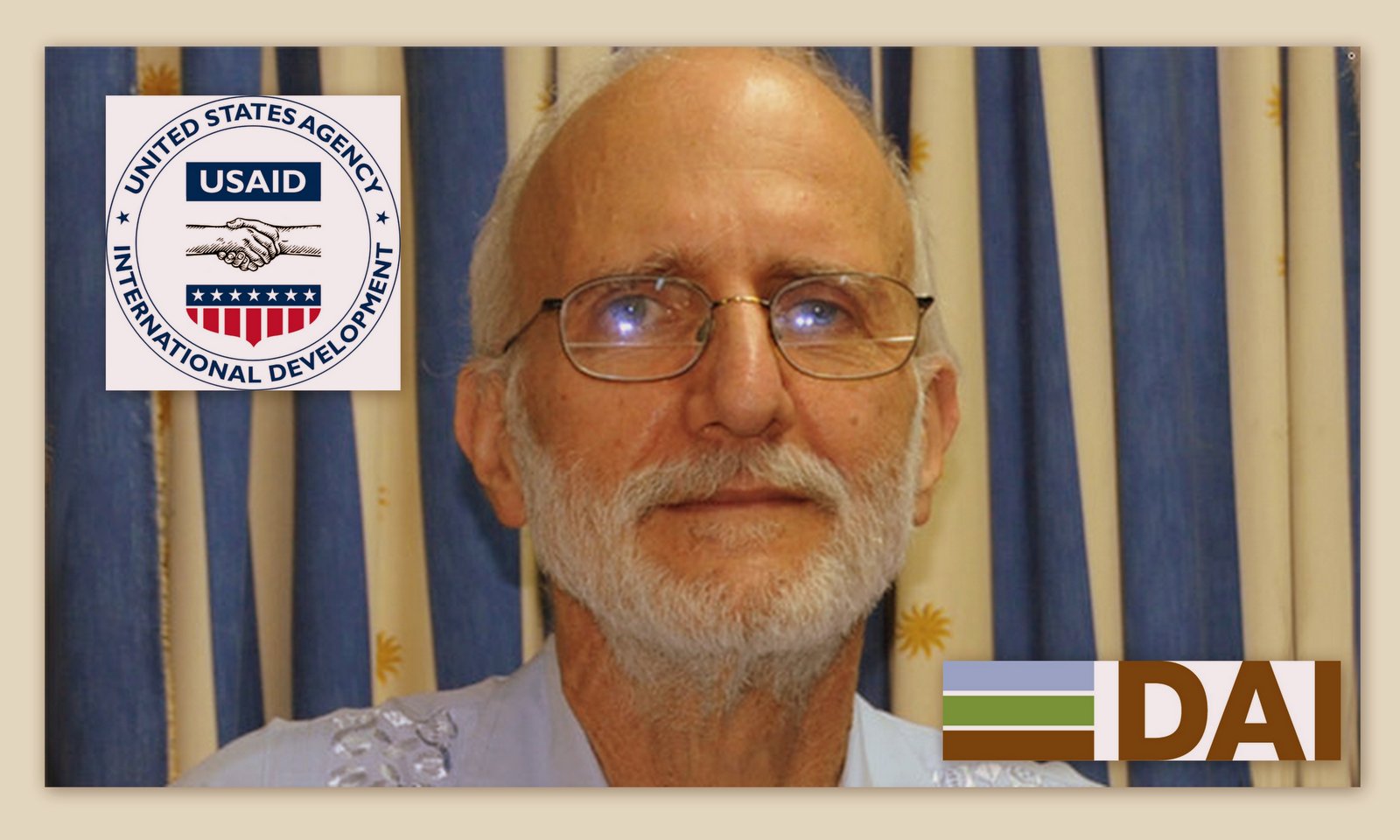

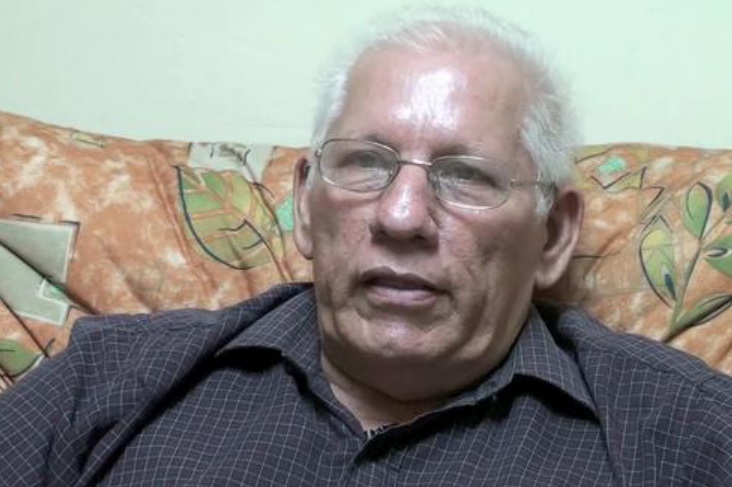
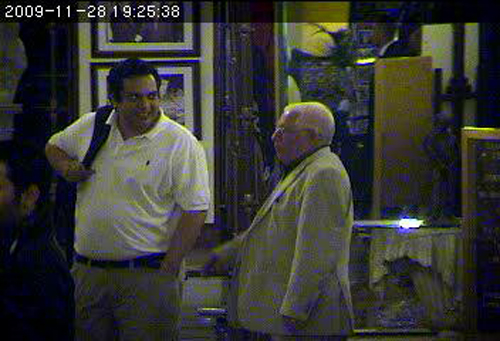
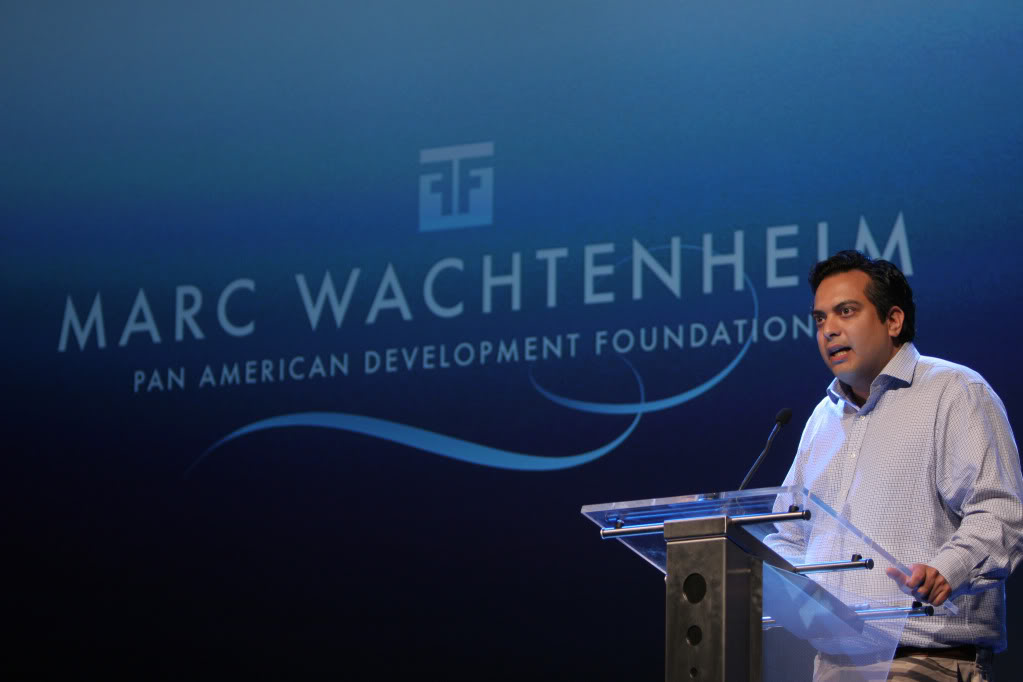
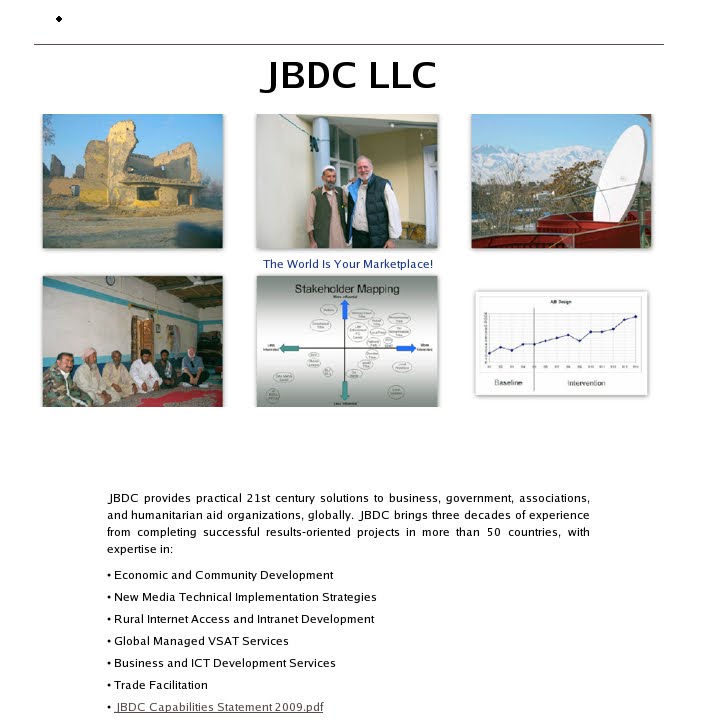

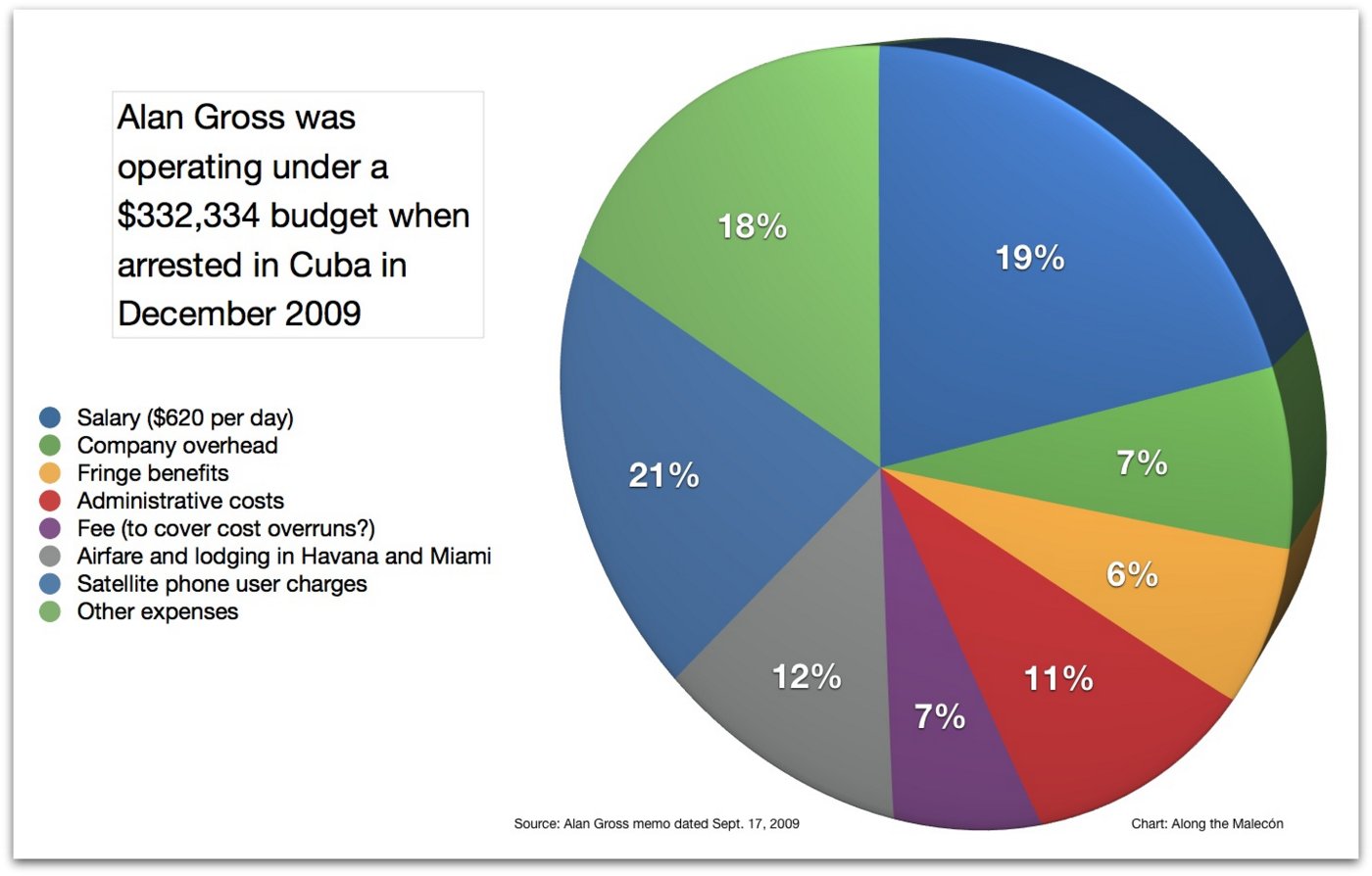
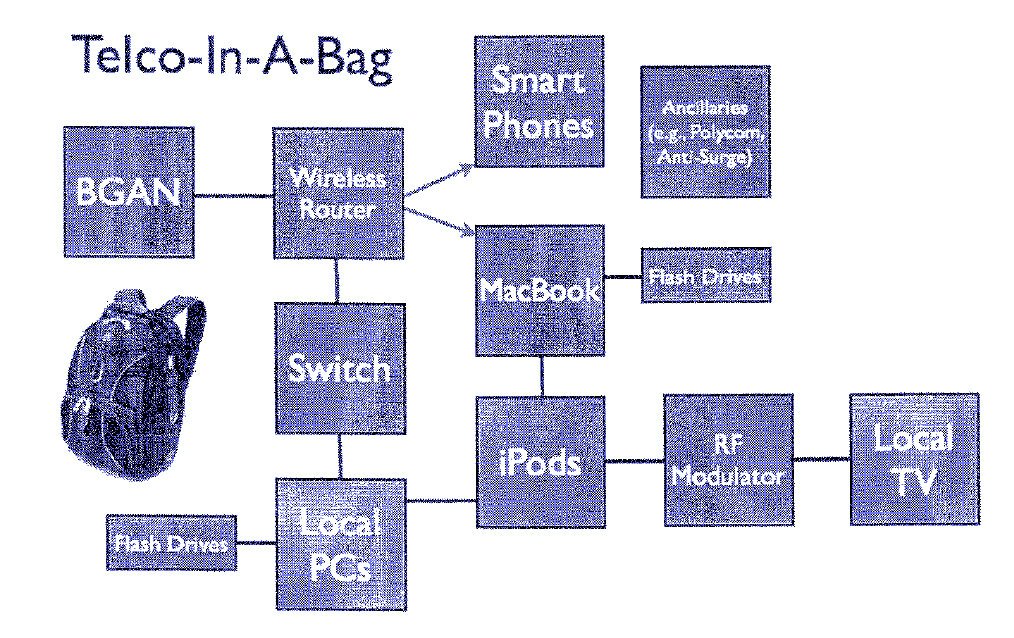

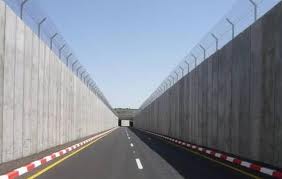 To reach Bab al-Karama from Occupied Ramallah one needs to take the “Palestinian only” road that runs under the “Israeli only” 443 Highway between Ramallah and Beir Naballah.
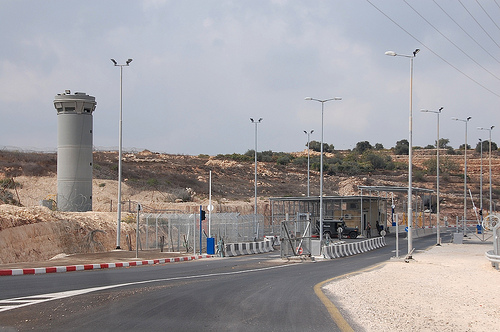

 Zeolite is old. It is in Roman concrete that has held for two thousand years. It’s in the water filters of ancient cisterns. It’s in the stomachs of Pacific livestock whose keepers knew, somehow, that this grey crumbling rock made the animals healthier. It’s in Soviet clinical protocols from the 1960s. It’s in the standard emergency response to the Chernobyl explosion.
 Aletho News

