Making a Killing: The Untold Story of Psychotropic Drugging
COTO Report
Psychotropic drugs. It’s the story of big money-drugs that fuel a $330 billion psychiatric industry, without a single cure.
The cost in human terms is even greater — these [legal] drugs now kill an estimated 42,000 people every year.
And the death count keeps rising. Containing more than 175 interviews with lawyers, mental health experts, the families of victims and the survivors themselves, this riveting documentary rips the mask off psychotropic drugging and exposes a brutal but well-entrenched money-making machine.
Before these drugs were introduced in the market, people who had these conditions would not have been given any drugs at all.
So it is the branding of a disease and it is the branding of a drug for a treament of a disease that did not exist before the industry made the disease. (Excerpt from cchr.org)
January 29, 2013 Posted by aletho | Deception, Science and Pseudo-Science, Timeless or most popular, Video | Bupropion, Mental health, Paroxetine, Psychoactive drug, Sertraline, Tramadol, United States, What is Seroquel | Leave a comment
Mahmoud Sarsak – Palestinian International Footballer
Free Gaza Scotland | January 29, 2013
On Wednesday 23rd of January I with other members of our group had the pleasure and honour to meet Mahmoud Sarsak in our appartment. He is a slight, quietly spoken young man, with a gentle manner and his good humour and patience with our questioning betray none of the pain he has suffered over the last 3 and a half years. When he begins to speak about his experience of imprisonment he tells his story with a matter of fact, quiet sincerity that is striking and makes the horror of his experience all the more shocking.
Mahmoud was 21 years old, at the start of a playing career which had already seen him being recognised as one of the best young prospects in Palestine, already a regular for the Palestinian National side. He had an invitation to play for a football team in Nablus in the West Bank. This meant that he had to ask for permission from the Israelis to cross from Gaza through Erez crossing into Israel in order to travel on to the West Bank. This did not worry him as it was a trip he had already done twice before and when he recieved his permission he went to the crossing looking forward to the opportunity of playing in Nablus. However when he got to Erez at 9am on the 22nd July 2009 his whole world changed, instead of being allowed to cross he was arrested and taken to a Police Station, from here his family were called and informed that he was being taken to Ashkelon Jail.
He was made to take off his clothes and change into overalls, an ‘under investigation uniform’. He describes how for the first 18 days he was tied to a chair with his eyes covered, the only times he was untied was when he was given food and they untied his hands or when he was allowed to go to the toilet when his legs were untied. He explains that during this time he was kept awake, not fed properly and questioned daily, every 4 days he was taken to a court where a judge gave permission for him to be held for a further 4 days. This treatment he says ‘wasn’t so bad’ in comparison with what was to come although I think that most people would call it torture.
At the end of that 18 days he was taken to a Military Jail in the South where he was kept for 6 days and his treatment became much worse. He was beaten regularly and was put in what he described as a fridge, he also had very hot and very cold water put under his feet. During all of this time in both places he was questioned, his interrogators were wanting him to say that he had been involved in ‘activities against Israel’. He didn’t understand what they meant by this, he was a footballer, he had not been involved in anything else and so refused to make things up to make his interrogators happy. He had no idea why he had been arrested.
At the end of these 6 days he was taken back to a civilian jail for another 11 days where suddenly things got much better. He was fed and allowed to sleep properly, his captors became very friendly offering him his freedom, a new house, a salary, a car, access to proper training facilities to help his playing career and foreign travel. All he had to do was become a collaborator. He refused, which provoked many serious threats from his Israeli interrogators. They told him that they would burn his family home down, attack his family and kill his brothers. Despite the pressures upon him and his ordeal so far, he continued to refuse to collaborate.
Except for short visits to court when his lawyer was present, during this initial 35 days of incarceration he had absolutely no contact with anyone but his jailors and interrogators. His lawyer told him that he was going to be all right, the court had said he was going to be released. Instead he was told by a Military Officer that he was now being held under ‘The Law of An Illegal Fighter’ and that they no longer needed to go to court to ask permission to keep him. He was then taken to Kitseot Jail near Bersheva where at least he could see other prisoners and his time of interrogation was over. He asked the other prisoners what this ‘Law of an Illegal Fighter’ meant but none of them had ever heard of it. When he was finally allowed access to his lawyer and was able to ask him he was told that it was a law that the Israeli authorities use when they have nothing against you but they want to hold onto you. He then asked his lawyer what rights he had under this law and was told that he had none, he could now be held in jail for as long as the Israeli Military wanted to keep him.
Mahmoud was the first Palestinian who had been held under this law, the only other people he knows of who had previously been held under it were 2 Hizbollah members from Lebanon who were arrested in 1982. He thinks that because he had no rights he was put in a cell which was 2m x 1m for his time in Kitseot, this cell had only a matress and toilet in it and he developed chest, skin and back problems while there. He was not taken to a hospital while there, and was only seen briefly by a prison doctor for these problems. He was allowed out of his cell for 1 hour a day for exercise with his fellow prisoners when he played football with them.
On the 22nd of February 2010 Mahmoud was taken to Tel Aviv for a court hearing to extend his imprisonment and then to another court hearing for the decision in Jerusalem two weeks later. The journey to court and between jails is in what the prisoners call a ‘post bus’ which is metal bus with steel compartments in which you are jostled and hit off the steel walls. He knew before he was taken to the second hearing that he was going to be held for another six months. After this hearing he was also barred from playing football with his fellow prisoners for that precious hour in the mornings and was told that this was due to his back being too bad. At this time they also started to move him between prisons every 2 months and he was still taken to court every 6 months in order to have his stay in prison extended.
On the 23rd of August 2011 he was told that he was going to be released, he was happy and said goodbye to the other prisoners. He was taken by ‘post bus’ to Erez, his hands and legs were not tied as they usually were, the window was open and when he got there they opened the door of the prison van and the guards moved away talking among themselves. He stayed where he was as he didn’t know what was happening and he didn’t want to be shot if they thought he was trying to escape. He called to the guards to ask what was happening and they told him they were taking him back to jail, he wasn’t being released. He was taken to a different jail for 2 weeks with only the clothes he had on when they took him to Erez. He said that he was later told about another prisoner who had been taken to Erez and left in an open ‘post bus’ with his legs untied in the same way. He had gone to the door to look out and been instantly shot in the leg and accused of trying to escape. After this 2 week period he was taken back to the jail he had originally been in when first imprisoned, here his other clothes and small number of belongings were finally brought to him.
When he was taken to this jail he was given another 6 months but his lawyer was promised that he would be released when this time ended on the 23rd of February 2012. The 23rd of February came and went, 10 days after this he was taken back to court, he had decided that this time if he wasn’t released he would go on hunger strike and stay on hunger strike until they promised in writing that he would be released. So when he was told that he was going to be imprisoned for another 6 months he prepared himself for 10 days, eating less each day and gradually reducing his physical activity. On the 15th of March 2012 he started his hunger strike. He only took water and sometimes a little salt in order to prevent his stomach from beginning to rot.
7 days after he started they began to move him from jail to jail before putting him in Nafha Jail which meant he was put in with the Israeli criminal population. Then he was put into isolation for a spell followed by hospital in Bersheva for 2 days tied to his bed then back to Nafha. From here he was sent to Eshel jail where he was put in isolation again and became very sick. This time they wouldn’t take him to hospital but would only allow him to see the Doctor in Eshel. After 35 days of this the Doctor in Eshel refused to continue to be responsible for him and he was taken to the Prison hospital in Ramle jail where he was with another 5 Palestinian prisoners who were also on hunger strike. He refused treatment here and was put back into isolation, this time his isolation cell had no windows so he was in darkness. After 47 days on hunger strike he bagan to have serious problems with his stomach, he couldn’t even drink water without vomiting. First white then black then brown vomit. They took him back to Ramle Prison hospital then and gave him antibiotics.
Along with the other hunger strikers he was asked regularly to break his hunger strike, on the 15th of May he was told that if he would break his hunger strike he would be released on the 23rd of August and the other hunger strikers were also told that they would have their demands met if they broke theirs. 3 of them accepted but along with 1 of the others Akram Al Rihawy he refused, he had heard promises of release before and he insisted that he have the promise in writing signed by a senior Judge and a Minister from the Israeli Ministry of the Interior. He was also told that he would not be allowed to return to Gaza, he had to choose between Germany, France or Norway which he also refused to accept. At this time he finally began to get International Committee of the Red Cross visits twice a week and he was asked daily to break his hunger strike, he continued to refuse until he got it in writing that he would be released back to Gaza and that he would be properly monitored by a committee of doctors when he started eating again.
Eventually on the 18th of June 2012 on the 96th day of his hunger strike a Minister from the Israeli Ministry of the Interior came to see him with the signed paper that he had been asking for stating in writing that he would be released on the 20th of July 2012. The Minister asked him if he would now please give up his hunger strike and he agreed. The Minister asked him to drink a glass of milk in front of him so that he could confirm and report that he had indeed broken his hunger strike which he did alathough he immediately vomited this back up. His stomach couldn’t cope even with milk after such a long time with no more than water going into it. He said that even though his stomach rejected this cup of milk his whole body felt as though it had drunk and felt relieved.
For 14 days he had to build up to eating again with first intravenous vitamins and nutrition, followed by nutritional drinks, before finally eating his first bit of bread after this 14 day period, which he still vomited back up. During the time of his hunger strike he was only allowed 2 visits from his lawyer, on the 40th day and on the last day. I asked if he was allowed any visits from his family during his time in jail. He replied that because he was given no rights under the ‘Law of An Illegal fighter’ he was not only denied visits from family but was not even allowed the 6 monthly letters delivered to his fellow prisoners by the Red Cross. He wasn’t able to write to them either, not even one short note.
At no time during Mahmoud’s entire incarceration was he actually accused of anything other than being asked to admit to the vague term ‘activities against Israel’ and he was never charged with anything. He was very clear that he had no idea why he was arrested. He was a footballer. The court appearances he attended were simply formalities under Military Law which say that every 6 months any detention order must be renewed.
All Palestinians from the West Bank and Gaza who are arrested by Israel are dealt with under Military Law not Israeli Criminal Law and therefore it is not necessary for Israel to ever bring charges against them. Many who are prosecuted are those who have signed false confessions under torture and are not able to retract them afterwards. Mahmoud’s case was slightly worse than normal Military law, under which there are a few rights which at least give some protection in prison. Mahmoud had none of these rights under this so called ‘Law of an Illegal Fighter’ by which he was held.
I asked Mahmoud if he was back in training for football and if he thought that it would be possible for him to return to his playing career. He said that finally he had managed to attend 3 training sessions and was hoping to be able to return to the team at some point in the future once he was back to full fitness. I sincerely wish him luck with this and hope that he will reach that stage very soon.
This has to be one of the clearest examples of why the BDS (Boycott Divestment and Sanctions) campaign should be supported by everyone and why Israel should be barred from participating in International Sporting events. Currently the 2013 UEFA U-21 Championship is scheduled to be played in Israel. How can this be allowed when they can treat a Palestinian International Player like this? Not to mention that they bombed the only 2 football pitches in Gaza during Operation Pillar of Cloud as well as destroying many local playing areas in the West Bank over the years. I saw several during my visit there in 2004 including one in Ramallah which had been bulldozed.
Mahmoud told us that the other prisoner who had stayed on hunger strike with him, Akram Al Rihawy, had spent his whole sentence in hospital due to his medical problems. His reason for being on hunger strike was not for release but for proper medical treatment. He stopped his hunger strike after being told that he was going to be released on Wednesday the 23rd of January 2013. Yesterday, on the 25th of January 2013 we were told that he was not released as promised and that he is now back on hunger strike.
To join the campaign against Israel hosting the 2013 UEFA U-21 Championship go to the following link and get involved: http://redcardapartheid.weebly.com/
Related articles
- Former mayor put in administrative detention (alethonews.wordpress.com)
- Genocide by Proxy: Palestinian patient Salah Salluha dies at Erez due to prolonged security measures (occupiedpalestine.wordpress.com)
- Hundreds of Palestinians detained without evidence (occupiedpalestine.wordpress.com)
- Palestine: Documenting the torture of a boy in occupation jails, two wounded by shooting & East of Gaza flooded by Israelis (realisticbird.wordpress.com)
January 29, 2013 Posted by aletho | Civil Liberties, Full Spectrum Dominance, Solidarity and Activism, Timeless or most popular | Erez, Gaza, Human rights, Israel, Jerusalem, Palestine, Prison, West Bank | Leave a comment
No, I Have Never Been in the Military
By Laurence M. Vance | LewRockwell.com | January 29, 2013
It happens every time I write an article about war. It happens every time I write an article about the military. It happens every time I even mention war or the military.
The question may take a variety of forms but it is really always the same: “Have you ever been in combat” “Have you ever been in the military?” “Have you ever served?”
Because I have never been in combat, been in the military, or “served,” my answer is, of course, always in the negative.
Those who ask such questions have one purpose: to discredit everything I say about the military. In their mind, it is either that I can’t possibly have sufficient knowledge of what it is like in the military to be able to criticize it or I have no right to criticize the military because I have never been in it, or both.
But rather than hang my head in shame and sheepishly acknowledge that I have never been in the military, I lift it up high and shout No, I have never been in the military. I have never experienced the “glories” of combat. I have never had the “honor” of serving. Thank God I was never in the military.
No, I have never been in the military. I have never sung filthy cadences that glorify rape and killing.
No, I have never been in the military. I have never put my family through unnecessary hardship.
No, I have never been in the military. I have never helped to carry out an evil, reckless, and interventionist U.S. foreign policy.
No, I have never been in the military. I have never destroyed a country’s industry and infrastructure that was no threat to the United States.
No, I have never been in the military. I have never enforced a UN resolution.
No, I have never been in the military. I have never killed someone that I didn’t know, who was no threat to me, my family, my city, my state, or my country.
No, I have never been in the military… I have never been a prostitute, but I know it is an immoral activity.
No, I have never been in the military. I have never experienced PTSD because I had serious doubts about the justness of what I was fighting for.
No, I have never been in the military. I have never experienced the desire to commit suicide.
No, I have never been in the military. I have never unnecessarily been in a situation where I had to kill or be killed.
No, I have never been in the military. I have never been part of an organization that was a global force for evil.
No, I have never been in the military. I have never embraced the values that are all too prevalent in the military: adultery, fornication, promiscuity, drug abuse, alcohol abuse, pornography, sodomy, divorce, sexual assault, sexual harassment, suicide.
No, I have never been in the military. I have never had to be on guard against being sexually assaulted.
No, I have never been in the military. I have never been an accomplice to murder.
No, I have never been in the military. I have never killed a civilian and called it collateral damage.
No, I have never been in the military. I have never fought a police action for the UN.
No, I have never been in the military. I have never played golf on a U.S. military base thousands of miles away in a county that could provide for its own defense.
No, I have never been in the military. I have never violated the Constitution I swore to uphold.
No, I have never been in the military. I have never urinated on a dead body.
No, I have never been in the military. I have never been all that I can be in an organization that was the greatest purveyor of violence in the world today.
No, I have never been in the military. I have never expressed blind, unconditional obedience to someone’s orders.
No, I have never been in the military. I have never cursed like a sailor.
No, I have never been in the military. I have never fought an undeclared war.
No, I have never been in the military. I have never committed random acts of depravity and violence.
No, I have never been in the military. I have never killed civilians for sport.
No, I have never been in the military. I have never participated in state-sponsored terrorism.
No, I have never been in the military. I have never posed for photos with murdered civilians.
No, I have never been in the military. I have never tortured and humiliated prisoners.
No, I have never been in the military. I have never worn a uniform in an airport and grinned from ear to ear when a group of people cheered me as I walked by.
No, I have never been in the military. I have never stopped having independent thoughts.
No, I have never been in the military. I have never transported anyone to some secret CIA prison to undergo “enhanced interrogation techniques.”
No, I have never been in the military. I have never piloted a drone over Pakistan and killed people like I was playing a video game.
No, I have never been in the military. I have never been part of the president’s personal attack force.
No, I have never been in the military. I have never unleashed violence and civil unrest in another country.
No, I have never been in the military. I have never deprived my child of his father while I made multiple duty tours with increased deployment terms.
No, I have never been in the military. I have never fought an unjust war of aggression.
No, I have never been in the military. I have never cut off someone’s body part as a trophy.
No, I have never been in the military. I have never died in vain or for a lie.
No, I have never been in the military. I have never dropped a bomb on a wedding party.
No, I have never been in the military. I have never traveled thousands of miles from the United States to fight in a senseless foreign war.
No, I have never been in the military. I have never dwelled in one of the filthiest moral environments on the face of the earth.
No, I have never been in the military. I have never helped to keep in business the worldwide network of brothels around U.S. military bases.
No, I have never been in the military. I have never traveled the world, met interesting people, and killed them.
No, I have never been in the military. I have never told people that I was defending their freedoms when I was doing nothing of the kind.
No, I have never been in the military. I have never agreed to kill people to get money for college.
No, I have never been in the military. But when men that have been in combat, and have been in the military, and have served confirm what I say about the military and add their own criticisms of the military to it, they are not listened to either.
No, I have never been in the military. But I will continue to criticize it and persuade people to not join it. How could any thinking person do otherwise?
~
Laurence M. Vance [send him mail] writes from central Florida. He is the author of Christianity and War and Other Essays Against the Warfare State, The Revolution that Wasn’t, Rethinking the Good War, and The Quatercentenary of the King James Bible. His latest book is The War on Drugs Is a War on Freedom. Visit his website.
January 29, 2013 Posted by aletho | Illegal Occupation, Militarism, Subjugation - Torture, Timeless or most popular, War Crimes | Combat, Laurence M. Vance, Posttraumatic stress disorder | Leave a comment
Zionist Entity ‘Surprised’ by Argentina-Iran Deal on Commission
Al-Manar | January 28, 2013
Zionist entity’s foreign ministry said Monday it was “surprised” by Argentina’s agreement with Iran to create an independent commission to investigate the 1994 attack on a Buenos Aires Jewish centre.
“We were surprised by the news,” foreign ministry spokesman Yigal Palmor told AFP. “We are waiting to receive full details from the Argentines on what is going on because this subject is obviously directly related to Israel.”
Argentine President Cristina Kirchner on Sunday said that her country and Iran had agreed to create a “truth commission” with five independent judges — none of whom can come from either Iran or Argentina.
Kirchner said the agreement may allow Argentine authorities to finally question suspects currently the subject of Interpol “red notices.”
Argentina has long accused Iran of masterminding the attack and has since 2006 sought the extradition of eight Iranians, including current Defence Minister Ahmad Vahidi and former president Akbar Hashemi Rafsanjani. Iran has always denied any involvement in the bombing, in which 85 people died.
The accord comes after several months of negotiations — starting in October at the United Nations in Geneva — aimed at resolving the pending legal actions.
“We warned the Argentines from the start that the Iranians would try to set a trap for them and that they should beware,” Palmor said on Monday.
January 28, 2013 Posted by aletho | False Flag Terrorism, Timeless or most popular | Ahmad Vahidi, Akbar Hashemi Rafsanjani, Argentina, Cristina Fernández de Kirchner, Iran, Ministry of Foreign Affairs (Iran) | Leave a comment
Continued harrassment of the Nasser family in Madama
International Solidarity Movement | January 27, 2013
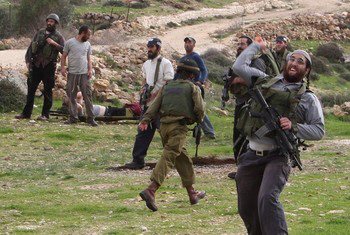
Madama, Occupied Palestine – A month after unprovoked settler and army attacks, the victim of severe violence Mamun Nasser remains in Israeli prison. The arrest of yet another member of the Nasser family shows Israeli army’s continued harassment in Madama.
On December 18th the notorious security guard charged with the protection of the illegal settlement of Yizhar, Jacob, attacked Mamun Nasser while he was tending to his flock of sheep in a hill outside the settlement. Mamun was handcuffed and beaten in front of his entire family, who desperately tried to intervene.
The Israeli army arrived on the scene, who responded by firing live ammunition on the Nasser family and others who tried to help, quickly ending their attempt to stop the vicious assault. One round passed through Mamun’s sisters clothing narrowly missing her while another one hit his brother, Amir, in the leg. His mother told us “They wanted to kill him [Amir]. I heard the officer giving that order. He was lucky that he was only shot in his leg.” Severely beaten, Mamun was then arrested and taken away by the Israeli military into custody. One month later he remains detained in Majdou Prison.
On January 23rd at 4 pm, the Israeli army followed up the harassment by raiding the Nasser family home in Madama, arresting Mamun’s brother Amir who was still recovering from the gunshot wound he received only a month prior. This is another episode in the continued harassment of villagers surrounding Yizhar which is described as the West Bank’s most violent settlement by the United Nations.
Video taken by settlers during the incident on December 18th
Related articles
- Palestinian facing charges after settler violence in Madama (palsolidarity.org)
- Madama attack – Harrowing account from the Nassar family (palsolidarity.org)
- Qusra settler attack, two hospitalised (alethonews.wordpress.com)
- Jewish settlers commit vehicular assaults with impunity at peaceful roadblock protests in the West Bank (alethonews.wordpress.com)
- This Week in Palestine, January 25th, 2013 (indybay.org)
January 27, 2013 Posted by aletho | Ethnic Cleansing, Racism, Zionism, Illegal Occupation, Subjugation - Torture, Timeless or most popular, Video | Human rights, International Solidarity Movement, Israel Defense Forces, Israeli settlement, Madama, Palestine, West Bank, Zionism | Leave a comment
US probes Swiss medicine giant for trade with Iran
Press TV – January 27, 2013
Despite its claims of easing the restrictions on the sales of medicine to Iran, Washington has launched an investigation into the transactions of Switzerland’s biggest pharmaceutical company, Novartis, with the Islamic Republic.
In its 2012 annual report, Novartis said its Alcon eye-care unit is being investigated by the United States for exporting medicine to Iran, Wall Street Journal reported.
Alcon received a subpoena in 2012 from the US attorney’s office for the Northern District of Texas, seeking documents related to its exports to Iran that date back to 2005, years before the current sanctions were enacted.
This is while the US Treasury Department said in October 2012 that American companies are allowed to sell certain medicines and basic medical supplies to Iran without first seeking a license from the Office of Foreign Assets Control.
The move was made amid Iran’s protests that the US-engineered sanctions were hurting ordinary Iranian citizens and over fears that the humanitarian effects of the unilateral sanctions could undermine support for the bans among Washington’s allies.
According to US rules, exporters of medicine and medical supplies to Iran are required to apply for special licenses. Besides, as the aftermath of the sanctions, the impossibility of transferring money through banks has cast its cumbersome shadow upon medicine and healthcare in Iran and has gravely affected the import of medicines to Iran.
On January 26, in a second letter to UN Secretary General Ban Ki-Moon, President of Academy of Medical Sciences Dr. Seyed Alireza Marandi criticized him for his silence and indifference to the threats directed at the health of Iranian people and urged him to show real action.
“As the individual responsible for surveying and monitoring national health related issues, I affirm that this problem is real and the current situation was predictable from the start of the brutal sanctions,” Marandi said in his letter.
At the beginning of 2012, the United States and the European Union imposed sanctions on Iran’s oil and financial sectors with the goal of preventing other countries from purchasing Iranian oil and conducting transactions with the Central Bank of Iran. The sanctions entered into force in early summer 2012.
On October 15, the EU foreign ministers reached an agreement on another round of sanctions against Iran.
The illegal US-engineered sanctions were imposed based on the accusation that Iran is pursuing non-civilian objectives in its nuclear energy program.
Iran rejects the allegations, arguing that as a committed signatory to nuclear Non-Proliferation Treaty (NPT) and a member of International Atomic Energy Agency (IAEA), it has the right to use nuclear technology for peaceful purposes.
Related articles
- US: We are not sanctioning medicial supplies to Iran (therealamirtaheri.com)
- U.S. sanctions cause shortage of drugs in Iran (thehindu.com)
- US exempts 9 countries from sanctions on Iranian oil industry (alethonews.wordpress.com)
January 27, 2013 Posted by aletho | Progressive Hypocrite, Timeless or most popular, War Crimes | European Union, International Atomic Energy Agency, Iran, Iranian peoples, Office of Foreign Asset Control, Sanctions against Iran, United States, United States Department of the Treasury | Leave a comment
Nasrallah tells cadres Hezbollah “has changed”
Al Akhbar | January 26, 2013
Hezbollah’ Secretary General Sayyid Hassan Nasrallah told his cadres in a private gathering that the Islamist group “has changed” and that the group’s ultimate priority is to “protect Lebanon”, a source reported to Al-Akhbar.
“Hezbollah has changed and its priorities have changed based on circumstances,” Nasrallah said.
“There was a time when we used to see Lebanon as a colonial construct that was part of the Ummah,” he added. “That was in our early days, and the country was going through a civil war. All parties were calling for a nation that fit their liking.”
“Today conditions have changed. We believe that this country is our country, and that the flag of the cedar is our flag that we need to protect, too. At this stage, our priority is to protect the state in Lebanon and to build it.”
The remarks appear to fly in the face of accusations by Hezbollah’s opponents that the group is a proxy of Iran, functioning as a “state within a state.”
“What I am telling you isn’t mere rhetoric. We are convinced of this and must work to apply it,” Nasrallah said at the close of his remarks.
Hezbollah launched into the Lebanese political scene during Israel’s brutal invasion of Beirut in 1982 as a hodgepodge of Islamist groups supported by Iran.
In 1985, the groups coalesced under a single party with a manifesto that declared its loyalty to be to the Islamic Ummah, and Iran’s supreme leader rulings to be a source of the group’s bylaws.
The 1985 manifesto also mentions “the obliteration of Israel” as one of its primary goals.
This is not the first time Hezbollah rescinds Ummah-related sections of the manifesto. In 2010, an updated group charter identified Lebanon as the party’s “homeland and the homeland of our fathers and ancestors.”
“We want Lebanon to be sovereign, free, independent, strong and capable … it should be mentioned that one of the most important conditions for the establishment of a home of this type is having a fair state, a state which is capable and strong, as well as a political system that truly represents the will of the people and their aspirations for justice, freedom and security, stability and well-being and dignity,” the charter went on to say.
January 26, 2013 Posted by aletho | Timeless or most popular | al-Akhbar, Beirut, Hassan Nasrallah, Hezbollah, Lebanon, Nasrallah, Ummah | Leave a comment
COINTELPRO: The FBI’s War on Black America
Through a secret program called the Counter Intelligence Program (COINTELPRO), there was a concerted effort to subvert the will of the people to avoid the rise “of a black Messiah” that would mobilize the African-American community into a meaningful political force.
This documentary establishes historical perspective on the measures initiated by J. Edgar Hoover and the FBI which aimed to discredit black political figures and forces of the late 1960′s and early 1970′s.
Combining declassified documents, interviews, rare footage and exhaustive research, it investigates the government’s role in the assassinations of Malcolm X, Fred Hampton, and Martin Luther King Jr. Were the murders the result of this concerted effort to avoid “a black Messiah”?
http://malcolmxfiles.blogspot.com/
Related article
- The Return of COINTELPRO? (alethonews.wordpress.com)
January 26, 2013 Posted by aletho | Civil Liberties, Deception, Subjugation - Torture, Supremacism, Social Darwinism, Timeless or most popular, Video | COINTELPRO, FBI, Federal Bureau of Investigation, Fred Hampton, j edgar hoover, Malcolm X, Martin Luther King, United States | Leave a comment
Abuse in UK’s Iraq occupation was ‘systemic’
DW | January 24, 2013
The UK government is facing more allegations of vicious abuse in its Iraqi prisons during the occupation. Now, on the eve of the 10th anniversary of the invasion, lawyers want to prove that the abuse was systemic.
Next week, from January 29, not long before the 10th anniversary of the invasion of Iraq, UK lawyer Phil Shiner will present 180 statements to a high court in London. They were gathered in Beirut by Shiner and his Public Interest Lawyers team from Iraqis detained by the British army in southern Iraq between 2003 and 2008. The testimony is shocking, both because of its volume (another 871 statements are still to come), and its sickening detail.
One civilian, known only as Khalid, said, “[A British soldier] then grabbed my penis and dragged me around the floor while holding it. He also made me squat up and down whilst naked and inserted his finger into my anus. I would have preferred to have been killed than subjected to this.”
Another prisoner, named Halim, claimed he was told: “Fuck you and fuck Islam!” by a soldier who then “opened the belt of my trousers and said ‘now jiggy jiggy’. The soldier put his boot in my chest and pulled my trousers down … The soldier put his foot on my chest … lifted me in the air and turned me on to my front.”
Not just ‘bad apples’
These are two of the dozens of descriptions, which feature hooding, sleep and sensory deprivation, mock executions, stress positions, threats of rape of detainees’ female relatives, regular beatings, and religious abuse.
Shiner intends to show that the “bad apples” defense usually peddled by governments in such cases will no longer wash. He will argue that the sheer volume of the evidence he has gathered shows that the abuse was “systemic,” and that, under the European Convention on Human Rights, a full inquiry is required.
“We’ve got the training materials, we’ve got the policy documents,” Shiner told the British Observer newspaper. “Violence was endemic to the state practices.”
Kartik Raj, UK-based campaigner for Amnesty International, agreed. “The allegations of abuse, ill-treatment, and death in custody – some of them are not allegations, they’re proven fact – are so credible and so many, that there really does need to be an independent and thorough investigation,” he told DW. “And it is something that should be looked at as a systemic issue in a systematic manner, rather than a series of individual cases where individuals have to take out a civil action against the government.”
Proving systemic abuse
The importance of proving that such cases are not isolated is shown by the injustice that followed the killing of Baha Mousa. Mousa, a 26-year-old hotel receptionist, died after just 36 hours of British custody in Basra in September 2003. A British government inquiry into the death found that he had died after having been hooded for 24 hours and severely beaten. He suffered “at least” 93 injuries, including fractured ribs and a broken nose, and died, the inquiry concluded, of a combination of lack of food and water, heat, exhaustion, fear, previous injuries, and the hooding and stress positions. Andrew Williams, a law professor who wrote the book A Very British Killing on the Baha Mousa case, concluded more simply, “He was kicked to death.”
Baha Mousa’s father Dawood Mousa arrives to give evidence to the Baha Mousa Inquiry in London, Wednesday Sept. 23, 2009. Mousa was a 26-year old Iraqi who was beaten and killed in the custody of British troops following a raid on his hotel in the southern Iraq city of Basra in September 2003.
Seven soldiers were charged for the war crime. Six were acquitted or had their charges dropped, while the seventh, Corporal Donald Payne, was discharged from the army, served a year in prison for “inhumane treatment,” while being cleared of manslaughter and perverting the course of justice. The judge, Justice Ronald McKinnon, stated that “none of those soldiers has been charged with any offence simply because there is no evidence against them as a result of a more or less obvious closing of ranks.” “A collective amnesia set in,” Williams told DW.
Thanks to the sheer number and the repetition in the new statements collected by Shiner, it seems easy to establish that there was a pattern of abuse during the British army occupation of southern Iraq. According to Williams, who also works as a researcher and legal advisor for the Public Interest Lawyers, “Under international criminal law, it’s not completely required that you have to prove beyond any doubt that a particular person was responsible for setting up a program of abuse.” Instead, Shiner will try to “establish that there is clear evidence… that people in authority knew that it was happening, and yet nothing was done to stop it.”
Training interrogators
Some of the interrogation techniques described both in the Baha Mousa inquiry and the new testimonies – including hooding, sensory deprivation, and stressing – were made illegal in Britain in the early 1970s, following a European Court of Human Rights case on the treatment of Irish prisoners.
In this undated still photo provided by The Washington Post on Friday, May 21, 2004, a hooded Iraqi detainee appears to be cuffed at the ankle chained to a door handle while being made to balance on two boxes at the Abu Ghraib prison on the outskirts of Baghdad. The Washington Post has obtained what it says are hundreds of photographs and short digital videos – as of yet unreleased – depicting U.S. soldiers physically and emotionally abusing detainees last fall in the Abu Ghraib prison.
In light of this, the training materials for British army interrogators, some of which were disclosed in the Baha Mousa inquiry, have become key evidence. But the allusions in those manuals and Powerpoint presentations are vague. “They show that there was a degree of contempt for detainees,” said Williams. “There would be comments such as, ‘Get them naked.’ There are certain indications in these materials that most people would see as abusive in themselves, but they also open the door for soldiers to take the material as a license to invent ways of treating detainees. You need to put together the pieces of a jigsaw.”
The British Ministry of Defense’s answer to all this is that any general questions about abuse were dealt with by the Baha Mousa inquiry, which resulted in 73 recommendations, as well as the ongoing work of its own internal “Iraq Historic Allegations Team.” But this, says Amnesty International’s Raj, is not enough.
“It’s clear that the Baha Mousa recommendations, including the systemic recommendations, are based on a very, very specific time frame,” he said. “I think the new issues have not been sufficiently addressed.”
British soldiers help Iraqi soldiers during the construction of a military base in Basra, southern Iraq on 13 April 2008. Iraqi security forces set up several military bases in areas which witnessed battles between Iraqi security forces and the Mahdi Army in Basra.
“The inquiry only looked at the particular systems in that particular case,” added Williams. “It couldn’t look at the investigation that took place after Baha Mousa was found dead, nor could it look at any other examples of abuse that had come to light. It couldn’t join the dots.”
‘Culture of contempt’
Once they are joined, argues Williams, these dots create an image of what he calls a “culture of contempt” during the occupation of Iraq – including not only abuse of prisoners of war and civilians, but also unlawful killings on the streets.
If the high court does rule that there will be a public inquiry, it could go beyond making recommendations to actually prescribing responsibility. “From an international criminal law position, the answer to the question ‘how high does it go?’ is that it goes to top of government,” said Williams. “But in terms of direct culpability – that’s impossible to know unless you look at individual cases. As to general governmental responsibility, one has to ask who was in power at the time, who was overseeing the way that troops were operating and the means of interrogation.”
The fact that the British government recognizes that there is a problem seems beyond doubt – in December it was reported that over £14 million (16.7 million euros) had been paid out to over 150 Iraqis in compensation for their treatment at the hands of British soldiers. “Why would they receive compensation, unless there was some legitimacy to their complaints?” asked Williams.
January 26, 2013 Posted by aletho | Subjugation - Torture, Timeless or most popular, War Crimes | Baha Mousa, Basra, British Army, Death of Baha Mousa, Iraq, Mousa, UK | Leave a comment
Egypt’s Free Economy Excludes the Poor
By Bisan Kassab | Al Akhbar | January 25, 2013
Egypt’s 25 January Revolution produced few economic benefits for the country’s poor even though they were instrumental in overthrowing the old order. The Muslim Brotherhood has other economic priorities, including pushing measures that further economic liberalization in Egypt.
Given the Egyptian media’s focus, it might be difficult to believe that Egypt’s 25 January 2011 Revolution was not one of the educated middle class. On the TV screen, these shiny young faces appear on talk shows, portrayed as the leaders of the revolution.
But 28 January 2011’s “Friday of Anger” belonged to the marginalized who – using the tricks they learned in their daily battles with the state apparatus in the slums – were able to defeat the police forces. Regardless, the media see the revolution differently: “This is the revolution of dignity and not of the hungry,” they say.
This discourse paved the way for state repression of social demands. It even reached a point where the media began depicting Egypt’s working class – those that bolstered the revolution’s ranks with its mass mobilizations – of deliberately aiding the counter-revolution through strikes that hurt the economy. The first law issued by the Supreme Council of the Armed Forces (SCAF) following their rise to power banned strikes.
As time passed, the voices of social justice were replaced by the murmurings of political battles. These politicians, who have the upper hand in the media, wanted a piece of the revolutionary pie after disregarding its true heros.
Post-Revolution, Little Help for the Poor
Even before the revolution, experts close to the ruling National Democratic Party saw signs of unrest rooted in growing poverty. This was clear in the First Investment Report: Towards a Fair Distribution of the Fruits of Growth prepared by the General Investment Authority in 2009, which warned of sharply rising poverty rates.
Despite the steady economic growth in the last decade of Mubarak’s rule, the proportion of the population living below the national poverty line rose from almost 17 percent of the population in 2000 to 22 percent in 2008, according to the latest figures available from the World Bank.
Nevertheless, when SCAF took power after the fall of Mubarak, they ignored these facts and rejected the expansionary budget presented by Minister of Finance and prominent NDP member Samir Radwan. Instead, the first post-revolution budget was austere: workforce training funds were scaled back to 1 billion Egyptian Pounds ($151 million) from an original 2 billion, and funds for low-income housing were never raised by the expected EGP500 million ($75 million).
Furthermore, SCAF sought to protect the rich from any burdens, such as the tax increase proposed by Radwan on the distribution of capital gains by financial institutions.
Although the last days of SCAF’s rule witnessed an open struggle between the military class and Islamist forces, the conflict was not an indication of different economic policies. “The Islamist parties, which between them won a majority in the 2011-12 parliamentary election appear to favor the continuation of a broadly pro-market policy…” explained an April 2012 report from Chatham House titled “‘Bread, Dignity and Social Justice’: The Political Economy of Egypt’s Transition.”
The new Egyptian Constitution is a glaring example of the bias of the Muslim Brotherhood (MB) towards market liberalization. It stipulated linking salaries with production for the first time and neglected to set a ceiling for agricultural property.
But the constitution aligns with the Brotherhood’s previous positions: the group had been the primary opponent of agrarian reform during the Nasser era and endorsed a 1992 act liberating the relationship between landlord and tenant on agricultural land. The act had abolished gains won by peasants and was faced with wide-scale opposition in 1997.
The knockout blow to the MB’s popularity might be their attempt to implement a package of reforms for tax laws, which was frozen by President Mohamed Mursi a few hours after being announced. It would’ve raised sales taxes on several cement and communications goods and led to a steep increase on the commercial advertising tax – a move that could have hiked up the sales prices of nearly all goods and services.
It seems the MB has learned a lesson from the bread uprising against President Anwar Sadat in January 1977. At the time, the MB magazine al-Daawa described the protests as a “communist conspiracy.”
While the revolution seems to have resulted – at the very least – in a minimum wage increase to EGP700 ($105), the collapse of the Egyptian Pound against the US dollar this past January has precluded any benefits from such a raise.
January 25, 2013 Posted by aletho | Economics, Timeless or most popular | 2011 Egyptian revolution, Chatham House, Egypt, Muslim Brotherhood, National Democratic Party, Samir Radwan, Supreme Council of the Armed Forces | Leave a comment
Egypt Two Years On
By Ibrahim al-Amin | Al Akhbar | January 25, 2013
History books will cite January 25 as the moment of undoing for the dictatorial rule of Mohammad Hosni Mubarak. What we don’t know is what will be said about the scale of the change brought about by the uprising.
It is impossible to make confident predictions at present. Questions only raise more doubts as to the ability of Egypt’s new rulers to bring about major change. But as social theorist Samir Amin points out: “The Egyptian people are brave and will not be afraid to start a second and a third uprising.”
The events of the past two years prove that Amin’s assessment is realistic. The ongoing struggle over Egypt is the clearest sign that the country’s new rulers have not managed to establish a strong enough hold to last as long as their predecessors.
A formidable media machine continues in its efforts to restrict the Egyptian people’s uprising. Many people inside and outside Egypt wanted to persuade the masses that the underlying goals of their protest movement could be reduced to a mere change of president. These people have assumed powerful influence within the state’s institutions and seek to re-establish their control over the public and private sectors of the economy. They want Egypt and the Arabs to behave as though change has been accomplished.
This takes us back to Amin, who noted the menace posed by foreign powers in Egypt. He referred to a cooperative endeavor by the US, Israel, and Gulf states to ensure Egypt’s continued reliance on a policy of “begging from abroad” so as to better maintain its “assistance for US policies in the region.”
He observed that while “Mubarak’s Egypt supported the US invasion of Iraq…today’s Egypt under the Muslim Brotherhood assists the policies on Syria.” The end goal is for Egypt to acquiesce “to the Zionist scheme to eliminate the Palestinian presence within the occupied territory.”
There is no need to repeat Amin’s views on economic policy. The evidence that Egypt’s new rulers are resuming past economic policies is overwhelming. There will be no change in how the country’s economic, social, financial, and monetary policies are shaped. Hence the cruel joke that “Khairat el-Shater is Gamal Mubarak with a beard.”
Nobody can deny the Egyptian people’s massive achievement in bringing down a corrupt and tyrannical ruling clique that was subservient to the colonial West and submissive to the Zionist enterprise. But the story doesn’t end with the Muslim Brotherhood winning a narrow majority at the polls and claiming legitimacy to do what it likes with the country. Whatever misgivings there may be about the condition of the new opposition in Egypt, it has tough questions to face.
– What became of the legacy of Mubarak’s rule? What does the Islamic mantle mean when it is donned by rulers who pursue the same policies that they once said caused poverty, ignorance, and misery?
– Freedom of expression cannot be deemed a gift from the country’s new rulers. Egyptians are demanding guarantees that the gains made so far are not reversed. Can we expect a rotation of power in a few years time? Will Egypt’s new rulers help to recover its unified national identity, or will we see more ugly images of sectarian divisions?
– What real change has there been in the country’s foreign policy? What role does it play in reviving collective Arab action? Or has that been surrendered to the medieval monarchies of the Gulf? Is Egypt acting to regain its rights, sovereignty, and freedom with regard to supporting the people of Palestine?
– Can anyone provide any evidence that the money stolen by the National Democratic Party under Mubarak and his clique is being recovered? Or is the looted national wealth merely passing from one regime to the next?
January 25, 2013 Posted by aletho | Deception, Economics, Timeless or most popular | Egypt, Hosni Mubarak, Muslim Brotherhood, National Democratic Party | Leave a comment
Racism Pervades Israeli Electoral Campaign
By Yusuf Fernandez | Al-Manar | January 24, 2013
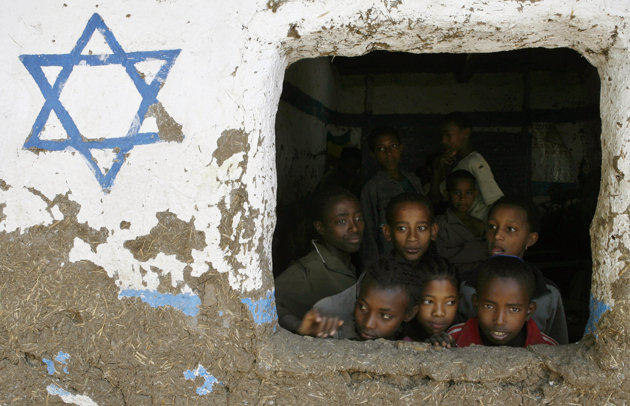
The last electoral campaign in Israel has been dominated by racism. It is not just racism against Arabs, which is as old as the existence of the Zionist entity, but also racism against Black people, whose life is becoming more and more miserable in Israel. According to the statistics, there are currently about 60,000 African immigrants in the Zionist entity. Most of them come from South Sudan, Eritrea, Ivory Coast, Congo and other countries.
The situation of Africans in Israel, both Jews and non-Jews, is actually desperate. Some thousands have low-quality jobs where they are unscrupulously exploited by Israeli employers. Others are homeless and are begging on the streets of Israeli cities to survive. In spite of claims of rampant crime in the suburbs of South Tel Aviv where most Africans live, a senior police commander, David Gez, was quoted as saying the level of crime among this population was actually relatively low.
The last episode of anti-Black racism was a recent video made by the religious Shas party – which represents Sephardi Jews, who ironically have also been historically subjected to discrimination by Jews of European-origin (Ashkenazis). The five-minute video sought to fuel fear of Africans and increase support for the Shas´s anti-immigration platform ahead the January 22 parliamentary elections.
The message of the video was that only the leader of the Shas party, Eli Yishai, who is also currently interior minister, can successfully fight against the “threat” allegedly posed by African immigrants, whom Yishai and other Israeli politicians repeatedly refer to as “infiltrators.” In an interview with Ynet, Yishai said the “the threat from infiltrators is no less severe than the Iranian nuclear threat.”
In May, Yishaid told Maariv that in the previous months dozens of Israeli women had been raped by “infiltrators” in South Tel Aviv but they had decided not to report the attacks so that people would not think they had “contracted AIDS”.
The content of the video was not different to other similar ones made by far-right European parties. There were in it remarks by local residents who express their fear for their safety and anger over a housing shortage — all allegedly due to the African immigrants. According to the Times of Israel, one woman says that “it is their fault that there are no apartments. It is their fault that housing is very expensive.” A man complains that “tomorrow the Sudanese will keep on walking around here, continue to beat (people) up, continue to stab and continue to rape our women.”
The narrator says that the black “infiltrators” “control neighbourhoods in south Tel Aviv, Eilat, Ashdod, and other cities,” and pose a “social, religious and security threat.” He goes on to assert that the “greatest threat of all is the demographic threat.” The video also claims that the majority of African migrants are Muslim, and that they therefore “do not believe in the State of Israel´s right to exist.”
Ironically, the Shas has also denounced the racial bias of the other Israeli parties. Recently, Aryeh Deri, the number three of the party, accused the Likud-Yisraeli Beitenu party of “being a party of Russians and whites” and having ostensible bias against Sephardi Jews, who have been considered a second-class citizens in the Zionist entity, where the power has been traditionally in the hands of Ashkenazi Jews, who mostly came from Eastern Europe.
For his part, Prime Minister Benjamin Netanyahu has announced that he wants to expel tens of thousands of African undocumented immigrants and that the inflow into Israel from Egypt has been brought to a halt due to the new barrier. “Our aim is to repatriate tens of thousands of infiltrators now in Israel to their countries of origin,” he said, adding Israel was in contact with some governments from Africa “to solve this problem”.
On May 23, Likud leading members took part in a demonstration in Tel Aviv’s impoverished suburb of Hatikva to protest against the presence of Africans in Israel. Miri Regev of Likud addressed the rally to which more than 1,000 people attended. There, she described the Africans as a “cancer in our body” and pledged to do everything she could “in order to bring them back to where they belong”. She attacked human rights and “left-wing” groups aiding the immigrants.
Danny Danon, another leader of Likud, said that the only solution to the issue of the “infiltrators” would be to “start to talk about their expulsion”. “We must expel the infiltrators from Israel. We should not be afraid to say the words “expulsion now”,” he said. He went on saying that Africans had set up an “enemy state”, whose capital was Tel Aviv.
Violent attacks
Shortly after the speeches, violent incidents broke out. Demonstrators smashed shops, properties and cars belonging to the African immigrants and beat up men and women while chanting “Blacks out”.
In April, apartments where Africans lived as well as at a kindergarten were attacked with Molotov cocktails in Shapira in south Tel Aviv.
On July 12, an Eritrean man was badly burned and his pregnant wife suffered smoke inhalation after attackers tried to burn down their apartment in central Jerusalem (Al Quds). The incident, the second arson attack on African immigrants in the city within six weeks, took place near the city’s Mahane Yehuda market, AFP quoted a police source as saying.
The Israeli government has refused to condemn these attacks on African immigrants and instead used them as an excuse to promote its anti-migrant agenda, which included a new law allowing the authorities to keep undocumented Africans imprisoned for three years and jail those who help them for up to 15 years. According to recent polls, one in three Israelis support those attacks.
Even “left-leaning” parties, such as the Labor, support racist policies. The Labor leader, Shelly Yachimovich, accused recently the the government of “having failed… and let the slums be flooded by migrant workers and refugees, thereby helping to kindle wild passions” and claimed the need to “protect the country from facing a huge mass of migrant workers”.
In March, Israel started to build a huge prison camp, the world´s largest, in the Negev desert. Such a facility is situated near the Ketziot prison, where thousands of Palestinian prisoners have been jailed. The camp will be run by the prison service and thousands of Africans will be locked up there. A spokesperson for the Israeli Ministry of Interior confirmed that Yishai wanted to eventually jail all of the thousands of undocumented African immigrants currently in the Zionist entity.
Other immigrants have already started to be expelled. On June 10th, the immigration police began a mass roundup operation, which was initially focused on South Sudanese nationals but was then expanded to include those from the Ivory Coast. Hundreds of these Africans were detained and around 240 were sent to Juba, capital of South Sudan.
There is no doubt that racism and xenophobia are being fueled by the current Israeli government and nearly all the Zionist parties. Their main goal is to divert growing outrage over the decline of living standards and rising social problems by promoting racist claims and demands to preserve the “Jewish identity” of the Zionist entity at a time when the latter is getting weaker and more internationally isolated due to its settlement policies.
January 24, 2013 Posted by aletho | Ethnic Cleansing, Racism, Zionism, Timeless or most popular | Eli Yishai, Israel, Miri Regev, Sephardi Jews, Shas, South Sudan, Tel Aviv, Zionism | Leave a comment
Featured Video
Thomas Fazi: NATO’s Hybrid Warfare – Deception & Permanent War
or go to
Aletho News Archives – Video-Images
Book Review
The Zeolite Book — First Edition, 2026, Paperback
The volcanic mineral medicine will not patent — for the toxic burden medicine will not name
Lies are Unbekoming – October 30, 2026
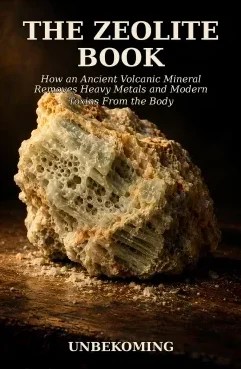
Zeolite is old. It is in Roman concrete that has held for two thousand years. It’s in the water filters of ancient cisterns. It’s in the stomachs of Pacific livestock whose keepers knew, somehow, that this grey crumbling rock made the animals healthier. It’s in Soviet clinical protocols from the 1960s. It’s in the standard emergency response to the Chernobyl explosion.
In 1986, after the Chernobyl reactor failure, the Soviet Union manufactured and distributed natural zeolite at industrial scale — for soil remediation, for livestock feed, for human consumption, for the cleanup itself. Karl Hecht, who had been director of the Institute for Experimental and Clinical Pathophysiology at the Charité of Humboldt University Berlin, spent the six decades after that building the clinical research base — on silicon’s role in human health, on zeolite’s clinical safety, on its applications in ageing. In 2018, Pavelić and colleagues published a comprehensive clinical safety review of natural clinoptilolite in Frontiers in Pharmacology. In 2019, Mastinu analysed its binding affinities. In the Western medical literature, these works sit largely uncited.
What has not been treated at book length, until now, is how a volcanic mineral with six decades of Soviet clinical work behind it, two major peer-reviewed Western reviews, and ongoing clinical use across the former Eastern Bloc, remains almost entirely absent from Western medical practice — and what the toxic burden it’s meant to address actually is.
The Zeolite Book gathers the Soviet clinical record, the Western peer-reviewed studies, three contemporary practitioner voices, and three serious counterviews into one honest treatment. That’s why the book runs to seven appendices. 288 pages, four parts, three practitioner voices, three counterviews, seven appendices. The honest treatment is the argument.
Blog Roll
-
Join 2,366 other subscribers
Visits Since December 2009
- 7,793,677 hits
Looking for something?
Archives
Calendar
Categories
Aletho News Civil Liberties Corruption Deception Economics Environmentalism Ethnic Cleansing, Racism, Zionism Fake News False Flag Terrorism Full Spectrum Dominance Illegal Occupation Mainstream Media, Warmongering Malthusian Ideology, Phony Scarcity Militarism Progressive Hypocrite Russophobia Science and Pseudo-Science Solidarity and Activism Subjugation - Torture Supremacism, Social Darwinism Timeless or most popular Video War Crimes Wars for IsraelTags
Afghanistan Africa AIPAC al-Qaeda Australia BBC Benjamin Netanyahu Brazil Canada CDC Central Intelligence Agency China CIA CNN Covid-19 COVID-19 Vaccine Donald Trump Egypt European Union Facebook FBI FDA France Gaza Germany Google Hamas Hebron Hezbollah Hillary Clinton Human rights Hungary India Iran Iraq ISIS Israel Israeli settlement Japan Jerusalem Joe Biden Korea Latin America Lebanon Libya Middle East National Security Agency NATO New York Times North Korea NSA Obama Pakistan Palestine Poland Qatar Russia Sanctions against Iran Saudi Arabia Syria The Guardian Turkiye Twitter UAE UK Ukraine United Nations United States USA Venezuela Washington Post West Bank WHO Yemen Zionism
Aletho News- They Compared the Spice to the Drug. The Spice Won — Again. (Part 2)
- Thomas Fazi: NATO’s Hybrid Warfare – Deception & Permanent War
- Wrong, AP and NPR: Europe’s 50,000 Heat Deaths Are a Computer-Model Estimate, Not a Real Body Count
- Questioning Your Doctor Is Now Considered A Psychological Problem (Seriously)
- London tourism expo promotes Israeli agency linked to theft of Palestinian land
- Dockworkers launch global strike against Israeli and US military shipments
- Europe facing gas price shock – Gazprom chief
- Ukraine continues recruiting people with disabilities
- Weaponized Journalism: 2021 Sayer Ji Interview with NPR
- Beyond Netanyahu: what Israel’s election means for Palestinians
If Americans Knew- 1,300 will gather in Palo Alto on Nov. 1 for Z3 Conference on Zionism
- DAILY UPDATE: Latest essential news on Palestine, Israel, & region
- The Long Arm of AIPAC
- Genocidal intent behind Hebron assault, rights group says
- This week, Israel killed 8-year-old who survived bombing that wiped out her family
- DAILY UPDATE: Latest essential news on Palestine, Israel, & region
- Israeli soldier poses at damaged Lebanon church, sparking anger
- New Report. Manufacturing the Great Replacement: Is Israel behind one of the largest racist influence campaigns ever documented?
- ‘Arab voice doesn’t count’: Jewish Israeli blocs reject Palestinian support
- Whether Bibi Stays or Goes, the ‘Special Relationship’ Must End
No Tricks Zone- Germany’s Green Energy Transition Becoming Increasingly Expensive…Another 6 Trillion Euros!
- Sudden Stratospheric Warming, Powerful El Niño Combination May Lead To Extreme Europe Cold, Energy Crisis!
- Two New Studies Find Thwaites Glacier Melt Cannot Be Driven By Human Activity Or A Warming Ocean
- E-Cars Reduce CO2 Emissions By Only 41% Compared To Internal Combustion Engine Vehicles
- Predictions Made By Renowned Climate Professor Over Past Decades Have Been Proven To Be Poor
- New Study Suggests Large Regions Of The Pacific Ocean Have Been Cooling For The Last 80 Years
- Germany’s Green Energy Debacle: High Energy Costs Force Kahla Porzellan to Close After 182 Years!
- New Study: 50 Years Of The Most Aggressive ‘Net Zero’ Policies Can Only Affect The Global Climate By 0.03°C
- US September “Heat” Was No Record…Many Records Set Decades Ago
- Latest European Green Energy Debacle; Portugal’s Largest Flagship Solar Park Insolvent!
Contact:
atheonews (at) gmail.com
Disclaimer
This site is provided as a research and reference tool. Although we make every reasonable effort to ensure that the information and data provided at this site are useful, accurate, and current, we cannot guarantee that the information and data provided here will be error-free. By using this site, you assume all responsibility for and risk arising from your use of and reliance upon the contents of this site.
This site and the information available through it do not, and are not intended to constitute legal advice. Should you require legal advice, you should consult your own attorney.
Nothing within this site or linked to by this site constitutes investment advice or medical advice.
Materials accessible from or added to this site by third parties, such as comments posted, are strictly the responsibility of the third party who added such materials or made them accessible and we neither endorse nor undertake to control, monitor, edit or assume responsibility for any such third-party material.
The posting of stories, commentaries, reports, documents and links (embedded or otherwise) on this site does not in any way, shape or form, implied or otherwise, necessarily express or suggest endorsement or support of any of such posted material or parts therein.
The word “alleged” is deemed to occur before the word “fraud.” Since the rule of law still applies. To peasants, at least.
Fair Use
This site contains copyrighted material the use of which has not always been specifically authorized by the copyright owner. We are making such material available in our efforts to advance understanding of environmental, political, human rights, economic, democracy, scientific, and social justice issues, etc. We believe this constitutes a ‘fair use’ of any such copyrighted material as provided for in section 107 of the US Copyright Law. In accordance with Title 17 U.S.C. Section 107, the material on this site is distributed without profit to those who have expressed a prior interest in receiving the included information for research and educational purposes. For more info go to: http://www.law.cornell.edu/uscode/17/107.shtml. If you wish to use copyrighted material from this site for purposes of your own that go beyond ‘fair use’, you must obtain permission from the copyright owner.
DMCA Contact
This is information for anyone that wishes to challenge our “fair use” of copyrighted material.
If you are a legal copyright holder or a designated agent for such and you believe that content residing on or accessible through our website infringes a copyright and falls outside the boundaries of “Fair Use”, please send a notice of infringement by contacting atheonews@gmail.com.
We will respond and take necessary action immediately.
If notice is given of an alleged copyright violation we will act expeditiously to remove or disable access to the material(s) in question.
All 3rd party material posted on this website is copyright the respective owners / authors. Aletho News makes no claim of copyright on such material.