Iran mission to UN slams US for violating Resolution 2231, pressuring others to do so
Press TV – May 2, 2019
Iran’s mission to the UN has blasted the US for violating Resolution 2231 — which endorsed a 2015 multilateral nuclear deal — and “shamelessly” threatening other UN members to do the same, saying such an approach is “destructive and hypocritical.”
In a press release on Wednesday night, the mission censured the US for attempting to portray Iran’s ballistic missile program as inconsistent with Resolution 2231, which was unanimously approved by the UN Security Council (UNSC) in 2015 and endorsed the multilateral Iran nuclear deal, officially called the Joint Comprehensive Plan of Action (JCPOA).
It added that the US abandoned the deal in a “serious and blatant” violation of Resolution 2231, which had been adopted with Washington’s own support, and is now “shamelessly” threatening other world countries into violating the international document.
After withdrawing from the JCPOA, the US reinstated the anti-Iran sanctions that had been lifted under the accord.
It has also been attempting to dissuade other signatories to the JCPOA from living up to the accord, threatening “secondary sanctions” against the firms that refuse to abide by Washington’s restrictive measures against Iran
The administration of President Donald Trump said in a statement on April 22 that, in a bid to reduce Iran’s oil exports to zero, that buyers of Iranian oil must stop purchases by May 1 or face sanctions, sending oil prices to their highest levels since last November.
The Iranian statement came after the US State Department said US Special Representative for Iran Brian Hook would be in New York on April 30 and May 1 to “underscore the importance of holding Iran accountable for its defiance of UN Security Council resolutions on the development and testing of ballistic missiles.”
Resolution 2231 terminated the provisions of previous UN resolutions against Iran, some of which had imposed restrictions on Iranian missile activities. It “calls on” Iran “not to undertake any activity related to ballistic missiles designed to be capable of delivering nuclear weapons, including launches using such ballistic missile technology.”
Tehran has always said it has no nuclear warheads and that none of its missiles have been designed to carry nuclear weapons.
The Iranian side’s compliance with the JCPOA has been repeatedly confirmed by the International Atomic Energy Agency (IAEA).
Iran’s UN mission once again highlighted that fact that Resolution 2231 is a substitute for all former Security Council resolutions on Iran’s peaceful nuclear program.
Consequently, such activities in Iran are not incompatible with the resolution, which the US has itself violated, it added.
Instead of abusing the UNSC and trying to spread fake allegations aimed at advancing its own malicious policies against Iran, American officials must act responsibly in accordance with their international obligations, the mission added.
The mission added that American officials need to explain at the Security Council why Washington has breached Resolution 2231 and why it has been coercing other UN member states into doing the same thing.
Washington has been under fire by the entire international community, including its own allies, for leaving the Iran deal and slapping Tehran with sanctions again.
Despite Washington’s withdrawal, Iran has not left the deal yet, but stressed that the remaining signatories to the agreement have to work to offset the negative impacts of the US pullout for Iran if they want Tehran to remain in it.
US, Israel to supply anti-aircraft missiles to Kurdish militants in Syria: Report
Press TV – May 1, 2019
The United States and Israel are reportedly set to supply anti-aircraft missiles to Kurdish militants in northern Syria amid tensions between Ankara and Washington over the latter’s support for the militants, which the Turkish government views as terrorists.
Citing local sources, Turkey’s Yeni Safak daily reported that the US is set to deliver shipments of Stinger Man Portable Air Defense System (MANPADS) to militants of the Kurdistan Workers’ Party (PKK).
The PKK, it added, has designated the towns of Rmelan and Shaddadah in Syria’s Hasakah Province as well as the Jalabiyah and al-Omar regions as launching points for its American-supplied missiles.
Ankara is unhappy with Washington’s support for Kurdish militants of the People’s Protection Units (YPG), which it views as an extension of the PKK, and has repeatedly called on the US administration to stop providing them with arms.
The PKK has been fighting for autonomy inside Turkey for decades and runs bases in neighboring Syria and Iraq as well.
The report further said the regime in Israel has also vowed to supply the Kurds with Spike anti-aircraft missiles in the Syrian provinces of Dayr al-Zawr and Raqqah following high-level meetings between the militants and Tel Aviv.
Israel has long been backing the militants operating against the Syrian government. The regime has, on several occasions, criticized Turkey for its operations against the Kurdish militants.
The US-Kurdish alliance is closely coordinating the missiles’ deployment to Syria as part of a “special joint strategy,” according to the report.
It further said that a group of 30 PKK militants have already received training to handle the advanced anti-aircraft missiles.
Turkey has since 2016 launched two military operations inside Syria against the US-backed Kurdish militants and has threatened a third if they fail to leave the east of the Euphrates.
Like Turkey, the US has listed the PKK as a terrorist group, but views the YPG as an ally in its so-called fight against the Takfiri Daesh terror group.
Turkey has repeatedly questioned Washington’s deployment of heavy weapons in Syria despite the defeat of Daesh.
Last December, US officials said the Pentagon was considering recommending that Kurdish militants be allowed to keep American-supplied weapons after the withdrawal of troops from Syria.
In February, President Recep Tayyip Erdogan slammed Turkey’s NATO allies for supplying huge loads of weapons to Kurdish militants in northern Syria, while ignoring Ankara’s arms purchase requests.
US, Iran tiptoeing toward engagement
By M. K. BHADRAKUMAR | Indian Punchline | April 26, 2019
Winston Churchill has been often quoted as saying that Russian politics is comparable to a bulldog fight under a rug. “An outsider only hears the growling, and when he sees the bones fly out from beneath it is obvious who won.” The metaphor comes handy while fathoming the vicissitudes of the US-Iranian temper tantrums.
The only difference is that the bones never fly out and the growling keeps going on and on. It’s four decades already. Succinctly put, while the detail might be hard to unravel, the general pattern is not so difficult to understand.
On the face of it, the Trump administration is growling ominously. The US has taken two major steps within the recent weeks to advance the “maximum pressure” strategy against Iran — first, by designating Iran’s elite Islamic Revolutionary Guards as a “foreign terrorist organisation” and, second, by deciding to end the so-called sanctions waivers for 8 countries that import Iranian oil.
Iran growled back. Tehran retaliated by declaring the US Central Command, headquartered in Doha, as a terrorist organisation. As for US sanctions on Iran’s oil exports, Tehran simply shrugged it off, with Ayatollah Khamenei saying that Iran will export “as much crude as it needs and wishes” in defiance of American sanctions. Foreign Minister Javad Zarif said Iran will be resilient in the face of US sanctions. As he put it, “there are always ways of going around the sanctions. We have a PhD in that area.”
Meanwhile, the Trump administration is already backtracking on the issue of IRGC designation. The US state department issued two notices on Wednesday in the nature of making exemptions to the earlier designation. According to these waivers, foreign governments and businesses that have dealings with the IRGC and its affiliates will not be subject to a ban on US travel. State Secretary Mike Pompeo clarified that he decided to waive the travel bans in the US foreign policy and national security interests.
The fact of the matter is that the US sees the folly of embargoing contacts with the IRGC in countries such as Iraq, Lebanon (or Afghanistan) where Iran has a compelling presence in the security sphere. Arguably, the US policies in these countries will suffer grievously if there are to be no dealings with the IRGC under American law. Washington is well aware that the IRGC played a pivotal role in the defeat of the Islamic State in both Iraq and Syria.
However, what is even more stunning is the report that the US might, after all, change its mind and grant waivers to those countries that import Iranian oil beyond May 2. A report by Associated Press quoting congressional aides and outside advisers familiar with the matter said Washington might still reconsider the decision to do away with waivers.
According to the AP report, one scenario being considered by the Trump administration is that “buyers of Iranian oil could be allowed to place and pay for future orders before May 2, essentially front-loading continued imports. Washington could then grant waivers from sanctions to transport and refine the oil under a 2012 law.” The US State Department declined to comment on the possibility that Iranian oil imports might continue without sanctions.
Increasingly, it seems that the growling sounds from Washington and Tehran may be deceptive. Zarif who is currently visiting the US ostensibly to attend a UN conference, made a proposal at the Asia Society on Wednesday that Iran is willing to have a “serious dialogue” with the US on a possible swap of prisoners held by both countries.
Trump is known to be exercised over the imprisonment of American citizens in Iranian jails who have been convicted of espionage charges. But Washington is insisting on the unilateral release of American prisoners by Iran.
Zarif has since disclosed that his proposal is that Tehran is “ready to take action on the exchange of individuals convicted and imprisoned in Iran by the country’s Judiciary on specific charges” reciprocally for the release the release of all Iranians jailed in the US and the granting of “nolle prosequis” (dropping prosecution) to all those detained in different countries on charges of violating American sanctions against Iran, often under pressure from Washington.
Interestingly, Zarif acknowledged today that he had received a letter from Robert C. O’Brien, US special presidential envoy for hostage affairs, asking for the release of detained US citizens. Zarif divulged in this connection that he had had his deputy write a letter to Secretary of State Mike Pompeo, apparently proposing a prisoner exchange, or raising the issue of Iranians arrested for alleged violations of US sanctions laws. Zarif’s comments about the limited correspondence between his office and the Trump administration comes after he publicly proposed a prisoner swap on Wednesday
Any longtime observer of US-Iran relations would know that a “serious dialogue” between Washington and Tehran on the swap of prisoners means a constructive engagement that would hold the potential to reduce the tensions in the overall relationship and might even open channels of communication leading to a better understanding of each other’s intentions on a host of other issues as well.
Significantly, Zarif has since used an exclusive interview with Reuters on Friday to convey some meaningful signals to the Trump administration. The interview was recorded in Iran’s Permanent Mission to the UN in New York. Zarif signalled that:
- In Iran’s assessment, Trump has no intentions to wage a war against Iran. But then, there is the ‘B Team’ — Israeli PM Benjamin Netanyahu and National Security Security Advisor John Bolton who are determined to scuttle peaceful resolution of US-Iran differences. These 2 hawks might precipitate some incident that may escalate into a crisis in which Trump may get entangled.
- Iran does not seek confrontation with the US but make no mistake that it will defend itself.
- Iran has been acting with great restraint as is evident from the fact that US Navy continues to operate in the Strait of Hormuz. The signal from the Pentagon commanders to Iran too is that the IRGC’s designation does not mean any change in the “rules of behaviour” involving the US and Iranian militaries. Tehran is satisfied with that understanding. However, Tehran will react to any change in the “rules of behaviour, or rules of engagement” (involving the two militaries).
- Put differently, Iran expects Washington to stick to the “rules of engagement (which have been) guiding how it interacts with Iran’s forces.”
Of course, Zarif is a seasoned diplomat who was educated in the US, assigned for long years to work in the Iranian mission in New York as a career diplomat and has extensive networking at personal level with the American elite. To be sure, his measured words in the Reuters interview are meant for Trump. Evidently, he is tamping down tensions, while testing the waters to commence a constructive engagement.
Iran has always been pragmatic. And it is entirely conceivable that back channels exist. As for Trump, most certainly, he’d know that the “maximum pressure” strategy has not resulted in any shift in the Iranian policies — in Syria, Iraq or Yemen. On the contrary, this week Zarif for the first time openly criticised the US-Taliban talks and voiced support for Afghan President Ashraf Ghani’s grievance that Washington bypasses him. It is a subtle hint that if push comes to shove, Tehran can make things very difficult for the US. But then, equally, it is a stark reminder that Tehran has been a responsible power through the period of the 18-year “endless war” and stakeholder in regional security and stability.
Iranian FM: Trump Doesn’t Want War, But Could Be ‘Lured Into One’
Sputnik – 25.04.2019
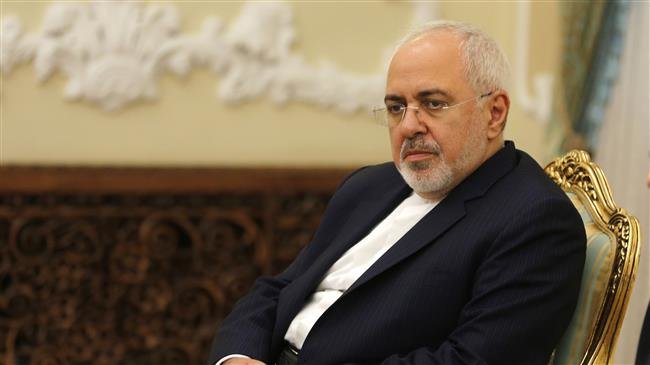
Iranian Foreign Minister Mohammad Zarif says that Iran is confident in its ability to evade US sanctions, noting that the country has a “Ph.D in that area.”
In an exclusive interview with Reuters, Zarif went on to say that he believes US President Donald Trump doesn’t want to go to war with Iran, but that he could be “lured into one.” In such an event, he noted that Iran would be ready to defend itself.
As for who might goad Trump into a conflict, Zarif named US National Security Adviser John Bolton and Israeli Prime Minister Benjamin Netanyahu, among others. He warned that certain individuals could try to “plot an accident” that would ultimately cause a broader crisis, Reuters reported.
The official also indicated that US Navy ships will be allowed to pass through the Strait of Hormuz, as the Iranian government is committed to allowing freedom of navigation operations in the area.
Earlier this month, the US formally designated Iran’s Islamic Revolutionary Guard Corps a terrorist organization. In turn, Iran designated the US military a terrorist organization. Zarif told the outlet that the US’ declaration was “absurd,” but that Iran would exercise “prudence.”
Regarding the Strait of Hormuz, Zarif previously stated that “it is our vital national security interest to keep the Persian Gulf open … We have done that in the past, and we will continue to do that in the future. But the United States should know that when they enter the Strait of Hormuz, they have to talk to those protecting the Strait of Hormuz — and that is the Iranian Revolutionary Guards.”
This week, the Trump administration announced that it would not be renewing sanctions exemptions on Iranian oil exports that were provided to various countries, including China, Japan and Turkey, among others. Tehran has stated that it will continue to export however much oil that it needs to.
The US in May 2018 withdrew from the 2015 Joint Comprehensive Plan of Action, reimposing a series of sanctions on Tehran that had been lifted by the Obama-era deal.
Netanyahu ordered Trump to end sanctions waivers on Iranian oil: Analyst
Press TV – April 22, 2019
Israeli Prime Minister Benjamin Netanyahu has ordered US President Donald Trump to end exemptions from sanctions for several countries buying oil from Iran, says an American political analyst
Rodney Martin, a former congressional staffer based in Scottsdale, Arizona, made the remarks in an interview with Press TV after Netanyahu praised Trump for not renewing waivers that allowed eight countries to buy oil from Iran without getting sanctioned.
Last November, the US enforced sanctions targeting the Islamic Republic’s banking and energy sector. However, it agreed to grant waivers to China, India, Japan, Turkey, Italy, Greece, South Korea and Taiwan, allowing them to continue buying Iranian oil.
Netanyahu said on Monday that Trump’s decision “is of great importance for increasing pressure” on Iran.
The White House made the announcement earlier in the day saying “Trump has decided not to reissue Significant Reduction Exceptions (SREs) when they expire in early May.”
“This decision is intended to bring Iran’s oil exports to zero,” White House press secretary Sarah Huckabee Sanders said in a statement.
The waivers were scheduled for renewal on May 2.
“I have no doubt that Netanyahu requested if not outright ordered the US State Department via Donald Trump vie AIPAC, via Trump’s Jewish Zionist donors and supporters. And I think he ordered that this policy be implemented. So Israel and Netanyahu are very pleased,” Martin said.
“On a broader scale, it further exposes the fact that Israel has a greater network of influencers in US political system, and not Russia,” he stated.
The analyst said that it’s “a glaring example” that Israel meddles in US policy.
After Trump’s announcement, oil prices on Monday spiked to their highest levels since October. Brent crude rocketed past $74 a barrel, its highest point this year.
US Iran sanctions amount to aggression against entire world: Nasrallah
Press TV – April 22, 2019
The secretary general of the Lebanese Hezbollah resistance movement has denounced US economic sanctions against Iran, describing the punitive measures as “an act of aggression” against all world nations.
“US efforts to increase economic pressure on Iran, especially its pledge to drive the country’s oil exports to zero, will have negative repercussions and will affect the entire world, including the US itself,” Sayyed Hassan Nasrallah said as he addressed his supporters via a televised speech broadcast live from the Lebanese capital Beirut on Monday evening.
He then called on world nations to stand up against “US arrogance,” pointing out, “The tyrannical US government has no respect whatsoever for international law and regulations.”
Nasrallah also lashed out at Saudi Arabia and the United Arab Emirates for following in US footsteps and joining Washington’s economic pressure campaign against Iran.
The Hezbollah chief also roundly rejected media allegations that the Israeli regime is planning to launch a surprise war against Lebanon this summer.
“There is very little likelihood that Israel would launch another war on Lebanon. The Israeli army is not prepared for any aggression against the country. I personally don’t think such a thing would happen,” Nasrallah highlighted.
The Hezbollah chief also dismissed claims of infighting between Russian and Iranian forces in Syria’s eastern province of Dayr al-Zawr as well as the northern province of Aleppo, stating that Saudi-owned al-Arabia television news network has “disseminated such lies.”
“Saudi-backed media outlets are spreading lies and fallacies about Hezbollah, Iran and the region to a large extent,” Nasrallah said.
The Hezbollah secretary general then slammed Saudi Arabia and the UAE for spreading terrorism and chaos in countries like Yemen, Sudan and Libya.
Nasrallah also blamed Wahhabism for the emergence of regional terrorism and Takfiri terrorist groups like al-Qaeda and Daesh.
Wahhabism is the radical ideology dominating Saudi Arabia, freely preached by government-backed clerics there, and inspiring terrorists worldwide. Daesh and other Takfiri terror groups use the ideology to declare people of other faiths as “infidels” and then kill them.
“There are many agents in the Middle East, who are pushing for sectarian strife to serve the interest of the Zionist regime (of Israel). All those seeking to colonize the region will only raise public awareness,” the Hezbollah chief said.
Elsewhere in his remarks, Nasrallah touched upon the economic crisis in Lebanon, demanding greater cooperation and unity among Lebanese political factions.
“All Lebanese parties agree that Lebanon is suffering from serious financial woes. They are all involved in coping with the economic crisis. Resolving Lebanon’s problems requires patience and efforts by all political parties. Ministers affiliated to Hezbollah, lawmakers as well as specialists have already prepared a number of draft solutions for Lebanon’s economic crisis,” Nasrallah underlined.
Maximum Pressure on Iran Still Isn’t Working
By Paul R. Pillar | LobeLog | April 2, 2019
Almost a year after President Trump reneged on U.S. commitments in the Joint Comprehensive Plan of Action (JCPOA), otherwise known as the Iran nuclear deal, there is not the slightest sign that this move is achieving the declared objective of Iran crawling back to the negotiating table to negotiate a “better deal.” Tehran instead has been exuding perseverance and hardline resistance. The most recent high-level Iranian statement, a speech by Supreme Leader Ali Khamenei marking the Persian new year, was full of recalcitrance. Khamenei’s themes included self-sufficiency and boosting Iran’s defense capabilities.
It is not surprising that determined opponents of the JCPOA—the most vocal of whom are determined opponents of any agreement with Iran—have been trying hard to spin this situation to make it look as if something positive is being accomplished. Patrick Clawson of the Washington Institute for Near East Policy, for example, suggests that the new year’s speech was “not the confident Khamenei of days past” and that the speech indicated that “the Trump administration has had considerable success convincing Khamenei that the pressure will continue, and that Iran cannot count on outlasting U.S. hostility.”
It also is not surprising that when The New York Times ran a story by Ben Hubbard, reporting from Beirut, about the financial strains that Hezbollah and other Iranian clients are feeling, columnist Bret Stephens jumped into action. “Heavens to Betsy,” Stephens exclaimed in a column in the next day’s Times, arguing that this must mean President Barack Obama was wrong when he said sanctions relief “wouldn’t make much difference in terms of Iran’s capacity to make mischief in the Middle East.”
Actually, Obama was right. The fallacy that Stephens, and others who defend the Trump administration’s re-imposition of nuclear sanctions, are promoting is that making life more difficult, costly, or painful for someone else somehow advances U.S. interests—at least if the U.S. government sufficiently hates whoever that someone else is. That would be true only if schadenfreude were a U.S. national interest, which it isn’t. Pain infliction serves U.S. interests only if it changes the targeted country’s behavior in a desired direction, by either limiting its capabilities or inducing it to change its policies. Regarding Iran over the past year, this is not happening.
It’s Not All About the Money
Most of Hubbard’s article—the part Stephens doesn’t mention—describes how and why Iran and its clients are not changing their policies and operations despite the financial pinch. The reporter notes that the client groups “are relatively inexpensive, remain ideologically committed to Iran’s agenda and can promote it through local politics in ways that the United States struggles to thwart.” Many of the groups “have income streams that give them some financial independence.” That certainly is true of Lebanese Hezbollah, which also benefits from having achieved broad acceptance as a political actor. Hubbard recalls how much pushback Secretary of State Mike Pompeo received on this point when he recently met with senior Lebanese officials. Foreign Minister Gibran Basil, standing next to Pompeo at a subsequent public appearance, said, “From our side, for sure, we reiterated that Hezbollah is a Lebanese party, not terrorist. Its deputies are elected by the Lebanese people with great popular support.”
The article mentions that, to the extent Iran is scaling back militia operations in Syria, this may be due less to financial reasons than to the fact that Iran’s ally Bashar al-Assad has largely won the war. In Iraq, financial stringency has led Iran not to curtail involvement but instead to seek stronger economic ties with its next-door neighbor. Militias that Iran sponsored “are now paid by the Iraq government, giving Iran leverage in Iraqi politics at little cost to itself.”
Hubbard quotes an anonymous Hezbollah fighter as saying that a financial pinch would not push members away from the organization. “You’re not in Hezbollah for the money,” he said. Something similar could be said about Iran in the Middle East. Iran’s activity in the region is shaped not by the money but instead by Tehran’s perception of what is in Iran’s security interests.
None of this should be surprising. Hubbard notes that “recent history suggests that financial pressure on Iran does not necessarily lead to military cutbacks.” As multiple independent studies have concluded, that also is true of the recent and not-so-recent history of Iran’s overall activity in the Middle East, including activity that the United States finds objectionable.
Continued Iranian Compliance with the JCPOA
Stephens tries to milk another supposed accomplishment out of the administration’s pressure campaign by pointing to the fact that Iran is still observing its obligations under the JCPOA despite the United States having reneged on its own commitments. While acknowledging that Iran outwaiting Trump has something to do with this, Stephens also says the Iranian compliance “suggests an edge of fear in Tehran’s calculations. The U.S. can still impose a great deal more pain on the Islamic Republic if it chooses to do so.”
Reflect first on the irony of an anti-JCPOA voice like Stephens pointing to Iran’s continued rigorous observance of its obligations under the JCPOA—the terms of which Stephens and other opponents have been excoriating for three years—as a supposed accomplishment of the Trump administration’s pressure campaign. Reflect further on how much Iran’s compliance with those obligations undermines opponents’ rhetoric about how Iran supposedly has been hell-bent on getting nuclear weapons, with the JCPOA just a way-station where it gets an economic fillip. If that really were Iran’s intention all along—and given that it is not now getting the fillip—Iran would have renounced the JCPOA as soon as the United States reneged.
Think also about what sort of diplomacy Stephens’s suggestion implies: that the way to get another state to stick to agreed terms is not to stick to them oneself but instead to renege and then to threaten something worse. That would be a bizarre brand of diplomacy, to put it mildly, and one that neither the United States nor anyone else could use to get much business done.
“Tehran’s calculations” are unlikely to be anything like what Stephens suggests they are. The Trump administration, through both its actions and its rhetoric, has given Iranian leaders ample reason to conclude that the administration is determined to punish Iran as much as possible no matter what Iran does. Any hesitation within the administration not to push the sanctions pedal all the way to the metal appears to be a reaction not to Iranian restraint but instead to economic concerns about how elimination of waivers for importing Iranian oil would affect the world oil market and ultimately the price of gasoline at the pump.
Iranian Patience Not Unlimited
Iran’s continued compliance with the JCPOA despite U.S. reneging definitely involves an Iranian decision to outwait Trump. This is partly, but not solely, a matter of some Democratic presidential candidates, as Stephens correctly notes, stating their intention if elected to bring the United States back into compliance with the agreement. Iran is making its decisions about nuclear policy within a larger context in which not Iran, but instead the United States under Trump, is the isolated actor. It is not just Iran but all the non-U.S. parties to the JCPOA that are committed to its preservation. So is the larger world community, as expressed in the unanimously adopted United Nations Security Council Resolution 2231.
Iran may continue to outwait Trump, despite not getting the economic relief it bargained for, until the end of the current U.S. presidential term. Politics inside Tehran probably would make it impossible to wait any longer. This is where the 2020 U.S. presidential election comes into play. Former Deputy Secretary of State William Burns, when asked about this subject recently, replied, “My sense right now is that this Iranian regime would like to try and wait out the Trump administration. But if the president was elected to a second term, then their interest in doing that probably goes out the window.”
If that happens, the damage from the pressure campaign will not be limited to the consequences that Stephens ignores, such as how economic warfare against Iran has become economic warfare against Western allies and has contributed to the poisoning of U.S. relations with them. The damage will include a new Iranian nuclear crisis that was totally avoidable if only the administration had not embarked on its destructive course a year ago.
Sitting on Syria’s Oil, US Cuts Lifeline From Iran, Plunges Syria Into Fuel Crisis
By Marko Marjanović | Checkpoint Asia | April 17, 2019
Syria produced 325,000-385,000 barrels of oil per day before the war. Now it produces 25,000. Partly because of war damage, and partly because the majority of its oil fields are to the east of the Euphrates and occupied by the US and its Syrian Kurdish proxies. (The Kurds are happy to sell but the US won’t let them.)
It used to consume over 200,000 barrels of oil domestically, but that has gone down to 100,000 or less, with majority of that being shipments from Iran on a credit line that both nations understood was unlikely to ever be paid back in full.
Now the US has succeeded in cutting off that lifeline as well. It is blacklisting tankers which deliver the Iranian fuel and having Egypt block them from ever crossing the Suez.
This has caused a huge fuel crisis in government-controlled Syria with extreme rationing and cars lining up for miles in order to pump their allowed maximum of 20 liters every five days.
In Syria’s case the US really did “steal its oil”. It has forced an oil-producing nation into a fuel crisis. It has seperated Damascus from its oil fields (which BTW are in the ethnically Arab part of the country) and then cut its oil from abroad as well.
Italian banking major to pay hefty US fine for Iran sanctions-busting
RT | April 16, 2019
European subsidiaries of Italy’s biggest bank UniCredit have pleaded guilty to US charges of violating sanctions against Iran and other countries. The lender has agreed to pay $1.3 billion to settle the six-year probe.
UniCredit’s units in Germany, Austria and Italy admitted to illegally moving of hundreds millions of dollars via the US financial system on behalf of sanctioned entities, according to the US Treasury Department. The violations reportedly included sanctions programs against [alleged] weapons of mass destruction proliferation.
The resolution, which is among the largest ever related to US sanctions laws, followed last week’s $1.1 billion settlement reached by London-based banking multinational Standard Chartered with American and British authorities over similar misconduct.
The latest case revealed that UniCredit’s subsidiary in Germany processed more than 2,000 payments totaling over $500 million through US financial institutions. In addition, over two years through 2012 all the three of the bank’s units reportedly carried out transactions, withholding information on sanctioned persons or countries from the US authorities.
The US Treasury Department noted that the illegal cash proceedings were carried out to several states subject to US penalties, including Burma, Cuba, Libya, Sudan, and Syria.
Since 2004, some 15 European lenders paid about $18.5 billion to US authorities to resolve claims over violating Washington’s sanctions programs. A record $8.9 billion settlement was reached by French international banking group BNP Paribas in 2015.
Trump Dances to Israel’s Tune
More wag-the-dog means war for America
By Philip Giraldi • Unz Review • April 16, 2019
So newly reelected Israeli monster-in-chief Benjamin Netanyahu has boasted, with a grin, that America’s President Donald J. Trump followed through on his proposal to declare the Iranian Revolutionary Guard Corps (IRGC) a terrorist group. Bibi was smiling because the timing of the move, one day before the Israeli election, strongly suggests it was done to assist him against what had become a very strong opposition challenge. That Trump likely colluded with Netanyahu to blatantly interfere in the election has apparently bothered no one in Israel or in the tame American media.
The gift from Washington came on top of recognizing Israeli sovereignty over the Golan Heights, threatening members of the International Criminal Court if they try to prosecute Israel for war crimes, moving the U.S. Embassy to Jerusalem, removing the word “occupation” from the State Department’s assessments of human rights infringements on the West Bank, eliminating relief funding for Palestinian refugees, leaving the U.N. Human Rights Council because it was too critical of Israel, and looking the other way as Israel declared itself a state only for Jews. Washington also ignored the bombing of hospitals, schools and water treatment infrastructure in Gaza while Israeli army snipers were shooting unarmed demonstrators demanding their freedom.
The labeling of the Revolutionary Guard as a terrorist group is particularly disturbing as it means that the United States military by virtue of the Authorization to Use Military Force (AUMF) now has a mandate to attack the IRGC wherever it appears, including in Syria or even in the waterway the Straits of Hormuz, where the guard has regular patrols in small boats. It is a de facto declaration of war and it comes on top of a number of deliberate provocations directed against Iran starting with the withdrawal from the nuclear agreement Joint Comprehensive Plan Of Action (JCPOA) one year ago, which led to the unilateral imposition of harsh sanctions directed against the Iranian economy to bring about a popular uprising as well as regularly repeated false claims that Iran is the leading “state sponsor of terrorism.” Next month, the U.S. will begin enforcing a unilaterally declared worldwide sanction on any and all Iranian oil sales.
Netanyahu pledged to annex Israeli settlements on the largely Palestinian West Bank if elected, which is undoubtedly a move cleared in advance with the Trump team of foreign policy sociopaths as it de facto puts an end to any delusional speculation over a possible two-state negotiated solution for the Israel-Palestine conflict. It will also lead to a massive upsurge in violence as the Palestinians object, which is neither a concern for the White House or Netanyahu, as they are assuming that it can be suppressed by overwhelming force directed against an almost completely unarmed civilian population.
And Trump will no doubt expect Bibi to return the favor when he is running for reelection in 2020 by encouraging American Jews who care about Israel to support the Republicans. Trump is focused on his own electability and is absolutely shameless about his betrayal of actual American interests in the Middle East, possibly because he has no inkling of the actual damage that he is doing. His speech last week before the casino multi-billionaire Sheldon Adelson-hosted Jewish Republican Coalition Annual Leadership Meeting in Las Vegas was a disgusting pander to a group that includes many key players who have little or no concern for what happens to the United States as long as Israel flourishes. The only good news that came out of the meeting was that Adelson himself appears to be “gravely ill.”
Trump at times appeared to be speaking to what he thought was a group of Israelis, referring to “your prime minister” when mentioning Benjamin Netanyahu and several times describing Israel as “yours,” suggesting that deep down he understands that many American Jews are more loyal to Israel than to the United States. At another point, Trump declared that “The Democrats have even allowed the terrible scourge of anti-Semitism to take root in their party and their country,” apparently part of a White House plan to keep playing that card to turn American Jews and their political donations in a Republican direction before elections in 2020.
Trump also told the Republican Coalition audience how he came to a decision on recognizing Israel’s sovereignty over the Golan Heights. He described how “he’d been speaking to his son-in-law and senior adviser, Jared Kushner, as well as U.S. ambassador to Israel David Friedman and his Israel adviser, Jason Greenblatt, over the phone about an unrelated issue when he suddenly brought up the Golan Heights.” Trump shared how “I said, ‘Fellows, do me a favor. Give me a little history, quick. Want to go fast. I got a lot of things I’m working on: China, North Korea. Give me a quickie.’ After the advisers filled him in, Trump said he asked Friedman: ‘David, what do you think about me recognizing Israel and the Golan Heights?’ Friedman, apparently surprised by the suggestion, reacted like a ‘wonderful, beautiful baby,’ Trump said, and asked if he would ‘really … do that.’ ‘Yeah, I think I’m doing it right now. Let’s write something up,’ Trump said he responded, prompting applause and cheers from his audience in Las Vegas. ‘We make fast decisions and we make good decisions.’”
Putting the Trump story about the Golan Heights in some kind of context is not really that difficult. He wanted an answer to please Netanyahu and he went to three Orthodox Jews who support the illegal Israeli settlements and have also individually contributed financially to their growth so he was expecting the response that he got. That he was establishing a precedent by his moves on Jerusalem and the Golan apparently did not occur to him as his administration prides itself on having a foreign policy vision that extends no longer than the beginning of next week, which is why he hired Mike Pompeo, John Bolton and Elliott Abrams. And then there is always the doleful Stephen Miller lurking in the background as well as the three musketeers of Kushner, Greenblatt and Friedman for really serious questions relating to why acceding to the wishes of parasite state Israel should continue to be the apparent number one priority of the government of the United States.
Donald Trump neither poses nor answers the question why he feels compelled to fulfill all of the campaign pledges he made to the Jewish community, which by and large did not vote for him, while failing to carry out the promises made to those who actually did support him. The absurd Jewish Republican Coalition narrative about how Trump gave Israel the Golan Heights should have resulted in a flood of opprobrium in the U.S. media about his profound ignorance and fundamental hypocrisy, but there was largely silence.
The nonsense going on in Las Vegas in front of a lot of fat cats who regard the United States as little more than a cash cow that they control as well as in the White House itself unfortunately has real world consequences. America is being led by the nose by a well-entrenched and powerful group of Israeli loyalists and this will not end well. The U.S. doesn’t even have a Middle Eastern foreign policy anymore – it has a “to do” list handed by Netanyahu to whomever is president. The fact that the current man in charge in Washington is either so ignorant or so deluded as to allow the process to escalate until the U.S. is drawn into yet more catastrophic wars is beyond regrettable. U.S. foreign policy should not depend on the perceptions of Kushner and company. It should be based on real, tangible American interests, not those of Israel. Someone should explain that to the president.
Philip M. Giraldi, Ph.D., is Executive Director of the Council for the National Interest, a 501(c)3 tax deductible educational foundation that seeks a more interests-based U.S. foreign policy in the Middle East. Website is councilforthenationalinterest.org, address is P.O. Box 2157, Purcellville VA 20134 and its email is inform@cnionline.org.
Featured Video
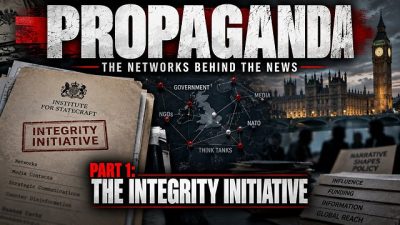
Integrity Initiative: UK-funded network framed dissent as Russian disinformation for years
or go to
Aletho News Archives – Video-Images
From the Archives
Why Saudi Ties to 9/11 Mean U.S. Ties to 9/11
By Kevin Ryan | Dig Within | September 27, 2015
Media interest in Saudi Arabian connections to the crimes of 9/11 has centered on calls for the release of the 28 missing pages from the Joint Congressional Inquiry’s report. However, those calls focus on the question of hijacker financing and omit the most interesting links between the 9/11 attacks and Saudi Arabia—links that implicate powerful people in the United States. Here are twenty examples. … continue
Blog Roll
 Aletho News
- IAEA inspectors cannot return to Iran amid US threats: Russia
- Senate Rejects Iran War Powers Resolution Passed By House
- ‘We did not attack Pakistan with drones’: Afghan sources
- Iraqi Resistance faction links arms to sovereignty, questions US exit
- Cannon fodder no more… South Korea rejects Trump’s pressure to join his criminal war on Iran
- Neria Leiter Was A Legitimate Military Target
- Integrity Initiative: UK-funded network framed dissent as Russian disinformation for years
- ‘We don’t seek permission to defend our country’: Snippets from President Pezeshkian’s UNGA address
- NATO chief wants Europeans to fight American wars [for Israel]
- German chemicals giant reveals details of downsizing
- If Americans Knew
- Israel displaces hundreds of Palestinians amid wave of demolitions in West Bank
- Aid, reconstruction, and Israel’s history of obstruction in Gaza
- Trump administration digs an ever-deeper hole of complicity in genocide – Daily Update
- US-Israel $2.8 Billion Arms Deal, 40,000-Bomb Supply Faces New Gaza Complicity Accusations
- Caught on Tape: AIPAC CEO Boasted of Controlling Trump’s National Security Officials
- Why Hamas Attacked Israel in October 2023 – Israeli professor Ilan Pappé
- They see them, then kill them: Israeli quadcopters track, deliberately target civilians in Gaza
- Winter could turn Gaza’s treacherous, war-damaged buildings into deathtraps
- Majority of Democratic Voters Want to Prosecute Both Biden and Trump Administration Officials Over Gaza
- As Gaza languishes, world leaders gather at the UN – Daily Update
- No Tricks Zone
- New Study: Earth And Venus Surface Warmth Largely Explained By Convection And Lapse Rate, Not CO2 Or Radiation
- 2025 Nature Paper Claiming Worsening Global Drought Gets RETRACTED …Heavily Flawed
- New Study: ‘Global Drought Shows No Detectable Recent Acceleration Under Climate Warming’
- Economic Masterminds: German Socialists Suggest Taxing Productivity Gains Stemming From Using AI
- The South China Sea Has Not Been Cooperating With The Climate Change Narrative
- Energy Crisis: Germany Enters Heating Season With Historically Low Gas Reserve Fill Levels
- New Study: The Antarctic Ice Sheet Gained Mass From 2020-2024 Due To Staggering Snow And Ice Accumulation
- Study: Ocean Heating Rates From Thousands Of Years Ago ‘Dwarf’ Modern Ocean Heating Rates
- Climate Extremists Target, Attack Large-Scale Power Grid Infrastructure In Germany!
- New Study: Antarctic Ice Melt Has Contributed Less Than 1 Centimeter To Sea Level Rise In The Last 30 Years

