Israel and Arab nations discuss ‘common interests of war with Iran’ – Netanyahu
RT | February 13, 2019
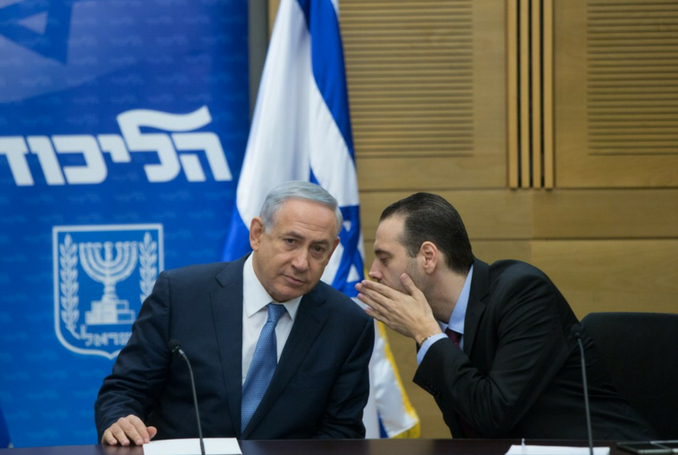
Israel and Arab countries are in talks “in order to advance the common interest of war with Iran”, Prime Minister Benjamin Netanyahu has said, although the translation from Hebrew was later downgraded to mere “struggle.”
The promise of a major conflict in the Middle East was floated by the Israeli leader during his trip to Warsaw.
“From here I am going to a meeting with 60 foreign ministers and envoys of countries from around the world against Iran,” Netanyahu said as quoted by Jerusalem Post.
“What is important about this meeting – and this meeting is not in secret, because there are many of those – is that this is an open meeting with representatives of leading Arab countries, that are sitting down together with Israel in order to advance the common interest of war with Iran.”
The Israeli PM is in the Polish capital to take part in a two-day international forum on the Middle East, which starts on Wednesday. Representatives from the United States and the European Union are in attendance in addition to Netanyahu and ministers from Gulf kingdoms. The EU representation at the event however is less than impressive, with heavyweights Germany and France choosing not to send their foreign ministers.
The US delegation is headed by Vice President Mike Pence, who is accompanied by vocal Iran hawk Secretary of State Mike Pompeo and Jared Kushner, President Trump’s son-in-law and advisor. The Anti-Iranian goals of Israel and the US are apparently dominating the agenda of the forum.
“We’re trying to expand the number of nations who are engaged and have a stake in the future of a peaceful and prosperous Middle East,” Brian Hook, the State Department’s special representative for Iran, told Reuters.
The EU is on a shaky ground vis-a-vis Iran as it’s member Poland hosts the meeting. The Europeans are attempting to resist the push for confrontation with Iran coming from Washington, hoping to salvage the 2015 nuclear deal with Tehran. The Iranians still stick to the terms of the agreement even after US scrapped it under the Trump administration, but the promise of lucrative business opportunities with the EU, which was a major part of the incentive for Tehran to accept the deal, are nowhere near to materializing under the threat of American sanctions.
“Today, the Iranian people see some European countries as cunning and untrustworthy along with the criminal America. The government of the Islamic Republic must carefully preserve its boundaries with them,” Iran’s Supreme Leader Ayatollah Ali Khamenei warned ahead of the gathering in Warsaw.
Israel and Iran are already engaged in a proxy war in Syria, where Israeli military regularly attack what they call Iranian military targets encroaching on Israel. Building on the foundation of common hostility with Iran, the Jewish state also entered cozy relations with Saudi Arabia and its Gulf supporters over the past decade.
Whether the regular exchange of threats grows into an open shooting war in the Middle East, as Netanyahu seems to be promising, is anyone’s guess.
Maduro Denies Hezbollah Ties, Mocks Pompeo’s Charge As “Proven Lies”
By Tyler Durden – Zero Hedge – 02/09/2019
One day after US Secretary of State Mike Pompeo claimed Hezbollah was “active” and operating inside of Venezuela, embattled President Nicolas Maduro responded in a televised speech in Caracas slamming Pompeo’s allegation which had also hinted at Iranian connections as”lies that have been proven false.”
According to Maduro, “Hezbollah is a legal political party within Lebanon’s political life. Hezbollah is primarily a political party, with ministers, deputies, and elected officials.”
“We do not have, nor have we had any political relations with the Hezbollah political party. There are many Lebanese living in Venezuela,” he continued during the Friday statement, as translated by Al-Masdar News journalist Renato Velez. Acknowledging the historic roots of Arab communities in Latin America and Venezuela, he continued, “Long live the Lebanese, Syrian and Palestinian Arab colonies in Venezuela.”
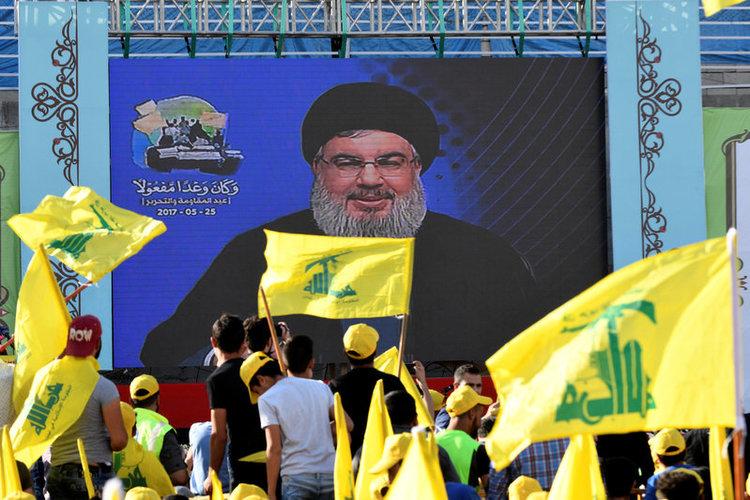
Hezbollah Secretary-General Hassan Nassrallah
“The U.S. will continue to spread lies – lies that have been proven false. The Lebanese in Venezuela have political freedom and Venezuela, in order to defend itself, does not need cells of anyone in the world. We will defend ourselves,” he added.
He was responding specifically to Pompeo’s Wednesday night interview with Fox Business wherein Pompeo implied the Maduro government was allowing the US-designated terror group to have a base of operations in Venezuela. We noted previously that what looked like an apparent failure to come up with an even remotely original narrative for another imminent American intervention, Pompeo asserted during the interview that “Hezbollah has active cells in Venezuela.”
He said that “people don’t recognize that Hezbollah has active cells” in the country, adding that “the Iranians are impacting the people of Venezuela and throughout South America. We have an obligation to take down that risk for America” he said further, as quoted by the Independent.
Ironically or not, when it comes to Hezbollah, which the US has long considered a terrorist organization, sanctions on people in Venezuela linked to the Iranian-backed Lebanese group have been imposed as far back as the George W Bush administration, seemingly in anticipation for just such an event.
Washington also believes Latin America has served as a base of fund-gathering for the group for some years, including through drugs and money-laundering schemes, according to past reports and to justify said close link, the media notes that Venezuela’s former president Hugo Chavez formed tight links with Iran under Mahmoud Ahmedinejad’s leadership. Supposedly that is a sufficient and necessary condition to conclude that Maduro is now harboring terrorists, which in turn would require a US “peacekeeping” mission.
And just so the US population does not lose plot, later in his Wednesday evening Fox interview, the former CIA director described Maduro as “evil” and insisted the US was intervening on behalf of ordinary Venezuelans who have suffered under his rule. In other words, yet another “humantiarian” coup under US auspices.
“We should not permit a country in our hemisphere to treat its own people this way,” he said, despite Washington’s – and the CIA’s – dismal track record of fomenting government overhauls in the region. “American values – America’s, not only our interests but our values – are at stake here.” But it wasn’t clear just which values he was referring to.
U.S. Tells Iran’s Oil Customers Not To Expect New Waivers
By Tsvetana Paraskova | Oilprice.com | February 7, 2019
Iran’s oil customers should not expect new U.S. waivers in May, the U.S. Special Representative for Iran, Brian Hook, said this week, urging buyers to stop importing Iranian oil.
“What we have announced is the policy to get to zero imports of Iranian crude as quickly as possible. We are not looking to grant any future waivers or exceptions to our sanctions regime, whether it is oil or anything else,” Hook told Japanese public broadcaster NHK while on a visit to Japan.
When it re-imposed sanctions on Iran last November, the U.S. granted waivers to eight countries so they could continue purchasing oil from Iran at reduced rates until early May 2019.
Some of those buyers, including the four major Asian buyers of Iranian oil—China, India, Japan, and South Korea—have recently resumed buying limited volumes of Iranian crude oil, after a period of around a month and a half in which they had to clarify how much and under what conditions they would purchase oil from Iran.
Earlier this week, Iran criticized Italy and Greece for not buying Iranian oil despite the fact that they had obtained waivers to do so.
The U.S. Administration has not officially said that no waivers will be issued, but officials have said that the goal is to drive Iranian exports to zero. Analysts, however, believe that there will be a direct correlation between the U.S. Iran waivers policy and the price of oil at the time Washington decides.
Despite the fact that the U.S. is not looking to grant any waivers to Iranian oil customers when the current ones expire in early May, it shouldn’t be taken for granted that no waivers will be issued, Hook and analysts hinted last month.
“We did not want to lift the price of oil, and we were successful doing that. So when the president left the deal it was trading at $74. When our sanctions went back into effect, and we had taken off a million barrels of Iranian crude, oil was at $72,” Hook said at Atlantic Council’s 2019 Global Energy Forum in Abu Dhabi in mid-January.
Hopes Fade for EU to Rescue Iran Via Banking Scheme to Bypass Sanctions – but Was It Ever a Serious Plan?
By Martin JAY | Strategic Culture Foundation | 08.02.2019
At the end of September, the European Union unveiled plans to help Iran bypass sanctions imposed by the US, so that it could sell oil and even trade with EU countries. The move followed Trump finally losing his patience over the so-called Iran Deal – a treaty drafted by Barak Obama which effectively prevented Iran from developing nuclear weapons in return for opening up Iran’s economy to the West and unblocking funds held outside of the country – which he dismisses as a bad deal for American interests in the region.
In reality, Trump’s real problem with the Joint Comprehensive Plan of Action (JCPA), is the same one which vexed America’s two strongest allies in the Middle East, which is that it did nothing to curtail Iran’s real strength against any external threat: its ballistic missiles program.
And so, to appease these two partners, who felt betrayed by Obama, sanctions were imposed against Iran – along with secondary sanctions, imposed via other countries (although this has not been as successful as Trump would have hoped) – and a new ‘war’ against Iran began, aimed at largely toppling its moderate government, while Saudi Arabia gains time to move ahead with its own ballistic missile program.
A key part of spurring a downfall of the present regime in Tehran, was both secondary sanctions wielded against Turkey, China and India, threatening them against buying Iran’s cheap oil, along with forcing the EU to stop trading altogether with Tehran. At one point, Trump’s plan looked like it was working with Europe as all the main investors inside Iran packed their bags and promptly left Iran within weeks of his sanctions plan being announced.
But there was great optimism about Iran finding a clever go-around and still sell its oil to EU governments as well as foster trade with European companies who were not afraid of the threats from the US via its banking system to shut companies off from the US market.
The European Union’s own foreign policy damsel, Federica Mogherini, who stole a lot of the credit for the Iran Deal being signed in the first place (when in reality the Iranians humored her with this idea all along) had a plan. She soon announced that a new banking system to be called INSTEX would be created specifically to allow EU governments and companies to trade with Iran. Although on paper it seemed pretty simple, there were warnings from experts that it might be a difficult task to pull off, given the complexities of international banking, not to mention international laws; moreover, the EU has no real track record of pulling off anything so bold as this before as the so-called ‘foreign policy’ initiatives it has are largely grand ideas on paper – fantasies of what it might be one day rather than the present day European External Action Service which employs over a 100 ‘ambassadors’ who largely live in Djin palaces and keep the dream alive around the world in exotic locations whose governments are happy to give Brussels the cash-for-hegemony deal anytime.
Sadly, it seems that Mogherini’s plan for the banking scheme which was to send a clear signal to Trump as well as keep the Iran Deal alive, is folly and delusional – given that, for Mogherini and her colleagues, the Iran Deal is seen as their great success to exercise EU foreign policy into concrete terms and to create the first ever international treaty drafted by Brussels. It is more or less sacrosanct and considered to be a treaty which now can be used to exert EU hegemony against Trump’s new world order which they consider geopolitical heresy.
Yet the Iran Deal has so much fake news and false prophesies – like Trump’s claims that the Iranians got 150 billion dollars from it, when in reality they only got just over 30 and it was their money in the first place – and the EU’s idea seems just that. Just more fake news.
For the first time, there are growing doubts about both whether it can be pulled off and whether it was a genuine offer in the first place as Brussels appears to be at odds with the giants of the EU, who are cranking up the sanctions to new levels.
Just recently, France’s foreign minister warned Tehran of new sanctions if Tehran would not agree to curbs its ballistic missiles program, regardless of the fact that ballistics were never part of the Iran Deal. France, a founding member of the European Union itself and a country with real clout in Brussels seems to be at odds with the EU’s plans, to say the least. Or was the Brussels plan the real deal in the first place?
Concurrent to this, are also the first real signals from Tehran that it doubts the EU’s sincerity in the draft banking plan. Politicians there, feeling the heat from sanctions and living with daily rumours of a possibility of a military coup engineered by the charismatic, anti-US military figure Qasem Soleimani, are starting to cry foul.
In reality, we shouldn’t get too excited about the scheme, as Tehran clearly isn’t holding out too much hope. In addition to there being many doubts about whether European firms will sign up to it, even if it gets off the ground it will only appeal to smaller companies that are flying under the US radar anyway. Additionally, earlier hopes that it could be used to sell Iran’s oil to Europe, have been dashed.
The EU is living in dangerous times. With its own elections this May expected to give record wins to nationalist, populist parties – in particular in France – it is facing its worst ever credibility crisis, which explains the fear mongering led by President Macron with his latest Brexit speech. But if Brussels can’t deliver on Iran’s rescue package, then it won’t matter if far right parties dominate the European parliament, signaling the demise once and for all, of the EU as we know it. Brussels will never be taken seriously again around the world where it practices its fake hegemony as no one will forget the farce of the EU and the Iran Deal. INSTEX may well be the sword that the EU falls on, certainly on the world’s stage, when the hype dies down and it is dispatched to the press room floor as folly for a wannabee superpower.
US Sanctions Against Syria, Iran is ‘Economic Terrorism’ – Moscow
Sputnik – 07.02.2019
According to Deputy Foreign Minister Sergei Ryabkov, Moscow and Tehran will be advancing ways in which to defend their economies from US sanctions.
“We must — and many have already spoken about this, including our ambassador in Tehran — complete the transition process of economic interaction in the national currency as the best way to protect ourselves from the US abusing the role of the dollar”, Ryabkov told reporters on Thursday.
He also slammed Washington for the sanctions imposed on Damascus.
“There are ways to minimise the consequences of US sanctions, and these ways will be improved. There are alternative partners and formats, they need to be strengthened. I am sure that in the case of Syria, Russian-Syrian relations will only continue to ascend; neither the United States nor anyone else will interfere with this. And I agree that the US sanctions are economic terrorism”, the deputy minister stressed.
The statement by the Russian diplomat comes just a day after the US Senate voted to expand economic sanctions on Syria and to condemn President Donald Trump for announcing a full US troop withdrawal from that country.
Last November, a second package of US sanction against Tehran came into effect following the US withdrawal from the Joint Comprehensive Plan of Action (JCPOA) — the Iran nuclear deal — in May, 2018. The sanctions are aimed at exercising maximum pressure on Iran and forcing it to negotiate a new deal.
A Passionate Attachment
Deferring to Israel is “what we are”

“I believe that the establishment of the state of Israel was the greatest accomplishment of the twentieth century”
By Philip Giraldi • Unz Review • February 5, 2019
I predicted three weeks ago that the Senate bill on the Middle East, which was rejected three times while the government was shutdown, would quickly receive cloture by a comfortable margin to end debate and proceed to a full vote in the Senate after the federal bureaucracy reopened. That has proven to be the case. Senate Bill S.1 was approved on January 29th 76 for votes to 22 against. Every Republican voted for it, minus only Rand Paul and Jerry Moran, who did not vote. The Republicans were joined by 25 Democrats, all of whom had previous voted “no” to embarrass the White House over the shutdown. Minority Leader Senator Chuck Schumer, who has described himself as Israel’s protector in the Senate, switched his vote as did notoriously pro-Israel Senators Ben Cardin and Bob Menendez. The bill must now be passed by the Senate, which is certain to take place, before being sent on to the House of Representatives for its approval, where there will certainly be some limited debate. It then will go to President Donald Trump for his signature.
Readers will recall that S.1 the Strengthening America’s Security in the Middle East Act of 2019, sponsored by the singularly ambitious though demonstrably brain dead Senator Marco Rubio from Florida, included $33 billion in guaranteed aid to Israel for the next ten years, an unprecedented gesture to America’s closest ally and best friend in the whole world, as Congress might describe it.
But the legislation also incorporated measures to criminalize criticism of Israel, referred to as the Combating BDS Act of 2019. It has been correctly observed that that portion of the bill is clearly unconstitutional as it limits free speech, which is guaranteed by the First Amendment to the Constitution of the United States and is considered to be the bedrock of American civil liberties, but there is no guarantee that the Supreme Court will agree if and when the law is contested. Once free expression is abridged for Israel there will be no end to other grievance groups exploiting the precedent to silence criticism and effectively negate the First Amendment.
The potential destruction of the Bill of Rights is only one aspect of the power that Israel has over American policymakers. The widely ballyhooed election of several Congresswomen who appear willing to challenge the Israeli orthodoxy on Capitol Hill is already being countered by the establishment within the Democratic Party, demonstrating once again how deep the corruption of America’s political class by Israel has gone.
In an early December speech before a largely Jewish audience at the Israeli-American Council gathering in South Florida, House Speaker Nancy Pelosi demonstrated in no uncertain terms just how she and other Congressmen are more responsive to Israel and its supporters than they are to their own constituents. She said in response to a staged question during a “conversation” with Democratic Party top donor Israeli Haim Saban, “I have said to people when they ask me, if this Capitol crumbled to the ground, the one thing that would remain would be our commitment to our aid, I don’t even call it our aid, our cooperation with Israel. That’s fundamental to who we are.”
Now “who we are” is a favorite expression used by a certain type of progressive that was made popular by the smooth talking but devious Barack Obama, meaning “I am taking the moral high ground so don’t ask me any questions or challenge what I have just said.” In Pelosi’s case she is saying precisely that, that American patronage of Israel is a moral imperative, a commitment forever that must be sustained no matter what Israel does and even if the United States itself should fall into ruin.
It is an absurd comment for someone who represents the people of her state and has taken an oath to uphold the U.S. Constitution, the ultimate pander to a right-wing Jewish audience that is socially progressive and consistently votes Democratic, which Pelosi celebrated, while at the same time cheering the bloody repression of the Palestinian people. And while Israel’s cheering section is doing all that, it is also dragging the American people into wars that need not be fought and stealing the taxpayers’ dollars to give to the racist Kleptocrats in charge in Tel Aviv and Jerusalem.
Pelosi, like her partner in crime Senator Chuck Schumer, who also spoke at the conference, has a problem in paying for security along America’s southern border but she does not hesitate to send billions of dollars to Israel every year. One has to wonder at her priorities, but she knows that American Jews are more powerful and relevant to her party’s finances than doing the right thing would be, so there is no evidence of any hesitation on her part to throwing some Arabs and the outliers within her own party under the bus.
And Nancy also spoke of the dissidents in the Democratic Party, all five or so of them, saying “Remove all doubt in your mind. It’s just a question of not paying attention to a few people who may want to go their own way…” Apparently there is plenty of room under that bus for non-believers. And she also threw out a standard line of how “I believe that the establishment of the state of Israel was the greatest accomplishment of the twentieth century” while also unloading on the Arabs saying “We have to I think in Congress make it really clear to Palestinians that we expect them to be responsible negotiators and we haven’t seen a lot of that thus far.”
Apparently, Nancy is unaware that the “establishment” of Israel forced 700,000 people who had lived in Palestine for centuries out of their homes. And she apparently also has missed all those stories of Palestinian “terrorist” children and emergency workers being shot dead by Israeli snipers while they were “negotiating” such things as access to food, water, and medicines from the inside of the Gaza containment fence. Or maybe she’s forgotten about the towns in Israel that can legally ban Christian or Muslim residents as Israel is now officially a Jewish only state. Nancy Pelosi’s extreme efforts to demonstrate loyalty and devotion to a nation that the rest of the world views as a pariah is commendable, but only if one is a sociopath.
There is something completely dead at the heart of American politics which makes basic humanity unacceptable when confronted by a force for evil that has penetrated and manipulated both the national media and the governing political consensus. That is what Israel and its rabid band of supporters have done to the United States. First Amendment? Goodbye. If the U.S. government should crumble under the strain, don’t worry because our support for you is eternal. Kill a couple of hundred Arabs, shoot a few thousand more? No problem. It’s God’s will. And if Israel leads America into a nuclear war? Then we will do what we have to do to protect our ally.
Ask Pelosi and Schumer, “Have you been corrupted?” They will answer “No. Of course not. It is what we are.”
Philip M. Giraldi, Ph.D., is Executive Director of the Council for the National Interest, a 501(c)3 tax deductible educational foundation that seeks a more interests-based U.S. foreign policy in the Middle East. Website is www.councilforthenationalinterest.org, address is P.O. Box 2157, Purcellville VA 20134 and its email is inform@cnionline.org.
Europe shuns Iranian oil despite US sanctions waivers
RT | February 5, 2019
Despite being granted exemptions from US sanctions against Iran to enable them to buy Tehran’s oil, some European countries fully cut off crude imports from the Islamic Republic, according to Iran’s oil minister.
Washington agreed to give temporary waivers to several Iranian oil buyers when it imposed an embargo on oil shipments from the country in November after it pulled out from the landmark nuclear agreement. Those granted waivers included China, India, South Korea, Japan, Italy, Greece, and Turkey, allowing them to continue purchases without penalties.
However, not all countries opted to use the waivers, as the US attempts to push Tehran’s oil export revenues “to zero” and tries to “block any money transfer,” the Iranian Minister of Petroleum Bijan Namdar Zangeneh stated.
“Among the Europeans, except for Turkey, no other nation has purchased oil from Iran. Greece and Italy refuse to buy Iran’s oil despite winning waivers. Nor do they respond to our correspondence,” the minister said on Tuesday.
Iran’s crude exports, which contribute to a significant part of the country’s revenues, have been dropping since the US embargo took effect. In April, the crude and oil condensates exports were estimated to be about 2.8 million barrels per day. Zangeneh declined to announce the current export figures, but earlier reports suggest that the shipments fell by more than half.
Iranian officials have previously said that countries have to be extremely cautious in dealing with Tehran, as they face “financial pressure” from Washington. In January, Iran’s Deputy Minister of Petroleum Amir Hossein Zamaninia said that even those who dare to buy its crude, “would not even buy an additional one barrel.”
The 180-day US waivers expire in May and it is believed that their number will be reduced. However, Iran stressed that it had already found new potential buyers for its oil without revealing who exactly they were.
The last country who decided finally to resume purchases of Iranian oil was Japan. On January 21, a large tanker with two million barrels of crude, destined for Japanese companies, left Iran and is expected to reach buyers on February 9.
Pentagon resists US withdrawal from Syria, claims ISIS might rise again
RT | February 5, 2019
The newest report on US-led operations against Islamic State in Iraq and Syria admits the terrorist group is down to some 2,000 fighters, but argues continued US presence in the region is needed to prevent its resurgence.
Published on Monday, the report authored by the Pentagon and State Department inspectors-general also blamed Turkey for spoiling the US-backed Kurdish militia’s operations against Islamic State (IS, formerly ISIS/ISIL), and predicts no end to strife in the region, going against President Donald Trump’s order to withdraw US troops from Syria.
The report debunked the widely circulated estimate – from June 2018 – that IS had up to 17,000 fighters in Iraq and up to 14,000 in Syria, calling it questionable even at the time. The US-led coalition, known as the Combined Joint Task Force – Operation Inherent Resolve (CJTF-OIR) had “low confidence” in those estimates as of last July, the report said. As of January, CJTF-OIR estimated only 2,000 IS fighters remaining in the group’s last remaining bastion – known at the Pentagon as the Middle Euphrates River Valley (MERV) and located in eastern Syria near the Iraqi border.
The coalition gave conflicting assessments of IS strength and capabilities, reporting at the end of December that it “remains a battle-hardened and well-disciplined force,” with high morale and “unfazed by Coalition airstrikes,” only to say its morale was “trending downward” in January.
Since December, IS has killed several coalition soldiers in ambushes and with roadside bombs. According to CENTCOM, these are “opportunistic attacks” that will allow the militants to claim a propaganda victory.
‘We have to protect Israel’
Even as US troops are pulling out of Syria, President Trump has said he wants to keep some forces in the region “to protect Israel” and “watch Iran.”
“We have to protect other things that we have,” Trump told CBS on Sunday, but said the troops will be “coming back in a matter of time.”
Monday’s report, on the other hand, matches the reasoning of US intelligence chiefs last week that IS will rise again in the absence of US troops – although only in the limited area near its current holdout, rather than Syria and Iraq as a whole.
“You’ve got these divergent narratives,” security analyst Charles Shoebridge told RT. “Trump is speaking from the hip, if you like, he is speaking off the cuff, and it might be what he’s saying is actually a little bit closer to the truth of where the American strategy actually lies.”
The US ‘deep state’ is firmly against withdrawal from Syria, Shoebridge noted.
Turkey blamed for failure of US-backed offensive against ISIS
One of the things the report revealed is that the US-backed militia was presumably on the brink of crushing the last IS holdout in the Euphrates Valley, but had to halt their operation when Turkey threatened to intervene against the Kurdish fighters.
The Kurdish YPG militia makes up more than two thirds of the US-backed Syrian Democratic Forces (SDF), which the US have used as the main proxy against IS in northeastern Syria. With the YPG busy against the Turks, the Arab component of the SDF was “unable to conduct” offensive operations, and actually lost ground to IS in late October and November, when bad weather prevented coalition airplanes from flying.
It was only in mid-November, when the YPG was back in the fight, that the SDF was able to roll back IS gains, the report said, describing the YPG “paramount to stability and efforts to defeat ISIS.”
The report was also skeptical of Turkey’s offer to take over the battle against IS, noting that with the exception of the 2016 Al-Bab operation, “Turkey has not participated in ground operations against ISIS in Syria since 2017, nor have Turkish forces participated in the fight against ISIS in the MERV, which is approximately 230 miles away from al Bab and the Turkish border.”
Let Syria finish the job?
IS will remain an issue unless Sunni “socio-economic, political, and sectarian grievances are not adequately addressed by the national and local governments of Iraq and Syria,” the soldiers and diplomats argue. Left unsaid is that these grievances are a product of upheaval caused by the 2003 US invasion of Iraq and the US support for sectarian rebels in Syria starting in 2011.
Conspicuously absent from the report is the Syrian government, which has fought IS successfully with the support of Hezbollah, Iran and Russia, Shoebridge told RT.
If the SDF strikes a deal with Damascus following the US withdrawal, Shoebridge said, “the Syrian government could fill that vacuum, and continue with their very successful campaign against ISIS themselves.”
Iran not accepting EU’s humiliating conditions on INSTEX: Judiciary chief
Press TV – February 4, 2019
Iran’s Judiciary Chief Ayatollah Sadeq Amoli Larijani says the Islamic Republic will never give in to humiliating conditions set by Europe for the enforcement of its new non-dollar mechanism aimed at facilitating trade with the Islamic Republic.
Addressing a meeting of high-ranking judicial officials on Monday, Iran’s top judge said, “After nine months of dawdling and negotiations, European countries have come up with a limited-capacity mechanism not for exchange of money with Iran, but to supply food and medicine.”
The European signatories to the 2015 nuclear agreement, officially known as the Joint Comprehensive Plan of Action (JCPOA), issued a joint statement on Thursday, announcing the launch of a long-awaited direct non-dollar payment mechanism meant to safeguard their trade ties with Tehran following Washington’s withdrawal from the nuclear deal and in the face of the “toughest ever” sanctions imposed by the United States against the Islamic Republic.
Following months-long preparations, the foreign ministers of France, Germany and Britain finally unveiled the mechanism, officially called the Instrument in Support of Trade Exchanges (INSTEX), after a summit in Bucharest, Romania.
Iran’s Judiciary chief further said, “European countries, which had promised to remain committed to Iran’s nuclear deal after the US withdrawal from it, have now restricted their efforts to INSTEX and have reportedly set two strange conditions for it to become effective.”
They have asked “Iran to join the FATF (the Financial Action Task Force) and start negotiations over its missile program,” before INSTEX enters into force, he added.
“These [European] countries must know that the Islamic Republic of Iran will by no means accept these humiliating conditions and will not give in to any demand in return for a small opening [in sanctions] like INSTEX,” Amoli Larijani emphasized.
He noted that today, European countries are moving in the same direction that the US had moved before “and we [the Iranian nation] must continue to stand fast as [we have] always [done].”
President Donald Trump withdrew the US in May from the landmark Iran nuclear agreement, reached between the Islamic Republic and the P5+1 group of countries in 2015, and decided to re-impose unilateral sanctions against Tehran.
Under the deal, Iran undertook to put limits on its nuclear program in exchange for the removal of nuclear-related sanctions.
Trump’s administration announced the re-imposition of the “toughest” sanctions ever against Iran’s banking and energy sectors with the aim of cutting off the country’s oil sales and crucial exports.
Iran’s nuclear chief said on Saturday that the establishment of the new mechanism to ease trade with Iran is a promising step, but noted the Europeans must act more swiftly and adopt final measures in this regard.
“The Europeans took a promising step in terms of economy and we hope that they will keep racing ahead on the same path,” the head of the Atomic Energy Organization of Iran (AEOI), Ali Akbar Salehi, told reporters.
Despite Washington’s withdrawal, Iran has not left the deal yet, but stressed that the remaining signatories to the agreement have to work to offset the negative impacts of the US pullout for Iran if they want Tehran to remain in it.
On Friday, China’s Foreign Ministry spokesman, Geng Shuang, appreciated the efforts made by European countries to uphold the JCPOA after the US withdrawal from the agreement.
“It (INSTEX) fully demonstrated the EU’s determination to uphold multilateralism. China firmly supports the continued cooperation between the EU and Iran to put the mechanism into operation as soon as possible and open it to third parties so as to promote normal economic and trade cooperation between the international community and Iran,” he said.
Death Knell For Syria Pullout: “We Have To Protect Israel” Says Trump
By Tyler Durden – Zero Hedge – 02/03/2019
After approaching two months of talk of a “full” and “immediate” US troop withdrawal from Syria, first ordered by President Trump on December 19 — which was predictably met with swift and fierce pushback from beltway hawks including in some cases his own advisers — it now appears the death knell has sounded on the prior “complete” and “rapid” draw down order.
Trump said in a CBS “Face the Nation” interview this weekend that some unspecified number of US troops will remain in the region, mostly in Iraq, with possibly some still in Syria, in order “to protect Israel” in what appears a significant backtrack from his prior insistence on an absolute withdrawal.
“We’re going to be there and we’re going to be staying. We have to protect Israel,” he replied when pressed by CBS reporter Margaret Brennan. “We have to protect other things that we have. But we’re – yeah, they’ll be coming back in a matter of time.” He did note that “ultimately some will be coming home.”
“Look, we’re protecting the world,” he added. “We’re spending more money than anybody’s ever spent in history, by a lot.” Trump’s slow drift and change in tune on the subject of a promised “rapid” exit comes after Israeli officials led by Prime Minister Netanyahu alongside neocon allies in Washington argued that some 200 US troops in Syria’s southeast desert along the Iraqi border and its 55-kilometer “deconfliction zone” at al-Tanf are the last line of defense against Iranian expansion in Syria, and therefore must stay indefinitely.
“I want to be able to watch Iran,” Trump said further during the CBS interview. “Iran is a real problem.” He explained that “99%” of ISIS’s territory had been liberated but that a contingency of US troops must remain to prevent a resurgent Islamic State as well as to counter Iranian influence, for which American forces must remain in Iraq as well.
“When I took over, Syria was infested with ISIS. It was all over the place. And now you have very little ISIS, and you have the caliphate almost knocked out,” the president said. “We will be announcing in the not too distant future 100% of the caliphate, which is the area – the land – the area – 100. We’re at 99% right now. We’ll be at 100.”
However Trump’s invoking Iranian influence as a rationale for staying further contradicts his prior December statement that the defeat of ISIS was “the only reason” he was in Syria in the first place.
MARGARET BRENNAN: How many troops are still in Syria? When are they coming home?
PRESIDENT DONALD TRUMP: 2,000 troops.
MARGARET BRENNAN: When are they coming home?
PRESIDENT DONALD TRUMP: They’re starting to, as we gain the remainder, the final remainder of the caliphate of the area, they’ll be going to our base in Iraq, and ultimately some will be coming home. But we’re going to be there and we’re going to be staying—
MARGARET BRENNAN: So that’s a matter of months?
PRESIDENT DONALD TRUMP: We have to protect Israel. We have to protect other things that we have. But we’re- yeah, they’ll be coming back in a matter of time. Look, we’re protecting the world. We’re spending more money than anybody’s ever spent in history, by a lot. We spent, over the last five years, close to 50 billion dollars a year in Afghanistan. That’s more than most countries spend for everything including education, medical, and everything else, other than a few countries. — CBS “Face the Nation” Feb.3 interview transcript
The Pentagon in recent weeks has reportedly been putting logistics in place for a troop draw down from northern and eastern Syria.
Though it remains unclear just how many troops could remain as the majority possibly begin to pullout toward US bases in Iraq, the Tanf base could remain Washington’s last remote outpost disrupting what US defense officials see as a strategic Baghdad-Damascus corridor and highway, and potential key “link” in the Tehran-to-Beirut so-called Shia land bridge.
Foreign Policy magazine has identified this argument as the final card the hawks opposing Trump’s draw down had to play in order to hinder to an actual complete US exit:
“Al-Tanf is a critical element in the effort to prevent Iran from establishing a ground line of communications from Iran through Iraq through Syria to southern Lebanon in support of Lebanese Hezbollah,” an unnamed senior US military source told the magazine.
The Israeli prime minister has pushed hard against the White House pullout plan, and “has repeatedly urged the U.S. to keep troops at Al-Tanf, according to several senior Israeli officials, who also asked not to be identified discussing private talks,” per Bloomberg. The Israelis have reportedly argued “the mere presence of American troops will act as a deterrent to Iran” even if in small numbers as a kind of symbolic threat.
The internal administration debate, following incredible push back against Trump’s withdrawal decision, has made entirely visible the national security deep state’s attempt to check the Commander-in-Chief’s power. And now US presence at al-Tanf represents the last hope of salvaging the hawks’ desire for permanent proxy war against Iran inside Syria.
It appears the deep state has won out over Trump’s initial policy decision once again; but it remains to be seen if, however slowly on what’s clearly a delayed timetable departing from his original plans, all US troops ultimately exit Syria. Until then there’ll be more time and perhaps more provocations the hawks can rely on to effectively ensure full circle return to indefinite occupation in Syria.
President Salih: Trump did not ask Iraq permission to watch Iran
Press TV – February 4, 2019
Iraqi leaders have hit back at Donald Trump after the US president said he plans to keep troops in the country to spy on Iran, with President Barham Salih saying the mission does not have Baghdad’s permission.
Their reaction on Monday came a day after Trump told CBS that US troops would leave Syria and Afghanistan but stay on in Iraq, partly “to be looking a little bit at Iran.”
Trump admitted that staying in Iraq is a “mistake” and that attacking Iran is not an option, but the remarks sparked a new round of demands in Baghdad for US forces to leave the country.
“The Iraqi constitution rejects the use of Iraq as a base for hitting or attacking a neighboring country,” President Salih said Monday.
Salih said US forces were in the country under an agreement between the two countries, but that “any action taken outside this framework is unacceptable.”
The Iraqi president insisted that Trump had not asked Baghdad’s permission for US troops in Iraq to “watch Iran.”
“Don’t overburden Iraq with your own issues,” Salih said. “The US is a major power … but do not pursue your own policy priorities, we live here.”
“It is of fundamental interest for Iraq to have good relations with Iran” and other neighboring countries, Saleh said.
He said US forces were in Iraq to fight terrorism and that he looked forward to hearing Washington’s clarification on the number of troops who were going to stay as well as their mission.
In his interview aired on Sunday, Trump defended his decision to end “endless wars” in Syria and Afghanistan by pulling out US troops from those countries.
However, he said not all of thousands of American forces stationed in Iraq, specially at the Ain al-Asad Air Base in the western Anbar Province, were going to return home.
“And one of the reasons I want to keep it (the base) is because I want to be looking a little bit at Iran because Iran is a real problem,” said the American president.
Asked whether he wanted the troops there to “strike” Iran at a later time, Trump responded: “No… All I want to do is be able to watch.”
“We have an unbelievable and expensive military base built in Iraq. It’s perfectly situated for looking at all over different parts of the troubled Middle East rather than pulling up,” he added.
Trump announced in December that all US military troops in Syria would return home in the coming months while the number of US forces in Afghanistan would also be reduced drastically.
Trump made an unannounced stop at Ain al-Asad base on Christmas, in a visit that drew fire from Iraqi officials and their counterparts in Iran and other neighboring countries.
Sabah al-Saadi, a member of parliament in the bloc led by influential anti-American cleric Moqtada Sadr, has proposed a bill demanding a US pullout.
Deputy speaker of parliament Hassan Karim al-Kaabi, also close to Sadr, said Monday Trump’s latest remarks have made passing such a law “a national duty” because they are a violation of Iraq’s sovereignty and constitution.
The remarks, he said, are a “new provocation,” weeks after the US president sparked outrage in Iraq by visiting US troops without meeting a single Iraqi official.
The Iraqi parliament, he said, will soon pass a bill that will end the ongoing security agreement with Washington as well as the presence of all foreign forces in Iraq.
Kaabi asserted that his country would never become a launchpad for attacks or a US backyard for intelligence gathering against other countries.
Iraqi leaders say there are no American bases on its soil, stressing that only instructors are deployed at Iraqi bases.
Kurdish MP Sarkawt Shams tweeted that the mission of US troops in Iraq was “to help Iraqi security forces against terrorism, not ‘watching’ others.”
“We are expecting the United States to respect our mutual interests and avoid pushing Iraq into a regional conflict,” he said.
Trump’s comments ‘embarrassing’ for Baghdad
Iraq’s former foreign minister Hoshyar Zebari also condemned Trump’s remarks, saying they were embarrassing for Baghdad.
The veteran Kurdish politician warned Iraqi officials that the country would face difficult choices in future following Trump’s controversial statements.
Jaafar al-Husseini, a spokesman for the Iraqi pro-government Kata’ib Hezbollah voluntary forces, warned the Trump administration against mounting offensives against Iran and Syria from Iraq.
He also called on parliament to speed up legislation to drive out foreign forces, warning that the anti-terror force won’t wait long.
The spokesman noted that Iraq’s security agencies should deem American military forces as “appropriate targets” as Iraqi resistance groups already do.
‘Greatest mistake US ever made’
In his interview on Sunday, Trump once again called the US war on Iraq as “one of the greatest mistakes” the United States had ever made.
He also defended his attacks on US intelligence assessments on Iran, saying they tend to miscalculate as they led former President George W. Bush into attacking Iraq by claiming that Baghdad had weapons of mass destruction (WMDs).
“President Bush had intel people that said Saddam Hussein in Iraq had nuclear weapons- had all sorts of weapons of mass destruction. Guess what? Those intel people didn’t know what the hell they were doing, and they got us tied up in a war that we should have never been in,” he said.
Last Wednesday, Trump went on a twitter rant to attack his intelligence chiefs’ assessments on Iran’s growing power despite Washington’s pressure campaign following his pullout from the 2015 Iran nuclear deal.
The tweets came in response to Tuesday statements by CIA Director Gina Haspel and Director of National Intelligence Dan Coats before the US Senate Intelligence Committee.
Haspel told the panel that despite Trump’s decision last May to withdraw from the nuclear deal, the Islamic Republic had been “making some preparations that would increase their ability to take a step back.”
Coats also acknowledged that Tehran was not seeking to develop nuclear weapons capabilities.
European firms ‘won’t dare’ use new EU payment system for trade with Iran out of fear of US
RT | February 1, 2019
A new mechanism to allow “legitimate trade” with Iran, which was set up by France, Germany, and the UK this week, doesn’t change anything for European companies, according to independent journalist Luc Rivet.
He told RT that European companies and others cannot feel confident that they could do business with Iran without being subject to US sanctions.
“I don’t know what companies will make use of that mechanism to sell to Iran,” he said, adding that it’s very dangerous for the companies if they are caught working in Iran.
Europe mentions that medical equipment could be sold through this way, says Rivet.
“Who produces this equipment? You think that Siemens will sell to Iran? Never, because they sell to America many other things as well… And Siemens is afraid of losing the American market.”
He explained that an “incredible number of companies” won’t have anything to do with Iran, including the banking sector, the oil and gas sector, and others.
Even small companies will hesitate to sell anything to Iran at risk of being caught, according to Rivet. They can do that through other channels, like via Turkey, he said.
The journalist added: “It’s much easier for Chinese and Russian companies to make deals with Iran. The Europeans are scared in an incredible way. The companies are afraid by ricochet of being in the eye of the storm with the Americans.”
“That’s very dangerous for European companies,” he repeated, adding: “I don’t know anybody who will dare to go with this Instex system.”
Featured Video

Ivermectin and iodine
or go to
Aletho News Archives – Video-Images
Book Review
UAE tortured, killed journalist for opposing Israel normalization
The Cradle | October 31, 2026
UAE security officers detained, tortured, and killed Emirati poet and news editor Habib al-Sayegh in August 2019, shortly after he published a column opposing UAE normalization with Israel, according to a newly published book.
“Princes and Thieves,” a book by investigative journalist Matthew Cole published on 25 October, alleges that UAE security officers raided Sayegh’s Abu Dhabi home shortly after the publication of the column, hooded him in front of his wife and took him to a detention facility where he was tortured to death.
His interrogators reportedly pulled out several of his teeth with pliers and beat him repeatedly with a sharp metal object.
On 11 August 2019, Sayegh criticized the UAE’s plan to normalize relations with Israel as part of the Abraham Accords in his weekly column for Khaleej newspaper. The column was titled “Israel Is Our Real Enemy and A Dangerous Project.”
Sayegh described Israel as “a real and natural enemy” while questioning “who authorized the normalizers to speak on behalf of everyone?”
Nine days after the column was published, Emirati state media announced his death, without stating a cause. … continue
Blog Roll
 Aletho News
- Ivermectin and iodine
- Congratulations climate skeptics — you are a ‘Hybrid weapon of war’ and a growing public health threat
- ‘The Arab Vote’: How Israeli Racism Has Ruined Their Elections
- Israel forces Palestinians in Gaza to choose between assassination alone or death with their families: Report
- US Approves Sale of 500 Patriot Missiles to Ukraine, Deliveries May Take Years
- German Imperialism: An Urgent Explainer
- Backed by AAP, West Virginia Proposal Would Allow Dental Hygienists to Give HPV Vaccine to 9-Year-Olds
- Poland Is the Symptom and Europe Is the Patient
- UAE security forces tortured, killed journalist for opposing Israel normalization: Report
- They Compared the Spice to the Drug. The Spice Won — Again. (Part 2)
- If Americans Knew
- An error has occurred; the feed is probably down. Try again later.
- No Tricks Zone
- Germany’s Green Energy Transition Becoming Increasingly Expensive…Another 6 Trillion Euros!
- Sudden Stratospheric Warming, Powerful El Niño Combination May Lead To Extreme Europe Cold, Energy Crisis!
- Two New Studies Find Thwaites Glacier Melt Cannot Be Driven By Human Activity Or A Warming Ocean
- E-Cars Reduce CO2 Emissions By Only 41% Compared To Internal Combustion Engine Vehicles
- Predictions Made By Renowned Climate Professor Over Past Decades Have Been Proven To Be Poor
- New Study Suggests Large Regions Of The Pacific Ocean Have Been Cooling For The Last 80 Years
- Germany’s Green Energy Debacle: High Energy Costs Force Kahla Porzellan to Close After 182 Years!
- New Study: 50 Years Of The Most Aggressive ‘Net Zero’ Policies Can Only Affect The Global Climate By 0.03°C
- US September “Heat” Was No Record…Many Records Set Decades Ago
- Latest European Green Energy Debacle; Portugal’s Largest Flagship Solar Park Insolvent!

