How US Blunders Strengthened Iran
By Jonathan Marshall | Consortium News | November 5, 2017
Behind only North Korea, Iran is the country the Trump administration vilifies most. The White House endorses Israeli Prime Minister Benjamin Netanyahu’s injunction that “We must all stand together to stop Iran’s march of conquest, subjugation and terror.”
Parroting Netanyahu’s claim that Iran is “busy gobbling up the nations” of the Middle East, CIA Director and conservative GOP stalwart Mike Pompeo warned in June that Iran — which he branded “the world’s largest state sponsor of terrorism” — now wields “enormous influence . . . that far outstrips where it was six or seven years ago.”
In an interview with MSNBC, Pompeo elaborated, “Whether it’s the influence they have over the government in Baghdad, whether it’s the increasing strength of Hezbollah and Lebanon, their work alongside the Houthis in Iran, (or) the Iraqi Shias that are fighting along now the border in Syria . . . Iran is everywhere throughout the Middle East.”
Few would deny that Iran’s influence in the region has grown over the past decade. What’s missing from such dire warnings of its imperial designs, however, is any reflection on how aggressive policies by the United States and its allies have consistently backfired, creating needless chaos that Iran has exploited as a matter of self-interest and self-defense.
Consider the case of Hezbollah, a Lebanese-based Shiite organization that Israeli leaders describe as a major threat and almost certainly the target of Israel’s next war. Although the Iranian-backed force intervened actively in Syria to back the Assad government, it disclaims any intent to start a war with Israel.
It does, however, declare with great bravado its intent to deter another Israeli invasion of its homeland. “Israel should think a million times before waging any war with Lebanon,” said its leader earlier this year.
Spurred by Israeli Invasions
In fact, Hezbollah owes its very existence to Israel’s repeated invasions of their country. In 1982, Israel broke a cease-fire with the Palestine Liberation Organization and invaded southern Lebanon with 60,000 troops. The Reagan administration took no steps to stop that invasion, which caused thousands of civilian casualties and turned much of the population against Israel.
With Iranian money and guidance, the Shiite resistance in Lebanon coalesced around the organization that became known as Hezbollah. “We are only exercising our legitimate right to defend our Islam and the dignity of our nation,” the group claimed in one of its ideological tracts. “We appealed to the world’s conscience, but heard nothing.”
Years later, former Israeli Prime Minister Ehud Barak conceded that “It was our presence [in Lebanon] that created Hezbollah.” Former Prime Minister Yitzhak Rabin seconded that assessment, saying that Israel had let the “genie out of the bottle.”
In 2006, Israel again invaded Lebanon, this time to wipe out Hezbollah. Israel’s indiscriminate attacks against civilians drew condemnation from international human rights organizations. They also succeeded in strengthening the very enemy Israel sought to annihilate.
“Especially since the 2006 war with Israel, . . . an overwhelming majority of the Shi’a have embraced Hezbollah as the defender of their community,” writes Augustus Richard Norton in his study, Hezbollah: A Short History. “This suggests that outsiders . . . seeking to reduce Hezbollah’s influence in Lebanon must redress the security narrative rather than take steps that validate it.”
Instead, of course, the United States and its Sunni Arab and Turkish allies promoted the violent overthrow of Syria’s government, drawing Hezbollah forces into the fight for the survival of their longtime ally. While Hezbollah has paid a political and human price for its military expedition, its soldiers have gained tremendous battle experience, making them all the more formidable a foe.
The Iraqi Gift
Washington’s greatest geostrategic gift to Iran was the unprovoked U.S. overthrow of Iran’s arch enemy, Saddam Hussein, in 2003. Iran had lost hundreds of thousands of lives and hundreds of billions of dollars in an eight-year war with Iraq, triggered by Saddam’s invasion in 1980. The Bush administration not only killed Saddam, but handed political power to Iraq’s majority Shiite population, which looked to Iran for spiritual and political guidance.
That windfall may not have been entirely luck. The leading Iraqi lobbyist for war, the neoconservatives’ darling Ahmed Chalabi, was later identified by U.S. authorities as a key Iranian intelligence asset. U.S. counterintelligence agents concluded that Chalabi and other Iraqi exiles, who peddled false claims about Iraq’s weapons of mass destruction, had “been used as agents of a foreign intelligence service … to reach into and influence the highest levels of the U.S. government,” in the words of a Senate Intelligence Committee report.
But Secretary of Defense Donald Rumsfeld’s office shut down the investigation, leaving Chalabi to direct the political purge of Iraq’s government and then become Iraq’s deputy prime minister and oil minister. The Chalabi-led purge targeted Iraq’s Sunni politicians, aggravating the country’s sectarian divide and fueling the insurgency that still plagues the country today. The violence strengthened Iran’s hand in the country, as Shiite militia sought Tehran’s help to defend their communities.
At the same time, popular opposition to the U.S. occupation led to the rise of radical Sunni terrorists. It was from their swelling ranks in Iraq’s prisons that ISIS was born. ISIS made lightning gains across much of western Iraq in June 2014, with the conquest of Fallujah, Tikrit, and Mosul, the country’s second most populous city. With its very existence in jeopardy, Iraq’s beleaguered government welcomed Iran’s immediate dispatch of 2,000 soldiers to help block the ISIS offensive. Syria’s air force also began striking ISIS bases in coordination with Baghdad.
Misguided Pressure
Washington, in contrast, rejected Iraq’s call for air strikes and suggested that its Shiite-led government should step down to placate aggrieved Sunnis. Only in August 2014 did President Obama authorize limited bombing of ISIS to protect minorities threatened by their military advance. Needless to say, many Iraqis were grateful to Iran for its military support at a critical time.
“The Iranians are playing a long game and a waiting game,” said Sajad Jiyad, the director of the Al Bayan Center for Planning and Studies in Baghdad. “They put their skins on the line. They lost three or four generals plus a dozen senior officers.”
So when a “hamfisted” Secretary of State Rex Tillerson, speaking in Saudi Arabia, recently demanded that Baghdad send home Iranian-backed paramilitary units that helped defeat ISIS, it didn’t go over well with Iraqi Prime Minister Haider al-Abadi.
“No party has the right to interfere in Iraqi matters,” his office stated. Abadi called the Popular Mobilization forces “Iraqi patriots,” not mere proxies of Iran, and insisted that they “should be encouraged because they will be the hope of country and the region.” Score another few points for Tehran.
ISIS might never have spread into Syria had not the United States publicly promoted the overthrow of the Assad government in 2011, following years of covert efforts by Washington and Israel to weaken the regime and promote sectarian divisions within Syria.
Contributing greatly to the rise of radical Islamist forces in Syria was the U.S.-backed overthrow of the Gaddafi regime in Libya, which unleashed large stocks of arms and hundreds of hardened fighters to spread their revolution into Syria.
By late 2011, Sunni-led states such as Turkey, Saudi Arabia, and Qatar began financing and arming militant Islamist rebels in Syria, including Al Qaeda and even ISIS. The resulting war killed hundreds of thousands of combatants and civilians, uprooted millions of refugees, and laid waste to ancient cities.
The Obama administration proved itself just as deluded as the Bush administration about the efficacy of armed intervention. Describing hopes by the White House that Libya’s uprising would “ripple out to other nations in the region” and fuel anti-regime movements in Syria and Iran, the Wall Street Journal reported, “Syria has served for 30 years as Iran’s closest strategic ally in the region. U.S. officials believe the growing challenge to Mr. Assad’s regime could motivate Iran’s democratic forces.”
Instead, of course, Syria’s conflict prompted Iran’s hardliners to send Revolutionary Guard units and Hezbollah forces to the defense of their ally. With the help of Russian air power, they turned the tide in Assad’s favor, leaving the Damascus regime intact and greatly in Tehran’s debt.
The Yemeni Mess
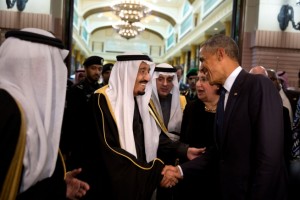 Echoing longstanding claims by Saudi Arabia, the Trump administration also insists that Iran is a major backer of Houthi tribal forces who swept down from northern Yemen to seize control of most of the country in early 2015. That March, with U.S. backing, a Saudi-led coalition of Arab states launched a scorched–earth military campaign to oust the Houthis, in the name of resisting Iran.
The coalition’s indiscriminate bombing of industrial and other civilian targets, including schools and hospitals, has laid waste to much of the country and destroyed the economy. Its blockade of ports caused mass hunger and triggered the world’s worst cholera epidemic.
“Cynics can argue that the real strategy of the Saudi coalition is to rely on starvation and disease to wear down the Yemeni people,” observed former White House adviser and CIA analyst Bruce Riedel. “The United Nations has labeled the war the worst humanitarian catastrophe in the world . . . (Yet) Iran is the only winner, as it provides aid and expertise to the Houthis at a tiny fraction of the cost of the Saudi war effort while the Islamic Republic’s Gulf enemies spend fortunes on a conflict they jumped into with no endgame or strategy.”
Experts point out that Washington picked the wrong ally in this fight. “The Houthis are one of the few groups in the Middle East that has little intention or ability to confront the United States or Israel,” writes Harvard lecturer Asher Orkaby. “And far from being aligned with extremists, the Houthi movement has repeatedly clashed with the Islamic State . . . and al Qaeda in the Arabian Peninsula. It is Saudi Arabia that has long supported Sunni Islamist groups in Yemen.”
To compound the irony, the paranoid sheiks in Riyadh created the very threat they set out to crush with their invasion in 2015. Iranian ties to the Houthis were negligible before then. Remarking on years of attempts to smear them as pawns of Iran, the U.S. ambassador to Yemen reported in a classified cable in 2009, “The fact that . . . there is still no compelling evidence of that link must force us to view this claim with some skepticism.”
Two former members of the State Department’s Office of Policy Planning have recently confirmed that “the vast majority of the Houthi arsenal . . . was seized from Yemeni army stockpiles,” not provided by Iran.
As the devastating war grinds on, however, Iran has provided the Houthis with modest training, advice, and ground munitions. “Iran has exploited, on the cheap, the Saudi-led campaign, and thus made the expansion of Iranian influence in Yemen a Saudi self-fulfilling prophecy,” they observe.
“By catering to the Saudis in Yemen,” they add, “the United States has . . . strengthened Iranian influence in Yemen, undermined Saudi security, brought Yemen closer to the brink of collapse, and visited more death, destruction, and displacement on the Yemeni population.”
Qatar and Beyond
In a moment of particular lunacy, President Trump this June tweeted his support for a Saudi-led political and economic blockade of Qatar, a tiny but gas-rich Gulf emirate. Riyadh is aggrieved in part by Qatar’s sponsorship of Al Jazeera, the politically nettlesome broadcaster. Trump’s action surprised and embarrassed the Pentagon, which operates a huge military base in Qatar.
Iran quickly took advantage of this latest Saudi blunder. It opened its airspace to Qatari flights that were barred from crossing the Arabian Peninsula. It shipped food to replace supplies lost by the closure of the Saudi-Qatari border. In gratitude, Qatar restored full diplomatic relations with Tehran after recalling its ambassador two years ago.
“This dispute has pushed Qatar towards other players in the region who are critical: Iran, Turkey, Russia, China,” said Rob Richer, former Associate Deputy Director for Operations at the CIA. “These are players who now have a lot more influence as we diminish our influence in the region. In this way, the blockade has actually undermined everything that the Saudis and Emiratis wanted by pushing the Qataris into the arms of these other regional players.”
Time after time, in other words, the United States and its regional supporters have made a mess of matters with their overt and covert military interventions in the Middle East. It’s only natural that Iran, having long been targeted by Washington and its allies (sometimes for understandable reasons), tries to seize opportunities to defend its interests.
The lesson we should learn is that curbing Iran and promoting U.S. security interests will require less intervention from afar, not more self-defeating forays into the region.
As Chatham House research fellow Renad Mansour recently observed, until the United States overcomes its counterproductive reactions to obsessive fears of Iranian influence, “the Iranophobes will be right about one thing: Iran is the smarter player in the region.”
Netanyahu: Lebanese PM’s Resignation a ‘Wake-Up Call’ to Unite Against Iran
Al-Manar | November 5, 2017
Israeli Prime Minister Benjamin Netanyahu and his Defense Minister Avigdor Liberman have turned Lebanese PM Saad Hariri’s resignation to Israel’s advantage by attacking Iran and Hezbollah.
“The resignation of Lebanese Prime Minister Hariri and his statements are a wake-up call for the international community to act against Iranian aggression,” Netanyahu said, adding that Iran was “trying to turn Syria into a second Lebanon,” Netanyahu, who is in London, tweeted.
“This aggression endangers not only Israel, but the entire Middle East. The international community needs to unite and stand against this aggression,” the Israeli PM added.
For his part, Israeli DM warned that Lebanon “would become like Iran.”
“Lebanon=Hezbollah. Hezbollah=Iran. Lebanon=Iran,” Liberman tweeted.
“Iran is a danger to the world. Saad Hariri proved this today. Period,” the Israeli minister added.
Saudi gamble risks plunging Lebanon into war
Press TV – November 5, 2017
Saad Hariri’s sudden resignation from Lebanon’s premiership, announced from Saudi Arabia, has raised fears that regional tensions were about to escalate and that the small country would once again pay a heavy price.
Hariri quit his post on Saturday in a televised speech broadcast by Saudi Arabia’s Al-Arabiya television, during which he appeared tense as he carefully read out from a written statement.
He claimed that he feared the same fate as his assassinated father and accused Iran and the Lebanese resistance movement Hezbollah of meddling in Arab countries’ affairs.
Hariri’s departure sent shockwaves through Lebanon as the country is struggling to maintain stability at a time when much of the Middle East is gripped by Takfiri violence rooted in Saudi Arabia.
Lebanon’s Minister of Justice Salim Jreissati said the development was “confusing and suspicious in its timing and location as well as the way it was delivered and the content of the resignation.”
“The optics are terrible — for Hariri to resign from Riyadh, imagine how his audience [in Lebanon] feels watching that,” said Emile Hokayem, a regional analyst at the Institute for Strategic Studies.
“God protect Lebanon from the evil of Saudi Arabia’s reckless adventures,” Sheikh Nabil Kawouk, a member of Hezbollah’s central committee, told Lebanon’s Al Jadeed television.
Last week, Qatar’s former prime minister Hamad bin Jassim revealed how the US coordinated support by Doha, Riyadh and Ankara for terrorists operating against the Syrian government.
Syria has always been a thorn in the side of Israel. The Arab country is part of the “axis of resistance” along with Lebanon’s Hezbollah and Iran, which has brought Daesh to the brink of elimination.
The triangle of Saudi Arabia, Israel and the US is alarmed and the prospect of an eventual triumph of this axis which has now become inevitable has prompted them to take drastic measures.
On Friday, as Syria began celebrating the capture of Dayr al-Zawr, Nusra Front terrorists launched a massive assault on a Druze village neighboring the occupied Golan Heights.
According to Syrian state media, the onslaught was carried out with Israeli coordination and assistance but Tel Aviv used the occasion to threaten direct intervention in the war.
Hariri’s resignation over what he called Hezbollah’s “grip” on Lebanon is the latest drastic step which Saudi Arabia and its allies have taken to tip the scales even at the cost of turning Lebanon into another Syria.
With the prime minister out of the political landscape, the architects of the new “plot” could claim that Lebanon was exclusively under Hezbollah’s control. That idea was articulated by Israeli minister of military affairs Avigdor Lieberman on Saturday.
“Lebanon=Hezbollah. Hezbollah=Iran. Lebanon=Iran,” he tweeted.
Hariri was appointed as the Lebanese premier in late 2016, after two years of political deadlock in the country. He formed a national unity government that included almost all of the main political parties in Lebanon, including Hezbollah.
Under the Lebanese constitution, the prime minister should be picked from among the Sunni community, but Saudi Arabia has tried to use the prerogative to maintain its influence in the country.
Riyadh says the government should be purged of Hezbollah, especially at a time when the resistance movement is emerging stronger from the Syria conflict.
Over the past few weeks, Saudi Arabia’s Minister of State for Persian Gulf Affairs Thamer al-Sabhan had unleashed a series of vitriolic attacks against Hezbollah, saying the group “should be punished… and confronted by force.”
The accusations coincided with new sanctions approved by US House of Representatives on the Lebanese resistance movement.
Hossein Sheikholeslam, a senior Iranian politician, told Al Mayadeen TV that Hariri’s’ resignation had been coordinated before between US president Donald Trump and Saudi Crown Prince Mohammed bin Salman.
He said, “After the defeat of Daesh and the US in the region, Washington and Riyadh are trying to fuel tensions in Lebanon and the region.”
Hossein Amir-Abdollahian, an adviser to the Iranian parliament speaker, agreed. “The decision has been made by the anti-Iran and anti-Hezbollah front following the disillusionment of US and its allies with Daesh,” he said.
In Lebanon, political leaders expressed their apprehension, including the leader of Lebanon’s Druze minority, who has frequently played kingmaker in Lebanese politics.
Walid Jumblatt, the leader of Lebanon’s Progressive Socialist Party (PSP), warned of the political burden and consequences of the resignation.
Hilal Khashan, a professor of political science at the American University of Beirut, said Hariri’s departure was “a dangerous decision whose consequences will be heavier than what Lebanon can bear.”
“Hariri has started a cold war that could escalate into a civil war, bearing in mind that Hezbollah is unmatched in Lebanon on the military level,” he added.
Israeli Prime Minister Benjamin Netanyahu, however, welcomed the decision and said Hariri’s departure should be a “wake-up call” to the international community to what he described as the threat posed by Iran.
Israeli-Saudi Tandem Adjusts to Syria Loss
By Alastair Crooke | Consortium News | November 4, 2017
It seems that matters are coming to a head in the Middle East. For many states, the coming period will likely prove to be the moment in which they determine their futures — as well as that for the region as a whole.
The immediate peg for “crunch time” is Russia’s fast-track proposal of a conference to be held in Sochi, with the near-full kaleidoscope of Syrian opposition invited, which, if all goes as planned, might mean 1,000 delegates arriving in Sochi as soon as Nov. 18.
The Syrian government has agreed to attend. Of course, when one hears of attendance in these numbers, it suggests that this is not intended as a “sleeves rolled-up” working session, but rather as a meeting in which Russian thoughts will be mooted on the constitution, the system of government, and the place of “minorities” – with a chaser that Russia wants fresh elections pretty darned quick: which is to say, in six months’ time. In short, this is to be the “last chance saloon” for opposition figures: come aboard now, or be shut out, in the cold.
This initiative has plenty of push behind it, including President Putin’s personal endorsement, but no guarantee of success. Both Iran and Turkey (the co-guarantors of Astana) privately may have reservations, not knowing precisely what Moscow might unveil. Iran is insistent on Syria retaining a strong centralized government, and Turkey is likely to worry about whether the Kurds might receive too much from Moscow; it will also have reservations about sitting down with the YPD (Syrian Kurds), which it views to be little more than a re-branded PKK, which Turkey regards as a terrorist organization. If Turkey does pull out, it will take an important slice of the opposition with it.
Critical moments in history, however, do have a habit of proving to be less critical than first imagined, but this one effectively marks the beginning of the winding up process of the Syrian war and of the 20-year “New Middle East” project (as devised by the U.S. and Israeli governments). How each state responds, will determine the Middle East landscape for the next years.
Military Mop-up
Late last week, the Syrian army took the rest of Deir Ezzor city, and with its rear now secure, the Syrian army is free to continue the 30 or so kilometers to reach Abu Kamal (al-Bukumal) – the last ISIS urban outpost – and the vital border crossing on the Euphrates with Iraq. It is estimated that there may be 3,500 Da’esh (another name for the Islamic State or ISIS) in Abu Kamal. But Abu Kamal’s “twin” (on the Iraqi side of the border), al-Qaim, was taken by the Iraqi government’s PMU militia forces on Friday. The Iraqi forces are now clearing the city of its estimated 1,500 Da’esh fighters.
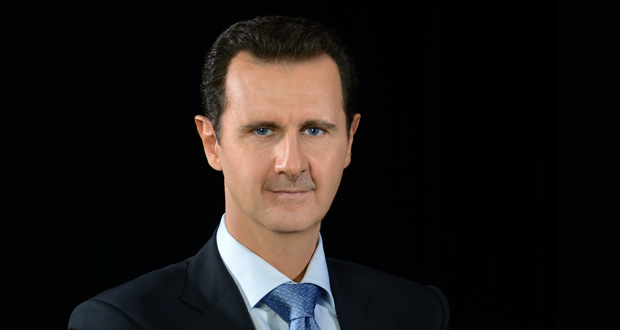
Syrian President Bashar al-Assad
The Syrian army, backed up by several thousand recently injected Hezbollah forces, is poised to enter Abu Kamal in the coming days from two directions – and from the south, a co-ordinated thrust north up and into Abu Kamal by the Iraqi Hash’d a- Sha’abi (PMU) militia, will form a pincer.
American-supported SDF (Syrian Democratic Forces), however, are also trying to reach Abu Kamal from the east (the U.S., pressured by Israel, would like to seal and close the border crossing). U.S. allied forces can move more quickly, as U.S. officers are seeking to bribe local tribal leaders who formerly had sworn allegiance to ISIS (with Saudi money), to switch sides, or at least to allow the SDF forces to advance unhindered by ISIS (as happened in the environs of Deir Ezzor).
In short, the military outcome in Syria is done (after six years of war), and now comes the political bargaining. How this plays out will determine the relative strengths of the forces that will shape the Middle East in the coming years. The outcome will likely see whether Turkey can be bullied back towards NATO (by threats such as that by General Petr Pavel, head of NATO’s military committee, warning of “consequences” for Turkey’s attempts to buy Russian air defenses), or whether Turkey’s determination to limit Kurdish aspirations will see Turkey position itself alongside Iran and Iraq (who share a common interest).
Turkey’s role in Idlib, in overseeing the de-escalation zone there, remains opaque. Effectively, its forces are positioned more to control the Afrin Kurdish “canton” (rather than monitor the Idlib de-escalation zone). It is possible that President Recep Tayyip Erdogan is hoping to use Turkish troops to carve out a buffer zone along the Turkish-Syrian border – in contravention to the Astana understandings. If so, this will place him at odds with both Moscow and Damascus (but will not necessarily imply a return to the NATO camp, either).
Syria’s Future
The bargaining at Sochi will also make clearer whether Syria will be a strong centralized state (as Iran prefers), or a looser federal state as America (and perhaps Russia) would prefer. Sochi will be something of a litmus for the extent to which American influence can shape outcomes in today’s Middle East. At present, it looks as if there is co-ordination between Moscow and Washington for a speedy political settlement in Syria, a U.S. declaration of victory over ISIS, Syrian elections, and an American exit from the Syrian theatre.
The outcome of the conference will also perhaps clarify whether the Syrian Kurds finally will remain with the U.S. CentCom project for retaining a permanent U.S. presence in northeast Syria (as Israel wants), or whether the Syrian Kurds will cut a deal with Damascus (after witnessing the crushing of the Barzani Kurdish independence project by neighboring powers).
If the latter occurs, the argument for retaining a longer-term U.S. presence in northeast Syria would lose force. The Saudis will have either to accept defeat in Syria, or act the party-pooper (by trying to re-ignite the remaining proxy forces in Idlib) – but, for that, the kingdom would need Turkey’s compliance, and that may not be forthcoming.
Iraq too, irked by U.S. Secretary of State Rex Tillerson’s comments suggesting that the PMU are Iranian – and must “go home” – has already shown signs of re-orientating towards Russia. (It has recently signed an expansive energy and economic protocol with Russia – after having reclaimed control of its borders and of Iraq’s energy resources – and is procuring Russian arms). Evidence of Iraq’s close connections with Syria, Turkey and Iran was very manifest in the quick execution of the put-down to the Kurdish independence gambit.
But the state facing the biggest dilemma in respect to the Syrian outcome is Israel. Alex Fishman, the doyen of Israeli defense columnists, has written that Israel simply has failed to adjust to strategic change, and is locked in a narrow “cold war” mentality:
“The Syrians fire rockets at open areas: Israel destroys Syrian cannons in response; the Iranians threaten to deploy Shiite forces in Syria: Israel announces ‘red lines’ and threatens a military conflict; Fatah and Hamas hold futile talks on a unity government: the prime minister declares Israel is suspending talks with the Palestinans – and everyone here applauds the security and political echelons: – ‘there, we showed them the meaning of deterrence’, [the Israeli leadership repeats].
“But what we are seeing here is a provincial defense policy, a false representation of a leadership that barely sees beyond the tip of its nose, and is busy putting out fires day and night.
“It’s a leadership that sees national security through a narrow regional viewpoint. It’s as if everything beyond Hezbollah, Hamas and Iran doesn’t exist. It’s as if the world around us hasn’t changed in the past decades, and we are stuck in the era of aggressive solutions in the form of reward and punishment as the main political-security activity. The current political-security echelon isn’t solving problems, isn’t dealing with problems, but simply postponing them, passing them on to the next generation”
Missing the Strategic Picture
What Fishman is pointing to is profound: Israel has gained some tactical victories in the neighborhood (i.e. over the Palestinians generally, and in weakening Hamas), but it has lost sight of the wider strategic picture. In effect, Israel has lost its ability to dominate the region. It had wanted a weakened and fragmented Syria; it had wanted a Hezbollah mired in the Syrian mud, and an Iran circumscribed by Sunni sectarian antipathy towards the Shi’a generally. It is unlikely to get any of these.
Rather, Israel finds itself being deterred (rather than doing the deterring) by the knowledge that it cannot now overturn its strategic weakness (i.e. risk a three-front war) – unless, and only if, America will fully enter into any conflict, in support of Israel. And this is what worries the security and intelligence echelon: Would America now contemplate a decisive intervention on behalf of Israel – unless the latter’s very survival was at risk?
In 2006, Israeli officials recall, the U.S. did not enter Israel’s war against Hizbullah in Lebanon, and after 33 days, it was Israel that sought a ceasefire.
Fishman is right too that attacking Syrian factories and radar positions “out of old habit” solves nothing. It may be sold to the Israeli public as “deterrence,” but rather it is playing with fire. Syria has started to fire back with aged surface-to-air missiles (S200s) at Israeli aircraft. These missiles may not have hit an Israeli jet yet, and maybe were not even intended so to do. The Syrian message however, is clear: these missiles may be old, but they have a longer range than the newer S300: Potentially, their range is sufficient to reach Ben Gurion Airport outside Tel Aviv.
Are the Israelis sure that Syria and Hezbollah don’t have more modern missiles? Are they certain that Iran or Russia will not provide them such? The Russian defense minister was very angry on his visit to Tel Aviv to have been faced with an Israeli retaliatory air attack on a Syrian radar and missile position – as a welcome gift on landing in Israel. To his protests, his Israeli counterpart, Defense Minister Lieberman condescendingly said that Israel needed nobody’s advice in respect to Israel’s security. General Sergey Shoygu reportedly was not amused.
Can Israel come to terms with its new strategic situation? It seems not. Ibrahim Karagul, a Turkish political commentator and an authoritative voice of President Erdogan, writing in Yeni Safak, notes that
“the foundations of a new disintegration [and] division are being laid in our region. Saudi Arabia’s ‘We are switching to moderate Islam’ announcement contains a dangerous game. The U.S.-Israel axis is forming a new regional front line.”
Karagul continues:
“We have been watching the strange developments in Saudi Arabia, the United Arab Emirates (UAE), Egypt, Israel and the U.S. for some time now. There is a new situation in the region, which we know is [principally aimed] against Iran; but has recently taken an open anti-Turkey state, aimed at limiting Turkey’s influence in the region … You will see, the ‘moderate Islam’ announcement will be immediately followed by a sudden and unexpected strengthening of Arab nationalism. This wave will not differentiate between Shiite or Sunni Arabs, but it will isolate the Muslim Arab world from the entire Muslim world.
“This separation will be felt most by the Shiite Arabs in Iraq. With this new block, Iraq and Iran are going to stage a new power showdown [i.e. will react forcefully to counter it]. Iraqi Prime Minister Haider al-Abadi’s future in power is also most likely going to [become contingent on the outcome to] this showdown.”
An American ‘Buy-in’
To give this project American “buy-in,” Israel and Saudi Arabia are focusing it on Lebanese Hezbollah, which the U.S. has declared to be a terrorist entity though the movement was part of Lebanon’s government, which was headed by Prime Minister Saad Hariri until he ominously resigned today in an announcement made in Riyadh, Saudi Arabia. (Hariri is a dual Saudi-Lebanese national.)
Saudi State Minister for Gulf Affairs Thamer al-Sabhan (in Beirut last week) called for “toppling Hezbollah” and promised “astonishing” developments in “the coming days. Those who believe that my tweets are a personal stance, are delusional … the coming developments will definitely be astonishing.”
Al-Sabhan added that the kingdom’s escalation against Hezbollah could take several forms that would “definitely affect Lebanon. Politically, it might target the government’s relations with the world. At the economic and financial levels, it could target commercial exchange and funds, and militarily it might involve the possibility of a strike on Hizbullah by the U.S.-led coalition, which labels Hizbullah a terrorist organization.” (Comment: this latter point probably was made more in hope, than in expectation. Europe and the U.S. set considerable store on maintaining Lebanon as stable).
Karagul reflects further on this U.S.-Gulf-Israeli initiative:
“The moderate Islam project was tried the most in Turkey. We always said this is ‘American Islam’ and opposed it. The February 28 military intervention is the product of such a project. It was implemented by the U.S./Israel extreme right-wing and their partners on the inside. The Fetullah Terrorist Organization (FETO) is the product of such a project, and the Dec. 17/25 and July 15 attacks were made for this very reason. They were all aimed at trapping Turkey within the U.S./Israel axis.
“But Turkey’s local and national resistance has overcome them all. Now they are burdening Saudi Arabia with the same mission. That is how they are making it appear. I do not think that it is possible for Saudi Arabia to undertake such a mission. This is impossible both in terms of the regime’s character and its social structure. This is impossible because of the ‘Israel/U.S. sauce’.
“The discourse of making the switch to moderate Islam will cause serious confusion in the Saudi administration and grave social reactions. The actual conflict is going to take place within Saudi Arabia. Also, the Riyadh administration has no chance of exporting something to the region or setting an example.
“Especially once it is further revealed that the project is security-based, that a new front line has been formed, that it is all planned by the U.S.-Israel, it will result in a fiasco. This project is suicide for Saudi Arabia, it is a destruction plan; it is a plan that will destroy it unless it comes to its senses.”
Karagul makes the point well: the attempt to make Islam in the Christian “Westphalian” image has a disastrous history. The metaphysics of Islam are not those of Christianity. And Saudi Arabia cannot be made “moderate” by Mohammad bin Salman just ordering it. It would entail a veritable cultural revolution to shift the basis of the kingdom, away from the rigors of Wahhabism to some secularized Islam.
More War?
Where is this taking the Middle East: to conflict? Maybe. But Israeli Prime Minister Benjamin Netanyahu is not noted for his audacity: he his noted more for rhetoric which often has proved empty; and Israeli security officials are being cautious, but both sides are preparing against the possibility of what Karagul calls a “great power showdown.” It looks, though – from this and other Turkish statements – as if Turkey will be with Iran and Iraq, and standing against America and Saudi Arabia.
And President Trump? He is wholly (and understandably) preoccupied with the low-intensity war being waged against him at home. He probably tells Netanyahu whatever it is that might advance his domestic battles (in Congress, where Netanyahu has influence). If Bibi wants a fiery speech at the U.N. berating Iran, then, why not? Trump can then call on the trifecta of White House generals to “fix it” (just as he did with JCPOA, passing it to Congress “to fix”), knowing that the generals do not want a war with Iran.
The danger is a “black swan.” What happens if Israel goes on attacking the Syrian army and industrial premises in Syria (which is happening almost daily) – and Syria does shoot down an Israeli jet?
Alastair Crooke is a former British diplomat who was a senior figure in British intelligence and in European Union diplomacy. He is the founder and director of the Conflicts Forum.
“DoD Owes Families, Nation Information on Niger Action” but NOT on USS Liberty Attack
If Americans Knew | November 2, 2017

On June 8, 1967 Israeli air and sea forces attacked a U.S. Navy ship, the USS Liberty, killing 34 crew members, wounding over 170, and fatally damaging the ship. For 50 years surviving crew members and families of the fallen have called for a full investigation of the attack – without success.
by Joe Meadors, USS Liberty Survivor
The USS Liberty was attacked on June 8, 1967. No investigation of the attack was conducted by the US government.
The USS Pueblo was attacked on January 23, 1968 – 229 days after the attack on the USS Liberty. The attack on the USS Pueblo was thoroughly investigated by the US government. No investigation of the attack on the USS Liberty has been conducted. No evidence that any investigation has been contemplated by anyone in the US government.
The Marine Barracks in Beirut were bombed on October 23, 1983 – 5,981 days after the attack on the USS Liberty. The bombing of the Marine Barracks in Beirut was thoroughly investigated by the US government. USS Liberty survivors are still waiting for word that an investigation on their ship is in the works by the US government.
The USS Stark was attacked on May 17, 1987 – 7,286 days after the attack on the USS Liberty. The attack on the USS Stark was thoroughly investigated by the US government. USS Liberty survivors are still waiting for an investigation of the attack on their ship.
The USS Cole was attacked on October 12, 2000 – 12,180 days after the attack on the USS Liberty. The attack on the USS Cole was thoroughly investigated by the US government. USS Liberty survivors are still waiting.
The Niger attack was on October 4, 2017 – 18,381 days after the attack on the USS Liberty. The Niger attack is currently being investigated by the US government. No investigation of the attack on the USS Liberty is on the horizon.
In a DoD Press Release Chairman of the Joint Chiefs of Staff, Marine General Joe Dunford tells us “The Defense Department owes the families of the soldiers lost in Niger and the American people an explanation of what the soldiers were doing in Niger and why it was important.”
Given its refusal to conduct an investigation of the attack on the USS Liberty the DoD obviously doesn’t feel the same about our families, the families of our fallen shipmates and those of us who survived the attack.
Below is an article that expands on this subject and provides a list of questions we’d like to have answered. By no means all of the questions on the table. Arguably not the most important questions.
I respectfully submit that the question on the top of the list is: Why has the US government refused to conduct an investigation of the Israeli attack on the USS Liberty?
DOD Says truth on Niger more important than USS Liberty
“DoD Owes Families, Nation Information on Niger Action” but NOT on USS Liberty Attack
By Joe Meadors | Arab Daily News
Four Green Berets were Killed in Action in Niger. The Chairman of the Joint Chiefs of Staff, Marine Corps Gen. Joe Dunford, held a prolonged, public press conference which was covered by every news outlet in the US.
In a DoD Press Release Gen. Dunford tells us “The Defense Department owes the families of the soldiers lost in Niger and the American people an explanation of what the soldiers were doing in Niger and why it was important.”
Given its refusal to conduct an investigation of the attack on the USS Liberty the DoD obviously doesn’t feel the same about our families, the families of our fallen shipmates and those of us who survived the attack.
Not that we haven’t asked.

USS Liberty crew, ignored by U.S. politicians for 50 years.
For over 50 years USS Liberty survivors have been begging the Department of Defense to conduct an investigation of the attack on our ship.
The Department of Defense obviously doesn’t think the American people deserve to hear from American servicemen who:
- saw the unmarked aircraft as they attacked our ship;
- heard the jamming of our radios on both US Navy tactical and international maritime distress frequencies;
- witnessed the deliberate machine gunning of life rafts we had dropped over the side in anticipation of abandoning ship;
- witnessed the slow circling of our ship by Israeli torpedo boats as they fired from close range at crewmen who were either trapped topside or who ventured topside to help their wounded shipmates;
- saw the Israeli helicopters filled with armed assault troops hover very close to our ship in an apparent attempt to find a place to allow those troops to rappel down to the ship; and,
- witnessed the torpedo boats immediate departure from the scene of the attack after cessation of hostilities instead of offering assistance as is their obligation under international law.
What questions have we been asking? I’ll share with you questions a USS Liberty widow asked then-Senator John Warner. Not surprising that he refused to respond to her questions:
- Why didn’t the Sixth Fleet come to the aid of the Liberty?
- Why were the rescue aircraft called back by the President of the United States?
- What involvement did the 303 Committee have in the Liberty‘s deployment and mission?
- What did Project Cyanide have to do with the Liberty, directly or indirectly?
- What did Frontlet 615 have to do with the Liberty directly or indirectly?
- Why wasn’t the USS Amberjack allowed to come to the aid of the Liberty?
- Where is the film of the attack taken by the Amberjack?
- Why weren’t violations of the UCMJ investigated?
- Why were warning and operational messages to the Liberty intentionally mis-routed?
- Why was the crew told to keep silent regarding the attack?
- What secret is so volatile that cannot be revealed by our government after 50 years?
- Why haven’t clear violations of international law been investigated?
- Why was Admiral Tobin awarded the Bronze Star when he wasn’t even there?
- Why hasn’t our former ambassador to Lebanon, Dwight Porter, ever been questioned by Congress, when it is known he listened to the attack at our embassy in Lebanon?
- Why was Commander McGonagle awarded his Medal of Honor, our country’s highest honor, in the Navy Yard instead of in a ceremony conducted by the President at the White House?
These are just a sampling of the many questions that remain unanswered about the attack on our ship.
Questions that the Department of Defense will continue to ignore.
We are reaching out to everyone who believes that the attack on the USS Liberty should be treated exactly the same as the attacks on the USS Pueblo, USS Stark, USS Cole, as well as the 1982 bombing of the Marine Barracks in Beirut and the death of the four Green Berets in Niger.
Help us persuade the US government to investigate the attack on our ship – including the War Crimes that were committed by and against the United States during that attack.
For further reading:
American Legion calls for full investigation into Israel’s attack on the USS Liberty
The Rise of MEK/NCRI in Washington: Pay Off The Right People and You Are No Longer A Terrorist

Maryam Rajavi- Rudy Giuliani and Senator Joe Lieberman at the free Iran Gathering – 1 July 2017. Image credit: Maryam Rajavi/ flickr)
By Philip Giraldi | American Herald Tribune | October 30, 2017
If you want to change a group of terrorists who have killed Americans overseas into something that appears to be much more benign, all you have to do is pay off the right people in Washington. With enough money, you can even open a nice plush lobbying office on Pennsylvania Avenue in the District of Columbia, not too far from the White House and Capitol Hill.
One-time Secretary of State Hillary Clinton has been rightly blamed for the ill-conceived and badly bungled “regime change” in Libya in 2011 that eventually led to her mishandling of the resulting blowback in Benghazi, but one of her greatest failings just might have involved the piece of paper she signed when she removed the Mujaheddin e Khalq (MEK) group from the State Department list of “designated terrorist organizations” in September 2012.
How is it possible that the bad judgment demonstrated in the Libyan fiasco that created a failed state, a humanitarian disaster, a migrant crisis, armed terrorists and ultimately produced the murder of the U.S. ambassador and three other Americans compares with a signature on a piece of paper? It is because that signature put in place one of the elements that will most likely in the near future lead to a far more disastrous war for the United States than was Libya. MEK, now labeled the National Council of Resistance of Iran (NCRI), has become a principal voice of the war party that is now seeking to attack Iran, a role similar to that played by Ahmad Chalabi and his Iraqi National Congress in his disseminating of lies in the lead up to the catastrophic invasion of Iraq in 2003.
The tale of the rehabilitation and rise of MEK/NCRI is a subset of the ongoing corruption of America’s political culture, best illustrated by the fact that even national security is now up for sale, enabling a terrorist group to transform itself into a “resistance movement” and eventually be labeled “freedom fighters.”
How did this happen as MEK was on the State Department roster of foreign terrorist organizations since the list was established in 1997? Its inclusion derived from its having killed six Americans in the 1970s, its participation in the U.S. Embassy hostage-taking and from its record of extreme violence both inside and outside Iran since that time. When I was a CIA trainee our course included a simulation of the horrific attack on U.S. Air Force Officers in Tehran in 1973 that killed two colonels.
MEK is widely regarded as a terrorist cult headed by a bizarre husband and wife team Massoud and Maryam Rajavi. Its members are required to be celibate and are subjected to extensive brainwashing, physical torture, severe beatings even unto death, and prolonged solitary confinement if they question the leadership. One scholar who has studied them describes their beliefs as a “weird combination of Marxism and Islamic fundamentalism.”
With the sharp turn of the Trump Administration against Iran, NCRI is now finding an audience, telling the American public that Iran is “cheating” on the nuclear deal. It also tells us that “Iran’s nuclear weapons program has far from halted” and has claimed to identify four major sites that “with a high degree of certainty” have been involved in various aspects of the allegedly ongoing nuclear weapons project. This has led Jillian Mele of Fox News to declare, falsely, that “It appears [Iran’s nuclear] weapons program is fully operational.”
The CIA has in the past recruited MEK/NCRI agents to enter into Iran and report on nuclear facilities, but Israel’s Mossad is the group’s principal employer. Agents, recruited and trained by Israel, have killed a number of Iranian nuclear scientists and officials. The group appears to have ample financial resources, places full page ads in major US newspapers, and is also known to pay hefty fees to major political figures who are willing to speak publicly on its behalf. The group claims to want regime change in Iran to restore democracy to the country, an odd assertion as it itself has no internal democracy and is loathed by nearly all Iranians.
Because MEK/NCRI is a resource being used by Tel Aviv in its clandestine war against Iran, it is perhaps inevitable that many friends of Israel in the United States actively campaigned to have the group removed from the terrorism list so that it could, ironically, have a free hand to continue to terrorize Iran. Indeed, neocons at their various think tanks and publications as well as the American Israel Public Affairs Committee all recommended delisting the group and continue to support it. Prominent American Jews to include Elie Wiesel and Alan Dershowitz have been advocates for the group in spite of its record of terrorism.
Multi-million dollar contracts with Washington lobbying firms experienced at “working” congress backed up by handsome speaking fees have induced many prominent Americans to join the chorus supporting NCRI. Prior to 2012, speaking fees for the group started at $15,000 and went up from there. Former Pennsylvania governor Ed Rendell reported more than $150,000 in honoraria. Rudy Giuliani has been paid generously for years at $20,000 per appearance for brief, twenty-minute speeches. Bear in mind that MEK was a listed terrorist group at the time and accepting money from it to promote its interests should have constituted material support of terrorism.
The group’s well-connected friends have included prominent neocons like John Bolton and ex-CIA Directors James Woolsey, Michael Hayden and Porter Goss as well as former Generals Anthony Zinni, Peter Pace, Wesley Clark, and Hugh Shelton. Traditional conservatives close to the Trump Administration like Newt Gingrich, Fran Townsend and Elaine Chao are also fans of NCRI. Townsend in particular, as a national security specialist, has appeared on television to denounce Iran, calling its actions “acts of war” without indicating that she has received money from an opposition group.
The emergence of NCRI at this time is just another fool’s game with the usual Washington crowd queuing up for a bad cause because they are both lining their pockets and thinking they are helping Israel by punishing Iran. In any event it is a poor bargain for the rest of us, but that hardly seems to matter anymore.
Syrian Kurds Refuse to Reveal Number of US Bases, Volume of Supplied US Arms
Sputnik | October 29, 2017
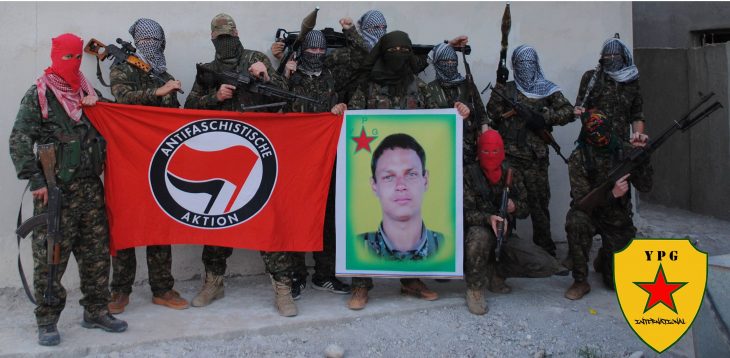
In the wake of the recently-announced liberation of the Syrian city of Raqqa, many analysts have been wondering about the scale of US support to the mostly Kurdish Syrian Democratic Forces (SDF), which headed the operation, and the number of military facilities the US has set up in northern Syria. Kurds, however, refused to reveal any details.
Amid ongoing reports that the US continues to arm the Syrian Kurds, even after the announced retaking of Raqqa from Daesh, Nuri Mahmud, an official representative of the Kurdish People’s Protection Units (YPG), the primary component of the US-backed SDF force which conducted the operation, confirmed that the US has been supplying them with arms since the liberation of Kobani in 2015.
Mahmud, however, refused to reveal the scale of the arms provided by the US, only noting that “it is relatively humble and not enough in comparison with the weaponry it supplied to the Iraqi army for the liberation of Mosul.”
The Kurdish official called their relationship with Washington a “strategic alliance” and confirmed that the US is setting up military bases on territories which the Kurds take under control. According to Nuri Mahmud, these facilities are used for the fight against Daesh. However, he refused to give the exact number of operating US bases.
“We can’t discuss this issue. It is none of our business,” he told Sputnik Turkiye.
Abdulaziz Yunus, the SDF representative in charge of foreign affairs, also confirmed that the US continues supplying arms to SDF, and remains the only power which is supporting Kurds militarily.
The Kurdish official, however, as well as Nuri Mahmud, refused to reveal the amount of weaponry they received.
“The US is supplying us with ammunition based on our demands. Apart from coalition forces, no one else supports us with weaponry. We won’t disclose the exact volume of the provided arms but hope that the deliveries will increase as it will enable us to liberate other regions from terrorists,” he explained.
Abdulaziz Yunus stressed that the interests of SDF coincide with those of the US, and that they will continue their cooperation. Washington had supported the Free Syrian Army, but this didn’t yield any results. That is why, after the liberation of Kobani, the US decided to support them and has been satisfied with this arrangement, he concluded.
Israel’s Prime Minister Netanyahu Is Leading US President Trump to War with Iran
Can Generals James Mattis (US Secretary of Defense) and John Hyten (Head of US Strategic Command) Prevent a Disaster?
By Prof. James Petras | Global Research | October 27, 2017
Introduction
Israeli Prime Minister Benjamin Netanyahu and the Presidents of the 52 Major Jewish American Organizations are leading President Trump, like a puppy on a leash, into a major war with Iran. The hysterical ’52 Presidents’ and ‘Bibi’ Netanyahu are busy manufacturing Holocaust-level predictions that a non-nuclear Iran is preparing to ‘vaporize’ Israel. The buffoonish US President Trump has swallowed this fantasy wholesale and is pushing our nation toward war for the sake of Israel and its US-based supporters and agents. We will cite ten recent examples of Israeli-authored policies, implemented by Trump in his march to war (there are scores of others).
1. After many years, Israel and ‘the 52 Presidents’ finally made the US withdraw from the United Nations Educational, Scientific and Cultural Organization (UNESCO) because of its detailed documentation of Israeli crimes against Palestinian people. Trump complied with their demands.
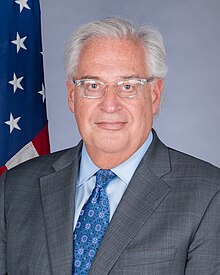
David Friedman (Wikimedia Commons)
2. Tel Aviv demanded a Zionist fanatic and backer of the illegal Jewish settler occupation of Palestinian lands, the bankruptcy lawyer David Friedman, be appointed US Ambassador to Israel. Trump complied, despite the ambassador’s overt conflict of interest.
3. Israel launched waves of savage bombings against Syrian government troops and facilities engaged in a war against ISIS-mercenary terrorists. Israel, which had backed the terrorists in its ambition to break-up of the secular Syrian state, demanded US support. Trump complied, and sent more US arms to the anti-government terrorists.
4. Israel denounced the 2015 Iran Nuclear Deal Framework and Joint Comprehensive Plan of Action, signed by 6 major states and UN Security Council Members, (US, France, UK, Germany, China and Russia). A furious Netanyahu demanded that President Trump follow Tel Aviv and abrogate the multiparty agreement signed by his predecessor, Barack Obama. Trump complied and the US is at risk of openly violating its international agreement.
Trump parrots Netanyahu’s falsehoods to the letter: He raves that Iran, while technically in compliance, has violated ‘the spirit of the agreement’ without citing a single instance of actual violation. The 5 other signers of the ‘Framework’, the US military and the UN’s International Atomic Energy Agency have repeatedly certified Iran’s strict compliance with the accord. Trump rejects the evidence of countless experts among US allies and ‘his own generals’ while embracing the hysterical lies from Israel and the ‘52’. Who would have thought the ‘hard-nosed’ businessman Trump would be so ‘spiritual’ when it came to honoring and breaking treaties and agreements!
5. Israel and the ‘52’ have demanded that Washington imprison and fine US citizens who have exercised their constitutional First Amendment Right of free speech by supporting the international boycott, divest and sanctions (BDS) campaign, which is designed to end the illegal Israeli occupation of Palestinian land and crimes against Palestinians. Trump complied. Americans may soon face over a decade in prison and complete economic ruin for supporting a peaceful economic boycott of Israeli settler products. This will represent an unprecedented violation of the US Constitution. At present, US public employees, like teachers in certain US states, are facing job loss for refusing to sign a ‘loyalty oath’ not to boycott products from Israel’s illegal settlements. Desperate American victims of the floods and natural disasters in Texas are being denied access to public US taxpayer relief funds unless they sign similar loyalty oaths in support of Israel.
6. Israel demanded that the US appoint Zionist fanatic real estate attorney, Jason Greenblatt and real estate speculator, Jared Kushner as Middle East peace negotiators. Trump appointed South Carolina businesswoman Nikki Haley as US Ambassador to the United Nations. Israel pushed for Ms. Haley, the first US governor to criminalize support for the peaceful BDS movement.
7. Trump went against the advice of ‘his Generals’ in his own cabinet regarding Iran’s compliance with the nuclear agreement, and chose to comply with Netanyahu’s demands.
8. Trump supports the long-standing Israeli project to maneuver a Kurdish takeover of Northern Iraq, grabbing the oil-rich Kirkuk province and permanently dividing the once secular, nationalist Iraqi nation. Trump has sent arms and military advisers to the Kurds in war-torn Syria as they attempt to grab territory for a separate ‘Kurdistan’. This is part of an Israeli plan to subdivide the Middle East into impotent tribal ‘statelets’.
9. Trump rejected the Turkish government’s demand to extradite CIA-Israeli-backed Fethullah Gulen, self-exiled in the US since 1999, for his leadership role in the failed 2016 military coup d’etat.
10. Like all his predecessors, Trump is completely submissive to Israeli-directed ‘lobbies’ (like AIPAC), which operate on behalf of a foreign power, in violation of the 1938 Foreign Agents Registration Act. Trump chose his Orthodox Zionist son-in-law, Jared Kushner, a callow real estate investor and prominent supporter for war against Iran, as his chief foreign policy adviser.
President Trump’s irresponsible pandering to Israel and its American-Jewish agents has caused deep unease among the Generals in his cabinet, as well as among active duty and retired US military officers, who are skeptical about Tel Aviv’s push for open-ended US wars in the Middle East.
Ten Reasons Why Military Officers support America’s Nuclear Accord with Iran
The Netanyahu-Israel First power configuration in Washington succeeded in convincing Trump to tear-up the nuclear accord with Iran. This went against the advice and wishes of the top US generals in the White House and active duty officers in the field who support the agreement and recognize Iran’s cooperation.
The Generals have ten solid reasons for rejecting the Netanyahu-Trump push to shred the accord:
1. The agreement is working. By all reliable, independent and official observers, including the International Atomic Energy Agency, the US intelligence community and the US Secretary of State – Iran is complying with its side of the agreement.
2. If Trump violates the agreement, co-signed by the 6 members of the UN Security Council, in order to truckle to the whims of Israel and its gang of ‘52’, the US government will lose all credibility among its allies. The US military will be equally tainted in its current and future dealings with NATO and other military ‘partners’.
3. Violation of the agreement will force the Iranians to restart their nuclear, as well as advanced defensive weapons programs, increasing the risk of an Israeli-Trump instigated military confrontation. Any US war with Iran will be prolonged, costing the lives of tens of thousands of US troops, its land bases in the Gulf States, and warships in the Persian Gulf. Full-scale war with Iran, a large and well-armed country, would be a disaster for the entire region.
4. US generals know from their earlier experiences under the George W. Bush Administration that Zionist officials in Washington, in close collaboration with Israeli handlers, worked tirelessly to engineer the US invasion of Iraq and the prolonged war in Afghanistan. This led to the death and injury of hundreds of thousands of US military personnel as well as millions of civilian casualties in the invaded countries. The ensuing chaos created the huge refugee crises now threatening the stability of Europe. The Generals view the Israel-Firsters as irresponsible armchair warmongers and media propagandists, who have no ‘skin in the game’ through any service in the US Armed Forces. They are correctly seen as agents for a foreign entity.
5. US generals learned the lesson of the wars in Iraq, Syria, Libya and Somalia – where disastrous interventions led to defeats and loss of potential important regional allies.
6. US generals, who are working with Secretary of State Rex Tillerson to negotiate an agreement with North Korea, know that Trump’s breaking a negotiated agreement with Iran, only reinforces North Korea’s distrust of the US and will harden its opposition to a diplomatic settlement on the Korean Peninsula. It is clear that a full-scale war with nuclear-armed North Korea could wipe out tens of thousands of US troops and allies throughout the region and kill or displace hundreds of thousands, if not millions, of civilians.
7. US generals are deeply disturbed by the notion that their Commander in Chief, the elected President of the United States, is taking his orders from Israel and its US proxies. They dislike committing American blood and treasure for a foreign power whose policies have only degraded US influence in the Middle East. The generals want to act for and in defense of US national interests – and not Tel Aviv’s.
8. US military officials resent the fact that Israel receives the most advanced US military weapons and technology, which have been subsidized by the US taxpayers. In some cases, Israelis receive advanced US weapons before US troops even have them. They also are aware that Israeli intelligence agents (and American citizens) have spied on the US and received confidential military information in order to preempt US policy. Israel operates within the United States with total impunity!
9. US generals are concerned about negotiating accords with China over strategic military issues of global importance. The constant catering and groveling to Israel, an insignificant global economic entity, has reduced US prestige and status, as well as China’s trust in the validity of any military agreements with the Americans.
10. Trump’s total reliance on his pro-Israel advisers, embedded in his regime, at the expense of US military intelligence, has led to the construction of a parallel government, pitting the President and his Zionist-advisers against his generals. This certainly exposes the total hypocrisy of Trump’s presidential campaign promise to ‘Make America Great Again’. His practice and policy of promoting war with Iran for the sake of Israel are placing US national interest and the advice of the US generals last and will never restore American prestige.
Trump’s decision not to certify Iran’s compliance with the accord and his handing the ultimate decision on an international agreement signed by the six members of the UN Security Council over to the US Congress is ominous: He has effectively given potential war making powers to a corrupt legislature, often derided as ‘Israeli occupied territory’, which has always sided with Israeli and US Zionist war mongers. Trump is snubbing ‘his’ State Department, the Pentagon and the various US Intelligence agencies while giving into the demands of such Zionist zealots as New York Senator Charles Schumer, Netanyahu’s alter ego in the US Senate and a huge booster for war with Iran.
Conclusion
Trump’s refusal to certify Iran’s compliance with nuclear accord reflects the overwhelming power of Israel within the US Presidency. Trump’s rebuke of his generals and Secretary of State Tillerson, the UN Security Council and the 5 major cosigners of the 2015 accord with Iran, exposes the advanced degradation of the US Presidency and the US role in global politics.
All previous US Presidents have been influenced by the billionaire and millionaire die-hard Israel-Firsters, who funded their electoral campaigns. But occasionally, some ‘Commanders in Chief’ have decided to pursue policies favoring US national interest over Israel’s bellicose ambitions. Avoiding a catastrophic war in the Middle East is such a case: Obama chose to negotiate and sign a nuclear accord with Iran [though implementation was stalled]. Tel Aviv’s useful fool, Donald Trump, intends to break the agreement and drag this nation further into the hell of regional war.
In this regard, international opinion has sided with America’s generals. Only Israel and its US acolytes on Wall Street and Hollywood applaud the blustering, bellicose Trump!
Copyright © Prof. James Petras, Global Research, 2017
Featured Video

Death Spikes & Rising Cancer In Our Youth Explained
or go to
Aletho News Archives – Video-Images
From the Archives
Politicians lie
By Mazin Qumsiyeh | Popular Resistance | August 18, 2013
There is no way to say this truth nicely: Politicians lie. That includes Japanese, American, Egyptian, Israeli, and Palestinian politicians! Is there something more common sense than that? Yet, so many citizens around the world believe their own politicians or wistfully acknowledge lies but think it is part of the job needed to run things. They believe even when politicians contradict themselves blatantly. This phenomenon is rather remarkable. It is a dissonance and disconnect from reality that many seem oblivious to. It is very dangerous because it can lead to accepting rationales for going to war. These can be deadly wars that lead to millions of lives lost as happened in what was called World War 1 and WW2. Even when incredible and declassified evidence abound, politicians continue to lie and old mythologies refuse to die. Here are just a few of the countless lies told to us over the past few decades… continue
Blog Roll
 Aletho News
- RSF military group defects, joins Sudanese army: State media
- Ireland goalkeeper refuses to play ‘Israel’ as squad weighs boycott
- China pushes back against US on Cuba, Iran
- Ukrainian Soldiers, Potential Mercenaries: Have Gun, Will Travel!
- Burnham’s UN debut… A masterclass in British disinformation
- Iran flights continue despite US aviation sanctions
- Global Tipping Points Lead the World Into a State of Entropy
- The day-after at the White House: USA and Xi Jinping
- The Geopolitical Balance in the Red Sea: The UAE Being Displaced by New Players
- Iraqi resistance group vows to stage airport sit-ins over Iran aerial blockade
- If Americans Knew
- Deconstructing Netanyahu’s pants-on-fire UN rant – Daily Update
- Trump betrayed voters with his campaign lies and prioritized a foreign country once he took office
- Netanyahu calls Israel’s war in Gaza ‘opposite of genocide’ in UN speech to near-empty hall
- Settler Kidnappings: Torture, Sexual Abuse and Terrorisation of Palestinian Abductees as Israel Deepens Annexation of West Bank
- Gaza winter nears as 162,000 tents become unusable, raising fears of humanitarian crisis
- Netanyahu says, “It’s the opposite of genocide”; UN says Gaza economy is world’s ‘most severe crisis on record’ – Daily Update
- Israel’s US-Backed Assault on Gaza Has Created the ‘World’s Most Severe Economic Crisis on Record’: UN
- ‘Protecting U.S. Citizens’… From Israel
- ‘This is where I live now, the back of a truck’: a day in the life of a grandmother in Gaza
- In UN Speech, Iran’s President Displays Pictures of Children Killed by US, Brings Attention to Israel’s Nuclear Arsenal
- No Tricks Zone
- New Study: Earth And Venus Surface Warmth Largely Explained By Convection And Lapse Rate, Not CO2 Or Radiation
- 2025 Nature Paper Claiming Worsening Global Drought Gets RETRACTED …Heavily Flawed
- New Study: ‘Global Drought Shows No Detectable Recent Acceleration Under Climate Warming’
- Economic Masterminds: German Socialists Suggest Taxing Productivity Gains Stemming From Using AI
- The South China Sea Has Not Been Cooperating With The Climate Change Narrative
- Energy Crisis: Germany Enters Heating Season With Historically Low Gas Reserve Fill Levels
- New Study: The Antarctic Ice Sheet Gained Mass From 2020-2024 Due To Staggering Snow And Ice Accumulation
- Study: Ocean Heating Rates From Thousands Of Years Ago ‘Dwarf’ Modern Ocean Heating Rates
- Climate Extremists Target, Attack Large-Scale Power Grid Infrastructure In Germany!
- New Study: Antarctic Ice Melt Has Contributed Less Than 1 Centimeter To Sea Level Rise In The Last 30 Years

