Saudi Arabia wades into Shi’ite politics in Iraq
By M K Bhadrakumar | Indian Punchline | August 1, 2017
The dramatic appearance of the Iraqi Shi’ite firebrand politician Muqtada Al-Sadr in Jeddah on Sunday and his meeting with the Saudi Crown Prince Mohammed bin Salman opens an exciting page in the Saudi-Iranian regional rivalries. The theatre is shifting to Iraq.
Briefly, what is unfolding is a determined Saudi attempt to reset the power calculus in post-ISIS Iraq by moulding a new political alignment that principally aims at undermining the pre-eminent influence that Iran has enjoyed over its neighbour in the past decade or so following the Shi’ite empowerment in the downstream of the US invasion of 2003.
Iran’s main platform on the Iraqi political landscape has been the umbrella Shi’ite coalition known as the Islamic Supreme Council in Iraq (ISCI), which Tehran had created as far back as 1982, originally as a Shi’ite resistance movement against Saddam Hussein and most recently since the middle of the last decade following Saddam’s overthrow as a united front to contest the democratic elections in Iraq with an agenda to preserve the Shi’ite leadership of the government.
To cut a long story short, ISCI is unravelling due to latent rivalries between various constituent groups. (Shi’ite politics has been traditionally very fractious, including in Iran.) Now, the split is also on account of a strong undercurrent of resentment over Iran’s dominance over Iraqi politics. (For the benefit of the uninitiated, again, the potency of Iraqi nationalism – a legacy of the Saddam era, paradoxically – subsuming the ethnic and sectarian divides in the country should never be underestimated.)
Importantly, the new generation of the powerful Hakim family led by Ammar Al-Hakim has moved out of the ISCI and has shifted allegiance from Iran’s Ayatollah Khamenei to Iraq’s Grand Ayatollah Ali Al-Sistani. Equally, Muqtada al-Sadr who has stepped out of Iran’s orbit has assumed a nationalistic, non-sectarian platform in the recent years. Again, within the ruling Islamic Dawa Party, which is the main constituent of the ISCI, there is an internal power struggle between the incumbent PM Haidar Al-Abadi and the former PM Nouri al-Maliki. (Currently, Maliki is a favourite of Iran; interestingly, Al-Abadi recently visited Saudi Arabia during which an announcement was made that the two countries have formed a ‘coordination council’ to bolster strategic relations aimed at healing troubled ties with ‘other Arab states’.)
Enter Saudi Arabia. Quite obviously, Saudis see a window of opportunity to go for Iran’s jugular veins by breaking up the ISCI irretrievably and instead propping up a new composite non-sectarian coalition involving the Shi’ite factions who resent Iran’s hegemony. No doubt, it is an audacious attempt to bring together – you’ve guessed it – Muqtada al-Sadr, Ammar Al-Hakim and Al-Abadi – on the same page.
The Crown Prince MBS is the mastermind behind this audacious Saudi move to manipulate the Shi’ite politics in Iraq. Arguably, the Saudi game plan has some positive streaks in it insofar as it envisages a non-sectarian realignment in Iraqi politics by encouraging a regrouping of the Shi’ite factions that give primacy to Iraqi nationalism over the identity politics they pursued up until recently. In turn, MBS would probably persuade these Shi’ite factions to work with the Iraqi Sunni factions and the Kurds. (By the way, Saudis recently opened a consulate in Erbil, the capital of Kurdistan in northern Iraq.)
Cynics would say that Saudis are having a devious agenda to: a) break up Shi’ite unity in Iraq; b) empower the Sunni groups as a ruling elite; and, c) create a schism between ‘Arab Shias’ and ‘Persian Shias’. The jury is out. Time only will tell how these shenanigans play out. To be sure, MBS’s initiative to manipulate Iraqi politics must be enjoying the support of the US and Israel, since it ultimately aims at isolating Iran and mitigates to an extent Iran’s spectacular ‘victory’ in the Syrian conflict.
Will Iran throw in the towel and walk away? Certainly not. Iran’s trump card is the battle-hardened Shi’ite militia known as the Al-Hashd Al-Shaabi, which is estimated to number over 120000 and is a Hezbollah-like army that is disciplined, fired up ideologically, and weaned in the politics of ‘resistance’. By the way, Qassem Soleimani, the charismatic commander of the Quds Force of the Iranian Revolutionary Guard Corps, was quoted as saying last week: “Daesh (ISIS) was stopped by the entry of Al-Hashd Al-Shaabi into the Iraqi army. The Iraqi army was transformed into a Hezbollah army.”
Now, that is a statement of fact. And, the ground reality is that today, in the chaotic war conditions in Iraq, power ultimately flows through the barrel of the gun. Stalin would have asked MBS as to how many divisions Al-Haikm, Al-Sadr and Al-Abadi together have under their command? Will the number come to even one half of the strength of Al-Hashd Al-Shaabi, the Iraqi Hezbollah, which Iran trained and equipped? Unlikely. Could they have taken on the ISIS and defeated it? No way.
New Iran sanctions simply don’t add up
By M.K. Bhadrakumar | Asia Times | July 31, 2017
The new legislation by the venerable lawmakers in the United States, imposing sanctions against Iran (along with Russia and North Korea), has an air of inevitability. But what is inevitable doesn’t always have to be logical.
The base line is how effective these sanctions are going to be. Iran is not new to US sanctions and its economy does not depend on trade or investment from the US. In sum, the US lawmakers are hoping to impose the sanctions via the international community.
But the main difference this time as compared to previous US sanctions is that the POTUS happens to be Donald Trump and the international community regards him with profound scepticism bordering on bewilderment. The world opinion is unlikely to rally behind Trump in an enterprise to punish Iran – or on any issue.
There is a big contradiction in the Trump administration’s approach to Iran because it is legislating sanctions while also certifying that Iran’s compliance with the 15 July 2015 nuclear deal [JCPOA] is satisfactory. And for the world community, JCPOA is a vital platform in international security and is the top priority.
Trump doesn’t have the ghost of a chance to get the UN Security Council to sanctify new sanctions against Iran (on whatever pretext). And in the absence of UN mandate, this becomes an issue of his “America First” foreign policy.
Things will be different if Iran retaliates against these sanctions by exiting the JCPOA, pleading that Washington is backing out from the deal. But Tehran is instead playing an astute game. Foreign Minister Mohammad Javed Zarif said yesterday that Iran will not give a “gift” to Trump.
Zarif signalled that: a) Iran can live with Trump’s sanctions; b) Iran stands to gain more by complying with the JCPOA and earn international goodwill (especially among the world powers); and, c) Iran is utterly free anyway to pursue its missile program (which is indigenous and does not depend on Western technology).
What matters to Iran is that its successful (re)integration with the international community does not suffer any setback. So long as Iran can sell its oil and gas in the world market and so long as there is no sanctions regime with a cutting edge such as the one Barack Obama brilliantly succeeded in imposing (by getting even China and Russia on board), Iran can advance its development agenda.
In fact, Russia’s Gazprom just signed an agreement with Iran’s Oil Industries’ Engineering and Construction to develop Azar and Changuleh oil fields, Iran’s most recent discoveries located in the western province of Lorestan, which are believed to hold an in-place reserve of about 3.5 billion barrels of oil. (Azar is a joint field Iran shares with Iraq.)
Clearly, in the developing global scenario with the US-Russia relations nose diving – and no improvement possible in a foreseeable future – Russian military technology reaches Iran more freely than ever before. Iran’s strategic defiance of the US matters to the Russian strategy.
Equally, China views Iran as the regional hub in its Belt and Road Initiative. Only last week, China agreed to provide $1.5 billion as funding for the upgrade of the Tehran-Meshaad trunk railway line which connects Central Asia.
Suffice to say, if Iran can sell oil in the world market to generate income and with full-throttle cooperation with Russian and Chinese (and even some EU countries), Tehran will be doing reasonably well against Trump’s best-laid plans to “isolate” it.
The EU is giving an unmistakeable signal to Trump through the announcement on Saturday in Brussels that EU foreign policy chief Federica Mogherini will be travelling to Tehran on August 5 to attend the inaugural ceremony of President Hassan Rouhani in her capacity as the head of the Iran-5+1 Joint Commission monitoring the JCPOA. (In addition to Mogherini, French Foreign Minister Jean-Yves Le Drian has also announced his intention to participate in the event.
However, this is not to say that Trump will back off from his enterprise to punish Iran and bring about a ‘regime change’. Knowing Trump, he might well be planning to score a hat-trick by dumping the JCPOA sometime around September when the next certification on Iran’s compliance is due – thereby completing a trifecta of withdrawals from international agreements that he inherited from Obama (the other two being Trans-Pacific Partnership and the Paris accord on climate change.)
How does it all add up? By withdrawing from JCPOA, Trump will the isolating the US in international opinion. The political optic will be simply “disastrous” – to borrow Trump’s favourite idiom. The US will be the outlier.
Trump’s biggest challenge is that while the US’ allies support strict and verifiable implementation of the JCOPA by Iran, they disapprove of Trump’s game plan to create a pretext to collapse or renegotiate the deal. Even for proposing a renegotiation of the JCPOA, Washington needs five of the eight members of the Joint Commission (comprising US, UK, France, Britain, Germany, EU, Russia and China) to back the proposal.
Finally, as the Bible says, “Behold, a little cloud, like a man’s hand is rising” on the horizon – pressure is building over the release of Americans under detention in Iran. Some Iranian news reports recently mentioned the names of several Iranian citizens in jail in the US for sanctions violations.
Tehran could be signalling interest in a quiet conversation over a potential political prisoner exchange similar to what Obama administration once negotiated. Which, of course, requires the Trump administration to engage directly with the government of Iran.
US systematically targeting residential areas: Syria to UN
Press TV – July 31, 2017
Damascus has called on the UN to end the Washington’s crimes against Syrian civilians, while stressing that the US is systematically targeting residential areas.
On Sunday, the Syrian foreign ministry sent two letters to UN Secretary General Antonio Guterres and the chairman of the UN Security Council, calling for the dissolving of the US-led coalition in Syria which is operating in the country without permission from Damascus.
“The US-led international coalition continues to commit massacres against Syrian innocent civilians through conducting systematic airstrikes on the provinces of Raqqah, Hasakah, Aleppo and Dayr al-Zawr on a daily basis,” reads the letter.
The letters were sent after at least six civilians lost their lives and nearly a dozen others sustained injuries when the US-led coalition, purportedly fighting the Daesh Takfiri terrorist group, conducted a series of airstrikes in Syria’s eastern province of Dayr al-Zawr.
The letters noted that the coalition’s member states continue to support terrorist groups such as Daesh and Jabhat al-Nusra.
The military alliance has repeatedly been accused of targeting and killing civilians. It has also been largely incapable of fulfilling its declared aim of destroying Daesh.
“Those attacks contributed to the spread of creative chaos, the killing and destruction which fulfill goals of the coalition and the terrorist organizations in destabilizing security in the region, destroying Syria’s capabilities and prolonging the crisis in a way that serves the interests of the Israeli entity,” it adds.
Syria has been has been fighting different foreign-sponsored militant and terrorist groups since March 2011. UN Special Envoy for Syria Staffan de Mistura estimated last August that more than 400,000 people had been killed in the crisis until then.
Can Trump Find the ‘Great’ Path?
By Robert Parry | Consortium News | July 30, 2017
On June 29, when CNN’s Wolf Blitzer asked John Podesta, the chairman of Hillary Clinton’s failed presidential campaign, how they had lost to Donald Trump, I expected the usual excuse – “Russia! Russia! Russia!” – but was surprised when Podesta spoke truthfully:
“Even though 20 percent of his voters believed he was unfit to be president, they wanted radical change, they wanted to blow the system up. And that’s what he’s given them, I guess.”
For those millions of Americans who had watched their jobs vanish and their communities decay, it was a bit like prisoners being loaded onto a truck for transport to a killing field. As dangerous and deadly as a desperate uprising might be, what did they have to lose?
In 2008, some of those same Americans had voted for an unlikely candidate, first-term Sen. Barack Obama, hoping for his promised “change you can believe in,” but then saw Obama sucked into Official Washington’s Establishment with its benign – if not malign – neglect for the average Joe and Jane.
In 2016, the Democratic Party brushed aside the left-wing populist Sen. Bernie Sanders, who might have retained the support of many blue-collar Americans. The party instead delivered the Democratic nomination to the quintessential insider candidate – former First Lady, former Senator and former Secretary of State Hillary Clinton.
Though coming from a modest background, Clinton had grabbed onto the privileges of power with both hands. She haughtily set up a private email server for her official State Department business; she joined with neocons and liberal interventionists in pushing for “regime change” wars fought primarily by young working-class men and women; and after leaving government, she greedily took millions of dollars in speaking fees from Wall Street and other special interests.
Clinton’s contempt for many American commoners spilled out when she labeled half of Trump’s supporters “deplorables,” though she later lowered her percentage estimate.
So, enough blue-collar voters in Michigan, Wisconsin and Pennsylvania rebelled against the prospect of more of the same and took a risk on the disruptive real-estate mogul and reality-TV star Donald Trump, a guy who knew little about government and boasted of his crude sexual practices.
Hobbling Trump
However, after Trump’s shocking victory last November, two new problems emerged. First, Hillary Clinton and the national Democrats – unwilling to recognize their own culpability for Trump’s victory – blamed their fiasco on Russia, touching off a New Cold War hysteria and using that frenzy to hobble, if not destroy, Trump’s presidency.
Second, Trump lacked any coherent governing philosophy or a clear-eyed understanding of global conflicts. On foreign policy, most prospective Republican advisers came from a poisoned well contaminated by neocon groupthinks about war and “regime change.”
Looking for alternatives, Trump turned to some fellow neophytes, such as his son-in-law Jared Kushner and alt-right guru Steve Bannon, as well as to a few Washington outsiders, such as former Defense Intelligence Agency director Michael Flynn and Exxon-Mobil chief executive officer Rex Tillerson. But all had serious limitations.
For instance, Kushner fancied himself the genius who could achieve Israeli-Palestinian peace by applying the so-called “outside/in strategy,” i.e., getting the Saudis and Gulf States to put their boots on the necks of the Palestinians until they agreed to whatever land-grabbing terms Israeli Prime Minister Benjamin Netanyahu dictated.
Flynn, who served briefly as Trump’s National Security Adviser, had led the DIA when it correctly warned President Obama about the jihadist risks posed by supporting the “regime change” project in Syria, even predicting the rise of the Islamic State.
But Flynn, like many on the Right, bought into Official Washington’s false groupthink that Iran was the principal sponsor of terrorism and needed to be bomb-bomb-bombed, not dealt with diplomatically as Obama did in negotiating tight constraints on Iran’s nuclear program. The bomb-bomb-bomb approach fit with the desires of the Israeli and Saudi governments, which viewed Iran as a rival and wanted the American military to do the dirty work in shattering the so-called “Shiite crescent.”
So, because of Kushner’s views on Israel-Palestine and because of the Flynn/Right-Wing hostility toward Iran, Trump fell in line with much of the neocon consensus on the Middle East, demonstrated by Trump’s choice of Saudi Arabia and Israel for his first high-profile foreign trip.
But obeisance to Israel and Saudi Arabia – and inside Washington to the neocons – is what created the catastrophe that has devastated U.S. foreign policy and has wasted trillions of dollars that otherwise could have been invested in the decaying American infrastructure and in making the U.S. economy more competitive.
In other words, if Trump had any hope of “making America great again,” he needed to break with the Israeli/Saudi/neocon/liberal-hawk groupthinks, rather than bow to them. Yet, Trump now finds himself hemmed in by Official Washington’s Russia-gate obsession, including near-unanimous congressional demands for more sanctions against Moscow over the still-unproven charges that Russia interfered with the U.S. election to help Trump and hurt Clinton. (The White House has indicated that Trump will consent to his own handcuffing on Russia.)
A Daunting Task
Even if Trump had the knowledge and experience to understand what it would take to resist the powerful foreign-policy establishment, he would face a hard battle that could only be fought and won with savvy and skill.
A narrow path toward a transformational presidency still remains for Trump, but he would have to travel in some very different directions than he has chosen during his first six months.
For one, Trump would have to go against type and become an unlikely champion for truth by correcting much of the recent historical record about current global hot spots.
On Syria, for instance, Trump could open up the CIA’s books on key events, including the truth about Obama’s “regime change” scheme and the alleged sarin gas attack outside Damascus on Aug. 21, 2013. Though the Obama administration blamed the Assad government, other evidence pointed to a provocation by radical jihadists trying to trick the U.S. military into intervening on their side.
Similarly, on the Ukraine crisis, Trump could order the CIA to reveal the truth about the U.S. role in fomenting the violent coup that ousted elected President Viktor Yanukovych and touched off a bloody civil war, which saw the U.S.-backed regime in Kiev dispatch neo-Nazi militias to kill ethnic Russians in the east.
In other words, facts could be deployed to counter the propaganda theme of a “Russian invasion” of Ukraine, another one of Official Washington’s beloved groupthinks that has become the foundation for a dangerous New Cold War.
As part of the truth-telling, Trump could disclose the CIA’s full knowledge about who shot down Malaysia Airlines Flight 17 over eastern Ukraine on July 17, 2014, an atrocity killing 298 people that was pinned on the Russians although other evidence points to a rogue element of the Ukrainian military. [See here and here.]
Further going against type, Trump also might admit that he rushed to judgment following the April 4, 2017, chemical-weapons incident in Khan Sheikhoun, Syria, by ordering a retaliatory missile strike against the Syrian military on April 6 when the whodunit evidence was unclear.
By sharing knowledge with the American people – rather than keeping them in the dark and feeding them a steady diet of propaganda – Trump could enlist popular support for pragmatic shifts in U.S. foreign policy.
Those changes could include a historic break from the Israeli-Saudi stranglehold on U.S. policy in the Middle East – and could make way for cooperation with Russia and Iran in stabilizing and rebuilding Syria so millions of displaced Syrians could return to their homes and reduce social pressures that the refugees have created in Europe.
A Populist Party
On the domestic front, if Trump really wants to replace Obama’s Affordable Care Act with something better, he could propose the one logical alternative that would both help his blue-collar supporters and make American companies more competitive – a single-payer system that uses higher taxes on the rich and some more broad-based taxes to finance health-care for all.
That way U.S. corporations would no longer be burdened with high costs for health insurance and could raise wages for workers and/or lower prices for American products on the global market. Trump could do something similar regarding universal college education, which would further boost American productivity.
By taking this unorthodox approach, Trump could reorient American politics for a generation, with Republicans emerging as a populist party focused on the needs of the country’s forgotten citizens, on rebuilding the nation’s physical and economic infrastructure, and on genuine U.S. security requirements abroad, not the desires of “allies” with powerful lobbies in Washington.
To follow such a course would, of course, put Trump at odds with much of the Republican Party’s establishment and its longstanding priorities of “tax cuts for the rich” and more militarism abroad.
A populist strategy also would leave the national Democrats with a stark choice, either continue sidling up to Official Washington’s neoconservatives on foreign policy and to Wall Street’s wheelers and dealers on the economy – or return to the party’s roots as the political voice for the common man and woman.
But do I think any of this will happen? Not really. Far more likely, the Trump presidency will remain mired in its “reality-TV” squabbles with the sort of coarse language that would normally be bleeped out of network TV; the Democrats will continue substituting the Russia-gate blame-game for any serious soul-searching; the Republicans will press on with more tax cuts for the rich; and the Great American Experiment with Democracy will continue to flounder into chaos.
Investigative reporter Robert Parry broke many of the Iran-Contra stories for The Associated Press and Newsweek in the 1980s.
Embraer still waiting US approval for Iran plane sales
Press TV – July 30, 2017
Brazil’s regional jet maker Embraer says it is still waiting for an approval by the US Treasury Department for sales of aircraft to Iran.
The company was quoted by the media as saying that it remained “active and optimistic” with regards to its plans to sell planes to the Islamic Republic.
It added that providing the required funds for the planned sales to Iran was not so much the issue as gaining licenses from the Office of Foreign Assets Control (OFAC) of the US Treasury, the Aviation Week news website reported.
Iran in February 2016 confirmed that it had ordered 50 planes from Brazil’s Embraer, the world’s third biggest commercial aircraft manufacturer.
The confirmation was made by Mohammad Bagher Nobakht, the country’s government spokesman who emphasized that the deal with Embraer will be a hire purchase contract.
Reports later said the Brazilian company was considering a plan to sell its E-195 jets to Iran through a deal which would be worth above $1 billion.
The company requires an OFAC license for the sale to Iran of sensitive jet engine technology in its planes.
Sales of Embraer planes to Iran featured in trade talks between the Islamic Republic and Brazil during a visit to Tehran by Trade Minister Armando Monteiro.
Two major Iranian carriers – ATA and Kish Air – have already announced plans to purchase planes from the Brazilian company.
Apart from selling planes, Minister Monteiro also discussed potential sales of taxis, buses and trucks with Iranian officials during his visit to Tehran, the media reported.
US Treasury Imposes Secondary Sanctions on 6 Iranian Entities
Sputnik – 28.07.2017
The United States has imposed secondary sanctions on six Iranian entities, the US Department of the Treasury Office of Foreign Assets Control (OFAC) said in an update on Friday.
Amir al Mo’menin Industries, Shahid Cheraghi Industries, Shahid Kalhor Industries, Shahid Karimi Industries, Shahid Rastegar Industries and Shahid Varamini Industries have been added to non-proliferation designations, OFAC stated.
In a press release, the Treasury Department said the sanctions were in response to Iran’s claimed launch of a Simorgh satellite on Thursday.
“OFAC sanctioned six Iran-based subordinates of Shahid Hemmat Industrial Group (SHIG), an entity central to Iran’s ballistic missile program,” the release stated.
Each of the six entities is responsible for developing, manufacturing or producing components that can be used in ballistic missiles or launchers, according to OFAC. SHIG is already under US, EU and UN sanctions.
Following reports of the satellite launch, State Department spokesperson Heather Nauert said Washington would consider it to violate the 2010 UN Security Council resolution against Iran’s ballistics program and the “spirit” of the 2015 Joint Plan of Comprehensive Action (JCPOA) nuclear deal.
On July 18, the United States imposed sanctions on 18 entities and individuals over their alleged ties to Iran’s military and ballistic missile program.
Moreover, on Thursday, US Senate approved a bill that would impose new sanctions on Russia, Iran and North Korea. The bill now has to be either signed or vetoed by US President Donald Trump.
Tehran maintains its ballistics program complies with the UN resolution, which called on Iran to refrain from activity related to ballistic missiles that could deliver nuclear weapons. Following Iran’s latest test-launch in February, Iranian Foreign Minister Javad Zarif said the test did not violate the resolution because the missiles are not produced to carry nuclear warheads.
Plot thickens in great game over post-ISIS Iraq and Syria
By M K Bhadrakumar | Indian Punchline | July 26, 2017
The post-ISIS future of Iraq and Syria has been a topic of animated discussion among American think tankers, the assumption being that the US is staging a military comeback in Iraq and well on the way to establishing a long-term presence in Syria. But political winds are blowing in an opposite direction.
The ‘working visit’ by Iraq’s vice-president Nouri Maliki to Moscow this week signals the revival of Russia’s historical role as Iraq’s key partner. Maliki’s remarks in Moscow are very revealing:
- “It’s well known that Russia has historically strong relations with Iraq, therefore we would like Russia to have a substantial presence in our country, both politically and militarily. This way, a balance would be established that would benefit the region, its peoples and its countries.”
- Baghdad believes “in Russia’s role in solving most of the key international issues as well as improving stability and balance in our region and worldwide.”
- A Russian presence in Iraq would bring the necessary balance which cannot be “undermined in a political sense in favour of any external party.”
- “Today we need Russia’s greater involvement in Iraqi affairs, especially in the energy field. Now when we are done with Islamic State, Iraq needs investments in energy and trade.”
- Moscow and Baghdad “should enhance… cooperation in countering terrorism in the region. We believe that both our countries are targets for terrorists and those who stand behind them.”
Maliki’s remarks found positive resonance with the Russian side. While receiving Maliki, President Vladimir Putin emphasised military-technical cooperation and a “proactive” role in that area. Putin cast the Russian-Iraqi relationship in the broader framework of “the situation in the region in general.” The latter remark takes into account the Iraq-Syria-Iran regional axis as a bulwark against terrorism.
The unity of Iraq and Syria is a core issue for Russia. Maliki told Putin that the fractured Iraqi polity where political power “continues to be divided on the religious or ethnic principle between the Sunnis, the Shiites, the Arabs, the Kurds, Christians and Muslims” becomes a breeding ground for terrorism and, therefore, Baghdad has prepared a “special project” to address this systemic deficiency. The Kremlin readout quoted Maliki as saying,
- “The idea is to restore real democracy, when the power is based on the victory of a political majority rather than on the assignment of quotas to various movements.”
In sum, Baghdad hopes to switch to a political system based on the ‘one-man, one-vote’ principle of representative rule, as in Syria or Iran. Clearly, the aim is to block foreign power from manipulating the minorities against the majority Shia community. No doubt, it will be a major reform not only in politico-economic terms, but also from the geopolitical perspective. Principally, Baghdad intends to resist any US-Israeli attempt to create an independent Kurdistan.
Maliki’s ‘working visit’ to Russia coincides with the signing of a defence agreement between Iraq and Iran. Maliki had signed an arms deal with Russia in 2012, estimated to be in the region of $4.2 billion (which couldn’t be implemented due to pressure from the Obama administration.) In sum, we’re witnessing a back-to-back effort by Iran and Russia to push back at the US.
Fundamentally, Iraq’s power calculus is getting reset. The tens of thousands of Iraqi Shi’ite militia trained and equipped by Iran, who played a decisive role in defeating the ISIS, will likely get integrated into the Iraqi security forces. These battle-hardened militia, known as the Popular Mobilization Forces (Hashed al-Shaabi in Arabic) have moved into the deserts held by ISIS west of Mosul, massing around the town of Tal Afar and have taken a border crossing between Iraq and Syria.
They are in control of highways bisecting the Sunni heartland in western Iraq, which are used as vital military and civilian supply lines connecting Iran with Syria. According to official Iraqi figures, the Popular Mobilization Forces now number about 122,000 fighters. Clearly, the military balance in the region is dramatically shifting against the US (and Israel.) The Hezbollah leader Hassan Nasrullah warned recently that hundreds of thousands of Shi’ite fighters in the region will jointly resist any future Israeli invasion.
In geopolitical terms, Russia and Iran have shared interest in the unity and stability of post-ISIS Iraq and Syria. Unsurprisingly, China is not far behind them, either.
Thus, China’s Special Envoy to Syria Xie Xiaoyan is currently on a regional tour. While in Tehran on Tuesday, he stressed that China’s stance vis-à-vis the Syrian endgame is similar to Russia and Iran’s. Xie announced that China is “ready to act upon its responsibility to reconstruct Syria and we are prepared for it.” (here and here)
Incidentally, on Tuesday China’s Exim Bank signed an agreement in Tehran on a financial package of US$1.5 billion for the upgrade of Iran’s trunk railway line connecting Tehran with Mashaad (near Turkmenistan border.) No doubt, Xie’s visit to Tehran flags that China has set its eyes on Iran as the gateway leading to Iraq and Syria.
Since March 2016 a China-Iran “Silk Road train” has been running once a month from Yiwu in China’s eastern Zhejiang province to Tehran. Its frequency is expected to increase once trade picks up. The “Silk Road train” slashes travel time from 45 days via sea route to less than 14 days. Clearly, China is positioning itself to play a major role in the reconstruction of Iraq and Syria and will be on the same page as Russia and Iran.
Ceasefire takes effect on Lebanese-Syrian border: Reports
Press TV – July 27, 2017
A ceasefire has reportedly taken effect on the Lebanese side of the border with Syria near the town of Arsal, where Hezbollah resistance fighters have been combating Takfiri militants over the past week.
Lebanon-based al-Manar television network and the Lebanese National News Agency (NNA) reported on Thursday that the ceasefire in the Juroud Arsal area came into force at 0300 GMT and halted fighting on all fronts.
The NNA said the truce was part of a deal brokered by Lebanon’s general security agency chief, Major General Abbas Ibrahim.
Under the agreement, the report said, the remaining al-Nusra terrorists would withdraw from the region to Syria’s Idlib Province, parts of which are controlled by Takfiri militants.
It added that Ibrahim was expected to release a statement on the deal later on Thursday.
Hezbollah launched a major push last Friday to clear both sides of Lebanon’s border with Syria from “armed terrorists.” Lebanon’s army has not formally declared its role in the operation, but has shelled terrorist positions in the area.
On Tuesday, the resistance group’s media bureau announced in a statement that its battle to eliminate members of the Takfiri Jabhat Fatah al-Sham – previously known as the Nusra Front – militant group from the Syria-Lebanon border is 85 percent complete.
Hezbollah Secretary General Sayyed Hassan Nasrallah also said Wednesday that the operation to recapture the border area from Nusra was almost complete, and that nearly 100 percent of the territories that used to be controlled by the Takfiri terrorists were now liberated.
In August 2014, Jabhat Fateh al-Sham and Daesh terrorist groups overran Arsal, killing a number of Lebanese forces. They took 30 soldiers hostage, most of whom have been released.
Since then, Hezbollah and the Lebanese military have been defending Lebanon on the country’s northeastern frontier against foreign-backed terrorist groups operating in neighboring Syria.
Hezbollah fighters have fended off several Daesh attacks inside Lebanon. They have also been providing assistance to Syrian army forces to counter the ongoing foreign-sponsored militancy.
The movement has accused Israel of supporting Takfiri terrorists operating in the Middle East.
Israel, which continues to occupy Lebanon’s Shebaa Farms and Syria’s Golan Heights, is widely reported to be offering medical help to Takfiri terrorists injured in Syria. In December 2015, British newspaper the Daily Mail said Israel had saved the lives of more than 2,000 Takfiri militants since 2013.
Featured Video
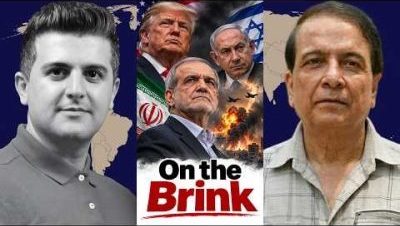
Pravin Sawhney: Massive Escalation Pushes Every Side Toward the Brink
or go to
Aletho News Archives – Video-Images
From the Archives
UN declares war on ‘dangerous’ conspiracy theories
‘World is not secretly run by elites’
Free West Media | August 5, 2022
UNESCO says it is seriously concerned about the increase in “disinformation” and “conspiracy theories”. And they plan to put an end to it through a network of informants.
“Conspiracy theories can be dangerous,” the UN agency warned. “Often they ignore scientific evidence and polarize society with dire consequences. This has to stop.”
Unesco’s director-general warned that “conspiracy theories” could cause damage to people as well as to their health. “They reinforce misconceptions about the pandemic, reinforcing stereotypes that can fuel violence and violent, extremist ideologies,” said Audrey Azoulay.
The UN agency has launched a campaign to help people identify, debunk and report “conspiracy theories” to prevent them from spreading further.
This campaign is being carried out in collaboration with the European Commission, Twitter and the World Jewish Congress. The UN has created a toolkit to “debunk” such theories and smear anyone who dares to claim that governments are not fair and transparent.
The UN also warned that George Soros, the Rothschilds and Israel should not be linked to “alleged conspiracies”.
World events “are not secretly manipulated behind the scenes by powerful players with malicious intent,” the UN agency maintained.
And if anyone therefore comes across someone who believes that the world elite is plotting to consolidate power or direct events, then that person needs to take action. According to the UN agency, when meeting a “conspiracy theorist”, under no circumstances should one enter into a discussion. … continue
Blog Roll
 Aletho News
- Algerian army launches second operation to clear French nuclear test sites
- Pravin Sawhney: Massive Escalation Pushes Every Side Toward the Brink
- UK High Court Upholds Speech Regulator Notices To Meta, WhatsApp, X, And TikTok
- Two working on US Senate candidate’s campaign registered as foreign agents for Israel: Report
- Greece bans protest over docking of Israeli cruise ship
- Israel elections: More Arab votes, same Zionist consensus
- Taking the Houthis at Their Word: The Bill Saudi Arabia Doesn’t Want to Read
- Trump claims he would have bombed Ho Chi Minh City to win Vietnam War
- Russia shows Europe that prolonging the Ukraine war is pointless
- There is cautious optimism about ending the Ukraine War – Part 2
- If Americans Knew
- An error has occurred; the feed is probably down. Try again later.
- No Tricks Zone
- Germany’s Green Energy Transition Becoming Increasingly Expensive…Another 6 Trillion Euros!
- Sudden Stratospheric Warming, Powerful El Niño Combination May Lead To Extreme Europe Cold, Energy Crisis!
- Two New Studies Find Thwaites Glacier Melt Cannot Be Driven By Human Activity Or A Warming Ocean
- E-Cars Reduce CO2 Emissions By Only 41% Compared To Internal Combustion Engine Vehicles
- Predictions Made By Renowned Climate Professor Over Past Decades Have Been Proven To Be Poor
- New Study Suggests Large Regions Of The Pacific Ocean Have Been Cooling For The Last 80 Years
- Germany’s Green Energy Debacle: High Energy Costs Force Kahla Porzellan to Close After 182 Years!
- New Study: 50 Years Of The Most Aggressive ‘Net Zero’ Policies Can Only Affect The Global Climate By 0.03°C
- US September “Heat” Was No Record…Many Records Set Decades Ago
- Latest European Green Energy Debacle; Portugal’s Largest Flagship Solar Park Insolvent!

