Israel’s Liberty Attack Did Not Begin or End in 1967

USS Liberty Before Israeli Attack
By Free Palestine Movement | Dissident Voice | June 8, 2017
On June 8th, 1967, with cold-blooded mass murder as the objective, Israeli warplanes and warships made every effort to sink the USS Liberty, a mostly unarmed US intelligence vessel off the coast of Gaza, and to kill all 294 on board. Thanks only to the heroism of the Liberty crew and possibly a Soviet vessel’s offer of assistance (refused), the attack was called off before completion, although the attackers had plenty of reason to think that the sea would do the rest of the job for them.
Twice, US warplanes from the US Sixth Fleet responded to distress calls from the Liberty, only to be recalled by direct order of the White House and the US Department of Defense. In retrospect, it is clear that Lyndon Johnson and Robert McNamara in turn got their orders from the Israel Lobby and the Israeli leadership. 34 were killed and 174 wounded, with many permanently disabled.

USS Liberty Following Israeli Attack (US Navy Photo)
The subsequent coverup, the suppression of investigation, the falsification of evidence, the manipulation of history and the denial of justice to loyal US servicemen on board is now well documented and readily available to all who wish to see (which many do not). Nevertheless, the attack continues to this day, with Israeli and US resources devoted to maintaining a variety of false and often conflicting narratives to hide the truth.
Of course, Israel’s attack on liberty itself goes far beyond this one incident, however outrageous, arrogant, blatant and hideous it may be. Israel owes its very existence to Plan D, a detailed and carefully prepared military strategy for depopulating Palestine of its non-immigrant Palestinian population and replacing it with immigrants in order to create a majority (and ultimately exclusive) Jewish state, according to a racist agenda. Since late 1947 (and even before) and up to the present, Palestinians have had, and are still having, many Liberty incidents, without benefit of a Sixth Fleet, recalled or not. It is clearly Israel’s intention to continue until there are no Palestinians left in Palestine.
Liberty assaults are continuing in the US and other powerful countries, as well, as Israel and its Zionist interests in these countries wield sufficient power on their governments to bend military and political power to their ends. Thus it is no accident that US and western countries’ might has been used to destroy Israel’s potential enemies and rivals in the region, such as Iraq, Libya and Syria, and to bring to heel others, such as Jordan, Egypt, Saudi Arabia, Turkey and the Gulf monarchies. The people of half the world are paying the price for Israel’s ambitions, not least in countries like the US, whose military budgets swallow funds for infrastructure, health, and education, and create an ongoing supply of shattered veterans who are neglected by the very government they served.
But millions of people have also been killed and tens of millions made refugees in the wars for Israel, for the purpose of weakening Israel’s enemies, enabling Israel’s capture of territory, the ongoing ethnic cleansing of populations that Israel considers undesirable, and confiscation of resources. By allying itself with the most destructive elements in the US and other countries it wishes to influence and manipulate, Israel is able to multiply its destructive capability far beyond its own borders.
We are all Palestinians. Israel is crushing us all, robbing us of our resources, our livelihood and our liberty. Fifty years on, let us remember and honor the crew of the USS Liberty, who paid a high price for liberty, never receiving proper remuneration. Let us also remind ourselves that we continue to pay this price.
Free Palestine Movement is an accredited NGO of the United Nations whose purpose is to defend and advocate for the human rights of all Palestinians, and in particular the right of access to all of Palestine. Visit Free Palestine Movement’s website.
Hamas: Israel will exploit Arab rift to kill our people
MEMO | June 7, 2017
Hamas today criticised statements made by Saudi Foreign Minister Adel Al-Jubeir that Qatar should stop backing the Palestinian resistance movement as a condition to ending the rift with its neighbours.
In a statement the movement said: “Hamas is a legitimate resistance movement against the Zionist occupation, which represents the central enemy of the Arab and Islamic nations, especially Hamas.”
Yesterday evening, Al-Jubeir told journalists on a visit to France that Qatar was undermining the Palestinian Authority and Egypt in its support of Hamas and the Muslim Brotherhood. “We don’t think this is good. Qatar has to stop these policies so that it can contribute to stability in the Middle East.”
In response, Hamas said: “It is no secret to anyone how the Zionist enemy exploits such statements to commit more violations and crimes against our people and our land and our sanctities and the right of Jerusalem and the Al-Aqsa Mosque.”
The movement stressed that Al-Jubeir’s statements violate international laws and Arab and Islamic positions which emphasise the right of the Palestinian people to resist and struggle to liberate their land and holy sites. Hamas called on the brothers in Saudi Arabia to stop these statements that harm the kingdom and its positions on the issue of the Palestinian people and their legitimate rights.
Lavrov: Deconfliction zones in Syria announced without Damascus’ consent illegitimate
RT | June 7, 2017
Russia considers the US-led coalition airstrike against pro-Damascus fighters in Syria an act of aggression and rejects the justification for the attack issued by the Pentagon, Russian Foreign Minister Sergey Lavrov said.
The Tuesday airstrike near the town of At Tanf in eastern Syria “was an aggressive act, that violated the sovereignty and territorial integrity of the Syrian Arab Republic and – deliberately or not – targeted the forces which are most effective in fighting terrorists on the ground,” the minister said on Wednesday.
The Pentagon justified the attack by saying that the pro-government forces “advanced inside the well-established deconfliction [sic] zone in southern Syria.”
The US claimed that it attacked the pro-Damascus convoy because it posed threat to “partner forces” based in At Tanf. The US military earlier stated that an area within 55km from the town was a designated “deconfliction zone,” where forces not allied with the US are apparently not allowed to enter.
Lavrov rejected that reasoning, saying that he is not familiar with the term.
“I don’t know anything about such zones. This must be some territory, which the coalition unilaterally declared [deconfliction zones] and where it probably believes to have a sole right to take action. We cannot recognize such zones,” he said.
Lavrov said Russia, Turkey and Iran have signed a deal, which has been endorsed by the UN Security Council, to establish so-called “de-escalation zones” in several parts of Syria. Damascus agreed to this approach and the exact borders and mechanisms for observing a truce inside those zones are currently being negotiated.
“This approach was agreed to by Syria. We consider illegitimate any unilateral declaration of ‘deconfliction zones’ not endorsed by Damascus. We hope the coalition will adhere to the agreement it has reached with us, which states that the de-escalation zones must be agreed to in detail by all stakeholders,” he said.
He added that, according to some reports, the force attacked by the coalition was being deployed to prevent Islamic State (IS, formerly ISIS) fighters from destroying two bridges and a road connecting Syria with Iraq, and that the intervention had allowed the terrorists to carry out their plan.
Someone has just declared war on Iran
By Adam Garrie | The Duran | June 7, 2017
Terrorist acts of brutality and terrorist attacks in the service of traditional war are two different things.
Differences between an act of terrorism and a terrorist act which serves as a declaration of war carry an important distinction.
Attacks throughout the west from 9/11 to the recent Salafist/ISIS attack on London are dictionary definitions of terrorism (false flag or otherwise). This means that they are acts of bestial savagery designed to kill as many as possible, sow fear into a civilian population and force governments into a state of either infighting or panic. The terrorists behind every major attack on the US or Europe over the last decades did not intend to overthrow any one let alone several regimes. They simply wanted to cause as much chaos and carnage as possible given the weapons at their disposal.
In this sense, the terrorists won and no amount of virtue signalling hashtags can refute this. They wanted to kill, sow terror and discord, and they manifestly succeeded.
The wars in Syria and Libya by contrast, are wars spearheaded by terrorist groups who technically do not represent a state but are funded by and serve the foreign policy objectives of states ranging from Saudi Arabia, Qatar, Israel the United States, Britain, France and Turkey. The assaults on Syria and Libya saw terrorists who perhaps are better described as NGO’s with heavy weapons, working with major regional and world powers with the clear objective of conquest and regime change.
In Libya, the result was mission accomplished. In Syria, the move has largely failed as the Syrian government remains in power and its allies Russia, Iran and other non-state groups have helped Syria in this respect.
In Iran, while things are not yet entirely clear, it would appear that today’s attack was an opening salvo in a wider war to destroy the very government and society of the Islamic Republic of Iran.
Although a few terrorists with guns and bombs cannot overthrow any nation, the objectives of regional players ranging from Saudi Arabia to Israel are well known. It is difficult to believe that this attack was not orchestrated at some level by at least one state actor which openly seeks illegal regime change in Iran.
Iran is a vast state with incredibly powerful and well equipped armed forces, so much so that it would still seem unlikely that any state, including the US would actually attempt to wage open war on Iran.
That being said, today’s terrorist atrocity, aimed at two important centres in Tehran has a clear message.
Those who seek war on Iran will not resist stooping to terrorist means in order to attempt to accomplish their goal.
Iran will almost certainly not end up like Syria or Libya, but the attack on Iran, at least at an ideological level, seeks that which was done in Libya and what many are still attempting to do in Syria.
This was not the act of lone loonies and of course unlike the west which funds Salafism, this was not blow-back. It was the opposite. Iran fights Salafism and Iran opposes Saudi Arabia and Israel. This was a terroristic declaration of war, one that Iran may not have necessarily expected but one which it is entirely prepared for.
Qatar is about to fall in one way or another. If others seek to change the government in Iran… get ready for regime change blow-back.
If this piece isn’t automatically censored in Riyadh, it ought to be read with seriousness.
Riyadh Requires From Doha to Expel Hamas, Muslim Brotherhood Members
Sputnik – 07.06.2017
Saudi Arabia set out several conditions for Qatar to normalize the bilateral relations amid the diplomatic rift and gave Doha 24 hours for the implementation of the conditions, local media reported Wednesday.
According to Akhbar Al Aan news outlet, the conditions included the expulsion of all the members of the Muslim Brotherhood terror group (outlawed in Russia) and the Palestinian Hamas movement from the country, freezing of their bank accounts and the suspension of any interrelations with these groups. The immediate break of the diplomatic ties with Iran was also reportedly one of the conditions laid down by Riyadh.
Apart from this, Saudi Arabia required from Doha to immediately change the policies of Qatar’s Al Jazeera broadcaster and as well as its administration staff so that the broadcasting would not contradict the interests of the Persian Gulf countries and the Arab world, the same reports added.
On Monday, Saudi Arabia, Bahrain, the United Arab Emirates and Egypt announced a break in diplomatic relations with Qatar, accusing Doha of supporting terrorist organizations and destabilizing the situation in the Middle East. The authorities of eastern Libya, Yemen, as well as the Maldives and Mauritius, later also announced the severance of relations with Qatar. On Tuesday, the Jordanian authorities announced lowering the level of diplomatic contacts with Qatar and closing the office of Al Jazeera operating in the country.
The Qatari Foreign Ministry rejected the accusations of Doha’s interference in other countries’ domestic affairs and expressed regret over the decision of the Gulf States to cut off the diplomatic ties with it.
See also:
Saudi tells Israel: No place for Hamas in Middle East
MEMO | June 6, 2017
A Saudi expert has for the first time been interviewed on Israeli television. Abdel Hamid Hakim, who heads the Jeddah-based Institute for Middle East Studies, told Israel’s Channel 2 via Skype that the decision by three Gulf countries to sever relations to Qatar “comes in the framework of a new policy in which there is no room for terrorism.”
Asked what the aim of the Saudi, Egyptian, Bahraini, Emirati step regarding Qatar was, Hakim replied:
“There is a political stance which Saudi, Egypt and the Emirates agreed to, especially after the Riyadh Summit which was the first visit by the new American administration to the Kingdom of Saudi Arabia, that there is no place in the political arena of these countries for terrorism or for groups who use religion for political gains like Hamas and [Islamic] Jihad.”
“I believe these countries took a decision in a step towards peace, and achieving piece in the Middle East.”
He added:
“The first for this is to weed out terrorism. There is no place for any religious group, be it the [Muslim] Brotherhood or any other, which uses religion for political gain or commits terrorism in the name of religion, in the name of resistance or in the name of jihad.”
The scramble for control of Syrian-Iraqi border
By M K Bhadrakumar | Indian Punchline | June 4, 2017
The remark by the Syrian Kurdish militia spokesman Saturday that their final assault on the ISIS “capital” city of Raqqa will start “in the coming few days” highlights the keen struggle for control of eastern Syria bordering Iraq that is playing out. The ISIS is staring at defeat and the issue now is what follows thereafter.
The big question is whether Syria survives or will get balkanized. The Russian President Vladimir Putin flagged this stark reality when he said on Friday,
- Does the possible dismemberment of Syria arouse concern? It certainly does. We are establishing de-escalation zones now and we are afraid that these de-escalation zones may turn into a blueprint for future borders. Russia hopes these safety zones would serve to interact with the Assad government, to start at least some kind of a dialogue, some interaction, as this would help future political cooperation in order to restore Syria’s control over its entire territory and preserve the country’s territorial integrity.
Of course, there is the danger that Syrian war may become a “frozen conflict”. The key, therefore, lies in gaining control of Iraq’s border crossings with Syria across vast desert lands through which Iran renders vital help to the government forces and the Hezbollah and the Shi’ite fighters battling the insurgents and the ISIS.
As the map, here, shows, the Syrian-Iraqi border regions are largely under the control of either US-supported Kurdish and other insurgent fighters or the ISIS and other extremist groups. The Syrian government aspires to regain control of those regions.
Essentially, the struggle is for control of the border crossings that are depicted in the map. Clearly, the border crossing way up in the north is under the control of the Kurdish militia and it remains to be seen (a) whether the US would allow the Kurds to reach an understanding with Damascus; (b) whether Turkey will allow Kurds to consolidate their grip in that area; (c) whether the over-stretched government forces will take on the Kurds or, alternatively, will regard it to be tactically prudent to avoid a shooting match at this point and instead keep options open to eventually negotiate a power-sharing deal with the Kurds.
Unlike the northern front, the central and southern fronts are hotly contested. As the map shows, there is one border crossing in the central front at Al-Bukamal (where the Euphrates flows into Iraq) and another key border crossing is at Al-Tanf in the southern front.
In the central front, Bashar Al-Assad’s forces are in Palmyra and are making their way toward Deir Ezzor where a Syrian garrison is desperately holding out against a siege by the jihadi groups. The US appears to be encouraging the ISIS fighters in Raqqa to evacuate toward Deir Ezzor. But Russian cruise missile strikes recently targeted these ISIS convoys. (Sputnik) The US apparently prefers that somehow Assad’s forces must be prevented from reaching Deir Ezzor, because from there they could take control of the highway leading to the border crossing at Al-Bukamal. (See the map.)
Similarly in the southern front, the US is impeding the advance of the government forces to al-Tanf (which is connected to Damascus), another border crossing into Iraq. The US would hope that the rebel groups in al-Tanf will also seize control of the Al-Bukamal border crossing up north so that US proxies will be in control of the entire Syrian-Iraqi border as well as the southern Syrian region straddling the border with Jordan and the Golan Heights. The game here is essentially about cutting off Iran’s access to Lebanon (Hezbollah).
Why is it so important for the US to prevent Assad’s forces from taking control of the Al-Bukamal and Al-Tanf border crossings? Simply put, the spectre of a Damascus-Baghdad-Tehran land route reopening is what is haunting the US (and Israel), because such a solid land route will have a multiplier effect on Iran’s capacity to influence the future developments in Syria (and Lebanon).
The US has not directly jumped into the fray so far to take control of the Syria-Iraq border. It maintains the pretence that it is narrowly focused on fighting the ISIS. However, when it seemed that Assad’s forces were lunging toward Al-Tanf recently (May 18), the US forced them to turn back by launching an air strike.
The overall balance of forces does favour the Syrian government and in a conceivable future it should take control of Deir Ezzor, Al-Bukamal and Al-Tanf. Thus, the US will have to find a way to work around Assad (and Iran) than work against him. The other option will be to bear the heavy costs of a long-term, open-ended strategy of military intervention and occupation, which doesn’t figure in President Donald Trump’s foreign-policy calculus. The US’s best bet will be to seek some sort of understanding with Russia based on the premise that Moscow may not be fully sharing the agenda of Assad and his Iranian ally. But then, Moscow has no reason to bet on any other horse than the one it has been so far, which also happens to be a winning horse.
Trump’s claims against Iran ‘lead to nowhere’: Russia
Press TV – May 31, 2017
US President Donald Trump’s claim that Iran supports terrorism will not lead anywhere, says Russian Foreign Ministry spokeswoman Maria Zakharova, citing Moscow’s own anti-terror work with Tehran.
Trump made the allegation during his recent visit to Saudi Arabia, where he accused Iran of destabilizing the Middle East and supporting what he called terrorist groups such as the Lebanese resistance movement of Hezbollah, which has been fighting Saudi-backed Takfiri terrorists in Syria.
“This [claim against Iran] does not help stabilize the situation,” Zakharova told reporters on Wednesday. “The United States accuses Iran of supporting terrorism, while Moscow has been closely cooperating with Tehran in the fight against terrorism in the Middle East.”
The Russian diplomat said, unlike the US, Iran had been actively engaged in the Astana peace talks to help find a solution to the ongoing conflict in Syria.
Launched by Iran, Russia and Turkey in the capital of Kazakhstan, the initiative has produced an agreement on de-escalation zones in Syria, sharply reducing fighting across the country.
“We have been holding active consultations with Iran within the Astana process,” Zakharova said, before criticizing Washington’s refusal to give serious consideration to the format.
“We have more than once invited the United Stated to get fully involved in these activities as practical work can help accommodate the concerns that the US has,” the Russian diplomat argued. “Focusing on accusations instead of doing practical work will not lead anywhere.”
The US has been reluctant to take part in the process, initially sending low-key delegations to Astana led by US Ambassador to Kazakhstan George Krol.
For the latest round, however, the White House agreed to send Acting Assistant Secretary of State for Near East Affairs Stuart Jones. The decision came after a phone conversation between Russian President Vladimir Putin and his American counterpart.
Jones’ presence at the talks showed Washington’s commitment to a political solution only on paper, because the US military’s behavior on the ground has signaled a different approach.
Targeting Syrian forces on their way to achieve significant gains over terror groups, airdropping weapons to militants fighting the government of Syrian President Bashar al-Assad and expanding ties with Saudi Arabia and other Arab governments openly funding and equipping militant groups are some of the erratic actions the White House has undertaken with regards to Syria.
Iran has dismissed Trump’s claims as “unbelievable” and “unacceptable,” noting that they were made in a country which is known for being “a haven and a promoter of violence and terrorism.”
Sheldon Adelson’s Crocodile Tears for Tillerson
Yet another round of Israeli political theater to perpetuate the victim mentality of Zionists

By Ali Salaam | American Herald Tribune | May 31, 2017
Due to a delay in the move of the US Embassy in the occupying Zionist entity from Tel Aviv to Jerusalem, Jewish Zionist billionaire Sheldon Adelson is reported to be angry with Secretary of State Rex Tillerson due to remarks he made in NBC’s “Meet the Press”suggesting President Donald Trump was deliberating the move in order to determine the cost/benefits it would have on the Israel/Palestine peace process.
Adelson donated tens of millions of dollars to Trump’s election campaign and another cool 5 mil to the Trump inauguration committee. Adelson’s friend, Jewish Zionist billionaire Haim Saban, donated heavily to the Hillary Clinton campaign. In 2016, the Zionists hedged their bets on both carefully groomed and predetermined major-party candidates, as usual.
A close look at the Trump administration’s policies towards the Zionist entity may deem Adelson’s fury egregious and unwarranted; a case of political theater to justify the perpetual victim complex needed to gain sympathy for the Zionist regime.
Let’s rewind to the Obama administration. Controversy after controversy surrounded the many times Obama ‘refused’ to meet with Netanyahu, officially due to scheduling conflicts. This political theater justified the neoconservative approach that Obama was ‘too weak’ on foreign policy.
The neocons knew their claims about Obama were false.
Before Obama’s election he was cozying up to the Zionist lobby. He had Rahm Israel Emmanuel, the son of a Zionist terrorist, as his Chief of Staff. Obama continued the Zionist wars in the Middle East, especially in Iraq, until the Iraqis forced Obama to leave, which was already in accordance with Bush’s time table. Obama helped the Israelis to coordinate the color revolution in Iran following the 2009 elections, otherwise known as the Green “Revolution,” which was revenge for Ahmadinejad’s role in securing the victory for Lebanon against Zionist aggression in the July 2006 invasion. Obama helped to kill Muammar Gaddaffi in 2011, a war which benefited the Zionists and the global central banking cartel, due to Gadaffi’s support for Palestine and for a gold-backed independent dinar that would have liberated Africa from the grips of crippling IMF debt. Obama turned a blind eye to the war crimes of Israel’s Operation Cast Lead in 2009, in which Israel used white phosphorous chemical weapons against civilians in Gaza. Additionally, the US provided military aid to Israel in 2009, making the US and the Obama administration directly complicit in the war crimes.
And that is just Obama’s first term, where he proved his Zionist credentials through actions. Obama’s facade of diplomacy and peace was just that: an illusion. The media can play all they like with it to fool the American people into thinking that the Democratic party is the party that is against war (most wars since JFK were waged by Democratic administrations) and that the two-party system is something that the people can still rely on for change. The Democrats serve as controlled opposition for American’s anger at Republican policies, when in reality both parties are two wings of the same vulture.
In his second term, Obama supported arming takfiri Wahabbi rebels in Syria to overthrow the legitimately elected government of Bashar al-Assad, also as revenge for the victory of Lebanon over Zionist invasion in 2006, as Syria supports the Lebanese and Palestinian resistance with arms and other resources. Leaked cables reveal that after the July 2006 war, Israel and the US started to lay the groundwork for plans to overthrow Assad in Syria, using artificially inflated sectarian strife to achieve it. Saudi Arabia, Qatar, and their sectarian media machine as well as financial support for terrorist networks served as the proxy army for the Israeli/American-backed coup attempt in Syria.
Obama and Clinton, along with their Republican doppelgangers John McCain and Joe Lieberman, armed and trained the Free Syrian Army, which had zero grassroots ties to the Syrian people and had many foreign fighters among their ranks. Many FSA generals expressed their alliances with the Al Nusra Front, Syria’s al-Qaeda affiliate. The Pentagon knew that they were arming al-Qaeda-linked terrorists, but that was part of their plan. Out of this toxic concoction, ISIS was born. After the 2013 chemical false flag in Ghouta, Syria, which UN inspector Carla Del Ponte correctly placed blame on the Syrian rebels, the American people were not willing to support overt US involvement in Syria, though many were not aware of the covert involvement in the arming of takfiri mercenaries and falsely dubbing it a “revolution” against “dictator” Bashar al-Assad. ISIS was the perfect pretext to sneak into Syria and to turn it from a war against ISIS to a war against Assad, Hezbollah, and Iran, a war that America has wanted since 2001, and a war that Israel has wanted since the 1980s with the Oded Yinon “Greater Israel” strategy of dividing neighboring Arab countries along ethnic/sectarian lines.
Obama’s creation of the takfiri proxy army that serves the Zionist and American imperialist agenda is the greatest gift to Israel as it has helped to tear apart the Middle East, widen sectarian gaps, and provide a path to weakening Hezbollah and the Islamic Republic of Iran. Though of course, due to the resilience of the Axis of Resistance (Syria, Palestine, Iran, Hezbollah, Iraq, Yemen) the destructive Zionist agenda hasn’t had much success. It has only increased what the leader of the Islamic Revolution Ayatollah Sayed Ali Khamenei refers to as the “Islamic awakening.”
Add to that the cherry on top: Obama fully supported and backed Israel’s Operation Protective Edge in 2014, one of the deadliest onslaughts against the besieged Gaza Strip, in which over 500 children were murdered in cold blood.
To further demonstrate the political theater around Israel, most of the prominent Democrats that boycotted Netanyahu’s speech at Congress in the following year voted to support giving Israel more weapons in the midst of their 2014 massacre of Gaza. When it counts, they fall in line to support the Zionist regime’s constant campaign of bloodshed. This includes seemingly pro-peace politicians like Senator Bernie Sanders.
Like Obama, Trump’s apparent quarrels with the Zionist regime are nothing but theater. While Obama’s $38 billion aid package to Israel was the largest at the time, Trump is already promising to increase that amount.
Trump has taken Israel’s side in the “Assad must go” bandwagon, being the first US president to directly strike the Syrian Arab Army, compared to the years of covert proxy war being carried out through al-Qaeda-linked proxies.
Trump has sided with Israel’s close ally Saudi Arabia, taking groups like the Al-Nusra Front off terrorist watch lists, yet declaring the Lebanese self-defense/resistance group Hezbollah a ‘terrorist’ organization.
While Obama laid the ground for the Oded Yinon strategy of sectarian division among Arab nations, specifically in Syria, Trump is starting to invest in the ethnic division of the Oded Yinon plan, supporting Kurdish factions, giving the potential rise to a future Kurd vs. Arab vs. Turk war and the bloodshed that will follow, in addition to a divided Syria, Iraq, and Iran being weaker in the face of global Zionism and American imperialism.
Trump’s close confidant is his Zionist Jewish son-in-law Jared Kushner, who is using his position to advance the Zionist cause in Iraq, Syria, and elsewhere.
Rex Tillerson himself is advancing the Zionist cause in Venezuela, using US-backed opposition to try and topple Chavismo, which has historically stood with the resistance axis of Palestine, Iran, Syria, and Hezbollah.
Also, Trump was supported greatly by the conservative news site Breitbart, which was founded by two Jews – Larry Solov and the late Andrew Breitbart – in Israel in 2007.
With all of Trump’s kowtowing to the altar of Zionism, why is Adelson crying about a slight delay in the downright messianic plans to move the embassy to Jerusalem?
In the eyes of the Zionists, no one is good enough when it comes to serving their blood-soaked agenda. Any ounce of timidity is used as an excuse to create political theater and make Israel out to be the victim, when it is in fact the opposite: it is the main aggressor and mischief maker.
“The media’s the most powerful entity on earth. They have the power to make the innocent guilty and to make the guilty innocent, and that’s power. Because they control the minds of the masses.” – Malcolm X
*(Sheldon Adelson, is chairman and CEO of the Las Vegas Sands Corporation. Image credit: DonkeyHotey/ flickr).
Featured Video
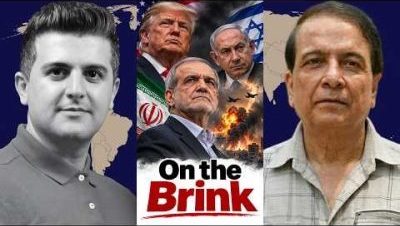
Pravin Sawhney: Massive Escalation Pushes Every Side Toward the Brink
or go to
Aletho News Archives – Video-Images
From the Archives
A sample of vaccine and injectable medication tragedies during my lifetime
This is what happens when you demand speedy production in an era of politicized regulation
By Meryl Nass, MD | February 12, 2022
All these tragedies have been due to failures of testing or failures in manufacturing processes. Most occurred before vaccine manufacturers were given virtually complete protection from liability in 1987.
With the duration of patent exclusivity determining how much new products earn, products are rushed to market as quickly as possible, most using a shortened path for FDA review. Recalls and market removals of approved products are much more common than they used to be. We can only expect more of these disasters in the future, especially if the products are mandated for everyone. … continue
Blog Roll
 Aletho News
- Moscow mocks Kiev’s language hypocrisy exposed by ‘torture chamber’ scandal
- Military ‘torture chamber’ triggers new scandal in Kiev
- Algerian army launches second operation to clear French nuclear test sites
- Pravin Sawhney: Massive Escalation Pushes Every Side Toward the Brink
- UK High Court Upholds Speech Regulator Notices To Meta, WhatsApp, X, And TikTok
- Two working on US Senate candidate’s campaign registered as foreign agents for Israel: Report
- Greece bans protest over docking of Israeli cruise ship
- Israel elections: More Arab votes, same Zionist consensus
- Taking the Houthis at Their Word: The Bill Saudi Arabia Doesn’t Want to Read
- Trump claims he would have bombed Ho Chi Minh City to win Vietnam War
- If Americans Knew
- An error has occurred; the feed is probably down. Try again later.
- No Tricks Zone
- Germany’s Green Energy Transition Becoming Increasingly Expensive…Another 6 Trillion Euros!
- Sudden Stratospheric Warming, Powerful El Niño Combination May Lead To Extreme Europe Cold, Energy Crisis!
- Two New Studies Find Thwaites Glacier Melt Cannot Be Driven By Human Activity Or A Warming Ocean
- E-Cars Reduce CO2 Emissions By Only 41% Compared To Internal Combustion Engine Vehicles
- Predictions Made By Renowned Climate Professor Over Past Decades Have Been Proven To Be Poor
- New Study Suggests Large Regions Of The Pacific Ocean Have Been Cooling For The Last 80 Years
- Germany’s Green Energy Debacle: High Energy Costs Force Kahla Porzellan to Close After 182 Years!
- New Study: 50 Years Of The Most Aggressive ‘Net Zero’ Policies Can Only Affect The Global Climate By 0.03°C
- US September “Heat” Was No Record…Many Records Set Decades Ago
- Latest European Green Energy Debacle; Portugal’s Largest Flagship Solar Park Insolvent!

