Biden will ‘beg’ American Jewish leaders for Iran agreement: Analyst
Press TV – August 28, 2015
US Vice President Joe Biden will go to Florida to “beg” American Jewish leaders to allow Washington to have its nuclear agreement with Iran, says a political commentator.
“Something this critically important to American foreign policy means only one thing… begging to powerful Jews to let America have its deal,” said David Christie, a broadcast journalist based in New York.
Christie made the remarks in an interview with Press TV on Friday while commenting on Biden’s plan to visit Jewish leaders in Miami next week.
Biden’s office said in a statement that he will “participate in a discussion organized by [chairwoman of the Democratic National Committee] Debbie Wasserman Schultz to discuss the Iran deal with leaders in the Jewish community.”
The vice president, who has played an important behind-the-scenes role in the Obama administration’s lobbying push for the agreement approval by Congress in September, hopes to win support from Wasserman Schultz who has not announced her position on the issue.
“The best way to do that is for Joe [Biden] to make a pilgrimage to Miami so he can pay homage to the one group that has been at the core of our bizarre obsession with forging a nuclear deal with a country that can never be a threat to us in the first place,” said Christie.
Iran and the P5+1 group of countries — the US, Britain, France, Russia, China, and Germany – announced the conclusion of nuclear negotiations in the Austrian capital, Vienna, on July 14. The US Congress will vote on the agreement in September.
Under the agreement, known as the Joint Comprehensive Plan of Action, restrictions will be put on Iran’s nuclear activities in exchange for, among other things, the removal of all economic sanctions against the Islamic Republic.
“Indeed, none of our hysterical pre-occupation within an Iranian deal would even exist if it weren’t for what has become the mission in life for all US politicians and of course, that is to serve and protect Israel at all—and I mean—all costs,” said the journalist.
Israel’s JINSA Earns Return on Investment: 190 Americans Admirals and Generals Oppose Iran Deal
By John Stanton | CounterPunch | August 28, 2015
According to Carol Greenwald writing at American Thinker on 27 August 2015, Washington Post writer “[Carol] Morello does not mention how incredible it was that a few people, mostly a woman named Marsha Halteman from New Orleans, in one week could get 190 flag officers to sign a public letter stating that “the JCPOA [Iran Deal] would threaten the national security and vital interests of the United States and, therefore, should be disapproved by the Congress.”
Well not so incredible at all thanks to the Jewish Institute of National Security Affairs (JINSA) very successful Generals and Admiral Program that has been in operation for many years. It has been the pipeline for 400 American military officers to visit Israel. Israel also runs similar programs for US military academy students and US law enforcement personnel.
The purpose of bringing American military personnel—and military academy students—is to maintain “Continued and robust military-to-military dialogue between the American and Israeli defense establishments is central to JINSA’s philosophy. The annual Generals and Admirals Program to Israel, in which recently retired American generals and admirals are invited to visit Israel with JINSA to meet the top echelon of the Israeli military and political leadership, ensures that the American delegation is well briefed on the security concerns of Israel, as well as the key role Israel plays as a friend and ally of the U.S. To date, JINSA has taken close to 400 retired officers to Israel, many of whom serve on JINSA’s Board of Advisors.”
As of this writing the Washington Post does not appear to have updated its story on the incredible effort of Marsha Halteman who is the recipient of a prestigious award from a US combatant command.
“It gives us great pleasure to announce that JINSA’s Marsha Halteman will be honored by the United States Special Operations Command (USSOCOM) with their Outstanding Civilian Service Medal for her tireless work on JINSA’s Soldiers Appeal, which raises funds for military members and their families who are in need of financial assistance. Her selfless and hard work is instrumental in actively supporting a USSOCOM priority – enhancing the quality of life of the individual warrior and family. Established by the Commander of USSOCOM in September 1998, the Outstanding Civilian Service Medal recognizes civilians who have provided outstanding support or service. For Marsha, this work has been both an act of love and admiration for our men and women in uniform, as well as above and beyond the call of duty. She has truly made a difference in the lives of so many soldiers and their families and she is most deserving of this award. This prestigious award will be presented to Marsha by a senior member of the USSOCOM Command at JINSA’s Spring 2014 Leadership Conference. Details of this meeting and a formal “Save the Date” will be released soon. We hope that many of you will be able to join us for the meeting and to honor Marsha.”
If the US national security and political establishment had the dedication, tenacity and thoroughness of the Israeli’s—in their pursuit of their national security interests, the USA would be a far more powerful country abroad and maybe at home. Israel’s interests are represented in every nook and cranny in the United States at the local, state and federal levels. They believe in Israel, nothing else. That deserves respect. American leaders, comparatively, are pathetic.
Bernie Sanders’ Conservative Foreign Policy

By Margaret Kimberley | Black Agenda Report | August 26, 2015
It is obvious that Bernie Sanders functions as the political “sheepdog” of the 2016 presidential election. The sheepdog makes certain that otherwise disillusioned Democrats are energized enough to stay in line and support the eventual candidate, in this case Hillary Clinton. That is reason enough to oppose his campaign but it isn’t the only one. A hard look at Sanders on foreign policy issues shows that he is a progressive poseur, a phony, a conservative Democrat, and not a socialist by any means.
The Sanders website looks like every other candidate’s with a bio, donation information and of course “Bernie on the issues.” But it seems that Bernie doesn’t have any opinions on foreign policy because they are nowhere to be found. How can he be a serious presidential contender if he doesn’t discuss foreign policy? How does he differentiate himself from Hillary Clinton or Republicans if he won’t state for the record how his foreign policy differs from theirs? The truth is obvious. He isn’t a serious contender and his foreign policy views are no different from those of the other candidates.
Sanders’ candidacy is as grave a danger to the rest of the world as that of his rivals. In no way does he challenge the belief that the United States has the right to determine the fates of millions of people without regard to their human rights. He doesn’t believe that other nations have the right to oppose what the United States chooses to impose upon them.
Sanders makes quite a big deal about voting against the invasion of Iraq in 2002 and says he wants United States troops to leave that nation for good. But he never says that this intervention was wrong. He never said that the United States had no right to destroy that country or kill its people. He never said that these interventions are war crimes and violations of international law. Instead he speaks of the efficacy of particular interventions and how they impact Americans.
A presidential campaign should be an opportune moment to say that the Islamic State, ISIS, is a creation of the United States. Instead Sanders repeats that the United States must defeat this force but he only differs slightly in saying that he wants the Saudis to spend their money doing it. “I’ll be damned if kids in the state of Vermont – or taxpayers in the state of Vermont – have to defend the royal Saudi family, which is worth hundreds of billions of dollars.” That mealy mouthed opinion does nothing to end the premise of an American right to do what it wants anywhere in the world. Imagine if Sanders was willing to talk about support for jihadists going back nearly forty years and how each one delivers a more terrifying result.
In 2011 Obama was bombing Libya and planning to kill its president but Sanders didn’t see it as being particularly problematic. He repeated almost verbatim the rationales that assassinated a president and destroyed a nation. “Look, everybody understands Gaddafi is a thug and murderer. We want to see him go, but I think in the midst of two wars, I’m not quite sure we need a third war, and I hope the president tells us that our troops will be leaving there, that our military action will be ending very, very shortly.” Libya’s obliteration was no problem for Sanders as long as the process didn’t take very long.
In 2015 the Bernie Sanders foreign policy still does not digress from American political orthodoxy. He doesn’t question American policy towards Russia. “Well you totally isolate him [Putin] politically. You totally isolate him economically.” “Freeze assets that the Russian government has all over the world.” At no time did Sanders oppose the American policy of intervening in Ukraine and expanding NATO in eastern Europe, the actions which created the current confrontation with Russia. He doesn’t question why the United States has the right to dictate policy to another nation or interfere in its sphere of influence.
Sanders supports the Iran nuclear energy agreement with the P5+1 nations, but issues the same dishonest rationales about it expressed by president Obama. Sanders doesn’t say that Iran was never a nuclear power, an easily provable fact. He doesn’t question the sanctions which forced Iran to the table or point out that the 25 years of inspections called for in the agreement are a violation of Iran’s sovereignty. Instead he repeats the discredited mantra that the United States must make war in order to prevent Iran from becoming a nuclear nation when even the CIA said that it never had that capability.
The big elephant in the room, Israel, gets the standard Bernie Sanders treatment. When Israel killed 2,000 people in Gaza in 2014 he would only say that Israel “over reacted.” He didn’t like being questioned about his stance either. When protesters interrupted a speech he told them to shut up and repeated nonsense about Hamas missiles that rarely hit their targets while Israel massacred a civilian population.
When Sanders speaks out against American interventions he couches his opposition in terms of spending money at home instead of abroad. That is somewhat admirable, but there is no reason to cut the defense budget as he says he wants to do, if there is no change in how this country attempts to dominate the rest of the world.
The Sanders campaign may be an interesting footnote, but it won’t bring about needed conversation about United States imperialism. The supposedly socialist senator never even uses that word. There is blatant dishonesty in claiming to want a changed domestic policy in the United States without also changing foreign policy. The two are linked, and American workers can’t have a living wage or health care as long as imperialism goes unchecked. Liberals can’t claim superiority to followers of Donald Trump if they consent to war crimes and human rights violations. Their only requirement seems to be that Democrats ought to be in charge of the carnage. Sanders wouldn’t be a very good sheepdog if there weren’t so many willing sheep.
Margaret Kimberley can be reached via e-Mail at Margaret.Kimberley(at)BlackAgendaReport.com.
Lebanon’s Future is on the Line, and It Directly Affects Syria
By Andrew Korybko – Sputnik – 24.08.2015
Protests about the lack of proper city sanitation services have quickly escalated into full-blown calls for regime change.
Lebanese protesters demonstrated in Beirut this weekend as part of the “You Stink” movement, which was organized by citizens fed up with the garbage that had been piling up in their streets for weeks.
What began as an expression of legitimate grievances, however, quickly spiraled into the world’s latest Color Revolution attempt.
Some radical youth started throwing rocks and petrol bombs at police officers (uncannily reminiscent of the earlier hijacking of the peaceful-intentioned “Electric Yerevan” protests), which resulted in a forceful counter-response that was then immediately used to ‘justify’ the movement’s transformation into one of open regime change ends.
The thing is, however, Lebanon doesn’t really have a functioning government to begin with, having been without a President for over a year. If the Prime Minister steps down as he threatened to do, then it would create an unprecedented constitutional crisis that might bring the formerly civil war-torn and multi-confessional state back to the brink of domestic conflict.
Any significant destabilization in Lebanon is bound to have a serious impact on Syria, which would be put in a difficult position by the potential cutoff of the strategic Beirut-to-Damascus highway and the possible redeployment of valuable Hezbollah fighters back to their homeland.
A Little About Lebanon
The tiny Middle Eastern state of about four and a half million people is marked by a demographic and political complexity that could hinder a speedy resolution to the current crisis. It’s necessary to be aware of some of its specifics in order to better understand the origins of the current stalemate and where it might rapidly be headed.
Unilaterally sliced out of Syria during the early years of the French mandate, the territory of Lebanon hails what is generally recognized as the most diverse population in the Mideast. Eighteen religious groups are recognized in the country’s constitution, including Alawites, Druze, Maronite Catholics, Sunnis, and Shiites.
This eclecticism of religious communities is presided over by something referred to as the National Pact, an unwritten understanding that the President will always be Maronite, the Prime Minister will be Sunni, and the Speaker of Parliament will be Shiite, among other stipulations (and with a few historical exceptions).
Complementary to this concept is the country’s unique political system called confessionalism, whereby Christians and Muslims share equal seats in the unicameral parliament, but each group’s respective composition is determined proportionally by sect. Originally meant to be a temporary solution when it was first enacted in the 1920s, it was later refined by the 1989 Taif Agreement that ended the lengthy civil war and has remained in place to this day.
Crawling To A Crisis
The current crisis in Lebanon was long in the making, and it’s the result of many embedded problems that spilled over with the garbage protests. The economy has always been fragile, in that it’s highly dependent on tourism and banking – hardly the prerequisites for a stable system.
The overwhelming influx of over 1 million Syrian refugees over the past couple of years (on top of the nearly half a million Palestinian ones already present in the country) contributed to the country’s economic malaise, with the International Labor Organization quoting a 34% unemployment rate for youth between the ages of 15-24. It’s thus of no surprise then that there were plenty of disaffected young people eager and available to protest when the “You Stink” opportunity finally arose.
Lebanon’s economic troubles have been exacerbated by its enormously high debt-to-GDP ratio that has the dubious honor of being one of the world’s worst at 143%. It’s of such magnitude that Prime Minister Tammam Salam just announced that the government might not be able to pay salaries next month.
This economic dysfunction persists despite the discovery of large amounts of offshore oil and gas that have yet to be extracted. Part of the reason for this is that the country is in the midst of a political impasse stemming from parliament’s inability to agree upon a new president after the former one finished his term in May 2014.
Since the president appoints the prime minister, if Salam resigns like he threatened to do if Thursday’s upcoming Cabinet meeting yields no results, then the country would enter completely uncharted territory that might prompt more pronounced unrest and guarantee a period of heightened uncertainty.
The arrangement of political forces is thus that two men have the possibility to be president – Michel Aoun and Samir Geagea. Each represents one of the two main trans-religious political coalitions, the 8 March Alliance and the 14 March Alliance, respectively, and both want parliament to end its impasse as soon as possible.
Their similarities end there, however, since Aoun is in an alliance with multipolar-oriented Hezbollah, while Geagea is closely tied to former Prime Minister and dual Lebanese-Saudi billionaire powerbroker Saad Hariri.
Wikileaks’ latest releases from the Saudi Foreign Ministry prove that Hariri still has intimate contacts with the Saudi royal family and intelligence services, and that Geagea once begged the kingdom to bankroll his party’s finances. Therefore, although the presidency itself is largely ceremonial, it’s the diametrically competing visions of these two parties and the potential for street clashes between their supporters during the Color Revolution tumult that creates serious concern about Lebanon’s future, and consequently, could be expected to have negative repercussions for Syria.
Sabotaging Syria
The regional backdrop in which all of this occurs is that the US and its allies are in a ‘race to the finish’ to ‘win’ their various Mideast wars before the tens of billions of dollars of frozen Iranian funds are returned to Tehran, which would then partially disseminate it to its regional allies Hezbollah and Syria.
Additionally, Russia has made remarkable diplomatic progress in trying to reconcile all sides in Syria and assemble a coordinated anti-ISIL coalition, raising the US’ fears that its window of ‘opportunity’ for accomplishing regime change there may unexpectedly be drawing to a close.
It’s thus under these conditions that the organic protests in Beirut were almost immediately hijacked by radical Color Revolutionaries in order to create chaos along Syria’s western border.
The intent behind the calculated state collapse being attempted at the moment in Lebanon is to disrupt the Beirut-to-Damascus highway that serves as one of the two main lifelines to the Syrian capital, the other being the Damascus-to-Latakia highway. Shutting down the Lebanese route would make Syria wholly dependent on the Latakian one that’s vulnerable to an “Army of Conquest” offensive, which if successful, would cripple the country by de-facto blockading the capital.
At the same time, in the event that Beirut reaches its breaking point, some Hezbollah units currently deployed to Syria would be compelled to return back to the home front to assist in the inevitable power struggle there. The withdrawal of part (or all) of this valuable fighting contingent would make the military situation much more difficult for the Syrian Arab Army, both in defending the Damascus-to-Latakia corridor and in securing the Lebanese border from becoming a ‘second Turkey’ of terrorist infiltration.
Conclusively, it’s for these strategic reasons why it strongly appears that externally directed forces were ordered to exploit Lebanon’s existing tensions at this specific time. They engineered a Color Revolution attempt by using the “You Stink” protests as a semi-plausible cover, and this was timed to coincide with the ‘race to the finish’ being played out all across the Mideast.
Lebanon can still pull away from the brink, provided that Thursday’s upcoming Cabinet meeting resolves the presidential crisis and placates the country’s main political parties, but it will have to tread very carefully in containing sectarian temptations and avoiding the trap of escalatory Color Revolution provocations.
Read more:
‘Middle Eastern Union’: West Redrawing Map of Middle East at Will
Russia Succeeds in Middle East Policy – Lebanon Presidential Candidate
Lebanese Police Use Water Cannons to Disperse Beirut Protesters (VIDEO)
‘Unacceptable’: Lavrov blasts Biden idea on splitting Iraq into parts
RT | August 24, 2015
The idea of partition for Iraq would never be agreed by Moscow, Russian FM Sergey Lavrov said, stressing that this kind of ‘state structure manipulation’ is obsolete and Iraqis should define the future of their country themselves.
“We would never adopt a position voiced without any constraint by US Vice President Joe Biden, who said directly that Iraq should be split into Shia and Sunni parts and that the Kurds should be given what they want,” Lavrov told the participants of the youth forum ‘Territory of meanings’ near Moscow.
Lavrov labeled Biden’s position as “highly irresponsible and what’s more important – unacceptable,” because someone from overseas is lecturing Iraqi people on what to do with their country.
“We won’t commit to such things, telling Sunnis to get out today and urging Shia to move on next time. This is ‘social engineering,’ state structure manipulation from far outside,” Lavrov said, stressing that the destructiveness of such a plan is obvious.
“We believe that Iraqis – Shia, Sunnis and Kurds – should decide for themselves how to live together,” said the head of the Russian Foreign Ministry.
Lavrov’s remarks come following reports that Vice President Joe Biden is “seriously deciding whether to jump into the Democratic presidential race.”
The idea of decentralizing Iraq was voiced by Biden as early as 2006, in his ‘Unity Through Autonomy in Iraq’ article for the New York Times.
In this article, Biden proposed the idea of Iraq’s federalization and autonomous regions in Iraq for Sunnis, Shia and Kurds.
In April 2015, the Office of the Vice President published Biden’s article ‘Remarks by Vice President Joe Biden on Iraq’ on the White House’s official website.
“We want what Iraqis want: a united, federal, and democratic Iraq that is defined by its own constitution where power is shared among all Iraqi communities, where a sovereign government exercises command and control over the forces in the field. And that’s overwhelmingly what the Iraqis want,” Biden wrote.
The US together with an international coalition waged war in Iraq in 2003, under the pretext of eliminating weapons of mass destruction developed by Saddam Hussein’s regime. After the regime was brought down, WMD were never found and the former ruler was hanged by the new Iraqi authorities on December 30, 2006.
The Iraqi war lasted until 2011 and claimed the lives of nearly 1.5 million Iraqis and at least 6,000 coalition soldiers. Many more were wounded on each side.
The civil war in Iraq that started immediately after the withdrawal of the occupation forces is still going on. Many thousands have perished in terror acts and skirmishes.
Today the situation in Iraq is deeply aggravated by the advancement of Islamic State (IS, formerly ISIS/ISIL). The militant group is steadily capturing Iraqi territory. A significant part of Islamic State’s military backbone reportedly consists of former high-ranking Iraqi soldiers, who lost their careers and jobs following the fall of the former regime.
The Demographics of American Jews
By Lenni Brenner | CounterPunch | October 24, 2003
A friend once got a bit of a reputation by pointing out that “you don’t need the weatherman to know which way the wind is blowing.” But you do need a demographer to know which way the Jews are going.
Some readers will recall the journalistic hockey brawl in the NY Times over the National Jewish Population Survey 2000/2001, partially released in October 2002. Now the full survey is out, but the sticks are still flying, and the penalty box is full.
J. J. Goldberg, editor of Forward, the leading ‘Jewish community’ weekly, contributed an op-ed to the 9/17 Times, denouncing “flawed figures.” James Tisch, chair of the Conference of Presidents of Major American Jewish Organizations, replied in the 9/22 issue, defending their numbers against “critics” who “try in vain to ascribe to us ulterior motives.”
If gentile readers were confused about the furor, they will be comforted in knowing that most Jews likewise don’t grasp the underlying issues. But valid stats are crucial to a scientific understanding of the evolution of American Jewry. And with the US military all over the Middle East, and Palestine/Israel certain to be a priority concern in the forthcoming presidential election, universal misunderstanding of the status of Jewry in modern America can have fatal consequences for Palestinians, Israelis and Americans.
The best way for us to start is with the reader estimating the percentage of Americans who are Jews. Got your number? Now the scholars’ calculations. Their figures sit between 2.2% and 2.5%. Now compare your estimate and these figures with the guesses put forth by Americans in a 3/90 Gallup poll.
Twenty-four percent had no opinion. Beyond them, the average American thought that America was 18% Jewish.
That broke down to eight percent of Americans thinking that Jews are less than 5% of the people, 10% saying that Jews are between 5% and 9%, 25% believing that Jews are between 10% and 19%, 18% estimating that Jews are between 20% and 29%, 12% coming up with between 30% and 49%, and 3% reckoning that Jews are 50% — or more! — of all Americans.
Pretty wild? But why should gentile Americans know better? Their guesses are based on what they see. Turn on the TV, go to the movies, pick up a newspaper, follow an election, and in every case Jewish involvement is far above 2.5%.
It is much more shocking that most Jewish estimates are also surreal. Here are the numbers given by American Jews in a 3/98 poll, done nationally by the LA Times.
Twelve percent of our Jews think they are 2% of Americans, 13% think Jews are 3%, and 11% say they don’t know, which is also a ‘proper’ answer. But 7% of America’s Jews think they are 1% of Americans. Five percent of the Jews thought Jews are 4%. Ten percent of the Jews said they are 5%. Eighteen percent believed Jews are 6-10%. Six percent estimated our Jews to be 11-15%, and 18% of America’s Jews projected themselves as over 15% of the population, a whopping margin of error of over 600%.
So, where did those delicious Jewish overestimations come from? Jews know the country is overwhelmingly Protestant, and that the Jewish percentage is much smaller than the Catholics. But they watch the same TV, go to the same movies, etc. Thus, while their numbers aren’t as stratospheric as most gentiles, they likewise tend to be on the high side.
There are two reasons for the Jewish miscalculations. They fall into two broad categories, religious and non-religious. Pious Jews may or may not read the Bible, but the overwhelming majority definitely don’t read much about the mundane history of Judaism since biblical times. And while atheists and agnostics know enough about their ex-religion’s follies to justify abandoning it, once they bail out they usually lose interest in its evolution.
To be sure, many Jews, nationally, read the NY Times, which ran stories on the 1990 NJPS and the 2000-1 follow-up. Atheists might read an article about a bombing in Israel, but they often ignore articles about Judaism as a religion as they see it as not worth reading about. And most religious Jews don’t read the Times or the community weeklies which sit, for the most part unbought, on newsstands in their neighborhoods.
The scholars, real and alleged, argue over the absolute number of Jews because the US census doesn’t count people by religion and it doesn’t accept ‘Jewish’ as an ethnic category. While the contested figures range from 5.2 million in the 2000-1 Survey, to a high of 6.7 million give by a few dissenters, the blood really flows over the intermarriage rate.
The 1990 Survey reported a 52% intermarriage rate. The latest survey reports that “the intermarriage rate for Jews who have married since 1996 is 47%. Differences between intermarriage rates … are due to differences between the “born Jewish” definition used for the 1990 analysis and the “currently Jewish” definition used in this report.”
They say that 1990 NJPS researchers “calculated and presented an intermarriage rate for ‘born Jews,’ a category that included those they considered Jewish at the time of the survey and some they considered non-Jewish, including non-Jews who had been born to at least one Jewish parent and were raised in a non-Jewish religion.”
They admit further on that “In the current survey, applying the broad “born Jews” definition to people whose marriages began in 1991-95 and since 1996 yields intermarriage rates of 53% and 54%, respectively.”
To understand their distinctions between “born Jews” and “currently Jewish,” you must appreciate the sociological law which, as I’m its discoverer, I call, with my customary modesty, Brenner’s law: All religions lie about how many followers they have, and all left wing groups lie about how many people came to their last demonstration. Indeed, more paper has been wasted on debates over who is a Jew than on any other topic, including who really is a Trotskyist.
Today, with the enormous intermarriage rate, the Jewish establishment can’t face reality. They know that “slightly more than a fifth of Jewish adults who were raised by two Jewish parents are intermarried. In contrast, nearly three-quarters of Jewish adults with just one Jewish parent are intermarried. In other words, Jewish adults who are the children of intermarriages are more than three times as likely to be married to non-Jews themselves. At the same time, among those who had intermarried parents, a Jewish upbringing reduces the rate of intermarriage. Almost 60% of Jewish adults who were raised Jewish by intermarried parents are themselves intermarried, compared to 86% of their counterparts who had intermarried parents but were not raised Jewish by them.”
So they stopped counting adults who convert to another monotheistic religion as Jews, and don’t put kids of intermarried Jews, who aren’t raised Jewish, in their ‘current Jews’ category, and, lo presto, they come up with the 47% figure.
Serious scholars find this grotesque. Bob Dylan, my friend mentioned above, converted to Christianity. But many pollsters consider him to be the most famous Jew of his generation. Subsequently, Bob oriented towards Menachem Schneersohn, the late Lubavicher ‘rebbe,’ who most members of his Orthodox sub-sect believe to be the messiah, hovering over his grave in New York, eventually to come back again. It would be unworkable for demographers tracking the evolution of Jewry to drop Bob from their rolls of Jewry because he became a Jesus freak, and then put him back, but as a convert from Christianity.
When doing scientific surveys of religions, races, nationalities, the standard rule is ‘all’s fish that comes into the net.’ T. S. Elliot became a British citizen, but every literary critic correctly lists him as an American poet.
The intermarriage rate has become such an obsession with the Jewish honchos that they overlook an even more ominous stat. Eight out of 10 Jews living with a sexual partner without benefit of clergy is sleeping with a non-Jew. But in their formalistic minds, ‘only’ 47%, for marriages, means that they are still in business, if in deep trouble, whereas if a majority of kids with at least one born Jewish parent intermarry, and the rest are shacking up with gentiles, “organized Jewry,” as their journals call them, is unmistakably little more than the dirty ring in the bathtub after the water is gone down the drain.
For all their abracadabras, Judaism is well and truly shriveling up, everywhere except in Israel, and it doesn’t matter what intermarriage percentage they concoct. Intermarriage is a symptom of the collapse of Jewry, not its cause.
The 1st colonial American Jews, known as the Sephardim, of Portuguese and Spanish descent, in time intermarried and converted to Christianity, as did most of the 1st colonial Ashkenazis, meaning German and Eastern European Jews. In the 19th century, almost 200,000 German Jews came here. About 60,000 converted in that century. By now, most of the rest have intermarried, tho not necessarily converted, and have no connection to organized Jewry.
From 1881 and the 1st czarist pogroms, thru to 1921, when the US established immigration quotas, to keep out Jews and other undesirables, a minority of Ashkenazis from the Russian empire came here already Marxist atheists. They still considered themselves Jews because they spoke Yiddish, which only Jews spoke. Once here, they recruited other immigrants to leftist atheism.
In the 30s, another minority of American-born Jews became Communists. They also saw themselves as Jews because most lived in Jewish neighborhoods, and most married atheist Jews. Moreover anti-Semitism was still a force here, and they were considered Jews by the larger American public. But most of their descendants, usually no longer leftists, are completely assimilated
Today things are significantly different. Many young Jews grow up in ‘white’ suburbs, mixed in with gentiles. They don’t know a word of Yiddish. They go to school with and then work with gentiles. Most of them never encounter anti-Semitism. This is the sociological basis for the intermarriage wave.
Their great-grandparents came here ‘Orthodox,’ now only 9.7% of our Jews, by the NJPS numbers, even less in other surveys. Orthodoxy segregates women in a separate section of the synagogue. Only men can be rabbis. Everyone keeps the kosher laws, no pork, shrimp, etc. Somewhere along the line most of their families abandoned Orthodoxy for either the ‘Conservative’ sect, 15.2%, with its synagogues having local option on segregation and women rabbis, or ‘Reform,’ 17.4%. They have complete gender equality and now have some gay rabbis. They also have, according to rabbi Arthur Hertzberg, an intermarriage rate of “60% to 70%.”
Even if they went to Hebrew school after their day in public school, after their bar mitzvah, their initiation into theological adulthood, at 13, most drop away from any form of Jewish identification. Some of the consequences were described by Reform’s Michael Myers in “Beyond Survival and Philanthropy,” a book based on a symposium in Israel, re the disintegration of American Jewry:
“Host cultures, especially that of America, represent a more serious threat to our collective Jewish existence than ever before. Not only are Jews more socially acceptable then ever in the past, but so is Judaism. The problem is that Jewish tradition is seen as narrow and prejudiced the moment it makes any claim to exclusivity, the moment it makes any claim to superiority.”
Two contributors, Steven Cohen and Charles Liebman, presented the problem from a Zionist perspective:
“After all, if all people are to be treated equally without regard to race, religion, national origin, sex, and most recently, sexual preference, how can American Jews feel totally comfortable in maintaining a special relationship with, let alone granting preference to, Israelis?”
The end result of the process of de facto assimilation is expressed in a host of stats from the 2000-1 NJPS, and from the American Jewish Identity Survey-2001, done at the Center for Jewish Studies at City University of New York. The latter is based on the methodology of the 1990 NJPS and is more reliable than the 2000-1 NJPS, compromised as it is by sugarcoating facts to please the establishment.
According to the AJIS, “More Jews than most other Americans respond ‘None,’ when asked ‘What is your religion, if any?’…. Fewer Jews than members of most other American religious groups agree with the essential proposition of religious belief that ‘God exists.’” Twenty-seven percent of all Jews are uncertain or reject theism, with only 14% of Americans saying they have no religion. The AJIS reported that by 2001 only 51% still believed in some form of Judaism, a 12% decline since 1990. By my reckoning, by this writing, a majority of US Jews reject Judaism. Even the NJPS 2000-1 concedes that only 46% belong to synagogues. That minority divides up 39% Reform, 33% Conservative, 21% Orthodox, 7% other types.
Inevitably the Zionist movement has been dramatically affected by the migrations into religious skepticism and intermarriage. A 1995 American Jewish Committee poll found only 22 percent of America’s Jews calling themselves Zionists, down from 90 percent in 1948. I haven’t found a later percentage figure, but, according to an article in New York’s May 2002 Jewish Post, the decline continues. In 1997, 107,802 votes were cast for American delegates to the World Zionist Congress. In 2002, 88,753 votes were cast.
Even that decline doesn’t tell the whole story of the movement’s decadence. Reform’s slate got 42.24% of the vote, the conservatives received 22.29% and the Orthodox slate garnered 20.23%. The American branch of the Israeli Labor Party got 2.2% and Meretz, a liberal ally of the LP received 3.96%. The rest went to tiny factions supporting Sharon’s ruling Likud Party.
Followers of the late terrorist, Meir Kahane, are not allowed to run in the elections, but they number a few dozen to a couple of hundred, at most. The most significant outside group are the Lubavitchers, who number about 15,000. They are major funders of the Likud and many New York Democrats and Republicans. When the rebbe was alive, a visit to him was a ritual stop for our politicians. Although most Jews look upon the Lubavichers as the Jewish Amish, and have nothing to do with them, a photo op with Schneersohn meant you were ‘good for the Jews.’
The election percentages give an impression that is contradicted by visible reality. Everyone attending the annual NY Salute to Israel Day parade notices that almost all the men wear kippot, Hebrew for skull caps, which tells us that they are Orthodox. Reform and Conservative rabbis got their congregations to sign up for the election so that they could put pressure on the Israeli government to grant equality to their co-religionists there, who are not allowed to legally marry or divorce even their own followers. But the bulk of the voters do nothing more than vote.
The vote drop from 1997 to 2002 can be explained, in large part, by disenchantment over the fact that Israel didn’t do anything significant in the way granting them their rights. Reform Zionists have an ideology of ‘Jewish peoplehood,’ which ties them to Israel in spite of their getting nothing more than a kick in the teeth from the government. In case you haven’t noticed, most politicians, everywhere, operate on one principle. ‘If we don’t give the beggars what they want, what will they do to hurt us?’ Since the Reform rabbis will do nothing, they get nothing. But the penalty they and Zionism pay is that the bulk of Reform, especially the youth, are de facto non-Zionist. As Beyond Survival and Philanthropy delicately put it, US Jews “have such difficulty appreciating the virtual monopoly the Orthodox exercise over the meaning of Judaism in Israel.”
Our universities are disaster areas for Judaism and Zionism. Darwin and physics courses destroy most students lingering faith in the Old Testament. And the devil, taking the form of left-wing professors and the anti-war movement, does the rest. The 1/4/02 issue of Ha’ aretz, Israel’s liberal daily, reported that out of “about 400,000 Jewish students … only about 5 percent have any connection to the Jewish community.”
In many respects, the best illustration of Zionism’s increasing isolation are the tourist stats. According to the NJPS, “just over one-third of all American Jewish adults have been to Israel, (35%).” Ninety-two percent of all Jews have traveled abroad, but England and France outrank Israel as a destination. Although Reform’s members are the most affluent of the 3 groups, they are least likely to go to Israel.
We see this again with immigration to Israel. Most of the true believers who go there to live, and especially the ones who actually stay, are Orthodox.
It is characteristic of the NJPS that it didn’t ask a direct question, ‘are you a Zionist?’ Instead it asked vague questions as to emotional attachment, whether US and Israeli Jews shared a common destiny, etc.
“My people are American. My time is today.” George Gershwin, who was never even bar mitzvahed, said that in 1926. Its taken decades for the typical young Jew to get to that point, but that is the case today. And the assimilation process is a worldwide one, with intermarriage rates of over 50% in every country in the world except Israel and Australia, and even in that last country the rate is climbing.
Why then is the Zionist lobby so powerful when their own scholars write endlessly about the alienation of their youth from the movement? The answer is simple: the Jews are the richest ethnic or religious stratum in the US. Because their standard of living is so high, they are the most educated. Because they are the most educated, they are the most scientific oriented, hence most inclined towards atheism or religious skepticism. But the true believer minority still has an unbelievable amount of money to throw at the politicians.
In 1991, I interviewed Harold Seneker, then the editor of the Forbes 400 list of the richest Americans, for an article in The Nation. I told him that I found Jews, 2.2% of the population, to be about 25% of the 400. He told me that he thought this a success story, both for American capitalism and for the Jews, and that he wanted to write a story on it. But Forbes wouldn’t let him. The then publisher had gone thru the Hitler era, when talking about Jewish money was an anti-Semitic specialty.
This mentality is still common on the left as well, and it is wide spread among elderly Jews. Forbes, much of the left, and old Jews share what must be called a ‘folk Marxist’ mentality. Despite the differences in their politics, they all believe that history repeats itself. Someday there is going to be another 1929 Depression. The capitalists will, once again, call up central casting and get another Hitler to smash the left.
This is fantasy. Its a projection of the past, and Germany’s past at that, into America’s future. In reality, journalists constantly turn out articles for Zionist publications about how Jewish campaign contributors play a major role in funding both parties and, very rarely, the topic is touched on in the mainstream media. “The Political Future of American Jews,” a 1985 American Jewish Congress pamphlet by Seymour Martin Lipset and Earl Raab, declared that “While there have been few reliable statistics on the subject — and some reluctance to gather any — the journalistic and anecdotal evidence is overwhelming that more than a majority of Democratic funds on a national level, and as much as a quarter of Republican funds have come from Jewish sources.” They were referring to private contributions, as was an article in the 1/5/93 NY Times announcing that “Jews contributed about 60 percent of Mr. Clinton’s noninstitutional campaign funds.”
My estimate is that 84 of the latest 400 are Jews. The magazine doesn’t list religious affiliations unless the person involved is distinctive in giving to religious charities, etc. And not all of the Jews are pro-Zionists. Some listees are among the educated disaffiliated we are discussing. But Zionist money is prodigious. James Tisch, chair of the Conference of Presidents of Major Jewish Organizations isn’t on the list, altho he is CEO of Loews Corp., listed on the Fortune 500 list. But daddy, Laurence, is, at $2 billion, and uncle Preston is worth $2.3 billion. His predecessors at the Conference were Ronald Lauder, $1.8 billion, and Mort Zuckerman, who struggles along with a penny ante $1.2 billion. Chaim Sabon, $1.7 billion, is a University of California regent. Mayhaps he got the job because he gave the Democrats the largest campaign contribution in American history?
Because of the establishment’s cover-up of the extent of the disintegration of organized Jewry, it is reasonable to think that most gentile politicians don’t realize it. But the Jewish pols do. And there is no reason to think that the gentiles would stop pandering to Zionists even if they understood that they are a shrinking minority among Jews.
Both major parties pick their candidates via primaries which any member can enter. So occasionally an honest Democrat or Republican is elected to congress and begins to criticize their party’s Israel über alles line. Usually it doesn’t take long before a tidal wave of Zionist cash pours in against them in the next election and out they go.
Some Arabs denounce Zionist funding, all day and all night, but there is no way of suppressing Zionist campaign contributions without doing away with the whole structure of privately funded campaigns, and they never talk about that. Many leftists don’t like to talk about it because of their fear of raising anti-Semitism. They want to talk about oil money. That’s fine. Any kid who they let cross streets alone knows that oil is the major reason that the US in so deeply involved in the Middle East. But that doesn’t explain why the two capitalist parties are so pro-Zionist. Indeed their pro-Zionism creates problems for them with the Arab masses. And it doesn’t explain why liberal Democrats are as zealous for Israel as the most fanatic Republican Christian Zionist.
If liberals constantly badmouth big business, they don’t get contributions from the major corporations. But Zionist money is single issue money. A liberal can dump on oil companies, or whatever, and he still gets a share of the Zionist gusher.
A personal experience tells it all about liberals and Zionism. In 1971, the Vietnam-era National Peace Action Coalition asked me to draw in Eldon Clingen, the Liberal Party member of the New York City Council from Manhattan. We had been in the Socialist Party’s youth In the 1950s. He joined the Libs on assignment but subsequently involved himself in Democratic Party politics, without changing party registration. But, as he was “Mr. Clean Air” for his leadership in the anti-pollution effort, the Libs asked him to be their Council candidate.
He was pleased to get his Lib faction involved. We chatted. I mentioned that lower-case liberals, against war in Vietnam, shot passing Arabs, even camels, to get Jewish votes.
“Oh, you have me wrong. I’m of Christian descent, and when I think of the terrible things Christians have done to Jews, I say I can’t do enough for the Jews.”
I told him that the next time he called for more ‘enough’ for Israel, he should write a check to me because, although I’m a Jew, I don’t get any of that ‘enough.’
“OK, I’ll tell it like it is: In order for a liberal — and I mean a lower-case liberal — to win in New York, he must have the Black, Puerto Rican and Jewish votes because he can’t get the Irish or Italian vote. They are locked away with the right-wing. But Blacks and Puerto Ricans don’t give us money. So don’t tell me about terrible things Israelis are doing to Palestinians. It would upset me. But I’m not going to break with my meal ticket.”
The moral of the story is that, while it is crucial to talk about oil industry domination of US foreign policy, it is just as crucial to talk about Zionist funding and its enormous influence on domestic politics. The discussion of both factors must be within a context of insisting that ordinary Americans, Jew or gentile, are fools if they continue to support parties that are so obviously funded by the rich.
Far from being afraid of discussing Zionist funding, it should be a major point in any critique of private contributions. Jews are less than 2.5% of the people. Zionists are now considerably less than 22% of all Jews. (My current estimate is ca. 10%.) And rich campaign contributors are a minority of Zionists. Yet we have an overwhelmingly gentile Congress that is emphatically more pro-Zionist than the majority of Jews.
Far from being a diversion of public attention from the capitalist nature of American politics, as some leftists fear, talking about Zionist money is one of the best ways of making that point. Because of the civil rights struggle and other battles, equality for all races, religions, nationalities, has become part of the broad American value system. Because of this, my percentage estimate of the Jewish proportion of the 400 richest Americans, which, trust me on this, is shared by serious scholars, has an automatic tendency to shock. But isn’t capitalism about inequality? It is absurd to think that a system that sanctifies inequality could be egalitarian in the ethno-religious distribution of wealth.
All that is necessary to make the important point that it isn’t Jewish contributions but Zionist slush that is offensive, is to cite the fact that we now can see that the Zionists are a minority of Jews. Talk about the oil industry and Zionist contributions at the same time, and people will get the correct idea that we are trying to explain a complex problem in detail.
Let’s go further. What US support for Israel and support for Saudi Arabia additionally have in common is that both regimes are theocratic states. An atheist of Jewish background should be concerned if we talked about Israel and didn’t talk about Saudi Arabia. So the moral of the story is talk about both. Additionally, everyone now sees a growing alliance between the Zionist establishment and the so-called Christian Zionists. These fanatics support Israel because of their lunatic notion that the creation of Israel means that Christ is coming, any minute now, to save a Christian America, and send all those atheist Jews, and atheist gentiles, to hell. Hitherto, the Jewish establishment could at least be relied on to resist attempts to convert America into a ‘Christian’ government. But, with the new alliance on foreign policy, that resistance is getting weaker and weaker. The Christian right now reasonably expects an increase in Zionist votes and funding for their candidates. Indeed it is a central tenet of Jewish neo-con politics that it is unreasonable to expect perpetual Christian Zionist support for Israel, unless they get something back in return.
In other words, we are now in a complex political crisis with profound domestic and international consequences. A complex situation can’t be dealt with in a one-sided manner. We have no choice but to examine all parts of the situation. If we denounce all the criminals, Americans, Arabs, Christians, Israelis, Jews, Muslims, for their crimes, from a democratic secular perspective, in a scientific manner, the Zionists and their Democratic and Republican patrons can say anything they want. An educated public will see that we don’t want to deny anyone their rights. On the contrary, they will see that we want to extend human equality and secularism, here and in the Middle East.
LENNI BRENNER is editor of 51 Documents: Zionist Collaboration with the Nazis.
The Age of Imperial Wars
From Regional War, “Regime Change” to Global Warfare
By Prof. James Petras | Global Research | August 22, 2015
2015 has become a year of living dangerously.
Wars are spreading across the globe.
Wars are escalating as new countries are bombed and the old are ravaged with ever greater intensity.
Countries, where relatively peaceful changes had taken place through recent elections, are now on the verge of civil wars.
These are wars without victors, but plenty of losers; wars that don’t end; wars where imperial occupations are faced with prolonged resistance.
There are never-ending torrents of war refugees flooding across borders. Desperate people are detained, degraded and criminalized for being the survivors and victims of imperial invasions.
Now major nuclear powers face off in Europe and Asia: NATO versus Russia, US-Japan versus China. Will these streams of blood and wars converge into one radiated wilderness drained of its precious life blood?
Living Dangerously: The Rising Tide of Violent Conflicts
There is no question that wars and military threats have replaced diplomacy, negotiations and democratic elections as the principal means of resolving political conflicts. Throughout the present year (2015) wars have spread across borders and escalated in intensity.
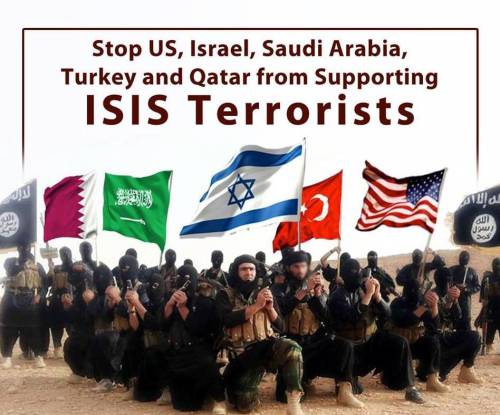
The NATO allies, US, Turkey and the EU have openly attacked Syria with air strikes and ground troops. There are plans to occupy the northern sector of that ravaged country, creating what the Erdogan regime dubs a ‘buffer zone’ cleansed of its people and villages.
Under the pretext of ‘fighting ISIS’, the Turkish government is bombing Kurds (civilians and resistance fighters) and their Syrian allies. On Syria’s southern border, US Special Forces have accelerated and expanded operations from their bases in Jordan on behalf of the mercenary terrorists – funded by the monarchist Gulf States.
Over 4 million Syrians have fled their homes as refugees and over 200,000 have been killed since the US-EU-Turkey-Saudi-sponsored war against the secular Syrian government was launched four years ago.
Dozens of terrorist, mercenary and sectarian groups have carved up Syria into rival fiefdoms, pillaged its economic and cultural resources and reduced the economy by over ninety percent.
The US-EU-Turkish military intervention extends the war into Iraq, Lebanon and…. Turkey – attacking secular governments, ethnic minority groups and secular civil society.
The feudal, monarchist Saudi Arabia and the United Arab Emirates have invaded Yemen with tanks, launching air strikes against a country without any air defenses. Major cities and towns are devastated. Saudi ground troops and armored carriers are killing and wounding thousands – mostly civilians. The brutal Saudi air and sea blockade of Yemen’s ports have led to a humanitarian crisis, as ten million Yemenis face starvation deliberately imposed by a grotesque and obscenely rich monarchy.
The Yemeni resistance fighters, driven out of the major cities, are preparing for prolonged guerrilla warfare against the Saudi monsters and their puppets. Their resistance has already spread across the frontiers of the absolutist Saudi dictatorship.
The brutal Israeli occupation troops, in collaboration with armed ‘settler’ colonists, have accelerated their violent seizure of Palestinian lands. They have stepped up the ethnic cleansing of Palestinians, Bedouins, Druze and Christian inhabitants replacing their communities with racist ‘Jews-only’ colonial settlements.
Daily assaults against the huge ‘concentration camps’ of Gaza accompany an armed blockade of land, air and water, preventing the reconstruction of the tens of thousands of homes, schools, hospital, factories and infrastructure, destroyed by last year’s Israeli blitzkrieg.
Israel’s continued annexation and ethnic cleansing of Palestinian territory precludes any diplomatic process; colonial wars have been and continue to be Israel’s policy of choice in dealing with its Arab neighbors and captive populations.
Africa’s wars, resulting from earlier US-EU interventions, continue to ravage-the Continent. Somalia, Sudan, Kenya, Libya are riven by bloody conflicts between US-EU backed regimes and armed Islamic and nationalist resistance movements.
Throughout North and Sub-Sahara Africa, US-EU backed regimes have provoked armed upheavals in Libya, Nigeria (Boko Harem), Egypt (ISIS, Moslem Brotherhood et al), Chad, Niger, South Sudan, Somalia and elsewhere.
Imperial client Egyptian and Ethiopian dictators rule with iron fists – financed and armed by their EU and US sponsors.
Imperial wars rage throughout the Middle East and South Asia. Hundreds of experienced Baathist Iraqi military officers, who had been expelled or jailed and tortured by the US Occupation army, have now made common cause with Islamist fighters to form ISIS and effectively occupy a third of Iraq and a strategic swath of Syria.
There are daily bombings in Baghdad undermining its US client. Strategic advances by ISIS are forcing the US to resume and escalate its direct combat role
The US-Baghdad retreat and the defeat of the US-trained Iraqi military in the face of the Baathist-Islamist offensive is the opening salvo of a long-term, large-scale war in Iraq and Syria. The Turkish air-war against the Kurds in Iraq will escalate the war in Northern Iraq and extend it into southeast Turkey.
Closer to ‘home’, the EU-US-backed coup (‘regime change’) in Kiev and the attempt to impose dictatorial-pro-West oligarchic rule in Ukraine have detonated a prolonged civil-national war devastating the country and pitting NATO’s proxies against Russian-backed allies in the Donbas.
US, England, Poland and other NATO powers are deeply committed to pushing war right up to Russia’s borders.
There is a new Cold War, with the imposition of wide-ranging US-EU economic sanctions against Russia and the organizing of major NATO military exercises on Russia’s doorsteps. It is no surprise that these provocations are met with a major counter-response – the Russian military build-up. The NATO power grab in Ukraine, which first led to a local ethnic war, now escalates to a global confrontation and may move toward a nuclear confrontation as Russia absorbs hundreds of thousands of refugees from the slaughter in Ukraine.
The US puppet regime in Afghanistan has faced a major advance of the Taliban in all regions, including the capital, Kabul.
The Afghan war is intensifying and the US-backed Kabul regime is in retreat. US troops can scarcely advance beyond their bunkers.
As the Taliban military advances, its leaders demand total surrender of the Kabul puppets and the withdrawal of US troops. The US response will be a prolonged escalation of war.
Pakistan, bristling with US arms, faces a major conflict along its borders with India and permanent war in its semi-autonomous Northwest frontier states with Islamist and ethnic Pashtu guerrilla movements backed by mass regional political parties. These parties exercise de facto control over the Northwest region providing sanctuary and arms for Taliban militants operating in Afghanistan and Pakistan.
Armed ethno-religious conflicts persist in western China, Myanmar and northern India. There are large-scale popular resistance movements in the militant northeast Thailand opposed to the current military-monarchist dictatorship in Bangkok.
In the 21st century, in South and Southeast Asia, as in the rest of the world, war and armed conflicts have become central in resolving ethnic, social, tribal and regional differences with central states: diplomacy and democratic elections have been rendered obsolete and inefficient.
Latin America – On the Verge
Burgeoning violent extra-parliamentary right-wing movements, intent on overthrowing or ‘impeaching’ elected center-left Latin American governments face major confrontations with the state and its mass supporters.
 In Ecuador, Venezuela and Brazil, US-backed opposition groups are engaged in violent demonstrations, directed toward ousting the elected regimes. In the case of Ecuador, ‘popular sectors’, including some indigenous leaders and sectors of the trade union movement, have called for an ‘uprising’ to oust President Correa. They seem oblivious of the fact that the hard-right oligarchs who now control key offices in the three principal cities (Guayaquil, Quito and Cuenca) will be the real beneficiaries of their ‘uprisings’.
The resurgent Right envisions violent ‘regime change’ as the first step toward ‘wiping the slate clean’ of a decade of social reforms, independent regional organizations and independent foreign policies.
‘Civil war’ may be too strong a word for the situation in Latin America at this time – but this is the direction which the US-backed opposition is heading. Faced with the mess and difficulty of dislodging incumbent regimes via elections, the US and its local proxies have opted for the choreography of street violence, sabotage, martial law and coups – to be followed by sanitized elections – with US-vetted candidates.
War and violence run rampant through Mexico and most of Central America. A US-backed military coup ousted the popularly elected, independent President Zelaya in Honduras. The ensuing US-proxy regime has murdered and jailed hundreds of pro-democracy dissidents and driven thousands to flee the violence.
The 1990’s US-brokered ‘Peace Accords’ in El Salvador and Guatemala effectively blocked any agrarian reform and income redistribution that might have led to the rebuilding of their civil societies. This has led to over two decades of mass disaffection, the rise of armed ‘gangs’ numbering over 100,000 members and an average of six to ten thousand homicides a year with El Salvador becoming the ‘murder capital of the hemisphere’ on a per capita basis. The annual murder toll under the US-brokered ‘Peace Accords’ now exceeds those killed each year during the civil war.
The real ‘carnage capital’ of the hemisphere is Mexico. Over 100,000 people have been murdered during the decade-long, US-backed ‘war on drugs’ – a war which has become a state-sponsored war on the Mexican people.
The internal war has allowed the Mexican government to privatize and sell the crown jewels of the national economy – the petroleum industry. While thousands of Mexicans are terrorized and slaughtered, the US and EU oil companies are curiously shielded from the drug lords. The same Mexican government, its police, officials and military, who collaborate with the drug lords in dividing up the billions of drug dollars, protect foreign oil companies and their executives. After all, narco-dollars are laundered by banks in New York, Miami, Los Angeles and London to help fuel the speculation!
From Regional to Nuclear Wars
Regional and local wars spread under the shadow of a looming world war. The US moves its arms, planes, bases and operations to the Russian and Chinese borders.
Never have so many US troops and war planes been placed in so many strategic locations, often less than an hour drive from major Russian cities.
Not even during the height of the Cold War, did the US impose so many economic sanctions against Russian enterprises.
In Asia, Washington is organizing major trade, military and diplomatic treaties designed to exclude and undermine China’s growth as a trade competitor. It is engaged in provocative activities comparable to the boycott and blockade of Japan which led to the Second World War in Asia.
Open ‘warfare by proxy’ in Ukraine is perhaps the first salvo of the Third World War in Europe. The US-EU-sponsored coup in Kiev has led to the annexation of Western Ukraine. In response to the threat of violence toward the ethnic Russian majority in Crimea and the loss of its strategic naval base on the Black Sea, Russia annexed Crimea.
In the lead-up to the Second World War, Germany annexed Austria. In a similar manner the US-EU installed a puppet regime in Kiev by violent putsch as its own initial steps toward major power grabs in Central Asia. The military build-up includes the placement of major, forward offensive military bases in Poland.
Warsaw’s newly elected hard-right regime of President Andrzej Duda has demanded that Poland become NATO’s central military base of operation and the front line in a war against Russia.
Wars and More Wars and the Never-ending Torrents of Refugees
The US and EU imperial wars have devastated the lives and livelihoods of scores of millions of people in South Asia, North and Sub-Sahara Africa, Central America, Mexico, the Balkans and now Ukraine.
Four million Syrian refugees have joined millions of Afghan, Pakistani, Iraqi, Yemeni, Somali, Libyan, Palestinian and Sudanese refugees fleeing US-EU bombs, drones and proxy mercenaries ravaging their countries.
Millions of war refugees escape toward safety in Western Europe, joining the millions of economic refugees who have fled free market destitution in Lithuania, Latvia, Estonia, Bulgaria, Romania, Poland, the Balkans and other EU satellites.
Panic among the civilian population of Western Europe sets in as hundreds of thousands cross the Mediterranean, the Aegean and the Balkans.
Droves of refugees perish each day. Tens of thousands crowd detention centers. Local labor markets are saturated. Social services are overwhelmed.
The US builds walls and detention camps for the millions trying to escape the harsh consequences of imperial-centered free markets in Mexico, narco-terror and the fraudulent ‘peace accord’-induced violence in Central America.
As Western wars advance, the desperate refugees multiply. The poor and destitute clamber at the gates of the imperial heartland crying: ‘Your bombs and your destruction of our homelands have driven us here, now you must deal with us in your homeland’.
Fomenting class war between the refugees and ‘natives’ of the imperial West – may not be on the agenda . . . for now, but the future for ‘civil’ society in Europe and the US is bleak.
Meanwhile, more and even bigger wars are on the horizon and additional millions of civilians will be uprooted and face the choice of starving, fleeing with their families or fighting the empire. The ranks of seasoned and infuriated resistance fighters are swelling in Afghanistan, Iraq, Libya, Yemen, Ukraine and elsewhere.
The US and EU are becoming armed fortresses. US police deal with the marginalized citizenry as an occupying army, assaulting African-Americans, immigrants and dissidents – while looting poor communities . . . and protecting the rich…
Conclusion
War is everywhere and expanding: No continent or region, big or small, is free from the contagion of war.
Imperial wars have spawn local wars . . . igniting mass flights in a never-ending cycle. There are no real diplomatic success stories! There are no enduring, viable peace accords!
Some pundits may protest this analysis: They point to the recent US – Cuba rapprochement as a ‘success’. They conveniently forget that the US is still subverting Cuba’s biggest trading partner, Venezuela; that Washington’s major regional proxies are demanding regime change among Cuba’s allies in Ecuador, Brazil and Bolivia and that Washington is increasingly threatening Cuba’s alternative markets in Russia and China. The vision of the US flag flapping in the breeze outside its embassy in Havana does little to cover Washington’s iron fist threatening Cuba’s allies.
Others cite the US – Iran peace accord as a major ‘success’. They ignore that the US is backing the bloody Saudi invasion of neighboring Yemen and the massacre of Shiite communities; that the US has provided Israel with a road map detailing Iran’s entire defense system and that the US [Israel] and EU are bombing Iran’s Syrian ally without mercy.
As for the US – Cuba and Iranian agreements– are they enduring and strategic or just tactical imperial moves preparing for even greater assaults?
The war epidemic is not receding.
War refugees are still fleeing; they have no homes or communities left.
Disorder and destruction are increasing, not decreasing; there is no rebuilding the shattered societies, not in Gaza, not in Fallujah, not in the Donbas, not in Guerrero, not in Aleppo.
Europe feels the tremors of a major conflagration.
Americans still believe that the two oceans will protect them. They are told that placing NATO missiles on Russia’s borders and stationing warships off China’s shores and building electrified walls and laying barbed wire along the Rio Grande will protect them. Such is their faith in their political leaders and propagandists.
What a packet of lies! Inter-continental missiles can ‘rain down’ on New York, Washington and Los Angeles.
It is time to wake up!
It is time to stop the US – EU headlong race to World War III!
Where to start? Libya has been irrevocably destroyed; it is too late there! Syria, Iraq and Afghanistan are aflame. We are being plunged deeper into war while being told we are withdrawing! Ukraine sucks in more guns and more troops!
Can we really have peace with Iran if we cannot control our own government as it dances to the Israelis tune? And Israel insists on war – our waging war for them! As the Israeli war criminal General and Prime Minister Ariel Sharon once told some worried American Zionists: “Trouble with the US? We lead them by the nose…!”
Just look at the terrified families fleeing carnage in the Middle East or Mexico.
What is to be done?
When will we cut our losses and shake off the bonds of these war makers – foreign and domestic?
Huckabee traveling to Israel to raise money for presidential campaign
Press TV – August 16, 2015
US presidential candidate Mike Huckabee says he is traveling to Israel this week to raise money for his campaign and meet with a number of Israeli officials to discuss the nuclear accord with Iran.
The former governor of Arkansas opposes the Obama administration’s nuclear agreement with Iran, like most of his Republican colleagues.
Huckabee’s campaign spokeswoman, Alice Stewart, said the presidential hopeful will depart on Tuesday for Israel but did not specify which officials he would meet with.
Stewart declined to say whether he would meet with Israeli Prime Minister Benjamin Netenyahu, citing security concerns.
She said the campaign will disclose details of the trip when he returns. Huckabee announced the trip to Israel on Sunday.
Last month, Huckabee made controversy for saying US President Barack Obama was marching Israelis “to the door of the oven” following the nuclear deal with Iran.
“This president’s foreign policy is the most feckless in American history,” he said. “It is so naive that he would trust the Iranians. By doing so, he will take the Israelis and march them to the door of the oven.”
Analysts believe his remarks were aimed at appealing to Israel advocacy groups in order to receive campaign contributions from Zionist donors.
Huckabee is currently at 7th place among Republican presidential hopefuls, holding steady at six percent.
US seeking disintegration of entire Mideast: Iran MP
Press TV – August 17, 2015
A senior Iranian lawmaker has slammed recent remarks by a top US military commander on Iraq’s disintegration, saying Washington seeks to break down the entire Middle East.
“The US has created Daesh based on a calculated scheme in order to realize the Greater Middle East plan and disintegrate the region. That’s why the Americans are bringing up the issue of Iraq’s disintegration,” Alaeddin Boroujerdi, the chairman of the National Security and Foreign Policy Committee of the Iranian Parliament (Majlis), said on Sunday.
The Iranian lawmaker’s remarks came after US Army Chief of Staff General Raymond Odierno, who once served as the top US commander in Iraq, said on August 12 that partitioning Iraq “is something that could happen” and “might be the only solution.”
The remarks came as a controversial US Congress bill, the draft of which was released in April, proposes the division of Iraq into three states and allows the Kurdish forces and the Sunni tribesmen to be armed directly without Baghdad’s approval.
The bill stipulates that 25 to 60 percent of the USD 715-million aid money allegedly allocated to Iraq in its war against Daesh will be directly supplied to Sunni and Kurdish forces.
Iraqi Prime Minister Haider al-Abadi strongly condemned the comments by the top US military commander as “irresponsible,” saying they reflected “ignorance of the Iraqi reality.”
Iraqi politicians, including members of the parliament, as well as religious leaders have also voiced their opposition to the bill.
Syria no-fly zone
Elsewhere in his remarks, Boroujerdi said that Turkey’s pushing for a no-fly zone over Syria is a “strategic mistake” for Ankara.
He said that the move is a violation of international law as well as sovereignty and territorial integrity of the Arab country.
“Turkey is expected to adopt a policy that will contribute to regional stability and security, not [one that will] lead to instability in the region,” he added.
Turkey has been pushing for a no-fly zone over northern Syria, claiming that such a buffer zone could protect Ankara from Syrian airstrikes against foreign-backed militants.
Turkish Prime Minister Ahmet Davutoglu said in an interview last week that he would work with the US to establish what he called a “safe area,” claiming that the buffer zone would protect civilians.
The US has not given the official go-ahead for the plan yet.
Featured Video

AIDS Inc. by Gary Null (2007)
or go to
Aletho News Archives – Video-Images
From the Archives
Clash of Civilization, Iran Part II
By Jamal Kanj – Intifada-Palestine.com – January 14, 2011
Israel’s survival kit is: perpetuate conflict, insecurity to rationalize collective hate and finally playing victim.
Devoid of conflict, Israel implodes internally; without hate, Zionism loses its justification; and playing eternal victim to continue blackmailing the West. Absence of this holy trinity, Israel ceases to exist.
From its inception, the house of Zion has mastered exploiting adversarial powers to advance Israel’s cause. For instance, their influence over the Democratic Party in the US began with President Truman’s bid for 2nd term election in 1948.
Responding to strong opposition from Secretary of State General George Marshall and Department experts urging against recognition of Israel, President Truman replied: “I’m sorry gentlemen but I have to answer to hundreds of thousands [Jewish voters] who are anxious for the success of Zionism. I do not have hundreds of thousands of [voting] Arabs among my constituents”
Zionists influence over liberal American politics was matched with the doctrinal school of Conservative theoreticians aligning the Republican Party’s platform with Israel’s objectives. The Neoconservative Zionists, coined Zioncons, invented the “Clash of Civilization” concept to fight Israel’s wars. … continue
Blog Roll
 Aletho News
- Merck Virologists Admitted to Falsely Certifying Vaccine Efficacy
- Mandatory Folic Acid for every man, woman & child
- Pro-Palestine protesters arrested outside UK’s ruling Labour Conference in Liverpool
- Mauritius denies landing permit to flight from Israel, forcing cancellation: Tour operator
- Israeli finance minister calls for genocidal war on West Bank, annexation of south Lebanon
- 12 Things Your Psychiatrist Was Trained Not to Tell You
- From Unipolar Universalism to Multipolar Civilizational Distinctiveness
- RSF military group defects, joins Sudanese army: State media
- Ireland goalkeeper refuses to play ‘Israel’ as squad weighs boycott
- China pushes back against US on Cuba, Iran
- If Americans Knew
- Israel forces Gazans to live in constant peril – Daily Update
- Deconstructing Netanyahu’s pants-on-fire UN rant – Daily Update
- Trump betrayed voters with his campaign lies and prioritized a foreign country once he took office
- Netanyahu calls Israel’s war in Gaza ‘opposite of genocide’ in UN speech to near-empty hall
- Settler Kidnappings: Torture, Sexual Abuse and Terrorisation of Palestinian Abductees as Israel Deepens Annexation of West Bank
- Gaza winter nears as 162,000 tents become unusable, raising fears of humanitarian crisis
- Netanyahu says, “It’s the opposite of genocide”; UN says Gaza economy is world’s ‘most severe crisis on record’ – Daily Update
- Israel’s US-Backed Assault on Gaza Has Created the ‘World’s Most Severe Economic Crisis on Record’: UN
- ‘Protecting U.S. Citizens’… From Israel
- ‘This is where I live now, the back of a truck’: a day in the life of a grandmother in Gaza
- No Tricks Zone
- New Study: Earth And Venus Surface Warmth Largely Explained By Convection And Lapse Rate, Not CO2 Or Radiation
- 2025 Nature Paper Claiming Worsening Global Drought Gets RETRACTED …Heavily Flawed
- New Study: ‘Global Drought Shows No Detectable Recent Acceleration Under Climate Warming’
- Economic Masterminds: German Socialists Suggest Taxing Productivity Gains Stemming From Using AI
- The South China Sea Has Not Been Cooperating With The Climate Change Narrative
- Energy Crisis: Germany Enters Heating Season With Historically Low Gas Reserve Fill Levels
- New Study: The Antarctic Ice Sheet Gained Mass From 2020-2024 Due To Staggering Snow And Ice Accumulation
- Study: Ocean Heating Rates From Thousands Of Years Ago ‘Dwarf’ Modern Ocean Heating Rates
- Climate Extremists Target, Attack Large-Scale Power Grid Infrastructure In Germany!
- New Study: Antarctic Ice Melt Has Contributed Less Than 1 Centimeter To Sea Level Rise In The Last 30 Years

