Sectarian, tribal wars protecting Israel: Khamenei
Press TV – July 18, 2015
Leader of the Islamic Revolution Ayatollah Seyyed Ali Khamenei says the ongoing sectarian and tribal wars have been imposed on the Middle East region to deflect Muslims’ attention away from the atrocities of the Israeli regime.
The Leader made the remarks in a Saturday meeting with senior Iranian officials and ambassadors of Muslim countries posted in Iran on the occasion of Eid al-Fitr, marking the end of the holy Muslim fasting month of Ramadan.
“If the Islamic Ummah were united and relied on their own commonalities, they would certainly be a unique power in the international political scene but big powers have imposed such divisions on the Islamic Ummah to pursue their own interests and safeguard the Zionist regime [of Israel],” Ayatollah Khamenei said.
The Leader added that certain incompetent officials in Muslim countries support the “illegitimate” Israeli regime, noting that arrogant powers created “criminal” terrorist groups such as al-Qaeda and the ISIL.
“Iran has no trust in the US because American politicians are completely dishonest and unfair,” Ayatollah Khamenei said.
He stressed the importance of reinforcing unity among Muslim nations, and said Shia and Sunni Muslims have long coexisted peacefully in the region.
“With regard to regional issues like Iraq, Syria, Yemen, Lebanon and Bahrain, the Islamic Republic of Iran does not pursue its own interests but it believes that the main decision-makers in these counties are the nations and others have no right to interfere and make decisions,” the Leader said.
Ayatollah Khamenei pointed to arrogant powers’ policies on Yemen, saying the US is supporting the Arab country’s fugitive former president who left the country at a sensitive juncture.
He added that arrogant powers also seek to overthrow a popular government in Iraq, sow discord among Muslims and divide the country, but the Islamic Republic’s policy vis-a-vis its western neighbor is based on supporting a democratic government, resisting factors of civil wars and defending Iraq’s territorial integrity.
Arrogant powers intend to oust the Syrian government which is strongly resisting the Israeli regime, the Leader said, adding that Iran considers an anti-Zionist country as useful for the Muslim world.
Ayatollah Khamenei once again reaffirmed Iran’s support for the Lebanese resistance movement due to its bravery and genuine resistance against aggressive powers.
“The Americans dub the Lebanese resistance as terrorist and regard Iran as a supporter of terrorism because of its support for the Lebanese Hezbollah, while the Americans, themselves, are the real terrorists who have created Daesh [ISIL] and support the wicked Zionists,” the Leader said.
Ayatollah Khamenei further pointed to the latest round of nuclear talks between Iran and the P5+1 group of countries in Vienna, and called on the Iranian nation to remain united because the negotiators are pursuing national interests.
US ‘to boost’ military aid to Israel after Iran nuclear deal
RT | July 16, 2015
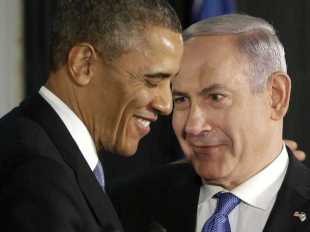
The US has offered to increase military aid to Israel by another $1.5 billion per year to ease tensions over the nuclear deal with Iran, media has reported. Defense Secretary Ash Carter is expected to make the offer during next week’s visit to Tel Aviv.
The proposed increase would see Israel getting an additional squadron of F-35 fighter jets, funding for research and development of missile defense systems, and ammunition to replenish the stocks used in last year’s bombing of Gaza, Israeli sources told Jerusalem Post.
Under the current arrangement, Israel is receiving $3 billion a year, most of which is used to purchase US military hardware such as fighter jets and missile defense systems. Israeli and US officials have been discussing increasing the amount of aid to anywhere between $4.2 and $4.5 billion per year, sources familiar with the talks told the New York Times.
The new arrangement would go into effect in 2018 and last for a decade. Secretary Carter is expected to present the offer to his Israeli counterpart and good friend Moshe Ya’alon, Israeli sources said.
Netanyahu is reportedly reluctant to discuss US aid “at this juncture,” since that would mean giving tacit approval to the agreement the US and five other countries reached with Iran earlier this week.
The Israeli PM called the deal a “historic mistake” and may be hoping that the US Congress will refuse to endorse it before it goes into effect.
Iran and the “P5+1” group – including five permanent UN Security Council members and Germany – signed an agreement on Tuesday to curtail Iranian atomic research over the next 15 years in exchange for lifting nuclear-related sanctions and embargoes.
Israel has already negotiated the purchase of two F-35 squadrons, totaling 33 jets. The first delivery is scheduled for 2016. Much of the rumored increase in US aid may be in the form of additional F-35s, notorious for cost overruns and plagued by performance problems.
According to the Jerusalem Post, the Israeli Air Force is expected to hold a number of exercises with US and European countries for the first time in six years. They will be aimed at “dealing with long-range missile attacks and flights to distant countries.”
However, the paper’s sources noted the US would likely require assurances from Prime Minister Benjamin Netanyahu that Israel would not launch any military operations without first informing Washington.
Meanwhile, Isaac Herzog, leader of the Israeli parliamentary opposition, said Tuesday that he would soon be traveling to the US to “advance a package of security measures to suit the new situation,” according to the New York Times.
Netanyahu won a fourth term as PM in a closely contested election in March, defeating Herzog’s Zionist Union coalition. Sources close to his Likud party have accused the Obama administration of funneling money and advice to Herzog in order to defeat Netanyahu, whose relations with US President Barack Obama have been chilly for years.
US/Israeli/Saudi ‘Behavior’ Problems
By Robert Parry | Consortium News | July 15, 2015
There is a madness in how the mainstream U.S. media presents the world to the American people, a delusional perspective that arguably creates an existential threat to humanity’s survival. We have seen this pattern in the biased depiction of the Ukraine crisis and now in how Official Washington is framing the debate over the Iranian nuclear agreement.
In this American land of make-believe, Iran is assailed as the chief instigator of instability in the Middle East. Yet, any sane and informed person would dispute that assessment, noting the far greater contributions made by Israel, Saudi Arabia and, indeed, the United States.
Israel’s belligerence, including frequently attacking its Arab neighbors and brutally repressing the Palestinians, has roiled the region for almost 70 years. Not to mention that Israel is a rogue nuclear state that has been hiding a sophisticated atomic-bomb arsenal.
An objective observer also would note that Saudi Arabia has been investing its oil wealth for generations to advance the fundamentalist Wahhabi sect of Sunni Islam, which has inspired terrorist groups from Al Qaeda to the Islamic State. Fifteen of the 19 hijackers on 9/11 were identified as Saudis and the U.S. government is still concealing those 28 pages of the congressional 9/11 inquiry regarding Saudi financing of Al Qaeda terrorists.
The Saudis also have participated directly and indirectly in regional wars, including encouragement of Iraq’s invasion of Iran in 1980, support for Al Qaeda-affiliate Nusra Front’s subversion of Syria, and the current Saudi bombardment of Yemen, killing hundreds of civilians, touching off a humanitarian crisis and helping Al Qaeda’s Yemeni affiliate expand its territory.
U.S. Meddling
Then there’s the United States, which has been meddling in the Middle East overtly and covertly for a very long time, including one of the CIA’s first covert operations, the overthrow of Iran’s elected government in 1953, and one of U.S. foreign policy’s biggest overt blunders, President George W. Bush’s invasion of Iraq in 2003.
The Iran coup engendered a deep-seated hatred and suspicion of the U.S. government among Iranians that extends to the present day. And, the Iraq invasion not only spread death and destruction across Iraq but has spilled over into Syria, where U.S. “allies” – Turkey, Saudi Arabia, Qatar and Israel – have been seeking another “regime change” that is being spearheaded by Sunni terrorist groups, including Al Qaeda’s Nusra Front and the Islamic State.
The U.S. government has further aided in the destabilization of the region by flooding U.S. “allies” with powerful military equipment, including aircraft that both Israel and Saudi Arabia have used to bomb neighboring countries.
Yet, in the fantasy land that is Official Washington, the politicians and pundits decry “Iranian aggression,” parroting the propaganda theme dictated by Israeli Prime Minister Benjamin Netanyahu when he spoke before an adoring audience of senators and congressmen at a joint session of Congress on March 3.
This Iranian “bad behavior” includes helping the Iraqi government withstand brutal attacks by the Islamic State and assisting the Syrian government in blocking a major victory for Islamic terrorism that would follow the fall of Damascus. Iran is also being blamed for the Houthi uprising in Yemen although most informed observers believe the Iranian influence and assistance are minimal.
In other words, the neoconservatives who dominate Official Washington’s “group think” may detest Iran’s regional activities since they are not in line with Israeli (and Saudi) desires, but less ideological analysts might conclude that – on balance – Iran is contributing to the stability of the region or at least helping to avert the worst outcomes.
A Lost Mind
The question becomes: Has Official Washington so lost its collective mind that it actually favors Al Qaeda or the Islamic State raising the black flag of Islamic terrorism over Damascus and even Baghdad? Is Iranian assistance in averting such a calamity such a terrible thing?
Apparently yes. Here’s how The Washington Post’s foreign affairs honcho David Ignatius – in a column entitled “Will Tehran Behave?” – describes the geopolitical situation following Tuesday’s signing of a deal to tightly constrain Iran’s nuclear program in exchange for lifting sanctions:
“The problem isn’t the agreement but Iran itself. Its behavior remains defiantly belligerent, even as it signs an accord pledging to be peaceful. Its operatives subvert neighboring regimes, even as their front companies are about to be removed from the sanctions lists. The agreement welcomes Iran to the community of nations, even though its leader proclaims that Iran is a revolutionary cause.
“Obama argues that dealing with a menacing Iran will be easier if the nuclear issue is off the table for the next 10 years. He’s probably right, but the Iran problem won’t vanish with this accord. Iranian behavior in the region becomes the core issue. Having played the dealmaker, Obama must now press Iran to become a more responsible neighbor.”
By the way, I always thought that the United States proclaimed itself “a revolutionary cause.” But here is Ignatius, who is regarded as a “big thinker,” setting the parameters of the acceptable debate about the Iran nuclear deal. It’s all about Iran’s “behavior.”
Ignatius even quotes Netanyahu decrying the danger that, after 10 years, the agreement will give Iran “a sure path to nuclear weapons.” Of course, Ignatius doesn’t bother to note that Israel already has taken its own path to nuclear weapons. That context is almost never mentioned.
Nor does Ignatius admit how he and many of his fellow pundits supported Bush’s invasion of Iraq, which in a normal, parallel universe would disqualify Ignatius and his friends from lecturing anyone about how to “behave.” But in today’s Official Washington, a pre-war endorsement of the Iraq disaster is not a disqualifier but a prerequisite for being taken seriously.
Similarly, The Washington Post’s editorial page, which in 2002-03 eagerly backed Bush’s invasion and routinely asserted as flat fact that Iraq possessed hidden WMD stockpiles, now says the real risk in the Iran deal is, you guessed it, “Iranian behavior.”
The Post says the deal could unleash “a dangerous threshold nuclear state that poses a major threat to the United States and its allies.” And, the Post warns that Iran’s “leaders will probably use” the money from the sanctions relief “to finance wars and terrorist groups in Iraq, Syria, the Gaza Strip, Yemen and elsewhere.”
Step into Crazy Land
Again, to appreciate the Post’s thinking, you have to step into crazy land. In the real Iraq and the real Syria, the Iranians are supporting internationally recognized governments battling against terrorist groups, Al Qaeda’s affiliate and the Islamic State.
In Yemen, Iranian involvement is probably minor at most. Plus, the Houthis are not a terrorist group, but rather an indigenous popular movement that has been fighting Al Qaeda’s terrorist affiliate in Yemen.
While it’s not clear what the Post thinks that Iran is doing in the Gaza Strip, which is under a tight Israeli military blockade, only fully committed neocons would think that the long-suffering people of the Gaza Strip don’t deserve some outside help.
Still, the larger issue for the American people is what to do with this insane political-media system that dominates Official Washington. Either these powers-that-be are detached from reality or they are deceitful propagandists who think they can manipulate us with lies and distortions.
Yet, by creating a false reality, whether from madness or cynicism, this system guides the nation into terrible decision-making. And, given the immense military power of the United States, this long national detour into a dark psychosis of delusion must be addressed or the future of humankind will be put into serious jeopardy.
~
Investigative reporter Robert Parry broke many of the Iran-Contra stories for The Associated Press and Newsweek in the 1980s. You can buy his latest book, America’s Stolen Narrative, either in print here or as an e-book (from Amazon and barnesandnoble.com).
Hassan Nasrallah: Israel is terrorism in essence, and the source of all terrorism in the region
~
Speech of the Secretary General of Hezbollah, Sayed Hassan Nasrallah, on the occasion of International Al-Quds Day (Jerusalem), July 10, 2015.
Transcript:
[…] Israel announces its satisfaction with the civil wars ravaging the entire region, and works through its secret services and in different ways to extend these wars. And unfortunately, many countries have been affected by this disaster, and we see what is now being prepared against Algeria, with unfortunately, once again, a sectarian appearance.
At present, I have no detailed information, I do not claim to be a specialist in this matter, but every time that there were problems in some regions, the media spoke of ethnic differences, or ethnic considerations, namely between Arabs and Amazigh (Berber). But I have seen, in recent days, some foreign (Western) channels broadcast in Arabic [BBC Arabic, France 24, etc.] speak of fights between Malikis and Ibadits. That is to say that the West wants to present this as a denominational and sectarian conflict.
This is what (the West) is implementing in the whole of the region.
During this conference (of the Israeli High Command), the impudence of Israelis went as far as calling for an Arab-Israeli alliance to confront terrorism. Conceive of it: Israel calling for an Arab-Israeli alliance to confront terrorism! And what is terrorism for them? Iran and the Resistance movements. Now, so that the imposture not be too blatant, they put Daech (the Islamic State) with us. But of course they did not include the Al-Nusra Front, or Al-Qaeda or other movements like Ansar Bayt al-Maqdis, or Boko Haram or… or… or…
So this hypocrite Israel claims it shows solidarity with Egypt in the Sinai, and it incites the conflict between Egypt and the Gaza Strip, especially with the Hamas movement. In Syria, Israel presents itself as the protector of the Druze, while it fully supports the Al-Nusra Front and armed takfiri groups that threaten all Syrians, not just the Druze. This is pure hypocrisy. This is hypocrisy and deception.
But regardless of the details, Israel that is the mother of terrorism, the source of terrorism, the terrorist country, the entity that was founded by a terrorist organisation, and, to use philosophical concepts, the only state whose very essence is terrorism, whose nature is terrorism, that Israel presents itself as fighting against terrorism? Do you see what times we are in? The Israel that just a year ago, led the most merciless war and perpetrated the most heinous crimes, war crimes and crimes against humanity in Gaza, so that the reports of international institutions that, at all times, exonerated Israel, have failed, this time, to conceal the truth: the number of women and children killed by Israel, the number of houses destroyed, all the blood of Gaza civilians that was spilt. And after that, it dares to present itself as a civilised country, and claims to be part of a project or an Axis fighting against terrorism. Of course, this is the pinnacle of impudence.
And we must be careful not to mislead ourselves, because unfortunately there are people who may sometimes, because of the impact of terrorism on them, say “What do I care, about Israel? My priority, is this terrorism that is attacking me!” For the existing takfiri terrorism today is among the major adversities faced by our (Muslim) Community. Because (these terrorists) do not fight on a political basis, or for a political project, but on the basis of religious affiliation, or current of thought, or sectarian affiliation. And all the killings that are currently taking place throughout the region are committed on this basis, and not on a political basis or for a political struggle.
Well, the last point that shows that Israel is our enemy, who does it consider to be a threat? Who according to him is a threat? There is only one direction, only one country which represents a threat for Israel: after what happened in Syria, this country (Syria) was removed from the list of threats. All that remains is Iran. The Islamic Republic of Iran. That is why we have seen, during the (Israeli) conference of Herzliya, before, and after, that the spirit of Israel is completely obsessed and captured by Iran, by the Islamic Republic: by its nuclear program, the development of its ballistic capacity, its economy, its democracy, the support of its people for its leaders, the health of its leaders and the health of the country… For everything related to Iran, one can see Israel secure its full attention and work on it, both inside and outside of Iran, and at all international forums. The only target for Israel is the Islamic Republic of Iran, and with it, the Resistance movements.
As for Israel, despite all our consideration and our respect for the Resistance movements and for ourselves (there is no harm if we manifest our respect for ourselves!), the Resistance movements have not reached the stage where they are, from Israel’s point of view, an existential danger. It is not shameful to say the truth, and that is the truth. Yes, the Resistance movements now represent a strategic danger, but they have not reached the point of representing an existential threat (to Israel). Today, on the whole of the face of the Earth, the only state, the only entity, the only thing that is considered by Israel as an existential danger to them is the Islamic Republic of Iran. These are undeniable truths. If someone claims things are different, may he come (and expose his analysis to us).
And this is why Israel incites the entire world against Iran: the United States, Congress… Netanyahu is ready to ruin his relations with the White House by urging Congress against Iran… Israel incites the Arabs (against Iran)… And many of these Arab regimes already have, by nature, such calculations, such a mentality, such a vision (hostile to Iran). This is the reality.
Question: does this not represent, today (I raise this point), if we calm somewhat, as Arabs, as Muslims, as Palestinians, as peoples of the region, if someone relaxes a bit and calmly reflects, away from the bullets, the suffering, the screaming, the problems and the Arab channels, and wonders seriously: Why? Why Israel… In all the Arab and Islamic world, worldwide, with its billion and a half Muslims, its states, its armies, its peoples… Israel fears no one, cares about no one, does not pay attention to anyone except Iran. Why Iran? Should we not pose this question on the occasion of the International Day of Al-Quds (Jerusalem)? Why this total hostility against Iran on the part of the Zionists? Why do we see nothing of this sensitivity, this preoccupation, this anxiety, this fear, this precaution, for example on the part of Israel with regard to Saudi Arabia? Or in respect to any other Arab regime? So that no one say that today, Sayed (Nasrallah) was bitter against Saudi Arabia. No, it is a logical and natural question: why?
Today, at this very moment, the Arab countries and the Arab armies buy billions of dollars of aircraft, missiles, artillery, anti-tank weapons, long-range missiles… Israel does not care in the least because there is a certainty, a confidence, a guarantee, not just a written commitment: they have absolute confidence and certainty in this official Arab mentality, and these official Arab regimes, to the point of having no need for guarantees or written commitments. And experience is the best proof: for 67 years, what for example have the Arabs done, most of them? In short, because Israel knows with certainty that the official Arab regimes have sold them Palestine, Al-Quds (Jerusalem) and the Palestinian people. And the proof is what has happened for 67 years and to this day.
Well, this year, they paid a visit to Gaza: have Gazan homes been rebuilt? What is the situation of the wounded of Gaza? Where is the blockade of Gaza? How are the people of Gaza? If a small portion of the billions of dollars being spent on the war against Yemen, the war against Syria, the war against Iraq and the repression of the populations, was spent on Gaza, would we not today have Gaza in a more acceptable situation? Are they not part of Palestine? Are they not part of the (Islamic) Community? And forgive me for expressing myself again like this, but today we are forced to speak in these terms, are they not a part of the Sunni community? Are they not Muslims, who fast and pray? Why are they abandoned? Because there is an official Arab decision to sell Palestine (to Israel). Palestine has no existence (for them). And the Palestinians are subjected to torture and live in ruins because of it.
And because Israel also knows that the takfiri project, which is sponsored by some Arab countries, does not care about Palestine and Al-Quds (Jerusalem), and that its battle is on other fields, and that this takfiri project completely serves Israeli interests and destroyed for them, without them making any effort, Syria and Iraq, it participated in the destruction of Yemen and spreads sectarian and ethnic conflicts among all Muslims and Christians, tearing apart our (Islamic) Community, and tearing through the national and social fabric in each of our countries, and freely (for Israel).
Who then still carries the flag (of the Palestinian cause)? I do not say this to praise Iran, but to come to a stance. I request a stance to be taken. The one who continues to carry the flag, to face the enemy and refuse to recognise the very existence of this entity, even though the negotiations and the agreement on the nuclear issue should be stopped because of this, whether the current discussions in Vienna that last longer than expected or the ones to come. You will remember that Netanyahu asked that the agreement include the recognition of the existence of Israel by Iran. And I tell you: if the entire nuclear dossier should be closed and Iran be given everything it wanted on the nuclear issue, including what she did not even dare to dream, if the condition was (only) the acknowledgment by Iran of Israel’s existence, the Islamic Republic of Iran, the Republic of Imam Khomeini, under the leadership of His Eminence Imam Khamenei, through his government, the Chamber of Deputies and his people, would never accept such a clause, as Iran would leave its religion by doing so. They know that this is Iran.
And because Iran continues to face the enemy, it is Iran who support the Axis of Resistance, its states, its peoples and its countries, politically, morally, materially, financially, in terms of arms, on the roof and in full sunlight (in plain sight). And this is something that nobody dares to do, or, so as not to exaggerate, that many are afraid to do. Despite the severe sanctions that Iran suffered for over 30 years, and the threat of permanent war and bombing of its facilities. Because Iran is such a threat to Israel, and for the project of American domination over the region, military wars have been fought against it in the past, and media wars, political, psychological and economic wars are conducted against it, wars involving the instruments and allies of the United States in the region, who constituted by their acts the best support for Israel for decades.
On this International Day of Al-Quds (Jerusalem), allow me to speak frankly with Muslims, Christians, Arabs, Palestinians, with the Resistance movements, and whoever supports and sustains the Palestinian cause: you cannot be with Palestine but by being alongside the Islamic Republic of Iran. And if you’re the enemies of the Islamic Republic of Iran, then you are the enemies of Palestine and Al-Quds (Jerusalem). Why is this? These are not empty slogans. Because the only hope remaining after God the Exalted and Most High, to recover Palestine and Al-Quds (Jerusalem), is this Islamic Republic, its help and support to the people and the Resistance movements in the region, and primarily to the Palestinian people. As long as the world is divided into poles, military camps and positions, we must be clear and straightforward: if we want to be serious and sincere, if we leave aside the partisanship, if we want to be logical, this is the logical vision: this enemy (Israel) unanimously recognises what I say, there is no one in Israel that says anything else about the Islamic Republic of Iran.
As for attempts to escape this historic and decisive stance on the pretext of the “Persian project”… There is no “Persian project”! It is deception to keep people away from a genuine and sincere ally of the Arabs and Muslims and all peoples of the region, namely Iran. Everything concerning a Safavid project is nothing but empty words, exhumed from ancient history. Everything about evoking an ostensible Shiite crescent (is futile)… And besides, Iran is now accused in Yemen, but the (alleged) crescent would be distorted by such a movement. The crescent was to be Iran-Iraq-Syria-Lebanon: how would the crescent reach Yemen? Who are they trying to fool? These are just lies concocted by the corrupt official Arab mentality which has abandoned Palestine and Al-Quds (Jerusalem), and if anyone approaches to lend a helping hand to Palestine and Al-Quds, they will present them as an enemy, as evidenced by the fact that the Shah (of Iran) was not their enemy when he was an ally of Israel [although he was also Shiite]. But now they want to present Iran as an enemy. How to achieve this? Pretend that there is a Shiite crescent, they want to spread Shiism, it is a Persian project, it is a Safavi project, etc. These are absurd and empty statements.
[…]
Translated from Arabic by Sayed Hasan
Translated from French by Jenny Bright
The World Rebukes Netanyahu
By Robert Parry | Consortium News | July 14, 2015
In a rare rebuke to his bullying, Israeli Prime Minister Benjamin Netanyahu failed to stop the United States and five other world powers from reaching an agreement to constrain but not eliminate Iran’s nuclear program. Yet, Netanyahu still is dominating how the U.S. public and congressional debate is being framed, with Iran accused of regional “aggression” in four countries.
On Tuesday, a recurring theme on U.S. news broadcasts, such as Andrea Mitchell’s MSNBC program, was that any lifting of economic sanctions against Iran will give it more money to engage in trouble-making in the Middle East with references to four nations – Iraq, Syria, Lebanon and Yemen – a central theme in Netanyahu’s speech on March 3 to a joint session of the U.S. Congress.
To repeated standing ovations from U.S. senators and congressmen, Netanyahu declared: “In the Middle East, Iran now dominates four Arab capitals, Baghdad, Damascus, Beirut and Sanaa. And if Iran’s aggression is left unchecked, more will surely follow. So, at a time when many hope that Iran will join the community of nations, Iran is busy gobbling up the nations. We must all stand together to stop Iran’s march of conquest, subjugation and terror.”
Netanyahu’s reference to “Iran’s aggression,” which is now becoming a conventional-wisdom talking point in Official Washington, was curious since Iran has not invaded another country for centuries. In 1980, Saddam Hussein’s Iraq – at the urging of Saudi Arabia – invaded Iran. But Iran has not invaded any of the four countries that Netanyahu cited.
One of Netanyahu’s citations of Arab cities supposedly conquered by Iran was particularly strange: Baghdad, which is the capital of Iraq where the U.S. military invaded in 2003 to overthrow Saddam Hussein and his Sunni-dominated government, on Netanyahu’s recommendation. In other words, Iraq was conquered not by Iranian “aggression” but by U.S. aggression with the support of Israel.
After the Iraq invasion, President George W. Bush installed a Shiite-dominated government which then developed friendly ties to Iran’s Shiite government. So, whatever influence Iran has in Baghdad is the result of a U.S. invasion that Netanyahu personally encouraged.
More recently, Iran has helped the embattled Iraqi government in its struggle against the murderous Islamic State militants who seized large swaths of Iraqi territory last summer. Indeed, Iraqi officials have credited Iran with playing a crucial role in blunting the Islamic State, the terrorists whom President Barack Obama has identified as one of the top security threats facing the United States.
So, in the current Iraqi fight against the head-chopping Islamic State, Iran and the United States are on the same side. Yet, Netanyahu calls Iran’s help “aggression” – and American talking heads repeat that refrain.
Netanyahu also cited Damascus, where Iran has aided the Syrian government in its struggle against the Islamic State and Al-Qaeda’s Nusra Front. That means that Iran is assisting the internationally recognized government of Syria hold off two major terrorist organizations. By contrast, Israel and Saudi Arabia have provided direct and indirect help at least to Nusra. [See Consortiumnews.com’s “Did Money Seal Israel-Saudi Alliance?”]
The Israeli prime minister also mentioned Beirut, Lebanon, and Sanaa, Yemen, but those were rather bizarre references, too, since Lebanon is governed by a multi-ethnic arrangement that includes a number of religious and political factions. Hezbollah is one and it has close ties to Iran, but it is stretching the truth to say that Iran “dominates” Beirut or Lebanon.
Similarly, in Sanaa, the Houthis, a Shiite-related sect, have taken control of Yemen’s capital and have reportedly received some help from Iran, but the Houthis deny those reports and are clearly far from under Iranian control. The Houthis also have vowed to work with the Americans to carry on the fight against Yemen’s Al-Qaeda affiliate, which has benefitted from a brutal Saudi bombing campaign against Houthi targets, an act of real aggression that has killed hundreds of civilians and provoked a humanitarian crisis.
Indeed, Iran and these various Shiite-linked movements have been among the most effective in battling Al-Qaeda and the Islamic State, while Israel’s Saudi friends have been repeatedly linked to funding and supporting these Sunni terrorist organizations.
So, there is little truth and much exaggeration to Netanyahu’s depiction of what is going on in the Middle East. Yet, the U.S. mainstream media mindlessly reprises Netanyahu’s falsehood about Iran “gobbling up” nations.
~
Investigative reporter Robert Parry broke many of the Iran-Contra stories for The Associated Press and Newsweek in the 1980s. You can buy his latest book, America’s Stolen Narrative, either in print here or as an e-book (from Amazon and barnesandnoble.com).
Beneath the Negotiating Endgame in Vienna: Hillary Mann Leverett and Seyed Mohammad Marandi
~
By Flynt Leverett and Hillary Mann Leverett | Going to Tehran | July 12, 2015
As the world waits to see if the P5+1 and Iran can, in fact, conclude a comprehensive nuclear deal, it is important to step back from the not just day-by-day, but minute-by-minute coverage of comings and goings at the Palais Coburg in Vienna and think about what is really at stake in the negotiating endgame. To this end, we post here a very good discussion of these issues by Hillary and the University of Tehran’s Seyed Mohammad Marandi on CCTV’s The Heat, see here or click on videos above. (Like Mohammad, Flynt is currently in Vienna for the nuclear talks.)
The most critical of the remaining issues to be resolved by the parties relate to the terms of a new United Nations Security Council resolution that would negate previous Security Council resolutions dealing with the Iranian nuclear issue, remove Security Council-authorized international sanctions against Iran, and formally start implementation of a comprehensive nuclear deal. As both Hillary and Mohammad point out, underneath discussions about the modalities for removing international sanctions, whether and how to lift the conventional arms embargo against Iran, and related matters are more fundamental issues:
–Can the United States, for its own interests, abandon its increasingly self-damaging quest to dominate the Middle East and adopt a more reality-based strategy toward this critical part of the world?
–Can the United States, for its own interests, finally accept the Islamic Republic of Iran as a legitimate political order representing legitimate national interests, and genuinely come to terms with this already indispensable and still rising actor in the Middle East?
–In the process, can the United States, for its own interests, replace its longstanding reliance on Israel and Saudi Arabia as its key “partners” in the Middle East with a more balanced approach characterized by strategically-grounded diplomacy with all major regional players?
Let’s see what happens in Vienna.
Huckabee’s Use of “Daisy” Ad Totally Undermined by Original
By Sam Husseini | July 12, 2015
Mike Huckabee just released an ad that uses footage from the Johnson “Daisy” ad.
It states in text at the end: “A threat to Israel is a threat to America. Stand with Israel. Reject a nuclear Iran.”
What nobody (according to a Google News search I just did) is noting is that the original ad totally undermines Huckabee’s presumed case.
In the original ad, after zooming into the girl’s eye and showing the countdown and nuclear explosion, it features Johnson’s voice: “These are the stakes: to make a world in which all of God’s children can live, or to go into the dark. We must either love each other. Or we must die.”
See the original ad:
The new Huckabee deformed ad only seems to make sense to some because the entire political establishment — Democrats as well as Republicans — ignores the reality of Israel’s menacing yet unacknowledged nuclear threat to the planet.
The original ad’s subtext was that Goldwater could not be trusted to have his finger on the button. The Huckabee ad seems to poorly attempt to use the same logic on Iran, but it more obviously applies to Netanyahu — and now, Huckabee as they champion Israel’s nuclear domination of the region.
Indeed. These ARE the stakes: to make a world in which ALL of God’s children can live, or to go into the dark. We MUST either LOVE each other. Or we must DIE.
Conspiracy against Syria & Iran initiated in 2007

Introduction by Brandon Martinez – Non-Aligned Media
Here are excerpts from a 2007 report from award winning journalist Seymour Hersh. His report, published in the New Yorker under the heading “The Redirection,” outlines in clear language that the conspiracy to topple the governments of Syria and Iran, specifically by sponsoring terrorist groups as mercenaries against them, was conceived and initiated during the Bush years, and began to take shape in earnest in 2007.
In the past few months, as the situation in Iraq has deteriorated, the Bush Administration, in both its public diplomacy and its covert operations, has significantly shifted its Middle East strategy. The “redirection,” as some inside the White House have called the new strategy, has brought the United States closer to an open confrontation with Iran and, in parts of the region, propelled it into a widening sectarian conflict between Shiite and Sunni Muslims.
To undermine Iran, which is predominantly Shiite, the Bush Administration has decided, in effect, to reconfigure its priorities in the Middle East. In Lebanon, the Administration has coöperated with Saudi Arabia’s government, which is Sunni, in clandestine operations that are intended to weaken Hezbollah, the Shiite organization that is backed by Iran. The U.S. has also taken part in clandestine operations aimed at Iran and its ally Syria. A by-product of these activities has been the bolstering of Sunni extremist groups that espouse a militant vision of Islam and are hostile to America and sympathetic to Al Qaeda.
…
The new American policy, in its broad outlines, has been discussed publicly. In testimony before the Senate Foreign Relations Committee in January, Secretary of State Condoleezza Rice said that there is “a new strategic alignment in the Middle East,” separating “reformers” and “extremists”; she pointed to the Sunni states as centers of moderation, and said that Iran, Syria, and Hezbollah were “on the other side of that divide.” (Syria’s Sunni majority is dominated by the Alawi sect.) Iran and Syria, she said, “have made their choice and their choice is to destabilize.”
Some of the core tactics of the redirection are not public, however. The clandestine operations have been kept secret, in some cases, by leaving the execution or the funding to the Saudis, or by finding other ways to work around the normal congressional appropriations process, current and former officials close to the Administration said.
…
The policy shift has brought Saudi Arabia and Israel into a new strategic embrace, largely because both countries see Iran as an existential threat. They have been involved in direct talks, and the Saudis, who believe that greater stability in Israel and Palestine will give Iran less leverage in the region, have become more involved in Arab-Israeli negotiations.
The new strategy “is a major shift in American policy—it’s a sea change,” a U.S. government consultant with close ties to Israel said. The Sunni states “were petrified of a Shiite resurgence, and there was growing resentment with our gambling on the moderate Shiites in Iraq,” he said. “We cannot reverse the Shiite gain in Iraq, but we can contain it.”
…
This time, the U.S. government consultant told me, Bandar and other Saudis have assured the White House that “they will keep a very close eye on the religious fundamentalists. Their message to us was ‘We’ve created this movement, and we can control it.’ It’s not that we don’t want the Salafis to throw bombs; it’s who they throw them at—Hezbollah, Moqtada al-Sadr, Iran, and at the Syrians, if they continue to work with Hezbollah and Iran.”
In the past year, the Saudis, the Israelis, and the Bush Administration have developed a series of informal understandings about their new strategic direction. At least four main elements were involved, the U.S. government consultant told me. First, Israel would be assured that its security was paramount and that Washington and Saudi Arabia and other Sunni states shared its concern about Iran.
Second, the Saudis would urge Hamas, the Islamist Palestinian party that has received support from Iran, to curtail its anti-Israeli aggression and to begin serious talks about sharing leadership with Fatah, the more secular Palestinian group. (In February, the Saudis brokered a deal at Mecca between the two factions. However, Israel and the U.S. have expressed dissatisfaction with the terms.)
The third component was that the Bush Administration would work directly with Sunni nations to counteract Shiite ascendance in the region.
Fourth, the Saudi government, with Washington’s approval, would provide funds and logistical aid to weaken the government of President Bashir Assad, of Syria. The Israelis believe that putting such pressure on the Assad government will make it more conciliatory and open to negotiations. Syria is a major conduit of arms to Hezbollah.
US-Israeli Imperialists Plot Downfall of Syria and Iran

By Brandon Martinez | Non-Aligned Media | July 9, 2015
The United States has been running a particularly reckless and transparent bluff on the world.
‘We must defeat ISIS’ has been the repetitive mantra bellowed from pulpits and podiums by deceitful US officials. But this bit of shameless Orwellian newspeak is coming from the very same rogue policy makers who have been the primary source of arms and largesse to that group and its sordid affiliates across Syria, Libya, Iraq and elsewhere.
Republican Senator Rand Paul called his own party’s bluff in a summer 2014 interview with CNN, telling the incompetent host that “we [the US government] are allied with ISIS in Syria.”[1] “[ISIS] would not be empowered in Iraq if we hadn’t been providing them a safe haven in Syria by arming their allies,” the Senator said, adding that “we are where we are because we armed the Syrian rebels,” the preponderance of whom are Wahhabi-Salafist extremists. Paul recently doubled down on that line of reasoning, informing another interviewer in May 2015 that “hawks in my party” are responsible for the rise of ISIS because of their purposefully intransigent policy of “distributing arms indiscriminately” to Syrian and Libyan militants in their fanatical drive to depose Gaddafi and Assad.[2]
Paul’s words were confirmed by a recently unearthed US Defense Intelligence Agency report that, in true Machiavellian style, welcomed an ISIS-controlled “Salafist principality in eastern Syria” to serve as a buffer to “isolate the Syrian regime” and roll back Iran. The US defense analysts, writing at the outset of the rebel insurgency in Syria in 2012, acknowledged that the anti-Assad coalition of militants that Washington was enthusiastically supporting were dominated by Salafist extremist elements linked to the Muslim Brotherhood and al-Qaeda.[3]
A June 2015 Washington Post report revealed the extent of the CIA’s covert campaign to train, arm and deploy mercenaries against Assad in Syria, pegging it as one of the Agency’s “largest covert operations, with a budget approaching $1 billion a year.”[4] The article’s authors Greg Miller and Karen DeYoung write:
“At $1 billion, Syria-related operations account for about $1 of every $15 in the CIA’s overall budget, judging by spending levels revealed in documents The Washington Post obtained from former U.S. intelligence contractor Edward Snowden.
“U.S. officials said the CIA has trained and equipped nearly 10,000 fighters sent into Syria over the past several years — meaning that the agency is spending roughly $100,000 per year for every anti-Assad rebel who has gone through the program.
“The CIA declined to comment on the program or its budget. But U.S. officials defended the scale of the expenditures, saying the money goes toward much more than salaries and weapons and is part of a broader, multibillion-dollar effort involving Saudi Arabia, Qatar and Turkey to bolster a coalition of militias known as the Southern Front of the Free Syrian Army.
“Much of the CIA’s money goes toward running secret training camps in Jordan, gathering intelligence to help guide the operations of agency-backed militias and managing a sprawling logistics network used to move fighters, ammunition and weapons into the country.”
After weeding through all the phony anti-ISIS bluster emanating from the White House, it becomes clear that Washington’s overarching strategy is to play all Muslim groups and factions in the Middle East off against each other in what amounts to a sinister divide and conquer gambit that ultimately serves the interests of Israel. In 2007, years before the present crisis in Syria and Iraq, Hezbollah chief Hassan Nasrallah identified this genocidal US/Israeli-led scheme against the region in an interview with American journalist Seymour Hersh. He told the award-winning reporter that the Bush administration was working in tandem with Israel to instigate a cataclysmic civil war – something akin to the Thirty Years’ War in Europe – in the Muslim world. Nasrallah said that this fitna, an Arabic term which means “insurrection and fragmentation within Islam,” was being deliberately fomented by US and Israeli intelligence agencies to significantly weaken the region and allow the Zionist-American imperialists to achieve full-spectrum dominance.[5]
According to Hersh’s excellent March 2007 reportage published in the New Yorker under the title “The Redirection,” the US, Israel and Saudi Arabia began laying the groundwork for a rebel invasion of Syria that same year.[6] The US and Israel planned to enlist radical Wahhabi-Salafist elements backed by Saudi Arabian largesse as proxy mercenaries against Damascus in a wider effort to undermine Assad and precipitate the demise of Iran. Hersh outlined the criminal plan in these terms:
“To undermine Iran, which is predominantly Shiite, the Bush Administration has decided, in effect, to reconfigure its priorities in the Middle East. In Lebanon, the Administration has cooperated with Saudi Arabia’s government, which is Sunni, in clandestine operations that are intended to weaken Hezbollah, the Shiite organization that is backed by Iran. The U.S. has also taken part in clandestine operations aimed at Iran and its ally Syria. A by-product of these activities has been the bolstering of Sunni extremist groups that espouse a militant vision of Islam and are hostile to America and sympathetic to Al Qaeda.”[7]
Citing officials close to the Bush administration, Hersh explained that the CIA sought to employ radical anti-Syrian militants clandestinely “by leaving the execution or the funding to the Saudis, or by finding other ways to work around the normal congressional appropriations process.” Hersh’s sources told him that “the Saudi government, with Washington’s approval, would provide funds and logistical aid to weaken the government of President Bashir Assad, of Syria.” Using the Saudis as a conduit would, in turn, give Washington plausible deniability. “The Israelis,” Hersh wrote, “believe that putting such pressure on the Assad government will make it more conciliatory and open to negotiations.”[8]
In an article titled “The Pentagon plan to ‘divide and rule’ the Muslim world,” security scholar Nafeez Ahmed highlighted the contents of a 2008 RAND Corporation report which openly elucidated this belligerent strategy of tension.[9] The Pentagon-backed study group advocated playing all sides and every side in the Muslim world against one another in order to fracture and disorient opposition to Western and Israeli imperialism in the region. The Orwellian strategists identified essentially all Arabs and Muslims – Salafists, Shiites, Sunnis, secular Arab nationalists, communists, Baathists, etc. – as adversaries to be pitted against each other. Already-existing rivalries and fissures would be stoked up and exploited to their maximum potential.
RAND’s divide and conquer objectives are eerily similar to the vile prescriptions of Oded Yinon, an Israeli strategist who authored a geopolitical screed entitled “A Strategy for Israel in the 1980s,” published in 1982, which called for the break-up of all Arab states surrounding Israel into fragmented polities along ethnic and religious lines. “Every kind of inter-Arab confrontation will assist us in the short run,” Yinon expounded in his Machiavellian manifesto, “and will shorten the way to the more important aim of breaking up Iraq into denominations as in Syria and in Lebanon.”[10] The Israeli militarist gleefully cited the Iran-Iraq war as a prime example of the type of internecine conflict Israel hopes to ignite, exacerbate and capitalize on to achieve its Zionist imperium. In a June 2014 television interview, Israeli Prime Minister Benjamin Netanyahu, a dedicated Jewish imperialist, explicated his Yinonite ideology, emphasizing Tel Aviv’s desire to have Sunni and Shiite Muslims fight each other and thereby cancel each other out while Israel reaps the spoils.[11]
It’s impossible to ignore the primacy of Israel in all of this unscrupulous intrigue. Netanyahu’s Likud Party is not only committed to eliminating what’s left of Palestine, but they also harbor expansionistic aspirations that go beyond Israel’s current borders – what some have called “Greater Israel.” Netanyahu’s seminal role in conceiving the rancid doctrines of the ‘war on terror’ itself, alongside the inescapable reality that the neocons who dominate the US foreign policy establishment are first and foremost loyal to Israel, is paramount in understanding the ‘method to the madness.’
Dismembering Syria
While Western-backed ISIS militants behead their way to Damascus, US foreign policy hawks are now plotting the literal dismemberment of Syria as a whole in accordance with the Zionist neocons’ balkanization plan.
In its latest release, the Brookings Institution, an influential pro-Israel, pro-US Empire think tank, has audaciously called for the break-up of Syria, advancing an incremental strategy to facilitate a stealth US invasion and takeover of the Arab country in the service of Israel.
In the June 2015 report titled “Deconstructing Syria: Towards a regionalized strategy for a confederal country,”[12] neocon ideologue Michael O’Hanlon outlines his hopes for a weakened “confederal” Syria “made up of autonomous zones rather than being ruled by a strong central government.” (Pg. 3) Such “safe zones” are to be controlled by US Special Forces and their trained foot-soldiers of the “Syrian opposition.” Specifically, O’Hanlon calls for the US and its regional proxies,
“to help defend local safe areas using American airpower as well as special forces support once circumstances are conducive, the Syrian opposition fighters would then establish safe zones in Syria that they would seek to expand and solidify. The safe zones would also be used to accelerate recruiting and training of additional opposition fighters who could live in, and help protect, their communities while going through basic training.” (Pg. 3)
O’Hanlon admits that the US has spent upwards of a billion dollars in “arms flows and other assistance to [Syrian militants]” and later suggests that the so-called ‘moderates’ are ineffective fighters, “a collection of groups with no unity, common vision, or survivability on the battlefield.” O’Hanlon proposes that moderation would not be a prerequisite for US support, something that has never been an issue for Washington anyway which has been covertly sponsoring some of the most unsavory characters imaginable.
Later in the document O’Hanlon identifies the anti-Assad orientation of the strategy, envisioning the “safe zones” as buffers to launch operations against Assad and to eventually push the Syrian president out of power. He writes:
“The plan would be directed in part against Assad. But it would not have the explicit military goal of overthrowing him, at least not in the first instance or the near term. Rather, it would seek to constrict the territory that he governs. And if he delayed too long in accepting a deal for exile, he could inevitably face direct dangers to his rule and even his person. The plan would still seek his removal, but over a gradual time period that allowed for a negotiated exit if he were smart enough to avail himself of the opportunity.” (Pg. 10)
O’Hanlon ponders the “outright partition of the country.” (Pg. 11) This partition scheme is evidently aimed at pressuring Assad and perhaps provoking him to strike at one of the US-controlled “safe zones” which would, O’Hanlon contends, give Washington an excuse to attack Damascus directly. “If Assad sought to attack the enclaves,” writes O’Hanlon, “where moderate forces were being aided by American and other outside powers … the United States would need to be ready to escalate quickly and powerfully—even disproportionately.” (Pg. 13)
This Brookings plan typifies an advanced phase of the destruction of Syria, something in the works since at least 2007. Washington’s anti-Syrian, anti-Iranian and broader anti-Muslim agenda clearly transcended both the Bush and Obama administrations, underscoring the existence of a permanent ‘shadow government’ – the neocon-dominated Military-Industrial Complex – that stays in place behind the curtain no matter who is elected. Obama’s ascendance to the White House was merely a public relations facelift, serving to make the American-Zionist Empire’s bloodthirsty aims more palatable to a war-weary public.
NOTES
[1] https://www.youtube.com/watch?v=0e_4tUYc6ag
[2] “Rand Paul says GOP hawks ‘created’ ISIS,” New York Post, May 27, 2015. http://nypost.com/2015/05/27/rand-paul-says-gop-hawks-created-isis/
[3] Brad Hoff, “2012 Defense Intelligence Agency document: West will facilitate rise of Islamic State ‘in order to isolate the Syrian regime’,” The Levant Report, May 19, 2015. http://levantreport.com/2015/05/19/2012-defense-intelligence-agency-document-west-will-facilitate-rise-of-islamic-state-in-order-to-isolate-the-syrian-regime/
[4] Greg Miller and Karen DeYoung, “Secret CIA effort in Syria faces large funding cut,” Washington Post, June 12, 2015. http://www.washingtonpost.com/world/national-security/lawmakers-move-to-curb-1-billion-cia-program-to-train-syrian-rebels/2015/06/12/b0f45a9e-1114-11e5-adec-e82f8395c032_story.html
[5] Seymour Hersh, “The Redirection,” The New Yorker, March 5, 2007. http://www.newyorker.com/magazine/2007/03/05/the-redirection?currentPage=all
[6] Ibid.
[7] Ibid.
[8] Ibid.
[9] Nafeez Ahmed, “The Pentagon plan to ‘divide and rule’ the Muslim world,” Middle East Eye, April 3, 2015. http://www.middleeasteye.net/columns/pentagon-plan-divide-and-rule-muslim-world-1690265165
[10] http://www.scribd.com/doc/155650153/A-Strategy-for-Israel-in-the-Nineteen-Eighties-Oded-Yinon#scribd
[12] Michael O’Hanlon, “Deconstructing Syria Towards a regionalized strategy for a confederal country,” Brookings Institute, June 2015. http://www.brookings.edu/~/media/research/files/papers/2015/06/23-syria-strategy-ohanlon/23syriastrategyohanlon.pdf
Copyright 2015 Brandon Martinez
Israel arming, providing recruits for Takfiri militants in Syria: Report

Israeli soldiers speaking with foreign-backed militants near the Israeli occupied Golan heights in Syria
Press TV – July 9, 2015
A recent report has disclosed that the Israeli regime has been providing recruits as well as military equipment to Takfiri militant groups operating inside Syria in a bid to overthrow the government of President Bashar al-Assad.
Classified documents and files lately obtained by unknown hackers from the computers of Israeli military officials suggest that the Tel Aviv regime hired Syrian and Lebanese nationals to facilitate the transfer of weapons to anti-Damascus terrorists, Lebanon-based and Arabic-language newspaper al-Akhbar reported on Thursday.
The report said that Israeli agents even notified foreign-sponsored militants of the locations that Western military aircraft were to bombard in Syria as part of the US-led coalition against the ISIL terrorist group long before the aerial assaults were conducted.
It also pointed to the close liaison between Israeli authorities and high-profile ISIL commanders.
Syria’s official SANA news agency reported on May 23 that a wounded 27-year-old Takfiri militant had been taken to the Baruch Padeh Medical Center in the northern Israeli settlement of Poriya, located approximately 6 kilometers (3.7 miles) south of the coastal Israeli city of Tiberias, for treatment.
The report added that the Israeli medical center has accepted and treated nearly 175 anti-Syria Takfiris ever since foreign-sponsored militancy broke out in Syria in March 2011.
According to the documents from Israeli hospitals, until last September, Israel’s military had paid USD 10 million from its budget for the treatment of the terrorists injured during clashes with Syrian government forces.
The documents further revealed that a total of 398 injured militants had also been treated at Galil Hospital in Israel’s northern coastal city of Nahariya in the past couple of years. Another hospital in the city of Safed had provided treatment for hundreds of other Takfiri terrorists.
Damascus says Tel Aviv and its Western and regional allies are aiding Takfiri militant groups operating inside Syria.
The Syrian army has repeatedly seized huge quantities of Israeli-made weapons and advanced military equipment from the foreign-backed militants inside Syria.
The conflict in Syria, which started in March 2011, has reportedly claimed more than 230,000 lives up until now.
Nuclear Deal-Making in Vienna and Tehran
By Kaveh L. Afrasiabi | Iran Diplomacy | July 5, 2015
The latest reports from Vienna indicate that the negotiators from Iran and the “5 +1” nations, i.e., UN Security Council’s Permanent Powers plus Germany, have reached a tentative deal and are only inches away from turning it into the final agreement.
According to a source close to the Iran negotiation team, as of July 4th, there were still some residual issues regarding the sanctions, the Additional Protocol, and what is referred to as the “Possible Military Dimension (PMD),” but none of these at this stage is going to “break the deal” and are expected to be resolved in the next few days.
One of the reasons for the rapid progress of the Vienna talks has to do with the important Tehran visit of the head of International Atomic Energy Agency (IAEA), which was reportedly successful in closing the gaps between Iran and the agency, which has repeatedly confirmed the absence of any evidence of diversion of nuclear material in Iran and, yet, insisted that it is unable to verify the complete peacefulness of Iran’s civilian program in light of the PMD issues.
From Iran’s vantage point, however, the PMD has been exploited as a license to access Iran’s military secrets, which is why it was important for Mr. Amano to meet with Iranian leaders last week and reach a new understanding on the future scope of IAEA’s inspection access. Certainly, the U.S.’s unreasonable demand for inspections “anytime, anywhere,” is unacceptable and by now the Americans have realized it and retreated from what could have been a deal-breaker.
On the issue of sanctions, Iran has rightly insisted on the concept of simultaneity, so that the other side will not have the luxury of playing with delays after Iran’s fulfillment of its obligations. With respect to the timeline for the removal of sanctions, there would be a UN Security Council resolution that would render moot the existing sanctions resolutions on Iran. By all indications, this is a tremendous diplomatic victory for Iran, thus short cutting a potentially arduous and lengthy process.
Henceforth, with the imminent announcement of a final agreement in Vienna, the stage is set for a tremendous breakthrough in a nuclear stalemate that has blocked normal relations between Iran and the West. In addition to releasing the potential for rapid growth in market relations between the two sides, the final nuclear agreement also carries the seed of “linkage” to anti-terrorism, deemed as a “common threat” by Iran’s lead negotiator, foreign minister Javad Zarif, who has exhorted the West to wrap up the nuclear talks so that both sides can focus on a hitherto missing comprehensive strategy to defeat the growing menace of terrorism, reflected in the on-going barbaric atrocities of the self-declared Islamic State (Daesh).
In terms of the reaction by the conservative Arab bloc led by Saudi Arabia, the final nuclear deal ought to bring a new sense of realism to Riyadh, which has been led astray by a senseless, even genocidal, unilateral war on Yemen, which must be brought to an end for the sake of millions of suffering people in Yemen as well as regional stability. Some of the Persian Gulf Cooperation Council states such as UAE are eyeing to rip huge economic benefits from the lifting of Iran sanctions and, therefore, it is futile for Saudi Arabia to continue with its anti-deal approach that is bound to put it at odds with some PGCC member states.
Israel, on the other hand, is expected to continue with its current negative campaign against the deal, hoping that the U.S. Congress would ruin it, yet even the Republican opponents of the deal have recently conceded that they lack the votes to override a presidential veto. Hopefully, the nuclear deal will spawn a new era of attention on Israel-Palestinian issue, which has been quietly festering and requires serious global focus, which has to some extent been deflected so far due to the Iran nuclear crisis.
While it remains to be seen what a final nuclear agreement would look like in the technical details, it is a sure bet that it will be complex, multi-layered, and fully dependent on the faithful implementation by both sides, which is why a special dispute resolution commission will be handling the issues of potential non-compliance. A similar panel set up by the 2013 Geneva Agreement was highly successful in this regard and has thus set a positive precedent. One of Iran’s informal complaints during the timeline of the Geneva agreement has been, however, that the U.S. had officially agreed to certain provisions, such as the lifting of restrictions on shipping insurance, and yet would send envoys to Europe to discourage the Europeans from entering into new contracts with Iran. Such “double dealings” with Iran must stop after a final deal is signed, which will sound the death knell for the unjust sanctions regime on Iran.
Featured Video

AIDS Inc. by Gary Null (2007)
or go to
Aletho News Archives – Video-Images
From the Archives
Clash of Civilization, Iran Part II
By Jamal Kanj – Intifada-Palestine.com – January 14, 2011
Israel’s survival kit is: perpetuate conflict, insecurity to rationalize collective hate and finally playing victim.
Devoid of conflict, Israel implodes internally; without hate, Zionism loses its justification; and playing eternal victim to continue blackmailing the West. Absence of this holy trinity, Israel ceases to exist.
From its inception, the house of Zion has mastered exploiting adversarial powers to advance Israel’s cause. For instance, their influence over the Democratic Party in the US began with President Truman’s bid for 2nd term election in 1948.
Responding to strong opposition from Secretary of State General George Marshall and Department experts urging against recognition of Israel, President Truman replied: “I’m sorry gentlemen but I have to answer to hundreds of thousands [Jewish voters] who are anxious for the success of Zionism. I do not have hundreds of thousands of [voting] Arabs among my constituents”
Zionists influence over liberal American politics was matched with the doctrinal school of Conservative theoreticians aligning the Republican Party’s platform with Israel’s objectives. The Neoconservative Zionists, coined Zioncons, invented the “Clash of Civilization” concept to fight Israel’s wars. … continue
Blog Roll
 Aletho News
- Merck Virologists Admitted to Falsely Certifying Vaccine Efficacy
- Mandatory Folic Acid for every man, woman & child
- Pro-Palestine protesters arrested outside UK’s ruling Labour Conference in Liverpool
- Mauritius denies landing permit to flight from Israel, forcing cancellation: Tour operator
- Israeli finance minister calls for genocidal war on West Bank, annexation of south Lebanon
- 12 Things Your Psychiatrist Was Trained Not to Tell You
- From Unipolar Universalism to Multipolar Civilizational Distinctiveness
- RSF military group defects, joins Sudanese army: State media
- Ireland goalkeeper refuses to play ‘Israel’ as squad weighs boycott
- China pushes back against US on Cuba, Iran
- If Americans Knew
- Israel forces Gazans to live in constant peril – Daily Update
- Deconstructing Netanyahu’s pants-on-fire UN rant – Daily Update
- Trump betrayed voters with his campaign lies and prioritized a foreign country once he took office
- Netanyahu calls Israel’s war in Gaza ‘opposite of genocide’ in UN speech to near-empty hall
- Settler Kidnappings: Torture, Sexual Abuse and Terrorisation of Palestinian Abductees as Israel Deepens Annexation of West Bank
- Gaza winter nears as 162,000 tents become unusable, raising fears of humanitarian crisis
- Netanyahu says, “It’s the opposite of genocide”; UN says Gaza economy is world’s ‘most severe crisis on record’ – Daily Update
- Israel’s US-Backed Assault on Gaza Has Created the ‘World’s Most Severe Economic Crisis on Record’: UN
- ‘Protecting U.S. Citizens’… From Israel
- ‘This is where I live now, the back of a truck’: a day in the life of a grandmother in Gaza
- No Tricks Zone
- New Study: Earth And Venus Surface Warmth Largely Explained By Convection And Lapse Rate, Not CO2 Or Radiation
- 2025 Nature Paper Claiming Worsening Global Drought Gets RETRACTED …Heavily Flawed
- New Study: ‘Global Drought Shows No Detectable Recent Acceleration Under Climate Warming’
- Economic Masterminds: German Socialists Suggest Taxing Productivity Gains Stemming From Using AI
- The South China Sea Has Not Been Cooperating With The Climate Change Narrative
- Energy Crisis: Germany Enters Heating Season With Historically Low Gas Reserve Fill Levels
- New Study: The Antarctic Ice Sheet Gained Mass From 2020-2024 Due To Staggering Snow And Ice Accumulation
- Study: Ocean Heating Rates From Thousands Of Years Ago ‘Dwarf’ Modern Ocean Heating Rates
- Climate Extremists Target, Attack Large-Scale Power Grid Infrastructure In Germany!
- New Study: Antarctic Ice Melt Has Contributed Less Than 1 Centimeter To Sea Level Rise In The Last 30 Years

