BAGHDAD – The six major powers known as the 5+1 group (the five permanent members of the UN Security Council plus Germany) failed to reach an agreement between themselves on a package of proposals which had been presented by Iran in the meeting on Wednesday.
Sources close to the meeting have blamed the U.S. for the failure of talks between the major powers, the Mehr News Agency correspondent reported from Baghdad.
Iran had presented a five-point proposal which included “nuclear and non-nuclear issues”.
Diplomats close to the talks say the major powers have reneged on their promises of reciprocal steps which had been agreed upon in the Istanbul talks on April 4.
In the meeting negotiators from the 5+1 group especially the U.S. used a language similar to those of Israeli officials and this caused a hurdle in the talks, diplomat said.
According to our correspondent, the 5+1 group is suggesting another place for a next meeting. However, the Iranian side is seeking a tentative agreement in Baghdad before setting a date for the next meeting.
Iran’s lead negotiator, Saeed Jalili, and EU foreign policy chief Catherine Ashton, who represents the major powers in the talks, held bilateral talks late on Wednesday and early Thursday.
The two top negotiators plan to brief reporters about the results of negotiations later today.
A military strike against Iranian facilities is not out of the question, even though Tehran has reached agreement on a probe with the UN’s nuclear watchdog, says Israeli Defense Minister Ehud Barak.
The official was referring to a deal announced on Tuesday by the International Atomic Energy Agency. Barak called it an Iranian ploy to fend off international pressure.
The minister told Army Radio that “a nuclear Iran is intolerable and no options should be taken off the table,” referring to the use of force.
He said the only way Israel could see Iran develop its civilian nuclear industry is if it shuts down all of its uranium enrichment sites and uses imported fuel.
The comments came as Iranian nuclear negotiators are meeting the P5+1 group in Baghdad on Wednesday. They are to discuss the conflict over Iran’s nuclear ambitions, which the West suspects of being a clandestine attempt to build an atomic weapon. Iran insists its pursuits are purely civilian.
“Dragging things out, in our eyes, is problematic, so conversations between the West and Iran must occur more frequently. North Korea also negotiated with the West but in the end tested nuclear weapons,” Barak pointed out.
Last week US Ambassador Dan Shapiro said the Pentagon has a plan for a military strike on Iran, and may carry it out if ordered.
“It would be preferable to resolve this diplomatically and through the use of pressure than to use military force,” he said.
Possible use of force against Iran has been discussed by Israel and its western allies for months. Israel insists on the right to strike when and if it sees fit, saying it will not ask for anyone’s consent. There is fear that if such an attack happens, Iran would retaliate at any forces it sees as enemies, which could result in a major regional war.
India’s refiner MRPL has received a crude cargo under the coverage of an Iranian insurance company to become the first Indian firm taking such an action in the face of oil embargoes against the Islamic Republic, sources say.
Mangalore Refinery and Petrochemicals (MRPL) “recently got a cargo insured by an Iranian firm and other cargoes can also be insured from Iran. The company will do that on a case-by-case basis,” Reuters quoted one of the sources on Monday.
The Iranian insurer provided coverage for MRPL’s crude cargo of about 707,500 barrels, which arrived at India’s Mangalore Port last week.
Another source said, “As long as we can avail of Iranian cover we will continue to import cargoes on that basis.”
India is one of the biggest customers for Iranian crude. The Asian country accounts for more than 10 percent of Iran’s annual oil exports, worth about $12 billion.
Earlier in May, Indian General Insurance Corp. (GIC) said it planned to provide third-party liability coverage up to $50 million for ships importing Iranian crude in a bid to prevent the oil embargoes from disrupting Iranian crude shipments to India.
The European Union approved new sanctions on Iran’s oil and financial sectors on January 23. The sanctions are meant to prevent member states from buying Iranian crude or doing business with its central bank. The sanctions will come into force as of July 1.
Additionally, the embargo banned European companies from transporting, purchasing or insuring crude and fuel originating in Iran and intended for anywhere in the world.
The US and the EU have imposed new financial sanctions as well as oil embargoes against Iran since the beginning of 2012, claiming that the country’s nuclear energy program includes a military component, a claim Iran has strongly rejected.
On the face of it, Baron Cohen’s The Dictator is a horrid film. It is vulgar, it isn’t funny and if it has five good jokes in it, they appear in the two minute official trailer. In short, save your time and money – unless of course, you are interested in Jewish identity politics and neurosis.
Similar to Cohen’s previous work, The Dictator is, once again, a glimpse into Cohen’s own tribal morbidity. After all, the person and the spirit behind this embarrassing comedy is a proud self-loving character who never misses an opportunity to express his intimate affinity to his people, their unique comic talent and their beloved Jewish state. But let’s face it, Cohen isn’t alone, after all, he has created The Dictator together with a Hollywood studio. So, it’s reasonable to say that what we see here is just one more Hollywood-orchestrated effort to vilify the Arab, the Muslim and the Orient.
I guess that Arab rulers, regimes and politics are an ideal subject for a satirical take, still, one may wonder what exactly does Sacha Baron Cohen know about the Arab World? As far as the film can tell, not much. Instead, Cohen projects his own Zionist and tribal symptoms onto the people of Arabia and their leaders.
In the film, Cohen plays General Hafez Aladeen, the Arab ruler of the oil-rich North African rogue state Wadiya. On the face of it, he is the satirical version ofSaddam HusseinandMuammar Gaddafi, but in reality, Aladeen’s actions are no less than a vast amplification of the crimes committed by Israel and its war criminals such as Shimon Peres, Ehud Olmert and Tzipi Livni.
When Baron Cohen ridicules the Arab Dictators who obsessively seek WMD and nuclear weapons he should bear in mind that it is actually his beloved Jewish state that has, since the 1950s, been pushing the entire region into a nuclear race. It is his Israeli brothers and sisters who express every too often their lethal enthusiasm to destroy Iran and other regional entities. When Baron Cohen mocks the Arab rulers who murder their opponents and kill kids, women and elders, he once again projects Israeli symptoms because it is actually the Jewish state that so often engages in systematic mass murder and war crimes on a colossal scale. Someone should remind Cohen that the pictures of white phosphorus pouring over UN shelters were taken in Gaza, not in Saddam’s Baghdad, Homs (Sirya) or imaginary Wadiya. When Sacha Baron Cohen presents the Arab leader as a savage rapist he may want to remind himself that Moshe Katzav, who was, until recently, the President of the Jewish State is now locked behind bars after being sentenced for rape. It is therefore far from coincidence that when Cohen attempts to bond with his protagonist Dictator Aladeen, he actually speaks in his mother tongue, Hebrew. Cohen speaks Hebrew because Aladeen is not an Arab dictator, he is actually an Israeli patriot like Cohen himself.
But let’s try to transcend ourselves beyond Baron Cohen’s projections and confess: as much as Cohen’s new film is lame, Cohen, himself is far from being a fool. In fact, he has managed to bring to light a few interesting and astute political insights. For example, towards the end of the film Dictator Aladeen produces a remarkable speech at the UN in favour of dictatorship. In front of the delegations, Aladeen draws a pretty profound list of unintended parallels between the USA and dictatorship. Delivering a sharp political criticism by means of comedy deserves respect.
Another provocative insight is delivered through the character of Zoey (Anna Farris), a devout feminist and a human right activist. Zoey runs a multi-ethnic eco-friendly grocery store in Brooklyn. She is the ultimate solidarity campaigner and this time she rallies against Aladeen and his regime. While Zoey invades the street demonstrating against Aladeen’s brutality, Aladeen’s Chief of Staff Tamir (Ben Kingsley) plots against his ruler inside the UN building. He sells out his country’s assets to oil tycoons and world leaders. The cinematic meaning of it all is clear- the bond between the so-called Left and the imperial powers has been established. Zoey, the lefty progressive seems to work towards the exact same goal as the leading corrupted capitalist expansionist forces. They all want to bring the Aladeen regime to an end. I guess that many of those who monitor solidarity activism and discourse would agree with Cohen’s readings. After all, it was feminists and women’s rights groups that, in the 1990s, prepared the ground for the War against Terror and the invasion of Afghanistan. The Left was also very reluctant to support the democratically elected Hamas. I guess that a Leftist, thrown into a room together with Dershowitz and Bin Laden, would probably attempt to bond first with Dershowitz.
But Zoey isn’t just a progressive solidarity and human rights activist. As the plot progresses, Aladeen and Zoey fall for each other. Towards the end of the film ‘solidarity activist’ Zoey and Dictator Aladeen get married. This is when Dictator Aladeen and the rest of us find out that Zoey is actually a Jew. From a cinematic perspective, the Jew, the human rights campaigner and the solidarity activist leader are all one. This amusing reading is unfortunately consistent with the reality of the solidarity movement. Those who monitor Jewish Left activism detect a relentless effort among some Jewish campaigners to tribally hijack and even Zionize the discourse of solidarity, human rights and marginal politics. However, from a Judaic perspective, Zoey, the new wife of Dictator Aladeen is nothing short of an incarnation of Biblical Queen Esther. Like Esther, Zoey has managed to infiltrate into the corridors of a lucrative foreign power.
I guess that with AIPAC controlling American foreign policy and 80% of Tory MPs being CFI (Conservative Friends of Israel) members, a Jewish queen of a fictional Wadiya is almost exotic.
The problem facing the Palestinian leadership, as they strive to bring the millions living in the occupied territories some small relief from their collective suffering, amounts to a matter of a few words. A bit like a naughty child who has only to say “Sorry” to be released from his room, the Hamas government need only say “We recognise Israel” and supposedly aid and international goodwill will wash over the West Bank and Gaza.
That, at least, was the gist of Israeli Prime Minister Ehud Olmert’s recent speech during a visit to the Negev, when he suggested that his country’s hand was outstretched across the sands towards the starving masses of Gaza — if only Hamas would repent. “Recognise us and we are ready to talk about peace” was the implication.
Certainly the Palestinian people have been viciously punished for making their democratic choice early this year to elect a Hamas government that Israel and the Western powers disapprove of. An economic blockade has been imposed, starving the Palestinian Authority (PA) of income to pay for services and remunerate its large workforce. Millions of dollars in tax monies owed to the Palestinians have been illegally withheld by Israel, exacerbating the humanitarian crisis. A physical blockade of Gaza enforced by Israel has prevented the Palestinians from exporting their produce, mostly perishable crops, and from importing essentials like food and medicine. Israeli military strikes have damaged Gaza’s vital infrastructure, including the supply of electricity and water, as well as randomly killing its inhabitants. And thousands of families are being torn apart as Israel uses the pretext of its row with Hamas to freeze the visas of Palestinian foreign passport holders.
The magic words “We recognise you” could end all this suffering, so why not utter them? Is Hamas so filled with hatred and loathing for Israel as a Jewish state that it cannot make such a simple statement of good intent? Is the Palestinians’ recalcitrance not proof that they still want to drive the Jews into the sea?
It is easy to forget that, though conditions have dramatically deteriorated of late, the Palestinians’ problems did not start with the election of Hamas. Israel’s occupation is four decades old, and no Palestinian leader has ever been able to extract from Israel a promise of real statehood in all of the occupied territories: not the mukhtars, the largely compliant local leaders, who for decades were the only representatives allowed to speak on behalf of the Palestinians after the national leadership was expelled; not the PA under the secular leadership of Yasser Arafat, who returned to the occupied territories in the mid-1990s after the Palestine Liberation Organisation had recognised Israel; not the leadership of his successor, Mahmoud Abbas, the “moderate” who first called for an end to the armed Intifada; and now not the leaders of Hamas, even though they have repeatedly called for a long-term truce ( hudna ) as the first step in building confidence.
Similarly, few Palestinians doubt that Israel will continue to entrench the occupation — just as it did during the supposed peacemaking years of Oslo, when the number of Jewish settlers doubled in the occupied territories — even if Hamas is ousted and a government of national unity, of technocrats or even of Fatah, takes its place.
There is far more at stake for Israel in winning this little concession from Hamas than most observers appreciate. A statement saying that Hamas recognised Israel would do much more than meet Israel’s precondition for talks; it would mean that Hamas had walked into the same trap that was set earlier for Arafat and Fatah. That trap is designed to ensure that any peaceful solution to the conflict is impossible.
It achieves this end in two ways.
First, as has already been understood, at least by those paying attention, Hamas’s recognition of Israel’s “right to exist” would effectively signify that the Palestinian government was publicly abandoning its own goal of struggling to create a viable Palestinian state.
That is because Israel refuses to demarcate its own future borders, leaving it an open question what it considers to be the extent of its “existence” it is demanding Hamas recognise. We do know that no one in the Israeli leadership is talking about a return to Israel’s borders that existed before the 1967 war, or probably anything close to it.
Without a return to those pre-1967 borders (plus a substantial injection of goodwill from Israel in ensuring unhindered passage between Gaza and the West Bank) no possibility exists of a viable Palestinian state ever emerging.
And no goodwill, of course, will be forthcoming. Every Israeli leader has refused to recognise the Palestinians, first as a people and now as a nation. And in the West’s typically hypocritical fashion when dealing with the Palestinians, no one has ever suggested that Israel commit to such recognition.
In fact, Israeli governments have glorified in their refusal to extend the same recognition to the Palestinians that they demand from them. Famously Golda Meir, a Labour prime minister, said that the Palestinians did not exist, adding in 1971 that Israel’s “borders are determined by where Jews live, not where there is a line on a map.” At the same time she ordered that the Green Line, Israel’s border until the 1967 war, be erased from all official maps.
That legacy hit the headlines last week when the dovish education minister, Yuli Tamir, caused a storm by issuing a directive that the Green Line should be reintroduced in Israeli schoolbooks. There were widespread protests against her “extreme leftist ideology” from politicians and rabbis, and many schools said they would refuse to comply.
According to Israeli educators, the chances of textbooks showing the Green Line again — or dropping references to “Judea and Samaria”, the Biblical names for the West Bank, or including Arab towns on maps of Israel — are close to nil. The private publishers who print the textbooks would refuse to incur the extra costs of reprinting the maps, said Professor Yoram Bar-Gal, head of geography at Haifa University.
Sensitive to the damage that the row might do to Israel’s international image, and aware that Tamir’s directive is never likely to be implemented, Olmert agreed in principle to the change. “There is nothing wrong with marking the Green Line,” he said. But in a statement that made his agreement entirely hollow, he added: “But there is an obligation to emphasise that the government’s position and public consensus rule out returning to the 1967 lines.”
The second element to the trap is far less well understood. It explains the strange formulation of words Israel uses in making its demand of Hamas. Israel does not ask it simply to “recognise Israel”, but to “recognise Israel’s right to exist”. The difference is not a just matter of semantics.
The concept of a state having any rights is not only strange but also alien to international law. People have rights, not states. And that is precisely the point: when Israel demands that its “right to exist” be recognised, the subtext is that we are not speaking of recognition of Israel as a normal nation state but as the state of a specific people, the Jews.
In demanding recognition of its right to exist, Israel is ensuring that the Palestinians agree to Israel’s character being set in stone as an exclusivist Jewish state, one that privileges the rights of Jews over all other ethnic, religious and national groups inside the same territory. The question of what such a state entails is largely glossed over both by Israel and the West.
For most observers, it means simply that Israel must refuse to allow the return of the millions of Palestinians languishing in refugee camps throughout the region, whose former homes in Israel have now been appropriated for the benefit of Jews. Were they allowed to come back, Israel’s Jewish majority would be eroded overnight and it could no longer claim to be a Jewish state, except in the same sense that apartheid South Africa was a white state.
This conclusion is apparently accepted by Romano Prodi, Italy’s prime minister, after a round of lobbying in European capitals by Israel’s telegenic foreign minister, Tzipi Livni. According to The Jerusalem Post last week, Prodi is saying in private that Israel should receive guarantees from the Palestinians that its Jewish character will never be in doubt.
Israeli officials are cheering what they believe is the first crack in Europe’s support for international law and the rights of Palestinian refugees. “It’s important to get everyone on the same page on this one,” an official told the Post.
But in truth the consequences of the Palestinian leadership recognising Israel as a Jewish state run far deeper than the question of the future of Palestinian refugees. In my book Blood and Religion, I set out these harsh consequences both for the Palestinians in the occupied territories and for the million or so Palestinians who live inside Israel as citizens, supposedly with the same rights as Jewish citizens.
My argument is that this need to maintain Israel’s Jewish character at all costs is actually the cause of its conflict with the Palestinians. No solution is possible as long as Israel insists on privileging citizenship for Jews above other groups, and on distorting the region’s territorial and demographic realities to ensure that the numbers continue to weigh in the Jews’ favour.
Although ultimately the return of Palestinian refugees poses the biggest threat to Israel’s “existence”, Israel has a far more pressing demographic concern: the refusal by the Palestinians living in the West Bank to leave the parts of that territory Israel covets (and which it knows by the Biblical names of Judea and Samaria).
Within a decade, the Palestinians in the occupied territories and the million Palestinian citizens living inside Israel will outnumber Jews, both those living in Israel and the settlers in the West Bank.
That was one of the chief reasons for the “disengagement” from Gaza: Israel could claim that, even though it is still occupying the small piece of land militarily, it was no longer responsible for the population there. By withdrawing a few thousand settlers from the Strip, 1.4 million Gazans were instantly wiped from the demographic score sheet.
But though the loss of Gaza has postponed for a few years the threat of a Palestinian majority in the expanded state Israel desires, it has not magically guaranteed Israel’s continuing existence as a Jewish state. That is because Israel’s Palestinian citizens, though a minority comprising no more than a fifth of Israel’s population, can potentially bring the whole house of cards tumbling down.
For the past decade they have been demanding that Israel be reformed from a Jewish state, which systematically discriminates against them and denies their Palestinian identity, into a “state of all its citizens”, a liberal democracy that would give all citizens, Jews and Palestinians, equal rights.
Israel has characterised the demand for a state of all its citizens as subversion and treason, realising that, were the Jewish state to become a liberal democracy, Palestinian citizens could justifiably demand: the right to marry Palestinians from the occupied territories and from the Diaspora, winning them Israeli citizenship — “a right of return through the backdoor” as officials call it; the right to bring Palestinian relatives in exile back to their former homes in Israel under a Right of Return programme that would be a pale shadow of the existing Law of Return that guarantees any Jew anywhere in the world the automatic right to Israeli citizenship.
To prevent the first threat, Israel passed a flagrantly racist law in 2003 that makes it all but impossible for Palestinians with Israeli citizenship to bring a Palestinian spouse to Israel. For the time being, such couples have little choice but to seek asylum abroad, if other countries will give them refuge.
But like the Gaza disengagement, this piece of legislation is a delaying tactic rather than a solution to the problem of Israel’s “existence”. So behind the scenes Israel has been formulating ideas that taken together would remove large segments of Israel’s Palestinian population from its borders and strip any remaining “citizens” of their political rights unless they swear loyalty to a “Jewish and democratic state” and thereby renounce their demand that Israel reform itself into a liberal democracy.
This is the bottom line for a Jewish state, just as it was for a white apartheid South Africa: if we are to survive, then we must be able to do whatever it takes to keep ourselves in power, even if it means systematically violating the human rights of all those we rule over and who do not belong to our group.
Ultimately, the consequences of Israel being allowed to remain a Jewish state will be felt by all of us, wherever we live, and not only because of the fallout from continuing and growing anger in the Arab and Muslim worlds at the double standards applied by the West to the conflict between Israel and the Palestinians. Given Israel’s view that its most pressing interest is not peace or regional accommodation with its neighbours but the need to ensure a Jewish majority at all costs to protect its “existence”, Israel is likely to act in ways that endanger regional and global stability.
A small taste of that was offered in Israel’s cheerleading of the invasion of Iraq, during the build-up in 2002 and 2003, and its assault on Lebanon this summer. But it is most evident in its drumbeat of war against Iran.
Israel has been leading attempts to characterise the Iranian regime as profoundly anti-Semitic, and its presumed nuclear ambitions as directed by the sole goal of wanting to “wipe Israel off the map” — a calculatedly mischievous mistranslation of Iranian President Mahmoud Ahmadinejad’s speech.
Most observers have assumed that Israel is genuinely concerned for its safety from nuclear attack, however implausible the idea that even the most fanatical Muslim regime would, unprovoked, launch nuclear missiles against a small area of land that contains some of Islam’s holiest sites, in Jerusalem.
But in truth there is another reason why Israel is concerned about a nuclear-armed Iran that has nothing to do with conventional ideas about safety.
Last month, Ephraim Sneh, one of Israel’s most distinguished generals, a senior member of the Labour party and now Olmert’s deputy defence minister, revealed that the government’s primary concern was not the threat posed by Ahmadinejad firing nuclear missiles at Israel but the effect of Iran’s possession of such weapons on Jews who expect Israel to have a monopoly on the nuclear threat.
If Iran got such weapons, “Most Israelis would prefer not to live here; most Jews would prefer not to come here with families, and Israelis who can live abroad will … I am afraid Ahmadinejad will be able to kill the Zionist dream without pushing a button. That’s why we must prevent this regime from obtaining nuclear capability at all costs.”
In other words, the Israeli government is considering either its own pre-emptive strike on Iran or encouraging the United States to undertake such an attack — despite the terrible consequences for global security — simply because a nuclear- armed Iran might make Israel a less attractive place for Jews to live, lead to increased emigration and tip the demographic balance in the Palestinians’ favour.
Regional and possibly global war may be triggered simply to ensure that Israel’s “existence” as a state that offers exclusive privileges to Jews continues.
For all our sakes, we must hope that the Palestinians and their Hamas government continue refusing to “recognise Israel’s right to exist”.
* Jonathon Cook is a journalist based in Nazareth. His book Blood and Religion: The Unmasking of the Jewish and Democratic State is published by Pluto Press.
U.S. Ambassador to Israel Dan Shapiro, whose relationship with President Obama dates back to Obama’s days in the Senate, made headlines this week with his statement, in an address to Israel’s bar association, that America’s military option against Iran is “not just available,” but “ready. The necessary planning has been done to ensure that it’s ready,” see here. Commenting on these remarks, State Department spokeswoman Victoria Nuland said today, see here,
“Let me just make clear that Ambassador Shapiro’s comments were designed to reflect completely what the President has said all along, which is that even as we move forward with the P5+1 discussions with Iran and hope that we can settle these issues through diplomacy, that we nonetheless take no option off the table.”
Against these remarks by Ambassador Shapiro and Ms. Nuland, we juxtapose one of the more striking pieces of commentary we have read since last month’s nuclear talks in Istanbul between the Islamic Republic and the P5+1 countries—an article from Mehdi Mohammadi, published in Kayhan. Mohammadi has written important and insightful pieces in the past. We provide below an English translation, titled “What Did Not Take Place,” below. For the original text, see here.
Mohammadi’s analysis is especially interesting with regard to the U.S. military option against Iran. In the middle of his analysis, he also makes an arresting factual claim: that President Obama, “in a letter written to Iran this past winter, announced openly that the military option from his country’s perspective is not on the table.”
–Flynt Leverett and Hillary Mann Leverett
~~~
What Did Not Take Place
By Mehdi Mohammadi, domestic political analyst and contributor to Kayhan
A useful way of truly understanding what took place in the Istanbul talks [in April] is to analyze these talks through the lens of “what did not take place.”
From about six months before these negotiations and with the memories of the Istanbul I talks still on the Westerner’s minds, the primary concern of the P5+1 was that of how to force Iran to end its perseverance and to adjust its strategic calculus.
First of all, the most immediate issue for the United States and Israel was to halt Iranian uranium enrichment from progressing any further than where it currently stood. Therefore, a wave of “semi-hard power” operations in the form of cyber attacks, assassinating nuclear scientists, restricting the imports of certain materials and components to Iran, and most important of all, the cutting off what the Americans call the “source of funding” for the nuclear program has been undertaken. However, if we use the criterion of the expansion of installations and the amount of nuclear materials produced by Iran as a measure for the acceleration or deceleration of Iran’s nuclear program, these operations have achieved none of their goals. Scientists have been assassinated, but this affair has only convinced other scientists that they must work harder and take revenge for their martyrs. Cyber attacks were carried out against nuclear facilities but the only result was that not only did Iranian specialists learn defensive technological skills, but they quickly became capable of carrying out widespread cyber attacks in enemy territory. The sanctions prompted Iranian producers to search for new methods and in a short time this lead to self-reliance in certain areas which prior to the sanctions were dependent on imports. The financial resource for Iran’s nuclear program has not been cut off, since the increased oil revenue due to the psychological effect of the sanctions – keep in mind that the oil sanctions neither from Europe nor America have been enacted so far and it is all talk until now — has been much greater than the effect of the tiny amount of reduction Iranian oil exports have experienced.
Therefore, Iran was supposed to enter the Istanbul 2 negotiations with its nuclear program on the verge of bankruptcy. However, Iran entered the negotiations with the Fordo [plant] on the verge of operations, it had produced more than 100 kilos of 20% enriched nuclear materials and a few thousand reserve kilos of 5% enriched uranium, it had loaded the domestically produced fuel into the Tehran reactor and tested it successfully, and the determination of new nuclear sites had been completed and programs for the increase in nuclear production had been announced.
Western “semi-soft power” operations neither stopped nor slowed Iran’s nuclear progress, instead they had only resulted in the deepening, quickening, and immunization of the program and this was the first pillar upon which Iran’s negotiation strategy in Istanbul was founded upon.
Secondly, before the Istanbul talks, all of the West’s efforts went into convincing Iran that if negotiations did not go forward as some of the P5+1 members wished, the military option was firmly on the table. Based on a division of labor between America and Israel, Israel was supposed to threaten Iran with military attacks if it did not relinquish its nuclear program, and America was supposed to back up these threats. The Israeli theory was that if America did not approve of the threats, Iran would not take them as being credible, and the threats would not be taken seriously. However, was it really intended for someone to attack Iran? It has in fact been revealed that such a plan was not in the works from the very beginning.
The objectives of the American and Israeli military threat project were twofold:
First, the analytical consensus for the Israelis and Americans was that Iran would only cease its nuclear program when it felt that the pressure on its program was morphing into a threat to the existence of the Islamic Republic. The result of this Israeli presumption was that in order for Iran to cease its nuclear program, Iran must foresee the threat to its own existence, which is not possible unless Iran feels that the West is willing to even go as far as militarily attacking Iran in order to prevent its nuclearization. The reason that Barack Obama stated in his speech at the last AIPAC conference that his government’s policies in regards to Iran was not one of containment or prevention but rather intended to stopping Iran’s nuclear program, was precisely to send the message to Iran that America saw the risks associated with military confrontation with Iran as being less than that of the risks associated with Iran’s nuclearization. In sum, Israel wanted America to explicitly announce that all options, especially the military one, were on the table and to make the criterion for the use of such options very clear to Iran.
Second, the Israelis believe that the world would not accept the tightening of sanctions against Iran unless it felt that resisting against these sanctions may lead to the ignition of a new war in the region. The threat of attack, in essence, is a tool to force countries such as members of the European Union to tighten sanctions, and thus the analysis of some Western strategists is completely accurate that the most extreme option America and Israel can take against Iran is sanctions. The evaluation is that an attack is basically not one of the possible options, it is strictly a tool through which to make effective the sanctions option, a tool which they imagine furthers the effects of sanctions on Iran and also forces various countries to take the enforcement of sanctions more seriously.
Very well, so what has become the fate of this grand project of psychological warfare, and have the Westerners been able to bake any bread out of this oven they have built for the Istanbul talks? The fate of this project to create a credible military threat is truly quite full of lessons. At the beginning the Americans accepted the argument that if Iran sees a credible military threat on the table — and from America, not Israel — it will have a reason to back down. Therefore, American officials began threatening Iran by stating that their military capability for confronting Iran’s nuclear facilities is sufficient, that their plans for attack were almost complete and that no option has been excluded. However, astonishingly, the effects of this rhetoric were not at all what America had envisioned nor what Israel had predicted.
First of all, Iran quickly responded and conducted special military operations which demonstrated that not only could it defend itself against any attack, but if necessary, that it could carry out preventive operations before the enemy takes action and at a stage when threats are still being made. Subsequently, the Americans saw that their activities which were intended to keep tensions with Iran at a controlled level, could quickly slip out of hand and at any moment there was a possibility that a self-confident Iran could move America towards a deadly, albeit unwanted, conflict. The reason why Barack Obama, in a letter written to Iran this past winter, announced openly that the military option from his country’s perspective is not on the table, was exactly because the Americans saw that Iran was not afraid but in fact was preparing for war!
Secondly, the repeated threats against Iran drove up the price of oil (and as a result Iran’s revenues) sharply, doubling the stagnation of the the half-alive world economy, and with the unprecedented rise in gasoline prices, brought about serious domestic political problems for America and European countries. Indeed, the Americans felt that this ridiculous rhetoric is producing an opposite effect, it has not actually harmed Iran but instead it might at any moment bring about their own downfall and it was for this reason that Barack Obama stated visibly this past Isfand month (March) that whomever talks of attacking Iran are nonsensical fools who are lying to the American people about the potential cost of such an act.
The delectable result is this: while the project for creating a “credible military threat” was meant to make Iran scared and passive, it has unexpectedly and in a short time revealed the secret that the biggest opponent of this option is the American government itself, meaning the same government which was supposed to make the threats seem credible by putting on a show! Not only was the military threat without credit, but it was taken off the table not by the Iranians but by the Americans with unprecedented clearness, and the American representatives came to Istanbul knowing that the threats of attacking Iran were regarded by Iran as nothing but a bad joke and it was for this reason that neither the Americans nor the other members of the P5+1 even came close to expressing such threats [during negotiations].
Up until this point I have only discussed two of the factors which were supposed to occur at Istanbul but did not. There are at least three other factors which can be discussed but there is not enough opportunity to do so at this point. When these three factors are discussed properly and the arguments as to why these factors that the Americans wanted did not come into being are reviewed, then can it be clearly understood why the P5+1 participated in the Istanbul II talks from a weak position.
We are grateful to Mohammad Sagha, a senior in political science and economics at DePaul University for this translation.
TEHRAN — Iranian lawmakers issued a statement on Sunday asking the five permanent UN Security Council members plus Germany (P5+1) to respect Iran’s nuclear rights in the upcoming nuclear talks.
“We warn the P5+1 to respect the rights of the Iranian nation, act on the basis of the Non-Proliferation Treaty (NPT) which is an internationally accepted norm,” the statement was quoted as saying by the semi-official Fars news agency.
The lawmakers urged the world powers to act “free from the Zionists’ (Israeli) pressures and change the policy of confrontation with the Islamic Republic to a policy of interaction, ” read the statement. … Full article
The Arab 48 News Agency reported today that US Secretary of Defense, Leon Panetta, announced on Thursday that the United States will provide Israel with $70 million in immediate aid for the purchase of additional Iron Dome rocket defense batteries. This was needed for Israel to meet its fiscal requirements for 2012. In addition, he said that the US was in talks with Israel about the possibility of establishing a multi-year budget plan to assist Israel in purchasing additional batteries.
Panetta made the announcement following a meeting with Israeli Defense Minister Ehud Barak at the Pentagon. Barak was in Washington for talks aimed at coordinating strategy with the US ahead of the second round of talks between western powers and Iran scheduled to open next week in Baghdad.
Since the deployment of the system last year, Iron Dome batteries have intercepted over 90 Katyusha and Kassam rockets fired into Israel from the Gaza Strip.
The new aid package comes after the Obama administration gave Israel $205 million in 2011 and comes on top of the $3 billion Israel receives in annual foreign aid from the United States.
Barak thanked the US for its support and said that Israeli-US defense ties had never been as strong as they were today under the Obama administration. “The US decision to support further enhancing Israel’s security is an important demonstration of the unbreakable bonds between the United States and Israel,” Barak said.
In an interview late Wednesday, Barak told CNN the United States and Israel are essentially “on the same page” over the Iranian nuclear program. “We say loud and clear, the Americans say the same, the president says the same – a nuclear military Iran is unacceptable,” he said. “We are determined to prevent them from turning nuclear. And that no option except for containment, no option should be removed off the table in order to achieve this objective.”
On Tuesday afternoon, the U.S. House of Representatives debated H.Res. 568, an AIPAC-sponsored bill designed to outlaw diplomacy with Iran and take the United States Congress one step closer to authorizing an illegal, unprovoked and premeditated military attack on Iran.
Debunking statements about Iran made by House Representatives and Senators on the floor of Congress is tedious and boring. Most of the statements are inarticulate readings of AIPAC-drafted talking points and boilerplate hasbara. M.J. Rosenberg has already excellently addressed the point of this legislation and there is no need to repeat, ad nauseum, why most of what’s in the bill is wrong, how 13,000 AIPAC operatives were dispatched through the halls of Congress to garner sponsorship and support for the bill, how shameful it is for elected officials to spout pure propaganda about silly cartoon drawings and absurd assassination plots, and how – despite the many repetitions of the same infamous and long–debunkedclaim (which has literally appeared in over 50 Congressional resolutions since 2005) – even Israeli Minister of Intelligence and Atomic Energy Dan Meridor admitted on Al Jazeera that Iran has never threatened to “wipe Israel off the map.”
No, instead of all that, this time around it’s best to just take a look at how statements made during yesterday’s floor debate compare to statements made over a decade ago, if not longer. After so much deceit, destruction and death, how can anyone take this stuff seriously?
Saddam Hussein is not far from developing and acquiring the means to strike the United States, our friends and our allies with weapons of mass destruction. Thus, if we do not act now, when?
The Iranian regime continues to pose an immediate and growing threat to the United States, to our allies, and to the Iranian people. We are running out of time to stop the nightmare of a nuclear weapons-capable Iran from becoming a reality…We must meet our responsibility to the American people and protect the security of our Nation, our allies, and the world from this threat of a nuclear capable Iran.
The threat of nuclear proliferation is the greatest threat to world peace. A nuclear Iran would destabilize the region and threaten the United States and our allies.
But under today’s circumstances, the best way to give peace a chance and to save the most lives, American and Iraqi, is for America to stand united and for Congress to authorize the President to use force if Saddam does not give up his weapons of mass destruction. Confront Saddam now, or pay a much heavier price later.
What better time for this body to send an unambiguous message that Iran must never be allowed to achieve a nuclear weapons capability and that its nuclear weapons program must end once and for all?
By seeking weapons of mass destruction, these regimes pose a grave and growing danger…[T]ime is not on our side. I will not wait on events, while dangers gather. I will not stand by, as peril draws closer and closer. The United States of America will not permit the world’s most dangerous regimes to threaten us with the world’s most destructive weapons.
Iran is developing the capability to quickly produce a nuclear weapon at a time of its choosing. Iran’s acquisition of such a capability would create a significant new regional danger and be an immediate threat to America’s interest and allies in the Middle East.
John McCain (R-AZ), Jesse Helms (R-NC), Henry Hyde (R-IL), Richard Shelby (R-AL), Harold Ford (D-TN), Jr., Joe Lieberman (D-CT), Trent Lott (R-MS), Ben Gilman (R-NY) and Sam Brownback (R-KS), December 5, 2001:
The threat from Iraq is real, and it cannot be permanently contained…We have no doubt that these deadly weapons are intended for use against the United States and its allies. Consequently, we believe we must directly confront Saddam, sooner rather than later.
And so, as the window is closing, we send a clear message that the House is aligned with the administration in thoroughly rejecting containment…In fact, we have no choice but to stop Iran’s nuclear weapons program before it ever reaches that point.
[Saddam Hussein] continues his efforts to develop and acquire weapons of mass destruction, and he sponsors international terrorism. Saddam Hussein continues to be an unacceptable threat whose duplicity requires action, action now.
The most significant threat to peace, regional security, and American interests in the Middle East is Iran’s nuclear program…Iran continues to be a sponsor of groups committed to the destruction of our ally Israel and of groups that threaten Americans throughout the world.
Saddam Hussein’s regime is a grave threat to America and our allies, including our vital ally, Israel… Every day he gets closer to his longtime goal of nuclear capability. We must not allow him to get nuclear weapons.
Eni Faleomavaega (D-American Samoa), May 15, 2012:
[I]t is imperative that the United States and the international community understand that a nuclear-capable Iran is a global threat and a danger to the United States and, just as important, to the State of Israel…This is a direct threat to our closest ally in the Middle East.
The people of the United States and our friends and allies will not live at the mercy of an outlaw regime that threatens the peace with weapons of mass murder.
For the Iranian regime, the possession of the capability to produce a nuclear weapon would be almost as useful as actually having one…Tehran would be in the driver’s seat, and the security of the United States, Israel, and our many other allies would be in their hands.
First of all, we’ve got all options on the table, because we want to make it very clear to nations that you will not threaten the United States or use weapons of mass destruction against us, or our allies or friends…[Saddam Hussein] is a problem, and we’re going to deal with him. But the first stage is to consult with our allies and friends, and that’s exactly what we’re doing.
[W]e are negotiating with a country that has conceived its nuclear weapons program in secret, that has brandished its nuclear weapons program with the rhetoric of hostility, and for whom the attainment of a nuclear weapon would be fraught with peril for free people everywhere…[O]ur position must be that we will not support or stand for an Iran with nuclear weapons.
As I say, all options are on the table. The use of force is the last option for any president and you know, we’ve used force in the recent past to secure our country…In all these instances we want diplomacy to work and so we’re working feverishly on the diplomatic route and we’ll see if we’re successful or not.
Let there be no doubt: America is determined to prevent Iran from getting a nuclear weapon, and I will take no options off the table to achieve that goal. But a peaceful resolution of this issue is still possible, and far better, and if Iran changes course and meets its obligations, it can rejoin the community of nations.
The urgent nature of the Iranian nuclear threat demands that the United States work with our allies to do everything possible diplomatically, politically, and economically to prevent Iran from acquiring a nuclear weapons capability. No option, as the President has said, can be taken off the table.
If you believe some Israeli analysts, Tel Aviv is fretting on the sideline of the ongoing multinational effort to bring down the Syrian government of Bashar al-Assad that is taking a little longer than expected. In a May 11 “analysis” for Reuters apparently based solely on interviews with Israeli experts, Douglas Hamilton claims:
With the Syrian uprising now into its 14th month and Assad still firmly in power, Israel has few options other than to sit the crisis out, unable to influence the outcome of an upheaval that is sure to affect it.
The reality, however, is that the self-described Jewish state has plenty of options available to it to influence the outcome of the “upheaval” destabilizing its northern neighbour. Its most effective option is, of course, the influence it is able to exert over U.S. policy. As Haim Saban, a prominent “influencer,” once told an Israeli conference, there are “three ways to be influential in American politics” — make donations to political parties, establish think tanks, and control media outlets.
The think tank part of Saban’s tripartite Israel-protection formula was initiated in 2002 with a pledge of nearly $13 million to the Brookings Institution to establish the Saban Center for Middle East Policy. In 2007, the Saban Center expanded operations with the launch of the Brookings Doha Center. Its Qatar-based project was inaugurated in February 2008 by the founding director of the Saban Center, Martin Indyk. A former research director at the American-Israel Public Affairs Committee (AIPAC), Indyk had previously founded the AIPAC-created Washington Institute for Near East Policy (WINEP).
Keeping in mind the origins of the Brookings Doha Center, take a look at this recent “analysis” of the deteriorating situation in Syria:
The latest bombings primarily benefit the Syrian regime, analysts say, which, from the start of the 14-month revolt, has described the uprising as a Western-backed Al-Qaeda plot and its opponents as “terrorists” to justify its crackdown.
“Bashar al-Assad has said: ‘If anybody dares to challenge my rule, there will be chaos.’ What he said is becoming a self-fulfilling prophecy,” said Salman Shaikh, director of the Brookings Doha Center.
Shaikh noted there was no clear link between the regime and the bomb attacks, as the opposition has charged, “but at the end of the day, the responsibility lies with the regime because it has pursued only a security approach.”
“It is the regime who created this environment and the international community has allowed the situation to drift,” he added.
Shaikh added that a small group like Al-Nusra Front would not be able to pull off such “sophisticated” attacks without the help of “much more professional forces.”
Indeed. But instead of looking for those “much more professional forces” among the special ops forces of the so-called Friends of Syria, trust an analyst working for an Israel lobby-created think tank to point the finger at the Syrian regime itself.
1. Nakba is the Arabic word for catastrophe. It is used to describe the Palestinian loss of land and property during the depopulation of Palestine from 1947-1949 and does not refer simply to the declaration of a state of Israel.
2. 212 localities depopulated and at least half of the refugees created during the Nakba were created prior to May 15th, which is, prior to the entry of armies of other Arab states. The largest Palestinian cities at the time, Yaffa and Haifa, were emptied of the vast majority of their inhabitants before May 15th, 1948. The idea that refugee creation happened only after, or only as a result of, the mobilization of Arab armies is patently false.
3. At every stage of the war, the Yishuv/Israeli forces were superior in training, equipment and numbers to the combinedArab armies.
4. The Zionists prepared extensive data collection efforts to map out intelligence relating to the Palestinian villages for a decade prior to the war. Detailed information about each village was kept including information on the number of inhabitants, the village’s resources, the potential activists that resided within it and what its political affiliations were.
5. Of the over 500 Palestinian villages depopulated during the Nakba, 303 were depopulated as a result of either direct expulsion carried out by Yishuv/Israeli forces or as a result of attack by Yishuv/Israel forces.
6. Of the depopulated villages, 81 have been completely obliterated which means there is no traceable sign of their existence. Rubble was identified at the site of another 140 villages. Some standing walls were apparent at another 60 villages while 74 more had few houses intact. Other villages had houses intact and occupied by Israelis.
7. Golda Meir struck a secret agreement with the King of Jordan before the war. Even though Jordan’s Arab Legion was the most formidable of the Arab armies, and even though the massacre at Deir Yassin tested this agreement, the Jordanian forces didn’t cross into territory that was designated for the Jewish State under the UN partition plan.
8. After the depopulation of towns and villages, rampant looting of personal property took place. Israeli civilians and soldiers took part in stealing from vacated Palestinian homes and shops. Israeli historian Tom Segev notes that 1,800 trucks were taken from the town of Lydda alone.
9. While 700-800,000 Palestinians were made refugees and not permitted to return by the state of Israel, 150,000 did remain inside Israel and many became internally displaced persons who still lost their property and were subjected to martial law until 1966 and various discriminatory laws since then.
10. Yitzhak Rabin, an officer during the 1948 war, included a description of orders to forcibly expel tens of thousands of Palestinian civilians in his memoirs. The State of Israel prevented this description from being printed when his memoirs were published and, as far as I am aware, continues to prevent it today.*
*UPDATE: The censored passage from Rabin’s memoirs was published in the appendix of a 1996 English version published after Rabin’s death. It is unclear if the passage is permitted for inclusion within the text of the memoirs themselves or in versions published in Hebrew or in Israel.
Everyone who cares enough to express an interest knows that Israel gets $3 billion every year in military assistance, money that continues to flow no matter what is happening to the US economy. It being an election year, it should be no surprise that both the Obama Administration and a Republican controlled House of Representatives have agreed to send an additional $1 billion taken from the United States defense budget to fund the so-called Iron Dome missile defense system for Israel in 2013-4.
But there’s more. House Resolution HR 4133 United States-Israel Enhanced Security Cooperation Act of 2012, which recently sailed through the US Congress by a 410 to 2 vote, reveals the true objective of Israel and its friends in congress. It is to bind the United States and even NATO to Israel in such a fashion that Israel can continue to behave as it wishes vis-à-vis its neighbors and will be able to do so with impunity because the US and possibly even the Europeans will be obligated to defend it. HR 4133 provides what amounts to a blank check for Israel’s defense and also advances the Israel-as-part-of-NATO agenda, calling on the White House to implement “an expanded role for Israel within the North Atlantic Treaty Organization (NATO), including an enhanced presence at NATO headquarters and exercises.”
JINSA, the Jewish Institute for National Security Affairs, founded by AIPAC, has not been slow to see an opportunity by putting 4133 and the Iron Dome funding together. In a May 10th article, Gabriel Scheinmann, a “Visiting JINSA Fellow,” argues that Iron Dome should become a joint US-Israel system, which he calls a “bold and mutually beneficial symbol of the closeness and importance of the US-Israel strategic alliance.” One might well ask, “What strategic alliance?” and “beneficial to whom?” US joint ownership and management of Iron Dome would make US citizens who are involved in the project hostages to Israeli misadventures. Israel creates an incident to justify an attack against its neighbors, they respond with missiles, a handful of US citizens die, and Washington is at war. And in the meantime you can bet that the US will bear all the costs. Sounds like a great deal to me.
Philip Giraldi is the executive director of the Council for the National Interest and a recognized authority on international security and counterterrorism issues.
Beirut – During his visit with US Secretary of State, Mike Pompeo, Lebanese President Michael Aoun reportedly received a US-Israeli document detailing plans for creating a civil war in Lebanon with covert false flag operations and possible Israeli invasion.
Although the source of the document is Israeli and created in partnership with Washington, no one knows who presented it to Aoun. The Lebanese TV station, Al-Jadeed, initially reported the document on Lebanese TV and a video on its website. Geopolitics Alert translated the report for this article. … continue
This site is provided as a research and reference tool. Although we make every reasonable effort to ensure that the information and data provided at this site are useful, accurate, and current, we cannot guarantee that the information and data provided here will be error-free. By using this site, you assume all responsibility for and risk arising from your use of and reliance upon the contents of this site.
This site and the information available through it do not, and are not intended to constitute legal advice. Should you require legal advice, you should consult your own attorney.
Nothing within this site or linked to by this site constitutes investment advice or medical advice.
Materials accessible from or added to this site by third parties, such as comments posted, are strictly the responsibility of the third party who added such materials or made them accessible and we neither endorse nor undertake to control, monitor, edit or assume responsibility for any such third-party material.
The posting of stories, commentaries, reports, documents and links (embedded or otherwise) on this site does not in any way, shape or form, implied or otherwise, necessarily express or suggest endorsement or support of any of such posted material or parts therein.
The word “alleged” is deemed to occur before the word “fraud.” Since the rule of law still applies. To peasants, at least.
Fair Use
This site contains copyrighted material the use of which has not always been specifically authorized by the copyright owner. We are making such material available in our efforts to advance understanding of environmental, political, human rights, economic, democracy, scientific, and social justice issues, etc. We believe this constitutes a ‘fair use’ of any such copyrighted material as provided for in section 107 of the US Copyright Law. In accordance with Title 17 U.S.C. Section 107, the material on this site is distributed without profit to those who have expressed a prior interest in receiving the included information for research and educational purposes. For more info go to: http://www.law.cornell.edu/uscode/17/107.shtml. If you wish to use copyrighted material from this site for purposes of your own that go beyond ‘fair use’, you must obtain permission from the copyright owner.
DMCA Contact
This is information for anyone that wishes to challenge our “fair use” of copyrighted material.
If you are a legal copyright holder or a designated agent for such and you believe that content residing on or accessible through our website infringes a copyright and falls outside the boundaries of “Fair Use”, please send a notice of infringement by contacting atheonews@gmail.com.
We will respond and take necessary action immediately.
If notice is given of an alleged copyright violation we will act expeditiously to remove or disable access to the material(s) in question.
All 3rd party material posted on this website is copyright the respective owners / authors. Aletho News makes no claim of copyright on such material.

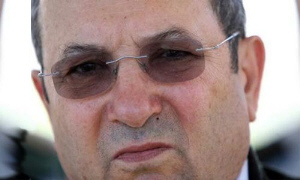 Panetta made the announcement following a meeting with Israeli Defense Minister Ehud Barak at the Pentagon. Barak was in Washington for talks aimed at coordinating strategy with the US ahead of the second round of talks between western powers and Iran scheduled to open next week in Baghdad.
 Aletho News
