Israel snubs warnings against Iran attack
Press TV – February 29, 2012
Israel’s Foreign Minister Avigdor Lieberman says Tel Aviv will not heed warnings to not attack Iran over the country’s nuclear energy program.
Referring to recent warnings by American and Russian officials about the consequences of attacking Iran, Lieberman said the decision “is not their business.”
“The security of the citizens of Israel, the future of … Israel, this is the Israeli government’s responsibility,” Liberman said on Wednesday in an interview with the regime’s Channel 2 TV News.
Israeli officials have recently stepped up their war rhetoric, threatening Iran with military strikes in the event that US-engineered sanctions against the country fail to force Tehran into abandoning its civilian nuclear program.
Lieberman had said on February 9 that ”Israel has a large selection of ways, when the world of international sanctions fails to persuade Iran to halt its nuclear program.”
Several countries, including the US, Russia and China have warned Israel against attacking Iran as such a move would have dire consequences not only for the Middle East but the entire world.
On February 27, Russia’s Prime Minister Vladimir Putin said if Israel attacks Iran “the consequences will be truly catastrophic, their real scope impossible to imagine.”
Earlier in February Chairman of the US Joint Chiefs of Staff General Martin Dempsey warned that an Israeli strike on Iranian nuclear facilities would be imprudent, destabilizing and would not serve the interests of anybody, especially the Israelis.
The United States, Israel and some of their allies accuse Tehran of pursuing military objectives in its nuclear program, using this pretext to impose sanctions against Iran and threaten the country with a military attack.
Iran has denied the allegations and promised a crushing response to any military strike against the country, warning that any such measure could result in a war that would spread beyond the Middle East.
What English Canadians need to understand about Quebec, the NDP and Thomas Mulcair
By Pierre Beaudet | Rabble | February 28, 2012
It is always amazing to observe the ignorance of the Canadian left when it comes to Quebec politics. The reasons for this, I believe, are similar to what blocked the English left over Ireland for decades, as well as the French left over their African empire. It is costly in the short term to oppose its “own” imperialism, because it is supported by a very wide popular colonial mentality. But in the long term, it is deadly.
In any case, here we have a NDP campaign that is going nowhere, unfortunately. More than that, the front-runner is now an ex-Liberal Minister who was known for his trade-union bashing and his love of free trade agreements, not to mention his “affair” with Israel (as it has been noted recently by rabble contributors). Mulcair was also not only a staunch anti-nationalist, but he even fought hard against Bill 101 (to protect the French language). Even if people tend to forget things, not many people will give him any credibility when he says that he speaks “for Quebec.”
On all these important issues, Mulcair has been a centre-right liberal.
Some Canadians have raised the argument that Mulcair would be able to “secure” the NDP vote in Quebec, so that his leadership would be beneficial for the party. This is very far from reality.
Mulcair had very little to do with the orange wave of last May. Mulcair represents a very strange riding which is called Outremont. It is the home of the wealthy francophones, on the West side, who have been tiring of voting for what became to be known as the party of crooks (Liberals). It is also the home of many immigrant communities and the centre of the orthodox Jewish community which numbers more than 20 per cent of the total population of Outremont. It is a unique feature in Montreal’s demographic. This community supports Mulcair for reasons that are far off from any progressive meaning, or from the anti-racist and anti-discrimination battles that abound in the city.
Outside of this perimeter, very few people would support Mulcair.
Some would say that Mulcair has the support of the majority of the Quebec NDP MPs. The fact is that these MPs are mostly politically inexperienced, and without any social base. Before May 2, and the TV appearances of Jack Layton in Quebec, the NDP would not have been able to bring more than 200 people into a room. It had local committees in fewer than five ridings (including Outremont). Currently, some of the most serious NPDers in Quebec have decided to support candidates other than Mulcair.
All in all, Mulcair as the leader of the NDP, would be a disaster in Quebec. The support the party got on May 2 is already melting like snow in the spring. Canadians who still believe in the NDP as a vehicle for change should think about these matters seriously.
Syrian opponent Mamoun Al-Homsi’s Israel connection
The Arab Digest | February 27, 2012
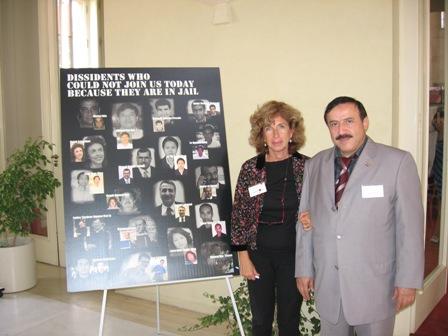
The Arab Digest had previously reported on Syrian Opposition member, Mamoun Al-Homsi, and his call for ethnic cleansing of minorities in Syria. Well, new questions emerge on his politics and suspicious ties with Israel.
Mamoun Al-Homsi is pictured above at the Prague Security Conference (NeoCon) with the Israeli-Italian right wing politician and hardline Zionist, Fiamma Nirenstein. Nirenstein who is a neocon Zionist has spent much of her life in an illegal East Jerusalem Settlement called Gilo where she still maintains a home.
Nirenstein is known for translating books of Nathan Sharansky, Bernard Lewis and Ruthie Bloom; she led efforts on behalf of the Israeli government to thwart the Palestinian bid for full UN membership and Statehood.
She is also known for hardline Zionist quotes like “every Jew in the world is an Israeli even if he’s not aware of it. Anyone who doesn’t know it is making a big mistake” and “morally speaking, there mustn’t be negotiations with Hamas, which thinks that Jews are the sons of monkeys and pigs. You can’t negotiate with cannibals, who eat human beings”. Her stances drove Luisa Morgantini, the Vice President of the European Parliament to write an article in 2007, criticizing her hawkish stances, it was titled “Fiamma Nirenstein and the conspiracy of treacherous Palestinians who do not want peace.”
Nirenstein spends her year between an Italian residence and the East Jerusalem settlement with her husband, Israeli photographer Ofer Eshed.
The question remains, what was Homsi doing with her in Prague?
Homsi has also met her and U.S. based Farid Ghadri, a pro-Israeli opposition figure, in Rome where they discussed Syria. Nirenstein later wrote a post about her meeting with the two, expressing her deep worries over Hezbollah’s capabilities and Syria’s arsenal of rockets, capable of reaching Israel.
PS. The photo’s credit is for Alessandro Lattanzio who kindly translated our earlier article on al-Homsi to Italian. Here is his post in Italian along with the photo.
~
See also from Arab Digest:
A Syrian dissident calls for the ethnic cleansing of minorities!
Rhetoric in Syria’s revolution took a dangerous Sectarian shift with former Syrian MP and opposition activist Mamoun Homsi, 56, making ethnic cleansing threats against minorities. He clearly stated that in Syria, “there will be no minorities”, and called for the obliteration of the ruling Allawite community. … continue
Related articles
- Friends (Enemies) of Syria Conference (alethonews.wordpress.com)
Progressive Democratic hero Elizabeth Warren enlists to serve AIPAC’s pro-war agenda
By Max Blumenthal | Al Akhbar | 2012-02-26
Few congressional candidates have excited the progressive base of the Democratic party as much as consumer advocate Elizabeth Warren has. Her tenacious advocacy for a consumer protection agency to fight unfair lending practices and her consistent framing of economic issues in terms of structural inequality have earned her enthusiastic promotion from major progressive figures from Markos Moulitsas to Rachel Maddow to Michael Moore.
Warren has focused her race against incumbent Republican Senator Scott Brown almost entirely around issues of economic justice, placing her quixotic battle for the Consumer Financial Protection Bureau at the center of her campaign narrative. During an appearance on MSNBC’s “Morning Joe,” Warren boasted that she succeeded in creating the bureau despite opposition from “the toughest lobbying force ever assembled on the face of the earth.”
While progressives celebrate Warren for her fight against the big banks and the financial industry’s lobbying arm, they have kept silent over the fact that she has enlisted with another powerful lobby that is willing to sabotage America’s economic recovery in order to advance its narrow interests. It is AIPAC, the key arm of the Israel lobby; a group that is openly pushing for a US war on Iran that would likely trigger a global recession, as the renowned economist Nouriel Roubini recently warned. The national security/foreign policy position page on Warren’s campaign website reads as though it was cobbled together from AIPAC memos and the website of the Israeli Foreign Ministry by the Democratic Party hacks who are advising her. It is pure boilerplate that suggests she knows about as much about the Middle East as Herman “Uzbeki-beki-stan-stan” Cain, and that she doesn’t care.
Warren’s statement on Israel consumes far more space than any other foreign policy issue on the page (she makes no mention of China, Latin America, or Africa). To justify what she calls the “unbreakable bond” between the US and Israel, Warren repeats the thoughtless cant about “a natural partnership resting on our mutual commitment to democracy and freedom and on our shared values.” She then declares that the United States must reject any Palestinian plans to pursue statehood outside of negotiations with Israel. While the US can preach to the Palestinians about how and when to demand the end of their 45-year-long military occupation, Warren says the US “cannot dictate the terms” to Israel.
Warren goes on to describe Iran as “a significant threat to the United States,” echoing a key talking point of fear-mongering pro-war forces. She calls for “strong sanctions” and declares that the “United States must take the necessary steps to prevent Iran from acquiring a nuclear weapon” — a veiled endorsement of a military strike if Iran crosses the constantly shifting American “red lines.” Perhaps the only option Warren does not endorse or implicitly support is diplomacy. Her foreign policy views are hardly distinguishable from those of her Republican rival, who also marches in lockstep with AIPAC.
The same progressives who refused to vet Barack Obama’s views on foreign policy when he ran for president in 2008, and who now feel betrayed that he is not the liberal savior they imagined him to be, are repeating their mistake with Warren. With AIPAC leading the push for war at the height of an election campaign, there is no better time to demand accountability from candidates like Warren. Who does she serve? The liberal grassroots forces that made her into a populist hero or the lobby seeking to drag the US into a dubious, potentially catastrophic war? It is far better for progressives to grill her on her foreign policy positions before the campaign is over then after the next war begins.
Related articles
Iran sanctions will cause many problems for Italy: Monti
Press TV – February 25, 2012
Italian Prime Minister Mario Monti says complying with the European Union sanctions against Iran will cause many problems for the country’s ailing economy.
Speaking to reporters in a joint press conference with the president of the European Parliament, Martin Shulz, in Rome, Monti noted that Italy is grappling with serious economic recession and crisis and cutting Iran oil imports will cause the country to suffer more than other EU members.
The Italian premier added that due to heavy dependence on energy, Italy feels the pinch of Iran oil sanctions more than other European countries, but Rome is unable to disobey certain decisions.
Meanwhile, the Italian official news agency, ANSA, published a report quoting energy experts as saying that sanctions against Iran are useless and will only harm Italian and other European companies.
Referring to high trade volume between Tehran and Rome, the report added that given the existing economic crisis in Europe, compliance with sanctions may be an end to the longstanding presence of Italian companies in Iran, which will be replaced with Turkish and Chinese companies.
ANSA further stated that complying with Iran sanctions will also cost Italians 30,000 jobs.
On January 23, EU Foreign Ministers met in Belgium to approve new sanctions against Iran aimed at banning member countries from importing Iranian crude oil and carrying out transactions with its central bank.
The EU has considered a period of six months before sanctions are fully enforced in order to allow member states to adapt to new conditions and find new sources of crude oil.
EU decision followed imposition of similar sanctions by Washington on Iranian energy and financial sectors on the New Year’s Eve which seek to penalize other countries for buying Iran oil or dealing with the its central bank.
After approving new sanctions, EU foreign policy chief, Catherine Ashton, told reporters that the sanctions aim to persuade Tehran to suspend its peaceful nuclear activities and get back to negotiating table with P5+1 — comprising US, UK, France, Russia, China, and Germany.
The United States, Israel and some of their allies accuse Tehran of pursuing military objectives in its nuclear program, using this pretext to impose sanctions against Iran and threaten the country with military attack.
Iran has refuted the allegations, arguing that as a committed signatory to the nuclear Non-Proliferation Treaty and member of IAEA, it has the right to use nuclear technology for peaceful use.
The IAEA has never found any evidence indicating that Tehran’s civilian nuclear program has been diverted towards nuclear weapons production.
Related articles
- Israel lobbies Japan to support anti-Iran sanctions (alethonews.wordpress.com)
- ‘Iran sanctions will backfire’ – Minister (laaska.wordpress.com)
Firsthand Account: Israeli Plot to Murder Former US Senator?
Council for the National Interest | February 20, 2012
James Abourezk represented South Dakota in the U.S. House of Representatives from 1971 to 1973 and in the U.S. Senate from 1973 to 1979. He is the author of numerous articles and books, including Advise & Dissent: Memoirs of South Dakota and the U.S. Senate. CNI asked Senator Abourezk about his experiences with the Israel Lobby while he served in Congress. In his response he told of an Israeli plot against him that has received perplexingly little coverage in the U.S. press. Below is his description of this and other incidents:
Q: Despite such books as Paul Findley’s They Dare to Speak Out, Edward Tivnan’s The Lobby, and Mearsheimer and Walt’s The Israel Lobby, some people still tend to downplay the power of the Israel Lobby. Can you tell us about some of your experiences with it?
A: I’m an eyewitness to what the Lobby does to Members of Congress, including to me during the time I spent in D.C. I was threatened, marginalized, attacked, lied about, among other matters in an effort to silence my criticism of Israel’s policies and of the Lobby.
At one time Bob Cordier, from the Washington FBI office, called me to tell me that, during the investigation into Alex Odeh’s murder (Alex was one of my staff people) the FBI had uncovered a “plot” on my life. Not a threat, but a plot, but, he said it’s OK now, as the guy who intended to murder me had now gone back to Israel. Alex Odeh’s murder came not long after I had run four full page ads in the Washington Post asking for support against the Israel Lobby. My assumption was that, reading the ads had enraged the plotter, which led him to bomb the ADC office in Orange County, California.
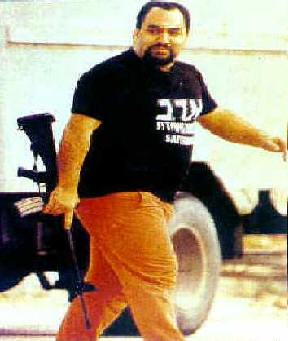 I also assume that the plotter was Robert Manning, a hit man who was later convicted of the murder of the secretary of a Jewish businessman in California. Apparently Manning had been hired by another Jewish businessman who was a competitor. They found the fingerprints both of Manning and of his wife on remnants of the letter bomb that was sent to his target, but opened by his secretary, who died as a result of the explosion.
Manning and his wife were safe from extradition from Israel, due to Israeli policy of not extraditing Jews for any reason, until Peter Jennings on ABC nightly news did a story on how Manning was running free in his West Bank settlement. The news story so embarrassed the U.S. government as well as the Israeli government that he was allowed to be extradited to California, but on the condition that he not be tried for killing Alex Odeh, but only for the Secretary. That condition was tantamount to a confession that he had murdered Alex Odeh. Manning’s wife died of a heart attack in an Israeli jail while awaiting extradition.
James Bamford, now a writer living in Washington, D.C., and who was Peter Jennings’ producer then, has film clips of the news story that he shows at lectures he gives on the subject. He went to the West Bank and filmed a machine gun toting Manning for the news story.
Lobby-engineered mud-slinging
I was under continual attack by the Lobby while I was in politics. Because I kept myself clean during my time of service, someone in the Lobby dug up a story designed to embarrass me by exposing my oldest son to ridicule. He was, at the time, living on an Indian reservation in South Dakota on food stamps. The Lobby got Spencer Rich, who was a political reporter for the Washington Post, to do a story on him. Rich several times called both my wife and me trying to get us to comment, but we refused. So he ran the story, headlined, “Senator’s Son Living on Food Stamps.” That set off a fire storm of criticism against the Post, and against Ben Bradlee, who was then Editor in Chief. Larry Stern, who was one of my friends, and an editor of the Post, complained bitterly to Bradlee. Senators McGovern and Ribicoff both took to the Senate Floor denouncing the article, saying the Post was trying to destroy the food stamp program.
One of the Style section writers, Tom Zito, whom I had never met, called me one day and told me the story about his protest to Bradlee over the story. Bradlee finally said, “Alright, go find some other famous people whose kids are living on food stamps and we’ll run it.” Zito told me that he had found that Bradlee’s daughter was living on Food Stamps out in Oregon, causing Bradlee to kill the story on the spot.
Years later I ran into Spencer Rich in a store in DC. He confessed to me that he still felt bad about doing the story on my son’s food stamp adventure.
“We’re going to get him”
Si Kenen, who was then Executive Director of AIPAC, used to tell anyone who knew me, to tell Abourezk “we’re going get him.” And when I returned from a trip through the Middle East, I spoke about the trip at the Federal Press Club (reserved for women and blacks) and talked about how every Middle East leader I met with said they would be willing to sign a peace treaty with Israel if Israel would go back to the 1967 borders. A young fellow named Wolf Blitzer, who was then writing for AIPAC, rose to ask me several hostile questions before he walked out. The next issue of the AIPAC newsletter headlined that “Abourezk Sells Out to the Arabs.” That was the beginning of the war, as I failed to collapse after that broadside, and worked to make AIPAC regret their unfair attack on me.
I used to take the lead in human rights legislation in the Senate. I once offered an amendment to a bill that would cut off American money for any country violating the human rights of their people. Before anyone would vote, I was asked during debate “whether the amendment would apply to Israel.” When I said “no” I would get that person’s vote.
I also had all kinds of pressure put on me by rabbis who would come to visit me. Once an Iraqi Jew, a woman, came to visit me to tell me how bad it was for Jews in Iraq, I suppose trying to get me to change my mind on the Palestinian issue. She said she was constantly beat up and called a “dirty Jew” when she lived in Iraq. I told her I knew her feeling, because when I grew up in rural South Dakota, other kids would beat me up and call me a “dirty Jew.”
I was invited to speak at Yeshiva University when I was in the Senate. Before the time came for me to travel to New York, I was visited by a Rabbi Miller, who was from Yeshiva, and who advised me that “the students were marching against me and my speech,” and that, “It would calm things down if I would just make a public statement that I was for face to face negotiations between the Palestinaians and the Israelis.”
I told Rabbi Miller that, while I was for such negotiations, I recognized that requested statement was part of Golda Meier’s propaganda initiative, and that I had no interest in being a part of that. He kept coming on strong about the statement, so I finally asked him if it would be better if I cancelled my appearance at Yeshiva. He agreed, and that was the end of that. One of my friends from New York commented that, “They are in favor of face to face negotiations in the Middle East, but not in New York.”
After I left the Senate, Art Meggido, a writer for the Baltimore Jewish newspaper asked me for an interview. When I asked him why I should give him an interview, he told me that the Jewish community would eventually have to deal with me when it came to making peace in the Middle East. So I agreed. When the article came out, he related a story that an unnamed Ted Kennedy staffer told him that I had approached Kennedy and asked for money to go to Iran and free some hostages to help him in his 1980 primary campaign against Jimmy Carter.
The truth of that libel was that Kennedy sent three of his supporters to me to ask if I would go to Iran to free some hostages in his name. One was Jan Kalicke, one was Sen. John Culver and the other was Ted Sorensen. I supported Ted for president, so I agreed. The only thing I asked for was that they buy my ticket to Tehran, which they agreed to do.
When I read Meggido’s article I wrote to him telling him that unless they retracted the lie, I would sue him and the newspaper. They ran the retraction. Because we had agreed that we would not talk on the phone about this, we decided to talk only in person about the trip. No one knew about our deal except Kennedy and his staff, which included Tom Dine, who had been working for AIPAC earlier. It had to be Dine who talked to Meggido with the lie. And during the kerfuffle, I had a hard time getting Kalicke to call Meggido to verify my story, but it all came out in his retraction.
Although I was afraid that either my phone or Kennedy’s phone was being tapped by the Carter people, we avoided speaking about the trip over the phone, except for one occasion when I called Kalicke to talk to him about it. Almost the next day, a Lebanese journalist who covered the State Department told me that he had overheard both Marvin Kalb and the Israeli TV journalist there talking about “Abourezk acting as a messenger for Ted Kennedy over in Iran.”
There are other stories that I could tell you at the risk of boring you to death, but the Lobby had every Senator, except me, scared shitless.
Related articles
- Israel Lobby Pushes for US Action Against the Syrian Government (alethonews.wordpress.com)
- Obama to address pro-Israel lobby in March (seattletimes.nwsource.com)
Jodi Rudoren, Another Member of the Family: Meet the New York Times’ New Israel-Palestine News Chief

Past & Present NY Times Jerusalem Bureau Chiefs: Jodi Rudoren, Ethan Bronner, Steven Erlanger, Thomas Friedman
By ALISON WEIR | CounterPunch | February 21, 2012
Michael Lerner, the editor of Tikkun Magazine, is known for his frequent condemnations of Israeli violence against Palestinians. He is labeled “pro-Palestinian” for such statements and is regularly attacked by pro-Israel zealots who charge that he is disloyal to the Jewish state.
Yet, in reality, Lerner frequently speaks of his devotion to Israel and states that his actions are taken in considerable part to protect it.
A while ago Lerner explained the difference in his feelings about Israelis compared to his feelings about Palestinians. “[T]here is a difference in my emotional and spiritual connection to these two sides,” Lerner said.
“On the one side is my family; on the other side are decent human beings. I want to support human beings all over the planet but I have a special connection to my family.”
This statement comes to mind when one considers the New York Times bureau chiefs who cover Israel-Palestine.
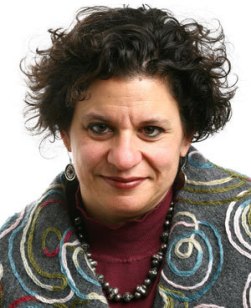
The most recent person to be chosen for this powerful post at arguably the most influential newspaper in the United States is Jodi Rudoren. She takes the place of Ethan Bronner, who was preceded by Steven Erlanger, who was preceded by James Bennet, who was preceded by Deborah Sontag. All, according to an Israeli report, are Jewish.
Most Americans — particularly those who would object to only white reporters covering racial issues or only male reporters covering gender issues — are reluctant to discuss the potential bias in such a profoundly un-diverse system, having been conditioned to fear that such discussion would be “anti-Semitic” or would open the commentator to this extremely damaging accusation.
In Israel, however, it is considered appropriate to discuss the Jewish roots of American politicians and journalists since Israel was created specifically to be “the Jewish state,” Jews have elevated status in it, and the vast majority of Israeli land is officially owned by “world Jewry” (although some individuals have publicly opted out).
An article on the Jerusalem Post website, a major Israeli newspaper, focuses on this aspect. The article, “Judaism at the New York Times”, reports that “all New York Times’ bureau chiefs for at least the last fifteen years have been Jewish.”
The article’s author, Ashley Rindsberg, notes that “the Times doesn’t consistently send Russian Americans to its Moscow bureau… or Mexican Americans to lead its Mexico City bureau…” and asks, “Why does the New York Times consistently send Jewish journalists to head their central office in the Jewish State?”
Rindsberg, who like many conservative Israelis considers the Times’ reporting anti-Israel, provides a somewhat convoluted answer. The Times’ Jewish owners, Rindsberg posits, are uncomfortable with their Jewish identity. Therefore, he claims, they “would just as soon as not have reporters who could be identified for their Jewishness. And to prove it, they send Jews to the Jewish State to report in a most un-Jewish way.”
The Times’ history of pro-Israel coverage
Despite Rindsberg’s view of the Times, analysis shows its coverage to be consistently pro-Israel. A 2005 study found that the Times reported on Israeli deaths at rates up to seven times greater than its reports on Palestinian deaths, even though Palestinian deaths occurred first and in far greater numbers.
A 2007 study of the Times’ coverage of various international reports on human rights violations by Israelis and by Palestinians found that the Times covered reports condemning Israeli human rights violations at a rate only one-twentieth the rate that it covered reports condemning Palestinian human rights violations. The investigation found that during the study period there had been 76 reports by humanitarian agencies condemning Israel for abuses and four condemning Palestinians for abuses. The Times carried two stories on each side.
In its early years the Times specifically avoided assigning Jewish reporters to cover Israel out of concern that such journalists would have an inherent conflict of interest. This policy was reversed in 1979 after Abe Rosenthal became the paper’s executive editor and explicitly decided to choose Jewish journalists for the position.
While his first attempt failed (he had thought his choice, David Shipler, was Jewish), the Columbia Journalism Review reports that most of the journalists who succeeded Shipler, beginning with Thomas Friedman, have been of Jewish ethnicity. The article notes that “for a century [the Times] has served, in effect, as the hometown paper of American Jewry.”

Former NY Times executive editor Max Frankel, who was an editor at the Times from 1972 through 2000, admitted in his memoirs: “I was much more deeply devoted to Israel than I dared to assert … Fortified by my knowledge of Israel and my friendships there, I myself wrote most of our Middle East commentaries. As more Arab than Jewish readers recognized, I wrote them from a pro-Israel perspective.”
An article by star reporter and author Grace Halsell describes her firsthand experience with pro-Israel bias at the Times in the early 1980s.
Halsell had written books about the plight of Native Americans, African Americans, and undocumented Mexican workers. She was a great favorite of New York Times matriarch Iphigene Ochs Sulzberger, whose father had acquired the Times in 1896, whose husband and then son had run it next, and whose grandson is now in charge.
When Halsell next wrote a powerful book describing the Palestinian plight, she incurred Mrs. Suzberger’s displeasure and was quickly dropped by the Times. Halsell writes: “I had little concept that from being buoyed so high I could be dropped so suddenly when I discovered—from her point of view—the ‘wrong’ underdog.”
In her article Halsell quotes a revealing statement by an Israeli journalist following Israel’s 1996 shelling of a U.N. base in Lebanon that killed more than 100 civilians sheltering in it: “We believe with absolute certitude that right now, with the White House in our hands, the Senate in our hands and The New York Times in our hands, the lives of others do not count the same way as our own.”
Since 1984 New York Times bureau chiefs have lived in a house that was acquired for the Times by then Jerusalem Bureau Chief Thomas Friedman (now the Times’ lead foreign policy columnist). The building originally belonged to a Palestinian family forced out in Israel’s 1947-49 founding war. Israel afterward prevented the family from returning and reclaiming their home. Therefore, Times’ bureau chiefs are in the strange position of living in a home that was stolen from Palestinians (acquiring property by violent conquest is illegal in today’s world).
Recent Situation: Bronner, Kershner, & Khader Adnan
 Rudoren’s predecessor as Jerusalem bureau chief, Ethan Bronner, has a son who enlisted in the Israeli military. When this conflict with impartiality was exposed, even the Times’ own ombudsman suggested that journalistic ethics required that Bronner be moved to a different beat. Yet, Times then-editor Bill Keller insisted that this gave Bronner “special sophistication” and kept him in his position.
Bronner’s colleague at the bureau has been Isabel Kershner, who will apparently be staying on. J.J. Goldberg, editor of the Forward, writes: “Isabel Kershner immigrated to Israel from her native England as a young woman and spent a couple of decades in Israeli journalism and Jewish education before joining the Times a few years ago. By now she’s thoroughly Israeli (and, for full disclosure, a friend).”
While pro-Israel Zealots vehemently attack Bronner and Kershner when they cover Palestinian victimization, the truth is that they overlook a great many instances. For example, a 33-year-old Palestinian father of two young girls (another child is on the way) was on a hunger strike that lasted for 66 days. He was was near death when he reportedly decided to end it on Feb 21.
The young man, Khader Adnan, was protesting his imprisonment by Israel – he was never charged with a crime – and the beatings and humiliations he endured from Israeli interrogators. There was an extended international campaign about him that grew even more urgent when doctors began warning after 45 days that he was at risk of death. Eventually, there was so much pressure world wide (including by UN Special Rapporteur Richard Falk and EU Foreign Policy Chief Catherine Ashton) that Israel announced it would release Adnan at the end of his “sentence.”
Yet, Bronner and Kershner – and Times columnists who frequently bemoan the alleged lack of a Palestinian Gandhi – did not publish a single story on Adnan until the 66th (and last) day of his hunger strike – after the Washington Post had finally carried a report two days before. The Times’ headline was the very bland, “Hearing for Palestinian on Hunger Strike Is Set.

While Adnan’s is the longest Palestinian hunger strike on record, through the years there have been hundreds of hunger strikes by multitudes of Palestinians in Israeli prisons; the Times almost never reports on them. It’s revealing to compare their numerous stories on the Israeli tank gunner captured by Palestinians, Gilad Shalit, to the sparsity of their reporting on Adnan and others.
Overall, the thousands of Palestinian prisoners held by Israel seem largely to have been invisible to Times’ reporters. While there have been gruesome reports of their torture for decades, there is little indication that Bronner or Kershner have investigated this or made much, if any, effort to visit Palestinians in Israeli prisons.
Who is Jodi Rudoren?
Now that Bronner’s four-year term has come to an end (he says he initiated the transfer himself and was not pushed out over conflict of interest), it is not clear what went into new editor Jill Abramson’s decision to choose Rudoren for this powerful position.
A cum laude graduate from Yale, Rudoren’s journalistic experience appears to be limited to domestic subjects. Most recently she had been head of the Times’ Education bureau. She speaks what she calls “functional Hebrew” but no Arabic. It’s unknown how much time, if any, she has spent in Israel, whether she has family there, or whether she has family members in the Israeli military.
When Rudoren received a tweet by Palestinian-American author Ali Abunimah, who noted that she would be moving into stolen Palestinian property, she responded: “Hey there. Would love to chat sometime. About things other than the house. My friend Kareem Fahim [a New York Times associate] says good things.”
This friendly but somewhat flip response to a serious subject has caused Israel zealots to attack her. The Atlantic’s Jeffrey Goldberg somewhat hysterically equated Abunimah, an author known for his intellectual analysis, with Israeli Jewish supremacists known for their violence.
Goldberg suggested that Rudoren should have “twinned” her tweet to Abunimah by reaching out to Kahanists — a group listed by both Israel and the U.S. as terrorists. Goldberg should be pleased to learn that Rudoren said she had done just that, telling the Jerusalem Post, “One of the people I followed before reaching out to Abunimah was David Ha’ivri.”
Ha’ivri is an extremist settler rabbi who was involved with Jewish Defense League founder Meir Kahane’s Kach terror group, celebrated the assassination of former Prime Minister Yitzhak Rabin when he had begun to make peace with Palestinians, and was convicted some years ago for desecrating a mosque.
Abunimah, on the other hand, has written a book called “One Country: A Bold Proposal to End the Israeli-Palestinian Impasse,” in which he describes how Israelis and Palestinians can live together in peace.
Rudoren’s knowledge of Hebrew may have been bolstered by her summertime attendance at Camp Yavneh, a Jewish camp in New Hampshire that has an Israeli flag at the top of its website and boasts of its “strong Israeli programming.” It features a six-weeks “summer in Israel” program, though it’s unknown whether Rudoren attended this.
The camp website states that the current boys’ head counselor “grew up in Gush Etzion, Israel, and has served as a Lieutenant Commander in the Israeli Army in charge of 150 soldiers in the Givatti Brigade.” Another counselor is a resident of the Israeli settlement of Efrat, which, like all Israeli settlements, is built on confiscated Palestinian land and is illegal under international law.
Despite an upbringing that appears to have included considerable immersion in Zionist mythology, indications are that Rudoren may be working to widen her view. She raves about a book by Peter Beinart called “The Crisis of Zionism” and retweeted a message by blogger Sami Kishawi. It’s interesting to note that the Times’ only other female Jerusalem bureau chief, Deborah Sontag, often provided exemplary coverage; her term seems to have ended early.
Tweeting like a J-Street official?
Jeffrey Goldberg – who moved to Israel, became an Israeli citizen, joined the Israeli army, and worked as a prison guard at one of Israel’s most brutal prisons – assures readers that Rudoren is still within the pro-Israel fold, commenting, “I don’t know Rudoren… I do know her sister, from synagogue, mainly, and I don’t think Jodi is some sort of anti-Israel activist…”
Goldberg is concerned, however, that she is tweeting “as if she’s a J Street official.” For Goldberg this veers dangerously toward anti-Israelism.
In reality, however, J Street is a pro-Israel organization whose positions are dictated by what is good for Israel. Its founder has just published a book entitled “A New Voice for Israel.” If Goldberg’s assessment of Rudoren is accurate, then it appears that once again the Times has a person at the helm of its reporting on Israelis and Palestinians for whom Israelis are “family.” Quite possibly, literally.
Rudoren may be intending to cover the region accurately and with fairness. To do so, however, it appears that she will need to overcome enormous ingrained bias, relentless and vitriolic objections of the organized pro-Israel community (quite likely including friends and family), and pressure by many powerful Times advertisers and colleagues.
On top of this, unless she chooses a different lifestyle than her predecessors’, she will be living in Israel, her children will go to Israeli schools, and her home will be one of the thousands confiscated from Palestinians who are now living and suffering largely out of sight, their daily humiliations and victimization for the most part invisible.
These winds may be so strong that even when Rudoren believes she has stood upright against them, an outside view may show her tilted far over in the Israeli direction, her reporting on Israel-Palestine, to paraphrase Dorothy Parker, covering the gamut from A to C.
Let us hope that this doesn’t occur.
Let us hope Rudoren understands that good reporting does not equate a false narrative with a factual one; that she will not be, in Abunimah’s words, yet “another New York Times reporter for whom Palestinians are just bit players in someone else’s drama.”
Let us hope she understands that living in stolen property is not a good base from which to report honestly; that “balance” achieved by under-reporting Palestinian suffering while exaggerating that of Israelis is not balance, it is distortion. Let us hope, most of all, that she does not view some human beings as more important than others, but instead views all, regardless of their religion or ethnicity, as family.
~
Alison Weir is executive director of If Americans Knew and president of the Council for the National Interest. She can be reached at contact@ifamericanslknew.org.
Bombing Iran: A Real Headache for Israel
By Steve Rendall – FAIR – 02/21/2012
Bombing Iran could be a real strain for Israel, reports Elisabeth Bumiller in the New York Times (“Iran Raid Seen as a Huge Task for Israeli Jets,” 2/19/12). No one’s sure they can pull it off, what with the logistics involved:
Should Israel decide to launch a strike on Iran, its pilots would have to fly more than 1,000 miles across unfriendly airspace, refuel in the air en route, fight off Iran’s air defenses, attack multiple underground sites simultaneously–and use at least 100 planes.
Everyone apparently agrees on the task in front of Israel, as Bumiller puts it: “Given that Israel would want to strike Iran’s four major nuclear sites….” Killing Iranians and spreading radioactive material over their countryside isn’t an issue for the Times, where Iran seems to exist only as an obstacle to Israeli strategic interests.
But, Bumiller reports, the job could exceed Israel’s offensive capabilities, raising the question of whether the U.S. might be “sucked into finishing the job.” A job she’s not altogether unexcited about:
Should the United States get involved–or decide to strike on its own–military analysts said that the Pentagon had the ability to launch big strikes with bombers, stealth aircraft and cruise missiles, followed up by drones that could carry out damage assessments to help direct further strikes. Unlike Israel, the United States has plenty of refueling capability. Bombers could fly from Al Udeid air base in Qatar, Diego Garcia in the Indian Ocean or bases in Britain and the United States.
Perhaps the most telling line in Bumiller’s cold, skewed accounting of the potential risks of an attack on Iran is in her peculiar notion of what would constitute a state of war:
Iran could also strike back with missiles that could hit Israel, opening a new war in the Middle East, though some Israeli officials have argued that the consequences would be worse if Iran were to gain a nuclear weapon.
War would ensue the instant Iran responded to being bombed? This is not only bizarre wording, it ignores the low-intensity war that has been waged against Iran over the past few years, including explosions at nuclear facilities, the assassination of its scientists and the arming of insurgent groups in Iran’s border areas.
Featured Video

Dan Dicks with James Corbett on Solutions Watch
or go to
Aletho News Archives – Video-Images
From the Archives
Secret document reveals plans for civil war in Lebanon, Israeli false flags, and invasion
By Randi Nord | Geopolitics Alert | April 5, 2019
Beirut – During his visit with US Secretary of State, Mike Pompeo, Lebanese President Michael Aoun reportedly received a US-Israeli document detailing plans for creating a civil war in Lebanon with covert false flag operations and possible Israeli invasion.
Although the source of the document is Israeli and created in partnership with Washington, no one knows who presented it to Aoun. The Lebanese TV station, Al-Jadeed, initially reported the document on Lebanese TV and a video on its website. Geopolitics Alert translated the report for this article. … continue
Blog Roll
 Aletho News
- Sheikh al-Asadi warns of Iraqi government compliance with US demands
- How to MAKE THE CONSPIRATORS PAY for their crimes! Dan Dicks with James Corbett on Solutions Watch
- There’s a drought in academia: A drought in honest research on the subject of drought and other weather extremes
- Department of War Awards $20.7 Billion Contract to Raytheon for Air-to-Air Missiles
- ‘Distance yourselves from Israel’: IRGC urges US population to question govt policies
- America’s Greenland deal has a radioactive backstory
- The RAF Fairford ‘terror plot’: Unpacking escalation in the UK echo-chamber
- EU Council Advances Chat Control 2.0 Scanning Proposal
- Ex-Greek MEP files complaint against Israeli spyware firm over alleged Pegasus surveillance
- Troubling ideas throughout the Torah, Talmud, Mishneh Torah and Tanya
- If Americans Knew
- New Report: “Scholasticide and Genocide in Gaza: Assessment, Testimonies and Legal Analysis”
- Ex-Biden officials are desperate for a Gaza scapegoat
- Israeli “settlers” Invade Al-Aqsa; Pour Boiling Water on 75-Year-Old
- Israel Has Kidnapped Another American Teenager
- US arms sales to Israel worth $21.6 billion in 20 months
- Three Palestinians Killed in Israeli Attacks on Gaza
- Revealed: German “Anti-Semitism Expert” Driving Crackdown on Palestine Solidarity is Former Israeli Spy
- Egypt’s Warning to Israel Before Oct 7
- Israel’s siege signals another cruel winter for 1.8 million Gazans – Daily Update
- Netanyahu Asked UAE Leader to Deny Report on Oct. 7 Warning in Secret Visit, Sources Say
- No Tricks Zone
- Two More Paleo Reconstructions Affirm Meters-Higher Sea Levels Across Ireland, Brazil 7000-6000 Years Ago
- New Study: Earth And Venus Surface Warmth Largely Explained By Convection And Lapse Rate, Not CO2 Or Radiation
- 2025 Nature Paper Claiming Worsening Global Drought Gets RETRACTED …Heavily Flawed
- New Study: ‘Global Drought Shows No Detectable Recent Acceleration Under Climate Warming’
- Economic Masterminds: German Socialists Suggest Taxing Productivity Gains Stemming From Using AI
- The South China Sea Has Not Been Cooperating With The Climate Change Narrative
- Energy Crisis: Germany Enters Heating Season With Historically Low Gas Reserve Fill Levels
- New Study: The Antarctic Ice Sheet Gained Mass From 2020-2024 Due To Staggering Snow And Ice Accumulation
- Study: Ocean Heating Rates From Thousands Of Years Ago ‘Dwarf’ Modern Ocean Heating Rates
- Climate Extremists Target, Attack Large-Scale Power Grid Infrastructure In Germany!

