Lessons from Libya’s Destruction
Tortilla Con Sal | July 9, 2015
Later this month the outcome is expected of the completely unjust and incompetent show trials held in Libya over the last year or so of around 200 former officials of the Libyan Jamahiriya. If that outcome is reported at all in North American and European media, its real meaning will be completely hidden in self-serving apologetics for NATO’s destruction of Libya in 2011.
The same psy-warfare framework that justified NATO’s campaign of terrorist aggression will falsely present the show trials’ outcome as rough justice dealt out to individuals who deserve no better.
That outcome should put on high alert anyone defending the countries of the Bolivarian Alliance of the Americas against very similar psychological warfare and terrorist subversion supported by NATO governments of the US and its allies. Not for nothing did Hugo Chávez and Daniel Ortega speak out in defense of Muammar al Gaddhafi and Libya against NATO’s terrorist war. They had already learned long ago the very same lessons to have emerged more recently from the utterly depressing human, moral and political catastrophe of Libya’s destruction.
In 2013, a study by a distinguished Harvard University academic acknowledged that the failure in Libya of the US government’s ostensible avowed policy in Libya and in North and West Africa was based on serial falsehoods. That fact-based, acerbic policy criticism from a source generally supportive of US government foreign policy should give much pause for thought. Along with support for Libya from outstanding revolutionary leaders like Ortega, Chavez and Nelson Mandela it amounts to a categorical indictment of received Western opinion about Libya which, across virtually the entire Western political spectrum, sided either openly or indirectly with NATO’s 2011 war.
No one genuinely concerned to defend progress towards an equitable, peaceful multi-polar world based on mutual respect between sovereign, autonomous nations and peoples should underestimate or forget the horror of what NATO did to Libya. Tens of thousands were killed and wounded in attacks by the bombers and helicopters of many NATO countries. Millions were displaced or forced into exile. Cities like Sirte and Bani Walid were devastated. Schools, universities, hospitals, factories producing food products and other essential civilian infrastructure were targeted and severely damaged or destroyed.
The destruction of Libya marked the categorical abandonment of whatever vestigial moral authority may still have remained to the European Union and its member governments.
It demonstrated in the most humiliating way the impotence and irrelevance of the African Union.
It put hard questions about the anti-imperialism of the Iranian and Syrian governments as well as highlighting the race supremacism of the governments of the Arab League and the already damaged integrity of the Palestinian authorities.
Almost all of them quickly recognized the overtly racist renegade Libyan CNT junta. For their part, the then governments of Russia and China weakly accepted NATO country assurances about the defensive nature of the air exclusion zone.
The only governments to emerge with any real credit from the destruction of Libya were the governments of the ALBA countries and a few African governments like Zimbabwe.
Countries like Cuba, Venezuela, Argentina, Nicaragua, Bolivia and Ecuador have all been victims of comprehensive disinformation campaigns of demonization and caricature, although perhaps not so extreme as the final campaign against Libya’s Jamahiriya and Muammar al Gaddhafi.
It is worth considering the basic component of that disinformation war against Libya. What is sometimes called 4th generation warfare is as old as warfare itself. Like Athens versus Sparta, or Rome versus Carthage the fundamental objective of NATO governments and their allies is to make their chosen target seem Other, creating a despised, outcast doppelganger anti-image of the West’s own phony self-image.
So Libya’s Jamahiriya was tagged as undemocratic by hypocritical Western governments, most of whom came to power with around just 20% to 25% of the vote of their electorates, thanks overwhelmingly to elite corporate funding. Libya’s democratic process was one that recognized its society’s contradictions and attempted continual self-renewal.
By contrast, the Western corporate oligarchies offer virtually meaningless periodic elections obfuscated by public relations and organized on a yes-or-yes basis to favor politicians groomed and bankrolled by their countries’ anti-democratic elites. Muammar al Ghaddafi was labeled a dictator even though his policy initiatives were not infrequently rejected within Libya’s system of popular congresses.
In 2009, during a policy conflict between Muammar al Gaddhafi and pro-Western so-called reformers, these could not get their way in Libya’s popular assemblies so they chose staging a violent putsch to achieve the regime change their Western government backers wanted. Venezuela’s experience has been almost identical, although, to date, the country has avoided the kind of coup d’état and subsequent NATO driven war that destroyed Libya Libya was portrayed as a systematic human rights violator.
But Libya’s response to the constant terrorist attacks and subversion it suffered from the very start of its Revolution in 1969 was no different to that of any Western government faced with a similar threat. The British government tortured and murdered alleged subversives all through the Irish war, colluding with sectarian paramilitary death squads. The same pattern of torture and extrajudicial murder also consistently marked the Spanish authorities’ campaign against Basque separatists. Guantanamo’s torture camp symbolizes the brutality and illegality of the US government’s response to terrorist threats.
Libya’s Jamahiriya probably conformed as closely to international human rights norms in relation to fighting terrorism as the three Western governments that led NATO’s war of destruction. Human rights protection in Libya was certainly superior to Western allies like Turkey, Egypt, Israel, Saudi Arabia, Qatar or the other quasi-feudal Gulf State tyrannies.
All the pretexts for the Western assault on Libya’s legitimate government were completely bogus. In any case, as Gerald Perreira points out, the fundamental objective achieved by the destruction of Libya was to shut down the decisive impetus towards African integration led by Muammar al Gaddhafi.
CNT leaders like Mustafa Abdul Jalil were Arab supremacists who fiercely resisted the Pan-African policies advocated by Muammar al Gaddhafi. Arab supremacism, phony neoliberal reformism and the treachery of repressive human rights abusers like Mahmoud Jibril made a lethal reactionary cocktail perfectly suited to ruthless NATO government manipulation. On cue, Western corporate and alternative media presented the corrupt political project of these viciously reactionary elements as a “revolution”, part of the absurdly hyped “Arab Spring”. As if NATO country governments, dedicated to the service of their countries’ corporate elites, have ever promoted genuine democracy or comprehensive human rights around the world.
From Ukraine and Greece, to Yemen and Syria, to Haiti and Honduras, what the Western powers and their allies want is access to natural resources, control of strategically important territories and decisive advantages for their trade and finance. Destroying Libya effectively removed a real threat to Western control and domination in Africa.
Currently, the NATO country elites’ political sales staff, for the moment President Obama, Prime Minister Cameron, President Hollande and Chancellor Merkel, are battering Greece into submission. But those leaders and their allies are using economic and psychological warfare to attack many other targets, not just Greece. They do so against Venezuela and other stubbornly independent countries around the world.
That is why the leaders of Argentina, Cuba, Ecuador, Nicaragua and Venezuela very publicly welcomed the No vote in the Greek referendum. Unlike Libya, in their different regions Syria and Venezuela are part of regional alliances backed at long last by firm leaders in Russia and China, strong enough to face down any likely economic or military threat from the United States and its allies.
But it would be a mistake to forget Libya. Defending the people of Libya represents an important self-defense measure against Western predators in their global psychological warfare assault on the free, anti-imperialist world.
As a leading force in that free world, ALBA country governments should urgently consider challenging the governments of North America and Europe to protect the thousands of political prisoners in Libya who have been tortured and denied due process.
The ALBA country governments and their allies have infinitely more moral and political authority than Western leaders to speak out in defense of fundamental human rights. They should make outspoken use of that authority now to expose the sadism and hypocrisy of Western governments in Libya, Syria, Yemen and elsewhere.
In Libya, they may perhaps yet help to save the lives of as many as 200 former officials of the Libyan Jamahiriya at risk from quasi-judicial murder by the West’s corrupt terrorist proxies in a country they have devastated with merciless cynicism.
Africa Must Leave the ICC
By Dr. David Hoile | Black Agenda Report | July 1, 2015

It has taken Africa just over a decade to conclude that the International Criminal Court (ICC), established in 2002 by the Rome Statute, is simply unfit for purpose. That certainly is the conclusion of the South African government following the recent African Union summit in Johannesburg. The institution African countries signed up for post 1998, a court that promised to pursue injustice without fear or favor, is not the one they see before them today. They were sold a false bill of goods. The ICC’s claims to international jurisdiction and judicial independence are institutionally flawed and the Court’s reputation has been irretrievably damaged by its racism, blatant double-standards, hypocrisy, corruption and serious judicial irregularities.
While the ICC presents itself as the world’s court this is simply not the case. Its members represent just over one quarter of the world’s population: China, Russia, the United States, India, Pakistan and Indonesia are just some of the many countries that have remained outside of the Court’s jurisdiction.
A court is also only as credible as its independence. Far from being an independent and impartial court, the ICC’s own statute grants special “prosecutorial” rights of referral and deferral to the Security Council – by default its five permanent members (three of which are not even ICC members). Political interference in the legal process was thus made part of the Court’s founding terms of reference. The Court is also inextricably tied to the European Union which provides over 60 percent of its funding. The expression “He who pays the piper calls the tune” could not be more appropriate. The fact that the big five ICC funders are Africa’s former colonial masters also sits uneasily with a continent suspicious of recolonization by questionable legal diktat. The EU is additionally guilty of blatant political and economic blackmail in tying aid for developing countries to ICC membership.
Africa is also correct when it points out that the ICC is self-evidently a racist court, in that it treats one race of people differently to all others. Instead of impartially enforcing the Rome Statute, the Europeans have chosen to focus the Court exclusively on Africa. African heads of state have spoken of “race hunting.” Despite having received almost 9,000 formal complaints about alleged war crimes in at least 139 countries, the ICC has chosen to indict 36 black Africans in eight African countries. In so doing the ICC has ignored all European or Western human rights abuses in conflicts such as those in Afghanistan and Iraq or human rights abuses by Western client states. While the ICC’s key first two cases were African “self-referrals” it is now clear that the African governments were made “an offer they could not refuse”: refer yourself and we will only indict your rebels – if not we will indict both government and rebels.
The ICC has emerged very much as a European-funded and directed instrument of European foreign policy. Broader western hypocrisy is all too evident. The United States has forcefully pointed out that the ICC is a kangaroo court, a travesty of justice open to political influence and that no American citizen will ever come before it. Washington is nonetheless very happy, for its own political reasons, to demand that black Africans appear before it.
Double standards and politics aside, the ICC has shown itself to be irretrievably dysfunctional. The court’s proceedings thus far have often been questionable where not simply farcical. Its judges – some of whom have never been lawyers, let alone judges – are the result of grubbily corrupt vote-trading amongst member states. Far from securing the best legal minds in the world this produces mediocrity. At least one elected “judge” had neither law degree nor legal experience but her country had contributed handsomely to the ICC budget. The Court has produced witnesses who recanted their testimony the moment they got into the witness box, admitting that they were coached by non-governmental organizations as to what false statements to make. Dozens of other “witnesses” have similarly disavowed their “evidence.” Most recently the ICC prosecutor had to admit that one of its own star witnesses in its case against Kenyan Vice-President Ruto was “a thoroughly unreliable and incredible” witness.
And then there has also been the ICC prosecutor who was not only seemingly unaware of the legal concept of presumption of innocence but also threatened to criminalize third-parties who might argue a presumption of innocence on the part of those indicted – and as yet unconvicted – by the Court. A clearer case of Alice in Wonderland justice, along the lines of “sentence first, verdict afterwards,” is difficult to find. There has been prosecutorial misconduct, not least of which hiding exculpatory evidence, which should have ended any fair trial because they would have compromised the integrity of any legal process. The ICC’s first trial proceeded erratically because of crass prosecutorial misbehavior and judicial decisions to add new charges half-way through proceedings, a move that was subsequently overturned. Simply put, the Court and the prosecutor have been making things up as they go along.
The ICC claims to be “economical” and to bring “swift justice,” yet it has consumed more than a billion Euros in its 13-year existence and has only secured two questionable convictions. The ICC claims to be victim-centered yet Human Rights Watch has publicly criticized the ICC’s ambivalence towards victim communities. The ICC claims to be fighting impunity, yet it has granted de jure immunity to the United States and afforded de facto immunity and impunity to NATO member states and several serial abusers of human rights who happen to be friends of the European Union and United States.
Far from bringing peace to Africa, the ICC’s double-standards and autistic legal blundering has derailed delicate peace processes across the continent – thereby prolonging devastating civil wars. The court is responsible for the death, injury and displacement of many thousands of Africans. The ICC’s involvement in Uganda, for example, destroyed peace talks in that country, intensifying the conflict which then spread into three neighboring countries.”
The reality is that the ICC is an inept, corrupt, political court that does not have Africa’s welfare at heart, only the furtherance of Western, and especially European, foreign policy and its own bureaucratic imperative – to exist, to employ more Europeans and North Americans and where possible to continue to increase its budget – all at the expense of African lives. Three cheers for South Africa pointing out that the Emperor is naked.
Dr. David Hoile is the author of Justice Denied: The Reality of the International Criminal Court, a 610-page study of the International Criminal Court published by the Africa Research Centre. The book is available to read or download at www.africaresearchcentre.org. The author can be contacted by email at africaresearchcentre@gmail.com.
IMF and USA set to ruin Ghana
By Craig Murray | June 27, 2015
Just ten years ago, Ghana had the most reliable electricity supply in all of Africa and the highest percentage of households connected to the grid in all of Africa – including South Africa. The Volta River Authority, the power producer and distributor was, in my very considerable experience, the best run and most efficient public utility in all of Africa. Indeed it was truly world class, and Ghana was proud of it.
Obviously the sight of truly successful public owned and run enterprise was too much of a threat to the neo-liberal ideologues of the IMF and World Bank. When Ghana needed some temporary financial assistance (against a generally healthy background) the IMF insisted that VRA be broken up. Right wing neoliberal dogma was applied to the Ghanaian electricity market. Electricity was separated between production and distribution, and private sector Independent Power Producers introduced.
The result is disaster. There are more power cuts in Ghana than ever in its entire history as an independent state. Today Ghana is actually, at this moment, producing just 900 MW of electricity – half what it could produce ten years ago. This is not the fault of the NDC or the NPP. It is the fault of the IMF.
Those private sector Independent Power Producers actually provide less than 20% of electricity generation into the grid – yet scoop up over 60% of the revenues! The electricity bills of Ghana’s people go to provide profits to fat cat foreign corporations and of course the western banks who finance them.
Indeed in thirty years close experience the net result of all IMF activity in Africa is to channel economic resources to westerners – and not to ordinary western people, but to the wealthiest corporations and especially to western bankers.
Not content with the devastation they have already caused, the IMF and the USA are now insisting on the privatisation of ECG, the state utility body which provides electricity to the consumer and bills them. The rationale is that a privatised ECG will be more efficient and ruthless in collecting revenue from the poor and from hospitals, clinics, schools and other state institutions.
Doubtless it will be. It will of course be more efficient in channelling still more profits to very rich businessmen and bankers. I suspect that is the real point. That privatised utilities bring better service and cheaper prices to the consumer has been conclusively and forever disproven in the UK. What it does bring is huge profits to the rich and misery to the poor. To unleash this on Ghana is acutely morally reprehensible.
Ghana has a political culture in which the two main parties, NDC and NPP, heatedly blame each other for their country’s problems. But if they only can see it, in truth the electricity sector has been ruined by their common enemy – the IMF and World Bank. I pray that one day the country will escape the grip of these bloodsucking institutions.
New documents yet more evidence of UK & European role in US drone strikes
Reprieve | June 24, 2015
The Guardian and the New York Times have today revealed the existence of documents showing the contribution made by UK intelligence agency GCHQ to US drone strikes in Yemen.
The British Government has to date refused to comment on its role in such strikes, describing them consistently as “a matter for the Yemeni and US Governments.”
However, legal charity Reprieve has previously raised concerns over European complicity in covert drone strikes – considered by many experts to be in violation of international law – through the sharing of intelligence and the provision of infrastructure.
In Germany, Reprieve has helped civilian drone strike victim Faisal bin ali Jaber to bring a case against the Government over the role played in Yemen strikes by the military base at Ramstein.
Meanwhile, in the UK, Reprieve unearthed a contract showing that a high-tech data link had been provided between RAF Croughton – a base leased by the US in Lincolnshire – and Camp Lemonnier in Djibouti, from where US strikes against Yemen have reportedly been launched.
Commenting, Reprieve legal director Kat Craig said: “This is yet more damning evidence of the key role played by the UK in the illegal US drone war. This campaign has taken place in the shadows, killing hundreds of civilians while leaving their families with no access to justice. President Obama won’t even confirm it is taking place; while the UK and Germany follow his lead by stonewalling questions on the part they play. It is time Europe came clean on the support it provides to this misguided campaign, which the evidence suggests is making the world a more dangerous place for all of us.”
Tuareg Rebels Sign Historic Peace Deal With Malian Government
Tuareg rebels and the Malian government have vowed to honor a peace deal devolving more power to northern communities
teleSUR | June 21, 2015
A coalition of Tuareg-led rebels signed a historic peace deal with the Malian government Saturday, after securing more autonomy from Bamako.
“Hand in hand, let us make Mali better, more brotherly, more united than ever,” said President Ibrahim Boubacar Keita in an official ceremony in the Malian capital. Cheers erupted in the ceremony when the peace deal was signed by Sidi Brahim Ould Sidati, a representative of the predominantly Tuareg militia alliance, the Coordination of Azawad Movements (CMA).
Under the peace deal, the Malian government agreed to allow the formation of democratically elected regional councils in the country’s war-torn north, and dropped arrest warrants for a number of militant leaders. The deal is a far cry from long-standing Tuareg demands for an independent state in the northern desert, but has already been hailed as a major step forward in resolving long standing tensions between the ethnic group and the central government.
A spokesperson for United Nations Secretary-General Ban Ki-moon welcomed the deal, but urged both sides to ensure its implementation.
“The ultimate responsibility for peace lies with Mali and the Malians,” they stated.
For decades Mali’s Tuareg minority has complained of marginalization, and accused the government of neglecting them and the country’s far north. The Malian ethnic group has repeatedly revolted against the government, with the latest insurrection taking place amid a 2012 coup in Bamako. For nearly 10 months vast swathes of the north were wrestled from government control.
A French-led military intervention was launched in 2013 amid allegations the uprising had been hijacked by al-Qaida linked militants, leading to the return of government rule in the fractured north. Since then, the region has been mired in instability, with many Tuareg remaining frustrated with the central government.
A version of the peace deal was rejected by Tauregs earlier this year.
One CMA spokesperson, Mahamadou Djeri Maiga, told AFP the peace deal was just the start of a long road towards ensuring the agreement with the government is honored. “We are for peace, but what we want is that the agreement is actually implemented on the ground,” he said.
Global conflict cost world $14.3 trillion in 2014: Report
Press TV | June 18, 2015
The cost of global war in the year 2014 reached $14.3 trillion, or 13.4 percent of the global gross domestic product, a report by the Institute for Economics and Peace says.
Last year, the cost of global conflict equaled the combined economies of Britain, Germany, France, Brazil, Canada, and Spain, according to a recent report by the Australia-based group.
The statistics mark a 15.3-percent spike in the cost of conflicts since 2008 when the financial impact was recorded as $12.4 trillion, the report notes.
“Large increases in costs are due to the increases in deaths from internal conflict, increases for IDP (internally displaced person) and refugee support, and GDP losses from conflict, with the latter accounting for 38 percent of the increase since 2008,” the report stated.
Since 2008, the cost of supporting IDPs and refugees has increased by 267 percent and the number of people forced to relocate by war has reached its highest since the Second World War, the report noted.
It also described the Middle East and North Africa as the most violent regions in the world and Europe as the most peaceful, adding that Saudi Arabia’s ongoing aggression against Yemen has dragged down the overall outlook for the Middle East.
According to the report, Syria, which has been gripped by deadly unrest since March 2011, was world’s least peaceful country, followed by Iraq, Afghanistan, South Sudan, and the Central African Republic.
Eritrea, Human Rights, and Neocolonial Propaganda
By Eric Draitser | New Eastern Outlook | June 17, 2015
 The East African country of Eritrea is once again being demonized internationally as a systematic violator of human rights. The United Nations Office of the High Commissioner for Human Rights (OHCHR) has issued an allegedly damning report detailing what it claims are “systematic, widespread and gross human rights violations” taking place in Eritrea. Media coverage has similarly echoed those claims, presenting Eritrea to a western audience as a backward and “brutal dictatorship,” playing on the traditional stereotypes of totalitarianism from East Germany to Stalin’s Soviet Union.
However, a closer and more critical analysis of both the report, and the true agendas of the western institutions promoting its narrative, reveals a vastly different motivation to this report and the continued anti-Eritrean narrative. It could be called politically motivated propaganda, and that would be correct. It could be called a distorted and biased perspective rooted in fundamental misunderstandings of both politics and history, and that would also be correct. It could, quite simply, be called abject neo-colonialism of the worst sort, and that too would also be correct.
For while the UN and western media portray Eritrea – a country most westerners know nothing about, if they’ve ever even heard of the country at all – as little more than a “Third World dictatorship” because of its alleged violations of human rights, they conveniently ignore the actual human rights issues that Eritrea champions, making it a leader on the African continent, and a country that in many ways should be held up as a model of human development and adherence to true human rights.
Eritrea leads the way in Africa on issues ranging from the prevention and treatment of malaria, HIV/AIDS and other preventable diseases, to access to clean drinking water, literacy promotion, and countless other issues. But none of this is deemed worthy by the UN for inclusion in a report about “human rights.”
This is of course not to suggest that Eritrea, like every other country in the so called “developing” and “developed” worlds, is without problems, as that would be simply false. Rather, it is to note that a truly objective report that actually sought a substantive analysis of human rights in Eritrea, rather than a politically motivated propaganda campaign, would have revealed a country busy transforming itself and its people, leaving behind the decades of colonial oppression and subjugation, beating an independent path for itself.
But of course, this is the gravest sin of all in the eyes of the western ruling class and the institutions it controls. Abject poverty, malnutrition, illiteracy, death from preventable diseases, and many other hallmarks of African underdevelopment – these are all fine in the eyes of the West, so long as you follow their IMF, World Bank, UN rules of the game; so long as you “respect opposition,” “respect democracy,” and act “inclusively.” But, when a country chooses to create its own system, and pursue its own national development (white neocolonial opinions be damned), it is immediately cast as the great villain. So too with Eritrea.
But don’t take my word for it. Let’s look at the facts.
The UN Report: A Critical Look
The UN OHCHR report presents a vision of Eritrea that is, in many ways, at odds with reality. While forms of political repression and non-conformity to western conceptions of democracy are highlighted and repeated ad nauseam, other critical aspects of human rights are entirely ignored. Moreover, the UN report was limited in its scope because of lack of access to the country, thereby forcing the report to rely exclusively on the testimony of expatriate Eritreans and those with an obvious political bias and grudge against the government of Isaias Afewerki. So, far from being objective, the report is, by its very nature, a one-sided portrayal of the situation in the country. The report notes:
The commission finds that systematic, widespread and gross human rights violations have been and are being committed by the Government of Eritrea and that there is no accountability for them…The enjoyment of rights and freedoms are severely curtailed in an overall context of a total lack of rule of law. The commission also finds that the violations in the areas of extrajudicial executions, torture (including sexual torture), national service and forced labour may constitute crimes against humanity. The commission emphasizes that its present findings should not be interpreted as a conclusion that international crimes have not been committed in other areas.
While of course there is a shock value associated with phrases like “extrajudicial killings,” “torture,” and “crimes against humanity,” these claims need to be interrogated carefully. It is impossible to say the extent to which these claims are either wholly true, complete fabrications, or partially true embellishments concocted by expatriates with an anti-government personal and political agenda; it is not unreasonable to assume that it is a combination of all three.
However, it is useful here to ask whether countries like the United States, for instance, would also be guilty of “extrajudicial killings” and “torture” were a similar investigation conducted into the seemingly endless, dare I say systematic, police murders of American citizens, especially people of color? Or what about the now universally accepted fact – publicly acknowledged even by President Obama who blithely declared “We tortured some folks” – that the United States systematically tortured prisoners throughout the so called “War on Terror”? Or that the US continues to hold countless inmates, again disproportionately people of color, in long term solitary confinement, a common US practice decried as torture by the UN Special Rapporteur on torture Juan E Méndez of the very same OHCHR?
But of course none of these uncomfortable truths are good for the narrative of “backwards African dictatorship,” and therefore, they are not part of the story. Nor does the report define exactly what it means by “national service.” However, those with knowledge of Eritrea’s domestic policies, which is almost no one in the West, understand that “national service” especially includes national military service, a practice used by many countries, including the US darling Israel, among many others.
Of course, it would be wise to here make the distinction that, unlike the apartheid state of Israel which uses its military for the purposes of oppression and occupation, Eritrea fought a protracted and bloody war against the former colonial masters in Ethiopia, having had ongoing military conflicts with their neighbor for nearly the entire, short existence of Eritrea as an independent nation. With a relatively small population and, proportionately speaking, a long and porous border with a hostile nation with a history of subjugation of Eritreans, it is not at all unreasonable to have a robust military apparatus fueled by mandatory military service.
One should also recall the way in which such reports, and brazen distortions, have been used by the UN and the OHCHR in the recent past. In perhaps its most shameful moment in recent history, the former High Commissioner Navi Pillay was instrumental in building the justification for the disastrous, illegal, and blatantly neocolonial, imperialist war against Libya. Pillay actually took the lead in disseminating anti-Gaddafi propaganda in the first weeks of the destabilization campaign, making her the leading edge of the propaganda assault, lending her reputation and position with the UN in order to bolster the anti-Gaddafi narrative. In late February 2011, Pillay stated:
More needs to be done. I encourage all international actors to take necessary measures to stop the bloodshed… thousands may have been killed or injured over the past week… Although reports are still patchy and hard to verify, one thing is painfully clear: in brazen and continuing breach of international law, the crackdown in Libya of peaceful demonstrations is escalating alarmingly with reported mass killings, arbitrary arrests, detention and torture of protestors… Tanks, helicopters and military aircraft have reportedly been used indiscriminately to attack the protestors… The Libyan leader must stop the violence now… Libyan forces are firing at protestors and bystanders, sealing off neighbourhoods and shooting from rooftops. They also block ambulances so that the injured and dead are left on the streets.
The facts that have been gathered since the illegal aggression against Libya have all contradicted every assertion that Pillay and the OHCHR made in early 2011. As Dr. Alan Kuperman wrote in his report Lessons from Libya: How Not to Intervene, published by the prestigious Belfer Center for Science and International Affairs at the Kennedy School of Government at Harvard University:
Contrary to Western media reports, Qaddafi did not initiate Libya’s violence by targeting peaceful protesters. The United Nations and Amnesty International have documented that in all four Libyan cities initially consumed by civil conflict in mid-February 2011—Benghazi, Al Bayda, Tripoli, and Misurata—violence was actually initiated by the protesters. The government responded to the rebels militarily but never intentionally targeted civilians or resorted to “indiscriminate” force, as Western media claimed. Early press accounts exaggerated the death toll by a factor of ten, citing “more than 2,000 deaths” in Benghazi during the initial days of the uprising, whereas Human Rights Watch (HRW) later documented only 233 deaths across all of Libya in that period.
Needless to say, the credibility of the OHCHR took a major hit in 2011 with that ghastly episode of outright lying, propaganda, and service to the foreign policy agenda of the West. So too should one be skeptical of their similar distortions on issues such as Eritrea, which in many ways are similar to Libya.
In fact, it is no coincidence that Eritrea’s closest ally in the world was Libya and Gaddafi. As the US Government-funded Center for Naval Analyses wrote in a 2010 report,
“In the 1990s, Qadhafi made numerous attempts to mediate the Eritrea-Ethiopia conflict, but Ethiopian leader Meles Zenawi was uninterested in separate negotiations… Qadhafi even went so far as to propose a Sahelian-Saharan peacekeeping force, to which Eritrea agreed and Ethiopia did not. Qaddafi subsequently helped finance Eritrea’s military campaign against Ethiopia.”
It seems then that, far from being a coincidence, Eritrea is, in effect, getting the Libya treatment in terms of the propaganda and distortions.
But the real question is why? Why is Eritrea so reviled by the vaunted so called “international community”?
Eritrea’s Real Sins: Independence and Human Rights
All countries demonized by the West, attacked economically and politically, have done something to earn them the ire of the so called “liberal democracies” of the developed world. Of course, it is never the seemingly innocuous pretexts that institutions such as the UN OHCHR invoke.
First and foremost among Eritrea’s grave sins is its stubborn insistence on maintaining full independence and sovereignty in both political and economic spheres. This fact is perhaps best illustrated by Eritrean President Afewerki’s bold rejection of foreign aid of various sorts, stating repeatedly that Eritrea needs to “stand on its own two feet.” Afewerki’s pronouncements are in line with what pan-Africanist radicals, Marxists such as Walter Rodney, and many others have argued for decades, namely that, as Afewerkie put it in 2007 after rejecting a $200 million dollar “aid” package from the World Bank,
“Fifty years and billions of dollars in post-colonial international aid have done little to lift Africa from chronic poverty… [African societies] are crippled societies… You can’t keep these people living on handouts because that doesn’t change their lives.”
Naturally, such a radical departure from the tried and true cycle of financial aid and debt servitude, corruption and endemic poverty, is seen as a threat by the neocolonial establishment as manifested in the World Bank, International Monetary Fund, and other financial institutions. But the real danger is not simply the ideology, but its success. As the LA Times noted in its profile of Eritrea in 2007:
The self-reliance program began a decade ago but accelerated sharply in 2005. Relying on its meager budget and the conscription of about 800,000 of the country’s citizens, the program so far has shown promising results. Measured on a variety of U.N. health indicators, including life expectancy, immunizations and malaria prevention, Eritrea scores as high, and often higher, than its neighbors, including Ethiopia and Kenya… It might be one of the most ambitious social and economic experiments underway in Africa.
In the eight years since 2007, Eritrea has made even greater strides, becoming the only African nation to reach its Millennium Development Goals in 2015. Eritrea now boasts a roughly 98% immunization rate, incredible reductions in malaria, diarrhea, HIV/AIDS, and other preventable diseases. Eritrea has reduced infant mortality by two thirds and maternal mortality by nearly 80% since independence. Literacy rates have increased dramatically, access to basic health care, clean drinking water, and many other essential human rights have all been greatly expanded, all while accepting no foreign aid.
Christine Umutoni, the UN Resident Coordinator in Eritrea, explained that “What we see as development partners, what is responsible for this success is community participation, the enabling environment, leadership, strong mechanisms for prevention, value for money and coordinated inter-sectoral approaches.” Umutomi also added that Eritrea has put a tremendous amount of energy into developing innovative alternatives to tackling difficult health and human issues including temporary maternal clinics and mobile medical units, as well as knowledge of migration patterns and remote areas.
In other words, Eritrea has managed to rapidly, and in earnest, embark on a process of economic and social transformation that the West is constantly advocating for African nations. However, Eritrea has done it on its own terms, without being enslaved by the financial institutions of global capitalism, and that is what makes it a target for demonization rather than praise. Why, one might ask, are the human rights of the rural poor, the unborn and infants, those living in grinding poverty, not taken into consideration in the so called OHCHR report? Are human rights only restricted to a small minority of political discontents whose grievances, even if justified, are relegated to the realm of politics and speech? This is not to diminish the importance of such issues, but rather to illustrate the sheer hypocrisy of the selective use of the term.
Of course, there are also other critical political and economic reasons for Eritrea’s pariah status in the eyes of the so called “developed world,” and especially the US. Perhaps the most obvious, and most unforgivable from the perspective of Washington, is Eritrea’s stubborn refusal to have any cooperation, formal or informal, with AFRICOM or any other US military. While every other country in Africa with the exception of the equally demonized, and equally victimized, Zimbabwe has some military connections to US imperialism, Eritrea remains stubbornly defiant. I suppose Eritrea takes the notion of post-colonial independence seriously.
Eritrea also rejects the neocolonial notion that it, and Africa broadly speaking, should be little more than a cash cow of natural resources, especially mineral resources, for the developed world to exploit. Eritrea’s President Afewerki said in a recent interview:
Your location could be a comparative advantage. If you have a long coastline, then you develop fisheries, develop your services industry – shipping, transportation – air, land. Provide industry and manufacturing… Africa can produce its own food and grow more. Why aren’t we able to do that? You have to produce something. Emphasize sustainable sectors. Agriculture is a sustainable sector. You need to put in place agriculture infrastructure. It’s a strategy commodity for communities… You need to think least on mineral resources (for economic development)… Gold glitters but it blinds people… If you forgo agriculture because you have gold, you go into a trap. If you forgo comparative advantage that you have because you have gold, then you make a big mistake… Food sovereignty and local production, local manufacturing and development are more critical than depending on resource exploitation. You must have a balance, comprehensive program that takes stock of your comparative advantages in different sectors and local needs first… Local markets are everything.
Is it any wonder that Afewerki and his government are demonized by the West? What is the history of US and European behavior towards independent African leaders who advocated self-sufficiency, self-reliance, and anti-capitalist, anti-imperialist ideology? The answer is self-evident. Such ideas as Afewerki expressed in the interview are seen by Washington, London, and Brussels as not only defiant, but dangerous; dangerous not only because of what they say, but dangerous because they’re actually working.
You do not see Eritrea depending on US and European NGOs, nor do you see the major western financial institutions enslaving the country with the unsustainable feedback loop of debt and aid. Instead, you see a country steadily emerging from decades of war and oppression, building a society from the ground up. Certainly there are problems, and changes of various kinds will need to be made as with all systems as they mature and evolve. But this is not what the US and its allies want: they need Eritrea to be brought to heel. And this simply cannot and will not be accepted by Eritrea, no matter the sanctions, no matter the demonization, no matter the demagogy.
Neocolonialism comes in many forms: political, economic, social, cultural, philosophical, psychological, etc. It is undeniably true that Africa, and indeed most of the Global South, continues to be enslaved by the neocolonialism of the former colonial masters. It is also true that the neocolonial status quo is not to be challenged. Eritrea is one of the few countries doing precisely that. And it is for this reason, that it is demonized and vilified.
And it is for precisely this reason, that it must be defended.
Russia and China support Sudanese demand for UNAMID withdrawal from Darfur
MEMO | June 13, 2015
A Sudanese diplomat revealed on Friday that Russia and China are supporting the demand for the UN-African Union Mission in Darfur (UNAMID) to be withdrawn from the area, Quds Press has reported.
According to Sudanese Radio, Foreign Minister Ibrahim Ghandour met with the Russian and Chinese ambassadors in Khartoum separately. After discussing the latest developments in the issue he told the ambassadors that the Sudanese, US and African committee had reached “positive understandings” regarding the UNAMID exit from Darfur.
Ghandour criticised the statement about Sudan presented by UN Secretary General Ban Ki-moon to the Security Council on Thursday. He said that Ban’s report sought to confuse the issue by mentioning irrelevant incidents and conflicts that have little bearing on international peace and security.
Ban, added Ghandour, also referred to the battle with the Justice and Equality movement, without referring to the fact that these rebel forces entered from a neighbouring country which has provided all types of assistance to them, in violation of international law. Positive developments like the general amnesty declared by the president of Sudan, who welcomes anyone to join the peace process and negotiations, were omitted by the UN chief, he added.
South African court prevents Sudan’s al-Bashir from leaving country
MEMO | June 14, 2015
A high court in South Africa issued an interim order Sunday preventing Sudanese President Omar al-Bashir from leaving the country.
Al-Bashir is currently in South Africa attending the 25th African Union Summit that is underway in Johannesburg.
The South African court will decide later on Sunday whether or not to hand the Sudanese leader over to the International Criminal Court, which issued an arrest warrant against al-Bashir in 2009.
He is accused of committing war crimes and crimes against humanity in Sudan’s Darfur region.
Pretoria High Court Judge Hans Fabricus issued the order on Sunday after the Southern Africa Litigation Centre submitted an application calling for the Sudanese leader’s arrest.
Amnesty International also appealed to South Africa to arrest al-Bashir.
“Al-Bashir is a fugitive from justice. If the government of President Zuma fails to arrest him, it would have done nothing, save to give succor to a leader who is accused of being complicit in the killing of hundreds of thousands of people in a conflict,” said Netsanet Belay, Amnesty International’s Research and Advocacy Director for Africa, late Friday.
“As soon as he lands in South Africa, the authorities must arrest al-Bashir and ensure that he is transferred to the International Criminal Court,” Belay said in a press release to Anadolu Agency.
South Africa is a signatory to the Rome Statute that formally established the International Criminal Court, which means they can arrest anyone accused of committing genocide, crimes against humanity, war crimes or crimes of aggression.
However, experts believe it will be difficult for South Africa to effect al-Bashir’s arrest when he sets foot on their territory because he is a guest of the African Union and not the government of South Africa.
“It would be unfortunate if South Africa arrested any African head of state wanted by the International Criminal Court because they accepted to host all leaders,” international relations expert Tom Wheeler told Anadolu Agency in an earlier interview.
South African government officials have thus far refused to comment and instead requested that questions be directed to the continental body.
The Ethics of Climate Change
Calls for massive reductions in global greenhouse gas emissions ignore the impacts on the poor
By Bob Lyman | Watts Up With That? | May 23, 2015

People who believe in the theory of catastrophic human-induced global warming claim that they want to “save the planet” and that this is the moral thing to do. They insist, however, that saving the planet requires stringent reductions in people’s use of fossil fuel energy to reduce greenhouse gas emissions. They never talk about what that means to the poor. I think that, before people decide on the ethics of the debate, they need to consider what the impact would be of sharply reducing energy consumption on the wellbeing of world’s population, and especially on the poor.
In 2014, the International Energy Agency (IEA) issued a Special Report entitled “Modern Energy for All”. In it, the IEA stated that modern energy services are:
…crucial to human wellbeing” and to a country’s economic development.
Access to modern energy is essential for the provision of clean water, sanitation and healthcare and for the provision of reliable and efficient lighting heating, cooking, mechanical power, transport and telecommunications services.”
Today billions of people lack access to the most basic energy services. Nearly 1.3 billion people are without access to electricity and 2.7 billion people rely on traditional use of biomass (wood, charcoal and animal dung) for cooking, which causes harmful indoor air pollution.
Pause to think about that for a few minutes. Hundreds of millions of people are without the modern energy services that were available to our ancestors who lived in the nineteenth century. They get up with the dawn and go to bed close to nightfall because they have no electrical lighting. They have to go a river or well (if they are lucky) for water to drink or wash in. They have no way to power an appliance, including a refrigerator, so all food has to be eaten quickly or it may go bad. They have to walk long distances everyday to search for firewood or dried animal dung. There is no light to extend the day to provide time for reading or entertainment. They have no telephones. They have no way to pump water for irrigating crops. They have no motorized transportation, so they cannot go very far. Almost all their time is spent simply doing the simple tasks that in Canada and other advanced countries are done by machines. Worse, every day they breathe in the fumes from the dirty cooking fires, developing lung disorders. In fact, according to the IEA, every year 4.3 million premature deaths can be attributed to household air pollution resulting from the use of traditional biomass fuels for cooking.
The international community has long been aware of the close correlation between income levels and access to modern energy; not surprisingly, countries with a large proportion of the population living on an income of $2 per day tend to have low electrification rates and few motorized vehicles. The problem is spread throughout the developing world, but it is particularly severe in sub-Saharan Africa and developing Asia, which together account for 95% of people in abject energy poverty.
The latent demand for electricity is immense. An estimated 400 million people in India still lack access to electricity. A recent study looked at the expansion of electricity that would be needed on an economy-wide basis in sub-Saharan Africa to comprehensively address energy access. To reach moderate access, where electricity generation capacity is around 200-400 megawatts (MW) per million people, the region would need a total of 374 MW of installed capacity. That’s about twelve times the level of capacity in the region today. All energy sources would be needed to help provide that much capacity.
This is where aspiration runs into reality. In desperately poor countries, they do not have the luxury to spend millions of dollars on energy. Renewable energy sources like wind and solar energy can sometimes be useful where there is no electricity transmission system to take centrally-generated power to rural areas, but it is expensive and often requires technology to install and operate. Further, wind and solar are “intermittent” sources, meaning that they only produce energy when the wind blows or the sun shines respectively. Electrical energy is expensive to store and this can only be done in small amounts.
For reliable electrical energy supply for any possibility of industrial development and for transportation, developing countries need large scale power generation based on low cost, generally available fuels. In India, and in many parts of Africa, this means coal.
Coal reserves are available in almost every country worldwide, with recoverable reserves in around 70 countries. In fact, coal is the backbone of modern electricity in most parts of the world. It now provides about 30% of the primary energy and 41% of global electricity generation. It is plentiful and relatively cheap. Over the decade from 2000 to 2010, China showed the world how massive expansion of coal-fired electricity generation could modernize its economy and bring electrification to almost all parts of the country. As a result, hundreds of millions of Chinese have lifted themselves out of energy and economic poverty and dramatically improved both their income and quality of life.
Yet, coal is the most carbon-intensive of fossil fuels. It is the fuel source most despised by those who want to drastically reduce emissions. The Obama Administration in the United States has, as part of its climate change agenda, pressured the World Bank to stop lending to coal-fired electricity projects and the World Bank has complied. The U.S. Administration has also withdrawn funding from the Export-Import Bank for such projects. Fortunately for the developing countries, a new Asian Infrastructure Investment Bank has been established with major funding from China, which will include funding of new coal projects.
Those pursuing the climate change political agenda are prepared to condemn the world’s poor living without modern energy to remain in their backward situation. For them, billions of blighted lives are preferable to increasing greenhouse gas emissions.
Even in the developed countries, the policies advanced for climate reasons fall heavily on the poor.
Electricity prices continue to surge in Europe where costs are often triple those in the U.S. EU governments have various schemes, taxes, subsidies, and mandates, such as Cap and Trade, feed-in tariffs, and surcharges that make Europeans pay more for power. Perhaps the best (worst?) example is Germany, where nearly 20% of families now live in “fuel poverty,” spending more than 10% of household income on energy. Germany’s energy transition (“Energiewende”) is expected to cost an astounding $735 billion, and many are demanding changes. Overall in Europe, 1.4 million more households are expected to be in fuel poverty by 2020.
In the name of climate change, governments are forcing utilities to sign long-term contracts paying as much as four times the going wholesale electricity rate for renewables. Power markets have become so distorted that wind farms in the UK and in Ontario, for instance, have been paid millions to NOT produce electricity.
Supporters of “green” energy policies keep saying that poverty will be reduced if only efficiency would improve, but that position doesn’t hold up. Energy efficiency in the EU has improved around 20% since 2005. In the UK, for instance, energy efficiency has increased nearly 30% since 2003, yet electricity prices have almost doubled and homes in fuel poverty have nearly quadrupled. Europe’s main fuel poverty problem isn’t a lack of efficiency, it’s soaring prices.
Apart from the higher prices, another meaningful measure of energy poverty in Germany is the number of supply stoppages (“power cuts”) ordered by utility companies. Basic suppliers are entitled to interrupt their electricity or gas deliveries in the event of arrears in payment of more than 100 euros after a warning notice followed by a repeated threat to terminate service. According to a survey of the German Network Agency (Bundesnetzagentur), in 2013 warnings of electricity supply termination were issued to 5.7 million private households in Germany. The supply of electricity was actually interrupted to roughly 320,000 households.
There are many different moral standards to which one might refer in defining what is the most “ethical” way for people to act when considering their use of energy and other goods to improve their lives. Those environmentalists who claim that “nature” is more important than humans and that any measure, regardless of how costly, should be taken to reduce the effects of humans on the planet will never be satisfied. In my view, human wellbeing, and especially the plight of the world’s poor, deserves a prominent place in judgments about what is ethical behavior. Sharply reducing fossil fuel use means reducing economic development, condemning poor societies to remain poor, and requiring the poor people of today to sacrifice for the sake of addressing an unproven problem in a distant future — this is truly immoral.
Neocon mouthpiece Ayaan Hirsi Ali exposed as mythomaniac
By Brandon Martinez | Non-Aligned Media | May 18, 2015
The vulgar Neocon-Zionist agent Ayaan Hirsi Ali, darling of Zionist media venues for her anti-Muslim invective and genocidal calls for a “war on Islam,” is exposed thoroughly in this Dutch documentary as a mythomaniac who fabricated entire parts of her past to gain fame and fortune in the West.
The documentary shows that she opportunistically married a Somali-Canadian man in Kenya and then used him to pay her way to Europe where she promptly ditched him and demanded a divorce. Ali invented a story about being a civil war refugee from Somalia when she in fact lived out her childhood peacefully in Kenya. She did this so that she’d meet the requirements to gain residency in the Netherlands. She further invented a fable about fleeing a ‘forced marriage,’ an outright lie she told to a slew of media outlets which has earned her fame and book deals. All of her sanctimonious fibbing eventually paid off when she became an MP in Holland in 2003.
Despite all of her past lies and debauchery, American neocons and Zionist-controlled media outlets (Comedy Central’s The Daily Show, FOX News’ The Megan File, AEI, The Guardian, Comedy Central’s The Colbert Report, The Daily Caller, The Richard Dawkins Foundation, The Wall Street Journal, The Washington Times, and The Economist) have promoted her as a legitimate commentator. She is nothing more than an extremely mercenary opportunistic megalomaniac who will say anything to get attention. She is a willing tool of the neocon, Zionist warmongers and their agenda for world domination.
Featured Video
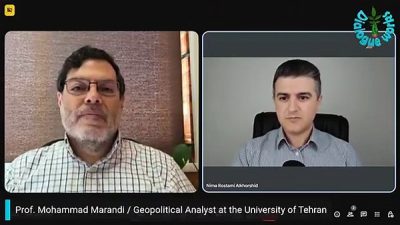
Seyed M. Marandi: U.S. Military DIVIDED? Iran’s Secret Defense EXPOSED
or go to
Aletho News Archives – Video-Images
From the Archives
‘Israel sees Iran as obstacle to its policies’
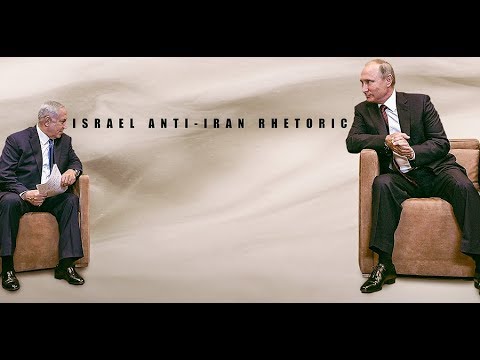
Press TV – August 25, 2017
Prime Minister Benjamin Netanyahu has said that Israel felt threatened by Iran’s growing influence in the Middle East. Netanyahu expressed his Iranophobic view in a meeting with Russian President Vladimir Putin in Russia’s Black Sea resort of Sochi on Wednesday. Press TV has asked Scott Rickard, former American intelligence linguist from Tampa, Florida, and Brent Budowsky, a columnist at The Hill from Washington, to give their thoughts on the issue.
Rickard said Tel Aviv is concerned about the fact that the regime could not carry out its old project to spread sectarian divisions and pave the way for dismemberment of the countries in the Middle East region because of the Iranian-led resistance against Israeli policies, not only in the occupied territories of Palestine but also in the whole region.
“Iran is not a threat to Israel whatsoever. The threat that Israel sees is the fact that their Oded Yinon Plan is being put to a hold by Iran,” the intelligence linguist said on Thursday night.
“They (the Israelis) look at Iran as a threat only because they have no influence on their governments and Iran is autonomous and is not under the Zionist influence,” he added.
Since the victory of the Islamic Republic of Iran in 1979, Tehran has been critical of Israel’s policies in the region, whereas “no leaders [of other states] even dared to speak out against Zionism,” Rickard argued. … continue
Blog Roll
 Aletho News
- Sri Lanka secures supplies of Russia oil – minister
- Nations across Asia strike direct deals with Iran for Hormuz passage
- IRGC commander declares ‘new phase’ of reprisal attacks against aggressors
- Israel’s air defenses overwhelmed by cluster-warhead Iranian missiles: Reports
- Striking Iran’s Infrastructure Would Have Little Military Impact – Report
- What’s Behind U.S./Israeli Strikes On Iranian Pistachio Factories?
- Seyed M. Marandi: U.S. Military DIVIDED? Iran’s Secret Defense EXPOSED
- How I fell foul of the BBC thought police
- The End of NATO
- 37 days of war on Iran cost US staggering $42bln, tracker shows
- If Americans Knew
- Trump says Iranians appreciate bombs, WHO warns of nuclear risks – Daily Update
- U.N. experts demand Israel release prominent Gaza doctor after reports of ‘severe torture’
- Israel’s Latest Genocide Is Against the Shias of Lebanon. Why Is the World Silent?
- How Eliot Cohen’s influence over U.S. war-making paved the way for Trump’s war crimes in Iran
- Israelis don’t pay for the weapons we ‘sell’ to them — US taxpayers do
- While Distancing from AIPAC, Most 2028 Democratic Hopefuls Are Still Embracing Israel
- A brief history of the Israeli nuclear program, the open secret at the heart of the Iran war
- Israeli Settlers Killed a Palestinian Farmer on His Own Land, in Front of His Father. Yes, Again
- The US-Israeli War on Science is an Assault on our Future
- 100+ International Law Experts Say US Strikes on Iran Violate UN Charter, Could Be War Crimes
- No Tricks Zone
- An Inconvenient Tree: Uncovered In Alps… Europe Much Warmer Than Today 6000 Years Ago
- New Study Reports A 60% Slowdown In Greenland’s Ice Loss Rate In The Last Decade
- Low Intensity Tornado Wrecks Major Solar Farm, Creating A Potential Toxic Dump
- New Study Finds Warming Saves Lives…Cold Temperatures 12 Times More Deadly Than Excess Heat
- German Science Blog Accuses PIK Climate Institute Of Hallucinating Climate Tipping Points
- Devastating Assessment Of Comirnaty Vaccine By Former Senior Pfizer Europe Toxicologist
- New Study: CO2 Is ‘Effectively Negligible’ As An Explanatory Climate Change Factor Since 2000
- Former Pfizer Toxicologist Dr. Helmut Sterz Tells Bundestag Hearing Pfizer Vaccine Should Have Never Been Approved
- Energy Expert: Germany’s Nuclear Phaseout Was A “500 Billion Euro Mistake”
- New Research: South Australia’s Mid-Holocene Sea Surface Temperatures Were 4°C Warmer Than Today
 Aletho News