A new take on land reform in Zimbabwe
IRIN | February 5, 2013
LONDON/HARARE – More than 10 years after the chaotic and often violent farm invasions that accompanied Zimbabwe’s fast-track land reform programme, a new book argues that the redistribution programme has dramatically improved the lives of thousands of smallholder farmers and their families.
Starting in 2000, the government implemented an initiative to acquire 11 million hectares of white-owned farmland and redistribute it on a massive scale; the programme was often carried out in the form of farm invasions led by frustrated war veterans and supporters of President Robert Mugabe. By its conclusion, only 0.4 percent of farmland remained in the hands of white commercial farmers, and smallholder farmers dominated the agricultural sector.
The land reform programme was followed by years of drought, hyperinflation and an economic meltdown.
Thirteen years later and more than 8,000km away, it still raises strong emotions. At a recent event hosted by London’s Chatham House at which authors of the new book, Zimbabwe Takes Back Its Land, defended their work, the hall was packed, and a polite but persistent group of anti-Mugabe protesters occupied the pavement outside.
The book avoids passing judgement on the often violent manner in which the programme was executed. “This is not a book about what might have been, could have been, or should have been,” write authors Joseph Hanlon, Jeanette Manjengwa and Teresa Smart. Instead, it focuses on the results of a study they carried out in Mashonaland, a region of northern Zimbabwe covering three provinces, which found that many of the ‘fast-track’ farmers are faring much better than has been widely assumed.
Despite receiving very little government assistance, “we saw that these farmers had a real passion for farming. We found that farmers are making investments, building houses and barns… and buying farm implements,” said Manjengwa. “They are making the land their own, and they are becoming serious commercial farmers.”
Finding success
When Samson Pfumo, a 52-year-old teacher from Harare, applied for and received a 60-hectare plot in Marondera District through the land redistribution programme, his expectations were low.
“My brother, a war veteran, encouraged me to apply to the government for a piece of land, but I was pessimistic because of the controversy that surrounded the land reform programme,” Pfumo told IRIN. “When I got an offer letter for the plot [in 2005], I only set up a small mud-and-dagga [hut] and hardly visited the farm.”
When the economy started improving in 2009, after the formation of a coalition government, Pfumo developed a keener interest in farming and started raising pigs. A year later, he had 60 pigs, some of which he sold to buy farming implements and to start growing maize for feed.
Today, he has five large pig pens housing more than 300 pigs, which he periodically slaughters for sale, with each pig fetching an average of US$150. He is also rearing about 500 chicks for sale and is considering venturing into tobacco farming after noting that many resettled farmers have been making good profits from the crop.
“I managed to buy a truck to ferry meat to my clients and a luxury car. My two sons are now studying at reputable universities in South Africa because I can afford it, thanks to the piggery project,” said Pfumo, who has left teaching and now lives on the farm with his wife and mother.
Controversial progress
Manjengwa and her colleagues found that even the less ambitious among the new farmers surveyed, who mainly received smaller plots of five or six hectares, had greatly improved their standard of living. After being mostly poor, landless and unemployed prior to resettlement, virtually all of them were able to grow enough food for their families, and to sell the surplus to pay for their children’s school fees. But many were doing much better than that, producing significant quantities of maize, tobacco and other crops for sale, and building up capital in the form of livestock, farm buildings and equipment. They were also starting to employ labour.
The issue of labour is contentious because so many farm workers lost their jobs and their homes when the old white-owned farms were broken up; some are still homeless and unemployed. However, Hanlon, Manjengwa and Smart estimate that around 550,000 family members and 350,000 paid labourers now work full-time on land that previously employed 170,000 workers.
Charles Taffs, president of Zimbabwe’s Commercial Farmers’ Union, reminded those at the meeting at Chatham House that the workers now being hired are not the same ones who were driven off the commercial farms. He also asserted that the figures presented in the study did not add up.
Zimbabwe’s agricultural production experienced a dramatic drop following the upheavals of 2000, but according to the authors, it is now returning to the levels of the 1990s. This is despite the fact that many rely on a much more labour-intensive form of farming than that used by the earlier white commercial farmers.
The authors also point out that, although many of the white-owned commercial farms were efficient and productive, many others were struggling and had far more land than they could use; some of the most fertile land in the country had gone uncultivated. The new smallholders have brought much of that unused land into cultivation.
Dilemma
Manjengwa and her colleagues are not the first to suggest that Zimbabwe’s controversial land reform programme has achieved a number of positive results. A 10-year study of land reform in Masvingo Province, led by Ian Scoones from the Institute of Development Studies at the University of Sussex and published in 2010, challenged a number of the “myths” surrounding fast-track land reform, finding that many of the 400 households sampled were employing labour and expanding their farming operations.
“The suggestion that the fast-track land reform programme was not an unmitigated disaster presents dilemmas about whether to accept this growing body of evidence and risk endorsing the methods used to achieve the asset transfer,” commented Admos Chimhowu of Manchester University’s Institute for Development Policy and Management, who pointed out that neighbouring South Africa has yet to find a solution to its land reform challenges.
US Secretly Training and Funding ‘Elite’ African Commandos
By Sarah Lazare | Common Dreams | May 27, 2014
The Pentagon has been secretly backing a U.S. Special Operations program to build elite units to fight “terrorism” in Libya, Niger, Mauritania and Mali, the New York Times revealed Monday.
The program was launched last year and is backed by millions of dollars in classified Pentagon funds. U.S. military trainers, including members of the Green Berets and Delta Force, are working with African “commandos” to “build homegrown African counterterrorism teams,” according to the Times.
According to the reporting, $70 million in Pentagon funds is going towards “training, intelligence-gathering equipment and other support” for commandos in Nigeria and Mauritania. And $16 million is going towards commandos in Libya. In Mauritnaia, $29 million has been allotted for “logistics and surveillance equipment in support of the specialized unit.” According to the Times, the program in Mali “has yet to get off the ground as a new civilian government recovers from a military coup last year.”
The U.S. military has for years been increasing its role across the continent of Africa, including the expansion of AFRICOM, drone attacks in Somalia, air strikes and arms shipments to Libya, and more.
Ex-president in talks to free Nigeria schoolgirls
Press TV – May 28, 2014
Former Nigerian President Olusegun Obasanjo has reportedly engaged in an effort to broker the release of over 200 schoolgirls kidnapped by the Takfiri Boko Haram militants.
Obasanjo has met with people close to the radical militants in an attempt to negotiate the release of the abducted schoolchildren, AFP reported Tuesday, citing a source close to the talks.
The meeting reportedly took place last weekend at Obasanjo’s farm in Ogun State and involved the relatives of some senior Boko Haram militants as well as mediators, the source added.
“The meeting was focused on how to free the girls through negotiation,” said the anonymous source, referring to the girls who were abducted on April 14 from the remote northeastern town of Chibok in Borno State.
Nigeria’s Chief of Defense Staff Air Chief Marshal Alex Badeh stated Monday that the whereabouts of the girls had been located but cast doubt on the prospect of rescuing them by force. He further noted that the risks of storming the area with troops in a rescue mission were too great and could prove fatal for the young hostages.
According to the source, Obasanjo had voiced concern over Nigeria’s acceptance of foreign military intervention to help rescue the abducted girls.
Obasanjo is reportedly worried that Nigeria’s prestige in Africa as a major continental power had been diminished by President Goodluck Jonathan’s decision to bring in Western military assistance, including by US forces.
Obasanjo, who left office in 2007, has previously sought to negotiate with the Takfiri militants, including in September 2011, after Boko Haram bombed the United Nations headquarters in Abuja.
Bring Back Our Girls!

By Gary Corseri | Dissident Voice | May 25, 2014
From the droned villages of Pakistan and Afghanistan–
Bring back our girls!
From Nigeria, and the brothels of the Philippines–
Bring back our girls!
From the ruined cities of Detroit and Newark
And the ravished American Dream–
Bring back our girls!
From “Disaster Capitalism” and twerking jerks–
Bring back our girls!
From the “Occupied Territories” of Palestine
And from Israeli Porn Kings–
Bring back our girls!
From the “royal” slave-holders of Arabia,
And the crapulous monarchs of Britain–
Bring back our girls!
From our culture of destitution and prostitution–
Bring back our girls!
From “entrepreneurs” and exploiters
Of sex and violence and from those who confound and abuse–
Bring back our girls!
Restore them to their birthright dignity:
Co-creators; mothers; sisters; daughters; friends.
Bring back our girls
From the wars that have butchered them
(Restore them!);
From the silence that has answered their prayers
(Answer now…);
From the callous hypocrisy
Of scoffed-at dreams and snuffed-out hopes–
Bring back our girls!
The West’s Non-Linear Warfare and the Right for the Rest to Resist
By Andrew Korybko | Oriental Review | May 19, 2014
Nearly two weeks ago, Peter Pomerantsev, writing for Foreign Affairs, published an article about “How Putin Is Reinventing Warfare”. He alleges that Russia is engaging in “non-linear warfare”, strongly alluding that this poses a threat to the West. If one can read between the lines of his biased and subjective approach, he is in actuality describing a very real and objective development – the restoration of Russian power and global standing. His ire is likely due to Russia now being able to deflect international information and media assaults against it and its policies and finally promote the truth. Pomerantsev then goes on a peculiar ranting spiel where he alleges a convoluted metaphor of Russia conspiring to be a “corporate raider”, an exercise in exasperation which will likely only reach those with pre-existing anti-Russian beliefs. It is the end of his article, however, that forms the basis of this response to it. Pomerantsev uses the analogy of the West’s “global village” versus Russia’s “non-linear warfare” to make his final point in throwing mud at Russia. In reality, there is not one “global village”, but rather, many regional civilizational villages that are experiencing Western raids and “non-linear warfare”, and they have finally started to band together to stop the marauders.
The liberal end of history (aka “the global village”) does not exist outside of ideological fantasy, and the world is instead divided into civilizational zones (regional villages) united around certain actors (Russia, China, Islamic pillars, the West). This forms the basis of the running metaphor that will be utilized below to advance the claim of the West waging non-linear warfare against the Rest.
Repeated raids from Western marauders and bandits, whose village is the only one seeking to expand, loot, and plunder, has resulted in parts of the other villages being burnt down. In the past decade, the Islamic village experienced this the worst, with conflagrations decimating its Afghan, Iraqi, Libyan, and now Syrian neighborhoods. Currently, the Eurasian village is having to deal with a fire in Ukraine, one that was purposely set to spread to the Russian core. However, as a result of these repeated raids, the regional villages have formed self-defense forces and are now working together to put out the fires and stop the raiding. Experience has taught them how to successfully resist and defy the Western village. In the real world, the success of international media firms (RT, Press TV, CCTV, Telesur) shows that media and information assaults can in fact be deflected and that perception management and national PR initiatives are not under the sole monopoly of the West.
Pomerantsev’s claims that “(economic) interconnection also means that Russia can get away with aggression” could not be more opposite to the truth. The Western village is actually two large ones, the US and the EU, and the American village grew out of the EU one and now controls its creator. In this case, the suburb controls the center, so to speak. It is the interconnection between the Eurasian (Russian) and EU villages that serves as the real check on further US aggression against the former. When not marauding and raiding, the Western village also tries to infiltrate the others via NGOs and Color Revolutions. Once it flips some members of the village and/or installs its pick as village leader, these turncoat individuals can “open the gates from within”, promote mutiny, and lead to the annexation of the village into the Western-dominated expanding sprawl.
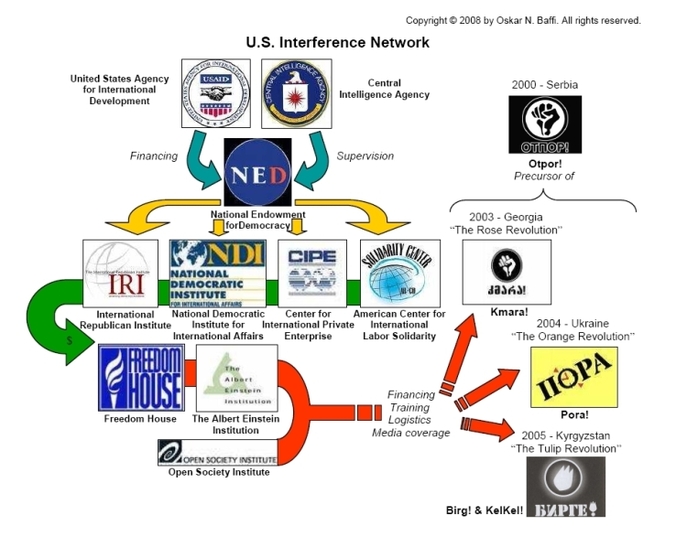
Pulling back from the metaphor, the Brzezinski Doctrine (“The Eurasian Balkans”) is the definition of non-linear warfare and subversive destabilization. It uses NGOs as destabilizing elements within the targeted states, and for this reason, foreign-funded NGOs are required to register as “foreign agents” inside the Russian Federation. Gene Sharp’s writings have also provided pivotal tactical advice in advancing the West’s non-linear warfare strategy. Taking the use of non-state actors even further, the West has a history of promoting militarized proxy groups to carry out its policies. This is most clearly seen in Kosovo, Afghanistan, Iraq, Libya, and Syria, although other countries have also been victims of this underhanded method of war. On the other hand, the West obviously engages in conventional warfare as well. Nowhere is this more evident than in the 2003 Iraq War. Mixing the two methods together is the new trend of American foreign policy. A non-linear campaign of militarized proxy destabilization culminated in a conventional NATO bombing in Libya. After this “success”, the West then turned its sights on Syria, but as a result of adroit Russian foreign policy maneuvers, non-linear warfare was stymied from mutating into its conventional form.
Pomerantsev’s article also uses fear mongering and heavy hype to scare the audience into thinking that Russia is proactively forming some kind of imaginary coalition against the West from within. If there happens to exist an overlap of perceived interests and objectives between Russia and domestic Western actors, it is because both parties arrived at the same conclusions after undergoing the same process – experiencing Western unipolar dominance and discriminatory targeting for two decades. For example, “Euro-scepticism” is also seen in Southeast Asia by the ASEAN members’ reluctance to form an EU-like union. The flower of New Leftism and resistance ideology in South America organically began to bloom in the 2000s, tended over by Hugo Chavez. In a similar fashion, the traditionally conservative societies of India, China, and Africa are just as disgusted as Russia’s by certain Western-centric values, such as the “bearded woman” of Eurovision. In laboratory conditions, the cause (Western dominance) has thus been proven to repeatedly result in similar effects all across the world, thereby confirming the hypothesis that Russia and others arrive at their conclusions on their own. There is no “contradictory kaleidoscope of messages”, as each actor’s resistance and defiance to the West, for various reasons and in differing forms, were a natural development.
To conclude, there are currently multiple civilizational liberation struggles playing out in the Pandora’s Box-setting of Western-led post-modernism. This is not a new page in the old historical story, but an absolutely new edition that is still being written. The Rest, absolutely diverse in their identity and overall mission, are coming together to stop the Western steamroller. They must work together to repel its aggression and safeguard the right to practice their identity and move forward with their historical mission as they individually deem fit. It is the democratic and sovereign choice of each civilization to be able to conduct itself how it pleases, but in order to get to that point, they must be liberated from the terror of the Western threat. These villages do not want to raze the Western one, so to speak, but they understand that the West will raze them if they can’t be annexed. In this manner, they are engaged in a do-or-die struggle, and at no time before in their histories has the situation been more dire. The Rest is slowly coalescing into providing a unified front against the Western menace, hoping to neutralize its raids and incursions so that they can once more go about their civilizational business in constructing and solidifying their societies. If, as Pomerantsev states, Russia and the Rest are anti-Western “raiders”, then yes, the future surely does belong to these resistant and defiant actors.
Andrew Korybko is the American Master’s Degree student at the Moscow State University of International Relations (MGIMO).
Nigeria accepts Israeli help in search for kidnapped school girls
MEMO | May 12, 2014
Nigeria’s President Goodluck Jonathan has accepted an Israeli offer to help search for 223 kidnapped school girls by the extremist Boko Haram group, Israel’s Prime Minister Benjamin Netanyahu’s office announced yesterday.
Netanyahu is reported to have told the Nigerian president: “Israel expresses deep shock at the crime against the girls. We are ready to help in finding the girls and fighting the cruel terrorism inflicted on you.”
The statement gave no further details on the nature of assistance provided.
A foreign ministry spokesman said he does not know of any cooperation efforts in the present time.
Israel and Nigeria have a defence agreement whereby Israel supplied Nigeria with drones in September and joined other countries to advise Kenya to confront Islamic militants who attacked a trading centre in Nairobi.
In a statement, the Nigerian president’s office said: “President Jonathan has accepted an Israeli offer by Prime Minister Netanyahu to send a team of Israeli counter-terrorism experts to contribute to the ongoing search operations. Nigeria would be pleased to have Israel’s globally acknowledged anti-terrorism expertise deployed to support its ongoing operations.”
A total of 276 girls were abducted by Boko Haram on April 14 from the northeast of the country, which has a sizeable Christian community. Some 223 are still missing.
~~~
See also:
- ‘Boko Haram’ doesn’t really mean ‘Western education is a sin’
- How Nigerian police also detained women and children as weapon of war
When Our Land is Free, We are Free
By Silas Kpanan’Ayoung Siakor & Jacinta Fay | The Ecologist | May 7, 2014
Right now in Abuja, Nigeria, agribusiness corporations are courting African governments at the Grow Africa Investment Forum to “further accelerate sustainable agricultural growth in Africa”.
That sounds harmless enough, until you know what it really means. Corporate interest in agriculture in Africa has certainly accelerated corporate control of land, seeds and water. But it has done little to support agriculture that will feed the continent.
Rather than support family farming and smallholder agriculture, private sector investment in agriculture has resulted in grabbing land from communities – the land which they farm sustainably and rely on for their survival.
Resisting the corporate bully boys
Communities are resisting this corporate takeover of their land and they are winning. All over Africa people are sending a clear message to their governments: “Stop selling Africa to corporations!” The Jogbahn Clan in Liberia is one such community and here is their story.
The sense of jubilation in Blayahstown, small town in Liberia, is palpable. People come from surrounding villages to join in the celebrations and the town is filled with singing and dancing.
The Jogbahn Clan is celebrating a victory as the President of Liberia has now recognised their right to say no Equatorial Palm Oil (EPO) a British palm oil company grabbing their land.
This is no small feat in a country where over 50% of the land has been given to corporations without the consent of the communities who customarily own the land.
We come from this land – it is ours!
The sense of accomplishment is not lost on Chief Elder Chio Johnson who looks like he hasn’t stopped smiling since he returned from the Clan’s meeting with the President of Liberia – where she committed to support them in protecting their land from being grabbed by EPO.
“Why should a company take away our livelihood?” asked Chio. “We come from this land. Everything our ancestors left us is preserved in the forest, so why should we give up our forest?”
Walking through the forest with Deyeatee Kardor, the Clan’s Chairlady, she picks leaves and describes the different medicines that they can be used for. She recounts how she and her family hid in the forest throughout the Civil War and managed to survive on the plants and fruits growing in the bush.
Though the land bears the scars of the recent past it also represents the Clan’s ancestral home and they would not willingly allow this deep connection to the land to be fractured.
20,000 hectares of community land given away
 “The land gives us everything”, Chio says as he surveys the area; the vegetables, wild palm and sugar cane growing all around. Like other rural communities in Liberia they make their livelihood from the land they manage collectively.
The clan are self-sufficient and manage the land sustainably. For the Clan, to lose their land is to lose everything.
The communities’ resistance began in 2012 when EPO began to expand their plantation onto the community land of eleven towns. The Government of Liberia and EPO had signed a concession agreement allowing the company’s plantation to engulf communities’ land amounting to over 20,000 hectares.
Communities all over Liberia are facing the same threat as their lands are given to companies without their consent. As a result conflict between communities and companies has been widespread.
Police and EPO security intimidation
The Clan organised and came together to resist their land being grabbed. Men, women and youth from the affected towns chose representatives to form a core group to lead the resistance.
They met the company and the government several times to object to the company’s expansion. In spite of this towards the end of 2012 EPO began clearing and planting their land, destroying crops and farmland.
In September 2013 EPO began surveying the communities’ land without their consent. When the communities attempted to stop the survey a paramilitary police unit was deployed into the area, and began to run a campaign of harassment and intimidation by both the police and EPO’s security force.
They drove through villages at night flashing their emergency lights and arrived in villages riding on top of vehicles the same way rebel fighters did during the war.
People were also assaulted during a peaceful march and 17 people suffered arbitrary arrest. The Clan Chief was also suspended from his position by the government because he spoke out against the company.
Divide and rule – this time, it failed
Despite these aggressive tactics the community continued resisting. They lodged a complaint to the Roundtable on Sustainable Palm Oil (RSPO) and presented a petition to the government stating their objections.
“All they have done is try to divide us”, commented Deyeatee. “They offer important people a little money to try to convince them.”
However the community refused to be weakened by division and eventually secured the crucial meeting with the Liberian President Ellen Johnson Sirleaf where she recognised their right to say ‘no’ to the company.
“The struggle has made us stronger than ever before and we’ve learned a lesson to stay united”, said Anthony Johnson, a youth representative.
“The success is so great as it secures my future and the future of my children to come. I will stay on this land and plant crops for my children so future generations can live off the land.”
But for EPO, it’s business as usual
Despite the President’s commitment EPO has still not recognised that the Clan has said no to their operations. They are operating as if things are business as usual and conducting studies of the Clan’s land in preparation for clearing.
But the Clan are not discouraged and they continue their resistance for the hope of a better future.
Land clearance and other preparatory activities would be unlawful, as they do not respect communities’ right to give or withhold their Free Prior and Informed Consent, which is a requirement provided for under both national and international law.
“We want the government to support us to be self-sufficient on our land instead of giving it to a company who will just take the money and go home”, said Garmondeh Benwon, who suffered assault on the march. ”Instead we can keep the money in Liberia and we can live better lives.”
Organise and resist!
Every year, an area five times the land size of Liberia is grabbed from communities around the world. The Jogbahn Clan show that stopping it is possible when communities stand together, mobilise and resist.
The government has recognised their right to say no – and now EPO and KLK, their majority shareholder, must do the same.
It is a privilege to work in solidarity with the Clan and their drive and resilience has been a constant source of inspiration for everyone in SDI / FoE Liberia.
The Clan are preparing to share the lessons of their struggle and give hope to other communities resisting land-grabbing. And as Deyeatee says:
“I am very happy my land is free – because when our land is free, we’re all free.”
Silas Siakor is a campaigner on Community Rights and the founder of the Sustainable Development Institute/Friends of the Earth, Liberia a national civil society organisation promoting the sustainable and just use of Liberia’s natural resources. Silas has received the Goldman Environmental Prize in 2006, the Award for Extraordinary Achievement in Environmental and Human Rights Activism from The Alexander Soros Foundation in 2012 and TIME Magazine chose him as one of the 2008 Heroes of the Environment.
Jacinta Fay is a community worker and campaigner for the Community Rights and Corporate Governance Programme of the Sustainable Development Institute/Friends of the Earth Liberia which supports communities protect their land and resources and challenges corporate and government actions which threaten community rights. She is also Landgrab Campaigner for Friends of the Earth International which works to challenge landgrabbing, defend community territories and protect land rights. She also campaigns on trade justice, reproductive rights and social justice.
Twitter: Join the conversation on Twitter #stopEPO
Petition: Support the Jogbahn Clan to protect their land and resources: Landgrabbing in Liberia: Tell Equatorial Palm Oil NO means NO!
EPO backgrounder: EPO’s majority shareholder is the Malaysian company KLK, widely known to use child labor and other egregious practices. In turn, US-based investment company Dimensional Fund Advisors holds over $12 million in KLK. DFA also holds over $2.5 billion in companies with significant stakes in the palm oil sector. And DFA is partly owned by Arnold Schwarzenegger – who claims to care a great deal about saving forests. DFA also manages money for a wide range of US clients, from cities’ endowments to pension funds.
Lies About Rwanda Mean More Wars If Not Corrected
By David Swanson | War is a Crime | March 28, 2014
Urge the ending of war these days and you’ll very quickly hear two words: “Hitler” and “Rwanda.” While World War II killed some 70 million people, it’s the killing of some 6 to 10 million (depending on who’s included) that carries the name Holocaust. Never mind that the United States and its allies refused to help those people before the war or to halt the war to save them or to prioritize helping them when the war ended — or even to refrain from letting the Pentagon hire some of their killers. Never mind that saving the Jews didn’t become a purpose for WWII until long after the war was over. Propose eliminating war from the world and your ears will ring with the name that Hillary Clinton calls Vladimir Putin and that John Kerry calls Bashar al Assad.
Get past Hitler, and shouts of “We must prevent another Rwanda!” will stop you in your tracks, unless your education has overcome a nearly universal myth that runs as follows. In 1994, a bunch of irrational Africans in Rwanda developed a plan to eliminate a tribal minority and carried out their plan to the extent of slaughtering over a million people from that tribe — for purely irrational motivations of tribal hatred. The U.S. government had been busy doing good deeds elsewhere and not paying enough attention until it was too late. The United Nations knew what was happening but refused to act, due to its being a large bureaucracy inhabited by weak-willed non-Americans. But, thanks to U.S. efforts, the criminals were prosecuted, refugees were allowed to return, and democracy and European enlightenment were brought belatedly to the dark valleys of Rwanda.
Something like this myth is in the minds of those who shout for attacks on Libya or Syria or the Ukraine under the banner of “Not another Rwanda!” The thinking would be hopelessly sloppy even if based on facts. The idea that SOMETHING was needed in Rwanda morphs into the idea that heavy bombing was needed in Rwanda which slides effortlessly into the idea that heavy bombing is needed in Libya. The result is the destruction of Libya. But the argument is not for those who pay attention to what was happening in and around Rwanda before or since 1994. It’s a momentary argument meant to apply only to a moment. Never mind why Gadaffi was transformed from a Western ally into a Western enemy, and never mind what the war left behind. Pay no attention to how World War I was ended and how many wise observers predicted World War II at that time. The point is that a Rwanda was going to happen in Libya (unless you look at the facts too closely) and it did not happen. Case closed. Next victim.
Edward Herman highly recommends a book by Robin Philpot called Rwanda and the New Scramble for Africa: From Tragedy to Useful Imperial Fiction, and so do I. Philpot opens with U.N. Secretary General Boutros Boutros-Ghali’s comment that “the genocide in Rwanda was one hundred percent the responsibility of the Americans!” How could that be? Americans are not to blame for how things are in backward parts of the world prior to their “interventions.” Surely Mr. double Boutros has got his chronology wrong. Too much time spent in those U.N. offices with foreign bureaucrats no doubt. And yet, the facts — not disputed claims but universally agreed upon facts that are simply deemphasized by many — say otherwise.
The United States backed an invasion of Rwanda on October 1, 1990, by a Ugandan army led by U.S.-trained killers, and supported their attack on Rwanda for three-and-a-half years. The Rwandan government, in response, did not follow the model of the U.S. internment of Japanese during World War II, or of U.S. treatment of Muslims for the past 12 years. Nor did it fabricate the idea of traitors in its midst, as the invading army in fact had 36 active cells of collaborators in Rwanda. But the Rwandan government did arrest 8,000 people and hold them for a few days to six-months. Africa Watch (later Human Rights Watch/Africa) declared this a serious violation of human rights, but had nothing to say about the invasion and war. Alison Des Forges of Africa Watch explained that good human rights groups “do not examine the issue of who makes war. We see war as an evil and we try to prevent the existence of war from being an excuse for massive human rights violations.”
The war killed many people, whether or not those killings qualified as human rights violations. People fled the invaders, creating a huge refugee crisis, ruined agriculture, wrecked economy, and shattered society. The United States and the West armed the warmakers and applied additional pressure through the World Bank, IMF, and USAID. And among the results of the war was increased hostility between Hutus and Tutsis. Eventually the government would topple. First would come the mass slaughter known as the Rwandan Genocide. And before that would come the murder of two presidents. At that point, in April 1994, Rwanda was in chaos almost on the level of post-liberation Iraq or Libya.
One way to have prevented the slaughter would have been to not support the war. Another way to have prevented the slaughter would have been to not support the assassination of the presidents of Rwanda and Burundi on April 6, 1994. The evidence points strongly to the U.S.-backed and U.S.-trained war-maker Paul Kagame — now president of Rwanda — as the guilty party. While there is no dispute that the presidents’ plane was shot down, human rights groups and international bodies have simply referred in passing to a “plane crash” and refused to investigate.
A third way to have prevented the slaughter, which began immediately upon news of the presidents’ assassinations, might have been to send in U.N. peacekeepers (not the same thing as Hellfire missiles, be it noted), but that was not what Washington wanted, and the U.S. government worked against it. What the Clinton administration was after was putting Kagame in power. Thus the resistance to calling the slaughter a “genocide” (and sending in the U.N.) until blaming that crime on the Hutu-dominated government became seen as useful. The evidence assembled by Philpot suggests that the “genocide” was not so much planned as erupted following the shooting down of the plane, was politically motivated rather than simply ethnic, and was not nearly as one-sided as generally assumed.
Moreover, the killing of civilians in Rwanda has continued ever since, although the killing has been much more heavy in neighboring Congo, where Kagame’s government took the war — with U.S. aid and weapons and troops — and bombed refugee camps killing some million people. The excuse for going into the Congo has been the hunt for Rwandan war criminals. The real motivation has been Western control and profits. War in the Congo has continued to this day, leaving some 6 million dead — the worst killing since the 70 million of WWII. And yet nobody ever says “We must prevent another Congo!”

France triggered CAR slaughter

By Finian Cunningham | Press TV | February 13, 2014
As the Central African Republic descends into a charnel house of mass killing, hunger and fleeing refugees, one country bears full responsibility for the catastrophe – France.
This week, France’s defence minister Jean-Yves Le Drian had the brass neck to tour the former French colony where hundreds of people – mainly Muslims – have been lynched in the streets in recent weeks, their corpses left to rot along the roadsides.
Thousands more have been burnt out of their homes and have fled to the jungles for refuge from inter-communal clashes. A Muslim man happened to fall off a truck ferrying refugees from the violence. He was then beaten, hacked to death by a frenzied mob on the street below.
An entire country has been turned upside down, and that chaos and suffering is all down to French imperialist meddling.
Le Drian had the nerve to claim that the dispatch of French troops to the Central African Republic in early December “had prevented even more deaths from occurring”. How dare the French minister distort the facts and exonerate his country from the cold-blooded mass murder and an unfolding humanitarian crisis that it – and it alone – has triggered.
The upsurge in killings in the CAR’s capital, Bangui, and the surrounding countryside began promptly on December 5. This was three days after France began sending hundreds of its soldiers to that country, supposedly with the remit of “humanitarian protection”.
It was only after France dispatched its troops to this country that the United Nations Security Council – railroaded by French diplomats – authorized the intervention with a mandate. The French military intervention is therefore illegal and its hastiness reveals what the hidden agenda for French meddling in Central Africa is really all about.
Prior to the arrival of the French military, there were only unconfirmed reports of sporadic fighting between the mainly Muslim rebel group known as Seleka and the Christian-based paramilitaries called Anti-Balaka. The Seleka ousted the French-backed Christian president Francois Bozizé in March 2013. Bozizé had been installed by a French-backed military coup in 2003. His ouster can be seen as a setback to French political and economic interests in the CAR. However, it was only after French so-called peacekeepers arrived in the CAR on December 2 that mass killings erupted in the African country.
Two major factors for the ensuing violence are that the French from the outset showed flagrant bias against the Seleka rebels, ordering their unilateral disarmament at gunpoint. Meanwhile, the Anti-Balaka factions were allowed by the French to retain their weapons. This one-sided policy by the French emboldened the Christian militias to see themselves as having a free hand to attack Muslim communities.
The French defence minister admitted so this week. Speaking to French media from Bangui, Le Drian said that French disarmament practices had up to now been focused solely on the Seleka rebels. “Now we must focus on the Anti-Balaka,” he added.
But it’s too late for supposed remedial action. Already, thousands of people, mainly Muslims, have been slaughtered across the Central African Republic. Thousands more have fled their homes for the neighboring countries of Cameroon, Chad and the Democratic Republic of Congo. Families are living in makeshift shelters with no food or medicines.
The ethnic cleansing of an entire community has already happened, and for the French government to now say that it is taking remedial action is beneath contempt. France has already overseen the slaughter. The second factor for the sudden massive bloodletting in the CAR is that several weeks before the dispatch of French soldiers, the Paris government was making very public announcements to the international media, warning that the African country “was on the brink of genocide”. Foreign minister Laurent Fabius was one of the main voices issuing those blood-curdling predictions.
These dire alarms were being made recklessly by France without any evidence to support such claims and at a time when, as noted, there were only unconfirmed reports of sporadic violence. In addition, the French media spin was directed against the Muslim Seleka rebels, which had ousted France’s puppet and corrupt proxy leader, Bozizé.
Thus when French soldiers began arriving in the CAR in early December, the country was primed for a deadly sectarian conflict because of the campaign of misinformation conducted by Paris in the previous weeks. Despicably, the fact is that the Christian and Muslim communities, comprising 60 and 15 per cent of the population, respectively, had always coexisted peacefully prior to this French meddling.
France has played with sectarian fire in Central Africa, and now other people are being horribly burned. The situation has been inflamed so badly by the cynical French that they are not able to control it. Now Paris wants the UN and other EU countries to send more troops to support the already 1,600 French military present in the CAR. The hidden agenda for Paris has always been about securing the rich natural resources of this Central African country. The CAR has super-abundant reserves of gold, diamonds and other precious minerals. It is believed to have vast untapped deposits of oil and gas, and proven copious reserves of uranium ore. The latter is the primary nuclear energy fuel, on which France is heavily dependent for its national electricity production. A new French-owned uranium mining plant began operations in the CAR in 2010 and is due to reach maximum production later this year.
This is the real background for why France felt compelled to intervene in the CAR, especially after its puppet president Francois Bozizé was ousted by the Seleka rebels.
But, paying the price for French criminal machinations, are thousands of innocent people who are being cut down in the streets, children who are orphaned from murdered parents, and impoverished, dispossessed families who are now starving in the jungles of Central Africa.
Truly, the brutal European colonial times of a past century seem to be back in Africa with a vengeance.
And yet the man who bears the responsibility for his country’s criminality in Africa – French president Francois Hollande – was being toasted at a sumptuous dinner in Washington this week by African-American president Barack Obama. Obama, with a glass of expensive wine in one hand, hailed Hollande for his country’s commitment to “security and peacekeeping” in Africa.
A day of reckoning cannot come soon enough. Just because these leaders are deluded does not mean we should ignore them or merely excoriate them. The international community must marshal the case and call for the prosecution of these criminals in high office.
Featured Video
Seyed M. Marandi: U.S. Military DIVIDED? Iran’s Secret Defense EXPOSED
or go to
Aletho News Archives – Video-Images
From the Archives
‘Israel sees Iran as obstacle to its policies’
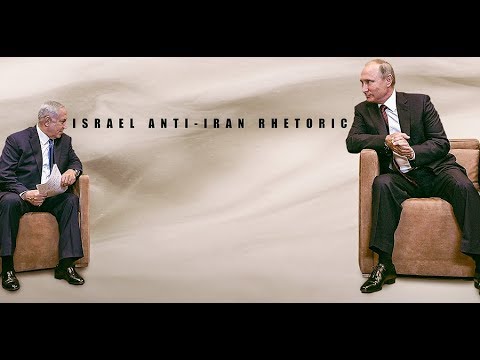
Press TV – August 25, 2017
Prime Minister Benjamin Netanyahu has said that Israel felt threatened by Iran’s growing influence in the Middle East. Netanyahu expressed his Iranophobic view in a meeting with Russian President Vladimir Putin in Russia’s Black Sea resort of Sochi on Wednesday. Press TV has asked Scott Rickard, former American intelligence linguist from Tampa, Florida, and Brent Budowsky, a columnist at The Hill from Washington, to give their thoughts on the issue.
Rickard said Tel Aviv is concerned about the fact that the regime could not carry out its old project to spread sectarian divisions and pave the way for dismemberment of the countries in the Middle East region because of the Iranian-led resistance against Israeli policies, not only in the occupied territories of Palestine but also in the whole region.
“Iran is not a threat to Israel whatsoever. The threat that Israel sees is the fact that their Oded Yinon Plan is being put to a hold by Iran,” the intelligence linguist said on Thursday night.
“They (the Israelis) look at Iran as a threat only because they have no influence on their governments and Iran is autonomous and is not under the Zionist influence,” he added.
Since the victory of the Islamic Republic of Iran in 1979, Tehran has been critical of Israel’s policies in the region, whereas “no leaders [of other states] even dared to speak out against Zionism,” Rickard argued. … continue
Blog Roll
 Aletho News
- Trump Claims Ceasefire, Reopening of Strait of Hormuz Agreement with Iran
- Israeli tank fire killed UN peacekeeper in Lebanon, UNIFIL investigation finds
- Russia, China block Bahrain-sponsored UN resolution on Strait of Hormuz
- The US-Israeli War on Science is an Assault on our Future
- Trump’s Promise to Bomb Iran ‘Like Never Before’ Faces Brutal Logistics — Expert
- Germany seeks to restrict stays abroad for men of fighting age – Berliner Zeitung
- Evidence points to Ukraine being behind TurkStream attempted sabotage, but that should come as no surprise
- Sri Lanka secures supplies of Russia oil – minister
- Nations across Asia strike direct deals with Iran for Hormuz passage
- IRGC commander declares ‘new phase’ of reprisal attacks against aggressors
- If Americans Knew
- The war the US is fighting for Israel could cost trillions
- ‘Cigarette Burns, Nail Wounds’: Toddler Tortured in Gaza to Coerce Father
- Trump Says US Sent ‘a Lot of Guns’ to Protesters in Iran
- Israeli forces destroy 17 UN peacekeeper cameras in south Lebanon
- US-Israeli strikes ‘completely destroy’ synagogue in Tehran
- Archbishop for US Military Says Iran War Is Unjust Under Catholic Teaching
- Iranian leaders’ Open Letters to the American People
- Trump says Iranians appreciate bombs, WHO warns of nuclear risks – Daily Update
- U.N. experts demand Israel release prominent Gaza doctor after reports of ‘severe torture’
- Israel’s Latest Genocide Is Against the Shias of Lebanon. Why Is the World Silent?
- No Tricks Zone
- An Inconvenient Tree: Uncovered In Alps… Europe Much Warmer Than Today 6000 Years Ago
- New Study Reports A 60% Slowdown In Greenland’s Ice Loss Rate In The Last Decade
- Low Intensity Tornado Wrecks Major Solar Farm, Creating A Potential Toxic Dump
- New Study Finds Warming Saves Lives…Cold Temperatures 12 Times More Deadly Than Excess Heat
- German Science Blog Accuses PIK Climate Institute Of Hallucinating Climate Tipping Points
- Devastating Assessment Of Comirnaty Vaccine By Former Senior Pfizer Europe Toxicologist
- New Study: CO2 Is ‘Effectively Negligible’ As An Explanatory Climate Change Factor Since 2000
- Former Pfizer Toxicologist Dr. Helmut Sterz Tells Bundestag Hearing Pfizer Vaccine Should Have Never Been Approved
- Energy Expert: Germany’s Nuclear Phaseout Was A “500 Billion Euro Mistake”
- New Research: South Australia’s Mid-Holocene Sea Surface Temperatures Were 4°C Warmer Than Today
 Aletho News