The Islamic world reorganizes the strategy in Riyadh
By Lorenzo Maria Pacini | Strategic Culture Foundation | November 15, 2024
On 11 November, an emergency Arab-Islamic summit on the question of Palestine was held in Riyadh. It was an extremely important event, from which the directives of the coming months for the Middle Eastern Islamic world and beyond will take their course. A shared international strategy emerged, even if contradictions and risks are not entirely absent.
A necessary window for dialogue
On Monday, 11 November, Riyadh invited the 22 countries of the Arab League and the 50 or so states that make up the Organisation of Islamic Cooperation to take part in a summit dedicated to the ongoing conflicts in the region. The meeting focused on ongoing conflicts in the region, with a particular focus on Donald Trump’s return to the Oval Office.
At the opening of the summit dedicated to Israel’s wars in the Gaza Strip and Lebanon, Saudi Crown Prince Mohammed bin Salman used the term ‘genocide ’ to describe Israel’s military operations in the Gaza Strip: ‘We call on the international community to assume its responsibility […] by immediately ending Israeli attacks against our brothers in Palestine and Lebanon’.
The assembled Arab and Muslim leaders took the same stance towards Israel, condemning the horrific and shocking crimes committed by the Israeli army in Gaza, denouncing torture, executions, disappearances and outright ethnic cleansing, as stated in the final communiqué of the meeting.
Mohammed bin Salman also called on Israel to ‘respect the territorial sovereignty of the Islamic Republic of Iran” and to ”refrain from attacking its territory’. Most members of the Arab League and the Organisation of Islamic Cooperation will support these very firm statements. Although there are big differences between the countries that have normalised relations with Israel and those that oppose it, starting with the Islamic Republic of Iran. MBS explicitly said that not only the very existence of Palestine is now in question, but also the fate of the Al-Aqsa Mosque, the second holiest shrine in Islam after Mecca, a statement reminiscent of the name of the Hamas operation entitled ‘Storm Al-Aqsa’. Evidently, Hamas leaders expected that such an emergency Arab-Islamic summit would convene much earlier, for instance soon after the start of Israel’s ground operation in Gaza.
In this regard, the Crown Prince referred to Iran as a ‘sister republic’, which made the press throughout the Islamic world rejoice, signalling a detente in relations between the two countries. Diplomatic relations were officially reopened in March 2023, after a seven-year blockade, thanks to an agreement brokered by China, and after the infamous 7 October 2023, dialogue resumed and intensified. Iran supports the Palestinian Islamist movement, while Saudi Arabia tries to contain the spread of the conflict.
At the summit, Iran’s First Vice-President Mohammad Reza Aref called Israel’s assassination of the leaders of Palestinian Hamas and Lebanese Hezbollah ‘organised terrorism’, adding that ‘Operations misleadingly described as “targeted killings”, in which Palestinian elites and leaders of other countries in the region are killed one by one or en masse, are nothing but organised terrorism’. Similarly expressed by Lebanese Prime Minister Najib Mikati, who called on the international community to continue sending aid to Lebanon. It should be noted that Mikati spoke a few days ago of ‘interference by Iran’ in Lebanon, an accusation rejected by Tehran.
It is worth noting the simultaneous involvement of Assad and Erdogan. Only recently, such crossovers were impossible. The government in Ankara has spoken increasingly strong and clear words against the extermination that Israel is perpetrating, certainly favouring a round table with the neighbouring Islamic countries, at least from the point of view of positive intentions.
Why only now?
There is almost nothing left of the leadership of Hamas and Hezbollah. This is a fact to be confronted with. Such a summit would have been very different if the leaders of the Resistance were still alive.
The reason for this delay is perhaps the American elections. While the BRICS+ summit in Kazan had paved the way and pointed in a direction of international cohesion in condemning Israel’s actions and the need to restore Palestinian autonomy, it is true that the final placet was missing to move from theory to action.
Donald Trump’s victory must be framed from an Arab-Islamic perspective. Trump is a supporter of right-wing Zionism, that of Netanyahu and certain radicals such as Smotrich, Ben Gvir and Rabbi Dov Lior, who have never shied away from proclamations of massacres, sacrifices and religious destruction. For Zionists, Jerusalem is as important as Al Quds for Islamists (Al Quds is the Arabic name for Jerusalem). In the election campaign, Trump never gave an inch about his pro-Zionist position and support for the government in Tel Aviv. It was he who proposed moving the capital of the Zionist entity to Jerusalem and it was he who ordered the assassination of General Qassem Soleimani. Trump’s election strengthened the prospects for US-Israeli collaboration, so much so that Smotrich immediately declared his intention to attack the Palestinians in the West Bank and blow up the Al-Aqsa Mosque.
Trump has accelerated these processes. The next goal, which he personally supported and financed, is the construction of the Third Temple, an eschatological keystone for the entire American neocon world. The physical destruction of all of Israel’s enemies is not a side effect or minor harm, but a duty inherent in Jewish messianism.
The emergence of the Islamic pole in the multipolar world is acquiring an increasingly recognisable and identifiable form. Of course, there are still many problems to be solved: Saudi Arabia and Turkey do business with the US and Israel, continue to play on opposing sides, and are historically unreliable. The countries of South East Asia still have to define their position with regard to international relations with the West, in order to definitively emancipate themselves and make themselves safe from blackmail and retaliation.
The questions many are asking themselves are various: will the next American president commit himself to ending the ongoing conflicts as he has promised? Or will he be an unconditional supporter of Israel, both in the war and in his plans to torpedo any prospect of establishing a Palestinian state? Saudi Arabia makes any normalization with Israel conditional on the creation of a Palestinian state alongside Israel. The two-state solution is supported by much of the international community as a means to resolve the decades-long Israeli-Palestinian conflict. Arab and Muslim leaders hold firm to the position, in accordance with UN resolutions and the 2002 Arab peace plan, that Israel must return all territories occupied since 1967.
The Abrahamic agreements are no longer enough. This time, however, the US can no longer decide the entire future of the Middle East on its own, because the chessboard has changed and the new positions taken by the Islamic countries will force Washington to weigh up more elements. Russia and China will not let the multipolar project be compromised. Not even the African countries, where the Palestinian cause is a deeply felt and shared issue of freedom, identity and anti-colonialism, are going to give way in the fight against this historic injustice.
The Muslim population of Islamic countries, seeing the passivity of the rulers, will not tolerate the ongoing extermination and attack on the holy places of their religion much longer.
Probably, only a common war against a common enemy can unite Muslims. And that could happen very soon.
Kiev supports terrorist organizations – former SBU officer
RT | November 12, 2024
Ukraine has been working with terrorist groups in the Middle East due to a shortage of trained soldiers in its fight against Russia, former Ukrainian Security Service (SBU) officer Vasily Prozorov has stated.
Speaking to RT on Tuesday, the ex-SBU officer claimed Kiev was deploying servicemen to Syria to train terrorists, with the aim of recruiting them.
“When we were working in Syria studying arms smuggling between Ukraine and Islamic terrorist organizations, we already received information that representatives of the Ukrainian special services were sending their people to Syria, to areas not controlled by the official government, to train terrorists,” Prozorov recalled.
He elaborated that “First of all, they are training [terrorist organizations] to fly drones … and secondly, they are recruiting personnel there because Kiev has very big problems with trained personnel on their territory.”
Prozorov went on to say that there are fewer people willing to fight in Ukraine, which is why Kiev is “looking for everyone they can reach, including among terrorist militants in the Middle East.”
The former SBU officer indicated that during a series of interviews he had managed to record with several captured Ukrainian soldiers, one of them – from the nationalist unit Kraken – admitted that servicemen from his battalion were on a mission in Sudan and participated in military operations against Sudanese authorities on the side of separatists.
“They went there on direct orders from Ukrainian intelligence,” Prozorov claimed. “If we add to this the information about how Ukrainian intelligence responded to the clash in Mali between fighters of the African corps and local terrorist groups, then a clear line can be traced that Kiev supports terrorist organizations,” Prozorov insisted.
A commando regiment operating under the Ukrainian military intelligence agency HUR, Kraken was established in 2022 by former members of the neo-Nazi Azov Battalion and other intelligence officers.
Spokesman for HUR Andrey Yusov has previously admitted his agency’s involvement in July’s deadly raid in Mali, when Tuareg insurgents ambushed and killed dozens of Malian forces and personnel from Russia’s Wagner Group. Yusov has said that HUR had provided the rebels with “necessary information, and not just information, which enabled a successful military operation.” According to Le Monde, Ukrainian spies shared their drone warfare techniques to help the rebels kill Russian security contractors.
Yusov’s remarks then sparked outrage in Mali and several neighboring West African countries, which have accused Ukraine of supporting aggression. The Malian military government and its ally in Niger responded by breaking off diplomatic relations with Kiev.
“I think that the more problems Ukraine has at the front, the more we will see Ukrainian mercenaries in all sorts of hotspots under the auspices of Western intelligence services …” Prozorov concluded.
As the West tries to silence RT, the Global South speaks out
The US-led “diplomatic campaign” to suppress RT worldwide is not getting the warm reception Washington hoped for
By Anna Belkina | RT | September 28, 2024
The United States government has recently issued new sanctions against RT, with the State Department announcing a new “diplomatic campaign” whereby – via US, Canadian, and UK diplomats – they promise to “rally allies and partners around the world to join us in addressing the threat posed by RT.”
In other words, the plan is to bully countries outside of the Collective West into shutting off their populations’ access to RT content in order to restore the West’s almost global monopoly on information. Latin America, the Middle East, and Africa appear to be of particular concern to the State Department’s James Rubin, as it is in those regions where US foreign policy has failed to find universal purchase.
As Rubin said during a press conference, “one of the reasons… why so much of the world has not been as fully supportive of Ukraine as you would think they would be… is because of the broad scope and reach of RT.”
Clearly not trusting anyone outside of the Western elite circles to think and decide for themselves which news sources people should or should not have access to, Rubin promised that the US will be “helping other governments come to their own decisions about how to treat” RT.
The statement reeks of patronizing and neo-colonialist attitudes, especially when you consider the countries that are being targeted.
Therefore, it has been reassuring to observe over the past couple of weeks the diversity of voices that have spoken out against this latest US-led crusade.
The Hindu, one of India’s newspapers of record, was among the first, reporting that while “US officials have spoken to [India’s] Ministry of External Affairs about joining their actions” against RT, “government officials said that the debate on sanctions is not relevant to India, while a former diplomat said that banning media organizations showed ‘double standards’ by Western countries.”
This position was seconded by Indian business newspaper Financial Express : “India is unlikely to act on this request [to ban RT], given its longstanding friendly relations with Russia and its own position on media censorship… In India, RT enjoys significant viewership, with its content reaching a large number of English-speaking audiences and also expanding its reach through a Hindi-language social media platform. RT has grown in popularity in India and other parts of the world, claiming that its main mission is to counter the Western narrative and offer Russia’s perspective on global affairs.”
In the Middle East, Saudi Arabia’s Okaz paper said, “it is paradoxical, that when [free] speech becomes a threat to the US and the West, they impose restrictions on it, as it happened with the ban on RT under the pretext of lack of transparency, spreading false information, interfering in internal affairs and inciting hatred – something that Washington and the West themselves do in relation to other countries.”
Leading Lebanese daily Al Akhbar wrote: “despite all the attempts to ban it… RT continues to broadcast and causes concern among supporters of imperial wars. These efforts also demonstrate the hypocrisy of their authors and their false claims about ‘freedom of speech’ and ‘freedom of the press,’ among their other loud proclamations. They claim that RT is a ‘mouthpiece of disinformation,’ but if this is so, then why is there such fear of it? If the channel really is spreading lies, won’t the viewers be able to notice? [This only works] if Western rulers view their citizens as simple-minded and easily deceived, which in turn explains the misinformation coming from every side of the Western media.”
It is safe to say that “Western rulers” view with such disregard and distrust not only their own citizens, but most of the world’s population… But I digress.
In Latin America, Uruguay-based current affairs magazine Caras y Caretas praised RT for “maintain[ing] a truthful editorial line, beyond being a state media outlet, and [it] has increased its popularity and credibility by exposing a perspective that makes it creative, original and authentic… RT has helped open the eyes of a very large part of the world’s population and of increasingly numerous governments and countries. That is the reason for the sanctions that the US and hegemonic media conglomerates such as Meta and Facebook have imposed on RT and its directors, adjudicating against them with the charges that are not believable, and are ridiculous. The statements of top US administration officials claiming to be defenders of press freedom and accusing RT of being a front for Russian intelligence is only an expression of impotence in the face of an alternative narrative to the hegemonic imperialist story.”
Rosario Murillo, the vice president of Nicaragua, sent RT a letter of support. In it, she berated the US authorities for their actions against the network, asking when they will “learn that the aggressions that they shamelessly call Sanctions, (as if they had divine powers to dispense punishments)… have no more sense than establishing their claims to the position [of] dictators of the World.” She praised RT’s “work and the creative, thoughtful, illustrative, sensitive and moving way” that RT “manage[s] to communicate.”
A number of African outlets have also spoken out about the hypocrisy of America’s global censorship. Nigerian newspaper The Whistler summarized the latest Western media diktat and its colonialist undertones thusly: “The Americans got into some quarrel with Russia and then shut down this Russian news channel. An order signed by some American politician in Washington got the European company supplying Multichoice to stop streaming RT… The result? We in Nigeria woke up one day to find we could no longer watch RT on TV or stream them on Facebook because of some drama happening in Washington and Moscow. Imagine the audacity! It was a decision made by Americans and Europeans without asking anybody here in Africa how we felt about it. They decided what we could and could not watch on our own TVs.”
It is heartening to see that so many different countries, with incredibly varied politics, societies, and cultures, speaking out against Washington’s imposing its world order on them. They prove that RT’s voice continues to be not just necessary, but welcomed and sought after.
Last night, as part of RT’s response to the actions of the US government, the bright green RT logo lit up the facade of the US Embassy building in Moscow with the message: “We’re not going away.”
Not in the US, not in the West at large, not in other parts of the world.
See you around!
African Energy Chamber Calls Western Funding Withdrawal From Key Projects ‘Immoral’
Sputnik – 27.09.2024
The withdrawal of Western funding for key projects in Africa is outrageous and constitutes “financial apartheid,” NJ Ayuk, the executive chairman of the African Energy Chamber, told Sputnik.
“One of the key things you have to see is that the exclusionary rule, which we call financial apartheid, that you’ve seen from Western countries when it comes to financing Africa and really providing funds, it is wrong. It is immoral. It is outrageous what they’re doing,” Ayuk said on the sidelines of the Russian Energy Week International Forum.
The official pointed to energy projects, saying that natural gas powering Europe was described as green, which was not the case for Africa.
“Africa is still the country where you have so many millions of people without electricity and without access to clean cooking,” Ayuk added.
The Russian Energy Week is taking place in the Russian capital from September 26-28.
Russia set to gain access to Atlantic port – media
RT | September 24, 2024
Russia is poised to gain access to a naval port in the Atlantic Ocean through a bilateral military cooperation agreement with the island nation of Sao Tome and Principe, located off the west coast of Africa.
A bill on the issue has been approved by a Russian government commission on legislative activity, RTVI reported on Monday, citing a source familiar with the discussions.
The draft treaty will be put to a vote in the State Duma, Russia’s lower house of parliament. The first deputy chairman of the Duma’s Committee on International Affairs, Alexey Chepa, explained that ratifying the pact will allow Russian ships to be stationed in the Gulf of Guinea.
“Today, a large number of ports where our ships could come in for refueling are closed. Therefore, opportunities to find friendly ports significantly facilitate the activities of our fleet,” Chepa told RTVI.
Under the agreement between Russia and the Democratic Republic of Sao Tome and Principe, which was initially signed in St. Petersburg in April, the two sides will exchange information and experience in the field of military education, and cooperate in providing engineering support for troops, combating piracy and terrorism, and providing military logistical support.
Cooperation is also expected to include joint exercises and other activities between the two countries’ armed forces.
The draft document says the agreement will last for an indefinite period, and that the adoption of the treaty will not require additional funds from the federal budget.
US has declared war on free speech – Russia
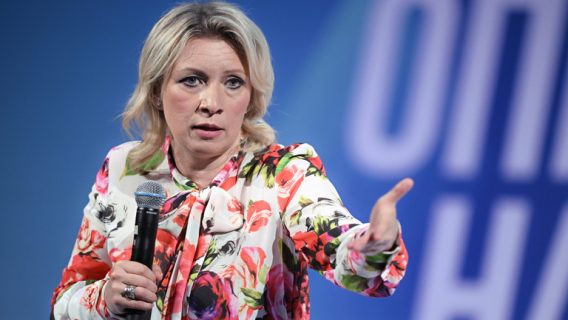
RT | September 15, 2024
The US crackdown on Russian media amounts to a declaration of war on free speech, Foreign Ministry spokeswoman Maria Zakharova said on Sunday. She described the new sanctions against RT and other news outlets as “repressions unprecedented in scale.”
US Secretary of State Antony Blinken announced new sanctions against RT on Friday, accusing it of engaging in “covert influence activities” and “functioning as a de facto arm of Russian intelligence.” Earlier in September, Washington imposed sanctions on RT Editor-in-Chief Margarita Simonyan and three other senior RT employees over alleged attempts to influence the 2024 US presidential election.
“The US has declared war on freedom of speech throughout the world, turning to open threats and blackmail against other states in an effort to set them against the domestic media and establish sole control over the global information space,” Zakharova said, promising that the punitive measures Washington was using to target Russian media would not go unanswered.
She added that accusations of attempts to influence the elections are a mere “witchhunt” and “spy-o-mania” done to manipulate public opinion and protect its citizens from any information that is inconvenient for them.
The head of the State Department’s Global Engagement Center (GEC), James Rubin, told reporters on Friday that the “broad scope and reach” of RT was one of the reasons many countries around the world did not support Ukraine. The GEC has funded propaganda games aimed at children and forced Twitter to censor pro-Russian content. Rubin admitted last year that he wanted to use the GEC to shut down Russian media outlets around the world.
“We are going to be talking… in Latin America, Africa and Asia… to try to show all of those countries that right now broadcast – with no restrictions or control – RT and allow them free access to their countries,” Rubin said, arguing that RT’s presence has “had a deleterious effect on the views of the rest of the world about a war that should be an open and shut case.”
Reacting to the new restrictions, Simonyan argued that Washington’s claims about RT collaborating with Russian intelligence are a “classic case of projection.”
“The idea that you can’t achieve results without being part of the intelligence service has exposed them for what they are,” she said.
Mali Alarmed That Weapons Supplied to Ukraine Fuel Terrorism in Sahel Region – Envoy to UN
Sputnik – 30.08.2024
UNITED NATIONS – Mali is alarmed that the weapons supplied to Ukraine by the collective West are ultimately fueling terrorism in the Sahel region, Malian Ambassador to the United Nations Oumar Daou said in Friday.
“The government of Mali would like to express its alarm with regard to the supply of weapons to Ukraine, because it’s been clearly established that a good part of the weapons … end up fueling terrorism and crime in the Sahel,” Daou said during a meeting of the UN Security Council.
The Malian ambassador also said that the weapons deliveries carry the risk of further destabilizing countries in Africa and exacerbate the suffering of the Malian people, who have already been “sorely tested by several years of conflict with dramatic consequences.”
French media, citing a Malian military source, reported in early August that terrorists from the Malian armed separatist groups traveled to Ukraine to receive training there.
Statement on proposed emergency roll-out of vaccine program in Africa for monkeypox
SAVIMS | August 23, 2024
We are deeply concerned about the recent announcements made by Africa Centres for Disease Control and Prevention (CDC) Director General Jean Kaseya on Aug. 13 and World Health Organization (WHO) Director-General Tedros Adhanom Ghebreyesus on Aug. 14. It is important to address these announcements openly to the public.
In his statements, Kaseya declared regarding monkeypox vaccines:
“We have a clear plan to secure more than 10 million doses in Africa, starting with 3 million doses in 2024.”
We at the South Africa Vaccine Injury Medico-Legal Study-Group (SAVIMS) would like to point out pertinent facts to both institutions and other relevant bodies of interest:
1. There is no prescribed vaccine with documented Level 1 scientific evidence for monkeypox. The current WHO-recommended live virus vaccines, Jynneos and ACAM2000, are:
(a) intended for smallpox and are thus experimental for monkeypox;
(b) have reported serious adverse effects, and;
(c) contain live viral strains which may instigate a resurgence of the eradicated smallpox virus.
2. The potential use of mRNA vaccines. There is no scientific evidence supporting the use of any mRNA vaccine to prevent or mitigate any infectious disease. The observed data of adverse reactions to experimental mRNA vaccines far outweighs any benefit.
3. Informed consent is an ethical concept that is codified in the law and is in daily practice at every healthcare institution. Three fundamental criteria are needed for clinical informed consent: the patient must be competent, adequately informed and not coerced.
It is not possible for any recipient of these vaccines to receive legitimate informed consent based on current research.
4. The article by Allan-Blitz et al., “A position statement on Mpox as a Sexually Transmitted Disease,” concluded that monkeypox is a “sexually transmitted disease.” Preventative measures for this scenario should necessitate and provoke relevant clinical and primary healthcare and education initiatives directed at the high-risk group.
There is no merit in the recommendation of experimental vaccines to the general population.
5. The statistics and analysis, regarding the collated monkeypox data in the Democratic Republic of Congo and other countries in Africa by the WHO, warrant further investigation and must be independently audited.
The areas in which the highest statistics were collated should detail the criteria for testing, the procedures for testing, equipment sensitivity and specificity, personnel skill, clinical scenarios, and provocation for testing these specific communities. What tests were done to investigate and exclude other diseases, including communicable diseases?
6. There have been no autopsy reports published on the deaths related to monkeypox. The lack of formal documented autopsy, lack of information regarding equipment test sensitivities and specificities, and lack of information on procedures validating random collation of data, further reduces and invalidates the authenticity of the statistics.
SAVIMS position statement regarding emergency monkeypox vaccine rollout in Africa
We have reviewed the literature and analyzed the data on monkeypox, as well as its etiopathogenesis. Based on our understanding of this disease:
1. We do not support the Africa CDC and WHO declaration of a global health emergency for monkeypox.
2. It is established that monkeypox is predominantly a self-limiting condition. This does not warrant vaccine intervention.
3. We strongly object, based on the scientific evidence, to the “emergency” rollout of repurposed smallpox vaccines or any other proposed monkeypox vaccine to the people of Africa.
4. We question the authenticity of the number of deaths associated with monkeypox, as reported by the Africa CDC unless it can be verified through autopsy.
5. We warn members of the public about the inherent risks of taking any vaccine, including those proposed for mpox, of which the effectiveness and safety have not been reliably determined by Level 1 clinical trials. There can be no justification for a vaccine with unknown adverse effects.
6. We urge the public to exercise their inherent human rights to refuse to give consent to any medical intervention that they do not feel comfortable taking.
We are open to dialogue and discussion with the Africa CDC on the issues raised above and on all matters of health and well-being concerning the African population.
SAVIMS is a voluntary multidisciplinary association under the Common Law governed by its members in accordance with the Constitution of the Republic of South Africa. The purpose of SAVIMS is to follow the evidence to gain and communicate knowledge about vaccine injuries. This knowledge is necessary for the treatment and counseling of patients with vaccine injuries; as well as for medico-legal report writing and provision of evidence in respect of victims of vaccine injury and in other vaccine-related disputes. The objectives of SAVIMS are to promote human health and human rights as enshrined in the Bill of Rights of South Africa’s Constitution.
What’s Really Happening with Mpox
The Mpox Emergency
By David Bell | Brownstone Institute | August 18, 2024
The World Health Organization (WHO) acted as expected this week and declared Mpox a Public Health Emergency of International Concern (PHEIC). So, a problem in a small number of African countries that has killed about the same number of people this year as die every four hours from tuberculosis has come to dominate international headlines. This is raising a lot of angst from some circles against the WHO.
While angst is warranted, it is mostly misdirected. The WHO and the IHR emergency committee they convened had little real power – they are simply following a script written by their sponsors. The African CDC, which declared an emergency a day earlier, is in a similar position. Mpox is a real disease and needs local and proportionate solutions. But the problem it is highlighting is much bigger than Mpox or the WHO, and understanding this is essential if we are to fix it.
Mpox, previously called Monkeypox, is caused by a virus thought to normally infect African rodents such as rats and squirrels. It fairly frequently passes to, and between, humans. In humans, its effects range from very mild illness to fever and muscle pains to severe illness with its characteristic skin rash, and sometimes death. Different variants, called ‘clades,’ produce slightly different symptoms. It is passed by close body contact including sexual activity, and the WHO declared a PHEIC two years ago for a clade that was mostly passed by men having sex with men.
The current outbreaks involve sexual transmission but also other close contact such as within households, expanding its potential for harm. Children are affected and suffer the most severe outcomes, perhaps due to issues of lower prior immunity and the effects of malnutrition and other illnesses.
Reality in DRC
The current PHEIC was mainly precipitated by the ongoing outbreak in the Democratic Republic of Congo (DRC), though there are known outbreaks in nearby countries covering a number of clades. About 500 people have died from Mpox in DRC this year, over 80% of them under 15 years of age. In that same period, about 40,000 people in DRC, mostly children under 5 years, died from malaria. The malaria deaths were mainly due to lack of access to very basic commodities like diagnostic tests, antimalarial drugs, and insecticidal bed nets, as malaria control is chronically underfunded globally. Malaria is nearly always preventable or treatable if sufficiently resourced.
During this same period in which 500 people died from Mpox in DRC, hundreds of thousands also died in DRC and surrounding African countries from tuberculosis, HIV/AIDS, and the impacts of malnutrition and unsafe water. Tuberculosis alone kills about 1.3 million people globally each year, which is a rate about 1,500 times higher than Mpox in 2024.
The population of DRC is also facing increasing instability characterized by mass rape and massacres, in part due to a scramble by warlords to service the appetite of richer countries for the components of batteries. These in turn are needed to support the Green Agenda of Europe and North America. This is the context in which the people of DRC and nearby populations, which obviously should be the primary decision-makers regarding the Mpox outbreak, currently live.
An Industry Produces What It Is Paid for
For the WHO and the international public health industry, Mpox presents a very different picture. They now work for a pandemic industrial complex, built by private and political interests on the ashes of international public health. Forty years ago, Mpox would have been viewed in context, proportional to the diseases that are shortening overall life expectancy and the poverty and civil disorder that allows them to continue. The media would barely have mentioned the disease, as they were basing much of their coverage on impact and attempting to offer independent analysis.
Now the public health industry is dependent on emergencies. They have spent the past 20 years building agencies such as CEPI, inaugurated at the 2017 World Economic Forum meeting and solely focused on developing vaccines for pandemic, and on expanding capacity to detect and distinguish ever more viruses and variants. This is supported by the recently passed amendments to the International Health Regulations (IHR).
While improving nutrition, sanitation, and living conditions provided the path to longer lifespans in Western countries, such measures sit poorly with a colonial approach to world affairs in which the wealth and dominance of some countries are seen as being dependent on the continued poverty of others. This requires a paradigm in which decision-making is in the hands of distant bureaucratic and corporate masters. Public health has an unfortunate history of supporting this, with restriction of local decision-making and the pushing of commodities as key interventions.
Thus, we now have thousands of public health functionaries, from the WHO to research institutes to non-government organizations, commercial companies, and private foundations, primarily dedicated to finding targets for Pharma, purloining public funding, and then developing and selling the cure. The entire newly minted pandemic agenda, demonstrated successfully through the Covid-19 response, is based on this approach. Justification for the salaries involved requires detection of outbreaks, an exaggeration of their likely impact, and the institution of a commodity-heavy and usually vaccine-based response.
The sponsors of this entire process – countries with large Pharma industries, Pharma investors, and Pharma companies themselves – have established power through media and political sponsorship to ensure the approach works. Evidence of the intent of the model and the harms it is wreaking can be effectively hidden from public view by a subservient media and publishing industry. But in DRC, people who have long suffered the exploitation of war and the mineral extractors, who replaced a particularly brutal colonial regime, must now also deal with the wealth extractors of Pharma.
Dealing with the Cause
While Mpox is concentrated in Africa, the effects of corrupted public health are global. Bird flu will likely follow the same course as Mpox in the near future. The army of researchers paid to find more outbreaks will do so. While the risk from pandemics is not significantly different than decades ago, there is an industry dependent on making you think otherwise.
As the Covid-19 playbook showed, this is about money and power on a scale only matched by similar fascist regimes of the past. Current efforts across Western countries to denigrate the concept of free speech, to criminalize dissent, and to institute health passports to control movement are not new and are in no way disconnected from the inevitability of the WHO declaring the Mpox PHEIC. We are not in the world we knew twenty years ago.
Poverty and the external forces that benefit from war, and the diseases these enable, will continue to hammer the people of DRC. If a mass vaccination campaign is instituted, which is highly likely, financial and human resources will be diverted from far greater threats. This is why decision-making must now be centralized far from the communities affected. Local priorities will never match those that expansion of the pandemic industry depends on.
In the West, we must move on from blaming the WHO and address the reality unfolding around us. Censorship is being promoted by journalists, courts are serving political agendas, and the very concept of nationhood, on which democracy depends, is being demonized. A fascist agenda is openly promoted by corporate clubs such as the World Economic Forum and echoed by the international institutions set up after the Second World War specifically to oppose it. If we cannot see this and if we do not refuse to participate, then we will have only ourselves to blame. We are voting for these governments and accepting obvious fraud, and we can choose not to do so.
For the people of DRC, children will continue to tragically die from Mpox, from malaria, and from all the diseases that ensure return on investment for distant companies making pharmaceuticals and batteries. They can ignore the pleading of the servants of the White Men of Davos who will wish to inject them, but they cannot ignore their poverty or the disinterest in their opinions. As with Covid-19, they will now become poorer because Google, the Guardian, and the WHO were bought a long time back, and now serve others.
The one real hope is that we ignore lies and empty pronouncements, refusing to bow to unfounded fear. In public health and in society, censorship protects falsehoods and dictates reflect greed for power. Once we refuse to accept either, we can begin to address the problems at the WHO and the inequity it is promoting. Until that time, we will live in this increasingly vicious circus.
David Bell, Senior Scholar at Brownstone Institute, is a public health physician and biotech consultant in global health. He is a former medical officer and scientist at the World Health Organization (WHO), Programme Head for malaria and febrile diseases at the Foundation for Innovative New Diagnostics (FIND) in Geneva, Switzerland, and Director of Global Health Technologies at Intellectual Ventures Global Good Fund in Bellevue, WA, USA.
Mali Cuts Ties with Ukraine Over Kiev’s Support for Al-Qaeda
By Kyle Anzalone | The Libertarian Institute | August 6, 2024
Mali has severed its diplomatic ties with Ukraine following an attack by the local Al-Qaeda affiliate on Malian forces. Kiev called the move short-sighted.
Late last month, opposition forces, including an al Qaeda affiliate in the Sahel, Jama’at Nusrat al-Islam wal-Muslimin (JNIM), killed scores of Malian soldiers and mercenaries from the Russian Wagner Group that is supporting Bamako.
Andriy Yusov, a representative of Ukraine’s Security Service (SBU), said Kiev aided JNIM in its assault. “The rebels received the necessary information, which enabled a successful military operation against Russian war criminals.” An estimated 84 Russian contractors were killed, along with nearly 50 Malian soldiers.
Bakamo expressed “deep shock” over the “subversive remarks” and received the statement as an admission of Kiev’s involvement in the slaughter of its soldiers.
Malian government spokesman Colonel Abdoulaye Maiga denounced Ukraine for supporting JINM. He said Yusov’s remarks confirmed “Ukraine’s involvement in a cowardly, treacherous and barbaric attack by armed terrorist groups.”
“Mali condemns the hostility of the authorities of Ukraine who do not observe that Mali has always called for a peaceful settlement of the crisis between the Russian Federation and Ukraine,” he added.
Kiev responded by claiming Bakamo failed to provide evidence proving Ukraine backed the terrorists. “It is regrettable that … Mali decided to sever … relations … without conducting a thorough study of the facts and circumstances of the incident … and without providing any evidence of Ukraine’s involvement in the said event,” a statement from the Ukrainian Foreign Ministry said.
Kiev added it has the right to take all necessary political and diplomatic retaliations.
Following the 2011 American-backed uprising in Libya that ousted long-time leader Muammar Gaddafi, jihadist groups spread into neighboring countries and throughout the African Sahel. In the following decade, Mali experienced several coups as the jihadists destabilized the region.
During the latest coup in 2021, Assimi Goïta swept into power in Bakamo. Part of the policy of the junta has been to expel France, Mali’s long-time colonial ruler. Under Goïta, Mali has stepped up ties with Moscow including the private military firm Wager.
Featured Video

Racist Seinfeld Dances for Joy as Bibi Unveils His New Map
or go to
Aletho News Archives – Video-Images
TV Drama Review
Japanese drama projects Japan’s wartime atrocities onto Chinese characters

Global Times | October 25, 2026
By portraying Chinese characters as perpetrators of ruthless violence while casting Japanese Self-Defense Forces (SDF) intelligence operatives as defenders, the season 2 of the Japanese drama Vivant has recently drawn criticism from Chinese netizens, who argue that its depiction turns historical reality on its head while ignoring Japan’s wartime atrocities.
The TBS drama series – a spy suspense story in which an alleged unofficial intelligence unit of the SDF operates across the globe — has attracted a passionate fanbase. Its currently airing season 2 opened with a household rating of 18.8 percent, the highest for a TV drama this year, according toa commentary article by Japanese media Toyo Keizai.
What draws attention is the portrayal of the enemies in the series, the article noted. Scenes in which the Chinese organization subjects kidnapped members of the SDF unit to brutal torture are repeated with unrelenting intensity.
It is rare for Japanese TV dramas to explicitly portray a real-life country as the enemy, the article noted.
Japanese Prime Minister Sanae Takaichi also made a reference to the drama, saying that she has been recording Vivant and hopes to binge-watch it over the year-end and New Year holidays, according to Japanese media outlets.
China’s CCTV News report on Sunday revealed that the drama features scenes in which Chinese personnel cut off the fingers of and stab Japanese intelligence operatives in the abdomen. Such acts bear striking similarities to the torture inflicted on Chinese nationals by invading Japanese troops during the World War II.
The drama distorts the truth by attributing these atrocities to modern Chinese characters. Beneath the surface, it subtly glorifies Japan’s cross-border overseas operations, blurs the functional boundaries of the SDF and implicitly promotes an expansionist narrative, per CCTV News. … continue
Blog Roll
 Aletho News
- EU facing trillion-euro debt hole while seeking more cash for Kiev
- How US, Europe, Persian Gulf states exhausted missile stockpiles, splurged billions to defend Israel
- Up in arms… Koreans reject U.S. empire’s plan to make South Korea the next Ukraine
- Iran, Turkey, Pakistan, Saudi Arabia could advance region-led security framework in Tehran: FM spox
- Netizens condemn Japanese drama for projecting Japan’s wartime atrocities onto Chinese characters
- Racist Seinfeld Dances for Joy as Bibi Unveils His New Map
- A West Bank War for Netanyahu’s Election Campaign, Could It Backfire?
- Yemen denounces European Parliament’s ‘hypocritical’ push to blacklist Ansarullah
- Qalibaf: UAE’s UN bid aims to ‘clear the runway’ for ‘Greater Israel’, whitewash genocide
- Pakistan reopens Iran border after boosting security: Report
- If Americans Knew
- An error has occurred; the feed is probably down. Try again later.
- No Tricks Zone
- Sudden Stratospheric Warming, Powerful El Niño Combination May Lead To Extreme Europe Cold, Energy Crisis!
- Two New Studies Find Thwaites Glacier Melt Cannot Be Driven By Human Activity Or A Warming Ocean
- E-Cars Reduce CO2 Emissions By Only 41% Compared To Internal Combustion Engine Vehicles
- Predictions Made By Renowned Climate Professor Over Past Decades Have Been Proven To Be Poor
- New Study Suggests Large Regions Of The Pacific Ocean Have Been Cooling For The Last 80 Years
- Germany’s Green Energy Debacle: High Energy Costs Force Kahla Porzellan to Close After 182 Years!
- New Study: 50 Years Of The Most Aggressive ‘Net Zero’ Policies Can Only Affect The Global Climate By 0.03°C
- US September “Heat” Was No Record…Many Records Set Decades Ago
- Latest European Green Energy Debacle; Portugal’s Largest Flagship Solar Park Insolvent!
- Green Energy Debacle: German Expert Professor Fritz Vahrenholt Warns Of Severe Economic And Social Consequences

