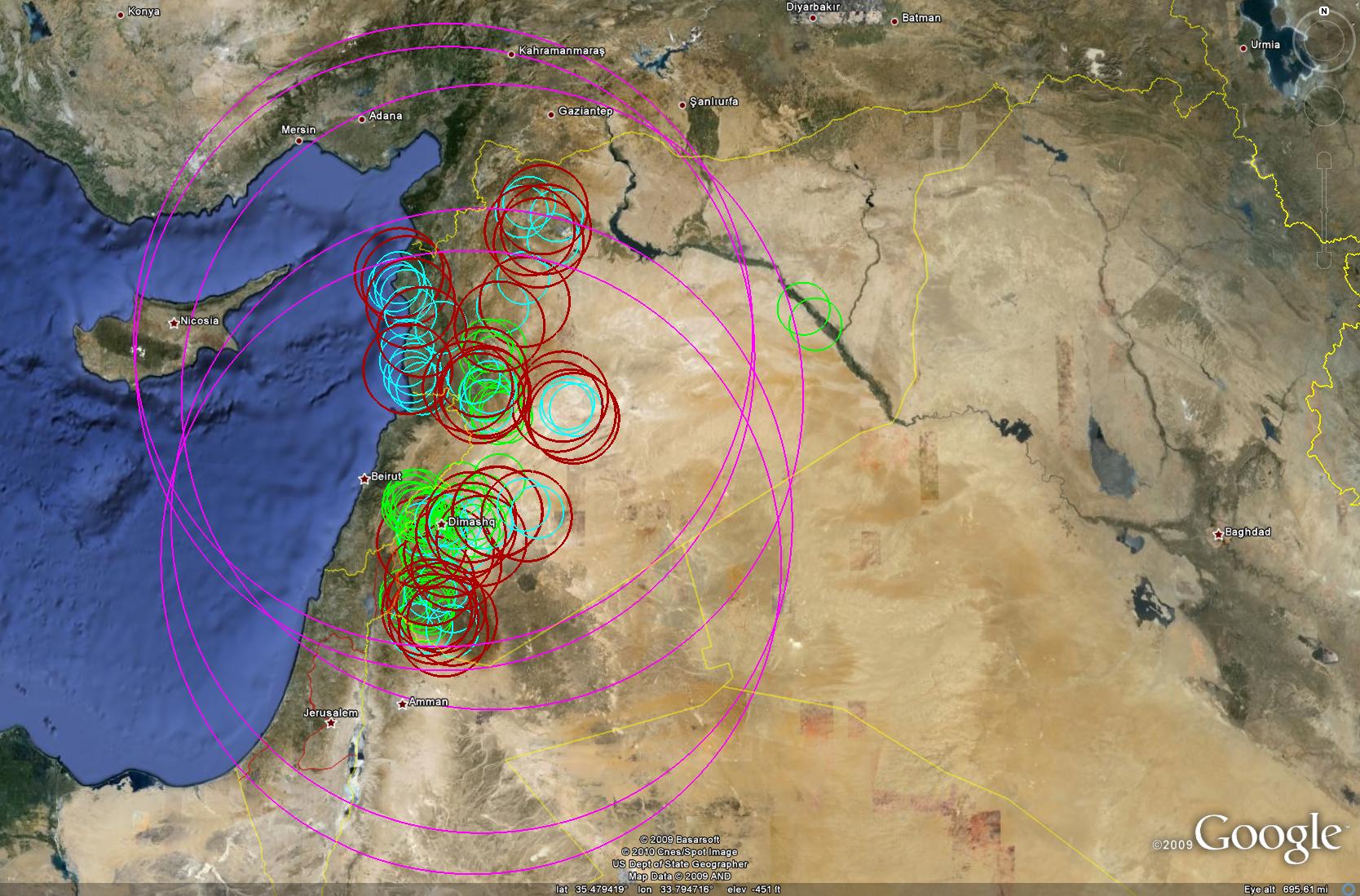
‘White Helmets helping rebrand terror groups to create Syrian no-fly zones’ – Vanessa Beeley
RT | February 27, 2017
Increased terrorist attacks during the peace talks put pressure on the US to divide the militant factions inside Syria to determine who are terrorists and who are not. A terrorist rebranding process comes into play at that point, says researcher Vanessa Beeley.
A spokesman for the terror group which claimed responsibility for Saturday’s deadly attack on military facilities in the Syrian city of Homs has appeared on the Al Jazeera TV channel.
The attacks happened at the same time as Syria peace talks were underway in Geneva. During the broadcast, the terrorist claimed the attack was planned well in advance and wasn’t aimed at disrupting the talks.
Tahrir al-Sham is an Al-Qaeda-linked terror group, formed in January. The majority of its members were part of a group widely known as al-Nusra.
RT: What do you think about Al Jazeera giving a platform to a terrorist?
Vanessa Beeley: This is not that unusual for Al Jazeera in the sense that although they have not overtly given a platform to terrorists throughout their reporting on the NATO and Gulf State war that is being waged against a sovereign nation, Syria, we’ve seen them consistently produce reports from terrorist affiliates, particularly during the time of the Al-Nusra Front-led occupation of East Aleppo.
We saw them allegedly broadcast from East Aleppo via citizen journalists and activists that we’ve later discovered have clear affiliations to extremist groups, like Nour al-Din al-Zenki, like Nusra Front themselves, for example, Lina al-Shami and other such affiliates who were embedded inside East Aleppo and were producing the NATO-aligned narrative and propaganda to ensure the continued incarceration of the civilians in East Aleppo.
So, this is not unusual for Al Jazeera to be giving a platform so to speak to terrorist organizations, to terrorist operatives. And again, this renaming of Tahrir al-Sham is another rebranding process that is becoming very familiar now.
RT: The militants are rebranding themselves quite often. What’s the purpose of this?
VB: I think they have two aspects to this. I think you have the aspect that we have now gangs and counter-gangs throughout Syria – we see splinter groups upon splinter groups particularly in Idlib, we are seeing them fighting among themselves, the various extremist and militant factions. But as regards Nusra Front – we had it already – the last name was Fateh al-Sham, it is a little hard to keep up with it and in fact, I think, the US administration, both under Obama and under Trump, is struggling to keep up with their own rebranding process of Al-Qaeda in Syria.
And what I think we are really seeing is an intensification of that during peace talks when, of course, there is going to be pressure upon the US administration to basically segregate the militant factions inside Syria and to determine those that are terrorists and those that are not. And we always see this rebranding process coming into play at that point.
RT: The group denies the attack on the Syrian military facilities in Homs was designed to disrupt the Geneva peace talks. Do you believe the timing is just a coincidence?
VB: I think the timing is far from a coincidence. I don’t think any of these attacks are ever coincidental, particularly when they come in parallel with the various peace talks that have been held over the last few years. But this one in particular, what is very important to know that for the last four days to a week there has been an intensification of the Syrian Arab Army campaigns against the terrorist factions in Homs and in the surrounding countryside.
What I did notice, which was very interesting, is in the corporate media reporting of this incident, we saw the appearance of actually the White Helmets and their video footage was used by the majority of corporate media. This is interesting because it is one of the few times that I have seen them actually inside Homs and filming a terrorist operation, so to me this demonstrates the fact that the White Helmets will be used alongside with the rebranding of this terrorist group to basically protect the terrorist group by calling in for the ‘no-fly zone’ and in an attempt to derail the Syrian Arab Army activity that is effectively to cleanse the area of the terrorist factions.
RT: What are your thoughts about the documentary on the White Helmets having been nominated for an Oscar?
VB: I think it will be a victory for propaganda, basically. They should be congratulated maybe on their acting skills rather than their humanitarian skills. Myself, and actually Lizzie Phelan of RT were actually in East Aleppo at pretty much the same time during its liberation from Nusra Front-led occupation. And afterward for the many celebrations of liberation leading up to Christmas. And both of us independently in different districts of East Aleppo, as they were being liberated, were speaking to civilians as they were emerging from four and a half years of imprisonment, we were both asking these civilians what they knew of the White Helmets. Now the first point to make was, when I used the term the White Helmets, which is the label that is given to them by their marketing campaign managers and by the corporate media in the West, most of the civilians didn’t have a clue who we were talking about. When we then expanded on the theme, we mentioned that they were civil defense, then almost immediately, the response was: “Oh, you mean Nusra Front civil defense.” And that was entirely unprompted by these Syrian civilians, literally as they were leaving the liberated districts. We also accrued a number of testimonies that basically attested to the fact that they worked alongside the terrorist organizations inside East Aleppo, they worked in facilitating and sometimes even participating in the various terrorist atrocities that were carried out both at East Aleppo and in the Aleppo countryside and then in Idlib…
Read more:
Going Beyond Propaganda. Nuclear Conflict: Deception or Real Threat?
By Federico PIERACCINI | Strategic Culture Foundation | 16.10.2016
The events in the Middle East, Syria and Aleppo are the focus of global attention. Rarely has a battle been so decisive to the outcome of a war and the fate of hundreds of millions of people around the world
Hillary Clinton in the last presidential debate repeatedly called for the establishment of a no-fly zone (NFZ) in Syria. The concept, reiterated several times, clashes with the revelation contained in her private emails admitting that the implementation of a NFZ would entail the increased deaths of Syrian civilians. In a recent hearing before the Senate Armed Services Committee, General Philip Breedlove was asked what kind of effort would be required for the US armed forces to impose a NFZ over Syrian skies. With obvious embarrassment, the General was forced to admit that such a request would involve hitting Russian and Syrian aircraft and vehicles, opening the door to a direct confrontation between Moscow and Washington, a decision the General was simply not willing to take. The military leadership has always shown a readiness to implement the military option; so this time they must have sniffed the danger of a direct conflict with Moscow.
The Kremlin has publicly admitted to deploying in Syria the S-400 and S-300V4 advanced anti-aircraft and anti-missile systems respectively. The presence of the defense complex was intentionally announced as a factor of deterrence and is a logical strategy. The message to Washington is clear: any unidentified object in Syrian skies will be shot down. The United States bases much of its military strength on the constant need to project power, making its opponents believe that it possesses capabilities that others do not hold. Therefore it is very unlikely that the Pentagon would want to reveal to the world the worth of their stealth systems and their ‘legendary‘ American cruise missiles when faced with the S-300V4 or S-400. The Kosovo War serves to remind us of the F-117 that was shot down by Soviet systems (S-125) dating from the 1960s.
Hillary Clinton’s threats against Moscow were not the only ones. The present policy makers in Washington continue to make aggressive statements demonstrating their total loss of touch with reality. In recent weeks, hysterical reactions were recorded by the Pentagon, the State Department, top military generals, and even representatives of American diplomacy. To emphasize the unhappiness prevalent in some Washington circles, several articles appeared in The Washington Post and The New York Times calling for the imposition of a US no-fly zone in Syria, ignoring the consequences highlighted by Dunford. There are two hypotheses under consideration: hitting the Syrian army air bases with cruise missiles, or the use of stealth planes to bomb Damascus’s A2/AD installations.
Behind Washington’s frantic reactions and vehement protests is the probability of military defeat. The US does not have any ability to prevent the liberation of Aleppo by the Syrian Arab Army (SAA) and the Russian Federation. In the last fifteen days, the SAA and Russia have achieved significant progress, and it is this that has led to an escalation of tensions. Some of the most significant episodes reflecting this over the last few days include: jets of the international coalition hitting the SAA, causing 90 deaths; US government officials threatening Russia with the downing of her planes and the bombings of her cities, resulting in Russian civilian deaths; and the blaming of Moscow for an attack on a humanitarian convoy. The climax seemed to have been reached at the United Nations where the US representatives prevented a Russian resolution condemning the terrorist attacks on the Russian embassy in Damascus. It is interesting to note that fifteen years after the attacks of September 11, 2001, Washington finds itself defending Al Nusra Front (AKA Al Qaeda) in an official United Nations meeting; something to ponder. But apparently there is no limit to provocations, and a few days after this incredible denouement, the Pentagon was keen to point out that the possibility of a preventive nuclear strike against Russia is still valid.
It therefore seems almost simplistic to emphasize that because of the success of the SAA, Washington, Ankara, Riyadh, Doha and Tel Aviv are showing unprecedented signs of weakness and nervousness. Their commitment to overthrowing the legitimate government of Assad has failed. The combined action of the Syrian and Russian ground, air and sea forces pushed Washington and the corporate media to move from words of condemnation to increasingly open threats.
Last month the situation against the terrorists quickly changed in the north of Syria thanks to the Syrian Arab Army and its allies supported by the West. In Aleppo, the SAA continues to work every day with great success toward the city’s liberation. Neighborhoods and large areas are back under government control. The relentless advances of the troops loyal to Assad are altering the course of the war in Syria in favor of Damascus, eliminating the US attempts to remove the legitimate Syrian government. A victory in Aleppo would mean the near certainty of defeat for the terrorists in the remaining areas of the country. The closing of the border with Turkey would cut the supply lines, with consequences and repercussions throughout Syria. What would still remain open are a few crossing areas in the south of the country near the border with Jordan that have always been a supply source for terrorists. However, it would be very difficult for this supply line alone to sustain the conflict or adequately replace the one closed north of Aleppo. Especially in the north through Turkey, and to the west through the uncontrolled border with Iraq, the terrorists receive continuous supplies. The liberation of Mosul by the Iraqi army, Aleppo by the SAA, and Der Al-Zur in the near future, will pave the way for the strategic recapture of Raqqa, the last bastion of Daesh, thereby defeating even the Plan B to partition the country.
With the failure of the northern front, the terrorists will be faced with the probable prospect of the complete collapse of their operations nationwide. Some will continue to fight, but most will throw down their weapons knowing that they have lost the war. Once this is achieved, the liberation of the rest of Syria should be a matter of a few months. It should be remembered that the recapture of Aleppo would guarantee a crushing defeat for the regional sponsors of international terrorism (Qatar and Saudi Arabia).
Still, it is not only the advance of Aleppo that is cause for concern for enemies of Syria. Obama and his administration are now irrelevant, also because of one of the most controversial presidential elections in recent history. The uncertain future of Washington’s foreign policy has prompted partners such as Riyadh, Doha, Ankara and Tel Aviv not to hesitate in further adding fuel to the Syrian conflagration, worried about any future inactivity from Washington and eager to advance their own military solution to the conflict.
In the case of Ankara, the invasion of Iraq and Syria is a serious danger that risks plunging the region into further chaos and destruction, with the Iraqi prime minister not hesitating to label the Turkish move reckless and warning of the conflict expanding into a regional conflict. Saudi Arabia’s problems are even greater, as it does not have the ability, in terms of men and means, to intervene directly in Syria because of its disastrous involvement in the war in Yemen. The speed with which confidence in Riyadh is crumbling is unprecedented. Her large currency reserves are dwindling, and it seems it is because tens of billions of dollars have been squandered in financing the military action against Yemen. Another example of independent military action concerns Israel. Four years into the Syrian conflict, Israel continues its secret war against Hezbollah and Iranian troops, who are engaged in areas bordering Israel in fighting al-Nusra Front and Daesh. For Tel Aviv, there are still two options desirable to the Syrian crisis, both in line with their strategy, namely, the continuation of chaos and disorder, or a balkanization of Syria. In both cases, the objective is to expand Israel’s sphere of influence far beyond the Golan Heights, which were occupied illegally years ago.
The unsuccessful attempts of Turkey, Israel and Saudi Arabia to change events in Syria have highlighted the growing strategic misunderstandings between the United States and regional partners, misunderstandings that often oblige Ankara, Riyadh and Tel Aviv to turn to the Russian Federation for confidential dialogue, since Moscow is the only player able to adjust the delicate Middle East equilibrium.
In the near future, it remains evident to Moscow and Damascus that some risks still exist, despite a well-considered overall strategy. The acceleration in the liberation of Aleppo also has an ancillary purpose that aims to minimize maneuverability for the next American administration. In a certain way, it is a race against time: Aleppo must be liberated in order to chart the way towards the end of the conflict before the next US president comes into office in January 2017. It is yet to be seen whether Clinton or Trump plan to go beyond Obama’s empty threats, but understandably Damascus and Moscow have no intention of being caught off guard, especially with a probable Clinton presidency.
After years of negotiations with the schizophrenic diplomacy of the US, Moscow and Damascus have decided to protect themselves against any sudden decisions that may come from the American «deep state». Deploying the most advanced systems existing in air defense, Moscow has called Washington’s bluff as no one has done in years. The red line for Moscow was crossed by the tragic events of September 17 in Der al-zur. The creation by the Russians of a no-fly zone over Syrian skies has been repeatedly suggested. But incredibly, in the hours immediately after the cowardly attack against Syrian troops, the US Department of Defense and the State Department proposed the creation of a no-fly-zone that would serve to ground Russian and Syrian planes. It was a brazen and provocative proposal for Damascus and Moscow if there ever was one.
Sensing the danger in these words, Moscow acted immediately, deploying cutting-edge systems to protect Syrians skies with equipment that can shoot down cruise missiles, stealth aircraft, and even ballistic missiles (S-300 and S-400). To make sure Washington fully understood the message, the Russian Ministry of Defence (MoD) reiterated what was already publicly announced, namely that any unidentified object would be shot down immediately, as there would not be any sufficient time for Russian operators to verify the original launch, trajectory and final target of any objects detected. It is a clear warning to the US and its long-standing strategy that requires the use of large amounts of cruise missiles to destroy anti-aircraft systems in order to pave the way for a no-fly zone as was seen in Libya. The Russian MoD has even specified that American fifth-generation stealth aircraft could be easily targeted, alluding to a radius of operation of the S-200 systems, S-300 and S-400 (and all variants) that would surprise many international observers. This statement also seems to indirectly confirm another theory that remains pure speculation, which is that during the September 17 attack by the US on the SAA in Der Al-Zur seem, some jets from the international coalition were targeted by Russian or Syrian air-defense systems (perhaps S-200s or S-400s), forcing the airplanes to retreat before facing the prospect of being shot down.
Whatever the intentions that are hidden behind Washington’s hysterical threats, Moscow has suggested several asymmetrical scenarios in response to a direct attack on its personnel in Syria. In addition to the S-300 and S-400 systems, the MoD has openly declared its knowledge of the exact locations of US special forces in Syria, a clear reference to the Syrian and Russian ability to strike US soldiers operating alongside terrorists or ‘moderate’ rebels.
All of Major-General Igor Konashenkov’s recent press conferences have clearly shown new systems deployed in Syria for air defense, a more than intentional advertisement. Aside from deterrence continuing to be one preferred instrument adopted by Moscow, the unusually strong, direct and unambiguous words of the Russian MoD easily show how the patience of Moscow and Damascus has been exhausted, especially following the recent sequence of events as well as repeated threats.
In such a scenario, the US can only rely on one weapon: complaints, threats and hysterical crying amplified by the mainstream media, generals and the official spokespeople of dozens of agencies in Washington. Nothing that can actually stop the liberating action of the SAA and its allies.
The United States has no alternatives available to prevent an outcome to the conflict that is undesirable for it. Whichever route it chooses, there is no way to change the events in Syria. Even American generals had to admit that a no-fly zone in Syria is out of the question. It is easy for US State Department spokesperson Admiral Kirby to launch empty threats, but it is more difficult for the military to act on these threats while avoiding a nuclear apocalypse. Whatever the outcome of the upcoming presidential elections, the war in Syria for the United States and its regional partners is irretrievably lost, and the hysteria and provocations of recent weeks is symptomatic of the frustration and nervousness that has not been common for Americans in recent years.
US not arming Nusra, but our allies might – State Dept
RT | September 26, 2016
Al-Nusra Front is a terrorist group and the US will never provide it with any aid, said the State Department, reacting to revelations in a German newspaper – while admitting that unnamed US allies might be backing the jihadist militants in Syria.
On Monday, the German newspaper Kölner Stadt-Anzeiger published an interview with an Al-Nusra commander in Syria, identified only as “Abu Al-Ezz.” In the interview, conducted 10 days ago outside of Aleppo, Al-Ezz said that US allies were providing Al-Nusra with tanks and artillery.
“The Americans are on our side,” Al-Ezz reportedly said.
The US government has categorically denied providing any aid to Al-Nusra, while admitting awareness that its allies in the region may be arming the militants.
“That’s complete poppycock,” State Department spokesman Mark Toner told reporters at the press briefing Monday. “Whatever he’s saying, no.”
“We would never provide Nusra with any kind of assistance at all,” Toner continued, explaining that the group is a designated foreign terrorist organization.
Asked why the US has been unable to persuade the “moderate opposition” in Syria from separating itself from Al-Nusra, Toner replied it was the rebels’ responsibility, and that they would need a seven-day ceasefire to do so.
He blamed the Syrian government offensive against East Aleppo, which he said would drive “some of those forces, not all of them” into the arms of Al-Nusra. If the Syrian government continues to insist on the military solution, “there are those – not the US – who back various opposition groups in Syria, who might also seek to arm them,” and that would lead to escalation, Toner said.
Asked to clarify if that meant that US allies might be arming Al-Nusra, Toner replied that “countries that support the opposition may want to supply them with assistance.”
Al-Nusra has been receiving funding from Saudi Arabia, Qatar and Kuwait, and has obtained tanks and artillery from Libya via Turkey, according to what the commander, Al-Ezz, told the German newspaper. The group especially appreciated the US-supplied TOW anti-tank missiles.
“The missiles were given directly to us,” he said. “They were delivered to a certain group.”
The issue of Al-Nusra receiving outside aid was brought up by Russia’s ambassador to the UN, Vitaly Churkin, at the special session of the Security Council on Sunday.
“They are armed by tanks, APCs, field artillery, multiple rocket launchers… All of this has been received by them and is still being shipped to them by generous Western backers, with the US, presumably, turning a blind eye,” Churkin said.
“We have to see proof that there is a genuine desire to separate US-allied rebel groups from the Al-Nusra Front, then destroy the Al-Nusra Front and bring the opposition into a political process. Otherwise our suspicions that this was only meant to shield the Al-Nusra Front would only grow stronger,” the Russian envoy added, referring to the ceasefire agreed between Moscow and Washington that collapsed last week.
On Monday, however, the State Department talked about expecting “significant gestures” from Russia or the Syrian government to “restore their credibility” so the talks might continue, suggesting that the Syrian government should stand down its air force and cease the offensive on East Aleppo.
“The ball is somewhat in Russia’s court right now,” said Toner. However, he said the US was not ready to walk away from the talks. “If you’re asking about the legendary Plan B, we’re not there yet.”
Russian Foreign Minister Sergey Lavrov shrugged off the US rhetoric about Aleppo, however, pointing out that it was the US airstrike against the Syrian Army position besieged by Islamic State (IS, formerly ISIS/ISIL) that ended the ceasefire.
“I would like to emphasize that the Americans and their Western allies, for one thing, want to distract public attention from what had happened in Deir ez-Zor,” Lavrov told NTV on Monday.
Read more:
West still arming Al-Nusra in Syria, peace almost impossible – Russia’s UN envoy
Trucks Carrying Weapons For al-Nusra Front Arrive From Turkey Daily
Sputnik – 27.05.2016
Head of the Russian General Staff told journalists that trucks carrying weapons for the al-Nusra Front cross from Turkey into Syria daily. This allows the terrorist group to continue attacking local targets.
Lt. Gen. Sergey Rudskoy said in his press briefing on Friday that weapons and ammunition are continuously being delivered to the al-Nusra Front terrorists in Syria, allowing them to engage Syrian government forces and hindering the fight against Daesh in the country.
“The never-ending flow of large trucks from Turkey carrying weapons and ammunition crosses the Turkish-Syrian border. This constant feed of live forces and weapons allows terrorists from the Nusra Front to continue their provocative shelling and make advances on Syrian government forces, which diminishes [government military] activity against Islamic State terrorists in other areas,” Rudskoy said during a briefing.
Rudskoy also added that the US has acknowledged that the heaviest fighting is centered around areas where the al-Qaeda affiliated al-Nusra Front is most active.
“Everyone knows, and our US partners admit that the biggest hot spots of active military operations are those parts of the Syrian Republic where the al-Qaeda-affiliated terrorists from the al-Nusra Front run rampant.”
So far, according to Rudskoy, the US has refused to conduct joint operations against terrorist groups in Syria, which has led to an escalation of the conflict.
The al-Nusra Front terrorist group hampers the ceasefire efforts in northern areas of Syria, the Russian General Staff said Friday.
“It is very clear that the terrorist group Jabhat al-Nusra, active in the regions of Aleppo and Idlib, is the main obstacle to expanding the ceasefire regime to northern areas of Syria,” Sergey Rudskoy, chief of the Main Operational Directorate of the Russian General Staff, said.
Moreover, the Al-Nusra Front has used the ‘period of silence’ to partly restore its combat capability. Rudskoy told reporters.
Earlier, Russian Defense Minister Sergey Shoigu offered to conduct joint air strikes against terrorist groups in Syria, but the Pentagon declined the offer. However, The Russian Foreign Affairs Ministry says Moscow hasn’t ruled out a possible joint operation in the future.
Turkey exercises ‘decisive influence’ on Syrian ‘HNC’: Lavrov
Press TV – April 25, 2016
Russian Foreign Minister Sergei Lavrov says Turkey exercises a “decisive influence” on the so-called opposition group High Negotiations Committee (HNC) which is in peace talks with the Damascus government.
Lavrov made the remarks on Monday while commenting on the progress of the latest round of negotiations between the Syrian government and HNC, which began in Geneva on April 13.
Syria peace talks are going on despite the absence of the Saudi-backed opposition as the group’s leaders left the talks on April 19 to protest at what they called escalating violence and restrictions on humanitarian access in Syria.
A ceasefire, brokered by Russia and the US, went into effect on February 27 across Syria. Fighting, however, picked up and left the truce in tatters. Meanwhile, the UN Security Council has agreed on a six-month deadline for drafting a new constitution for the Arab country in line with the proposal of the International Syria Support Group.
“In order to come to terms over six months it is necessary not to slam the door and dig in heels, as several delegates of the so-called Riyadh group have done, Lavrov said, adding that “it’s no secret” that Turkey has a “decisive influence” on them.
“So one should not come for talks with ultimatums but should sit down at the negotiating table and reach an agreement,” Lavrov added, noting that the situation at the UN-brokered talks could have been better if HNC had not left Geneva.
The top Russian diplomat also said that Moscow was preparing a report for the UN Security Council to extend the list of terrorist groups in Syria.
“We are currently collecting information that Jebhat al-Nusra (al-Nusra Front) subjugates groups that seemed to have declared truce and readiness to join ceasefire,” Lavrov said, adding, “We will summarize facts and present them to [the] UN Security Council to adjust terrorist lists.”
Syria has been gripped by foreign-backed militancy since March 2011. Damascus says Saudi Arabia, Turkey and Qatar are the main supporters of the militants fighting the government forces.
According to UN special envoy for Syria Staffan de Mistura, some 400,000 people have lost their lives as a result of over five years of conflict in Syria.
US failed to persuade moderate opposition to withdraw from Al-Nusra-controlled areas – Lavrov
RT | April 18, 2016
Syrian moderate opposition has failed to withdraw from areas controlled by Al-Nusra Front terrorists, said Russian Foreign Minister Sergey Lavrov, blaming the US for failing to exert influence on the opposition and questioned its claims of being moderate.
Washington has itself earlier raised the issue of moderate opposition forces, who are part of the ceasefire agreement in Syria, being present in Al-Nusra-controlled areas, Lavrov told reporters on Monday.
Washington officials, including Secretary of State John Kerry, agreed with Moscow’s stance “that if these groups want to fulfill the conditions of the ceasefire and don’t want to look like terrorist supporters, they must do a simple thing – change their dislocation area and physically separate themselves from the terrorists,” the minister elaborated.
According to Lavrov, the US has repeatedly promised Russia to exert their influence on moderate opposition, but the minister said that “those promises are still not fulfilled.”
“If this moderate opposition doesn’t want to leave the areas occupied by Al-Nusra, maybe it is not moderate? Maybe they are just those, who cooperate with Al-Nusra despite the UN Security Council resolution?” he asked.
The FM assured that the Syrian government forces “aren’t carrying out military action against that part of the opposition, which accepted the terms of the truce.”
“The Syrian army, backed by the Russian Air-Space Forces, is fighting against the terrorists,” he stressed.
The top Russian diplomat said that “around the city of Aleppo, Islamic State (IS, formerly ISIS/ISIL) has very strong positions and there’s quite a large area occupied by Al-Nusra Front.”
“Both terrorist groups are trying to improve their positions in the Aleppo area. They are, I stress once again, a legitimate target for those, fighting against terrorism in Syria,” he added.
‘Washington must bring Ankara to its senses’
Lavrov again urged the Syrian Kurds, who were very effective in fighting Islamic State, to be granted a seat at the intra-Syrian talks in currently underway in Geneva.
He stressed that the opposition delegation at the negotiations in the Swiss capital must of a “truly representative character.”
“This would require out US partners to just bring to senses their Turkish allies, who are blocking the Democratic Union Party of Syrian Kurds (PYD) from joining the talks,” the FM said.
Turkey is also among the nations, who are pushing for the military solution in Syria counter to the international peace effort, Lavrov stressed.
“Despite the denial from Washington, there are many people, who wish to think about certain ‘Plan B’, if not in the heart of the Pentagon, then certainly in the [Middle Eastern, Western Asian] region,” he explained.
“In particular, I can mention Turkey, which doesn’t leave the attempts to intervene [into Syria] by force” and topple the country’s government of President Bashar Assad, the minister added.
Those, behind the ‘Plan B,’ are “counting on the collapse of the Syrian peace talks, which would allow pumping more arms into Syria for the inappeasable opposition so that it could solve the task of removing the government militarily,” he said.
The Russia-US brokered ceasefire kicked off in Syria on February 27 and was supported by various armed opposition groups, but excluded terrorists from Islamic State and Al-Nusra Front.
Lavrov also refuted rumors of secret talks on the fate of President Assad, calling them another attempt to derail the peace process in Syria.
“The claims that there is some sort of a secret negotiation channel and that, moreover, in the framework of this secret channel someone promised to decide the fate of Assad outside the framework of the intra-Syrian talks … are not true,” he said.
“It’s an attempt to disrupt the implementation of the UN Security Council resolutions, in which… it’s directly stated that only the Syrian people will determine the fate of Syria,” the FM added.
The minister also criticized the European Union for not trying to suppress what he called Turkey’s aggressive ambitions towards Syria.
He noted that Ankara repeatedly proposed various ideas of handling the Syrian crisis, such as introducing no-fly zones or security zones, which were nothing but “attempts to cover up possible Turkish aggression.”
According to Lavrov, it is “very disturbing that the EU… doesn’t suppress such ambitions by Ankara and even tries to indulge it in a certain way.”
US-Turkey-Saudi Arabia Arm Terrorists With Surface-to-Air Missiles in Syria
Sputnik – April 7, 2016
On Tuesday, Islamist rebels shot down a Syrian plane, the second such incident in less than a month, and captured the pilots. Inquiries are being made at the highest level as to how the al-Nusra Front, a branch of al-Qaeda in Syria, has come into possession of advanced Western surface-to-air missiles.
Loud & Clear’s Brian Becker sat down with Institute of Islamic Thought director Zafar Bangash on Thursday to discuss the developing situation in Syria and whether access to this weaponry will undermine Syrian air superiority.
Where are al-Qaeda affiliates getting these advanced weapons?
“According to the information that has emerged, it was al-Nusra Front, a branch of al-Qaeda in Syria,” explained Bangash. He speculated that the missiles were sold to the extremist group by Turkey and paid for by Saudi Arabia, in a continuing effort to overthrow the Assad regime. He suggested that the Americans have a hand in it as well, saying, “the United States has always been involved in providing these weapons, even if not directly.”
The plane shot down on Tuesday was over Aleppo, an al-Nusra and Daesh stronghold. Why is that significant?
“Aleppo is the only major city that has been under the control of al-Nusra or Daesh,” explained Bangash. “The Syrian Army was making progress along with Hezbollah fighters and Iran’s revolutionary guards backed by the Russian Air Force and have been inching towards Aleppo.”
Bangash elaborated that the capture of Aleppo by rebel forces is significant, due to it being the largest city in Syria, and formerly the country’s financial hub. “It is even larger than Damascus, so obviously the terrorist groups and their backers will put up a tough fight not to lose it,” said Bangash.
Does terrorist access to anti-aircraft technology deprive the Syrian army of air supremacy?
“Not completely. I don’t think it will prove a game-changer because Russia is still there,” said Bangash. “These terrorists can cause some damage and some threat to the Syrian air force, and I am sure that the Syrian air force will change their tactics.”
Nonetheless, Russia’s continued presence in the fight against extremist militants will continue to keep rebel groups on their heels as allied forces march towards Aleppo. “Russian air force planes carried out a number of operations last week,” said Bangash. “Further, per the ceasefire agreement between Russia and the US, the terrorist groups were specifically excluded from the ceasefire, so Russia has no obligation whatsoever to avoid attacking these groups.”
Has the US presence in Syria benefitted the extremist organizations?
“Yes,” said Bangash who explained that, since 2005, the Americans along with Saudi Arabia and Turkey have had their eyes on ousting Assad from controlling Syria. “If the Syrian people don’t want Assad, that is for the Syrian people to decide, it isn’t for the United States or any other country to decide.”
He said that he “thinks it is very clear that the US wants to bring down the government of Bashar al-Assad, and that is why the Americans are talking about increasing their special forces in Syria.” Bangash said that the US presence has never been welcomed by the Syrian government. “They have not been given permission by the Syrian government and that is in violation of international law and the UN Charter.”
In contrast, Bangash says that the Russian government came in to maintain the stability of the current Syrian regime, and prevent the country from becoming a failed state, similar to Libya following the ouster of Muammar Gadhafi. “Russia went there with permission of the legitimate government, but the US is there illegally,” he stressed.
Daesh Receiving Assistance From Turkey ‘With Ankara’s Tacit Approval’
Sputnik – March 4, 2016
Mounting evidence appears to indicate that Turkey is providing extensive support to Daesh and al-Nusra Front, the two key terrorist organizations that have turned Syria into ruins and wreak chaos elsewhere.
“Taking publicly available information into account, we’ve come to the conclusion that Turkey has directly or indirectly served as Daesh’s mediator and ally by helping the radical group to prepare and commit terrorist acts, acquire necessary resources and recruit new fighters,” Ertuğrul Kürkçü, the current Honorary President of the pro-Kurdish Peoples’ Democratic Party (HDP), told Sputnik.
Despite its tough anti-Daesh rhetoric, the Turkish leadership has done nothing to dismantle the existing terrorist network in the country. “After so many horrible terrorist acts, not a single real participant or mastermind has been arrested,” the Turkish politician observed.
Kürkçü also mentioned that some in the Turkish military and law enforcement agencies are in direct contact with the terrorist group. He was referring to a recent report, released by the Cumhuriyet newspaper.
The opposition daily published transcripts of several phone conversations between unnamed Turkish officers and a key Daesh operative in the region bordering Syria. The documents appear to show that Turkish officers not only frequently communicated, but worked with the militants.
It follows then that “at the moment Daesh receives support and recruits with the tacit approval of the Turkish government, as well as the country’s president and prime minister,” Kürkçü concluded.
Meanwhile, RT has published footage shot on the outskirts of the Syrian town of Azaz, which is controlled by al-Nusra Front militants. The Kurdish People’s Protection Units (YPG) have been unable to liberate Azaz because Turkish forces shelled the area.
The YPG told RT’s Lizzie Phelan that al-Nusra Front fighters receive regular supplies of weapons from Turkey.
“We can actually see here the important border town of Azaz, that Turkey is determined to prevent YPG from taking. Just a little beyond that you can see the Bab al-Salam border crossing and a heavy flow of vehicles coming from Turkey into Azaz,” the RT correspondent narrated.
Israelis Welcome GCC Statement on Hezbollah: Reflects Rapprochement with Saudis
Al-Manar | March 3, 2016
As soon as the Gulf Cooperation Council blacklisted the Lebanese party of Resistance – Hezbollah – on Wednesday, Zionist mass media welcomed the resolution, considering it “critical and serious,” reflecting a great relief among Israelis who have been seeking to fight Hezbollah from the Arab gate.
Former Zionist foreign minister Tzipi Livni hailed the GCC resolution as “an important step, while Zionist daily Maariv stated that “blacklisting Hezbollah is an achievement that serves Israel.”
Moreover, the entity’s mass media correlated the GCC resolution against Hezbollah with “the ongoing coordination between Saudi Arabia, Israel” which has recently emerged to public through exchanging visits between both parties.
“Arab world is approaching closer to Israel’s stances, which has been revealed through the Saudi delegations’ visit to Israel, as well as when Saudi Arabia decided to blacklist Hezbollah as a terrorist organization,” the presenter of Tonight at Six talk show for Zionist Channel 1 said.
“It is very important and dramatic development,” he added.
For his part, Yoval King, an expert of Arab affairs, said that “it is an important resolution,” recalling that it is not the first time that Gulf states blacklist Hezbollah as a terrorist group.
“They had labeled him as ‘militia’, and announced that violence and provocations he is carrying out in Syria, Yemen and Iraq contradicts with the moral and humanitarian values,” King said.
The Saudi-Zionist coordination witnessed a major shift on the Syrian arena in the face of axis of Resistance, as Zionist sources revealed discussions took place between the armed groups operating in Syria on one hand, and Riyadh and Tel Aviv on the other, about the Syrian developments following the ongoing truce.
“Syrian opposition groups, funded by Qatar, Saudi Arabia and Israel are meeting with their sponsors and discussing with them whether they can make gains in the meantime,” Shmerit Maeir, a Zionist analyst of Arab affairs, said during an interview on the Jewish Channel 2.
“Israel needs a key chair on this table whether through the American players or others, because the bases will now determine whether Hezbollah is allowed to do what the ISIL and Al-Nusra Front are banned from doing. If this really is to happen, we will be facing a major catastrophe,” Maeir stressed.
The Zionist position was symmetrical to the Saudi’s, as it doesn’t rule out the possibility of communicating with the armed groups, like Al-Nusra Front and ISIL in order to coordinate for later steps in Syria.
The GCC, which has been committing a genocide in Yemen since March 2015, held a meeting on Monday during which it blacklisted all Hezbollah affiliated institutions.
Docs Reveal That Turkish Officers Work With Daesh on Syrian Border
Sputnik – 24.02.2016
Despite Ankara’s declared commitment to fight Daesh, Turkey’s relations with the terrorist group are more complex. Documents recently released by the Cumhuriyet newspaper appear to show that Turkish officers on the border with Syria frequently communicated and worked with Daesh fighters.
The transcripts are said to be part of an ongoing investigation into several individuals and their ties to the terrorist group. They reportedly detail several phone conversations between unnamed Turkish officers and Mustafa Demir, a key Daesh operative in the border region.
“The transcripts and the documents in the investigation revealed that Demir received money… from smugglers at the border and cooperated with the officers as far as [border] crossings are concerned,” the Today’s Zaman newspaper quoted the daily as saying.
The documents also appear to indicate that Turkish officers met with Demir in the border region.
Demir is said to be linked to İlhami Balı, the 33-year-old Daesh leader, who is suspected of ordering the deadliest terrorist attack in Ankara’s history. The twin bombings last October left 102 people dead and more than 400 injured.
One of the transcripts translated into English by Today’s Zaman dates back to November 25, 2014. Demir asked an unnamed officer to arrange a meeting with a commander.
“Is it possible for you to arrange that I talk with the commander here, regarding the business here? What if we could establish a contact here as we helped you…” the Daesh fighter asked a Turkish officer. “Okay. If there are any needs [as far as your request is concerned], [tell them] to inform me here,” the officer responded.
In another conversation, a Turkish officer asked Demir to meet him and his comrades at a minefield. “We have stuff; come here from that side, the men are here… Come urgently; I’m in the mine [field] with a torch. Come running.”
“Okay, big brother, [I’m] coming,” Demir answered.The United States and other stakeholders have repeatedly urged Ankara to seal Turkey’s porous border with Syria, which Daesh, al-Nusra Front and other terrorist groups use to smuggle fighters, weapons and supplies in and out of Syria. The Turkish government has so far failed to deliver on the promise.
Access to unlimited supplies and recruits delivered to the Syrian battlefield through Turkey is largely seen as the key source of Daesh’s resilience and longevity. Ankara’s inability to secure the 60-mile border region has prompted many to question Erdogan’s true agenda with regard to the deadly Syrian conflict.
Featured Video
Iran FM Araghchi: “Hormuz Will No Longer Be the Same”
or go to
Aletho News Archives – Video-Images
From the Archives
Sam Husseini: The entire US establishment helped lie their way into the Iraq war
By Slava Zilber | American Herald Tribune | October 14, 2019
Sam Husseini is a senior analyst with the Institute for Public Accuracy, independent journalist and contributor to The Nation and FAIR.
Slava Zilber: Sam, three years ago, you appeared on Talk Nation Radio with David Swanson and spoke about the case of the GCHQ whistleblower Katharine Gun. You pointed out that the people involved in the spying on the UN and the people authorizing the Iraq War were not held accountable:
“Virtually everybody who went along with the war, whether it is Kerry or Clinton, of course, the Bush administration themselves has falsified their own records in terms of why, what they did, when they did, why they did it, to the extent that they’ve been scrutinised at all.”
You also address it in a recent article. And recently, Joe Biden has been lying about his position on the Iraq War. How can such an important issue escape meaningful scrutiny? … continue
Blog Roll
 Aletho News
- The Mecca Pact Courts Iran: Containment Comes Full Circle
- Oman FM: Persian Gulf states, Iran, Iraq should form security pact excluding US
- Trump peddles fresh falsehoods, claims Iran ‘started the war’ as US aggression drags on
- Ukraine quagmire? Yes, but it’s for NATO, not Russia
- US intelligence hypes Chinese, Russian space threats while accelerating its own military buildup in orbit
- Iran FM Araghchi: “Hormuz Will No Longer Be the Same”
- EU facing trillion-euro debt hole while seeking more cash for Kiev
- How US, Europe, Persian Gulf states exhausted missile stockpiles, splurged billions to defend Israel
- Up in arms… Koreans reject U.S. empire’s plan to make South Korea the next Ukraine
- Iran, Turkey, Pakistan, Saudi Arabia could advance region-led security framework in Tehran: FM spox
- If Americans Knew
- ‘There are no dreams here’: How Israel’s outgoing gov’t remade the West Bank
- Netanyahu, Katz Blocked IDF Plan to End Hebron Raids, Allow Locals to Return
- Mamdani’s NYPD is poised to sign a three-year, $750,500 no-bid contract with Israeli surveillance firm
- Israel Votes Today: What the Election Means for Americans and How Netanyahu’s Rivals Differ
- DAILY UPDATE: Latest essential news on Palestine, Israel, & region
- Israeli media analysis: 2 Paths to War With Iran Loom Over Israel’s Election
- Diaspora Jewish leaders stress Israel ties — no matter the outcome of tomorrow’s elections
- Israeli forces kill 14 in Gaza as UN commission says genocide continues
- The Israeli elections have become a fight over October 7, but only Zionist opinions are allowed
- 9 Things You May Not Know About Israel’s Election
- No Tricks Zone
- Sudden Stratospheric Warming, Powerful El Niño Combination May Lead To Extreme Europe Cold, Energy Crisis!
- Two New Studies Find Thwaites Glacier Melt Cannot Be Driven By Human Activity Or A Warming Ocean
- E-Cars Reduce CO2 Emissions By Only 41% Compared To Internal Combustion Engine Vehicles
- Predictions Made By Renowned Climate Professor Over Past Decades Have Been Proven To Be Poor
- New Study Suggests Large Regions Of The Pacific Ocean Have Been Cooling For The Last 80 Years
- Germany’s Green Energy Debacle: High Energy Costs Force Kahla Porzellan to Close After 182 Years!
- New Study: 50 Years Of The Most Aggressive ‘Net Zero’ Policies Can Only Affect The Global Climate By 0.03°C
- US September “Heat” Was No Record…Many Records Set Decades Ago
- Latest European Green Energy Debacle; Portugal’s Largest Flagship Solar Park Insolvent!
- Green Energy Debacle: German Expert Professor Fritz Vahrenholt Warns Of Severe Economic And Social Consequences