Globalist Blueprint: Pashinyan Seeks to Silence Church as Armenia Becomes NATO Proxy – Analyst
By Svetlana Ekimenko – Sputnik – 26.06.2025
Western globalists installed Nikol Pashinyan as prime minister to wrench Armenia away from its historical alliance with Russia, says international affairs expert Iskandar Kfoury.
The arrest of Archbishop Bagrat Galstanyan, a prelate of the Armenian Apostolic Church, is just the latest chapter in an effort to weaponize Armenia against its neighbors – especially Russia, Iskandar Kfoury told Sputnik.
The South Caucasus has always been a battleground for global powers, and now, under Pashinyan, American and NATO labs are conducting biological warfare research on Armenian soil, he said.
Furthermore, US military exercises have been welcomed on Armenia’s soil as part of a drastic geopolitical realignment.
The church – one of the last standing moral authorities in the country – is refusing to stay silent on this betrayal of Armenia’s national identity and sovereignty.
It was the church’s response that triggered the crackdown by Armenia’s authorities, Kfoury said.
What will a “European Armenia” bring?
By Erkin Oncan | Strategic Culture Foundation | January 14, 2025
The Armenian government has approved a draft law to initiate the country’s accession process to the European Union (EU). This proposal will be discussed in parliament before being put to a referendum.
European Parliament rapporteur Miriam Lexmann celebrated this development, stating, “I wholeheartedly welcome the Armenian government’s decision to begin the EU accession process.”
However, the Russian side has reacted negatively to this decision. Kremlin spokesperson Dmitry Peskov declared that Armenia cannot simultaneously be a member of both the EU and the Eurasian Economic Union (EAEU).
Russian Deputy Prime Minister Alexey Overchuk also commented, “We interpret this as the beginning of Armenia’s withdrawal from the Eurasian Economic Union. The Russian Federation will shape its economic policy toward Armenia accordingly,” comparing EU membership to “purchasing a ticket for the Titanic.”
Armenia’s Journey Towards Europe
Armenia and the EU have a long history of interaction.
In 1996, Armenia signed a Partnership and Cooperation Agreement with the EU, and in 2001 it became a member of the Council of Europe. Moreover, Armenia has benefited from the TACIS program, a European Commission initiative that provided technical assistance to former Soviet states to adapt to market-oriented economic systems.
In 2004, Armenia strengthened its ties with the EU under the European Neighbourhood Policy (ENP), joined the Eastern Partnership initiative in 2009, and, despite joining the Eurasian Economic Union in 2013, approved the Comprehensive and Enhanced Partnership Agreement (CEPA) with the EU in 2017. In 2018, the Velvet Revolution brought Nikol Pashinyan to power, accelerating democratic reforms.
Armenia has now become the seventh former Soviet country to initiate European integration. This political shift mirrors the tug-of-war between the EU and EAEU, as well as NATO and the Collective Security Treaty Organization (CSTO).
Can Armenia Join the EU?
Although Armenia is not geographically part of Europe, like Georgia, it strives to align itself with “European values and cooperation processes.” From a European perspective, Armenia’s significance stems not from its adherence to these values but from its geographic proximity to Russia and Iran.
EU membership is a challenging and lengthy process—a path that only three former Soviet states (Estonia, Latvia, and Lithuania) have successfully completed. Other countries like Ukraine, Moldova, and Georgia have long been politically shaped by their EU aspirations, experiencing intense internal conflicts between pro-Russian and pro-EU factions, often tied to so-called “color revolutions.” These parallels suggest that Armenia’s membership process could also stretch over many years. Furthermore, Armenia’s economic ties with Russia present significant challenges.
According to data from the Armenian Statistical Committee covering January-April 2024, trade between Armenia and Russia increased 3.1 times, while trade with EU countries decreased by 24.3%. During this period, Armenia’s trade volume with Russia reached $6.3 billion, whereas its trade volume with the EU was $695.5 million—making trade with Russia nearly nine times greater than that with the EU. Military ties between Armenia and Russia also remain a major topic of public debate.
For Armenia to fully “Europeanize,” it must entirely overhaul its economic system. However, the insistence of both the EU and Pashinyan’s administration on this path could lead to a deep economic crisis and political instability. This might result in Armenia entering the EU as a weakened state, perceived as a burden by EU leadership.
The EU’s primary objective appears to be not Armenia’s full membership but the continuation of the accession process, using it to advance strategic interests. A “European” Armenia would serve as a geopolitical defeat for Russia.
Broader Implications
Discussions around Armenia’s regional and international dynamics are often shaped in Turkey by nationalist narratives sown by imperialist forces, perpetuating historical prejudices that undermine solidarity among neighboring peoples. However, developments in Armenia carry significant clues about the future of the broader region.
Erkin Öncan, Turkish journalist focusing on war zones and social movements around the world.
Twitter: https://twitter.com/erknoncn Telegram: https://t.me/erknoncn
Iran expects boom in trade after gaining EAEU’s observer status
Press TV – December 29, 2024
Iran expects a major boom in trade ties with members of the Eurasian Economic Union (EAEU) after the country gained observer status in the bloc and just months before the two sides enter into a free trade agreement.
Iran’s trade minister Mohammad Atabak said on Sunday that observer membership in the EAEU will enable Tehran to increase its presence in the bloc’s meetings and exchange more trade and economic information with its members.
Atabak made the remarks after returning from an EAEU Supreme Council meeting in Saint Petersburg, Russia, where he signed the agreement for Iran to become an observer member in the bloc on December 26.
During the meeting, EAEU members also gave their final endorsement to a free trade agreement signed between Iran and the bloc last year. The agreement, which has been ratified by parliaments of both Iran and five EAEU members, will officially come into effect in the next two months after Iran’s Guardian Council, which vets legislation passed by parliament, approves the deal.
Atabak said that the free trade deal with the EAEU will eliminate tariffs on nearly 87 percent of Iranian exports to members of the bloc, namely Russia, Belarus, Kazakhstan, Kyrgyzstan, and Armenia.
He expected that trade between Iran and the EAEU would increase several times with the implementation of the free trade deal.
“The Eurasian region is a very good market for Iranian goods. Iranian technical and engineering companies can also expand their activities in these countries,” he said.
The minister said that Iran is planning to hold a major trade exhibition in Tehran in the coming months to showcase its economic and trade potential to EAEU countries.
The U.S. pressures Armenia to buy gas from Azerbaijan instead of Russia
By Steven Sahiounie | Strategic Culture Foundation | July 28, 2024
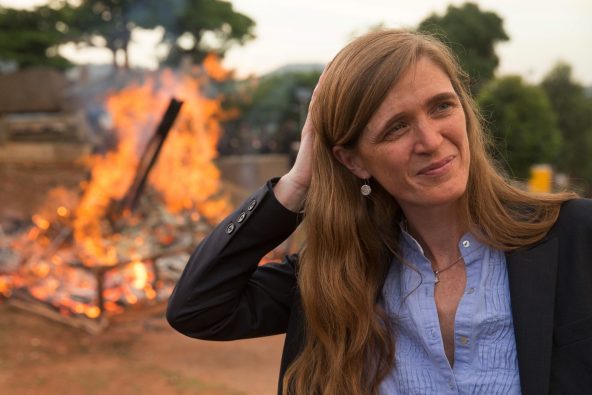
Ambassador Samantha Power, former U.S. Ambassador to the UN, and now director of USAID, an office of the U.S. State Department, traveled to Armenia on July 10 to strong-arm Prime MInister Nikol Pashinyan into buying gas from Azerbaijan, instead of Russia.
Armenia currently imports almost all of its hydrocarbons from Russia and Iran via gas pipeline.
The President Joe Biden administration supports the war in Ukraine by providing billions of dollars of weapons to Ukraine to fight Russia.
Prior to the Nord Stream 2 pipeline being destroyed, Biden had made a speech promising that the U.S. would prevent Russia from selling gas to Germany and Europe. It is an economic war waged on Russia, as well as militarily on the battlefields.
On February 28, 2023, the American Pulitzer Prize winning journalist, Seymour Hersh, published an article exposing how the Biden administration had blown up the Nord Stream 2 underwater pipeline designed to deliver gas to Germany and Europe.
The Nord Stream 2 had been sanctioned by Germany, and Biden was afraid that Germany would lift the sanctions because of a bad winter.
According to Hersh, Biden was obsessed with reelection in 2024, and wanted to win the war in Ukraine. Biden’s advisors in the Oval Office feared that Germany and Western Europe might stop weapons support to Ukraine, and the German chancellor could turn the pipeline on.
Biden placed winning the war in Ukraine above the warmth and health of the German people, even though winning a war in Ukraine is improbable, according to military experts.
The Armenian National Committee of America (ANCA), has criticized Power’s trip to Armenia because USAID hasn’t provided financial support to Armenians who left Karabakh and returned to their homeland Armenia as displaced persons, and victims of ethnic cleansing.
Despite previous visits and flowery speeches, Power has not initiated any funding programs for the Karabakh Armenians who lost their homes, possessions, lands and livelihoods.
In September 2023, almost 200,000 ethnic Armenians fled the battles, and eventual defeat in Nagorno-Karabakh following Azerbaijan’s victory ending three decades of ethnic Armenian separatist rule there.
Protesters on the streets of Yerevan blamed the policies of Pashinyan for the defeat.
Power arrived in Yerevan on September 25 and said, “The United States is deeply concerned about reports on the humanitarian conditions in Nagorno-Karabakh and calls for unimpeded access for international humanitarian organizations and commercial traffic.”
The ANCA say the needy are still waiting for help from Power and the Biden administration.
During Azerbaijan’s attacks on the Armenian people living in the Nagorno-Karabakh region, the U.S. supported the Azerbaijan government. There is no reason for the government of Armenia to view the U.S. as a friend, or supporter.
By contrast, the Russian peace-keeping troops tried to perform their job in the Nagorno-Karabakh armed conflict, but in the end, Armenia was defeated.
Armenia and Azerbaijan have made peace; the armed conflict is over, but the pain of hundreds of Armenian deaths at the hands of the Azerbaijanis remains fresh in the minds and hearts of Armenians.
Now, Ambassador Power is asking Yerevan to buy their gas from a former enemy, instead of a loyal friend.
On July 15, just days after Power visited, joint military drills with the U.S. began, and reflects the pressure Power and the Biden administration are putting on Armenia to forge closer ties with the U.S.
Russia had been Armenia’s main economic partner and Armenia hosts a Russian military base. Armenian authorities accused Russian peacekeepers who were deployed to Nagorno-Karabakh of failing to stop Azerbaijan’s onslaught. Moscow rejected the accusations, arguing that its troops didn’t have a mandate to intervene.
American military help was completely absent in the struggle for Nagorno-Karabakh.
“Has she no shame?” asked Sossy Saroyan in Latakia, Syria while referring to Power.
After the attack and massacre in Kessab, carried out by the U.S. supported Free Syrian Army (FSA) and their allied Al Qaeda terrorists, U.S. Ambassador to the UN Samantha Power, was asked to comment on what happened in Kessab.
Power said, “The U.S. is very concerned about what happened in Kessab, but unfortunately the armed groups there are not ones we have leverage on.”
Power had lied. The FSA was the armed wing of the Syrian National Coalition (SNC), based in Istanbul, Turkey and headed by its President, Ahmed Jarba. Both the FSA and SNC received their support, funds, training and weapons from the U.S. government through Congressional funding, and through the CIA program, “Sycamore Timber”.
To prove the U.S. connection to the attack, destruction, occupation, massacre and kidnapping in Kessab in March 2014, Jarba visited the FSA stationed in occupied Kessab on April 11, 2014.
On May 23, 2014, Jarba was sitting in the Oval Office with U.S. President Barak Obama and Susan Rice. On Jarba’s visit he met with Secretary of State John Kerry and received the use of two offices in Washington to be used as a U.S. base of operation for the SNC and FSA.
On the same day that Jarba was in Kessab, U.S. Ambassador to Turkey, Francis J. Riccardone, Jr. visited the 26 very elderly kidnap victims from Kessab who had been taken at gunpoint to Vikifly, Turkey as captives of the FSA.
Ambassador Riccardone had brought his wife with him, as she was a language specialist, and they also had a translator with them.
Ambassador Riccardone had just one question to ask of the captives who all but one was over the age of 80. His question posed to the group of captives was, “Are any of you American citizens?”
Kessab, Syria does have a number of dual citizens, Syrians by birth, who have obtained U.S. citizenship after living, working and paying incomes taxes in the U.S. in the past. In fact, at least four American citizens had lost their homes, farms and businesses when the U.S. sponsored terrorists attacked Kessab.
However, the group collectively answered, “No, we are just Syrians.”
At that point, Ambassador Riccardone and his entourage got up to leave. He was there for one purpose only, to free any U.S. captive, but none were U.S. citizens so he left them.
The very elderly Syrian Christian Armenian kidnap victims were captives of an armed group whose stated goal was to establish an Islamic government in Damascus, and to remove the existing secular government which had protected the rights of all Christians in Syria. The victims begged Ambassador Riccardone to please not leave them in captivity in Turkey, which had massacred 1.6 million Armenians in the 1916 Armenian Genocide, but to transport them to Latakia, Syria where all the residents of Kessab were sheltering at the Armenian Church.
The dozens of elderly, infirm, and immobile Armenians of Kessab were forced by Ambassador Riccardone to remain captives in a foreign country historical known for its genocidal hatred of Armenians, for three months, until they were transported by the Turkish government, allied with Obama, to Beirut, Lebanon and from there they were bused to Latakia, Syria.
Kessab has never recovered, and is a partial ghost-town because of the Obama-Biden administration.
The Armenians of Syria could teach the Armenian government a hard lesson learned from bitter experience: don’t expect help from the U.S., because they do not have friends, they only have interests.
Biden wanted to win the Ukraine war, and secure a ceasefire in Gaza to ensure reelection. Instead he has failed at both, and has lost the election.
The Caucasus and West Asia are joined at the hips
BY M. K. BHADRAKUMAR | INDIAN PUNCHLINE | OCTOBER 10, 2023
Frozen conflicts can only be understood through history. That is why the ‘erasure’ of Nagorno-Karabakh from the map by Azerbaijan is an incredibly tumultuous development for Transcaucasia and its surrounding regions.
The backdrop is the breakup of the Soviet Union, which left us with a rather odd map. Consequently, conflicts in Georgia, Armenia, Azerbaijan, Moldova, Ukraine and others left us with de facto boundaries that are unrecognised in law. There is an imperative need for a peace treaty that reflects the new facts on the ground.
At issue is the status of Nakhchivan, which still remains the landlocked exclave of Azerbaijan located near the Turkish border. Azerbaijan, emboldened by its annexation of Nagorno-Karabakh last month, is on the lookout for a direct land link to Nakhchivan, which Baku regards as unfinished business.
To attain this audacious objective, Azerbaijan — once again, with Turkey’s support — hopes to seize control of a hefty slice of Armenia’s territory, which is also that country’s borderland with Iran to the south. Unsurprisingly, both Yerevan and Tehran oppose any such move, which would otherwise mean that Armenia and Iran cease to be neighbours and get encircled by the Azeri-Turkish strategic axis.
Through dialogue and negotiations a mutually acceptable formula must be found for any land link — known as “Zangezur Corridor” — guaranteed under international law, which preserves Armenia’s territorial integrity and its border with Iran, even while providing Baku with free access to Nakhchivan.
What complicates matters is the geopolitics, involving the 3 immediate stakeholders — Armenia, Azerbaijan and Iran — and two other regional states — Russia, Turkey — as well as certain intrusive extra-regional powers and entities — the United States, European Union and NATO.
While Russia and Iran are also stakeholders, the same cannot be said for the extra-regional powers and entities who are meddling in a highly competitive regional environment. The “butterfly effect” of the Zangezur Corridor will be profoundly consequential to the Black Sea and Caspian regions and could impact the Middle East and Central Asia as well.
Among the regional states, Iran stands out for its anti-revisionist approach. During separate meetings last Wednesday in Tehran with visiting Armenian and Azerbaijani officials, Iranian President Ebrahim Raeisi reiterated amid persisting tensions over the Karabakh region Iran’s opposition to the opening of the Zangezur Corridor, saying Tehran is against geopolitical changes in the region.
Raesi reportedly stated that the Zangezur corridor would be “a NATO foothold, a national security threat for countries, and is thus resolutely opposed by Iran,” as his political chief of staff Mohammad Jamshidi put it. Tehran cannot but factor in that Israel has a strong intelligence presence in Azerbaijan.
Speculation is rife that Azerbaijan might use force to open the Zangezur Corridor, Iran’s opposition notwithstanding. Turkey, the region’s number one revisionist power is a mentor and ally of Azerbaijan with whom it claims ethnic affinities. Turkey harbours grand visions of expanding its economic reach and political influence through a land route that extends from its European border in Eastern Thrace to the Caspian Sea and over to its ancestral lands of Central Asia that border China.
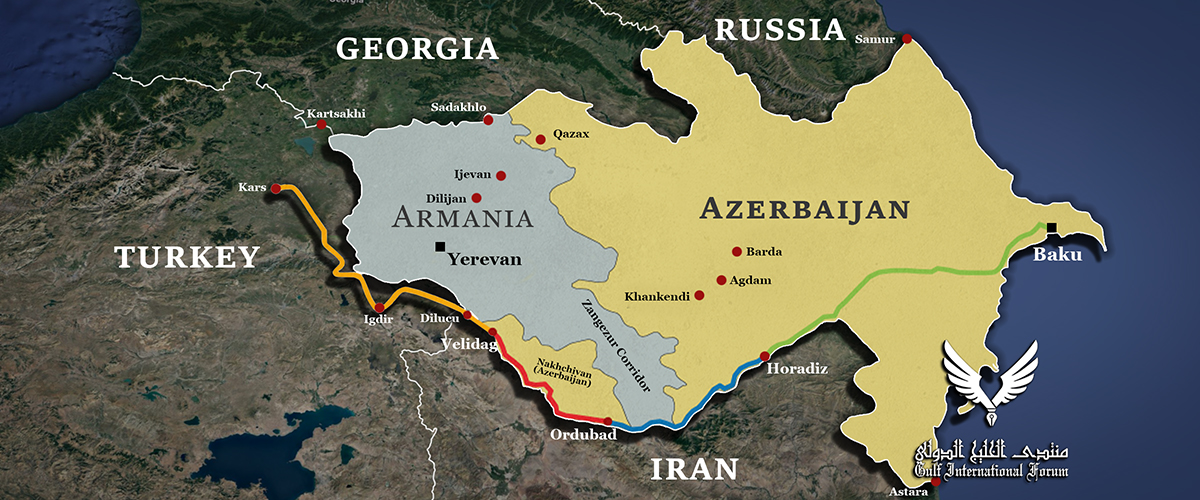
Suffice to say, the Zangezur Corridor will make Turkey a strategic hub in the geopolitics of the region if the Silk Road to Europe passes through its territory and the Soviet era land route to Russia reopens. Russia has separately promised to make Turkey an energy hub for export of its gas as well.
Much to Iran’s discomfiture, Turkey is exploiting Moscow’s dependence on Ankara in the conditions under western sanctions and the Ukraine conflict — Turkey controls the straits leading to the Black Sea from the Mediterranean— to muscle its way into the Caucasus and the Caspian, which has been traditionally Russia’s sphere of influence.
Meanwhile, Russia’s influence in the Caucasus suffered a setback as Armenia’s gradual drift toward Western benefactors following the colour revolution and regime change in Yerevan in 2018 has dramatically accelerated lately and taken an overt form. The Western powers are encouraging Armenia’s current leadership to leave the CSTO and seek the closure of the Russian bases on its soil where 5000 troops are garrisoned.
However, Armenia cannot do without Russia’s help. And Russia has strategic reserves to play itself back into the centre stage of the Caucasian chessboard. Of course, an optimal Russian comeback in the Caucasus will have to wait for its victory over the US and NATO in Ukraine, possibly by next year. Thus, Moscow seems confident that its pre-eminence in the Caucasus is a given.
Russia’s trump card, ultimately, is that much as the US and/or EU may try to get a toehold in the Caucasus, they are faraway powers and pretty much exhausted today with economic anxieties and growing war fatigue in Ukraine, amidst signs of disunity within the EU itself.
Indeed, a summit gathering close to 50 European leaders, dozens of aides and legions of journalists in Grenada, Spain, on October 5, which was billed as an opportunity to broker peace between Armenia and Azerbaijan, ended as a damp squib when Azerbaijan’s Ilham Aliyev and Turkey’s Tayyip Erdogan decided to skip the gathering and Azerbaijan accused France of bias in negotiations.
The bottom line is that in the power dynamic in the Caucasus, Iran is Russia’s natural ally and the two regional powers can be a factor of regional security and stability. This is important, since all sorts of dangers are lurking in the shade in the geopolitics of the Black Sea and Eastern mediterranean and Central Asia, and the darkening horizon presages storms ahead.
To flag a few ominous signs, the US has seized Israel’s escalating confrontation with Hamas and Hezbollah to resort to a major show of force in the Eastern Mediterranean — as if it is preordained. Such force projection cannot be an end in itself. Can it be coincidental that US-trained jihadi groups are also stirring up the Syrian pot lately?
Again, last week, a series of Ukrainian attacks in the Black Sea with Western-supplied cruise missiles forced Russian vessels to relocate from their main base in Sevastopol to the port of Novorossiisk 300 km to the east. British Defence Minister James Heappey promptly called it the “functional defeat of the Black Sea Fleet.”
Moscow is now reportedly planning to build a permanent naval base on the Black Sea coast in the breakaway Georgian region of Abkhazia.
Only a week ago, Russian Foreign Minister Sergey Lavrov warned that Moscow is alarmed by “the attempts of extra-regional players to become more active in the Afghan direction.”
Make no mistake, the US has not reconciled to the ascendance of Russian and Chinese influence in the Middle East or the Iran-Saudi rapprochement that led to an overall easing of tensions, especially Syria’s normalisation with its Arab neighbours, all of which which has drained America’s regional influence and weakened Israel.
Equally, with the spectre of a humiliating defeat in Ukraine haunting the Biden Administration, the temptation must be there to assert American hegemony. A confrontation with Iran is just what may suit Washington as ramp to cover its retreat from Ukraine’s battlefields.
Fundamentally, the US strategy is to get Russia bogged down on multiple fronts and prevent it from advancing Syria’s stabilisation optimally or consolidate its alliances with North African states — Egypt, Libya and Algeria — and expand its presence in the Sahel region which effectively thwarts NATO’s expansion plans in Africa.
Similarly, Iran’s surge as regional power has been to the detriment of Israel’s regional supremacy. Success of the US-Israeli strategy depends on piling pressure on Iran and Hezbollah, who were game changers in the Syrian conflict, and eroding the Russian-Iranian axis in West Asia, the Caucasus and the Caspian.
Armenia’s defection from the Russian orbit and the conflict situation currently developing in Gaza (and Lebanon) provide a window of opportunity to challenge Russia and Iran in the Levant. A vast armada of US warships is approaching the Eastern Mediterranean to intimidate Iran.
Meanwhile, the US hopes to undermine Saudi Arabia’s normalisation process with Iran and create contradictions within BRICS and OPEC Plus.
In sum, like in the famous play by the German modernist playwright Bertolt Brecht, The Caucasian Chalk Circle, we are currently witnessing a play within a play in the great game in Transcaucasia — an extraordinary blend of high theatricality, folk storytelling, music and even dialectical inquiry.
Nearly half of ethnic Armenians in Nagorno-Karabakh flee in fear: Armenia
Press TV – September 27, 2023
Nearly half of ethnic Armenians in Nagorno-Karabakh have fled the enclave in fear of reprisal from Azerbaijan, Armenia says, as part of an exodus caused by a military operation that brought the mountainous region back under Azerbaijan’s control.
Last week, Azerbaijan launched an operation designed to seize control of Nagorno-Karabakh, a landlocked region in the Caucasus that lies within Azerbaijan’s borders, to end a three-decade-old conflict between Baku and Yerevan over the region.
The long-troubled region has always been internationally recognized as part of Azerbaijan though it is mostly populated by ethnic Armenians, who have resisted Azerbaijan’s sovereignty over the territory.
The operation ended on September 20 and Azerbaijani military routed Armenian forces in 24 hours and made the separatists agree to lay down weapons, under a Russian-mediated ceasefire.
On Wednesday, Yerevan announced that 50,000 ethnic Armenians arrived in Armenia, out of the 120,000 ethnic Armenians living in the Nagorno-Karabakh, adding that they were “forcibly displaced”, fearing their rights and security will not be protected in Azerbaijan.
The massive exodus from the 4,400 sq km region started after Azerbaijan lifted its nine-month blockade on the enclave on Sunday.
Ethnic Armenians of the region said at least 200 people lost their lives in the fighting, including 10 civilians. Azerbaijan’s ministry of defense, for its part, released, earlier in day, a list with the names of over 150 Azerbaijani soldiers who it said were killed in the military operation.
In recent days, long queues of cars have formed on the road linking the region to Armenia.
On Monday, a fuel depot explosion claimed 68 lives of the refugees, with Armenian officials saying that they are still trying to identify the whereabouts of more than 100 people reported missing in the blast.
Azerbaijan has repeatedly said it will guarantee Armenians’ rights and integrate the region. The Azerbaijani foreign minister in his UN General Assembly address on Saturday said his country wants to integrate ethnic Armenians as “equal citizens” and denied any intention to harm them.
Armenia’s Prime Minister Nikol Pashinyan also said ethnic Armenians in Karabakh should not leave their homes unless it is absolutely necessary.
Russian peacekeepers are helping Azerbaijan disarm the Karabakh separatists.
The European Union and the United States, which have been mediating between Baku and Yerevan in recent months, have struggled to have an impact.
Nagorno-Karabakh and the failure of Armenia’s ‘colour revolution’
By Paul Robinson | Canadian Dimension | September 22, 2023
Thursday was Armenia’s independence day. This year, however, there was very little for Armenians to celebrate. Just one day earlier, the authorities of the region of Nagorno-Karabakh had in effect capitulated to Azerbaijan following a brief offensive by the Azerbaijani armed forces. The future of the region’s predominantly Armenian population remains uncertain, but the province’s complete integration into Azerbaijan is now inevitable and dreams of an Armenian Karabakh seem to be permanently shattered.
Despite its Armenian population, Nagorno-Karabakh became part of the Azerbaijani Soviet Socialist Republic as a result of a decision by the Soviet government in the early 1920s following the Bolshevik conquest of the Caucasus. Armenians, however, never reconciled themselves to this decision and when the Soviet Union began to unravel in the late 1980s, the people of Nagorno-Karabakh lobbied for their territory to be transferred to the Armenian Soviet Socialist Republic. After the dissolution of the USSR, newly independent Armenia and Azerbaijan fought what became known as the First Karabakh War, which resulted in an Armenian victory. Nagorno-Karabakh became de facto independent, while Armenia gained control of a swathe of Azerbaijani territory around it.
Subsequent diplomatic efforts to resolve the dispute between Armenia and Azerbaijan failed. Azerbaijan bided its time, built up its armed forces, and in 2020 launched the Second Karabakh War, recapturing part of Nagorno-Karabakh. Poised to recapture the rest, the Azerbaijanis halted their offensive after the Russian Federation brokered a ceasefire which saw the Armenians hand back the Azerbaijani territory around Nagorno-Karabakh. This kept what remained of the latter out of Azerbaijani control but dependent on a narrow corridor through Azerbaijani territory protected by Russian peacekeepers.
In this way, the Russians saved Nagorno-Karabakh from complete conquest. This did not, however, earn them much gratitude from Armenia’s Prime Minister, Nikol Pashinyan, who had come to power in 2018 as a result of what has been called a “colourless colour revolution.” Since the 2020 war, Pashinyan’s relations with Russia have gone from bad to worse, and following Russia’s 2022 invasion of Ukraine, Pashinyan and his government have sought to reduce their dependence on Moscow, hinting that they would leave the Collective Security Treaty Organization, of which both Armenia and Russia are members, and more recently announcing the holding of joint military exercises with the United States. Last year Pashinyan also caused a stir by seeming to recognize Azeri sovereignty over Nagorno-Karabakh.
Azerbaijan has now stepped in to exploit the situation, launching an attack on Nagorno-Karabakh that after just one day of fighting forced the Karabakh authorities to agree to completely disarm. The region’s reintegration into Azerbaijan is now bound to follow. Artin DerSimonian of the Eurasia Program at the Quincy Institute for Responsible Statecraft comments that Azerbaijan’s actions are a direct consequence of the fact that “the Russian army is pinned down in Ukraine” as well as of “Prime Minister Pashinyan’s unwillingness to directly engage Armenian forces in this fight.” Azerbaijan’s victory seems complete.
Pashinyan and his followers are attempting to blame Russia for this debacle, claiming that Moscow allowed Azerbaijan to recapture Nagorno-Karabakh in order to discredit Pashinyan, remove him from power, and install a pro-Moscow Armenian government. The thesis is an odd one. There is, after all, no good reason why Russia should fight Azerbaijan when the Armenian government itself has proven unwilling to do so. Absurdity has, however, never stopped people believing conspiracy theories, and this one may help Pashinyan deflect blame to some degree. Whether it helps him enough, though, remains to be seen.
For while some Armenians may blame Russia, many others point the finger at Pashinyan himself. Dr Pietro Shakarian, a postdoctoral fellow at the Higher School of Economics in St. Petersburg, argues that “Pashinyan’s premiership has been a disaster for the Armenian people.” Until recently, says Shakarian, “Pashinyan was able to cling to power by relying on an array of manipulative populist tactics. However… his recent recognition of Nagorno-Karabakh as part of Azerbaijan became widely viewed among Armenians as an unambiguous act of betrayal. … Today he is almost universally disliked in the country.”
Pashinyan came to power on the back of a wave of protests against the corruption of what was called the “Karabakh clan,” a group of Armenian politicians who originated from Nagorno-Karabakh and who had run Armenia for many years. These included Presidents Robert Kocharyan and Serzh Sargsyan. According to Dr. Benyamin Poghosyan, Chairman of the Centre for Political and Economic Strategic Studies in Yerevan, “hatred towards the ‘Karabakh clan’ started to be projected on Karabakh as a whole.” Consequently, many Armenians were reluctant to fight to defend it.
Beyond that, Pashinyan gave the impression of wanting to rid Armenia of the problem of Karabakh, viewing it as an impediment to his desire to turn Armenia politically westwards. Poghosyan notes that Pashinyan’s “primary goal is to normalize relations with Azerbaijan and Turkey, which will decrease the dependence on Russia and bring Armenia closer to the West. From this perspective, Nagorno-Karabakh was more a liability than an asset.” Pashinyan’s detractors, therefore, accuse him of betraying the people of Karabakh in pursuit of his broader pro-Western and anti-Russian political ambitions.
Dr. Shakarian comments that the loss of Karabakh puts into question “Russia’s whole position in the Caucasus.” “Many Western war hawks understand this,” and will seek to exploit it, he says. By contrast, Dr. Poghosyan is somewhat more ambiguous about the likely geopolitical consequences, arguing that it is harder for Armenia to turn westwards in practice than it is in theory. According to Poghosyan, “The only way for Armenia to move out of the Russian orbit and move towards the West is to accept some protection from Turkey and, in a midterm perspective, replace Russia with Turkey as a primary economic and security partner of Armenia. It will result in at least de facto Turkish and Azerbaijani control over the southern part of Armenia. … Will Pashinyan go for that? No clear answer exists.”
Equally unclear is Pashinyan’s political fate. Both Poghosyan and Shakarian express some doubt that the protestors who have now come out to demand Pashinyan’s resignation will be able to sustain their protests for long. Pashinyan himself, meanwhile, is insisting that he will remain in power. What is clear, though, is that like so many other so-called colour revolutions, the Armenian revolution of 2018 has not ended well.
Paul Robinson is a professor in the Graduate School of Public and International Affairs at the University of Ottawa and a Senior Fellow at the Institute for Peace and Diplomacy. He is the author of numerous works on Russian and Soviet history, including Russian Conservatism, published by Northern Illinois University Press in 2019.
How Pashinyan betrayed Armenia for a US pat on the back and a Snoop Dogg concert
By Drago Bosnic | September 21, 2023
The full background of the crisis in Nagorno-Karabakh (also known as Artsakh to native Armenians) is centuries old and certainly exceeds the scope of a single opinion piece. It can be argued that it would probably require nothing short of a small library. Thus, the focus will be on the most recent tragic events unfolding in the embattled region, primarily in the last several days and weeks, along with the main events of the last five years. Namely, on September 19, Azerbaijan launched yet another full-scale attack on what was left of Artsakh following their previous invasion in 2020, when most of the Armenian-populated republic was lost, including the strategically (and historically) important city of Shushi. Azerbaijan had the full support of Turkey, which provided unmanned systems, artillery pieces, armored vehicles, ISR (intelligence, surveillance, reconnaissance) data, etc.
On the other hand, Artsakh was largely abandoned, even by Armenia itself, as the Sorosite Pashinyan regime, busy with making openly anti-Russian moves, quietly gave up on the Armenian-populated republic. Before Nikol Pashinyan came to power in 2018, after the US-backed “Velvet Revolution”, Yerevan was actively engaged in Artsakh, with local armed forces effectively integrated within the Armenian military itself, while their economies and infrastructure were also largely unified. In addition, the country was firmly allied to Russia, which provided security not only to Armenia proper, but Artsakh as well. And yet, in the aftermath of the aforementioned color revolution, the new Sorosite regime decided to completely dismantle Armenia’s previously stable foreign policy. Needless to say, the results have been an absolute disaster for the Armenian people.
Unfortunately, the role of Armenia’s diaspora living in Western countries (primarily the United States and, to an extent, France) has been instrumental in this collectively suicidal effort. Ironically, the descendants of survivors of the horrendous Turkish-perpetrated Armenian genocide that nearly wiped out all Armenians inadvertently contributed to a sort of 21st-century version of the same in Artsakh. Naively believing that the US would be able (or even willing) to get into a virtually direct confrontation with its NATO ally Turkey, Armenian Americans supported the 2018 coup, helping Pashinyan seize power. He immediately started a campaign of sweeping anti-Russian “reforms”, including the closing of Russian-language schools, suppression of pro-Russian media, as well as the openly declared intention to join the European Union and NATO.
This effectively destroyed the traditional, centuries-long Russo-Armenian alliance, turning it into a mere superficially cordial formality. Pashinyan’s blame game with Moscow for the defeat during the 2020 Azeri invasion led to further cooling in relations, with Russia slamming Armenia for not engaging in the conflict itself while demanding Moscow to launch a war against Baku, despite friendly (and much more predictable) relations between the two Caspian Sea neighbors. And yet, in 2020, Russia still deployed 2000 peacekeepers to prevent the total loss of Artsakh. For his part, Pashinyan continued with anti-Russian foreign policy and rhetoric, naively believing that the US would step in and replace Russia as Armenia’s most important security partner. Washington DC was happy to take yet another opportunity to hurt Russia’s interests in the region.
Pashinyan also allowed the massive expansion of the American Embassy in Yerevan, which is now housing over 2,000 staff members, many of whom are intelligence operatives whose activities are an obvious security hazard for Russian forces deployed in the South Caucasus. Back in January, he canceled joint military exercises with Russian troops, once again grumbling about Moscow’s unwillingness to go to war with Azerbaijan at a time when even Armenia itself refused to do so. In the meantime, the NATO-sponsored Putin indictment launched by the increasingly illegitimate ICC was supported by Pashinyan’s Sorosite allies, who openly stated that arresting Putin in Armenia and extraditing him to the ICC was supposedly “in the best interest of Yerevan“.
As if that wasn’t bad enough, Pashinyan agreed to conduct joint military exercises with US troops on Armenian soil, right in the middle of the second (and in all likelihood, final) Azeri invasion of Artsakh. Worse yet, the said exercises also involved crowd control and anti-riot training, obviously indicating that Pashinyan’s US handlers knew what to expect. Hardly surprising, given that the Pentagon kept close contact with Azeri counterparts in the months prior to the invasion. Meanwhile, the only people actually taking care of the unfortunate Armenian refugees are the Russian peacekeepers, some of whom were even killed in a supposedly “accidental” Azeri attack. Pashinyan’s only statement worth mentioning so far has been that Armenia will stay out of the conflict.
It’s quite clear that the escalation in the region is in the political West’s interest, as it aims to destabilize Moscow’s periphery in hopes of diverting Russian resources and attention away from Ukraine. At the same time, the belligerent power pole is trying to present the ongoing events as Putin’s fault, with pro-Soros Armenians protesting in front of the Russian embassy in Yerevan. Sorosites are consciously ignoring the fact that Russia kept the peace in Artsakh for nearly a quarter of a century (1994-2020). Pashinyan’s diaspora backers decided (quite bizarrely) to block a highway in Los Angeles, a place nearly 12,000 km away from their native lands. On the other hand, the majority of sane Armenians are (rightfully) enraged at Pashinyan and are demanding his resignation.
The political West will certainly try to keep him in power for as long as possible and given how beneficial he’s been to Turkey’s and Azerbaijan’s Neo-Ottoman ambitions and delusions of grandeur, it’s likely both Ankara and Baku will also want to ensure he stays. After all, who wouldn’t want an “enemy” busy with organizing a Snoop Dogg concert rather than defending his people and country? That says a lot about Pashinyan’s priorities while the Armenian people of Artsakh are subjected to yet another Turko-Azeri genocide. Their goal is to have Armenians wiped out from their multi-millennial native lands. However, things could get a lot worse, as Pashinyan’s continued pro-Western pivot could lead to the complete destruction of Armenia proper as well.
Drago Bosnic is an independent geopolitical and military analyst.
Azerbaijan, Nagorno-Karabakh Agree on Ceasefire Through Coordination of Russian Peacekeepers – MoD
Sputnik – 20.09.2023
Azerbaijan and representatives of the Armenian population of Nagorno-Karabakh have agreed on a complete cessation of hostilities through the mediation of Russian peacekeepers, the Russian Defense Ministry said on Wednesday.
“Through the mediation of the command of the Russian peacekeeping contingent, an agreement was reached between the Azerbaijani side and representatives of Nagorno-Karabakh on a complete cessation of hostilities. The implementation of these agreements will be carried out in coordination with the command of the Russian peacekeeping contingent,” the ministry said in a statement.
The Russian peacekeeping contingent in Nagorno-Karabakh is in contact with both Yerevan and Baku, discussing the prevention of bloodshed in the region, the Russian Defense Ministry said on Wednesday.
“The command of the Russian peacekeeping contingent is in close contact at the appropriate level with the Azerbaijani and Armenian sides, representatives of Nagorno-Karabakh. The prevention of bloodshed, compliance with the norms of humanitarian law in relation to the civilian population, as well as ensuring the safety of the Russian peacekeeping contingent are discussed,” the ministry said in a statement.
Russian peacekeepers continue to perform their duties in Nagorno-Karabakh in aggravated conditions, the ministry said, adding that 2,261 civilians, including 1,049 children, are currently located in a base camp of peacekeepers in Nagorno-Karabakh.
On Tuesday, Baku announced the launch of “local-level anti-terrorist activities” in Nagorno-Karabakh aimed at “restoring the constitutional order.” It also said Azerbaijani forces only targeted military objects in Nagorno-Karabakh, while Armenian state media reported multiple casualties among civilians as a result of Azerbaijani strikes. Yerevan described the operation as aggression and reiterated that it had no military presence in the disputed region.
In 1923, the region was granted the status of an autonomous area called the Nagorno-Karabakh Autonomous Oblast (NKAO) within the Azerbaijan Soviet Socialist Republic.
In 1988, a movement for reunification with Armenia began in Nagorno-Karabakh. On September 2, 1991, it declared independence from Azerbaijan and changed its name to the Nagorno-Karabakh Republic. From 1992 to 1994, Azerbaijan attempted to regain control over the self-declared republic, resulting in full-scale military hostilities in which up to 30,000 people lost their lives.
In 1994, the parties agreed to a ceasefire, but the status of the republic remained undetermined. In late September 2020, hostilities resumed in Nagorno-Karabakh. On the night of November 10, Azerbaijan and Armenia, with Moscow’s support, reached a comprehensive ceasefire agreement, maintaining their respective positions and exchanging prisoners of war and the bodies of the deceased. Russian peacekeepers were deployed in the region, including the Lachin Corridor.
In 2022 with the mediation of Russia, the United States, and the European Union, Yerevan and Baku began discussing the terms of a future peace agreement. In late May of this year, Armenian Prime Minister Nikol Pashinyan declared that Yerevan was ready to recognize Azerbaijan’s sovereignty within its Soviet-era borders, including Karabakh.
In September 2023, Russian President Vladimir Putin noted that the Armenian leadership had essentially recognized Azerbaijan’s sovereignty over Nagorno-Karabakh. Azerbaijani leader Ilham Aliyev said that Azerbaijan and Armenia could sign a peace agreement by the end of the year if Yerevan did not change its stance.
Washington Trying to Blackmail Armenians in Karabakh Into US-Brokered Talks: Here’s Why
By Ilya Tsukanov – Sputnik – 14.06.2023
The dispute between Armenians and Azerbaijanis over the landlocked mountainous region of Nagorno-Karabakh has been a source of severe tensions between the Caucasus nations, with several conflicts fought over the territory over the past 35 years. Moscow has worked tirelessly to mediate the crisis.
Washington is reportedly making a concerted, behind-the-scenes push to interfere directly in negotiations between Azerbaijan and the ethnic Armenian-led unrecognized Republic of Nagorno-Karabakh, including by blackmailing the Armenian side with the threat of a fresh round of violence in the region.
Informed sources cited by Russian media indicated that US officials – which until recently had limited their “mediation” efforts to talks between Azerbaijan and Armenia proper, are now trying to force their way into the sensitive negotiations between Baku and Stepanakert (Nagorno-Karabakh’s self-proclaimed capital).
“In the form of an ultimatum, Washington is forcing Nagorno-Karabakh representatives to agree to a meeting with the Azeri side in the near future in a third country under the supervision of American curators. Moreover, the Karabakh leadership has been told that if they refuse, they will be threatened with something close to an Azerbaijani ‘counter-terrorist operation’ in the region,’” the sources indicated.
The “ultimatum” has reportedly been received negatively in Stepanakert overall, but got support from Sergey Ghazaryan, the self-proclaimed republic’s foreign minister.
The past few weeks have seen a flurry of US and EU diplomatic activity in the Southern Caucasus, with Armenia and Azerbaijan’s foreign ministers meeting in Washington with Secretary of State Antony Blinken in early May, and Armenian Prime Minister Nikol Pashinyan and Azerbaijani President Ilham Aliyev holding talks in Brussels mediated by European Council chief Charles Michel the same month. In late May, Pashinyan, Aliyev, and Russian President Vladimir Putin held trilateral talks in Moscow. Pashinyan and Aliyev got into an argument much reported on in Western media about transport corridors during the Eurasian Economic Union Summit, with Putin intervening to quell the dispute.
US and EU mediators spoke of “significant progress” in the Armenian-Azeri talks, but few details were made public. However, on May 22, Pashinyan made the bombshell announcement that Yerevan would be ready to recognize Nagorno-Karabakh as part of Azerbaijan if the security of its ethnic Armenian population was guaranteed. This move was sharply criticized by some observers as a de-facto concession by Yerevan to leave the Karabakh issue “practically to the mercy of Western sponsors,” with autonomy guarantees for the region left off the table.
Moscow deployed a 2,000 troop-strong peacekeeping contingent to Nagorno-Karabakh three years ago after the September-November 2020 war, with these forces patrolling the Lachin corridor connecting Armenia proper to Nagorno-Karabakh. Russia’s strategy has revolved around seeking to maintain the status quo, ensuring the safety and security of the local civilian population, and preventing any further hostilities from breaking out.
Concerted Push to Eject Russia From Region
Retired Russian Foreign Ministry senior advisor Alexander Ananiev fears US and its allies and sympathetic actors in Yerevan and Baku have decided to try to remove Russia from its mediation role, and to eliminate Russia’s presence in the Southern Caucasus generally (including through the removal of the Russian military base in Armenia proper, and Yerevan’s withdrawal from Russian-led integration processes and defense agreements).
“Yerevan, with a geopolitical turn away from Russia, wants to receive the support of the West, but, in accordance with the ‘post-Soviet traditions’, not to lose anything from Russia in economics terms. For Baku, it’s important to distance itself from Moscow due to sanctions and the desire to gain a foothold as an important energy supplier to the European Union,” Ananiev wrote in a recent article in a major Russian international affairs journal.
‘Perfect’ Timing
Stanislav Tarasov, a veteran Russian political scientist specializing in Caucasus affairs, points out that the timing of the reported US “mediation effort” in Nagorno-Karabakh lines up perfectly with the signing of a major railway construction agreement by Russian and Iranian officials last month to bring the ambitious North South Transport Corridor one step closer to reality.
“The West offers nothing, have no solution of their own. They play on contradictions between Yerevan and Baku which Moscow is trying to neutralize or eliminate,” Tarasov told Sputnik.
“America’s interests are very simple. First, they would potentially like to use the South Caucasus as a springboard for ‘containing Iran.’ So far, this has not been achieved, although they did manage to carry out an operation to complicate ties between Azerbaijan and Iran. Second, they have managed to preserve a hotbed of regional tension via the Karabakh conflict. Third, the implementation of the North-South Corridor’s transit routes requires huge investments –investments which do not flow to an area facing the potential threat of war. This means Russia will seek to resolve this situation… while the West will try to destabilize it, so that Russia can’t break through the Southern Caucasus and unblock its communications,” the observer explained.

North South Transport Corridor (NSTC)
For Russia, the opening of new trade and transit routes is particularly vital today, Tarasov said, owing to the breakdown in economic relations with the West after the escalation of the Ukraine crisis, which deprived Moscow of key routes for global trade.
Consequently, “in order to block Russia in this region, the West began to put spokes in the wheels, including relating to the peace processes formed which emerged after the Second Karabakh War, but which, unfortunately, could not be fully resolved at the time,” he said.
The Devil’s In The Details When It Comes To Pashinyan’s Karabakh Peace Proposal
BY ANDREW KORYBKO | MAY 23, 2023
Armenian Prime Minister Pashinyan proposed recognizing Azerbaijan’s territorial integrity in full in exchange for it doing the same to his country, though the caveat is that he’ll only do so if the security of local Armenians there is guaranteed. This naturally raises the question of how to satisfy his requirement in a way that’s also acceptable to Azerbaijan, with one possibility being to prolong the deployment of Russia’s peacekeepers there.
It can’t be taken for granted that Azerbaijan would approve of this for the extended period of time that Pashinyan appears to be implying is required to guarantee their safety, however, since it appears to be growing frustrated with the status quo. Azerbaijan only agreed to the presence of these forces in November 2020 because it expected that they’d expedite the removal of Armenian forces in parallel with facilitating the reasserting of the state’s sovereignty over the rest of its territory.
That outcome hasn’t yet materialized, and instead, these South Caucasus rivals have even clashed several times along their internationally recognized border. Armenia also accuses Azerbaijan of violating the same Moscow-mediated ceasefire that it agreed to after self-described “activists” blocked the Lachin Corridor, while Azerbaijan accuses Armenia of doing the same by still launching attacks from Karabakh. These factors have combined to make many worry about whether another war might soon erupt.
As a self-respecting state, Azerbaijan regards it as offensive for Armenia to hint that it can’t guarantee the security of its citizens, which includes those Armenians who’ve been in Karabakh since Soviet times but not those who moved to the region as colonists after its occupation by neighboring Armenia. Its rising confidence and regional prestige as a result of its victory two and a half years ago reduces the chances that Azerbaijan would agree to prolong the deployment of Russia’s peacekeepers.
Those calculations indirectly pose a problem for Russian-Armenian relations since Moscow must prove its military-security worth to Yerevan in order to prevent its “defection” from the CSTO, with the scenario of it prolonging the deployment of its peacekeepers in Azerbaijan being the best way to do so. Armenia surprised Russia by participating in joint NATO drills last month, which was followed by its Deputy Foreign Minister revealing this month that it contemplated leaving the CSTO last September.
Pashinyan added earlier this week that Armenia’s withdrawal might indeed still happen if it concludes that the CSTO has “become a non-functional organization”, which prompted Kremlin spokesman Peskov to promise that Russia will retain relevant dialogue with its partner in an effort to prevent this. The unstated threat that was just conveyed by Yerevan is that it’ll ditch the CSTO and thus deal a major blow to Moscow if Russia can’t convince Azerbaijan to guarantee the security of Armenians there.
In the event that Armenia “defects” from this Russian-led military-security bloc, then it would immediately raise questions about Moscow’s reliability to its other partners such as those in Central Asia, thus possibly emboldening those countries to distance themselves from it too like the West wants. With Armenia out of the CSTO, it might then apply for expedited entry into NATO, which could possibly lead to it and Georgia joining together like was supposed to be the case with Finland and Sweden.
Russia must therefore do its utmost to avert this dark scenario from unfolding, to which end it’s pressed to politically resolve the Armenian-Azerbaijani conflict once and for all as soon as possible before Yerevan’s patience runs out. That said, it wouldn’t be in Armenia’s best interests to ditch the CSTO until it gets what it wants since otherwise it’ll be without Russia’s protection if Azerbaijan and/or Turkiye decide to invade its internationally recognized territory in order to resolve this conflict on their own terms.
Nevertheless, it might end up being the case that Armenia could secretly reach an agreement with the US for the latter to extend security assurances to it prior to that country’s membership in NATO upon it formally announcing its withdrawal from the CSTO and intention to join that enemy bloc. The precedent for doing so was already established last May after the US gave exactly these sort of assurances to Finland and Sweden until they joined NATO, which is still relevant to the latter since it hasn’t yet done so.
Russia’s challenge is therefore threefold since it must: 1) broker a sustainable peace deal between Armenia and Azerbaijan as soon as possible to preempt Yerevan’s “defection” from the CSTO on the pretext that this group is “non-functional”; 2) to which end Moscow must likely get Baku to agree to at least prolong the presence of Russian peacekeepers for the next few years; and 3) then ensure that Armenia still doesn’t “defect” from that bloc after it already gets what it wants from Russia.
Each of these tasks presents a formidable challenge in and of themselves, let alone having to be tackled all at once due to Armenia hinting that it’ll dump the CSTO if it doesn’t get what it wants sometime soon, and not to mention that this is happening amidst Russia’s ongoing special operation. Even so, if there’s any country whose diplomats are capable of rising to the occasion, it’s Russia’s. This doesn’t mean that they’ll succeed, but just that nobody should doubt that they’ll give this their best shot.
Featured Video

Trump asks Iran not to retaliate after he strikes Pickaxe Mountain
or go to
Aletho News Archives – Video-Images
Book Review
‘Why Fauci Must Rot in Prison’: A Tale of Two Diaries
By Jill Erzen | The Defender | October 13, 2026
Dr. Anthony Fauci’s private diary reveals a “mind-numbing” contradiction between what the former top U.S. infectious disease official knew about COVID-19 and what he told the public, senior White House adviser Peter Navarro, Ph.D., said last week on “American Thought Leaders.”
In his new book, “Why Fauci Must Rot in Prison,” due out Oct. 20, Navarro compares Fauci’s private entries to his own pandemic-era diary, and uses what he calls “a tale of two diaries” to argue that Fauci should face criminal prosecution.
“I show, actually, how a prosecution can and should happen … at the state level, most likely,” Navarro said. “He should wind up in prison, and we’ve got the receipts in this book to put him there.”
Navarro said Fauci repeatedly acknowledged important facts in private, then publicly pursued policies that contradicted those facts — with devastating consequences.
“What he says many times privately in his diary is so at odds with both his public behavior and public statements that it’s mind-numbing,” Navarro said.
Navarro examines the lasting damage caused by lockdowns and other pandemic policies, and the ongoing toll of long COVID.
His book also addresses questions about vaccine safety, including why healthy young people faced COVID-19 vaccination mandates despite concerns about myocarditis, and why women were not warned about miscarriage risks linked to the shots. … continue
Blog Roll
 Aletho News
- Yemen denounces international community’s silence on Saudi aggression, siege
- UAE and Saudi Arabia move toward renewed coordination against Sanaa
- How Iran’s two-week retaliatory strikes exposed cracks in US military architecture in Persian Gulf
- The mother of all propaganda: Why the hype over US MOAB strike against Iran is nothing but theater
- Iran says it possesses technology behind US 14-ton GBU bunker-buster
- Trump asks Iran not to retaliate after he strikes Pickaxe Mountain – w/ Prof. Marandi
- Vice President J.D. Vance’s Deceptive ‘Antiwar’ Campaign Speech
- Iran: Palestinians’ rights must not be compromised in Gaza’s future; US, Israel to blame for Hormuz situation
- Ongoing tales of Syrian chemical weapons
- Moscow blasts UN for ignoring torture of Russian POWs
- If Americans Knew
- Israeli rabbi permits occupiers to steal Palestinian olive harvest in West Bank
- Netanyahu’s spin on latest settler attack is laughable – Daily Update
- Israeli soldiers debunk Israel’s talking points
- In West Bank, Israeli settlers are totally out of control – Daily Update
- NPR investigation finds evidence of widespread fraud at mall kiosks tied to Israeli skincare brand
- Tucker Carlson exposes Israeli Lies about the Oct 7th attack, Charlie Kirk, and the U.S.
- Israel has detained thousands of Palestinian children since Oct 7th – over half spent time in solitary, many uncharged
- Israeli Analysis: Is Netanyahu Planning an ‘October Surprise’ Attack Before Israel’s Election?
- Israeli settlers brutally attack Palestinians and Washington Post female photographer, 65
- Words Have Changed, Occupation Continues: The Reality of the Gaza Ceasefire
- No Tricks Zone
- Predictions Made By Renowned Climate Proifessor Over Past Decades Have Been Proven To Be Poor
- New Study Suggests Large Regions Of The Pacific Ocean Have Been Cooling For The Last 80 Years
- Germany’s Green Energy Debacle: High Energy Costs Force Kahla Porzellan to Close After 182 Years!
- New Study: 50 Years Of The Most Aggressive ‘Net Zero’ Policies Can Only Affect The Global Climate By 0.03°C
- US September “Heat” Was No Record…Many Records Set Decades Ago
- Latest European Green Energy Debacle; Portugal’s Largest Flagship Solar Park Insolvent!
- Green Energy Debacle: German Expert Professor Fritz Vahrenholt Warns Of Severe Economic And Social Consequences
- Two More Paleo Reconstructions Affirm Meters-Higher Sea Levels Across Ireland, Brazil 7000-6000 Years Ago
- New Study: Earth And Venus Surface Warmth Largely Explained By Convection And Lapse Rate, Not CO2 Or Radiation
- 2025 Nature Paper Claiming Worsening Global Drought Gets RETRACTED …Heavily Flawed

