Florida Judge Rules Brazilian Censorship Orders Unenforceable Against Rumble and Trump Media
By Didi Rankovic | Reclaim The Net | February 25, 2025
A federal judge in Florida has denied a request from Trump Media and video platform Rumble to block enforcement of orders issued by Brazilian Supreme Court Justice Alexandre de Moraes, ruling that the case is not yet ripe for judicial review.
We obtained a copy of the order for you here.
However – that’s not because Rumble and Trump Media have no grounds – it’s because both companies “were not served upon Plaintiffs in compliance with the Hague Convention, to which the United States and Brazil are both signatories nor were they served pursuant to the Mutual Legal Assistance Treaty between the United States and Brazil.”
The two platforms have been at the forefront in the fight against censorship. In a win for free speech, the court ruled that the direct demands of Rumble and Truth are not through “established protocols” and so Plaintiffs [Rumble and Truth] are not obligated to comply with the directives and pronouncements, and no one is authorized or obligated to assist in their enforcement against Plaintiffs or their interests here in the United States.”
The immediate dispute revolves around a conservative Brazilian commentator living in the US, referred to in the lawsuit as Political Dissident A. This commentator, a vocal critic of the Brazilian Supreme Court, has been accused of “anti-democratic” speech—a charge that US courts would almost certainly dismiss as constitutionally protected under the First Amendment.
US District Judge Mary S. Scriven effectively stated that the two platforms do not need a temporary restraining order against Moraes because Morae’s orders to Rumble have no grounds.
In a statement, a Rumble spokesperson stated: “The court explicitly ruled that Moraes’s directives were never properly served under US or international law…” and that “The court further made clear that if anyone attempts to enforce these illegal orders on US soil, it stands ready to intervene to protect American companies and free speech. The ruling sends a strong message to foreign governments that they cannot bypass US law to impose censorship on American platforms.”
“This is a major victory for free speech and free expression online,” said Trump Media CEO Devin Nunes. “The ruling confirms that would-be dictators in any country can’t force Trump Media or Rumble to censor their opponents. We congratulate our partner Rumble on its principled stand for freedom.”
Brazil’s Lula refused to sell Germany weapons ‘to kill Russians’
RT | February 21, 2025
Brazilian President Luiz Inácio Lula da Silva rejected an approach by German Chancellor Olaf Scholz to purchase arms for Ukraine. The Brazilian head of stage stressed he wouldn’t sell weapons “to kill Russians” or anyone else.
Speaking to reporters on Wednesday at a joint media conference with the Portuguese Prime Minister Luís Montenegro, Lula reiterated Brazil’s neutral stance in the ongoing conflict between Kiev and Moscow.
Germany, in contrast, has been among Ukraine’s key backers, having supplied it with billions worth of military aid. Da Silva recalled that in January 2023, Scholz visited Brazil as part of a tour to drum up support for Kiev in South America and requested cannons for the war.
”I told my friend Olaf Scholz: ‘I will not sell weapons to kill a Russian, to kill anyone. So, I want to apologize, but Brazil will not sell the weapons you need because I want peace, and if I want peace, I cannot fuel the war. We want peace between Russia and Ukraine. Now, this is only possible if both are at the negotiating table’,” he said.
Lula has long advocated for talks to resolve the conflict and insisted that supplying arms would only escalate the situation, hindering prospects for peace.
Last May Brasilia and Beijing jointly issued a six-point plan for settling the Ukraine conflict, emphasizing “dialogue and negotiation” as the only “viable way out of the crisis.”
Ukrainian leader Vladimir Zelensky dismissed the proposal as “just a political statement,” accusing them of colluding with Russia.
Lula hit back, saying that Ukraine should heed Brazil’s advice about seeking peace in the conflict. “Those who want to talk to us now could have talked to us before the war had started,” he said.
On Thursday, Russia’s top diplomat Sergey Lavrov and his Brazilian counterpart Mauro Vieira discussed the need to address the root causes of the Ukraine conflict and this week’s Russian-US talks in Riyadh, the foreign ministry in Moscow said. Speaking on the sidelines of G20 foreign ministers’ meeting in Johannesburg, South Africa, they also discussed upcoming high-level meetings and plans for collaboration between Moscow and Brasília, especially within BRICS, the ministry statement added.
Rumble and Truth Social Take on Pro-Censorship Brazilian Judge in Major Lawsuit
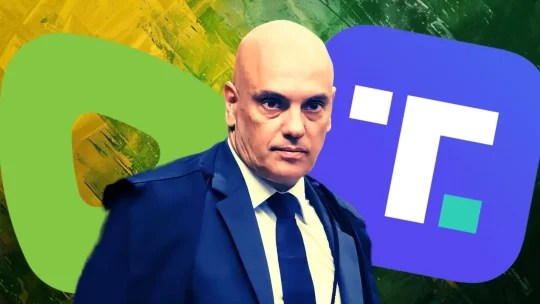
By Didi Rankovic | Reclaim The Net | February 19, 2025
Video streaming platform Rumble and Trump Media & Technology Group, the parent company of Truth Social, have filed a lawsuit against controversial Brazilian Supreme Court Justice Alexandre de Moraes, accusing him of unconstitutional censorship that violates US law.
The lawsuit, filed in the US District Court for the Middle District of Florida, claims that Moraes has engaged in “ultra vires” (beyond his legal authority) actions to silence political dissent and force American companies to comply with extraterritorial gag orders.
We obtained a copy of the lawsuit for you here.
At the center of the case are alleged secret directives from Moraes, ordering Rumble to suspend accounts belonging to a US-based Brazilian political dissident, identified in the lawsuit as “Political Dissident A.” Moraes’ orders also prohibit Rumble from allowing the dissident to create new accounts and impose strict penalties for noncompliance, including daily fines and a potential shutdown of the platform in Brazil.
According to the complaint, the orders are an attempt to enforce Brazilian speech restrictions on American soil. “Justice Moraes has issued sweeping orders to suspend multiple US-based accounts… ensuring no person in the United States can see [Political Dissident A’s] content,” the plaintiffs state.
The lawsuit further argues that these orders “censor legitimate political discourse in the United States, undermining fundamental constitutional protections enshrined in the First Amendment.”
Impact on American Free Speech
Rumble, a Florida-based video platform, and Truth Social argue that complying with the gag orders would set a dangerous precedent for foreign censorship influencing American platforms.
“Allowing Justice Moraes to muzzle a vocal user on an American digital outlet would jeopardize our country’s bedrock commitment to open and robust debate,” the lawsuit states.
The companies also allege that Moraes has ignored international legal frameworks, such as the US-Brazil Mutual Legal Assistance Treaty (MLAT), which provides a formal process for cross-border legal actions. Instead, they argue, he has resorted to coercive tactics.
“Rather than submitting a formal request through proper channels, Justice Moraes issued orders compelling Rumble, a US-based company with no presence or operations in Brazil, to appoint local attorneys solely for the purpose of accepting service of his censorship mandates,” the complaint states.
Broader Concerns Over Free Speech
Moraes, who has been at the forefront of Brazil’s controversial “Fake News Inquiry,” has drawn international criticism for his aggressive measures against political speech. The lawsuit cites reports that he has ordered the suspension of nearly 150 accounts belonging to journalists, legislators, and other critics of Brazil’s government.
The complaint also references comments made by US Vice President JD Vance at the Munich Security Conference earlier this month, where he denounced global trends of judicial censorship. “We know very well in America that you cannot win a democratic mandate by censoring your opponents or putting them in jail,” Vance stated. The plaintiffs argue that Moraes’s actions are an example of such overreach.
Rumble and TMTG are asking the court to declare Moraes’s orders unenforceable in the United States, citing violations of the First Amendment and the Communications Decency Act (CDA). The lawsuit argues that enforcing the Brazilian orders would “compel the suspension of accounts and block entire categories of political speech,” in direct conflict with US laws protecting online platforms from liability for user-generated content.
They are also seeking an injunction to prevent companies like Google and Apple from removing the Rumble app due to the Brazilian orders. The complaint warns that if tech giants comply with Moraes’s demands, “the shutdown could intensify, depriving American service providers like Rumble and platforms like Truth Social of lawful expression and shutting off millions of US users from robust political debate.”
The case raises significant questions about the ability of foreign governments to impose censorship rules on US-based platforms. If successful, the lawsuit could set a legal precedent reaffirming the limits of international judicial overreach.
Moraes has not publicly responded to the lawsuit, and it remains unclear whether the Brazilian government will intervene. However, the plaintiffs argue that this case is about more than just one dissident—it is about safeguarding American free speech from foreign interference.
As the complaint puts it: “Only American law—rooted in the First Amendment—should regulate and govern these US-based companies and their American operations.”
Justice Alexandre de Moraes has become a central figure in Brazil’s escalating crackdown on political dissent, leveraging his position on the Supreme Federal Tribunal (STF) to implement sweeping censorship measures. Since assuming his post in 2017, following the death of Justice Teori Zavascki, Moraes has increasingly used his judicial power to suppress speech he deems “anti-democratic” or “misinformation.”
His aggressive stance on censorship gained global attention in 2019 when he spearheaded Brazil’s controversial Fake News Inquiry, an unprecedented investigation that allowed the STF to unilaterally open cases, bypassing the Public Prosecutor’s Office. This move drew widespread criticism, with legal scholars and human rights organizations warning that the STF was acting as both judge and prosecutor, effectively eroding due process and the separation of powers.
Under Moraes’s watch, censorship in Brazil has reached alarming new heights. He has issued secret takedown orders against journalists, conservative politicians, and social media influencers, forcing platforms like X, YouTube, and Facebook to remove accounts critical of the Brazilian government. In a 2020 purge, he mandated the removal of 16 X accounts and 12 Facebook accounts linked to supporters of former President Jair Bolsonaro, using vague claims of “disinformation” as justification. By 2022, his censorship efforts had expanded to include nearly 150 targeted account suspensions, effectively silencing opposition voices. Moraes has even gone beyond digital suppression—he has ordered asset freezes, passport revocations, and arrests of individuals accused of spreading so-called “fake news.”
Over the past year, a significant conflict has unfolded between Elon Musk’s social media platform, X, and Justice Moraes. The dispute began when X refused to comply with Brazilian court orders to block accounts accused of disseminating misinformation and hate speech, many of which were supporters of former President Jair Bolsonaro. Moraes responded by imposing substantial daily fines and, in August 2024, ordered the suspension of X’s operations in Brazil. Musk publicly criticized Moraes, labeling him an “evil dictator” and accusing him of undermining democracy.
Despite initial resistance, X eventually complied with the court’s demands, including removing specified accounts and paying accumulated fines totaling approximately $4 million. In October 2024, Justice de Moraes lifted the suspension, allowing X to resume operations in Brazil.
G8 has lost its relevance – Kremlin
RT | February 14, 2025
The Group of Eight (G8) has become obsolete because it no longer represents the world’s economic growth engines, Kremlin spokesman Dmitry Peskov stated on Friday, in response to US President Donald Trump’s proposal to readmit Russia.
Under the proposal, Russia would rejoin the group currently consisting of the US, Canada, the UK, France, Germany, Italy, and Japan. However, three of the top-10 global economic powers in terms of GDP and PPP – China, India and Brazil – aren’t in the club.
Peskov pointed out that the group has “lost its relevance” because economic growth centers have shifted to other parts of the world and are not represented in the current configuration.
“The G7 does not represent the world’s leading economic and social development centers,” Peskov said.
He emphasized Russia’s preference for the G20 format, which includes China, India, and Brazil alongside the G7 members. “The G20 better reflects the economic locomotives of the world,” Peskov added.
Trump suggested on Thursday that Russia should be reinstated in the G8, calling its 2014 exclusion a mistake. “I’d love to have them back. I think it was a mistake to throw them out,” the US president stated at the White House.
Russia joined the group in 1997 as a “non-enumerated member.” However, its membership was suspended in 2014 following the country’s reunification with Crimea, after which the G8 reverted to the G7. Crimea voted to leave Ukraine and become part of Russia through a referendum after the Western-backed Maidan coup in Kiev.
I’m undeterred in my pursuit of justice against Israeli soldiers despite threats: Lawyer

By Alireza Akbari | Press TV | January 6, 2025
Maira Pinheiro, a Brazilian lawyer and human rights advocate, says she is undeterred in her pursuit of justice against Israeli soldiers vacationing in Brazil, despite receiving vile threats.
Hailing from São Paulo, Pinheiro represents the Hind Rajab Foundation, an NGO named after a six-year-old Palestinian girl who was tragically killed in Gaza City last January.
Pinheiro was engaged to represent the Brussels-headquartered foundation as a legal counsel in pursuing charges against Yuval Vagdani, accused of heinous war crimes against Palestinians in Gaza.
Vagdani has been accused of serious war crimes in the ongoing genocidal war on Gaza.
Speaking to the Press TV website, the Brazil-based lawyer said the suspect participated in the “controlled demolition of multiple residential buildings, posed for smiling pictures, recorded videos of himself rigging houses with explosives and documented the explosion and consequently the unlawful mass destruction of civilian property.”
Pinheiro said the foundation’s investigation team had located several Palestinian families whose homes were destroyed. One family formally appointed her as their legal representative by signing a power of attorney.
The lawyer noted that she worked on documenting the digital evidence obtained through open-source intelligence investigation while preserving the chain of custody according to Brazilian law and rigorously geolocating all the mentioned places.
However, following a Brazilian court’s directive for law enforcement to investigate Vagdani, Israeli army radio confirmed that Israeli regime authorities facilitated his escape, brazenly obstructing justice and shielding him from accountability.
The Hind Rajab Foundation also corroborated this “smuggling” operation, highlighting Israel’s blatant disregard for international law and its attempt to undermine justice on South American soil.
“There are also indications that evidence is being destroyed. This is not only a scandal but an affront to Brazil’s sovereignty and rule of law. Israel has employed similar tactics before,” the foundation said in a statement, calling on Brazilian authorities to fulfill their responsibilities, protect their judicial processes, and ensure justice prevails.
“As of now, I’ve been made aware through public domain information that the suspect managed to evade Brazil and the Brazilian authorities with the aid of Israeli diplomacy,” Pinheiro stated.
Meanwhile, the Brazilian lawyer has been threatened and intimidated after taking up the case, with many threats made on Instagram purportedly by pro-Zionist lobbies.
Speaking to the Press TV website, Pinheiro said she remains unfazed by such threats.
“What motivated me to act is the fact that there’s an ongoing genocide being perpetrated against the Palestinian people. Of course, I’m afraid of what Israel and its defenders can do, but no risk I undergo comes even close to what the people of Gaza are experiencing, and my main commitment is to them.”
The Brazilian lawyer and activist described the threats to her and her daughter as “horrible.”
“The worst part is people exploiting my daughter’s image, an innocent child that has nothing to do with the work I do,” she told the Press TV website.
“There’s also a very clear misogynistic aspect to those threats and attacks, as a profound lack of respect to me as a woman exercising her profession.”
In response to these threats, Pinheiro documented hundreds of attacks and forwarded them, along with URLs, to the Brazilian authorities for necessary action.
“In Brazil, it is a crime under Article 344 of the Penal Code to threaten someone with the intent to interfere in a judicial process,” Pinheiro stated.
“It is very clear that these people intend to intimidate me to make me step away from my work. I do not intend to give them what they want and will keep on doing the same things and taking the same stances,” she hastened to add.
The Brussels-based foundation also strongly condemned the threats in a statement on Sunday.
“The #HindRajabFoundation strongly condemns the vile and cowardly attacks targeting our lawyer in Brazil, Ms. Maira Pinheiro,” wrote the foundation on X.
It added that Pinheiro’s involvement in the case against the Israeli soldier resulted in “serious threats, including threats to her life, doxxing, sexist slurs, and even threats directed toward her daughter.”
The foundation further noted that Pinheiro was simply carrying out her professional duty as part of the legal process and called for solidarity with her, particularly from the São Paulo Bar Association and the broader legal community.
“We urge everyone to stand united in support of those who courageously pursue justice despite attempts to derail accountability. Justice will prevail,” it stated.
Pinheiro, speaking to the Press TV website, said she has been following up on other cases that have not yet been formally presented to the Brazilian justice system.
According to reports, four Israeli soldiers are currently being investigated and interrogated in South Africa, Sri Lanka, Brazil, and France on charges of committing war crimes.
The Israeli daily, the Times of Israel, reported on Monday that 12 complaints have been filed against Israeli soldiers abroad over war crimes in Gaza, adding that nine of the cases have yielded arrests.
In October 2024, the Hind Rajab Foundation filed a formal complaint with the International Criminal Court (ICC) against 1,000 Israeli soldiers for perpetrating war crimes against Palestinians in Gaza.
The complaint targeted soldiers across all ranks, from high-ranking generals and air marshals to low-ranking personnel for direct involvement in genocidal war crimes in the besieged Palestinian strip.
The case was bolstered by over 8,000 pieces of evidence, including videos, audio recordings, forensic reports, and social media documentation, meticulously detailing the soldiers’ war crimes.
Meanwhile, the Brazilian lawyer also referenced her 2024 visit to occupied Palestine and her participation in the International Law Summer School by the organization Al Haq, emphasizing her commitment to the struggle for justice and the liberation of Palestine.
“I had the privilege of visiting Al Aqsa Mosque and experiencing its sacred beauty and profound meaning, and while I was there, all I could think of were the dear friends from Gaza I had the privilege to meet during this struggle, and how unfair it was that I could be there while they couldn’t. I made a commitment there to the struggle for justice and liberation of Palestine.”
She also expressed hope that “getting to know a bit of her story” would inspire people to “commit to the fight for justice and for the end of this genocide.”
The Brazilian lawyer also expressed her love and admiration for Hind, saying she means the world to her, as she saw her daughter in the 6-year-old Palestinian girl’s plea for help.
Pinheiro said her heart shattered into pieces when she learned from now-martyred journalist Ismail Al Ghoul that Hind had been murdered along with her family and the two healthcare workers who tried to rescue her.
“Hind’s voice will forever echo in my memory as a tragic representation of the suffering of the children of Gaza,” she said, recalling the tragic event when the Palestinian girl was murdered.
Brazilian journalist fined, ordered to delete posts over criticizing Israeli war in Gaza
Press TV – November 2, 2024
A Brazilian court has ordered renowned journalist Breno Altman, who has frequently denounced Israel’s genocidal war against Palestinians in the besieged Gaza Strip, to pay a fine and delete a number of his posts on social media platforms.
Judge Paulo Bernardi Baccarat of the Court of Justice of São Paulo said on Thursday that the founder of the independent news portal Opera Mundi should pay a fine of 20,000 Brazilian reals ($3,407) in compensation for collective moral damages, and remove five posts deemed anti-Semitic.
This is yet another lawsuit against Altman, who is facing several cases in São Paulo courts due to his critical stance regarding the Tel Aviv regime’s devastating and bloody onslaught against Gaza.
In this case, the judge considered a request for censorship and compensation filed by the Brazilian Israelite Confederation (CONIB), which is the central organization of the Brazilian Jewish community.
CONIB asked for 80 thousand reals in compensation, the demonetization of Altman’s profile on social media and the payment of a minimum wage to each Israeli in Brazil.
The pro-Israeli lobby group said Altman should be banned from publishing posts about the Gaza conflict, alleging that his conduct exceeded the limits of freedom of expression, and claimed the journalist could incite hatred towards Jews and Israel with his posts.
Baccarat, however, concluded that there was no reason to pay compensation or remove most of the posts, considering that they were not anti-Semitic but rather political comments.
In other posts, however, he purportedly found racist content, such as the use of the term “rats” in reference to the Israeli military offensives against Palestinian Hamas resistance fighters.
The judge considered the reference to be racist, given that the term “rat” has a historical anti-Semitic association. The request for individual compensation for each Israeli in Brazil, however, was dismissed by the judge.
The journalist’s defense, represented by attorneys Pedro Serrano and Anderson Medeiros, said they will appeal the decision.
The objective, according to them, is to “demonstrate the absolute legality of all posts, supported by constitutional rights that ensure freedom of expression and freedom of thought.”
Back in August, Altman was sentenced to three months in prison for insulting Brazilian economist and former Director of International Affairs of the Central Bank of Brazil, Alexandre Schwartsman, and President of the pro-Israel organization StandWithUs Brazil, André Lajst.
The case also involved social media posts about Israel’s atrocious military campaign in Gaza. The sentence was commuted to a fine.
The Russia-China grains corridor will completely displace the US, Canada, Australia, and France
Inside China Business | August 31, 2024
Russia and China are developing a transnational grains corridor, connecting Russia’s enormous agricultural production to export markets in China, South Asia, and the Middle East. When complete, Russian production and shipments on this network will exceed 8 million tons per year. China is the world’s largest importer of wheat and grains, and in 2023 imported over 6 million tons of wheat from the United States, Canada, Australia, and France.
Large distribution hubs are being completed in China’s Northern and Central provinces, which will further transport Russian food exports within China, and on to other Asian countries.
The proposed BRICS grains exchange enjoys wide support across the bloc, and will accelerate the decoupling of Global South markets from the Western banking and trading systems, to the detriment of farmers in North America and Europe.
Resources and links:
The Sino-Russian Land Grain Corridor and China’s Quest for Food Security https://asiasociety.org/policy-instit…
BRICS countries back grain exchange idea, Russia says https://gulfbusiness.com/brics-countr…
Russia, China agree to build new grain hub on border https://www.world-grain.com/articles/…
Visual Capitalist, Visualizing the world’s largest consumer markets in 2030 https://www.visualcapitalist.com/the-…
U.S. Dominance in Corn Exports on the Wane Due to Brazilian Competition https://farmdocdaily.illinois.edu/202…
The New Land Grain Corridor, website and infographics https://www.nlgc.ru/en/
Closing scene, Chinese rural area outside Guilin, Guangxi province
Elon Musk and Brazil: The conflict is more complex than it seems
By Raphael Machado | Strategic Culture Foundation | September 19, 2024
The suspension of services of X (formerly Twitter) in Brazil, as well as the threat of an $8,000 fine for anyone using a VPN to continue using the social network, has made global headlines. Although there had been previous reports of friction between X and the Brazilian political-legal system, the news of the suspension surprised many people, in Brazil and abroad.
For foreigners, especially those who consider themselves “anti-imperialist”, it is very difficult to construct a consistent interpretation of this conflict between Musk and Brazil because of the expectations critics of unipolarity have developed regarding Brazil under Lula’s return.
These are the same people who were shocked by Brazil’s hostility toward Nicolás Maduro and a series of other inconsistent positions taken by the Brazilian government on the international stage.
But while investigating how committed the current Brazilian government is to the idea of a multipolar order is relevant, the fact is that Lula has only marginal involvement in the suspension of X in Brazil.
First of all, how is this issue being framed by both sides of the dispute? Generally, the issue of “X” in Brazil is being treated as a conflict between “respect for the law” versus “freedom of expression.” It is difficult to take this framing seriously for a number of reasons.
X, under Elon Musk, has consistently censored or reduced the reach of pro-Palestinian accounts since Musk’s visit to Israel. If X is not like Facebook, Instagram, YouTube, or the newer BlueSky, it clearly cannot be seen as a bastion of free speech.
On the other side, however, the situation is also a bit more complex than simply the duty of X to comply with Brazilian laws. Elon Musk has indeed raised some concerning points regarding Judge Alexandre de Moraes, who made decisions contrary to Brazilian internet norms and tried to force X to comply with them.
Even setting aside these decisions about social media account censorship, the handling of the X case itself has drawn criticism in Brazil.
The root of this conflict is the fact that Moraes has been leading a criminal inquiry for over five years, now known as the “fake news inquiry,” where he goes beyond the usual role of a passive and impartial judge and actively investigates and judges cases of “disinformation” that allegedly threaten “democracy” and Brazil’s electoral process. The rhetoric is very reminiscent of Orwellian narratives produced in Washington and Brussels.
As the political-legal establishment and its international partners are quite satisfied with the Brazilian government’s current stance on most issues, the main targets of these investigations are figures linked to the opposition.
Thus, in the context of this inquiry, Judge Moraes has ordered the suspension of social media accounts of those under investigation. Such decisions are legally questionable under Brazilian law. First, because the inquiry has far exceeded a reasonable time frame for conclusion and doesn’t appear to have a clear objective. Second, because suspending social media accounts of individuals without a conviction, in an inquiry that seems “endless,” is inappropriate. Third, because the Brazilian Internet Civil Framework, the country’s legislation on internet-related obligations for companies, stipulates that a social media account can only be blocked for specific violations of norms – and Judge Moraes, in his orders to X, never specified the reasons for the suspensions.
These are some of the main arguments, including those raised by Elon Musk, to challenge these judicial decisions.
The situation worsened when Moraes allegedly threatened X’s office employees in Brazil with imprisonment if they failed to comply with his decisions. Amidst this confusion, the Judiciary claims that X’s representative in Brazil has been evading court summonses. On the other hand, there are indications that Moraes’ staff sent the summons to the wrong email address when attempting to notify X.
Nonetheless, these threats explain why X decided to shut down its office in Brazil. Immediately afterward, Moraes ordered X to appoint a new legal representative in Brazil, which is mandatory for companies operating in the country.
Since X did not establish a new representation in Brazil, Moraes ordered the company’s suspension.
The situation would seem more reasonable if Moraes hadn’t also imposed a daily fine of $8,000 on any Brazilians using VPNs to continue accessing the social network. Needless to say, the order was immediately disobeyed by most Brazilian X users, and the Brazilian Bar Association filed an appeal to annul the fine.
The problem with the fine is that it casts doubt on the claim that this is merely a natural consequence of X not having legal representation in the country in accordance with the law. Why, then, impose fines on ordinary users who are not part of the inquiry and were not even notified of the decision (which, again, is unconstitutional under Brazilian law)?
Next, Moraes ordered the blocking of Starlink’s accounts, a company with different shareholders, to collect the fine imposed on X – once again, a decision that violates Brazil’s entire legal framework.
However, the issue transcends the legal debate and refers back to the fact that X is a space successfully used by sectors of Brazilian politics that oppose the “Juristocracy,” as well as the influence of foreign NGOs in Brazil and the current government.
Platforms like Meta, for example, are absolutely controlled by the U.S. Deep State and impose draconian restrictions on anyone who deviates from globalist ideological orthodoxy. Moreover, this may seem incomprehensible and unbelievable to our partners in other BRICS countries, but Brazil does not have an anti-Atlanticist, counter-hegemonic mass media. The Brazilian mass media belongs to an oligopoly that is deeply tied to U.S. media conglomerates.
In this sense, spaces like X represent an “oasis” used by both the right-wing opposition and the anti-imperialist left.
To understand what Moraes and other judges think of this, one only needs to recall a statement he made a few weeks ago: “At the turn of the century, there were no social networks; and we were happier,” said to loud applause from representatives of Brazil’s major TV networks and newspapers.
Naturally – we insist – Elon Musk is not exactly a victim here. He is far from it. For example, it is also true that his Tesla lost contracts to Chinese rivals in Brazil in recent years, which greatly irritated him. It is also true that he believes he can gain greater business penetration in the Brazilian market if Bolsonaro returns to power – and he openly uses his large presence on X to occasionally boost posts from opponents of the Lula government.
Therefore, the case transcends the superficial duality presented as “sovereignty vs. freedom of expression,” and is more accurately an expression of a dispute between different sectors of the Brazilian elite, both with international ties (let us remember that Moraes was part of the international scheme of Operation Car Wash, whose objective was to destroy Brazilian companies, imprison Lula, and overthrow Dilma Rousseff under the guidance of the U.S. Department of Justice), and both clearly hostile to the project of a new multipolar order.
G20 Embraces Digital ID Dream While Critics Warn of Surveillance Nightmare
By Didi Rankovic | Reclaim The Net | September 19, 2024
The G20 organization, currently chaired by Brazil and recently holding a ministerial meeting there, is wasting no time falling in line with all the key policies advanced by many governments, and globalist elites.
After promising to do its bit in the “war on disinformation” (to the delight of the host, Brazil, whose present government is accused of censorship), G20 member countries “pledged allegiance” to the digital ID and the overall scheme that incorporates it – namely, the digital public infrastructure (DPI).
DPI already counts the UN, the EU, the World Economic Forum (WEF), and the Gates Foundation as policy backers and vocal promoters. Now G20 ministers with digital economy portfolios have issued a joint declaration to express their “commitment” to both DPI and “combating disinformation”, and there is also inevitably the talk of “AI.”
On the digital ID/DPI front, the ministers speak of “inclusive” DPI, and the same attribute is attached to AI. The declaration “acknowledges” the importance of things like innovation and competition in a digital economy, among other things, at the same time “reaffirming” the importance of digital transformation based on DPI.
Boilerplate remarks are made about transparency and protection of privacy and personal data – but these are the major concerns cited by opponents of this type of scheme, along with the overall fear that they facilitate new, more dangerous forms of mass surveillance through centralization of personal information and tracking of people’s activities.
Referring to digital ID as “a basic DPI,” the declaration further speaks of the Sustainable Development Goals (a UN agenda) and one of its targets to be achieved by 2030 by using digital ID (as a tool of “inclusion”) to provide “legal identity for all.”
Interestingly enough, free speech repression is not the only controversial policy where Brazil seems keen to lead the way; so is DPI, and the digital ID.
During the G20 meeting, Brazil promoted its DPI-related activities, including digital IDs based on biometrics. This policy is explained with buzzwords such as economic growth, sustainable development, and also, “easier access to financial services and government resources, particularly for underbanked populations.”
Brazil’s High Court Freezes Starlink Assets Over Musk’s X Censorship Refusal
By Dan Frieth | Reclaim The Net | August 29, 2024
Brazil’s Supreme Court has escalated the country’s retaliation against Elon Musk by freezing the financial assets of Starlink Holding, a subsidiary of Musk’s. This action is in response to another Musk company, X, which has refused to censor posts and designate a legal representative in Brazil.
This decision was part of a broader action taken by the controversial Justice Alexandre Moraes of the Supreme Court, who targeted an economic entity led by Musk. According to Brazilian media, on August 18, Moraes mandated the freezing of all financial assets of Starlink within Brazil to secure the payment of penalties levied against X by Brazilian courts.
Justice Moraes’ decision stems from the ongoing dispute involving X’s operations in Brazil. The company, under Musk’s direction, had recently shut down its Brazilian office on August 17, citing disagreements with the Supreme Court’s fines and content censorship mandates. This closure followed the court’s demand, made the day before, for X to appoint a legal representative to address these issues formally.
The lack of a legal representative prompted Justice Moraes to issue an ultimatum to the social network, giving them 24 hours to comply under threat of service suspension in Brazil. The urgency and consequences of these legal actions were communicated via a post on the Supreme Court’s X profile, directly responding to X’s announcement about the office closure to protect employees and the withdrawal of their representative.
Aside from X, Musk’s Starlink operates within Brazil, providing satellite internet services, particularly in the Northern region. The leadership of Starlink in Brazil has been informed and summoned to respond to the financial obligations imposed on X by the Brazilian judiciary.
Starlink, the satellite internet service by SpaceX, is particularly significant in Brazil for enhancing connectivity in remote and underserved regions, such as the vast Amazon rainforest where traditional broadband is impractical. This technology provides reliable internet access, supporting educational resources, digital commerce, and connectivity during natural disasters, which are frequent in regions prone to floods and landslides.
Additionally, improved internet access aids environmental monitoring efforts in the Amazon, facilitating better resource deployment against illegal activities such as deforestation and wildlife trafficking.
A multilateralist, but not a multipolarist: Lula shows his true face
By creating tensions with Venezuela and Nicaragua, Lula creates serious geopolitical problems in South America

By Lucas Leiroz | Strategic Culture Foundation | August 21, 2024
Brazilian President Luiz Inácio Lula da Silva has been the target of several recent controversies across the South American geopolitical scene. Contrary to the expectations of some naive leftists, Lula’s government is not acting according to a non-aligned guideline, but cooperating with Western powers in several aspects, mainly with regard to opposition to counter-hegemonic governments in Latin America.
To this day, Lula has not recognized the victory of Nicolás Maduro – the legitimate and democratically elected president of the Bolivarian Republic of Venezuela. This irresponsible attitude was easily expected from a political leader on the Brazilian right wing – like the previous president, Jair Messias Bolsonaro –, but it is something really surprising for the “left”, which historically has good relations with illiberal countries.
The Brazilian president’s international affairs advisor, former foreign minister Celso Amorim, explained that there is “no evidence” that the Venezuelan elections took place in a non-fraudulent manner. One of the “solutions” he proposed was even redoing the elections, which sounds absolutely ridiculous. Another possibility was for Maduro to form a joint government with the defeated opposition, which does not make any sense from a rational point of view.
In the same sense, Brazil and Nicaragua mutually cut diplomatic relations, expelling each other’s ambassadors. As a result, relations between Brazil and the two main counter-hegemonic countries in the Americas are deeply shaken. It is not known what Lula will do after the end of Maduro’s current term, as failure to recognize the recent victory could lead to a break in relations.
In practice, Brazil is functioning as an auxiliary to U.S. interests in South America, using the rhetoric of “democratic zeal” as an interventionist excuse to guarantee foreign interests in the region. Many supporters of President Lula are disappointed with these acts, but this was truly expected by the most qualified analysts.
Lula was never a “pro-multipolar” leader. The entire foreign policy of Lula and the Workers’ Party is based on a multilateralist worldview centered on the UN. Since the 2000s, Lula has been a leader encouraging dialogue between emerging nations, but at the same time he advocates a global consensus through the UN and other international organizations as regulators of relations between States – completely ignoring that these organizations are strongly biased and linked to a liberal ideology propagated from the western U.S.-EU axis.
In the 2000s, Lula’s stance was contesting and somehow “outsider”, as he dialogued with revisionist nations of the liberal order. However, Lula was never paradigmatic in his foreign policy and never proposed any radical project for real change in the structures of the global order. American hegemony was never challenged by Lula, but “mitigated”. His idea basically consisted of making the world economically more “equitable” and relations between States more “humane”. Western values, such as “democracy (in the Western understanding)” and liberalism, were never a problem for Lula.
In this sense, what seemed like something “dissident” in the 2000s today sounds like something conservative and insufficient. Today, emerging nations are much more organized and are capable of contesting American hegemony in an actually profound way. Mere multilateralism is insufficient, as there is a need to take a step towards real Multipolarity – which consists of reconfiguring the global power structure and not simply increasing multilateral dialogue and economic cooperation.
So, the same Lula who was an “outsider” in the 2000s is now showing himself to be a advocate for the “consensus”. Lula condemned the Russian operation in Ukraine – despite correctly refusing to participate in the sanctions –, which can be considered his first big mistake since the election. Lula later called Hamas’ Operation Al Aqsa Storm a “terrorist attack.” Despite taking a firm stance when criticizing Israel for the massacre in Gaza, Lula avoided going deeper into this issue, remaining inert in the face of the defense cooperation that exists between Brazil and the Zionist regime. Now, by destabilizing relations with counter-hegemonic countries in South America, Lula takes the definitive step so that there is no longer any doubt: his government is not aligned with the multipolar transition.
Lula continues to be a typical multilateralist leftist of the 2000s. Economic cooperation and multilateralism, for him, must be respected as long as the Western model of liberal democracy continues to be hegemonic. Unfortunately, with this type of stance, Brazil loses the opportunity to become one of the main players in the multipolar geopolitical transition process.
Featured Video

Total War – Attacking Nuclear Plants, Desalination & Infrastructure
or go to
Aletho News Archives – Video-Images
From the Archives
Strike on Israel Shows US Bases Near Iran Are ‘Achilles Heel’
By Svetlana Ekimenko – Sputnik – 14.04.2024
Fears of a greater Middle East escalation were triggered after Iran launched a massive drone and missile attack against Israel, aided by Hezbollah and the Yemeni Houthis. Iran said the attack was in response to Israel’s bombing of the Iranian consulate in Damascus, Syria, which killed seven members of the elite Revolutionary Guard Corps.
Iran’s massive retaliatory attack on Israel from its own territory is a sign that the conflict could “escalate out of control.”
Michael Maloof, a former senior security analyst in the office of the US secretary of defense, told Sputnik that the first ever direct Iranian attack on Israel set a dangerous precedent.
“My concern is that this could easily escalate into something not only between Iran and Israel, but beyond the Middle East region,” he said.
Iran’s assault, which it stated was an act of “self-defense” after the Israeli strike on its consulate in Damascus, was originally intended to be a “limited” one, said Maloof.
Iran first sent in “swarms of drones with lights on as a sign of psychological warfare,” but sending in cruise and ballistic missiles by Tehran was a “distinct escalation,” said Maloof.
The scale of Iran’s attack on Israel suggests that Tehran was sending a message, demonstrating that it possesses “extraordinary capabilities,” said Maloof. … continue
Blog Roll
 Aletho News
- Pakistan PM backs Iran’s right to self-defense amid tensions
- Hungary blasts ‘fake’ EU accusation
- SAFE Debt Trap: Poland’s €43.7 Billion Bet on Unipolar Illusion
- War on Iran threatens global Gulf capital flows: FT analysis
- Mossad De Facto Admits To Inciting Riots In Iran
- Tehran: World grown thoroughly exhausted with US-Israeli ‘false flag storylines’
- Trump ‘stuck between a rock and a hard place’, lacks Iran war strategy: Ex-CIA chief
- Trump’s bombardment of fake news so far is working quite well. But where is it heading?
- Iran to Mine Sea Lanes in Persian Gulf in Case of Attack – Defense Council
- Barak blasts Netanyahu: ‘Stop lying – you can’t destroy Iran’s nuclear, missile capabilities’
- If Americans Knew
- From Sde Teiman, the truth about Israel’s military justice system has been set free
- Child denied life-saving bone marrow transplant by Israel ‘because he is from Gaza’
- Raffi Berg: BBC Middle East Editor Exposed as CIA, Mossad Collaborator
- Jerusalem Archbishop Rebukes Netanyahu’s Statements on Christianity
- US to embed Palantir AI across entire military: Report
- Israeli-US war on Iran to drag on “a few more weeks” – Not a ceasefire Day 164
- Lebanon deaths top 1,200; Palantir AI to be embedded across US military – Not a ceasefire Day 163
- Israel’s assassination game: Take all pragmatists off the board
- Food shortages return to Gaza as Israel tightens aid restrictions under the cover of its war on Iran
- Trump demands trillions in payments from Gulf countries, billions from Harvard – Not a ceasefire Day 162
- No Tricks Zone
- New Study: CO2 Is ‘Effectively Negligible’ As An Explanatory Climate Change Factor Since 2000
- Former Pfizer Toxicologist Dr. Helmut Sterz Tells Bundestag Hearing Pfizer Vaccine Should Have Never Been Approved
- Energy Expert: Germany’s Nuclear Phaseout Was A “500 Billion Euro Mistake”
- New Research: South Australia’s Mid-Holocene Sea Surface Temperatures Were 4°C Warmer Than Today
- Storing Green Energy To Last Germany 10 Days Would Require A 60-Million Tonne Battery
- New Studies: UK Sea Levels Were 4 Meters Higher Than Today During The Mid-Holocene
- Destructive Green New Deal: German Energy And Metal Group Warns Of Drastic Crisis
- New Study Documents A 20-Year Pause In Arctic Sea Ice Decline – Driven By Internal Variability
- Wake-up Call: Survey Shows Majority Of Germans Now Favor Postponing Climate Targets!
- Televised! Leading German Political Candidate Tells Schoolchildren CO2 Makes Sun Hotter!
 Aletho News