CNN lies about 68% of Americans waiting for vaccine to return to normal life as lockdown gives MSM new lease on life
By Helen Buyniski | RT | May 12, 2020
 Mainstream media is running wild during the US coronavirus lockdown with the kind of distorted “facts” that would normally be ignored but have developed staying power due to pandemic-induced vulnerabilities in its audience.
More than two-thirds of Americans are determined to hide out in their homes until a Covid-19 vaccine comes along. Or so CNN appeared to claim in a Tuesday headline, declaring “68 percent of Americans say a vaccine is needed before returning to normal life.” Citing a Gallup poll, the piece implied that until a vaccine is rolled out for the pandemic that has upended the lives of people around the world, most Americans are content to shelter in place, working from home (if they’re lucky enough to be working at all) and absorbing reality through the mainstream media.
The actual Gallup poll the article cited said no such thing. “Availability of a vaccine to prevent Covid-19” was merely one item on a list of factors that respondents could rate as “very,” “somewhat,” or “not too important” as conditions for returning to their pre-pandemic routines. Indeed, a poll taken the previous week that specifically asked how many respondents would only return to normal if there was a vaccine found just 12 percent of respondents felt they needed the still-hypothetical jab to resume their lives.
More important than a vaccine that is expected to take over a year to come to market in Gallup’s poll were “mandatory quarantine for anyone testing positive with Covid-19” (“very important” for 80 percent of respondents) and “improved medical therapies to treat Covid-19” (“very important” for 77 percent). Even a “significant reduction” in virus-related deaths (73 percent) outstripped the vaccine. Yet this benchmark was used as the headline by CNN.
Sure, the decision could have been motivated by the network’s heavy support by pharmaceutical companies. Democratic presidential candidate Bernie Sanders called out CNN during a primary debate for taking drug company money in a direct conflict of interest, and vaccine safety advocate Robert F. Kennedy Jr. has claimed 70 percent of ad dollars for news networks come from pharmaceuticals during non-election years.
However, given the abysmal track record of previous efforts to develop a vaccine for other coronaviruses, like SARS, there’s no guarantee a Covid-19 shot will ever come on the market. Instead, it’s more likely CNN’s motive in portraying Americans as willing to hide in their homes for another year in the hope of a pharmaceutical savior that may never come is an opportunistic attempt to prey on the newfound vulnerabilities of a pandemic-panicked population.
Everyone makes mistakes, of course, but CNN and its mainstream media ilk have been making an awful lot of them during the coronavirus pandemic, and they’ve all erred in the direction of presenting the virus as a terrifying killer that threatens all populations who dare peek their heads out of their windows (except for the prescribed hour of clapping, of course). CBS was caught re-using the same footage of an Italian hospital overwhelmed by coronavirus-stricken patients twice to illustrate New York hospitals supposedly buckling under the weight of the epidemic, even after the network was caught the first time and excoriated on social media. A Project Veritas exposé last week implied they hadn’t learned their lesson, claiming the network had allegedly staged a long line of patients waiting for coronavirus testing at a Michigan facility, which CBS was quick to blame. Many outlets continued to predict apocalyptic death numbers for the country long after it was apparent that the early estimates were significantly overblown.
It’s not like there haven’t been plenty of sensational Covid-19 stories in the US, which has long been the epicenter of the coronavirus pandemic. Between U-Haul trucks filled with decomposing bodies parked outside a Brooklyn funeral home and New York Governor Andrew Cuomo’s appalling order mandating contagious Covid-19 patients be admitted to nursing homes where they’d – in his own words – infect the tenants “like fire through dry grass,” tales of suffering inflicted by the virus abound. Covid-19 has contributed to over 81,000 deaths as of Tuesday, according to data collected by Johns Hopkins University. But it never seems to be enough – so many of the deaths are in nursing home patients or those with comorbid conditions that the media seems compelled to dig for ever more lurid and shocking narratives.
The Covid-19 lockdowns have given the media establishment something it hasn’t had for years – a captive audience. It isn’t about to let something like that go, even as states begin to loosen restrictions and permit the housebound to return to work. Pre-virus, the media establishment enjoyed near-record low approval ratings, with just 41 percent claiming to trust mainstream outlets in 2019. But in the midst of the uncertainty caused by the virus – which has put over 33 million Americans out of work and disrupted the lives of millions more – the certainty and familiarity those outlets provide has shored up their falling stock. Some 57 percent of respondents to a Pew Research poll conducted last month said cable news was doing an “excellent” or “good” job covering the pandemic, while a whopping 68 percent approved of network television coverage. Given the low ratings they enjoy during business as usual, neither CNN nor any other mainstream outlet is going to risk letting their newly-loyal audience return to reality – not when they can keep them at home waiting for a vaccine for another year. For a media that thrives on fear, the best kind of customer is one who’s glued to the couch, terrified of the virus lurking just outside their door.
Helen Buyniski is an American journalist and political commentator at RT. Follow her on Twitter @velocirapture23
South Carolina Debate Attended by Elite ‘Sponsors’, Featured Syria War Propaganda
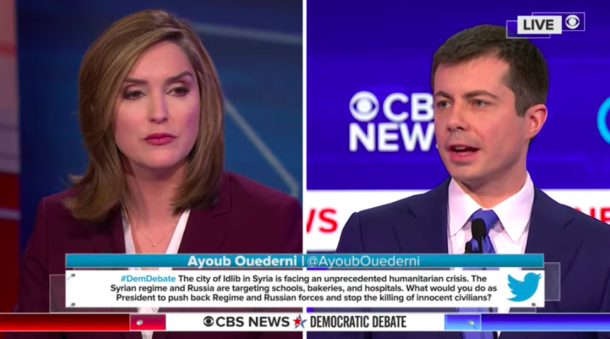
CBS News’ Margaret Brennan pushing Syria war propaganda with Pete Buttigieg
21st Century Wire | February 26, 2020
The Democratic Party held its 10th presidential debate Tuesday night in Charleston, South Carolina, as candidates continued their attacks on national frontrunner Bernie Sanders in front of a live audience of elite ‘sponsors’ who paid over a thousand dollars to attend the event.
A local Charleston TV news station confirmed earlier this month that a “guaranteed ticket” at the debate required a sponsorship to be paid at levels between $1750 to $3200, prompting the trending hashtag, #WineCaveDebate, during the live broadcast.
CBS News carried the debate and featured a foreign policy question to be asked by Twitter users.
Debate moderator Margaret Brennan then read the selected tweet and directed the question to Pete Buttigieg:
The city of Idlib in Syria is facing an unprecedented humanitarian crisis. The Syrian regime and Russia are targeting schools, bakeries, and hospitals. What would you do as President to push back Regime and Russian forces and stop the killing of innocent civilians?
It was apparent that CBS News did not verify the dubious claims made in the tweeted question, and thus was able to present a false narrative about the war in Syria to its viewing audience.
The Syrian Arab Army and its Russian military partners have actually been advancing on Idlib to liberate it from the jihadi terrorists that have taken control of it from peaceful Syrians.
Buttigieg responded to the question by saying “I stand with the people of Idlib…”
Later, Brennan direct the same question to Elizabeth Warren, but rephrased it as “What would you do to stop the mass murder?”
Russian Aggression Comes From Media Racism
By Tim Kirby | Strategic Culture Foundation | June 10, 2019
As an American wouldn’t you want to live in a country with a powerful military that can prevent any invasion and backs up your foreign policy with some some muscle? Wouldn’t you want to make sure that America remains a cohesive nation that shuts down any attempts at succession and asserts a firm military, governmental and cultural presence all over its own territory? As an American wouldn’t you feel that America has the right to try to get back regions that it controlled for generations filled with Americans cut off from the bulk of the US if need be? And finally wouldn’t you think that it is fine for the USA to resist economic, military and cultural pressure from an aggressive foreign power while developing itself?
Unless you are some sort of self-hating SJW zealot then all of the above should seem perfectly reasonable to you… because it is. It is reasonable not just for America but for any great human civilization on our planet. So the question is why is it that when Russians follow these same normal patterns of behavior they are labeled as “aggression” and somehow immediately become horrible and unacceptable.
The Russian aggression trope has come up again as CBS brutally shoehorned the expression into the title of one of their videos. In the piece Senator Joe Manchin comments on a few different topics but the main one was his tour of Arctic nations and the climate issues related to them. All he had to say about Russia is that they are really putting their chips down on the Arctic and have invested massive amounts of money and resources into the region.
The topic of Russia came up after the presenter asked Mr. Manchin a bizarre conspiracy theory site style question related to Russians doing major nuclear tests in the Arctic for no clear reason other than Russians do bad things by default according to CBS’s editorial line. The presenter did not state where she got this nugget of fake news from, she just boldly asserted they are nuking snow and polar bears as Russians are known to do.
Thankfully Mr. Manchin bluntly said “no” ignoring this mad question to immediately go on to layout his opinion that the US could be really falling behind in terms of the Arctic due to the Russian surge in the great white north and that the US should be aware of this and try to catch up. He feels that America needs to catch up, overtake, or offset the Russians in the Arctic.
This is a totally reasonable respectable and patriotic stance to have, which is probably why CBS had to force “aggression” into the title of the video. If all American politicians had the same rational view of competition between nations that Mr. Manchin does, then the pointless tension between the US and Russia would probably be very nominal right now.
Perhaps it is part of human nature to create lots of double standards in favor of one’s own group. Every political movement and every nation seems to forgive the sins of its own guys when they do things “for the greater good” and demonizes anyone who tries to stop them. Our soldiers are heroes, their soldiers are monsters, our way of life is good for everyone, their way of life is a threat to the world etc. This aspect of tribal mentality is part of who we are and something we need to be much more mindful of in our 21st century nuclear standoff, because the worst that could happen from this type of rhetoric is no longer just some kind of pogrom but total nuclear annihilation.
If the Pro-Diversity machine in the media would wake up to the fact that the geopolitical chessboard, is, was and always will be “diverse” and that all players have similar goals with similar means that would really help the entire world move forward and keep us all very far away from the potential of a WWIII nuclear scenario. This “good guy vs. bad guy” racist narrative that Russia is on the bad end is propping up an ultimately artificial conflict with the US. It is time to acknowledge the reality that there are numerous cultures on Earth that want to be powerful and prosperous and just because they look different from us doesn’t make them any more or less capable of doing great evil.
CNN refuses to reveal names of “multiple sources” who spread Wikileaks-Trump fake news story
By Alex Christoforou | The Duran | December 11, 2107
Last week was a very bad week for fake news CNN.
CNN was embarrassed (to say the least) after completely screwing up what it dubbed a “bombshell” Trump collusion story, by misreading email dates, and confusing a “4” with a “14”.
CNN had claimed that an email sent to the Trump campaign, containing hacked documents and encryption key, was dated September 4th, days before being released to the public.
This was the smoking gun proving Trump-Wikileaks collusion and by extension Trump-Russia collusion. Only problem was that the real date of the email was ten days after Wikileaks publicly released its leaked documents. Zerohedge noted at the time…
As it turns out, the email was dated Sept. 14. The documents had actually been made publicly available earlier that day. Wikileaks was merely trying to draw the Trump campaign’s attention to the documents.
So, two of CNN’s ace political reporters managed to write a “bombshell” story, which presumably made it through at least one round of edits, and was also probably reviewed by the network’s legal department, without anybody double-checking the date of the email – the crux of the entire. For what it’s worth, CNN said it based its story on the accounts of two sources who had seen the email. But this just highlights the dangers of relying on second-hand information, and should make readers question the next anonymously sourced story they see.
CNN corrected its story after the Washington Post, which managed to obtain a copy of the email, pointed out the error, which transformed the CNN story from a “bombshell” into essentially a nonstory.
Progressive media commentator, Jimmy Dore tore apart CNN, and its fake news cohorts MSNBC, CBS and ABC for not only spreading the fake news, but not having the integrity to issue a proper retraction… at the very least CNN should, as The Intercept’s Glenn Greenwald points out, expose who the “multiple sources” for the story were, and how such multiple sources all misread the date.
It is, of course, completely plausible that one source might innocently misread a date on a document. But how is it remotely plausible that multiple sources could all innocently and in good faith misread the date in exactly the same way, all to cause to be disseminated a blockbuster revelation about Trump/Russia/WikiLeaks collusion? This is the critical question that CNN simply refuses to answer. In other words, CNN refuses to provide the most minimal transparency to enable the public to understand what happened here.
*****
Think about what this means. It means that at least two – and possibly more – sources, which these media outlets all assessed as credible in terms of having access to sensitive information, all fed the same false information to multiple news outlets at the same time. For multiple reasons, the probability is very high that these sources were Democratic members of the House Intelligence Committee (or their high-level staff members), which is the committee that obtained access to Trump Jr.’s emails, although it’s certainly possible that it’s someone else. We won’t know until these news outlets deign to report this crucial information to the public: which “multiple sources” acted jointly to disseminate incredibly inflammatory, false information to the nation’s largest news outlets?
Google hiring 1,000 journalists in effort to control American news flow
It’s about controlling information offline and online
By Alex Christoforou | The Duran | September 19, 2017
Google is learning from its mistakes.
Not being able to place Hillary Clinton in office, the search monopoly has decided that online influence over what Americans think, say, and do is not enough to guarantee the right woman enters the White House.
Google is now embarking on a 5 year plan, where they will seed 1,000 aspiring, liberal left journalists into America’s local media markets.
Poynter reports that the Google News Lab will be working with Report For America (RFA) to hire 1,000 journalists all around the country.
Many local newsrooms have been cut to the bone so often that there’s hardly any bone left. But starting early next year, some may get the chance to rebuild, at least by one.
On Monday, a new project was announced at the Google News Lab Summit that aims to place 1,000 journalists in local newsrooms in the next five years. Report For America takes ideas from several existing organizations, including the Peace Corps, Americorps, Teach for America and public media.
Unlike foreign or domestic service programs or public media, however, RFA gets no government funding. But they are calling RFA a national service project. That might make some journalists uncomfortable – the idea of service and patriotism. But at its most fundamental, local journalism is about protecting democracy, said co-founder Charles Sennott, founder and CEO of the GroundTruth Project.
“I think journalism needs that kind of passion for public service to bring it back and to really address some of the ailments of the heart of journalism,” he said.
Here’s how RFA will work: On one end, emerging journalists will apply to be part of RFA. On the other, newsrooms will apply for a journalist. RFA will pay 50 percent of that journalist’s salary, with the newsroom paying 25 percent and local donors paying the other 25 percent. That reporter will work in the local newsroom for a year, with the opportunity to renew.
Zerohedge reports…
Of course, while the press release above tries to tout the shared financial responsibility of these 1,000 journalists, presumably as a testament to their ‘independence’, it took about 35 seconds to figure out that the primary funder of the journalists’ salaries, RFA, is funded by none other than Google News Lab.

Meanwhile, as a further testament to RFA’s ‘independence, we noticed that their Advisory Board is flooded with reputable, ‘impartial’ news organizations like the New York Times, NPR, CBS, ABC, etc….

We are sure that these 1,000 journalists will never be called upon by Google to report on the news in a way that benefits the giant search company.
Tangier Island
By Paul Homewood | Not A Lot Of People Know That | July 10, 2017
CBS have a report on rising sea levels at Tangier Island, in Chesapeake Bay here
The video is worth watching. The CBS reporter makes the usual attempts to blame it on “climate change”, but the locals know too much to fall for that old pony.
They know that sea levels have been rising, and land eroding, since 1850.
And they are right. Tide gauges in the area, such Sewell Point, Norfolk, confirm that sea levels have been steadily rising for a long time, long before recent rises in emissions of CO2.

https://tidesandcurrents.noaa.gov/sltrends/sltrends_station.shtml?stnid=8638610
The rate of rise is 4.6mm/yr, nearly three times the global rate. But there is a very good reason for this – the land is sinking.
Chesapeake Bay is the site of an ancient impact crater, caused by a comet or meteor. As a result the land has been subsiding ever since. Estimates by proper scientists suggest it is sinking at a rate of up to 3mm/yr.
For instance this recent study by John Boon et al found (Sewell Pt is SWPT):

https://notalotofpeopleknowthat.wordpress.com/2017/02/03/sea-level-rise-at-norfolk-va/
In other words, this accounts for two thirds of the sea level rise.
The study also found no acceleration in the rate of sea level rise:

The sea in Chesapeake Bay is doing what it always has, and no amount of windmills and solar panels will have the slightest effect.
Nothing Important Happened in Syria on Tuesday, Nov. 29
By Paul Larudee | Dissident Voice | November 30, 2016
On Tuesday, Nov. 29, 2016, after more than five years of fighting in Aleppo, Syrian government forces recaptured a major portion of the “rebel” enclave often called “east Aleppo”.
It now should be called “southeast Aleppo”, and soon perhaps just “Aleppo”. Thousands of grateful Syrian civilians ran into the arms of the soldiers, and were provided with food, shelter, transportation, medical services, and other needs.
They recounted horror stories of how the “rebels”, under the leadership of the extremist al-Qaeda affiliate Jabhat al-Nusra (AKA Jabhat Fateh al-Sham), denied them food and water and shot at them when they tried to leave (after confiscating their mobile phones so that no one could hear their story). Nevertheless, hundreds of fighters decided to accept the government offer of amnesty, and laid down their arms, while the rest retreated into the shrinking enclave.
The main water pumping station for the entire city had been in this liberated section of the city, and government engineers promise that service will soon be restored for the first time in many years.
It is a major turning point in the Syrian war, signaling the beginning of the end for efforts by the US, NATO and the Arabian monarchies to create “regime change” and a failed state in place of the secular government supported by the vast majority of Syrian citizens.
But apparently none of this is of any importance. After following what I thought were exciting developments through Twitter, Facebook, RT, and various alternative media sites, I flipped through the evening news of the three major US television networks (ABC, NBC & CBS) to see what sort of coverage they might have. I was expecting denunciations, accusations of Russian and Syrian atrocities, and the usual lies and distortions.
Instead, I found nothing at all. There was no coverage of Syria. Apparently, nothing of any consequence had happened. Instead, there was a story about how a group of US workers had won the lottery and had all become millionaires.
Silly me! I had thought it was a historic turning point. I can only imagine that the lavishly funded Aleppo Media Center and White Helmets “impartial” “volunteer” organizations were too busy running for their lives, along with their head-chopping heroes, to concoct their stories and stage their imitation rescue and black flag operations, and distribute them to the western media. Without these sources, the corporate media were left with nothing to report except stories that contradicted everything they had been reporting for months and years.
Silence is golden.
Paul Larudee is one of the founders of the Free Gaza and Free Palestine Movements and an organizer in the International Solidarity Movement.
How CBS News Aided the JFK Cover-up
By James DiEugenio | Consortium News | April 22, 2016
In the mid-1960s, amid growing skepticism about the Warren Commission’s lone-gunman findings on John F. Kennedy’s assassination, there was a struggle inside CBS News about whether to allow the critics a fair public hearing at the then-dominant news network. Some CBS producers pushed for a debate between believers and doubters and one even submitted a proposal to put the Warren Report “on trial,” according to internal CBS documents.
But CBS executives, who were staunch supporters of the Warren findings and had personal ties to some commission members, spiked those plans and instead insisted on presenting a defense of the lone-gunman theory while dismissing doubts as baseless conspiracy theories, the documents show.
Though it may be hard to remember – amid today’s proliferation of cable channels and Internet sites – CBS, along with NBC and ABC, wielded powerful control over what the American people got to see, hear and take seriously in the 1960s. By slapping down any criticism of the Warren Commission, CBS executives effectively prevented the case surrounding the 1963 assassination of President Kennedy from ever receiving the full airing that it deserved.
Beyond that historical significance, the internal documents – compiled by onetime CBS News assistant producer Roger Feinman – show how a major mainstream news organization green-lights one approach to presenting sensitive national security news while blocking another. The documents also shed light on how senior news executives, who have bought into one interpretation of the facts, are highly resistant to revisit the evidence.
Buying In
CBS News jumped onboard the blue-ribbon Warren Commission’s findings as soon as they were released on Sept. 27, 1964, just over 10 months after President Kennedy was assassinated in Dallas, Texas, on Nov. 22, 1963. In a special report, CBS and its anchor Walter Cronkite preempted regular programming and, with the assistance of reporter Dan Rather, devoted two commercial-free hours to endorsing the main tenets of that report.
However, despite Cronkite and Rather giving the Warren Report their public embrace, other people, who were not in the employ of the mainstream media, examined critically the report and the accompanying 26 volumes. Some of these citizens were lawyers and others were professors, the likes of Vincent Salandria and Richard Popkin. They came to the conclusion that CBS had been less than rigorous in its examination.
By 1967, the analyses challenging the Warren Report’s conclusions had become widespread, including popular books by Edward Epstein, Mark Lane, Sylvia Meagher and Josiah Thompson. Thompson’s book, Six Seconds in Dallas, was excerpted and placed on the cover of the wide-circulation magazine Saturday Evening Post. Lane was appearing on talk shows. Prosecutor Jim Garrison had announced a reopening of the JFK case in New Orleans. The dam was threatening to break.
The doubts about the Warren Report had even spread into the ranks at CBS News, where correspondent Daniel Schorr and Washington Bureau chief Bill Small recommended a fair and critical look at the report’s methodology and findings. Top prime-time producer Les Midgley later joined the effort.
CBS News vice president Gordon Manning sent the proposal on to CBS News president Richard Salant in August 1966, but it was declined. Manning tried again in October, suggesting an open debate between the critics of the Warren Report and former Commission counsels, moderated by a law school dean or the president of the American Bar Association. The idea was to give the two sides a chance to make their best points before the viewing public.
Zapruder Evidence
One month after Manning’s debate proposal, Life Magazine published a front-page story in which the Warren Commission’s verdict was questioned by photographic evidence from the Zapruder film (which the magazine owned). Life also interviewed Texas Gov. John Connally who disagreed that he and Kennedy had been hit by the same shot, a claim that undercut the “single bullet theory” at the heart of the Warren Report.
Without the assertion that a single bullet inflicted multiple wounds on Kennedy and Connally, who was riding in front of the President, the commission’s verdict collapses. The magazine story ended with a call to reopen the case. Indeed, Life had put together a small journalistic team to do its own internal investigation.
A few days after this issue appeared, Manning again pressed for a CBS special. This time he suggested the title “The Trial of Lee Harvey Oswald,” with a panel of law school deans reviewing the evidence against Oswald in a mock trial, including evidence that the Warren Commission had not included. In other words, there would be a chance for American “jurors” to weigh the evidence that might have been presented against Oswald if he had lived and to make a judgment on his guilt. Again, this approach offered the potential for a reasonably balanced examination of the Kennedy assassination.
At this point, Manning was joined by producer Midgley, who had produced the two-hour 1964 CBS special. Midgley’s suggestion differed from Manning’s in that he wanted to title the show “The Warren Report on Trial.” Midgley suggested a three-night, three-hour series with one night given over to the commission defenders, one night including all the witnesses that the commission overlooked or discounted, and the last night including a verdict produced by legal experts. But the title itself suggested a level of skepticism that had not been part of the earlier proposals.
The Higher-ups Intervene
However, then CBS senior executives began to intervene. On Dec. 1, 1966, Salant wrote a memo to John Schneider, president of CBS Broadcast Group, telling him that he might refer the proposal to the CBS News Executive Committee (CNEC). According to information that a former CBS assistant producer Roger Feinman obtained during a legal hearing against CBS, plus secondary sources, CNEC was a secretive group that was created in the wake of Edward R. Murrow’s departure from CBS.
Murrow was a true investigative reporter who became famous through his reports on Sen. Joe McCarthy’s abuses and the mistreatment of migrant farm workers. The upper management at CBS did not like the controversies that these reports generated among influential segments of the American power structure. There was a perceived need to tamp down on such wide-ranging and independent-minded investigations. After all, the CBS executives were part of that power structure.
CBS News president Salant epitomized that blurring of high-level corporate journalism and America’s ruling class. Salant had gone to Exeter Academy, Harvard, and then Harvard Law School. He was handpicked from the network’s Manhattan legal firm by CBS President Frank Stanton to join his management team.
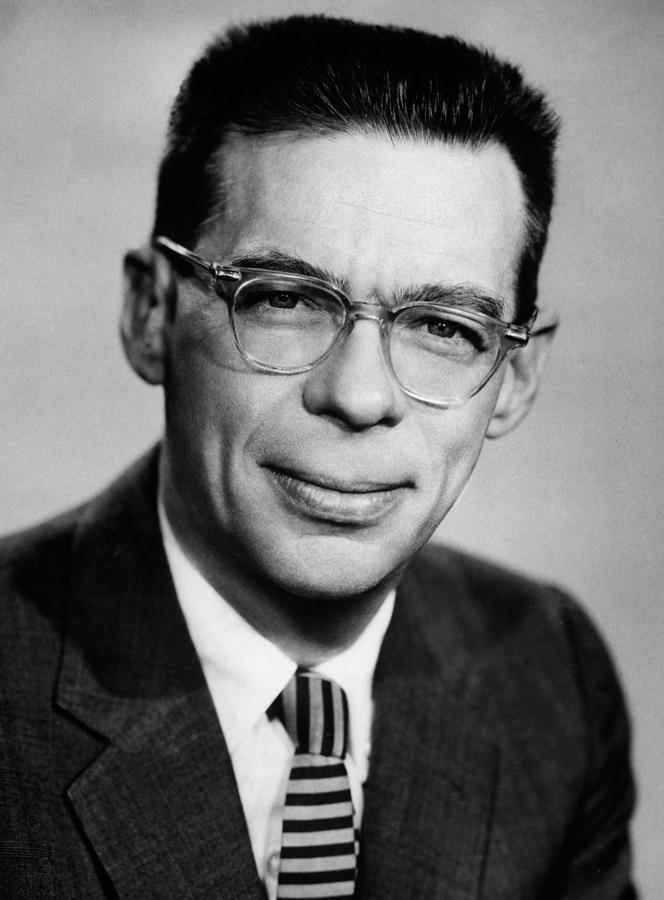
CBS News president Richard Salant
During World War II, Stanton had worked in the Office of War Information, the psychological warfare branch. In the 1950s, President Dwight Eisenhower had appointed Stanton to a small committee to organize how the United States would survive a nuclear attack. From 1961-67, Stanton was chairman of Rand Corporation, a CIA-associated think tank.
The other two members of CNEC were Sig Mickelson, who had preceded Salant as CBS News president and then became a director of Time-Life Broadcasting, and CBS founder Bill Paley, who had also served in the World War II psy-war branch of the Office of War Information and – after the war – let CIA Director Allen Dulles have the spy agency informally debrief CBS overseas correspondents.
When Salant turned the Warren Commission issue over to CNEC, the prospects for any objective or skeptical treatment of the JFK case faded. “The establishment of CNEC effectively curtailed the news division’s independence,” Feinman later wrote about his discoveries.
Further, Salant had no journalistic experience and was in almost daily communication with Stanton, whose background was in government propaganda.
Scaling Back
The day after Salant informed CNEC about the proposed JFK assassination special, Salant told CBS News vice president Manning that he was wavering on the mock trial concept. Salant’s next move was even more ominous. He sent both Manning and prime-time news producer Midgley to California to talk to two lawyers about the project.
One of the attorneys was Edwin Huddleson, a partner in the San Francisco firm of Cooley, Godward, Castro and Huddleson. Huddleson attended Harvard Law with Salant and, like Stanton, was on the board of the Rand Corporation. The other lawyer was Bayless Manning, Dean of Stanford Law School. They told the CBS representatives that they were against the network undertaking the project on the grounds of “the national interest” and because of the topic’s “political implications.”
CBS News vice president Manning reported that both attorneys advised the CBS team to ignore the critics of the Warren Commission or to appoint a special panel to critique their books, in other words, to put the critics on trial. Huddleson also steered the CBS team to cooperative scientists who would counter the critics.
On his return to CBS headquarters, Manning saw the writing on the wall. He knew what his CBS superiors really wanted and it wasn’t some no-holds-barred examination of the Warren Commission’s flaws. So, he suggested a new title for the series, “In Defense of the Warren Report,” and wrote that CBS should dismiss “the inane, irresponsible, and hare-brained challenges of Mark Lane and others of that stripe.”
Out on a Limb
Manning’s defection from an open-minded treatment of the evidence to a one-sided Warren Commission defense left producer Midgley out on a limb. However, unaware of what Salant was up to, on Dec. 14, 1966, Midgley circulated a memo about how he planned on approaching the Warren Report project. He proposed running experiments that were more scientific than “the ridiculous ones run by the FBI.” He still wanted a mock trial to show how the operation of the Commission was “almost incredibly inadequate.”
In response, Salant circulated an anonymous, undated, paragraph-by-paragraph rebuttal to Midgley’s plan, which Feinman’s later investigation determined was written by Warren Commissioner John McCloy, then Chairman of the Council on Foreign Relations and the father of Ellen McCloy, Salant’s administrative assistant.
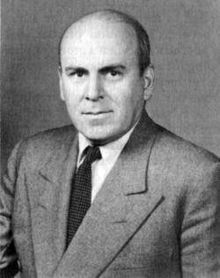
John J. McCloy
In this memo, McCloy wrote that “the chief evidence that Oswald acted alone and shot alone is not to be found in the ballistics and pathology of the assassination, but in the fact of his loner life.” As many Warren Commission critics have noted, it was this approach – discounting or ignoring the medical and ballistics evidence, but concentrating on Oswald’s alleged social life – that was a fatal flaw of the Warren Report.
Despite the familial conflict of interest, Ellen McCloy was added to the distribution list for almost all memos related to the Kennedy assassination project and thus could serve as a secret back-channel between CBS and her father.
A Stonewall Defense
Clearly, the original idea for a fresh examination of the Warren Commission and the evidence that had arisen since its report was published in 1964 had been turned on its head. The CBS brass wanted a defense, not a critique.
Salant asked producer Midgley, “Is the question whether Oswald was a CIA or FBI informant really so substantial that we have to deal with it?” Midgley, increasingly alone out on the limb, replied, “Yes, we must treat it.”
As the initial plan for a forthright examination of the Warren Commission’s shortcomings was transformed into a stonewall defense of the official findings, there was still the problem of Midgley, the last holdout. But eventually his head was turned, too.
While the four-night special was in production, Midgley became engaged to Betty Furness, a former actress-turned-television-commercial pitchwoman whom President Lyndon Johnson appointed as his special assistant for consumer affairs, even though her only experience in the field had been selling Westinghouse appliances for 11 years on television. She was sworn in on April 27, 1967, which was about two months before the CBS production aired. Two weeks after it was broadcast, Midgley and Furness were married.
As Kai Bird’s biography of McCloy, The Chairman, makes clear, Johnson and McCloy were friends and colleagues. But there is another point about how Midgley was convinced to go along with McCloy’s view of the Warren Commission. Around the same time he married Furness, he received a significant promotion, elevated to executive editor of the network’s flagship news program, “The CBS Evening News with Walter Cronkite.” This made him, in essence, the top news editor at CBS, a decision that required the consultation and approval of Salant, Cronkite and Stanton – and very likely the CNEC.
So, instead of a serious investigation into the murder of President Kennedy – at a time when there was the possibility of effective national action to get at the truth – CBS News delivered a stalwart defense of the Warren Commission’s conclusions and heaped ridicule on anyone who dared question those findings.
Shaping that approach was not only the influence of Warren Commission member John McCloy, an icon of the Establishment, but the carrots and sticks applied to senior CBS producers, such as Gordon Manning and Les Midgley, who initially favored a more skeptical approach but were convinced to abandon that goal.
Curious Consultants
Once McCloy was brought onboard, the complexion of CBS’s treatment of the JFK assassination changed. CBS hired consultants who were rabidly pro-Warren Report to appear as on-air experts while others would be hidden in the shadows. In addition to the clandestine role of McCloy, some of these consultants included Dallas police officer Gerald Hill, physicist Luis Alvarez and reporter Lawrence Schiller.
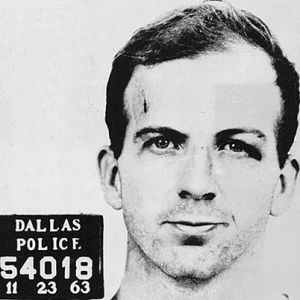
Lee Harvey Oswald
Officer Hill was just about everywhere in Dallas on Nov. 22, 1963. He was at the Texas School Book Depository where Oswald worked and allegedly shot the President from the sixth floor; Hill was at the murder scene of Officer J. D Tippit, who was allegedly shot by Oswald after he fled Dealey Plaza; and he was at the Texas Theater where Oswald was arrested.
Hill appeared in the CBS 1967 program show as a speaker. But Roger Feinman found out that Hill also was paid for six weeks work on the show as a consultant. During his consulting, Hill revealed that the police did a “fast frisk” on Oswald while in the theater. They found nothing in his pockets at the time, which begs the question of where the bullets the police said they found in his pockets later at the station came from. That question did not arise during the program since CBS never revealed the contradiction. (Click here and go to page 20 of the transcript.)
Physicist Luis Alvarez, who had a served as an adviser to the CIA and to the U.S. military in the Vietnam War, spent a considerable amount of time lending his name to articles supporting the Warren Report and conducting questionable experiments supporting its findings. As demonstrated by authors Josiah Thompson (in 2013) and Gary Aguilar (in 2014), Alvarez misrepresented some data in some of his JFK experiments. (Click here and go to the 37:00 mark for Aguilar’s presentation.)
Making Fun
The same year of the 1967 CBS broadcast, reporter Lawrence Schiller had co-written a book entitled The Scavengers and Critics of the Warren Report, a picaresque journey through America where Schiller interviewed some of the prominent – and not so prominent – critics of the report and caricatured them hideously.
Secretly, he had been an informant for the FBI for many years keeping an eye on people like Mark Lane and Jim Garrison, whom Schiller attacked despite discovering witnesses who attested to Garrison’s suspect Clay Shaw using the alias Clay Bertrand, a key point in Garrison’s case. The relevant documents were not declassified until the Assassination Records and Reviews Board was set up in the 1990s. [See Destiny Betrayed, Second Edition, by James DiEugenio, p. 388]
This cast of consultants – along with McCloy – influenced the direction of the 1967 CBS Special Report. The last thing these consultants wanted to do was to expose the faulty methodology that the Warren Commission had employed.
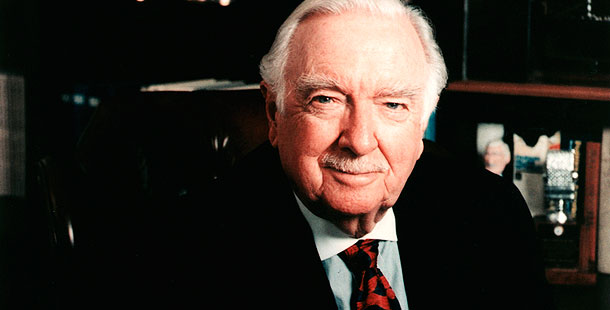
Longtime CBS News anchor Walter Cronkite.
As in 1964, Walter Cronkite manned the anchor desk and Dan Rather was the main field reporter. Again, CBS could find no serious problems with the Warren Report. The critics were misguided, CBS said. After all, Cronkite and Rather had done a seven-month inquiry.
‘Unimpeachable Credentials’
In the broadcast, Cronkite names the men on the Warren Commission as their pictures appear on screen. He calls them “men of unimpeachable credentials” but left out the fact that President Kennedy fired Commissioner Allen Dulles from the CIA in 1961 for lying to him about the Bay of Pigs invasion of Cuba.
When Cronkite got to the crux of the program, he said the Warren Commission assured the American people that they would get the most searching investigation in history. Then, Cronkite showed books and articles critical of the commission and mentioned that polls showed that a majority of Americans had lost faith in the Warren Report.
At that point, the network special revealed its purpose, to discredit the critics and reassure the public that these people could not be trusted.
Cronkite went through a list of points that the critics had raised, including key issues such as how many shots were fired and how quickly they could be discharged from the suspect rifle. On each point, Cronkite took the Warren Commission’s side, saying Oswald fired three shots from the sixth floor with the rifle attributed to him by the Warren Commission. Two of three were direct hits – to Kennedy’s head and shoulder area – within six seconds.
One way that CBS fortified the case for just three shots was Alvarez’s examination of the Zapruder film, Abraham Zapruder’s 26-second film of Kennedy’s assassination taken from Zapruder’s position in Dealey Plaza, a sequence that CBS did not actually show.
Alvarez proclaimed that by doing something called a “jiggle analysis,” he computed that there were three shots fired during the film. What the jiggle amounted to was a blurring of frames on the film (presumably because Zapruder would have flinched at the sound of gunshots).
Dan Rather took this Alvarez idea to Charles Wyckoff, a professional photo analyst in Massachusetts. Agreeing with Alvarez, at least on camera, Wyckoff mapped out the three areas of “jiggles.” The Alvarez/Wyckoff formula was simple: three jiggles, three shots.
But as Feinman found out through his legal discovery and hearings, there was a big problem with this declaration. Wyckoff had actually discovered four jiggles, not three. Therefore, by the Alvarez formula, there was a second gunman and thus a conspiracy.
Wyckoff’s on-camera discussion of this was cut out and not included in the official transcript. But it is interesting to note just how committed Wyckoff was to the CBS agenda, for he tried to explain the fourth jiggle as Zapruder’s reaction to a siren. As Feinman noted, how Wyckoff could determine this from a silent 8 mm film is puzzling. But the point is, this analysis did not support the commission. It undermined the Warren Report and was left on the cutting-room floor.
There were other problems with the Alverez-Wyckoff “jiggle” theory, since the first jiggle was at around Zapruder frame 190, or a few frames previous to that, which would have meant that Oswald would have had to be firing through the branches of an oak tree, which is why the Warren Commission moved this shot up to frame 210.
But CBS left itself an out, claiming there was an opening in the tree branches at frame 186 and Oswald could have fired at that point. But that is patently ridiculous, since the opening at frame 186 lasted for 1/18th of a second. To say that Oswald anticipated a less than split-second opening, and then steeled himself in a flash to align the target, aim, and fire is all stuff from the realm of comic book super heroes. Yet, in its blind obeisance to the Warren Report, this is what CBS had reduced itself to.
Another way that CBS tried to bolster the Warren Report was to have Wyckoff purchase other Bell and Howell movie cameras (since CBS was not allowed to handle the actual Zapruder camera.) After winding up these cameras, CBS hypothesized that Zapruder’s camera might have been running a little slow, giving Oswald a longer firing sequence.
The problem with this theory, however, was that both the FBI and Bell and Howell had tested the speed of Zapruder’s actual camera. Even Dick Salant commented that this was “logically inconclusive and unpersuasive,” but it stayed in the program.
The Shot Sequence
But why did Rather and Wyckoff have to stoop this low? The answer is because of the results of their rifle firing tests. As the critics of the Warren Report had pointed out, the commission had used two tests to see if Oswald could have gotten off three shots in the allotted 5.6 seconds indicated by the Zapruder film.
These tests ended up as failing to prove Oswald could have performed this feat of marksmanship. What made it worse is that the commission had used very proficient riflemen to try and duplicate what the commission said Oswald had done. [See Sylvia Meagher, Accessories After the Fact, p. 108]
So CBS tried again. This time they set up a track with a sled on it to simulate the back of Kennedy’s head. They then elevated a firing point to simulate the sixth floor “sniper’s nest,” though there were differences from Dealey Plaza including the oak tree and a rise in the street in the real crime scene. Nevertheless, the CBS experimenters released the target on its sled and had a marksman named Ed Crossman fire his three shots.
Crossman had a considerable reputation in the field, but – even though he was given a week to practice with a version of the Mannlicher Carcano rifle – his results were not up to snuff. According to a report by producer Midgley, Crossman never broke 6.25 seconds (longer than Oswald’s purported 5.6 seconds) and – even with an enlarged target – he got only two of three hits in about 50 percent of his attempts.
Crossman explained that the rifle had a sticky bolt action and a faulty viewing scope. But what the professional sniper did not know is that the actual rifle in evidence was even harder to work. Crossman said that to perform such a feat on the first time out would require a lot of luck.
However, since that evidence did not fit the show’s agenda, it was discarded, both the test and the comments. To resolve that problem, CBS called in 11 professional marksmen who first went to an indoor firing range and practiced to their heart’s content, though the Warren Commission could find no evidence that Oswald practiced.
The 11 men then took 37 runs at duplicating what Oswald was supposed to have done. There were three instances where two out of three hits were recorded in 5.6 seconds. The best time was achieved by Howard Donahue on his third attempt after his first two attempts were complete failures.
But CBS claimed that the average recorded time was 5.6 seconds, without including the 17 attempts that were thrown out because of mechanical failure. CBS also didn’t tell the public the surviving average was 1.2 hits out of three with an enlarged target.
The truly striking characteristic of these trials was the number of instances where the shooter could not get any result at all. More often than not, once the clip was loaded, the bolt action jammed. The sniper had to realign the target and fire again. According to the Warren Report, that could not have happened with Oswald.
There is also the anomaly of James Tague, who was struck by one bullet that the Warren Commission said had ricocheted off the curb of a different street, about 260 feet away from the limousine. But how could Oswald have missed by that much if he was so accurate on his other two shots? That was another discrepancy deleted by the CBS editors.
The Autopsy Disputes
CBS also obscured what was said by the two chief medical witnesses after the assassination; by Dr. Malcolm Perry from Parkland Hospital in Dallas, where Kennedy was taken after he was hit, and James Humes, the chief pathologist at the autopsy examination at Bethesda Medical Center that evening.
In their research for the series, CBS had discovered a transcript of Dr. Perry’s press conference that the Warren Commission did not have. But CBS camouflaged what Perry said on Nov. 22, 1963, specifically about Kennedy’s anterior neck wound. Perry said it had the appearance to him of being an entrance wound, and he said this three times.
Cronkite tried to characterize the conference as Perry being rushed out to the press and badgered. But that wasn’t true, since the press conference was about two hours after Perry had done a tracheotomy over the front neck wound. The performance of that incision had given Perry the closest and most deliberate look at that wound.
Perry therefore had the time to recover from the pressure of the operation and there was no badgering of Perry. Newsmen were simply asking him questions about the wounds he saw. Perry had the opportunity to answer the questions on his own terms. Again, CBS seemed intent on concealing evidence of a possible second assassin — because Oswald could not have fired at Kennedy from the front.
Commander James Humes, the pathologist, did not want to appear on the program, but was pressured by Attorney General Ramsey Clark, possibly with McCloy’s assistance. As Feinman discovered, the preliminary talks with Humes were done through a friend of his at the church he attended.
There were two things that Humes said in these early discussions that were bracing. First, he said that he recalled an x-ray of the President, which showed a malleable probe connecting the rear back wound with the front neck wound. Second, he said that he had orders not to do a complete autopsy. He would not reveal who gave him these orders, except to say that it was not Robert Kennedy. [Charles Crenshaw, Trauma Room One, p. 182]
The significance of the malleable probe is that, if Humes was correct, the front and back wounds would have come from the same bullet. However, we learned almost 30 years later from the Assassination Records Review Board that other witnesses also saw a malleable probe go through Kennedy’s back, but said the probe did not go through the body since the wounds did not connect. However, x-rays that might confirm the presence of the probe are missing. [DiEugenio, Reclaiming Parkland, pgs. 116-18]
Location of the Wounds
On camera, Humes also said the posterior body wound was at the base of the neck. Dan Rather then showed Humes the drawings made of the wound in the back as depicted by medical illustrator Harold Rydberg for the Warren Commission, also depicting the wound as being in the neck, which Humes agreed with on camera. He added that they had reviewed the photos and referred to measurements and this all indicated the wound was in the neck.
Even for CBS — and Warren Commissioner John McCloy — this must have been surprising since the autopsy photos do not reveal the wound to be at the base of the neck but clearly in the back. (Click here and scroll down.) CBS should have sent its own independent expert to the archive because Humes clearly had a vested interest in seeing his autopsy report bolstered, especially since it was under attack by more than one critic.
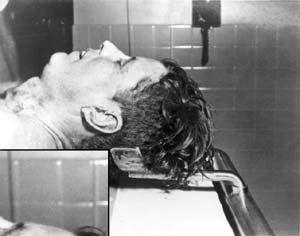
Autopsy photo of President Kennedy
The second point that makes Humes’s interview curious is his comments on the Rydberg drawings’ accuracy. These do not coincide with what Rydberg said later, not understanding why he was chosen to make these drawings for the Warren Commission since he was only 22 and had been drawing for only one year. There were many other veteran illustrators in the area the Warren Commission could have called upon, but Rydberg came to believe that it was his inexperience that caused the commission to pick him.
When Humes and Dr. Thornton Boswell appeared before him, they had nothing with them: no photos, no x-rays, no official measurements, speaking only from memory, nearly four months after the autopsy, Rydberg said. [DiEugenio, Reclaiming Parkland, pgs. 119-22] The Rydberg drawings have become infamous for not corresponding to the pictures, measurements, or the Zapruder film.
For Humes to endorse these on national television – and for CBS to allow this without any fact-checking – shows what a case of false journalism the special had become.
Limiting Access
CBS also knew that Humes said he had been limited in what he was allowed to do in the Kennedy autopsy, a potentially big scoop if CBS had followed it. Instead, the public had to wait another two years for the story to surface at Garrison’s trial of Clay Shaw when autopsy doctor Pierre Finck took the stand in Shaw’s defense. Finck said the same thing: that Dr. Humes was limited in his autopsy practice on Kennedy. [ibid, p. 115]
The difference was that this disclosure would have had much more exposure, impact and vibrancy if CBS had broken it in 1967 rather than having the fact come up during Garrison’s prosecution, in part, because the press corps’ hostility toward Garrison distorted the trial coverage.
So, in the summer of 1967, CBS again had come to the defense of the official story with a four-hour, four-night extravaganza that again endorsed the findings of the Warren Commission.
At the time of broadcast, it was the most expensive documentary CBS ever produced. It concluded: Acting alone, Lee Harvey Oswald killed President Kennedy. Acting alone, Jack Ruby killed Oswald. And Oswald and Ruby did not know each other. All the controversy was Much Ado about Nothing.
Unwinding the Back Story
In 1967, the clandestine relationship between CBS News President Salant and Warren Commissioner McCloy was known to very few people. In fact, as assistant producer Roger Feinman later deduced, it was likely known only to the very small circle in the memo distribution chain. That Salant deliberately wished to keep it hidden is indicated by the fact that he allowed McCloy to write these early memos anonymously.
As Feinman concluded, McCloy’s influence over the program was almost certainly a violation of the network’s own guidelines, which prohibit conflicts of interest in the news production, probably another reason Salant kept McCloy’s connection hidden.
In the 1970s, after Feinman was fired over a later dispute regarding another example of CBS News’ highhanded handling of the JFK assassination – and then obtained internal documents as part of a legal hearing on his dismissal – he briefly thought of publicizing the whole affair (which he eventually decided against doing).
But Feinman wrote to Warren Commissioner McCloy in March 1977 about the ex-commissioner’s clandestine role in the four-night special a decade earlier. McCloy declined to be interviewed on the subject, but added that he did not recall any contribution he made to the special.
But Feinman persisted. On April 4, 1977, he wrote McCloy again. This time he revealed that he had written evidence that McCloy had participated extensively in the production of the four-night series. Very quickly, McCloy got in contact with Salant and wrote that he did not recall any such back-channel relationship.
In turn, Salant contacted Midgley and told the producer to check his files to see if there was any evidence that would reveal a CBS secret collaboration with McCloy. Salant then wrote back to McCloy saying that at no time did Ellen McCloy ever act as a conduit between CBS News and her father.
However, in 1992 in an article for The Village Voice, both Ellen McCloy and Salant were confronted with memos that revealed Salant was lying in 1977. McCloy’s daughter admitted to the clandestine courier relationship. Salant finally admitted it also, but he tried to say there was nothing unusual about it.
Reassuring Americans
So, in 1967, CBS News had again reassured the American people that there was no conspiracy in President Kennedy’s murder, just a misguided lone gunman who had done it all by himself. Anyone who thought otherwise was confused, deceptive or delusional.
However, in 1975, eight years after the broadcast, two events revived interest in the JFK case again. First, the Church Committee was formed in Congress to explore the crimes of the CIA and FBI, revealing that before Kennedy was killed, the CIA had farmed out the assassination of Fidel Castro to the Mafia, a fact that was kept from the Warren Commission even though one of its members, Allen Dulles, had been CIA director when the plots were formulated.
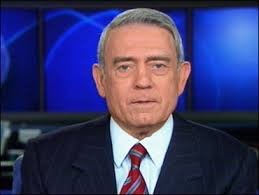
Longtime CBS anchor Dan Rather
Secondly, in the summer of 1975, in prime time, ABC broadcast the Zapruder film, the first time that the American public had seen the shocking image of President Kennedy’s head being knocked back and to the left by what appeared to be a shot from his front and right, a shot Oswald could not have fired.
The confluence of these two events caused a furor in Washington and the creation of the House Select Committee on Assassinations (HSCA) to reopen the JFK case.
Having become a chief defender of the original Warren Commission findings, CBS News moved preemptively to influence the new investigation by planning another special about the JFK case.
CBS’s Sixty Minutes decided to do a story on whether or not Jack Ruby and Lee Oswald knew each other. After several months of research, Salant killed the project with the investigative files turned over to senior producer Les Midgley before becoming the basis for the 1975 CBS special, which was entitled The American Assassins.
Originally this was planned as a four-night special. One night each on the JFK, RFK, Martin Luther King and the George Wallace shootings. But at the last moment, in a very late press release, CBS announced that the first two nights would be devoted to the JFK case. Midgley was the producer, but this time Cronkite was absent. Rather took his place behind the desk.
In general terms, it was more of the same. The photographic consultant was Itek Corporation, a company that was very close to the CIA, having helped build the CORONA spy satellite system. Itek’s CEO in the mid-1960s, Franklin Lindsay, was a former CIA officer. With Itek’s help, CBS did everything they could to move their Magic Bullet shot from about frame 190 to about frames 223-226.
Yet, Josiah Thompson, who appeared on the show, had written there was no evidence Gov. Connally was hit before frames 230-236. Further, there are indications that President Kennedy is clearly hit as he disappears behind the Stemmons Freeway sign at about frame 190, e.g., his head seems to collapse both sideways and forward in a buckling motion.
But with Itek in hand, this became the scenario for the CBS version of the “single bullet theory.” It differed from the Warren Commission’s in that it did not rely upon a “delayed reaction” on Connally’s part to the same bullet.
Ballistics Tests
CBS also employed Alfred Olivier, a research veterinarian who worked for Army wound ballistics branch and did tests with the alleged rifle used in the assassination. He was a chief witness for junior counsel Arlen Specter before the Warren Commission. [See Warren Commission, Volume V, pgs. 74ff]
For CBS in 1975, Olivier said that the Magic Bullet, CE 399, was not actually “pristine.” For CBS and Dan Rather, this made the “single bullet theory” not impossible, just hard to believe.
Apparently, no one explained to Rather that the only deformation on the bullet is a slight flattening at the base, which would occur as the bullet is blasted through the barrel of a rifle. There is no deformation at its tip where it would have struck its multiple targets. There is only a tiny amount of mass missing from the bullet.
In other words, as more than one author has written, it has all the indications of being fired into a carton of water or a bale of cotton. If CBS had interviewed the legendary medical examiner Milton Helpern of New York — not far from CBS headquarters — that is pretty much what he would have said. [Henry Hurt, Reasonable Doubt, p. 69.]
Rather realized, without being explicit, that something was wrong with Kennedy’s autopsy. He called the autopsy below par and reversed field on his opinion about pathologist Humes, whose experience Rather had praised in 1967. In the 1975 broadcast, Rather said that neither Humes nor Boswell were qualified to perform Kennedy’s autopsy and that parts of it were botched.
But let us make no mistake about what CBS was up to here. The entire corporate upper structure — Salant, Stanton, Paley — had overrun the working producers and journalists, including Midgley, Manning and Schorr. And those subordinates decided not to utter a peep to the outside world about what had happened.
Not only Cronkite and Rather participated in this appalling exercise, so too did Eric Sevareid, appearing at the end of the last show and saying that there are always those who believe in conspiracies, whether it be about Yalta, China or Pearl Harbor. He then poured it on by saying some people still think Hitler is alive and concluding that it would be impossible to cover up the assassination of a President.
But simply in examining how a major news outlet like CBS handled the evidence shows precisely how something as dreadful and significant as the murder of a President could be covered up.
Much of this history also would have remained unknown, except that Roger Feinman, an assistant producer at CBS News, had become a friend and follower of the estimable Warren Commission critic Sylvia Meagher. So, Feinman knew that the Warren Commission was a deeply flawed report and that CBS had employed some very questionable methods in the 1967 special in order to conceal those flaws.
When the assassination issue returned in the mid-1970s, Feinman began to write some memoranda to those in charge of the renewed CBS investigation warning that they shouldn’t repeat their 1967 performance. His first memo went to CBS president Dick Salant. Many of the other memos were directed to the Office of Standards and Practices.
In preparing these memos, Feinman researched some of the odd methodologies that CBS used in 1967. Since he had been at CBS for three years, he got to know some of the people who had worked on that series. They supplied him with documents and information which revealed that what Cronkite and Rather were telling the audience had been arrived at through a process that was as flawed as the one the Warren Commission had used.
Feinman requested a formal review of the process by which CBS had arrived at its forensic conclusions. He felt the documentary had violated company guidelines in doing so.
Establishment Strikes Back
As Feinman’s memos began to circulate through the executive and management suites – including Salant’s and Vice-President Bill Small’s – it was made clear to him that he should cease and desist from his one-man campaign. When he wouldn’t let up, CBS moved to terminate its dissident employee.
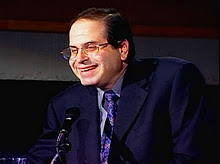
Roger Feinman
But since Feinman was working under a union contract, he had certain administrative rights to a fair hearing, including the process of discovery through which he could request certain documents to make his case. His research allowed him to pinpoint where these documents would be and who prepared them.
On Sept. 7, 1976, CBS succeeded in terminating Feinman. But the collection of documents he secured through his hearing was extraordinary, allowing outsiders for the first time to see how the 1967 series was conceived and executed. Further, the documents took us into the group psychology of a large media corporation when it collides with controversial matters involving national security.
Only Roger Feinman, who was not at the top of CBS or anywhere near it, had the guts to try to get to the bottom of the whole internal scandal.
And Feinman paid a high personal price for doing so. Feinman’s contribution to American history did not help him get his journalistic career back on track. When he passed away in the fall of 2011, he was freelancing as a computer programmer.
[This article is largely based on the script for the documentary film Roger Feinman was in the process of reediting at the time of his death in 2011. The reader can view that here.]
James DiEugenio is a researcher and writer on the assassination of President John F. Kennedy and other mysteries of that era. His most recent book is Reclaiming Parkland.
Featured Video
The Most Important Bet You’ve Never Heard Of
or go to
Aletho News Archives – Video-Images
From the Archives
The Occupied Mentality Syndrome
Saudi Arabia on the American chessboard – Part 2
By B. J. Sabri | American Herald Tribune | April 19, 2016
Since the Korean War, but particularly since the Iranian Revolution of 1979 until today, the United States has been steadily escalating its military presence in the Persian Gulf. Taking advantage of many colossal events of the past 36 years, [1] the hyper-empire has institutionalized its massive presence on land and sea, and expanded its objectives to include the unambiguous physical control of the area, as well as the clear understanding that local Arab governments should abide by them. The pretext is always the same: in “defense” of the national interests and security of the United States. From observing how the United States has been interacting with the governments of the region, and by judging from the size of its expeditionary force, we could reach a basic conclusion. The United States is occupying, de facto, the entire Arabian Peninsula. (Yemen, devastated by Saudi and American jets is yet to be conquered. Oman? Britain returned not as colonial ruler but as a soft occupying power.)
Under this articulation, Saudi Arabia, Qatar, Kuwait, and the United Arab Emirates are virtually occupied countries. If we compare this type of occupation to the mandate and protectorate regimes of the past, the results might be identical—the nations affected by it lose sovereignty. When Arab governments comply with the objectives of a foreign power that station military forces on their national milieu, then that power controls them in multiple ways including how they react to policy deliberations and what decisions they intend to take on specific issues. A good method to verify the concept of effective occupation is this: take notice of what the United States says and wants, and then compare it to what the gulf rulers do in response. (I shall discuss this detail at some point in the upcoming parts.)
If the presence of US forces or other means of political pressure are a factor in Saudi Arabia’s interventionist Arab wars, then we need to debate this issue. However, from the history of resistance to colonialism, we learnt: if a powerful state imposes its order on a nation by military means or other forms of coercion, and if this nation does not resist that imposition, then a mental subordination to the powerful state will ensue. This is especially true in the case of Saudi Arabia. One single event, 9/11, has transformed it from a US “ally” into an instant political hostage of the American Empire. … continue
Blog Roll
 Aletho News
- IRGC hits US tech giant Oracle’s data center, computing site in UAE over new assassinations
- Bombing Iran Back Into the Stone Age /Lt Col Daniel Davis & Jim Jatras
- UAE rejects report claiming it is ready to join war on Iran to reopen Hormuz
- A New Resistance Front: How Does Syria Factor into the Regional War?
- Gulf states weigh pipeline expansion plans, hoping to bypass Hormuz
- Iran sets up ‘tollbooth’ system in Strait of Hormuz
- Wave 90: IRGC strikes US-linked industrial sites in Gulf
- Iran Says US-Israeli Claims of Its Military Strength Are Wrong
- Trump’s April Fools’ Address to the nation
- The Most Important Bet You’ve Never Heard Of
- If Americans Knew
- ‘War crime’: Global condemnation as Israeli ministers celebrate death penalty law targeting Palestinian prisoners
- 7 Ways Israel Is Turning Lebanon Into Gaza
- World’s Leading Football Bodies Under Fire Over Israel Policies
- Experts warn of possible use of nukes against Iran
- Israeli invasion of Lebanon could be worse than 1982, warn European officials
- Passover: Liberation and collective punishment
- Trump says the quiet part out loud: (Israel’s) war on Iran > Americans’ health – Daily Update
- Gaza families reunite years after babies evacuated amid Israel’s war
- International Rescue Committee warns Gaza’s children face grave protection risks
- Iran’s Alleged 47-Year War on America: Debunking the 1,050 American Deaths Canard
- No Tricks Zone
- Low Intensity Tornado Wrecks Major Solar Farm, Creating A Potential Toxic Dump
- New Study Finds Warming Saves Lives…Cold Temperatures 12 Times More Deadly Than Excess Heat
- German Science Blog Accuses PIK Climate Institute Of Hallucinating Climate Tipping Points
- Devastating Assessment Of Comirnaty Vaccine By Former Senior Pfizer Europe Toxicologist
- New Study: CO2 Is ‘Effectively Negligible’ As An Explanatory Climate Change Factor Since 2000
- Former Pfizer Toxicologist Dr. Helmut Sterz Tells Bundestag Hearing Pfizer Vaccine Should Have Never Been Approved
- Energy Expert: Germany’s Nuclear Phaseout Was A “500 Billion Euro Mistake”
- New Research: South Australia’s Mid-Holocene Sea Surface Temperatures Were 4°C Warmer Than Today
- Storing Green Energy To Last Germany 10 Days Would Require A 60-Million Tonne Battery
- New Studies: UK Sea Levels Were 4 Meters Higher Than Today During The Mid-Holocene
 Aletho News