The Rise of the Isaac Accords: How Israel is Redrawing South America’s Political Landscape
This is not neutral cooperation. It is political conditionality.
By Freddie Ponton | 21st Century Wire | December 15, 2025
Foreign influence in the Global South rarely arrives in uniform. It comes disguised as ethics, stability, and shared values, only revealing its true cost once the rules are set. In Latin America, such a transformation is now underway. A new architecture of alignment is being quietly assembled, presented as moral course correction but functioning as a geopolitical filter. At its core lie the Isaac Accords, a project deliberately modelled on the Abraham Accords. Where the latter normalised Israel’s position in the Middle East through elite deals brokered by Washington, the Isaac Accords aim to reorder Latin American politics by locking governments, economies, and security institutions into Israeli and U.S. strategic orbit.
The Accords are not simply about Israel’s image or diplomatic isolation. They operate as a filter of legitimacy: governments that align are embraced, financed, and promoted; those that resist are marginalised, sanctioned, or framed as moral outliers. Venezuela, long aligned with Palestine and the broader Axis of Non-Alignment, sits squarely in the crosshairs.
This article examines how the Isaac Accords function in practice, why figures such as Javier Milei and María Corina Machado have become central to their rollout, and what this strategy reveals about Israel’s ambitions in South America, not as a neutral partner, but as an active geopolitical actor working in tandem with U.S. power.
The Isaac Accords: A Latin American Reboot of the Abraham Model
The Isaac Accords did not emerge in a vacuum. They are consciously modelled on the Abraham Accords, which rebranded Israel’s regional integration in the Middle East as “peace” while bypassing Palestinian self-determination entirely. The lesson Israeli and U.S. policymakers appear to have drawn is simple: normalisation works best when imposed from above, through elite alignment, financial incentives, and security integration.
The Accords are administered through a U.S.-based nonprofit, American Friends of the Isaac Accords, and financially seeded through institutions closely linked to Israeli state and diaspora networks. Their stated aim is to counter antisemitism and hostility toward Israel. Their operational requirements, however, reveal a far broader ambition.
Countries seeking entry are expected to:
- Relocate embassies to Jerusalem, recognising Israeli sovereignty over a contested city
- Redesignate Hamas and Hezbollah in line with Israeli security doctrine
- Reverse voting patterns at the UN and the OAS, where Latin America has historically voted in favour of Palestinian rights
- Enter intelligence-sharing agreements targeting Chinese, Iranian, Cuban, Bolivian, and Venezuelan influence
- Open strategic sectors: water, agriculture, digital governance, security, to Israeli firms
Israel’s own diplomats have described the Isaac Accords as a way to pull “undecided” Latin American states into Israel’s orbit at a moment when European public opinion has become less reliable. In other words, the Global South is being repositioned as Israel’s strategic rear guard.
The role of Javier Milei in Argentina illustrates how this model operates. Milei has not merely improved relations with Israel; he has embraced it as an ideological reference point. He has pledged to move Argentina’s embassy to Jerusalem, framed Israel as a civilisational ally, and positioned himself as the Isaac Accords’ flagship political figure.
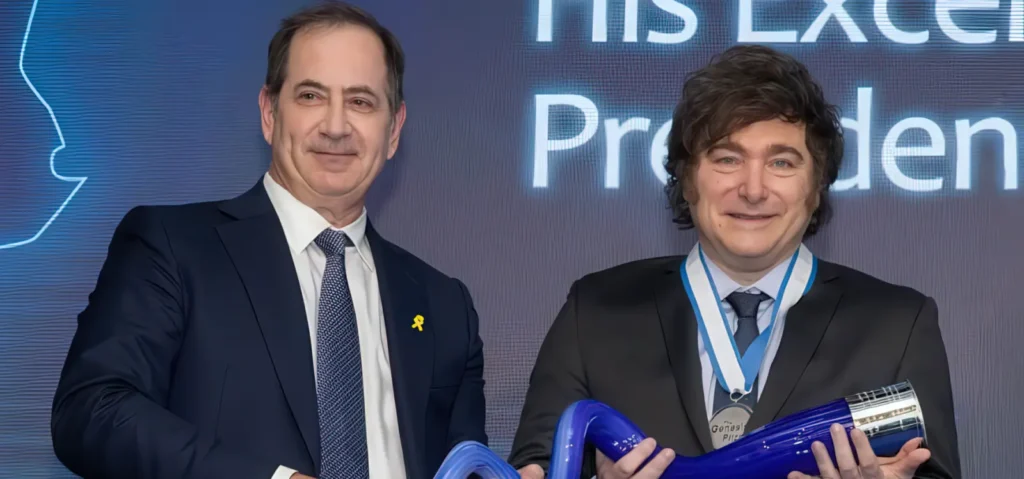
Co-Founder and Chairman of The Genesis Prize Foundation Stan Polovets presents prize to 2025 Laureate Javier Milei on June 12 in Jerusalem. (Source: American Friends of Isaac Accords)

That role was formalised in 2025 when Milei became the Genesis Prize Laureate, an award frequently described as the “Jewish Nobel Prize.” The Genesis Prize is not politically neutral. It is explicitly awarded to figures who strengthen Israel’s global standing and its ties with the diaspora. Milei’s decision to donate the prize money directly back into the Isaac Accords ecosystem symbolised how moral recognition, political allegiance, and financing now operate as a single circuit.
This is alignment rewarded, visibly, materially, and publicly.
As reported by AP in August, the Isaac Accords are set to extend to Brazil, Colombia, Chile, and potentially El Salvador by 2026, as stated by the organizers, the American Friends of the Isaac Accords.
Recent New York Times reporting situates Brad Parscale’s involvement in the Honduran election within Numen, a Buenos Aires–based political consultancy he co-founded with Argentine strategist Fernando Cerimedo, highlighting how transnational firms operate beyond traditional regulatory scrutiny. Critics warn that Numen’s methods reflect a broader global political influence ecosystem that often draws on data-driven targeting, psychological profiling, and digital amplification techniques associated with Israeli-linked political technology and messaging firms that have operated in elections worldwide.
When combined with U.S. political endorsements, strategic pardons, and offshore consulting structures, this model raises serious concerns about how advanced data analytics and covert messaging infrastructures are used to shape voter behavior in vulnerable democracies, eroding electoral sovereignty while remaining largely insulated from accountability.
Venezuela, Palestine, and the Manufacturing of Illegitimacy
If the Isaac Accords require a moral antagonist, Venezuela fulfils that role perfectly.
Since Hugo Chávez severed diplomatic relations with Israel in 2009, in response to Israel’s assault on Gaza, Venezuela has positioned itself as one of Palestine’s most consistent supporters in the Western Hemisphere. Chávez, and later Nicolás Maduro, framed Palestinian resistance not as terrorism but as an anti-colonial struggle, aligning Venezuela with much of the Global South rather than the Atlantic bloc.
Under the Isaac Accords’ logic, this position is intolerable.
Opposition to Israel is no longer treated as a political stance but as evidence of extremism or antisemitism. Zionism and Judaism are deliberately conflated, allowing criticism of Israeli state policy to be reframed as hatred. This narrative provides the moral justification for isolation, sanctions, and, potentially, regime change.
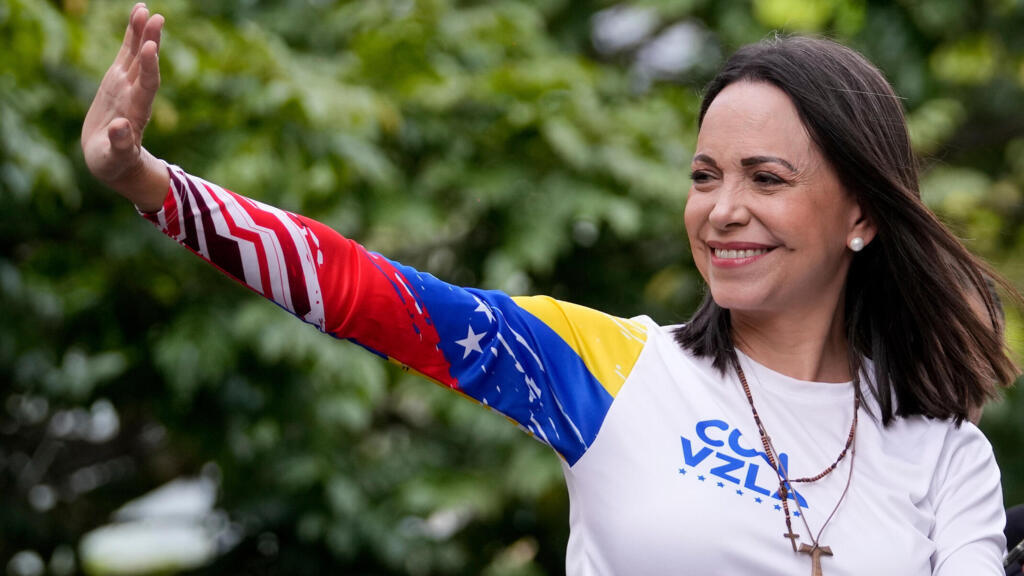
Maria Corina Machado in Venezuela, Thursday, July 25, 2024. (Source: AP – Matias Delacroix)
Into this context steps María Corina Machado, the Venezuelan opposition figure most warmly received by Israeli and U.S. political networks. Machado’s alignment with Israel is not rhetorical or recent. In 2020, her party, Vente Venezuela, signed a formal inter-party cooperation agreement with Israel’s ruling Likud Party, led by Benjamin Netanyahu. The agreement committed both parties to shared political values, strategic cooperation, and ideological alignment.
This is a remarkable document. It ties a Venezuelan opposition movement directly to a foreign ruling party, well before any democratic transition, and signals how a post-Maduro Venezuela is expected to orient itself internationally.
DOCUMENT: Vente Venezuela signs cooperation agreement with Israel’s Likud party – Agreement signed by María Corina Machado and Eli Vered Hazan, representing Likud’s Foreign Relations Division (Source: Vente Venezuela)
Machado has since gone further, pledging to:
- Restore full diplomatic relations with Israel
- Move Venezuela’s embassy to Jerusalem
- Open Venezuela’s economy to privatisation and foreign investment
- Align Venezuela with Israel and the United States against Iran and regional leftist governments
Her narrative rests on a crucial claim: that Venezuela itself is not anti-Israel, only its government is. According to this framing, Venezuelans are inherently pro-Israel and pro-West, their “true” preferences suppressed by an illegitimate regime.
In a November interview with Israel Hayom, Machado asserted that “The Venezuelan people deeply admire Israel.”
This argument is politically useful and historically thin. Venezuelan solidarity with Palestine predates Maduro and reflects a wider Latin American tradition of identifying with colonised peoples. To erase that history is to deny Venezuelans their own political agency.
The Anti-Defamation League (ADL) has repeatedly accused the Venezuelan government of fomenting “anti-Israel” and anti-Semitic rhetoric. Yet, a closer look tells a different story. Caracas’ statements are largely expressions of solidarity with the Palestinian people and their right to self-determination, combined with pointed criticism of Israeli state policies. By framing these positions as attacks on Jews or Israel itself, the ADL distorts the narrative, turning principled political stances into a perceived moral failing. This tactic underscores a broader pattern in which international organizations can paint Global South governments as rogue actors whenever they resist the gravitational pull of Israeli and U.S. influence, subtly laying the groundwork for diplomatic pressure or intervention.
DOCUMENT: Mini report from the Anti-Defamation League (ADL), formerly known as the Anti-Defamation League of B’nai B’rith, accuses Venezuela of fuelling an incendiary anti-Israel and anti-Semitic environment.(Source (ADL)
Security, Economics, and the Cost of Obedience
Beneath the moral language of the Isaac Accords lies a familiar architecture of control: security integration, economic restructuring, and ideological discipline.
Israel is a leading exporter of surveillance technologies, border systems, cyber-intelligence platforms, and urban security tools, many developed under conditions of occupation and internal repression. In South America, these systems are marketed as solutions to crime and narcotrafficking, but their real function is often political: expanding state surveillance capacity during periods of transition.
Security cooperation creates dependency. Once intelligence-sharing, training, and doctrine are integrated, political autonomy narrows. Policy divergence, particularly toward China, BRICS, or non-aligned partners, becomes risky.
The economic dimension is equally strategic. Israeli firms are deeply involved in water rights, desalination, agrotechnology, digital governance, and infrastructure, sectors that determine long-term sovereignty. These investments are typically tied to privatisation, deregulation, and long-term concessions, transferring control of strategic resources away from the public sphere.
Venezuela is the ultimate prize. A post-sanctions transition would open one of the world’s most resource-rich economies to restructuring. Machado’s commitment to rapid privatisation aligns seamlessly with this vision, raising an unavoidable question: who benefits from “democracy” when it arrives pre-packaged with foreign economic priorities?
This strategy is inseparable from U.S. power. The Trump administration’s framing of global politics as a permanent war on terror and narcotrafficking, a framing echoed by figures like Marco Rubio, has provided cover for sanctions, covert operations, and extrajudicial violence across the Caribbean and Pacific. Israel’s partnership reinforces this logic, supplying both technology and moral framing.
Conclusion: The Global South and the Right to Choose
The Isaac Accords are not simply about Israel’s diplomatic standing. They are about reordering South America’s political horizon at a moment when the Global South is rediscovering multipolarity.
Israel’s role in this process is active, strategic, and consequential. Through political patronage, economic leverage, security integration, and narrative control, it is shaping which governments are deemed legitimate and which are disposable.
For South America, and the wider Global South, the warning is familiar. When alignment is framed as morality, dissent becomes deviance. When sovereignty is conditional, development serves external interests. When history is rewritten, intervention soon follows.
Non-alignment was never about isolation. It was about the right to choose. That very right, today, is being quietly renegotiated, and the cost of refusing may soon become very clear.
Henry Kissinger and his legacy as a war criminal

Press TV – January 11, 2024
Henry Kissinger was one of the most influential US statesmen of the 20th century, who shamelessly used his position to manipulate the United States into providing unequivocal support to Israel.
As a hardcore Zionist, Kissinger was incredibly Machiavellian, but unlike his modern-day equivalents, he was not stupid and he certainly was not demented. Kissinger was also the architect of some of the 20th century’s worst human rights abuses and war crimes.
Henry Kissinger, his life and legacy
The passing of a war criminal, the death of Henry Kissinger at 100 years old marks the end of a bloody life.
Kissinger is well known for his role in engineering the coup that brought General Pinochet to power in Chile and overthrowing the democratically elected leader, Salvador Allende.
Kissinger’s fingerprints were all over the wars from Vietnam to Cambodia to East Timor to Bangladesh.
Less well known though, is Kissinger’s role in the neutralization of Egypt as an effective actor in the struggle against Zionism and the marginalization of Palestinians by regional allies.
It’s fair to say you would not have the same level of Egyptian complicity that you have today, including the genocidal blockade on Gaza at the Rafah crossing, without Kissinger’s work to subvert the powerful Arab state.
As Secretary of State under Richard Nixon, Kissinger was intimately involved in saving Israel in the 1973 war of attrition fought by Syria, Egypt, and Libya against the settler entity.
When the Zionists suffered consecutive losses, Kissinger and Nixon organized the emergency supply of weapons to the entity in a move known as Operation Nickel Grass.
The operation consisted of the US Air Force Military Airlift Command, delivering 22,325 tons of tanks, ammunition, and military equipment, over 32 days, directly to the battlefield.
Following the war, Egyptian leader Anwar Sadat sent a secret message to Zionist Prime Minister Golda Meir: “When I threatened war, I meant it; when I talk of peace now, I mean it. We have never had contact before, We now have the services of Dr. Kissinger. Let us use him and talk to each other through him”, asserted Sadat.
It was Kissinger who took Sadat under his wing and convinced him of the benefit of normalizing with the temporary entity. This work culminated with the visit of the Egyptian leader to the Israeli parliament, where he addressed the Israeli political elite, stating his desire for peace with the entity.
The infrastructure of collaboration that was set up during his time remains in place. When marking the death of Kissinger, Israeli President, Isaac Herzog, credited the former US Secretary of State with laying the cornerstone of the peace agreement between Egypt and the Zionist entity.
Israel lobbyist and former US ambassador to Israel, Martin Indyk, wrote a book about Kissinger’s political career with a special concentration on his services to Israel in 1981.
In reference to his diplomatic work in the Middle East, Kissinger asserted that his main objective was to isolate the Palestinians.
The truth is that Palestinians are not isolated, and support for them has outlived Henry Kissinger.
Henry Kissinger and the Assassination of Gen. Rene Schneider
By Jacob G. Hornberger | FFF | December 4, 2023
The recent death of former National Security Advisor Henry Kissinger provides an opportunity to revisit one of Kissinger’s most infamous acts — the role he played in the 1970 kidnapping and murder of Gen. Rene Schneider, the overall commander of the Chilean Armed Forces.
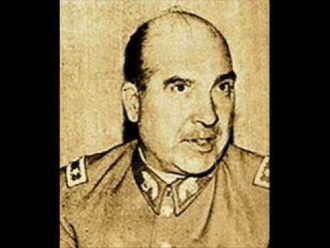 Let me emphasize one thing right off the bat: Schneider was an entirely innocent man. Why, he wasn’t even a communist. Instead, he was simply a man of great integrity who believed that he had a responsibility to support and defend the constitution of Chile. That’s what got him killed.
In the 1970 presidential election in Chile, a socialist named Salvador Allende received a plurality of the votes. Since he had not received a majority, the election was thrown into the hands of the Chilean congress.
U.S. President Richard Nixon, along Kissinger, together with CIA officials, decided that U.S. “national security” would be threatened by the election of a socialist president in Chile.
So, Nixon, Kissinger, and the CIA conspired to produce a two-level plan to prevent Allende from assuming the presidency. The first level involved the secret payment of bribes to the members of the Chilean congress, using, of course, U.S. taxpayer money. The second level was more ominous — to persuade the Chilean national-security branch to take charge of the Chilean government. (Chile was a national-security state, just as the U.S. had become.)
However, Gen. Schneider said no. He continued standing steadfastly in support and defense of the Chilean constitution, which did not provide for a national-security coup as a way to “save” the country from a president who, it was claimed, posed a grave threat to Chile’s “national security.”
Nixon, Kissinger, and CIA officials conspired to launch a violent kidnapping of Schneider to remove him as an obstacle to their plot. During the kidnapping attempt, which took place on the streets of Santiago, Schneider fought back. The kidnappers shot him dead.
The Schneider children later sued Kissinger for his role in the conspiracy to kidnap and murder their father. The federal courts threw them out on their ear. The courts held that when it comes to foreign policy, including kidnapping and assassination, the federal courts would never interfere.
Needless to say, the attitude of the Justice Department was the same. Even though there was clear and convincing evidence of a conspiracy involving felonious actions in Washington, D.C., and Langley, Virginia, the Justice Department never sought any indictments for the conspiracy to kidnap and murder an entirely innocent man. After all, it is important to keep in mind the U.S. felony-murder rule, which holds that if a person is murdered as part of a felonious action, all of the parties to the felonious action are criminally liable for the murder, even if they didn’t participate in it or intend it to happen.
Ironically, the Chilean people were so outraged over Schneider’s murder that the Chilean congress was pressured to elect Allende as president. Thus, the bribery part of the U.S. scheme didm’t work either.
Three years later, U.S. officials finally succeeded in ousting Allende from power through a violent U.S.-supported coup that left Allende and some 3,000 innocent Chilean people dead. It also left the Chilean citizenry to suffer under a brutal U.S.-supported military dictator, one in which 50,000 innocent Chilean citizens were violently rounded up and subjected to torture and rape at the hands of Pinochet’s goons. Kissinger had a close relationship with Pinochet and, in fact, visited him in Chile soon after the coup and offered him generous U.S. support for his brutal dictatorship.
For a detailed analysis of the Schneider murder, I recommend reading “The CIA and Chile: Anatomy of an Assassination” on the website of the National Security Archive.
For a good summary of the lawsuit that Schneider’s sons brought against Kissinger — and the deferential attitude of the federal courts toward foreign-policy actions like kidnapping and assassination — see René Schneider et al. v. Henry A. Kissinger et al on the website of the International Crimes Database.
Countries Begin Downgrading Ties with Israel Over Relentless Bombing of Gaza
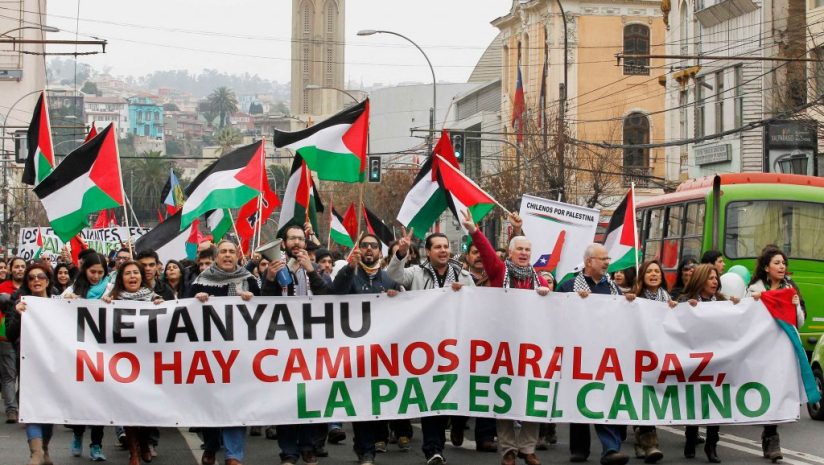
By Kyle Anzalone | The Libertarian Institute | November 1, 2023
A trio of South American countries, along with Jordan, have cut ties with Israel over the onslaught in Gaza. According to Palestinian sources, the Israeli military operations in Gaza have killed nearly 9,000 people, half of which are women and children.
On Tuesday, Bolivia took the most extreme step and cut all ties with Israel. Deputy Foreign Minister Freddy Mamani explained that Bolivia “decided to break diplomatic relations with the Israeli state in repudiation and condemnation of the aggressive and disproportionate Israeli military offensive taking place in the Gaza Strip.”
The next day, Tel Aviv responded by saying Sucre’s move was “capitulation to terrorism and to the ayatollah regime in Iran.”
Colombia and Chile announced they would recall their ambassadors to Israel. Colombian President Gustavo Petro posted on X, “I have decided to call our ambassador in Israel for consultation. If Israel does not stop the massacre of the Palestinian people we cannot be there.”
Chile posted a press release saying Santiago would also recall its diplomat.
“Given the unacceptable violations of International Humanitarian Law that Israel has incurred in the Gaza Strip, the Government of Chile has decided to recall the Chilean ambassador to Israel, Jorge Carvajal, to Santiago for consultations. …”
“Chile strongly condemns and observes with great concern that these military operations – which at this point in their development entail collective punishment of the Palestinian civilian population in Gaza – do not respect fundamental norms of International Law, as demonstrated by the more than eight thousand civilian victims, mostly women and children.”
Jordan joined the South American nations in downgrading ties with Israel. The Foreign Ministry announced it was recalling its ambassador. “Foreign Minister Ayman Safadi decided to immediately recall Jordan’s ambassador to Israel,” a statement said. The move is to reflect Amman’s condemnation of the “Israeli war that is killing innocent people in Gaza.”
While Tel Aviv receives near unconditional backing from Washington, Israel lacks the international community’s support for its war. On Monday, the UN General Assembly voted 120-14 for a ceasefire in Gaza.
After a Hamas attack in southern Israel on October 7, Tel Aviv launched a military operation. The bombing campaign and ground invasion have killed thousands of Palestinian civilians, including over 3,600 children.
The CIA’s Continued Secrecy on Chile and JFK
By Jacob G. Hornberger | FFF | September 8, 2023
On August 31, the Nation magazine published an article entitled “Chile: The Secrets the US Government Continues to Hide,” which details the CIA’s continued steadfast insistence on keeping its records secret that relate to the agency’s 1970-1973 efforts to bring regime change to Chile.
The CIA’s continued secrecy, of course, brings to mind the agency’s equally steadfast insistence on keeping its JFK-assassination related records secret into perpetuity.
The CIA, needless to say, cites the two magic words — “national security” — to justify its continued secrecy in both events.
I suggest that two other words are the real reason for the CIA’s continued secrecy in both events: “criminal cover-up.”
After all, the JFK assassination took place 60 years ago and the Chilean coup took place 50 years ago. The notion that the release of CIA assassination-related and coup-related records would threaten “national security,” no matter what definition is used for that ridiculous, meaningless term, is laughable to the extreme.
Actually, the Chilean coup bears a relationship to the JFK assassination. That’s because the national-security establishment’s mindset toward its regime-change operation in Chile reflected its mindset toward its regime-change operation in Dallas. My hunch is that those still-secret records relating to Chile would provide further circumstantial evidence pointing toward the reasons for the operation in Dallas.
In 1970, Chilean voters delivered a plurality of vote to Salvador Allende in the presidential election. Since Allende had not received a majority of votes, the election was thrown into the hands of the Chilean congress.
U.S. officials deemed Allende a grave threat to U.S. national security, on two grounds: that he was a socialist but, more important, that he was befriending the communist world, including Cuba and the Soviet Union, something that Kennedy had done as well in his famous Peace Speech at American University a few months before he was assassinated.
The CIA embarked on a campaign of bribing the members of the Chilean congress to vote against Allende (which, of course, is somewhat ironic given the fierce U.S. reaction to supposed Russian involvement in U.S. elections).
At the same time, the U.S. national-security establishment made plans for a Chilean military takeover. What’s interesting is that the CIA did not assassinate Allende. Instead, it convinced the Chilean national-security establishment that Allende posed a grave threat to Chilean national security and, therefore, that the Chilean national-security establishment had a moral duty to violently prevent Allende from assuming the presidency.
That’s a very important and very revealing point, one that undoubtedly comes across loud and clear in those still-secret CIA records relating to the Chile coup. The point reveals the U.S. national-security establishment’s conviction that it had the moral duty to violently remove JFK from power in order to protect America from a president whose policies, they concluded, posed a grave risk to “national security.” (See FFF’s book JFK’s War with the National Security Establishment: Why Kennedy Was Assassinated by Douglas Horne.)
Much to the chagrin of the U.S. national-security establishment, however, the commanding general of Chile’s armed forces, Gen. Rene Schneider, opposed the idea of a coup. His position was that the Chilean constitution did not permit a coup as a way to remove a democratically elected president from office. He said that Chileans would have to wait until the next election.
Therefore, the CIA simply orchestrated a violent kidnapping of Schneider which left him dead from gunshot wounds on the streets of Santiago. Ironically, the CIA’s kidnapping and assassination of this innocent man boomeranged because the Chilean congress, faced with tremendous anger over Schneider’s murder among the Chilean citizenry, rejected the CIA’s bribes and installed Allende into power.
Three years later, however, the U.S. national-security establishment prevailed in its efforts and helped military strongman Gen. Augusto Pinochet violently take over the reins of power. By the end of the war between the executive and national-security branches of the government, Allende was dead, just as Kennedy was ten years before.
With the full support of the Pentagon and the CIA, Pinochet’s henchmen rounded up some 60,000 innocent people and proceeded to torture and/or rape most of them. They also killed or disappeared around 3,000 of them.
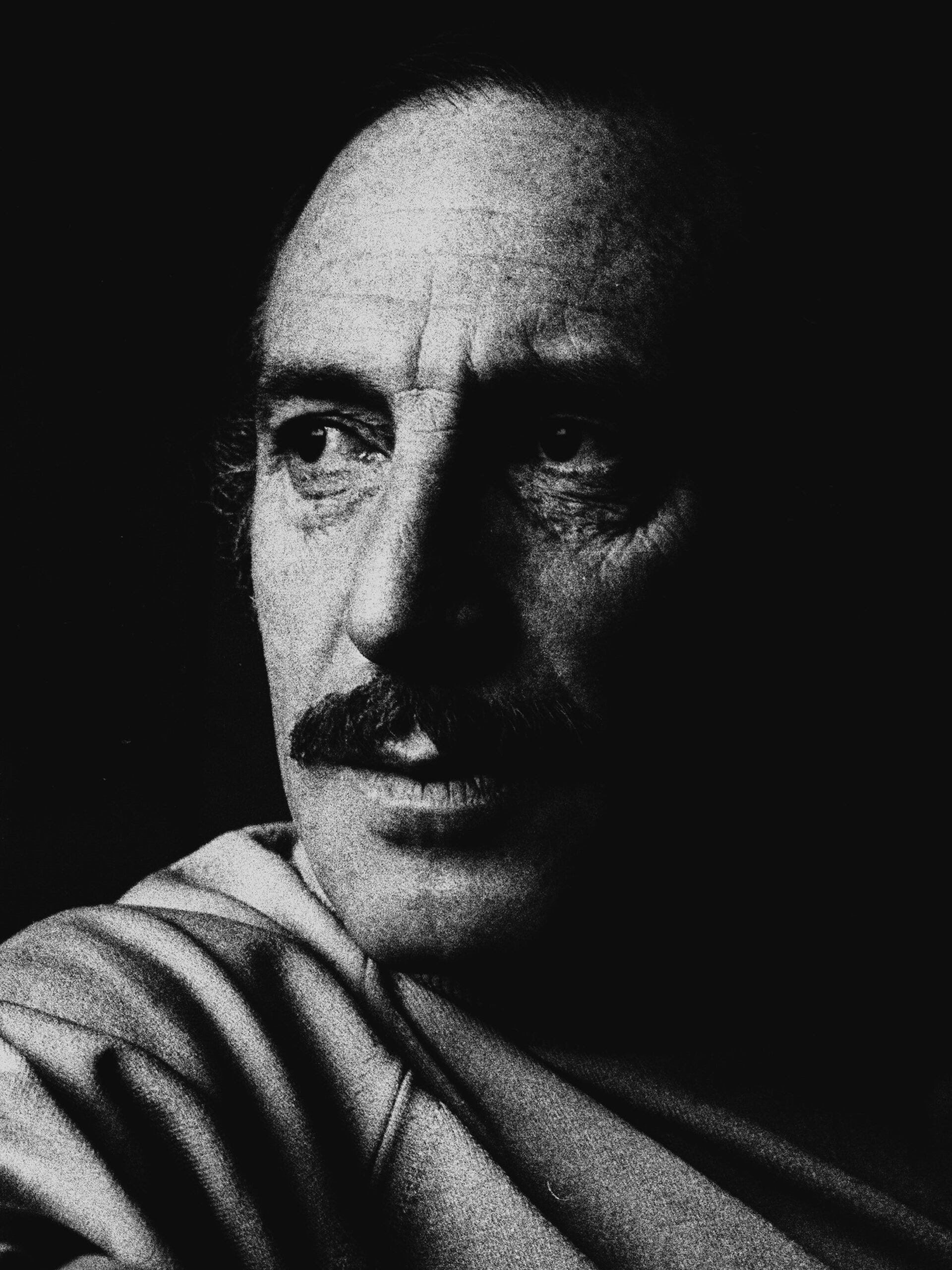
Orlando Letelier
Among those rounded up was Orlando Letelier, a highly respected man who had served in the Allende administration as ambassador to the United States, minister of foreign affairs, minister of the interior, and minister of defense. After being tortured in captivity, world pressure forced Pinochet to release him.
Letelier moved to Washington, D.C., where he joined a leftist think tank and began lobbying against the Pinochet regime. Pinochet and his national-security establishment deemed Letelier to be a grave threat to Chilean “national security.”
On September 21, 1976, Letelier was killed by a car bomb on the streets of Washington, D.C., along with his young assistant Ronni Moffitt.
It was determined that Pinochet’s secret Gestapo-like internal police force, which was called DINA and which worked with the CIA, had orchestrated and carried out the Letelier assassination. Among those convicted of the crime was a DINA agent named Michael Townley, who was a U.S. citizen.
As part of what was clearly a sweetheart deal, Townley pled guilty in U.S. District Court as part of a plea bargain with U.S. officials. Get this: He was sentenced to only ten years in jail for what amounted to the cold-blooded murder of two innocent people. To put that in perspective, compare it to the 22-year jail sentence that a U.S. District Judge recently meted out to a man convicted of simply participating in the January 6 protests. Townley was also given immunity from prosecution in Chile for another national-security assassination in which he had allegedly been involved.
But that’s not all. After serving only 62 months in jail, get this: He was admitted into the federal witness protection program! That meant that the feds gave him a secret identity and let him live a normal life somewhere in the world.
The Letelier assassination has always been blamed on Pinochet. Is it possible that the CIA, working with DINA, was also embroiled in that assassination, on grounds of “national security”? My hunch is that those records relating to Chile that the CIA steadfastly continues to keep secret would help provide an answer to that question, which, needless to say, would be a good reason for wanting them to kept secret.
Killing Communists with Impunity
By Jacob G. Hornberger | FFF | March 9, 2023
The New York Times recently carried an interesting article about the death in 1973 of Pablo Neruda, one of the most renowned poets in the world. Neruda was a Chilean citizen. He was also a strong supporter of Chilean president Salvador Allende, who the Chilean national-security establishment, with the encouragement of the U.S. national-security state, ousted from power in a violent coup in that year. The coup was headed by Chilean conservative military strongman General Augusto Pinochet.
At the time of the coup, Neruda was suffering from cancer and was hospitalized. He died during the coup. The Chilean military-intelligence establishment claimed that he died from his cancer. There were always suspicions, however, that he had been murdered by the Chilean national-security establishment.
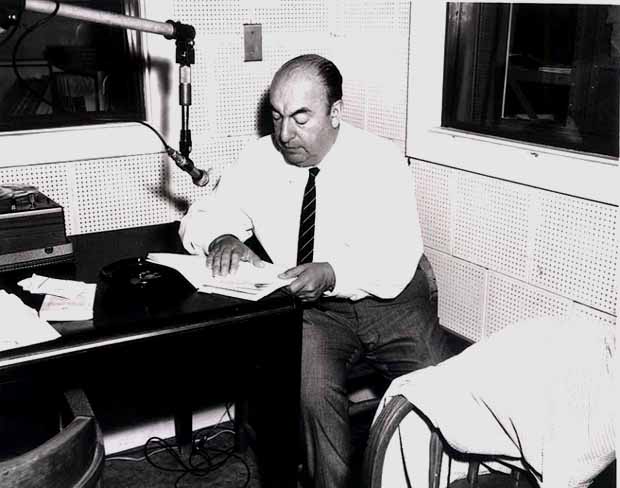
Pablo Neruda
The Times article describes a report from a team that examined Neruda’s remains. The team found bacteria within his body that could be deadly. But they could not determine for sure whether it was, in fact, a toxic strain of bacteria and whether it had been injected into him.
One thing is for certain though: It certainly would not have been unusual for Pinochet and his henchmen to murder Neruda, with the full support of the Pentagon and the CIA, both of which had agents on the ground in Chile during the coup.
Remember: This was 1973, when the Pentagon’s and CIA’s Cold War racket was still going strong. As part of that racket, the Pentagon and the CIA had carte blanche to murder communists wherever they found them.
In 1970, the Chilean people democratically elected Allende to be their president. Allende was a socialist, one who immediately established a friendly relationship with the communist world. He even invited Cuban president Fidel Castro to visit Chile. Their parade in downtown Santiago was met with throngs of enthusiastic supporters.
The U.S. national-security establishment deemed Allende to be a grave threat to national-security. That made him subject to being assassinated by the CIA. Don’t forget that the CIA had already repeatedly tried to assassinate Castro for being a communist.
Rather than assassinate Allende, however, the Pentagon and the CIA instead decided to encourage the Chilean national-security establishment to initiate a violent coup against him. When the coup took place in 1973, the Chilean military tried to assassinate Allende with missiles fired at him from military planes. Allende fought back but was no match for the power of the Chilean national-security establishment. At the end of the battle, Allende lay dead, supposedly having decided to commit suicide.
But even if Allende didn’t commit suicide, the outcome was never in doubt. The Chilean military-intelligence establishment was going to kill him, either during the coup or after the coup. That’s because it, like the Pentagon and the CIA, deemed him to be a communist. Like their counterparts in the Pentagon and the CIA, as far as they were concerned they had the omnipotent authority to kill communists, especially those within their own country.
In fact, after the coup Pinochet and his goons routed up more than 50,000 of Allende’s supporters, including women. They murdered or disappeared around 3,000 of them. They tortured most of them. They raped or violently sexually abused many of the women.
None of this was considered to be any big deal for the killers, the kidnappers, the rapists, and the abusers because the victims were all considered to be communists or communist sympathizers. In the minds of the Chilean national-security establishment, the only good communist was a dead communist, a tortured communist, a raped communist, or a sexually abused communist.
All of this met with the fervent approval of the Pentagon and the CIA. U.S. taxpayer-funded money flooded into the Pinochet regime. In the eyes of the Pentagon and the CIA, Pinochet was helping win the worldwide war on communism, even if the U.S. was losing to the communists in Vietnam.
During the coup, the Chilean military took two young Americans into custody, Charles Horman and Frank Teruggi. They too were supporters of Allende. They were also opponents of the U.S. war in Vietnam. Chilean officials murdered both men. There is no way that Pinochet would have killed two Americans without first having received a green light from U.S. officials. But it was easy to secure that green light because Horman and Teruggi were considered to be unpatriotic, treasonous American communist sympathizers.
In 1970, U.S. officials first began planning their coup against Allende. Standing in their way, however, was Gen. Rene Schneider, the overall commander of Chile’s armed forces. The CIA orchestrated his violent kidnaping to remove him as an obstacle to the coup. Schneider was murdered by the CIA-employed thugs during the kidnapping attempt.
No one in the CIA was ever brought to justice for Schneider’s murder. For that matter, no one in the CIA or the Pentagon was ever brought to justice for Horman’s and Teruggi’s murder.
Many years later, when the Schneider sons sued in federal court for the murder of their father, the federal judiciary made it clear that it would never interfere with any of the CIA’s or Pentagon’s state-sponsored assassinations.
So, given all this, it certainly should not surprise anyone if Pablo Neruda was, in fact, one of the murder victims during the Chilean coup. In fact, what would be surprising is if he wasn’t.
Forensic Probe Reveals Chilean Nobel Laureate Pablo Neruda Died of Poisoning, Family Says
By Igor Shapovalov – Sputnik -16.02.2023
The Government Junta of Chile was the highest organ of state power in the South American nation during the 1973-1990 military dictatorship. The period was characterized by repressive policies and extensive economic transformation. It is estimated that more than 3,000 people were killed, and tens of thousands disappeared during the military rule.
New research into the remains of Chilean poet Pablo Neruda has confirmed that poisoning was the cause of his death in 1973, the poet-diplomat’s nephew Rodolfo Reyes has said.
Following the court-approved exhumation of the body, international experts were called in to examine the remains of the Nobel laureate. According to Reyes, the results of the study confirmed he died not from cancer, as stated in official documents, but from poisoning.
Reyes has detailed that the final report outlined traces of the botulism agent had been found in the poet’s remains. Moreover, experts at McMaster University in Canada and the University of Copenhagen determined the bacteria had entered his body before death, thus confirming the idea of poisoning.
“We now know that there was no reason for the clostridium botulinum to have been there in his bones,” Reyes told Spanish media. “What does that mean? It means Neruda was murdered through the intervention of state agents in 1973.”
The report was released to Paola Plaza, a Chilean judge, on Wednesday; however, she has not made the findings public. It’s expected the report will be publicly released on March 7.
In Chile, Neruda is known not only as a poet but also as a diplomat and public figure. The Chilean Communist Party nominated him for president in 1970, although he later withdrew his candidacy in favor of socialist Chilean President Salvador Allende, who would later go on to be overthrown by General Augusto Pinochet in a US-backed coup.
Neruda died on 23 September 1973, 12 days after the coup d’état that toppled the Allende government. He died at the Santa Maria Hospital in Santiago. Speculation on Neruda’s cause of death has remained a hot talking point for decades, with his body having been first exhumed under court order in 2017.
Chile’s Boric wasted an opportunity for Palestine at the UN General Assembly
By Ramona Wadi | MEMO | September 24, 2022
Chilean President Gabriel Boric may currently be the most outspoken leader in Latin America on Palestinian rights and Israeli violations. However, his rhetoric leaves much to be desired. It, in turn, raises questions about how Chile – the country with the largest Palestinian community in the region – can differentiate itself from other countries to become a model to follow, rather than following international consensus over the two-state compromise and Israel’s security narrative.
In his first address to the United Nations General Assembly (UNGA), Boric spoke about Palestine’s right to freedom and sovereignty while mangling his message by including a false equivalence with Israel that eliminates the colonial context. “[Palestinian people] should yield to their inalienable right to establish their own free and sovereign state. In the same way, [let’s] guarantee Israel’s legitimate right to live within secure and internationally recognised borders,” Boric asserted.
Boric’s speech was pronounced “politically correct”, while noting that Chile’s stance has always advocated for the recognition of Palestinian people’s rights and Israel’s rights while promoting the two-state compromise, like the rest of the international community. In which case, Boric’s activist stances as president are unlikely to leave any impact on Chilean diplomacy. Under Boric, the Chilean government is advocating for the same stance that his predecessor Sebastian Pinera adhered to, which is a bonus for Israel, despite the grievances Israeli media aired upon Boric’s electoral victory.
Days before his UNGA speech, Boric postponed accepting the credentials of the new Israeli ambassador to Chile, Gil Artzyeli, in response to the Israeli forces’ killing of 17-year-old Palestinian Odai Trad Salah in Kufr Dan near Jenin. However, his stance, which made headline news in major media outlets worldwide, was diminished by the UNGA speech that attempted equivalence between the coloniser and the colonised while simplifying, to the point of obliteration, the reason why Palestinians are deprived of a state, possibly permanently.
Boric is not unaware of the Palestinian plight as a result of Zionist colonisation. Neither is he oblivious to the fact that Palestinians and the indigenous people of Chile – the Mapuche – have suffered similar forms of aggression because of governments criminalising their struggle for land reclamation and political autonomy. Yet, it is possible that, as president, Boric’s activist stances will be mellowed by diplomatic requirements, such as abiding by the two-state compromise, which has failed Palestinians and become defunct in all but international rhetoric.
Prior to the presidency, Boric stood out as one of the most vocal activists in Chile. As president, Boric is navigating a complex reality that includes the legacy of Augusto Pinochet’s dictatorship and ties to Israel during that period, as well as the country’s reliance on securing military and surveillance equipment from Palestine’s oppressors.
To cast Israel and legitimacy together is an aberration, particularly when using such descriptions to balance advocating for Palestinian rights. Boric wasted an opportunity at his first UNGA speech to call out Israel’s colonial violence and how it invalidates legitimacy. It is not up to the international community to guarantee Israel’s existence, but Boric knows that Chile can play a pivotal role in ensuring that the international community gravitates towards the legitimacy of the Palestinian people’s political demands.
Israel finds 4 Pfizer jabs ‘not good enough’ against Omicron
RT | January 18, 2022
A fourth dose of Pfizer’s coronavirus vaccine showed dwindling effectiveness against the Omicron variant, according to a trial conducted in Israel, with one of its lead researchers saying the immunization is simply “not good enough.”
A study involving 154 medical staffers at Sheba Medical Center near Tel Aviv found that a fourth shot gave only marginal protection against the Omicron strain compared to previous mutations.
“We see an increase in antibodies, higher than after the third dose. However, we see many infected with Omicron who received the fourth dose,” said Gili Regev-Yochay, one of the head researchers on the trial, adding that while “the vaccine is excellent against the Alpha and Delta [variants],” for Omicron “it’s not good enough.”
Despite the new findings, Israeli health officials already moved ahead with fourth doses for the elderly, the immunocompromised and medical workers beginning earlier this month, with some 500,000 receiving a second booster on top of an initial two-dose regimen as of Sunday.
Though the trial is still in an early phase and the hospital did not offer specific figures, Regev-Yochay said she made its preliminary conclusions public as boosters are a matter of “high public interest,” according to the Times of Israel. She noted that giving fourth doses to high-risk residents is “probably” still the best approach, but suggested the booster campaign should be limited to an even older age group than the current over-60 guideline.
Both the World Health Organization and the EU’s drug regulator, the European Medicines Agency, have cautioned against the over-use of boosters, though for different reasons. The WHO has called for a more even distribution of vaccine doses around the world, observing that some nations are moving ahead with third and fourth shots before many in poorer countries receive their first. The EMA, meanwhile, pointed to potential adverse effects of booster shots last week, warning that repeated vaccinations in a short period of time could result in “problems with immune response.”
One of the most vaccinated countries in the world, Israel was the first to roll out fourth vaccine doses as it saw a significant spike in coronavirus infections linked to the Omicron strain. Deaths and hospitalizations have only seen a slight uptick in recent months, however, in line with findings suggesting the latest ‘variant of concern’ produces milder symptoms than previous mutations. Despite the misgivings of world health bodies, Chile, Denmark and Hungary have since followed suit in administering fourth shots, while officials in Austria have recommended them on an “off-label” basis for healthcare personnel.
Pinochet’s Caravan of Death and Its Significance for Chilean Memory

By Ramona Wadi | Strategic Culture Foundation | September 12, 2021
Chile’s September 11, in 1973, brought a brutal end to Salvador Allende’s socialist rule. In its wake, violence permeated Chilean society, through the U.S.-backed military coup which was to provide gruesome inspiration for the later regional systematic surveillance and elimination of socialists and communists known as Operation Condor, in which several Latin American countries were involved.
The mass arrests of Chileans loyal to Allende and socialist politics became a long purge in the country. The Caravan of Death – one of the earlier dictatorship operations aimed at instilling terror within the country – was carried out in the coup’s aftermath, between September 30 and October 22, 1973, after securing Santiago by means of brutal suppression, torture and killings. Dictator Augusto Pinochet’s purge was aimed at silencing dissent throughout the country, and also to ensure the military’s loyalty towards the dictatorship – any negligence or lenience exhibited by any individual would be punished by methods used against dissenting Chileans. The ultimate aim, according to retired Lieutenant Colonel Marcos Herrera Aracena, was “to bring an end to the remaining legal processes… In other words, finish with them once and for all.”
The Caravan of Death massacres are considered to be among the most brutal not only due to the extermination methods involved – at times the corpses were unrecognizable due to bludgeoning – but also because many Chileans willingly turned themselves in for interrogation.
Army officers travelled in Puma helicopters throughout Chile, inspecting detention centres and giving orders for execution, or carrying out the executions themselves. Testimony from La Serena indicates that 15 prisoners were executed by firing squad and their bodies buried in a mass grave. To prevent any possible dissemination of knowledge, at least in the immediate aftermath, the official version publicized by the dictatorship was that the prisoners had attempted an escape.
While at first the dictatorship seemed adamant on making its brutality known to quash any resistance, the more refined methods of disappearance and secret extermination sites hastened a culture of impunity and oblivion. The Calama massacres – the last stop in the Caravan of Death – was such an example. Relatives of the disappeared sought information about the whereabouts of their loved ones to no avail. It was the female relatives of the disappeared in Calama who took matters into their own hands and started physically searching for the bodies of their loved ones in the Atacama Desert. The dictatorship had forbidden any leaking of information due to the extent of mutilations the victims had been subjected to by the execution squads. As the women’s resilience increased, so did the dictatorship’s efforts to prevent any discovery of the bodies through exhumation and reburial of remains.
The Rettig Commission established that 75 Chileans were killed and their bodies disappeared throughout the operation, headed by Brigadier General Sergio Arellano Stark, and with the participation of agents Manuel Contreras, Marcelo Moren Brito, Sergio Arredondo Gonzalez, Armando Fernandez Larios and Pedro Espinoza Bravo – all of who played prominent roles in the torture and disappearances of dictatorship opponents throughout Pinochet’s rule. Contreras headed the National Intelligence Directorate (DINA), Brito oversaw torture at Villa Grimaldi, while Fernandez Larios was involved in the assassination of Chilean economist and diplomat Orlando Letelier in Washington, carried out by double agent for DINA and the CIA, Michael Townley.
Although indicted by Judge Juan Guzman Tapia on December 1, 2000 for ordering the Caravan of Death killings, dictator Pinochet escaped justice on account of purported health reasons. In relation to dictatorship memory and rupture, the Caravan of Death stands as a forewarning of what was to be unleashed in Chile throughout Pinochet’s rule and its aftermath. Particularly in Calama, the women’s resilience against the dictatorship can be seen as one of the earliest expressions against the nationwide oblivion through which Pinochet attempted to crush any questioning, let alone investigations, into dictatorship-era crimes.
Jews enlist US govt to intervene in Chile as Palestinian-descendant rises to presidential election frontrunner
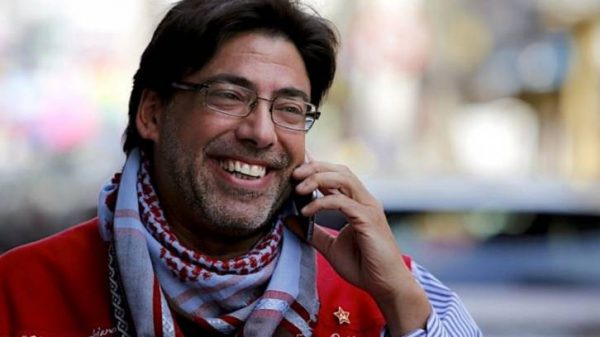
By Eric Striker | National Justice | July 15, 2021
Jews in America are demanding the United States intervene in Chile’s internal politics in the run up to their presidential election next November.
Daniel Jadue, a descendant of Palestinian refugees and member of the Chilean Communist Party, is currently the frontrunner in polls. Jadue is an unapologetic anti-Zionist who has in the past directly confronted the Jewish power structure of his country.
Gerardo Gorodischer, president of Chilean Jewish lobby, has successfully recruited Democrats and Republicans in the US Congress to call on Secretary of State Antony Blinken — a Jew himself — to meddle in Chile’s internal affairs and prevent Jadue from becoming president.
Jadue has in the past called attention to Jewish control of the media in his country. Last year, he was listed as one of the top 10 anti-Semites in the world by the Simon Wiesenthal Center after he passed a strict Boycott, Divestment and Sanctions (BDS) law as mayor of the city of Recoleta. He is currently supporting a law in the parliament that would make Chile the first nation in the world to officially institute a total boycott of Israel.
With 400,000 descendants, Chile is home to the world’s largest Palestinian diaspora outside of the Middle East. Chilean-Palestinians are overwhelmingly Christians who were forced to flee their homeland after being ethnically cleansed by Israel. Chile’s Jewish population is much smaller, currently estimated at 150,000 people. Jews in the country have started immigrating to Israel in larger than usual numbers out of fear of Jadue potentially becoming the nation’s next leader.
So far, Jewish attempts at “Corbyning” Jadue have failed. Complaints from Zionist organizations in Latin America and the US to stop Jadue have largely been ignored by the local population. Their trump card appears to be using the United States to intimidate the Chilean government with threats of economic retaliation or more.
In her letter to Blinken, Democratic congresswoman Debbie Wasserman-Schultz made a collective racial attack on the entire Chilean Palestinian community for protesting against Israel’s attacks on Arabs last May:
“Militant leaders of the 400,000-strong Chilean Palestinian community, and their partners, from a variety of political parties, were quite aggressive during and after the Gaza crisis, burning Israeli and U.S. flags, brandishing Nazi symbols and accusing Israel of apartheid and Chilean Jews of controlling the media. This dangerous climate has been intensifying for many years and has already affected Chile’s social fabric despite alarms sounded by the local Jewish community and U.S. Jewish organizations like the American Jewish Committee.”
The billionaire neo-conservative president of Chile, Sebastián Piñera, also received the letter. His allies in the parliament have started grilling Jadue over his 1983 high school yearbook entry, where he declared himself an “anti-Semite” and vowed revenge against Jews for what they did to his family. Jadue, a 54-years-old man, responded by making fun of Chilean conservatives asking him to “clarify” comments he made as a teenager as the country suffers through an economic crisis.
Jews have been encountering resistance from all across the political spectrum and diverse countries in recent months. Earlier this month, Belarusian leader Alexander Lukashenko gave a speech suggesting that Jews use the “Holocaust” to intimidate and control people. Yesterday in Poland, local nationalists crashed a Jewish ceremony racially defaming Poles as genocidal killers.
Featured Video
No Threat Can Force Iran’s Surrender /Trita Parsi & Lt Cl Daniel Davis
or go to
Aletho News Archives – Video-Images
From the Archives
What is the Israeli Lobby in Australia Doing in Interfaith Dialogue?
By Ali Kazak | Dissident Voice | October 11, 2015
For years Israel and its lobby around the world have been trying to normalise their relations with Arabs and Muslims without solving the Palestine Question.
One of the methods they resorted to in the last few years is using human rights and community organizations such as interfaith dialogue and Multiculturalism to achieve this objective and to: isolate the Palestinians, marginalise the Palestine question, end Israel’s isolation, and prevent criticism of Israel, knowing that these organisations will be the first to stand against Israel’s violations, racial and religious discrimination.
The group responsible for this task in Australia is The Australia/Israel & Jewish Affairs Council (AIJAC); its Director of International & Community Affairs, Jeremy Jones is in charge of lobbying religious community organizations, specifically Muslims and Christians. Consequently he convened the Faith Communities for Reconciliation, founding participant in the Australian Partnership of Religious Organisations and the Australian National Dialogue of Christians, Muslims & Jews.
AIJAC is a private political propaganda group. It is recognised as the main Israeli lobby in Australia. It coordinates its activities and works intimately with the Israeli embassy in Canberra and different institutions in Israel. It is privately funded by some Jewish businessmen. It monitors closely Australian politicians, the media, ethnic and religious groups, (especially Arabs and Muslims), unions and academics on their stands towards Israel and the Palestine question. … continue
Blog Roll
 Aletho News
- Theodore Postol: Iran’s Missiles & Drones Were Underestimated
- Iran To Target Military Industrial-Tech Complex That Facilitated Gaza Genocide
- Collapsing Empire: The Resistance Disarms ‘Israel’
- Suicide Should Not Be a Government Service
- Rethinking America’s greatest threat: Iran vs. Israel-Firsters
- Iran accuses adversaries of false flags to strain Turkey ties
- Poland rules out sending Patriot missiles to US/Israel amid war on Iran
- Tehran approves new Hormuz plan with major restrictions
- No Threat Can Force Iran’s Surrender /Trita Parsi & Lt Cl Daniel Davis
- UK’s New Pandemic Plan Would Turn Big Tech Into a Mass Location Tracking Network
- If Americans Knew
- Ann Coulter Rips Into Fox News for Iran War Coverage, Compares to False Rigged 2020 Election Reporting
- Joe Kent Urges Americans To Call White House and Congress To Object To Sending Troops Into Iran
- DNC Resolution to Reject AIPAC Funding Puts Democratic Leaders in the Hot Seat
- Swedish foundation to build 400 schools as over 650,000 Gaza children remain without education for 2 years
- Israeli army admits photshopping image of slain Lebanese journalist
- This is how Israel is systematically killing health workers under the cover of war in Lebanon
- Carrying life under fire: Israeli invasion of Lebanon leaves pregnant women facing deadly risks
- Champagne all around for the new death penalty (for Palestinians) law – Not a ceasefire Day 172
- Why are Palestinian books struggling to be seen on Amazon?
- The Line Between Affinity and Conspiracy
- No Tricks Zone
- New Study Finds Warming Saves Lives…Cold Temperatures 12 Times More Deadly Than Excess Heat
- German Science Blog Accuses PIK Climate Institute Of Hallucinating Climate Tipping Points
- Devastating Assessment Of Comirnaty Vaccine By Former Senior Pfizer Europe Toxicologist
- New Study: CO2 Is ‘Effectively Negligible’ As An Explanatory Climate Change Factor Since 2000
- Former Pfizer Toxicologist Dr. Helmut Sterz Tells Bundestag Hearing Pfizer Vaccine Should Have Never Been Approved
- Energy Expert: Germany’s Nuclear Phaseout Was A “500 Billion Euro Mistake”
- New Research: South Australia’s Mid-Holocene Sea Surface Temperatures Were 4°C Warmer Than Today
- Storing Green Energy To Last Germany 10 Days Would Require A 60-Million Tonne Battery
- New Studies: UK Sea Levels Were 4 Meters Higher Than Today During The Mid-Holocene
- Destructive Green New Deal: German Energy And Metal Group Warns Of Drastic Crisis
 Aletho News