US ‘diplomacy’ – bottomless pit of hypocrisy and double standards
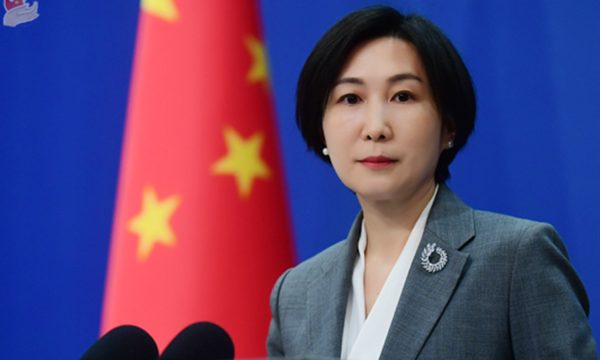
Chinese Foreign Ministry spokesperson Mao Ning
By Drago Bosnic | February 28, 2023
Diplomacy has always been one of the cornerstones of the so-called “soft” power projection. Countries have used it throughout human history to negotiate issues that otherwise would have been resolved on the battlefield. The United States of America, the world’s most aggressive imperialist (and neocolonialist) power, is rather unique in this regard, as it is essentially using its “diplomacy” as a form of arm-twisting instead of actual dialogue and negotiations. For the warmongering elites in Washington DC, utterly barbaric behavior seems to be a given, while mutual respect and taking the other side’s legitimate interests into account is clearly considered a “foolish weakness”.
This has resulted in numerous wars around the world, further leading to hundreds of millions of dead, wounded and expelled people, or in simpler words, countless lives destroyed due to unparalleled US aggression against the world. And while such a belligerent foreign policy approach is expected from Washington DC when it comes to smaller countries that cannot match US power, they certainly do not attempt to behave similarly toward global powers and superpowers. But America is doing exactly that, with the US State Department issuing open threats to China, accusing it of alleged (planned) arms shipments to Russia. Top American officials also added that Beijing will suffer “very real consequences” if it goes ahead with the supposed deal.
Obviously, the Asian giant wasn’t even given the chance to deny the accusations as the US resorted to directly threatening Beijing. However, China is anything but intimidated. Increasingly confident due to its meteoric rise to superpower status, Beijing was quick to fire back at the blatant threats. During a press briefing on February 27, Mao Ning, a spokesperson for the Foreign Ministry of China, stated that the Asian giant is fully prepared to retaliate if illegal US sanctions against Chinese companies operating in Russia are not removed. Mao also dismissed allegations that Beijing is planning to send weapons to Russia, rejecting the questionable (at best) US mainstream propaganda reports as disinformation.
“The US, however, has been fanning the flame and fueling the fight with more weaponry,” she (quite correctly) indicated at the blatant American hypocrisy, adding: “This is out-and-out hegemonism and double standards, and absolute hypocrisy. The Chinese side will continue to do what is necessary to firmly safeguard the lawful rights and interests of Chinese companies. We will take resolute countermeasures in response to the US sanctions.”
Mao also reiterated Beijing’s official position on the Ukraine crisis as one of peace, seeking a solution through negotiations rather than the force of arms. She stressed that “China has been actively promoting peace talks and the political settlement of the crisis,” adding that Beijing has been much more constructive than Washington DC. Mao once again indicated that the US is fully responsible for the incessant escalation in its relations with China. This is certainly true, particularly in recent times, as Washington DC has used even the most trivial matters to denigrate and antagonize Beijing, while also illegally arming the Chinese breakaway island province of Taiwan, exacerbating US-China tensions to a boiling point.
“In addition to pouring lethal weapons into the battlefield in Ukraine, the US has been selling sophisticated weapons to the Taiwan region in violation of the three China-US joint communiqués. What exactly is the US up to? The world deserves to know the answer,” Mao concluded.
Mao also remarked that America is spreading disinformation about China’s alleged supply of weapons to Russia in order to use it as a pretext to sanction Chinese companies, thus eliminating competition by using such underhanded tactics. One of the affected Chinese companies, Changsha Tianyi Space Science and Technology Research Institute, has already been sanctioned based on unsubstantiated claims that it is supposedly supplying the Wagner Group PMC (private military company) with satellite imagery of Ukraine. US Under Secretary of State for Political Affairs Victoria Nuland stated last week that sanctions were targeting Chinese companies that “have been observed sneaking up to the edge and trying to provide weapons to Russia”.
The unprecedented US hypocrisy is also seen in the attempts to portray Russian President Vladimir Putin as a supposed “war criminal”, with US President Joe Biden already accusing him of being one and even saying “evidence needs to be gathered for a war crime trial“. This is despite Biden’s central role in starting numerous wars under several US administrations and despite virtually the entire establishment in Washington DC being involved in warmongering and war crimes, regardless of political affiliation. Perhaps an even better example would be the May 2022 speech made by former US president George W. Bush, whose Freudian slip about the “wholly unjustified and brutal invasion of Iraq, I mean Ukraine” clearly showed the entire world the sheer scale of US hypocrisy and double standards.
Drago Bosnic is an independent geopolitical and military analyst.
Showdown in Ukraine
Hobbled US Turns to War to Preserve its Waning Primacy
BY MIKE WHITNEY • UNZ REVIEW • FEBRUARY 26, 2023
The future of humanity will be decided on a battlefield in Ukraine. That’s no exaggeration. The conflict between the United States and Russia will determine whether global economic integration will expand within an evolving multi-polar system or if the “rules-based order” will succeed in crushing any opponent to its Western-centric model. This is what’s taking place in Ukraine today, in fact, all of the recent government-prepared documents related to national security identify Russia and China as the greatest threats to US hegemony. For example, take a look at this brief clip from the 2021 Congressional Research Service Report titled Renewed Great Power Competition: Implications for Defense—Issues for Congress:
The U.S. goal of preventing the emergence of regional hegemons in Eurasia… is a policy choice reflecting two judgments: (1) that given the amount of people, resources, and economic activity in Eurasia, a regional hegemon in Eurasia would represent a concentration of power large enough to be able to threaten vital U.S. interests….
From a U.S. perspective on grand strategy and geopolitics, it can be noted that most of the world’s people, resources, and economic activity are located not in the Western Hemisphere, but in the other hemisphere, particularly Eurasia. In response to this basic feature of world geography, U.S. policymakers for the last several decades have chosen to pursue, as a key element of U.S. national strategy, a goal of preventing the emergence of regional hegemons in Eurasia.” (“Renewed Great Power Competition: Implications for Defense—Issues for Congress”, US Congress)
That sums up US foreign policy in a nutshell; “prevent the emergence of a regional hegemon” at all cost. Now check out this summary of the 2022 US National Defense Strategy by Andre Damon at the World Socialist Web Site :
These documents, which were not seriously discussed in the US media, make clear the fundamental falsehood that the massive US military buildup this year is a response to “Russian aggression.” In reality, in the thinking of the White House and Pentagon war planners, the massive increases in military spending and plans for war with China are created by “dramatic changes in geopolitics, technology, economics, and our environment.”
These documents make clear that the United States sees the economic rise of China as an existential threat, to be responded to with the threat of military force. The United States sees the subjugation of Russia as a critical stepping stone toward the conflict with China.” (“Pentagon national strategy document targets China”, Andre Damon, World Socialist Web Site )
These two excerpts are by no means a comprehensive summary of US foreign policy objectives, but they are a pretty effective thumbnail sketch. Bottom line: The war in Ukraine is not about Ukraine. America’s clearly articulated strategic objectives are as follows: To weaken Russia, topple its leader, take control of its vast natural resources and move on to containing China. Simply put, Washington’s escalating aggression in Ukraine is a Hail Mary pass aimed at containing emerging centers of economic power in order to preserve its waning position in the global order.
This is the geopolitical chess match that is being played behind the cover of “a war against Russia’s unprovoked aggression.” People should not be hoodwinked by that absurd deception. This war was concocted as a desperate attempt for the United States to defend its flickering global hegemony. That’s what Ukraine is really all about. It’s a clash between the warmongering western oligarchs who have a stranglehold on the US media and political establishment and the emerging economies that are using the market system to link their resources and manufactured goods to countries around the world through “high-speed” infrastructure and cooperative development.
So, the question everyone must ask themselves is this: Do you want to see more economic integration, lower prices, more shared prosperity and less war or another 80 years of onerous and arbitrary sanctions, color-coded revolutions, regime change operations, genocidal interventions and bioweapon warfare (Covid-19)? Which do you want?
Perhaps, you are one of the millions of Americans who believe that China is an enemy of the United States. Perhaps, you are also unaware of the role the US played in creating modern China. Here’s a question for you: Did the US and western corporations move their operations en masse to China to escape the high costs of production in the US?
answer– Yes, they did.
And, did they betray US workers because they didn’t want a fair wage to interfere with their excessive profit-making?
answer– Yep.
And, did they offshore their businesses, outsource their product manufacturing and do everything in their power to make themselves winners while robbing American workers of the opportunity of making a decent wage so they could put food on the table?
answer– They sure did.
Then who is actually responsible for the rise of China?
answer– Western corporations are responsible. If Americans want to blame someone, blame them!
But now the corporate mandarins and other elites are unhappy with China because China will not allow them to take control over their markets, financial system and currency as they have in America. So now these same cutthroat corporations want us to fight a war with the monster that they created?
Can you see that? Can you see that the relentless provocations against China have nothing to do with US national security or US interests. We are being led by the nose to fight and die for the cadres of voracious western oligarchs who have settled on China as the next target of their grand looting operation.
But let’s forget the past for a minute and focus on the future, after all, that’s what really matters, right?
Well then, which country has a more “positive vision” for the future: China or the United States?
Have you ever heard of China’s Belt and Road Initiative, the massive, multi trillion-dollar infrastructure plan that is the centerpiece of China’s foreign policy? It is the biggest infrastructure program in history and more 150 countries have invested in the plan already. It is a development-oriented project aimed at increasing connectivity through high-speed rail, shipping lanes and ports, skyscrapers, railroads, roads, bridges, airports, dams, power stations, and railroad tunnels. By increasing the speed of travel, China’s products and merchandise will get to markets faster generating greater prosperity for itself and for the other countries involved. And, keep in mind, the BRI will link countries around the world in a high-speed system that will not require its participants to follow a specific economic model dictated by Beijing. In other words, the Belt and Road Initiative is free market economics without the politics. It’s a “win-win” situation for everyone, a guarantee of mutual prosperity absent political manipulation, coercion or exploitation.

The venal oligarchs that run the US can’t even imagine a project of this scale or potential. In fact, they can’t even pony-up enough money to keep the trains on the rails in America. The profits these billionaire parasites extract from their activities invariably come from stock buybacks, tax evasion, and other sleight-of-hand, debt-layering ponzi-scams that benefit no one and merely shift more of the nation’s wealth into their own bulging bank accounts. Of course, ripping off the country would be bad enough, but now we see how this same class of miscreants have settled on public health as a means for amplifying their political power so they can impose repressive, police-state measures that greatly curtail the freedom of the entire population. In short, they want absolute social control and they aren’t going to let-up until they get it.
Where is the “positive vision” in this behavior?
There isn’t one. America used to be a country of ideas, ideals and vision. Now it is an oligarch-run detension center in which all hope for the future has been ruthlessly extinguished by a handful of mercenary billionaires.
At least, in the case of China, we can imagine a better, more prosperous world that is interconnected and more accessible to everyone. But what about the United States? Are we supposed to believe that fighting a war in eastern Europe is going to improve our lives? Are we supposed to believe that the only way “we can stay on top” is by pushing everyone else down? Are we expected to hate China and Russia even while our own government demonizes 80 million of us for voting for the wrong presidential candidate or for not supporting the terrorists who burn and loot our cities or for believing that the people in East Palestine are more deserving of our support and assistance than the Nazi stormtroopers in Kiev?
The fact is, our leaders cannot imagine devoting public resources to a giant interconnected infrastructure project like BRI, because that would mean less lucre for themselves. So, they’ve decided to destroy it just like they destroyed Nord Stream. Just read the press reviews on this groundbreaking project. Western journalists can’t find a ‘good word’ to say about it. A vast area in the center of America was fiendishly nuked with vinyl chloride, butyl acrylate and isobutylene, but the western media would rather criticize China’s ambitious BRI project than hold their paymasters accountable. Go figure.
The same rule applies to Russia. The Biden team and their wealthy allies don’t want closer relations between Germany and Russia because closer relations mean more prosperity for both countries, and Washington can’t have that, which is why they blew up the pipeline that was Germany’s lifeline to cheap fuel. That’s how Washington solved the problem. It pushed Germany and Russia down so the US could remain on top. Who doesn’t see this?
In contrast, the Belt and Road Initiative provides a positive vision for the future, which is an idea that the majority of the world supports. It puts us on a path to an interconnected world in which people can raise their standards of living, make a meaningful contribution to their communities, and enjoy their own culture and traditions without fear of being sanctioned, incarcerated or bombed to death. This is an excerpt from China’s Global Times :
The China-proposed Belt and Road Initiative (BRI) has already become a well-received international public good and an important platform for international cooperation…
“BRI transcends the outdated mentality of geopolitical games, and created a new model of international cooperation. It is not an exclusive group that excludes other participants but an open and inclusive cooperation platform. It is not just China’s solo effort, but a symphony performed by all participating countries….
Since the Belt and Road Initiative (BRI) was proposed in 2013, the initiative has always been development-oriented, and consistent efforts have been made to ensure that it is high-standard, sustainable and people-centered….
By August, China’s goods trade with countries participating in the BRI had reached around $12 trillion and the country’s non-financial direct investment in those countries surpassed $140 billion. … By the end of 2021, Chinese enterprises had invested $43 billion in the construction of economic and trade cooperation zones in BRI countries, creating more than 340,000 local jobs, official data showed…
China is open to other countries’ and regions’ participation in the BRI and is considering connecting with infrastructure initiatives proposed by other nations to provide more good-quality public goods for the world…. China hopes to join hands with all partners to advance the high-quality development … stressing that China aims to strive for global connection rather than fragmentation, for mutual opening-up rather than shutting doors, for mutual integration rather than zero-sum games. (“BRI remains open, inclusive for all, transcends the outdated mentality of geopolitical games“, Global Times )
What is the American-led project that rivals the Belt and Road Initiative?
There isn’t one. The US allocates over $1 trillion per year for lethal weaponry and war-making, and trillions more to bail out the Wall Street banksters, and trillions more to shut down all the businesses across the country that were forced to comply with the diktats of billionaire elites who wanted to inject the population with their toxic slurry, but zero for any global infrastructure project that would peacefully bring the world’s people closer together through commerce and recreation.
No one is saying that China is perfect, at least, I’m not. Nor do I want to live in China. I don’t. I’m an American and I plan to die here.
But I’m not blind. It’s easy to see that this war with Russia has nothing to do with “unprovoked aggression.” That is merely a smokescreen that’s being used to conceal the real objective, which is to preserve America’s global hegemony. What we need to do now, is honestly analyze ‘what is happening’; try to understand ‘why it is happening’, and, then, figure out what the outcome will be if the United States prevails. In other words, do we want to perpetuate an oligarch-controlled system that crushes Russia, contains China, starves Europe of the energy it needs, sabotages the Belt and Road infrastructure plan and reinforces the same failed policies that brought us Afghanistan, Libya, Syria and Iraq?
Do we want that? Do YOU want that?
The American people want their government to cooperate with other nations in order to create a more prosperous and peaceful world. They don’t want a new world order and they certainly don’t want a Third World War.
China Compellingly Appears To Be Recalibrating Its Approach To The NATO-Russian Proxy War
By Andrew Korybko | February 26, 2023
If the military-strategic dynamics decisively shift in NATO’s favor due to the bloc dispatching more modern arms to Kiev at the expense of its members’ minimum national security needs like Stoltenberg implied might happen, then peace would be ruled out and Russia’s defeat would become possible. In that scenario, China might arm Moscow in order to maintain its balance of power with NATO despite the maximum sanctions this could prompt the West to impose against it in order to avert the worse scenarios of nuclear escalation or Russia’s “Balkanization”.
State Of Affairs
China has hitherto done its utmost to remain completely away from the NATO-Russian proxy war that’s being waged between them in Ukraine, yet a fast-moving spree of developments over the past few days compellingly suggests that it’s recalibrating its approach to the New Cold War’s top conflict. The present analysis will begin by highlighting those aforesaid events before explaining the larger context in which they’re occurring, which should show the reader that something big is going on behind the scenes.
Diplomatic Developments In This Direction
Director of the Office of the Foreign Affairs Commission of the Communist Party of China (CPC) Central Committee Wang Yi met with Russian President Putin in the Kremlin last week after visiting several countries and participating in the Munich Security Conference. Their talks were significant since the Russian leader rarely meets with anyone who isn’t his counterpart, and he wouldn’t have made an exception to his informal rule simply to discuss the details of President Xi’s upcoming springtime visit.
China then unveiled its 12-point peace plan for resolving the Ukrainian Conflict on the one-year anniversary of Russia’s special operation. It was predictably praised by Russia, but what few expected is that it also piqued Zelensky’s interest – who said he’s eager to meet with President Xi to discuss it– despite Biden rubbishing it. On the same day, the Wall Street Journal (WSJ) then reported that France, Germany, and the UK are considering a NATO-like pact with Kiev to encourage it to resume peace talks.
Less than 24 hours afterwards on Saturday, it was announced that Belarusian President Lukashenko will be traveling to China from 28 February-2 March, following which French President Macron said that he plans to go there too sometime in early April. This fast-moving spree of developments proves that China is serious about negotiating at least a ceasefire to the Ukrainian Conflict, to which end President Xi will likely share his views on this with his two aforementioned counterparts during their visits.
Speculation About Chinese Arms Shipments To Russia
At the same time, however, American officials began warning that China is supposedly seriously considering the dispatch of lethal aid to Russia. Secretary of State Blinken was the first to make this claim after meeting with Director Wang in Europe. Biden and CIA chief Burns then said the same on Friday, the one-year anniversary of Russia’s special operation, though the first said he doesn’t anticipate it happening while the second didn’t dismiss that scenario.
It’s difficult to discern the veracity of those accusations, but America is adamant about convincing everyone that this is a real possibility, which is why it’s considering publicly sharing related intelligence according to the WSJ in a report that they published on Thursday. While it’s unclear whether the information that they might release would be purely facts, artificially manufactured falsehoods, or a combination thereof, an intriguing development on Saturday sheds some light into Chinese thinking.
The Scandal Surrounding The G20 Finance Ministers’ Joint Statement
China sided with Russia in rejecting the third and fourth paragraphs of the G20 Finance Ministers’ joint statement after their meeting in Bangaluru. These two parts of that document – which referenced anti-Russian UNGA Resolutions, the difference of opinion over the Ukrainian Conflict within this group, and upholding the principles of the UN Charter – were taken from the G20 Bali Leaders’ Declaration that they previously agreed to in mid-November.
Russian Foreign Ministry spokeswoman Zakharova said in a statement that she condemned the efforts of the US, EU, and the rest of the G7 in attempting to destabilize the G20’s work by including those two paragraphs in that joint statement, which is why only a summary and outcome document was released. Moscow’s stance on opposing the spirit of the same text that it earlier agreed to just a quarter-year ago suggests that it did the latter because it couldn’t count on anyone else to support its refusal at the time.
The “New Détente” & Its Unexpected Derailment
In order to not appear “isolated” and prompt speculation about the future of its strategic partnership with China, Russia went along with India’s compromise solution that the White House Press Secretary later praised Prime Minister Modi for pioneering. Beijing couldn’t be relied upon back then for jointly resisting that deliberately ambiguous (but well-intended from Delhi’s perspective) wording since President Xi used that event as the opportunity to initiating a “New Détente” with the West.
Readers can learn more about everything that China and the US did in pursuit of exploring a series of mutual compromises aimed at establishing a “new normal” in their ties from then up until the eve of the balloon incident in early February by reviewing the preceding hyperlink embedded above. It’s beyond the scope of the present piece to explain that concept at length but simply enough in this context to reference it so that folks understand why Russia didn’t object to the last G20 document’s wording.
The unexpected derailing of the “New Détente” brought about by the aforementioned balloon incident, which readers can learn more about in detail here and here, appears in hindsight to have decisively shifted China’s “deep state” dynamics in the direction of more confidently challenging the US. Regardless of whoever one believes was responsible for that black swan event, it abruptly worsened bilateral ties and suddenly placed them on the trajectory of seemingly inevitable intense competition.
Stoltenberg’s Statement Of Relevance To China’s Changing Calculations
While work on China’s peace plan far predated the balloon incident, the latter appears to have inspired Beijing to do its utmost in ensuring that this document lays the basis for a tangible process instead of remaining a public relations stunt like it otherwise might have been if the “New Détente” was still viable. Two statements in between that incident and the unveiling of its peace plan from NATO Secretary General Stoltenberg and Zelensky added a sense of urgency to China’s efforts in this respect.
Regarding the first, he belatedly admitted that his bloc is in a so-called “race of logistics”/“war of attrition” with Russia, which suggested that the US-led West’s Golden Billion might seriously consider dispatching even more arms to Kiev at the expense of their own minimum national security needs. They can’t sustain the pace, scale, and scope of their armed support to that proxy army without doing so, but NATO might take this risk in order to avert the scenario of Russia soon dealing a decisive defeat to Kiev.
If NATO dispatches more modern arms to its proxies at the expense of its members’ own minimum national security needs, then it could shift the military-strategic dynamics away from Russia’s favor where they’ve recently been for the past few months. The scenario of Russia’s ultimate defeat and subsequent “Balkanization” like former President Medvedev warned would happen in that case couldn’t be ruled out then, thus spiking the chances of a dramatic escalation (including nuclear) to avert that.
For its part, China wants to avert the scenario of either side becoming desperate enough that they dramatically escalate the conflict in order to stave off the scenario of their crushing defeat, hence why it’s very serious about promoting its peace plan at this precise moment in time. If it’s unsuccessful in doing so, then Beijing might actually dispatch lethal aid to Russia in order to restore the balance of power between it and NATO, which would raise the odds of a stalemate instead.
Zelensky’s Statement Of Relevance To China’s Changing Calculations
This possibility directly leads to what Zelensky said around a week after Stoltenberg’s belated acknowledgement of the true military-strategic dynamics of this proxy war that the Golden Billion had tried to cover up until that point. The Ukrainian leader declared that “if China allies itself with Russia, there will be a world war”, which coincided with Blinken introducing this scenario into the global information ecosystem.
Large parts of Zelensky’s country, both that which his side still controls as well as what it lost to Russia but still claims, have already been destroyed by this conflict. He knows very well that the rest of it would suffer a similar fate in the event that this proxy war rages on, which he likely expects to happen if Russia isn’t decisively defeated by NATO’s potential influx of modern arms that might soon be dispatched out of desperation at the expense of its members’ own minimum national security needs.
From his perspective, the only way that Russia wouldn’t lose in this scenario is if China starts dispatching lethal aid to its strategic partner irrespective of whether it’s equivalent in pace, quality, scale, and/or scope to what NATO could soon give Kiev. Nevertheless, after the unexpected derailing of the Sino-American “New Détente” due to the balloon incident black swan, Zelensky might have assessed this as more likely than ever since Russia’s possible loss could directly lead to China’s maximum “containment”.
His ominous prediction might have been interpreted by the People’s Republic as signaling a desire to seriously explore a peaceful solution for averting this scenario that would likely result in his country’s further destruction, however, which could have emboldened Beijing to double down on its peace plan. Behind-the-scenes diplomacy between them in the run-up to China’s unveiling of its 12-step proposal might have in hindsight been responsible for Zelensky’s interest in it and in meeting with President Xi.
After all, the Ukrainian leader’s reaction was completely unexpected for most observers, which instead predicted that he’d dismiss China’s peace plan outright just like Biden did. Seeing as how Belarus previously hosted last spring’s talks that were sabotaged by the UK at the US’ behest, it makes greater sense why Lukashenko announced a day after Zelensky’s interest in this proposal that he’ll be visiting Beijing next week to discuss the “international situation” according to his country’s official media.
The Possible Convergence Of French/European & Chinese Interests
Macron’s interest in China’s peace plan directly stems from Zelensky’s, without whose potential participation nothing of tangible substance can be accomplished, but also from his country’s national interests too. If the People’s Republic dispatches lethal aid to Russia and thus averts the scenario of its strategic partner’s defeat in the event that NATO first sends a lot of modern arms at the expense of its members’ minimum national security needs as was earlier explained, then the EU could seriously suffer.
A protracted conflict risks further retarding its already very slow economic recovery and could potentially even plunge it into a full-blown recession, which might possibly entail far-reaching socio-political consequences, especially from the existing elite. This strategic assessment also helps explain the WSJ’s recent report about the French-German-British NATO-like security pact that they’re considering extending to Kiev to encourage it to resume peace talks likely to avert that aforesaid scenario.
That said, the timing of his planned trip sometime in early April reveals a lot about how China and the EU view the evolution of the military-strategic dynamics in this conflict. NATO-backed Kiev and Russia are both reportedly planning large-scale offensives, which are each expected to commence sometime in the weeks preceding Macron’s visit to Beijing. By then, all parties will have a clearer idea of whether the military-strategic dynamics have shifted or if the stalemate appears likely to remain.
From there, France can either lead the EU’s efforts to encourage Zelensky to seriously entertain China’s peace plan or eschew doing so, whether unilaterally, due to US pressure, or because Beijing decided to dispatch lethal aid to Russia in the event that the military-strategic dynamics decisively shifted against it. In the best-case scenario that Macron decides to support President Xi’s proposals, the latter might then soon embark on a trip to Moscow and Kiev to meet with his Russian and Ukrainian counterparts.
Bullet Point Review
A lot of insight has thus far been shared in the present analysis, which might understandably be overwhelming for most readers, hence the need to summarize everything to enhance comprehension. What will thus follow are two bullet point lists, with the first chronologically ordering the many events that were touched upon in this analysis, while the second will detail the gradual recalibration of China’s approach to the NATO-Russian proxy war. A six-paragraph wrap-up will then conclude the analysis.
———-
* 15-16 November: President Xi initiates his envisaged “New Détente” by meeting with his American and other Western counterparts at the G20 Summit in Bali to discuss repairing their troubled ties.
* 2-4 February: The balloon incident, which actually began in late January, becomes public and abruptly derails the “New Détente” after Blinken indefinitely postpones his planned trip to Beijing in response.
* 13 February: NATO chief Stoltenberg belatedly acknowledges that his bloc is engaged in a so-called “race of logistics”/“war of attrition” with Russia.
* 14-22 February: Director Wang travels to Europe and Russia to promote China’s forthcoming 12-point peace plan for ending the Ukrainian Conflict.
* 19 February: Blinken introduces the scenario of China dispatching lethal aid to Russia into the global information ecosystem.
* 20 February: Zelensky ominously builds upon Blinken’s narrative by predicting that China arming Russia could trigger World War III.
* 22 February: Director Wang meets with President Putin at the Kremlin, which represents one of the extremely rare instances where the Russian leader hosted someone who wasn’t his counterpart.
* 23 February: The WSJ keeps Blinken’s narrative alive by reporting that the US might publicly share related intelligence alleging proving that China is seriously considering sending lethal aid to Russia.
* 24 February: China unveils its peace plan; Russia praises it; Zelensky signals interest; the WSJ reports on leading EU states’ NATO-like pact proposal with Kiev; and Biden & Burn speculate on Chinese arms.
* 25 February: Lukashenko announce that he’ll travel to Beijing next week; Macron says that he’ll follow in early April; and China joins Russia in rejecting part of the G20 Finance Ministers’ joint statement.
———-
Now here’s how the abovementioned sequence of events shifted China’s strategic calculus:
* True Neutrality: The latest phase of the New Cold War that began after Russia was provoked into launching its special operation saw China initially take a truly neutral stance towards it.
* “New Détente”: The combination of globalization’s consequent destabilization, growing US “containment” pressure, and economic slowdown at home inspired China to reach out to the US.
* Uncertainty: The unexpected derailing of the “New Détente” after the balloon incident prompted uncertainty about Sino-US ties, thus leading China to wait for signals from the US before proceeding.
* Peacemaker: Anti-Chinese hardliners’ rising influence convinced Beijing that the “New Détente” is dead while the NATO chief’s “race of logistics” quip convinced it to seek peace in Ukraine pronto.
* Anti-NATO Ally?: If its peace efforts fail, China might evolve into Russia’s anti-NATO ally by arming the latter to avert its defeat and preempt it from escalating (including via nuclear means) in that event.
———-
Concluding Thoughts
China assesses that NATO might dispatch more modern arms to Kiev at the expense of its members’ minimum national security needs out of desperation to prevent its proxy’s defeat after the conflict’s military-strategic dynamics shifted towards Russia’s favor over the past months. That could decisively flip the aforesaid dynamics in NATO’s favor, thus risking the scenario of Russia’s defeat, its “Balkanization”, China’s further “containment”, and Moscow’s possible escalations to preempt this.
The unexpected derailing of the “New Détente” after the balloon incident, which led to anti-Chinese hardliners exerting more influence over the US’ policy formulations, convinced China that it’ll never succeed in negotiating a series of mutual compromises aimed at establishing a “new normal”. Realizing that NATO’s possibly successful “containment” of Russia will inevitably lead to that bloc and its collection of “Balkanized” proxy states focusing on China in that scenario, Beijing decided to act first.
Director Wang promoted his country’s 12-point peace plan during his latest European trip, including in a rare private meeting with President Putin, while other Chinese diplomats operated behind the scenes to brief Zelensky about it and ensure that he doesn’t publicly dismiss it outright after its unveiling. The Ukrainian leader’s unexpected interest in this proposal directly led to Macron announcing his upcoming trip to Beijing in early spring, which follows Lukashenko’s next week.
The time between these two visits will almost certainly see Russia and NATO-backed Kiev’s reportedly planned large-scale offensives commencing, which will in turn provide greater clarity about the state of military-strategic affairs between them, particularly whether they decisively shifted or not. A continued stalemate or decisive Russian advance could convince Zelensky to seriously consider a ceasefire, after which President Xi might soon thereafter visit Moscow and Kiev to help negotiate this right away.
If the military-strategic dynamics decisively shift in NATO’s favor due to the bloc dispatching more modern arms to Kiev at the expense of its members’ minimum national security needs like Stoltenberg implied might happen, then peace would be ruled out and Russia’s defeat would become possible. In that scenario, China might arm Moscow despite the maximum sanctions this could prompt the West to impose against it in order to avert the worse scenarios of nuclear escalation or Russia’s “Balkanization”.
China truly doesn’t want to become a party to the Russian-NATO proxy war, but it’ll practically have no choice if its strategic partner faces the credible scenario of defeat since the People’s Republic would have to preemptively ensure its national security needs related to averting Russia’s “Balkanization”. It’s impossible to predict how else the Golden Billion might react in that scenario apart from imposing maximum sanctions against China, but it would definitely lead to clearer divisions in the New Cold War.
China Actually Has A Decent Chance Of Negotiating A Russian-Ukrainian Ceasefire
By Andrew Korybko | February 25, 2023
Most observers are convinced that the Russian-NATO proxy war in Ukraine will be a protracted struggle due to each side’s polar opposite envisaged end game in this conflict, yet China actually has a decent chance of negotiating a Russian-Ukrainian ceasefire after the positive reaction to its official peace plan. It was expected that Moscow would praise Beijing’s pragmatic 12-step proposal yet few could have foreseen that Kiev would also be interested in it too.
Zelensky reacted by saying that “China started talking about Ukraine, and I think this is a good thing. But it actually begs the question, what will these words be followed with? The steps next are important”, after which he announced that he has plans to meet with Chinese President Xi in the coming future. Approximately 24 hours later, his Belarusian counterpart Lukashenko disclosed that he’ll be traveling to the People’s Republic on a state visit from 28 February-2 March.
It can’t be known for sure, but it compellingly appears as though he’ll discuss reviving the peace talks that his country hosted last spring but which were ultimately sabotaged by the UK at the US’ behest. Should that be the partial purpose behind his trip at this particular point in time, it would likely then be the case that President Xi might soon visit Eastern Europe in an attempt to personally encourage his Russian and Ukrainian counterparts to resume this process or at least reach a ceasefire.
The Chinese leader was invited by President Putin late last year to visit Russia sometime this spring, and its top diplomat’s latest trip to Moscow last week was interpreted as paving the way for that event, especially after he met with his country’s host in the Kremlin. In light of Zelensky’s unexpected interest in China’s peace plan and his announcement that he intends to meet with President Xi, the latter would likely visit Kiev during the same regional sojourn and might also make a pit stop in Minsk too.
The fast-moving sequence of diplomatic events that followed the release of China’s peace plan on Friday – Russia’s praise of it, Zelensky’s unexpected interest, his announcement that he hopes to soon meet President Xi, and then Lukashenko’s trip to Beijing next week – extends credence to this prediction. The very fact that the Ukrainian leader didn’t dismiss it outright like his American counterpart and other Western ones did is worthy of explanation since it defied many observers’ predictions.
Zelensky might seriously be concerned about his Golden Billion patrons’ military-industrial reliability amidst the NATO chief’s belated admission that this de facto New Cold War bloc is in a “race of logistics”/”war of attrition” with Russia. In that scenario, it makes sense why he might intend to diversify from his near total dependence on its US leader by gradually engaging China, which is also occurring in the context of France, Germany, and the UK reportedly offering Ukraine a defense pact.
The Wall Street Journal (WSJ) broke the story on Friday, which was the one-year anniversary of Russia’s special operation and the same day that the previously mentioned sequence of diplomatic events began rapidly unfolding. This adds another dimension to everything since that development could serve as a compromise for allaying Kiev’s fears, both in the substantive but also soft power sense, that seriously exploring a ceasefire would amount to a tacit admission of defeat that’ll only embolden Moscow.
Europe has been the second-most directly affected party to the Ukrainian Conflict other than the former Soviet Republic itself within which this Russian-NATO proxy war is being fought so there’s a certain logic to its three most powerful countries coordinating their own possible peace plan. The US successfully reasserted its unipolar hegemony over the EU at the expense of the bloc’s objective interests, but while the UK immediately benefited from this, it too risks blowback over the long-term.
The combination of the collective Franco-German-British security pact with Kiev and China’s peace proposal could create the optics required for Zelensky to comparatively climb down from his absolutist-maximalist demands of Russia with a view towards pragmatically negotiating a ceasefire. Of course, this probably wouldn’t happen until both their reportedly planned offensives have been launched and there’s more clarity about their success or lack thereof, but it appears to be a credible scenario.
In that event, the Ukrainian leader might remain reluctant to recognize the ground realities that Russia demands as the condition for resuming the peace process, but President Xi’s diplomatic intervention in the coming future, should he ultimately visit Kiev, could greatly increase the chances of a ceasefire. He wouldn’t meet with Zelensky just for a photo-op, especially since the Chinese leader has only traveled abroad on three occasions and only in just the last half-year since the pandemic began three years ago.
The only reason why President Xi would visit Kiev to meet with Zelensky is if the latter is serious about there being a tangible outcome to this trip in terms of de-escalating his country’s conflict with Russia. The Ukrainian leader’s interest in China’s peace plan and the announcement that he plans to meet with his counterpart, which occurred against the backdrop of a reportedly proposed collective Franco-German-British security pact to Kiev and Lukashenko’s upcoming trip to Beijing, makes this possible.
To be clear, no prediction is being put forth confidently stating that this fast-moving sequence of diplomatic developments will successfully result in a Russian-Ukrainian ceasefire, but just that it nevertheless can’t be ruled out right now for the reasons that were explained. A lot can still happen and the US can always attempt to sabotage this process, which it’ll likely try to do (potentially even via a false-flag provocation) if a breakthrough appears imminent, so nobody should get their hopes up.
In a US-China confrontation, West Asia will bow out
By F.M. Shakil | The Cradle | February 24 2023
The prospect of a US-China war has entered the realm of reality. Increased provocations from US military and political officials regarding the status of Taiwan – which China considers to be part of its historic territory – have heightened the possibility of confrontation in recent years.
With only 13 out of 193 UN member states recognizing the government in Taipei as a separate entity, the global community’s reaction to a Washington-led assault over Taiwan’s status remains highly uncertain.
Today, the reaction of strategic West Asia to a hypothetical conflict between the two superpowers is up for grabs. However, given the region’s reluctance to take sides in the Russian-US stand off, it is likely to be equally hesitant to do so in the event of a US-China conflict.
In a memo released on 27 January, US General Mike Minihan, chief of the Air Mobility Command, wrote: “My instinct tells me we will fight in 2025.” General Minihan’s views align with Taiwanese Minister of National Defense Chiu Kuo-cheng’s statement in 2021 that China will be capable of launching a full-scale invasion of Taiwan by the same year.
In response to General Minihan’s remarks, Mike McCaul, chairman of the US House Representatives’ Foreign Affairs Committee, told Fox News: “I hope he is mistaken but I believe he is correct.” Adding fuel to the fire, US Senate Majority Leader Mitch McConnell said on 29 January, “The chances of conflict in the relationship with China over Taiwan are very high.”
A lot of hot air
Days after the US general issued a warning that Washington may engage in combat with Beijing in the next two years, tensions between the two countries were further exacerbated by the spoof-worthy Chinese spy balloon incident.
According to some senior Republicans and US military leaders, there is a growing concern that a full-scale conflict between the two superpowers is imminent, with the Asia-Pacific (AP) and South Asia (SA) regions likely to be the primary theaters of the conflict.
Jan Achakzai, a geopolitical analyst and former adviser to Pakistan’s Balochistan government, tells The Cradle that:
“The possibility of a war between the United States and China puts everyone on edge, especially the regions that are intricately linked with the US or China. Some nations will be compelled to choose between allying with the US in the case of war or keeping the status quo to lessen the possibility of hostilities.”
Russian involvement in West Asia
Despite nominal trade and geopolitical relations with Moscow, West Asian countries did not support Washington’s position in the conflict between Russia and Ukraine. However, Russia’s veto power at the UN Security Council does have a positive impact on its relationship with regional states, particularly for its ability to prevent expansionist and anti-Arab policies by other permanent council members.
Security and trade remain the two primary pillars of the relationship between Moscow and West Asia, and Russian President Vladimir Putin’s image has played a significant role in shaping these ties.
The UAE serves as a major financial hub for Russia, and Moscow may attempt to leverage its influence in the region to urge the UAE to reconsider US-imposed banking restrictions, if it feels that its interests are being compromised.
In addition, Algeria, Tunisia, Libya, Lebanon, and Egypt are among the countries that purchase wheat from Russia, which further solidifies economic ties between Russia and the Arab world.
Moreover, since joining the expanded Organization of the Petroleum Exporting Countries (OPEC+) in 2016, Russia and Saudi Arabia have worked closely to regulate oil output and price adjustments as part of OPEC+ agreements.
Putin’s public image has, in part, contributed to a surge in support for Russia in the kingdom. In 2018, when Riyadh faced international criticism over the Saudi-orchestrated murder of journalist Jamal Khashoggi, the Russian president made headlines by high-fiving and grinning at the then-isolated Saudi Crown Prince Mohammed bin Salman (MbS) during the G20 summit in Argentina.
Likewise, his prominent role in thwarting the NATO proxy war in Syria – a geopolitical game changer that, arguably, ushered in global multipolarity – has gained Putin fans across a region that has long suffered from western imperialist designs.
Where will West Asia stand?
Although still a hypothetical scenario, it is worth considering how West Asia would respond to a direct US-China conflict. Many prominent geopolitical analysts have speculated that if West Asia, and particularly the traditionally pro-US Arab states of the Persian Gulf, did not toe the US line against Russia – a significantly smaller regional trading partner than China – its loyalties to Washington in a potential US-China confrontation could be further strained.
Compared to Russia, China has significantly larger investments throughout West Asia. In 2021, bilateral trade between Beijing and the region amounted to $330 billion, with approximately 50 percent of China’s energy supply coming from the energy-abundant Persian Gulf.
China has conducted over $200 billion in trade alone with Saudi Arabia and the UAE. From 2005 to 2021, Beijing invested $43.47 billion in Saudi Arabia, $36.16 billion in the UAE, $30.05 billion in Iraq, $11.75 billion in Kuwait, $7.8 billion in Qatar, $6.62 billion in Oman, and $1.4 billion in Bahrain.
In addition to its investments in trade and energy, China has also invested enormous sums of money in West Asian and North African infrastructure and high-tech development projects via its multi-trillion dollar Belt and Road Initiative (BRI).
Beijing has entered into strategic cooperation agreements with Saudi Arabia, the UAE, Algeria, Egypt, and Iran, and has enlisted a total of 21 Arab nations in its ambitious, decade-long effort to revive the historic Silk Road and export its goods to markets throughout Europe and Africa. Currently, infrastructure developed by Persian Gulf nations serves as a transit point for two-thirds of Chinese exports to these continents.
Egypt is a crucial hub for the BRI, with the Economic-Technological Development Area in Egypt’s Suez Canal Economic Zone, near Ain Sokhna, representing one of the major projects for which the two nations signed contracts totaling $18 billion in 2018.
Iraq, the third-largest oil supplier to China after Saudi Arabia and Russia, has also received $10.5 billion from Beijing for BRI-related energy projects, and just this week, agreed to replace its dollar trade with Beijing for the Chinese yuan.
In West Asia, the US plays second fiddle to Beijing
Chinese collaboration with West Asia and North Africa is not confined to trade and economy; Beijing also provides defense equipment to several Arab nations. Since 2019, China and Saudi Arabia have reportedly collaborated on the production of ballistic missiles, and China also sells Saudi Arabia its HQ-17AE air defense system.
Chinese Wing Loong drones have been purchased by the UAE, and Iraq has placed an order for CH-4B drones. Jordan purchased CH-4Bs in 2016, while Algeria acquired CH-5s – the next generation of the CH-4B type – to expand its aviation capabilities in 2022. In addition, Saudi Advanced Communications and Electronics Systems Co. and China Electronics Technology Group are partnering to build a drone factory for local UAV production.
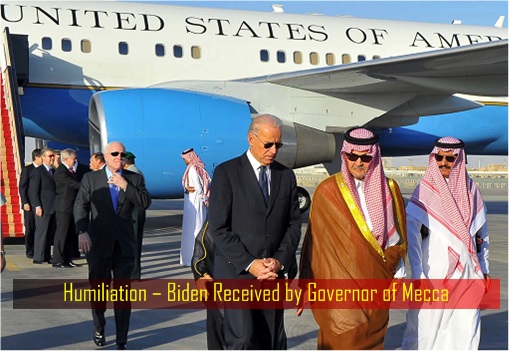
While US President Joe Biden’s administration’s relationship with Riyadh has been strained due to disagreements over human rights and energy policy, China is making significant strides in strengthening its ties with the country.
As Beijing draws closer to Saudi Arabia, the message to Washington from Riyadh is unambiguous: “The people in the Middle East [West Asia] are tired of other countries’ interference because they always come with troubles.”
Chinese President Xi Jinping received a royal welcome in Riyadh last December, marking a seismic shift in Sino-Arab relations and boosting China’s image throughout the Arab world. In contrast, US President Joe Biden’s visit to Jeddah in the summer of 2022 received a lukewarm reception. This may suggest that a recalibration of West Asian geopolitical alliances may be on the horizon.
Despite these trends, analyst Achakzai tells The Cradle that West Asia will behave similarly to the way it did during the Russian-Ukrainian conflict – even given China’s increasing business and military presence in the region and the US’s declining control over the oil-rich Arab monarchies.
“Depending on the current situation, the motives of the various states in the region may change and divide into two distinct groups: those who would support the US and those who would support a neutral position.”
China values economy over war
In the Asia-Pacific region, the US and its allies are engaged in a contentious relationship with China regarding maritime boundaries, international trade, human rights, and strategic security issues. Despite signing numerous security pacts with regional players, China appears to prioritize building and strengthening economic ties over military cooperation with Asian-Pacific states.
Due to a history of hostile confrontations and divergent geopolitical objectives, both the US and China seek to increase their military presence in the region. In response to China’s territorial claims in the South China Sea, the US has expanded its military footprint by signing commercial and defense agreements with the Asia-Pacific region.
The two nations have also been at odds over the Trans-Pacific Partnership (TPP), which many viewed as an effort to contain China’s economic and strategic influence in its own backyard. Additionally, tensions have escalated between Beijing and its neighbors, particularly over territorial disputes in the East and South China Seas.
These efforts have been emboldened by the 5-member Quadrilateral Security Dialogue (Quad), which is an informal strategic dialogue between the US, India, Japan, and Australia that seeks “to promote a free, open, and prosperous Indo-Pacific region.” According to Achakzai:
“Countries that have extensive defense agreements with the US, such as Japan, South Korea, and Australia, are most likely to help America. These nations, which have long benefited from their close connections to the US, must now contend with Chinese territorial ambitions in the region and the South China Sea. The nations having an informal security partnership with the US, such as the Philippines, are likely to back the United States in a confrontation.”
The analyst explained that Singapore, Thailand, and Malaysia are expected to remain neutral during the conflict due to their strong business and investment ties with China.
“Other countries in the Asia-Pacific region may feel obligated to support the US if China initiates the conflict. This may apply to countries like Indonesia and Vietnam, which have recently been under Chinese pressure and may need to choose a side to protect their own security,” he noted.
Why Western Sanctions Against Russia Failed
By Simes Dimitri – Sputnik – February 24, 2023
Sanctions were meant to deliver a swift and devastating blow to the Russian economy, one that would take years to recover from. Much to the dismay of Western politicians, however, not only did Russia survive the sanctions storm, but it has the potential to emerge even stronger than before.
During a speech in Poland last year, US President Joe Biden boasted that sanctions had reduced the Russian ruble to “rubble” and confidently predicted that the Russian economy was on “track to be cut in half.” French Finance Minister Bruno Le Maire went even further, declaring that the West would bring about Russia’s economic “collapse.”
“We are waging total economic and financial war on Russia,” he told a French broadcaster last March. “The economic and financial balance of power is totally in favor of the European Union, which is in the process of discovering its own economic power.”
Despite these loud promises, the Russian economy contracted by a mere 2.5 % last year – a decline considerably smaller than those experienced during the 1998 financial crisis (5.3%) and the 2008 Great Recession (7.9%). In a report published last month, the International Monetary Fund forecast that Russian economic growth would outpace that of Germany and the United Kingdom in 2023.
Nor did sanctions succeed in turning Russia into a global pariah. A recent report by the University of St.Gallen in Switzerland found that only 8.5% of European and G7 companies had divested from Russia between February and November 2022. At the same time, Russia’s trade turnover with non-Western economic powers such as China, India, Turkey, and Indonesia soared.
Earlier this month, EU foreign policy chief Josep Borrell was forced to admit that the West’s sanctions strategy was not going according to plan. “It is true that the Russian economy has not collapsed and that the GDP is not what has been forecast, and it is true that last year it got extraordinarily high revenues that came from oil and gas,” he said during a speech at the European Parliament plenary session.
How was Russia able to overcome an unprecedented sanctions blitzkrieg? To answer that question, Sputnik News spoke with economists and Russian businesspeople in industries ranging from agriculture to information technologies. They told us that Western sanctions were headed for failure from the very beginning because they were built on a distorted view of the Russian economy.
Our interlocutors emphasized that although sanctions undoubtedly created economic challenges for Russia in the short and medium term, they also presented a powerful opportunity to revive domestic industry and scientific potential, as well as establish new partnerships with Asian, Middle Eastern, Latin American, and African economies.
Failed Strategy
In the weeks and months following the start of Russia’s special military operation in Ukraine, the US and the EU rolled out some of the most expansive sanctions packages in recent memory. Western governments pressured the SWIFT global payment system into expelling several of Russia’s largest banks, barred Russian ships and airplanes from entering their ports and airspace, and imposed export controls aimed at restricting Russia’s access to various advanced technologies and key production components.
Although this sanctions barrage initially caused the Russian ruble to dip in value and inflation to spike, the shock-effect proved to be short lived. Within weeks, the ruble recovered all of its pre-conflict value and then some. Likewise, inflation reached a peak rate of 17.8% in April 2022 and then began to steadily decline, hitting 11.8% in January 2023 (a rate less than many countries in central and eastern Europe). Contrary to the expectations of many Western economists, Russia’s unemployment rate not only did not increase, but actually hit a post-Soviet record low of 3.7% in December 2022.
Despite the new financial and logistical restrictions against Russian exporters, foreign trade contacts also remained strong. Russia’s current account surplus – which measures the difference between a country’s trade outflows and inflows – reached a record high of $227.4 billion last year, an 86% increase from 2021.
Why did such unprecedented sanctions deliver such unimpressive results? Jacques Sapir, an economist at the Paris-based School for Advanced Studies in the Social Sciences, told Sputnik that the main reason was because they were based on false premises about the size and resilience of the Russian economy. A large part of the problem, he explained, was that American and European policymakers were looking at the wrong statistics.
The main metric used in the West to measure the Russian economy is nominal gross domestic product (GDP), which is calculated by simply converting its value in rubles into US dollars. Sapir argued that nominal GDP underestimated the strength of the Russian economy because it failed to account for purchasing power parity (PPP), which adjusts for differences in costs across countries. He noted that whereas Russia’s nominal GDP was comparable to Spain’s, its GDP based on PPP was roughly the same level as Germany’s.
Another key factor was the fact that the Russian economy was far less based on services than its Western counterparts. Sapir explained that although services could serve as an important source of economic growth during peacetime, they inevitably took a backseat to the manufacturing and commodities sectors during times of geopolitical turmoil. He noted that Russia still maintained a sizable industrial base and was a leading global supplier of natural gas, oil, rare earth metals, and agricultural products.
“Russia has a very specific place in the world markets and, therefore, attempting to isolate such a country would inevitably lead to an international economic catastrophe,” he said. “Unsurprisingly, a lot of countries would never agree to join efforts aimed at isolating Russia because they need trade with Russia.”
Sapir also said that the West underestimated Russia’s ability to find alternative suppliers for various types of machinery and key components used in production. He noted that although Russian imports fell substantially during the second quarter of 2022, they rebounded during the third and fourth quarters. “Russia is now importing more or less the same quantity of products that it was importing by the end of 2021,” he said.
This relatively quick recovery was due to Russia reorienting its trade flows from Europe to Asia, especially China, Sapir explained. Another important factor was that Russian companies had become fairly adept at circumventing Western sanctions with the help of counterparts in third-party countries. As a result, many European and American goods were still finding their way into the Russian market.
Rebirth of Industry
Sanctions have the potential to become a blessing in disguise for Russia, according to Konstantin Babkin, president of the Rostelmash, one of Russia’s largest agricultural equipment manufacturers.
Decades of economic integration with the West had caused Russia to sacrifice some of the industrial potential it inherited from the Soviet Union, Babkin argued. Instead of manufacturing airplanes and trucks from start to finish as it once did, Russia began to import such complex machinery from the West.
The Western sanctions imposed last year have created an urgent need for Russia to rebuild its industrial base. During a speech before the Federal Assembly on Tuesday, President Vladimir Putin declared that Russia needed to reorient its economy from selling raw materials to the West to developing its own advanced technologies and equipment.
Babkin told Sputnik that Russia possessed all the necessary conditions to support an industrial revival — immense natural resource wealth, vast swathes of available land, a market of 150 million people, and strong scientific institutions capable of training the next generation of innovators.
The main thing needed to translate Russia’s economic potential into reality is strong government support for domestic manufacturers, he said. Some of the policy measures Babkin recommended include lower interest rates and taxes, as well as new tariffs.
“Many countries have already reached the physical or spatial limits of their development – there are no more markets left to conquer, no more fields left to sow, no more opportunities for expansion. That’s why much of the modern world is experiencing such a crisis” he said. “Russia is one of the few countries, perhaps even the only country, that has plenty of room to develop further. We can grow many times over if we rely on our resources, ourselves, and our civilization.”

Sources: Public data, vedomosti.ru, forbes.ru, cbr.ru
Some Russian companies are already moving to fill newly-created niches in the domestic market. Last November, the Russian manufacturing sector experienced its largest expansion in over five years, according to a business survey by the S&P Global financial analytics firm. A surge in domestic demand was the primary driving force behind the increased output and employment.
Babkin noted that after the West imposed sanctions against Russia in 2014 over the reunification of Crimea, the share of Russian-made agricultural equipment on the domestic market jumped from 25% to 65%. He argued that the current round of sanctions could provide a similar impetus to resurrect Russian aircraft and automobile production.
“Today, the priority task in civil aviation is to launch the serial production of fully Russian-made passenger aircraft, without any foreign components, as quickly as possible” the United Air Corporation, a Russian aerospace company that is part of the Rostec state corporation, told Sputnik. The company explained that the decision of Western airliner giants Boeing and Airbus to exit the Russian market last year was forcing domestic manufacturers to not only step up aircraft production, but also start making their own engines and other key components.
For its part, the United Air Corporation plans on manufacturing 500 aircraft by 2030 to help replace Russia’s existing fleet of foreign planes, which will be gradually retired. One of its most promising projects is the MC-21, a next-generation passenger aircraft that is already in production. The main advantage of the MC-21 is its cutting-edge composite wing, which provides the plane with superior aerodynamics.
Technological Sovereignty
One of the central objectives of Western sanctions is to suffocate Russian technological innovation. When Biden unveiled the first Ukraine-related sanctions package last year, he promised that the US and its allies would impair Russia’s “ability to compete in a high-tech 21st century economy.” The technological aspect of sanctions has only become more important since then. Although Western politicians now admit that sanctions have failed to collapse the Russian economy, they still express hope that technological restrictions will stunt Russia’s progress in the long run.
That is an assumption challenged by many Russian scientists and entrepreneurs. Evgeny Nikolaev is a project manager at Health Test, a Russian company that is working to develop a machine-learning program that will help doctors to diagnose Alzheimer’s Disease in patients during the earliest stages of its development. The technology, which has no foreign analogues, is currently undergoing clinical tests at a Moscow hospital, after which it will be distributed to other medical institutions in the Russian capital.
Nikolaev said that Western sanctions have not had any meaningful impact on the project’s development, noting that all the “necessary reagents and consumables could be replaced with domestic ones or obtained through parallel importation.” At the same time, he emphasized that Russian scientists did not need foreign sponsorships in order to make breakthroughs. He noted that government institutions such as the Moscow Department of Health and the Moscow Innovation Cluster were offering the project significant support in terms of product development and practical application.
A similar argument was advanced by Valentin Makarov, president of the Russian Software Developers Association (RUSSOFT). He told Sputnik that Russia had two advantages it could rely on to keep innovating despite Western sanctions. The first was Russia’s strong scientific education, which has a legacy of excellence dating back to the Czarist-period. Additionally, Makarov argued that Russia was well positioned to build new technological partnerships with non-Western economies such as China and India.
Ironically enough, sanctions had provided Russian software and cybersecurity systems with an opportunity to show their resilience in the face of unprecedented external pressure.
“Following the start of the special military operation, we saw a manifold increase in cyber attacks against Russian systems, a ban on the use of foreign software, and the termination of support licenses for this software,“ he said. “Despite everything that happened, Russian systems continued to work as before. It turned out that giant American corporations, which dominate the global information technologies, cannot destroy the operation of these Russian systems. This showed everybody that Russia has the capacity for technological sovereignty.”
According to Makarov, the world was on the brink of a new technological order – one centered on artificial intelligence and cyber-physical systems. Instead of remaining a junior partner in the Western-led technological ecosystem, Russia needed to seize the initiative and develop its own ambitious, revolutionary projects in coordination with its allies.
One promising idea, Makarov said, was for Russia to spearhead the creation of a new Eurasian digital financial payment system. Such an initiative would not only facilitate greater regional trade, but also shield its members from Western sanctions and other forms of economic pressure.
“We cannot become leaders in the new technological order by continuing to sell oil and gas to the world market and then using those profits to buy technological systems developed by other countries,” he said. “If we do not focus on developing our own systems, in cooperation with partners from friendly countries of course, then that means we will again be dependent on someone else. Russia has a huge number of specialists capable of creating new technologies that will change the world, so we must take advantage of that.”
The West severely miscalculated the geopolitical ramifications of the war in Ukraine
The EU, and not Russia, has weakened since the start of the special military operation
By Ahmed Adel | February 24, 2023
Although many remember February 24 as the first anniversary of the war in Ukraine, Russia’s special military operation is actually the next phase of a wider conflict that began in 2014. This is a key point often overlooked because the narrative built in the West is that Russia’s intervention was an unprovoked invasion with the sole purpose of territorial expansionism. The international community, which the West incorrectly refers to itself as, has rejected this narrative. To the disappointment of Western leaders, most of the world has instead deepened their ties with Russia.
However, the “unprovoked invasion” narrative has been exposed in the West also as a fallacy. It is recalled that former German Chancellor Angela Merkel admitted in December 2022 that “the 2014 Minsk agreement was an attempt to give time to Ukraine.”
“It also used this time to become stronger as can be seen today. The Ukraine of 2014-2015 is not the modern Ukraine,” she said, adding that “it was clear to everyone” that the conflict had been put on hold, “yet this was what gave Ukraine invaluable time.”
Merkel’s statement confirmed that the Minsk Accords, a series of agreements which sought to end the Donbass war, was only intended to give the Ukrainian state more time to militarily strengthen. It also proves that the Western party of the Minsk Accords never intended to use this mechanism to find peace and address the concerns of local residents.
Therefore, the Russian intervention was not necessarily a surprise, and perhaps the West were even expecting it.
However, what was an absolute surprise for the West was the geopolitical and economic ramifications – all to the detriment of the West and to the advancement of Moscow.
It cannot be denied that sanctions had an impact on the Russian economy, but the European Union has demonstrated that it is nothing more than a political dwarf that has no autonomy from Washington. Sanctions have a limited effect on Russia given that it is a completely self-sustainable country, unlike Syria and Iran (which are also heavily sanctioned but without the capacity for self-sustainability).
Rather, the sanctions have actually accelerated the de-Dollorisation of the global economy and deepened the economic crisis in Europe.
Evidently, there was naivety in the West, as there was a false belief that Russia would capitulate to sanctions pressure. Instead, Europe is experiencing an economic crisis that has crushed the Middle Class through a cost-of-living crisis. Meanwhile, Russia has greater prospects for recovery compared to Germany and the UK.
According to a January forecast by the International Monetary Fund, Russia’s economy will grow faster than Germany’s while Britain’s will contract. This is a far cry from the eminent collapse of the Russian economy that was predicted when hundreds of international companies, such as McDonald’s and Boeing, withdrew from Russia and Russians were blocked from using Western financial institutions.
It is recalled that in March 2022, US Treasury Secretary Janet Yellen boasted that “the Russian economy will be devastated.” Eleven months after Yellen’s statement, the IMF predicts that the Russian economy will start growing again in 2023, expanding by 0.3% and then 2.1% in 2024. Although 0.3% growth is paltry, it is still surprisingly higher than Germany’s 0.1%, a phenomenal situation considering that it is Berlin imposing the sanctions, not Russia on Germany.
The UK is in an even worse situation. Its economy is expected to contract by 0.6%.
India and China are helping Russia alleviate the stress of decoupling from Western financial institutions and trade exchanges. Many experts believe that the 21st century is the “Asian Century” and expect the world’s major financial centres to shift from the West to the East. In this light, Russia’s exclusion from the West has left it with no choice but to strongly project to the East, something that India, China and other countries have enthusiastically taken advantage of.
The 20th century was dominated by the bipolar system and a short-lived unipolar system. Although the 21st century is multipolar in nature, the overwhelmingly dominant economic and military powers are expected to be the US and China, with a host of other Great Powers, such as Russia and India, fully capable of defending their own interests.
What the West does not realise is that in such a global system, it is Russia that hugely influences whether the US or China will triumph. Russia has effectively been given no choice but to pivot towards China. Future generations in the West will learn that this was a strategic blunder – and all for the illiberal sake of defending a neo-Nazi regime in Kiev.
The war in Ukraine was expected to be another advancement of “liberalism” and Western internationalism. However, what has transpired instead is the weakening of Western hegemony. The US expected most countries to fall in line and impose sanctions against Russia, however, this did not trend in Asia, the Islamic World, Africa, or Latin America.
Although the West is persistently and arrogantly defending the Kiev regime against the reality that Russia will triumph in the war, it continues to ruin its own reputation in the eyes of the actual international community by lambasting countries, such as India, for not following their orders. This will have long-term negative ramifications for the West as its influence is weakening and mistrust is deepening.
Ahmed Adel is a Cairo-based geopolitics and political economy researcher.
Putin Announces Suspension of New START Treaty, Orders New Strategic Systems Be Put on Combat Duty
Sputnik – 21.02.2023
Russia will be suspending its participation in the New Strategic Arms Reduction (New START) Treaty, President Vladimir Putin has announced.
The Russian president made the announcement during the course of a major annual address to lawmakers on Tuesday that focused on the security crisis in Ukraine and the broader global tensions between the West and Russia.
“They [the West] seek to inflict a strategic defeat on us and to creep onto our nuclear sites. In connection with this, I am forced to announce today that Russia is suspending its participation in the New START Treaty. I repeat – not exiting from the treaty, but suspending its participation,” Putin said, speaking to gathered lawmakers in Moscow during his speech to the Federal Assembly.
Putin explained that “at the start of February, the North Atlantic Alliance made a statement factually demanding that Russia ‘return to the implementation of the strategic offensive arms treaty,’ including the admission of inspections to our nuclear and defense facilities.”
“I don’t even know what to call this – some kind of theater of the absurd. We know that the West is involved directly in attempts of the Kiev regime to strike the bases of our strategic aviation,” Putin said, pointing to recent Ukrainian drone attacks on Russia’s Engels Air Base, home to part of the airborne contingent of Russia’s nuclear triad.
The drones used in these attacks were “equipped and modernized with the assistance of NATO specialists,” Putin said. “And now they want to inspect our defense facilities. In the current conditions and today’s confrontation, this simply sounds like some kind of nonsense.”
“A week ago, I signed a decree putting new ground-based strategic weapons systems on combat duty. Are they going to stick their nose in there too?” Putin asked.
The Russian president suggested that NATO’s collective statement essentially amounted to an application to join the New START Treaty, and said Moscow would only welcome such a move.
“We agree, please go ahead. Furthermore, we think that such a formulation of the issue is long overdue. After all, NATO contains not just one nuclear power – the USA. Britain and France also have nuclear arsenals, which are being developed and improved, and which are also directed against us, against Russia,” Putin said.
Slamming the US and NATO over the “hypocrisy” of their demands, Putin recalled how the Western bloc has attempted to assure Moscow that “there is no connection between issues related to strategic offensive arms and, say, the conflict in Ukraine, or other hostile actions against our country,” while at the same time seeking to “defeat” Russia militarily.
“This is either the height of hypocrisy and cynicism, or the height of stupidity. You can’t call them idiots, they are not stupid people: they want to inflict a strategic defeat on us,” the president said.
What is New START and Why Is It Important?
The New START Treaty is the last major strategic arms limitation agreement between the nuclear superpowers – Russia and the United States. The agreement, drafted in 2009 and signed by then-Russian and US Presidents Dmitry Medvedev and Barack Obama in Prague, Czech Republic in 2010, limits the two countries’ deployed arsenals of strategic weapons and nuke stockpiles, and features a series of measures aimed at increased transparency and trust, including the broadcast of telemetry data, limits to missile testing activities, and the exchange of other information.
The Trump administration threatened to let the clock run out on New START in late 2020 after withdrawing from the Intermediate-Range Nuclear Forces Treaty – a late Cold War-era pact which eliminated Soviet and US ground-based nuclear missiles in the 500-5,500 km range, in 2019. The Biden administration agreed to renew New START for five years in early 2021. Pentagon planners have repeatedly criticized the strategic treaty for its failure to account for the nuclear arsenal of China. Beijing has said that it would be happy to sign a nuclear agreement with Washington if the US reduced the size of its nuclear arsenal to China’s level.
The post-Cold War strategic security order began to be dismantled in late 2001, when the George W. Bush administration announced that it would scrap the Anti-Ballistic Missile Treaty – a landmark 1972 agreement designed to limit anti-missile defenses and thus reduce the danger of a global nuclear war. Washington quit the treaty despite proposals by Moscow at the time to establish a joint missile defense system in the Caucasus to eliminate any threats posed to the US or Europe.
‘US, Not China, Pouring Weapons Into Ukraine’, Says Chinese Foreign Ministry
By Wyatt Reed – Sputnik – 21.02.2023
With the US accusing China of looking into selling weapons to the Russian military, China’s foreign ministry says that – having pumped tens of billions in heavy weapons to Ukrainian militants – Washington is “not qualified” to lecture Beijing about international arms trafficking.
The Chinese Foreign Ministry has struck back at Washington for suggesting China is evaluating the possibility of supplying Russia with weapons, saying Monday that it’s the American government pumping weapons into the conflict zone – not China’s.
“It is the US, not China, that has been consistently pouring weapons into the battlefield,” Chinese foreign ministry spokesman Wang Wenbin said in a press briefing Monday.
Over the weekend, several high-level US officials began to suggest they had reason to believe that China was considering sending military supplies to Moscow.
US Secretary of State Antony Blinken accused China on Saturday of “considering providing lethal support to Russia” in what he labeled Moscow’s “aggression against Ukraine.” He said that if his allegation turned out to be true, it “would have serious consequences in our relationship” with China.
Biden’s ambassador to the United Nations, Linda Thomas-Greenfield, echoed the threat Sunday, telling CNN that China would be crossing a “red line” if it decided to provide Russia with lethal aid.
But Wang said Monday that the US is “not qualified” to issue such ultimatums. He told reporters that the rest of the world knows who’s really to blame for the hostilities in Ukraine, and called on the Biden administration to publicly admit that it’s fanned the flames of the ongoing conflict.
“The international community is fully aware who is calling for dialogue and striving for peace, and who is fanning the flames and stoking confrontation,” Wang said.
Unlike Washington, he noted that Beijing has been “supporting talks for peace” since the beginning of the Ukraine conflict, adding “we urge the US side to seriously reflect on the role it has played, do something to actually help de-escalate the situation and promote peace talks, and stop deflecting the blame and spreading disinformation.”
The back-and-forth comes after Wang Yi, China’s highest ranked diplomat, defended his country’s posture towards Russian military operations before an audience of European officials during Saturday’s Munich Security Conference.
“We do not add fuel to the fire, and we’re against reaping benefits from this crisis,” Wang said.
“Some forces might not want to see peace talks materialize,” Wang noted, in what was widely viewed as a thinly-veiled jab at the US government.
“They don’t care about the life and death of Ukrainians, nor the harm on Europe,” Wang suggested, adding “they might have strategic goals larger than Ukraine itself.”
Chinese report decries US hegemony
RT | February 20, 2023
The US has been abusing its hegemonic position in the world for decades to reap benefits for itself and sow rivalry and instability in other nations, a report published on Monday on the Chinese Foreign Ministry’s official website claims.
The document seeks to draw international attention “to the perils of the US practices to world peace and stability and the well-being of all peoples.” It offers examples of Washington’s purported selfishness in the areas of politics, the military, the economy, technology and culture.
For a century, the US has treated Latin America as its backyard, where those who resist the US face “political interference, military intervention and regime subversion,” the text claims. Elsewhere, it creates divisive blocs under its influence, and fosters “color revolutions” against opponents. Lately Washington has posited the false dichotomy of “democracies vs. autocracies” and arbitrarily labels nations as members of one of the camps.
The use of force has been a feature of US expansionism since its independence, the document says. Since 2001 alone, wars launched by Washington “in the name of fighting terrorism have claimed over 900,000 lives with some 335,000 of them civilians.”
The Pentagon has used an array of “appalling methods” of war, from biological weapons in Korea to depleted uranium munitions in more recent times, “causing… countless civilian casualties and lasting environmental pollution,” the piece notes.
The US government has used the dollar’s status as the global reserve currency, and its influence on the international financial system, to quash competition and slap unilateral sanctions against opponents. Washington “is basically collecting ‘seigniorage’ from around the world,” and during the Covid-19 pandemic, disrupted the global economy by injecting trillions of dollars into it, the report says.
The report accuses the US of using its status as a leading technological power to conduct electronic surveillance and espionage, including against its closest allies, as well as cyberwarfare, noting that having the leverage of big tech companies allows the US government to censor speech online and push its narratives on a global scale, while silencing critics.
The document concludes that the US should do some “soul-searching” and change its approach, as “the historical trends of peace, development, cooperation, and mutual benefit are unstoppable.”
Featured Video

ARE PATIENTS BEING PROPERLY INFORMED ABOUT OZEMPIC?
or go to
Aletho News Archives – Video-Images
New Book
Breast Cancer: Before You Consent
A new Unbekoming paperback
Lies are Unbekoming | September 18, 2026
Peter Gøtzsche reviewed every randomised mammography screening trial ever conducted for the Cochrane Collaboration. Cochrane’s headline is that, assuming a 15% mortality reduction, one woman in 2000 avoids dying of breast cancer over ten years. Ten are overdiagnosed and treated. Two hundred experience false alarms.
But that headline assumes the reduction. When Gøtzsche looked only at the trials with adequate randomisation — the higher-quality ones — the reduction disappeared. No effect on breast cancer mortality. No effect on all-cause mortality.
This is the Cochrane finding, published in the establishment’s own database of systematic reviews.
No woman being asked to consent to a mammogram this week knows it.
That is why the new Unbekoming paperback exists. … continue
Blog Roll
 Aletho News
- The Truth About the Trump Shootings with Ken Silva
- ARE PATIENTS BEING PROPERLY INFORMED ABOUT OZEMPIC?
- US lawmaker blocks $2.8 billion weapons sale to Israel: Report
- Yemeni army claims responsibility for strikes on sensitive sites in Saudi capital, Aramco facilities in Yanbu
- Iran Judiciary issues indictments against 159 US, Israeli officials for assassination of Leader, commanders
- Turkiye revokes Iranian bank license under US sanctions campaign
- US-Denmark Agreement on Greenland Is ‘PR Stunt’ Ahead of Midterms
- Araghchi: Military intervention cannot create security; coercion cannot bring peace
- Fraud Squared
- Breast Cancer: Before You Consent
- If Americans Knew
- Inside Gaza’s death trap of collapsing, bombed-out buildings
- The everyday items Israel bans from Gaza every day
- Inside the siege, the ruined buildings of Gaza – Daily Update
- Debunking The Claim That Macklemore Has A “History Of Antisemitism”
- CPJ demands release of arrested Palestinian-US journalist near Bethlehem
- Robert Kraft: The Billionaire Friend of Netanyahu Pulling The Strings Behind the Macklemore/Ed Sheeran Blow Up
- Columbia Administered Fund Gives Big Money to Pro-Israel Groups
- Deportation Case of Palestinian Activist Salah Sarsour Tests First Amendment
- ‘We Will Not Forget’: Palestinians Mark 44 Years since Sabra and Shatila
- Why do we let Zionists decide what we can and can’t say?
- No Tricks Zone
- 2025 Nature Paper Claiming Worsening Global Drought Gets RETRACTED …Heavily Flawed
- New Study: ‘Global Drought Shows No Detectable Recent Acceleration Under Climate Warming’
- Economic Masterminds: German Socialists Suggest Taxing Productivity Gains Stemming From Using AI
- The South China Sea Has Not Been Cooperating With The Climate Change Narrative
- Energy Crisis: Germany Enters Heating Season With Historically Low Gas Reserve Fill Levels
- New Study: The Antarctic Ice Sheet Gained Mass From 2020-2024 Due To Staggering Snow And Ice Accumulation
- Study: Ocean Heating Rates From Thousands Of Years Ago ‘Dwarf’ Modern Ocean Heating Rates
- Climate Extremists Target, Attack Large-Scale Power Grid Infrastructure In Germany!
- New Study: Antarctic Ice Melt Has Contributed Less Than 1 Centimeter To Sea Level Rise In The Last 30 Years
- Fear Of Debate: Alarmist German Climate Scientist Calls On Mainstream Media To Discredit Skeptic Voices
 Aletho News