“Being powerful is like being a lady. If you have to tell people you are, you aren’t,” said former UK prime minister Margaret Thatcher. From this, we know how powerless and ridiculous it is when the US tries to persuade others by repeating, “I am still a leader, and you have to believe and admit it!”
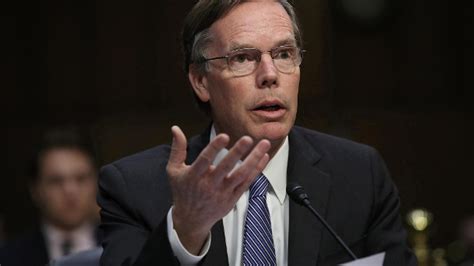
In a video released Tuesday by NBC News, Nicholas Burns, the US Ambassador to China, who spoke by video link at a US Chamber of Commerce event, said Beijing must accept that Washington is a leader in Asia. He declared that China must now understand that “the US is staying in this region – we’re the leader in this region in many ways.”
What the US politician said implies two messages. First, he seems to criticize China for not understanding US’ presence in the Asia-Pacific. Second, Burns wants Beijing to acknowledge Washington’s leadership in the region. Yet, both are far from the truth.
Washington has always had the strategic miscalculation: It believes Beijing wants to push it out of the Asia-Pacific region. But China not only recognizes US’ presence in the area, but also seeks peaceful coexistence and win-win cooperation with the US on the premise of mutual respect. What Beijing refuses is to be led by anyone else, including Washington.
Burns’ words are extremely US-centric, as they come entirely from Washington’s perspective of its regional role while ignoring the actual opinions of other Asia-Pacific nations. Such arrogance aims to satisfy the US’ strategic need for maintaining global hegemony.
“US continues to live in an alternative reality fuelled by hubris,” one tweet said, commenting on Burns’ remarks. This hits the nail on the head regarding US’ current status.
Washington has to understand that most Asia-Pacific countries do not want to be stuck in a Cold War-like confrontation again, nor do they want to see conflicts between major powers. The US’ desire to lead regional affairs and get the recognition of other countries is wishful thinking, which is completely at odds with the trend of development in Asia-Pacific.
Besides, against the backdrop of the deteriorating domestic problems and the relative decline in US’ national power, there’s also a sense of lack of confidence in Burns’ remarks: In fact, it actually sounds like a self-affirmation the US has to make.
“In the past, the US could confidently intervene in the affairs of any region and use force or coercion to maintain its leadership. But now it is increasingly incapable of acting as a leader, because Washington finds it more difficult to focus on other regions,” Zhang Tengjun, deputy director of the Department for Asia-Pacific Studies at the China Institute of International Studies, told the Global Times.
Almost one year in office, Burns has increasingly fueled the deterioration of China-US relations. As Washington’s megaphone for Beijing, the ambassador has frequently criticized China’s policies in public, including on social media. Many of his comments are damaging to US-China relations and inappropriate to his ambassadorship.
For instance, an exclusive report by the Global Times on Monday noted that Burns recently sparked discontent among the attendees of the 22nd Annual Appreciation Dinner American Chamber of Commerce when he criticized China in his address to the event.
The US Ambassador to China is the executor of US policy toward China. After taking office, Burns has been following Washington’s order on many China-related issues tightly and expressing what the White House wants him to say. Therefore, it is easy to see that Burns’ actions of fueling the fire essentially stem from the hysteria of the US’ containment policy toward China.
Over the past year, it seems that condemning China has become an instinctive reaction of any US official when dealing with China, especially in the current US political environment that promotes anti-China sentiments.
Nevertheless, politicians like Burns should understand that “pride and prejudice” toward China will only bring more danger and chaos to the region and the world. No matter how harsh they want to sound when talking about China and how assertive when talking about the US, they can never fool other countries by trying to sugarcoat US hegemony as “leadership.”
March 4, 2023
Posted by aletho |
Mainstream Media, Warmongering, Progressive Hypocrite | China, United States |
Leave a comment
BEIJING – China is increasing its defense budget to meet complex security challenges and fulfill the country’s obligations, Wang Chao, a spokesman for the first session of the 14th National People’s Congress, said on Saturday.
“The increase in defense spending is driven both by the need to respond to complex security challenges and the need to fulfill the obligations of a large country,” Wang told reporters.
The spokesman added that the scale of the military spending was also determined by the basic needs of defense construction and the level of development of the national economy.
At the same time, Wang refused to specify how much China would increase its defense spending in 2023, though adding that all the details would be set in the country’s draft budget expected to be published on Sunday.
The spokesman noted that the share of China’s defense budget as s percentage of the country’s GDP had remained largely stable and below global average figures for many years.
“The growth rate is relatively moderate and reasonable,” Wang added.
He also said that the modernization of China’s armed forces would not pose a threat to any country “but on the contrary, it will become a positive force for maintaining stability and peace in the region and around the world.”
China steadily increases its defense budget every year, although Beijing adheres to the defensive nature of its military doctrine and does not participate in wars or military conflicts. In 2022, China planned to raise its military budget by 7.1% year-on-year to 1.45 trillion yuan ($209.9 billion).
March 4, 2023
Posted by aletho |
Militarism | China |
Leave a comment
Yet another narrative reversal sees parts of the U.S. Government now saying COVID came from a Chinese lab. The HighWire reveals who kept this information from the American public from the beginning and why the same players are back at it with bird flu.
The Highwire with Del Bigtree | March 2, 2023
The great lies of COVID-19 pushed on the world by global health agencies and mainstream media are unraveling before our eyes. Del walks through the ‘10 Myths Told By Covid Experts’ published by Johns Hopkins Surgeon, Marty Makary, MD, pinpointing when and where The HighWire was brave enough to report on debunking each one, going all the way back to January of 2020.
March 4, 2023
Posted by aletho |
Deception, Science and Pseudo-Science, Video | China, Covid-19, United States |
Leave a comment
There has been renewed discussion of the origin of Covid in the media. As reported by the Wall Street Journal, the US Department of Energy has come down firmly on the side of a laboratory origin of Covid-19 from the Wuhan Institute of Virology in China. On Fox News, the former director of US National Intelligence John Ratcliffe commented: ‘The idea that Covid-19 has a natural origin has always been at odds with our intelligence . . . it is due to a lab leak. From the beginning scientists have not been able to explain why there is a furin cleavage site within the genetic make up of Covid-19 . . . This is something that happens when scientists insert a snippet of manipulated material into viruses.’
UK commentator Piers Morgan responded: ‘I think that the truth is that science, by its very nature, will evolve with facts. And so you have to give them some leeway for that . . . So I do think in the future, we’ve got to examine the science. You’ve got to listen to all ranges of opinions, and people have got to stop being cancelled on social media for raising concerns, which now look like they were absolutely right.’
US Fox News commentator Tucker Carlson went further in a 20-minute excoriation of the Biden administration’s Covid policy. Carlson wanted to know: has the administration’s policy to fund biotechnology research in China changed? (Watch Carlson here, begins at 3 minutes).
Some, including late-night talk-show host Stephen Colbert, have accused the DoE of lacking sufficient qualifications to decide on the lab leak theory, saying: ‘Stay in your lane’. (Is Colbert even vaguely qualified himself?) In fact as the authoritative Washington Post reports the DoE employed highly qualified and skilled scientists (including members of the Energy Department’s Z-Division, which since the 1960s has been involved in secretive investigations of nuclear, chemical and biological weapons threats by U.S. adversaries, including China and Russia), who undertook detailed scientific assessment of genetic evidence and classified information. After the dust of misinformation had cleared the DoE’s conclusion that there was a lab leak was inevitable.
It was the job of the FBI to investigate how the truth was being manipulated and they have also come out firmly and publicly on the side of the lab leak theory (it’s not a theory, there is overwhelming evidence). Early in 2021, a highly qualified geneticist friend wrote to me that he and many of his colleagues were sure that Covid was engineered in a lab because of its highly unusual genetic structure, but he added the codicil: please don’t mention my name. This was going on all over the world in differing forms. Some of them were verging on the corrupt.
All this information is in the public domain, but still the BBC published two dismissive articles on its home page on Wednesday. One covered the FBI announcement, but said the FBI conclusion was not backed by any evidence. The other was an explainer article entitled ‘Covid origin: Why the Wuhan lab-leak theory is so disputed‘. A more blatant attempt to muddy the waters of truth could not be imagined. The article forgot to discuss the genetic evidence which clearly points to gene-edited inserts in the virus genome.
But you might ask, why would anyone in government or science seek to hide the truth from the public? Good question. The answer possibly lies in the murky history of military involvement in genetics and the pandemic. You might recall conspiracy theories circulating since the discovery of DNA and gene editing in the 20th century. According to these ideas, military powers were supposedly going to invent weapons that would target specific ethnic groups and win wars because their genetically different opponents were all going to fall down dead, felled by a man-made virus.
In truth, all humans share so much DNA that any genetic weapon is going to affect everyone worldwide including you and me. Remember that military planners are not geneticists, but like almost everyone else on the planet, they are very susceptible to genetic fantasies. They believed wrongly that anything might be possible for genetic science. Whether their motivations were offensive or defensive was irrelevant. To counter any potential offensive weapon from the other side, they were going to have to first create possible offensive weapons, before trying to design a defensive counter. Sound familiar? Gain of function research to weaponise viruses in order to design a vaccine?
The problem we now know is that, as reported in this study, no lab is ever going to be secure. The history of recombinant DNA biotech labs contains a long list of unintended leaks and accidents. The result has been a pandemic whose final outcome still remains unknown. The military, governments, pharmaceutical companies, and scientists from a number of countries are very busy trying to hide their involvement, telling us that all this is just a natural disaster. This amounts to a giant geopolitical cover-up. The US, China, Britain and France, all of whom were involved in the creation and funding of the Wuhan Virology Laboratory, are paying for favourable comments from their media and anyone else who is corrupt enough to shill for them.
As a last resort, some people are arguing that the origin of Covid is irrelevant. It isn’t. The lab origin of Covid should bring us all together. Whether we think Covid is the main threat or the vaccine is, they both came from a biotech lab carrying out genetic experiments. We can safely forget about the geopolitical arguments explaining who was to blame: China or the USA, and instead shout loudly from the rooftops that biotech experiments have got to stop.
Research shows biotech interventions are inherently mutagenic, they have led to permanent degradation of genetic function and consequently health, as this alarming recent assessment of the Pfizer and Moderna bivalent vaccine shows (the same vaccine our government has announced it will give to everyone over 30 in New Zealand). So don’t think that by taking the latest vaccine you are helping society. The mRNA vaccines pose a danger to everyone in the world, all cultures, all races, religious or agnostic, left or right. We share DNA and we have a common interest to protect ourselves from scientists, media, and governments who are putting financial interests and political objectives ahead of the safety of the entire 8billion population of the world.
We are going through an unprecedented societal upheaval. It increasingly appears to be man-made. The repeated political mantra ‘Trust the Science’ has proven to be mere political demagoguery, devoid of real scientific content. Keeping a steady head, carefully shifting through the evidence, and applying caution are needed now. The evidence is out: with confidence we know that Covid and Covid vaccines came from laboratories whose operation is inherently dangerous. They have already killed millions, and want to be given carte blanche to do whatever they wish. Time to call a halt. For more information go to https://GLOBE.GLOBAL
March 3, 2023
Posted by aletho |
Deception, Science and Pseudo-Science, Timeless or most popular, War Crimes | BBC, China, Covid-19, COVID-19 Vaccine, France, UK, United States |
Leave a comment
BEIJING – China has demanded that the United States stop all military contacts with Taiwan and stop arms sales to the island, Chinese Defense Ministry spokesman Tan Kefei said on Friday.
“China demands that the United States stop selling arms to Taiwan and military contacts with Taipei, stop interfering in the Taiwan issue and aggravate tensions in the Taiwan Strait,” Tan said.
Beijing also made a representation to Washington on the approval of a possible deal to sell Taiwan ammunition for US-made F-16 fighter jets and equipment worth more than $600 million, the official added.
“China strongly opposes the arms sale to Taiwan by the United States. US actions are a gross interference in China’s internal affairs, seriously violate the ‘one China’ principle and the provisions of the three joint US-Chinese communiques, cause serious damage to China’s sovereignty and security interests, and pose a serious threat to peace and stability in the Taiwan Strait,” Tan said, adding that China has already made a representation to the US side on this issue.
The Chinese military is always ready to safeguard its national sovereignty and territorial integrity, the official concluded.
Earlier in the week, the Pentagon’s Defense Security Cooperation Agency (DSCA) said the US State Department has granted preliminary approval for a $619 million sale of F-16 munitions and related equipment to Taiwan.
March 3, 2023
Posted by aletho |
Militarism | China, United States |
Leave a comment
Washington and NATO have rapidly escalated their war with Russia. The White House appears to have blown up the Nord Stream pipelines in a blatant act of war against Russia, not to mention Germany and other European allies.
The CIA is reportedly conducting sabotage attacks on Russian infrastructure and the Pentagon has tacitly endorsed Kiev’s drone strikes hundreds of miles deep inside the Russian mainland.
Along with an assortment of NATO commandos, U.S. troops, CIA, and Special Operations forces are on the ground in Ukraine as well. The White House has greenlit the transfer of Bradley armored fighting vehicles, longer range rockets, and M1 Abrams battle tanks to the battlefield.
Kiev is demanding hundreds of tanks. Concurrently, multiple European NATO members are sending their own main battle tanks to Ukraine, and a U.S. backed assault on Crimea is expected soon.
While Ukrainian President Volodymyr Zelensky goads London, Berlin, and Paris into handing over fighter jets, his country has already suffered more than 100,000 casualties, hundreds of Ukrainian troops are dying every day just over a battle for the eastern Donetsk city of Bakhmut.
In recent months, officials in Kiev have explicitly stated that Ukraine—a “de facto” NATO member—is “shedding blood” for a “NATO mission.” The goal is eliminating Moscow as a “threat” to the alliance by weakening, destabilizing, and disintegrating Russia.
In the process, Ukraine, the human battering ram, is being destroyed. But in the words of Madeline Albright, from the Empire’s perspective, “the price is worth it.”
Russia must be crippled before the Pentagon launches its impending war against China, “the big one,” which top military commanders and four star generals now warn will take place in only a few years.
In the meantime, experts and analysts continue to point out—along with even The New York Times—that we are systematically pushing “the United States and its NATO allies closer to direct conflict with Russia.”
What is the justification for this seemingly perpetual escalation? The U.S. war machine reasons that since Russian President Vladimir Putin has not yet ordered strikes on NATO territory or pushed the nuclear button, Washington and its NATO vassals can freely provide Kiev with increasingly advanced weapons and even support assaults against the Crimean Peninsula as well as the Russian homeland itself.
The aforementioned tanks will likely be used for the potential attacks on Crimea (read: Russian territory) currently being considered by the White House. Such an escalation could swiftly lead to World War III and a nuclear exchange.
Incidentally, the Bulletin of Atomic Scientists warns nuclear war is now a more likely possibility than at any time during the Cold War. In making their case for turning the clock to 90 seconds to midnight—for the first time—the group partly refers to the refusal of the United States, Ukraine, and its allies to come to the negotiating table.
BAS president and CEO Rachel Bronson said in a statement following the decision that the “U.S. government, its NATO allies and Ukraine have a multitude of channels for dialogue; we urge leaders to explore all of them to their fullest ability to turn back the clock.”
Last fall, Chairman of the Joint Chiefs of Staff Gen. Mark Milley was advocating a negotiated settlement between Kiev and Moscow. However, he was all but vetoed by the so-called diplomats in Antony Blinken’s State Department.
Former Israeli Prime Minister Naftali Bennett recently discussed how he attempted to mediate a peace deal with Russia and Ukraine in early March 2022. According to Bennett, both sides made major concessions and “there was a good chance of reaching a ceasefire.” He has now revealed the effort was overruled and ultimately “blocked” by President Joe Biden and former UK Prime Minister Boris Johnson.
According to current and former U.S. officials, that same month, Turkish brokered talks in Istanbul between the warring sides also established a workable foundation for a future settlement. The whole enterprise was squashed again by Johnson, acting on behalf of the “collective West.”
Even when U.S. military leadership expresses uneasiness about the war’s trajectory, the provision of heavy western-made tanks, or the sheer inability of Ukrainian forces to regain all the territory Russia has captured, the escalations continue anyway.
The hawkish Secretary General of NATO himself has said “I fear that the war in Ukraine will get out of control, and spread into a major war between NATO and Russia.”
Likewise, UN Secretary-General Antonio Guterres has warned “I fear the world is not sleepwalking into a wider war. I fear it is doing so with its eyes wide open.”
The American people must draw red lines now and stop their out of control ruling class waging wars against nuclear armed powers. As Roger Waters says, this is not a drill.
Our fellow countrymen have become dangerously desensitized to the thought of direct conflict with both Russia and China.
Tragically, our people have been numb for a long time. They have yet to truly reckon with our government’s mass murder marathon of the last 20 years including one million dead Iraqis, half a million dead Syrians, as well as the hundreds of thousands killed in Afghanistan, Libya, Pakistan, Somalia, and Yemen.
Designedly, our enemies in Washington need us to be numb to the inevitable results of their reckless, murderous policies.
The hawks will next try the same proxy war strategy in Taiwan, we will not get another chance to draw red lines.
We must demand all military aid be terminated, and that the White House and the State Department be forced to support or at least not interfere with negotiations.
We must demand an immediate end to this war now.
Connor Freeman is the assistant editor and a writer at the Libertarian Institute, primarily covering foreign policy. He is a co-host on Conflicts of Interest.
March 2, 2023
Posted by aletho |
Militarism | China, CIA, NATO, Russia, United States |
Leave a comment
By Ahmed Adel | March 2, 2023
A South Korean supply of weapons to Ukraine could lead to Russia and China increasing their cooperation with North Korea. It is for this reason that Seoul is in no hurry to make a decision to support Ukraine, even if Washington and NATO continue to pile on pressure.
In February, it was reported that the US asked to purchase more artillery ammunition from South Korea. According to government sources cited by JoongAng Ilbo, Washington requested Seoul for artillery ammunition and is currently deliberating the matter.
It is recalled that the US bought 100,000 rounds of 155-millimetre howitzer artillery shells from South Korea to send to Ukraine in November. South Korea’s Defence Ministry said at the time that the ammunition purchase was with “the premise that the United States is the end user” so that they could replenish their depleted stockpiles.
The US wants South Korea to maintain distance from Russia and China. However, Russia and China are South Korea’s neighbours, not an ocean length away like the continental USA. This obviously factors into Seoul’s strategic thinking and will impact its decision on whether to support Ukraine, particularly as both countries could use any provocation as a pretext to boost cooperation with North Korea.
Although it might seemingly appear that Beijing has little interest in South Korea’s position relating to a far-off conflict, Seoul’s decision will signal just how easily it will capitulate to US interests. China and Russia will certainly be observing how Seoul responds to pressure from the US and from there make a decision on whether to boost their ties with North Korea.
Regarding the latest US request, a South Korean official, in speaking with Joong Ang Ilbo, said: “there is no change to our stance of not supplying lethal military aid to Ukraine.”
Ukrainian President Volodymyr Zelensky said he hopes for South Korean military support when responding to a question from a JTBC reporter at a press conference in Kiev on February 24, the one-year anniversary of the Russian military operation.
“We view weapons supplies to us positively,” Zelensky said, adding that he hopes South Korea “will find an opportunity to help Ukraine.”
It is recalled that Zelensky addressed South Korea’s National Assembly via video livestream in April 2022 and begged for anti-aircraft weapons. There was an evident lack of interest in Zelensky’s speech as only about 60 of the 299 sitting lawmakers were present during the address.
With South Korean lawmakers evidently not interested in sending weapons to Ukraine, a position that has been maintained by the government, pressure has been sustained by the US so that this policy can change.
Adding to this squeeze, NATO Secretary General Jens Stoltenberg called on South Korea to “step up” its military support to Ukraine during his January visit to the Asian country. There, Stoltenberg had the audacity to cite the example of several NATO member states that have revised their policies against exporting weapons to Ukraine. Stoltenberg evidently forgot that South Korea is not a NATO member, or perhaps even the very fact that South Korea is a Pacific country, and not an Atlantic one.
For now, Seoul’s support to Ukraine is not what NATO and the US are expecting. South Korea has only provided humanitarian aid, which, while helpful for citizens, does nothing to alleviate Ukraine’s lack of weapons and ammunition.
President Yoon Suk Yeol has set out to make South Korea a “global pivotal state,” and it is for this reason that the West is piling pressure on South Korea to make a firm stance on the Russia-Ukraine war. Due to South Korea’s rapid economic development and ambitions to grow its prominence on the international stage, the West wants Seoul to make more substantial contributions to global issues, but obviously in accordance to Western interests.
Although there is a likelihood that South Korea’s leaders would like to conform to Western demands, reality dictates that it must consider the consequences its actions can have, particularly in relation to North Korea, China, and Russia. It cannot be overlooked that all three countries are armed with nuclear weapons, with the North Korean nuclear issue being the overriding concern, at least from Seoul’s perspective.
This suggests that although South Korea wants to be a “global pivotal state” and “step up” as a foreign policy actor, as Yoon said, it will be difficult to achieve so long as most of its attention and resources are dedicated to the unresolved war in Korea. Given that the Korean War has not reached a peaceful resolution as only an Armistice Agreement was signed in 1953, South Korea must seriously consider how its actions against Russia could lead to closer ties between Moscow and Pyongyang, and how it could be perceived by China.
Ahmed Adel is a Cairo-based geopolitics and political economy researcher.
March 2, 2023
Posted by aletho |
Militarism | China, Korea, Russia, United States |
Leave a comment
As an economic expert, Renuka Sane’s heart might presumably be in the right place, but her suggestion to decouple from Russia is counterproductive from the perspective of India’s grand strategic interests. By following her well-intended advice, India would be abandoning its masterful balancing act between key players in the New Cold War that’s responsible for its rapid rise as a globally significant Great Power over the past year. It would also be voluntarily submitting itself to vassal status vis-à-vis the US-led West’s Golden Billion.
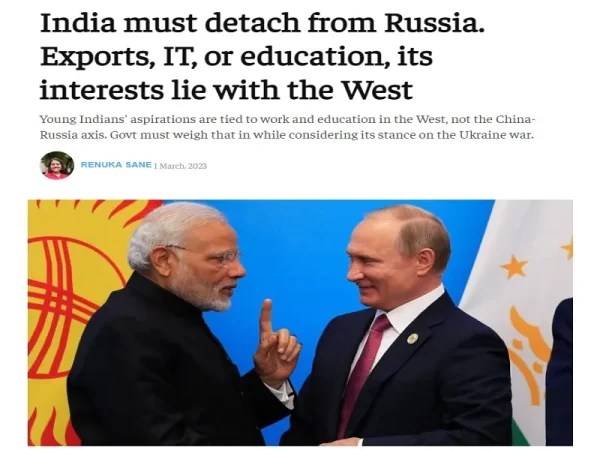
The Print, a popular Indian online media outlet, published an op-ed by Renuka Sane on Wednesday urging her country to decouple from Russia in order to please its Western partners. Titled “India must detach from Russia. Exports, IT, or education, its interests lie with the West”, the research director at Trustbridge, which works on improving the rule of law for better economic outcomes for India, shared plenty of details about Indian-Western economic, financial, and tech ties in order to make her case.
There’s no disputing the fact that these abovementioned relationships are incredibly important for India and far outweigh related ties with Russia. The problem, however, is the innuendo that pervades her text whereby she appears to regularly hint that her country’s Western partners might employ “state coercion” against it in response to Delhi’s defiance of their demand to distance itself from Moscow. The first such example of this is present in the second paragraph of her piece.
Sane writes that “State coercion limits engagement between individuals in two countries. Governments make such decisions based on a balance of economic interests and foreign policy. One arena where this plays out is visa diplomacy. Denial of visas is a lever of international relations and often used as a tool to influence actions by another State.” She then adds near the end of that paragraph that “Trade agreements may sometimes be driven primarily by geopolitical and strategic reasons.”
Sane continues this trend into the third paragraph where she opines that “The energy, support, and prioritisation for all these [Indian-US tech initiatives] on the part of the two governments are shaped by their security environment.” This part can be interpreted as her hinting that the US’ displeasure with the Russian dimension of India’s foreign policy could have consequences for bilateral cooperation, especially in the tech sphere.
Reinforcing this point, the fourth paragraph includes the following insight: “Information Technology is now India’s biggest industry, and the future of the Indian economy is tied to success in this sector. For further doubling of services exports, support and cooperation from Western governments is important.” Sane then adds at the end of the sixth paragraph that “India’s approach to the Ukraine war will shape the extent to which Western governments choose to support India’s services exports growth targets.”
The last two paragraphs more directly convey the implied purpose behind her latest op-ed. This is evidenced by her warning that “If global firms want to exit China on the grounds that it is an authoritarian country hostile to the West, then it is in India’s interest to look ‘un-China’ in the eyes of the world. Our equation and policies vis-a-vis Russia may shape the attitude of these global corporate players.”
Sane then ends her piece on the following ominous note: “India’s economic interests lie with the West, and the latter is extremely worried about Russia’s invasion of Ukraine.” Putting everything together and keeping in mind the excerpts that were shared, there’s little doubt that she’s concerned that the West – particularly the US – might punish India for its independent foreign policy towards Russia through economic, financial, and/or tech means, ergo her innuendo that it should ditch Moscow.
As an economic expert, her heart might presumably be in the right place, but her suggestion is counterproductive from the perspective of India’s grand strategic interests. By following her well-intended advice, India would be abandoning its masterful balancing act between key players in the New Cold War that’s responsible for its rapid rise as a globally significant Great Power over the past year. It would also be voluntarily submitting itself to vassal status vis-à-vis the US-led West’s Golden Billion.
India’s hard-earned strategic autonomy would be surrendered in exchange for literally nothing at all since it’s highly unlikely that her implied scenario of that de facto New Cold War bloc punishing her country through the related means that she warned about will ever come to pass. This South Asian Great Power is simply much too important to the Golden Billion for the latter to unilaterally decouple itself from the former for five reasons that will now be summarized.
First, India’s labor and market potentials are too large for the West to ignore, which directly segues into the second point of them envisaging that country functioning as a reliable re-shoring location for gradually reducing their presently disproportionate dependence on Chinese-based supply chains. Third, their support for India’s continued economic growth enhances its comprehensive capabilities to manage China’s rise, which aligns with their de facto New Cold War bloc’s geostrategic interests.
Fourth, no other country has anywhere near the previously mentioned characteristics that India has, meaning that there’s no viable alternative for the West with respect to those related opportunities in the event that they decide to decouple themselves from it as punishment for its foreign policy. And finally, the worst-case scenario that they want to avoid at all costs is pushing India into considering the “Chindia” scenario of combining its potential with China and jointly challenging the West.
That last-mentioned scenario is only foreseeable in the event that the West’s liberal–globalist elite succeed in punishing India for its foreign policy through economic and other means of the sort that Color Revolution mastermind George Soros implied last month are credibly in the cards. His de facto declaration of Hybrid War against India during the Munich Security Conference was alarming, but his more pragmatic and non-ideological peers might still rein him in and prevent this from materializing.
If they can’t, then they risk pushing India into seriously considering synergizing its economic, financial, and tech potential with China, which would deal a deathblow to Western dominance. In any case, this is a choice for the West itself to make and India shouldn’t voluntarily subjugate itself to the Golden Billion’s foreign policy demands out of desperation to avert the scenario of it being punished by them like Sane appears to be strongly suggesting throughout her piece.
Rather, India should maintain its multi-alignment between all key players, but never shy away from signaling to everyone that it always has backup plans in the event that any of them unilaterally decides to worsen their relations for purely zero-sum political reasons. There’s no indication that the West as a whole is seriously considering punishing India for its ties with Russia, Soros’ de facto declaration of Hybrid War against it notwithstanding, but they should still know what would happen if they do.
March 1, 2023
Posted by aletho |
Economics | China, India, United States |
Leave a comment
Bloomberg’s points in support of this observation are purely economic and overlook the strategic dimension of Russia’s discounted oil exports to India, which will be explained in the present piece.
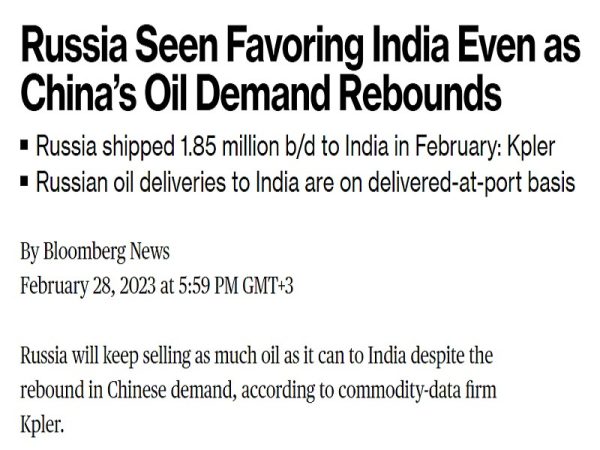
Bloomberg published a piece on Tuesday about how “Russia Seen Favoring India Even as China’s Oil Demand Rebounds”, which cites lead crude analyst Viktor Katona from commodity-data firm Kpler. According to him, “While China could ‘buy literally the entire Russian oil exports’ as it abandons Covid-zero policies, Russia will want to keep the Indian market because it is more lucrative and gives its crude sellers greater control.”
Katona is also quoted as adding that “Chinese refiners may want to buy more Russian crude this year, but they also have the capacity to do their own shipping. That would deprive Moscow of income from the ‘parallel gray fleet’ of tankers it has established to deliver crude to India.” While these are all valid points in support of his prediction, they’re purely economic and overlook the strategic dimension of Russia’s discounted oil exports to India, which will now be explained.
First, India’s unprecedentd scaling of Russian oil imports over the past year since the start of the latter’s special operation preemptively averted Moscow’s potentially disproportionate dependence on China and continues to do so into the present.
Second, the Kremlin will never forget the aforementioned strategic favor that India did for Russia at its most sensitive moment in decades, hence why it’s inclined to keep up the pace of its discounted exports to that country as a way of thanking it for this.
Third, the Kremlin is cognizant of the fact that there must be tangible benefits for India in continuing to defy Western pressure upon it to dump Russia, so keeping up the pace of oil exports to it incentivizes India to continue its pragmatic policy of principled neutrality towards the Ukrainian Conflict.
Fourth, their newfound energy relations also served Russia’s grand strategic goal of accelerating India’s rise as a globally significant Great Power.
That last-mentioned outcome advances the global systemic transition’s ongoing evolution towards tripolarity ahead of its final form of more complex multipolarity (“multiplexity”), which serves both of their interests. And finally, the larger dynamics connected to the aforesaid development is that it helps break the Sino-American bi-multipolar superpower duopoly that previously characterized International Relations, thus greatly enhancing Russia and India’s strategic autonomy in the New Cold War.
Altogether, these strategic motivations ensure that Russia won’t increase oil exports to China at the expense of the level at which it’s presently supplying India. Observers should always keep them in mind since they prove that the Russian-Indian Strategic Partnership is premised on their shared goal of accelerating the global systemic transition and not on deriving opportunistic economic benefits like Bloomberg implied is supposedly the case when it comes to their current energy ties.
March 1, 2023
Posted by aletho |
Economics | China, India, Russia |
Leave a comment
“Appetites of the autocrat cannot be appeased. They must be opposed. Autocrats only understand one word: “No.” “No.” “No.” (Applause.). “No, you will not take my country.” “No, you will not take my freedom.” “No, you will not take my future … A dictator bent on rebuilding an empire will never be able to ease [erase] the people’s love of liberty. Brutality will never grind down the will of the free. And Ukraine — Ukraine will never be a victory for Russia. Never”. (Applause.)
“Stand with us. We will stand with you. Let us move forward … with an abiding commitment to be allies not of darkness, but of light. Not of oppression, but of liberation. Not of captivity, but, yes, of freedom”.
Biden’s speech at Warsaw, complete with the lighting effects and dramatic backdrop reminiscent of his Liberty Hall speech in which he sought to portray his own domestic MAGA opposition as a grave security threat to America, again resorts to radical Manicheanism to depict (this time) Russia, (the external counterpoint to the related U.S. MAGA threat), as the foundation for the epic battle between light and the forces of darkness. The eternal struggle that persists – that must be fought endlessly and won crushingly.
Again, as with his Liberty Hall speech, Biden offered no concrete plan. Here in Warsaw, with the sands of time running out on his Ukraine ‘project’, and with U.S. ‘Realists’ and China ‘hawks’ gaining more traction at home, Biden elevated the struggle from the literal to the metaphysical plane.
By so doing, he is trying to cement America’s deep-seated missionary ethos to a ‘forever’ cosmic war against Russian ‘evil’. He hopes to tie the American ruling class to the metaphysical struggle for the ‘light’. Should Biden continue in office, he hopes by this means, both to ‘define’ himself, and to set this overarching global struggle as something binding Americans, for the period ahead.
Simply put, his metaphysical framing is intended to trump those Realists calling for policy change.
Manichaeism is nothing new – it is an ancient cult with deep roots in Latin Christianity (and likely, Biden at least partially subscribes to seeing Putin as the Demiurge, the ‘dark’ anti-God).
So will this work? Well, this is the struggle now playing out in U.S. politics. At the upper level, the elites are more concerned with power and money than metaphysics – so, Biden’s attempt to transcend the latter and assemble an army “not of darkness but of light; not of oppression, but of liberation; not of captivity, but, yes, of freedom”, more likely will be regarded as a reflection of Biden’s derangement syndrome – his detachment from reality; his kookiness, in other words.
If many of the overlap establishments (the ‘Uniparty’) want this war, it will not be for virtuousness, but for the enrichment of the Military Industrial Complex. If the latter élites are veering away, it is because they think the MIC needs time to refurbish –and to restock – so as to take on China.
“Democracies of the world will stand guard over freedom today, tomorrow, and forever … That’s what Americans are and that’s what Americans do”, Biden said.
But the political landscape is no longer a Team Biden monopoly. Trump responded: “World War III has never been closer”; and he laid the blame on “all the warmongers and ‘America Last’ globalists in the Deep State, the Pentagon, the State Department and the national security industrial complex”. The former president singled out Victoria Nuland in particular who, he said, was “obsessed with pushing Ukraine towards NATO”.
Florida Governor DeSantis too, insists that the Biden administration has “effectively [given Kiev] a blank check with no clear strategic objective identified”. “I don’t think that it’s in our interest to be getting into a proxy war … over things like the [Ukrainian] borderlands or over Crimea,” DeSantis said.
Republican Senator Hawley a week ago gave an reflective address to the Heritage Foundation:
“It’s hard to challenge the ‘Uniparty’: They’ve gotten very good at telling their favourite story. That’s why anyone who questions them gets called “anti-American” or “Vladimir Putin’s puppet” from a hundred different quarters”.
“But today, I want to tell you something else. I want to tell the truth. And the truth is that Americans have been sold a bill of goods. Our current foreign policy isn’t working”. It’s falling apart at the seams, with the ‘Uniparty’ doing its level best to patch it together by cutting blank checks to other countries”. Simply said: “we’re over-committed, caught in the grip of an ideology of liberal empire”.
Is this enough to ‘turn the worm’? Or, to bring a senior Deep State grandee to Biden’s office to whisper: ‘Remember what happened to Nixon?’ ‘Time for you to let go of Zelensky; (such a pity should Hunter end in jail…!)’.
There is however, another aspect to Biden’s resort to metaphysical Manichaeism that brings real, palpable consequence. Again, not new. Rather, a case of old demons re-surfacing. Here was the Estonian PM, Kaja Kallas, at the Munich Security Conference, saying that ‘NATO countries must take control of Moscow and forcibly rewrite the mentality of Russian citizens’: “The entire population of Russia should be re-educated to root out any traces of imperialistic dreams’ – claiming that absent a mandated rehabilitation, “history will repeat itself” and Europe will never be safe.
German FM, Annalena Baerbock, similarly warned the 90% of the world who have not taken the U.S./EU side:
“Neutrality is not an option, because then you are standing on the side of the aggressor … take a side, a side for peace, a side for Ukraine, a side for the humanitarian international law, and these times this means also delivering ammunition so Ukraine can defend itself”.
Yes, alongside this European Manichaeism, the edging towards a new racism can be espied: an ancient rhizome that has one tendril long burrowed into radical Ukrainian nationalism and with other tendrils coiling through mainstream EU structures, as the Euro-Élites patiently debate whether Russia was insufficiently ‘pacified’ after WW2, or whether more radical ‘rehab’ is required.
The rise of this class who regard themselves as credentialled to decide whether Russian culture must be cancelled – and ‘re-wired’ – is a particularly pernicious dynamic in global politics. It has been getting worse both in the U.S. and Europe, as its culture-war leaches out into geo-politics. This sense of superiority and impunity, in itself, provokes increased tensions and the risk of war.
Wolfgang Streeck, Emeritus Director of the Max Planck Institute for the Study of Societies in Cologne, Germany, was asked for the meaning of Chancellor Scholtz’s ‘German Zeitenwende’ (turning point). He responded:
“The Zeitenwende speech was a response to intensified pressure … for Germany to fall in line with the foreign policy of the U.S. – and, in particular, with that of the Biden administration. What is clear is that Scholz’s Zeitenwende entails a promise, above all to the United States, that Germany will from now on, unlike in the past, act in line with a view of the world as divided between the West – and an evil empire, or better: several evil empires, from Russia to China to Iran…”.
(Nota Bene: This is pure Leo Strauss, channelling Carl Schmitt’s earlier explicit German Manichaeism.)
Streeck continues:
“Between [Germany and the U.S.] – and the various evil empires: Peace is possible, only temporarily and intermittently, and only as long as we enjoy military superiority. In principle, we and they are always at each other’s throats. Real peace will require regime change making an evil empire part of our virtuous one – as a result of its conversion to ‘our values’. It is legitimate to use all its political, economic, and military means to bring such conversion about.
“After the Zeitenwende, wars will always be around the corner and we must be prepared for them. What should help is that a virtuous empire’s “value-driven” or “feminist foreign policy” (Baerbock) fights only just wars – as wars against evil cannot be unjust. The underlying world view here is not social-Darwinist, history being a battle for the “survival of the fittest“, but Manichaean, in which history is a relentless struggle between good and bad, in which the forces of virtue must do their utmost to prevail over those of evil. Before they have won, there can be no real peace, only cease-fires for tactical reasons. For real peace we, the forces of virtue, must prepare for war.
“There is a strong and a weak version of Zeitenwende rhetoric. The strong version implies that the world was always like this: ontologically Manichaean. Those who in the past had a different view were either feeble-minded fools, cowards who all-too-willingly let themselves be deceived by enemy propaganda, or traitors. This essentially coincides with the world view of the Clinton wing of the Democratic Party in the United States.
“The weak version, the one Scholtz obviously prefers, is that the world has recently changed: while in the past it allowed for peaceful coexistence between regimes and countries with different interests or ‘identities’ – so that life in peace could be preferred over victory in war – now the enemy has become so evil that there is no moral alternative to defeating him, cost it what it may.
“Today, American messianism seems to have migrated to Europe. At the same time, Bob Dylan is right. And times continue to be a’changing. How long the German government can remain as subservient to the United States as it has now promised to be is an open question – considering the risks that come with Germany’s territorial closeness to the Ukrainian battlefield – a risk not shared by the U.S.. There is also pressure from France for Germany to become more European and less transatlantic in outlook, and this may, with time, have an impact. Furthermore, it is likely that the U.S. at some point, will try to “Europeanise” the war and bow out, as they tried to “Vietnamise” the Vietnam war in the 1970s – hoping that post-Zeitenwende Germany can take the burden of sponsoring their proxy war from them.
“As for Europe, the United States may not object to Germany, Poland, and others continuing to help the Ukrainian government pursue its dream of a final victory over Russia, at their own cost and risk. With Germany and the EU having turned their political judgment over to Zelenskiy and Biden, and all serious discussion of the aims of the war – the terms of a settlement – being de facto precluded, this is quite a frightening prospect”.
If Streeck’s analysis is correct, the Bidenesque ideology now gripping the upper reaches of Europe suggests that the EU’s conversion to Zeitenwende makes any future relationship with Russia nigh impossible. The conviction this class has of itself as the global future, and of being on the ‘right side of history’, whereas ‘others’ (Russia and the ‘autocrats’) represent only that dark side to history, effectively forecloses on mediation. Mediation with ‘evil’ is a tautology.
The reality is that the EU is gripped by the attempt to impose a ‘cultural revolution’ – in the sense that broad citizen conformity to its cultural norms and ‘emergencies’ is not enough. But rather, it is its’ thought-processes that have to be fully reflected in modes of thinking such that every citizen’s acts and thoughts reflect EU ‘right thinking’.
We see this with the war party’s poster girl, Annalena Baerbock’s, lecturing non-aligned countries that there is no space for neutrality when it comes to Ukraine: ‘You are ‘either with us or against us’; and if the former, then GIVE U.S. AMMO!’.
Well, the cultural revolution already is reversing. Today, the Civilisational States (Russia, China, Iran, etc. and link) see the future as theirs and view the woke globalists – and their financialised economic structures – as passé. This reversal increasingly is evident in the popular war in the U.S., but not in Europe.
But can the EU change? – since all the bridges by which it might reconnect to the future have long since been burned down. In essence, the EU is a steam-roller ‘offensive’ ever incrementally moving towards ‘more Europe’.
Change ultimately will come to the EU as a result of a clash of interests, factiousness, and possibly a big political implosion or two – but above all by events on the ground in Ukraine as the Russian offensive proceeds.
Reality has been so far exorcised from the Credentialled Class ‘bubble’. It is not clear how the latter will react to having their ‘Balloon’ popped. Already, we see signs of incipient hysteria.
But the bottom line is this: When the U.S. begins its pivot away from Ukraine, and looks fully to Europeanise the war, the political class won’t be seen ‘for the dust’. The latter will soon find that for all its florid language of fighting on behalf of the ‘light’, the number of Europeans willing to die so that Sevastopol can become Ukrainian will be few indeed. Baerbock will find herself alone, as the rest of world already has shifted across to Russia (see here), ignoring her taunts.
February 28, 2023
Posted by aletho |
Russophobia, Timeless or most popular | China, European Union, Germany, Russia, Ukraine, United States |
Leave a comment
By Lucas Leiroz | February 28, 2023
On the first anniversary of the Russian special military operation in Ukraine, China presented a peace plan, aimed at re-establishing diplomacy and bilateral negotiations. Consisting of twelve points, the proposal reflects the stance of neutrality of the Chinese government, which has refused to support anti-Russian resolutions at the UN, maintaining a strong direct dialogue with Moscow which allows it to develop more realistic proposals, unlike the Western unilateral demands of Russia’s retreat. However, the West does not seem interested in peace, having immediately rejected Beijing’s project.
Beijing calls for an end to hostilities and for the two parties to return to peace talks immediately. Defense of civilians and prisoners of war (POWs) is also a central topic of the project, as well as the safety and stability of the nuclear power plants. In addition, Beijing also advocates the banning of all unilateral sanctions, thus enabling the resumption of economic cooperation and the possibility of a rapid reconstruction of the zones affected by the conflict.
The points of the proposal are: 1. Respecting the sovereignty of all countries; 2. Abandon the Cold War mentality; 3. Ceasing hostilities; 4. Resuming peace talks; 5. Resolving the humanitarian crisis; 6. Protecting civilians and prisoners of war (POWs); 7. Keeping nuclear power plants safe; 8. Reducing strategic risks; 9. Facilitating grain exports; 10. Stopping unilateral sanctions; 11. Keeping industrial and supply chains stable; 12. Promoting post-conflict reconstruction.
As we can see, China proposes a broad diplomatic platform, indicating essential topics for achieving any peaceful solution to the conflict. It is not possible to point out any biased aspect to either side during the analysis of the proposal. These are points that, despite the proximity between Russia and China, reveal a true position of neutrality, seeking to meet, as much as possible, the interests of both sides.
However, as expected, the plan did not please Western governments, which rejected the measure without even establishing forums for prior discussion. According to several Western politicians and experts, the Chinese objective was simply to propose a “pro-Russian peace”, ignoring Ukraine and the Ukrainian people.
For example, according to Clayton Allen and Anna Ashton, analysts linked to the Eurasia Group, a consulting agency and think tank that advises several Western governments, the Chinese twelve points are biased in favor of Moscow and echo the “Russian justifications for the invasion”.
“Although several of the 12 points revealed Chinese concerns over actions primarily associated with Russia, it continued to echo Russia’s justifications for invasion and can largely be framed by Russia as supporting Moscow’s positions (…) China’s approach suggests that they are walking a diplomatic tightrope of strengthening ties to Russia – a key geostrategic ally and counterbalance to the West – while avoiding a position that is seen as openly hostile to Western aims”, they said.
This assessment seems extremely exaggerated. Proposing peace means seeking the best solution for both sides, but obviously also involves meeting the interests of the winning side, which, in this case, is the Russian one. The fact that Moscow seems to “benefit” from this plan is due to the evident reality that Russian troops have an advantage on the battlefield and it would be absolutely unrealistic to think of “peace” seeking to fulfill the Ukrainian objective of withdrawing Russian forces from the liberated regions. What Ukraine and the West understand by “peace” is the recapture of Russian territories, including Crimea, which obviously will not be accepted.
However, worse than that, NATO members and allies not only refused to consider the proposals but began to spread rumors about a possible Chinese intention to send weapons to Russia. According to the Western narrative, the Chinese peace project was a mere excuse to advance cooperation with Moscow and boost bilateral military relations, with plans to supply Russia with weapons in case of rejection of the proposal.
Beijing has denied the allegations, calling them “disinformation”, but at the same time Chinese officials seem aware of the danger caused by Western bellicosity. In a recent statement, Mao Ning, the spokesperson for the Chinese Foreign Ministry, informed that the Chinese attitude towards Ukraine is completely peaceful, but recalled that while supplying the Kiev regime with weapons, Washington also acts in a destabilizing way in Taiwan, thus posing a security risk to both Russia and China.
“On the Ukraine issue, China has been actively promoting peace talks and the political settlement of the crisis (…) [However] In addition to pouring lethal weapons into the battlefield in Ukraine, the US has been selling sophisticated weapons to the Taiwan region in violation of the three China-US joint communiqués”, Mao said.
What seems to be happening is yet another “self-fulfilling prophecy” on the part of the West. Believing in its own baseless narrative that China wants to send weapons to Russia, the US takes unnecessary preventive measures whose side effects can be precisely the increase of Russian-Chinese military cooperation. If before there was no plan on the part of Beijing to send arms to the Russian side, it is possible that this will happen now, since the peace proposals have been exhausted and the Chinese are aware that these same forces that push Ukraine towards a proxy war against Russia may soon act against Beijing in Taiwan.
In their anti-Russian and anti-Chinese paranoia, the US and the EU make the wrong decisions and put global peace at risk. Beijing is trying to resolve the situation diplomatically, but Western forces also need to prioritize peace.
Lucas Leiroz is a researcher in Social Sciences at the Federal Rural University of Rio de Janeiro; geopolitical consultant.
You can follow Lucas on Twitter and Telegram.
February 28, 2023
Posted by aletho |
Militarism | China, European Union, Russia, Ukraine, United States |
Leave a comment
The ‘butterfly effect’ of the visit by the Member of the Political Bureau of the Central Committee of the Communist Party of the People’s Republic of China and Director of the Office of the Foreign Affairs Commission of the CPC Central Committee Wang Yi to Moscow on February 21-22 is already discernible. It can influence a much larger complex system still.
The two sides agreed to consolidate and develop the Russia-China comprehensive strategic partnership of coordination for a new era and to continue to closely coordinate their foreign policy efforts; the Ukraine crisis situation, which is at a tipping point, has further tilted in Russia’s favour; and, Chinese diplomacy on the post-pandemic rebound is signalling aperiodic long-term behaviour that can generate ‘deterministic chaos’ in Eurasia and Asia-Pacific.
Wang Yi had meetings with the Secretary of Russia’s Security Council Nikolai Patrushev — as coordinators of the mechanism of China-Russia Strategic Security Consultation — and with Foreign Minister Sergey Lavrov and President Vladimir Putin.
The Russian readout said that “The parties praised the current state of Russian-Chinese relations, which continue to expand dynamically in the context of sharp changes in the international arena… They underscored the importance of further strengthening close foreign policy coordination… They also reiterated the futility of attempts by third countries to impede the healthy, dynamic progress of Russian-Chinese relations, to restrain the development of our countries through sanctions and other illegitimate means.”
Wang Yi conveyed to Putin that the “Russia-China relationship has stood the test of the drastic changes in the world landscape and become mature and tenacious, standing as firm as Mount Tai… Although crises and chaos often emerge, challenges and opportunities exist at the same time, and this is the dialectics of history.”
He said China is ready to work with Russia “to maintain strategic resolve, deepen political mutual trust, strengthen strategic coordination, expand practical cooperation and defend the legitimate interests of both countries, to play a constructive role in promoting world peace and development.”
Putin expressed “the warmest words of gratitude” to Wang Yi for the booming bilateral trade (which reached US$185 billion last year.) In the conditions under sanctions, for Russia, this is a crucial lifeline. Putin mentioned cooperation in the international arena as particularly important “for stabilising the international situation” and stressed that the Russian side is expecting a visit by President Xi Jinping.
The Ukraine situation figured prominently in Wang Yi’s meting with Lavrov where he dwelt on China’s “vision of the root causes of the Ukraine crisis” and China’s approaches to a political settlement. The Russian readout said Lavrov “commended Beijing’s constructive policy and reaffirmed the high level of proximity of our assessments of this agenda.”
The Chinese readout said Putin and Wang Yi “exchanged in-depth views on the Ukraine issue. Wang Yi appreciated Russia’s reaffirmation of its readiness to solve problems through dialogue and negotiations. China will, as always, uphold an objective and just position and play a constructive role in the political settlement.”
Significantly, a day after Wang Yi returned to Beijing from Moscow, the Foreign Ministry issued a statement titled ‘China’s Position on the Political Settlement of the Ukraine Crisis’. Presumably, Wang Yi sensitised the Russian side beforehand, as the foreign ministry in Moscow lost no time on the same day to effusively compliment “our Chinese friends.”
The Chinese statement, couched in principles of neutrality, distinctly tilted in Russia’s favour. The core issues highlighted by Moscow in its December 2021 proposal for dialogue with the NATO and the US (which the latter ignored) find mention in the Chinese statement.
Significantly, the Chinese statement strongly rejected the unilateral sanctions and maximum pressure by the US and EU against Russia and the West’s “long-arm jurisdiction” against other countries. No wonder, the western capitals have taken a dim view of the Chinese statement and see it as loaded in favour of Russia.
The Chinese statement, issued on the first anniversary of the Russian operations in Ukraine, has factored in that the conflict has existential overtones for Moscow and Russia’s defeat is simply unthinkable as that would fundamentally shift the global strategic balance against China. Interestingly, there is a pointed reference in the Chinese readout on Wang Yi’s talks with Patrushev (Russia’s highest-ranking security official) to the effect that “Both sides believed that peace and stability in the Asia-Pacific region should be firmly defended and that the introduction of the Cold War mentality, bloc antagonism and ideological confrontation should be opposed.”
The Chinese statement on Ukraine followed the release of two major foreign policy documents in Beijing on successive days. The first one dated February 20 is a frontal attack on the US foreign policies, titled ‘US Hegemony and Its Perils’.
The 4,080-word document is a veritable iteration of thoughts and perspectives that are frequently articulated in Putin’s speeches and writings through the past 15-year period since his famous speech at the 2007 Munich Security Conference where the Russian leader spoke on international security problems in a unipolar world characterised by “one type of situation, namely one centre of authority, one centre of force, one centre of decision-making,” a world in which there is “one master, one sovereign.”
The second document issued in Beijing on February 21 is titled ‘The Global Security Initiative Concept Paper’. In 3,580 words, it lays out the guardrails and guiding principles of Chinese foreign policy and stresses the priorities of cooperation in the world community.
Chinese foreign policy is shifting gear. Although the Ukraine crisis and the Taiwan problem cannot be compared, Beijing senses that the weakening of Russia is a vital segment of the US strategy to isolate and confront China, and therefore, the outcome of the conflict in Ukraine is going to be profoundly consequential for China. Indeed, a Russian defeat in Ukraine will constitute a severe setback for China too.
Wang Yi’s visit testifies that China is willing to step up solidarity with Russia at a juncture when any residual hopes of improving ties with the US have been dashed and that relationship is in free fall. Wang Yi’s meeting with Biden last week on the sidelines of the Munich Security Conference did not go well. Meanwhile, the US officials are reportedly confabulating with Taiwan’s foreign minister and National Security Advisor.
President Biden has rejected any mediatory role for China in Ukraine. All things taken into account, the probability is that China may step up its support for Russia. The big question is whether this would take the form of military help. The CIA director William Burns stated last week that “we’re confident that the Chinese leadership is considering the provision of lethal equipment. We also don’t see that a final decision has been made yet, and we don’t see evidence of actual shipments of lethal equipment.”
Yesterday, when asked about US National Security Advisor Jake Sullivan’s warning Sunday that there would be ‘real costs’ for China if it went forward with providing lethal aid to Russia, Foreign Ministry spokesperson Mao Ning did not give a direct answer. “The US is in no position to point fingers at China-Russia relations. We do not accept coercion or pressure from the US,” she said.
Interestingly, the Kremlin spokesman Dmitry Peskov also chose not to answer a related question as to whether Russia had asked China to provide any equipment for its special military operation.
The forthcoming visit by Xi Jinping to Moscow, likely to take place next month, will be a defining moment. There is a palpable sense of disquiet in the West, as China’s manufacturing capability exceeds that of the US and Europe combined. Russia is deferring the big offensive in Ukraine, pending Xi’s visit.
February 28, 2023
Posted by aletho |
Economics, Solidarity and Activism | China, Russia, Ukraine |
Leave a comment


 Aletho News