Chinese energy major quits West – report
Samizdat | April 13, 2022
China’s state-owned oil and gas corporation China National Offshore Oil Corporation (CNOOC) is reportedly preparing to exit from the US, UK and Canada due to mounting concerns about sanctions, regulations and rising costs.
Relations between China and Western countries have soured over the past several years. Beijing’s ties with Washington were shattered after former US President Donald Trump launched a large-scale trade war, hitting a wide range of Chinese goods with import levies. Tensions have been mounting recently after China refused to condemn Russia’s military operation in Ukraine.
CNOOC, China’s top offshore oil and gas producer, is currently seeking to leave the West by selling “marginal and hard to manage” assets in the three nations, according to unnamed industry sources quoted by Reuters.
The sources, who spoke on condition of anonymity because of the sensitivity of the issue, told the agency that the company’s top management found it “uncomfortable” to manage its Western assets because of regulations and high operating costs.
CNOOC, which entered the three countries by a $15 billion acquisition of Canadian energy major Nexen in 2013, was delisted from the New York Stock Exchange after Trump’s anti-China campaign was launched. Prior to that the company had been listed on the NYSE for two decades. Joe Biden’s administration removed the firm from the blacklist about a year ago.
In the US, the Chinese energy major owns onshore assets in the Eagle Ford and Niobrara shale basins and also has offshore stakes in the Stampede and Appomattox fields in the Gulf of Mexico. In Britain, the company operates three sites in northeast Scotland, and has oil sands and shale gas assets in Canada.
“Assets like Gulf of Mexico deepwater are technologically challenging and CNOOC really needed to work with partners to learn, but company executives were not even allowed to visit the US offices,” a senior industry source said, as quoted by media.
“It had been a pain all along these years and the Trump administration’s blacklisting of CNOOC made it worse,” he explained.
Moreover, the latest sanctions imposed by the US on Russia may hit CNOOC’s assets, the sources also said. The company, which is getting ready to list on the Shanghai stock exchange in April, is reportedly planning to purchase assets in Latin America and Africa.
CNOOC reportedly produced some 1.57 million barrels of oil equivalent per day in 2021, of which 62,000 were from sites in Canada and 80,000 were from sites elsewhere in North America. Altogether, its assets in the US, UK and Canada produce nearly 220,000 barrels of oil equivalent per day, according to Reuters’ calculations.
Pentagon warns India of China threat
Samizdat | April 12, 2022
US Secretary of Defense Lloyd Austin hosted his Indian counterpart, Rajnath Singh, on Monday, calling for closer military ties between the countries and warning of security threats posed by China and Russia.
“We’re meeting at a critical moment in the US-India defense partnership,” Austin told Singh as Monday’s talks began. He added that Washington and New Delhi both believe in a “free and open Indo-Pacific” underpinned by respect for national sovereignty and the rule of law, but “we’re facing urgent and mounting challenges to this shared vision.”
Beijing is undermining security in the region by building “dual-use infrastructure” along its border with India and making unlawful territorial claims in the South China Sea, Austin said. “The United States stands with India in defending their sovereign interests,” he pledged.
Austin argued that like China, Russia is trying to “change the status quo by force,” adding, “Russia’s invasion of Ukraine and the humanitarian devastation that it has created are blatant attempts to undermine the international order that is grounded in the rules and the principles that we share.”
The US defense chief said that as the world’s largest democracy, India is “central to this rules-based order,” and he called for collaboration with “like-minded partners.” Those ties may include co-development of weapons.
Austin and Singh followed their talks by holding a so-called 2+2 meeting with US Secretary of State Anthony Blinken and Indian Minister of External Affairs Subrahmanyam Jaishankar. “This is a momentous moment in global affairs, and I think as a result, this partnership is even more consequential and more vital,” Blinken said.
However, the partnership has been strained in recent weeks amid efforts by the US and its Western allies to punish and isolate Russia over the Ukraine conflict. Late last month, a top US national security official warned India that there will be “consequences” for countries that try to “circumvent” Washington’s sanctions campaign against Moscow.
“We are keen for all countries, especially our allies and partners, not to create mechanisms that prop up the ruble and that attempt to undermine the dollar-based financial system,” deputy national security advisor Daleep Singh told reporters during his visit to New Delhi on March 31.
President Joe Biden’s top economic advisor, Brian Deese, reiterated those concerns last week, saying Washington had warned India that it would face significant and long-term costs if it aligned strategically with Russia. “There are certainly areas where we have been disappointed by both China and India’s decisions, in the context of the invasion,” he said.
India has declined to impose sanctions against Russia and has ramped up purchases of Russian oil. Indian and Russian officials also have discussed a ruble-rupee payment mechanism for trade between the countries, bypassing the dollar and the euro.
Another source of tension between Washington and New Delhi is India’s historic reliance on Russian-made weapons. India has ordered five S-400 anti-aircraft systems from Russia – in defiance of a warning from the US against the $5.5 billion deal – and it reportedly has an option to purchase more of the surface-to-air missiles.
Austin told US lawmakers last week that it’s not in India’s best interests to continue buying Russian weaponry, and the Pentagon is working with New Delhi to reduce its reliance on Moscow.
Asian fault lines of Biden’s war on Russia
BY M. K. BHADRAKUMAR | INDIAN PUNCHLINE | APRIL 11, 2022
The tremors of the United States’ tensions with Russia playing out in Europe are being felt in different ways already in Asia. The hypothesis of Ukraine being in Europe and the conflict being all about European security is delusional.
From Kazakhstan to Myanmar, from Solomon Islands to the Kuril Islands, from North Korea to Cambodia, from China to India, Pakistan and Afghanistan, the fault lines are appearing.
To be sure, extra-regional powers had a hand in the failed colour revolution recently to overthrow the established government in Kazakhstan, a hotly contested geopolitical landmass two-thirds the size of India, bordering both China and Russia, Washington’s sworn adversaries. Thanks to swift Russian intervention, supported by China, a regime change was averted.
Equally, the Anglo-American project to embroil Myanmar, bordering China, in an armed insurgency has floundered for want of a sanctuary in India’s northeastern region and due to the perceived congruence of interests among the surrounding countries in Myanmar’s stability.
In comparison, the North Korean fault line has aggravated. North Korea moves on its own timetable and has probably decided that the Ukraine crisis offers useful cover while it ramps up its testing program. Pyongyang explicitly supports Russia’s special operation in Ukraine, commenting that “the basic cause of the Ukraine incident lies in the high-handedness and arbitrariness of the United States, which has ignored Russia’s legitimate calls for security guarantees and only sought a global hegemony and military dominance while clinging to its sanctions campaigns.”
North Korea’s objective is to enhance its security and leverage by increasing the quality and quantity of its deterrent capabilities and strengthening its bargaining position.
On another plane, the Ukraine crisis injected a new urgency into the US efforts to cultivate new Asian partners. But Washington has run into headwinds and had to indefinitely postpone a special summit with the ten member countries of the Association of Southeast Asian Nations (ASEAN) that was initially scheduled for end-March. No new date has been proposed, although the US had hyped up the summit as “a top priority.”
Showing some ire, Washington has since sanctioned Cambodia, currently the ASEAN Chair. Clearly, the southeast Asian countries are chary of taking sides between the US and China or of voicing criticism against Russia.
Perhaps, the most direct fallout of the Ukraine crisis in Asia so far is the sharp deterioration in Japan’s ties with Russia. It is an unwarranted development insofar as Tokyo simply did a cut and paste job, copying all the US sanctions against Russia (including against President Putin). Prime Minister Kishida wantonly destroyed what his predecessor Shinzo Abe had carefully cultivated as a cordial, friendly relationship.
Japan now openly refers to Russian “occupation” of the Kuril Islands — something it hasn’t been doing in the past. Moscow retaliated by designating Japan as an “unfriendly” country. Yet, analysts were estimating until recently that Russia and Japan had congruent interests in blocking China’s Arctic ambitions and were, therefore, moving toward solving their dispute over the Kurils.
Suffice to say, Kishida’s motivations in an abrupt turnaround to make Kurils a potential flashpoint in relations with Russia are, to say the least, to be traced to the broader US strategy to isolate Russia.
Meanwhile, a contrarian development has also appeared in China’s challenge to the US’ Island Chain strategy in the Western Pacific by negotiating a new security deal with Solomon Islands. This game-changing development may have extensive consequences and is dangerously interwoven with the Taiwan issue. Biden is reportedly dispatching a top White House official to Solomon Islands to scuttle the deal with China.
The Biden administration is now doubling down on India to roll back its ties with Russia as well. That becomes a fault line in the US-Indian strategic partnership. What must be particularly galling for Washington is the likelihood of India pursuing its trade and economic cooperation with Russia in local currencies. Indeed, China and India have taken a somewhat similar stance on the Ukraine crisis.
Given the size of the Chinese economy and the high potential of growth for the Indian economy, their inclination to bypass the dollar would be a trend-setter for other countries. Russia, hit by Western sanctions, has called on the BRICS group of emerging economies to extend the use of national currencies and integrate payment systems.
Suffice to say, the “weaponised dollar” and the West’s abrasive move to freeze Russia’s reserves sends a chill down the spine of most developing countries. Nepal caved in to ratify the Millennium Challenge Corporation agreement following threat by a middle ranking US official!
There is no conceivable reason why the NATO should become the provider of security for the Asian region. That is why Afghanistan’s future is of crucial importance. Without doubt, the regime change in Pakistan is partly at least related to Afghanistan. The Russian Foreign Ministry has disclosed certain details of the US interference in Pakistan’s internal affairs and its pressure on former Prime Minister Imran Khan.
But time will show how realistic are Washington’s expectations of inducting Pakistan into the US orbit and making it a surrogate to leverage the Taliban regime in Afghanistan. Russia and China are making sure that the door remains closed to NATO’s return to Afghanistan. They have undercut Washington’s recent efforts to co-opt the Taliban leadership in Kabul. (See my blog US pips regional states at race for Kabul.)
The message out of the recent Foreign Ministers’ Meeting on the Afghan Issue Among the Neighbouring Countries of Afghanistan in Tunxi, China, is that in that country’s transition from chaos to order, the regional states hope to undertake a lead role. Thus, the regional states have incrementally marked their distance from the West’s exceptionalism and are instead adopting a persuasive track through constructive engagement. The joint statement issued at Tunxi reflects this new thinking.
The developments over Afghanistan provide a signpost that any attempt at imposing Western dominance over Asia will be resisted by the regional states. Most Asian countries have had bitter experiences with colonialism in their history. (See my blog India’s dilemma over West vs. Russia)
Although the American analysts underplay it, the fact remains that the conflict in Ukraine is bound to impact the “Asian Century” very significantly. The US is determined to transform NATO as the global security organisation that will act beyond the purview of the United Nations to enforce the West’s “rules-based order.”
The West’s desperate push to weaken Russia and tilt the global strategic balance in the US’ favour aims to clear the pathway leading to a unipolar world order in the 21st century. In a recent interview, Hal Brands, Henry Kissinger distinguished professor of global affairs at Johns Hopkins, put across the US strategy behind the war in Ukraine as very logical:
“Well, there’s long been a debate in the United States over whether we should prioritise competing with Russia or China or treat them as co-equals. And that debate has flared up again in the context of this war. I think what the war indicates, though, is that the best way of putting pressure on China, which is the more dangerous and the more powerful of the two rivals, is actually to ensure that Russia is defeated, that it does not achieve its objectives in this war, because that will result in a weaker Russia, one that is less capable of putting pressure on the United States and its allies in Europe and thus less useful as a strategic partner for Beijing.
“The United States simply can’t avoid the reality that it has to contain both Russia and China simultaneously.”
Unheeded US warning toward India highlights antipathy of non-Western countries
Global Times | April 7, 2022
The US warned India once again. White House top economic adviser Brian Deese claimed on Wednesday that the consequences of New Delhi’s “more explicit strategic alignment” with Moscow would be “significant and long-term.”
What a bullying manner! This is an open threat by the US toward India on the latter’s own business. When it comes to the Ukraine crisis, the US is blatantly displaying its hegemonic mentality – either you are with the US, or against the US. This echoes exactly the same slogan of George W. Bush, made in the wake of the 9/11 attacks, said Zhao Gancheng, a research fellow at the Shanghai Institute for International Studies.
The US is again telling the world: As a superpower, it has the right to define who you are.
Even if India has not “aligned” with Russia, and has kept a relatively balanced position during the Russia-Ukraine conflict, the US does not buy it.
“Remaining neutral makes no sense to the US. What Washington wants from New Delhi is completely standing by the side of the US,” Zhao said.
The US is afraid that ties among China, Russia and India may further develop due to the Ukraine crisis, although systematic cooperation of the three countries is not rare.
Moreover, the US expects that everything goes well in terms of the Quad summit, which is schedule to be held in Japan, tentatively by the end of June. Yet, if India does not make a statement in line with the US expectation, the summit may hardly take place. Constant warnings over “consequences” against India emerged from the US, revealing Washington’s anxiety.
Before Deese’s remarks, the US has already warned India more than once against constructing alternate payment mechanisms with Russia or buying more oil from Russia. Yet the threats turned out to be in vain, as India benefits from its ties with Russia, which can’t be substituted by the US.
Also, India’s response mirrors an increasingly obvious trend – the US has underestimated the antipathy the rest of the world holds for it. Not only India, but the majority of the general public in China and Latin American countries and other developing world have not taken sides with the US in the Russia-Ukraine conflict, even if the US believes it is standing on the moral high ground. They do not support sanctioning Russia. As Gérard Araud, former French ambassador to the US, put it, even if they don’t particularly like Russia, a lot of non-Westerners are supporting it only because they are confronting with the West.
Quite a few countries have long been bullied by the US. They have long developed a rebellious psychology. This time, the more sanctions Washington imposes on Russia due to the conflict, the more aversion the US will have to face.
The US has long believed it masters superior strength, values, and civilization, which in turn has given birth to its overbearing arrogance. As a result, when interacting with non-Western countries, the US either coerces them or issues warnings to them. Since Washington is accustomed to dealing with others from a position of strength, its relations with other countries have never been on an equal footing, Li Haidong, a professor from the China Foreign Affairs University in Beijing, told the Global Times.
That’s why the world has been witnessing the US talking about the so-called democracy while it makes dictatorial orders toward other countries.
The resentment from non-Western countries toward such hegemonic arrogance has long been lurking. It is now surfacing during the ongoing Ukraine crisis, along with the real status of the US in international society – It has imposed sanctions on Russia yet has failed to reach expected effects; It claims to be on the justified side, but most countries believe it is the US-led NATO that has turned Ukraine into a pawn, threw it under the bus, and worse, attempted to prolong the war; It pushed India, one of its closest partners, to take sides, but only gained India’s cold shoulder.
Since the outbreak of the conflict, Indian people seem to have been fed up with the US putting pressure on or threatening India. Many of them asked: What kind of a partner is this? New Delhi’s current balanced diplomacy is thus warmly welcomed by the Indian public. This is a sign of their repugnance toward Washington.
Today, the US would be self-defeating if it stubbornly believes that whoever it cozies up to would feel honored and dance to its tune. Gone is the time when US warnings work.
Interpreting The US’ Threat Of “Significant & Long-Term Consequences” For India
By Andrew Korybko | One World Press | April 7, 2022
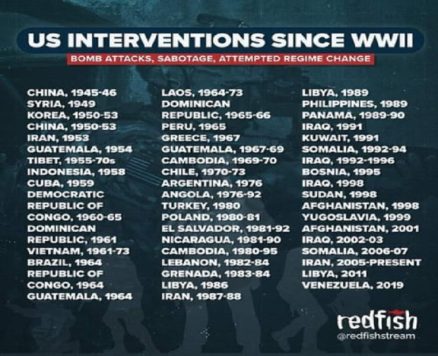
Director of the White House National Economic Council Brian Deese told reporters on Wednesday that there will be “significant and long-term consequences” if his country assesses that India has engaged in a so-called “more explicit strategic alignment” with Russia. New Delhi has thus far impressively practiced a policy of principled neutrality towards Moscow’s ongoing special military operation in Ukraine and the New Cold War more broadly between the US on one hand and Russia and China on the other. This South Asian state is the world’s largest and most important non-aligned country that’s setting a proud example for the rest of its Global South peers. The US is afraid that countless more countries will follow India’s lead by continuing to bravely defy Washington’s unilateral hegemonic pressure to sanction Russia.
Deese’s remarks represent the most ominous American threat to India yet since ties between these two Great Powers became complicated from summer 2020 onwards into the present day. Considering the context of the rolling “South Asian Spring” regime change scenario that the US simultaneously activated against Pakistan and Sri Lanka over the weekend, his statement adds credence to suspicions that India is actually the ultimate target of this campaign. It’s unclear what “significant and long-term consequences” will befall Indian-American relations, but it certainly seems like their ties will at the very least continue deteriorating if the US continues aggressively pressuring India to sacrifice its objective national interests for its supposed partner’s sake.
The sudden onset of regional stability along India’s periphery is intended to destabilize that country itself, both immediately and over time. In the event that the Pakistan and/or Sri Lanka’s multipolar governments are replaced by American puppets, then US bases might pop up in those neighboring countries. The so-called “anti-Indian hawks” in Islamabad’s “establishment” might become emboldened to violate the year-long ceasefire with New Delhi in order to punish that country by proxy at Washington’s behest for its policy of principled neutrality. With respect to Colombo, a US naval base could threaten India’s Sea Lines Of Communication (SLOC). Washington might even use the island as a base to encourage separatist movements in Southern India.
To be absolutely clear, India is not engaging in a so-called “explicit strategic alignment” with Russia, it’s simply advancing its objective national interests by remaining neutral in the Ukrainian Conflict and refusing to sacrifice its own for America’s sake. By default, however, the zero-sum unipolar hegemonic perspective embraced by US strategists influences them to regard this balanced policy as supposedly “taking Russia’s side” in the New Cold War. This false assessment is then in turn incorporated into its policy formulation towards that country, thus resulting in Deese’s ominous threat. Given the US’ decades-long track record of betraying former partners in the worst ways possible by orchestrating regime changes and even waging Hybrid Wars against them, India should be very concerned by what he just said.
America seems to be preparing for a fundamental change in its relationship with India, which will certainly affect the balance of interests in Eurasia. Thus far, New Delhi has been doing its utmost to retain that balance between itself, Russia, and China, ergo its policy of principled neutrality in order to ensure that Moscow doesn’t become disproportionately dependent on Beijing in response to the US-led West’s unprecedented pressure campaign. Nevertheless, India also hoped to retain excellent relations with the US at the same time in order to further synchronize the geo-economic aspects of their respective Indo-Pacific strategies. This grand strategic balancing act is now at risk of becoming unbalanced if the US unilaterally decides to worsen relations with India.
The form that this could take remains unclear, but the reader should remember that an intensification of information warfare against India as well as potential economic warfare and possibly even other more dangerous forms of Hybrid Warfare can’t be discounted due to the US’ track record. Security threats will spike in the event that the Pakistani and/or Sri Lankan governments are overthrown throughout the course of the ongoing “South Asian Spring” regime change campaign that the US has unleashed throughout the region. With these forecasts in mind, it’s of the highest importance that the South Asian states seriously consider reviving the South Asian Association for Regional Cooperation (SAARC) in order to advance “regional solutions for regional problems” and thus thwart the US’ plots.
Andrew Korybko is an American political analyst.
Why are the Chinese losing their minds over Omicron?
Thoughts about the significance and meaning of the Shanghai lockdown

eugyppius | April 5, 2022
Sooner or later, Zero Covid makes you crazy, and right now, it is making the Chinese crazy.
That is my theory about what is going on in Shanghai, which has descended into a mass panic over a relative handful of Omicron infections, imposing a harsh and destructive lockdown to stop a disease that is probably no more dangerous than influenza.
Let us rehearse some recent history:
Lockdowns and mass testing and contact tracing and masking are all Asian (primarily Chinese) policies, adopted en masse and with little forethought by western countries in Spring 2020. Our public health mandarins set aside their own planning and opted for Chinese mass containment instead, because they noticed the virus was not very deadly in Asia, and they assumed this was because whatever it was the Asians were doing was the thing to do. Mass containment is a worldwide delusional rain dance: Everyone hops about trying to coax water out of the heavens, copying whatever dance was current in the first place it started to rain.
Crucially, virology has a very primitive and inadequate understanding of how viruses actually circulate. Virological doctrine is that they ought to behave the same everywhere, but they don’t. Early wild-type SARS-2 strains spread far more slowly and were far less deadly in the Asia Pacific, and this had nothing to do with lockdowns or “SARS experience.” Japan started out by ignoring Corona more or less entirely, while South Korea set up mass testing and contact tracing operations straightaway, and both countries saw minimal mortality.
There are many theories about why SARS-2 hit Asia so softly. Probably, the Asian-Pacific populations enjoyed some kind of prior immune protection, which would explain why the later, immune-resistant variant strains of SARS-2 have coincided with higher mortality in the East.
But the main point is this: Countries which did well early in the pandemic got another kind of virus, the Zero-Covid kind. They adopted an eradicationist orientation; they believed their containment measures had succeeded, and the officials who had championed these measures ascended to new heights of prestige. This is what happened in China and throughout Asia, and it is what happened in Australia and New Zealand. To a lesser extent, it is even what happened in Germany. The next act of this play, is the return of SARS-2, the impending revelation that there was only ever the illusion of control, and a spiral of harsh suppression measures that everyone believes in because they seemed to work last time, even though they’re not working now.
We’ve spent many months speculating about Chinese reasons for locking down Hubei and then promoting lockdowns to the rest of us. While malicious ends shouldn’t be excluded, their behaviour in Shanghai points increasingly to official incompetence and stupidity. The Chinese government has almost surely spent two years sowing horror of Corona among its people, to defend its harsh actions in Wuhan and to collect accolades for its alleged Zero Covid success. Now they are going the route of other Zero Covid regimes. They will double down on worthless policies, until their failure becomes so overwhelmingly evident, that they give up.
Further considerations, developed mostly in the context of a recent conversation with a friend, who is sceptical of my thoughts here:
Is this not better understood as some sort of exercise in new authoritarian methods? I don’t think so, because the Chinese won’t be able to control Omicron, and whatever methods they deploy in their attempts to do so will just be discredited.
Did the Chinese then promote lockdowns to the West, simply out of good will and charity, because they sincerely believe in these policies? No. We may never fully understand their motives, but an important aspect, was probably the fear that the West would ignore Corona, nothing much would happen, and the Hubei lockdown would be discredited. These were policies that had been developed in the belief that China was facing a wider-scale version of the SARS virus from 2003. In early March 2020, it was clear that these fears were exaggerated. Evidently, this does not mean that the institutional (and perhaps also popular) momentum behind Zero-Covid policies vanished. In China, in Australia, everywhere, the lockdowners are empowered, as long as Corona appears to be under control. When Corona endangers this illusion, the lockdowners will fight powerfully to vindicate their policies, but sooner or later they’ll lose.
Doesn’t this destroy your prior hypothesis, that the Chinese escaped the mass containment dilemma entirely, by changing test criteria and perhaps taking other actions behind the scenes to ‘construct’ Corona out of existence? Maybe, but perhaps these aren’t mutually exclusive possibilities. As long as a given virus isn’t having any population-wide impact, it is possible to ignore it. Omicron spreads too fast to be ignored.
Do Chinese officials, with unique knowledge of SARS-2 origins, know something we don’t about the virus? Most of the SARS-2 genome has natural analogues, with a couple of odd tweaks, like the furin cleavage site. There’s not a lot of room for hidden functions in there, and mainland Chinese policies and science have never demonstrated special foreknowledge or awareness of SARS-2 features. If anything, the opposite is true: They overestimated the risk at first, and they seem to persist in this error now.
So you believe the West is stupid, and China is stupid, you just believe everyone is stupid but you I guess? I think institutions in mass society develop behaviours and even ideologies that are beyond the understanding of the individuals who participate in them. Our critical views of containment and mass vaccination are surely shared by many people throughout these institutions, who however find it in their best interests to promote quite different ideas, not reluctantly but even with enthusiasm.
Why is it always boring banal explanations from you? The extent to which Corona resists elaborate conspiratorial theories is a good sign that it is either an emergent phenomenon or epiphenomenal. The most compelling theories are those which cast Corona and containment as the unintended consequences of something else.
NATO and Asian nations plot response to China’s ‘systemic challenge to security’
Samizdat | April 5, 2022
NATO plans to deepen its cooperation with partners in Asia as a response to a rising “security challenge” coming from China, which refuses to condemn Russia’s ongoing military operation in Ukraine, Secretary General Jens Stoltenberg said during a press conference on Tuesday.
He announced that the bloc will host foreign ministers from member states as well as Finland, Sweden, Georgia, and the EU. However, he also noted that NATO’s Asia-Pacific partners such as Australia, New Zealand, Japan, and South Korea have been invited as well, stating that the current security crisis has “global implications.”
The ministers will discuss new strategic concepts which will account for the military conflict in Ukraine, but will also include for the first time the issue of China’s “growing influence and coercive policies on the global stage which pose a systemic challenge to our security and to our democracies.”
“We see that China has been unwilling to condemn Russia’s aggression and has joined Moscow in questioning the right of nations to choose their own path,” said Stoltenberg, urging that democracies must stand up for their values against “authoritarian powers.”
He expressed hope that NATO would be able to deepen its cooperation with its Asia-Pacific partners in areas such as “arms control, cyber, hybrid and technology.”
Since the start of Russia’s military offensive against Ukraine, Beijing has held off on taking a particular stance on the issue, calling for a peaceful resolution to the conflict but refusing to condemn Moscow’s actions or join the sweeping economic sanctions imposed on Russia by the likes of the US, Canada, the UK, the EU, Japan, Australia, and other nations.
For the last few weeks, the US has increasingly been putting more pressure on China to “pick a side,” with Joe Biden warning Beijing of potential “consequences” and “costs” should China choose to back Russia in the Ukraine conflict, either militarily or by helping circumvent international sanctions.
NATO should have been dissolved after Soviet collapse: China
Press TV – April 1, 2022
China has criticized the eastward expansion of NATO, saying that the US-led military alliance should have been dissolved after the collapse of the Soviet Union more than three decades ago.
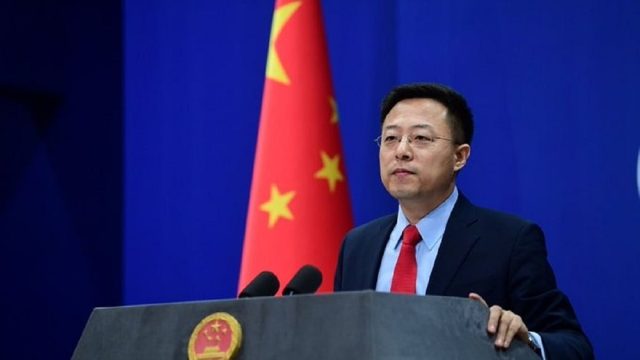
Chinese Foreign Ministry spokesman Zhao Lijian said at a news conference on Friday that the North Atlantic Treaty Organization (NATO), as a product of the Cold War, should have become history when the Soviet Union dissolved in 1991.
“In the early 1990s, then-US Secretary of State James Baker promised to former Soviet leader Mikhail Gorbachev that NATO would not expand even an inch eastward,” Zhao said.
As the initiator and biggest “behind-the-scene planner” for the Ukraine conflict, the US has led NATO to engage in five rounds of eastward expansion in over 20 years, he added.
“The number of NATO members increased from 16 to 30, advancing more than 1,000 kilometers eastward to the Russian border,” Zhao said.
He said that the world does not need a new Cold War, neither does Europe. He called on NATO to reflect on its role in the Ukraine crisis and the security of Europe itself.
NATO was formed in 1949 by 12 countries, including the US, Canada, the UK and France. Following the collapse of the Soviet Union, a number of former Warsaw Pact countries switched sides and joined the military alliance. It currently consists of 30 independent member countries, who are committed to protect each other.
NATO’s eastward expansion has long been a concern for world powers China and Russia, who have constantly warned that the move would lead to a war.
Russia has constantly been warning against membership of many parts of the old Soviet Bloc in NATO, especially the prospective membership of Ukraine in the Western military alliance, something that eventually pit Moscow against the Kiev government.
Russian President Vladimir Putin, who ordered the military campaign in Ukraine in February 24, has been clear for many years that if continued, the expansion would likely be met with serious resistance by the Russians.
Before the military conflict, Moscow had put forward a set of security proposals to de-escalate the tensions, including a guarantee that Ukraine will not join NATO.
The proposals were rejected.
NATO bases in Central Asia ‘unacceptable,’ Lavrov says
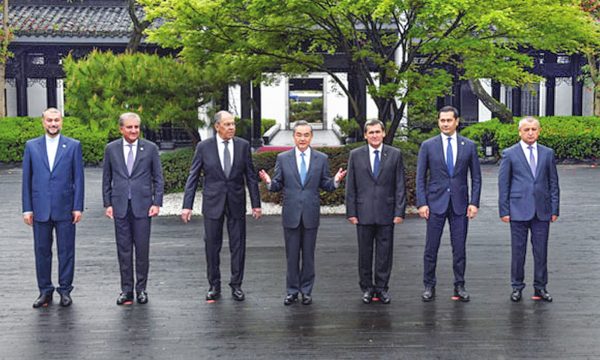
Chinese Foreign Minister Wang Yi and Russian Foreign Minister Sergey Lavrov stand with officials from Afghanistan’s neighboring countries and the Afghan Taliban as China-hosted talks on Afghanistan concluded in East China’s Tunxi, Anhui Province on March 31, 2022. Photo: Chinese Foreign Ministry
Samizdat | March 31, 2022
Russian Foreign Minister Sergey Lavrov said on Thursday that any NATO military presence in Central Asia will undermine the security of the Russian-led bloc in the region.
The minister made his comment at an Afghanistan-themed summit in Tunxi, China.
“We believe it’s unacceptable to have any US and NATO military infrastructure, or their Afghan helpers, on the territory of neighboring states, especially in Central Asia,” Lavrov said, adding that “such designs go against the security interests of our countries.”
He added that the existence of Western military sites would contradict the interests of the Collective Security Treaty Organization (CSTO), a Russian-led regional bloc.
Featured Video

The Truth About the Trump Shootings with Ken Silva
or go to
Aletho News Archives – Video-Images
From the Archives
Trans ‘milk’ as good as the real thing – NHS
RT | February 18, 2024
The drug-induced nipple secretions of trans women are as good as mothers’ breast milk for babies, the University of Sussex Hospitals NHS Trust claimed in a letter to campaigners made public in a report by British think tank the Policy Exchange on Sunday.
The healthcare trust’s medical director, Rachel James, argued that the off-label prescription drug cocktail men transitioning to female take in order to produce milk was “similar to the natural hormones which encourage lactation to develop when the baby is newly born.”
“The evidence which is available demonstrates that the milk is comparable to that produced following the birth of a baby,” James wrote in the letter, sent to Children of Transitioners last August.
Biological men who wish to lactate must first take hormones to grow milk glands and then take high doses of either domperidone or metoclopramide to stimulate milk production. Neither drug is approved for this use, though they are occasionally prescribed off-label to biological women who have trouble lactating.
However, domperidone’s own manufacturer, Janssen, warns patients the drug “may cause unwanted side effects affecting the heart in a breastfed baby” and “should be used during breastfeeding only if your physician considers this clearly necessary.” … continue
Blog Roll
 Aletho News
- Anthrax Attacks Paved Way for COVID-Era ‘Junk Drugs and Vaccines’
- How Real Is the Impact of Western Sanctions on Israel?
- France, You Are Guilty: How Paris Turned Western Sahara into the Maghreb’s Powder Keg
- 2025 Nature Paper Claiming Worsening Global Drought Gets RETRACTED …Heavily Flawed
- Your Milk Is Not the Problem
- The Truth About the Trump Shootings with Ken Silva
- ARE PATIENTS BEING PROPERLY INFORMED ABOUT OZEMPIC?
- US lawmaker blocks $2.8 billion weapons sale to Israel: Report
- Yemeni army claims responsibility for strikes on sensitive sites in Saudi capital, Aramco facilities in Yanbu
- Iran Judiciary issues indictments against 159 US, Israeli officials for assassination of Leader, commanders
- If Americans Knew
- Salah Sarsour’s Legal Team Says DHS Has Not Met Its Burden to Prove He Is Deportable
- An analysis of tax forms by The Intercept show Kraft’s charity and LLC have donated to Friends of the IDF and AIPAC’s super PAC.
- Israeli attacks kill four Palestinians in Gaza – Daily Update
- Inside Gaza’s death trap of collapsing, bombed-out buildings
- The everyday items Israel bans from Gaza every day
- Inside the siege, the ruined buildings of Gaza – Daily Update
- Debunking The Claim That Macklemore Has A “History Of Antisemitism”
- CPJ demands release of arrested Palestinian-US journalist near Bethlehem
- Robert Kraft: The Billionaire Friend of Netanyahu Pulling The Strings Behind the Macklemore/Ed Sheeran Blow Up
- Columbia Administered Fund Gives Big Money to Pro-Israel Groups
- No Tricks Zone
- 2025 Nature Paper Claiming Worsening Global Drought Gets RETRACTED …Heavily Flawed
- New Study: ‘Global Drought Shows No Detectable Recent Acceleration Under Climate Warming’
- Economic Masterminds: German Socialists Suggest Taxing Productivity Gains Stemming From Using AI
- The South China Sea Has Not Been Cooperating With The Climate Change Narrative
- Energy Crisis: Germany Enters Heating Season With Historically Low Gas Reserve Fill Levels
- New Study: The Antarctic Ice Sheet Gained Mass From 2020-2024 Due To Staggering Snow And Ice Accumulation
- Study: Ocean Heating Rates From Thousands Of Years Ago ‘Dwarf’ Modern Ocean Heating Rates
- Climate Extremists Target, Attack Large-Scale Power Grid Infrastructure In Germany!
- New Study: Antarctic Ice Melt Has Contributed Less Than 1 Centimeter To Sea Level Rise In The Last 30 Years
- Fear Of Debate: Alarmist German Climate Scientist Calls On Mainstream Media To Discredit Skeptic Voices
 Aletho News