Trump’s victory seals the coffin of “Bush-Clinton era” which lasted three decades
By Uriel Araujo | November 7, 2024
So much is being written now about Donald Trump’s victory in the United States’ presidential election. Few analyses however, if any, are paying attention to a remarkable development, namely the end of the Bush-Clinton era. You might have not paid much attention to it (in all likelihood, you never heard of it), but it started in the 1980’s, and lasted all the way to 2016. Let us go back in time, then.
This is how it worked: starting in 1981, either a Bush or a Clinton was in the White House (as a powerful Vice President or as the President himself) for years onwards. Or, later, in charge of foreign policy. If one recalls, from 1981 to 1898, Republican George H. W. Bush, also known as George Bush Senior, served as Vice President under Ronald Reagan. Being a former Director of the mighty Central Intelligence Agency (CIA), it is only fair to describe Bush Senior as a powerful Vice President. As the founding father of an era, he deserves a closer look.
Those were the Cold War years, and the CIA was quite a big deal (it still is, of course). The Agency is well known for teaching torture technices to foreign groups, as well as promoting “regime changes” (code for coup d’état) false flag terrorist attacks, assassinations of foreign leaders, and the like. During the Reagan years, keeping up with such a record, Bush admittedly played a role in the so-called Iran–Contra scandal which was about the illegal sale of arms to Iran and then clandestinely using the arms sale to fund the Nicaragua anti-communist rebel group known as the Contras. The Contras were involved in death squads, cocaine dealing, terrorism and torture. To make matters worse, the CIA was accused of getting involved in the Contras narcotraffic operations.
According to diplomat Peter Dale Scott, historian Alfred McCoy, and journalists Gary Webb and Alexander Cockburn, this is in line with a long record of CIA involvement in the dope trade. Back to the Iran-Contra affair: at the time, CIA agent Barry Seal took part in bringing at least three billion dollars worth of cocaine through Mena Airport (Arkansas). This is where Bush and Clinton meet: while Bush was part of the administration running the Iran-Contra, Bill Clinton, who later became President, was the then governor of Arkansas and was accused of being complicit in this operation. That is not the only alleged connection Clinton has to the organized crime world, by the way: his brother Roger Clinton had ties to the Gambino crime family and even served time for cocaine dealing – only to be later pardoned by President Bill Clinton.
Back to Bush Senior, he was so powerful a vice that when former American Nazi Party member John Hinckley Jr. shot and injured President Reagan in March 30, 1981, in an attempted murder, rumors and conspiracy theories were spread about Bush being involved in the deed so as to rise to the Presidency. The fact the Hinckley family had connections with the Bush family did not help much in that regard: for one thing, the shooter’s brother (Scott Hinckley, Vice President of the family’s Vanderbilt Energy Corp) was friends with George Bush’s son (Neil Bush). Scott Hinckley was in fact going to attend a dinner party at the Neil Bush home before the incident. It’s a small world.
George Bush Senior did not become President in March 1981, but he did in 1989, thereby succeeding Reagan. One of his greatest legacies, so to speak, is the first Gulf War. As President, he did not make it to reelection and was then succeeded in 1993 by someone very dear to him, someone whom he considered as a son, the aforementioned Democrat Bill Clinton. Again, a small world. Such was the rise of the New Democrats. For Clinton, I highlight two major achievements: pushing NATO expansion and having NATO bomb an European country which then ceased to be (the former state of Yugoslavia). The region is a ticking bomb to this day.
The family connection has remained strong – there are a number of Clinton-Bush initiatives, such as the Clinton Bush Haiti Fund, and the Bush-Clinton Katrina Fund. It is no wonder Bushes and Clintons are so close – they took turns running the country for decades. President Clinton, preceded by Bush Senior (whom he called “dad”), was then succeeded, in 2001, by none other than Republican George W. Bush, that is, the son of Bush Senior. George W. Bush would often call Clinton his “brother”. Those were the neocon years. Bush legacies include turning the country into a de facto dictatorship with the Patriot Act, and the two-decades long occupations of Afghanistan and Iraq, the former being a clear neocolonial enterprise, plus yet more NATO enlargement.
So there you have it with the Bush-Clinton era. That state of affairs lasted at least 28 years, that is, until 2009, when Hillary Clinton (none other than the former President’s wife) could not make it within the Democrat Party and, in a vicious internal struggle, Barack Obama instead was nominated and won in 2009. That’s not the end of the Bush-Clinton era yet. Obama still kept a Clinton (Hillary) in charge of foreign policy, as Secretary of State until 2013. She resigned after some scandals, and was replaced by John Kerry.
Kerry, if one recalls, is George W. Bush’s fellow bonesmen (both are members of the same elite secret society) who was defeated by him in the 2004 election – small world, once again. So much for American “anyone can become President” democracy. Even though Obama was then said to be “the least Atlanticist” President, Obama-Clinton-Kerry legacy includes the empowering of terrorist group ISIS/Daesh, adding fuel to the fire in the Syrian civil war, supporting the Maidan in Ukraine, the destruction of Libya by NATO bombing – and, again, further NATO expansion.
Then Clinton lost the presidential race to Republican Donald Trump in 2016. This ends the Bush-Clinton era. Trump was then defeated by Democrat Joe Biden in 2020 and was thought to be done with. Instead, he took control of the Republican Party, sidelining the Bushes and neocons. The Clintons did not make a comeback under Biden for a number of reasons. Biden-Harris’ administration legacy in any case includes being complicit with Israeli genocide in Palestine and playing with world war by increasing tensions with both Russia and China (over Taiwan). So much for Biden’s “America is back” motto.
Now Trump is back, which seals the coffin of the Bush-Clinton era – and this time with full control of the Republican party, with a Senate majority and much more. Trump, as I wrote, is by no means a “peacemaker” and it is not quite true that his 2016-2020 presidency was marked by “no wars”. He assassinated Iranian General Soleimani for one thing and did facilitate the Abraham Accords, which lie at the root of today’s crisis in the Middle East in a lot of ways.
In any case, Trump’s previous administration certainly was no match for his Bush-Clinton predecessors in terms of war-mongering, genocide and nation-destruction – and no match for Biden, for that matter. In all likelihood this time too he will not exceed the aforementioned legacy of his precursors. If such turns out to be the case, and if the slightest restraint is exercised, this in itself should already be good news for the world. The Bush-Clinton era is over, amen to that.
FBI ran ‘honeypot’ operation on 2016 Trump campaign – whistleblower
RT | October 30, 2024
Former FBI Director James Comey personally ordered “honeypot” spies to infiltrate Donald Trump’s 2016 presidential campaign, according to an agency whistleblower. The off-the-books operation was described by the agency insider as a “fishing expedition” to find wrongdoing among Trump’s team.
The operation was “personally directed” by Comey and launched in June 2015 without any case file being created in the FBI’s database, according to a whistleblower report handed to the Republican-led House Judiciary Committee on Tuesday and seen by the Washington Times.
At the time, Trump had just announced his first presidential campaign and neither he nor anyone on his campaign team was suspected of any crimes. Nevertheless, Comey ordered two “honeypot” agents to infiltrate Trump’s team on the campaign trail with the aim of extracting damning information from adviser George Papadopoulos, the report claimed.
A “honeypot” agent refers to an attractive woman who uses a sexual or romantic relationship to gather intelligence from a target.
Comey’s operation took place a year before the FBI’s ‘Crossfire Hurricane’ investigation into the Trump campaign’s alleged contacts with Russia, which later morphed into Special Counsel Robert Mueller’s two-year ‘Russiagate’ probe. According to the whistleblower, the honeypot operation was kept “off the books” to conceal it from the US Justice Department’s inspector general, who later determined that Comey knowingly lied when submitting evidence to obtain a warrant to surveil Trump’s campaign.
Papadopoulos was eventually questioned by the FBI and in 2017 pled guilty to making false statements to agents regarding his alleged contacts with Russia the year before. He served 12 days in federal prison in 2018, and has claimed ever since that he was entrapped by FBI agents posing as Russians with damaging information on Trump’s 2016 opponent, Hillary Clinton.
He complained about sloppy FBI agents “dropping information in my lap that I did not want regarding Hillary Clinton’s emails in the hands of the Russians” during the Crossfire Hurricane probe, and claimed to have been targeted by at least one “honeypot” beforehand. However, Papadopoulos thought that the woman was working for the CIA and “affiliated with Turkish intelligence,” he said in 2019.
The operation was canceled when a newspaper obtained a photograph of one of the agents and was about to publish it, the whistleblower claimed. The FBI allegedly contacted the newspaper claiming that the woman in question was an informant, and not an agent, and would be killed if the photo was released, successfully preventing its publication. One of the agents was then allegedly transferred to the CIA so she would not be available as a potential witness.
“The FBI employee personally observed one or more employees in the FBI being directed to never discuss the operation with anyone ever again, which included talking with other people involved in the operation,” the report states.
The Judiciary Committee told the Washington Times that it “plans to look into” the report. Trump fired Comey in 2017, describing him as a “liar” and a “slimeball.”
Israel and Ukraine Gaslighting To Cover Up Failures

By Larry C. Johnson | SONAR 21 | October 26, 2024
If bullshit was fungible, both Israel and Ukraine would be rolling in dough and not need another dime of foreign aid. The nonsense spilling out of Tel Aviv and Kiev is legendary and much of the Western public is slurping it up like a ravenous dog eating a bowl of rabbit stew.
Let’s start with Israel. The Zionists used more than 100 aircraft to send an estimated 200 air-launched ballistic missiles into Iran. Israeli aircraft did not dare to fly inside Iran. And what happened? Iran, with Russian help, shot down the majority of the Israeli missiles. Iran showed no signs of panic or anger in the aftermath of the attack — not what one would expect if Israel’s assault had been a smashing success.
Compare for yourself. The first video show’s Iran’s October 1 attack on Israel. The second video shows what happened in the skies over Tehran.
It is true that some of the Israeli missiles got through and killed four Iranian soldiers. Yet, check out this headline in today’s Jerusalem Post:
‘Backbone of Iran’s missile industry’ destroyed by IAF strikes on Islamic Republic
The Zionist spin patrol is working overtime to paint lipstick on their pig operation. The Zionists convinced themselves that Iran’s strike on October 1 was meaningless, notwithstanding clear video — and later satellite imagery — of damage from Iran’s missile barrage. Now, when confronted with evidence of Iranian air defense knocking Israeli missiles from the sky, they simply pretend it did not happen.
Here is a typical response from an ardent Zionist upon reports that Israel’s attack was underway:
The Israeli attack has begun and apparently they had no problem getting past the Iran air defenses. Early reports are about attacks hitting around Tehran which suggests they are going after command and control and possibly military leadership. Too early to know what is happening but by morning the real war will be underway. So far they have not hit the oil which is a surprise as that would finally sink Kamala which Netanyahu wants to do. The oil markets may think this is all OK and oil prices will remain around where they are but this is just chapter one. Before this is over the nukes and oil will get destroyed by Israel. The nukes will be next up as there is no time to lose for Israel to stop any chance of Iran fining some way to use a nuke against Israel.
So, what was Mr. Big Predictor’s reaction as dawn broke in Tehran?
It seems this was a staged attack with the intent to send a message and not to do grave damage. Arab nations were told ahead of time and passed that along to Tehran. We will need to wait a few hours to see what really happened, but it now seems clear this was not the all out attack Israel is capable of and it is instead a tit-for-tat strike to keep the US onside for now until Trump takes over. Israel needs Thaad and supplies of arms for now, so it may be that Netanyahu decided to play ball with DC to get what it needs and not use weapons it currently needs in Lebanon. The oil market will get this wrong and not realize what is yet to happen next time.
What sane folks need to understand is that no amount of evidence will shake the Zionists from their delusional fantasies. It is akin to those Americans who still insist that we could have won in Vietnam. We just didn’t try hard enough.
While Israel is doing its victory dance over its totally awesome, amazing, incredible air strike in Iran, Hezbollah, which was supposedly decapitated and rendered impotent, is stepping up its missile and rocket attacks in Israel. Here is a list of Hezbollah’s operations in the last 24-hours.
1- On the afternoon of Friday, October 25, 2024, a gathering of zionist forces in the “Shoumera” settlement was targeted (https://t.me/PalestineResist/65037) with a guided missile, resulting in confirmed casualties.
2- At 12:15, (https://t.me/PalestineResist/64826) a rocket barrage targeted the “Kiryat Shmona” settlement.
3- At 06:00, (https://t.me/PalestineResist/64867) a rocket barrage targeted a gathering of zionist forces around the town of Aita al-Shaab.
4- At 11:30, (https://t.me/PalestineResist/64868) as part of the Khaybar series of operations and in response to the attacks and massacres committed by the zionist enemy, and with the call “At your service, Nasrallah,” Islamic Resistance fighters launched an aerial attack with a squadron of attack drones on the “Tel Nof” airbase south of “Tel Aviv,” hitting their targets accurately.
5- At 12:15, (https://t.me/PalestineResist/64876) a rocket barrage targeted the “Mishar” base (the main intelligence headquarters for the northern region in Safad).
6- At 12:45, (https://t.me/PalestineResist/64875) a rocket barrage targeted the “Krayot” north of Haifa.
7- At 13:00, (https://t.me/PalestineResist/64954) as part of the Khaybar series of operations and in response to the zionist enemy’s attacks and massacres, and with the call “At your service, Nasrallah,” Islamic Resistance fighters launched a qualitative rocket barrage at zionist forces gathered at the “Ayelet” base.
8- At 13:23, (https://t.me/PalestineResist/64877) a rocket barrage targeted a gathering of zionist forces in the Al-Musharifa area in Ras Al-Naqoura.
9- At 13:30, (https://t.me/PalestineResist/64925) a rocket barrage targeted a gathering of zionist soldiers in the “Shlomi” settlement.
10- At 13:35, (https://t.me/PalestineResist/64926) a rocket barrage targeted the “Metzuba” settlement.
11- At 13:40, (https://t.me/PalestineResist/64927) a rocket barrage targeted the “Jaatoun” settlement.
12- At 14:15, (https://t.me/PalestineResist/64928) a large rocket barrage targeted the “Yesod HaMa’ala” settlement.
13- At 14:25, (https://t.me/PalestineResist/64929) a rocket barrage targeted the Jal al-Alam site.
14- At 16:05, (https://t.me/PalestineResist/64932) a rocket barrage targeted the “Habushit” site.
15- At 16:10, (https://t.me/PalestineResist/64933) a rocket barrage targeted the “Ma’ale Golani” barracks.
16- At 16:15, (https://t.me/PalestineResist/64934) a rocket barrage targeted the “Snir” barracks.
17- At 16:15, (https://t.me/PalestineResist/64936) a rocket barrage targeted the “Shear Yeshuv” settlement.
18- At 16:15, (https://t.me/PalestineResist/64953) a rocket barrage targeted a gathering of zionist forces east of the town of Markaba.
19- At 17:20, (https://t.me/PalestineResist/64955) a large rocket barrage targeted the “Shraga” base.
20- At 18:00, (https://t.me/PalestineResist/64985) as part of the Khaybar series of operations and in response to the zionist enemy’s attacks and massacres, and with the call “At your service, Nasrallah,” Islamic Resistance fighters launched an aerial attack with a squadron of attack drones on the “Naoura” base east of Afula, hitting their targets accurately.
21- At 19:30, (https://t.me/PalestineResist/65020) a rocket barrage targeted a gathering of zionist forces in the “Hatzor” settlement.
22- At 23:30, (https://t.me/PalestineResist/65021) as part of the warning (https://t.me/PalestineResist/64999) issued by the Islamic Resistance to various northern settlements, Islamic Resistance fighters launched a rocket barrage on the “Kiryat Shmona” settlement.
Yep. Hezbollah is barely hanging on.
Speaking of barely hanging on, Ukrainian forces are retreating all along the 900-mile front.


Information is coming from the field that our troops, after a big breakthrough, were able to firmly establish themselves in Shakhtyorskoye and continue to push the enemy out of the village.
The prospects for a Shakhtar breakthrough are impressive.
As far as we understand, the goal is to reach Razliv and take up positions on the Volchya River with access to the rear of the enemy garrison in Kurakhovo.
Plus pressure from two flanking directions: on the AFU group in Bogoyavlenka, thus enabling their expedient removal, and on Velikaya Novosyolka – leveling the main “joy” of the counter oink last year.
By the way, the direction of the conscious flight of the Ukrainian Armed Forces to the Dnipropetrovsk region is also a so-so idea – the enemy has no sensible fortifications between Pavlograd and Pokrovsk. So the AFU will not be able to pull off the trick of drawing us to the prepared lines and then splitting up between Pavlograd and Konstantinovka.
Then there is the Ukrainian/CIA story claiming that North Korean troops are fighting on the front because Russia has lost so many men, it had to import new cannon fodder. I believe this story was ginned up by an increasingly desperate CIA in order to create a cover story for bringing South Korean pilots to Romania to fly F-16s. The “news” about the North Korean troops first appeared in the New York Times under David Sanger’s byline on October 8. Sanger has a long history of being a willing conduit for CIA “leaks.”
Marat Khairullin, a Russian war correspondent, explained what was really going on behind the scenes:
Now it has become clear why the North Korea issue is being actively stirred up during the SMO. South Korea is sending its soldiers and officers to fight in Ukraine. Let me remind you that South Korea is a passionate, evil six of the USA (slang for “lackey”- in Russia, 6 is the lowest numbered card in a deck of cards). They are not as smart as Japan, but not as dumb as the Ukraine. Most importantly, they are high-tech. . . .
Last week, the first 16 pilots from South Korea’s 19th Air Wing arrived at NATO’s Romanian air base near Mihail Kogalniceanu. Apparently, South Korea sent the first squadron of the air wing, the most prepared and combat-ready, to the war in full force. This means they are planning to throw them into battle immediately.
Currently, the F-16 fighters allocated to Ukraine are also in Romania – at the Fetești air base on the border with Moldova. As soon as the South Korean pilots go there, this will be an indicator of the imminent use of these aircraft in Ukraine. In addition to the F-16 pilots, pilots of South Korean T-50 combat training aircraft, which are used in the southern army as light attack aircraft, have arrived at the air base in the commune of Mikhail Kogalniceanu. It is assumed that these aircraft may be useful as hunters for “Geraniums” in the protection of the Odessa port.
Remains to be seen if the South Koreans will actually enter the fight. If they do, they will learn that Russia ain’t playing games and many of those pilots will likely die. I discussed this issue with Judge Napolitano. I am also posting a live podcast that Andrei Martyanov and I did with Nima as Israel’s attack was wrapping up Friday night my time.
How Zionists Invented ‘Terrorism’
By Kit Klarenberg | Global Delinquents | October 25, 2024
Since the Zionist entity’s 21st century Holocaust in Gaza began, Israeli officials, pundits, journalists, and their Western opposite numbers have endlessly invoked the sinister spectre of “terrorism” to justify the industrial-scale slaughter of Palestinians. It is because of “terrorism”, twice-failed US Presidential candidate Hillary Clinton representatively wrote for The Atlantic in November 2023, “Hamas must be permanently erased.” Destroyed hospitals and schools and civilians killed en masse are reasonable “collateral damage.” Such is the unparalleled evil of “terrorists.”
Yet, the relentless stream of heart-rending clips documenting the Israeli Occupation Force (IOF) Holocaust deluging social media feeds the world over, and the ever-ratcheting child death toll has compelled countless citizens to ask, “if Hamas are terrorists, then what are Zionists?”. Similar questions were posed during the Empire’s long-running “War on Terror”. Then, the purported global threat of “terrorism” was exploited throughout the West to savage civil liberties and demonise Muslims at home, while waging relentless criminal “interventions” abroad.
Mainstream usage of the term precipitously plummeted thereafter. It is only now regaining popular currency due to the Gaza genocide. This is no accident. As we shall see, Zionists – specifically Israel’s veteran leader Benjamin Netanyahu – were fundamental to concocting mainstream conceptions of “terrorism”, explicitly to delegitimize anti-imperial struggles, while validating Western state violence directed at oppressed peoples across the Global South. The impact of this informational assault can be felt in every corner of the world today – not least Gaza.

Usage of the term ‘terrorism’ 1960 – 2020, per Google
‘First Strike’
In fact, one might reasonably conclude the specific foundations of Nakba 2.0, which continues to unfold in grisly real-time right now, were laid decades ago, as a result of the connivances of Netanyahu, the international Zionist lobby, and US Central Intelligence Agency. What follows is the little-known history of how “terrorism” came to be. A majority of the world’s population – the Palestinian people in particular – live with the monstrous consequences every day.
Our story starts in 1976, at the peak of détente between the US and Soviet Union. After two-and-a-half decades of bitter enmity, the two superpowers had resolved to peaceful coexistence at the start of the decade. They collaborated to systematically dismantle structures and doctrines that defined the immediate post-World War II era, such as Mutually Assured Destruction (M.A.D.).
In May that year, the CIA produced its annual National Intelligence Estimate (NIE), a comprehensive report combining data from various intelligence agencies, intended to be a basis for crafting foreign policy. In keeping with the past five years, it concluded the Soviets were in severe economic decline, favoured diplomacy over conflict, and desperately sought an end to the Cold War. Such findings lay behind Washington’s push for détente, and Moscow’s eager acceptance of major disarmament and arms control treaties.
However, newly-appointed CIA director George H. W. Bush categorically rejected these conclusions. He sought a second opinion, so constructed an independent intelligence cell to review the NIE. Known as Team B, it was composed of hardcore Cold Warriors, defence industry-funded hawks, and rabid anti-Communists. Among them were several individuals who would later become leading figures in the neoconservative movement, such as Paul Wolfowitz. Also present were infamous CIA and Pentagon dark arts specialists who had been professionally ostracised due to détente.
Team B duly reviewed the NIE, and rubbished each and every one of the Agency’s findings. Rather than dilapidated, impoverished and teetering on total collapse, the Soviet Union was, in fact, more deadly and dangerous than ever, having constructed a vast array of “first strike” capabilities right under the CIA’s nose. To reach these bombshell conclusions, Team B relied on a confounding hodgepodge of peculiar logical fallacy, paranoid theorising, crazed conspiratorial conjecture, unsupported value judgments, and amateurish circular reasoning.

An explainer on Team B authored by one of its members, in a Zionist rag
For example, Team B repeatedly assessed that a lack of evidence Moscow possessed weapons systems, military technology, or surveillance capabilities comparable or superior to Washington’s own was inverse proof the Soviets, in fact, did. Moscow’s innovations were just so sophisticated and innovative, Team B concluded, they couldn’t be detected or even comprehended by the West. Team B’s analysis was confirmed to be a total fantasy after the USSR collapsed. Yet, its methods informed all subsequent NIEs throughout the Cold War, and likely endure today.
On June 27th of that year, mere weeks after Team B was set to work on reigniting the Cold War, Air France Flight 139, en route to Paris from Tel Aviv, was hijacked by members of the Popular Front for the Liberation of Palestine. Redirected to a Ugandan airport, the plane was greeted on the runway by Idi Amin’s military, who ushered the passengers – the majority being Jewish or Israeli – into the terminal, watched over by scores of soldiers, intended to prevent their escape or rescue.
The hijackers relayed a demand to the government of Israel. Unless a ransom of $5 million was paid to them and 53 Palestinian prisoners were released from jail, the hostages would be executed. In response, 100 elite IOF commandos launched an audacious action to free the hostages. Their mission – known as the Entebbe Raid – was a stunning success. All but four hostages were rescued alive, and the IOF lost just one commander – Yonatan (Jonathan) Netanyahu, the older brother of Israel’s current Prime Minister, Benjamin Netanyahu.
For years by that point, Israeli officials had been attempting to popularise the term “terrorism” to explain the motivations and actions of Palestinian freedom fighters. That way, their righteous fury at repression could be reframed as a destructive ideology of violence for violence’s sake without rationale, and Zionist colonial tyranny as warranted self-defence. This effort became turbocharged in September 1972, when the kidnapping of 11 Israeli athletes at that year’s Olympics in Munich by Palestinian militants ended with all hostages murdered.
This particularly public bloodshed centred world attention on Israel, and left Western citizens wondering what could’ve possibly inspired such violence. Zionists had hitherto managed to largely conceal their systematic, state-enforced repression and displacement of Palestinians from the outside world. Journalists were kept well away from the scenes of major crimes. At the same time, Amnesty International’s Israeli branch was secretly financed and directed by Tel Aviv’s Ministry of Foreign Affairs to whitewash facts on the ground.
For the Netanyahu family, the Entebbe raid was a tragedy – but also an ideal opportunity to validate and internationalise the concept of “terrorism,” as espoused by Zionists. In 1979, Benjamin Netanyahu founded the Jonathan Institute, in honour of his slain brother. Its purpose, he said, was:
“To focus public attention on the grave threat that international terrorism poses to all democratic societies, to study the real nature of today’s terrorism, and to propose measures for combating and defeating the international terror movements.”
In July that year, the Institute convened the Jerusalem Conference on International Terrorism (JCIT) in Jerusalem’s Hilton Hotel. It gathered together a 700-strong mob of Israeli government officials, US lawmakers, intelligence operatives from across the ‘Five Eyes’ global spying network, and Western foreign policy apparatchiks. Perhaps unsurprisingly, many representatives of Team B were in attendance. Over four days and seven separate sessions, speaker after speaker painted a disturbing picture of the worldwide phenomenon of “terrorism.”
They unanimously declared that all “terrorists” constituted a single, organised political movement that was being secretly financed, armed, trained, and directed by the Soviet Union. This devilish nexus, it was claimed, posed a mortal threat to Western democracy, freedom, and security, requiring a coordinated response. Eerily, as academic Diana Ralph later observed, the JCIT’s collective prescription for tackling this purported menace was precisely what transpired just over two decades later during the “War on Terror”:
“[This included] pre-emptive attacks on states alleged to support ‘terrorists’; an elaborate intelligence system apparatus; slashed civil liberties, particularly for Palestinians targeted as potential terrorists, including detention without charge, and torture; and propaganda to dehumanize ‘terrorists’ in the eyes of the public.”
Israel’s then-Prime Minister Menachem Begin addressed the JCIT’s opening session. He set the tone by claiming Western state violence was ultimately “a fight for freedom or liberation” and, therefore, fundamentally opposed to “terrorism.” He concluded his remarks by imploring the assembled throng to go forth and promote the conference’s message once it was over. Which they did.
‘Insufficient Evidence’
Among JCIT’s attendees was American author and journalist Claire Sterling, who cut her teeth as a reporter decades earlier at the Overseas News Agency, an MI6 propaganda operation seeking to boost US public support for entering World War II. Following the conference, she frequently amplified the claims of JCIT speakers in articles for prominent newspapers, leading to an epic March 1981 front-page exposé in The New York Times – Terrorism: Tracing The International Network.
A book published later that year, The Terror Network, expanded significantly on Sterling’s oeuvre, and firmly cemented the notion of Moscow as a grand spider sat in the middle of a vast, globe-spanning web of deadly political violence in the Western public mind. It caused a sensation upon release, receiving rave reviews from major news outlets, being translated into 22 languages, and becoming a bestseller in several countries.

The Terror Network had a particularly potent impact on newly-inaugurated President Ronald Reagan and his CIA chief William Casey. Committed anti-Communists, they entered office desperately seeking a pretext for brutally crushing left-wing, nationalist opposition to US imperialism in Latin America. Sterling’s work provided ample ammunition for achieving that bloodsoaked objective and was key to the White House decisively shattering détente, a process begun by Team B five years earlier.
Consequently, “The Terror Network” was circulated among US lawmakers and heavily promoted overseas on the Reagan administration’s dime. Casey furthermore tasked his Agency with verifying its thesis. They quickly assessed Sterling’s work to be irredeemable garbage, ironically enough, as it was heavily influenced by CIA black propaganda. Enraged, Casey demanded the evaluation be revised. An updated appraisal was less scathing but nonetheless stressed the book was “uneven and the reliability of its sources varies widely,” while “significant portions” were “incorrect.”
Still dissatisfied, Casey asked a CIA “senior review panel” charged with scrutinising Langley’s formal estimates to write their own report on the subject. They concluded the Soviets did offer limited financial, material and practical assistance to a handful of anti-imperial Global South liberation movements, some of which were labelled “terrorists” by Western powers. But there was “insufficient evidence” of Muscovite culpability for the entire global phenomenon of “terrorism,” let alone funding and directing such entities as dedicated policy.
Undeterred, when Casey personally delivered the report to Reagan, he allegedly said of its findings, “of course, Mr. President, you and I know better.” So it was CIA-backed death squads ran roughshod across Washington’s “backyard” throughout the 1980s, in the name of neutralising alleged Soviet influence in the region. Their actions were heavily informed by the Agency’s guerrilla warfare manual, which encouraged assassinations of government officials and civilian leaders and deadly attacks on “soft targets” such as schools and hospitals. “Terrorism”, in other words.
‘We Are All Palestinians’
Another example of Reagan’s “terrorism” was sponsoring Afghanistan’s Mujahideen resistance fighters in their battle with – ironically enough – the Soviet Red Army. This policy endured after the “Evil Empire” was vanquished. The same militants were transported by the CIA and MI6 to Bosnia and Kosovo in the 1990s, to aid and abet Yugoslavia’s painful, forced death.
When these covert actions produced [MIHOP or LIHOP] “blowback” in the form of the 9/11 attacks, several individuals who attended the JCIT, and their acolytes, were elevated to the Bush administration due to their supposed “terrorism” expertise. Meanwhile, with public and state-level fears of “terrorism” ramping up significantly the world over, many Western countries turned to Israel for advice and guidance on how to tackle the issue. As Nentyahu bragged in 2008:
“We are benefiting from one thing, and that is the attack on the Twin Towers and Pentagon, and the American struggle in Iraq.”
This was not only because 9/11 “swung American public opinion in [Israel’s] favour.” In a blink, Zionist repression and slaughter were transformed from a source of international embarrassment and obloquy into a compelling sales pitch and unique selling point for Tel Aviv’s welter of “defence” and “security” firms. The Occupied Territories became laboratories, their inhabitants test subjects, upon whom new weaponry, surveillance methods, and pacification techniques could be trialled by the IOF, then marketed and sold overseas.
It is not for nothing that graphic videos showcasing IOF “surgical strikes” on Palestinians, their homes, schools, and hospitals are proudly displayed at international arms fairs, while private demonstrations of invasive surveillance tools such as Pegasus routinely wow repressive foreign security and intelligence agencies behind-closed-doors.
On top of a significant financial benefit, there is a diplomatic dividend too. Israel secures invaluable censure-stifling goodwill from customers, therefore permitting the Zionist project of permanently purging Palestine of its indigenous inhabitants to persist untrammelled. While the streets of almost every major Western city have regularly teemed with pro-Palestine fervour ever since the entity’s attack on Gaza began in October 2023, protesters’ elected representatives are at best silent, at worst actively complicit.
Impassioned chants of “We are all Palestinians!” have been a frequent fixture at these events. This rallying call is highly apposite, for in addition to expressing sympathy and solidarity with the Palestinian people, it is urgently incumbent upon us all to reflect upon how the very same techniques and technologies of control and oppression to which they have been so cruelly subjected daily for decades are now firmly trained on us as well, as a result of Israel’s invention of “terrorism.” It is no exaggeration to say Palestinians are canaries in the coalmine of humanity.
CIA personnel land in Lebanon, ramp up intel gathering to support Israel’s war

Photo credit: US Embassy Beirut
The Cradle | October 14, 2024
The CIA has sent additional agents to Lebanon and has increased its communications with Lebanese military, security, and political officials in an effort to obtain information about Hezbollah, and may have played a role in Israel’s recent attempt to assassinate a Hezbollah political leader, Al-Akhbar reported on 14 October.
Three senior officials in the official security services acknowledged that Western parties, primarily the US, have initiated intensive daily communication with all Lebanese military and security forces since the outbreak of the open war between Lebanon and Israel, Al-Akhbar editor Ibrahim al-Amin wrote.
The officials told Amin that the content of the communications had nothing to do with obtaining information about threats to western interests. Instead, they wish to obtain information about changes in Hezbollah’s political and military leadership structure after the recent assassination of the party’s secretary-general, Hassan Nasrallah.
US intelligence officials were very interested in whether Hezbollah leaders are “still communicating with the military, security and executive forces in Lebanon after the war, with questions about the form and content of the communication,” one official told Amin.
The same official revealed that a security team of 15 CIA officers arrived at Beirut airport last Thursday, 10 October, and moved in a convoy of armored cars without license plates to the headquarters of the American embassy in Awkar.
He explained that the team “joined the work cell based in one of the embassy wings in Beirut, to help manage the Beirut station, which includes 12 main officers, in addition to others with different specialties, including recruiting and managing agents, collecting information through technical means, and analyzing data.”
Another official told Amin that a new director for the CIA’s Beirut station, Sherry Baker, had been appointed and that Baker had previously participated in meetings with Lebanese security officials during visits to Washington.
The official said he knew of “five working visits by Lebanese officers of various levels to the United States, who held meetings with American intelligence officials at their headquarters in Langley.”
In this context, Amin reports that these contacts between the CIA and Lebanese security officials may have played a role in Israel’s recent attempt to assassinate a Hezbollah political leader, Wafiq Safa.
On 10 October, Israeli airstrikes leveled a residential building in central Beirut, killing 22 people. Israel stated that Safa was the target of the attack. However, they were unsuccessful in killing him.
One of the three officials revealed to Amin that just prior to the assassination attempt, the leadership of Hezbollah had asked Safa, in his capacity as head of the resistance movement’s Liaison and Coordination Committee, to communicate with a number of Lebanese security officials on matters related to the ongoing war.
The official explained that “the contacts took place despite the fact that the resistance knew that the mere occurrence of the phone call would constitute a security threat to Safa.”
These fears were confirmed when Israel carried out the bombing in Beirut and leaked news that the target was Safa.
The same official said that Hezbollah “estimates that American intelligence had a direct role in the attempt to assassinate Safa” and that “the operation was carried out based on information provided by the Americans.”
The official stated that the US wanted to kill Safa, who has no military role in Hezbollah, as part of a campaign launched by the US Ambassador to Beirut, Lisa Johnson, who recently “called on Lebanese political and non-political forces to begin working to establish the stage of “post-Hezbollah Lebanon.”
UN Official’s Battle With “Toxic Information” Raises Censorship Fears Ahead of US Election

By Didi Rankovic | Reclaim The Net | September 30, 2024
United Nations (UN) Under-Secretary-General for Global Communications Melissa Fleming’s focus is “disinformation” and “toxic information systems” – and she presents those as standing in the way of the UN’s sustainable development goals (SDGs).
SDGs are the UN’s plan that opponents say is “toxic” in itself since it seeks to promote such controversial things as censorship and digital ID and, to make matters worse, that’s supported by major countries.
Now, Fleming seems to be keen to add to the avalanche of pressure on Big Tech – even though the term she no doubt carefully uses instead is “domination of public discourse” in places where this alleged disinformation is most present.
Coincidentally or not this is coming right before a US presidential election, but Fleming is framing her parroting of the “disinformation” narrative in terms of the social platforms, as purely an “SDGs and UN” issue.
She is even trying to link this with the UN’s purpose, which is (rather, should be) peacekeeping and humanitarian missions, but from which the world organization has been disconnecting for a while.
Responding to a question lumping disinformation, climate change, and conflict resolution into one, Fleming asserted that disinformation and “toxic information systems” are damaging humanitarian and peacekeeping efforts, not to mention SDGs (she doesn’t quite explain this assertion).
Fleming’s official UN bio says one of her roles is “far-reaching efforts to address mis- and disinformation, and hate speech,” while supposedly simultaneously promoting “free and independent media.”
However, she started her career with an outlet that’s anything but free and independent: Fleming used to work for “Radio Free Europe,” funded by the US authorities (originally through the CIA).
Now, no doubt thanks to Fleming, the UN has something called DG Media Zone and it is there and during this year’s UN General Assembly that Fleming sounded her alarm bells, going as far as to say that “every single one” of UN’s priorities is these days under threat due to disinformation. (“Climate change” is now proudly listed among those priorities, in case you missed that.)
Fleming’s solution: collusion. This time (and publicly) “merely” with “civil society and people” who need to “work on our information ecosystems together.”
A word of warning about “civil society,” though: it’s often a moniker behind which groups implementing censorship through “fact-checking” etc, like to hide.
Americans queueing to assassinate Trump, yet Iran is blamed
By Finian Cunningham | Strategic Culture Foundation | September 27, 2024
The United States does not have an impressive history of truth-telling when it comes to finding the culprits of presidential assassinations.
Indeed, the opposite. Cover-up and scapegoating are par for the course. So, bear that in mind about hyped reports this week about Iran allegedly trying to assassinate Republican presidential candidate Donald Trump.
In 1963, Lee Harvey Oswald, a former U.S. Marine, was officially blamed for killing John F Kennedy. It was also mooted at the time that Oswald was working as a sympathizer for Communist Cuba or the Soviet Union.
Despite decades of the U.S. mainstream media and academia sticking to the preposterous narrative of Oswald as the lone shooter in Dallas, there is cogent evidence that JFK was assassinated by the American deep state of CIA and corporate power because of the president’s opposition to Cold War confrontation with the Soviet Union.
For more than six decades, the official narrative of JFK’s assassination has not changed despite the absurdities of the official account. Three fatal bullets in quick succession from a notoriously poor shot (Oswald) and the third to the front of the president’s head, supposedly from Oswald perched in a high-rise building hundreds of feet to the rear. Give us a break.
Fast forward to the summer of 2024. Two attempts have been made on the life of Republican candidate Donald Trump. On both occasions, the attacks were carried out by American citizens. On July 13, Thomas Matthew Crooks was shot dead by Secret Service agents after he fired his assault rifle at Trump during a rally in Pennsylvania. On September 15, Ryan Routh was arrested for trying to kill Trump at his golf course in Florida. It’s not clear what the shooters’ motives were. But both incidents involve American citizens as would-be assassins.
Moreover, there are disturbing questions about the lax conduct of the state security services and bigger forces who might want Trump dead. The first assassination attempt in Pennsylvania saw gaping lapses that allowed the shooter to breach the security perimeter. In the second case, the suspect had active ties with recruiting foreign mercenaries for the NATO-backed Ukrainian regime and presumably U.S. intelligence networks.
Yet this week, the U.S. intelligence services accuse Iran of plotting to kill Trump. The story has been doing the rounds in the U.S. media for weeks, having first been reported by CNN shortly after the assassination attempt in Pennsylvania. The unsubstantiated Iranian connection smacks of a blatant distraction from possibly more homegrown culprits.
Gullibly, Trump this week appeared to buy the accusations against Iran. He threatened to blow Iran to “smithereens” if he were president.
This is while Trump has previously blamed his Democrat rivals for responsibility, pointing out how they have labelled him as a “threat to American democracy”.
There is no evidence from the U.S. spooks to substantiate their high-flown claims against Iran. The accusations come at an extremely tense time when Israel is threatening to drag the Middle East into an all-out war with Lebanon and Iran. The latest U.S. intel accusations against Iran serve to give Israel a cover for its regional aggression.
Trump’s unquestioning reaction to blame Iran is no doubt driven by his desire to act tough for electioneering gain. Threatening to blow a country to smithereens might play well with some voters.
No doubt, too, Trump is living out his own fears of Iranian revenge. He ordered the assassination in 2020 of Iran’s top military commander Qassem Soleimani in Baghdad.
Tehran has never officially declared its intention to kill Trump out of revenge for Soleimani. This week at the United Nations General Assembly, Iran’s President Masoud Pezeshkian spoke of Iran not wanting war and of seeking diplomatic negotiations with the US to avoid further conflict in the Middle East. It would, therefore, be irrational for Tehran to jeopardize the region by engaging in a vendetta against a presidential candidate.
The fingering of Iran with allegations of plotting to assassinate Trump comes at a suspicious time.
The U.S. presidential race is heading to a tight finish, with the Democrat candidate Kamala Harris receiving endorsements from the Washington establishment, including former Republican administration officials. Harris is the deep-state favorite to ensure the continuation of foreign policy goals of confronting Russia and China. Trump is too much of a maverick and unreliable for the powers-that-be. The stakes are high to make sure he does not get back to the White House, as far as the interests of the U.S. imperial planners are concerned. His talk about cutting military aid to the Ukrainian regime and calls for a peace settlement are not what the military-intel-imperialist deep state wants.
What if a third assassination attempt on Trump succeeds? There are plenty of grounds to suspect that he could be taken out by “executive action” sanctioned by enemies within the U.S. power nexus because of the high stakes of this election. The deep state needs to pursue confrontation with Russia and China to prop up waning American global power. The stakes could not be higher.
Against all the evidence of Trump being threatened by Americans who have nothing to do with Iran, there now emerges a false flag of an Iranian threat.
One has to wonder if Iran is being set up as a patsy for eliminating an American presidential candidate.
TikTok Likely Coerced Into Scrubbing Sputnik Ahead of Pivotal US Vote to ‘Get Feds Off Their Back’
By Ilya Tsukanov – Sputnik – 21.09.2024
Hugely popular video-sharing platform TikTak removed Sputnik International’s account without warning on Saturday, providing no explanation for its decision. Sputnik asked a leading US military and intelligence analyst and former Washington insider about the likely motive of the move.
While it has no legal leg to stand on and an utter lack of domestic support for a ban on TikTok, what the US State Department does have is “unlimited resources with which to prosecute TikTok as a company,” and the latter may have chosen to cooperate with the state by scrubbing Sputnik’s channel to try to “get the feds off their backs,” retired Pentagon analyst Karen Kwiatkowski told Sputnik.
“Of course, the better choice for Americans would be for TikTok to refuse to cooperate, forcing the federal government’s hand. If the incredibly popular and useful TikTok were to be banned in response to their refusal to remove selected overseas media, it would wake up the masses to the diminished state of their liberty,” she suggested.
Citing the ability of alternative news sources to break through establishment narratives using social media, including to provide an alternative, outsider’s take on US politics and candidates’ respective foreign policy positions, Kwiatkowski predicted that “any reversal of this unwarranted ban” on Sputnik will happen only after the vote, with the restrictions thus serving as “a direct example of the DoJ interfering with the election, and undermining the concept of an informed citizenry prior to an election.”
The deep state needs total “hegemony in the information arena, just as with financial and military power,” Kwiatkowski explained. “The US leadership team believes they can manage all narratives, and limit the flow of evidence that contradicts the current narrative. Domestically, this has worked well, as we saw with the instant domestic media reversal on the health and performance of Joe Biden. Internationally, this control is more of a challenge.”
Furthermore, the state actually has little choice but to continue its attempts to control the narrative and suppress the harmful impacts of its actions both at home and abroad, according to the observer, since the United States today is more and more coming to resemble a “failed state” – suffering from ballooning debt, an electoral system and government lacking transparency, and a leadership taking huge risks with the economy and Americans’ security through their foreign and domestic policies.
“Lastly, the CIA and the surveillance sector of government, which has long specialized in the manipulation of information abroad, and to a significant extent domestically, is more powerful than ever. Its world very much requires the suppression of information and the shaping of ‘truth’ in order to ‘succeed’,” Kwiatkowski stressed.
The federal government and the Justice Department operate using a legally dubious, unwritten code of conduct, Kwiatkowski said, pointing out there’s no legal requirement to ban foreign news sources, and that virtually all of the executive branch’s various bans, boycotts, embargos and other restrictions are unlawful under the Constitution.
“Likewise, the modern US surveillance state uses IT, telecommunications and social media companies as their extra-constitutional tool to directly violate the 1st and 4th Amendments that do not allow federal interference in the conduct of speech, movement, beliefs, assembly, redress of government, and security of body, property and communications. This is the world that TikTok and all social media companies operate in – do what the government tells you or face market losses, and criminal prosecution that while ultimately winnable, can bankrupt most businesses,” Kwiatkowski summed up.
NATO’s Destruction of Ukraine Under the Guise of “Helping”
Propaganda & Proxy Wars
By Glenn Diesen | September 17, 2024
In a recent public event, the heads of the CIA and the MI6 assessed developments in the Ukraine War. The head of the MI6 applauded the invasion of Kursk for having changed the “narrative” of the war, while the head of the CIA also outlined the objective to “put a dent” in the Kremlin’s narrative about the development of the war. There can be no doubt that the invasion of Kursk was an utter disaster for Ukraine and NATO. However, controlling the narrative is imperative as the Western public will support financing the war if they believe they are helping Ukraine and the war can be won.
During the 20-year-long NATO occupation of Afghanistan, public support was also maintained by constructing a narrative of progress and helping the people of Afghanistan. Every week the Western public was reassured by the media that the war effort in Afghanistan was making great progress, until NATO fled in a great hurry as people fell off planes. Much like how the Pentagon Papers exposed the deceit of the Vietnam War, the Afghanistan Papers exposed how the war was an unmitigated disaster. Yet, in both instances, a rosy picture was presented by the media.
A leaked CIA report outlined how they could increase public support for NATO’s occupation of Afghanistan by selling it to the public as helping women. The report revealed that “Afghan women could serve as ideal messengers in humanizing the ISAF role in combating the Taliban”, and framing NATO’s occupation as a crusade for women’s rights could “overcome pervasive scepticism among women in Western Europe towards the ISAF mission”.[1] NATO Secretary-General Jens Stoltenberg even co-authored an article with Hollywood star Angelina Jolie with the title: “Why NATO must defend women’s rights”.[2] Appealing to the best in human nature to mobilise public support for doing the worst in human nature is a good description of war propaganda.
Selling the Ukraine War
The Ukraine War is sold to the public as being merely selfless “help” from NATO for Ukraine to defend itself against an expansionist Russia, motivated solely by territorial acquisition and restoring the Soviet Union. Framing the war as a simple struggle between good and evil is why NATO cannot negotiate or even pursue basic diplomacy, and peace depends on good defeating evil. In what is close to a copyright infringement of “war is peace” in George Orwell’s 1984, NATO Secretary General Jens Stoltenberg asserts that “weapons are the way to peace”.
In political propaganda, it is common to frame a war through a concept that everyone agrees with, such as the need to “help” Ukraine. We all want to help Ukraine preserve its sovereignty, territory and the lives of its citizens. However, instead of discussing what would help Ukraine, such concepts are given a fixed meaning to shut down debates. Any argument can then be framed as either being pro-Ukrainian or pro-Russian. However, what is bad for Russia is not automatically good for Ukraine. Yet, people who can be taught to speak in clichés can be taught to think in clichés. Commentary on NATO policies toward Russia is similarly framed as being pro-Western or pro-Russian, which circumvents an actual discussion about whether these policies are in the West’s interests or not.
Concepts such as “helping Ukraine” can then be filled with any content that often contradicts what “helping” entails, but corresponds with proxy war. When we unpack what NATO frames as “helping Ukraine”, we find that it rarely has the support from the majority of Ukrainians and it almost always ends up with disastrous consequences. So how does NATO “help Ukraine”?
NATO Expansion
NATO dismisses any accusations of an expansionist agenda by presenting itself as a passive actor that merely responds to Ukraine’s desire to join NATO. This narrative conceals the reality that every poll between 1991 and 2014 demonstrates that only approximately 20% of Ukrainians wanted to join NATO. When NATO promised future membership to Ukraine in 2008, 43 percent of Ukrainians considered NATO a threat to Ukraine and merely 15 percent associated NATO with protection.[3] Forty-six percent of Ukrainians answered it was more important to have close relations with Russia, while only 10 percent of Ukrainians supported close relations with the US over Russia.[4] In 2011, a NATO document acknowledged: “The greatest challenge for Ukrainian-NATO relations lies in the perception of NATO among the Ukrainian people. NATO membership is not widely supported in the country, with some polls suggesting that popular support of it is less than 20%”.[5]
Even after Russia seized Crimea in response to the Western-backed coup in 2014, only a small minority of Ukrainians wanted integration with NATO (10.3% in the South and 13.1% in the East).[6] Nonetheless, Ukraine was still pulled toward NATO even though CIA Director Burns had warned already back in 2008 that it would likely trigger a civil war in Ukraine and “Russia would have to decide whether to intervene; a decision Russia does not want to have to face”.[7] In December 2020, former British ambassador to Russia Roderic Lyne similarly warned that attempting to push Ukraine into NATO “was stupid on every level at that time. If you want to start a war with Russia, that’s the best way of doing it. Moreover, any poll in Ukraine showed that two thirds of the Ukrainian public did not want NATO membership”.[8] If the Ukrainians did not want NATO membership and we knew it would trigger a war, why was it “pro-Ukrainian”?
Regime Change in Kiev
In February 2014, NATO countries toppled the government in Ukraine under the guise of supporting a “democratic revolution”. Yanukovich had been elected in what the OSCE had recognised to be a free and fair election, and there was no evidence that Yanukovich would not have stepped down if he had lost in the next election. The Maidan protests did not enjoy democratic majority support from the Ukrainians and even fewer supported a coup.[9] British Foreign Minister William Hague deceived the public by claiming that the toppling of President Yanukovich had been done in compliance with the constitution, contrary to the clear rules in the Ukrainian constitution that specified procedures for removing the head of state.[10] A phone call leaked two weeks before the coup, exposed how Washington was planning the coup and hand-picked the new government that would be installed.[11] NATO supported the toppling of the democratically elected government that attempted to bridge a divided society, and replaced it with a divisive pro-NATO/anti-Russian government. Yet criticise the Western-backed coup in Kiev and you will be branded to be “anti-Ukrainian” and “pro-Russian”. In contrast, the people who set Ukraine on a path to destruction against their will claim to “stand with Ukraine”.
Asserting Administrative Control over Ukraine
On the first day after the coup, the head of Ukraine’s intelligence services in the new government that the US had hand-picked, called the CIA and MI6 to start a partnership for a covert war against Russia.[12] This partnership was a key reason why Russia decided to intervene militarily eight years later in February 2022.[13] The Washington Post reported: “the CIA has spent tens of millions of dollars to transform Ukraine’s Soviet-formed services into potent allies against Moscow”.[14] The US then also strengthened the far-right fascist groups in Ukraine as they functioned as a veto power on any efforts to seek peace with Russia.
Several Westerners took key positions in the Ukrainian government. In 2014, Natalie Jaresko took the position of Finance Minister of Ukraine and received Ukrainian citizenship on the same day as she took the job. Jaresko was a former US State Department official and former Economic Section Chief of the US Embassy in Ukraine. She transitioned from representing American interests in Ukraine, to representing Ukraine. The general prosecutor of Ukraine, Viktor Shokin, complained that since 2014, “the most shocking thing is that all the [government] appointments were made in agreement with the United States”. According to Shokin, Washington’s behaviour indicated that they “believed that Ukraine was their fiefdom”.[15] Biden would later take credit for having fired Ukraine’s General Prosecutor, who had opened an investigation into the Ukrainian energy company Burisma. Three months after the coup in February 2014, Hunter Biden and a close family friend of US Secretary of State, John Kerry, became board members of Burisma.[16]
After Russia invaded in February 2022, the US further strengthened its grip over Ukraine. In 2023, an American transgender who argued that Russians are not human beings became the new spokesperson for Ukraine’s Territorial Defence Forces. As Ukraine’s situation became more precarious and dependence on the West increased, Kiev largely outsourced the post-war reconstruction process to BlackRock and J.P. Morgan to manage the Ukraine Development Fund. The US asserting administrative control over the Ukrainian government was depicted as helping Ukraine with democratic governance and fighting corruption.
De-Russifying Ukraine
Decoupling Ukraine from Russia was a key objective to permanently place Ukraine in NATO’s orbit. The US-orchestrated Orange Revolution in 2004 installed the Yushchenko government that distanced itself from Russia and pursued NATO membership, however, the public eventually reversed this trajectory by electing Yanukovich. At the end of Yushchenko’s presidential term, Newsweek labelled Yushchenko the world’s most unpopular leader with a 2.7 percent approval rating.[17]
US support for the de-Russification of Ukrainian society entailed purging the political opposition, arresting the main opposition leader, banning independent media, banning the Orthodox Church, and purging the Russian language and culture. The first decree by the new Ukrainian Parliament in 2014 was a call to repeal Russian as a regional language. By 2024, Ukraine even had language inspectors to counter the spread of the Russian language.[18] The BBC reported that after the coup, Kiev’s city council was covered with large neo-Nazi banners, the American confederate flag, and portraits of the fascist ally of Hitler, Stepan Bandera.[19] A new nationalist identity was supported based on the far-right in which street names with the shared Russian or Soviet history were replaced with fascists who collaborated with Hitler. To de-Russify a country that lived in the same state as Russia for centuries and shared language, culture and faith, could not possibly coexist with democracy, stability or basic human rights. Such policies caused a deep rift in the social cohesion of the country and caused misery for millions of Ukrainians who became second-rate citizens in their own country.
Yet, these developments could be supported under the guise of “helping Ukraine” to decouple from Russia as a condition for asserting its distinctive identity and sovereignty.
The War Against Donbas
After the coup in 2014, people in Donbas rejected the new government in Kiev that had seized power with the support of the West, as predicted by CIA Director Burns. The first instinct of the new authorities and their backers in Washington was to send the military to destroy the uprising. Yet, the Ukrainian army was weak and regular soldiers were not comfortable with turning their guns on their own population. This problem was overcome by recruiting fascist militias in Western Ukraine, such as Azov, who were happy to kill. Yevhan Karas, the leader of the fascist group C14, informed his audience that the West did not give weapons to help Ukrainians but did so because “we have started a war” that was fulfilling the goals of the West. The nationalists were supported by the West due to their resilience: “because we have fun, we have fun killing and we have fun fighting”.[20]
Kiev launched an “anti-terrorist operation” against Donbas, which killed more than 14.000 Ukrainians. Ignoring all evidence about the involvement of local Ukrainians in the uprising, the Western media largely denied any agency as all fighting was done by “pro-Russian” militias or Russians themselves. Thus, the war against Ukrainians in Donbas could be sold to the Western public as helping Ukraine fight Russian influence.
Sabotaging the Minsk-2 Peace Agreement
The fighting between Kiev and Donbas came to an end with the Minsk-2 peace agreement. Both Poroshenko and Zelensky attempted to implement the Minsk-2 agreement before being opposed by the US-backed far-right.
The BBC reported in August 2015 that a clear majority of 265 MPs out of 450 had supported the first reading of the decentralisation bill to grant more autonomy to Donbas. This sparked a violent veto by the far right, it then reported: ‘Protesters led by the populist Radical Party and the ultra-nationalist Svoboda (Freedom) party—who oppose any concession to the Russian-backed separatists’ clashed with riots police that resulted in the death of a national guard member and over 100 injured.[21] Poroshenko subsequently began to abandon his efforts to implement the Minsk-2 agreement.
Zelensky was therefore able to win a landslide election victory with 73% of the votes in 2019. He won over the Ukrainian public by running on a platform of peace by promising to implement the Minsk agreement to ensure peace After Zelensky became president, he was threatened by the US-backed far right and a protest was arranged in Kiev in which approximately 10,000 people rallied against President Zelensky’s plan to end the war, which was denounced as “capitulation”.[22] After failing to assert control over the far-right groups in the military, Zelensky had to align himself closer with the nationalists and thus rejected peace with Donbas.[23]
The US assisted its government in Ukraine to ignore the UN-approved Minsk-2 peace agreement by building an increasingly powerful Ukrainian army and tying it closer to NATO. Germany and France had negotiated the Minsk-2 peace agreement in 2015, although they later revealed this had been a deceit. Angela Merkel argued in an interview with both Bild and Spiegel that the Minsk Agreement enabled her to buy time for Ukraine to build itself into a powerful and well-fortified country.[24] When her French counterpart, former president François Hollande, was asked about Merkel’s statement that the Minsk-2 peace agreement was merely intended to buy time, he confirmed: “Yes, Angela Merkel is right on this point” and added that the conflict with Russia would be resolved on the battlefield: “There will only be a way out of the conflict when Russia fails on the ground”.[25] Retired German General Harald Kujat, the former head of the German Bundeswehr and former chairman of the NATO Military Committee, later argued that the West’s sabotage of the Minsk agreement was “a breach of international law… it turns out that we are the ones who do not comply with international agreements”.[26]
NATO countries had confirmed for 7 years that the Minsk-2 peace agreement was the only path to a peaceful settlement of the conflict in Ukraine, while concurrently sabotaging the only path to peace. This path to war was done against the overwhelming will of the Ukrainian population, as evidenced by their consistent voting for a peace platform. Why should NATO efforts to overturn the result of the Ukrainian elections to sabotage the peace agreement be considered “pro-Ukrainian” or “helping Ukraine”?
Refusing Russia’s Demand for Security Guarantees in 2021
Russia demanded in 2021 security guarantees to mitigate the threats from NATO’s growing footprint in Ukraine, otherwise, the escalating threat would be resolved by military means. President Biden warned Ukraine that Russia was preparing its military for an invasion, yet he did not want to offer any security guarantees to prevent an invasion.
Kurt Volker, the former US Ambassador to NATO and former US Special Representative for Ukraine Negotiations from 2017 to 2019, even argued that Biden should not make any agreements with Putin as “the best possible outcome is not one of modest agreements and a commitment to ‘predictability,’ but one of a lack of agreements altogether. Success is confrontation”.[27] NATO Secretary General Jens Stoltenberg also acknowledged that halting NATO expansion was required to prevent an invasion: “President Putin declared in the autumn of 2021, and actually sent a draft treaty that they wanted NATO to sign, to promise no more NATO enlargement. That was what he sent us. And [it] was a pre-condition for not invad[ing] Ukraine. Of course we didn’t sign that”.[28] Under a fierce security competition in which Russia feared for its security, “helping Ukraine” would certainly have involved mitigating some of Russia’s security concerns.
Sabotaging the Istanbul Peace Negotiations in 2022
After the Minsk agreement had been sabotaged for 7 years and no security guarantees were forthcoming, Russia decided in February 2022 to use military force to impose a political settlement. On the first day after the Russian invasion, Zelensky confirmed “Today we heard from Moscow that they still want to talk. They want to talk about Ukraine’s neutral status… We are not afraid to talk about neutral status”.[29] On the third day after the invasion, Moscow and Kiev announced they would hold peace talks “without preconditions” in Belarus.[30] Zelensky even suggested later a “collective security agreement” to ensure that the security concerns of both Russia and Ukraine would be met.[31]
The US had other objectives. On the first day after the Russian invasion, Washington rejected peace without preconditions as Russia first had to withdraw all its forces from Ukraine.[32] Washington even suggested that it would not support Ukraine’s effort to resolve the conflict through a compromise as “this is a war that is in many ways bigger than Russia, it’s bigger than Ukraine”.[33] In March 2022, Zelensky argued in an interview with the Economist that “There are those in the West who don’t mind a long war because it would mean exhausting Russia, even if this means the demise of Ukraine and comes at the cost of Ukrainian lives”.[34]
According to the leader of Zelensky’s political party and Zelensky’s advisor, Russia and Ukraine were close to an agreement. Ukrainian Ambassador Oleksandr Chalyi, who participated in peace talks with Russia, confirms Putin “tried everything” to reach a peace agreement and they were able “to find a very real compromise”.[35]
Retired German General Harald Kujat, the former head of the German Bundeswehr and former chairman of the NATO Military Committee, argued that NATO provoked the war and that the US and UK sabotaged the Istanbul peace negotiations as “the West was not ready for an end to the war”.[36] The Turkish mediators confirmed: “I had the impression that there are those within the NATO member states that want the war to continue—let the war continue and Russia gets weaker. They don’t care much about the situation in Ukraine”.[37] The Israeli mediators reached the same conclusion as former Israeli Prime Minister Naftali Bennett recognised “both sides very much wanted a ceasefire” but the West “blocked” the peace agreement as a “decision by the West to keep striking Putin” rather than pursuing peace.[38]
After interviews with American and British leaders, Niall Ferguson reported in Bloomberg that a decision had been made for “the conflict to be extended and thereby bleed Putin” as “the only end game now is the end of Putin regime”.[39] Over the next two and a half years, numerous American political and military leaders expressed their support for the war as it was a great opportunity to weaken Russia as a strategic rival without using and losing American troops. The decision to fight Russia with Ukrainians was nonetheless framed consistently in the media as “helping Ukraine”.
Keeping Ukraine in the War
As Zelensky had argued in March 2022, some of its Western partners preferred “long war because it would mean exhausting Russia, even if this means the demise of Ukraine and comes at the cost of Ukrainian lives”.[40] The Americans were pressuring Ukraine to launch the disastrous counter-offensive of 2023, as a “senior Ukrainian military official recalled, the Americans were nagging about a delayed start”.[41] The New York Times reported that “American officials say they fear that Ukraine has become casualty averse, one reason it has been cautious about pressing ahead with the counteroffensive”.[42]
However, despite the disastrous casualties among the Ukrainians and the failure of the counter-offensive, the Washington Post could report that “for the United States and its NATO allies, these 18 months of war have been a strategic windfall, at relatively low cost (other than for the Ukrainians). The West’s most reckless antagonist has been rocked. NATO has grown much stronger with the additions of Sweden and Finland. Germany has weaned itself from dependence on Russian energy and, in many ways, rediscovered its sense of values. NATO squabbles make headlines, but overall, this has been a triumphal summer for the alliance”.[43] As Ukraine continues to bleed dry in the war of attrition, there are more and more videos on Ukrainian Telegram channels of more aggressive “recruitment” tactics that involve grabbing Ukrainians off the street and throwing them into vans. Yet, the discussions in NATO countries revolve around lowering the conscription age in Ukraine or deporting Ukrainian refugees that can be used to refill the trenches.
If these were our own soldiers dying in the hundreds of thousands, would we not have begun negotiations a long time ago? The incoming EU foreign policy chief has rejected any diplomacy with Russia as Putin is a “war criminal”, while also punishing EU member states such as Hungary for attempting to restore diplomacy and negotiations between Ukraine and Russia. NATO could help Ukraine by using the promise to end expansion as a bargaining chip in negotiations with Russia. Instead, NATO continues to threaten further expansion after the war, which makes any peace agreement impossible. When Ukraine begins to collapse, the US and NATO will likely call for a ceasefire to freeze the frontlines to yet again buy some time to rebuild its Ukrainian army and fight another day.
As we reflect on NATO’s policies toward Ukraine, can we conclude that they have been in the interest of Ukraine or had the support of the Ukrainians? Has it been in the interest of the West? The ability to ask critical questions is prevented by presenting all policies as being either pro-Ukrainian or pro-Russian, in which dissent is effectively criminalised. It is a common phenomenon that when political leaders create propaganda, they often end up deceiving themselves.
…..
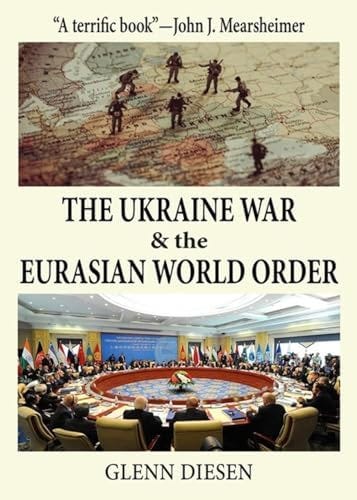
– The text includes excerpts from my book “The Ukraine War and the Eurasian World Order” https://www.claritypress.com/product/the-ukraine-war-the-eurasian-world-order/
[1] WIKILEAKS – – CIA Red Cell Special Memorandum; Afghanistan: Sustaining West European Support for the NATO-led Mission-Why Counting on Apathy Might Not Be Enough, March 11, 2010
[2] Why Nato must defend women’s rights | Jens Stoltenberg and Angelina Jolie | The Guardian
[3] J. Ray and N. Esipova, ‘Ukrainians Likely Support Move Away From NATO’, Gallup, 2 April 2010.
[4] C. English, ‘Ukrainians See More Value in Ties With Russia Than U.S.’, Gallup, 15 February 2008.
[5] 2011 – 172 CDSDG 11 E REV1 – UKRAINE – MALAN REPORT | NATO PA (nato-pa.int).
[6] GALLUP® CORP Template (usagm.gov)
[7] W.J. Burns, ‘Nyet means nyet: Russia’s NATO Enlargement Redlines’, Wikileaks, 1 February 2008.
[8] R. Lyne, ‘The UC Interview Series: Sir Roderic Lyne by Nikita Gryazin’, Oxford University Consortium, 18 December 2020.
[9] BBC, ‘Ukraine’s revolution and the far right, BBC, 7 March 2014.
[10] D. Morrison, ‘How William Hague Deceived the House of Commons on Ukraine’, Huffington Post, 10 March 2014.
[11] BBC, ‘Ukraine crisis: Transcript of leaked Nuland-Pyatt call’, BBC, 7 February 2014.
[12] The Spy War: How the C.I.A. Secretly Helps Ukraine Fight Putin – The New York Times (nytimes.com)
[13] The Spy War: How the C.I.A. Secretly Helps Ukraine Fight Putin – The New York Times (nytimes.com)
[14] G. Miller and I. Khurshudyan, ‘Ukrainian spies with deep ties to CIA wage shadow war against Russia’, The Washington Post’, 23 October 2023.
[15] M.M. Abrahms, ‘Does Ukraine Have Kompromat on Joe Biden?’, Newsweek, 8 August 2023.
[16] P. Sonne and J. Grimaldi, ‘Biden’s Son, Kerry Family Friend Join Ukrainian Gas Producer’s Board’, The Wall Street Journal, 13 May 2014.
[17] O. Matthews, ‘Viktor Yushchenko’s Star Has Fallen’, Newsweek, 13 March 2009.
[18] Language inspectors to start working in Frankivsk | УНН (unn.ua)
[19] BBC, ‘Ukraine’s Revolution and the Far Right’, BBC, 7 March 2014.
[20] A. Rubenstein and M. Blumenthal, ‘How Ukraine’s Jewish president Zelensky made peace with neo-Nazi paramilitaries on front lines of war with Russia’, The Grayzone, 4 March 2022.
[21] BBC, ‘Ukraine crisis: Deadly anti-autonomy protest outside parliament’, BBC, 31 August 2015.
[22] A. Korniienko, ‘Thousands rally in Kyiv against Zelensky’s plan to end war with Russia’, Kyiv Post, 6 October 2019.
[23] J. Melanovski, ‘Ukrainian President Zelensky deepens alliance with far right’, WSWS, 30 April 2021.
[24] A. Osang, ‘You’re Done with Power Politics’, Spiegel, 1 December 2022.
[25] T. Prouvost ‘Hollande: ‘There will only be a way out of the conflict when Russia fails on the ground’’, The Kyiv Independent, 28 December 2022.
[26] Emma, ‘Russland will verhandeln!’ [Russia wants to negotiate!], Emma, 4 March 2023.
[27] K. Volker, ‘What Does a Successful Biden-Putin Summit Look Like? Not What You Think’, CEPA, 2 June 2021.
[28] J. Stoltenberg, ‘Opening remarks’, NATO, 7 September 2023.
[29] V. Zelensky, ‘Address by the President to Ukrainians at the end of the first day of Russia’s attacks’, President of Ukraine: Official website, 25 February 2022.
[30] S. Raskin and L. Brown, ‘Ukraine and Russia to meet for peace talks ‘without preconditions,’ Zelensky says’, New York Post, 27 February 2022.
[31] M. Hirsh, ‘Hints of a Ukraine-Russia Deal?’, Foreign Policy, 8 March 2022.
[32] US Department of State, ‘Department Press Briefing’, US Department of State, 25 February 2022.
[33] US Department of State, ‘Department Press Briefing’, US Department of State, 21 March 2022.
[34] The Economist. ‘Volodymyr Zelensky on why Ukraine must defeat Putin’ The Economist, 27 March 2022.
[35] Breaking the Stalemate to Find Peace: The Russia-Ukraine War – A Geneva Security Debate (youtube.com)
[36] J. Helmer, ‘Whr. Gen. Kujat: Ukraine War is Lost, Germany Now Faces an Angry Russia… Alone’, Veterans Today, 25 January 2023.
[37] R. Semonsen, ‘Former Israeli PM: West Blocked Russo-Ukraine Peace Deal’, The European Conservative, 7 February 2023.
[38] N. Bennett, ‘Bennett speaks out’, YouTube Channel of Naftali Bennett, 4 February 2023.
[39] N. Ferguson, ‘Putin Misunderstands History. So, Unfortunately, Does the U.S.’, Bloomberg, 22 March 2022.
[40] The Economist. ‘Volodymyr Zelensky on why Ukraine must defeat Putin’ The Economist, 27 March 2022.
[41] ‘Miscalculations, divisions marked offensive planning by U.S., Ukraine’, The Washington Post, 4 December 2023.
[42] ‘Troop Deaths and Injuries in Ukraine War Near 500,000, U.S. Officials Say’, The New York Times, 18 August 2023.
[43] D. Ignatius, ‘The West feels gloomy about Ukraine. Here’s why it shouldn’t’, The Washington Post, 18 July 2023.
Ukraine offers ‘drones-for-fighters’ deal to Syrian extremist group: Report
The Cradle | September 10, 2024
Ukrainian government representatives recently met with members of Syria’s Hayat Tahrir al-Sham (HTS) extremist group to discuss a drones-for-fighters deal, Turkish newspaper Aydinlik reported on 9 September.
“A delegation from Ukraine went to Idlib in recent months and met with the leaders of the terrorist organization,” the newspaper said. According to the report, the meeting took place on 18 June.
The report said Kiev requested the release of a number of Chechen and Georgian militants being held in HTS prisons. In recent years, HTS began rooting out foreign fighters from its ranks, as well as those belonging to other armed opposition groups in northern Syria.
The newspaper added that in exchange for the release of the fighters – who Kiev plans to enlist in the fight against Russian forces – Ukraine offered 75 drones to HTS.
Aydinlik goes on to cite Kurdish reports as saying that “HTS accepted the conditions … and some radical figures were released from their prisons,” adding that “75 [Ukrainian] drones were handed over” to the extremist faction. It does note, however, that no further information or images have emerged to confirm this.
The report also says that Ukraine has been working with the Kurdistan Workers Party (PKK) and its affiliates in Syria “to conduct covert operations against Russian soldiers in Syria.”
Over the past two years, there have been numerous reports of HTS and ISIS militants being sent to fight Russia in Ukraine.
“The Kiev regime has been in contact with terrorists for a long time, and Ukrainian authorities themselves have already become an international terrorist group,” Russian Foreign Ministry spokeswoman Maria Zakharova said in response to the Turkish newspaper.
In July 2022, Sputnik cited a source as saying that the CIA was recruiting ISIS fighters and training them in preparation for deployment to Ukraine. The outlet had reported months earlier that scores of HTS fighters were being released from prisons in Idlib to be sent to the Ukrainian battlefield.
Before these reports started emerging, Syria’s ambassador to Russia, Bashar al-Jaafari, said, “We, as a state, have evidence that the US military in Syria is transferring terrorists from one place to another, especially members of ISIS and Jabhat al-Nusra [HTS] … So, one should not be surprised, and we do not exclude, that tomorrow ISIS terrorists will be sent to Ukraine.”
‘How I Got Fired From The CIA’: Philip Giraldi Tells All
By Tyler Durden – Zero Hedge – September 6, 2024
Americans are by now familiar with a handful of whistleblowers who after spending years employed by the US intelligence community (IC) eventually saw enough to make them angry and throw away the safety of their future government careers by exposing state secrets to the public. Names like Snowden, Manning, Kiriakou or John Stockwell, William Binney and Thomas Drake (both of NSA whistleblower fame) are well-known, especially in independent and alternative media circles.
But lesser known are the names of those abruptly fired and dismissed from their posts as analysts or as officers for merely questioning and pushing back in real time against what they understood to be disastrous and criminal foreign action and policy. We suspect that this list of names, still largely unknown to the public or media, is much bigger than anyone knows. Such ex-employees of the CIA, NSA, DIA or other alphabet soup agencies typically have their security clearances revoked and are threatened with criminal prosecution should they ever reveal state secrets and classified information. The possibility of future employment even in the civilian world then comes under threat. This means most of them remain unknown.
Typically the American public only finds out about massive covert CIA operations or US war plans long after the fact. For example, the intelligence community knew that the Bush-Cheney White House was gearing up for a ‘shock and awe’ invasion of Iraq for at least many months before it happened. Or for another example, the truth about the CIA’s covert program to overthrow Syria’s Assad (called ‘Timber Sycamore’) finally leaked to The New York Times at least half a decade after it began. Intelligence planners under President Obama understood that the US was arming and training al-Qaeda linked Libyan rebels to overthrow and execute Gaddafi. And all the while, then Secretary of State Hillary Clinton was getting briefed on these US-backed ‘rebels’ conducting extermination campaigns against ethnic minorities. Such horrific and suppressed truths only typically come out years or decades after they happen.
But again, what of those rare voices who dissent in real time and quietly suffer the full retribution of the national security deep state, far from the public eye? ZeroHedge was able to hear directly from one such rare dissenter in the Washington D.C. area this weekend. Former CIA operations officer Philip Giraldi spent over two decades in the agency, which took him around the world. We heard his fascinating and alarming story of “How I Got Fired From The CIA” during a closed-door session at the Ron Paul Institute‘s Liberty Platform conference held in Dulles, Virginia.
Below are ex-CIA Giraldi’s words recounting how his long career led up to a difficult show-down with CIA leadership, and what happened next, as transcribed directly by ZeroHedge [emphasis ours].
* * *
After graduate school and following time in the US Army as an intelligence officer, I joined the CIA. I was an operations officer, which means a spy. I was sent to a lot of nice places to live in, starting with Rome. And then I was in Hamburg and then I was in Istanbul, and then Barcelona. After Barcelona I left the agency for a while and came back as a contractor after 9/11, and I was there for another three years.
How I got in trouble with the agency was… after I came back as a contractor I was sent to Afghanistan – this was after we had overrun it. It didn’t take me long to figure out that we had replaced the Taliban by becoming worse than the Taliban.
And there was no evidence whatsoever coming from CIA analysts that [Osama] bin Laden [and the Afghan government] had actually been involved in 9/11, and so it was a bit of a contradictory assignment, and I became suspicious after that concerning the bogus things going on and what was developing inside the government.
So a couple years later I was back at CIA headquarters at Langley, Virginia and working with them on basic security issues. I had been a counterterrorism specialist and so I was working on different groups that they were considering to be ‘over horizon’ threats to the United States. This was a new concept, this threat. The tune that was being played in Washington was that ‘we are threatened’.
Anyway, while I was doing this I was also talking to a number of my friends who were classmates [from prior schooling and training early in his career] who were analysts and they at this point were very senior analysts in the agency. And the United States meanwhile was preparing to attack Iraq because Iraq was ‘a threat’.
And these friends of mine who were analysts saw all of the raw information that went into what the US government was seeing and they said, “you know this is all bullshit, this is all a lie – the intelligence that’s coming in is fake. And this fake intelligence is being used to justify starting another war.”
So anyway I got ‘converted’ and I started to be somewhat outspoken on the issue of why we should not be going into Iraq and we should leave this alone. And word of this got around [the agency].
So they called me in, they polygraphed me. They wanted to know who among all of my friends have similar views. I refused to cooperate and they said at that point, “well you failed your polygraph exam, we want to take away your security clearance.“
So this was after twenty-one years in the agency, they took away my clearance, and I was basically fired. So it’s kind of an interesting tale. I think it’s probably shaped my thinking ever since then. I’m automatically suspicious of people who talk about justifications for wars. I think I will continue for the rest of my life to be that way. Thank you.
Featured Video

Rewriting the risk? Inside the government’s vaccine safety messaging
or go to
Aletho News Archives – Video-Images
Book Review
“Davos Can Really Replace the UN”
Inside the book that maps the architecture behind global governance — from the Epstein files to the Pact for the Future
Lies are Unbekoming | April 1, 2026
On June 13, 2019, the United Nations and the World Economic Forum signed a partnership deal to “accelerate the implementation of the 2030 Agenda for Sustainable Development.” That same evening, WEF president Börge Brende — Norway’s former Foreign Minister — had dinner with Jeffrey Epstein at Epstein’s Manhattan townhouse. The Epstein files, released January 2026, contain an exchange between the two from the previous year. Epstein to Brende: “Davos can really replace the UN. C21, cyber, crypto . genetics… intl coordination.” Brende back to Epstein: “Exactly — we need a new global architecture. World Economic Forum (Davos) is uniquely positioned — public private.”
The next day, the UN General Assembly adopted the framework for restructuring global governance.
That sequence — the partnership signing, the Epstein dinner, the candid admission about replacing the UN with a public-private architecture, and then the formal adoption — opens Jacob Nordangård’s The Digital World Brain. Pages two and three. Footnoted to the UN resolution number, the Epstein files, and the General Assembly record.
I keep coming back to it because it captures what this book does that almost nothing else in the independent research space manages. I’ve followed Jacob’s work for years now and interviewed him about his research. Each book peels back another layer of the same institutional architecture, and each time I think he’s reached the limit of what can be documented, the next one goes further. Nordangård doesn’t speculate. He doesn’t editorialize much. He lays institutional actions next to each other in chronological order and lets the pattern announce itself. … continue
Blog Roll
 Aletho News
- How I fell foul of the BBC thought police
- The End of NATO
- 37 days of war on Iran cost US staggering $42bln, tracker shows
- Baghdad tells Asian refiners, traders to begin loading Iraqi crude amid Iranian exemption
- Under fire, Moscow and Tehran close ranks
- Iran, US receive Pakistan-mediated plan for ceasefire then final deal
- Iran submits demands for end to war as mediators scramble ahead of Trump deadline
- Iran Threatens Retaliatory Strike on Stargate AI Project in UAE
- US sent ‘a lot’ of arms to Iranian protesters – Trump
- Barak Ravid Launders Deception To Allow Trump To Back Off Of His Power Plant Threat – Again
- If Americans Knew
- U.N. experts demand Israel release prominent Gaza doctor after reports of ‘severe torture’
- Israel’s Latest Genocide Is Against the Shias of Lebanon. Why Is the World Silent?
- How Eliot Cohen’s influence over U.S. war-making paved the way for Trump’s war crimes in Iran
- Israelis don’t pay for the weapons we ‘sell’ to them — US taxpayers do
- While Distancing from AIPAC, Most 2028 Democratic Hopefuls Are Still Embracing Israel
- A brief history of the Israeli nuclear program, the open secret at the heart of the Iran war
- Israeli Settlers Killed a Palestinian Farmer on His Own Land, in Front of His Father. Yes, Again
- The US-Israeli War on Science is an Assault on our Future
- 100+ International Law Experts Say US Strikes on Iran Violate UN Charter, Could Be War Crimes
- ‘Vile, Horrifying, Evil’: Trump Threatens to Bomb Nation of 90 Million People ‘Back to the Stone Ages’
- No Tricks Zone
- An Inconvenient Tree: Uncovered In Alps… Europe Much Warmer Than Today 6000 Years Ago
- New Study Reports A 60% Slowdown In Greenland’s Ice Loss Rate In The Last Decade
- Low Intensity Tornado Wrecks Major Solar Farm, Creating A Potential Toxic Dump
- New Study Finds Warming Saves Lives…Cold Temperatures 12 Times More Deadly Than Excess Heat
- German Science Blog Accuses PIK Climate Institute Of Hallucinating Climate Tipping Points
- Devastating Assessment Of Comirnaty Vaccine By Former Senior Pfizer Europe Toxicologist
- New Study: CO2 Is ‘Effectively Negligible’ As An Explanatory Climate Change Factor Since 2000
- Former Pfizer Toxicologist Dr. Helmut Sterz Tells Bundestag Hearing Pfizer Vaccine Should Have Never Been Approved
- Energy Expert: Germany’s Nuclear Phaseout Was A “500 Billion Euro Mistake”
- New Research: South Australia’s Mid-Holocene Sea Surface Temperatures Were 4°C Warmer Than Today
 Aletho News