A Need to Clear Up Clinton Questions
By Ray McGovern | Consortium News | May 5, 2016
“Some people think they can lie and get away with it,” said former Defense Secretary Donald Rumsfeld with feigned outrage. And, of course, he has never been held accountable for his lies, proving his dictum true.
The question today is: Will former Secretary of State Hillary Clinton’s Teflon coat be as impermeable to deep scratches as Rumsfeld’s has proven to be?
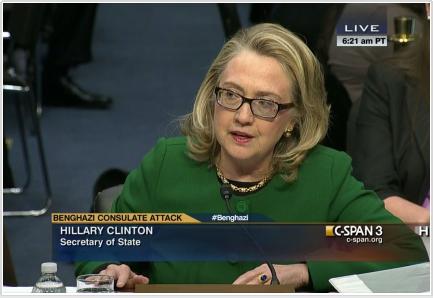
With the “mainstream media” by and large giving Hillary Clinton a pass on her past, few Americans realize how many Pinocchio faces need to be tacked onto many of her statements. Clinton is said to be “unquestionably” the frontrunner for the Democratic nomination, essentially the presumptive nominee. That is unquestionably true – but only because she has not been questioned with much rigor at all. And on those few occasions when she has been asked hard questions, she has often ducked them.
For example, at the March 9 debate in Miami, Jorge Ramos, the longtime anchor for Noticiero Univision, asked Secretary Clinton whether she would quit the presidential race if she were indicted for putting classified information on her private email server.
She replied: “Oh, for goodness sake, it’s not going to happen. I’m not even answering that question.” [See Consortiumnews.com’s “Is Hillary Clinton Above the Law?”]
Not so fast, Madame Secretary. It is looking more and more as if you will, after all, have to answer that question.
Those “Damn Emails” Again
On Wednesday in Washington, DC, a federal judge issued an order that may eventually require Clinton to testify under oath in a lawsuit related to the private email server she used while Secretary of State.
The judge gave Judicial Watch, a conservative watchdog group, permission to take sworn testimony from close Clinton aide Huma Abedin and others over the next eight weeks. It is possible that Clinton herself will have to testify under oath on the serious email issue before arriving at the Democratic convention in July.
One key issue in question is whether all relevant documents have been provided to Judicial Watch. My guess is that – given lawyers’ propensity, and often their incentive, to secure delay after delay in such proceedings – there may not be much likelihood of all this happening that quickly.
More precarious for Secretary Clinton, in my view, is the possibility that FBI Director James Comey will be allowed to perform a serious investigation and pursue Clinton on sworn testimony she has already given; for example, on whether she was aware of an operation run out of Benghazi to deliver Libyan weapons to rebels in Syria.
During her marathon testimony on Oct. 22, 2015, to the House Select Committee on Benghazi chaired by Rep. Trey Gowdy, R-South Carolina, Rep. Mike Pompeo, R-Kansas, was very specific in his questioning, leaving Clinton little wiggle-room:
Pompeo: Were you aware or are you aware of any U.S. efforts by the U.S. government in Libya to provide any weapons, directly or indirectly, or through a cutout, to any Syrian rebels or militias or opposition to Syrian forces?
Clinton: No.
Pompeo: Were you aware or are you aware of any efforts by the U.S. government in Libya to facilitate or support the provision of weapons to any opposition of Gadhafi’s forces, Libyan rebels or militias through a third party or country?
Clinton: No.
Did Secretary Clinton think we were “born yesterday,” as Harry Truman used to say? From what is already known about the activities of the U.S. “mission” and “annex” in Benghazi and the role played by the late Ambassador Christopher Stevens there, it seems quite likely that Clinton perjured herself in answering No.
And I believe this will become quite clear, if the FBI is allowed to pursue an unfettered investigation – and even clearer if the National Security Agency shares the take from its dragnet surveillance.
But those are big IFs. If I read President Barack Obama correctly, he will be more inclined to tell Attorney General Loretta Lynch to call off the FBI, just as he told former Attorney General Eric Holder to let retired General (and CIA Director) David Petraeus off with a slap on the wrist for giving his mistress intelligence of the highest classification and then lying about it to the FBI.
As for Clinton, perjury is not the kind of rap that she would welcome as she pursues the presidency. Trouble is, not only FBI investigators but also NSA collect-it-all snoopers almost certainly have the goods on whatever the truth is, with their easy access to the content of emails both classified and unclassified. [See Consortiumnews.com’s “Hillary Clinton’s Damning Emails.”]
Sadly, Comey and his counterparts at NSA are likely to cave in if the President tells them to cease and desist. Indeed, like legendary FBI Director J. Edgar Hoover, they may relish the prospect of being able to hold their knowledge of Hillary Clinton’s possible perjury and other misdeeds like a sword of Damocles over her head if she becomes president.
Whistleblower Needed
Thus, unless another patriot with the courage of an Edward Snowden or a Daniel Ellsberg recognizes that his primary duty is to honor his/her oath “to support and defend the Constitution of the United States against all enemies foreign and domestic,” and acts accordingly, the country could end up with a compromised President beholden to Hoover’s successors and the NSA sleuths who “collect everything,” including the emails of the Secretary of State – and those of the President.
Those at the FBI and NSA with the courage to consider whistleblowing need to be aware of the proud tradition they would be joining. The first recipient of the Sam Adams Award for Integrity in Intelligence (2002) was Coleen Rowley of the FBI, and in 2004 the award was given to FBI analyst and translator Sibel Edmonds.
As for signals intelligence, no fewer than four Sam Adams whistleblower awardees have come from NSA and its British counterpart GCHQ: the UK’s Katharine Gun (2003), and three from NSA itself – Thomas Drake (2011), Edward Snowden (2013), and William Binney (2015).
More distinguished company among people of integrity would be difficult – if not impossible – to find. In a few months, we will be considering nominations for the award to be given in 2017.
Historic Ruling Opens Discovery Phase for CIA Torture Victims’ Lawsuit
By Steven M. Watt | ACLU | April 29, 2016
CIA torture victims are a big step closer to accountability.
A federal judge has ruled against two CIA contract psychologists, James Mitchell and John Bruce Jessen, in their effort to dismiss a case brought against them on behalf of three victims of the torture program they designed and implemented for the agency.
Senior Judge Justin Quackenbush announced his decision rejecting the psychologists’ motion to dismiss during an argument last Friday in Spokane, Washington. Yesterday, the federal court issued its written opinion.
The ruling is an historic first. Those responsible for the CIA’s torture program never previously had to answer for their actions because no victim’s case has ever proceeded beyond a motion to dismiss. Thanks to this order, we now enter into the pretrial discovery phase of the litigation, an essential step before any trial of Mitchell and Jessen for their key role in the torture of our clients. During discovery our clients will be able to obtain evidence from Mitchell and Jessen to help prove their case at trial — although the Senate torture report already makes public many of Mitchell and Jessen’s actions in the CIA torture program.
The case was brought by Suleiman Abdullah Salim, Mohamed Ben Soud, two survivors of the CIA program, and the family of Gul Rahman, who died as a result of his torture. All three men were subjected to torture techniques and methods that Mitchell and Jessen designed and helped implement for the CIA. To this day, Salim and Ben Soud suffer psychologically and physically from the effects of their torture. Gul Rahman’s family has never been officially notified of his death, and his body never returned to them.
In their effort to evade accountability, lawyers for the two psychologists had argued that the decision to torture the three men was a political one and therefore not appropriate for determination by a judge. They also argued that they are entitled to the same legal immunity as government officials because they were government contractors.
As the court recognized, however, our judiciary is well equipped to handle claims of torture, and it does not turn a blind eye to prisoner abuse even in wartime. The court pointed out that years of case law “demonstrate the present fallacy of Defendants’ argument that the court must decline jurisdiction because the case falls within the realm of war and foreign policy.”
The court also explained that contractors do not qualify for immunity unless they “merely acted at the direction of the Government” in carrying out lawful government contracts. Mitchell and Jessen went far beyond carrying out orders. They designed, sold, and implemented an unlawful torture program (and earned tens of millions of dollars in the process).
After over a decade of trying, it looks like CIA torture survivors will finally have their day in court.
Hiding the Indonesia Massacre Files
By Jonathan Marshall | Consortium News | April 29, 2016
Now that the Indonesian government has officially opened a probe into what the CIA called “one of the worst mass murders of the 20th century,” it’s time for the U.S. government to come clean about its own involvement in the orchestrated killing of hundreds of thousands of Communists, ethnic Chinese, intellectuals, union activists and other victims during the mid-1960s.
President Joko Widodo this week instructed one of his senior ministers to begin investigating mass graves that could shed light on the slaughter of more than half a million innocents by soldiers, paramilitary forces and anti-Communist gangs.
That orgy of violence followed the killing of six generals on Sept. 30, 1965, which the Indonesian military blamed on an attempted coup by the Indonesian Communist Party (PKI). It marked the beginning of several decades of military dictatorship and further mass murders in East Timor and West Papua.
The PKI, which had some three million members, and millions more sympathizers, was by the early 1960s the strongest political force in the country aside from the military and the revered father of Indonesia’s independence, President Sukarno.
As one CIA adviser warned in 1963, “If the PKI is able to maintain its legal existence . . . Indonesia may be the first Southeast Asia country to be taken over by a popularly based, legally elected communist government.” Two years later, the military-led bloodbath put an end to that threat.
Indonesia’s government, whose leaders include military veterans of that era, still refuses to open criminal investigations into the mass murder, as called for in 2012 by Indonesia’s National Commission on Human Rights.
But some survivors nonetheless welcome the chance to expose truths that have been vigorously suppressed over the years by mass political arrests, press censorship, and pervasive indoctrination programs in the country’s schools.
Hiding Secrets
To help tell the whole story, Indonesia’s human rights commission and major international human rights organizations have called on the Obama administration to declassify U.S. government documents related to the massacres, as it did recently with respect to Argentina’s “dirty war” from 1976-83.
But President Obama, like his predecessors, has so far been reluctant to shed light on tragic events in Indonesia more than half a century ago.
“The extent of America’s role remains hidden behind a wall of secrecy,” complained Joshua Oppenheimer, maker of two acclaimed documentaries about the massacres: “The Act of Killing” and “The Look of Silence.”
“C.I.A. documents and U.S. defense attaché papers remain classified. Numerous Freedom of Information Act requests for these documents have been denied,” he observed. “If the U.S. government recognizes the genocide publicly, acknowledges its role in the crimes, and releases all documents pertaining to the issue, it will encourage the Indonesian government to do the same.”
It’s easy to guess why Washington is so reluctant to bare the truth. The limited number of documents that have been released suggest that U.S. officials goaded Indonesia’s military into seizing power in 1965 and then liquidating PKI supporters throughout the archipelago. The full record could look even uglier.
Indonesia became a focus of U.S. strategic concerns as far back as 1940, when Imperial Japan threatened its immensely valuable rubber plantations, tin mines, and oil wells. President Franklin Roosevelt’s showdown with Tokyo, which culminated in the Pearl Harbor attack, stemmed from his determination to resist the loss of the islands’ strategic resources. Years later, Richard Nixon would call Indonesia “by far the greatest prize in the South-East Asian area.”
Prompted by its appreciation of Indonesia’s value, the Eisenhower administration financed a full-scale but unsuccessful military rebellion in 1958 against the neutralist Sukarno government. The Kennedy administration tried to patch up relations, but President Lyndon Johnson — angered at the regime’s threat to U.S. rubber and oil companies as well as Sukarno’s friendly relations with the PKI — cut off economic aid while continuing training and assistance to the anti-Communist military.
As one senior State Department official testified in executive session before Congress just a few months before the 1965 coup, explaining the administration’s proposal to increase military aid, “When Sukarno leaves the scene, the military will probably take over. We want to keep the door open.”
Prompting the Slaughter
To prompt the army to act against Sukarno, U.S., British, and Australian intelligence operatives planted phony stories about PKI plots to assassinate army leaders and import weapons from Communist China to launch a revolt — elements of a “strategy of tension” that would later be used in Chile.
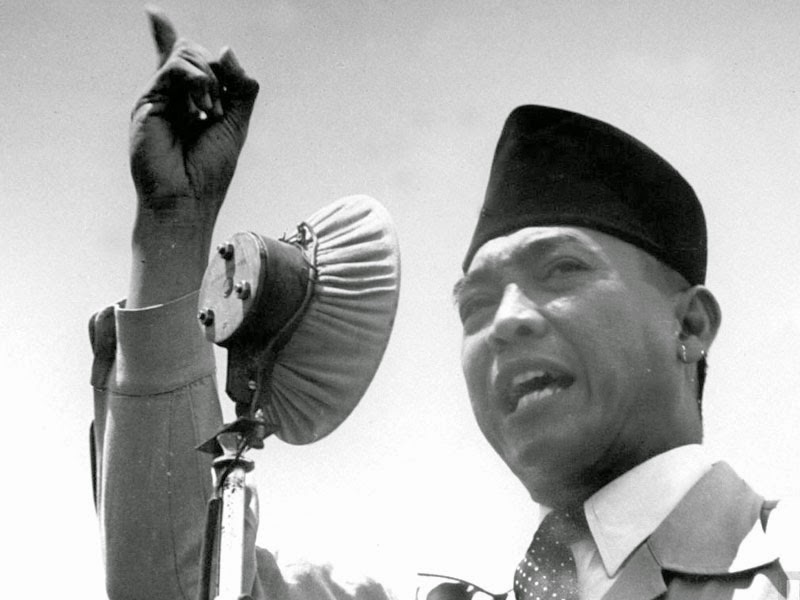
Indonesian President Sukarno.
According to former CIA officer Ralph McGehee, the CIA “was extremely proud” of its campaign and “recommended it as a model for future operations.”
Months after the bloodbath began, the well-connected associate editor of the New York Times, James Reston, would write, “Washington is being careful not to claim any credit” for the coup “but this does not mean that Washington had nothing to do with it.”
The events that triggered the military takeover remain murky even today, thanks to the regime’s systematic suppression of evidence. What seems clear, however, is that the PKI was largely caught unprepared when a group of junior officers — acting either on their own or as part of a “false flag” operation mounted by the anti-Communist General Suharto — killed six generals in the name of stopping a right-wing coup against Sukarno.
Suharto and his colleagues quickly arrested the killers, blamed the PKI for the atrocity, and aroused popular outrage by spreading false stories that the murdered generals had been sexually mutilated.
They also charged that Indonesia’s Communists were targeting Islamic leaders. In response, the country’s largest Muslim organization issued an order to “eliminate all Communists.”
On Oct. 5, 1965, U.S. Ambassador to Indonesia Marshall Green informed Washington that Muslin groups were “lined up behind” the army, which “now has opportunity to move against PKI if it acts quickly. . . Momentum is now at peak with discovery of bodies of murdered army leaders. In short, it’s now or never.”
Green was hopeful: “Much remains in doubt, but it seems almost certain that agony of ridding Indonesia of effects of Sukarno . . . has begun.” To help make sure that came to pass, Green advised telling coup leaders of “our desire to be of assistance where we can,” while remaining in the shadows.
Fanning Flames
Green proposed fanning the flames of popular anger through covert propaganda: “Spread the story of PKI’s guilt, treachery and brutality (this priority effort is perhaps most-needed immediate assistance we can give army if we can find way to do it without identifying it as solely or largely US effort).”
To that end, he later instructed to U.S. Information Agency to use all its resources to “link this horror and tragedy with Peking and its brand of communism; associate diabolical murder and mutilation of the generals with similar methods used against village headmen in Vietnam.”
By mid-October, Green reported that the embassy had discussed strategy with Army and Muslim contacts for a “step-by-step campaign not only against PKI but against whole communist/Sukarno clique.”
Soon he was reporting the good news: the army had executed hundreds of Communists and arrested thousands of PKI cadre, with help from Muslim death squads.
“I, for one, have increasing respect for [the army’s] determination and organization in carrying out this crucial assignment,” he wrote.
To help the army succeed, Green endorsed Washington’s decision to bankroll the military’s clean-up operations against the PKI, adding that “the chances of detection or subsequent revelation of our support . . . are as minimal as any black bag operation can be.”
In addition, by December 1965 the U.S. embassy began sending the Indonesian military lists of PKI leaders — facilitating their liquidation.
“It really was a big help to the army,” said Robert J. Martens, a former member of the U.S. Embassy’s political section. “They probably killed a lot of people, and I probably have a lot of blood on my hands, but that’s not all bad. There’s a time when you have to strike hard at a decisive moment.”
In a December 1965 story, Time magazine offered the first significant account in the American media of the scope of the killing:
“Communists, red sympathizers and their families are being massacred by the thousands. Backlands army units are reported to have executed thousands of Communists after interrogation in remote jails. Armed with wide-bladed knives called ‘parangs,’ Moslem bands crept at night into the homes of Communists, killing entire families and burying the bodies in shallow graves.
“The murder campaign became so brazen in parts of rural East Java, that Moslem bands placed the heads of victims on poles and paraded them through villages. The killings have been on such a scale that the disposal of the corpses has created a serious sanitation problem in East Java and Northern Sumatra where the humid air bears the reek of decaying flesh.
“Travelers from these areas tell of small rivers and streams that have been literally clogged with bodies. River transportation has at places been seriously impeded.”
By February 1996, the U.S. embassy was estimating that at least 400,000 people had already been killed across the country — more than died from the atomic bomb attacks on Hiroshima and Nagasaki.
Media Approval
C.L. Sulzberger of The New York Times remarked in April that “the killing attained a volume impressive even in violent Asia, where life is cheap.”
Speaking for official Washington, in a column titled “A Gleam of Light in Asia,” the New York Times’ James Reston called this bloodbath one of “the more hopeful political developments” in Asia, one that could not have “been sustained without the clandestine aid it has received indirectly from here.”
The full extent of that clandestine aid remains a contested question, but historian Bradley Simpson, in a 2008 study of U.S. relations with Indonesia in the 1960s, observed that “declassification of just a fraction of the CIA’s records demonstrates that the agency’s covert operations in Indonesia were more widespread and insidious than previous acknowledged. These records also reveal that the Johnson administration was a direct and willing accomplice to one of the great bloodbaths of twentieth-century history.”
New Mexico’s Tom Udall declared last year as he introduced a Senate resolution to promote reconciliation on the 50th anniversary of the Indonesian massacres, “the United States and Indonesia must work to close this terrible chapter by declassifying information and officially recognizing the atrocities that occurred. . .
“The United States should stand in favor of continued democratic progress for our vital ally Indonesia and allow these historical documents to be disclosed. Only by recognizing the past can we continue to work to improve human rights across the globe.”
The world is still waiting on President Obama to heed that call.
Jonathan Marshall is author or co-author of five books on international affairs, including The Lebanese Connection: Corruption, Civil War and the International Drug Traffic (Stanford University Press, 2012).
Crisis in Congo-Brazzaville: France’s hidden hand
By Gearóid Ó Colmáin | American Herald Tribune | April 27, 2016
Since the re-election on the 20th of March of President Denis Sassou-Nguesso for a controversial third term, the government of the Republic of Congo has been criticised by the international community for its alleged bombing of ‘civilian neighborhoods’, following post-election terrorist attacks in the country’s capital, Brazzaville. In reality, however, the West African nation is currently fighting the early stages of a US/French or NATO-backed insurgency – an attempt by NATO to destabilize a country moving closer to the BRICS sphere of influence. In this report, I examine the geopolitical and historical background of a West African political crisis of global significance.
In the aftermath of presidential elections on the 20th of March, which saw the controversial re-election of President Denis Sassou Nguesso with over 60 percent of the vote, there has been increasing instability in the Republic of Congo. Opposition candidates have vociferously contested the election results. This contestation has been encouraged by the French Government, the European Union, and the United States, who have all backed opposition candidates, in particular, Guy-Brice Parfait Kolélas, who came in second during the elections with 15% of the vote.
On the nights of the 4th and the 5th of April, terrorists attacked the country’s capital city Brazzaville killing seventeen people. Six police stations, two customs control stations, and the city hall were burned down. The terrorists were members of the Ninja Nsiloulhou organisation which is headed by Pastor Ntoumi, an old enemy of the president, and supporter of the losing opposition candidate Guy-Brice Parfait Kolélas.
Brutal crackdown on civilians?
On the 5th of April immediately after the attacks, the Congolese military conducted an anti-terrorist operation in the region of Pool, in the South of the country – a stronghold of the Ninja Nsilouhou terrorists and their political representatives. The terrorists had fought against Sassou-Nguesso’s forces during the civil war of 1998 to 2002. The Ninja Nsilouhou militia are composed of sectarian adventurists and mercenaries with connections to American and French intelligence.
Pastor Ntoumi, who is from the majority Congo ethnic group, has formed a new and surprisingly well-equipped army the Forces armées républicaines pour l’alternance au Congo (FARLC), the Republican Armed Forces for Regime Change in Congo. Ntumi’s forces have no economic programme for change. They are, rather, more concerned with ousting the Northern Mbochi from power, the president’s ethnic group, a minority in the country.
Western imperial domination of Africa has traditionally relied on empowering minority ethnicities and tribes. However, over time, many of those regimes have overcome tribal divisions; thus depriving imperialism of the advantages of keeping subject nations divided. Although the Mbochi only constitute 12 percent of the country’s population, they occupy over 40 percent of government posts – a source of ethnic tension currently being instrumentalised by imperialism.
Amnesty International’s history of lies and war propaganda
Given the hostility of Western governments to the reelection of Sassou Nguesso, it should not be surprising to find that the first reaction of the French establishment media to the Congolese government’s crackdown on the Ninja terrorists came in the form of a condemnatory report by Amnesty International. The human rights organisation strongly condemned what it described as the bombing of civilian targets by the Congolese military. However, Amnesty International’s report admits that the organization did not have access to the area in question and that they have not been able to confirm any of the accusations made by their anonymous sources in the Pool region.
The government of the Republic of Congo has issued a firm condemnation of Amnesty International’s report, stating that the dossier is not based on any evidence. Furthermore, Amnesty’s accusations have been contradicted by the Catholic humanitarian organization Caritas – who have also visited Pool and have not documented any military targeting of civilians. One of the lies told by Amnesty International about the Congolese military operation in Pool has already been exposed.
The human rights organisation claimed that a primary school in Soumouna was bombed. However, photographs dated from the 18th of April prove that the school was not bombed. One of the key ‘sources’ for Amnesty’s report is Monsignor Louis Portella, a close confidante of Pastor Ntumi, the aforementioned terrorist tracked by the Congolese military.
Amnesty’s report has provided ammunition for the opposition’s anti-Nguesso rhetoric , who are referring to the anti-terrorist operation in Pool as “genocide.” Although widely considered to be a reliable, objective and respectable organisation, Amnesty International has a long history of legitimising war propaganda on behalf of the United States and its allies.
The human rights group was instrumental in the assassination of Ghanaian leader Kwame Nkumra when he was being targeted by the CIA. Amnesty International have been accused of complicity in Nkumra’s assassination; they have also been accused of complicity in the death of Patrice Lumumba, first president of the Democratic Republic of Congo.
Zbigniew Brzezinski (former U.S National Security Adviser to President Jimmy Carter) was among the former board members of Amnesty International; this was at a time when the human rights organisation was publishing reports condemning the democratic government of Afghanistan. Meanwhile, the CIA-backed Mujahadeen, part of Brzezinski’s ‘Arc of Crisis’ strategy, massacred the Afghan population with little or no criticism from Amnesty International.
Amnesty International’s record in exposing the crimes of Zionism is no better; the organisation helped cover up Israeli massacres in Shabra, Shatila, and Jenin in 1982.
In 1986, the human rights organisation published a damning report against the Sandinista government of Nicaragua which was used by the Reagan administration to justify more aid to the contra terrorists who would eventually destroy that country.
In the run-up to the Gulf War in 1991, Amnesty International colluded with the US military in orchestrating a fake story about Iraqi soldiers taking 312 newborn babies out of incubators in Kuwaiti hospitals and throwing them on the floor. The story, which shocked the world, provided the propaganda the US government needed to bomb Iraq – a bombing followed by crippling sanctions that murdered over 500,000 babies; it was the beginning of the destruction of the Middle East’s wealthiest and most advanced countries. The story was entirely fabricated by the US military. Amnesty International was the key agency behind the fraud – a dirty lie created to justify war and genocide.
Amnesty International colluded in the demonisation of Hugo Chavez by US-backed Putschists in the run-up to the 2002 coup in Venezuela. During years of brutal Apartheid rule in South Africa, Amnesty never condemned the brutal racist system.
In 2011, Amnesty International validated fake reports of ‘African mercenaries’ in Libya who were said to be committing massacres. The reports, entirely fabricated, were used to justify war against Africa’s richest and most democratic nations, resulting in the deaths of hundreds of thousands of people and an ongoing refugee crisis of catastrophic proportions.
Since the outbreak of NATO’s war against Syria, Amnesty International has produced nothing but lies and calumny against the democratic institutions of the Syrian Arab Republic. With a record like that, it is hardly surprising to find Amnesty International publishing another damning report against an African government Western imperialism is attempting to overthrow by force. (Read more here)
Why must Sassou Nguesso go?
Although nominally independent from France since 1958, the republic of Congo did not embark upon a true path of independence until the accession to power of Marien Ngouabi in 1968. For 9 years until his assassination in 1977, Ngouabi laid the basis for Africa’s first socialist state. The charismatic communist leader managed to align the People’s Republic of Congo with both the USSR and China, in spite of the ideological split between the Soviet revisionists and Maoist China.
Ngouabi also formed close links with Cuba. The communist revolutionary, who had an advanced degree in physics, was passionate about education and was arguably the greatest leader of African national liberation; but the dream came to a tragic and abrupt end in 1977 when he was murdered by a group of army officers most likely led by Joachim Yhombi-Obango; the assassination had the blessing of French and American intelligence. Both countries resumed diplomatic relations with Congo-Brazzaville immediately after Ngouabi’s murder.
Opango was deposed in 1978 by Denis Sassou-Nguesso; the new leader collaborated to a large extent with French neocolonial interests – a policy euphemistically referred to as ‘la Françafrique.’ Rumours about Nguesso’s role in the murder of Ngouabi have proliferated over the years, but there is still no conclusive evidence linking him to the communist leader’s death.
With the dissolution of the USSR in 1991, the French government forced the Congolese state to open up to multi-party-ism – a disastrous policy which led to the highly corrupt reign of French puppet Pascal Lissouba until Denis Sassou-Nguesso resumed power again in 2002 after a four-year civil war. Over the last decade, President Nguesso has brought the country closer to China, Russia, Brazil, and Cuba – old cold war allies (Brazil excepted) in anti-colonialist struggle.
Building blocks of independence
Although Denis Sassou-Nguesso is certainly no angel and his regime may be guilty of serious crimes over the years, he does have some notable achievements under his belt; he has managed to restore peace to a war-torn country. His government has also overseen a period of steady economic growth. President Sassou Nguesso has initiated major economic projects designed to build up the country’s industrial base. In the next few months, an oil pipeline between Point Noire, Brazzaville and Oyo will be built by the Russian government. Moscow will also help construct two major hydroelectric dams in Sounda and Cholet. The Sounda region in the isolated north of the country is now connected with a new highway.
The Sassou-Nguesso administration has overseen significant advances in transport provision. Brazzaville’s state-of-the-art Maya Maya airport hosts a largely state-owned airline EC AIR, providing new direct transport routes to major world commercial destinations such as Dubai. The Maya Maya airport is set to become the biggest and busiest airport in Central Africa. The upgrading of the airport was carried out by Chinese company Weihei International, Economic and Technical Cooperative Co.Ltd.
In Pointe Noir, the country’s second principal city, the Augustino Neto airport is currently under construction. On the 22nd of February 2016, the Congolese government signed a contract with the China Road and Bridge Corporation (CRBC), for the construction of a new deep sea port in Pointe Noire. The port is expected to lead to significant economic development in the country. At the contract signing, the Chinese ambassador to the Republic of Congo reiterated his country’s commitment to the industrialization of the Congolese economy.
New road networks are under construction throughout the country. A monumental road and rail bridge is will connect Brazzaville and Kinshasa, as part of the Trans-African Highway Network. The Chinese are reportedly planning the construction of a new railway line from Brazzaville in the South to Ouesso in the North and from Djambala in the centre of the country to Pointe Noire on the coast; the project promises to be a major boost to trade and industrial development.
Many new public administration buildings are under construction in the country’s capital as part of the government’s drive to strengthen the efficiency of state institutions, improving public services and affirming national sovereignty. Sassou-Nguesso’s administration also intends to construct a 4 km bridge across the Congo River connecting Brazzaville to Kinshasa, capital of the neighbouring Democratic Republic of Congo.
The Congolese government plans to reduce dependence on oil export revenues by developing its agricultural industry. Meetings between the Congolese minister of agriculture and his Brazilian counterpart took place in both Brazil and the Republic of Congo in 2008, 2009 and 2010.
Japan has also significantly increased investment in the Congolese Republic agribusiness.
As part of its preparations for hosting the Panafrican Music Festival, new cultural centres, theatres and cinemas are scheduled to be built. The new Sports Complex currently under construction in Kintélé will enable the country to host events of international stature, increasing investment revenue and promoting job creation.
Although modest, the Congolese government has shown some commitment to reducing poverty by building over 10,000 new social units. The country, which currently has only one university named after Marien Ngouabi, is soon to have another when the Denis Sassou Nguesso university is completed in Kintele.
Sassou-Nguesso’s administration has initiated an ambitious project to provide free potable water to the country’s population. The project named ‘Water for All’ is being implemented in conjunction with Brazilian company Asperbras – one of the world’s leading specialists in the provision of public service infrastructure and heavy industry equipment. Asperbras is also constructing fourteen top-class hospitals throughout the country as part of the government’s project ‘Health for All‘.
Since the visit by Brazilian president Lula Ignacio da Silva to Brazzaville in 2007 (he opened Brazil’s first embassy in the country) Brazzaville and Brasilia have strengthened ties. There have been several visits by Congolese ministers to Brazil and the presidents of the two countries have met twice since 2012.
Nguesso’s government has benefited from significant Chinese investment in the oil industry. The Chinese have also invested in the construction of major industrial projects such as the business center in Mpila, and impressive viaducts in Brazzaville and Talangai.
Although the ruling Party of Labour abandoned their adherence to Soviet revisionist Marxism-Leninism in 1992, embracing official social-democracy and multi-party politics, Nguesso has continued to maintain strong ties with left-leaning countries such as Cuba, Brazil, China, and Russia.
The Western media portray Nguesso as a corrupt, power-hungry dictator siphoning off the country’s resources for his own clan or tribe, and some of these accusations may, in fact, be true. But the infrastructural projects mentioned above show that the country is building the basis of national independence through Chinese, Russian, and Brazilian investment in heavy industry. Such investment threatens Western neocolonial interests; those interests require the maintenance of Africa in a state of constant underdevelopment and dependence so that its natural resources can be pillaged by Western corporations.
Nguesso’s ties with Cuba go back to the Cold War era when the Caribbean nation played a key role in African liberation struggles – a fact acknowledged by Nelson Mandela. Cuba’s socially-oriented economy has been subject to incessant demonisation for over half a century by the international corporate press, but not even they can deny the extraordinary achievements of the Cuban government in the provision of free education and health care of the highest standard.
The Republic of Congo’s Party of Labour has shown some fidelity to Ngouabi’s Marxist principles by sending 280 students to Havana to train as doctors. Cuban educators have been invited to the Congo to bring pedagogical methodologies with a view to improving the country’s education system.
The Empire’s strategic horizon: war
In April 2012, the French Ministry of Defense published a report ‘Horizons stratégiques’ that described the future of French interests in Africa. The report stated that competing powers such as China, India, Russia and Brazil, coupled with the rise of Pan-Africanist nationalism, pose the greatest threat to French interests on the continent.
The report indicates that problems such as ethnic conflict and religious terrorism will require the continued military presence of French troops in Africa and that those troops will liaise, not with sovereign states, but local private contractors. In other words, the future of French neocolonial interests in Africa depends on the fomentation of civil wars and the total privatisation of African nation-states.
Over the past 5 years, I have maintained that Western imperialism in this era is proceeding on the basis of leftist symbology. The CIA-backed Arab Spring people-power coups of 2011 testify to that fact. But the Arab Spring was only the beginning. Mathieu Pigasse the director of the Lazard Bank, confidante of President Hollande, and proprietor of the newspaper Le Monde, stated in 2012 that he wanted to see the Arab Spring ideology spread all over Africa. French companies, he argued, would in future only deal with ”civil society” organisations, rather than ”corrupt” African governments. What that ultimately means is that the oligarch Pigasse wants to see all African nation-states erupt in chaos so that their resources can be privatised by Western banks and corporations in the name of freedom, democracy, and the oligarchy’s newest slogan ‘popular revolution’.
The pseudo-leftist opposition media in France have been at the forefront of disinformation about the Republic of Congo. They frequently express outrage at the French government for supporting such a ‘genocidal’ regime in Africa, when in fact the French and U.S. governments are supporting its opponents.
We have already mentioned the lies validated by Amnesty International about Colonel Gaddafi’s recruitment of ‘African mercenaries’ who were reported to have massacred ‘peaceful demonstrators’ during the 2011 insurgency in Libya.
Similar stories have recently been concocted by powerful French interests. But some of those lies have backfired. The former director of the French giant oil company ELF Loïc Le Floch-Prigent and his lawyer Norbert Tricaud have been brought before a French court for defamation after they claimed French mercenary Patrick Klein had been recruited by the Congolese government to massacre political opponents. Klein has denied the accusations and taken Le Floch-Prigent to court for defamation.
It is interesting to note that attorney Norbert Tricaud has managed to recruit the granddaughter of Marien Ngouabi in his campaign to accuse President Denis Sassou-Nguesso of her grandfather’s assassination; yet in his interviews,Tricaud completely ignores the role of the CIA and French intelligence in Ngouabi’s murder. Nor is there any mention of the fact that Ngouabi’s French wife, the grandmother of Tricaud’s client, was in fact a French spy! No French or American officials have ever been prosecuted for the assassination of African leaders, in spite of the fact that the secret agencies of the United States and France were behind the murder of dozens of African revolutionaries and heads of state.
Tricaud claims, in one of his interviews, to be a lawyer engaged in the struggle against slavery and indigenous rights. He refers repeatedly to the government of Sassou-Nguesso as a ‘dictatorship’ notwithstanding the fact that Sassou-Nguesso’s administration was the first in Africa to pass laws giving rights to indigenous pygmy peoples, who for centuries have been enslaved by Bantou colonial settlers. It is important to study the deceptive methodology used by people like Tricaud. He appears to be critical of Western foreign policy of propping up of dictators in Africa, while simultaneously promoting imperial military intervention in the guise of humanitarianism.
On his Facebook page Norbert Tricaud (the man determined to find out who killed the communist revolution Marien Ngouabi) boasts of lobbying on behalf of the ultra-right wing General Mokoko with an advisor of US Secretary of State John Kerry, and various ‘NGOS’. Jean-Marie Michel Mokoko attempted a coup d’Etat against the government of the Republic of Congo earlier this year and claimed to have the French government on his side.
A video posted on line shows Mokoko in the offices of Sylvain Maier planning a coup d’etat against Sassou-Nguesso with DGSE (French secret service) agent. In the film, the French secret service agent warns Mokoko” if you betray me, I’ll kill you” The DGSE agent hands over flight tickets and an envelope of cash to Mokoko. The DGSE agent explains how French intelligence will orchestrate the media coverage of the coup d’etat so as to convince Congolese citizens that Mokoko is a democrat. He also explains how French intelligence will organise the post-coup state of emergency and military curfew, joking that ”most African’s are cowards” and will turn to the Putschists for protection.
The video was shot in the offices French lawyer Sylvain Maier, who has been prosecuted for money laundering.
Radio France Internationale, French state media, were able to confirm the authenticity of the video and did their best to distract from the disgraceful proof of the French neo-colonial conspiracy by claiming that the document was being used by the dictator to discredit a ‘serious’ opponent.
Also on his Facebook page, Tricaud calls for a ‘humanitarian corridor’ in Pool, to ‘protect civilians’. The phrase ‘humanitarian corridor’ was coined by Dr. Bernard Kouchner in 1968, when France was attempting to create a client state in Biafra, Nigeria. Kouchner, who had set up ‘Doctors without Borders’ called for such a corridor to be established in the country so as to help the civilians allegedly bombed by the Nigerian government. Ultimately thousands of weapons were smuggled in ambulances to the French-backed insurgents.
Norbert Tricaud recently joined a delegation of 19 Congolese politicians to lobby the US congress and the National Endowment for Democracy, a think tank closely linked to the CIA and a chief sponsor of ‘civil society’ led ‘popular uprisings’. These meetings prove that US/French-backed regime change in Brazzaville is now at an advanced stage of planning. Denis Sassou-Nguesso will indubitably become the next African leader to face mass media demonization and information warfare as a proxy war of aggression waged by mercenaries in the pay of France and the United States looks increasingly likely.
Sassou-Nguesso’s emphasis on heavy industry, public infrastructure, strengthening the authority and role of the state, while attracting more investment from emerging global powers, are the factors that have made him an enemy of the Empire. In his inauguration speech, Denis Sassou Nguesso pledged to combat corruption and nepotism. He said this term would be the beginning of a major rupture with the past. The Congolese president may have been referring to the fact that the balance of power in the world is shifting in favour of China, Russia, and the BRICS world order, and that such a seismic shift in the distribution of imperial power is good news for Africa.
Although, French government representative Jean-Luc Borloo unctuously described the president’s speech as a ”monument of vision,” it is clear that the French government and media establishment are backing the pseudo-opposition and their terrorist militia in a desperate attempt to save the old, crumpling, and utterly rotten colonial order.
The current concrete choice facing the people of Congo Brazzaville is relative peace and economic progress under Sassou Nguesso or chaos, war and death under his Western-backed opponents.
Congolese citizens would be well advised to ignore the Western-backed conspiracy theories surrounding Marien Ngouabi’s death and follow instead the path of Sassou Nguesso, who, despite his many shortcomings and alleged crimes, is doing more to revive the spirit of Marien Ngouabi than any of his opponents. The question now is not who killed Ngouabi but who among the country’s youth will fulfill his legacy.
How CBS News Aided the JFK Cover-up
By James DiEugenio | Consortium News | April 22, 2016
In the mid-1960s, amid growing skepticism about the Warren Commission’s lone-gunman findings on John F. Kennedy’s assassination, there was a struggle inside CBS News about whether to allow the critics a fair public hearing at the then-dominant news network. Some CBS producers pushed for a debate between believers and doubters and one even submitted a proposal to put the Warren Report “on trial,” according to internal CBS documents.
But CBS executives, who were staunch supporters of the Warren findings and had personal ties to some commission members, spiked those plans and instead insisted on presenting a defense of the lone-gunman theory while dismissing doubts as baseless conspiracy theories, the documents show.
Though it may be hard to remember – amid today’s proliferation of cable channels and Internet sites – CBS, along with NBC and ABC, wielded powerful control over what the American people got to see, hear and take seriously in the 1960s. By slapping down any criticism of the Warren Commission, CBS executives effectively prevented the case surrounding the 1963 assassination of President Kennedy from ever receiving the full airing that it deserved.
Beyond that historical significance, the internal documents – compiled by onetime CBS News assistant producer Roger Feinman – show how a major mainstream news organization green-lights one approach to presenting sensitive national security news while blocking another. The documents also shed light on how senior news executives, who have bought into one interpretation of the facts, are highly resistant to revisit the evidence.
Buying In
CBS News jumped onboard the blue-ribbon Warren Commission’s findings as soon as they were released on Sept. 27, 1964, just over 10 months after President Kennedy was assassinated in Dallas, Texas, on Nov. 22, 1963. In a special report, CBS and its anchor Walter Cronkite preempted regular programming and, with the assistance of reporter Dan Rather, devoted two commercial-free hours to endorsing the main tenets of that report.
However, despite Cronkite and Rather giving the Warren Report their public embrace, other people, who were not in the employ of the mainstream media, examined critically the report and the accompanying 26 volumes. Some of these citizens were lawyers and others were professors, the likes of Vincent Salandria and Richard Popkin. They came to the conclusion that CBS had been less than rigorous in its examination.
By 1967, the analyses challenging the Warren Report’s conclusions had become widespread, including popular books by Edward Epstein, Mark Lane, Sylvia Meagher and Josiah Thompson. Thompson’s book, Six Seconds in Dallas, was excerpted and placed on the cover of the wide-circulation magazine Saturday Evening Post. Lane was appearing on talk shows. Prosecutor Jim Garrison had announced a reopening of the JFK case in New Orleans. The dam was threatening to break.
The doubts about the Warren Report had even spread into the ranks at CBS News, where correspondent Daniel Schorr and Washington Bureau chief Bill Small recommended a fair and critical look at the report’s methodology and findings. Top prime-time producer Les Midgley later joined the effort.
CBS News vice president Gordon Manning sent the proposal on to CBS News president Richard Salant in August 1966, but it was declined. Manning tried again in October, suggesting an open debate between the critics of the Warren Report and former Commission counsels, moderated by a law school dean or the president of the American Bar Association. The idea was to give the two sides a chance to make their best points before the viewing public.
Zapruder Evidence
One month after Manning’s debate proposal, Life Magazine published a front-page story in which the Warren Commission’s verdict was questioned by photographic evidence from the Zapruder film (which the magazine owned). Life also interviewed Texas Gov. John Connally who disagreed that he and Kennedy had been hit by the same shot, a claim that undercut the “single bullet theory” at the heart of the Warren Report.
Without the assertion that a single bullet inflicted multiple wounds on Kennedy and Connally, who was riding in front of the President, the commission’s verdict collapses. The magazine story ended with a call to reopen the case. Indeed, Life had put together a small journalistic team to do its own internal investigation.
A few days after this issue appeared, Manning again pressed for a CBS special. This time he suggested the title “The Trial of Lee Harvey Oswald,” with a panel of law school deans reviewing the evidence against Oswald in a mock trial, including evidence that the Warren Commission had not included. In other words, there would be a chance for American “jurors” to weigh the evidence that might have been presented against Oswald if he had lived and to make a judgment on his guilt. Again, this approach offered the potential for a reasonably balanced examination of the Kennedy assassination.
At this point, Manning was joined by producer Midgley, who had produced the two-hour 1964 CBS special. Midgley’s suggestion differed from Manning’s in that he wanted to title the show “The Warren Report on Trial.” Midgley suggested a three-night, three-hour series with one night given over to the commission defenders, one night including all the witnesses that the commission overlooked or discounted, and the last night including a verdict produced by legal experts. But the title itself suggested a level of skepticism that had not been part of the earlier proposals.
The Higher-ups Intervene
However, then CBS senior executives began to intervene. On Dec. 1, 1966, Salant wrote a memo to John Schneider, president of CBS Broadcast Group, telling him that he might refer the proposal to the CBS News Executive Committee (CNEC). According to information that a former CBS assistant producer Roger Feinman obtained during a legal hearing against CBS, plus secondary sources, CNEC was a secretive group that was created in the wake of Edward R. Murrow’s departure from CBS.
Murrow was a true investigative reporter who became famous through his reports on Sen. Joe McCarthy’s abuses and the mistreatment of migrant farm workers. The upper management at CBS did not like the controversies that these reports generated among influential segments of the American power structure. There was a perceived need to tamp down on such wide-ranging and independent-minded investigations. After all, the CBS executives were part of that power structure.
CBS News president Salant epitomized that blurring of high-level corporate journalism and America’s ruling class. Salant had gone to Exeter Academy, Harvard, and then Harvard Law School. He was handpicked from the network’s Manhattan legal firm by CBS President Frank Stanton to join his management team.
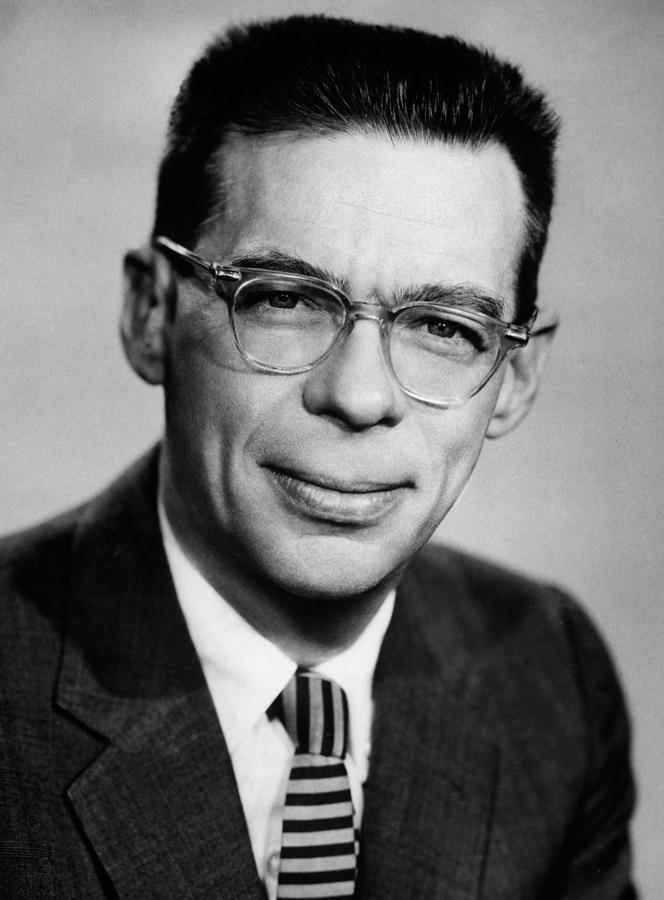
CBS News president Richard Salant
During World War II, Stanton had worked in the Office of War Information, the psychological warfare branch. In the 1950s, President Dwight Eisenhower had appointed Stanton to a small committee to organize how the United States would survive a nuclear attack. From 1961-67, Stanton was chairman of Rand Corporation, a CIA-associated think tank.
The other two members of CNEC were Sig Mickelson, who had preceded Salant as CBS News president and then became a director of Time-Life Broadcasting, and CBS founder Bill Paley, who had also served in the World War II psy-war branch of the Office of War Information and – after the war – let CIA Director Allen Dulles have the spy agency informally debrief CBS overseas correspondents.
When Salant turned the Warren Commission issue over to CNEC, the prospects for any objective or skeptical treatment of the JFK case faded. “The establishment of CNEC effectively curtailed the news division’s independence,” Feinman later wrote about his discoveries.
Further, Salant had no journalistic experience and was in almost daily communication with Stanton, whose background was in government propaganda.
Scaling Back
The day after Salant informed CNEC about the proposed JFK assassination special, Salant told CBS News vice president Manning that he was wavering on the mock trial concept. Salant’s next move was even more ominous. He sent both Manning and prime-time news producer Midgley to California to talk to two lawyers about the project.
One of the attorneys was Edwin Huddleson, a partner in the San Francisco firm of Cooley, Godward, Castro and Huddleson. Huddleson attended Harvard Law with Salant and, like Stanton, was on the board of the Rand Corporation. The other lawyer was Bayless Manning, Dean of Stanford Law School. They told the CBS representatives that they were against the network undertaking the project on the grounds of “the national interest” and because of the topic’s “political implications.”
CBS News vice president Manning reported that both attorneys advised the CBS team to ignore the critics of the Warren Commission or to appoint a special panel to critique their books, in other words, to put the critics on trial. Huddleson also steered the CBS team to cooperative scientists who would counter the critics.
On his return to CBS headquarters, Manning saw the writing on the wall. He knew what his CBS superiors really wanted and it wasn’t some no-holds-barred examination of the Warren Commission’s flaws. So, he suggested a new title for the series, “In Defense of the Warren Report,” and wrote that CBS should dismiss “the inane, irresponsible, and hare-brained challenges of Mark Lane and others of that stripe.”
Out on a Limb
Manning’s defection from an open-minded treatment of the evidence to a one-sided Warren Commission defense left producer Midgley out on a limb. However, unaware of what Salant was up to, on Dec. 14, 1966, Midgley circulated a memo about how he planned on approaching the Warren Report project. He proposed running experiments that were more scientific than “the ridiculous ones run by the FBI.” He still wanted a mock trial to show how the operation of the Commission was “almost incredibly inadequate.”
In response, Salant circulated an anonymous, undated, paragraph-by-paragraph rebuttal to Midgley’s plan, which Feinman’s later investigation determined was written by Warren Commissioner John McCloy, then Chairman of the Council on Foreign Relations and the father of Ellen McCloy, Salant’s administrative assistant.
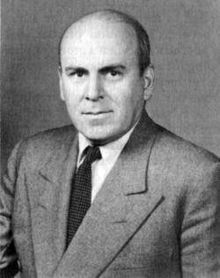
John J. McCloy
In this memo, McCloy wrote that “the chief evidence that Oswald acted alone and shot alone is not to be found in the ballistics and pathology of the assassination, but in the fact of his loner life.” As many Warren Commission critics have noted, it was this approach – discounting or ignoring the medical and ballistics evidence, but concentrating on Oswald’s alleged social life – that was a fatal flaw of the Warren Report.
Despite the familial conflict of interest, Ellen McCloy was added to the distribution list for almost all memos related to the Kennedy assassination project and thus could serve as a secret back-channel between CBS and her father.
A Stonewall Defense
Clearly, the original idea for a fresh examination of the Warren Commission and the evidence that had arisen since its report was published in 1964 had been turned on its head. The CBS brass wanted a defense, not a critique.
Salant asked producer Midgley, “Is the question whether Oswald was a CIA or FBI informant really so substantial that we have to deal with it?” Midgley, increasingly alone out on the limb, replied, “Yes, we must treat it.”
As the initial plan for a forthright examination of the Warren Commission’s shortcomings was transformed into a stonewall defense of the official findings, there was still the problem of Midgley, the last holdout. But eventually his head was turned, too.
While the four-night special was in production, Midgley became engaged to Betty Furness, a former actress-turned-television-commercial pitchwoman whom President Lyndon Johnson appointed as his special assistant for consumer affairs, even though her only experience in the field had been selling Westinghouse appliances for 11 years on television. She was sworn in on April 27, 1967, which was about two months before the CBS production aired. Two weeks after it was broadcast, Midgley and Furness were married.
As Kai Bird’s biography of McCloy, The Chairman, makes clear, Johnson and McCloy were friends and colleagues. But there is another point about how Midgley was convinced to go along with McCloy’s view of the Warren Commission. Around the same time he married Furness, he received a significant promotion, elevated to executive editor of the network’s flagship news program, “The CBS Evening News with Walter Cronkite.” This made him, in essence, the top news editor at CBS, a decision that required the consultation and approval of Salant, Cronkite and Stanton – and very likely the CNEC.
So, instead of a serious investigation into the murder of President Kennedy – at a time when there was the possibility of effective national action to get at the truth – CBS News delivered a stalwart defense of the Warren Commission’s conclusions and heaped ridicule on anyone who dared question those findings.
Shaping that approach was not only the influence of Warren Commission member John McCloy, an icon of the Establishment, but the carrots and sticks applied to senior CBS producers, such as Gordon Manning and Les Midgley, who initially favored a more skeptical approach but were convinced to abandon that goal.
Curious Consultants
Once McCloy was brought onboard, the complexion of CBS’s treatment of the JFK assassination changed. CBS hired consultants who were rabidly pro-Warren Report to appear as on-air experts while others would be hidden in the shadows. In addition to the clandestine role of McCloy, some of these consultants included Dallas police officer Gerald Hill, physicist Luis Alvarez and reporter Lawrence Schiller.
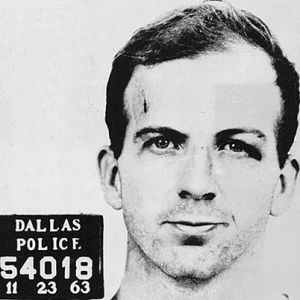
Lee Harvey Oswald
Officer Hill was just about everywhere in Dallas on Nov. 22, 1963. He was at the Texas School Book Depository where Oswald worked and allegedly shot the President from the sixth floor; Hill was at the murder scene of Officer J. D Tippit, who was allegedly shot by Oswald after he fled Dealey Plaza; and he was at the Texas Theater where Oswald was arrested.
Hill appeared in the CBS 1967 program show as a speaker. But Roger Feinman found out that Hill also was paid for six weeks work on the show as a consultant. During his consulting, Hill revealed that the police did a “fast frisk” on Oswald while in the theater. They found nothing in his pockets at the time, which begs the question of where the bullets the police said they found in his pockets later at the station came from. That question did not arise during the program since CBS never revealed the contradiction. (Click here and go to page 20 of the transcript.)
Physicist Luis Alvarez, who had a served as an adviser to the CIA and to the U.S. military in the Vietnam War, spent a considerable amount of time lending his name to articles supporting the Warren Report and conducting questionable experiments supporting its findings. As demonstrated by authors Josiah Thompson (in 2013) and Gary Aguilar (in 2014), Alvarez misrepresented some data in some of his JFK experiments. (Click here and go to the 37:00 mark for Aguilar’s presentation.)
Making Fun
The same year of the 1967 CBS broadcast, reporter Lawrence Schiller had co-written a book entitled The Scavengers and Critics of the Warren Report, a picaresque journey through America where Schiller interviewed some of the prominent – and not so prominent – critics of the report and caricatured them hideously.
Secretly, he had been an informant for the FBI for many years keeping an eye on people like Mark Lane and Jim Garrison, whom Schiller attacked despite discovering witnesses who attested to Garrison’s suspect Clay Shaw using the alias Clay Bertrand, a key point in Garrison’s case. The relevant documents were not declassified until the Assassination Records and Reviews Board was set up in the 1990s. [See Destiny Betrayed, Second Edition, by James DiEugenio, p. 388]
This cast of consultants – along with McCloy – influenced the direction of the 1967 CBS Special Report. The last thing these consultants wanted to do was to expose the faulty methodology that the Warren Commission had employed.
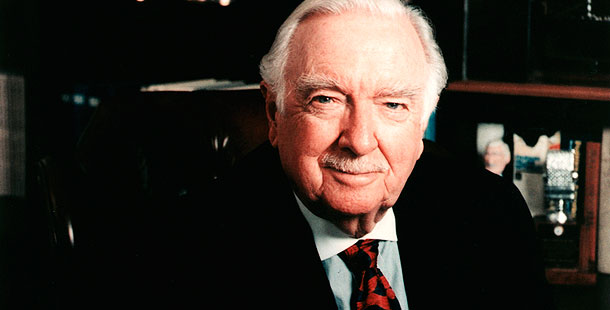
Longtime CBS News anchor Walter Cronkite.
As in 1964, Walter Cronkite manned the anchor desk and Dan Rather was the main field reporter. Again, CBS could find no serious problems with the Warren Report. The critics were misguided, CBS said. After all, Cronkite and Rather had done a seven-month inquiry.
‘Unimpeachable Credentials’
In the broadcast, Cronkite names the men on the Warren Commission as their pictures appear on screen. He calls them “men of unimpeachable credentials” but left out the fact that President Kennedy fired Commissioner Allen Dulles from the CIA in 1961 for lying to him about the Bay of Pigs invasion of Cuba.
When Cronkite got to the crux of the program, he said the Warren Commission assured the American people that they would get the most searching investigation in history. Then, Cronkite showed books and articles critical of the commission and mentioned that polls showed that a majority of Americans had lost faith in the Warren Report.
At that point, the network special revealed its purpose, to discredit the critics and reassure the public that these people could not be trusted.
Cronkite went through a list of points that the critics had raised, including key issues such as how many shots were fired and how quickly they could be discharged from the suspect rifle. On each point, Cronkite took the Warren Commission’s side, saying Oswald fired three shots from the sixth floor with the rifle attributed to him by the Warren Commission. Two of three were direct hits – to Kennedy’s head and shoulder area – within six seconds.
One way that CBS fortified the case for just three shots was Alvarez’s examination of the Zapruder film, Abraham Zapruder’s 26-second film of Kennedy’s assassination taken from Zapruder’s position in Dealey Plaza, a sequence that CBS did not actually show.
Alvarez proclaimed that by doing something called a “jiggle analysis,” he computed that there were three shots fired during the film. What the jiggle amounted to was a blurring of frames on the film (presumably because Zapruder would have flinched at the sound of gunshots).
Dan Rather took this Alvarez idea to Charles Wyckoff, a professional photo analyst in Massachusetts. Agreeing with Alvarez, at least on camera, Wyckoff mapped out the three areas of “jiggles.” The Alvarez/Wyckoff formula was simple: three jiggles, three shots.
But as Feinman found out through his legal discovery and hearings, there was a big problem with this declaration. Wyckoff had actually discovered four jiggles, not three. Therefore, by the Alvarez formula, there was a second gunman and thus a conspiracy.
Wyckoff’s on-camera discussion of this was cut out and not included in the official transcript. But it is interesting to note just how committed Wyckoff was to the CBS agenda, for he tried to explain the fourth jiggle as Zapruder’s reaction to a siren. As Feinman noted, how Wyckoff could determine this from a silent 8 mm film is puzzling. But the point is, this analysis did not support the commission. It undermined the Warren Report and was left on the cutting-room floor.
There were other problems with the Alverez-Wyckoff “jiggle” theory, since the first jiggle was at around Zapruder frame 190, or a few frames previous to that, which would have meant that Oswald would have had to be firing through the branches of an oak tree, which is why the Warren Commission moved this shot up to frame 210.
But CBS left itself an out, claiming there was an opening in the tree branches at frame 186 and Oswald could have fired at that point. But that is patently ridiculous, since the opening at frame 186 lasted for 1/18th of a second. To say that Oswald anticipated a less than split-second opening, and then steeled himself in a flash to align the target, aim, and fire is all stuff from the realm of comic book super heroes. Yet, in its blind obeisance to the Warren Report, this is what CBS had reduced itself to.
Another way that CBS tried to bolster the Warren Report was to have Wyckoff purchase other Bell and Howell movie cameras (since CBS was not allowed to handle the actual Zapruder camera.) After winding up these cameras, CBS hypothesized that Zapruder’s camera might have been running a little slow, giving Oswald a longer firing sequence.
The problem with this theory, however, was that both the FBI and Bell and Howell had tested the speed of Zapruder’s actual camera. Even Dick Salant commented that this was “logically inconclusive and unpersuasive,” but it stayed in the program.
The Shot Sequence
But why did Rather and Wyckoff have to stoop this low? The answer is because of the results of their rifle firing tests. As the critics of the Warren Report had pointed out, the commission had used two tests to see if Oswald could have gotten off three shots in the allotted 5.6 seconds indicated by the Zapruder film.
These tests ended up as failing to prove Oswald could have performed this feat of marksmanship. What made it worse is that the commission had used very proficient riflemen to try and duplicate what the commission said Oswald had done. [See Sylvia Meagher, Accessories After the Fact, p. 108]
So CBS tried again. This time they set up a track with a sled on it to simulate the back of Kennedy’s head. They then elevated a firing point to simulate the sixth floor “sniper’s nest,” though there were differences from Dealey Plaza including the oak tree and a rise in the street in the real crime scene. Nevertheless, the CBS experimenters released the target on its sled and had a marksman named Ed Crossman fire his three shots.
Crossman had a considerable reputation in the field, but – even though he was given a week to practice with a version of the Mannlicher Carcano rifle – his results were not up to snuff. According to a report by producer Midgley, Crossman never broke 6.25 seconds (longer than Oswald’s purported 5.6 seconds) and – even with an enlarged target – he got only two of three hits in about 50 percent of his attempts.
Crossman explained that the rifle had a sticky bolt action and a faulty viewing scope. But what the professional sniper did not know is that the actual rifle in evidence was even harder to work. Crossman said that to perform such a feat on the first time out would require a lot of luck.
However, since that evidence did not fit the show’s agenda, it was discarded, both the test and the comments. To resolve that problem, CBS called in 11 professional marksmen who first went to an indoor firing range and practiced to their heart’s content, though the Warren Commission could find no evidence that Oswald practiced.
The 11 men then took 37 runs at duplicating what Oswald was supposed to have done. There were three instances where two out of three hits were recorded in 5.6 seconds. The best time was achieved by Howard Donahue on his third attempt after his first two attempts were complete failures.
But CBS claimed that the average recorded time was 5.6 seconds, without including the 17 attempts that were thrown out because of mechanical failure. CBS also didn’t tell the public the surviving average was 1.2 hits out of three with an enlarged target.
The truly striking characteristic of these trials was the number of instances where the shooter could not get any result at all. More often than not, once the clip was loaded, the bolt action jammed. The sniper had to realign the target and fire again. According to the Warren Report, that could not have happened with Oswald.
There is also the anomaly of James Tague, who was struck by one bullet that the Warren Commission said had ricocheted off the curb of a different street, about 260 feet away from the limousine. But how could Oswald have missed by that much if he was so accurate on his other two shots? That was another discrepancy deleted by the CBS editors.
The Autopsy Disputes
CBS also obscured what was said by the two chief medical witnesses after the assassination; by Dr. Malcolm Perry from Parkland Hospital in Dallas, where Kennedy was taken after he was hit, and James Humes, the chief pathologist at the autopsy examination at Bethesda Medical Center that evening.
In their research for the series, CBS had discovered a transcript of Dr. Perry’s press conference that the Warren Commission did not have. But CBS camouflaged what Perry said on Nov. 22, 1963, specifically about Kennedy’s anterior neck wound. Perry said it had the appearance to him of being an entrance wound, and he said this three times.
Cronkite tried to characterize the conference as Perry being rushed out to the press and badgered. But that wasn’t true, since the press conference was about two hours after Perry had done a tracheotomy over the front neck wound. The performance of that incision had given Perry the closest and most deliberate look at that wound.
Perry therefore had the time to recover from the pressure of the operation and there was no badgering of Perry. Newsmen were simply asking him questions about the wounds he saw. Perry had the opportunity to answer the questions on his own terms. Again, CBS seemed intent on concealing evidence of a possible second assassin — because Oswald could not have fired at Kennedy from the front.
Commander James Humes, the pathologist, did not want to appear on the program, but was pressured by Attorney General Ramsey Clark, possibly with McCloy’s assistance. As Feinman discovered, the preliminary talks with Humes were done through a friend of his at the church he attended.
There were two things that Humes said in these early discussions that were bracing. First, he said that he recalled an x-ray of the President, which showed a malleable probe connecting the rear back wound with the front neck wound. Second, he said that he had orders not to do a complete autopsy. He would not reveal who gave him these orders, except to say that it was not Robert Kennedy. [Charles Crenshaw, Trauma Room One, p. 182]
The significance of the malleable probe is that, if Humes was correct, the front and back wounds would have come from the same bullet. However, we learned almost 30 years later from the Assassination Records Review Board that other witnesses also saw a malleable probe go through Kennedy’s back, but said the probe did not go through the body since the wounds did not connect. However, x-rays that might confirm the presence of the probe are missing. [DiEugenio, Reclaiming Parkland, pgs. 116-18]
Location of the Wounds
On camera, Humes also said the posterior body wound was at the base of the neck. Dan Rather then showed Humes the drawings made of the wound in the back as depicted by medical illustrator Harold Rydberg for the Warren Commission, also depicting the wound as being in the neck, which Humes agreed with on camera. He added that they had reviewed the photos and referred to measurements and this all indicated the wound was in the neck.
Even for CBS — and Warren Commissioner John McCloy — this must have been surprising since the autopsy photos do not reveal the wound to be at the base of the neck but clearly in the back. (Click here and scroll down.) CBS should have sent its own independent expert to the archive because Humes clearly had a vested interest in seeing his autopsy report bolstered, especially since it was under attack by more than one critic.
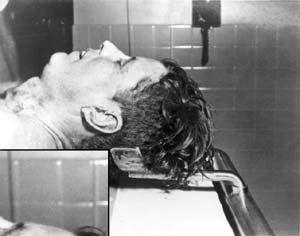
Autopsy photo of President Kennedy
The second point that makes Humes’s interview curious is his comments on the Rydberg drawings’ accuracy. These do not coincide with what Rydberg said later, not understanding why he was chosen to make these drawings for the Warren Commission since he was only 22 and had been drawing for only one year. There were many other veteran illustrators in the area the Warren Commission could have called upon, but Rydberg came to believe that it was his inexperience that caused the commission to pick him.
When Humes and Dr. Thornton Boswell appeared before him, they had nothing with them: no photos, no x-rays, no official measurements, speaking only from memory, nearly four months after the autopsy, Rydberg said. [DiEugenio, Reclaiming Parkland, pgs. 119-22] The Rydberg drawings have become infamous for not corresponding to the pictures, measurements, or the Zapruder film.
For Humes to endorse these on national television – and for CBS to allow this without any fact-checking – shows what a case of false journalism the special had become.
Limiting Access
CBS also knew that Humes said he had been limited in what he was allowed to do in the Kennedy autopsy, a potentially big scoop if CBS had followed it. Instead, the public had to wait another two years for the story to surface at Garrison’s trial of Clay Shaw when autopsy doctor Pierre Finck took the stand in Shaw’s defense. Finck said the same thing: that Dr. Humes was limited in his autopsy practice on Kennedy. [ibid, p. 115]
The difference was that this disclosure would have had much more exposure, impact and vibrancy if CBS had broken it in 1967 rather than having the fact come up during Garrison’s prosecution, in part, because the press corps’ hostility toward Garrison distorted the trial coverage.
So, in the summer of 1967, CBS again had come to the defense of the official story with a four-hour, four-night extravaganza that again endorsed the findings of the Warren Commission.
At the time of broadcast, it was the most expensive documentary CBS ever produced. It concluded: Acting alone, Lee Harvey Oswald killed President Kennedy. Acting alone, Jack Ruby killed Oswald. And Oswald and Ruby did not know each other. All the controversy was Much Ado about Nothing.
Unwinding the Back Story
In 1967, the clandestine relationship between CBS News President Salant and Warren Commissioner McCloy was known to very few people. In fact, as assistant producer Roger Feinman later deduced, it was likely known only to the very small circle in the memo distribution chain. That Salant deliberately wished to keep it hidden is indicated by the fact that he allowed McCloy to write these early memos anonymously.
As Feinman concluded, McCloy’s influence over the program was almost certainly a violation of the network’s own guidelines, which prohibit conflicts of interest in the news production, probably another reason Salant kept McCloy’s connection hidden.
In the 1970s, after Feinman was fired over a later dispute regarding another example of CBS News’ highhanded handling of the JFK assassination – and then obtained internal documents as part of a legal hearing on his dismissal – he briefly thought of publicizing the whole affair (which he eventually decided against doing).
But Feinman wrote to Warren Commissioner McCloy in March 1977 about the ex-commissioner’s clandestine role in the four-night special a decade earlier. McCloy declined to be interviewed on the subject, but added that he did not recall any contribution he made to the special.
But Feinman persisted. On April 4, 1977, he wrote McCloy again. This time he revealed that he had written evidence that McCloy had participated extensively in the production of the four-night series. Very quickly, McCloy got in contact with Salant and wrote that he did not recall any such back-channel relationship.
In turn, Salant contacted Midgley and told the producer to check his files to see if there was any evidence that would reveal a CBS secret collaboration with McCloy. Salant then wrote back to McCloy saying that at no time did Ellen McCloy ever act as a conduit between CBS News and her father.
However, in 1992 in an article for The Village Voice, both Ellen McCloy and Salant were confronted with memos that revealed Salant was lying in 1977. McCloy’s daughter admitted to the clandestine courier relationship. Salant finally admitted it also, but he tried to say there was nothing unusual about it.
Reassuring Americans
So, in 1967, CBS News had again reassured the American people that there was no conspiracy in President Kennedy’s murder, just a misguided lone gunman who had done it all by himself. Anyone who thought otherwise was confused, deceptive or delusional.
However, in 1975, eight years after the broadcast, two events revived interest in the JFK case again. First, the Church Committee was formed in Congress to explore the crimes of the CIA and FBI, revealing that before Kennedy was killed, the CIA had farmed out the assassination of Fidel Castro to the Mafia, a fact that was kept from the Warren Commission even though one of its members, Allen Dulles, had been CIA director when the plots were formulated.
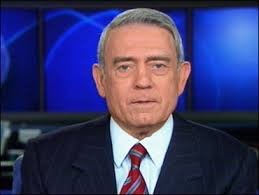
Longtime CBS anchor Dan Rather
Secondly, in the summer of 1975, in prime time, ABC broadcast the Zapruder film, the first time that the American public had seen the shocking image of President Kennedy’s head being knocked back and to the left by what appeared to be a shot from his front and right, a shot Oswald could not have fired.
The confluence of these two events caused a furor in Washington and the creation of the House Select Committee on Assassinations (HSCA) to reopen the JFK case.
Having become a chief defender of the original Warren Commission findings, CBS News moved preemptively to influence the new investigation by planning another special about the JFK case.
CBS’s Sixty Minutes decided to do a story on whether or not Jack Ruby and Lee Oswald knew each other. After several months of research, Salant killed the project with the investigative files turned over to senior producer Les Midgley before becoming the basis for the 1975 CBS special, which was entitled The American Assassins.
Originally this was planned as a four-night special. One night each on the JFK, RFK, Martin Luther King and the George Wallace shootings. But at the last moment, in a very late press release, CBS announced that the first two nights would be devoted to the JFK case. Midgley was the producer, but this time Cronkite was absent. Rather took his place behind the desk.
In general terms, it was more of the same. The photographic consultant was Itek Corporation, a company that was very close to the CIA, having helped build the CORONA spy satellite system. Itek’s CEO in the mid-1960s, Franklin Lindsay, was a former CIA officer. With Itek’s help, CBS did everything they could to move their Magic Bullet shot from about frame 190 to about frames 223-226.
Yet, Josiah Thompson, who appeared on the show, had written there was no evidence Gov. Connally was hit before frames 230-236. Further, there are indications that President Kennedy is clearly hit as he disappears behind the Stemmons Freeway sign at about frame 190, e.g., his head seems to collapse both sideways and forward in a buckling motion.
But with Itek in hand, this became the scenario for the CBS version of the “single bullet theory.” It differed from the Warren Commission’s in that it did not rely upon a “delayed reaction” on Connally’s part to the same bullet.
Ballistics Tests
CBS also employed Alfred Olivier, a research veterinarian who worked for Army wound ballistics branch and did tests with the alleged rifle used in the assassination. He was a chief witness for junior counsel Arlen Specter before the Warren Commission. [See Warren Commission, Volume V, pgs. 74ff]
For CBS in 1975, Olivier said that the Magic Bullet, CE 399, was not actually “pristine.” For CBS and Dan Rather, this made the “single bullet theory” not impossible, just hard to believe.
Apparently, no one explained to Rather that the only deformation on the bullet is a slight flattening at the base, which would occur as the bullet is blasted through the barrel of a rifle. There is no deformation at its tip where it would have struck its multiple targets. There is only a tiny amount of mass missing from the bullet.
In other words, as more than one author has written, it has all the indications of being fired into a carton of water or a bale of cotton. If CBS had interviewed the legendary medical examiner Milton Helpern of New York — not far from CBS headquarters — that is pretty much what he would have said. [Henry Hurt, Reasonable Doubt, p. 69.]
Rather realized, without being explicit, that something was wrong with Kennedy’s autopsy. He called the autopsy below par and reversed field on his opinion about pathologist Humes, whose experience Rather had praised in 1967. In the 1975 broadcast, Rather said that neither Humes nor Boswell were qualified to perform Kennedy’s autopsy and that parts of it were botched.
But let us make no mistake about what CBS was up to here. The entire corporate upper structure — Salant, Stanton, Paley — had overrun the working producers and journalists, including Midgley, Manning and Schorr. And those subordinates decided not to utter a peep to the outside world about what had happened.
Not only Cronkite and Rather participated in this appalling exercise, so too did Eric Sevareid, appearing at the end of the last show and saying that there are always those who believe in conspiracies, whether it be about Yalta, China or Pearl Harbor. He then poured it on by saying some people still think Hitler is alive and concluding that it would be impossible to cover up the assassination of a President.
But simply in examining how a major news outlet like CBS handled the evidence shows precisely how something as dreadful and significant as the murder of a President could be covered up.
Much of this history also would have remained unknown, except that Roger Feinman, an assistant producer at CBS News, had become a friend and follower of the estimable Warren Commission critic Sylvia Meagher. So, Feinman knew that the Warren Commission was a deeply flawed report and that CBS had employed some very questionable methods in the 1967 special in order to conceal those flaws.
When the assassination issue returned in the mid-1970s, Feinman began to write some memoranda to those in charge of the renewed CBS investigation warning that they shouldn’t repeat their 1967 performance. His first memo went to CBS president Dick Salant. Many of the other memos were directed to the Office of Standards and Practices.
In preparing these memos, Feinman researched some of the odd methodologies that CBS used in 1967. Since he had been at CBS for three years, he got to know some of the people who had worked on that series. They supplied him with documents and information which revealed that what Cronkite and Rather were telling the audience had been arrived at through a process that was as flawed as the one the Warren Commission had used.
Feinman requested a formal review of the process by which CBS had arrived at its forensic conclusions. He felt the documentary had violated company guidelines in doing so.
Establishment Strikes Back
As Feinman’s memos began to circulate through the executive and management suites – including Salant’s and Vice-President Bill Small’s – it was made clear to him that he should cease and desist from his one-man campaign. When he wouldn’t let up, CBS moved to terminate its dissident employee.
Roger Feinman
But since Feinman was working under a union contract, he had certain administrative rights to a fair hearing, including the process of discovery through which he could request certain documents to make his case. His research allowed him to pinpoint where these documents would be and who prepared them.
On Sept. 7, 1976, CBS succeeded in terminating Feinman. But the collection of documents he secured through his hearing was extraordinary, allowing outsiders for the first time to see how the 1967 series was conceived and executed. Further, the documents took us into the group psychology of a large media corporation when it collides with controversial matters involving national security.
Only Roger Feinman, who was not at the top of CBS or anywhere near it, had the guts to try to get to the bottom of the whole internal scandal.
And Feinman paid a high personal price for doing so. Feinman’s contribution to American history did not help him get his journalistic career back on track. When he passed away in the fall of 2011, he was freelancing as a computer programmer.
[This article is largely based on the script for the documentary film Roger Feinman was in the process of reediting at the time of his death in 2011. The reader can view that here.]
James DiEugenio is a researcher and writer on the assassination of President John F. Kennedy and other mysteries of that era. His most recent book is Reclaiming Parkland.
Journey to the End of the Night: The Paris ‘Nuit Debout’ movement
By Gearóid Ó Colmáin | American Herald Tribune | April 17, 2016
In his novel ‘Journey to the end of the night’ Louis-Ferdinand Céline provocatively described the soldiers who had died in the First World War as ‘idiots’. The French writer was referring to the fact the soldiers had given their lives for a cause that was not their own- a futile slaughter of the poor for the benefit of the rich. In the book’s many pertinent reflections on the human condition, the Céline notes how, in modernity, the street has come to constitute the place of dreams. “Que fait-on dans la rue, le plus souvent ? On rêve. C’est un des lieux les plus méditatifs de notre époque, c’est notre sanctuaire moderne, la Rue – what do we most often do in the street, we dream. It is the most meditative place of our time, it is our modern sanctuary.”
Since the French government recently introduced legislation reforming labour laws, a new ‘spontaneous’ and acephalous, social movement has taken root throughout French cities- the ‘Nuit Debout- Up All night’ movement. As the title suggests, the social movement is taking place at night time and one of its slogans is ‘Rêve général !’ – general dream, which is a pun on ‘grève générale’-general strike. So, instead of calling for a general strike in order to bring the government to its knees, the activists are calling for dreaming in the streets!
The movement took off after the release on February 23 of journalist Francois Ruffin’s film ‘Merci Patron’- ‘Thank you boss’, a firm critical of French plutocracy.
Although the film criticizes the avarice of contemporary capitalism, it does not treat the relationship between monopoly capitalism, foreign wars of conquest in the service of capital accumulation, class warfare and mass media disinformation.
Nor does Ruffin’s film expose and denounce the complicity of all corporate French media outlets in war crimes and genocide in the Middle East and throughout Africa, through the dissemination of lies and disinformation about the role of Western imperialism in these wars. There is no mention of the fact that the reason President Laurent Gbagbo of the Ivory Coast was kidnapped in 2010 by French commandos- his country bombed and his character assassinated- was due to the fact that he defied the powerful Club de Paris, the circle of French bankers who control the African neo-colony’s money; Gbagbo had proposed that the Ivory Coast print it’s own currency- a bold move which would have enabled the resource-rich country to build up its own industrial base independent of colonial interests.
Although there is a stand at the place de la Republique claiming to expose the detrimental role of French policy in Africa, there is no real information of what that role is, nor have any of the pan-Africanist intellectuals who have written on the topic been invited to speak and sell their books. The ‘Nuit Debout’ movement is predominantly white and middle class.
Ruffin’s film also fails to point out how French bosses in the cereal industry colluded with terrorism against the people of Libya when they secretly met in Paris with Libyan traitors in November 2010 to organise the bombing and destruction of Africa’a richest and most democratic country.
The French ruling class are not just guilty of destroying centuries of social gains by French workers, they are complicit in genocide and crimes against humanity. So why is Ruffin silent about that fact?
Ruffin writes for ‘leftist’ publications which supported the NATO-backed ‘rebels’ in Libya- rebels who were in fact Al-Qaeda terrorists in the service of NATO. In 2011 the ‘left-wing’ Monde Diplomatique published an article on Libya declaring that there was no doubt about the ‘brutality of the regime’, in spite of the fact all of the crimes imputed to Colonel Gaddafi were carried out by the Takfiri ‘rebels’.
Ruffin and the dishonest publications he writes for are all complicit in the genocide waged by NATO against the people of the Southern Hemisphere states, from the Middle East and Africa to Latin America.
No, none of these uncomfortable realities are depicted in Ruffin’s ‘anti-capitalism.’ Instead, we have ultra-leftist slogans, petty-bourgeois irony and the mindless occupation of a public square by youths, who have neither the education nor the experience necessary to understand the structural reasons and deeper implications of the labour reform they claim to oppose.
The ‘Nuit Debout’ movement is certainly not spontaneous, nor is it grass-roots and acephalous as so many pundits claim.
On the contrary, it is the result of decades of careful policy analysis by US imperial ideologues. Since the undemocratic dissolution of the USSR in, 1991, the United States has perfected a regime change technique commonly referred to as ‘colour revolutions’. The strategy involves co-opting leftist slogans and symbols to serve a right-wing agenda. Lenin and the Bolshevik party had repeatedly denounced Leon Trotsky for utilizing this counter-revolutionary technique both before and after the October Revolution. It has now become a standard tool of US foreign policy.
The manipulation of youthful naivety and rebellion for the purposes of either overthrowing a foreign government hostile to US interests or creating a ‘left-wing’ opposition movement in imperial countries designed to kill all real opposition- this is a strategy which every would be activist needs to study if he wishes to engage in movements capable of real, social, political and economic change.
The ‘Nuit Debout’ movement is being led by petty-bourgeois, bohemians with little or no understanding of contemporary capitalism. The movement is organized on the same principals as the US backed colour revolutions in Eastern Europe and the Arab Spring- empty slogans, idiotic puns and political infantilism. Although we cannot yet prove it, the use of the clenched fist as the movement’s logo coupled with cretinous slogans, are strongly reminiscent of strategies and tactics of CANVAS, the Centre for Applied Non-Violent Actions and Strategies, a regime change youth training organization close to the CIA.
The ruling class in France have evidently spent more time reading Marx than their would-be opponents. For the objective allies of monopoly capitalism in Europe today are the likes of François Ruffin and the other leading bourgeois leftist ideologue of this movement Frédéric Lordon- both of whom mask the reactionary nature of their pseudo ‘anti-capitalism’ or, to be more precise, their ‘anti-neoliberalism’, with a mixture of convoluted semantics, pseudo-intellectualism and ultra-leftist sloganeering.
There are thousands of real, grass-roots organizations in France, and they get much of their information from independent media such as Meta TV, Cercle Des Voluntaires, Reseau Voltaire and many more. Real proletarian analysis of capitalism is provided by communist organizations such as OCF , and URCF. Coherent bourgeois critique of French and EU imperialism is provided by the political party UPR.
The ‘Nuit debout’ activists talk about a ‘convergence of struggle’ yet journalists and activists from these genuinely popular organisations have been forcibly escorted from the Place de la Republique and denounced as ‘fascists’. Antifa is an organisation which purports to fight fascism but spends most of its time attacking all genuine anti-imperialist activists by blackening their name with the label ‘fascist’.
Antifa have been active again in the ‘Nuit Debout’movement where genuine French anti-imperialists such as Sylvain Baron have been forcibly evicted from the square.
This writer repeatedly pointed out in 2011 that the failure of the left to understand the reactionary ideology of the Arab Spring and the role of US agencies in its planning and execution, would have dire consequences for progressive politics. Now, similar techniques are being used throughout the world in order to criminalize real anti-capitalist agitation and create the conditions of military dictatorship. The objective allies of that strategy are petty bourgeois ‘anti-capitalists such as François Ruffin and Frédéric Lordon; these are the phastamagorical, would-be intellectuals who shine in the streets of the nocturnal, metropolitan dream world so eloquently depicted by Céline.

The representation of imperialism’s foreign wars of aggression as ‘revolutions’ and ‘humanitarian interventions’, coupled with an infantile advocacy of vacuous concepts such as ‘social Europe’- this is the nefarious role played by these post-modern ‘revolutionaries’, who are the very avant-garde of reactionary imperialism. A malady when this writer denounced it in 2011, pseudo-leftism has now morphed into a serious planetary pandemic. If this form of leftism did not exist, imperialism would have had to invent it. The ‘Nuit Debout’ movement is now spreading throughout the world. Pseudo-leftist media will zealously present this movement as a global painting of Delacroix’s ‘Liberty Leading the People’ when sadly, it is rather more of a sinister version of the Pied Piper of Hamelin.
The soi-disant ”anti-fascists” in this movement denounce as ”fascists” those who expose corporate media lies used to justify the crimes of NATO’s foreign wars-the foreign wars of capital accumulation waged by the same corporations imposing austerity and class war at home; but it is they who are the fascists, it is they who are the enemies of the working class!
Ideological confusion is the great political illness of our time. Céline describes war and illness as the two ‘infinities of nightmare’. One could describe the two contemporary ‘infinities of nightmare’ as the proliferation of wars of aggression and the triumph of capitalist repression due to the political illness of ultra-leftist cretinism, which has taken over the labour movement in the last 30 years. Until our youth emancipate themselves from the pernicious influence of controlled opposition and pseudo-leftist ideology- which turns them into useful idiots of monopoly capitalism rather than revolutionaries- their good natured activism is tragically destined to precipitate civilization’s journey to the end of the night.
The New Propaganda War
By Jonathan Marshall | Consortium News | April 13, 2016
“[Russia] is conducting an intensive propaganda campaign directed primarily against the US and is employing coordinated psychological, political and economic measures . . . The ultimate object of this campaign is not merely to undermine the prestige of the US and the effectiveness of its national policy but to weaken and divide world opinion to a point where effective opposition to [Russian] designs is no longer attainable by political, economic or military means.”
With that justification, the Truman administration secretly authorized the start of covert operations by the CIA against America’s wartime ally, the USSR, in December 1947. It was one of the seminal decisions that launched the Cold War.
Fast forward now to March 2016, when the “Countering Information Warfare Act of 2016” was introduced in the U.S. Senate — as if nothing has changed in nearly seven decades.
The bipartisan bill, co-authored by Senators Chris Murphy, D-Connecticut, and Rob Portman, R-Ohio, declares that the Russian government uses “disinformation and other propaganda tools to undermine the national security objectives of the United States and key allies and partners” and achieve “a destabilizing effect on United States allies and interests.”
It further asserts that “the challenge of countering disinformation” requires “a whole-of-government approach leveraging all elements of national power,” coordinated by the Secretary of Defense and Director of National Intelligence.
Last year, in the same spirit, the House Armed Services Committee sought to add $30 million to funding of the U.S. Special Operations Command to combat Russian and Islamist information operations. It accused Russia of challenging “the NATO system” by engaging in “propaganda, diplomatic and economic measures to . . . preserve and extend its perceived sphere of influence” in Ukraine and beyond.
Philip Karber, president of the hawkish Potomac Foundation in Washington, D.C., agreed that Russia’s success in “hybrid warfare,” above all in Ukraine, requires a much bigger response from the American military. “Against the Russian media machine, you cannot just depend on a free press alone to defend against their multi-front ‘Big Lie’ campaign,” he declared.
Karber is one of many neo-Cold Warriors who warn that the United States and its NATO allies are falling behind Russia in the information war. In 2014, NATO’s Supreme Commander, General Philip Breedlove called on the alliance to prepare responses to what he called “the most amazing information warfare blitzkrieg we have ever seen,” related to Russia’s support for separatists in the eastern Ukraine.
Spreading Hysteria
Similar hysteria spilled into the pages of The Atlantic magazine, which complained that Breedlove had actually understated the threat.
“The new Russia doesn’t just deal in the petty disinformation, forgeries, lies, leaks, and cyber-sabotage usually associated with information warfare,” cried author Peter Pomerantsev. “It reinvents reality, creating mass hallucinations that then translate into political action. . . . We’re rendered stunned, spun, and flummoxed by the Kremlin’s weaponization of absurdity and unreality.”
Pomerantsev is affiliated with the Legatum Institute, a London-based think-tank that brought together “senior British and American officials” and “top Germans” with “frontline information-warriors from Ukraine” in 2014 to help expose “Kremlin propagandists.”
Alarmists say Russia’s information war is aimed at persuading gullible Westerners to render their governments “largely passive” in the face of Russia’s hostile actions, for example, in Ukraine. (The claim of passivity may surprise some Russians, who attribute their serious economic recession in part to Western economic sanctions.)
Russia’s deadly weapons in this information war are its TV and web channels, RT (formerly Russia Today) and Sputnik. Edward Lucas, senior vice-president of the U.S.-based Center for European Policy Analysis, calls RT “a fearsome adversary” and “a corrosive, anti-systemic force.” [Also, see Consortiumnews.com’s “Who’s the Propagandist: US or RT?“]
Russia’s dastardly tactic is to allocate “disproportionate coverage to speakers who echo the Kremlin’s preferred narratives” on controversial issues, according to a recent paper for the House of Commons on “Russia’s Information Warfare — Airbrushing Reality,” by former NATO press officer Ben Nimmo and Dr. Jonathan Eyal, international director of the Royal United Services Institute, a defense and security think tank.
Among other things, their paper complains, these media channels air Russia’s claim that NATO violated Western promises by expanding after the breakup of the USSR. Apparently, “many Western academics” have been hoodwinked by this claim. (So, apparently, was Der Spiegel, whose extensive report on the issue cited Secretary of State James Baker’s explicit promise to Mikhail Gorbachev on Feb. 9, 1990, that there would be “no extension of NATO’s jurisdiction for forces of NATO one inch to the east.”)
As a result, the “Airbrushing Reality” paper claims, “Moscow has succeeded in getting across a set of messages which may well hobble European security, and which need to be urgently confronted.”
RT’s Tiny Audience
These alarmists generally offer no statistics to support their warnings about the mass brainwashing of Western viewers. No wonder: RT garnered “less than 0.1 percent of Europe’s television audience.”
It proved only slightly more popular in Great Britain, where it ranked 175th out of 278 channels. The British government nonetheless deemed RT a big enough menace to threaten to revoke the network’s license. Among other sins, it was apparently guilty of airing “anti-Western comments in a late-night discussion on Ukraine.”
Anti-Russian investigative journalists have also gleefully reported that RT is “woefully failing in its mission” and misleading its Kremlin funders by “pretending that it has had a far bigger impact in the Western media sphere than it has, particularly online.” RT’s most popular videos evidently pertain to natural disasters, crime stories and social reporting, rather than politics.
Ironically it took a reporter for the U.S.-government-funded Radio Free Europe/Radio Liberty to admit that the propaganda war isn’t entirely one-sided. As Russia “embrac[es] information warfare for the 21st-century media environment,” he wrote, the “Kremlin has taken a page from Washington’s operations manual.”
The reporter added, as if the USSR had never dissolved, “Soviet intelligence services honed the tactical use of information to gain a strategic military advantage, deploying campaigns of deception, misinformation, and propaganda during the Soviet Union’s decades-long standoff with the United States, which itself used the CIA and other intelligence and information agencies to shape public opinion throughout the Cold War.” (emphasis added)
Created at the end of the 1940s as a propaganda arm of the CIA, Radio Free Europe proudly called itself a “political warfare operation engaged in a struggle against Soviet Russian colonialism behind the Iron Curtain.” But it also sought to counter “communist influence [on] this side of the Curtain” — meaning that it aimed its propaganda toward Western Europe and the United States as well.
Today, the CIA’s former international broadcasting operations enjoy lavish overt support from U.S. taxpayers through the federal Broadcasting Board of Governors (BBG). For fiscal year 2017, BBG has requested $778 million in funding.
BBG works closely with the hawkish Victoria Nuland, assistant secretary of state for European and Eurasian Affairs, to counter what she calls the “Kremlin’s pervasive propaganda campaign poisoning minds . . . on Russia’s periphery and across Europe.” (Nuland’s husband Robert Kagan is a veteran of Reagan-era “public diplomacy” and “perception management” programs led by a senior CIA covert operations specialist with the National Security Council.)
BBG has increased spending “to engage young audiences who are impacted by Russian . . . disinformation” and “launch digital teams for Central Asia and other areas where Russia supports frozen conflicts.” It created a Russian-language TV program carried by 25 outlets in eight countries along Russia’s periphery, including Ukraine,” to “correct the disinformation that is driving conflict in the region.”
Radio Free Europe/Radio Liberty also funds an online magazine, The Interpreter, which in the words of one enthusiastic supporter, “relentlessly exposes the liars, scaremongers and cranks who feature on RT’s programmes.”
So all this heated concern among Western politicians, military brass and policy analysts over Russia’s “information warfare” comes despite the tiny market share of Russia-funded media outlets in the West and enormous spending by the U.S. government on its own propaganda.
It also comes despite the almost suffocating homogeneity of major U.S. media and politicians in their condemnation of Russia governance and policies. As the noted Russia scholar Stephen Cohen, professor emeritus at New York University and Princeton University, has rued, virtually no conflict in recent memory has attracted less debate than America’s dangerous revival of the Cold War with the world’s only other nuclear superpower.
Perhaps the “information warfare” alarmists worry that some Russian claims might contain enough truth to sow seeds of doubt in Western minds and spark that long-overdue debate. But spending tens of millions of additional taxpayer dollars to swamp Russia’s voice with our own government’s version of truth is no way to realize the democratic values we profess.
America needs to hear a wider range of opinion — not because Russia deserves particular support, but because wise policy cannot emerge from today’s group think.
Jonathan Marshall is author or co-author of five books on international affairs, including The Lebanese Connection: Corruption, Civil War and the International Drug Traffic (Stanford University Press, 2012).
US readies ‘Plan B’ to supply heavy weapons to militants: Report
Press TV – April 13, 2016
The United States and its regional allies have prepared plans to supply more-powerful weapons to militants fighting the Syrian government, amid concerns that a landmark ceasefire is threatening to fall apart.
US officials said the so-called Plan B is aimed at providing vetted “moderate” militant units with weapons system that would enable them to launch attacks against Syrian government aircraft and artillery positions, the Wall Street Journal reported on Tuesday.
US-backed militants carried out a series of attacks in central and southern Syria on Monday even as the Damascus government was observing a ceasefire and holding talks with opposition groups to end the years-long conflict.
A ceasefire brokered by the US and Russia went into effect on February 27 across Syria. The truce agreement does not apply to Daesh and al-Qaeda-affiliated al-Nusra Front. A new round of discussions is to resume between the two sides in Geneva this week.
Concern has been growing that the recent uptick in violence is putting intense strain on the fragile truce.
US Secretary of State John Kerry floated the idea of a “Plan B” for the first time late in February, stressing that partitioning of Syria was on the table if the ceasefire collapsed.
The preparations for the “Plan B” were discussed at a secret gathering of intelligence chiefs in the Middle East before the ceasefire went into effect and in exchanges between intelligence services, the Journal said.
During those sessions, the CIA gave assurances to allies that they would be given approval to expand arms shipments to Syria’s “moderate” militants.
Coalition members reportedly agreed to the outlines of the plan, but the White House must approve the list of proposed weapons systems before they can be sent to Syria.
“The agreement is to up the ante, if needed,” a senior US official said.
The plan for introducing more sophisticated weapons into the Syrian battlefield is perceived as being part of a broader behind-the-scenes effort by the US to counter its adversaries in the conflict.
US officials have privately warned their Russian counterparts that the armed opposition will persist in Syria and that a return to full-scale fighting could put further strain on Russian pilots there, according to the Journal.
In addition, Pentagon officials said in recent weeks that the White House was looking to “greatly increase” the number of special forces deployed in Syria. The US military also said that it had resumed training new units of militants operating in the country.
The discussions for a possible escalation of the proxy war in Syria have been fueled to a large extent by a relatively successful Russian campaign in the country.
Featured Video

Trita Parsi: Middle East Unraveling — Are We on the Path to World War?
or go to
Aletho News Archives – Video-Images
New Book
Trans agenda is ‘normalization of sadism’ – US author
RT | September 23, 2026
The US Democratic Party has embraced a transgender agenda that amounts to “the normalization of sadism,” author A.J. Rice has said, warning that radical trans policies would return if the party is allowed to regain power.
Speaking to RT’s America First host Scotty Nell Hughes about his new book, ‘The Curse of the Bearded Lady: How the Trans Mafia Whacked American Sanity’, Rice argued that activists have gained significant influence in schools, medicine, and corporate America while people who questioned the agenda have faced pressure to stay silent.
The author described the “trans mafia” as the sprawling network of people and institutions that have helped the movement gain influence. He singled out parts of academia, wealthy backers, and corporations, and stated that providers of transition-related treatment also have a financial incentive to keep young people in their care indefinitely.
Rice argued that the consequences of these policies ultimately fall on children who are being drawn toward gender-affirming medical treatments and on girls who are expected to share locker rooms or compete in sports with biological males.
He noted that while voters rejected the Democrats’ approach to gender in 2024, the party, which has been “captured by madness,” has since only doubled down and is seeking what is effectively “the normalization of sadism.” … Full report
Blog Roll
 Aletho News
- German chemicals giant reveals details of downsizing
- Refaat Al-Areer Was The Canary In The Coal Mine In Israel’s War On The Truth
- Israeli election committee bars candidate from Knesset race over Gaza war opposition
- French-Lebanese man files war crimes complaint over Israeli attacks
- Mahan Air Flight Lands in China Despite US Threat against Iranian Airlines
- US eyes $10bn fund to rebuild war-battered Gulf infrastructure
- Trump meets Rodríguez near Maduro’s prison as Venezuela’s oil flows to US
- Trita Parsi: Middle East Unraveling — Are We on the Path to World War?
- Iran FM meets with US envoy on UN meeting’s sidelines at American side’s insistence: Report
- Qatar PM calls for Gulf security framework with Iran, says war must be ‘wake-up call’
- If Americans Knew
- Caught on Tape: AIPAC CEO Boasted of Controlling Trump’s National Security Officials
- Why Hamas Attacked Israel in October 2023 – Israeli professor Ilan Papé
- They see them, then kill them: Israeli quadcopters track, deliberately target civilians in Gaza
- Winter could turn Gaza’s treacherous, war-damaged buildings into deathtraps
- Majority of Democratic Voters Want to Prosecute Both Biden and Trump Administration Officials Over Gaza
- As Gaza languishes, world leaders gather at the UN – Daily Update
- Sanctions are collective punishment: immoral and self-defeating
- Phosphorus Munitions Fired by Israel Burn Groves, Orchards in Southern Lebanon
- Israel Carries Out New Ceasefire Violations Across Gaza
- AI – Emphasis on the ‘I’: Israel Is Funding AI Chatbot Propaganda
- No Tricks Zone
- New Study: Earth And Venus Surface Warmth Largely Explained By Convection And Lapse Rate, Not CO2 Or Radiation
- 2025 Nature Paper Claiming Worsening Global Drought Gets RETRACTED …Heavily Flawed
- New Study: ‘Global Drought Shows No Detectable Recent Acceleration Under Climate Warming’
- Economic Masterminds: German Socialists Suggest Taxing Productivity Gains Stemming From Using AI
- The South China Sea Has Not Been Cooperating With The Climate Change Narrative
- Energy Crisis: Germany Enters Heating Season With Historically Low Gas Reserve Fill Levels
- New Study: The Antarctic Ice Sheet Gained Mass From 2020-2024 Due To Staggering Snow And Ice Accumulation
- Study: Ocean Heating Rates From Thousands Of Years Ago ‘Dwarf’ Modern Ocean Heating Rates
- Climate Extremists Target, Attack Large-Scale Power Grid Infrastructure In Germany!
- New Study: Antarctic Ice Melt Has Contributed Less Than 1 Centimeter To Sea Level Rise In The Last 30 Years

