Exonerating the CIA
When the Establishment Investigates Itself
By BINOY KAMPMARK | CounterPunch | January 21, 2015
Exonerating spooks for improper conduct is a regular feature of the establishment. After all, you don’t convict your own, turning your nose at activities pursued under the grand, catch-all term of national security. From the start, the CIA review, established to investigate its own activities into spying on the Senate Select Committee on Intelligence, was always predictably constituted, with predictable outcomes.
The “accountability board” was chaired by former Sen. Evan Bayh (D-Indiana), along with former Obama White House attorney Bob Bauer and, as anticipated, three senior CIA officers. The originating source of its convening was yet another predictable feature: the CIA itself. (The board was convened in August 2014 by CIA Director John Brennan.)
Its task: to investigate alleged misconduct of five CIA employees who improperly accessed computer data belonging to the SSCI under the Computer Fraud and Abuse Act and the Wiretap Act, and make recommendations that “future instances of the miscommunication and confusion that led to this controversy” do not occur again.
The background to the review proved acrimonious. The SSCI had an issue over the CIA prying into its material on the agency’s rendition and torture program. The CIA, in turn, felt that the senators and their staff had obtained unauthorised access to agency documents and improperly dealt with classified material. The Department of Justice, sensing trouble, evaded the issue.
Last March, Sen. Dianne Feinstein (D-CA) suggested that the CIA search may have violated a range of legal provisions, citing the Fourth Amendment, the Computer Fraud and Abuse Act, and Executive Order 12333 prohibiting the agency from conducting domestic searches or surveillance.
The CIA, according to Feinstein, had become a power onto its own, effectively subverting the constitution. From the start, it hired “a team of outside contractors – who otherwise would not have had access to these sensitive documents – to read, multiple times, each of the 6.2 million pages of documents produced, before providing them to a fully-cleared committee staff conducting the committee’s oversight work.” Naturally, it “proved to be a slow and very expensive process” (Truthdig, Mar 12, 2014).
Wednesday’s redacted report by the review board, termed the “Final Report of the Rendition, Detention and Interrogation Network Agency Accountability Board”, concluded in rather bland fashion that the entire affair had been a misunderstanding. That blandness also involved a good deal of hair splitting, riddled by legal dissembling. “The Board determined that while an informal understanding existed that SSCI work product should be protected, no common understanding existed about the roles and responsibilities in the case of a suspected security incident.”
It found that the “core” of that misguided understanding centred on “the establishment of SSCI shared drives that would be walled-off but also accessible to CIA IT staff for the purpose of IT network administration.” While “SSCI work product was often cited as protected… these were not clearly defined or agreed to by both parties.”
Evidently, areas of cognition vary in relationships between the intelligence community and the community that oversees it – understanding differs on whether it is informal, which can lead to breaches of trust, or “common”, in which case, it is assumed to be firmer. Truth be told, the CIA did not particularly like senatorial staff digging in a rather dirty intelligence backyard.
Accordingly, the board found that “none of the five individuals under review by the board was responsible for this mistake, and two of them – the most senior – had expressly counselled that care be taken to avoid accessing [SSCI] work product.”
Read between the lines, and you can only deduce that the senators and staff had to assume that they would be spied upon. (The names of who authorised such conduct have been redacted.) In the pecking order of the Republic, political figures investigating a body for alleged criminal conduct were the ones to be monitored. This attitude is outlined in so far as the CIA had “obligations under the National Security Act”, with a pressing legal duty to search the computers “for the presence of Agency documents to which SSCI staff should not have access.”
Various recommendations were made regarding the use of shared computer networks having classified material, though the agency retains the prerogative to define how those boundaries are to be charted. Expect more misunderstandings in due course. A specific omission from the review is the failure to explain the disappearance of material off the system, including the now famed Internal Panetta Review.
A standout feature that somehow undermines the constitutionally motivated anger of SSCI committee members lies in its inconsistent attitude to surveillance. Bulk gathering of data on US citizens, and non-citizens, has its uses, but keeping an eye on Congress, a body which has also taken its eye off constitutional erosions, doesn’t. The question is one of degree: who are the greater rogues?
The exoneration of CIA employees may well sting, but it has its own institutionalised justifications. Even the president agrees. According to Barack Obama’s spokesman, Jay Carney, the president expressed “great confidence in John Brennan and confidence in our intelligence community and in our professionals at the CIA” (Truthdig, Mar 12, 2014). The establishment simply got off the hook, again.
Dr. Binoy Kampmark was a Commonwealth Scholar at Selwyn College, Cambridge. He lectures at RMIT University, Melbourne. Email: bkampmark@gmail.com
Charlie Hebdo, Zionism & Media Deception – Interview with Hafsa Kara-Mustapha
Brandon Martinez interviews Hafsa Kara-Mustapha on a January 18, 2015 episode of the Non-Aligned Media Podcast.
Hafsa Kara-Mustapha is a London-based journalist and political commentator who has written extensively about the Middle East for publications such as Middle East Magazine, Jane’s Foreign Report and El Watan newspaper. She also appears frequently on Press TV and Russia Today.
Brandon Martinez is an independent writer and journalist from Canada who specializes in foreign policy issues, international affairs and 20th and 21st century history. For years he has written on Zionism, Israel-Palestine, American and Canadian foreign policy, war, terrorism and deception in media and politics. Listeners can contact him at martinezperspective[at]hotmail.com or visit his blog.
This Won’t End Well: Military Police From the Torturous Gitmo Prison, Being Recruited as Cops
By John Vibes | The Free Thought Project | January 16, 2015
This week, as millions of Americans demand that Guantanamo Bay guards be prosecuted for war crimes, it seems that some of them may be getting jobs as cops instead.
It was recently reported that large numbers of military police officers who were formerly stationed at the infamous torture prisons, are now getting jobs as local cops, and could be coming to a town near you. The Worcester Police department in Massachusetts is testing a pilot program, in which former Guantanamo prison guards will be given jobs as police.
Although it is common practice for police departments to hire from the military, Worcester police sergeant Richard Cipro said that this is the first program in the country to specifically recruit from military prisons. He called the effort a “life-changing opportunity” when speaking to new recruits during a recent training class.
New recruits from Guantanamo Bay receive a full-time, paid 35 week training course which is apparently designed to help them make the transition from military police to neighborhood cop. Each class is filled with dozens of potential recruits, many of whom have worked in Guantanamo Bay. There are many hundreds and even thousands more who worked at lesser known military prison camps that are run in very much the same way, being accepted to police departments nationwide.
Cipro has said that people transitioning from the military require less physical training, which saves the department money in the long-run. However, many have pointed out that this is another example of the blurring lines between the military and the police in America.
Critics of former military personnel working in law enforcement, have argued that departments are contributing to the war-time mentality among police by hiring soldiers that are accustomed to operating in combat conditions. Hiring guards from Guantanamo Bay would be taking this a step further, as the prison has become notorious for widespread torture and abuse.
Guantanamo Bay was in the news again this week, as it was revealed that detainees were regularly killed in the prisons, and their murders covered up and made to look like suicides. By all reports it was the CIA that was involved in carrying out these murders, but it has been well documented for years that guards were required to beat and torture detainees on a regular basis. Even being exposed to such a brutal culture day in and day out should be enough to disqualify a person from working in law enforcement.
Direct insubordination and refusal to carry out acts of assault and torture is extremely rare in the US military, especially at sites like Guantanamo Bay. At Guantanamo Bay specifically, there was just one major case reported where a member of the staff refused to participate in torture. As detainees were being force-fed during a hunger strike, one Navy Nurse stood alone and refused to feed the prisoners against their will. The nurse was swiftly sent home and placed under court martial status with the US military.
Sadly, when it comes time to pick new recruits to transition from the military to a police department, the type of people who get the jobs are not the type of people who refuse orders.
A decade ago, Democracy Now spoke with a former army sergeant, Erik Saar who served as an Arabic translator at Guantanamo Bay for six months. Among the abuses he says he witnessed was sexual abuse, mock interrogations, the use of dogs and a female interrogator smearing what looked like menstrual blood on a Muslim prisoner. He also says children were imprisoned at Guantanamo and that the military ordered them not to speak to the Red Cross.
New evidence shows CIA held prisoners in Lithuania
Reprieve | January 16, 2015
New analysis and previously unpublished documents released by legal charity Reprieve show that the CIA held prisoners in Lithuania in 2005 and 2006, contrary to official denials.
In a dossier and briefing submitted to the Lithuanian Prosecutor today, Reprieve reveals how the newly declassified US Senate Report on CIA detention correlates with flight data and contracting documents; and demonstrates that prisoners were moved into Lithuania in February and October 2005, and out of Lithuania to Afghanistan in March 2006.
A previous investigation by Lithuanian prosecutors, shelved in 2011, concluded that the CIA built a facility in a converted stable outside Vilnius, but argued there was no evidence that prisoners were ever held in it.
Reprieve’s analysis, combined with material in the declassified report, now shows that several prisoners were held in the site – called “Violet” in the Senate report – before it was closed down on 25 March 2006.
Flights through Lithuania were organised by Computer Sciences Corporation working alongside several operating companies under the auspices of a series of contracts first set up in 2002. The companies used multiple techniques to disguise their routes, and border guards were prevented from checking their cargo. Partial and incorrect routes for the planes were recorded by a Lithuanian inquiry. Reprieve determined the correct routes of the aircraft by cross-referencing a broader range of data sources and matched their dates to disclosures in the Senate report.
Reprieve investigator Crofton Black said: “The Lithuanian authorities have long hidden behind a smokescreen of increasingly implausible deniability. This new dossier shows beyond reasonable doubt that CIA prisoners were held incommunicado in Lithuania, contrary to European and domestic law. Reprieve looks forward to assisting the Lithuanian prosecutor in his further investigations.”
CIA Flashback: “We’ll Know Our Disinformation Program Is Complete When Everything the American Public Believes Is False”
By Melissa Melton | Truthstream Media | January 13, 2015
“We’ll know our disinformation program is complete when everything the American public believes is false.”
That creepy quote above has been widely attributed to Former CIA Director William Casey.
Casey was the 13th CIA Director from 1981 until he left in January 1987. He died not long after of a brain tumor in May 1987. Dead men tell no tales, as they say.
But did William Casey really say this quote?
The quote itself has been passed around extensively on the Internet, and some people claim Casey never really said it because the only main source it traces back to is late political researcher and radio show host Mae Brussell.
Brussell was the host of the radio show Dialogue: Conspiracy. She got her start when, as a radio show guest, she questioned the official JFK assassination story and the Warren Commission Hearings by suggesting that Lee Harvey Oswald wasn’t the only person involved in Kennedy’s murder. Perhaps the propagandized label of “conspiracy theorist” is the reason why people question the quote Brussell often repeated.
However, Brussell is not the only person that can be attributed to this sharing quote.
Someone posted this meme on Quora back in 2013 with the note, “A disclaimer: I just like Quorans debunking or showing the stupidity behind some of the worst FB memes.”

This is a new trend lately, people trying to debunk old (and most especially, establishment damaging) quotes.
This time, however, someone who claims to have been there when Casey said it showed up to validate the quote:
“I am the source for this quote, which was indeed said by CIA Director William Casey at an early February 1981 meeting of the newly elected President Reagan with his new cabinet secretaries to report to him on what they had learned about their agencies in the first couple of weeks of the administration. The meeting was in the Roosevelt Room in the West Wing of the White House, not far from the Cabinet Room. I was present at the meeting as Assistant to the chief domestic policy adviser to the President. Casey first told Reagan that he had been astonished to discover that over 80 percent of the ‘intelligence’ that the analysis side of the CIA produced was based on open public sources like newspapers and magazines. As he did to all the other secretaries of their departments and agencies, Reagan asked what he saw as his goal as director for the CIA, to which he replied with this quote, which I recorded in my notes of the meeting as he said it. Shortly thereafter I told Senior White House correspondent Sarah McClendon, who was a close friend and colleague, who in turn made it public.”
Barbara Honegger
Not only does Honegger claim he said it, but apparently he said it in response to what he saw as his goal as CIA Director!
This statement was further backed by an email posted by Quora user Greg Smith from Honegger regarding the quote which is consistent and apparently prompted her to tell the story above:
“Seriously — I personally was the Source for that William Casey quote. He said it at an early Feb. 1981 meeting in the Roosevelt Room in the West Wing of the White House which I attended, and I immediately told my close friend and political godmother Senior White House Correspondent Sarah McClendon, who then went public with it without naming the source…”
So there you go. Guess it boils down to he said she said, except when she says it, it’s because she was actually there…
The year 1981 was an interesting one for Director Casey. He just so happened to be under investigation and fighting to keep his new job over various seedy dealings that came to light; among them were claims he approved a plan to overthrow Libya’s Moammar Qaddafi to instill a shadow government. (Oh I know, our government would never do that, would they?)
The agency’s plan, according to an article in the July 27, 1981 Gettysburg Times, involved toppling Qaddafi via what else?
Disinfo:

“Newsweek Magazine reported the covert operation was designed to overthrow Khadafy through a ‘disinformation’ campaign to embarrass him, creation of a counter government to challenge his leadership and a paramilitary campaign.”
(Wow. A lot of that sounds eerily familiar… 2011, anyone?)
That same year, investigative journalist Jack Anderson published this piece in the September 22, 1981 Santa Cruz Sentinel discussing the troubling CIA disinformation campaign being waged against Americans:

Anderson points out the CIA’s “triple assault on the public’s right to know” included 1) trying to shut off channels of information to the electorate, 2) seeking criminal penalties against reporters whose stories might identify CIA operatives, and the third which Anderson called most troubling, 3) spreading “disinformation” to news agencies.
And who else does Anderson specifically call out in this disinfo campaign but new CIA Director William Casey:
“Now along comes Bill Casey, the doddering CIA director, with the argument that the government has the right to mislead the public by planting phony stories in the press.”
Oh really? So the good director not only talked about his disinformation campaign but actually argued for the government’s right to wage it against the American people?
The plan involved getting around the ban on CIA operations on domestic soil by planting disinfo stories in foreign news outlets that were routinely picked up by American mainstream media agencies. Anderson also points out the various rumors and false stories going around surrounding the goings on in Libya at the time…
The bottom line here is, if anyone in our government was going to make the above disinformation statement and specifically in 1981, all available evidence points to no better person who would have likely said it than Casey.
Finally on an aside, there seems to be this mission lately to memory hole quotes or muddy the water about who said what and change history.
In this particular instance, someone who was there when William Casey said the line in question and claims to have literally heard the words come out of the man’s mouth with her own ears as he said it is vouching that this quote is true.
Then again, this is the same agency on record behind the government’s MKUltra mind control program
Even so, people still went into the Quora thread afterwards to claim — with absolutely no evidence whatsoever as they were not personally there — the quote is false.
So, in a bitter twist of the saddest irony possible, it would seem the contents of the quote itself are also true.
Framing North Korea
The US Still Cannot be Rational When Dealing with North Korea
By Stansfield Smith | CounterPunch | January 9, 2015
When it comes to North Korea, for the US government and its media, time stands still. They remain fixated in the 1950s Joe McCarthy worldview: the Red-Yellow peril, a monster capable of unimaginable evil, threatens our civilization and freedoms. North Korea’s Kim family is presented as three reincarnations of a Communist Dr. Fu Manchu.
The US makes a racist comedy about murdering a foreign head of state, and with a straight face, calls it an issue of “artistic” freedom. Obama showed himself happy to push this line, and pressed for its distribution after Sony withdrew it.
What war hysteria would grip the US political elites if Putin endorsed a Russian comedy about murdering Obama, or if Iran made one about killing Netanyahu!
Deliberately unmentioned in the noise around North Korea is the long history of US intervention in Korea. In 1945, the US, divided the Korean peninsula in two, with no Korean input, even though Koreans were allies in the struggle against the Japanese occupation. The US then pushed for separate elections in the South in 1948, and then invaded the country to back its ruthless dictator Syngman Rhee. During most of the Korean War, the United States held near-total aerial superiority, which it used, according to General Curtis LeMay, to kill one quarter of the north’s population, and to raze every city and structure in the north. An estimated four million Koreans has been killed, seventy percent of whom were civilians. In spite of that genocide, Koreans fought on, inflicting on the US its first post-World War II defeat. In the US the war is referred to as “The Forgotten War,” whereas in North Korea, no one is able to forget.
The inflammatory twist to the comedy, The Interview, blowing the head off evil enemy No. 1 Kim Jong Un, came from the CIA. An email from Sony’s senior vice president Marisa Liston, indicated that it came from Sony through the intelligence agency. “They mention that a former CIA agent and someone who used to work for Hilary [sic] Clinton looked at the script.” Sony CEO Michael Lynton reveals that he checked with ” someone very senior in State” who, confidentially, encouraged him to finish this film representation of the assassination of a living head of state, a first in U.S. film history.
Sony emails also show that Ambassador Robert King, incredibly enough, called “U.S. Special Envoy for North Korean Human Rights” provided advice on the film.
Who knows if King was instrumental in bringing the report to the UN Security Council that claimed North Korean prison guards were accused of cooking a prison inmate’s baby and feeding it to dogs, a story reminiscent of those the Nazis spread about Jews. Other abuses claimed to have taken place in North Korean prisons sound identical to what we have learned of US conduct in Guantanamo and Abu Ghraib.
After Sony was hacked and embarrassed by what was revealed, the FBI quickly determined, based on secret information only they possess and cannot share with us (for our own safety) that the DPRK was behind this evil deed. Then, Obama denounced North Korea and declared there will be consequences for threatening our freedoms and national security.
It is remarkable how fast they operated here, compared to the laboriously slow – and unfinished – process the US government took over the shooting of Michael Brown in Ferguson, or the case of Troy Davis.
And let’s recall that North Korea has been dubbed a “black hole” by former CIA director Robert Gates, and “the longest-running intelligence failure in the history of espionage” according to ex-CIA Seoul station chief and former U.S. ambassador to South Korea Donald Gregg.
A variety of computer analysts have disputed the claim that North Korea was involved in the hacking, but the Obama administration brushed it off with claims of safeguarding their “sensitive information” that allegedly proves North Korea’s guilt.
In response to the US accusations, The Korean Central News Agency of the DPRK said on December 20,
“They, without presenting any specific evidence, are asserting they can not open it to public, as it is ‘sensitive information.’ Clear evidence is needed to charge a sovereign state with a crime. … We propose the U.S. side that we conduct a joint investigation into the case, given that Washington is slandering Pyongyang by spreading unfounded rumors.”
A sensible request.
They add, “We have a way to prove that we have nothing to do with the case without resorting to torture as the CIA does.”
But it was beneath the dignity of civilized and freedom-loving America to even respond. The story given to us by the corporate U.S. media was clear: North Korea was responsible for the hack because the government said it was.
More than a few have noted the similarity of Obama’s story of North Korean hacking to Lyndon B. Johnson’s concocted Gulf of Tonkin incident, which led to sharply escalating the disastrous Vietnam war, and to Colin Powell’s just-so story to the United Nations Security Council about Saddam Hussein’s hidden stashes of chemical weapons, which led to the present disastrous wars in the Middle East.
While claiming to be indignant about threats to the internet, in a move that only the US does not find to be utter hypocrisy, the US then proceeded to disrupt North Korea’s internet system and cell phone service.
President Obama then escalated that unjustified provocation by imposing new sanctions on North Korea, which the Treasury Department claimed was a response to that country’s “efforts to undermine U.S. cyber-security and intimidate U.S. businesses and artists exercising their right of freedom of speech.” Lost on them is that the US is doing exactly this, to North Korea.
And meanwhile, the actual guilty party, a woman ex-employee of Sony, gets off scott free. Such is the manner in which the US government “protects” our internet freedoms.
“One leading cybersecurity firm, Norse Corp., said Monday it has narrowed its list of suspects to a group of six people — including at least one Sony veteran with the necessary technical background to carry out the attack, according to reports… Kurt Stammberger, senior vice president at Norse, said he used Sony’s leaked human-resources documents and cross-referenced the data with communications on hacker chat rooms and its own network of Web sensors to determine it was not North Korea behind the hack.”
“All the leads that we did turn up that had a Korean connection turned out to be dead ends,” he said. The information found by Norse points to an employee or employees terminated in a May restructuring and hackers involved in distributing pirated movies online that have been pursued by Sony, Stammberger told Bloomberg.
Obama in his last press conference of the year, did use the occasion to push for the release of this racist comedy The Interview, using this issue to divert attention from the recently released report on CIA torture and his own refusal to prosecute the US terrorists-in-chief. The US then moved to reinstall North Korea on its “State Sponsors of Terrorism” list.
Simultaneous with an Obama press conference attacking the DPRK, in actual real news from Korea, unmentioned here, the South Korean government banned the United Progressive Party, the only party advocating peace, reunification, and social justice, claiming “it was under orders from North Korea to subvert the South Korean state through violent revolution.”
Sometimes North Korean editorials go over the top, as the December 27 one after Obama held a news conference and pushed for the release of the film belittling North Korea and assassinating Kim Jong Un: “Obama always goes reckless in words and deeds like a monkey in a tropical forest.” Yet US leaders themselves have a long history of habitually depicting North Koreans in a racist and sub-human manner.
The DPRK statement did go on to say:
“We’d like to ask if somebody made a film concerning terror, and if somebody intends to instigate terror, can Obama talk about freedom of expression and value of modern civilization? We take this opportunity to clearly announce once again: the hacking attack on Sony Pictures has nothing to do with us. We make it clear that our target is not such individual corporations as Sony Picture but the US imperialist brigands who keep a grudge against our entire nation. If the US intends to insist that we are the hacking attackers they must present evidence now. But the United States unconditionally connects the disastrous hacking attack with us, without evidence [and] without clear grounds. Actually, the big United States shamelessly began to obstruct the internet operations of major media of the DPRK. We have already warned them not to act in the way of shaking a fist after being hit by somebody.
“Of course, we do not expect our warning would work on the brigands because it is the United State that makes the truth recognized by all people into a falsehood, triggers wars of aggression, and unhesitatingly intervenes in the internal affairs of a sovereign state if it is to satisfy their aggressive ambitions… It [was] none other than the United States that ignited an aggressive war in Korea… [that] triggered off the aggressive Vietnamese war and that conquered Iraq, by fabricating a groundless conspiratorial farce, called ‘removal of weapons of mass destruction.’ If the US persists in American-style arrogant, high-handed and gangster-like arbitrary practices despite [the DPRK’s] repeated warnings, the US should bear in mind that its failed political affairs will face inescapable deadly blows.”
These are words that would strike one as worth consideration, if it were not that the US public remained so mired in Joe McCarthy’s worldview on Korea, where we are still the world good guys, and they, the evil red-yellow peril, are so evil that no one dare murmur that North Korea be taken seriously.
US, allies must be held accountable for ISIL terrorism: Analyst
Press TV – January 9, 2015
The United States and its allies should be held responsible for the ongoing ISIL terror activities in various parts of the world, the Imam of Masjid al-Islam in Washington tells Press TV.
Imam Abdul Alim Musa, who is a strong critic of US support for terrorism, said in an interview with Press TV that the American administration, the Israeli regime and the Al Saud monarchy must held accountable for ISIL terror operations because “they created these groups from very beginning.”
The analyst further stressed that the American Central Intelligence Agency (CIA), Israel’s Mossad spy agency and the Saudi regime have been deeply involved in creation of the ISIL Takfiri group.
Musa further said the US and its western allies were using Zionist and Wahhabi ideologies to fuel terrorism, adding, “The origin of these groups is mainly Saudi Arabia.”
The analyst added that the Western countries have a long history of supporting the terrorists fighting against the government of President Bashar al-Assad in Syria.
The backers and controllers of the ISIL extremist group are using it to “promote Islamophobia” and “launch invasions,” the analyst said.
The ISIL militants have seized large swathes of land in Syria and Iraq. They have been carrying out heinous crimes against all communities in both neighboring Arab states.
Commenting on a recent terrorist attack targeting a French magazine, the Muslim scholar said the French support for anti-Syria militants and Paris’ pro-invasion policies were partly to blame for the deadly raid.
On Wednesday, masked gunmen stormed into the Parisian headquarters of the satirical weekly, Charlie Hebdo, gunning down a dozen people, including eight journalists, two police officers, a maintenance worker and a visitor.
Paris has been among the staunch supporters of the Takfiri militants operating against the Damascus government since March 2011.
CIA’s Hidden Hand in ‘Democracy’ Groups
By Robert Parry | Consortium News | January 8, 2015
Freedom House and the National Endowment for Democracy stress their commitment to freedom of thought and democracy, but both cooperated with a CIA-organized propaganda operation in the 1980s, according to documents released by Ronald Reagan’s presidential library.
One document showed senior Freedom House official Leo Cherne clearing a draft manuscript on political conditions in El Salvador with CIA Director William Casey and promising that Freedom House would make requested editorial “corrections and changes” – and even send over the editor for consultation with whomever Casey assigned to review the paper.
In a “Dear Bill” letter dated June 24, 1981, Cherne wrote: “I am enclosing a copy of the draft manuscript by Bruce McColm, Freedom House’s resident specialist on Central America and the Caribbean. This manuscript on El Salvador was the one I had urged be prepared and in the haste to do so as rapidly as possible, it is quite rough. You had mentioned that the facts could be checked for meticulous accuracy within the government and this would be very helpful. …
“If there are any questions about the McColm manuscript, I suggest that whomever is working on it contact Richard Salzmann at the Research Institute [an organization where Cherne was executive director]. He is Editor-in-Chief at the Institute and the Chairman of the Freedom House’s Salvador Committee. He will make sure that the corrections and changes get to Rita Freedman who will also be working with him. If there is any benefit to be gained from Salzmann’s coming down at any point to talk to that person, he is available to do so.”
Cherne, who was chairman of Freedom House’s executive committee, also joined in angling for financial support from a propaganda program that Casey initiated in 1982 under one of the CIA’s top covert action specialists, Walter Raymond Jr., who was moved to President Ronald Reagan’s National Security Council staff.
In an Aug. 9, 1982 letter to Raymond, Freedom House executive director Leonard R. Sussman wrote that “Leo Cherne has asked me to send these copies of Freedom Appeals. He has probably told you we have had to cut back this project to meet financial realities. … We would, of course, want to expand the project once again when, as and if the funds become available. Offshoots of that project appear in newspapers, magazines, books and on broadcast services here and abroad. It’s a significant, unique channel of communication” – precisely the focus of Raymond’s work.
According to the documents, Freedom House remained near the top of Casey’s thinking when it came to the most effective way to deliver his hardline policy message to the American people in ways they would be inclined to accept, i.e., coming from ostensibly independent sources with no apparent ties to the government.
On Nov. 4, 1982, Raymond wrote to NSC Advisor William Clark about the “Democracy Initiative and Information Programs,” stating that “Bill Casey asked me to pass on the following thought concerning your meeting with [right-wing billionaire] Dick Scaife, Dave Abshire [then a member of the President’s Foreign Intelligence Advisory Board], and Co.
“Casey had lunch with them today and discussed the need to get moving in the general area of supporting our friends around the world. By this definition he is including both ‘building democracy’ … and helping invigorate international media programs. The DCI [Casey] is also concerned about strengthening public information organizations in the United States such as Freedom House. …
“A critical piece of the puzzle is a serious effort to raise private funds to generate momentum. Casey’s talk with Scaife and Co. suggests they would be very willing to cooperate. … Suggest that you note White House interest in private support for the Democracy initiative.”
The importance of the CIA and White House secretly arranging private funds was that these supposedly independent voices would then reinforce and validate the administration’s foreign policy arguments with a public that would assume the endorsements were based on the merits of the White House positions, not influenced by money changing hands.
In effect, like snake-oil salesmen who plant a few cohorts in the audience to whip up excitement for the cure-all elixir, Reagan administration propagandists salted some well-paid “private” individuals around Washington to echo White House propaganda “themes.”
In a Jan. 25, 1983 memo, Raymond wrote, “We will move out immediately in our parallel effort to generate private support” for “public diplomacy” operations. Then, on May 20, 1983, Raymond recounted in another memo that $400,000 had been raised from private donors brought to the White House Situation Room by U.S. Information Agency Director Charles Wick. According to that memo, the money was divided among several organizations, including Freedom House and Accuracy in Media, a right-wing media attack organization.
When I wrote about that memo in my 1992 book, Fooling America, Freedom House denied receiving any White House money or collaborating with any CIA/NSC propaganda campaign. In a letter, Freedom House’s Sussman called Raymond “a second-hand source” and insisted that “this organization did not need any special funding to take positions … on any foreign-policy issues.”
But it made little sense that Raymond would have lied to a superior in an internal memo. And clearly, Freedom House remained central to the Reagan administration’s schemes for aiding groups supportive of its Central American policies, particularly the CIA-organized Contra war against the leftist Sandinista regime in Nicaragua.
In an Aug. 9, 1983 memo, Raymond outlined plans to arrange private backing for that effort. He said USIA Director Wick “via [Australian publishing magnate Rupert] Murdock [sic], may be able to draw down added funds” to support pro-Reagan initiatives. Raymond recommended “funding via Freedom House or some other structure that has credibility in the political center.” [For more details, see Consortiumnews.com’s “Murdoch, Scaife and CIA Propaganda.”]
Questions of Legality
Raymond remained a CIA officer until April 1983 when he resigned so – in his words – “there would be no question whatsoever of any contamination of this” propaganda operation to woo the American people into supporting Reagan’s policies.
But Raymond, who had been one of the CIA’s top propaganda and disinformation specialists, continued to act toward the U.S. public much like a CIA officer would in directing a propaganda operation in a hostile foreign country.
Raymond fretted, too, about the legality of Casey’s role in the effort to influence U.S. public opinion because of the legal prohibition against the CIA influencing U.S. policies and politics. Raymond confided in one memo that it was important “to get [Casey] out of the loop,” but Casey never backed off and Raymond continued to send progress reports to his old boss well into 1986.
It was “the kind of thing which [Casey] had a broad catholic interest in,” Raymond said during his Iran-Contra deposition in 1987. He then offered the excuse that Casey undertook this apparently illegal interference in domestic affairs “not so much in his CIA hat, but in his adviser to the president hat.”
As the Casey-Raymond propaganda operation expanded during the last half of Reagan’s first term, Freedom House continued to keep Raymond abreast of its work on Central America, with its attitudes dovetailing with Reagan administration’s policies particularly in condemning Nicaragua’s Sandinista government.
Freedom House also kept its hand out for funding. On Sept. 15, 1984, Bruce McColm – writing from Freedom House’s Center for Caribbean and Central American Studies – sent Raymond “a short proposal for the Center’s Nicaragua project 1984-85. The project combines elements of the oral history proposal with the publication of The Nicaraguan Papers,” a book that would disparage Sandinista ideology and practices.
“Maintaining the oral history part of the project adds to the overall costs; but preliminary discussions with film makers have given me the idea that an Improper Conduct-type of documentary could be made based on these materials,” McColm wrote, referring to a 1984 film that offered a scathing critique of Fidel Castro’s Cuba.
“Such a film would have to be the work of a respected Latin American filmmaker or a European. American-made films on Central America are simply too abrasive ideologically and artistically poor.”
McColm’s three-page letter reads much like a book or movie pitch, trying to interest Raymond in financing the project: “The Nicaraguan Papers will also be readily accessible to the general reader, the journalist, opinion-maker, the academic and the like. The book would be distributed fairly broadly to these sectors and I am sure will be extremely useful.
“They already constitute a form of Freedom House samizdat, since I’ve been distributing them to journalists for the past two years as I’ve received them from disaffected Nicaraguans.”
McColm proposed a face-to-face meeting with Raymond in Washington and attached a six-page grant proposal seeking $134,100.
According to the grant proposal, the project would include “free distribution to members of Congress and key public officials; distribution of galleys in advance of publication for maximum publicity and timely reviews in newspapers and current affairs magazines; press conferences at Freedom House in New York and at the National Press Club in Washington, D.C.; op-ed circulation to more than 100 newspapers …; distribution of a Spanish-language edition through Hispanic organizations in the United States and in Latin America; arrangement of European distribution through Freedom House contacts.”
The documents that I found at the Reagan library do not indicate what subsequently happened to this proposal. McColm did not respond to an email request for comment about the Nicaraguan Papers plan or Cherne’s earlier letter to Casey about editing McComb’s manuscript. Raymond died in 2003; Cherne died in 1999; and Casey died in 1987.
But it is clear that Freedom House became a major recipient of funds from the National Endowment for Democracy, which Casey and Raymond helped create in 1983.
Financing Propaganda
In 1983, Casey and Raymond focused on creating a funding mechanism to support Freedom House and other outside groups that would engage in propaganda and political action that the CIA had historically organized and paid for covertly. The idea emerged for a congressionally funded entity that would serve as a conduit for this money.
But Casey recognized the need to hide the strings being pulled by the CIA. “Obviously we here [at CIA] should not get out front in the development of such an organization, nor should we appear to be a sponsor or advocate,” Casey said in one undated letter to then-White House counselor Edwin Meese III – as Casey urged creation of a “National Endowment.”
A document in Raymond’s files offered examples of what would be funded, including “Grenada — 50 K — To the only organized opposition to the Marxist government of Maurice Bishop (The Seaman and Waterfront Workers Union). A supplemental 50 K to support free TV activity outside Grenada” and “Nicaragua — $750 K to support an array of independent trade union activity, agricultural cooperatives.”
The National Endowment for Democracy took shape in late 1983 as Congress decided to also set aside pots of money — within NED — for the Republican and Democratic parties and for organized labor, creating enough bipartisan largesse that passage was assured.
But some in Congress thought it was important to wall the NED off from any association with the CIA, so a provision was included to bar the participation of any current or former CIA official, according to one congressional aide who helped write the legislation.
This aide told me that one night late in the 1983 session, as the bill was about to go to the House floor, the CIA’s congressional liaison came pounding at the door to the office of Rep. Dante Fascell, a senior Democrat on the House Foreign Affairs Committee and a chief sponsor of the bill.
The frantic CIA official conveyed a single message from CIA Director Casey: the language barring the participation of CIA personnel must be struck from the bill, the aide recalled, noting that Fascell consented to the demand, not fully recognizing its significance.
What the documents at the Reagan library now make clear is that lifting the ban enabled Raymond and Casey to stay active shaping the decisions of the new funding mechanism.
The aide said Fascell also consented to the Reagan administration’s choice of Carl Gershman to head the National Endowment for Democracy, again not recognizing how this decision would affect the future of the new entity and American foreign policy.
Gershman, who had followed the classic neoconservative path from youthful socialism to fierce anticommunism, became NED’s first (and, to this day, only) president. Though NED is technically independent of U.S. foreign policy, Gershman in the early years coordinated decisions on grants with Raymond at the NSC.
For instance, on Jan. 2, 1985, Raymond wrote to two NSC Asian experts that “Carl Gershman has called concerning a possible grant to the Chinese Alliance for Democracy (CAD). I am concerned about the political dimension to this request. We should not find ourselves in a position where we have to respond to pressure, but this request poses a real problem to Carl.
“Senator [Orrin] Hatch, as you know, is a member of the board. Secondly, NED has already given a major grant for a related Chinese program.”
Besides clearing aside political obstacles for Gershman, Raymond also urged NED to give money to Freedom House in a June 21, 1985 letter obtained by Professor John Nichols of Pennsylvania State University.
A Tag Team
From the start, NED became a major benefactor for Freedom House, beginning with a $200,000 grant in 1984 to build “a network of democratic opinion-makers.” In NED’s first four years, from 1984 and 1988, it lavished $2.6 million on Freedom House, accounting for more than one-third of its total income, according to a study by the liberal Council on Hemispheric Affairs that was entitled “Freedom House: Portrait of a Pass-Through.”
Over the ensuing three decades, Freedom House has become almost an NED subsidiary, often joining NED in holding policy conferences and issuing position papers, both organizations pushing primarily a neoconservative agenda, challenging countries deemed insufficiently “free,” including Syria, Ukraine (in 2014) and Russia.
Indeed, NED and Freedom House often work as a kind of tag-team with NED financing “non-governmental organizations” inside targeted countries and Freedom House berating those governments if they crack down on U.S.-funded NGOs.
For instance, on Nov. 16, 2012, NED and Freedom House joined together to denounce legislation passed by the Russian parliament that required recipients of foreign political money to register with the government.
Or, as NED and Freedom House framed the issue: the Russian Duma sought to “restrict human rights and the activities of civil society organizations and their ability to receive support from abroad. … Changes to Russia’s NGO legislation will soon require civil society organizations receiving foreign funds to choose between registering as ‘foreign agents’ or facing significant financial penalties and potential criminal charges.”
Of course, the United States has a nearly identical Foreign Agent Registration Act that likewise requires entities that receive foreign funding and seek to influence U.S. government policy to register with the Justice Department or face possible fines or imprisonment.
But the Russian law would impede NED’s efforts to destabilize the Russian government through funding of political activists, journalists and civic organizations, so it was denounced as an infringement of human rights and helped justify Freedom House’s rating of Russia as “not free.”
The Russian government’s concerns were not entirely paranoid. On Sept. 26, 2013, Gershman, in effect, charted the course for the crisis in Ukraine and the greater neocon goal of regime change in Russia. In a Washington Post op-ed, Gershman called Ukraine “the biggest prize” and explained how pulling it into the Western camp could contribute to the ultimate defeat of Russian President Vladimir Putin.
“Ukraine’s choice to join Europe will accelerate the demise of the ideology of Russian imperialism that Putin represents,” Gershman wrote. “Russians, too, face a choice, and Putin may find himself on the losing end not just in the near abroad but within Russia itself.”
With NED’s budget now exceeding $100 million a year — and with many NGOs headquartered in Washington — Gershman has attained the status of a major paymaster for the neocon movement with his words carrying extra clout because he can fund or de-fund many a project.
Thus, three decades after CIA Director William Casey and his propaganda specialist Walter Raymond Jr. struggled to arrange funding for Freedom House and other organizations that would promote an interventionist agenda, their brainchild – the National Endowment for Democracy – was still around picking up those tabs.
[For more details, see Consortiumnews.com’s “The Victory of Perception Management” and “Murdoch, Scaife and CIA Propaganda” or Robert Parry’s Lost History.]
~
Investigative reporter Robert Parry broke many of the Iran-Contra stories for The Associated Press and Newsweek in the 1980s. You can buy his latest book, America’s Stolen Narrative, either in print here or as an e-book (from Amazon and barnesandnoble.com).
The Fantasy of an Iran-US Partnership
By Seyed Mohammad Marandi | Tehran Times | January 6, 2015
Western pundits who blithely assert that the Islamic Republic of Iran can or will cooperate with the United States in Iraq against ISIL ignore a basic problem; how can the US be a serious partner in fighting a terrorist movement that Washington may have played a critical role in creating?
When US Vice-President Joe Biden told an American university audience in October that Turkey, the UAE and Saudi Arabia are responsible for arming al-Nusra, ISIL, and other al-Qaeda-rooted extremists in Syria and that there is no “moderate middle” in the country, there was (as most non-Americans expected) little coverage of this stunning admission in the US mainstream media.
Indeed, what little coverage there was focused on Biden’s subsequent apologies to Turkish, Emirati, and Saudi leaders for having made such comments in the first place.
Predictably, there was no follow-up reporting in The New York Times reminding Americans that the US is itself complicit in funding and arming extremists in Syria.
CIA producing weapons
In early 2013, the newspaper reported what many in the region already knew; that since the beginning of 2012, the CIA had been deeply involved in procuring weapons for anti-Assad forces, airlifting arms to Jordanian and Turkish airports, and “vetting” rebel commanders – all to help US allies “support the lethal side of the civil war”. Other reports pointed out that these shipments were actually paid for by US allies, at the bidding of the Obama administration.
But, after the Biden revelation, the so-called “newspaper of record” made no reference to how the US, in violation of international law, helped to facilitate the Syrian civil war – and, in the process, to enable the rise of ISIL.
Western-backed extremism is neither a new nor regionally-bound concept. Whether it is the “Contra” rebels in Nicaragua or al-Qaeda-like groups in Afghanistan, the objective has always been to achieve strategic objectives through the infliction of mass suffering – for, in the “free and civilised world” of the US and its allies, the utopian end too often justifies the Mephistophelean means.
More recently, an important footnote to the Libyan civil war was the involvement of Abdul Hakim Belhaj, previously the leader of the Libyan Islamic Fighting Group as well as an al-Qaeda member.
He was one of many Libyan militants influenced by a takfiri (apostate) ideology; the groups with which he was affiliated were designated as terrorist organisations by the US State Department.
Nevertheless, he, along with other like-minded militants, became central components in the efforts of western and Arab-backed anti-Gaddafi forces to capture Tripoli, the Libyan capital.
Western willingness to cooperate with al-Qaeda (or “former” al-Qaeda) militants in Libya was a major turning point. Even the subsequent death of the US ambassador to Libya did not change US policy in this regard. Belhaj became the representative of Libya’s interim president after Gaddafi’s overthrow (before the complete ruin of the country).
More importantly, the willingness of the US and European and “Middle Eastern” allies to embrace al-Qaeda-like militants took US and western foreign policy in the region back to what it had been before the September 11, 2001 attacks – a policy of cooperation with violent extremists to undermine regional actors the West considers problematic.
Monster they created
This policy quickly expanded from Libya to Syria and the repercussions are being felt today in countries like Pakistan, Nigeria, Australia, and China.
After Gaddafi’s overthrow, Turkey – a NATO member – allegedly helped Belhaj to meet with leaders of the so-called “Free Syrian Army” in Istanbul and along the Syrian-Turkish border. In the meetings the former al-Qaeda leader discussed supporting the FSA with money, weapons, and fighters, at a time when the CIA was a major conduit for the transfer of weapons from Libya to Syria.
While Belhaj was just one of many al-Qaeda affiliates involved in violent anti-government campaigns in both Libya and Syria, his openly acknowledged role underscores how the supposedly “moderate” FSA was, from early on in the Syrian civil war, as Iran repeatedly warned, deeply associated with and infiltrated by extremists.
US arms sales hit record levels
Over time, the problem grew so large with ISIL’s rise that it became impossible to hide the monster that the US and its allies had created. And so, Washington launched yet another chapter in its never-ending post-9/11 “war on terror”.
Notwithstanding Washington’s professed determination to degrade and, ultimately, to destroy ISIL, Iran remains profoundly skeptical of US intentions.
Even after dramatic gains by ISIL in Iraq and the formation of a US-led coalition of the guilty to fight it, this coalition has, on average, carried out just nine airstrikes per day in both Iraq and Syria.
In comparison, western reports indicate that, in the same period, the Syrian air force alone has at times carried out up to 200 strikes in 36 hours. Even as these largely inconsequential US-led airstrikes are carried out in Iraq and Syria, some regional players continue to provide extensive logistical support to ISIL; along Syria’s borders with Jordan and the Israeli regime, the Nusra Front continues to collaborate with other extremist militias backed by foreign (including western) powers.
In light of these realities, Iranians – who have been indispensable in preventing the fall of Damascus, Baghdad, Aleppo, and Erbil – simply do not buy the argument that a repentant US is now waging a real war against ISIL, the Nusra Front, and other extremist organisations in Iraq and Syria.
Rather, Iranians see the evidence as pointing to a complex (yet foolish) policy undertaken by Washington and its allies for the purpose of “containing” the Islamic Republic.
What, then, would be the justification – under such circumstances and as Iranian allies are successfully pushing back extremists in Iraq and Syria – for the Islamic Republic to cooperate with the US in Iraq?
No matter how much some may try to tempt it, Iran will not play Faust to America’s Mephistopheles.
Seyed Mohammad Marandi is professor of North American Studies and dean of the Faculty of World Studies at the University of Tehran. He can be reached at mmarandi@ut.ac.ir.
Ecuador: CIA Justifies Reyes “Targeting” in 2008
Weekly News Update on the Americas | December 29, 2014
According to a secret study released by the Wikileaks group on Dec. 18, the US Central Intelligence Agency (CIA) considers the killing of Revolutionary Armed Forces of Colombia (FARC) second-in-command Raúl Reyes by Colombian forces in Ecuadorian territory on Mar. 1, 2008 [see Update #937] an example of ways that assassinations of rebel leaders “can play a useful role.”
In addition to the Reyes case, the paper reviews the use of “high-value targeting (HVT)”—the killing or capture of top leaders—in fighting rebels in Afghanistan, Algeria, Colombia, Iraq, Israel, Peru, Northern Ireland and Sri Lanka. HTV can have “negative effects,” the study concludes, but the practice can “contribute to successful counterinsurgency outcomes” if used strategically. The July 9, 2009 study, marked “secret” and “NOFORN” (“no foreign nationals”), is entitled “Making High-Value Targeting Operations an Effective Counterinsurgency Tool”; it apparently forms part of a “Best Practices in Counterinsurgency” series.
Reyes, the FARC’s chief spokesperson and negotiator, was killed when the Colombian military launched a nighttime air raid and then an incursion against a rebel encampment in Ecuador’s northeastern Sucumbíos province about three kilometers from the Colombian border. Some 19 FARC members were killed in the operation, as were four Mexican students who had been visiting the encampment while in Ecuador to attend a leftist conference. Although the Colombian government and the media treated the attack as a simple raid against a group of rebels, the CIA study refers to it as part of a number of “successful HVT strikes against top insurgent leaders in early 2008, in conjunction with earlier strikes against second and third-tier leaders and finance and logistics specialists.” Reyes’ death “is likely to have seriously damaged FARC discipline and morale, even among its leadership, according to a CIA field commentary.” As an example of the operation’s success, the CIA noted that “[p]ublic support for the Colombian government solidified in the wake of the killing… with President Alvaro Uribe’s approval rating increasing from the mid-70% range to as high as 84%.”
The study treats the Reyes killing as a strictly Colombian operation, although there have been reports that in fact the Colombians dropped US “smart bombs” and that an HC-130 airplane, used for refueling helicopters, took off from the US base then at Manta, Ecuador, just hours before the attack. The FARC itself claimed in a Mar. 14 communiqué that the US Southern Command had led the operation [see Update #940]. Theoretically US agencies are not allowed to participate in targeted assassinations. Executive Order 12333, signed by US president Ronald Reagan on Dec. 4, 1981, states that “[n]o person employed by or acting on behalf of the United States Government shall engage in, or conspire to engage in, assassination.” (La Jornada (Mexico) 12/19/14)
Outgoing senator urged to release full CIA torture report
RT | December 29, 2014
Calls for Sen. Mark Udall (D-Colorado) to reveal the entire, unredacted CIA torture report have increased, with a group of former intelligence analysts issuing a memo that urges the outgoing legislator to read the report on the Senate floor.
Veteran Intelligence Professionals for Sanity (VIPS) released the letter, asking Udall to use his constitutional protection as a still-sitting member of Congress to introduce the full 6,000-plus-page report by the Senate Intelligence Committee into the congressional record by reading it on the Senate floor. The current version is heavily redacted.
“We, the undersigned are veteran intelligence officers with a combined total of over 300 years of experience in intelligence work,” the letter begins. “We send you this open letter at what seems to be the last minute simply because we had been hoping we would not have to.”
“You seem on the verge of leaving the Senate without letting your fellow Americans know all they need to know about CIA torture,” the memo continues. “In the eight weeks since you lost your Senate seat you gave off signs that, during your last days in office, you would provide us with a fuller account of this sordid chapter in our country’s history, exercising your right to immunity under the “Speech or Debate” clause in Article 1 of the Constitution.”
VIPS is not the first to call on Udall to introduce the unredacted report into the congressional record. On November 5 ‒ the day after the incumbent senator lost his re-election bid to Republican Rep. Cory Gardner, and over a month before the Intelligence Committee published their findings ‒ Trevor Timm wrote an op-ed in the Guardian urging the “lame-duck transparency advocate” to grab the “rare opportunity to truly show his principles in the final two months of his Senate career and finally expose, in great detail, the secret government wrongdoing he’s been criticizing for years.”
The Speech or Debate clause in the US Constitution states that so long as legislators are “acting in the sphere of legitimate legislative activity,” they are “protected not only from the consequence of litigation’s results but also from the burden of defending themselves” from retribution from the government’s executive branch.
The senator has said he is considering the option.
“Transparency and disclosure are critical to the work of the Senate intelligence committee and our democracy, so I’m going to keep all options on the table to ensure the truth comes out,” Udall told the Denver Post in an interview.
“I mean, I’m going to keep all options on the table,” said Udall, when asked specifically about using his position in Congress to reveal the unredacted document.
Udall would not be the first to use his constitutional immunity to reveal classified materials on the Senate floor. In 1971, then-Sen. Mike Gravel (D-Alaska) released the Pentagon Papers – the secret official study that revealed the lies and manipulations of successive US administrations that misled the country into the Vietnam War. His action was in response to the Nixon administration’s move to block any further publication of the report and to punish any newspaper publisher who revealed the contents, after The New York Times published portions of the leaked study.
“From the floor of the senate, Gravel (a junior senator at the time) insisted that his constituents had a right to know the truth behind the war and proceeded to read 4,100 pages of the 7,000 page document into the senate [sic] record,”the biography on his website reads.
Gravel’s recitation lasted for three hours before he almost collapsed. He then entered thousands of more pages into the record after he couldn’t speak any longer from exhaustion.
The former Alaskan senator has also joined the calls for Udall to follow in his footsteps.
“If Udall wants to call me, I can explain this to him,” Gravel told the Intercept in early November. “What he’d have to do is call a subcommittee meeting like I did, late at night.”
The two biggest reasons not to do it, Gravel said, are no longer relevant.
“The biggest fear you have is peer pressure: What are my members of the Senate going to think of me? But I’ve got to say, if you lose office, like he has, he’s got no more peer pressure,” he said.
The Senate has rules against disclosing classified information, and could punish Udall with “censure, removal from committee membership, or expulsion from the Senate.”
Since Udall was already voted out of office, none of those punishments would affect him, Gravel noted.
Transparency advocates hoped that Udall would use his December 10 speech on the Senate floor, as Timm wrote, to “go out with a bang.” Instead, he blasted both the CIA and the White House over what the lawmaker considers to be complicity with regards to propagating long-standing lies about the United States’ use of torture against foreign detainees.
Udall’s last day as a US senator will be January 2. The 114th Congress begins the following day.
Featured Video
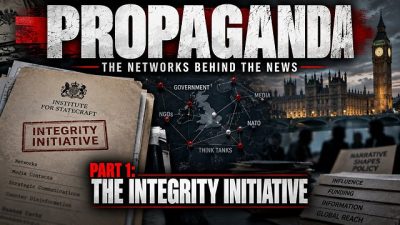
Integrity Initiative: UK-funded network framed dissent as Russian disinformation for years
or go to
Aletho News Archives – Video-Images
From the Archives
Why Saudi Ties to 9/11 Mean U.S. Ties to 9/11
By Kevin Ryan | Dig Within | September 27, 2015
Media interest in Saudi Arabian connections to the crimes of 9/11 has centered on calls for the release of the 28 missing pages from the Joint Congressional Inquiry’s report. However, those calls focus on the question of hijacker financing and omit the most interesting links between the 9/11 attacks and Saudi Arabia—links that implicate powerful people in the United States. Here are twenty examples. … continue
Blog Roll
 Aletho News
- EUROPE FEARS RUSSIA’S NEXT MOVE / Ian Proud
- Big tech hands in its DSA censorship reports to the EU
- ‘A Big Victory’ – Palestine Chronicle Wins Two-Year Legal Battle
- IAEA inspectors cannot return to Iran amid US threats: Russia
- Senate Rejects Iran War Powers Resolution Passed By House
- ‘We did not attack Pakistan with drones’: Afghan sources
- Iraqi Resistance faction links arms to sovereignty, questions US exit
- Cannon fodder no more… South Korea rejects Trump’s pressure to join his criminal war on Iran
- Neria Leiter Was A Legitimate Military Target
- Integrity Initiative: UK-funded network framed dissent as Russian disinformation for years
- If Americans Knew
- ‘This is where I live now, the back of a truck’: a day in the life of a grandmother in Gaza
- In UN Speech, Iran’s President Displays Pictures of Children Killed by US, Brings Attention to Israel’s Nuclear Arsenal
- Israel displaces hundreds of Palestinians amid wave of demolitions in West Bank
- Aid, reconstruction, and Israel’s history of obstruction in Gaza
- Trump administration digs an ever-deeper hole of complicity in genocide – Daily Update
- US-Israel $2.8 Billion Arms Deal, 40,000-Bomb Supply Faces New Gaza Complicity Accusations
- Caught on Tape: AIPAC CEO Boasted of Controlling Trump’s National Security Officials
- Why Hamas Attacked Israel in October 2023 – Israeli professor Ilan Pappé
- They see them, then kill them: Israeli quadcopters track, deliberately target civilians in Gaza
- Winter could turn Gaza’s treacherous, war-damaged buildings into deathtraps
- No Tricks Zone
- New Study: Earth And Venus Surface Warmth Largely Explained By Convection And Lapse Rate, Not CO2 Or Radiation
- 2025 Nature Paper Claiming Worsening Global Drought Gets RETRACTED …Heavily Flawed
- New Study: ‘Global Drought Shows No Detectable Recent Acceleration Under Climate Warming’
- Economic Masterminds: German Socialists Suggest Taxing Productivity Gains Stemming From Using AI
- The South China Sea Has Not Been Cooperating With The Climate Change Narrative
- Energy Crisis: Germany Enters Heating Season With Historically Low Gas Reserve Fill Levels
- New Study: The Antarctic Ice Sheet Gained Mass From 2020-2024 Due To Staggering Snow And Ice Accumulation
- Study: Ocean Heating Rates From Thousands Of Years Ago ‘Dwarf’ Modern Ocean Heating Rates
- Climate Extremists Target, Attack Large-Scale Power Grid Infrastructure In Germany!
- New Study: Antarctic Ice Melt Has Contributed Less Than 1 Centimeter To Sea Level Rise In The Last 30 Years

