A rights group says many civilians have been targeted and killed in US drone attacks in Pakistan and other countries where such raids are carried out, Press TV reports.
The UK-based rights group Reprieve revealed that civilians have been killed in Pakistan and other places before militants were targeted by US assassination drones.
Reprieve has presented several cases on how ruthlessly the US Central Intelligence Agency (CIA) has killed civilians but declared them militants through dubious reports in the media, which regularly cite anonymous Pakistani and US officials.
In one such case, the CIA killed 221 people, including over 100 children, in Pakistan in search of just four militants. This is while three of the militants are reportedly still alive and the fourth one has died of natural causes.
In another example, the report pointed out that on average each militant was targeted and reported killed more than three times before they were actually killed.
To kill one militant, sometimes “more than 300 people have been killed,” said Mirza Shazad Akbar, Reprieve’s representative in Pakistan.
“A former US drone operator said that by looking at the monitor and looking at people’s movement, he could actually tell who is a bad person and who is a good person… This is the extent of… the [US] flawed intelligence,” Akbar added.
But this is just the tip of the iceberg of the scale of tragedy in Pakistan’s tribal areas, where more than 3,800 people have been killed with the same pattern of the so-called precise surgical drone strikes.
The US carries out targeted killings through drone strikes in several Muslim countries, such as Afghanistan, Yemen, Pakistan and Somalia. Washington claims the targets of the drone attacks are militants, but local officials and witnesses maintain that civilians have been the main victims of such raids over the past few years.
The United Nations and several human rights organizations have identified the US as the world’s number-one user of “targeted killings,” largely due to its drone attacks in Pakistan and Afghanistan.
November 28, 2014
Posted by aletho |
Militarism, Progressive Hypocrite, Subjugation - Torture, War Crimes | Afghanistan, Central Intelligence Agency, CIA, Human rights, Pakistan, Somalia, United States, Yemen |
Leave a comment
Harper, Abbott, and Cameron at the Brisbane G-20
By John Chuckman | Aletho News | November 18, 2014
Canada’s Prime Minister, Stephen Harper, is reported by a spokesman, to have had the following exchange with Russia’s President Vladimir Putin during the Brisbane G-20 summit: “Well, I guess I’ll shake your hand, but I only have one thing to say to you: you need to get out of Ukraine.” Putin is said to have replied, “Impossible. Since we are not there.”
A graceless bit of diplomatic crudity from a truly graceless man, Stephen Harper, someone Canadians know has a history of underhanded practices at home, from introducing ugly personal-attack campaign advertising, using secretive and bullying tactics in parliament, failing to deal with corrupt practices by subordinates especially an American-style election scandal of robo-calls which sent some voters to the wrong polls, to having appointed several unbelievably incompetent and corrupt ministers. He is known for a ferocious temper in private, a very controlling man who grants his political associates absolutely no freedom of expression, and is reported by insiders as having on at least one occasion thrown a chair in a meeting. His silencing of Canadian government scientists from offering their opinions on issues in areas of expertise has been a simmering international scandal, as has his complete suppression of environmental issues.
Before Harper, Canada enjoyed for many decades a reputation for fairness and decency and intelligence in international affairs with statesmanship and openness exhibited by figures like Lester Pearson or Jean Chretien or Paul Martin. Harper has destroyed a great deal of that as he pursues a single-minded role as American junior partner in almost all things.
He completely abandoned Canada’s traditional policies of fairness and balance in the Middle East, literally shocking many Canadians at times with fervent outbursts about Israel, including suggestions that Canadian critics of Israel are anti-Semitic. He does this, as any astute political observer recognizes, to solicit increased campaign funds from Canada’s financially successful Jewish community, taking his cue from Republicans in the United States such as Newt Gingrich who alone received $18 million dollars from one wealthy supporter of Israel for his last nomination campaign in exchange for inserting into his speeches that there was no such thing as a Palestinian, an utterly insincere and ridiculous statement. Since Israel is no admirer of President Putin’s, he being too independent-minded and opposed to the American exceptionalism Israel tightly embraces and by which it prospers, this activity of Harper’s puts him in an anti-Russian frame of mind from the start.
Harper has made an annual photo-op journey to Canada’s North, always trying to appear to voters as the man most concerned with a future there of melting ice creating free access through the Northwest Passage. Ironically, he periodically mentions Russia as the nation he is most concerned about, but Canada’s recent history couldn’t make it clearer that it is the United States which represents the great threat to our Northern waters and shore. Everything from unauthorized American atomic submarine prowling to a giant American oil tanker passing to published American charts showing this future open water as international tells a pretty harsh story. But in every detail, Harper only pretends America is a great and non-threatening friend.
Harper is the single most obsessed leader in Canada’s history with pleasing, almost fawning over, the United States. Had the history of Canada, which included a great deal of disagreement and contention with the United States over its many imperialistic behaviors, included many leaders of Harper’s character, there quite likely would not be a county called Canada today.
So here are the demonstrated qualities of the man performing as Canada’s diplomatic ass at the G-20 in Brisbane. He demonstrates a genuinely anal-retentive temperament, is intolerant of differences of opinion, and embraces a willful blindness to the world’s greatest threat to peace, the United States in its self-appointed role as imperial arbiter among nations.
In case you wonder why a man like Harper even holds office in Canada, it is because the effective opposition was split with internal battles and because the last leader they selected in desperation following those battles was a man of no political intelligence or even experience and a totally unattractive personality to the public, Michael Ignatieff, someone who managed to do almost everything wrong. It also reflects a democratic deficit in our parliamentary structure where a party with just over 39% of the vote can be a parliamentary majority. So despite Canadians consistently being about 60% or higher inclined to somewhat progressive parties, Harper has had a free run at pole-axing the country’s traditional international reputation. Every day we come to be seen as a bit more like the deceptive and brutal American colony in the Middle East he embraces so closely.
We unfortunately live in a time utterly lacking statesmen in the West. I don’t know the detailed backgrounds of those other aggressive fools at the G-20, Abbott of Australia and Cameron of Britain, but I know they are both men who have lied exceedingly and been intimately involved with such nasty business as favors for the unsavory Rupert Murdoch empire. I can think of nothing which recommends either of them as statesmen. Indeed, they both, quite literally, kowtow to America.
Putin is head and shoulders above these men in intellect and focus, readiness to communicate clear views to the world, someone demonstrating considerable patience, and, from all evidence, someone notably free of the blowhard ideology which virtually characterizes Harper, Abbott, and Cameron.
Putin’s moves in Ukraine seem to me appropriate for dealing with a deliberately-induced crisis in an important neighboring country, and one with a long history of connections and associations. He has not invaded Ukraine, something which he could easily do were he so inclined. I suspect he has supplied weapons to East Ukraine, but that is something the United States does all the time, including supplying weapons to some of the most brutal groups and governments on earth, as it is right now doing in Syria, with secret night cargo flights out of Turkey to terrorist cutthroats. Just ask yourself what America would do about a comparable situation in Mexico: patience simply would not exist, and Mexico City would be quickly overrun by tanks.
The people of East Ukraine, Russian in background and sympathies, deserve protection as much as they deserve the huge amounts of emergency supplies Russia has supplied in a conflict owing its origin entirely to the covert acts of America. Had the coup-established government of Ukraine originally offered protection of Eastern interests, including language rights they openly tried suppressing, the story might have been different, but they did precisely the opposite, passing unfair laws, making threat after threat, and attacking their own citizens. Who wouldn’t rebel in that environment, including any of the states of the United States? How easily people forget past rebellions in the United States, the greatest of which was the Civil War, still the bloodiest war Americans ever experienced.
It is quite clear that the United States is responsible for destabilizing Ukraine. Its CIA funds have been invested into many unsavoury projects, perhaps most disturbing is its paying support to a collection of neo-Nazi groups ranging from extremist parties to violent militia forces, some of the very groups who have committed atrocities such as murdering many hundreds of civilians and some of whom actually march under swastika-like flags. It does seem more than a bit strange that men like Harper, Abbott, and Cameron implicitly support that kind of filthy work while charging Putin with dark acts, dark acts which are stated ambiguously and certainly never proved.
It is also clear that the United States has pressured all authorities involved to delay and obscure the investigation into the destruction of Flight MH17, and the only explanation for that can be America’s preventing, for as long as possible while the new coup-created government of Ukraine consolidates its position, the highly embarrassing finding that Ukraine in fact shot it down. The United States has said over and over it has evidence about the crash, yet it has never produced a scrap of it. Just as it never produced evidence for so many past claims from what actually happened on 9/11 to the assassination of a President.
The great irony of the G-20 summit in Brisbane is that its only substantial agreement concerned doing everything possible to promote growth in a world whose economy is dangerously stagnating, yet it wasted time and energy on America’s fantasy stories about Russia and Ukraine, insulted Russia’s President, and threatened in some cases further growth-suppressing sanctions. Nothing could be more contradictory and unproductive or, frankly, just plain stupid.
November 18, 2014
Posted by aletho |
Economics | Canada, Central Intelligence Agency, CIA, Israel, Middle East, Palestine, Stephen Harper, Ukraine, United States, Zionism |
Leave a comment
Twelve winners of the Nobel Peace Prize have urged fellow laureate, US President Barack Obama, to release a Senate report on the Central Intelligence Agency’s post-9/11 Rendition, Detention, and Interrogation Program, also known as the torture report.
The laureates revealed late Sunday an open letter that called for “full disclosure to the American people of the extent and use of torture and rendition by American soldiers, operatives, and contractors, as well as the authorization of torture and rendition by American officials.”
The letter, posted on TheCommunity.com, also asked for a concrete plan to close secret international “black site” prisons – used by the US to hide, hold, and interrogate post-9/11 detainees – as well as the US military prison at Guantanamo Bay, where many War on Terror captives languish with few or inconsistent legal maneuvers, if any at all, at their disposal.
The letter was signed by past Nobel winners José Ramos-Horta, Archbishop Desmond Tutu, F.W. De Klerk, Leymah Gbowee, Muhammad Yunus, John Hume, Bishop Carlos X. Belo, Betty Williams, Adolfo Perez Esquivel, Jody Williams, Oscar Arias Sanchez, and Mohammad ElBaradei.
“In recent decades, by accepting the flagrant use of torture and other violations of international law in the name of combating terrorism, American leaders have eroded the very freedoms and rights that generations of their young gave their lives to defend,” the laureates wrote.
“They have again set an example that will be followed by others; only now, it is one that will be used to justify the use of torture by regimes around the world, including against American soldiers in foreign lands. In losing their way, they have made us all vulnerable.”
The letter called on Obama, winner of the 2009 Nobel Peace Prize after less than a year in the White House, to follow principles of international law outlined in the UN Convention Against Torture and the Geneva Conventions.
The US Senate Intelligence Committee’s $40 million investigation into the CIA’s Rendition, Detention, and Interrogation Program – which was active from September 11, 2001 to 2006 – has found that the spy agency purposely deceived the US Justice Department to attain legal justification for the use of torture techniques, among other findings. The investigation and subsequent crafting of the report ran from March 2009 to December 2012.
Of that 6,000-page investigative report, the public will only see a 500-page, partially-redacted executive summary that is in the process of declassification.
According to sources familiar with the unreleased report, the CIA, and not top officials of the George W. Bush administration, are blamed for interrogation tactics that amount to torture based on international legal standards.
The report outlines 20 main conclusions about the CIA’s post-9/11 torture program which, according to the investigation, intentionally evaded White House, congressional, and intra-agency oversight.
~
You can join the laureates’ call by signing a petition to President Obama here.
October 27, 2014
Posted by aletho |
Civil Liberties, Progressive Hypocrite, Subjugation - Torture | CIA, Guantanamo, Human rights, Law, Obama, USA |
Leave a comment
“The irony is that the Nazi holocaust has now become the main ideological weapon for launching wars of aggression,” Norman Finkelstein tells Yoav Shamir in “Defamation,” the Israeli filmmaker’s award-winning 2009 documentary on how perceptions of anti-Semitism affect Israeli and U.S. politics. “Every time you want to launch a war of aggression, drag in the Nazi holocaust.” If you’re looking for evidence in support of Finkelstein’s thesis today, you need look no further than the U.S. Holocaust Memorial Museum’s exhibit of images of emaciated and mutilated bodies from contemporary Syria.
The small exhibit, entitled “Genocide: The Threat Continues,” features a dozen images said to be from an archive of 55,000 pictures allegedly smuggled out of the country by “Caesar,” a mysterious source who claims to have defected from his job as a Syrian military photographer after having been ordered to take photos of more than 10,000 corpses. Emphasizing the threat of an impending genocide, the reportedly conscience-stricken defector warns that a similar fate awaits the 150,000 people he says remain incarcerated by President Bashar Assad’s government.
“They’re powerful images, and viewers are immediately reminded of the Holocaust,” Cameron Hudson, the director of the museum’s Center for the Prevention of Genocide, was cited as saying in an Oct. 15 Associated Press report. Hudson, whose intriguing career in genocide prevention includes a stint as intelligence analyst in the CIA’s Africa Directorate, added, “They show a side of the Syrian regime that hasn’t really been really seen. You might have heard about it, read about it, but when you’re confronted with these images, they’re impossible to ignore.”
The museum’s promotion of these impossible-to-ignore, Holocaust-recalling images dates from a few months earlier, however. In his July visit to Washington that included a series of meetings with U.S. government and congressional officials, Caesar’s first stop was at the Holocaust Museum.
On July 28, Michael Chertoff, a member of the museum’s governing board of trustees, presented the purported defector to a small group of reporters and researchers. According to the Washington Post’s Greg Miller, this event was the first time that Caesar had appeared publicly to answer questions about the photos deemed by some human rights organizations as evidence of war crimes committed by Assad.
Chertoff, a co-author of the USA PATRIOT Act, hasn’t hesitated to invoke the Nazis either in support of the neoconservative-conceived “global war on terror.” In an April 22, 2007 Washington Post op-ed entitled “Make No Mistake: This Is War,” the then secretary of the Department of Homeland Security wrote, “Al-Qaeda and its ilk have a world vision that is comparable to that of historical totalitarian ideologues but adapted to the 21st-century global network.”
Commenting on the former DHS secretary’s close ties to Israel, Jonathan Cook notes in his book “Israel and the Clash of Civilizations” that Chertoff’s mother was an air hostess for El Al in the 1950s. “There are reports that she was involved in Operation Magic Carpet, which brought Jews to Israel from Yemen,” writes the Nazareth-based British journalist. “It therefore seems possible that Livia Eisen was an Israeli national, and one with possible links to the Mossad.”
Among the other members of the Holocaust Memorial Council noted for their staunch support of Israel and American interventionism are the pardoned Iran-Contra neocon intriguer Elliott Abrams and Nobel Peace Prize laureate and Holocaust survivor Elie Wiesel.
Writing in Foreign Policy’s The Cable on April 23, 2012, Josh Rogin drew attention to Wiesel’s pointed introduction of President Barack Obama at a ceremony in the Holocaust Museum. Comparing the Syrian president and then Iranian President Mahmoud Ahmadinejad to the perpetrators of the Nazi holocaust, Wiesel implicitly criticized Obama’s supposedly obtuse inaction, “So in this place we may ask: Have we learned anything from it? If so, how is it that Assad is still in power?”
As Rogin, a reliable media conduit for anti-Assad interventionism, pointedly observed, the speech was reminiscent of another one Wiesel gave at the opening of the museum in 1993, when he urged then President Bill Clinton to take military action in Bosnia: “Similarly, that speech came at a time when the Clinton administration was resisting getting entangled in a foreign civil war but was under growing pressure to intervene.”
The Lobby’s Syrian Interpreter
In a revealing interview published on Aug. 11, 2013 by the Turkish newspaper Today’s Zaman, Caesar’s interpreter—who presided over a question-and-answer session at the museum—echoed Wiesel’s criticism of President Obama’s resistance to doing the bidding of the neocons and “liberal interventionists” seeking greater American intervention in Syria.
Asked by the Gülen movement-aligned daily if America had forgotten the Syrian war, Mouaz Moustafa replied, “It is the president who is against action in Syria not the whole of the U.S. government. President Barack Obama has been very insular and cautious about Syria. The president does not seem to understand how important Syria is to U.S. national security [….] The president does not feel the need to explain to the American people or the world that the risks with any of the bad options that we have are far outweighed by the risks of inaction.”
It is hardly a coincidence that Moustafa’s rhetoric bears a striking resemblance to that of Israel’s friends like Wiesel. Although one of best known pro-Israel media-promoted faces of the Syrian opposition in Washington has understandably sought to obscure his ties to Tel Aviv, the executive director of the Syrian Emergency Task Force has undeniable links to one of its American lobby’s leading think tanks.
After it emerged that Moustafa’s non-profit had coordinated Senator John McCain’s May 2013 trip to meet with the so-called “moderate” Syrian rebels, an examination of the SETF executive director’s background revealed that he was one of the Washington Institute for Near East Policy’s “experts”; a contributor to WINEP’s Fikra Forum, “an online community that aims to generate ideas to support Arab democrats in their struggle with authoritarians and extremists”; and had addressed the AIPAC-created think tank’s annual Soref symposium entitled “Inside Syria: The Battle Against Assad’s Regime.”
Even more damningly, it was discovered that one of SETF’s web addresses was “syriantaskforce.torahacademybr.org.” The “torahacademybr.org” url belongs to the Torah Academy of Boca Raton, Florida, whose key values notably include promoting “a love for and commitment to Eretz Yisroel.”
When confronted with these embarrassing revelations, Moustafa responded via Twitter, “call me terrorist/Qaeda/nazi as others have but not Zionist Im [sic] denied ever entering palestine but it lives in me..” Dismissing the Syrian opposition group’s intriguing connection to a pro-Israel yeshiva in Florida, @SoccerMouaz claimed that the “url registration was due to dumb error by web designer.”
The Israel lobby-backed Moustafa also interpreted for Caesar, who was wearing dark glasses and a blue rain jacket with the hood pulled over his head, when he testified before a closed-door session of the House Committee on Foreign Affairs this July. At least some of its members would no doubt have recognized the ubiquitous interpreter, however.
As Foreign Policy’s The Cable reported on June 6, 2013, two leaders of the House Foreign Affairs Committee, Reps. Ed Royce (R-CA) and Eliot Engel (D-NY), dispatched aides to Turkey to meet leading members of the Syrian Free Army between May 27 and June 3. As The Cable had “learned,” the meeting had been coordinated by Moustafa’s Syrian Emergency Task Force.
(This September, staff from SETF and the House Foreign Affairs Committee reportedly facilitated a meeting in Turkey that led to more than 20 Syrian rebel commanders signing “a historic agreement” to unite in the quixotic fight against both ISIS and Assad.)
Interestingly, the FP article noted that “[t]he two lawmakers don’t exactly see eye-to-eye on the question of whether the United States should intervene more aggressively in the protracted civil war,” with Engel having “carved out one of the most hawkish positions in Congress on Syria, being the first to introduce legislation authorizing lethal assistance for the rebels.”
Moreover, as Rep. Engel pointed out in his opening remarks at the Syria briefing, he has “been personally focused on Syria for a long time.” In 2003, he passed the Syria Accountability Act, which imposed sanctions on the government of Hafez Assad.
In a reference to his introduction of the Free Syria Act in March 2013, which authorized the president to provide lethal assistance to those Engel euphemistically described as “carefully vetted members of the moderate Syrian opposition,” the reflexively pro-Israel Democratic congressman from New York said, “If we had taken that approach a year and a half ago, we may have been able to stem the growth of ISIS and weaken the regime of Bashar Assad. But we didn’t, unfortunately, so we’ll never really know what would have happened if we had acted then.”
The Israeli-Qatari Nexus
While Caesar and his Washington-based Palestinian-Syrian interpreter clearly have the enthusiastic support of Israel’s friends in America, the photos presented as evidence of an alleged Syrian “holocaust” by Assad’s forces received their initial boost from one of Tel Aviv’s closest, albeit covert, Arab allies in their mutual war against the Syrian government.
As part of a review of the photos commissioned by the government of Qatar, David Crane, a former war-crimes prosecutor for Sierra Leone, reportedly spent hours interviewing Caesar. An Oct. 13 Yahoo News report by Michael Isikoff—one of the photos’ most tireless promoters whose subsequently retracted, provocative 2005 Newsweek story of an American soldier flushing a Koran down the toilet triggered a wave of anti-American protests by outraged Muslims—quotes Crane as saying that they document “an industrial killing machine not seen since the Holocaust.”
Like the director of the Holocaust Museum’s Center for the Prevention of Genocide, Crane has also worked for the U.S. government in the intelligence field. His former posts include Director of the Office of Intelligence Review, assistant general counsel of the Defense Intelligence Agency and the Waldemar A. Solf Professor of International Law at the U.S. Army Judge Advocate Generals School.
Having ostensibly left the intelligence world behind him for Syracuse University’s College of Law, Crane founded and directs the Syrian Accountability Project (SAP), which describes itself as “a cooperative effort between activists, non-governmental organizations, students, and other interested parties to document war crimes and crimes against humanity in the context of the Syrian Crisis.” According to its website, SAP has “worked closely with the Syrian National Coalition” which is listed as one of its clients.
Founded in Doha, Qatar in November 2012, the Syrian National Coalition represents the Free Syrian Army, which has reportedly collaborated with the al-Qaeda-linked Jabhat al-Nusra and the Islamist Ahrar al-Sham in massacres of Syrian civilians such as the one this March in the village of Kassab, an ancestral home of Syria’s minority ethnic Armenians, on the Turkish border.
Professor Crane is also vice-president of I Am Syria, whose mission statement describes it as “a non-profit media based campaign that seeks to educate the world of the Syrian Conflict.” I Am Syria’s president, Ammar Abdulhamid, has been a fellow at two of the most prominent Washington-based pro-Israel think tanks, the Saban Center for Middle East Policy—which oversees the Qatar-based Brookings Doha Center—and the neocon Foundation for the Defense of Democracies; while one of its education directors, Andrew Beitar, is a regional education coordinator for the Holocaust Museum.
As the case of the mysterious Caesar and his trove of torture photos clearly shows, those who want to launch a war of aggression on Syria—as they have succeeded in doing in Iraq and Libya—have at every opportunity sought, as Finkelstein put it, to drag in the Nazi holocaust. As more and more people become wise to this ruse, they should keep in mind the two words espoused by the U.S. Holocaust Memorial Museum: “Never Again.”
Maidhc Ó Cathail is a widely published writer and political analyst. He is also the creator and editor of The Passionate Attachment blog, which focuses primarily on the US-Israeli relationship.
October 25, 2014
Posted by aletho |
Mainstream Media, Warmongering, Timeless or most popular | Central Intelligence Agency, CIA, Elie Wiesel, Greg Miller, Israel, Syria, Washington Post, Zionism |
Leave a comment

The White House is reportedly wrestling over how to interpret a ban on “cruel, inhuman or degrading treatment” ahead of a meeting in Geneva next month concerning the United Nations charter on torture.
According to the New York Times, the Obama administration remains divided over what stance a Washington delegation will officially take at the UN-sponsored Committee Against Torture panel early next month in the Swiss city.
Although Barack Obama said before and after being elected to the White House that United States officials should never engage in torturous activity, Times national security journalist Charlie Savage reported on Sunday this week that administration officials might formally adopt another stance — one on par with the policies of Obama’s predecessor, George W. Bush — when the panel convenes in a couple of weeks.
The Times reported that the attorneys who answer to the president are conflicted over whether or not the White House should revisit the Bush administration’s interpretation of a UN treaty, the likes of which authorized the use of enhanced interrogation tactics, like waterboarding and sleep deprivation, on individuals detained by military and intelligence agencies in the aftermath of the September 11, 2001 terrorist attacks at facilities such as the Guantanamo Bay detention center and CIA so-called “black sites.”
The upcoming meeting will be the first one of Obama’s presidency, Savage acknowledged, presenting the commander-in-chief with a rare opportunity to speak of the UN Convention Against Torture, a treaty that since the 1980s has aimed to ensure prisoners the world over aren’t subjected to inhumane conditions.
In Sunday’s report, Savage wrote that Obama, then a US senator, spoke out adamantly against Pres. Bush when it was revealed in 2005 that his administration had been interpreting the UN treaty in a manner that they argued made it acceptable for CIA and Pentagon officials to disregard the prohibitions against torture if they weren’t on American soil.
Obama the president later condemned that reasoning with an executive order “ensuring lawful interrogations,” Savage added, although next month’s meeting may change that.
“But the Obama administration has never officially declared its position on the treaty, and now, President Obama’s legal team is debating whether to back away from his earlier view,” Savage wrote. “It is considering reaffirming the Bush administration’s position that the treaty imposes no legal obligation on the United States to bar cruelty outside its borders, according to officials who discussed the deliberations on the condition of anonymity.”
“State Department lawyers are said to be pushing to officially abandon the Bush-era interpretation,” Savage added, which would simply continue to let the 2009 Obama-signed executive order stand as Washington’s official word and further ensure that American officials are obligated to adhere to the torture treaty regardless of where in the world they are located.
Other attorneys, he added, have a different idea of what to do at next month’s meeting, however. “But military and intelligence lawyers are said to oppose accepting that the treaty imposes legal obligations on the United States’ actions abroad,” Savage wrote. “They say they need more time to study whether it would have operational impacts. They have also raised concerns that current or future wartime detainees abroad might invoke the treaty to sue American officials with claims of torture, although courts have repeatedly thrown out lawsuits brought by detainees held as terrorism suspects.”
Should those arguing on the latter side provoke, then the current administration could soon find itself agreeing with past policies that continue to be controversial nearly a decade after the Bush White House’s use of torture started to surface.
“Many foreign political leaders and non-governmental organizations have called for members of the Bush administration, including Bush himself, to face prosecution for allowing the abuse of detainees in US custody during the course of the US campaign against Islamic militant groups spurred by the 9/11 attacks,” Mark Hanrahan wrote for the International Business Times on Sunday. “The Bush administration, which launched the wars in Iraq and Afghanistan, had to contend with a number of allegations it allowed US officials to use torture against detainees during the course of its campaigns,” including the infamous Abu Ghraib prison scandal in Iraq.
If the Pentagon and CIA attorneys prevail, then Washington could once again interpret the UN treaty in a manner that allows those same torturous practices to be performed on detainees once against, as long as any such instances occur abroad.
Last week, McClatchy news service reported that a classified $40 million probe launched by the Senate to investigate the CIA’s Bush-era detention and interrogation program concludes without holding any administration officials responsible for the scandals at Abu Ghraib and other facilities that to this day remain a major scar on the presidency.
“This report is not about the White House. It’s not about the president. It’s not about criminal liability. It’s about the CIA’s actions or inactions,” a person familiar with the report told McClatchy. “It does not look at the Bush administration’s lawyers to see if they were trying to literally do an end run around justice and the law.”
October 20, 2014
Posted by aletho |
Progressive Hypocrite, Subjugation - Torture, War Crimes | CIA, Guantanamo, Human rights, Obama, USA |
Leave a comment
It’s part of the public record that the NSA has engaged in an industry-wide campaign to weaken cryptographic protocols and insert back doors into hi-tech products sold by U.S. companies. We also know that NSA officials have privately congratulated each other in successfully undermining privacy and security across the Internet. Hence it’s only logical to assume that the NSA’s numerous subversion programs extend into foreign “commercial entities”. Thanks to documents recently disclosed by the Intercept we have unambiguous confirmation.
Hi-tech subversion underscores the fact that the whole tired debate regarding cryptographic keys held in escrow for so-called lawful interception (what the Washington Post called “secret golden keys”) only serves to distract the public from programs aimed at wielding covert back doors. In other words, by reviving the zombie idea of an explicit back door the editorial board at the Washington Post is conveniently ignoring all of the clandestine techniques that already exist to sidestep encryption. In a nutshell: zero-day bugs and malware often trump strong crypto.
On an aside it’s interesting to observe the citadel of free thinkers at the Electronic Frontier Foundation continue to promote cryptographic tools as a privacy tonic with a faith that’s almost religious while conspicuously neglecting other important aspects of operational security. The EFF cheerfully provides a litany of alleged success stories. Never mind all of the instances in which the users of said cryptographic tools were compromised, even users who specialized in computer security.
Infiltrating the Media
The NSA’s campaign to undermine software and hardware is mirrored by parallel efforts in other domains. Specifically, the Church Committee and Pike Committee investigations of the 1970s unearthed secret programs like Operation Mockingbird which were conducted to infiltrate the media and develop an apparatus, a Mighty Wurlitzer of sorts, that allowed government spies to quietly influence public perception. The findings of congressional investigators have been substantiated by writers like Deborah Davis and Carl Bernstein.
Though much of the documented evidence is decades old the CIA continues to maintain its long-standing relationship with the press. For example in March of 2010 WikiLeaks published a classified CIA analysis which described a propaganda recipe for the “targeted manipulation of public opinion” in Germany and France to bolster support for NATO military action in Afghanistan. Also, here in the United States New York Times editor Bill Keller admitted to delaying the story on Bush-era warrantless wiretapping in direct service to the powers that be.
So don’t think for a minute that the CIA didn’t have a hand in the media’s assault on journalist Gary Webb after Webb exposed the CIA’s connections to the international drug trade. Gary caught U.S. intelligence with its pants down and spymasters had their operatives in the press destroy him.
More recently, the former editor of Frankfurter Allgemeine Zeitung revealed that he worked for the CIA. In a televised interview Udo Ulfkotte described Germany as an American client state, noting the role of the CIA in the origins of German intelligence. He warned that powerful interests in the United States were pushing for war with Russia and that American spies have widespread links to foreign news outlets:
“Is this only the case with German journalists? No, I think it is especially the case with British journalists, because they have a much closer relationship. It is especially the case with Israeli journalists. Of course with French journalists. … It is the case for Australians, [with] journalists from New Zealand, from Taiwan, well, there is many countries, … like Jordan for example. …”
A Question for Ed Snowden
While media subversion enables political manipulation through indirect means, U.S. intelligence has been known to employ more direct means to impose its agenda in places like Angola, Chile, Guatemala, Iran, Nicaragua, and Ukraine. In fact, stepping back to view the big picture, one might be tempted to posit that U.S. intelligence has established clandestine footholds globally in any institution seen as vital to the interests of the corporate factions that drive the American Deep State.
All of this subversion raises a question: are covert programs compatible with democracy? Can the public allow secrecy, propaganda, and infiltration to blossom while simultaneously expecting to be immune from their effects? Former CIA officers who went public, intrepid whistleblowers like Philip Agee and John Stockwell, answered this question with a resounding “no.” As would millions of people in third-world countries who suffered through the bloody proxy battles of the Cold War. For instance, Philip Agee stated in his book CIA Diary:
“When the Watergate trials end and the whole episode begins to fade, there will be a movement for national renewal, for reform of electoral practices, and perhaps even for reform of the FBI and the CIA. But the return to our cozy self-righteous traditions should lure no one into believing that the problem has been removed. Reforms attack symptoms rather than the disease”
Hence it’s unsettling to hear Edward Snowden, despite his commendable admonishments for an open debate on mass surveillance, maintain the underlying legitimacy of government subterfuge:
“We can have secret programs. You know, the American people don’t have to know the name of every individual that’s under investigation. We don’t need to know the technical details of absolutely every program in the intelligence community. But we do have to know the bare and broad outlines of the powers our government is claiming … and how they affect us and how they affect our relationships overseas.”
You’re witnessing the power of framing the narrative. Society has been encouraged to discuss the legitimacy of what spies do and how they do it. But the problem with this well-intentioned dialogue is that “we the people” are led away from the more fundamental question of whether society needs spies and their covert ops to begin with.
Author’s Note: In the past I’ve posed a question to Glenn Greenwald and was met with silence. Exceptional behavior for someone who is famous for responding vocally. Now we’ll see how Mr. Snowden replies.
Bill Blunden is an independent investigator whose current areas of inquiry include information security, anti-forensics, and institutional analysis. He is the author of several books, including The Rootkit Arsenal , and Behold a Pale Farce: Cyberwar, Threat Inflation, and the Malware-Industrial Complex. Bill is the lead investigator at Below Gotham Labs.
October 14, 2014
Posted by aletho |
Civil Liberties, Corruption, Deception, Timeless or most popular | Central Intelligence Agency, CIA, Human rights, New York Times, NSA, United States, Washington Post |
Leave a comment
MOSCOW – Ekaterina Blinova – 38 years ago, on October 6, 1976, Cubana Airlines Flight 455 was downed by terrorists, only now known to be CIA operatives; experts further claim it was not the only case when CIA was sponsoring terrorists.
“The US Government, being consistent with its stated commitment to fight terrorism, should act without double standards against those who, from US soil, have carried out terrorist acts against Cuba,” said Ambassador of the Republic of Cuba to Barbados Lisette Perez, as cited by the Barbados Advocate, during the ceremony of commemorating the victims at the Cubana Monument at Paynes Bay, Barbados.
The sudden explosion of two bombs onboard Cubana Flight 455, traveling between Havana and Panama, led to the plane’s crash, killing all 73 passengers and five crew members.
“For the past three months, Dr. Castro’s opponents in the US have waged a terrorist campaign in the Caribbean against those who break bread with the Cuban leader,” the Guardian wrote on October 8, 1976, reporting on the tragic accident. The media source noted that a previous attempt to place explosives on the plane was carried out in July, 1976, when a suitcase bomb exploded just before it was loaded onto the plane. In the same month the “office of a Trinidad airline was bombed in Barbados and a mysterious fire in Guyana destroyed a large quantity of Cuban-supplied fishing equipment,” the Guardian wrote.
According to the media outlet, the terror acts were presumably conducted by right-wing Cuban exiles and were aimed at states with political and economic ties with Cuba. Four suspects, Luis Posada Carriles, Orlando Bosch, Freddy Lugo and Hernan Ricardo Lozano were arrested. In August 1985, Bosch was acquitted because of the lack of evidence, while Posada fled from prison under mysterious circumstances on the eve of the announcement of his verdict. Both Luis Posada and Orlando Bosch later ended up in the US.
Remarkably, in May 2005 the National Security Archive, an independent non-profit organization at George Washington University, released declassified CIA and FBI documents, indicating Cuban exile Luis Posada was a former CIA agent and a mastermind of the terror attack on Cubana Airlines flight 455. It was also revealed Posada was linked to a series of bombing in Barbados in 1976. Additional CIA records confirmed Posada indeed served as an agent in the 1960s and early 1970s and worked as an informant until June 1976. Posada was on a payroll, “receiving approximately $300.00 per month from CIA,” according to the FBI’s Memorandum, written on July 14, 1966. In that period, Posada was involved in military activities directed against Fidel Castro. Particularly, under the guidance of the US intelligence services he organized a military base in the Dominican Republic, drawing in fighters from different anti-Castro organizations.
According to the declassified CIA report, dated June 21, 1976, the US intelligence service was informed by Posada, allegedly, that Orlando Bosch, the leader of extremist Cuban exile group was planning to place two bombs on a board of a Cubana Airlines Flight, traveling between Havana and Panama. The US security agency did not inform the authorities of Barbados, which in 1970s granted Cuba stopover rights for its passenger planes flying to Africa, nor did they warned Havana about the preplanned terrorist act.
Furthermore, in July of 1990, US President George H.W. Bush pardoned Orlando Bosch of all American charges and rejected an extradition request to those seeking to arrest Bosch for his terrorist activities. Interestingly enough, the Cuban terrorist was exempted from charges at the request of Jeb Bush, a Potential 2016 Republican Presidential Candidate. Washington had also refused to extradite Luis Posada to Venezuela, under the pretext that he could face torture and mistreatment there.
The National Security Archive cited Peter Kornbluh, the Director of the Archive’s Cuba Documentation Project, who warned in 2005 that Posada’s presence in the US “poses a direct challenge to the Bush administration’s terrorism policy.” Although Bush claimed that no nation should shelter terrorists, surprisingly, the White House provided asylum to the murderers responsible for terrorist crimes against peaceful civilians.
Experts assert that the policy is mutable when Washington and its intelligence services use their own terrorists in order to threaten and undermine “disagreeable regimes.” For instance, political analysts point to the fact that ISIL fighters were trained in NATO camps located in Jordan and Turkey. The assistance, provided by the US to the so-called “Syrian opposition,” was aimed to oust Syria’s President al-Assad. In fact the Islamic State “was actually an integrated part of the ‘opposition movement’ supported, trained and financed by the West and its regional allies,” notes Andre Vltchek, an investigative journalist. Former CIA analyst Kenneth M. Pollack confirms that the US was carrying out military training of anti-Assad rebels in Jordan and Turkey in his article “An Army to Defeat Assad,” published in August 2014 in Foreign Affairs magazine. Some experts insist that the IS plot is a pretext for a large-scale military operation against Syria and Bashar al-Assad.
October 7, 2014
Posted by aletho |
Deception, Timeless or most popular, War Crimes | Central Intelligence Agency, CIA, Cuba, Syria, United States |
Leave a comment
Nearly three decades since the stories of Nicaraguan Contra-cocaine trafficking first appeared in 1985, the New York Times has finally, forthrightly admitted the allegations were true, although this belated acknowledgement comes in a movie review buried deep inside Sunday’s paper.
The review addresses a new film, “Kill the Messenger,” that revives the Contra-cocaine charges in the context of telling the tragic tale of journalist Gary Webb who himself revived the allegations in 1996 only to have the New York Times and other major newspapers wage a vendetta against him that destroyed his career and ultimately drove him to suicide.
The Times’ movie review by David Carr begins with a straightforward recognition of the long-denied truth to which now even the CIA has confessed: “If someone told you today that there was strong evidence that the Central Intelligence Agency once turned a blind eye to accusations of drug dealing by operatives it worked with, it might ring some distant, skeptical bell. Did that really happen? That really happened.”
Although the Times’ review still quibbles with aspects of Webb’s “Dark Alliance” series in the San Jose Mercury-News, the Times appears to have finally thrown in the towel when it comes to the broader question of whether Webb was telling important truths.
The Times’ resistance to accepting the reality of this major national security scandal under President Ronald Reagan even predated its tag-team destruction of Webb in the mid-1990s, when he was alternately pummeled by the Times, the Washington Post and the Los Angeles Times. The same Big Three newspapers also either missed or dismissed the Contra-cocaine scandal when Brian Barger and I first disclosed it in 1985 for the Associated Press — and even when an investigation led by Sen. John Kerry provided more proof in 1989.
Indeed, the New York Times took a leading role in putting down the story in the mid-1980s just as it did in the mid-1990s. That only began to change in 1998 when CIA Inspector General Frederick Hitz conducted the spy agency’s first comprehensive internal inquiry into the allegations and found substantial evidence to support suspicions of Contra-cocaine smuggling and the CIA’s complicity in the scandal.
Though the Times gave short-shrift to the CIA’s institutional confession in 1998, it did at least make a cursory acknowledgement of the historic admissions. The Times’ co-collaborators in the mugging of Gary Webb did even less. After waiting several weeks, the Washington Post produced an inside-the-paper story that missed the point. The Los Angeles Times, which had assigned 17 journalists to the task of destroying Webb’s reputation, ignored the CIA’s final report altogether.
So, it is perhaps nice that the Times stated quite frankly that the long-denied scandal “really happened” – even though this admission is tucked into a movie review placed on page AR-14 of the New York edition. And the Times’ reviewer still can’t quite face up to the fact that his newspaper was part of a gang assault on an honest journalist who actually got the story right.
Still Bashing Webb
Thus, the review is peppered with old claims that Webb hyped his material when, in fact, he understated the seriousness of the scandal, as did Barger and I in the 1980s. The extent of Contra cocaine trafficking and the CIA’s awareness – and protection – of the criminal behavior were much greater than any of us knew.
The Times’ review sums up the Webb story (and the movie plot) this way: “‘Kill the Messenger,’ a movie starring Jeremy Renner due Oct. 10, examines how much of the story [Webb] told was true and what happened after he wrote it. ‘Kill the Messenger’ decidedly remains in Mr. Webb’s corner, perhaps because most of the rest of the world was against him while he was alive.
“Rival newspapers blew holes in his story, government officials derided him as a nut case and his own newspaper, after initially basking in the scoop, threw him under a bus. Mr. Webb was open to attack in part because of the lurid presentation of the story and his willingness to draw causality based on very thin sourcing and evidence. He wrote past what he knew, but the movie suggests that he told a truth others were unwilling to. Sometimes, when David takes on Goliath, David is the one who ends up getting defeated. …
“Big news organization like The Los Angeles Times, The New York Times and The Washington Post tore the arms and legs off his work. Despite suggestions that their zeal was driven by professional jealousy, some of the journalists who re-reported the story said they had little choice, given the deep flaws.
“Tim Golden in The New York Times and others wrote that Mr. Webb overestimated his subjects’ ties to the contras as well as the amount of drugs sold and money that actually went to finance the war in Nicaragua.”
The reviewer gives Golden another chance to take a shot at Webb and defend what the Big Papers did. “Webb made some big allegations that he didn’t back up, and then the story just exploded, especially in California,” Golden said in an email. “You can find some fault with the follow-up stories, but mostly what they did was to show what Webb got wrong.”
But Golden continues to be wrong himself. While it may be true that no journalistic story is perfect and that no reporter knows everything about his subject, Webb was if anything too constrained in his chief conclusions, particularly the CIA’s role in shielding the Contra drug traffickers. The reality was much worse, with CIA officials intervening in criminal cases, such as the so-called Frogman Case in San Francisco, that threatened to expose the Contra-related trafficking.
The CIA Inspector General’s report also admitted that the CIA withheld evidence of Contra drug trafficking from federal investigators, Congress and even the CIA’s own analytical division. The I.G. report was clear, too, on the CIA’s motivation.
The inspector general interviewed senior CIA officers who acknowledged that they were aware of the Contra-drug problem but didn’t want its exposure to undermine the struggle to overthrow Nicaragua’s Sandinista government. According to Inspector General Hitz, the CIA had “one overriding priority: to oust the Sandinista government. . . . [CIA officers] were determined that the various difficulties they encountered not be allowed to prevent effective implementation of the Contra program.” One CIA field officer explained, “The focus was to get the job done, get the support and win the war.”
In 2000, the Republican-controlled House Intelligence Committee grudgingly acknowledged that the stories about Reagan’s CIA protecting Contra drug traffickers were true. The committee released a report citing classified testimony from CIA Inspector General Britt Snider (Hitz’s successor) admitting that the spy agency had turned a blind eye to evidence of Contra-drug smuggling and generally treated drug smuggling through Central America as a low priority.
“In the end the objective of unseating the Sandinistas appears to have taken precedence over dealing properly with potentially serious allegations against those with whom the agency was working,” Snider said, adding that the CIA did not treat the drug allegations in “a consistent, reasoned or justifiable manner.”
The House committee still downplayed the significance of the Contra-cocaine scandal, but the panel acknowledged, deep inside its report, that in some cases, “CIA employees did nothing to verify or disprove drug trafficking information, even when they had the opportunity to do so. In some of these, receipt of a drug allegation appeared to provoke no specific response, and business went on as usual.”
Yet, like the Hitz report in 1998, the admissions by Snider and the House committee drew virtually no media attention in 2000 — except for a few articles on the Internet, including one at Consortiumnews.com.
Space for Ceppos
The Times’ review also gives space to Webb’s San Jose Mercury-News editor Jerry Ceppos, who caved after the Big Media attacks, shut down Webb’s ongoing investigation and rushed to apologize for supposed flaws in the series.
In the Times’ review, Ceppos is self-congratulatory about his actions, saying good news organizations should hold themselves accountable. “We couldn’t support some of the statements that had been made,” Ceppos said. “I would do exactly the same thing 18 years later that I did then, and that is to say that I think we overreached.”
Despite acknowledging the truth of the Contra-cocaine scandal, the review was short on interviews with knowledgeable people willing to speak up strongly for Webb. I was one of Webb’s few journalistic colleagues who defended his work when he was under assault in 1996-97 and – every year on the anniversary of Webb’s death – have published articles about the shameful behavior of the mainstream media and Ceppos in destroying Webb’s life.
I was e-mailed by an assistant to the Times’ reviewer who asked me to call to be interviewed about Webb. However, when I called back, the assistant said she was busy and would have to talk to me later. I gave her my cell phone number but never heard back from her.
But the review does note that “Webb had many supporters who suggested that he was right in the main. In retrospect, his broader suggestion that the C.I.A. knew or should have known that some of its allies were accused of being in the drug business remains unchallenged. The government’s casting of a blind eye while also fighting a war on drugs remains a shadowy part of American history.”
The review also notes that when the Kerry report was issued, “major news outlets gave scant attention to the report” and that: “Mr. Webb was not the first journalist to come across what seemed more like an airport thriller novel. Way back in December 1985, The Associated Press reported that three contra groups had ‘engaged in cocaine trafficking, in part to help finance their war against Nicaragua.’ In 1986, The San Francisco Examiner ran a large exposé covering similar terrain.
“Again, major news outlets mostly gave the issue a pass. It was only when Mr. Webb, writing 10 years later, tried to tie cocaine imports from people connected to the contras to the domestic crisis of crack cocaine in large cities, particularly Los Angeles, that the story took off.”
Despite recognizing the seriousness of the Contra-cocaine crimes that Webb helped expose, the review returns to various old saws about Webb’s alleged exaggerations.
“The headline, graphic and summary language of ‘Dark Alliance’ was lurid and overheated, showing a photo of a crack-pipe smoker embedded in the seal of the C.I.A,” the review said. However, in retrospect, the graphic seems apt. The CIA was knowingly protecting a proxy force that was smuggling cocaine to criminal networks that were producing crack.
Yet, despite this hemming and hawing – perhaps a reflexive attempt to not make the New York Times look too bad – the review ends on a strong note, concluding: “However dark or extensive, the alliance Mr. Webb wrote about was a real one.”
~
To learn more about the Contra-cocaine scandal and how you can hear a December 1996 joint appearance at which Robert Parry and Gary Webb discuss their reporting, click here.
Investigative reporter Robert Parry broke many of the Iran-Contra stories for The Associated Press and Newsweek in the 1980s. You can buy his new book, America’s Stolen Narrative, either in print here or as an e-book (from Amazon and barnesandnoble.com).
October 5, 2014
Posted by aletho |
Deception, Mainstream Media, Warmongering, Timeless or most popular | Central Intelligence Agency, CIA, Latin America, New York Times, United States |
Leave a comment
In 1996 – as major U.S. news outlets disparaged the Nicaraguan Contra-cocaine story and destroyed the career of investigative reporter Gary Webb for reviving it – the CIA marveled at the success of its public-relations team guiding the mainstream media’s hostility toward both the story and Webb, according to a newly released internal report.
Entitled “Managing a Nightmare: CIA Public Affairs and the Drug Conspiracy Story,” the six-page report describes the CIA’s damage control after Webb’s “Dark Alliance” series was published in the San Jose Mercury-News in August 1996. Webb had resurrected disclosures from the 1980s about the CIA-backed Contras collaborating with cocaine traffickers as the Reagan administration worked to conceal the crimes.
Although the CIA’s inspector general later corroborated the truth about the Contra-cocaine connection and the Reagan administration’s cover-up, the mainstream media’s counterattack in defense of the CIA in late summer and fall of 1996 proved so effective that the subsequent CIA confession made little dent in the conventional wisdom regarding either the Contra-cocaine scandal or Gary Webb.
In fall 1998, when the CIA inspector general’s extraordinary findings were released, the major U.S. news media largely ignored them, leaving Webb a “disgraced” journalist who – unable to find a decent-paying job in his profession – committed suicide in 2004, a dark tale that will be revisited in a new movie, “Kill the Messenger,” starring Jeremy Renner and scheduled to reach theaters on Oct. 10.
The “Managing a Nightmare” report offers something of the CIA’s back story for how the spy agency’s PR team exploited relationships with mainstream journalists who then essentially did the CIA’s work for it, mounting a devastating counterattack against Webb that marginalized him and painted the Contra-cocaine trafficking story as some baseless conspiracy theory.
Crucial to that success, the report credits “a ground base of already productive relations with journalists and an effective response by the Director of Central Intelligence’s Public Affairs Staff [that] helped prevent this story from becoming an unmitigated disaster.
“This success has to be viewed in relative terms. In the world of public relations, as in war, avoiding a rout in the face of hostile multitudes can be considered a success. … By anyone’s definition, the emergence of this story posed a genuine public relations crisis for the Agency.” [As approved for release by the CIA last July 29, the report’s author was redacted as classified, however, Ryan Devereaux of The Intercept identified the writer as former Directorate of Intelligence staffer Nicholas Dujmovic.]
According to the CIA report, the public affairs staff convinced some journalists, who followed up Webb’s exposé by calling the CIA, that “this series represented no real news, in that similar charges were made in the 1980s and were investigated by the Congress and were found to be without substance. Reporters were encouraged to read the ‘Dark Alliance’ series closely and with a critical eye to what allegations could actually be backed with evidence. Early in the life of this story, one major news affiliate, after speaking with a CIA media spokesman, decided not to run the story.”
Of course, the CIA’s assertion that the Contra-cocaine charges had been disproved in the 1980s was false. In fact, after Brian Barger and I wrote the first article about the Contra-cocaine scandal for the Associated Press in December 1985, a Senate investigation headed by Sen. John Kerry confirmed that many of the Contra forces were linked to cocaine traffickers and that the Reagan administration had even contracted with drug-connected airlines to fly supplies to the Contras who were fighting Nicaragua’s leftist Sandinista government.
However, in the late 1980s, the Reagan administration and the CIA had considerable success steering the New York Times, the Washington Post and other major news outlets away from the politically devastating reality that President Ronald Reagan’s beloved Contras were tied up with cocaine traffickers. Kerry’s groundbreaking report – when issued in 1989 – was largely ignored or mocked by the mainstream media.
That earlier media response left the CIA’s PR office free to cite the established “group think” – rather than the truth — when beating back Webb’s resurfacing of the scandal in 1996.
A ‘Firestorm’ of Attacks
The initial attacks on Webb’s series came from the right-wing media, such as the Washington Times and the Weekly Standard, but the CIA’s report identified the key turning point as coming when the Washington Post pummeled Webb in two influential articles.
The CIA’s PR experts quickly exploited that opening. The CIA’s internal report said: “Public Affairs made sure that reporters and news directors calling for information – as well as former Agency officials, who were themselves representing the Agency in interviews with the media – received copies of these more balanced stories. Because of the Post’s national reputation, its articles especially were picked up by other papers, helping to create what the Associated Press called a ‘firestorm of reaction’ against the San Jose Mercury-News.”
The CIA’s report then noted the happy news that Webb’s editors at the Mercury-News began scurrying for cover, “conceding the paper might have done some things differently.” The retreat soon became a rout with some mainstream journalists essentially begging the CIA for forgiveness for ever doubting its innocence.
“One reporter of a major regional newspaper told [CIA] Public Affairs that, because it had reprinted the Mercury-News stories in their entirety, his paper now had ‘egg on its face,’ in light of what other newspapers were saying,” the CIA’s report noted, as its PR team kept track of the successful counterattack.
“By the end of September [1996], the number of observed stories in the print media that indicated skepticism of the Mercury-News series surpassed that of the negative coverage, which had already peaked,” the report said. “The observed number of skeptical treatments of the alleged CIA connection grew until it more than tripled the coverage that gave credibility to that connection. The growth in balanced reporting was largely due to the criticisms of the San Jose Mercury-News by The Washington Post, The New York Times, and especially The Los Angeles Times.”
The overall tone of the CIA’s internal assessment is one of almost amazement at how its PR team could, with a deft touch, help convince mainstream U.S. journalists to trash a fellow reporter on a story that put the CIA in a negative light.
“What CIA media spokesmen can do, as this case demonstrates, is to work with journalists who are already disposed toward writing a balanced story,” the report said. “What gives this limited influence a ‘multiplier effect’ is something that surprised me about the media: that the journalistic profession has the will and the ability to hold its own members to certain standards.”
The report then praises the neoconservative American Journalism Review for largely sealing Webb’s fate with a harsh critique entitled “The Web That Gary Spun,” with AJR’s editor adding that the Mercury-News “deserved all the heat leveled at it for ‘Dark Alliance.’”
The report also cites with some pleasure the judgment of the Washington Post’s media critic Howard Kurtz who reacted to Webb’s observation that the war was a business to some Contra leaders with the snide comment: “Oliver Stone, check your voice mail.”
Neither Kurtz nor the CIA writer apparently was aware of the disclosure — among Iran-Contra documents — of a March 17, 1986 message about the Contra leadership from White House aide Oliver North’s emissary to the Contras, Robert Owen, who complained to North: “Few of the so-called leaders of the movement . . . really care about the boys in the field. … THIS WAR HAS BECOME A BUSINESS TO MANY OF THEM.” [Emphasis in original.]
Misguided Group Think
Yet, faced with this mainstream “group think” – as misguided as it was – Webb’s Mercury-News editors surrendered to the pressure, apologizing for the series, shutting down the newspaper’s continuing investigation into the Contra-cocaine scandal and forcing Webb to resign in disgrace.
But Webb’s painful experience provided an important gift to American history, at least for those who aren’t enamored of superficial “conventional wisdom.” CIA Inspector General Frederick Hitz ultimately produced a fairly honest and comprehensive report that not only confirmed many of the longstanding allegations about Contra-cocaine trafficking but revealed that the CIA and the Reagan administration knew much more about the criminal activity than any of us outsiders did.
Hitz completed his investigation in mid-1998 and the second volume of his two-volume investigation was published on Oct. 8, 1998. In the report, Hitz identified more than 50 Contras and Contra-related entities implicated in the drug trade. He also detailed how the Reagan administration had protected these drug operations and frustrated federal investigations throughout the 1980s.
According to Volume Two, the CIA knew the criminal nature of its Contra clients from the start of the war against Nicaragua’s leftist Sandinista government. The earliest Contra force, called the Nicaraguan Revolutionary Democratic Alliance (ADREN) or the 15th of September Legion, had chosen “to stoop to criminal activities in order to feed and clothe their cadre,” according to a June 1981 draft of a CIA field report.
According to a September 1981 cable to CIA headquarters, two ADREN members made the first delivery of drugs to Miami in July 1981. ADREN’s leaders included Enrique Bermúdez and other early Contras who would later direct the major Contra army, the CIA-organized FDN. Throughout the war, Bermúdez remained the top Contra military commander.
The CIA corroborated the allegations about ADREN’s cocaine trafficking, but insisted that Bermúdez had opposed the drug shipments to the United States that went ahead nonetheless. The truth about Bermúdez’s supposed objections to drug trafficking, however, was less clear.
According to Hitz’s Volume One, Bermúdez enlisted Norwin Meneses, a large-scale Nicaraguan cocaine smuggler and a key figure in Webb’s series, to raise money and buy supplies for the Contras. Volume One had quoted a Meneses associate, another Nicaraguan trafficker named Danilo Blandón, who told Hitz’s investigators that he and Meneses flew to Honduras to meet with Bermúdez in 1982. At the time, Meneses’s criminal activities were well-known in the Nicaraguan exile community. But Bermúdez told these cocaine smugglers that “the ends justify the means” in raising money for the Contras.
After the Bermúdez meeting, Contra soldiers helped Meneses and Blandón get past Honduran police who briefly arrested them on drug-trafficking suspicions. After their release, Blandón and Meneses traveled on to Bolivia to complete a cocaine transaction.
There were other indications of Bermúdez’s drug-smuggling tolerance. In February 1988, another Nicaraguan exile linked to the drug trade accused Bermúdez of participation in narcotics trafficking, according to Hitz’s report. After the Contra war ended, Bermúdez returned to Managua, Nicaragua, where he was shot to death on Feb. 16, 1991. The murder has never been solved. [For more details on Hitz’s report and the Contra-cocaine scandal, see Robert Parry’s Lost History.]
Shrinking Fig Leaf
By the time that Hitz’s Volume Two was published in fall 1998, the CIA’s defense against Webb’s series had shrunk to a fig leaf: that the CIA did not conspire with the Contras to raise money through cocaine trafficking. But Hitz made clear that the Contra war took precedence over law enforcement and that the CIA withheld evidence of Contra crimes from the Justice Department, Congress and even the CIA’s own analytical division.
Besides tracing the evidence of Contra-drug trafficking through the decade-long Contra war, the inspector general interviewed senior CIA officers who acknowledged that they were aware of the Contra-drug problem but didn’t want its exposure to undermine the struggle to overthrow Nicaragua’s Sandinista government.
According to Hitz, the CIA had “one overriding priority: to oust the Sandinista government. . . . [CIA officers] were determined that the various difficulties they encountered not be allowed to prevent effective implementation of the Contra program.” One CIA field officer explained, “The focus was to get the job done, get the support and win the war.”
Hitz also recounted complaints from CIA analysts that CIA operations officers handling the Contras hid evidence of Contra-drug trafficking even from the CIA’s analysts.
Because of the withheld evidence, the CIA analysts incorrectly concluded in the mid-1980s that “only a handful of Contras might have been involved in drug trafficking.” That false assessment was passed on to Congress and to major news organizations — serving as an important basis for denouncing Gary Webb and his “Dark Alliance” series in 1996.
Although Hitz’s report was an extraordinary admission of institutional guilt by the CIA, it went almost unnoticed by major U.S. news outlets. By fall 1998, the U.S. mainstream media was obsessed with President Bill Clinton’s Monica Lewinsky sex scandal. So, few readers of major U.S. newspapers saw much about the CIA’s inspector general admitting that America’s premier spy agency had collaborated with and protected cocaine traffickers.
On Oct. 10, 1998, two days after Hitz’s Volume Two was posted on the CIA’s Web site, the New York Times published a brief article that continued to deride Webb but acknowledged the Contra-drug problem may have been worse than earlier understood. Several weeks later, the Washington Post weighed in with a similarly superficial article. The Los Angeles Times, which had assigned a huge team of 17 reporters to tear down Webb’s work, never published a story on the release of Hitz’s Volume Two.
In 2000, the Republican-controlled House Intelligence Committee grudgingly acknowledged that the stories about Reagan’s CIA protecting Contra drug traffickers were true. The committee released a report citing classified testimony from CIA Inspector General Britt Snider (Hitz’s successor) admitting that the spy agency had turned a blind eye to evidence of Contra-drug smuggling and generally treated drug smuggling through Central America as a low priority.
“In the end the objective of unseating the Sandinistas appears to have taken precedence over dealing properly with potentially serious allegations against those with whom the agency was working,” Snider said, adding that the CIA did not treat the drug allegations in “a consistent, reasoned or justifiable manner.”
The House committee still downplayed the significance of the Contra-cocaine scandal, but the panel acknowledged, deep inside its report, that in some cases, “CIA employees did nothing to verify or disprove drug trafficking information, even when they had the opportunity to do so. In some of these, receipt of a drug allegation appeared to provoke no specific response, and business went on as usual.”
Like the release of Hitz’s report in 1998, the admissions by Snider and the House committee drew virtually no media attention in 2000 — except for a few articles on the Internet, including one at Consortiumnews.com.
Killing the Messenger
Because of this abuse of power by the Big Three newspapers — choosing to conceal their own journalistic negligence on the Contra-cocaine scandal and to protect the Reagan administration’s image — Webb’s reputation was never rehabilitated.
After his original “Dark Alliance” series was published in 1996, Webb had been inundated with attractive book offers from major publishing houses, but once the vilification began, the interest evaporated. Webb’s agent contacted an independent publishing house, Seven Stories Press, which had a reputation for publishing books that had been censored, and it took on the project.
After Dark Alliance: The CIA, the Contras, and the Crack Cocaine Explosion was published in 1998, I joined Webb in a few speaking appearances on the West Coast, including one packed book talk at the Midnight Special bookstore in Santa Monica, California. For a time, Webb was treated as a celebrity on the American Left, but that gradually faded.
In our interactions during these joint appearances, I found Webb to be a regular guy who seemed to be holding up fairly well under the terrible pressure. He had landed an investigative job with a California state legislative committee. He also felt some measure of vindication when CIA Inspector General Hitz’s reports came out.
However, Webb never could overcome the pain caused by his betrayal at the hands of his journalistic colleagues, his peers. In the years that followed, Webb was unable to find decent-paying work in his profession — the conventional wisdom remained that he had somehow been exposed as a journalistic fraud. His state job ended; his marriage fell apart; he struggled to pay bills; and he was faced with a forced move out of a just-sold house near Sacramento, California, and in with his mother.
On Dec. 9, 2004, the 49-year-old Webb typed out suicide notes to his ex-wife and his three children; laid out a certificate for his cremation; and taped a note on the door telling movers — who were coming the next morning — to instead call 911. Webb then took out his father’s pistol and shot himself in the head. The first shot was not lethal, so he fired once more.
Even with Webb’s death, the big newspapers that had played key roles in his destruction couldn’t bring themselves to show Webb any mercy. After Webb’s body was found, I received a call from a reporter for the Los Angeles Times who knew that I was one of Webb’s few journalistic colleagues who had defended him and his work.
I told the reporter that American history owed a great debt to Gary Webb because he had forced out important facts about Reagan-era crimes. But I added that the Los Angeles Times would be hard-pressed to write an honest obituary because the newspaper had not published a single word on the contents of Hitz’s final report, which had largely vindicated Webb.
To my disappointment but not my surprise, I was correct. The Los Angeles Times ran a mean-spirited obituary that made no mention of either my defense of Webb or the CIA’s admissions in 1998. The obituary – more fitting for a deceased mob boss than a fellow journalist – was republished in other newspapers, including the Washington Post.
In effect, Webb’s suicide enabled senior editors at the Big Three newspapers to breathe a little easier — one of the few people who understood the ugly story of the Reagan administration’s cover-up of the Contra-cocaine scandal and the U.S. media’s complicity was now silenced.
No Accountability
To this day, none of the journalists or media critics who participated in the destruction of Gary Webb has paid a price for their actions. None has faced the sort of humiliation that Webb had to endure. None had to experience that special pain of standing up for what is best in the profession of journalism — taking on a difficult story that seeks to hold powerful people accountable for serious crimes — and then being vilified by your own colleagues, the people that you expected to understand and appreciate what you had done.
In May 2013, one of the Los Angeles Times reporters who had joined in the orchestrated destruction of Webb’s career acknowledged that the newspaper’s assault was a “tawdry exercise” amounting to “overkill,” which later contributed to Webb’s suicide. This limited apology by former Los Angeles Times reporter Jesse Katz was made during a radio interview and came as filming was about to start on “Kill the Messenger,” based on a book by the same name by Nick Schou.
On KPCC-FM 89.3′s AirTalk With Larry Mantle, Katz was pressed by callers to address his role in the destruction of Webb. Katz offered what could be viewed as a limited apology.
“As an L.A. Times reporter, we saw this series in the San Jose Mercury News and kind of wonder[ed] how legit it was and kind of put it under a microscope,” Katz said. “And we did it in a way that most of us who were involved in it, I think, would look back on that and say it was overkill. We had this huge team of people at the L.A. Times and kind of piled on to one lone muckraker up in Northern California.”
Katz added, “We really didn’t do anything to advance his work or illuminate much to the story, and it was a really kind of a tawdry exercise. … And it ruined that reporter’s career.”
Now, with the imminent release of a major Hollywood movie about Webb’s ordeal, the next question is whether the major newspapers will finally admit their longstanding complicity in the Contra-cocaine cover-up or whether they will simply join the CIA’s press office in another counterattack.
~
Investigative reporter Robert Parry broke many of the Iran-Contra stories for The Associated Press and Newsweek in the 1980s. You can buy his new book, America’s Stolen Narrative, either in print here or as an e-book (from Amazon and barnesandnoble.com).
September 27, 2014
Posted by aletho |
Deception, Mainstream Media, Warmongering, Timeless or most popular | CIA, Latin America, Los Angeles Times, New York Times, United States, Washington Post |
Leave a comment
On Wednesday afternoon, The Intercept‘s Ken Silverstein dropped a bombshell:
A prominent national security reporter for the Los Angeles Times routinely submitted drafts and detailed summaries of his stories to CIA press handlers prior to publication, according to documents obtained by The Intercept.
That reporter is Ken Dilanian, who has since joined Associated Press as an intelligence reporter.
A swath of emails from the first half of 2012, released to The Intercept in response to a FOIA request, show that Dilanian maintained a particularly obsequious relationship with the media relations team over at the Central Intelligence Agency, the clandestine U.S. government service he was hired to cover for the paper.
Dilanian, dubbed “the CIA’s Mop-Up Man” by The Intercept, went beyond the usual role of mainstream media stenographer of government talking points. According to Silverstein – and overwhelmingly corroborated by the content of the published documents – Dilanian “enjoyed a closely collaborative relationship with the agency, explicitly promising positive news coverage and sometimes sending the press office entire story drafts for review prior to publication. In at least one instance, the CIA’s reaction appears to have led to significant changes in the story that was eventually published in the Times.”
Silverstein continues:
“I’m working on a story about congressional oversight of drone strikes that can present a good opportunity for you guys,” Dilanian wrote in one email to a CIA press officer, explaining that what he intended to report would be “reassuring to the public” about CIA drone strikes. In another, after a series of back-and-forth emails about a pending story on CIA operations in Yemen, he sent a full draft of an unpublished report along with the subject line, “does this look better?” In another, he directly asks the flack: “You wouldn’t put out disinformation on this, would you?”
Another example of Dilanian’s shameful sycophancy is found in an email he sent to his contact at the CIA Office of Public Affairs on April 11, 2012. In the message, Dilanian passes along a 10-day-old dispatch from the Yemen Times, reporting on a U.S. drone strike in Azzan, a town in the country’s eastern Shabwa province. Five people were killed in the strike, one of whom was immediately identified as 60-year-old civilian, Mohamed Saleh al Suna. Six children were also injured by shrapnel from the bombing while playing soccer.
Even though Reuters had already reported on the attack on March 30, 2012 – the day it occurred – Dilanian attempted to get confirmation on the strike and reported casualties from his buddies at the CIA. “This one sounds like you guys,” he wrote, adding, “Do you agree that a civilian was killed?”
Far from acting as a venerable “Fourth Estate” check on the excesses state power, Dilanian clearly revels in his access to the upper echelons of the security and surveillance establishment, eager to laundering their lies and whitewash their war crimes.
While Dilanian’s “closely collaborative” and “deferential relationship” with the CIA, as Silverstein puts it, is shameful, unprofessional, and does a great disservice to what should be the adversarial, critical, and challenging role the press should the government, it certainly comes as no surprise.
At least to me.
A month before the first of Dilanian’s emails released to The Intercept was written, I engaged in a brief online correspondence with him.
On February 23, 2012, Ken Dilanian wrote a refreshingly solid piece on the U.S. government’s view of the Iranian nuclear program, noting that there was still no evidence Iran is actually building a nuclear bomb nor actively pursuing the means to do so.
Nevertheless, the article contained a slight error regarding Dilanian’s description of Iran’s declared and safeguarded enrichment site at Fordow, which he wrote was a “clandestine underground facility” that had been “discovered” by “Western intelligence agencies.”
Since the piece was otherwise generally good, I thought Dilanian would be receptive to a minor bit of fact-checking and decided to get in touch, using my nice voice.
What happened next was bizarre. The defensive posture immediately on display by Dilanian – someone with an important role at a large American newspaper – was revealing, and illuminating. No amount of reasoned explanation or fact-based rationale would do – he deflected, doubled-down, fumed, fulminated, and then, as the short-lived conversation continued, became increasingly insulting and juvenile.
He effectively admitted to being a sounding board for anonymous government spooks and berated anyone who doesn’t have Pentagon and CIA officials on speed-dial as being ignorant and agenda-driven, citing a “conspiracy” I never suggested existed.
The best part, perhaps, was when he wrote, “[T]here are checks and balances, including Congressional oversight, journalistic scrutiny and whistleblowers from within – all of which insures, I would argue, that US officials do not often get away with elaborate lies…”
My guess is that there are hundreds of thousands of Iraqis who might beg to differ with his particularly sunny assessment if they weren’t already dead.
At another point, Dilanian insisted to me that “U.S. government officials are not in the habit of elaborate disinformation campaigns,” and then later, after I challenged the official narrative on something, writes, “but it’s so easy for you to sit in Brooklyn, having no contact whatsoever with anyone senior from the government’s national security apparatus, and having no real idea of how that apparatus works, and us[ing] phrases like ‘a narrative emerges.'”
With the new revelations published by The Intercept, we now know, even more than before and beyond a shadow of doubt, who’s actually responsible for foisting particular narratives upon the unwitting public.
But, hey, if only I sent fawning emails from Washington D.C. to my pals across the Potomac in Langley, maybe I’d have some clue as to what really going on. Thanks Ken, for setting me straight.
Below is our email exchange in full (the only editing made have been the standardization of the spelling of “Fordow” and the removal of Dilanian’s mobile phone number):
From: Nima Shirazi | Wide Asleep in America
Sent: Friday, February 24, 2012 1:55 AM
To: Dilanian, Ken
Subject: Your Iran Piece: A Thank You and a Comment
Mr. Dilanian,
I’m writing to thank you for the important piece, “U.S. does not believe Iran is trying to build nuclear bomb,” in the L.A. Times today. It contains a lot of vital information that is not reported on nearly often enough in the mainstream press. Those who follow this issue closely, like myself, have been writing about this information for a long time, so reading it in the L.A. Times is a huge boost to getting the truth out.
I do question, however, your decision to include the following sentence: “In 2009, Western intelligence agencies discovered a clandestine underground facility called Fordow, near the city of Qom…”
In fact, the Fordow plant was not really “discovered” by “Western intelligence agencies”; rather, it was announced by Iran to the IAEA on September 21, 2009. Barack Obama’s sensationalist press conference, alongside Nicholas Sarkozy and Gordon Brown in Pittsburgh, during which supposedly “revealed” the existence of the Fordow facility to the world, occurred on September 25, 2009, four days after Iran itself told the IAEA about the plant, which was subsequently described as “a hole in a mountain” and “nothing to be worried about” by then-IAEA Secretary General Mohammed ElBaradei.
In advance of Obama’s supposed revelation, IAEA spokesman Marc Vidricaire told reporters, “I can confirm that on 21 September, Iran informed the IAEA in a letter that a new pilot fuel enrichment plant is under construction in the country.”
Obama even acknowledged this fact in his speech, noting, “Earlier this week, the Iranian government presented a letter to the IAEA that made reference to a new enrichment facility…”, though he deliberately omitted the inconvenient fact that Iran is only legally obligated to inform the IAEA of new facilities within 180 days of the introduction of nuclear material thereby making his own accusation of Iran’s alleged intransigence deliberately deceiving.
Unfortunately, your report also fails to acknowledge the essential fact that IAEA spokesman Gill Tudor has confirmed: “All nuclear material in the [Fordow] facility remains under the agency’s containment and surveillance.”
In such an otherwise excellent report, it is frustrating to see the “secret Fordow facility” meme still repeated.
Considering your attention to the Iranian nuclear issue and constant dis- and misinformation, speculation and propaganda regarding Iran’s capabilities and intentions, I think you might be interested in this piece of mine from December 2010, which has subsequently been updated over 51 times with new predictions since its original publication: The Phantom Menace: Fantasies, Falsehoods, and Fear-Mongering about Iran’s Nuclear Program
Best,
Nima Shirazi
Brooklyn, NY
From: Dilanian, Ken
Sent: Friday, February 24, 2012 9:35 AM
To: Nima Shirazi | Wide Asleep in America
Subject: Re: Your Iran Piece: A Thank You and a Comment
Mr. Shirazi, thanks for your comment. I believe you are flat wrong about Fordow. Iran declared it only after Iran discovered that Western intelligence agencies knew about it. I did get the date wrong – the U.S. actually discovered it years before, and announced it only after Iran’s preemptive letter. See:
http://www.nytimes.com/2009/09/26/world/middleeast/26intel.html?_r=2&hp=&pagewanted=all
http://www.isisnucleariran.org/assets/pdf/Qom_Q-As.pdf
Best,
Ken Dilanian
National Security Correspondent
Los Angeles Times
O:(202) 824 8328
Twitter: @KenDilanianLAT
From: Nima Shirazi | Wide Asleep in America
Sent: Friday, February 24, 2012 10:12 AM
To: Dilanian, Ken
Subject: Re: Your Iran Piece: A Thank You and a Comment
Thanks for replying so quickly, Ken.
That Iran was merely reacting to a Western discovery and hoping to pre-empt its publicity is precisely the narrative that has been wholeheartedly accepted by the press without any hint of scrutiny or shred of evidence. First off, how would Iran find out that Obama was going to hold a press conference announcing the “discovery” of the site with enough time to decide to “preemptively” draft a letter to the IAEA? – a declaration, it should be pointed out, that took place well before the 180 days before nuclear material was introduced to the site as mandated by Iran’s ratified Safeguards Agreement with the IAEA. Actually, Iran announced the site about a year and a half before it technically and legally had to. I suppose, though, it is possible that Iranian agents had access to Rahm Emanuel’s google calendar.
It’s silly to rehash what has been addressed already, but I think IPS journalist Gareth Porter’s recent article on this very subject in instructive (forgive me for quoting at length):
The Clinton and Hague statements [that Fordo was “covert” and “clandestine” before revealed to the world by the West] recalled a briefing for reporters during the Pittsburgh G20 summit meeting Sep. 25, 2009, at which a “senior administration official” asserted that Iran had informed the IAEA about the Fordow site in a Sep. 21 letter only after it had “learned that the secrecy of the facility was compromised”.
That administration claim was quickly accepted by major media outlets without any investigation of the facts. That story line is so deeply entrenched in media consciousness that even before Clinton’s remarks, Reuters and Associated Press had published reports from their Vienna correspondents that repeated the official Obama administration line that Iran had revealed the Fordow site only after Western intelligence had discovered it.
But the administration never offered the slightest evidence to support that assertion, and there is one major reason for doubting it: the United States did not inform the IAEA about any nuclear facility at Fordow until three days after Iran’s Sep. 21, 2009 formal letter notifying the IAEA of the Fordow enrichment facility, because it couldn’t be certain that it was a nuclear site.
Mohammed ElBaradei, then director general of the IAEA, reveals in his 2011 memoir that Robert Einhorn, the State Department’s special advisor for nonproliferation and arms control, informed him Sep. 24 about U.S. intelligence on the Fordow site – three days after the Iranian letter had been received.
An irritated ElBaradei demanded to know why he had not been told before the Iranian letter.
Einhorn responded that the United States “had not been sure of the nature of the facility”, ElBaradei wrote.
The administration’s claim that Iran announced the site because it believed U.S. intelligence had “identified it” was also belied by a set of questions and answers issued by the Obama administration on the same day as the press briefing. The answer it provided to the question, “Why did the Iranians decide to reveal this facility at this time,” was “We do not know.”
Greg Thielmann, who was a top official in the State Department’s Bureau of Intelligence and Research until 2003 and was on the staff of the Senate Select Committee on Intelligence during the 2009 episode, told IPS the evidence for the claim that Iran believed the site had been discovered was “all circumstantial”.
Analysts were suspicious of the Iranian letter to the IAEA, Thielmann said, because, “it had the appearance of something put together hurriedly.”
But there is an alternative explanation: the decision to reveal the existence of a second prospective enrichment site – this one built into the side of a mountain – appears to have reflected the need to strengthen Iran’s hand in a meeting with the “P5 + 1” group of state led by the United States that was only 10 days away.
The Iranian announcement that it would participate in the meeting on Sep. 14, 2009 came on the same day that the head of Atomic Energy Organisation of Iran, Ali Akbar Salehi, warned against an attack on Iran’s nuclear facilities.
The idea that Iran was planning to enrich uranium secretly at Fordow assumes that the Iranians were not aware that U.S. intelligence had been carrying out aerial surveillance of the site for years. That is hardly credible in light of the fact that the Mujahideen-E-Khalq (MEK), the armed opposition group with links to both U.S. and Israeli intelligence, had drawn attention to the Fordow site in a December 2005 press conference – well before it had been selected for a second enrichment plant.
Anyway, whether you roll your eyes or not about this minor point of contention, my opinion, or Porter’s conclusions, I do thank you again for your LAT piece and look forward to reading more from you in the future.
Best,
Nima
From: Dilanian, Ken
Sent: Friday, February 24, 2012 10:32 AM
To: Nima Shirazi | Wide Asleep in America
Subject: Re: Your Iran Piece: A Thank You and a Comment
Nima, the problem with intelligence reporting is there is often no way to independently confirm what your sources are telling you. You just have to rely on triangulating the information, on your years of experience dealing with certain people, and on the fact that—while you may find this hard to believe—U.S. government officials are not in the habit of elaborate disinformation campaigns. Not to say it never happens, of course, but it’s just not typically the way it works. I am confident in the New York Times reporting on this, which was based on multiple sources from within the U.S. intelligence community. What seems to be the case is that the US, France and Britain thought they knew what was there, but were not 100% certain until Iran admitted it, which may be why they didn’t send a letter to the IAEA. Just like the CIA wasn’t certain bin Laden was in Abbottabad until they ID’d his body. It is, of course, easy to say there isn’t a “shred of evidence” to support what anonymous US intelligence sources are claiming. That is true for just about any story about secret intelligence. But there are checks and balances, including Congressional oversight, journalistic scrutiny and whistleblowers from within – all of which insures, I would argue, that US officials do not often get away with elaborate lies of the kind you are suggesting they perpetrating here. Ken
From: Nima Shirazi | Wide Asleep in America
Sent: Friday, February 24, 2012 2:49 PM
To: Dilanian, Ken
Subject: Re: Your Iran Piece: A Thank You and a Comment
I don’t think it’s particularly elaborate or dastardly for U.S. officials to establish a particular narrative regarding alleged Iranian intransigence and malfeasance. This one is actually quite simple – Iran legally places a new facility under full IAEA Safeguards in line with its obligations and, as a result, undercuts a big, fancy announcement by the president. So, in response, a narrative emerges that Iran did this deliberately because they had been “found out.” And the press repeats that story until it becomes established, unquestioned fact.
Pretty simple, really.
Anyway, no need to bicker about this. I’m glad to hear you have such confidence in the honesty of our government officials and think that they “do not often get away with elaborate lies.”
Best,
Nima
From: Dilanian, Ken
Sent: Friday, February 24, 2012 2:58 PM
To: Nima Shirazi | Wide Asleep in America
Subject: Re: Your Iran Piece: A Thank You and a Comment
but it’s so easy for you to sit in Brooklyn, having no contact whatsoever with anyone senior from the government’s national security apparatus, and having no real idea of how that apparatus works, and uses phrases like “a narrative emerges.”; what you are saying there is that multiple people from multiple government agencies conspired in a big lie. you can’t make the accusation and then hide behind euphemisms. and what I’m saying is, we live in a democracy, it doesn’t (usually) work like that. not that people are so righteous, but that it’s impossible to orchestrate a conspiracy like that. there are 16 intel agencies, and a lot of other people with access to this sort of information, including liberal democrats and conservative republicans. even if obama and his advisers wanted to lie about something like this, some malcontent somewhere would talk.
I chose not to carry the conversation further. After all, I had plenty of more sitting to do in Brooklyn, far far away from all those truth-tellers in the CIA press office.
September 6, 2014
Posted by aletho |
Deception, Mainstream Media, Warmongering, Timeless or most popular | CIA, United States |
Leave a comment
One evening over drinks in Ethiopia, during his tour as a CIA officer back in the 1960s, John Stockwell expressed reservations about covert operations to a senior fellow officer named Larry Devlin. Stockwell worried that the CIA was infiltrating governments and corrupting leaders to no useful end. Devlin, well-known in spy circles for his work in the Congo, berated Stockwell[i]:
“You’re trying to think like the people in the NSC back in Washington who have the big picture, who know what’s going on in the world, who have all the secret information, and the experience to digest it. If they decide we should have someone in Bujumbura, Burundi, and that person should be you, then you should do your job, and wait until you have more experience, and you work your way up to that point, then you will understand national security, and you can make the big decisions. Now, get to work, and stop, you know, this philosophizing.”
It’s a compelling argument: trust me, I know secrets. In fact it’s the same sort of argument that a federal informant named Hector Xavier Monsegur used to convince an activist named Jeremy Hammond to break into a whole slew of servers belonging to foreign governments[ii]. Monsegur assured Hammond: “Trust me, everything I do serves a purpose.” Hammond didn’t realize that he was actually part of an elaborate intelligence campaign being run by the FBI. Pimped out to other American three-letter agencies as it were.
Trust Me: I’m an Insider
John Stockwell was patient. He stayed on with the CIA and rose through the ranks, ultimately garnering enough clout to sit in on subcommittee meetings of the National Security Council. What he witnessed shocked him. Stockwell saw fat old men like senior ambassador Ed Mulcahy who fell asleep[iii] and petty officials like Henry Kissinger who got into embarrassing spats when someone else sat in their chair.[iv] All the while decisions were made that would kill people.
Quelle surprise! There were no wise men making difficult decisions based on dire threats to national security. Merely bureaucrats in search of enemies whose covert programs created more problems than they solved.
There’s a lesson in this story that resonates very strongly. A security clearance is by no means a guarantee of honesty or integrity. The secrets that spies guard don’t necessarily justify covert programs. Rather the veil of the government’s classification system is often leveraged to marginalize the public, to exclude people from policy making, and conceal questionable activity that would lead to widespread condemnation and social unrest if it came to light.
Past decades offer an endless trail of evidence: Operation Gladio, Operation Mockingbird, Project MKUltra, Operation Wheeler/Wallowa, Watergate, Operation CHAOS, COINTELPRO, Operation Northwoods, P2OG (the Proactive, Preemptive Operations Group), Iran-Contra, etc.
Cryptome’s John Young describes how this dynamic literally unwinds democracy[v]:
“Those with access to secret information cannot honestly partake in public discourse due to the requirement to lie and dissimulate about what is secret information. They can only speak to one another never in public. Similarly those without access to secret information cannot fully debate the issues which affect the nation, including alleged threats promulgated by secret keepers who are forbidden by law to disclose what they know.”
The Parade of Lies
In light of Ed Snowden’s revelations, and the remarkably flat-footed response of our political leaders, society is witnessing a crisis of trust. Time after time we’ve been lied to by ostensibly credible government officials. Not little white lies, but big scandalous ones. Lies that bring into question the pluralistic assumptions about American democracy and suggest the existence of what political analysts from Turkey would call a “Deep State[vi].”
For instance, both former NSA director Keith Alexander and House Intelligence Chair Mike Rogers claimed that NSA mass interception was instrumental in disrupting over 50 terror plots, a claim that dissolved quickly upon closer scrutiny[vii].
Or contemplate an unnamed NSA spokesman who vehemently told the Washington Post that the NSA was not engaged in economic espionage[viii], only to be contradicted by leaked top-secret documents which described how the NSA broke into networks run by the Chinese telecom giant Huawei and made off with the company’s crown jewels (i.e. product source code).
When President Obama scored some air time with Charlie Rose, in soothing tones he calmly explained to viewers that the NSA doesn’t monitor American citizens without a warrant. It’s surprising that POTUS, a man with a background in constitutional law no less, would be unaware of Section 702 of the Foreign Intelligence Surveillance Act (FISA). This legal provision contains a loophole that allows just this sort of warrantless monitoring to transpire[ix]. Never mind Executive Order 12333, which is arguable an even greater threat[x].
More recently, consider Dianne Feinstein’s claim back in March that the CIA had been monitoring a network used by the Senate Intelligence Committee. John Brennan, the CIA director, told her that she was full of it and sanctimoniously replied “when the facts come out on this, I think a lot of people who are claiming that there has been this tremendous sort of spying and monitoring and hacking will be proved wrong[xi].”
Well guess what? It turns out Brennan was on the losing side of that bet. An internal investigation showed that CIA officers had indeed been watching the Senate Committee[xii]. Stop and pause for a moment. This disclosure is a serious warning sign. What, pray tell, do you think happens to the whole notion of checks and balances when the executive branch spies on the other two branches? Do you suppose there are implications for the balance of power?
Damage Control
Faced with this ever expanding dearth of credibility, spies have worked diligently to maintain the appearance of integrity. Specifically, industry conferences like Black Hat and DEF CON have regularly catered to the needs of U.S. Intelligence by serving as platform for the Deep State and its talking points: that Cyberwar is imminent[xiii], that cybercrime represents an existential threat[xiv], and that mass interception is perfectly normal and perfectly healthy[xv].
“If the tariff of security is paid, it will be paid in the coin of privacy. [xvi]”
In these hacker venues high-profile members of the intelligence community like Cofer Black[xvii], Shawn Henry[xviii], Keith Alexander[xix], and Dan Greer[xx] are positioned front and center in keynote slots, as if they were glamorous Hollywood celebrities. While those who value their civil liberties might opine that they should more aptly be treated like pariahs[xxi].
“Time Out” Posturing
One would hope that the gravity of Ed Snowden’s documents would have some impact. Indeed, Jeff Moss, the organizer who currently runs DEF CON and who originally founded Black Hat (and, by the way, currently sits on the Department of Homeland Security’s Advisory Council[xxii]), did attempt to make a symbolic gesture of protest in the summer of 2013. He gently requested that feds call a “time-out” and not attend DEF CON[xxiii].
To grasp the nature of this public relations maneuver is to realize that roughly 70 percent of the intelligence budget is channeled to private sector companies[xxiv]. As Glenn Greenwald observed during the 2014 Polk Award ceremony, as far as the national security state is concerned there is little distinction between the private and public sector[xxv]. Anyone who has peered into the rack space of the data broker industry knows that the NSA is an appendage on a much larger corporate apparatus[xxvi].
So asking federal employees to stay away really doesn’t change much because the driving force behind the surveillance state, the defense industry and its hi-tech offshoots, will swarm Vegas in great numbers as they normally do. Twelve months after Moss calls his halfhearted “time-out,” Black Hat rolls out the red carpet for the Deep State[xxvii], (while the government threatens to clamp down on attendance to conferences by foreign nationals[xxviii]). This is all very telling.
Bill Blunden is an independent investigator whose current areas of inquiry include information security, anti-forensics, and institutional analysis. He is the author of several books, including The Rootkit Arsenal , and Behold a Pale Farce: Cyberwar, Threat Inflation, and the Malware-Industrial Complex. Bill is the lead investigator at Below Gotham Labs.
Notes
[i] John Stockwell, THE SECRET WARS OF THE CIA: part I, lecture given in October, 1987,
http://www.thirdworldtraveler.com/Stockwell/StockwellCIA87_1.html
[ii] Mark Mazzetti, “F.B.I. Informant Is Tied to Cyberattacks Abroad,” New York Times, April 23, 2014, http://www.nytimes.com/2014/04/24/world/fbi-informant-is-tied-to-cyberattacks-abroad.html
[iii] John Stockwell, THE SECRET WARS OF THE CIA: part I, lecture given in October, 1987,
http://www.thirdworldtraveler.com/Stockwell/StockwellCIA87_1.html
[iv] John Stockwell, The Praetorian Guard: The U.S. Role in the New World Order, South End Press, July 1, 1999.
[v] John Young, “Wall Street Journal Secrecy,” Cryptome, August 22, 2014, http://cryptome.org/0002/wsj-secrecy.htm
[vi] Peter Dale Scott, “The Deep State and the Wall Street Overworld”, Asia-Pacific Journal: Japan Focus, March 10, 2014, http://japanfocus.org/-Peter_Dale-Scott/4090
[vii] Cindy Cohn and Nadia Kayyali, “The Top 5 Claims That Defenders of the NSA Have to Stop Making to Remain Credible,” Electronic Frontier Foundation, June 2, 2013, https://www.eff.org/deeplinks/2014/06/top-5-claims-defenders-nsa-have-stop-making-remain-credible
[viii] Barton Gellman and Ellen Nakashima, “, U.S. spy agencies mounted 231 offensive cyber-operations in 2011, documents show” Washington Post, August 30, 2013
[ix] Nadia Kayyali, “The Way the NSA Uses Section 702 is Deeply Troubling. Here’s Why,” Electronic Frontier Foundation, May 7, 2014, https://www.eff.org/deeplinks/2014/05/way-nsa-uses-section-702-deeply-troubling-heres-why
[x] John Napier Tye, “Meet Executive Order 12333: The Reagan rule that lets the NSA spy on Americans,” Washington Post, July 18, 2014, http://www.washingtonpost.com/opinions/meet-executive-order-12333-the-reagan-rule-that-lets-the-nsa-spy-on-americans/2014/07/18/93d2ac22-0b93-11e4-b8e5-d0de80767fc2_story.html
[xi] Mark Mazzetti And Jonathan Weisman, “Conflict Erupts in Public Rebuke on C.I.A. Inquiry,” New York Times, March 11, 2014, http://www.nytimes.com/2014/03/12/us/cia-accused-of-illegally-searching-computers-used-by-senate-committee.html
[xii]Mark Mazzetti, “C.I.A. Admits Penetrating Senate Intelligence Computers,” New York Times, July 31, 2014, http://www.nytimes.com/2014/08/01/world/senate-intelligence-commitee-cia-interrogation-report.html
[xiii] Molly Mulrain, “Former CIA Official: ‘Cyber Will Be Key Component of Any Future Conflict’”, ExecutiveBiz, August 4, 2011, http://blog.executivebiz.com/2011/08/former-cia-official-cyber-will-be-a-key-component-of-any-future-conflict/
[xiv] Gerry Smith, “Cyber-Crimes Pose ‘Existential’ Threat, FBI Warns,” Huffington Post, January 12, 2012, http://www.huffingtonpost.com/2012/01/12/cyber-threats_n_1202026.html
[xv] “U.S. Cyber Command Head General Alexander To Keynote Black Hat USA 2013,” Dark Reading, May 14, 2013, http://www.darkreading.com/risk/us-cyber-command-head-general-alexander-to-keynote-black-hat-usa-2013/d/d-id/1139741
[xvi] Daniel E. Geer, “Cybersecurity and National Policy,” Harvard Law School National Security Journal, Volume 1 – April 7, 2010, http://harvardnsj.org/2011/01/cybersecurity-and-national-policy/
[xvii] https://www.blackhat.com/html/bh-us-11/bh-us-11-archives.html#Black
[xviii] https://www.blackhat.com/html/bh-us-12/speakers/Shawn-Henry.html
[xix] Jim Finkle, “Defcon 2012 Conference: Hackers To Meet With U.S. Spy Agency Chief,” Reuters, July 20, 2012, http://www.huffingtonpost.com/2012/07/20/defcon-2012_n_1691246.html
[xx] Spencer Ackerman, “NSA keeps low profile at hacker conventions despite past appearances,” Guardian, July 31, 2014, http://www.theguardian.com/world/2014/jul/31/nsa-hacker-conventions-recruit-def-con-black-hat/print
[xxi] George Smith, “Computer Security for the 1 Percent Day,” Escape From WhiteManistan, May 19, 2014, http://dickdestiny.com/blog1/?p=18011
[xxii] http://www.dhs.gov/homeland-security-advisory-council-members
[xxiii] Dan Goodin, “For first time ever, feds asked to sit out DefCon hacker conference,” Ars Technica, July 11, 2013, http://arstechnica.com/security/2013/07/for-first-time-ever-feds-asked-to-sit-out-defcon-hacker-conference/
[xxiv] Tim Shorrock, “Put the Spies Back Under One Roof,” New York Times, June 17, 2013, http://www.nytimes.com/2013/06/18/opinion/put-the-spies-back-under-one-roof.html
[xxv] “”We Won’t Succumb to Threats”: Journalists Return to U.S. for First Time Since Revealing NSA Spying,” Democracy Now! April 14, 2014, http://www.democracynow.org/2014/4/14/we_wont_succumb_to_threats_journalists#
[xxvi] “Inside the Web’s $156 Billion Invisible Industry,” Motherboard, December 18, 2013, http://motherboard.vice.com/blog/inside-the-webs-156-billion-invisible-industry
[xxvii] Spencer Ackerman, “NSA keeps low profile at hacker conventions despite past appearances,” Guardian, July 31, 2014, http://www.theguardian.com/world/2014/jul/31/nsa-hacker-conventions-recruit-def-con-black-hat/print
[xxviii] Andrea Shalal and Jim Finkle, “U.S. may act to keep Chinese hackers out of Def Con hacker event,” Reuters, May 24, 2014, http://www.reuters.com/article/2014/05/24/us-cybercrime-usa-china-idUSBREA4N07D20140524
August 1, 2014
Posted by aletho |
Civil Liberties, Corruption, Deception, Economics, Full Spectrum Dominance | Central Intelligence Agency, CIA, NSA, United States, USA |
Leave a comment

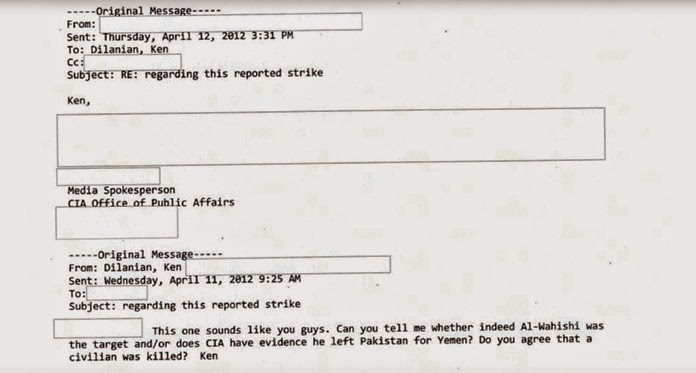
 Aletho News
