On Friday, Feb 14, 92 prisoners escaped from their prison in the Libyan town of Zliten. 19 of them were eventually recaptured, two of whom were wounded in clashes with the guards. It was just another daily episode highlighting the utter chaos which has engulfed Libya since the overthrow of Muammar Ghaddafi in 2011.
Much of this is often reported with cliché explanations as in the country’s ‘security vacuum’, or Libya’s lack of a true national identity. Indeed, tribe and region seem to supersede any other affiliation, but it is hardly that simple.
On that same Friday, Feb 14, Maj. Gen. Khalifa Hifter announced a coup in Libya. “The national command of the Libyan Army is declaring a movement for a new road map” (to rescue the country), Hifter declared through a video post. Oddly enough, little followed by way of a major military deployment in any part of the country. The country’s Prime Minister Ali Zeidan described the attempted coup as “ridiculous”.
Others in the military called it a “lie.” One of those who attended a meeting with Hifter prior to the announcement told Al Jazeera that they simply attempted to enforce the national agenda of bringing order, not staging a coup.
Hifter’s efforts were a farce. It generated nothing but more attention to Libya’s fractious reality, following NATO’s war, branded a humanitarian intervention to prevent imminent massacres in Benghazi and elsewhere. “Libya is stable,” Zeidan told Reuters. “(The parliament) is doing its work, and so is the government.”
But Zedian is not correct. His assessment is a clear contradiction to reality, where hundreds of militias rule the country with an iron fist. In fact, the prime minister was himself kidnapped by one militia last October. Hours later, he was released by another militia. Although both, like the rest of the militias, are operating outside government confines, many are directly or loosely affiliated with government officials. In Libya, to have sway over a militia is to have influence over local, regional or national agendas. Unfortunate as it may be, this is the ‘new Libya.’
Some will find most convenient ways to explain the chaos: ‘East Libya is inherently unruly’, some would say; ‘it took a strong leader like Ghaddafi to maintain the national cohesion of a country made of tribes, not citizens,’ others would opine. But the truth is oftentimes inconvenient and requires more than mere platitudes.
Libya is in a state of chaos, not because of some intrinsic tendency to shun order. Libyans, like people all over the world, seek security and stability in their lives. However, other parties, Arab and western, are desperate to ensure that the ‘new Libya’ is consistent with their own interests, even if such interests are obtained at the expense of millions of people.
The New York Times’ David Kirkpatrick reported on the coup from Cairo. In his report, “In Libya, a Coup. Or Perhaps Not,” he drew similarities between Libya and Egypt; in the case of Egypt, the military succeeded in consolidating its powers starting on July 3, whereas in Libya a strong military institution never existed in the first place, even during Ghaddafi’s rule. In order for Hifter to stage a coup, he would need to rely on more than a weak and splintered military.
Nonetheless, it is quite interesting that the NYT chose to place Hifter’s ‘ridiculous’ coup within an Egyptian context, while there is a more immediate and far more relevant context at hand, one of which the newspaper and its veteran correspondents should know very well. It is no secret that Hifter has had strong backing from the US Central Intelligence Agency (CIA) for nearly three decades.
The man has been branded and rebranded throughout his colorful and sometimes mysterious history more times than one can summarize in a single article. He fought as an officer in the Chadian-Libyan conflict, and was captured alongside his entire unit of 600 men. During his time in prison, Chad experienced a regime change (both regimes were backed by French and US intelligence) and Hifter and his men were released per US request to another African country, then a third. While some chose to return home, others knew well what would await them in Libya, for reasons explained by the Times on May 17, 1991.
“For two years, United States officials have been shopping around for a home for about 350 Libyan soldiers who cannot return to their country because American intelligence officials had mobilized them into a commando force to overthrow Col. Muammar el-Qaddafi, the Libyan leader,” NYT reported. “Now, the Administration has given up trying to find another country that will accept the Libyans and has decided to bring them to the United States.”
Hifter was then relocated to a Virginia suburb in the early 1990’s and settled there. The news is murky about his exact activities living near Washington D.C., except for his ties to Libyan opposition forces, which of course, operated within a US agenda.
In his thorough report, published in the Business Insider, Russ Baker traced much of Hifter’s activities since his split from Ghaddafi and adoption by the CIA. “A Congressional Research Service report of December 1996 named Hifter as the head of the NFSL’s military wing, the Libyan National Army. After he joined the exile group, the CRS report added, Hifter began ‘preparing an army to march on Libya’. The NFSL, the CSR said, is in exile ‘with many of its members in the United States.”
It took nearly 15 years for Hifter to march on Libya. It also took a massive war that was purported to support a popular uprising. Hifter, as Baker described, is the Libyan equivalent of Iraq’s Ahmed Chalabi, a discredited figure with strong allies in Washington D.C. Chalabi was sent to post-Saddam Iraq to lead the ‘democratization’ process. Instead, he helped set the stage of the calamity underway in that Arab country.
It is no wonder why Hifter’s return was a major source of controversy. Since the news of his CIA affiliation was no big secret, his return to Libya to join the rebels in March caused much confusion. Almost immediately, he was announced by a military spokesman as the rebels’ new commander, only for the announcement to be dismissed by the National Transitional Council as false. The NTC was largely a composition of mysterious characters that had little presence within Libya’s national consciousness. Hifter found himself as the third man in the military ladder, which he accepted but apparently grudgingly so.
Despite the coup failure, Libya will subsist on uncertainty. Arab and Western media speak of illegal shipments of weapons arriving into various Libyan airports. The militias are growing in size. The central government is growing irrelevant. Jail breaks are reported regularly. And Libyans find safety in holding on tighter to their tribal and clan affiliations. What future awaits Libya is hard to predict, but with western and Arab intelligence fingerprints found all over the Libyan bedlam, the future is uninviting.
~
Ramzy Baroud is an internationally-syndicated columnist, a media consultant and the editor of PalestineChronicle.com. His latest book is “My Father Was a Freedom Fighter: Gaza’s Untold Story” (Pluto Press, London).
February 19, 2014
Posted by aletho |
Aletho News | CIA, Libya, United States |
Leave a comment
The US Central Intelligence Agency is seeking new drone bases in unnamed countries in Central Asia, fearing the full withdrawal of US troops from Afghanistan would affect the targeted killings in neighboring Pakistan.
The spy agency asserts that if the US fails to sign a bilateral security deal with Afghanistan and secure an enduring military presence there, it would not be able to fly drones from its Afghan bases because drone operations are covert and need US military protection.
The security deal, which Washington says “ought to be signed” and is not renegotiable, could allow thousands of US troops to stay in Afghanistan beyond 2014.
However, despite pressures from the White House and Congress, Afghan President Hamid Karzai has so far refused to sign the deal and the US intelligence community is hoping that the next Afghan president will agree to sign it.
Worried that its drone killings can become a casualty of strained relations between Kabul and Washington, the CIA is reportedly making contingency plans to use bases in other countries.
“There are contingency plans for alternatives in the north,” an unnamed US official briefed on the matter told the Los Angeles Times without specifying the countries.
According to Brian Glyn Williams, a University of Massachusetts professor, the CIA and the Pentagon used to fly drones from an airbase in Uzbekistan until the US was evicted in 2005.
Michael Nagata, commander of US special operations in the Middle East and Central Asia, also traveled last month to Tajikistan, which is Afghanistan’s northern neighbor, to discuss “issues of bilateral security cooperation” and “continued military cooperation.”
Meanwhile, US officials say a new jet-powered drone, called Avenger, which will be able to “get to ‘hot’ targets in Pakistan much faster,” could soon be flying from bases outside Afghanistan.
The CIA is in charge of drone strikes in Pakistan since the country is not officially a war zone and the CIA’s program is covert.
US President Barack Obama has already stated that the responsibility for Washington’s deadly drone attacks could gradually shift from the CIA to the Pentagon. However, the idea of putting the US military in charge of drone attacks is not favored by US lawmakers.
February 17, 2014
Posted by aletho |
Militarism, Progressive Hypocrite, Subjugation - Torture, War Crimes | Afghanistan, Central Intelligence Agency, CIA, Drone attacks in Pakistan, Obama, Pakistan, United States |
Leave a comment
By Matthew Alford and Robbie Graham | Global Research | January 21, 2009
Here we build a prima facae case supporting the idea that Hollywood continues to be a target for infiltration and subversion by a variety of state agencies, in particular the CIA. Academic debates on cinematic propaganda are almost entirely retrospective, and whilst a number of commentators have drawn attention to Hollywood’s longstanding and open relationship with the Pentagon, little of substance has been written about the more clandestine influences working through Hollywood in the post-9/11 world. As such, our work delves into the field of what Peter Dale Scott calls “deep politics”; namely, activities which cannot currently be fully understood due to the covert influence of shadowy power players.
The Latest Picture
A variety of state agencies have liaison offices in Hollywood today, from the FBI, to NASA and the Secret Service. Few of these agencies, though, have much to offer in exchange for favourable storylines, and so their influence in Hollywood is minimal. The major exception here is the Department of Defense, which has an ‘open’ but barely publicized relationship with Tinsel Town, whereby, in exchange for advice, men and invaluable equipment, such as aircraft carriers and helicopters, the Pentagon routinely demands flattering script alterations. Examples of this policy include changing the true identity of a heroic military character in Black Hawk Down (2001) due to his real-life status as a child rapist; the removal of a joke about “losing Vietnam” from the James Bond film Tomorrow Never Dies (1997), and cutting images of Marines taking gold teeth from dead Japanese soldiers in Windtalkers (2002). Instances such as these are innumerable, and the Pentagon has granted its coveted “full cooperation” to a long list of contemporary pictures including Top Gun (1986), True Lies (1994), Executive Decision (1996), Air Force One (1997), The Sum of All Fears (2002), Transformers (2007), Iron Man (2008), as well as TV series such as JAG (1995-2005).
Such government activity, whilst morally dubious and barely advertised, has at least occurred within the public domain. This much cannot be said of the CIA’s dealings with Hollywood, which, until recently, went largely unacknowledged by the Agency. In 1996, the CIA announced with little fanfare the dry remit of its newly established Media Liaison Office, headed by veteran operative Chase Brandon. As part of its new stance, the CIA would now openly collaborate on Hollywood productions, supposedly in a strictly ‘advisory’ capacity.
The Agency’s decision to work publicly with Hollywood was preceded by the 1991 “Task Force Report on Greater CIA Openness,” compiled by CIA Director Robert Gates’ newly appointed ‘Openness Task Force,’ which secretly debated –ironically– whether the Agency should be less secretive. The report acknowledges that the CIA “now has relationships with reporters from every major wire service, newspaper, news weekly, and television network in the nation,” and the authors of the report note that this helped them “turn some ‘intelligence failure’ stories into ‘intelligence success’ stories, and has contributed to the accuracy of countless others.” It goes on to reveal that the CIA has in the past “persuaded reporters to postpone, change, hold, or even scrap stories that could have adversely affected national security interests…”
These admissions add weight to several reports and Congressional hearings from the 1970s which indicated that the CIA once maintained a deep-rooted and covert presence in national and international media, informally dubbed “Operation Mockingbird.” In its 1991 report, the CIA acknowledged that it had, in fact, “reviewed some film scripts about the Agency, documentary and fictional, at the request of filmmakers seeking guidance on accuracy and authenticity.” But the report is at pains to state that, although the CIA has “facilitated the filming of a few scenes on Agency premises,” it does “not seek to play a role in filmmaking ventures.” But it seems highly implausible that the CIA, whilst maintaining a decades-long presence in media and academia, would have shown no interest in the hugely influential Cinema industry.
Indeed, it should come as no surprise that the CIA has been involved in a number of recent blockbusters and TV series.The 2001 CBS TV series, The Agency, executive produced by Wolfgang Petersen (Das Boot, Air Force One) was actually co-written by ex-CIA agent and Marine Bazzel Baz, with additional ex-CIA agents working as consultants. The CIA gladly opened its doors to the production, and facilitated both external and internal shots of its Langley headquarters as the camera gazed lovingly at the CIA seal. This arrangement was comparable to the Feds’ efforts on the popular TV series The FBI (1965-74) which was shaped by the Bureau in cooperation with ABC and which thanked J. Edgar Hoover in the credits of each episode. Similarly, The Agency glorified the actions of US spooks as they fought predictable villains including the Russian military, Arab and German terrorists, Columbian drug dealers, and Iraqis. One episode even shows the CIA saving the life of Fidel Castro; ironically, since the CIA in real life had made repeated attempts to assassinate the Cuban President. Promos for the show traded on 9/11, which had occurred just prior to its premiere, with tag lines like “Now, more than ever, we need the CIA.”
A TV movie, In the Company of Spies (1999) starring Tom Berenger depicted a retired CIA operative returning to duty to save captured Agency officers held by North Korea. The CIA was so enthusiastic about this product that it hosted its presentation, cooperated during production, facilitated filming at Langley, and provided fifty off-duty officers as extras, according to its website.
Espionage novelist Tom Clancy has enjoyed an especially close relationship with the CIA. In 1984, Clancy was invited to Langley after writing The Hunt for Red October, which was later turned into the 1990 film. The Agency invited him again when he was working on Patriot Games (1992), and the movie adaptation was, in turn,granted access to Langley facilities. More recently, The Sum of All Fears (2002) depicted the CIA as tracking down terrorists who detonate a nuclear weapon on US soil. For this production, CIA director George Tenet gave the filmmakers a personal tour of the Langley HQ; the film’s star, Ben Affleck also consulted with Agency analysts, and Chase Brandon served as on-set advisor.
Media sources indicate that the CIA also worked on the Anthony Hopkins/Chris Rock feature Bad Company (2002) and the Jerry Bruckheimer blockbuster Enemy of the State (2001). However, no details whatsoever about these appear to be in the public domain. Similarly, Spy Game director Tony Scott’s DVD commentary for said film indicates that he visited Langley whilst in pre-production but, according to one report, endorsement appeared to have been withheld after Chase Brandon read the final draft of the script.
More details than usual emerged about CIA involvement in the Tom Hanks movie Charlie Wilsons War (2007) and Robert De Niro’s The Good Shepherd (2006) – but not many. Milt Beardon had traveled to the Moscow Film Festival with De Niro and claims the pair then “disappeared and hung out with the mob and KGB crowd for a while. I introduced him to generals and colonels, the old guys I had been locked with for so many years.” De Niro later tagged along with Beardon to Pakistan. “We wandered around the North-West Frontier Province,” Bearden recalls, “crossed the bridge [to Afghanistan] I built years ago, hung out with a bunch of guys firing off machine guns and drinking tea.” Still, The Good Shepherd didn’t fulfill the CIA’s earnest hopes of being the CIA equivalent of Flags of Our Fathers (2006), which the Agency’s official historian says it should have been – all in the interests of what he calls a “culture of truth.”
Charlie Wilson’s War depicted the United States’ covert efforts to supply arms to Afghanistan to fight the Soviet Union in the 1980s which had the real-life consequence of America’s old ally turned against it in the form of al-Qaeda (as Crile explains in the book of the film). However, Beardon, who was the CIA agent who supplied the weapons, worked as consultant on the film and said prior to its release that it “will put aside the notion that because we did that, we had 9/11.” CIA involvement in the film therefore appears to have paid dividends.
The real reasons for the CIA adopting an “advisory” role on all of these productions are thrown into sharp relief by a solitary comment from former Associate General Counsel to the CIA, Paul Kelbaugh. In 2007, whilst at a College in Virginia, Kelbaugh delivered a lecture on the CIA’s relationship with Hollywood, at which a local journalist was present. The journalist (who now wishes to remain anonymous) wrote a review of the lecture which related Kelbaugh’s discussion of the 2003 thriller The Recruit, starring Al Pacino. The review noted that, according to Kelbaugh, a CIA agent was on set for the duration of the shoot under the guise of a consultant, but that his real job was to misdirect the filmmakers: “We didn’t want Hollywood getting too close to the truth,” the journalist quoted Kelbaugh as saying.
Peculiarly, in a strongly-worded email to the authors, Kelbaugh emphatically denied having made the public statement and claimed that he remembered “very specific discussions with senior [CIA] management that no one was ever to misrepresent to affect [film] content – EVER.” The journalist considers Kelbaugh’s denial “weird,” and told us that “after the story came out, he [Kelbaugh] emailed me and loved it… I think maybe it’s just that because [the lecture] was ‘just in Lynchburg’ he was okay with it – you know, like, no one in Lynchburg is really going to pay much attention to it, I guess. Maybe that’s why he said it, and maybe that’s why he’s denying it now.” The journalist stands by the original report, and Kelbaugh has pointedly refused to engage us in further discussion on the matter.
Early Screening
Clandestine agencies have a long history of interference in the cinema industry. Letters discovered in the Eisenhower Presidential Library from the secret agent Luigi G. Luraschi (identified by British academic John Eldridge), the Paramount executive who worked for the CIA’s Psychological Strategy Board (PSB), reveal just how far the CIA was able to reach into the film industry in the early days of the Cold War, despite its claims that it sought no such influence. For instance, Luraschi reported that he had secured the agreement of several casting directors to subtly plant “well dressed negroes” into films, including “a dignified negro butler” who has lines “indicating he is a free man” in Sangaree (1953) and in a golf club scene in the Dean Martin/Jerry Lewis vehicle The Caddy (1953). Elsewhere, CIA arranged the removal of key scenes from the film Arrowhead (1953), which questioned America’s treatment of Apache Indians, including a sequence where a tribe is forcibly shipped and tagged by the US Army. Such changes were not part of a ham-fisted campaign to instill what we now call “political correctness” in the populace. Rather, they were specifically enacted to hamper the Soviets’ ability to exploit its enemy’s poor record in race relations and served to create a peculiarly anodyne impression of America, which was, at that time, still mired in an era of racial segregation.
Other efforts were made. The PSB tried –unsuccessfully– to commission Frank Capra to direct Why We Fight the Cold War and to provide details to filmmakers about conditions in the USSR in the hope that they would use them in their movies. More successfully, in 1950, the CIA –along with other secretive organizations like the Office of Policy Coordination (OPC) and aided by the PSB– bought the rights to and invested in the cartoon of George Orwell’s Animal Farm (1954), which was given an anti-Soviet spin to satisfy its covert investors. Author Daniel Leab has pointed to the fact it took decades for the rumours about CIA involvement in Animal Farm to be properly documented; this, he observes, “Speaks volumes about the ability of a government agency to keep its activities covert.”
Additionally, the production of the Michael Redgrave feature Nineteen-Eighty Four (1956) was in turn overseen by the American Committee for Cultural Freedom, which was supervised by the CIA. Key points in the movie were altered to demonise the Soviets.
The CIA also tampered with the 1958 film version of The Quiet American, provoking the author, Graham Greene, to denounce the film. US Air Force Colonel Edward Lansdale, the CIA operative behind Operation Mongoose (the CIA sabotage and assassination campaign against Cuba) had entered into production correspondence with director Joseph L. Mankiewicz, who accepted his ideas. These included a change to the final scene in which we learn that Redgrave’s anti-hero has been hoodwinked by the Communists into murdering the suspicious American, who turns out not to be a bomb-maker as we had been led to believe, but instead a manufacturer of children’s toys.
Behind the Scenes
It would be a mistake to regard the CIA as unique in its involvement in Hollywood. The industry is in fact fundamentally open to manipulation by a range of state agencies. In 2000, it emerged that the White House’s drug war officers had spent tens of millions of dollars paying the major US networks to inject anti-drug plots into the scripts of primetime series such as ER, The Practice, Sabrina the Teenage Witch and Chicago Hope. Despite criticism for this blatant propagandizing, the government continued to employ this method of spreading its message on drugs.
The White House went to Tinsel Town again the following year when, on November 11, 2001 a meeting was held in Hollywood between President Bush’s then Deputy Chief of Staff, Karl Rove, and representatives of each of the major Hollywood studios to discuss how the film industry might contribute to the ‘War on Terror.’ Jack Valenti, president of the Motion Picture Association of America said with a straight face that, “content was off the table”, but Rove had clearly outlined a series of requests. It is hard to gauge the consequences of the meeting, but a Rambo sequel, for instance, was certainly discussed, and duly produced. Similarly, several series with national security themes emerged within a short time of the meeting including She Spies (2002-2004) and Threat Matrix (2003).
The meeting was, in fact, just one in a series between Hollywood and the White House from October to December, 2001. On October 17, in response to 9/11, the White House announced the formation of its “Arts and Entertainment Task Force,” and by November, Valenti had assumed leadership of Hollywood’s new role in the ‘War on Terror’. As a direct result of meetings, Congress sought advice from Hollywood insiders on how to shape an effective wartime message to America and to the world. In November 2001, John Romano, writer-producer of the popular US TV series Third Watch, advised the House International Relations Committee that the content of Hollywood productions was a key part of shaping foreign perceptions of America.
On December 5, 2001, the powerful Academy of Television Arts & Sciences convened its own panel entitled “Hollywood Goes to War?” to discuss what the industry might do in response to 9/11. Representing the government at the meeting were Mark McKinnon, a White House advisor, and the Pentagon’s chief entertainment liaison, Phil Strub. Also in attendance, among others, were Jeff Zucker, President of NBC Entertainment, and Aaron Sorkin, creator and writer of the White House drama The West Wing (1999-2006). Immediately after, Sorkin and his team set about producing a special episode of the show dealing with a massive terrorist threat to America entitled “Isaac and Ishmael”. The episode was given top priority and was successfully completed and aired within just ten days of the meeting. The product championed the superiority of American values whilst brimming with rage against the Islamist jihadists.
The interlocking of Hollywood and national security apparatuses remains as tight as ever: ex-CIA agent Bob Baer told us, “There’s a symbiosis between the CIA and Hollywood” and revealed that former CIA director George Tenet is currently, “out in Hollywood, talking to studios.” Baer’s claims are given weight by the Sun Valley meetings, annual get-togethers in Idaho’s Sun Valley in which several hundred of the biggest names in American media –including every major Hollywood studio executive– convene to discuss collective media strategy for the coming year. Against the idyllic backdrop of expansive golf courses, pine forests and clear fishing lakes, deals are struck, contracts are signed, and the face of the American media is quietly altered. The press has yet to be granted permission to report on these corporate media gatherings and so the exact nature of what is discussed at the events has never been publicly disclosed. It is known, however, that Tenet was keynote speaker at Sun Valley in 2003 (whilst still CIA head) and again in 2005.
Conclusions
Many would recoil at the thought of modern Hollywood cinema being used as a propagandist tool, but the facts seem to speak for themselves. Do agencies such as the CIA have the power, like the Pentagon, to affect movie content by providing much-sought-after expertise, locations and other benefits? Or are they able to affect script changes through simple persuasion, or even coercion? Do they continue to carry out covert actions in Hollywood as they did so extensively in the 1950s, and, beyond cinema, might covert government influence play some part in the creation of national security messages in TV series such as 24 and Alias (the star of the latter, Jennifer Garner, even made an unpaid recruitment video for the CIA)? The notion that covert agencies aspire to be more open is hard to take seriously when they provide such scant information about their role within the media, even regarding activities from decades past. The spy may have come in from the cold, but he continues to shelter in the shadows of the movie theatre.
Source
January 11, 2014
Posted by aletho |
Deception, Mainstream Media, Warmongering, Timeless or most popular | Central Intelligence Agency, CIA, Hollywood, Pentagon |
Leave a comment
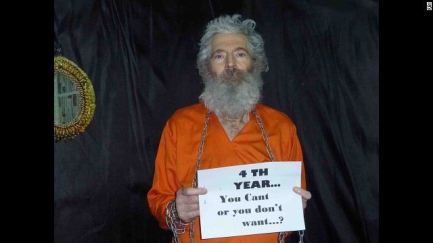
Robert Levinson who went missing in southern Iran in 2007 was working for the CIA
A recent investigation has found that an American who went missing in southern Iran in 2007 was working for the Central Intelligence Agency in the US.
Retired FBI agent Robert Levinson disappeared on March 9, 2007, during a visit to Iran’s Kish Island in the Persian Gulf.
The US State Department insisted that Levinson was a private citizen who had traveled to Kish on private business.
Nevertheless, more than six years after Levinson’s disappearance, the Associated Press has revealed that he was recruited by the CIA to run unauthorized spying operations.
According to the AP, the CIA paid $2.5 million to Levinson’s family in a bid to pre-empt a revealing lawsuit.
Even after they learned about Levinson’s CIA ties, officials at the White House, the FBI, and the State Department did not change the official story, insisting that he was “a private citizen involved in private business.”
The AP first found about Levinson’s involvement with the CIA’s spying operations in 2010; however, they withheld the story several times at the behest of the US government.
The AP’s revelation is based on documents obtained or reviewed by the New York-based news agency and interviews with a number of current and former officials from the US and other countries, who spoke on condition of anonymity.
The CIA is generally made up of two groups: operatives, who gather intelligence and hire spies, and analysts, who receive strands of intelligence and decode them.
Although Levinson was recruited by a team of CIA analysts and his contract with the CIA, worth about $85,000, required him to write reports for the agency based on his travel and expertise, he started to gather intelligence from the onset instead of writing reports.
In order to keep Levinson’s operations secret, the CIA had instructed him not to mail any packages to the agency’s headquarters in Langley, Virginia, or email documents to US government addresses.
Instead, he had to send the intelligence he had gathered to the private home of a CIA analyst named Anne Jablonski in Virginia and contact Jablonski’s personal email account if he needed any instructions.
Levinson’s whereabouts and captors are not known; however, former US Secretary of State Hillary Clinton said in 2011 that Washington believed he was “being held somewhere in southwest Asia.”
December 13, 2013
Posted by aletho |
Deception | Central Intelligence Agency, CIA, Iran, Robert Levinson, United States |
Leave a comment
Nearly a decade before Gary Webb published his investigative series on cocaine trafficking by Nicaraguan Contra rebels, U.S. law enforcement received a detailed account of top Contra leader Adolfo Calero casually associating with Norwin Meneses, called “a well-reputed drug dealer” in a “secret” document that I recently found at the National Archives.
Meneses was near the center of Webb’s 1996 articles for the San Jose Mercury-News, a series that came under fierce attack from U.S. government officials as well as major news organizations, including the New York Times, the Washington Post and the Los Angeles Times. The controversy cost Webb his career, left him nearly penniless and ultimately contributed to his suicide on Dec. 9, 2004.
But the bitter irony of Webb’s demise, which will be the subject of a 2014 movie starring Jeremy Renner as Webb, is that Webb’s much-maligned “Dark Alliance” series forced major admissions from the CIA, the Justice Department and other government agencies revealing an even-deeper relationship between President Ronald Reagan’s beloved Contras and drug cartels than Webb ever alleged.
Typical of the evidence that the Reagan administration chose to ignore was information provided by Dennis Ainsworth, a blue-blood Republican from San Francisco who volunteered to help the Contra cause in 1984-85. That put him in position to witness the strange behind-the-scenes activities of Contra leaders hobnobbing with drug traffickers and negotiating arms deals with White House emissaries.
Ainsworth also was a source of mine in fall 1985 when I was investigating the mysterious sources of funding for the Contras after Congress shut off CIA support in 1984 amid widespread reports of Contra atrocities inflicted on Nicaraguan civilians, including rapes, executions and torture.
Ainsworth’s first-hand knowledge of the Contra dealings dovetailed with information that I already had, such as the central role of National Security Council aide Oliver North in aiding the Contras and his use of “courier” Rob Owen as an off-the-books White House intermediary to the Contras. I later developed confirmation of some other details that Ainsworth described, such as his overhearing Owen and Calero working together on an arms deal as Ainsworth drove them through the streets of San Francisco.
As for Ainsworth’s knowledge about the Contra-cocaine connection, he said he sponsored a June 1984 cocktail party at which Calero spoke to about 60 people. Meneses, a notorious drug kingpin in the Nicaraguan community, showed up uninvited and clearly had a personal relationship with Calero, who was then the political leader of the Contra’s chief fighting force, the CIA-backed Nicaraguan Democratic Force (or FDN).
“At the end of the cocktail party, Meneses and Calero went off together,” Ainsworth told U.S. Attorney Joseph P. Russoniello, according to a “secret” Jan. 6, 1987 cable submitted by Russoniello to an FBI investigation code-named “Front Door,” a probe into corruption by the Reagan administration.
After Calero’s speech, Ainsworth said Meneses accompanied Calero and about 20 people to dinner and picked up the entire tab, according to a more detailed debriefing of Ainsworth by the FBI. Concerned about this relationship, Ainsworth said he was told by Renato Pena, an FDN leader in the San Francisco area, that “the FDN is involved in drug smuggling with the aid of Norwin Meneses who also buys arms for Enrique Bermudez, a leader of the FDN.” Bermudez was then the top Contra military commander.
Corroborating Account
Pena, who himself was convicted on federal drug charges in 1984, gave a similar account to the Drug Enforcement Administration. According to a 1998 report by the Justice Department’s Inspector General Michael Bromwich, “When debriefed by the DEA in the early 1980s, Pena said that the CIA was allowing the Contras to fly drugs into the United States, sell them, and keep the proceeds. …
“Pena stated that he was present on many occasions when Meneses telephoned Bermudez in Honduras. Meneses told Pena of Bermudez’s requests for such things as gun silencers (which Pena said Meneses obtained in Los Angeles), cross bows, and other military equipment for the Contras. Pena believed that Meneses would sometimes transport certain of these items himself to Central America, and other times would have contacts in Los Angeles and Miami send cargo to Honduras, where the authorities were cooperating with the Contras. Pena believed Meneses had contact with Bermudez from about 1981 or 1982 through the mid-1980s.”
Bromwich’s report then added, “Pena said he was one of the couriers Meneses used to deliver drug money to a Colombian known as ‘Carlos’ in Los Angeles and return to San Francisco with cocaine. Pena made six to eight trips, with anywhere from $600,000 to nearly $1 million, and brought back six to eight kilos of cocaine each time. Pena said Meneses was moving hundreds of kilos a week. ‘Carlos’ once told Pena, ‘We’re helping your cause with this drug thing … we are helping your organization a lot.”
Ainsworth also said he tried to alert Oliver North in 1985 about the troubling connections between the Contra movement and cocaine traffickers but that North turned a deaf ear. “In the spring some friends of mine and I went back to the White House staff but we were put off by Ollie North and others on the staff who really don’t want to know all what’s going on,” Ainsworth told Russoniello.
When I first spoke with Ainsworth in September 1985 at a coffee shop in San Francisco, he asked for confidentiality which I granted. However, since the documents released by the National Archives include him describing his conversations with me, that confidentiality no longer applies. Ainsworth also spoke with Webb for his 1996 San Jose Mercury-News series under the pseudonym “David Morrison.”
Though I found Ainsworth to be generally reliable, some of his depictions of our conversations contained mild exaggerations or confusion over details, such as his claim that I called him from Costa Rica in January 1986 and told him that the Contra-cocaine story that I had been working on with my AP colleague Brian Barger “never hit the papers because it was suppressed by the Associated Press due to political pressure primarily from the CIA.”
In reality, Barger and I returned from Costa Rica in fall 1985, wrote our story about the Contras’ involvement in cocaine smuggling, and pushed it onto the AP wire in December though in a reduced form because of resistance from some senior AP news executives who were supportive of President Reagan’s foreign policies. The CIA, the White House and other agencies of the Reagan administration did seek to discredit our story, but they did not prevent its publication.
An Overriding Hostility
The Reagan administration’s neglect of Ainsworth’s insights reflected the overriding hostility toward any information – even from Republican activists – that put the Contras in a negative light. In early 1987, when Ainsworth spoke with U.S. Attorney Russoniello and the FBI, the Reagan administration was in full damage-control mode, trying to tamp down the Iran-Contra disclosures about Oliver North diverting profits from secret arms sales to Iran to the Contra war.
Fears that the Iran-Contra scandal could lead to Reagan’s impeachment made it even less likely that the Justice Department would pursue an investigation into drug ties implicating the Contra leadership. Ainsworth’s information was simply passed on to Independent Counsel Lawrence Walsh whose inquiry was already overwhelmed by the task of sorting out the convoluted Iran transactions.
Publicly, the Reagan team continued dumping on the Contra-cocaine allegations and playing the find-any-possible-reason-to-reject-a-witness game. The major news media went along, leading to much mainstream ridicule of a 1989 investigative report by Sen. John Kerry, D-Massachusetts, who uncovered more drug connections implicating the Contras and the Reagan administration.
Only occasionally, such as when the George H.W. Bush administration needed witnesses to convict Panamanian dictator Manuel Noriega did the Contra-cocaine evidence pop onto Official Washington’s radar screens.
During Noriega’s drug-trafficking trial in 1991, U.S. prosecutors called as a witness Colombian Medellín cartel kingpin Carlos Lehder, who — along with implicating Noriega — testified that the cartel had given $10 million to the Contras, an allegation first unearthed by Sen. Kerry. “The Kerry hearings didn’t get the attention they deserved at the time,” a Washington Post editorial on Nov. 27, 1991, acknowledged. “The Noriega trial brings this sordid aspect of the Nicaraguan engagement to fresh public attention.”
But the Post offered its readers no explanation for why Kerry’s hearings had been largely ignored, with the Post itself a leading culprit in this journalistic misfeasance. Nor did the Post and the other leading newspapers use the opening created by the Noriega trial to do anything to rectify their past neglect.
Everything quickly returned to the status quo in which the desired perception of the noble Contras trumped the clear reality of their criminal activities. Instead of recognizing the skewed moral compass of the Reagan administration, Congress was soon falling over itself to attach Reagan’s name to as many public buildings and facilities as possible, including Washington’s National Airport.
Meanwhile, those of us in journalism who had exposed the national security crimes of the 1980s saw our careers mostly sink or go sideways. We were regarded as “pariahs” in our profession.
As for me, shortly after the Iran-Contra scandal broke wide open in fall 1986, I accepted a job at Newsweek, one of the many mainstream news outlets that had long ignored Contra-connected scandals and briefly thought it needed to bolster its coverage. But I soon discovered that senior editors remained hostile toward the Iran-Contra story and related spinoff scandals, including the Contra-cocaine mess.
After losing battle after battle with my Newsweek editors, I departed the magazine in June 1990 to write a book (called Fooling America) about the decline of the Washington press corps and the parallel rise of a new generation of government propagandists.
I was also hired by PBS Frontline to investigate whether there had been a prequel to the Iran-Contra scandal — whether those arms-for-hostage deals in the mid-1980s had been preceded by contacts between Reagan’s 1980 campaign staff and Iran, which was then holding 52 Americans hostage and essentially destroying Jimmy Carter’s reelection hopes. [For more on that topic, see Robert Parry’s Secrecy & Privilege and America’s Stolen Narrative.]
Finding New Ways
In 1995, frustrated by the growing triviality of American journalism — and acting on the advice of and with the assistance of my oldest son Sam — I turned to a new medium and launched the Internet’s first investigative news magazine, known as Consortiumnews.com. The Web site became a way for me to put out well-reported stories that my former mainstream colleagues ignored or mock.
So, when Gary Webb called me in 1996 to talk about the Contra-cocaine story, I explained some of this tortured history and urged him to make sure that his editors were firmly behind him. He sounded perplexed at my advice and assured me that he had the solid support of his editors.
When Webb’s “Dark Alliance” series finally appeared in late August 1996, it initially drew little attention. The major national news outlets applied their usual studied indifference to a topic that they had already judged unworthy of serious attention.
But Webb’s story proved hard to ignore. First, unlike the work that Barger and I did for AP in the mid-1980s, Webb’s series wasn’t just a story about drug traffickers in Central America and their protectors in Washington. It was about the on-the-ground consequences, inside the United States, of that drug trafficking, how the lives of Americans were blighted and destroyed as the collateral damage of a U.S. foreign policy initiative.
In other words, there were real-life American victims, and they were concentrated in African-American communities. That meant the ever-sensitive issue of race had been injected into the controversy. Anger from black communities spread quickly to the Congressional Black Caucus, which started demanding answers.
Secondly, the San Jose Mercury News, which was the local newspaper for Silicon Valley, had posted documents and audio on its state-of-the-art Internet site. That way, readers could examine much of the documentary support for the series.
It also meant that the traditional “gatekeeper” role of the major newspapers — the New York Times, the Washington Post, and the Los Angeles Times — was under assault. If a regional paper like the Mercury News could finance a major journalistic investigation like this one, and circumvent the judgments of the editorial boards at the Big Three, then there might be a tectonic shift in the power relations of the U.S. news media. There could be a breakdown of the established order.
This combination of factors led to the next phase of the Contra-cocaine battle: the “get-Gary-Webb” counterattack. Soon, the Washington Post, the New York Times, and the Los Angeles Times were lining up like some tag-team wrestlers taking turns pummeling Webb and his story.
On Oct. 4, 1996, the Washington Post published a front-page article knocking down Webb’s series, although acknowledging that some Contra operatives did help the cocaine cartels. The Post’s approach fit with the Big Media’s cognitive dissonance on the topic: first, the Post called the Contra-cocaine allegations old news — “even CIA personnel testified to Congress they knew that those covert operations involved drug traffickers,” the Post said — and second, the Post minimized the importance of the one Contra smuggling channel that Webb had highlighted in his series, saying it had not “played a major role in the emergence of crack.”
To add to the smug hoo-hah treatment that was enveloping Webb and his story, a Post published a sidebar story dismissing African-Americans as prone to “conspiracy fears.”
Next, the New York Times and the Los Angeles Times weighed in with lengthy articles castigating Webb and “Dark Alliance.” The big newspapers made much of the CIA’s internal reviews in 1987 and 1988 — almost a decade earlier — that supposedly had cleared the spy agency of any role in Contra-cocaine smuggling.
But the first ominous sign for the CIA’s cover-up emerged on Oct. 24, 1996, when CIA Inspector General Frederick Hitz conceded before the Senate Intelligence Committee that the first CIA probe had lasted only12 days, and the second only three days. He promised a more thorough review.
Mocking Webb
But Webb had already crossed over from being treated as a serious journalist to becoming a target of ridicule. Influential Washington Post media critic Howard Kurtz mocked Webb for saying in a book proposal that he would explore the possibility that the Contra war was primarily a business to its participants. “Oliver Stone, check your voice mail,” Kurtz smirked.
Yet, Webb’s suspicion was no conspiracy theory. Indeed, Oliver North’s chief Contra emissary, Rob Owen, had made the same point in a March 17, 1986, message about the Contra leadership. “Few of the so-called leaders of the movement . . . really care about the boys in the field,” Owen wrote. “THIS WAR HAS BECOME A BUSINESS TO MANY OF THEM.” [Emphasis in original.]
Ainsworth and other pro-Contra activists were reaching the same conclusion, that the Contra leadership was skimming money from the supply lines and padding their personal wealth with proceeds from the drug trade. According to a Jan. 21, 1987 interview report by the FBI, Ainsworth said he had “made inquiries in the local San Francisco Nicaraguan community and wondered among his acquaintances what Adolfo Calero and the other people in the FDN movement were doing and the word that he received back is that they were probably engaged in cocaine smuggling.”
In other words, Webb was right about the suspicion that the Contra movement had become less a cause than a business to many of its participants. Even Oliver North’s emissary reported that many Contra leaders treated the conflict as “a business.” But accuracy had ceased to be relevant in the media’s hazing of Gary Webb.
In another double standard, while Webb was held to the strictest standards of journalism, it was entirely all right for Kurtz — the supposed arbiter of journalistic integrity who was a longtime fixture on CNN’s “Reliable Sources” — to make judgments based on ignorance. Kurtz would face no repercussions for mocking a fellow journalist who was factually correct.
The Big Three’s assault — combined with their disparaging tone — had a predictable effect on the executives of the Mercury News. As it turned out, Webb’s confidence in his editors had been misplaced. By early 1997, executive editor Jerry Ceppos, who had his own corporate career to worry about, was in retreat.
On May 11, 1997, Ceppos published a front-page column saying the series “fell short of my standards.” He criticized the stories because they “strongly implied CIA knowledge” of Contra connections to U.S. drug dealers who were manufacturing crack cocaine. “We did not have enough proof that top CIA officials knew of the relationship,” Ceppos wrote.
Ceppos was wrong about the proof, of course. At AP, before we published our first Contra-cocaine article in 1985, Barger and I had known that the CIA and Reagan’s White House were aware of the Contra-cocaine problem at senior levels.
However, Ceppos recognized that he and his newspaper were facing a credibility crisis brought on by the harsh consensus delivered by the Big Three, a judgment that had quickly solidified into conventional wisdom throughout the major news media and inside Knight-Ridder, Inc., which owned the Mercury News. The only career-saving move – career-saving for Ceppos even if career-destroying for Webb – was to jettison Webb and the Contra-cocaine investigative project.
A ‘Vindication’
The big newspapers and the Contras’ defenders celebrated Ceppos’s retreat as vindication of their own dismissal of the Contra-cocaine stories. In particular, Kurtz seemed proud that his demeaning of Webb now had the endorsement of Webb’s editor. Ceppos next pulled the plug on the Mercury News’ continuing Contra-cocaine investigation and reassigned Webb to a small office in Cupertino, California, far from his family. Webb resigned from the paper in disgrace.
For undercutting Webb and other Mercury News reporters working on the Contra-cocaine project – some of whom were facing personal danger in Central America – Ceppos was lauded by the American Journalism Review and received the 1997 national Ethics in Journalism Award by the Society of Professional Journalists.
While Ceppos won raves, Webb watched his career collapse and his marriage break up. Still, Gary Webb had set in motion internal government investigations that would bring to the surface long-hidden facts about how the Reagan administration had conducted the Contra war.
The CIA published the first part of Inspector General Hitz’s findings on Jan. 29, 1998. Though the CIA’s press release for the report criticized Webb and defended the CIA, Hitz’s Volume One admitted that not only were many of Webb’s allegations true but that he actually understated the seriousness of the Contra-drug crimes and the CIA’s knowledge of them.
Hitz conceded that cocaine smugglers played a significant early role in the Contra movement and that the CIA intervened to block an image-threatening 1984 federal investigation into a San Francisco–based drug ring with suspected ties to the Contras, the so-called “Frogman Case.”
After Volume One was released, I called Webb (whom I had spent some time with since his series was published). I chided him for indeed getting the story “wrong.” He had understated how serious the problem of Contra-cocaine trafficking had been.
It was a form of gallows humor for the two of us, since nothing had changed in the way the major newspapers treated the Contra-cocaine issue. They focused only on the press release that continued to attack Webb, while ignoring the incriminating information that could be found in the full report. All I could do was highlight those admissions at Consortiumnews.com, which sadly had a much, much smaller readership than the Big Three.
The major U.S. news media also looked the other way on other startling disclosures.
On May 7, 1998, for instance, Rep. Maxine Waters, a California Democrat, introduced into the Congressional Record a Feb. 11, 1982 letter of understanding between the CIA and the Justice Department. The letter, which had been requested by CIA Director William Casey, freed the CIA from legal requirements that it must report drug smuggling by CIA assets, a provision that covered the Nicaraguan Contras and the Afghan mujahedeen.
In other words, early in those two covert wars, the CIA leadership wanted to make sure that its geopolitical objectives would not be complicated by a legal requirement to turn in its client forces for drug trafficking.
Justice Denied
The next break in the long-running Contra-cocaine cover-up was a report by the Justice Department’s Inspector General Michael Bromwich. Given the hostile climate surrounding Webb’s series, Bromwich’s report also opened with criticism of Webb. But, like the CIA’s Volume One, the contents revealed new details about serious government wrongdoing.
According to evidence cited by Bromwich, the Reagan administration knew almost from the outset of the Contra war that cocaine traffickers permeated the paramilitary operation. The administration also did next to nothing to expose or stop the crimes. Bromwich’s report revealed example after example of leads not followed, corroborated witnesses disparaged, official law-enforcement investigations sabotaged, and even the CIA facilitating the work of drug traffickers.
The report showed that the Contras and their supporters ran several parallel drug-smuggling operations, not just the one at the center of Webb’s series. The report also found that the CIA shared little of its information about Contra drugs with law-enforcement agencies and on three occasions disrupted cocaine-trafficking investigations that threatened the Contras.
As well as depicting a more widespread Contra-drug operation than Webb had understood, the Justice Department report provided some important corroboration about Nicaraguan drug smuggler Norwin Meneses, a key figure in Gary Webb’s series and Adolfo Calero’s friend as described by Dennis Ainsworth.
Bromwich cited U.S. government informants who supplied detailed information about Meneses’s drug operation and his financial assistance to the Contras. For instance, Renato Pena, the money-and-drug courier for Meneses, said that in the early 1980s the CIA allowed the Contras to fly drugs into the United States, sell them, and keep the proceeds. Pena, the FDN’s northern California representative, said the drug trafficking was forced on the Contras by the inadequate levels of U.S. government assistance.
The Justice Department report also disclosed repeated examples of the CIA and U.S. embassies in Central America discouraging DEA investigations, including one into Contra-cocaine shipments moving through the international airport in El Salvador. Bromwich said secrecy trumped all. “We have no doubt that the CIA and the U.S. Embassy were not anxious for the DEA to pursue its investigation at the airport,” he wrote.
Bromwich also described the curious case of how a DEA pilot helped a CIA asset escape from Costa Rican authorities in 1989 after the man, American farmer John Hull, had been charged in connection with Contra-cocaine trafficking. [See Consortiumnews.com’s “John Hull’s Great Escape.”]
Hull’s ranch in northern Costa Rica had been the site of Contra camps for attacking Nicaragua from the south. For years, Contra-connected witnesses also said Hull’s property was used for the transshipment of cocaine en route to the United States, but those accounts were brushed aside by the Reagan administration and disparaged in major U.S. newspapers.
Yet, according to Bromwich’s report, the DEA took the accounts seriously enough to prepare a research report on the evidence in November 1986. One informant described Colombian cocaine off-loaded at an airstrip on Hull’s ranch.
The drugs were then concealed in a shipment of frozen shrimp and transported to the United States. The alleged Costa Rican shipper was Frigorificos de Puntarenas, a firm controlled by Cuban-American Luis Rodriguez. Like Hull, however, Frigorificos had friends in high places. In 1985-86, the State Department had selected the shrimp company to handle $261,937 in non-lethal assistance earmarked for the Contras.
Hull also remained a man with powerful protectors. Even after Costa Rican authorities brought drug charges against him, influential Americans, including Rep. Lee Hamilton, D-Indiana, demanded that Hull be let out of jail pending trial. Then, in July 1989 with the help of a DEA pilot – and possibly a DEA agent – Hull managed to fly out of Costa Rica to Haiti and then to the United States.
Despite these startling new disclosures, the big newspapers still showed no inclination to read beyond the criticism of Webb in the press release.
Major Disclosures
By fall 1998, Washington was obsessed with President Bill Clinton’s Monica Lewinsky sex scandal, which made it easier to ignore even more stunning Contra-cocaine disclosures in the CIA’s Volume Two, published on Oct. 8, 1998.
In the report, CIA Inspector General Hitz identified more than 50 Contras and Contra-related entities implicated in the drug trade. He also detailed how the Reagan administration had protected these drug operations and frustrated federal investigations throughout the 1980s.
According to Volume Two, the CIA knew the criminal nature of its Contra clients from the start of the war against Nicaragua’s leftist Sandinista government. The earliest Contra force, called the Nicaraguan Revolutionary Democratic Alliance (ADREN) or the 15th of September Legion, had chosen “to stoop to criminal activities in order to feed and clothe their cadre,” according to a June 1981 draft of a CIA field report.
According to a September 1981 cable to CIA headquarters, two ADREN members made the first delivery of drugs to Miami in July 1981. ADREN’s leaders included Enrique Bermúdez and other early Contras who would later direct the major Contra army, the CIA-organized FDN which was based in Honduras, along Nicaragua’s northern border.
Throughout the war, Bermúdez remained the top Contra military commander. The CIA later corroborated the allegations about ADREN’s cocaine trafficking, but insisted that Bermúdez had opposed the drug shipments to the United States that went ahead nonetheless.
The truth about Bermúdez’s supposed objections to drug trafficking, however, was less clear. According to Hitz’s Volume One, Bermúdez enlisted Norwin Meneses – the Nicaraguan cocaine smuggler, the friend of Adolfo Calero, and a key figure in Webb’s series – to raise money and buy supplies for the Contras.
Volume One had quoted another Nicaraguan trafficker, Danilo Blandón, a Meneses associate (and another lead character in Webb’s series), as telling Hitz’s investigators that he (Blandón) and Meneses flew to Honduras to meet with Bermúdez in 1982. At the time, Meneses’s criminal activities were well-known in the Nicaraguan exile community, but Bermúdez told the cocaine smugglers that “the ends justify the means” in raising money for the Contras.
After the Bermúdez meeting, Meneses and Blandón were briefly arrested by Honduran police who confiscated $100,000 that the police suspected was to be a payment for a drug transaction. The Contras intervened, gained freedom for the two traffickers and got them their money back by saying the cash, which indeed was for a cocaine purchase in Bolivia, belonged to the Contras.
There were other indications of Bermúdez’s drug-smuggling complicity. In February 1988, another Nicaraguan exile linked to the drug trade accused Bermúdez of participation in narcotics trafficking, according to Hitz’s report. After the Contra war ended, Bermúdez returned to Managua, Nicaragua, where he was shot to death on Feb. 16, 1991. The murder has never been solved.
The Southern Front
Along the Southern Front, the Contras’ military operations in Costa Rica on Nicaragua’s southern border, the CIA’s drug evidence centered on the forces of Edén Pastora, another top Contra commander. But Hitz discovered that the U.S. government may have made the drug situation worse, not better.
Hitz revealed that the CIA put an admitted drug operative — known by his CIA pseudonym “Ivan Gomez” — in a supervisory position over Pastora. Hitz reported that the CIA discovered Gomez’s drug history in 1987 when Gomez failed a security review on drug-trafficking questions.
In internal CIA interviews, Gomez admitted that in March or April 1982, he helped family members who were engaged in drug trafficking and money laundering. In one case, Gomez said he assisted his brother and brother-in-law transporting cash from New York City to Miami. He admitted he “knew this act was illegal.”
Later, Gomez expanded on his admission, describing how his family members had fallen $2 million into debt and had gone to Miami to run a money-laundering center for drug traffickers. Gomez said “his brother had many visitors whom [Gomez] assumed to be in the drug trafficking business.” Gomez’s brother was arrested on drug charges in June 1982. Three months later, in September 1982, Gomez started his CIA assignment in Costa Rica.
Years later, convicted drug trafficker Carlos Cabezas alleged that in the early 1980s, Ivan Gomez was the CIA agent in Costa Rica who was overseeing drug-money donations to the Contras. Gomez “was to make sure the money was given to the right people [the Contras] and nobody was taking . . . profit they weren’t supposed to,” Cabezas stated publicly.
But the CIA sought to discredit Cabezas at the time because he had trouble identifying Gomez’s picture and put Gomez at one meeting in early 1982 before Gomez started his CIA assignment. While the CIA was able to fend off Cabezas’s allegations by pointing to these discrepancies, Hitz’s report revealed that the CIA was nevertheless aware of Gomez’s direct role in drug-money laundering, a fact the agency hid from Sen. Kerry in his investigation during the late 1980s.
There was also more to know about Gomez. In November 1985, the FBI learned from an informant that Gomez’s two brothers had been large-scale cocaine importers, with one brother arranging shipments from Bolivia’s infamous drug kingpin Roberto Suarez.
Suarez already was known as a financier of right-wing causes. In 1980, with the support of Argentina’s hard-line anticommunist military regime, Suarez bankrolled a coup in Bolivia that ousted the elected left-of-center government. The violent putsch became known as the Cocaine Coup because it made Bolivia the region’s first narco-state.
By protecting cocaine shipments headed north, Bolivia’s government helped transform Colombia’s Medellín cartel from a struggling local operation into a giant corporate-style business for delivering vast quantities of cocaine to the U.S. market.
Flush with cash in the early 1980s, Suarez invested more than $30 million in various right-wing paramilitary operations, including the Contra forces in Central America, according to U.S. Senate testimony by an Argentine intelligence officer, Leonardo Sanchez-Reisse.
In 1987, Sanchez-Reisse said the Suarez drug money was laundered through front companies in Miami before going to Central America. There, other Argentine intelligence officers — veterans of the Bolivian coup — trained the Contras in the early 1980s, even before the CIA arrived to first assist with the training and later take over the Contra operation from the Argentines.
Inspector General Hitz added another piece to the mystery of the Bolivian-Contra connection. One Contra fund-raiser, Jose Orlando Bolanos, boasted that the Argentine government was supporting his Contra activities, according to a May 1982 cable to CIA headquarters. Bolanos made the statement during a meeting with undercover DEA agents in Florida. He even offered to introduce them to his Bolivian cocaine supplier.
Despite all this suspicious drug activity centered around Ivan Gomez and the Contras, the CIA insisted that it did not unmask Gomez until 1987, when he failed a security check and confessed his role in his family’s drug business. The CIA official who interviewed Gomez concluded that “Gomez directly participated in illegal drug transactions, concealed participation in illegal drug transactions, and concealed information about involvement in illegal drug activity,” Hitz wrote.
But senior CIA officials still protected Gomez. They refused to refer the Gomez case to the Justice Department, citing the 1982 agreement that spared the CIA from a legal obligation to report narcotics crimes by people collaborating with the CIA who were not formal agency employees. Gomez was an independent contractor who worked for the CIA but was not officially on staff. The CIA eased Gomez out of the agency in February 1988, without alerting law enforcement or the congressional oversight committees.
When questioned about the case nearly a decade later, one senior CIA official who had supported the gentle treatment of Gomez had second thoughts. “It is a striking commentary on me and everyone that this guy’s involvement in narcotics didn’t weigh more heavily on me or the system,” the official told Hitz’s investigators.
Drug Path to the White House
A Medellín drug connection arose in another section of Hitz’s report, when he revealed evidence suggesting that some Contra trafficking may have been sanctioned by Reagan’s National Security Council. The protagonist for this part of the Contra-cocaine mystery was Moises Nunez, a Cuban-American who worked for Oliver North’s NSC Contra-support operation and for two drug-connected seafood importers, Ocean Hunter in Miami and Frigorificos De Puntarenas in Costa Rica.
Frigorificos De Puntarenas was created in the early 1980s as a cover for drug-money laundering, according to sworn testimony by two of the firm’s principals — Carlos Soto and Medellín cartel accountant Ramon Milian Rodriguez. (It was also the company implicated by a DEA informant in moving cocaine from John Hull’s ranch to the United States.)
Drug allegations were swirling around Moises Nunez by the mid-1980s. Indeed, his operation was one of the targets of my and Barger’s AP investigation in 1985. Finally reacting to the suspicions, the CIA questioned Nunez about his alleged cocaine trafficking on March 25, 1987. He responded by pointing the finger at his NSC superiors.
“Nunez revealed that since 1985, he had engaged in a clandestine relationship with the National Security Council,” Hitz reported, adding: “Nunez refused to elaborate on the nature of these actions, but indicated it was difficult to answer questions relating to his involvement in narcotics trafficking because of the specific tasks he had performed at the direction of the NSC. Nunez refused to identify the NSC officials with whom he had been involved.”
After this first round of questioning, CIA headquarters authorized an additional session, but then senior CIA officials reversed the decision. There would be no further efforts at “debriefing Nunez.”
Hitz noted that “the cable [from headquarters] offered no explanation for the decision” to stop the Nunez interrogation. But the CIA’s Central American Task Force chief Alan Fiers Jr. said the Nunez-NSC drug lead was not pursued “because of the NSC connection and the possibility that this could be somehow connected to the Private Benefactor program [the Contra money handled by the NSC’s Oliver North] a decision was made not to pursue this matter.”
Joseph Fernandez, who had been the CIA’s station chief in Costa Rica, confirmed to congressional Iran-Contra investigators that Nunez “was involved in a very sensitive operation” for North’s “Enterprise.” The exact nature of that NSC-authorized activity has never been divulged.
At the time of the Nunez-NSC drug admissions and his truncated interrogation, the CIA’s acting director was Robert Gates, who nearly two decades later became President George W. Bush’s second secretary of defense, a position he retained under President Barack Obama.
Drug Record
The CIA also worked directly with other drug-connected Cuban-Americans on the Contra project, Hitz found. One of Nunez’s Cuban-American associates, Felipe Vidal, had a criminal record as a narcotics trafficker in the 1970s. But the CIA still hired him to serve as a logistics coordinator for the Contras, Hitz reported.
The CIA also learned that Vidal’s drug connections were not only in the past. A December 1984 cable to CIA headquarters revealed Vidal’s ties to Rene Corvo, another Cuban-American suspected of drug trafficking. Corvo was working with Cuban anticommunist Frank Castro, who was viewed as a Medellín cartel representative within the Contra movement.
There were other narcotics links to Vidal. In January 1986, the DEA in Miami seized 414 pounds of cocaine concealed in a shipment of yucca that was going from a Contra operative in Costa Rica to Ocean Hunter, the company where Vidal (and Moises Nunez) worked. Despite the evidence, Vidal remained a CIA employee as he collaborated with Frank Castro’s assistant, Rene Corvo, in raising money for the Contras, according to a CIA memo in June 1986.
By fall 1986, Sen. Kerry had heard enough rumors about Vidal to demand information about him as part of his congressional inquiry into Contra drugs. But the CIA withheld the derogatory information in its files. On Oct. 15, 1986, Kerry received a briefing from the CIA’s Alan Fiers, who didn’t mention Vidal’s drug arrests and conviction in the 1970s.
But Vidal was not yet in the clear. In 1987, the U.S. Attorney’s Office in Miami began investigating Vidal, Ocean Hunter, and other Contra-connected entities. This prosecutorial attention worried the CIA. The CIA’s Latin American division felt it was time for a security review of Vidal. But on Aug. 5, 1987, the CIA’s security office blocked the review for fear that the Vidal drug information “could be exposed during any future litigation.”
As expected, the U.S. Attorney’s Office did request documents about “Contra-related activities” by Vidal, Ocean Hunter, and 16 other entities. The CIA advised the prosecutor that “no information had been found regarding Ocean Hunter,” a statement that was clearly false. The CIA continued Vidal’s employment as an adviser to the Contra movement until 1990, virtually the end of the Contra war.
Hitz also revealed that drugs tainted the highest levels of the Honduran-based FDN, the largest Contra army. Hitz found that Juan Rivas, a Contra commander who rose to be chief of staff, admitted that he had been a cocaine trafficker in Colombia before the war.
The CIA asked Rivas, known as El Quiche, about his background after the DEA began suspecting that Rivas might be an escaped convict from a Colombian prison. In interviews with CIA officers, Rivas acknowledged that he had been arrested and convicted of packaging and transporting cocaine for the drug trade in Barranquilla, Colombia. After several months in prison, Rivas said, he escaped and moved to Central America, where he joined the Contras.
Defending Rivas, CIA officials insisted that there was no evidence that Rivas engaged in trafficking while with the Contras. But one CIA cable noted that he lived an expensive lifestyle, even keeping a $100,000 Thoroughbred horse at the Contra camp. Contra military commander Bermúdez later attributed Rivas’s wealth to his ex-girlfriend’s rich family. But a CIA cable in March 1989 added that “some in the FDN may have suspected at the time that the father-in-law was engaged in drug trafficking.”
Still, the CIA moved quickly to protect Rivas from exposure and possible extradition to Colombia. In February 1989, CIA headquarters asked that the DEA take no action “in view of the serious political damage to the U.S. Government that could occur should the information about Rivas become public.” Rivas was eased out of the Contra leadership with an explanation of poor health. With U.S. government help, he was allowed to resettle in Miami. Colombia was not informed about his fugitive status.
Another senior FDN official implicated in the drug trade was its chief spokesman in Honduras, Arnoldo Jose “Frank” Arana. The drug allegations against Arana dated back to 1983 when a federal narcotics task force put him under criminal investigation because of plans “to smuggle 100 kilograms of cocaine into the United States from South America.” On Jan. 23, 1986, the FBI reported that Arana and his brothers were involved in a drug-smuggling enterprise, although Arana was not charged.
Arana sought to clear up another set of drug suspicions in 1989 by visiting the DEA in Honduras with a business associate, Jose Perez. Arana’s association with Perez, however, only raised new alarms. If “Arana is mixed up with the Perez brothers, he is probably dirty,” the DEA said.
Drug Airlines
Through their ownership of an air services company called SETCO, the Perez brothers were associated with Juan Matta-Ballesteros, a major cocaine kingpin connected to the 1985 torture-murder of DEA agent Enrique “Kiki” Camarena, according to reports by the DEA and U.S. Customs. Hitz reported that someone at the CIA scribbled a note on a DEA cable about Arana stating: “Arnold Arana . . . still active and working, we [CIA] may have a problem.”
Despite its drug ties to Matta-Ballesteros, SETCO emerged as the principal company for ferrying supplies to the Contras in Honduras. During congressional Iran-Contra hearings, FDN political leader Adolfo Calero testified that SETCO was paid from bank accounts controlled by Oliver North. SETCO also received $185,924 from the State Department for ferrying supplies to the Contras in 1986. Furthermore, Hitz found that other air transport companies used by the Contras were implicated in the cocaine trade as well.
Even FDN leaders suspected that they were shipping supplies to Central America aboard planes that might be returning with drugs. Mario Calero, Adolfo Calero’s brother and the chief of Contra logistics, grew so uneasy about one air freight company that he notified U.S. law enforcement that the FDN only chartered the planes for the flights south, not the return flights north.
Hitz found that some drug pilots simply rotated from one sector of the Contra operation to another. Donaldo Frixone, who had a drug record in the Dominican Republic, was hired by the CIA to fly Contra missions from 1983 to 1985. In September 1986, however, Frixone was implicated in smuggling 19,000 pounds of marijuana into the United States. In late 1986 or early 1987, he went to work for Vortex, another U.S.-paid Contra supply company linked to the drug trade.
By the time that Hitz’s Volume Two was published in fall 1998, the CIA’s defense against Webb’s series had shrunk to a fig leaf: that the CIA did not conspire with the Contras to raise money through cocaine trafficking. But Hitz made clear that the Contra war took precedence over law enforcement and that the CIA withheld evidence of Contra crimes from the Justice Department, Congress, and even the CIA’s own analytical division.
Besides tracing the evidence of Contra-drug trafficking through the decade-long Contra war, the inspector general interviewed senior CIA officers who acknowledged that they were aware of the Contra-drug problem but didn’t want its exposure to undermine the struggle to overthrow Nicaragua’s leftist Sandinista government.
According to Hitz, the CIA had “one overriding priority: to oust the Sandinista government. . . . [CIA officers] were determined that the various difficulties they encountered not be allowed to prevent effective implementation of the Contra program.” One CIA field officer explained, “The focus was to get the job done, get the support and win the war.”
Hitz also recounted complaints from CIA analysts that CIA operations officers handling the Contras hid evidence of Contra-drug trafficking even from the CIA’s analysts.
Because of the withheld evidence, the CIA analysts incorrectly concluded in the mid-1980s that “only a handful of Contras might have been involved in drug trafficking.” That false assessment was passed on to Congress and to major news organizations — serving as an important basis for denouncing Gary Webb and his “Dark Alliance” series in 1996.
CIA Admission
Although Hitz’s report was an extraordinary admission of institutional guilt by the CIA, it went almost unnoticed by the big American newspapers.
On Oct. 10, 1998, two days after Hitz’s Volume Two was posted on the CIA’s Web site, the New York Times published a brief article that continued to deride Webb but acknowledged the Contra-drug problem may have been worse than earlier understood. Several weeks later, the Washington Post weighed in with a similarly superficial article. The Los Angeles Times never published a story on the release of Hitz’s Volume Two.
In 2000, the House Intelligence Committee grudgingly acknowledged that the stories about Reagan’s CIA protecting Contra drug traffickers were true. The committee released a report citing classified testimony from CIA Inspector General Britt Snider (Hitz’s successor) admitting that the spy agency had turned a blind eye to evidence of Contra-drug smuggling and generally treated drug smuggling through Central America as a low priority.
“In the end the objective of unseating the Sandinistas appears to have taken precedence over dealing properly with potentially serious allegations against those with whom the agency was working,” Snider said, adding that the CIA did not treat the drug allegations in “a consistent, reasoned or justifiable manner.”
The House committee — then controlled by Republicans — still downplayed the significance of the Contra-cocaine scandal, but the panel acknowledged, deep inside its report, that in some cases, “CIA employees did nothing to verify or disprove drug trafficking information, even when they had the opportunity to do so. In some of these, receipt of a drug allegation appeared to provoke no specific response, and business went on as usual.”
Like the release of Hitz’s report in 1998, the admissions by Snider and the House committee drew virtually no media attention in 2000 — except for a few articles on the Internet, including one at Consortiumnews.com.
Because of this journalistic misconduct by the Big Three newspapers — choosing to conceal their own neglect of the Contra-cocaine scandal and to protect the Reagan administration’s image — Webb’s reputation was never rehabilitated.
After his original “Dark Alliance” series was published in 1996, Webb had been inundated with attractive book offers from major publishing houses, but once the vilification began, the interest evaporated. Webb’s agent contacted an independent publishing house, Seven Stories Press, which had a reputation for publishing books that had been censored, and it took on the project.
After Dark Alliance: The CIA, the Contras, and the Crack Cocaine Explosion was published in 1998, I joined Webb in a few speaking appearances on the West Coast, including one packed book talk at the Midnight Special bookstore in Santa Monica, California. For a time, Webb was treated as a celebrity on the American Left, but that gradually faded.
In our interactions during these joint appearances, I found Webb to be a regular guy who seemed to be holding up fairly well under the terrible pressure. He had landed an investigative job with a California state legislative committee. He also felt some measure of vindication when CIA Inspector General Hitz’s reports came out.
But Webb never could overcome the pain caused by his betrayal at the hands of his journalistic colleagues, his peers. In the years that followed, Webb was unable to find decent-paying work in his profession — the conventional wisdom remained that he had somehow been exposed as a journalistic fraud. His state job ended; his marriage fell apart; he struggled to pay bills; and he was faced with a move out of a modest rental house near Sacramento, California.
On Dec. 9, 2004, the 49-year-old Webb typed out suicide notes to his ex-wife and his three children; laid out a certificate for his cremation; and taped a note on the door telling movers — who were coming the next morning — to instead call 911. Webb then took out his father’s pistol and shot himself in the head. The first shot was not lethal, so he fired once more.
Even with Webb’s death, the big newspapers that had played key roles in his destruction couldn’t bring themselves to show Webb any mercy. After Webb’s body was found, I received a call from a reporter for the Los Angeles Times who knew that I was one of Webb’s few journalistic colleagues who had defended him and his work.
I told the reporter that American history owed a great debt to Gary Webb because he had forced out important facts about Reagan-era crimes. But I added that the Los Angeles Times would be hard-pressed to write an honest obituary because the newspaper had not published a single word on the contents of Hitz’s final report, which had largely vindicated Webb.
To my disappointment but not my surprise, I was correct. The Los Angeles Times ran a mean-spirited obituary that made no mention of either my defense of Webb, nor the CIA’s admissions in 1998. The obituary was republished in other newspapers, including the Washington Post.
In effect, Webb’s suicide enabled senior editors at the Big Three newspapers to breathe a little easier — one of the few people who understood the ugly story of the Reagan administration’s cover-up of the Contra-cocaine scandal and the U.S. media’s complicity was now silenced.
To this day, none of the journalists or media critics who participated in the destruction of Gary Webb has paid a price. None has faced the sort of humiliation that Webb had to endure. None had to experience that special pain of standing up for what is best in the profession of journalism — taking on a difficult story that seeks to hold powerful people accountable for serious crimes — and then being vilified by your own colleagues, the people that you expected to understand and appreciate what you had done.
On the contrary, many were rewarded with professional advancement and lucrative careers. For instance, for years, Howard Kurtz got to host the CNN program, “Reliable Sources,” which lectured journalists on professional standards. He was described in the program’s bio as “the nation’s premier media critic.” (His show has since moved to Fox News, renamed “MediaBuzz.”)
The rehabilitation of Webb’s reputation and possibly even the correction of this dark chapter of American history now rests on how accurately – and how bravely – Hollywood presents Webb’s story in the film, “Kill the Messenger,” starring Jeremy Renner and scheduled for release next year. [For more on the Contra-cocaine story, see Robert Parry’s Lost History.]
~
Investigative reporter Robert Parry broke many of the Iran-Contra stories for The Associated Press and Newsweek in the 1980s. You can buy his new book, America’s Stolen Narrative, either in print here or as an e-book (from Amazon and barnesandnoble.com).
December 11, 2013
Posted by aletho |
Corruption, Deception, Timeless or most popular | Adolfo Calero, Central Intelligence Agency, CIA, Gary Webb, Oliver North, Ronald Reagan |
Leave a comment
In the first ever public hearing, Europe’s human rights court examined Poland’s role in CIA ‘black site’ prisons and torture of suspects.
Lawyers of two terror suspects currently held at the US detention facility in Guantanamo Bay, accused Poland of abuse during Tuesday’s hearing at the European Court of Human Rights in Strasbourg, France.
The hearing examined claims that Warsaw allowed the CIA to operate a jail for suspected terrorists, who were tortured, in Stare Kiejkuty, a remote village in north-east Poland.
Both suspects said at the hearing that they were brought to Poland in December 2002 with the knowledge of the Polish authorities.
Poland declined to reveal to the court any information saying that it could compromise a separate investigation by Polish prosecutors, and because the court could not guarantee the information would be kept confidential.
“The government does not wish to confirm or deny the facts cited by the applicants,” said Artur Nowak-Far, Under-Secretary of State in the Polish foreign ministry.
The Polish investigation has gone on for five years without an outcome. Polish authorities have never disclosed the investigation’s terms or scope, while human rights groups have accused Warsaw of deliberately postponing the investigation.
The UN Committee Against Torture has criticized the “lengthy delays” and said that it was “also concerned about the secrecy surrounding the investigation and failure to ensure accountability in these cases.”
The lawyers of the two detainees said that the evidence of torture presented to the judges at the hearing will make it harder for the Polish government to close its eyes to the case.
“A really strong and compelling case has been put here, so in that sense the hearing was very encouraging,” said lawyer Helen Duffy, on behalf of Interrights, a human rights group, Reuters reported.
The ECHR is to take several months before issuing a ruling, while no further hearings have been scheduled.
The CIA’s post 9/11 extraordinary rendition and secret detention programs are believed to have involved up to 54 foreign governments which aided the US in its operations in a variety of ways. This included hosting CIA black sites on their territories, detaining, interrogating and torturing suspects, allowing the use of domestic airspace and airports for secret flights transporting detainees, and providing intelligence which aided efforts to the detain and rendition individuals.
American lawmakers have never said where the ‘black site’ prisons were based, but intelligence officials, aviation reports and human rights groups said they included Afghanistan and Thailand as well as Poland, Lithuania and Romania.
Investigators believe a military base in north-eastern Poland was the location of one of the CIA secret prisons between December 2002 and September 2003.
Former US President George W. Bush first acknowledged the secret prisons in 2006 after numerous media reports on the issue. He ordered their closure and announced that many of the detainees would be transferred to Guantanamo Bay, Cuba.
The two detainees – Abd al-Rahim Hussayn Muhammad al-Nashiri, a Saudi Arabian national of Yemeni descent and a Palestinian, Zayn al-Abidin Muhammad Husayn, also known as Abu Zubaydah – claim that they were waterboarded at the Polish facility during the interrogations. Currently, the two detainees are held under ultra-secure conditions in a section of Guantanamo known as Camp 7 according to a declassified report released in 2009.
December 4, 2013
Posted by aletho |
Subjugation - Torture | Central Intelligence Agency, CIA, Europe, European Court of Human Rights, Guantanamo, Human rights, Poland, Stare Kiejkuty, USA |
Leave a comment
One of Pakistan’s major political parties has published the name of what it believes to be the CIA’s chief operative in Islamabad after a US drone strike killed five people last week. The group demanded on Wednesday that the spy chief face murder charges.
The Pakistan Tehreek-e-Insaaf (PTI), led by the country’s cricket star Imran Khan, dropped the name of the Central Intelligence Agency (CIA) operative to police in a letter in which the party demanded that the agent face up to the “gross offence” of the drone strike.
The letter was released to the media. However, the name could not be independently verified.
“I would like to nominate the US clandestine agency CIA (Central Intelligence Agency) Station Chief in Islamabad … and CIA Director John O. Brennan for committing the gross offences of committing murder and waging war against Pakistan,” PTI information secretary Shireen Mazarisaid wrote in the letter.
“CIA station chief is not a diplomatic post, therefore he does not enjoy any diplomatic immunity and is within the bounds of domestic laws of Pakistan,” the letter added. The complaint was lodged with Tal police station in Hangu district, northwestern Pakistan.
Intelligence agencies in foreign countries make a habit of keeping the identities of their agents and operatives private. If the PTI has successfully named the right person then he may be forced to leave the country.
This would not be the first time that an American operative has been outed in the country. In 2010 a former station chief was forced to leave Pakistan after his name was also revealed during a drone strike which led to the deaths of civilians.
The drone strike on 21 November was extremely provocative as it was one of the first outside the Federally Administered Tribal Areas, in the northwestern Khyber Pakhtunkwa province, and killed five militants – among them a senior commander of the Haqqani Network.
A separate strike at the beginning of November, which killed Pakistani Taliban chief Hakimullah Mehsud, prompted Khan to react with similar fury over how continued strikes could scuttle peace talks.
“The Taliban held only one condition for the peace talks and that was that drone attacks must end,” he said at a press conference. “But just before the talks began we saw this sabotage.”
CIA spokesman Dean Boyd would not confirm the Islamabad station chief’s name to the AP and declined to comment on the matter immediately.
November 28, 2013
Posted by aletho |
War Crimes | Central Intelligence Agency, CIA, Drones, Human rights, Imran Khan, Intelligence, John O. Brennan, Pakistan, Pakistan Tehreek-e-Insaf, PTI, United States, USA |
Leave a comment
For an event that changed the course of world history, the 50th anniversary of the assassination of President John F. Kennedy passed with barely a ripple. It featured the same sort of superficial solemnity and obligatory rehashing of canonical texts one expects at a religious observance.
At Easter, the clergy do not expect faithful Christians to question the absurdity of the Resurrection as they hearken unto ritualistic stories and watch the umpteenth depiction of the Crucifixion. The ritual is a time to reinforce official belief, not stimulate thoughtful discussion.
So it came to pass that the 50th commemoration of the Kennedy assassination was, like all the others, an exercise in a manipulative ritual designed solely to allow people to expiate their grief and honour a martyred saint. It consisted of the veneration of official iconography, hearkening unto personal testimonies, and paying homage to the absurdities of the Warren Commission, which concluded that Kennedy was killed from behind by a single bullet fired from the rifle of Lee Harvey Oswald.
Criticism of the report and expressions of alternative explanations are still anathematized like a religious heresy even though a dedicated subculture of journalists, servicemen and scholars have successfully proven that the commission’s report is a hamfisted cover-up. To refute the one-bullet theory, for example, all one has to do is watch the famous Zapruder film to see that a bullet struck Kennedy in the forehead, snapping his head back and causing a gaping exit wound in the back of his skull. Ballistically speaking, this could not have been caused by a sniper shooting from behind.
The disconnect between official dogma and reality over these 50 years has had the (perhaps intended) effect of trivializing the assassination, turning it into a cliché so that we have become deaf to its true political importance.
Who rerouted the motorcade at the last minute to make it slow down at Dealey Plaza so that the assassin or assassins could get a clear shot? Who stood to benefit the most from his assassination? Certainly not Oswald. A lot of theorists point to the CIA, the Israelis, or Vice-President Lyndon Johnson. Others say the military did it. Perhaps it was all of them and others. (For an excellent list, see “16 Mind-Blowing Facts About Who Really Killed JFK” by Carl Gibson of Reader Supported News.)
Ironically, the persecution and marginalization of heretics may offer the best clues because as Voltaire wrote: “To learn who rules over you, simply find out who you are not allowed to criticize.” An examination of two policy areas before and after the assassination gives us a good idea who really killed Kennedy and why.
Vietnam
From the outset, Kennedy had to fight an insurrection within his administration from the Joint Chiefs of Staff and the CIA, which were looking for any excuse to start a war. During the Cuban Missile Crisis of October 1962, when medium-range ballistic missiles were spotted in Cuba, Kennedy faced almost unanimous opposition to a non-military response. Air Force Chief of Staff Curtis LeMay, the most outspoken belligerent, typified the contempt Kennedy faced: “This blockade and political action, I see leading into war. I don’t see any other solution for it. It will lead right into war. This is almost as bad as the appeasement at Munich.”
In the end, a naval blockade and a missile trade off convinced Khrushchev to pull the missiles out, thus sparing the world the spectre of nuclear war, but despite this success Kennedy’s refusal to be stampeded into nuclear war further alienated the military-industrial complex, as President Eisenhower called it, which thought such a war inevitable and necessary. It was Kennedy’s enlightened Vietnam policy, though, that sent the warmongers over the edge and points to a motive for assassination.
In a lengthy piece to Rolling Stone, Robert Kennedy Jr, gave a candid account of that policy:
On September 2nd, 1963, in a televised interview, JFK told the American people he didn’t want to get drawn into Vietnam. ‘In the final analysis, it is their war,’ he said. ‘They are the ones who have to win or lose it. We can help them, we can give them equipment. We can send our men out there as advisers, but they have to win it, the people of Vietnam.’
Exactly one month later, Kennedy told a National Security Council meeting that there would be a partial withdrawal of 1,000 military personnel by the end of 1963 and a complete withdrawal by the end of 1965, regardless of the military circumstances. The thought of pulling out of Vietnam sent the warmongers into a frothing rage. As RFK Jr. further recounts:
Journalist Richard Starnes, filing from Vietnam, gave a stark assessment in The Washington Daily News of the CIA’s unrestrained thirst for power in Vietnam. Starnes quoted high-level U.S. officials horrified by the CIA’s role in escalating the conflict. They described an insubordinate, out-of-control agency, which one top official called a ‘malignancy.’ He doubted that ‘even the White House could control it any longer.’ Another warned, ‘If the United States ever experiences a [coup], it will come from the CIA and not from the Pentagon.’ Added another, ‘[Members of the CIA] represent tremendous power and total unaccountability to anyone.’
That coup was the assassination. Four days afterwards, Lyndon Johnson, promulgated National Security Action Memorandum 273, which authorized covert operations against North Vietnam, and these in turn would lead to the fraudulent Gulf of Tonkin Resolution, which led to the widening of the war that was known to be lost before it started.
Israel
JFK abhorred nuclear weapons, and wanted to rid the world of them. He was determined to conclude a peace treaty with Soviet leader Nikita Khrushchev, with whom he had been keeping a secret correspondence, and to implement a unilateral test ban. Most significantly, JFK refused to sell Israel nuclear weapons and demanded that Israel’s nuclear facility at Dimona be completely open for inspection. On July 5, 1963, Kennedy wrote a letter to Prime Minister Levi Eshkol (né Shkol’nik) to that effect.
The request was contemptuously ignored; four months later Kennedy was dead. Johnson proceeded to turn Kennedy’s rational policy on its head and put the U.S. on the long humiliating road to becoming Israel’s bitch. As historian Laurent Guyénot wrote:
Johnson increased [aid to Israel] from 40 million [dollars] to 71 million and to 130 million the following year. While the Kennedy administration had authorized the sale of a limited number of defensive missile batteries to Israel, under Johnson more than 70% of the aid was earmarked for military equipment, including 250 tanks and 48 Skyhawk offensive aircraft. Military aid to Israel reached 92 million in 1966, more than the total of all previous years combined.
Regarding nuclear matters, Johnson turned a blind eye to Dimona and allowed Mossad agents to begin stealing 269 kg of enriched uranium from the Numec nuclear facility in Apollo, Pennsylvania.
Johnson’s support for Israel would lead to an overt act of treason on June 8, 1967, when he abetted Israel’s premeditated 75-minute assault on the intelligence-gathering ship USS Liberty that included torpedoes, rockets, napalm and 30mm gunfire fire, even at life rafts. Thirty-four servicemen died and 172 were wounded. Presidential speechwriter Grace Halsell explains the familiar motive for why Johnson sucked up to Israel:
In 1967, President Johnson felt he needed all the support he could get to ‘win’ in Vietnam. Many American Jews were liberals outspokenly opposed to the war there. Johnson was told if he gave all out support to Israel… influential Jewish Americans would stop opposing his Vietnam policies. In a memo to the president, [speechwriter Ben] Wattenberg… said flatly that if the president came out with strong support for Israel, he would win American Jewish support for the war in Vietnam. Many American Jewish leaders are ‘doves’ on Vietnam, Wattenberg wrote, but ‘hawks’ on a war with Arab states.
No investigation of the attack has ever been carried out and the lame cover story offered up by Israel—mistaken identity—is still endorsed by official Washington.
Israel also had a political motive to kill Kennedy because of his Middle East policy. He was determined to uphold international law in Occupied Palestine, and so the U.S. delegation to the UN called for the implementation of UNGA Resolution 194, by which Israel, as part of the terms of its admission to the UN, agreed to allow the 800,000 Palestinian refugees expelled from their neighborhoods and villages in 1947-48 to return. That was on Nov. 20, 1963. Kennedy was assassinated two days later.
Summary
No event in living memory altered the course of history as profoundly or as destructively as did the assassination of President John F. Kennedy. When he died, so did the idea of a just, democratic America and a world without the threat of nuclear war. In its place arose a militaristic usurper state that would be directly responsible for a half-century of wanton slaughter, despoliation, stupidity and incompetence.
Our modern corporatist police states are the offspring of the assassination, and the Military-Industrial-Zionist Complex, our political clergy, are waging total war on civilization so that we the people do not become informed, enlightened heretics and seek to reclaim our countries.
It can’t be coincidence that the 9/11 attacks followed the same script as the Kennedy assassination: an attack on American soil, a ludicrous cover story, patsies to take the blame, media propaganda, corrupt legislation to permit war on an industrial scale, a complicit White House, and censorship of dissenters. We know for certaint that warmongers in the government and pro-Israel Jews were involved in that attack. It stands to reason that they were involved in the JFK assassination. No wonder, it got such little respect.
November 26, 2013
Posted by aletho |
Deception, Ethnic Cleansing, Racism, Zionism, Militarism | Assassination of John F. Kennedy, CIA, Cuban missile crisis, John F. Kennedy, United States, Warren Commission |
Leave a comment
November 22, 2013, is the 50th anniversary of the assassination of President John F. Kennedy. The true story of JFK’s murder has never been officially admitted, although the conclusion that JFK was murdered by a plot involving the Secret Service, the CIA, and the Joint Chiefs of Staff has been well established by years of research, such as that provided by James W. Douglass in his book, JFK And The Unspeakable. Ignore Douglass’ interest in the Trappist monk Thomas Merton and Merton’s prediction and focus on the heavily documented research that Douglass provides.
Or just turn to the contemporary films, taken by tourists watching JFK’s motorcade that are available on YouTube, which show clearly the Secret Service pulled from President Kennedy’s limo just prior to his assassination, and the Zapruder film that shows the killing shot to have come from President Kennedy’s right front, blowing off the back of his head, not from the rear as postulated in the Warren Commission Report, which would have pushed his head forward, not rearward.
I am not going to write about the assassination to the extent that the massive information permits. Those who want to know already know. Those who cannot face the music will never be able to confront the facts regardless of what I or anyone else writes or reveals.
To briefly review, the facts are conclusive that JFK was on terrible terms with the CIA and the Joint Chiefs. He had refused to support the CIA organized Bay of Pigs invasion of Cuba. He had rejected the Joint Chiefs’ Operation Northwoods, a plan to commit real and faked acts of violence against Americans, blame Castro and use the false flag events to bring regime change to Cuba. He had rejected the Joint Chiefs’ case that the Soviet Union should be attacked while the US held the advantage and before the Soviets could develop delivery systems for nuclear weapons. He had indicated that after his reelection he was going to pull US troops out of Vietnam and that he was going to break the CIA into a thousand pieces. He had aroused suspicion by working behind the scenes with Khrushchev to defuse the Cuban Missile Crisis, leading to claims that he was “soft on communism.” The CIA and Joint Chiefs’ belief that JFK was an unreliable ally in the war against communism spread into the Secret Service.
It has been established that the original autopsy of JFK’s fatal head wound was discarded and a faked one substituted in order to support the official story that Oswald shot JFK from behind. FBI director J. Edgar Hoover and President Johnson knew that Oswald was the CIA’s patsy, but they also understood, as did members of the Warren Commission, that to let the true story out would cause Americans to lose confidence in their own government at the height of the Cold War.
Robert Kennedy knew what had happened. He was on his way to being elected president and to holding the plotters accountable for the murder of his brother when the CIA assassinated him. A distinguished journalist, who was standing behind Robert Kennedy at the time of his assassination, told me that the killing shots came from behind past his ear. He submitted his report to the FBI and was never contacted.
Acoustic experts have conclusively demonstrated that more shots were fired than can be accounted for by Sirhan Sirhan’s pistol and that the sounds indicate two different calibers of firearms.
I never cease to be amazed by the gullibility of Americans, who know nothing about either event, but who confidently dismiss the factual evidence provided by experts and historians on the basis of their naive belief that “the government wouldn’t lie about such important events” or “someone would have talked.” What good would it do if someone talked when the gullible won’t believe hard evidence?
November 22, 2013
Posted by aletho |
Deception, False Flag Terrorism, Militarism, Timeless or most popular | Assassination of John F. Kennedy, Central Intelligence Agency, CIA, Cuban missile crisis, JFK, John F. Kennedy |
Leave a comment
Congress has taken the first step towards expanding the abilities of the United States intelligence community by advancing a draft bill that will ensure the government’s spy budget stays intact into next year.
A Senate commitee approved the 2014 Intelligence Authorization Act during a closed door session on Tuesday, a bill that if signed into law will allow the US National Security Agency and other departments to keep receiving funding amid an international scandal that has caused calls for reform and even abolishment of the NSA both in the US and abroad in recent months.
Notwithstanding the backlash brought on by an array of secret NSA documents disclosed to the media by contractor-turned-leaked Edward Snowden since June, the Senate Intelligence Committee passed the draft bill by a 13-2 vote. Next, the full chamber will weigh in on the matter before it is reconciled with a sister act by way of the House of Representatives and sent to President Barack Obama to be signed into law.
If approved with all of its current provisions in place, the law will let the government continue to fund programs operated for purposes of counterterrorism and nuclear weapon proliferation prevention, authorizing initiatives within more than a dozen federal departments, including the NSA and others that deal in covert, intelligence-gathering operations.
In a press release issued Tuesday by the committee, however, its members also acknowledged that the bill expands certain intelligence community operations, including in particular the very programs enacted to prevent the unauthorized disclosure of classified information.
The bill, the committee wrote, “includes important provisions to enhance the conduct, accountability and oversight of the intelligence activities of the United States,” such as one intended “to protect against insider threats by adding necessary funds to deploy information technology detection systems across the intelligence community.”
The bill would also empower the Director of National Intelligence to “improve the government’s process to investigate . . . individuals with security clearances to access classified information,” while at same time “Instituting new statutory protections that protect the ability of legitimate whistleblowers to bring concerns directly to the attention of lawmakers, inspectors general and intelligence community leaders.”
Since the identity of the NSA leaker was revealed to be 30-year-old Edward Snowden, opponents of his actions have suggested that alternative, legal routes to questions the intelligence community’s tactics could have been taken, such as appealing to an inspector general. History, however, suggests that recent whistleblowers before him had a nearly impossible time doing as much, including Thomas Drake, a former senior NSA executive who was charged under the Espionage Act after he attempted to draw attention to waste, fraud and abuse within his agency years earlier. Speaking at an anti-NSA rally in Washington last month, Drake told a crowd of a couple thousand, “Any domestic surveillance legislation must include whistleblower protection for the credibility and enforcement of any reform effort, otherwise secrecy enforced by repression will turn into a faux reform passed into simply an honor system” for the NSA.
In a statement released on Tuesday, Committee Vice Chairman Saxby Chambliss (R-Georgia said, “This year’s intelligence authorization bill achieves both objectives by providing clear guidance and appropriate resources to the intelligence community, while enhancing the committee’s oversight of vital intelligence activities.”
If signed into law, the act will allow for funding to continue with regards to a number of intelligence-gathering operations conducted not just by the likes of the NSA, but also the Central Intelligence Agency, the Office of the Director of National Intelligence and the Departments of Defense, State, Treasury, Energy and Justice, among others.
November 7, 2013
Posted by aletho |
Civil Liberties, Corruption, Deception, Full Spectrum Dominance | Central Intelligence Agency, CIA, FBI, Intelligence, Law, National Security Agency, NSA, Security, United States, USA |
Leave a comment
The US’s use of drones is nothing if not controversial, and the overall secrecy around the program — including the belief that it can be used against Americans as well — has worried an awful lot of people. Even those in the administration who support the program apparently are uncomfortable with it implicitly, as the Obama administration had drawn up a whole bunch of rules that would limit drone killing… which they wanted to put in place in case Romeny won the election. But, when Obama won, they abandoned the idea. In other words, the position of the administration is basically, “trust us with these drone killing programs… but no one else.” Under significant pressure about all of this, the President finally announced in May that the drone killing program would be moved from the CIA to the Defense Department, where it would have more oversight (slightly) and limits.
Except, as Foreign Policy is now reporting, that isn’t actually happening and may never happen. The main reason appears to be fairly simple: the CIA loves killing people with these drones, and people in the Defense Department are kind of uncomfortable with doing so. So, the CIA wants to keep control, and the Defense Department doesn’t want it.
The U.S. official said that while the platforms and the capabilities are common to either the Agency or the Pentagon, there remain distinctly different approaches to “finding, fixing and finishing” terrorist targets. The two organizations also use different approaches to producing the “intelligence feeds” upon which drone operations rely. Perhaps more importantly, after years of conducting drone strikes, the CIA has developed an expertise and a taste for them. The DOD’s appetite to take over that mission may not run very deep.
Yes, the CIA has developed a taste for killing people from the skies with drones controlled from far away. It’s like a sport.
Remember when the US banned assassinations by the CIA? Yeah. Weren’t those the days?
November 6, 2013
Posted by aletho |
Militarism, Progressive Hypocrite, Timeless or most popular, War Crimes | Central Intelligence Agency, CIA, Human rights, Obama, United States |
Leave a comment
The torture death of US Drug Enforcement Administration (DEA) agent Enrique (“Kiki”) Camarena near Guadalajara in the western Mexican state of Jalisco in February 1985 was linked to drug running by the US-backed “contra” rebels seeking to overthrow the leftist government of Nicaragua, according to two former DEA agents and a former pilot for the US Central Intelligence Agency (CIA). Camarena was kidnapped by criminals working for Rafael Caro Quintero, a founder of the so-called Guadalajara Cartel, and was executed at one of Caro Quintero’s ranches. According to the US, the cartel targeted Camarena because he had uncovered Caro Quintero’s marijuana growing and processing operation. Under pressure from the US, the Mexican government eventually captured Caro Quintero and sentenced him to 60 years in prison for Camarena’s murder.
The new allegations appeared on an Oct. 10 broadcast by the rightwing US-based Fox television network and in an Oct. 12 article published by the left-leaning Mexican weekly Proceso. Both reports were based on interviews with Phil Jordan, an ex-director of the DEA’s El Paso Intelligence Center (EPIC); former DEA agent Héctor Berrellez, who said he directed the investigation of Camarena’s death; and Tosh Plumlee, who worked as a pilot for SETCO, a CIA-linked airline that flew military supplies to the contras. It isn’t clear why Fox chose to air the allegations now, but attention on the Camarena murder increased after a Mexican judge released Caro Quintero from prison on a technicality on Aug. 9 of this year.
According to the Fox and Proceso reports, CIA operatives had infiltrated Mexico’s now-defunct Federal Security Directorate (DFS), many of whose agents provided protection for Caro Quintero’s criminal activities in the 1980s, including the Camarena kidnapping and murder. CIA infiltrators were present when the DEA agent was killed, the reports allege. “I was told by Mexican authorities… that CIA operatives were in there,” Jordan said to Fox News. “Actually conducting the interrogation. Actually taping Kiki.” Ex-DEA agent Berrellez gave Proceso the name of at least one CIA operative he claimed was involved. “Two witnesses identified Félix Ismael Rodríguez,” he said.
The Cuban-born Rodríguez was a long-time US agent who was active in the Bay of Pigs invasion, in the Vietnam war and in the October 1967 execution of Argentine revolutionary Ernesto (“Che”) Guevara in Bolivia. In the middle 1980s Rodríguez was in El Salvador working with another Cuban-born agent, Luis Posada Carriles, supplying contra operations [see Update #1185]. According to the Proceso report, Rodríguez introduced the Honduran drug trafficker Juan Matta Ballesteros to the Guadalajara cartel. Matta allegedly used his Colombian connections to supply cocaine to the cartel, with the complicity of the CIA, which received part of the money and used it to supply arms and other military equipment to the contras. The reason for Camarena’s murder, according to Proceso, was that Camarena had “discovered that his own government was collaborating with Mexican narco trafficking in its illicit business.”
The CIA denies the accusations. “[I]t’s ridiculous to suggest that the CIA had anything to do with the murder of a US federal agent or the escape of his killer,” a CIA spokesperson told Fox News on Oct. 10.
A number of sources reported in the 1980s and early 1990s that the contras were funded in part through drug sales with the help or complicity of the CIA. In 1998 CIA Inspector General Fred Hitz told Congress that the CIA “worked with a variety of … assets [and] pilots who ferried supplies to the contras, who were alleged to have engaged in drug trafficking activity.” The “CIA had an operational interest” in the contras and “did nothing to stop” the drug trafficking, Hitz said. Mainstream US media generally avoided the subject. In 1996 the Mercury News of San Jose, California, ran a series linking the contras to the sale of crack in South Central Los Angeles in the 1980s, but the paper later repudiated the articles. The reporter, Gary Webb, lost his job at the Mercury News and was never employed by a major newspaper again. He died in December 2004, an apparent suicide [see Update #777]. (Fox News 10/10/13; Proceso 10/12/13; El País (Madrid) 10/15/13)
November 5, 2013
Posted by aletho |
Corruption, Deception, Timeless or most popular | Caro Quintero, Central Intelligence Agency, CIA, DEA, Enrique Camarena, Latin America, Mexico, Nicaragua, Rafael Caro Quintero, SETCO, United States |
Leave a comment

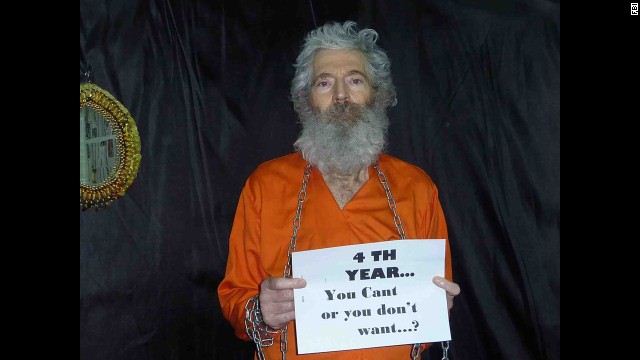
 Aletho News
