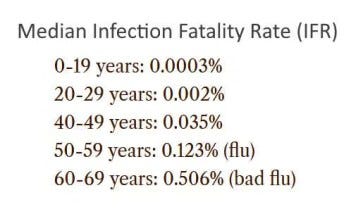
Highly acclaimed experts presented evidence-based facts on Covid-19 early in 2020, but were ignored and censored by authorities
The official narrative in the Covid crisis tried to persuade the public that various mandates and coercions, limiting people’s individual freedoms, were all based on science. The myth of this has visibly eroded, as it has been revealed how much of the strategies, influencing the lives of millions, was based on fear, pressure from media and political tactics. Reference to science was often enough used as a disguise.
Five evidence-based facts known already in 2020, but ignored by the authorities:
- The virus had spread much more widely and was far less dangerous than initially claimed by the authorities.
- The risk from Covid-19 differed by a factor of 1,000 for different age groups, and the risk was much higher for people with comorbidities (e.g. obesity, diabetes, anxiety disorders, etc.) and nutrition deficiencies.
- Those who had recovered from the disease had developed strong natural immunity, but this evidence-based fact was systematically ignored or downplayed by the authorities.
- Covid-19 vaccines received marketing authorisation without having been tested in clinical trials for virus transmission or infection.
- Covid-19 vaccines have considerable side effects that were already known during the clinical trials of the vaccines.
The closure of parks and playgrounds was part of lockdown policies, carried out with reference to science.
Already in 2020, there were a number of important and evidence-based facts about both Covid-19 and the response to the Covid crisis that were highlighted by many scientists and doctors. Consideration of these facts would have prevented the introduction of ill-considered and ineffective Covid measures and reduced the resulting harms.
The virus had spread much more widely and was much less dangerous than claimed
The SARS-Cov-2 virus was already much more widespread globally in early 2020 than official sources (including the World Health Organization, or WHO) claimed. Prof. Jayanta Bhattacharya and Eran Bendavid wrote on March 24, 2020, that fears of Covid-19 were based primarily on a miscalculated death toll reported by the WHO, which was vastly exaggerated as it did not take into account the actual rate of infection. This meant, in particular, that the mortality rate among those infected was much lower than initially claimed and the risk posed by Covid-19 to the vast majority of people, particularly those under 70, was many times lower.
A team led by professor John P. Ioannidis of Stanford University scientifically showed in a study published already in May 2020 that the risk of dying from Covid-19 for people under the age of 65, even in pandemic epicentres, was very low, and deaths amongst people under the age of 65 with no comorbidities were remarkably uncommon. They proposed that strategies focusing specifically on protecting high-risk elderly individuals should have been considered in managing the pandemic.
On October 14, 2020, the Bulletin of the World Health Organisation published a study by prof J. P. Ioannidis, according to which the median rate of deaths among people infected with Covid-19 in autumn 2020 was 0.23-0.27%, with a rate of 0.05% among people under 70 years of age, which was tens of times lower than official (including the WHO’s) estimates in March and April 2020.
Even though such evidence-based data were known early on, the authorities in many countries and the WHO continued to scare the public about the particular danger of a novel viral disease, and imposed restrictions on millions of healthy people. Among other things, many countries restricted people from exercising, staying outdoors and playing sports, thereby compromising people’s overall health and increasing the risk of developing all the diseases (including Covid-19) more severely.
Thousand-fold difference in the risk from Covid-19
Harvard University Professor Martin Kulldorff had already stated in April 2020 that it was clear from the data from Wuhan early on in the crisis that there was a thousand-fold difference in the risk from Covid-19 across different age groups, and that failing to account for this difference was one of the major flaws in the public response to the Covid crisis.
Prof Martin Kulldorff was quick to point out the thousand-fold difference in risk from Covid-19 (Thérèse Soukar, CC BY-SA 4.0, via Wikimedia Commons)
Among people exposed to Covid-19, people in their 70s had roughly twice the mortality of those in their 60s, 10 times the mortality of those in their 50s, 40 times that of those in their 40s, 100 times that of those in their 30s, 300 times that of those in their 20s, and a mortality that was more than 3000 times higher than it was for children. According to Kulldorff, public authorities should have taken this wide variation between age groups into account when designing Covid interventions. Counter measures specifically targeting the elderly, the highest risk group, would have not only protected them but other groups as well. Age-specific measures had to be part of the strategy, otherwise unnecessary mortality, hospital burden and economic losses followed.
Professor Mark Woolhouse of the University of Edinburgh also estimated early on that the elderly were 10,000 times more at risk from Covid-19 than those under 15. But it goes e ven further. It’s not just the elderly, it’s the elderly who are infirm, have comorbidities or are frail. These were the people who were particularly at risk, and the main target group that should have been addressed. In his view, this was also the most important and obvious reason why there were alternatives to social closures and other coercive state measures.
In addition, it was clear from quite early on that it were the people with serious comorbidities that would fall seriously ill. In one of Europe’s epicentres of the early outbreak, Italy, a report found as early as in March 20, 2020, that the median age of the 3200 deaths testing positive for Covid-19 was 78.5 years, and more than 95% of them had one or more comorbidities. A large-scale study in the US confirmed that over 95% of hospitalised adults were persons with at least one comorbidity condition and the main risks were obesity, anxiety and fear disorders and diabetes. However, it was also clear, for example, that the proportion of overweight people varied widely between countries, even within the same age groups. For example, obesity already affects 42% of the US population, but in Vietnam the same number is only 2%, in India 4% and <10% in most of the African countries.
The association of nutritional deficiencies with severe morbidity was also known before the Covid crisis. Vitamin D, for example, plays an important role in the immune system. Already in the first half and second half of 2020, studies showed a clear correlation between the low levels of vitamin D and the risk of severe Covid-19 disease. For that reason, many doctors and researchers stressed the need for adequate vitamin D intake in the autumn of 2020, ahead of the second wave, especially for older people at risk.
Although these facts were known early on, authoroties continued to scare the public by claiming, among other things, that the virus did not discriminate between infected people and could be fatal to anyone. Health authorities also failed to advise people to take important steps to support their general health, such as getting enough fresh air and sunshine, eating a healthy diet, controlling blood pressure and diabetes, losing weight, etc. On the contrary, authorities directed people indoors, in many countries penalised them for going outdoors, and just promoted vaccinations instead of various treatments and lifestyles.
In the UK, scary posters were used in large-scale campaigns to get people to follow the “rules”
Ignoring natural immunity
The importance of natural immunity was systematically downplayed by the health authorities, major vaccine manufacturers and the World Health Organisation (WHO). In some countries (such as the USA), it was not even taken into account in the implementation of Covid measures, while the authorities only reiterated the need to vaccinate as many people as possible.
At the same time, studies carried out before the vaccination campaigns started, i.e. by the end of 2020, clearly showed that recovery from the disease provides strong immunity for at least 8 months and most likely longer. By October 2021, at least 81 studies had already been published confirming immunity to Covid-19 conferred by recovery.
In addition, a number of studies at the beginning of the Covid crisis showed that a significant proportion of the population may have already had immunity to Covid-19, as SARS-Cov-2 was only one of several coronaviruses. Nearly half of the unaffected individuals had the corresponding T-cells, indicating the body’s previous exposure to coronaviruses and ability to cope with them.
Many doctors and scientists, including Dr. Robert W. Malone, Dr. Peter McCullough, Dr. Geert Vanden Bossche, Dr Marty Makary, Dr. Pierre Kory, Dr. Tess Lawrie, Dr. Richard Urso, Dr. Paul E. Alexander, Prof Norman Fenton, Prof Martin Neil and others found it puzzling that health officials chose to ignore the scientific fact that infection provided long-lasting and strong protection to millions of people who had recovered from Covid-19. Prof. Jayanta Bhattacharya and Prof. Martin Kulldorff have stressed that while natural infection may not have provided permanent infection-blocking immunity, it offered, in high likelihood, permanent anti-disease immunity against severe disease and death. However, scientists who during the Covid crisis stressed the importance of natural immunity and asked to take into account when divising public policies, were not only ignored but censored and cancelled.
Ignoring natural immunity has had serious consequences, including avoidable vaccine complications and harms, loss of lives, financial and other collateral damage, and loss of credibility of the public health authorities.
Vaccines were not tested for reduction of virus transmission or infection
Covid-19 vaccines, which were introduced at warp speed, were not tested in clinical trials to see if they reduced infection or transmission. Shortly before their vaccine was granted emergency marketing authorisation in the US (on 3 December 2020), this fact was admitted by the CEO of Pfizer, Albert Bourla, and later by a Pfizer official during an official hearing at the European Parliament, although the vaccine manufacturers gave the public an impression that the vaccines protected against infection and transmission.
To the experts who looked closely at the design and results of the Covid-19 vaccine clinical trials, the fact that the vaccines were not tested for reduction of virus transmission or infection was evident already in late 2020. For example, the editor of British Medical Journal (BMJ) Dr. Peter Doshi stated on October 21, 2020, that none of the vaccine clinical trials had been designed to detect the efficacy of these vaccines on reducing any serious outcomes such as hospital admissions, use of intensive care, or deaths. Neither did they examine the efficacy of vaccines for their ability to interrupt transmission of the virus.
Dr Peter Doshi considers it wrong that primary data from clinical trials are not available (screenshot from Youtube)
Prof. William A. Haseltine drew attention to the serious shortcomings of these clinical trials on 23 September 2020, after Pfizer, Moderna, AstraZeneca and Johnson & Johnson had published their vaccine trial protocols. According to him, the trials seemed to be designed to prove that their vaccines worked, even if the measured effects were minimal, as they mainly investigated only how well could the vaccines prevent mild Covid-19 symptoms. Haseltine pointed out that a closer look at the protocols made it clear that these trials did not provide confidence in vaccine efficacy in protecting against serious illness or in preventing an infection of Covid-19. It also appeared that these trials were intended to pass the lowest possible barrier of success. Haseltine concluded that these vaccines were not the “silver bullet” that would end the Covid crisis.
Yet tens of millions of people around the world were subjected to compulsory vaccination, and many lost their jobs because of non-compliance, severely restricting their individual freedoms and fundamental rights.
Ignoring the side effects of the vaccines
Data on the side effects of the vaccines were already available in documents published by the vaccine manufacturers on their clinical trails in late 2020, although few were able to or considered it important to look at them in depth. This was made considerably more difficult by the fact that vaccine manufacturers refused to publish the raw data needed for an objective assessment. Raw data from clinical trials have still not been fully disclosed.
For example, the Pfizer vaccine trial was designed, conducted, analysed and compiled by Pfizer staff and all the raw data belong to the company. The BMJ editorial board believes that refusing to disclose the original data is morally unacceptable for any clinical trials, but especially those involving major public health interventions. The BMJ has been calling on vaccine manufacturers for years to disclose the original data from clinical trials, since clinical trial data must be available for independent scrutiny.
Nevertheless, experts pointed out many inconsistencies and questionable findings in the Covid-19 vaccine trial reports already in early 2021, such as the facts that:
- higher-risk target groups (elderly and immuno-compromised individuals) were clearly under-represented in the trials,
- a number of subjects were withdrawn for unknown reasons,
- even the officially reported rate of adverse reactions was several times higher than it was, for example, for flu vaccines.
In addition, it has come to light that the vaccine manufacturer Pfizer was aware of several serious side effects amongst the vaccine participants in clinical trials in early 2021, but chose to conceal them, such as the case of 12-year-old Maddie De Garay, who became disabled in the trial and is now partially paralysed, requiring a wheelchair and feeding tube. None of her 35 adverse reactions were mentioned in the New England Journal of Medicine article reporting on the vaccine trial.
Regardless of all that, since the beginning of 2021, mass vaccination campaigns were launched in many countries of the world, which in a short period of time transformed from an attempt of vaccinating the vulnerable target groups (the elderly) into an increasingly massive effort to vaccinate as many people as possible, even up to with children and infants, providing no rational argument or evidence base to do so.
A new expert analysis of the Pfizer and Moderna vaccine trial papers published in 2022 clearly found that participants in these clinical trials were more likely to experience a serious adverse reaction to vaccination than to be hospitalized for Covid-19.
Summary
As shown above, there is ample reason to argue that the evidence base for the decisions made in the greatest global health crisis of recent decades was severely deficient. Covid measures were determined not on the basis of evidence nor reasonable assumptions, but rather on the basis of emotional reactions and political tactics, fuelled by fear and media pressure. Societies were under constant pressure from global organisations (WHO, European Commission, etc.), authorities and the mass media – which included the increasingly loud rhetoric of maximizing lockdown, maximizing masking, maximizing vaccination etc.
However, there were also those in power who relied on knowledgeable experts (e.g. in the US, states such as South Dakota, Florida, Texas, etc.), as did some who were in charge of public health institutions (for example in Sweden), succeeding to resist irrational and unscientific pressures while enduring media bashing, vilification and unpopularity. At said places, the decision-makers generally avoided locking down the society and did not impose coercive state measures (compulsory mask mandates, compulsory vaccination, etc.). Thanks to their non-conformist and common sense approach, we now know much about which measures worked and which didn’t, the mistakes every society should avoid in future health crises, and how the slogan of ‘follow the science’ was often used as propaganda to subjugate societies to the dictates of a line of authority.
September 29, 2023
Posted by aletho |
Civil Liberties, Science and Pseudo-Science | Covid-19, COVID-19 Vaccine, Human rights, United States |
Leave a comment
Dr. Anthony Fauci visited CIA headquarters to “influence” its COVID-19 origins investigation, according to allegations disclosed Tuesday by Rep. Brad Wenstrup (R-Ohio).
Wenstrup, in a letter to Inspector General Christi Grimm at the U.S. Department of Health and Human Services (HHS), said he had information suggesting Fauci was “escorted” into CIA headquarters “without a record of entry.”
Wenstrup is chairman of the Select Subcommittee on the Coronavirus Pandemic. A subcommittee spokesperson told the Daily Mail the committee “has received information from multiple sources across multiple agencies regarding Dr. Fauci’s movements to and from the CIA.”
Neither Wenstrup nor any subcommittee member or spokesperson identified specific date(s) Fauci is alleged to have visited the agency.
Tuesday’s press release from the Committee on Government Oversight and Accountability, which is overseeing the subcommittee’s investigation, called attention to allegations by six CIA whistleblowers that they received “significant financial incentives” to change their stance that the SARS-CoV-2 virus may have leaked from the Wuhan Institute of Virology (WIV) in China.
In light of evidence uncovered earlier this year establishing Fauci’s involvement in the “Proximal Origin” paper claiming to disprove the lab leak theory, the subcommittee said it found Fauci’s presence at the CIA “questionable,” alleging it “lends credence to heightened concerns about the promotion of a false COVID-19 origins narrative by multiple federal government agencies.”
Wenstrup asked Grimm to send the subcommittee by no later than Oct. 10 any documents and communications related to Fauci’s movements between Jan. 1, 2020, and Dec. 31, 2022, into any facilities owned, operated or occupied by the CIA.
Wenstrup also requested the pay and bonus history of all past and current members of HHS’ “COVID Discovery Team(s)” and information about staff and contractors at HHS, National Institute of Allergy and Infectious Diseases (NIAID) and the U.S. Marshals Service who may have been involved.
“Our goal is to ensure the scientific investigative process regarding the origins of COVID-19 was fair, impartial, and free of alternative influence,” Wenstrup stated.
Wenstrup did not reveal the source of the information on Fauci’s CIA visit, but the letter mentioned HHS’ Special Agent Brett Rowland, requesting Grimm make him available for a “voluntary transcribed interview.”
CIA whistleblower and intelligence community reports on COVID origins
A joint letter from the subcommittee and the House Permanent Select Committee on Intelligence Chairman Mike Turner (R-Ohio), sent Sept. 12 to CIA Director William Burns, outlined the testimony of a “multi-decade, senior-level, current agency officer” alleging six of the seven analysts investigating the COVID-19 origins were given a “significant monetary incentive to change their position.”
According to the unidentified whistleblower — a decorated and long-serving CIA officer with expertise in Asia, according to the Substack Public — the six analysts, all with significant scientific expertise, were paid off in order to bury their findings that COVID-19 most likely originated from the Wuhan lab.
The seventh and most senior member of the team was alone in believing the virus had a zoonotic origin, the letter stated.
The CIA whistleblower said, “Fauci’s expert opinions were a significant consideration and were part of our classified assessment … His opinion substantially altered the conclusions that were subsequently drawn,” Public reported today.
“He came multiple times and he was treated like a rockstar by the Weapons and Counter-Proliferation Mission Center. And, he pushed the Kristian Anderson [‘Proximal Origin’] paper,” the whistleblower added.
In a separate letter, the subcommittee also requested Andrew Makridis, former COO at the CIA who was known to have taken part in the investigations, participate in an interview.
Democrats from both committees told ABC News they “were given no prior notice of a whistleblower’s existence, let alone testimony. Without further information regarding this claim from the Majority, we have no ability to assess the allegations at this time.”
CIA Director of Public Affairs Tammy Kupperman Thorp told the New York Post, “At CIA we are committed to the highest standards of analytic rigor, integrity and objectivity. We do not pay analysts to reach specific conclusions. We take these allegations extremely seriously and are looking into them.”
In June, the Office of the Director of National Intelligence (ODNI) declassified a 10-page report on its investigation into the links between the Wuhan lab and COVID-19. In the report, the ODNI admitted the lab performed genetic engineering of coronaviruses, that people working at the lab got sick in December 2019 “consistent with but not diagnostic of COVID-19,” and that they found a lack of “adequate biosafety precautions.”
However, the ODNI report stated the CIA remained “unable to determine the precise origin of the COVID-19 pandemic,“ but that “almost all IC [intelligence community] agencies assess that SARS-CoV-2 was not genetically engineered” and that “all IC agencies” determined the virus “was not developed as a biological weapon.”
In February, the U.S. Department of Energy issued a “low confidence” assessment that the virus most likely originated from the leak at the Wuhan lab.
Several days later, FBI Director Christopher Ray, during an interview with Fox News, said the bureau believed the pandemic was likely the result of a lab accident in Wuhan.
‘Proximal Origin’ lab-leak-denying paper linked to Fauci
Fauci’s alleged visit to the CIA is the latest data point in a growing body of evidence gathered by the subcommittee investigating the pandemic showing the former NIAID director played a central role in directing and influencing the official COVID-19 origin narrative, chiefly by suppressing the lab leak theory.
Tuesday’s announcement included a link to the subcommittee’s July report, “The Proximal Origin of a Cover-Up: Did the ‘Bethesda Boys’ Downplay a Lab Leak?”
In the “Proximal Origin” paper, prompted by Fauci in early 2021 and written by Kristian Anderson, Ph.D., professor of Immunology and Microbiology at Scripps Research, Anderson and his co-authors argued the virus was not laboratory-made or purposefully manipulated, and that the lab leak scenario was implausible.
The subcommittee report stated the “Proximal Origin” paper has been accessed 5.84 million times and was “one of the single most impactful and influential scientific papers in history” that was used to “downplay the lab leak hypothesis and call those who believe it may be true conspiracy theorists.”
The report further alleged Fauci was aware of the monetary relationship between NIAID, EcoHealth Alliance, and WIV, and that he funded gain-of-function research on coronaviruses at the WIV.
After reviewing more than 8,000 pages of documents and 25 hours of testimony, the subcommittee concluded that “‘Proximal Origin’ employed fatally flawed science to achieve its goal … to kill the lab leak theory.”
Robert F. Kennedy Jr., Children’s Health Defense’s chairman on leave, explores Fauci’s longtime involvement in gain-of-function research in his new book, “The Wuhan Cover-up: And the Terrifying Bioweapons Arms Race,” due for release Nov. 14.
John-Michael Dumais is a news editor for The Defender. He has been a writer and community organizer on a variety of issues, including the death penalty, war, health freedom and all things related to the COVID-19 pandemic.
This article was originally published by The Defender — Children’s Health Defense’s News & Views Website under Creative Commons license CC BY-NC-ND 4.0. Please consider subscribing to The Defender or donating to Children’s Health Defense.
September 27, 2023
Posted by aletho |
Book Review, Deception | CIA, Covid-19, United States |
Leave a comment
On March 6, 2020, the mayor of Austin, Texas, canceled the biggest tech and arts trade show in the world, South-by-Southwest, only a week before hundreds of thousands were to gather in the city.
In an instant, with the stroke of a pen, it was all gone: hotel reservations, flight plans, performances, exhibitors, and all the hopes and dreams of thousands of merchants in the town. Economic impact: a loss $335 million in revenue at least. And that was just to the city alone, to say nothing of the broader impact.
It was the beginning of US lockdowns. It wasn’t entirely clear at the time – my own sense was that this was a calamity that would lead to decades of successful lawsuits against the Austin mayor – but it turned out that Austin was the test case and template for the entire nation and then the world.
The reason was of course Covid but the pathogen wasn’t even there. The idea was to keep it out of the city, an incredible and sudden fallback to a medieval practice that has nothing to do with modern public health understanding of how a respiratory virus should be handled.
“In six months,” I wrote at the time, “if we are in a recession, unemployment is up, financial markets are wrecked, and people are locked in their homes, we’ll wonder why the heck governments chose disease ‘containment’ over disease mitigation. Then the conspiracy theorists get to work.”
I was right about the conspiracy theorists but I had not anticipated that they would turn out to be right about nearly everything. We were being groomed for nationwide lockdowns.
At this point in the trajectory, we already knew the gradient of risk. It was not medically significant for healthy working-age adults (which still to this day the CDC does not admit). So the shutdown likely protected very few if anyone.
The extraordinary edict – worthy of a tin-pot dictator of a dark age – completely overrode the wishes of millions, all on the decision of one man, whose name is Steven Adler.
“Was the consideration between maintaining that money, effectively rolling the dice, and doing what you did?” asked Texas Monthly of the mayor.
His answer: “No.”
Clarifying: “We made a decision based on what was in the best health interest for the city. And that is not an easy choice.”
After the shocking cancellation, which overrode property rights and free will, the mayor urged all residents to go out and eat at restaurants and gather and spend money to support the local economy. In this later interview, he explained that he had no problem keeping the city open. He just didn’t want people from hither and yon – the dirty people, so to speak – to bring a virus with them.
He was here playing the role of Prince Prospero in Edgar Allan Poe’s “The Masque of the Red Death.” He was turning the capital city of Texas into a castle in which the elite could hide from the virus, an action that also became a foreshadowing of what was to come: the division of the entire country into clean and dirty populations.
The mayor further added a strange comment: “I think the spread of the disease here is inevitable. I don’t think that closing down South Bay was intended to stop the disease from getting here because it is coming. The assessment of our public health professionals was that we were risking it coming here more quickly, or in a greater way with a greater impact. And the longer we could put that off, the better this city is.”
And there we have the “flatten the curve” thinking at work. Kick the can down the road. Postpone. Delay herd immunity as long as possible. Yes, everyone will get the bug but it is always better that it happens later rather than sooner. But why? We were never told. Flatten the curve was really just prolong the pain, keep our overlords in charge as long as possible, put normal life on hold, and stay safe as long as you can.
Prolonging the pain might also have served another surreptitious agenda: let the working classes – the dirty people – get the bug and bear the burden of herd immunity so that the elites can stay clean and hopefully it will die out before it gets to the highest echelons. There was indeed a hierarchy of infection.
In all these months, no one ever explained to the American public why prolonging the period of non-exposure was always better than meeting the virus sooner, gaining immunity, and getting over it. The hospitals around the country were not strained. Indeed, with the inexplicable shutdown of medical services for diagnostics and elective surgeries, hospitals in Texas were empty for months. Health care spending collapsed.
This was the onset of the great demoralization. The message was: your property is not your own. Your events are not yours. Your decisions are subject to our will. We know better than you. You cannot take risks with your own free will. Our judgment is always better than yours. We will override anything about your bodily autonomy and choices that are inconsistent with our perceptions of the common good. There is no restraint on us and every restraint on you.
This messaging and this practice is inconsistent with a flourishing human life, which requires the freedom of choice above all else. It also requires the security of property and contracts. It presumes that if we make plans, those plans cannot be arbitrarily canceled by force by a power outside of our control. Those are bare minimum presumptions of a civilized society. Anything else leads to barbarism and that is exactly where the Austin decision took us.
We still don’t know precisely who was involved in this rash judgment or on what basis they made it. There was a growing sense in the country at the time that something was going to happen. There had been sporadic use of lockdown powers in the past. Think of the closure of Boston after the bombing in 2013. A year later, the state of Connecticut quarantined two travelers who might have been exposed to Ebola in Africa. These were the precedents.
“The coronavirus is driving Americans into unexplored territory, in this case understanding and accepting the loss of freedom associated with a quarantine,” wrote the New York Times on March 19, 2020, three days after the Trump press conference that announced two weeks to flatten the curve.
The experience on a nationwide basis fundamentally undermined the civil liberties and rights that Americans had long taken for granted. It was a shock to everyone but to young people still in school, it was utter trauma and a moment of mental reprogramming. They learned all the wrong lessons: they are not in charge of their lives; someone else is. The only way to be is to figure out the system and play along.
We now see epic learning loss, psychological shock, population-wide obesity and substance abuse, a fall in investor confidence, a shrinkage of savings reflecting less interest in the future, and a dramatic decline in public participation in what used to be normal life events: church, theater, museums, libraries, fares, symphonies, ballets, theme parks, and so on. Attendance in general is down by half and this is starving these venues of money. Most of the big institutions in large cities like New York, such as Broadway and the Met, are on life support. The symphony halls have a third empty seats despite lowering prices.
It seems remarkable that this three-and-a-half year-long war against basic liberty for nearly everyone has come to this. And yet it should not be a surprise. All ideology aside, you simply cannot maintain much less cultivate a civilized life when governments, in combination with the commanding heights of media and large corporations, treat their citizens like lab rats in a science experiment. You only end in sucking away the essence and vibrancy of the human spirit, as well as the will to build a good life.
In the name of public health, they sapped the will to health. And if you object, they shut you up. This is still going on daily.
The ruling class that did this to the country has yet to speak honestly about what transpired. It was their actions that created the current cultural, economic, and social crisis. Their experiment left the country and our lives in shambles. We’ve yet to hear apologies or even basic honesty about any of it. Instead, all we get is more misleading propaganda about how we need yet another shot that doesn’t work.
History provides many cases of a beaten down, demoralized, and increasingly poor and censored majority population being ruled over by an imperious, inhumane, sadistic, privileged, and yet tiny ruling class. We just never believed we would become one of those cases. The truth of this is so grim and glaring, and the likely explanation of what happened so shocking, that the entire subject is regarded as something of a taboo in public life.
There will be no fixing this, no crawling out from under the rubble, until we get something from our rulers other than public preening about a job well done, in ads sponsored by Pfizer and Moderna.
Jeffrey A. Tucker is Founder and President of the Brownstone Institute. He is also Senior Economics Columnist for Epoch Times, author of 10 books, including Liberty or Lockdown, and thousands of articles in the scholarly and popular press. He speaks widely on topics of economics, technology, social philosophy, and culture.
September 24, 2023
Posted by aletho |
Civil Liberties, Science and Pseudo-Science, Timeless or most popular | Covid-19, Human rights, United States |
Leave a comment
It was all just ignorance and corporate greed …
I listen attentively when doctors and other health professionals who once shilled for the covidian tactics of ‘sheltering in place’ (what a quaint euphemism for imprisonment!), masks (how much more evidence do we need to show that they are and always have been useless for viral respiratory pathogens?), and, of course, the innovative mRNA-based jab, all the while never caring to spare a breath for natural immunity or early treatment, have a change of heart.
Well, after a bit of travelling down their personal roads to Damascus and seeing a light strong enough to make them revise their former gospels, they have had their conversion, have joined our side and are now front and centre on the resistance pulpit.
I acknowledge that we need all the help we can get and I am grateful for their assistance, but I am often mindful that the explanations offered by some of them, in their hindsight, only go so far. In fact, they fall far short of an appreciation that the whole phoney covid pandemic was an ‘operation’ perpetrated upon the globe by a powerful faction that sought not only to enrich their already rich selves but to enslave us and, with their bioweapons, to kill and maim.
It wasn’t just a matter of Pfizer, Moderna and Astrazeneca licking their chops at the opportunity to make wild profits by pushing an inadequately tested agent while nervous health officials erred on the side of ‘vaccinating’ everyone who breathed as a precautionary measure based on fearful and ignorant worry … No. It was more, it was more profound, it was more devilishly destructive and centrally planned.
Yes, there was — there is — a conspiracy, not just organic goosestepping and Sierpinski triangles. It was a bunch of high-placed people who set about controlling and literally destroying a large swath of the world’s population, deliberately, and relentlessly.
They are still going at it and with more than just the lethal Jab. The ‘reset’ they planned includes widespread censorship, the destruction of foundational principles of medicine, digital identification, social credit permissions, total surveillance, a fraudulent climate ‘emergency’ leading to further restrictions upon human autonomy, and, naturally, more and more inoculations. The scale of their operation is immense and its fruits should be visible by now to anyone who dares to think.
Ignorance and corporate greed are not the prime movers. Not to finger the Globalist Cabal for the murderers they are is to let them off the hook and to dissipate the energies of our resistance. Not to connect the dots is to be left with a picture so incomplete that responsibilities are diffused and the most significant guilty parties are at leisure to continue their machinations unscathed.
I chanced to have a conversation with a health practitioner the other night, a person who had been coerced into the Jab to preserve his job, a person who joined us at Parliament here in Wellington as we protested the mandates, a person who has worked behind the scenes to assist others in the health care system who opposed the regimen of masks, quarantine and jabs. When I asked him point-blank whether he thought there was indeed a ‘depopulation agenda’, he shook his head. It was the proverbial bridge too far, but it gave me an idea.
Those celebrated doctors and nurses, familiar to MSM audiences as mouthpieces for the Programme at the outset, who influenced countless people to toe the line — what if they, in their new shining garb within the freedom community, painted the full picture?
I still can’t explain how any self-respecting health professional could have lost his or her wits so completely in 2020 so as to have discarded the principles of their discipline. Could they really have forgotten about natural immunity and early treatment and the need for a genuine vaccine to be tested over years for safety and efficacy?
But never mind. If our new apostles of good sense can now use their heft and influence to enlighten the many who waver in the middle about the true extent and depravity and the planned coordination informing the covidian psyops, they will have atoned for their earlier lapses and complicity. But unless they have the courage to go that far, I, for one, will regard their intentions with grave suspicion.
Unless they have the guts to serve up the whole enchilada, they can take their morsels elsewhere.
September 23, 2023
Posted by aletho |
Civil Liberties, Full Spectrum Dominance, Science and Pseudo-Science, Timeless or most popular, War Crimes | Covid-19, COVID-19 Vaccine, Human rights |
Leave a comment
However hard Big Pharma is pushing the new Covid jabs, investors know the truth.
Even though we are getting closer to winter, a perfect time to sell Covid jabs, Moderna’s share price is down 44%.
And Pfizer’s is down 36%.
Clearly investors in the know realise that people just aren’t taking the Covid shots anymore.
So the sales team has been brought in to try and drum up business. All over the MSM news today are reports of a new study which claims to show that Long Covid can cause long-term damage to multiple organs.
The study, published in The Lancet is titled “Multiorgan MRI findings after hospitalisation with COVID-19 in the UK (C-MORE): a prospective, multicentre, observational cohort study”.
Read any MSM coverage of this study and you will be led to believe that a third of Long Covid patients sustained damage to multiple organs five months after infection. Lung injuries were almost 14 times higher among Long Covid patients, whilst brain and kidney injuries were three and two times higher respectively.
‘Study lead Dr Betty Raman said people who had more than two organs affected were “four times more likely to report severe and very severe mental and physical impairment”’.
Scary stuff, sign me up for my booster now.
But is the study all that it is made out to be?
First of all the declarations of interests page is over 1,600 words long with reference after reference to links with Big Pharma.
Secondly, and most importantly, the study is massively flawed. It recruited 2,710 participants and whittled these down to 259 who were discharged from hospital with PCR-confirmed or clinically diagnosed COVID-19 between March 1 2020 and Nov 1 2021.
This group was then compared with 52 non-Covid-19 controls from the community. The average age of the study group was 57 and the control group was 49. As the study says, “compared with non-COVID-19 controls, patients were older, living with more obesity and had more comorbidities”. 50% of the study group were obese compared with only 37% of the control group. 40% had smoked at some point in their lives compared with only 17% of the control group. I could continue with percentages of all the pre-existing comorbidities but I think you get the picture.
(For those who will ask the question, 40% of the control group were vaccinated at follow-up compared with 44% of the study group.)
So what do you think happens when you take an unhealthy, older group of people who have been in hospital with Covid and you compare them with a younger, healthier group of people from the community. You geniuses, you guessed it. You find that the unhealthier group are unhealthier.
Give the Big Pharma sales team a genius medal for that one and a sucker medal to the MSM who did the sales pitch for them.
But don’t take it from me, here is what Professor Francois Balloux, Director of the UCL Genetics Institute in London, has to say about the study:
Thus, my point is not that the conclusions of the study are necessarily false but that the control group is inadequate. I worry the study may have been published as is because it fits a particular narrative, and not necessarily because it is sound and robust.
By choosing a control group made of elderly, frail, terminally ill patients, it might be possible to demonstrate that Covid actually repairs organ damage, which would obviously be an absurd conclusion, and which should rightly be called out. Yet, here we are …
September 23, 2023
Posted by aletho |
Deception, Fake News, Mainstream Media, Warmongering, Science and Pseudo-Science | Covid-19, COVID-19 Vaccine |
Leave a comment
“We know they are lying, they know they are lying, they know we know they are lying, we know they know we know they are lying, but they are still lying.” ~ Solzhenitsyn
Our wise and benevolent liberal overlords, satisfied with how well their exploitation of the covid pandemic went three years ago, have decided to do it all over again since the nonconformists, for all their outrage, never got around to holding them accountable. Not for the lockdowns. Not for the censorship. Not for the toxic injections. Not for shoving infected patients into nursing homes. Not for police brutalizing peaceful citizens. Not for the deaths they caused.
It would not be hyperbole to state they were drunk with power. Power is intoxicating.
They used the panic and the prediction of millions and millions and millions of deaths to suppress well-established rights: the right of assembly, the right to worship, the right of free speech, the right of free press—all selectively applied.
And they did it with glee.
And, furthermore, they masqueraded as being pro-science, shouting, “Follow the science!” Yet, physicians, scientists, and nurses who disagreed with the official dogma and cited facts were persecuted to such an extent that they lost their jobs, and their licenses were revoked and their professional opinions suppressed (yet, these—isolated—brave professionals persisted in telling the truth, which media propaganda called “disinformation”). Mind you, these are the same pro-science persons who deny that sex is determined through chromosomes, and insist that sex is “a social construct” (which begs the question, if a person’s genitals do not determine their gender, how does removing them change their gender?).
So now, it seems that the first phase is to, once again, force everyone to don those cloth face masks, which were useless from the beginning, as several scientific papers have shown, but which became a sign of conformity and political affiliation. Even children.
The rest may come later.
The fact of the matter is that, if one examines the elites’ actions during the pandemic—which, remember, we were told it would kill millions and millions of people—it is apparent that they really did not believe any of it. Not the lockdown. Not the mortality. Not the face masks. To prove that this was so, I will set down the specifics rather than write in generalities. If it seems that I am overdoing by doing so, if it is extensive, it proves my point precisely.
And remember while reading the following that during the pandemic everyone was forced to wear masks. Everyone did except for the ones who had backbone and refused who were harassed, arrested, insulted as “white supremacists” and “fascists,” and even physically attacked for not conforming:
2020
CNN’s Chris Cuomo was caught breaking lockdown by a cyclist. Predictably, Cuomo insulted the man for outing him. Cuomo is related to the politician who jammed infected patients in nursing homes, causing the deaths of thousands and who has never been held accountable.
CNN reporter Kaitlan Collins took off her face mask once the cameras were not recording her. Surprise! They were!
Democratic governor Steve Sisolak of Nevada apologized after a photo showed him not wearing a mask nor abiding by social distancing guidelines.
Democratic governor Gavin Newsom of California was caught wining and dining at a posh restaurant named The French Laundry (!) with friends and associates, none of them wearing face masks and obviously flaunting lockdowns, both of which were meant for the average citizen and not for the elite.
Democrat Nancy Pelosi took time off from criticizing Trump for not wearing a mask to go to a hair salon and not wearing a mask, contrary to policy.
The wife of Democratic Illinois governor J.B. Pritzker violated the state’s stay-at-home order when she traveled to a second home in Wisconsin. Why? Because her husband is one of the elites. This same elite sent construction workers to go work on his mansion.
Next door, the husband of Democratic Michigan governor, Gretchen Whitmer, called a marina to get their yacht in the water for a Memorial Day trip. The person at the other end of the line blew the whistle, whereupon Whitmer claimed that he was making a joke. Nobody laughed. She was also found dining with at least a dozen other people at The Landshark Bar & Grill in East Lansing, Michigan. She also took a trip to Florida. Whitmer, incidentally, also put infectious covid patients with healthy residents inside nursing homes, just like Cuomo. And just like Cuomo, she has never been held accountable.
In California, Democratic governor Newsom ordered vineyards closed to prevent the spread of covid and the resulting deaths of millions and millions and millions of people. All vineyards except for the one he owns.
In the People’s Democratic Republic of Austin, Mayor Steve Adler told everyone to stay home and not travel, then took a trip to Mexico for fun and giggles.
Democrat Los Angeles County Supervisor Sheila Kuehl was seen dining outdoors, maskless, hours after banning outdoor dining for the masses.
Democrat San Jose Mayor Sam Liccardo had dinner with numerous people in spite of state regulations.
Democrat California Sen. Dianne Feinstein was seen at an airport without a face mask. The sight of her face was traumatic for some.
Democrat Mayor Michael Hancock from Denver flew across state lines to Mississippi for fun.
Democrat politician Eric Adams hosted a maskless fundraiser in order to become mayor of NYC.
Democratic Chicago Mayor, and Crypt-Keeper twin, Lori Lightfoot, ignored the statewide order for salons and barber shops to be closed to the peasants and got some work done on her. Not enough, though. Upon being confronted with the transgression, she said she could do it because she was special.
Erie County Executive Mark Poloncarz, a Democrat, of course, was found to have been playing hockey in a skating rink after closing the rink to one and all, including children who were immune to the covid virus. He explained that, yes, he was skating, but he was alone in the rink. Then a video surfaced showing he was playing with 10 others, so he condemned the video as “stalking.”
2021
Alexandria Ayala, a member of the Palm Beach County School Board who had insisted that (immune) children should be masked regardless of parents’ wishes, was seen partying maskless over the weekend. In a demonstration of her arrogance, she had once told citizens during a school board meeting that it is “a privilege to address your public officials and to be in this chamber.”
Federal postal workers were exempt from the toxic injection but private businesses were fined $14K per violation. Nor were illegal aliens required to have the “vaccine.” Aside from the lack of legislation and the obvious dictatorial aspects, think about the logic there.
Members of Congress and their staff were exempt from taking the toxic injection because they are the elites. The peasants, otherwise, can be poisoned with the toxic substance in the “vaccine.”
Being one of the elites, Democratic San Francisco Mayor London Breed was seen partying at a club without the face mask she had mandated for the peasants. She stated that she should not be blamed because she was enjoying the music.
Los Angeles Mayor Eric Garcetti was seen at the NFC Championship game between the San Francisco 49ers and the Los Angeles Rams without a face mask that he had been raging about for everyone to wear. Asked to explain, he said he was holding his breath.
At the Emmy Awards, where the elites tell each other how wonderful they are, none of them were wearing masks.
Democratic Michigan Representative Rashida Tlaib admitted that she wore a face mask in public because there was a Republican tracker keeping tabs on her hypocrisy.
Democratic New Jersey governor Phil Murphy and Essex County Education Association (ECEA) members celebrated at a gala entitled—get this—the Equality Ball. Which you could only attend if you were one of the elites in that state. “At the very same time that this governor issued another EO mandating two-year-olds wear masks for upwards of 7 hours a day because of purported ‘safety,’ the New Jersey political Democratic elite gathered maskless by the thousands,” said State Senator Holly Schepisi.
The vermin are everywhere, including Tennessee, while in Washington, DC, Pseudo-President walked around in public without a face diaper.
Democrat Nancy Pelosi took off time from her insider trading to attend a public function—maskless. Considering the way she looks, she could have done everyone a favor by covering up her face.
And in the UK, their elites do exactly the same. First Minister Mark Drakeford of Welsh Labour was seen at a party maskless. The wanker had passed some of the strictest mask mandates in the country. Scotland’s first minister, Nicola Sturgeon, did the same. And, speaking of wankers, Professor Neil Ferguson—the one who predicted millions and millions and millions of people were going to die from covid—was caught breaking lockdown in order to have sex with a whore. Dominic Cummings helped to draft the government’s Stay Home—except he didn’t. Neither did Labour MP Dawn Butler who went out to lead a Marxist rally. Leftist Labor wanker Keir Starmer believed that lockdowns were for the proles, not for the aristocratic elites like himself. And then, of course, there was Commissar Jeremy Corbyn.
AOC was found maskless, not in NYC, not in DC, but in Florida. No lockdown, no mask. My, my. Back in her home turf, she put on a mask when cameras pointed at her only to take it down when they did not. It must be because cameras contained covid 19 and were contagious. Yeah! That must be it!
If you know anything about universities, it is that they are infested with scumbag administrators with grandiose titles who are parasites on students. At Northern Illinois University, a maskless Christmas party saw law school dean Cassandra Hill, Chief of Staff Melody Mitchell, assistant dean Kellie Martial, Assistant Professor Matthew Timko, and President Lisa Freeman. Several of these individuals among others, had snarled at any students walking around without face masks on.
2022
Democratic Senator Kirsten Gillibrand, unaware that the peasants would take umbrage at her privileged elite status, apologized for not wearing a mask in public and “promised to do better.” At not being caught.
Democratic Senator Raphael Warnock entered a room full of people who were ordered to wear masks. He did not wear one since he is one of the elites.
While NYC was turning into a hellhole—and it continues that way—Democratic Mayor Adms insisted that (immune) children in schools had to wear masks for the public good. Which doesn’t apply to him.
After two years the hysteria began to die down, but LA County public health director Barbara Ferrer wanted to reinstate indoor face masks in 2022 because covid was so dangerous, yet she was seen without a mask on. Nor was she alone. Seattle Public Schools wanted to reimpose the face masks for (immune) children.
When Canadian Prime Minister Justin Trudeau went to Ukraine for a photo-op, he was not wearing a mask, supposedly the first time in 2 years. Sure. He also did not wear a mask when visiting the Queen. Or on a train in BC.
You can’t make this up: The arrogant elitist Broadway star Patti LuPone—who was not wearing a mask with other elites on stage, shrieked obscenities at an audience member for not having his/her face mask over the nose.
Democrat NYC mayors Bill de Blasio and Eric Adams mandated (notice the lack of legislation) that employees of businesses be vaccinated. But fellow elite artists and athletes were exempted.
TV celebrity Joy Behar, well known for her shrieking in The View, was spotted not wearing a face mask less than 24 hours after virtuously posturing before the other harpies that she would continue wearing one.
The political elites of California, specifically the governor and the mayors of San Francisco and Los Angeles posed maskless in public with sports elite Magic Johnson (maskless also, of course), contrary to the mask mandate.
The City of St. Louis had a mask mandate for indoor public spaces. But partying Mayor Tishaura Jones and friends were exempted. You see, the elites are immune to the virus. More so than children.
Election denier and future President of Earth, Stacey Abrams, had her picture taken in a class of masked (immune) children, though she herself was unmasked. The picture was quickly taken down. Too late.
The arrogance of the elites has been for some reason particularly evident in school boards, whether relating to mutilating children, attempts to turn children into homosexuals, or anti-white racists. It was also evident during the pandemic that was going to kill millions and millions of people. At any rate, Susan Kass, Chairwoman of the Montgomery County, Virginia, school board, had a fit when she was outed for not wearing a mask while adamant that (immune) children should wear one.
2023
In their hellbent drive to destroy America, Democrats have eliminated our national borders and have urged and welcomed illegal aliens to just walk in and make themselves at home, even during the “height” of the pandemic. And they did not have to wear masks or be vaccinated.
Democratic President Obama had a birthday bash which, for all the warnings about yet another variant of covid, was maskless.
Conclusion
In looking back, several things become obvious. One, as evidenced by their behavior, it appears our overlords knew from the very beginning that it was all bogus in spite of their self-righteous proclamations and posturing before the cameras.
Second, it is particularly interesting that the rank-and-file of true believers (the Covidians for lack of a better term) never stopped to think, never had their fervor or their fanaticism diminished by seeing that their overlords—having the same politics as them—obviously thought the restrictions were absurd and broke them and flaunted doing so. Instead, they became even more virulent in their hatred for common people who refused to wear masks, and for the physicians and scientists who stated that lockdowns and face masks were not only useless, but counterproductive.
Now, they have dusted off their face masks. Some are wearing them again in fear, others with pride, and still others with glee, while some never took them off, as they walk around, looking down with disdain at the rest of us. All of them are looking forward to millions and millions and millions of deaths. Just like it happened with AIDS.
Third, everything, literally everything, that our overlords said about the covid pandemic was wrong: the social distancing, the effectiveness of face masks, the safety of the “vaccines,” the lockdowns, the mortality, the treatments were wrong. And they persisted in being wrong even when they knew the facts. In fact, it had become thoroughly evident by the middle of the first year. Nonetheless, they persisted. Why?
Fourth, if one checks the links to the above, one can notice that almost none came from the mainstream media, the same who were fanning the flames of panic. They deliberately suppressed the stories (just like they have suppressed the stories on the Hunter Biden laptop, the crimes of Joe Biden, and many more facts). There must be a reason for all those. I am not sure what that is.
Lastly, whether in Europe, Canada, Australia, or America, the opposing political parties kept mum. Aside from an isolated squawk here and there, they said nothing, they did nothing to counter the authoritarian impulse. The term “uniparty” has come into being as a result. What opposition there was to the oppression came from the citizenry.
Now, for our own good, we are supposed to relive the covid fiasco, perhaps to gauge how submissive the population remains. Considering the fact that neither the overlords nor the rank-and-file Covidians were ever held accountable—not at the local level, not at the state/provincial level, not at the national level—there is a basis for their optimism.
Months ago, a writer suggested that, yes, terrible “mistakes” had been made, but instead of holding people accountable, we should have an amnesty for the perpetrators. No, we see why we cannot have an amnesty, why we must hold them accountable, because if we don’t they will try again, with variations.
Armando Simón is a retired psychologist, originally from Cuba, and author of The U, Fables From the Americas and A Prison Mosaic.
September 19, 2023
Posted by aletho |
Civil Liberties, Full Spectrum Dominance, Progressive Hypocrite, Science and Pseudo-Science, Supremacism, Social Darwinism, Timeless or most popular | Covid-19, United States |
Leave a comment
Millions of taxpayer dollars being spent on programs that target speech
Since the start of September, the Biden administration’s National Science Foundation (NSF) and State Department have awarded grants totaling more than $4 million to programs, studies, and other initiatives that target “misinformation” — a term that the Biden admin has used to demand censorship of content that challenges the federal government’s Covid narrative.
The NSF has awarded the following nine grants since September 1:
- A $330,000 grant to a postdoctoral fellowship that will “develop educational materials to help identify misinformation in media.” The associated program began on September 1, 2023.
- A $1.5 million grant to Arizona State University as part of a biological sciences program. The grant will help build “new risk management strategies” and its description claims that the “rapid dissemination of information on the internet is contributing to the spread of misinformation about hazards, risks, and how to manage them.” The associated program began on September 1, 2023.
- A $529,609 grant to Florida International University to conduct a study on “detection and containment of influence campaigns” that “distribute and amplify misinformation and hate speech with significant societal impact.” The associated program is due to start on October 1, 2023.
- Two grants totaling $730,017 to the Research Foundation for the State University of New York and Trustees of Boston University for a collaborative research program that will develop a platform to “help identify and mitigate information manipulation (misinformation and dis-information).” The associated programs are due to start on October 1, 2023.
- Two grants totaling $547,555 to the University of Florida and the University of North Carolina at Charlotte as part of a collaborative research program involving the Poynter Institute — an organization that certifies Facebook’s “fact-checkers” through its International Fact-Checking Network and receives funding from Big Tech. The grant descriptions claims that “combating misinformation in the digital age has been a challenging subject with significant social implications” and describe misinformation as “a serious threat.” The associated programs are due to start on October 1, 2023.
- Two grants totaling $600,000 to the University of Rochester and Trustees of Indiana University for a collaborative research program that aims to increase the efficiency of an AI technique that can be applied to various areas, including “identifying misinformation on social media.” The associated programs are due to start on October 1, 2023.
The State Department has awarded the following five grants since September 1:
- An $18,000 grant to the Albanian-based non-governmental organization (NGO) the Institute for Democracy, Media, and Culture to ensure a “whole-of-society response to cyber incidents and misinformation.” The associated program began on September 1, 2023.
- A $14,500 grant to Paraguay’s American Cultural Center that will be used to implement workshops that “seek to combat misinformation and promote responsible digital citizenship.” The associated program began on September 1, 2023.
- A $15,000 grant to the Faculty of Social and Political Sciences at Udayana University to “raise digital literacy among selected amcors communities, journalists, and social media influencers to combat misinformation, pre-2024 general election.” The associated program is due to start on October 1, 2023.
- A $50,000 grant to New York University to complete the implementation of a speaker series that supports “countering misinformation.” The associated program is due to start on October 1, 2023.
- A $50,000 grant to the non-profit Digital Rights Nepal “to create a sustainable network of youth to promote digital rights, safer internet use and a collective resilience towards misinformation and disinformation.” The associated program is due to start on October 2, 2023.
These awards were granted as the Biden admin faces a major lawsuit for pressuring Big Tech to censor content that it deems to be misinformation.
An appeals court recently stated that the Biden regime violated the First Amendment when pushing social media platforms to censor and in an Independence Day ruling on this case, a judge described the Biden admin’s actions as “Orwellian.” The Supreme Court is now considering whether to hear the case.
While some of the grants focus have been awarded to non-American organizations, whose misinformation targeting efforts don’t fall under the scope of the First Amendment, these types of programs can result in the speech of Americans being targeted.
For example, Biden’s State Department has previously funded foreign think tanks that created “disinformation” blacklists. These blacklists were used to target American conservative media outlets.
Both of the agencies that awarded these grants have been involved in prior censorship controversies.
In addition to funding groups that created disinformation blacklists, Biden’s State Department has flagged thousands of accounts to Twitter, now known as X, for censorship.
Meanwhile, the NSF has been accused of funding programs that develop tech that targets vaccine dissent and has funded research on correcting “false beliefs” online.
September 19, 2023
Posted by aletho |
Civil Liberties, Full Spectrum Dominance, Science and Pseudo-Science | Covid-19, COVID-19 Vaccine, Human rights, United States |
Leave a comment
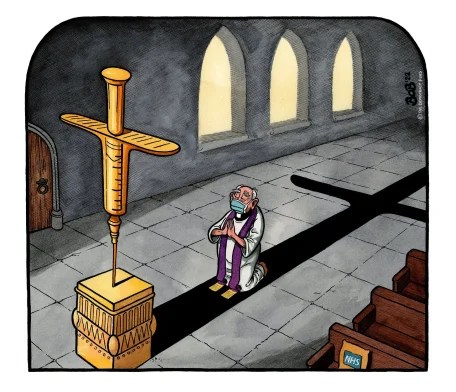
Nothing screams ‘cult’ more than a building being lit up in corporate colours to celebrate a product launch.
Further evidence of the big pharma brainwashing can be seen with the Empire State Building turning Pfizer blue in celebration of the CDC recommending that everyone, from 6 months of age and older, can get this season’s updated Covid shot.
They then sponsored news articles to tell everyone that Covid is here again but that Pfizer is here to save us.
Seems like COVID’s everywhere again. But here’s good news from Pfizer!
This season’s updated COVID-19 shots are now available for ages 6 months and up, and they’re designed to help protect against recent variants.
That is why today, at 8pm, the Empire State Building turned its iconic building blue to announce that the CDC recommends everyone 6 months of age and older get this season’s updated COVID-19 shot. The blue light symbolizes our gratitude and appreciation for the updated vaccines and all those who made it possible.
COVID-19 isn’t gone, and vaccination remains one of our best tools to help protect against the virus that causes the disease. Ask your doctor or pharmacist about this season’s updated COVID-19 shots. Learn more and schedule at the CDC’s website, vaccines.gov.
Sponsored by Pfizer.
In almost religious like devotion, Pfizer wants your gratitude and appreciation for the updated vaccines. Because billions of dollars just isn’t enough anymore, they also want your adoration and eventually your soul.
We have got to the point now where everyone knows Covid is mild for most and that the vaccines don’t do anything. But there is a significant percentage of the population who are still in denial and convince themselves that the jabs work, save lives and make them morally superior.
Bobs Cartoons summed it up nicely with this image.
September 18, 2023
Posted by aletho |
Science and Pseudo-Science, Timeless or most popular, War Crimes | CDC, Covid-19, COVID-19 Vaccine, United States |
Leave a comment
After shunning COVID vaccines during the early pandemic response, Tanzania became a natural experiment for all-cause mortality rates. Compared to large U.S. states like Texas and California, Tanzania, with one of the lowest COVID vaccination rates in the world, succeeded in having one of the lowest all-cause mortality rates on earth, through the worst of the pandemic.
The Highwire with Del Bigtree | September 14, 2023
Citing a public health emergency, New Mexico governor Michelle Grisham revoked the 2nd amendment rights of residents of her state this week. After citing that constitutional rights and oaths taken by public officials were not “absolute”, she was quickly condemned by some of the highest officials in the state.
September 18, 2023
Posted by aletho |
Civil Liberties, Science and Pseudo-Science, Video, War Crimes | Africa, Covid-19, COVID-19 Vaccine, United States |
Leave a comment
“I’m afraid we cannot hide from the reality that this is a global coup and deliberate mass murder.”
A message written to a trusted campaigning friend, who is struggling to accept that what is happening is intentional.
It is indeed a big step to go from legitimate criticism of allegedly incompetent politicians and industrialists to putting the pieces together in such a way that they can only point to intentionality. See what you think.
***
Dear X,
I find it impossible to try to put all the information together in such a way that the whole thing could even be benign or at least not entirely malignant.
That’s because, as I’m sure you’ve heard me say, I believe it’s evil!
I also had difficulty with it early on, with the argument “they must have known this!?”, etc. Once I allowed the possibility that all the bad things were intentional, I found everything else fell into place. Of course, that alone doesn’t prove it was intentional.
Some early indications of deliberateness are the coordinated responses of dozens of governments to the alleged pandemic: lockdowns, masking, mass testing of the source, the misapplication of PCR-based techniques to bulk testing of clinical samples, selective closures of businesses and schools, border restrictions, etc.
No country had any of this as a core part of its own pandemic preparedness plan.
Even the WHO’s scientific review of NPIs (non-pharmaceutical interventions) concluded that none worked and that the only changes worth anything were asking people with symptoms to stay home until they recovered and increasing the frequency of washing hands (because the route of transmission would initially be uncertain).
I argued at the time that the only way all countries could have adopted all these useless but harmful and expensive NPIs was if there was supranational coordination. I don’t know whether that was from the WHO, WEF, etc. Don’t know. But it is certainly illegal.
We now know that they knew that imposing these restrictions would not save anyone, but that the negative consequences would be devastating, even fatal, for some, who would no longer have access to the medical care they needed. Moreover, the use of furlough would of course be enormously damaging for governments that were already deeply in debt.
This is why millions still believe the absurd COVID lies.
I note that an American term, furlough, is widespread in public debate. In Britain we have never used that term before. No one commented on its arrival, which betrayed the leading role of the Americans.
Then there is the imposition of radically changed medical protocols.
Because of my long exposure to respiratory matters, I knew right away when they started panicking about needing 30,000 mechanical ventilators that something truly diabolical was going on. It is never appropriate to anesthetize, intubate, and ventilate a patient with an unobstructed airway and an intact chest wall.
Mechanical ventilation is certainly a wonderful, life-saving tool, but it carries serious risks for the vulnerable patient, in the form of ventilator-induced pneumonia, lung injury from the use of pressure to inflate the lungs, and much more.
The correct treatment would consist of an oxygen mask, a single, low dose of benzo, a cup of tea and a biscuit, and a caring hand on an arm.
Also in the US, many in this vulnerable condition received remdesivir and not full intravenous nutrition. In most cases it was only a matter of time before they died.
High doses of midazolam (a benzodiazepine) and morphine were used indiscriminately in nursing homes. Not only high doses, but also administered repeatedly to their elderly patients. The highest medical authorities in the country had told them to do this and so few questioned it.
My Ph.D. happened to be in this area, the effect of opiates on respiratory function. The discovery of multiple opiate receptors raised the possibility of inventing receptor-selective ligands that would relieve pain with reduced respiratory depression. Unfortunately, both are primarily mediated by mu opiate receptors, both centrally and in the periphery.
The combination of opiate agonists and benzodiazepines is contraindicated in patients unless closely monitored (for signs of respiratory depression).
That is not the case and is not possible in a nursing home. They too were murdered en masse.
Finally, community GPs were warned not to prescribe antibiotics in cases of Covid “because antibiotics cannot treat viral diseases”.
It is well known that what is commonly called a secondary bacterial infection results in death in this situation. However, the data shows that antibiotic prescribing for suspected bacterial infections of the lungs fell by 50% and large numbers of people died avoidable deaths (and a rather gruesome ones at that).
It is not possible to look at all this evidence without concluding that this was intentional. What they have done is literally diabolical.
I’m still confused as to how it was done with so little opposition. I do know that from the late 1990s to the end of 2019, a series of simulations of global pandemics and bioterrorism scenarios were carried out, allowing the perpetrators to hone their skills in the responses and control measures imposed.
I believe some of these simulations were conducted in the field so that the emergency response teams could form and practice what most of them felt was appropriate given the fictional setup, although this is speculative.
Then we come to the “vaccines”.
Given my career in the pharmaceutical and biotechnology industry, I knew that it was impossible to produce a vaccine in less than 5-6 years if one wanted to demonstrate clinical safety and improve production to the usual high quality required to to create a precisely defined end product.
If the latter is not done, there is no point in doing the former, because what would otherwise be injected would not be what was used in the clinical tests.
In other words, if there was a need for a new vaccine, you would never even consider implementing such a program, because no pandemic in history has lasted even a fraction of the minimum time it takes for a safe and to create an effective new vaccine.
Yet they continued with it. This is also malicious, let alone the extraordinary lying, censoring and slandering of those who think differently.
Since my entire career has been based on the principles of “rational drug design” to design and test molecules, I could put myself in the shoes of the vaccine designers.
There are several obvious safety issues built into these products. One of these is the axiomatic induction of “autoimmune” responses, regardless of which antigen is chosen.
Next was the choice of antigen, where no one would choose the spike protein as it would most likely be directly toxic, it is subject to the fastest mutation (so a vaccine could lose its efficacy) and it is also the least different from human proteins (and thus could provoke bystander attacks on even somewhat similar self-proteins).
Yet the four protagonists all chose this antigen. What a coincidence! I would have called on my colleagues in the other companies to make sure we didn’t do that. This is because it would be highly undesirable to have common risks for all programs.
When formulated, the mRNA-based products both chose LNPs (highly toxic lipid nanoparticles) to encapsulate their message. Yet the industry knew that not only do these travel throughout the body, including the brain, but they also accumulate in the ovaries.
Yet, knowing this, companies and regulators went ahead and others exacerbated the toxicity risk by recommending these injections in pregnant women and children.
I was still slow to piece together all this evidence of carefully crafted damage. But I got there eventually and have been speaking in what many consider extreme terms ever since.
I fear we cannot hide from the reality that this is a global coup and deliberate mass murder.
Worse still, we see the advance of surveillance technology and legal powers to introduce digital ID & CBDC and eradicate cash. It is not difficult to imagine scenarios where showing a digital ID becomes mandatory.
All it takes is for the WHO to make up fake pandemics, for the pharmaceutical industry to produce billions of doses of fake mRNA-based vaccines, and for governments to insist that digital IDs only remain valid if you take these harmful injections, and there will be a near-perfect unacceptable means of depopulation.
They can do other things, too, but I think they’ll try this. We must continue to raise our voices and try to wake people up.
It only takes a large minority to say NO & these diabolical plans fail.
With best wishes,
Mike
September 17, 2023
Posted by aletho |
Timeless or most popular, War Crimes | Covid-19, COVID-19 Vaccine, Human rights |
Leave a comment
On September 20th our representatives meeting at the United Nations (UN) will sign off on a ‘Declaration’ titled: “Political Declaration of the United Nations General Assembly High-level Meeting on Pandemic Prevention, Preparedness and Response.”
This was announced as a ‘silence procedure,’ meaning that States not responding will be deemed supporters of the text. The document expresses a new policy pathway for managing populations when the World Health Organization (WHO), the health arm of the UN, declares a future viral variant to be a ‘public health emergency of international concern.’
The WHO noted in 2019 that pandemics are rare, and insignificant in terms of overall mortality over the last century. Since then, it decided that the 2019 old-normal population were simply oblivious to impending annihilation. The WHO and the entire UN system now consider pandemics an existential and imminent threat. This matters, because:
- They are asking for far more money than is spent on any other international health program (your money),
- This will deliver great wealth to some people who now work closely with the WHO and the UN,
- The powers being sought from your government will reimpose the very responses that have just caused the largest growth in poverty and disease in our lifetimes, and
- Logically, pandemics will only become more frequent if someone intends to make them so (so we should wonder what is going on).
Staff who drafted this Declaration did so because it is their job. They were paid to write a text that is clearly contradictory, sometimes fallacious, and often quite meaningless. They are part of a rapidly growing industry, and the Declaration is intended to justify this growth and the centralization of power that goes with it. The document will almost certainly be agreed by your governments because, frankly, this is where the momentum and money are.
Whilst the Declaration’s thirteen pages are all over the place in terms of reality and farce, they are not atypical of recent UN output. People are trained to use trigger words, slogans, and propaganda themes (e.g., “equity,” “empowerment of all women and girls,” “access to education,” “technology transfer hubs”) that no one could oppose without risking being labeled a denier, far-right, or colonialist.
The Declaration should be read in the context of what these institutions, and their staff, have just done. It is difficult to summarize such a compendium of right-speak intended to veil reality, but it is hoped this short summary will prompt some thought. Wickedness is not a mistake but an intended deception, so we need to distinguish these clearly.
Doing Darkness Behind a Veil of Light
Put together, the following two extracts summarize the internal contradiction of the Declaration’s agenda and its staggering shamelessness and lack of empathy:
“In this regard, we:
PP3: Recognize also the need to tackle health inequities and inequalities, within and among countries, …
PP5: “Recognize that the illness, death, socio-economic disruption and devastation caused by the COVID-19 pandemic, …”
‘Recognition’ of devastation is important. SARS-COV-2 was associated with mortality predominantly within wealthy countries, where the median age of Covid-associated death was between 75 and 85 years. Nearly all of these people had significant comorbidities such as obesity and diabetes, meaning their life expectancy was already restricted. People contributing significantly to economic health were at very low risk, a profile known in early 2020.
These three years of socio-economic devastation must, therefore, be overwhelmingly due to the response. The virus did not starve people, as the Declaration’s writers would like us to believe. Deteriorating disease control was predicted by the WHO and others in early 2020, increasing malaria, tuberculosis, HIV/AIDS, and malnutrition. Economic disruption in low-income countries specifically results in more infant and child deaths.
In Western countries, adult mortality has risen as expected when screening for cancer and heart disease are reduced and poverty and stress increase. Knowing this, the WHO advised in late 2019 to ”not under any circumstances” impose the lockdown-like measures for pandemic influenza. In early 2020, under the influence of their sponsors, they advocated for them for Covid-19. The Declaration, however, carries no note of contrition or repentance.
Undeterred by incongruity, the Declaration goes on to describe Covid-19 as “one of the greatest challenges” in UN history (PP6), noting that somehow this outbreak resulted in “exacerbation of poverty in all its forms and dimensions, including extreme poverty…”. In fact, it acknowledges that this caused:
“… (a) negative impact on equity, human and economic development across all spheres of society, as well as on global humanitarian needs, gender equality and the empowerment of all women and girls, the enjoyment of human rights, livelihoods, food security and nutrition, education, its disruption to economies, supply chains, trade, societies and the environment, within and among countries, which is reversing hard-won development gains and hampering progress…” (PP6)
To restate the obvious, this does not happen due to a virus targeting sick elderly people. It occurs when children and productive adults are barred from school, work, healthcare, and participation in markets for goods and services. Economic, social, and health catastrophe inevitably results, disproportionately harming poorer people and low-income countries, conveniently far indeed from the halls of Geneva and New York.
No, we were not all in this together.
Not all were negatively impacted by this catastrophe. People and corporations who sponsor much of the WHO’s health emergency work, and that of its sister organizations such as CEPI, Gavi, and Unitaid, did very well from the policies they advocated so strongly for. Software and Pharma companies made unprecedently high profits, while this mass impoverishment played out. The international agencies have also gained; construction and recruitment are strong in Geneva. Philanthro-capitalism is good for some.
The main aim of the Declaration is to back the proposed WHO international health regulation (IHR) amendments and treaty (PP26), key to ensuring that viral outbreaks that have such a small impact can remain highly profitable. An additional $10 billion per year in new financing is requested to support this (PP29). There is a reason why most countries have laws against scams. The UN and its agencies, fortunately for its staff, are outside of any national jurisdiction.
Based on their sponsors’ assessments, the staff of these agencies are doing their job well. For the rest of humanity, their work is an unmitigated disaster. In 2019 they said never lock down, then spent 2020 defending top-down lockdowns and mandates. For three years, they theatrically pretended that decades of knowledge on immunity, disease burden, and the association of poverty with mortality did not exist.
Now they write this UN Declaration to fund their industry further through taxpayers they so recently impoverished. Once tasked to serve the world’s vast populations, particularly the poor and vulnerable, the UN vision has been consumed by public-private partnerships, the allure of Davos, and a fascination with high-net-worth individuals.
When Words are Used to Obscure Actions
While the Declaration underlines the importance of educating children during pandemics (PP23), these same organizations backed school closures for hundreds of millions of children at minimal risk from Covid-19. Among them, several million more girls are now being farmed off to nightly rape as child brides, others in child labor. Women and girls were disproportionately removed from education and from employment. They weren’t asked if they supported these policies!
The girls are being raped because the people paid to implement these policies did so. They know the contradiction, and the harm. But this is a job like many others. The only unusual aspects, from a business standpoint, are the sheer amorality and lack of empathy that must be engaged to excel in it.
To justify wrecking African children’s lives, the UN claims that the continent has “over 100 major public health emergencies annually” (OP4). Africa has a rising burden of endemic diseases that dwarfs mortality from such outbreaks – over half a million children die every year from malaria (increased through the Covid-19 lockdowns) and similar burdens from tuberculosis and HIV. By contrast, total Covid-19 deaths recorded in Africa over the past 3 years are just 256,000. The 2015 West African Ebola outbreak, the largest such recent emergency pre-Covid, killed 11,300 people. MERS and SARS1 killed less than 1,000 each globally. However, induced poverty does cause famine, raises child mortality, and wrecks health systems – is this the health emergency that the UN is referring to? Or are they simply making things up?
Through the IHR amendments, these agencies will coordinate the locking down, border closures, mandated medical examinations, and vaccination of you and your family. Their Pharma sponsors reasonably expect to make several hundred billion more dollars from these actions, so we can be confident that emergencies will be declared. By claiming 100 such events annually in Africa alone, they are signaling how these new powers will be used. We are to believe the world is such that only the abandonment of our rights and sovereignty, for the enrichment of others, can save us.
The UN and the WHO do recognize that some will question this illogic. In PP35, they characterize such skepticism as:
“health-related misinformation, disinformation, hate speech and stigmatization.”
The WHO recently publicly characterized people who discuss adverse effects of Covid vaccines and question WHO policies as “far-right,” “anti-science aggressors,” and “a killing force.” This is unhinged. It is the denigration and hate speech that fascist regimes use. The reader must decide whether such an organization should control their freedom of expression and decide what constitutes truth.
It is not helpful here to give details of all 13 pages of right-speak, contradiction, and fallacy. You will find similar rhetoric in other UN and WHO documents, particularly on pandemic preparedness. Straight talk is contrary to business requirements. However, the first paragraph in the Declaration’s ‘Call to Action’ sets the tone:
“We therefore commit to scale up our efforts to strengthen pandemic prevention, preparedness and response and further implement the following actions and express our strong resolve to:
OP1. Strengthen regional and international cooperation, multilateralism, global solidarity, coordination and governance at the highest political levels and across all relevant sectors, with the determination to overcome inequities and ensure the sustainable, affordable, fair, equitable, effective, efficient and timely access to medical countermeasures including vaccines, diagnostics, therapeutics and other health products to ensure high-level attention through a multisectoral approach to prevent, prepare for and respond to pandemics and other health emergencies, particularly in developing countries;”
There are 48 more. You paid taxes so that someone could write that!
Those millions of girls suffering at night, the hundreds of millions of children who had their futures stolen, the mothers of those malaria-killed children, and all suffering under the increasing burden of poverty and inequality unleashed by this farce are watching. The Declaration, like the WHO IHR and treaty it supports, awaits the signatures of the governments that purport to represent us.
David Bell, Senior Scholar at Brownstone Institute, is a public health physician and biotech consultant in global health. He is a former medical officer and scientist at the World Health Organization (WHO), Programme Head for malaria and febrile diseases at the Foundation for Innovative New Diagnostics (FIND) in Geneva, Switzerland, and Director of Global Health Technologies at Intellectual Ventures Global Good Fund in Bellevue, WA, USA.
September 16, 2023
Posted by aletho |
Civil Liberties, Corruption, Deception, Economics, Full Spectrum Dominance | Covid-19, COVID-19 Vaccine, Human rights, United Nations, WHO |
Leave a comment