Our latest polls show twice as many people died from the vaccine as from COVID
These are third party polls. We don’t control the recipients. The people making the assessments of vaccine deaths are almost all people who took the shot.
By Steve Kirsch | July 3, 2022
Here are the last two external polls we ran:
Both show that the vaccine killed nearly twice as many people as COVID did.
The survey recipients are a broad cross-section of America and were selected by Pollfish.
For the Jun 30 poll, the numbers were 45 killed by the vaccine [Q16] vs. 23 killed by the COVID virus [Q18] and for the Jul 2 poll, the numbers were 38 [Q22] and 18 [Q24], respectively.
If the vaccines are safe and effective, how can they explain these poll results? This is objective poll data of the American people.
These are great polls to run past your blue-pill friends and have them explain it to you since they are the expert and you don’t know anything.
I predict silence from the medical community, the mainstream media, Congress, and the government agencies. Not even 60 Minutes is going to touch this data with a ten foot pole. Nobody will. They will just ignore it just as they have for my earlier polls.
Next step for us: run it against 5,000 people.
Warning: many people will die because of these COVID injections, many healthy children WILL die due to these shots…
“FDA, CDC, NIH, Moderna, & Pfizer secretly told me this”
By Dr. Paul Alexander | June 30, 2022
They said, follow the $CIENCE. Fauci said he is the $CIENCE.
I have been trying to warn. I have written on this here in stack. I try again.
Everything you have been told by government, by CDC, by NIH, by Fauci, by Birx, by Bourla, by Pfizer, by all your government officials, were lies, distortions, exaggerations, meant to mislead you. All pure lies on everything about lockdowns and these failed COVID gene injections. All, every single part was a lie. A deception. This entire COVID pandemic, was a lie! Yes, we had an emergency, but everything done to us the last over 2 years was a fraud hoax, a lie. Every single COVID policy failed. Canada, US, UK, everywhere.
The entire lockdown lunacy failed! All school closures failed, just killed children. Everything was a lie! They knew it would never work but knew one thing, that you as people, as the population, crazily thought, that they as health officials and medical doctors, wanted to do good by them and they could ‘trust’ you. You would do them no harm.
Little did they know. Little did we know the corruptible malfeasants we were dealing with. I include many medical doctors in this.
Trump was right when he early on said it was hoax. He did not mean the virus was a fraud or hoax. He meant the repose. The response was, and he saw what the deepstate and media, and CDC and NIH and Fauci and Birx were doing to him. But he could not stop them. He could, he could have, but he was weak. He then did the unthinkable. He allowed Fauci and Birx to lead a crazy lockdown lunatic policy that harmed and killed thousands of Americans. None of it worked! Not one!
You will come to learn, that 2.5 years of your life was taken away, for a lie! A greed, power drunk lie! By sick malfeasant people. Their motives. That must all be investigated and if it is shown they did this deliberately and caused deaths, we jail them all! Yes, 2.5 years lost to these malfeasants. The COVID injection is a failed ineffective dangerous injection.
I am no anti-vaxxer, but I am against these injections.
I was told by these officials (FDA, CDC, NIH, Moderna, & Pfizer), in confidential secret discussions, that in about 6 to 6.5 years from roll-out, in those who take the injections, they feared mass auto-immune disease and deaths, they feared viral immune escape and very problematic variants, and they anticipated constant deaths from the injections but a major number of deaths to emerge. I could not even understand exactly what they did for it was so haphazard, but these were officials. And they wanted to talk to me. To tell me ‘their truths’.
They said based on all they knew, that the COVID injections could never work, especially the mRNA platform. It never worked in the animal model and was pathological. They told me that in about 6 to 6.5 years, there will be a surge in deaths in persons who take the injections (then about 1 year ago). This was their projection. They advised me they nor their families will never (especially their children) take any of the COVID injections.
The key is the injection works for some people and I argue we do not know how long and what the effects are and this is what I was told. But you understand that too. You cannot take a 15 year process and boil it down to a few months and declare it is safe. They were never safety tested to exclude harms and deaths longer term. We do not know exactly what is coming. But it certainly does not work for a whole bunch of people. Look around, you know people who have been harmed by these injections and died. Do you not? Something is very wrong with these injections. Very wrong and they just will not stop.
I am being open with you to inform you. I am sick and tired, years now, of the lies and fraud and disaster put out by the media, the alphabet health agencies etc. You trusted your public health officials, you think ‘they care about you’, well, they never cared about you, your family, or the truth. It is to them about the $CIENCE.
I think I shared prior that my office was on the 6th floor of the HHS building in DC, Operation warp speed and Moderna were stationed on the 7th floor. FDA, CDC etc. have sub-satellite offices at HHS. At least when I was there and Hahn, Redfield etc. came there daily after congress or White House to see their staff, various persons, persons in various offices.
These people I talked with, came to me out of anger and fear too, they knew who I was and wanted to tell me their stories and how worried they were for the population, and fearful for their lives and own careers as to the COVID injections (and other issues). If they spoke out openly so had to talk secretly.
They were very very dismayed and angered and worried as to why the agencies they worked for e.g. FDA and NIH and CDC etc. and the pharmaceuticals were not properly regulating and conducting the proper safety studies, proper durations of follow-up. They felt the COVID injection program was a pure disaster and should be stopped back then. This is 6 months or so before roll-out. They felt no healthy children should ever be given the very injections they were working on. They were that concerned.
I want to be clear again, based on all I know today, based on what I was told, many many children will die due to these injections. Healthy children will die, not ‘if’, but ‘will die. Healthy children, healthy people, normal people never needed and do not need these injections. I have told you before that (strong research and scholarship by Geert) we will be in a pandemic for 100 years if we continue these injections. It is the COVID injection itself that is driving the variants and these CDC, NIH, Moderna, and Pfizer officials are malfeasants IMO who are continuing this. There is no sound justification. These malfeasants know that they are vaccinating with the Wuhan strain (legacy strain) that has been gone many months now and omicron dominates. The vaccinal antibodies are to the original Wuhan strain and will not hit the omicron spike antigen (original antigenic sin (OAS)).
It is the COVID injection (and consequent non-neutralizing antibodies pressuring the spike antigen) that is causing the vaccinated to become infected, hospitalized, and die. The data is clear. Massive antibody-dependent enhancement, some refer to this as antibody mediated viral enhancement. Some pathogenic priming. All IMO the very same. The recall antibodies are to something that does not exist today. The key is to reduce viral pressure, infectious pressure on the population, so that the sub-optimal injections have less virus to put under pressure. We have effective chemoprophylaxis, we can do this. We have early treatment. This can worked effectively and this can thus help reduce viral transmission. At the same time, the best step is to stop these filed injections.
I want all of these people investigated in proper public and legal inquiries, and if it is shown they did wrong, in proper inquiries, I want them arrested. I want all who made policy decisions that costed lives, to be jailed! All their monies taken!
Dr. Rogers looked at the FDA June 28th meeting and his takeaway is bang on and what we have been saying here for near a year now here:
‘‘Yesterday, the FDA’s Vaccines and Related Biological Products Advisory Committee approved a bivalent Covid-19 shot with the Wuhan strain and the Omicron variant.
The vote was:
19 yes.
2 no.
A few thoughts:
The Wuhan strain is no longer in circulation. So they are vaccinating against a strain that no longer exists.
The Omicron variant that they are going to put into this shot is Omicron BA.4/BA.5:
1. By the time it gets to market in the fall, Omicron BA.4/BA.5 will likely no longer be in circulation.
2. There is no efficacy data whatsoever on vaccines against Omicron BA.4/5.
3. There is no safety data whatsoever on vaccines against Omicron BA.4/5.
4. They do not intend to gather any efficacy or safety data between now and when these shots will be released in the fall:
At the meeting, the manufacturers (Moderna, Pfizer, and Novavax) were asked what their production timelines are… and they said out loud, “So long as we don’t have to provide any clinical data, we’ll have them ready by fall.”
Dr. Rogers is a smart guy.
His work:
Meryl Nass’ personal tale of how she got here
By Meryl Nass, MD | July 3, 2022
 Several people have asked me to discuss my own path to understanding the pandemic psyop. I don’t think describing my path will help others, but because I am a stickler for transparency, I will give a quick take on how I got where I am today.
The short story is that, as someone with a long history in biowarfare and pandemics, I studied this pandemic intensively beginning in early February 2020. By end February I was aware that China was using the chloroquine drugs in multiple clinical trials. I soon became aware of Didier Raoult’s work in France using hydroxychloroquine and azithromycin for COVID. As I had used these drugs quite a lot in patients, and had treated myself with chloroquine as preventive and treatment for malaria, I knew they were relatively safe and ought to be trialed here. I mentioned chloroquine on my blog on March 2, 2020.
When my son came down with COVID in early March I insisted he use it and he made a rapid recovery. So I aggressively studied the use of chloroquine drugs for COVID, and the evidence of benefit quickly became overwhelming.
But by the end of March the FDA had issued an EUA for the chloroquine drugs, in order to confuse prescribers and place restrictions on its use. This was immediately followed by similar acts by the states, most of which placed a variety of different restrictions on the drugs’ use for COVID.
If you look back at my blog, you will see that by end May I had deduced that something very coordinated and very evil was happening in the developed world to prevent patients receiving early, appropriate treatment. I realized a war was being waged under the guise of public health.
Before all this, I had traveled widely, in Africa and Asia, and had learned that much of what the media tell us is simply untrue. I had been a Democrat and had become astounded at what the party had become. I had seen Obama voice beautiful thoughts but he always made decisions that favored big business.
I had seen various social movements co-opted by the most venal and inhumane politicians. I had recognized that identify politics was a cover for the takeover of society by the richest capitalists.
I had seen many of the basic tenets of medicine brushed aside without a second thought or an informed consent, for example, putting patients’ medical records online, to be sold to Google and other big data companies.
I knew that what the country supposedly stood for was being flushed down the toilet even before the pandemic, so it was perhaps not such a stretch to see that big gov and big business were waging war on the world.
I can believe that they had robbed the piggy bank for so long, things would have crashed had they not imposed the lockdowns as a “time out.” It makes sense to me that the pandemic was a deliberate response to failing financial markets, which had been prepared for decades. I believe climate change is the linchpin by which the fraud has been sold to practically the entire younger generation–its corollary being that there are too many people on the planet. And the well meaning kids are hoodwinked into believing it.
What I cannot tell you is why the people pulling the strings have settled for such a dystopian vision of the future, relying on hopes of AI to manage things, when AI has so far never lived up to its promises.
OTOH, if they all have personalities that mirror Bill Gates, maybe a lack of human warmth and empathy are sufficient to explain it.
I can also tell you that if a universal basic income gets installed, there will be those at the top who consider the beneficiaries of UBI to be ‘useless eaters’– and I guarantee those on UBI won’t be encouraged to play or wax creative all day long. Those who wanted to kill us with COVID are unlikely to nourish and appreciate the talents of the poor.
I can also predict that extending the lives of old bodies will not work out so well for those seeking it. But I guess they need to pretend they can live forever, since it won’t be pleasant when they finally meet their maker.
That is my story in a nutshell.
The Insufferable Arrogance of the Constantly Wrong
BY CLAYTON FOX | BROWNSTONE INSTITUTE | JUNE 30, 2022
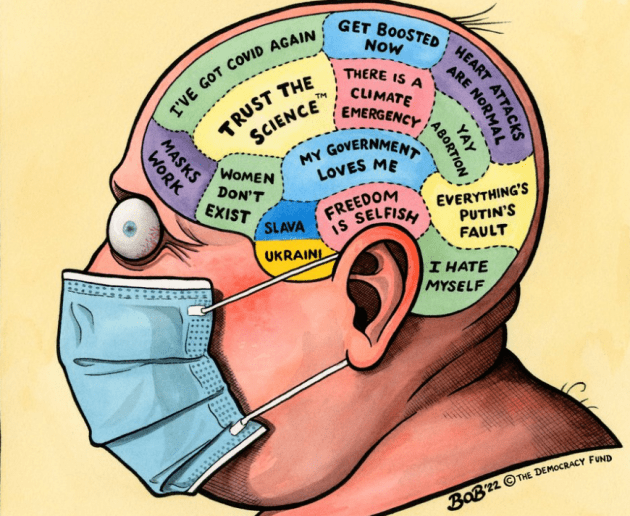
The media, and the people who work in and around it, the Blue Checks™ of Twitter, have upped the ante over the past few years regarding how far they are willing to go to enforce various preferred narratives.
Pick any major story of the past three years—e.g. Lab Leak, Jussie Smollett, Russiagate, Ukrainian Biolabs, Ivermectin, Hospitalizations From COVID v. With Covid, January 6th, ‘Transitory’ Inflation, and of course Hunter’s Laptop—and you will find absolutely hysterical narrative pushing up front followed by retractions, corrections, and outright denials as reality became undeniable.
In the meanwhile, our civilization was ripped apart, our citizens were gaslit and impoverished, and in countries across the Western world, innocent people were removed from polite society, branded as lepers, and fired from their jobs.
Why? Because there is one story that just won’t die and for which no corrections have been issued—the shibboleth that vaccination can prevent infection, transmission, and help “end” COVID.
While there is never an excuse for hateful rhetoric towards, and intervention in, the personal medical choices of law-abiding Americans, perhaps one could have, kinda sorta, understood the campaign if the new vaccines had provided long-lasting immunity and prevented community transmission. They do not.
Early on we were told: “Nine out of ten [vaccinated] people won’t get sick” (Columbia University feat. Run-DMC, February 12th, 2021, no this is not a joke); “Vaccinated people do not carry the virus, don`t get sick” (Dr. Rochelle Walensky, March 29th, 2021); “When people are vaccinated, they can feel safe that they are not going to get infected” (Dr. Anthony Fauci, May 17th, 2021).
And by mid-summer, 2021, we were still being told that unequivocally, these vaccines were a resounding success worthy of uncritical support. On July 27th in Scientific American, Dr. Eric Topol wrote, “Vaccination is the closest thing to a sure thing we have in this pandemic.” Not to be outdone, Dr. Anthony Fauci of the NIAID told CBS on August 1st, that the unvaccinated were responsible for “propagating this outbreak.”
But on July 29th, 2021, the Washington Post reported a scoop that the CDC was privately acknowledging that the vaccinated could spread COVID as easily as the unvaccinated. Occasionally, they are forced to report inconvenient facts. And August 5th, CDC Director Walensky told CNN’s Wolf Blitzer that, “They continue to work well for Delta, with regard to severe illness and death — they prevent it. But what they can’t do anymore is prevent transmission.”
While there is a mountain of medical literature available demonstrating quite clearly the failure of these vaccines to prevent infection and transmission, the August 5th declaration from the CDC Director should have made clear that being vaccinated is contributing in no way to the safety of others, nor to the eradication of this virus.
In fact, Israeli Health Minister Nitzan Horowitz was even caught on tape in September of last year explaining that the use of the Israeli Green Pass wasn’t intended to make a difference epidemiologically, but because it would help convince people to get vaccinated. And even vaccine poobah Bill Gates admitted in a late 2021 interview, that, “We got vaccines to help you with your health, but they only slightly reduce the transmissions.”
So there should be no question that continuing to suggest in any way that these shots are a panacea, and that those who refused to get them were plague spreaders, should have been thoroughly trashed by Fall 2021.
Nonetheless, on September 24th President Joe Biden coined his now famous phrase “a pandemic of the unvaccinated.” To our north, Prime Minister Trudeau called the unvaccinated science deniers, misogynists, and racists, and asked rhetorically whether Canadians should “tolerate” them.
And during the first week of January 2022, while kicking the unvaccinated out of French daily life and public spaces, French President Emmanuel Macron said he wanted the measures to “piss off” his unvaccinated citizens. With world leaders speaking this way, it’s no wonder so many Blue Check™ elites took up the banner!
Prominent media figures like Amy Siskind, Pulitzer Prize winner Gene Weingarten, and more have come out of the woodwork in recent months to share with us their enthusiasm for medical discrimination. Noted neurotic Howard Stern is all in on forced vaccination due to what must be his own debilitating fear of his mortality. Bill Kristol says the unvaccinated have “blood on their hands.”
David Frum, heir to Maimonides, writes, “Let the hospitals quietly triage emergency care to serve the unvaccinated last.” Charles M. Blow was “furious” at the unvaccinated. CNN contributor Dr. Leana Wen suggested that the unvaccinated should not be allowed to leave their homes. The Ragin’ Cajun even wants to punch the unvaccinated in the face!
All of the above links/stories were posted after Dr. Walensky’s unequivocal announcement that the vaccines do not prevent transmission.
And all of the self-satisfied segregationists are supported in their vitriol by the Blue Checks™ of the Medical Establishment, like Dr. Paul Klotman, President and Executive Dean of the Baylor School of Medicine, who said on camera back in January that he isn’t polite to friends and family who aren’t vaccinated. “Keep them away. I don’t do it respectfully, I tell them to stay away, and teach them a lesson.” Less vitriolic but equally problematic, the WHO’s COVID-19 “technical lead” Dr. Maria Van Kerkhove continued to push the lie that vaccination can prevent outbreaks as recently as January 26th, 2022. She is, as well, a Blue Check™. And yes, Dr. Anthony Fauci is still at it, even as of April 14th, 2022, telling MSNBC that harsh Chinese lockdowns could be used to get the population vaccinated so that “When you open up, you won’t have a surge of infections.”
The examples are legion. Blue Checks, Medical Blue Checks, Times Columnists, Radio Jocks, Presidents, and Prime Ministers have all espoused misinformation and/or hate speech regarding vaccination status. But they are all given intellectual cover by the official reporting of the fourth estate. Even in the face of all the evidence that there is no epidemiological basis for discrimination, our intellectual betters in the legacy media press onward the canard.
On August 26th, the Toronto Star ran an article entitled, “When it comes to empathy for the unvaccinated, many of us aren’t feeling it.” Then, on December 22nd, published an explainer which stated that two doses won’t stop you from spreading COVID-19. Comme ci, comme ca.
Back in February, MSNBC political contributor Matthew Dowd shared his insight that the unvaccinated do not believe in the United States Constitution, because if they did, they would get vaccinated for “We The People.” For the common good.
An examination of the New York Times reveals three articles written this year which overtly continue supporting the idea that the vaccines prevent transmission. First, on January 29th in a piece entitled, “As Covid Shots For Kids Stall, Appeals Are Aimed At Wary Parents,” the author cites “public health officials” who say that to aid in “containing” the pandemic, kids must also be vaccinated. (It is worth mentioning that the current vaccines and boosters being distributed were designed in February 2020 to provide an immune response to a version of the SARS-CoV-2 spike protein circulating prior to that, not entirely similar to what is circulating now.)
Then February 23rd, in a hit piece on the Surgeon General of Florida Dr. Joe Ladapo, the Times writes, “When public health officials across the country were urging vaccines as a way to end the pandemic, Dr. Ladapo was raising warning flags about possible side effects and cautioning that even vaccinated people could spread the virus.”
So, Dr. Ladapo was correct?
Finally, in a piece about Novak Djokovic published March 3rd, they write, “Djokovic was the only player ranked in the top 100 in Australia who had not received a Covid-19 vaccination, which experts have long said will not eradicate the virus unless most of the population receives one.”
They do not address the question of how a vaccine which does not prevent transmission can eradicate a virus. And they won’t. As Israeli Health Minister Horowitz candidly admitted, none of this is about epidemiology.
And even when mainstream media tacitly acknowledges the failures of the vaccines to prevent transmission, they skillfully elide the significance of this fact in order to allow them to continue to scapegoat the unvaccinated. In a dazzling display of sophistry, Time Magazine moved the Overton window in this January 12th, 2022 piece, “These Charts Show That COVID-19 Is Still A Pandemic of the Unvaccinated.”
The author states that due to the rapidly narrowing gap between cases in the vaccinated and unvaccinated, some readers might think that the phrase “pandemic of the unvaccinated” is no longer justifiable. But with the grace of a ballerina, Time goes on to tell us that because the vaccines are still showing efficacy against severe illness, the phrase is still kosher. If an unvaccinated person gets sicker than his vaccinated neighbor who contracted COVID at a fully vaccinated wedding, that unvaccinated person is still the problem!
New York Magazine isn’t lacking in similar gymnastics. On February 16th of this year, Matt Stieb published a piece entitled, “Is Kyrie Irving Going to Get Away With It?” Irving is the Brooklyn Nets player who famously chose not to be vaccinated, and has become a fetish object for the Covidian Left. Stieb acknowledges that Irving’s vaccinated teammates were getting COVID at such high rates that it forced Nets management to allow Irving back to play in away games but still calls the New York City ban on unvaccinated athletes “a rare public health mandate with real teeth.”
Just seven days later on February 23rd, Will Leitch, in the same publication, sighs, “Unfortunately, It’s Time to Let Kyrie Irving Play in New York.” He outlines all the reasons why epidemiologically it makes no sense to prevent athletes like Irving and Novak Djokovic from participating, but says, “It would feel like they got away with all their bullshit.” And also, they are “annoying.”
And this barely concealed hatred for the unvaccinated from media and government and Big Tech—even in the rare moments when writers such as Leitch acknowledge the failure of the vaccines to prevent transmission—has real consequences. People have lost their jobs. People have been arrested for trying to go to a movie theater.
Families got kicked out of restaurants, and patrons either cheered or remained indifferent, which is worse. A teenage boy at an uber-progressive and expensive Chicago prep school committed suicide after being bullied over an incorrect rumor he was unvaccinated. The stench of bad journalism rots people’s basic decency.
A January Rasmussen poll found that, “Fifty-nine percent (59%) of Democratic voters would favor a government policy requiring that citizens remain confined to their homes at all times, except for emergencies, if they refuse to get a COVID-19 vaccine…Forty-five percent (45%) of Democrats would favor governments requiring citizens to temporarily live in designated facilities or locations if they refuse to get a COVID-19 vaccine…”
As well as, “Twenty-nine percent (29%) of Democratic voters would support temporarily removing parents’ custody of their children if parents refuse to take the COVID-19 vaccine.” Unfortunately, these disturbing results are politically lopsided, but it’s no surprise when you consider who the readers of most legacy media platforms are.
The saddest thing is that these media outlets and their flag bearers really think their readers are all morons. The New York Times believes that, in the midst of the Omicron wave as boosted person after boosted person was getting COVID, they could tell you these particular vaccines are still the way to eradicate this thing, and expect you to deny reality and nod your head.
It calls to mind the quote attributed to Solzhenitsyn (or Elena Gorokhova), “The rules are simple: they lie to us, we know they’re lying, they know we know they’re lying, but they keep lying to us, and we keep pretending to believe them.”
We have ceded the better angels of our common cerebrum to people who may not have our best interests at heart, and a sycophantic laptop class who gleefully endorses their diktats and “fact-checks.” Collectively: Sophistry Inc.
Their behavior, endorsed by every single entity which holds power in our society, is destroying us, and has already poisoned us such that there may be no antidote. Yes, first they came for the unvaccinated, but that doesn’t mean they won’t come for you next.
Twitter ‘Silenced’ Physicians Who Posted Truthful Information About COVID, Lawsuit Alleges
By Megan Redshaw | The Defender | June 30, 2022
Three physicians are suing Twitter, alleging the company violated its own terms of service and community standards when it suspended their accounts for posting “truthful statements regarding COVID-19 policy, diagnosis and/or treatment.”
Drs. Robert Malone, Peter McCullough and Bryan Tyson on Monday filed the lawsuit in Superior Court in California, San Francisco County.
The complaint alleges Twitter breached the terms of its contract when it permanently suspended the plaintiffs’ accounts, silenced their voices and failed to provide them with “verified” badges.
Plaintiffs allege Twitter’s actions were a substantial factor in causing them harm, and are asking the judge to order Twitter to reactivate their accounts.
All three doctors are represented by attorneys Bryan M. Garrie and Matthew P. Tyson (no relation to the plaintiff, Bryan Tyson).
Matthew Tyson on May 12, sent a letter to the directors and managing agents of Twitter requesting the company reinstate the accounts of five physicians, including the plaintiffs, and provide them with “verified” badges. Twitter failed to respond.
In the letter, Matthew Tyson acknowledged Twitter is a “private company” and its terms state it can “suspend user accounts for any or no reason.”
“However, Twitter also implemented specific community standards to limit COVID-19 misinformation on the platform, and Twitter was bound to follow those terms,” he added.
According to the complaint, Twitter’s content-moderation terms included removal procedures for ineffective treatments and false diagnostic criteria, and measures for “labeling” information as “misleading.”
Twitter has a “five-strike policy” as part of its COVID-19 misinformation guidelines and community standards.
Twitter’s website states:
“The consequences for violating our COVID-19 misleading information policy depend on the severity and type of the violation and the account’s history of previous violations. In instances where accounts repeatedly violate this policy, we will use a strike system to determine if further enforcement actions should be applied.”
Strike 1 is “no account-level action.” Strike 2 results in a 12-hour account lock. Strike 3 results in another 12-hour account lock. Strike 4 results in a seven-day account lock and five or more strikes lead to permanent suspension.
Plaintiffs claim they relied on Twitter to employ and enforce its terms in good faith and it was foreseeable to Twitter that plaintiffs would rely on the terms the company is obligated to follow.
According to the complaint, a “truthful tweet regarding COVID-19 policy, diagnosis and/or treatment” would not violate Twitter’s terms of service, community standards, content moderation policies or misinformation guidelines.
“None of these physicians posted false or misleading information, nor did they receive five strikes before suspension,” Matthew Tyson stated in his letter to Twitter.
“It’s no accident that Twitter violated its own COVID-19 misinformation guidelines and suspended the accounts of Drs. Zelenko, Malone, Fareed, Tyson and McCullough,” he wrote.
The letter stated:
“Twitter received express and implied threats from government officials to censor certain viewpoints and speakers, lest Twitter face the amendment or revocation of Section 230, or antitrust enforcement. This was a financial decision for Twitter.
“For the sake of profits, it chose to abandon its role as a neutral internet service provider and instead openly and intentionally collude with government to silence lawful speech.”
In an email to The Defender, lead attorney Garrie and co-counsel Matthew Tyson said:
“In this political climate, honesty is a rare commodity, and concerns over new and experimental vaccines and drug therapies and the safety and effectiveness of alternative outpatient treatments should be the subject of full and transparent public debate.
“Drs. Malone, Tyson and McCullough are highly qualified and credentialed physicians and scientists who posted truthful information on Twitter that contradicted the mainstream narrative regarding COVID-19 policy, diagnosis, and treatment.
“They shared fact-based information which furthered an important public interest as people around the world try to decide how to treat themselves and their loved ones for COVID-19. Twitter silenced them.
“Our clients seek to hold Twitter liable not as a Section 230 publisher, but as a counterparty to a contract, as a promisor who has breached the very terms it put in place to moderate tweets. We will hold Twitter accountable in court and prove the truth of our clients’ statements for the world to see.”
Twitter refused to verify physicians’ accounts
In addition to being suspended from Twitter, the company refused to verify the plaintiffs’ accounts even though the accounts met Twitter’s criteria for verification.
To be verified, an account must be “notable and active.”
Twitter defines a notable account to include “activists, organizers, and other influential individuals,” including “prominently recognized individuals.”
According to the complaint, Malone is an “internationally recognized scientist and physician” who completed a fellowship at Harvard Medical School as a global clinical research scholar and was scientifically trained at the University of California and Salk Institute Molecular Biology and Virology laboratories.
Malone is the “original inventor of mRNA vaccination technology, DNA vaccination and multiple non-viral DNA and RNA/mRNA platform delivery technologies,” and has “roughly 100 scientific publications, which have been cited more than 12,000 times.”
He holds an “outstanding” impact factor rating on Google Scholar and sits as a non-voting member on the National Institutes of Health [Accelerating COVID-19 Therapeutic Interventions and Vaccines] committee, which is tasked with managing clinical research for a variety of drug and antibody treatments for COVID-19.
The complaint states Malone used his Twitter account to post truthful statements regarding COVID-19 policy, diagnosis and/or treatment. He received no strikes for his content and he did not violate Twitter’s rules, yet his account was permanently suspended.
McCullough, according to the complaint, is a highly accomplished physician who is the founder and current president of the Cardiorenal Society of America.
He has been “published more than 1,000 times, made presentations on the advancement of medicine across the world and has been an invited lecturer at the New York Academy of Sciences, the National Institutes of Health, U.S. Food and Drug Administration and the European Medicines Agency.”
McCullough has also served on the editorial boards of multiple specialty journals and was a member or chair of data safety monitoring boards of 24 randomized clinical trials.
He was a “leader in the medical response to COVID-19, has more than 30 peer-reviewed publications on the infection, and has commented and testified extensively on COVID19 treatment, including before the U.S. Senate Committee on Homeland Security and Governmental Affairs,” the lawsuit states.
McCullough’s account was suspended, but Twitter allowed him to create a new account that is followed by more than 480,000 people. Yet, he is still unable to receive a “verified” badge.
In a June 28 tweet, McCullough said “trouble is on the horizon for the “common carrier” whose only role is to provide a platform for communications operations,” referring to the lawsuit.
Tyson is a licensed physician with15 years of hospital and emergency medicine experience. He practices with Dr. George Fareed, who also was suspended from Twitter for posting what he claimed was truthful COVID-19 information.
Tyson and Fareed have “gained international recognition for providing successful early treatment to more than 10,000 COVID-19 patients, with zero patient deaths when treatment was started within 7 days,” the complaint states.
Tyson testified in various proceedings about early treatment protocols and co-authored a book about COVID-19.
He also ran as a candidate for the U.S. House of Representatives for California’s 25th Congressional District, yet was not deemed a “notable figure of public interest” regarding COVID-19 policy, diagnosis and/or treatment, which prohibited him from obtaining a “verified” badge on Twitter.
Tyson says he posted only truthful statements about COVID-19 policy, diagnosis and/or treatment with his account, and none of his tweets were classified as a “strike” or violated Twitter’s terms of service.
Like Malone’s, Tyson’s and Fareed’s accounts were permanently suspended.
“In a nutshell, these are five [physicians] of the most knowledgeable and helpful voices in the world regarding COVID-19 treatment,” Matthew Tyson wrote in his letter. “Disturbingly, Twitter silenced all of them.”
Megan Redshaw is a staff attorney for Children’s Health Defense and a reporter for The Defender.
© 2022 Children’s Health Defense, Inc. This work is reproduced and distributed with the permission of Children’s Health Defense, Inc. Want to learn more from Children’s Health Defense? Sign up for free news and updates from Robert F. Kennedy, Jr. and the Children’s Health Defense. Your donation will help to support us in our efforts.
Rockefeller Foundation ‘Reset the Table’ Report Predicted COVID-Related Food Crisis — 2 Years Before It Happened
By Michael Nevradakis, Ph.D. | The Defender | June 30, 2022
Just a few months into the COVID-19 pandemic — and almost two years before global health officials warned of a food shortage crisis — the Rockefeller Foundation issued a report predicting the crisis and offering up solutions, including “shifts to online enrollment, online purchasing of food.”
In a report published July 28, 2020, “Reset the Table: Meeting the Moment to Transform the U.S. Food System,” the foundation described “a hunger and nutrition crisis … unlike any this country has seen in generations.”
The authors blamed the crisis on COVID-19.
The report concluded the crisis would have to be addressed not by strengthening food security for the most vulnerable, but by revamping the entire food system and associated supply chain — in other words, we would need to “reset the table.”
The Rockefeller Foundation called for this food system “reset” less than two months after the World Economic Forum (WEF), on June 3, 2020, revealed its vision for the “Great Reset.”
Some of the contributors to the Rockefeller Foundation report are WEF members; a few of which, along with other proponents of “resetting the table,” also have ties to entities pushing vaccine passports and digital ID schemes.
Rockefeller Foundation: ‘changes to policies, practices, and norms’ are needed
The WEF describes the Rockefeller Foundation as a “science-driven” philanthropic organization that “seeks to inspire and foster large-scale human impact that promotes the well-being of humanity around the world” and which “advances the new frontiers of science, data, policy and innovation to solve global challenges related to health, food, power and economic mobility.”
In the foreword to its 2020 “Reset the Table” report, foundation President Dr. Rajiv J. Shah, who is a former administrator of the U.S. Agency for International Development (USAID), states:
“America faces a hunger and nutrition crisis unlike any this country has seen in generations.
“In many ways, Covid-19 has boiled over long-simmering problems plaguing America’s food system. What began as a public health crisis fueled an economic crisis, leaving 33 percent of families unable to afford the amount or quality of food they want.
“School closures put 30 million students at risk of losing the meals they need to learn and thrive.”
The report did not explain how the Rockefeller Foundation was able to know about this food crisis mere months after the pandemic took hold — especially as the report states it was developed out of “video-conference discussions in May and June 2020.”
The report also didn’t provide any insight into the role pandemic countermeasures such as lockdowns — which the foundation championed along with the WEF — played in contributing to the food crisis.
In its report, the Rockefeller Foundation proposes a series of solutions, derived from “dialogues with over 100 experts and practitioners.”
One recommendation calls for moving away from a “focus on maximizing shareholder returns” to “a more equitable system focused on fair returns and benefits to all stakeholders — building more equitable prosperity throughout the supply chain.”
This may sound like a good idea, until one considers “stakeholders” in this case refers to “stakeholder capitalism” — a concept heavily promoted by the very same large corporations that have been beneficiaries of the shareholder capitalist system.
The WEF also heavily promotes “stakeholder capitalism,” defining it as “a form of capitalism in which companies seek long-term value creation by taking into account the needs of all their stakeholders, and society at large.”
For some context, economic fascism, as personified by the regimes of Nazi Germany and fascist Italy, encompassed government-mandated “partnerships” between business, government and unions organized by a system of regional “economic chambers,” and a philosophy where “the common good comes before the private good.”
It is, of course, unclear how the “needs [of] society at large” are determined — or by who.
The Rockefeller Foundation report declares, “Success will require numerous changes to policies, practices, and norms.”
What does such “success” entail? The report names three main objectives:
- Data collection and digitization: The report calls for “shifts to online enrollment, online purchasing of food, direct farm-to-consumer purchasing, telemedicine, teleconsultations, as well as [broadband access that is essential to] education, finance, and employment.”
The report describes the lack of universal broadband access in this context as “a fundamental resiliency and equity gap.”
- “Stakeholders” working together with the goal of forming a “collaborative advocacy movement.”
- “Changes to policies, practices and norms,” which the report says would be “numerous.”
These objectives, dressed up in “inclusive” language, are further described in the report as being beneficial to human health, ensuring “healthy and protective diets” that “will allow Americans to thrive and bring down our nation’s suffocating health care costs.”
The report goes as far as to describe this as a “legacy” of COVID-19, even predicting that doctors will “prescribe” produce for patients.
According to the report:
“One of Covid-19’s legacies should be that it was the moment Americans realized the need to treat nutritious food as a part of health care, both for its role in prevention and in the treatment of diseases.
“By integrating healthy food into the health care system, doctors could prescribe produce as easily as pharmaceuticals and reduce utilization of expensive health services that are often required because of nutrition insecurity.”
But as Dr. Joseph Mercola pointed out, despite this purported emphasis on healthy, nutritious food, the words “organic,” “natural” and “grass fed” do not appear in the report.
What does appear is the phrase “alternative proteins,” in this case referring to proteins derived from the consumption of insects — another concept promoted by the WEF.
In 2021, for instance, the WEF published a report titled “Why we need to give insects the role they deserve in our food systems,” suggesting that “insect farming for food and animal feed could offer an environmentally friendly solution to the impending food crisis.”
Yet again, an “impending food crisis” is forecast, which may lead some to ask how entities such as the Rockefeller Foundation and the WEF even knew what was coming.
As stated by Mercola:
“COVID was declared a pandemic March 11, 2020, so by the time this Rockefeller report was published, the pandemic had only existed for four months, and while certain high-risk groups did experience food insecurity, such as children whose primary meal is a school lunch, widespread food shortages, in terms of empty shelves, were not widely prevalent or particularly severe in the U.S.
“It seems nothing escapes the prophetic minds of the self-proclaimed designers of the future. They accurately foresee ‘natural disasters’ and foretell coincidental ‘acts of God’. They know everything before it happens.
“Perhaps they truly are prophets. Or, perhaps they’re simply describing the inevitable outcomes of their own actions.”
Mercola suggests such crises are inevitable because they are part of “an intentional plan” by the very same actors.
The Rockefeller Foundation’s amazing ‘predictions’ of future crises, and its ties with Big Tech and Big Pharma
Lending credence to Mercola’s view, and as recently reported by The Defender, the Rockefeller Foundation, WEF and other entities accurately predicted a remarkable number of crises that then came to pass.
For instance, Event 201, held in October 2019 and co-organized by the Rockefeller Foundation, accurately “predicted” the global outbreak of a coronavirus.
Similarly, the Nuclear Threat Initiative (NTI), which co-organized a “tabletop simulation” predicting the global outbreak of monkeypox in March 2021, with an imaginary start date of May 2022, has received $1.25 million in grants from the Rockefeller Foundation since January 2021.
In turn, the other co-organizer of the monkeypox “tabletop simulation,” the Munich Security Conference, in May 2022 held a roundtable with the Rockefeller Foundation on “Transatlantic cooperation on food security.”
Among the suggestions arising from this roundtable include a “focus on transforming the global food system and making it more resilient to future shocks, with steps taken now and over the long term.”
The Rockefeller Foundation is also a partner and board member and donor to GAVI: The Vaccine Alliance — alongside the WEF, the Bill & Melinda Gates Foundation and the Johns Hopkins Bloomberg School of Public Health, which hosted Event 201.
As previously reported by The Defender, the GAVI Alliance proclaims a mission to “save lives and protect people’s health,” and states it “helps vaccinate almost half the world’s children against deadly and debilitating infectious diseases.”
GAVI is also a core partner of the World Health Organization (WHO).
The GAVI Alliance — and the Rockefeller Foundation — also work closely with the ID2020 Alliance. Founded in 2016, ID2020 claims to advocate in favor of “ethical, privacy-protecting approaches to digital ID,” adding that “doing digital ID right means protecting civil liberties.”
As reported previously by The Defender, ID2020’s founding partners include the Rockefeller Foundation, GAVI, UNICEF, Microsoft, the Bill & Melinda Gates Foundation and the World Bank, while general partners of ID2020 include Facebook and Mastercard.
For the past two years, the Rockefeller Foundation and entities such as ID2020 and the WEF have been closely involved with the push for digital “vaccine passports.”
For instance, on July 9, 2020, the Commons Project, itself founded by the Rockefeller Foundation, launched “a global effort to build a secure and verifiable way for travelers to share their COVID-19 status” — that is, a vaccine passport.
The Commons Project also was behind the development of the CommonPass, another vaccine passport initiative, developed in tandem with the WEF.
In turn, the Good Health Pass was launched by ID2020, as part of a collaboration between Mastercard, the International Chamber of Commerce and the WEF. It was endorsed by embattled former U.K. Prime Minister Tony Blair, now executive chairman of the Tony Blair Institute for Global Change.
Other members of the Good Health Pass Collaborative include Accenture, Deloitte and IBM — which developed New York’s “Excelsior Pass” vaccine passport system.
The Rockefeller Foundation, along with the Bill & Melinda Gates Foundation, also funded an August 27, 2021 document issued by the WHO titled, “Digital documentation of COVID-19 certificates: Vaccination status.”
The document is described as follows:
“This is a guidance document for countries and implementing partners on the technical requirements for developing digital information systems for issuing standards-based interoperable digital certificates for COVID-19 vaccination status, and considerations for implementation of such systems, for the purposes of continuity of care, and proof of vaccination.”
And in another remarkably prescient “prediction,” the Rockefeller Foundation, in 2010, published a report — “Scenarios for the Future of Technology and International Development” — which presented four future scenarios.
One of these hypothetical scenarios was “Lock Step” — described as “[a] world of tighter top-down government control and more authoritarian leadership, with limited innovation and growing citizen pushback.”
The description of this “Lock Step” scenario goes on to state:
“Technological innovation in ‘Lock Step’ is largely driven by government and is focused on issues of national security and health and safety.
“Most technological improvements are created by and for developed countries, shaped by governments’ dual desire to control and to monitor their citizens.”
This scenario also predicted “smarter” food packaging:
“In the aftermath of pandemic scares, smarter packaging for food and beverages is applied first by big companies and producers in a business-to-business environment, and then adopted for individual products and consumers.”
Moreover, the “Lock Step” scenario remarkably predicted China would fare better than most countries in a hypothetical pandemic, due to the heavy-handed measures it would implement:
“However, a few countries did fare better — China in particular.
“The Chinese government’s quick imposition and enforcement of mandatory quarantine for all citizens, as well as its instant and near-hermetic sealing off of all borders, saved millions of lives, stopping the spread of the virus far earlier than in other countries and enabling a swifter post-pandemic recovery.”
The Rockefeller Foundation’s involvement in public health is not new.
Going back more than a century, the foundation heavily promoted “scientific medicine” and formalized medical practice based on the European model on a global scale, at the expense of homeopathy and other traditional and natural remedies.
The foundation’s “philanthropic” activities have been described as “de facto colonialism in countries including China and the Philippines.”
Moreover, the foundation helped give rise to the first global public health entities, the International Health Commission (1913-16) and the International Health Board (1916-1927).
It also helped finance the earliest public health programs at universities such as Harvard and Johns Hopkins — today home to the Johns Hopkins Bloomberg School of Public Health.
Michael Nevradakis, Ph.D., is an independent journalist and researcher based in Athens, Greece.
© 2022 Children’s Health Defense, Inc. This work is reproduced and distributed with the permission of Children’s Health Defense, Inc. Want to learn more from Children’s Health Defense? Sign up for free news and updates from Robert F. Kennedy, Jr. and the Children’s Health Defense. Your donation will help to support us in our efforts.
South Korea, Poster Child for Containment Strategy, Now Has Same Excess Mortality as Sweden
BY NOAH CARL | THE DAILY SCEPTIC | JUNE 30, 2022
Until recently, South Korea was the poster child for the ‘contain and vaccinate’ strategy, having kept infections to a minimum until completing its vaccine rollout.
In November of last year, former ‘Zero Covid’ proponent Devi Sridhar argued, “It is never too late to learn lessons from countries such as South Korea, which pursued maximum suppression, and succeeded.” And in a super-viral tweet, Vincent Rajkumar (a professor at the Mayo Clinic) proclaimed, “South Korea followed the textbook principles of epidemiology. Kept deaths 40 times lower all the way till 75% of population fully vaccinated. This is success.”
All that was true until February of this year, when the country saw its first major outbreak. This outbreak, as I noted previously, led to a large spike in excess mortality; by March’s end, the number of weekly deaths was almost 70% higher than normal.
Owing to this spike, South Korea now has the same excess mortality as Sweden – which took a famously relaxed approach to dealing with Covid. Note: the chart below is based on weekly deaths, rather than age-standardised mortality rates, so it overstates excess mortality in both countries.
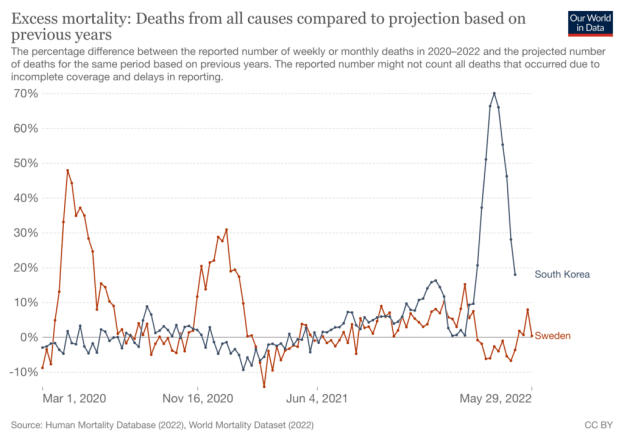
Incidentally, you wouldn’t know this from looking at the official Covid death rates. As the chart below indicates, the number of ‘confirmed’ Covid deaths per million people is much higher in Sweden, presumably due to differences in testing or diagnosis. Which illustrates the importance of tracking excess mortality.
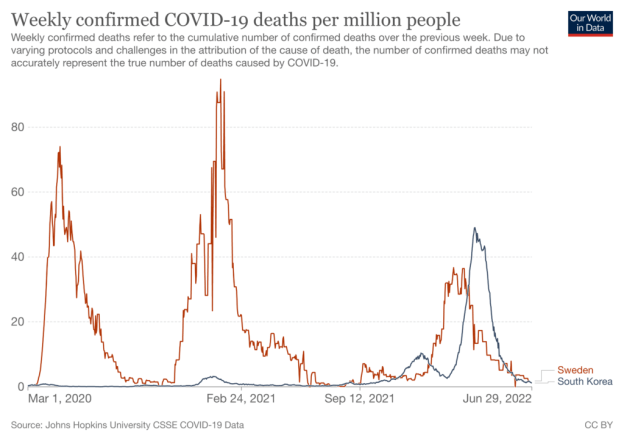
So, the country that did least to contain Covid has ended up with the same death toll as one of the countries that did most. What’s more, the majority of Sweden’s infections occurred before the vaccine rollout, whereas the vast majority of South Korea’s occurred after. Which suggests the benefits of containing the virus until after the vaccine rollout have been overstated.
Of course, South Korea didn’t do terribly. By containing the virus using border controls and contact tracing, they avoided really draconian lockdowns, and saw a comparatively mild downturn. Yet the measures they took still constitute a major infringement on civil liberties. As the Guardian notes, “Koreans’ movements were so finely and publicly tracked that secret love affairs and even hidden sexualities were brought to light.”
Anyone who cares about civil liberties will now have to ask whether South Korea’s strategy was worth it, given that Sweden ended up with the same death toll.
Guardian Pushes for Return of Masks, Mass Testing and Quarantine
BY WILL JONES | THE DAILY SCEPTIC | JUNE 28 2022
Here we go again. It’s the middle of summer and the leading opinion piece in the Guardian today calls for the return of restrictions in response to rising infections and hospitalisations. In a piece introduced with, “a few small changes would make a big difference to millions of vulnerable people”, journalist Frances Ryan writes:
If you’re reading this in the U.K., odds are that by now you’ve had coronavirus: seven in 10 of us have watched the dreaded red line appear. You may have been stuck in bed with it twice or even three times by now; by April 2022, England alone had recorded almost 900,000 reinfections. When the public asked to “return to normal”, I’m not sure a regular hacking cough was what they had in mind.
Almost 900,000 reinfections? How will 1.6% of the population have coped with getting another cold?
Ryan continues:
It is an odd situation. Last week, Covid infections were reported to have soared by 43%, while hospitalisation from the virus rose by 23%. An estimated 1.7 million people in the U.K. tested positive over those seven days. Two million of us now have long Covid, with about two in five of those – or 826,000 people – having symptoms for at least a year.
What Ryan fails to mention is that Long Covid studies frequently find small to negligible numbers of additional symptoms compared to a control group, meaning the quoted figure is unlikely to be an accurate picture of the real impact of COVID-19.
Ryan again:
Back in February, Johnson said the Government had created a plan to start “living with Covid”, but what it really did was form a plan to catch and spread Covid. After all coronavirus prevention measures were dropped on April 1st – from the legal obligation to isolate if you had Covid, to the end of most free testing – the public were left wide open to mass infection. Even hospitals were told by ministers to ditch mask mandates, though some worried trusts have defied the rules and kept them. That all precautions were pulled back just when most people’s vaccine immunity was beginning to fade, and the virus was evolving to be more transmissible, gives a hint at how little logic ministers applied.
Since Ryan accepts that vaccine protection wanes, she evidently intends restrictions, sorry, precautions to continue indefinitely. Indeed, the plummeting of the infection fatality rate makes no difference to her argument, as “excessive focus” has been placed on deaths, she says.
One of the biggest problems facing Britain’s attempts to quell the virus is that this Government doesn’t really want to. There is hope – the number of people dying from Covid has reduced since its peak – but excessive focus on this has long hidden the fact that loss of life has never been the only thing that matters: how many people are infected with the virus matters too. A strategy that lets the virus rip through the population increases the risk we all face, be it from surges, new dangerous variants, or in developing long Covid. Fundamentally, it means accepting a reality where it is deemed normal for many of us to be (possibly severely) sick, from a virus whose long-term effects – and the effects of repeated reinfection – we still know little about.
Once again, the plight of the vulnerable is deployed to justify indefinite restrictions on everyone – a logic which would destroy most freedoms given the opportunity, as we have seen in the last two and a half years.
There will be few greater casualties though than the 3.7 million clinically extremely vulnerable people, especially the 500,000 who are immunocompromised and can’t get much or any benefit from a booster jab. Trying to avoid the virus in a country that has forgone all safety measures means risking your life when you pop to the shops. Ministers who are content for repeated coronavirus infection to just become part of British life are content for isolation to be part of clinically vulnerable people’s.
What does Ryan propose? The reinstatement of free lateral flow tests – as though there isn’t an economic crisis on, and we haven’t spent enough over-testing ourselves for colds; the return of the legal requirement to isolate for those with a positive test – a measure extremely disruptive to education, employment, health care and everything else; and financial help such as sick pay for those isolating – more magical money. Plus more of the vaccines she has acknowledged don’t work for long.
And, inevitably, masks: “Wearing masks in busy and enclosed spaces again is the right thing to do; just under half of Britons (48%) reported wearing a face covering when outside their home last month, down from about 95% during the January Omicron wave.”
From a sceptical point of view, it’s depressing that nearly half of people still say they’re wearing a mask – though since far fewer than half the people I see out and about are actually wearing a mask, this poll probably reveals more about the biases of polls (and what people say to them) than the reality on the ground.
Then Ryan lays it on thick:
Unless we wish to sign up to getting repeatedly sick for the foreseeable future, and to the risk of long-term disability from long Covid, we are going to have to bring back low-effort protective measures to curb it. A recent public health campaign in Ireland, which encourages people to think of clinically vulnerable people in their daily interactions, shows how easy it is to do things differently.
Former Deputy Chief Medical Officer Jonathan Van-Tam recently said the rise in infections was nothing to worry about and that even he had stopped wearing his face mask. But will he think again now, if respectable opinion starts to shift in the direction Frances Ryan and others would like?
Let’s hope this is just an anomalous op-ed and not the start of a trend. After all, if this is what they’re saying in June, what will they be saying in December?
The Long Arm of the Covid Saga
By Gabrielle Bauer | Brownstone Institute | June 28, 2022
With the emergency phase of the pandemic behind us, the Covid alarmists don’t have much material left to work with—but doomsaying abhors a vacuum.
Enter long Covid, the perfect object of fear because it can never be disproved. You can hold it responsible for any symptom you develop after the acute phase of the illness, whether weeks or years down the road. Tired? Long Covid. Forgot where you put your keys? Long Covid. Breathless after climbing a flight of stairs? Long Covid, no doubt. It’s an unfalsifiable diagnosis, a fearmonger’s wet dream.
If I sound flippant, it’s because the past two and a half years have left me just a tiny bit wary of the human propensity for panic. As we’ve all discovered, a panicked populace will accept—or rather, demand—any and all restrictions on basic rights and freedoms. If we allow long Covid to become the new panic button, these restrictions could stretch into an indefinite future.
For the record, I’m not suggesting that long Covid doesn’t exist. I don’t wish to dismiss the suffering of affected people. My beef isn’t with individuals, it’s with public health messaging that keeps pumping fear into an exhausted and confused populace that has lost the capacity for rational risk assessment. I’m suggesting that we put long Covid in perspective so it doesn’t become the next pretext for putting our lives on hold.
Media Magnification
We certainly can’t count on a balanced perspective from legacy media and the experts they enlist: fear generates clicks, retweets, and ad revenue. “There’s no one who is too young and healthy to not go on and get post-acute COVID syndrome,” says New York rehabilitation therapist David Putrino in Parade magazine, doing his part to ensure everyone stays scared.
In a New York Times article titled “This is really scary: kids’ struggle with long Covid,” National Institutes of Health researcher Avindra Nath warns of the impact of long Covid on children’s development. “They’re in their formative years,” he says. “Once you start falling behind, it’s very hard because the kids lose their own self-confidence too. It’s a downward spiral.”
One can’t help contrast this solicitude with the lack of media concern about the effect of school closures and long masking on child development. Just saying.
Long Covid alarmists also compete for airspace in the Twitterverse, with professional fearmonger Eric Feigl-Ding predictably leading the charge. From his May 20 tweet: “Let this sink in. A billion people could suffer long Covid in the next 3 years.” True to form, he can’t resist inserting some chest-beating into his scare story. “The burden of long Covid will likely be much higher than anyone imagined. And yet very few care enough to mitigate transmission. And that makes me sad.”
It’s not just health professionals who spit out such tweets. Software developer Megan Ruthven exhorts us to reactivate the stop-the-spread program of 2020, this time to “prevent hospital collapse due to long Covid.” For exactly how long? According to a dude called Xabier Oxale, as long as it takes. “Let’s look at Long Covid, and then, only then, you can assure that a strain is less severe. For that, you need months, even years. As they don’t know, cautionary principle must prevail. Covid Zero!” That’s right, folks. Covid Zero is back.
Then there’s Charlos, who decries the government’s inaction in the face of long Covid, which he dubs “the greatest mass disabling event in human history.” The ampersand-loving Mx. Charis Hill, meanwhile, points the guilt screws right at you and me. “You may be personally willing to risk an infection & Long Covid & the loss in financial stability that will cause. But what if you get Covid, give it to your spouse/child/parent/sibling, & they become permanently disabled? Because of you?”
If these Tweets don’t strike terror in your heart, you have only to read the June 7 blog post by the People’s Pharmacy. “Long Covid is common and scary!” reads the headline, followed by “long Covid is nasty!” in the subhead. Further along in the article, we learn that the “brain and body both react to Covid!” Not one to give up on exclamation marks, the author warns us again that “the body is also impacted!”
It’s time to slow the spin, I say. Let’s start with some numbers.
All over the map
Studies on the prevalence of long Covid have yielded wildly discrepant results, which alone should cast doubt on the scariest numbers. Some researchers estimate that fewer than 10% of Covid infections progress to long Covid, while others peg the rate at more than half. In children and adolescents, the reported prevalence swings even more widely—between 4% and 66%, according to a review of 14 studies. To make things still more confusing, long Covid symptoms can also occur after influenza, though with less frequency.
So what and whom are we to believe? When in doubt, it never hurts to look at large, well-controlled studies, which by design carry the greatest statistical weight. A UK analysis of over 50,000 subjects, both with and without a history of Covid infection, suggests that long Covid may not live up to its cataclysmic media portrayal. In its report on the study, the UK’s Office of National Statistics states that 5% of previously infected subjects reported at least one common long Covid symptom 12 to 16 weeks later. The twist: “[The] prevalence was 3.4% in a control group of participants without a positive test for COVID-19, demonstrating the relative commonness of these symptoms in the population at any given time.”
There it is, straight from the ONS: at any point in time, more than 3% of random people on the street experience the nonspecific symptoms that characterize long Covid, such as fatigue, headaches, and poor concentration. A similar picture emerged from a controlled Danish study of pediatric long Covid, involving over 44,000 subjects and published in The Lancet Child & Adolescent Health.
A substantial minority of previously infected children reported long Covid symptoms—but so did their non-infected counterparts, at a lower rate deemed “statistically significant but not clinically relevant.” While this doesn’t disprove the existence of long Covid, it does invite skepticism about the sky-high prevalence figures reported in some studies.
Symptoms attributed to long Covid are also all over the map, from hallucinations and hair loss to menstrual changes and penile shrinkage. Allergic reactions, peeling skin, joint pain… the list goes on. But here’s the thing: we can’t conclusively pin any of these symptoms on long Covid. As a McGill University report on long Covid symptoms concedes, “Noticing something after getting sick with a virus does not automatically imply that it was caused by the virus.” In a nutshell, long Covid remains a slippery eel, adept at eluding our grasp.
What we don’t know
There’s something else we don’t know, and it’s the hottest of hot potatoes: whether situational or psychological factors could explain some long Covid symptoms. Relax, people. I’m not suggesting it’s all in the head. All I’m saying is that a symptom can spring from more than one source, and experts agree.
A Johns Hopkins expert report on the origin of long Covid symptoms allows that mental health problems can arise from “unresolved pain or fatigue, or from post-traumatic stress disorder (PTSD) after treatment in the intensive care unit.”
Along similar lines, a Globe and Mail article notes the challenge of untangling “which [post-Covid symptoms] can be attributed to long COVID and which are the result of hospitalization, since a lengthy stay can itself cause a host of physical and mental health problems.”
I repeat: I am not negating the existence of long Covid. I am not denying it can cause pain and suffering. I support research and public investment into the phenomenon. I’m simply saying that we need to drop the sky-is-falling pronouncements and replace them with more balanced and hopeful messaging.
Above all, we need to avoid turning long Covid into the new Scary Thing, the monster in the closet that leads a frightened public to demand longer and harsher restrictions on living. No level of protection is worth going through that exercise again.
Gabrielle divides her time between writing books, articles, and clinical materials for health professionals. She has received six national awards for her health journalism.
Lockdown Harms Impossible to Cover Up
BY MICHAEL SENGER | BROWNSTONE INSTITUTE | JUNE 26, 2022
According to a recent study by the World Bank, published in the journal Nature, lockdowns and the response to Covid-19 have pushed an additional 75 million people into extreme poverty, living on less than US $1.90 a day.
In the typical Walter Duranty style that’s become a kind of twisted journalistic norm since March 2020, the World Bank and Nature of course blame this on “the pandemic” rather than lockdowns. I remain baffled as to how seemingly well-meaning people are able to sleep at night repeating such nonsense—are they somehow blind to the role of their own sycophancy in perpetuating these policies?
Nonetheless, there are signs that the political mainstream is starting to realize lockdowns were a disaster. Today, the Wall Street Journal published an excellent piece titled The Revenge of the Locked-Down Voters, noting the growing political backlash against lockdown politicians from voters at the lower end of the income scale.
This comes shortly after the New York Times quietly acknowledged a study showing that Covid lockdowns and mandates led to over 170,000 excess deaths among young Americans.
Likewise, today the Daily Telegraph, the UK’s centre-right newspaper of record, published an excellent piece titled Basket-case Britain is the definitive proof lockdown was an epic mistake.
And, as in America, this comes shortly after the London Times, the UK’s centre-left newspaper of record, published a cautiously-introspective piece on its support for lockdowns.
These are promising indications that the political mainstream, especially on the right, is coming around to the fact that lockdowns were a policy catastrophe more quickly than some might have worried.
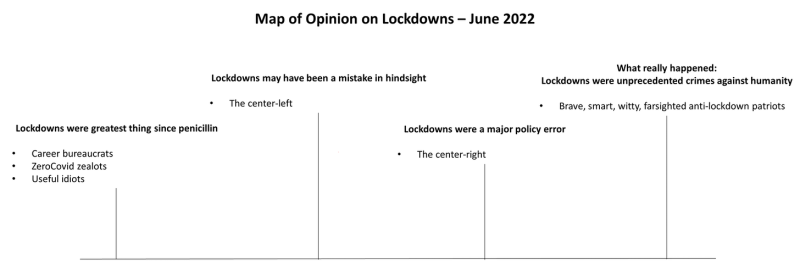
Still, there’s much more to be done. Currently, the mainstream left and right are starting to realize lockdowns were a big mistake, while many career bureaucrats are still stuck pretending lockdowns were the greatest medical breakthrough since penicillin. There really needs to be a bipartisan consensus that lockdowns were an unprecedented policy catastrophe before we can start to see justice and have undue foreign and financial influence taken seriously.
Featured Video

Racist Seinfeld Dances for Joy as Bibi Unveils His New Map
or go to
Aletho News Archives – Video-Images
TV Drama Review
Japanese drama projects Japan’s wartime atrocities onto Chinese characters

Global Times | October 25, 2026
By portraying Chinese characters as perpetrators of ruthless violence while casting Japanese Self-Defense Forces (SDF) intelligence operatives as defenders, the season 2 of the Japanese drama Vivant has recently drawn criticism from Chinese netizens, who argue that its depiction turns historical reality on its head while ignoring Japan’s wartime atrocities.
The TBS drama series – a spy suspense story in which an alleged unofficial intelligence unit of the SDF operates across the globe — has attracted a passionate fanbase. Its currently airing season 2 opened with a household rating of 18.8 percent, the highest for a TV drama this year, according toa commentary article by Japanese media Toyo Keizai.
What draws attention is the portrayal of the enemies in the series, the article noted. Scenes in which the Chinese organization subjects kidnapped members of the SDF unit to brutal torture are repeated with unrelenting intensity.
It is rare for Japanese TV dramas to explicitly portray a real-life country as the enemy, the article noted.
Japanese Prime Minister Sanae Takaichi also made a reference to the drama, saying that she has been recording Vivant and hopes to binge-watch it over the year-end and New Year holidays, according to Japanese media outlets.
China’s CCTV News report on Sunday revealed that the drama features scenes in which Chinese personnel cut off the fingers of and stab Japanese intelligence operatives in the abdomen. Such acts bear striking similarities to the torture inflicted on Chinese nationals by invading Japanese troops during the World War II.
The drama distorts the truth by attributing these atrocities to modern Chinese characters. Beneath the surface, it subtly glorifies Japan’s cross-border overseas operations, blurs the functional boundaries of the SDF and implicitly promotes an expansionist narrative, per CCTV News. … continue
Blog Roll
 Aletho News
- EU facing trillion-euro debt hole while seeking more cash for Kiev
- How US, Europe, Persian Gulf states exhausted missile stockpiles, splurged billions to defend Israel
- Up in arms… Koreans reject U.S. empire’s plan to make South Korea the next Ukraine
- Iran, Turkey, Pakistan, Saudi Arabia could advance region-led security framework in Tehran: FM spox
- Netizens condemn Japanese drama for projecting Japan’s wartime atrocities onto Chinese characters
- Racist Seinfeld Dances for Joy as Bibi Unveils His New Map
- A West Bank War for Netanyahu’s Election Campaign, Could It Backfire?
- Yemen denounces European Parliament’s ‘hypocritical’ push to blacklist Ansarullah
- Qalibaf: UAE’s UN bid aims to ‘clear the runway’ for ‘Greater Israel’, whitewash genocide
- Pakistan reopens Iran border after boosting security: Report
- If Americans Knew
- An error has occurred; the feed is probably down. Try again later.
- No Tricks Zone
- Sudden Stratospheric Warming, Powerful El Niño Combination May Lead To Extreme Europe Cold, Energy Crisis!
- Two New Studies Find Thwaites Glacier Melt Cannot Be Driven By Human Activity Or A Warming Ocean
- E-Cars Reduce CO2 Emissions By Only 41% Compared To Internal Combustion Engine Vehicles
- Predictions Made By Renowned Climate Professor Over Past Decades Have Been Proven To Be Poor
- New Study Suggests Large Regions Of The Pacific Ocean Have Been Cooling For The Last 80 Years
- Germany’s Green Energy Debacle: High Energy Costs Force Kahla Porzellan to Close After 182 Years!
- New Study: 50 Years Of The Most Aggressive ‘Net Zero’ Policies Can Only Affect The Global Climate By 0.03°C
- US September “Heat” Was No Record…Many Records Set Decades Ago
- Latest European Green Energy Debacle; Portugal’s Largest Flagship Solar Park Insolvent!
- Green Energy Debacle: German Expert Professor Fritz Vahrenholt Warns Of Severe Economic And Social Consequences