Israel-Egypt cooperation surpasses expectation
MEMO | January 28, 2015
Cooperation between the Israeli and Egyptian military and intelligence apparatuses exceeds all expectations, Israel’s Channel 10 stressed on Monday, noting that Cairo agrees with Tel Aviv’s requests pertaining to confronting “radical” Islamic movements in Sinai and the Gaza Strip.
In a report the channel’s military affairs broadcaster Alon Ben-David said that cooperation between the Egyptian and Israeli armies does not depend only on the coordination and sharing of intelligence information, but goes beyond this to field cooperation, in reference to the parties’ joint operations against those who are considered sources of danger for Israel and Egypt in Sinai.
Last year the Israeli TV station revealed that Prime Minister Benjamin Netanyahu issued instructions to carry out operations in the heart of Sinai.
Meanwhile, Israeli newspaper Israel Hayom, which is close to Netanyahu, asserted on 12 June 2014 that the Egyptian army depends on intelligence information provided by Israel in its operations against jihadists in Sinai.
General Amos Yadlin, former head of the Israeli Military Intelligence Division, said the confluence of interests between Israel and the “moderate Sunni” governments represents an unprecedented opportunity for Israel to strengthen cooperation with them so as to enhance Israel’s strategic environment and help it cope with the significant challenges it faces.
In an article published by the Makor Rishon newspaper on Monday, Yadlin stressed that Israel has greatly benefited from cooperation with Egypt, Jordan and some countries in the Gulf, calling on Netanyahu’s government to take advantage of this opportunity.
However, Yadlin said that what could undermine such opportunity is the unstable situation in some Arab countries, as well as the deliberate embarrassment that Israel is causing the Arab ruling elites by rejecting the peace initiative that was launched by the late Saudi King Abdullah Bin Abdulaziz.
Minister: State saboteurs don’t deserve Egyptian nationality
Mada Masr | January 28, 2015
Endowments Minister Mokhtar Gomaa is reiterating his demand to strip citizens of their Egyptian nationality if they are found to promote acts of violence against national security.
Gomaa made these comments on Tuesday to the “Hunna al-Asema” program on the privately owned CBC channel, and again to the “Ala Masou’ouleyati” show on the privately-owned Sada al-Balad channel.
Terror groups are instigating and promoting violence against Egypt’s security forces from abroad, while funneling funds for terrorist operations across the country, Gomaa insisted while speaking to pro-regime television presenter Ahmed Moussa on Tuesday on his “Ala Masou’ouleyati” program.
The Muslim Brotherhood is at the forefront of these terror groups, Gomaa claimed.
The Cabinet officially classified the Brotherhood as a terrorist organization on December 25, 2013.
“We are calling for, and continue to call for, the stripping of citizenship from such criminals. This is an honor that they do not deserve,” Gomaa said. “Such individuals are traitors and agents, and they do not deserve the honor of belonging to this country.”
Gomaa’s comments may be buttressed by constitutional Article 86, which stipulates: “Maintaining national security is a duty, and citizens’ commitment to it is a national responsibility, guaranteed by the law. Defense of the nation and the homeland are an honor and sacred duty.”
However, Gomaa’s comments also directly contravene the rights of citizenship enshrined in the 2014 Constitution.
Article 6 stipulates that “citizenship is a right to anyone born to an Egyptian father or an Egyptian mother. Citizens have the right to legal recognition and official documentation that proves their personal information, as regulated by the law.”
Furthermore, Article 62 holds that “no citizen may be deported from or prevented from returning to the country.”
Moussa described this year’s commemorations of the January 25 revolution anniversary as an attempt to destabilize the country. Moussa referred to participants in these protest rallies as “members of the terrorist Brotherhood society,” along with “the terrorists of the April 6 Youth Movement” and “the saboteurs of the Revolutionary Socialists Movement.”
“I have no problem with the killing of two, three or four hundred terrorists,” Moussa commented during his January 25 broadcast.
While speaking on the “Hunna al-Asema” show on Tuesday, Gomaa insisted that “the Ministry of Endowments stands beside all the state’s institutions in combating terrorism and in confronting terrorist elements.”
Gomaa added that any individual ministry employee who is found to be involved in promoting or instigating violence against the state would immediately be dismissed from his or her post.
Illegal Occupation, the Elephant In The Room
The Origin of Modern Terror and Crumbling Western Values
By John Chuckman | Aletho News | January 26, 2015
Do you ever solve problems by ignoring them? Most of us would say that is not possible, yet that is precisely what western governments do in their efforts to counteract what is called “Islamic terror.” Yes, there are vast and costly efforts to suppress the symptoms of what western governments regard as a modern plague, including killing many people presumed to be infected with it, fomenting rebellion and destruction in places presumed to be prone to it, secretly returning to barbaric practices such as torture, things we thought had been left behind centuries ago, to fight it, and violating rights of their own citizens we thought were as firmly established as the need for food and shelter. Governments ignore, in all these destructive efforts, what in private they know very well is the origin of the problem.
Have Islamic radicals always existed? Yes, we have records through the history of British and French empire-building of strange and fearsome groups. It appears every large religion has a spectrum of believers, always including at one end of the spectrum extreme fundamentalists. They are not a new phenomenon anywhere, so why has one group of them, in the sands of the Middle East, become part of our everyday awareness?
It is also nothing new that young men become hot-blooded and disturbed over what they regard as attacks upon their kind. Western society’s record of crusades, religious wars, colonial wars, and revolts, all total likely having no equal in the histories of the world’s peoples, offers countless examples of young men being angered by this or that circumstance and joining up or running off to fight.
George Bush told us today’s terrorists hate our freedom and democratic values, but like virtually every utterance of George Bush, that one was fatuous, explaining nothing. Nevertheless, his is the explanation pounded into public consciousness because governments and the corporate press never stop repeating versions of it, the Charlie Hebdo affair and its theatrical posturing over free speech being only the latest. Theatrical? Yes, when we know perfectly well that most of those who marched at the front of the parade in Paris are anything but friends of free speech.
All backward peoples are uncomfortable with certain western values, that being the nature of backwardness, and backwardness is a defining characteristic of all fundamentalist religious groups – Hasidic or ultra-Orthodox Jews, Mennonites, Roman Catholic Cardinals, cloistered nuns, Sikhs, and many others – who typically choose modes of dress, rules to obey, and even foods to eat having little or no relationship with the contemporary world and science. Of course, that is their right so long as they are peaceful and law-abiding.
Any fundamentalist group, pushed by more powerful people from outside their community, is entirely capable of, and even prone to, violence, and all human beings are capable of violence when faced with abuse and injustice. Centuries of religious wars and terrors in Europe about such matters as how the Mass is celebrated prove the proposition and should be held as a warning, but they are forgotten by most, if they were ever known. The tendency towards violence continues today amongst many fundamentalist faiths. In so relatively small and seemingly homogeneous a society as Israel, there are regular attacks from ultra-Orthodox Jews against the country’s worldly citizens or against fair-minded rules about such pedestrian matters as women riding buses or walking on a street. The attacks become quite violent – punching, spitting, burning down homes, and killing sometimes – and all go against what we call western values, but because the scale is fairly small, and our press also has a constant protective bias concerning all things Israeli, these events rarely make our mainline news. They must be found on the Internet.
It took Western Europe literally centuries to leave behind such recurrent and violent themes as witches and the need to burn them alive, the Evil Eye, casting out demons, execution for differences of belief, and countless other stupidities which characterized whole societies and destroyed lives. And if you want to go still further back, go to the Old Testament, a collection of ancient writing packed with violence, superstition, prejudice, and just plain ignorance, which Christians and others even today regard as containing important truths for contemporary life. Human progress, at least in some matters, takes a very long time indeed.
Our world has more backward people than most of us can imagine. The news does not feature their extremes and savageries because it serves no political purpose. In Africa, for example, we find practices and beliefs utterly repellent to modern minds: the practice of senior village men raping young girls as an accepted right, the genital mutilation of 3 million girls annually (an African, not an Islamic, practice), the hunting down and butchering such “strange” people as albinos, their parts to be eaten as medicine, and many others. In India, a country well on its way to becoming modern yet one with a huge backward population, we have practices such as marrying off mere girls to old men rich enough to pay dowries to poor parents. At one stroke this enriches the parents and relieves them of the burden of a child, a female child too, always viewed less favorably. The practice generates a large population of widows when the old husbands of girls married at, say, twelve die. These women are then condemned to entire lives as widows, never allowed to remarry, required to dress and eat in certain ways, and basically shunned to live in squalid equivalents of old folks homes, living entirely meaningless lives. India also has the practice of “bride burning” where new brides who are deemed unacceptable for various reasons become the prey of the groom’s family, literally being burned alive. There are many other barbarities in that society too, including “honor killing” and young women who are made inmates in certain temples to serve as glorified prostitutes.
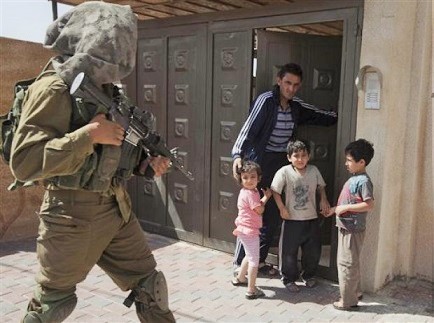
Our press assiduously avoids much of the world’s horrors as it focuses on “Islamic extremism,” and politics are the only explanation for the bias. The press theme of Islamic terror and indeed real incidents of terror grow from a reality always taken for granted, never debated, and certainly never criticised: the elephant in the room, as it were, is Israel’s illegal and agonizingly long occupation of the Palestinians.
It may be not be important to our press and governments that Israel holds millions as prisoners, crippling the lives of generation after generation, or that Israel periodically strikes out in every direction – Gaza, Lebanon, Syria, the West Bank – causing the deaths of many thousands, or that Israel is seen to bulldoze people’s homes and sacred monuments with complete impunity, but it very much matters to many millions of Muslims in the world, and some of them, fundamentalist men, strike out against it just as young men everywhere have sometimes struck out against keenly-felt hurts and injustice.
In western countries, under the hard influence of America, a country in turn under the hard influence of the world’s best organized and financed lobby, the Israel Lobby, we have come to regard Israel’s behavior as normal, but it is, of course, not normal, not in any detail. What is normal about holding several million people prisoner for half a century? What is normal about bulldozing homes and literally stealing the land upon which they stood? What is normal about declaring an honestly elected government as criminal and treating its people as though they were criminals? What is normal about limiting people’s opportunity to earn a living or to import some of the needs of life? What is normal about killing nearly a thousand children, as Israel has done just in Gaza, since 2008?
Pretending that Israel’s behavior is not the major cause of what screams from our headlines and news broadcasts has reached absurd levels. America has only vastly compounded the problem of Israel’s organized abuse of a people: it and its silent partners have destroyed Iraq, destroyed Libya, are working hard to destroy Syria, have seen to it that Egypt’s tens of millions again live under absolute government, ignore countless inequities and barbarities in secretly-helpful countries like Saudi Arabia, and carry out extra-judicial killings through much of the region. All of it is carried out on Israel’s behalf and with Israel’s cooperation. Can any reasonable person not see that this vast factory of death also manufactures countless grievances and vendettas? The stupidity is on a colossal scale, rooted in the notion that you can kill your way out of the terrible consequences of terrible policies.
In America, paid political shills (Newt Gingrich was one) have campaigned about there being no such thing as a Palestinian. Others (Dick Armey was one) have said that millions of Palestinians should be removed, all their land left conveniently to Israel. That last is an odd thing to say, isn’t it, considering there are supposed to be no such thing as Palestinians? And just what country would take millions of “non-existent” Palestinians? Obviously no politician with even pretence of integrity would say such things, and how can intelligent and successful people like America’s Jews take satisfaction in hearing politicians reciting such embarrassing scripts? But this is a good measure of the way intelligence and sound thinking are scorned in American politics. How can you achieve anything worth achieving without intelligence and sound thinking? You cannot, but that doesn’t stop American Presidents and Secretaries of State from carrying on the world’s longest-running dumb show, something called the “peace process.” The sombre, moose-like figure of John Kerry is photographed playacting at statesmanship while American-supplied arms just keep killing thousands of innocent people.
North Sinai curfew extended by 3 months

North Sinai police station – Photo by Virginie Nguyen
By Omar Ryad | Mada Masr | January 25, 2015
The government has extended a curfew in North Sinai by three months, citing ongoing security concerns in the region.
The curfew was initially put in place for three months on October 25, after attacks on military checkpoints that killed more than 30 security personnel.
It was set to expire Sunday, but the Cabinet elected to extend it for an additional three months, Cabinet Spokesperson Hossam al-Qawish said during a telephone interview with private satellite channel CBC extra.
Qawish said that the ongoing unrest in the region convinced the government that the curfew and other security operations need to continue.
The curfew is now set to expire April 25.
It was originally imposed from 5 pm to 7 am each day, with anyone outside during curfew at risk of being shot or arrested. It has cut short working hours and transformed North Sinai’s cities into ghost towns.
In December, the hours were reduced in some parts of North Sinai to run from 7 pm to 6 am, after a meeting between President Abdel Fattah al-Sisi and tribal elders in Sinai.
However, area residents told a Mada Masr correspondent in Arish that the curfew still remains a significant hardship.
Forcing businesses to close early has pushed the city into a general state of recession and increased robbery and thuggery, area residents say.
Instead of keeping crime down, residents say the checkpoints that implement the curfew “only protect themselves,” in addition to increasing the numbers of random arrests.
Crimes against property are not the biggest problem, says Arish resident Abu Abdallah al-Tarabeen. “We can handle all of this if it is for the general wellbeing, but what we cannot stand are the large numbers of dead bodies, reaching around 50 bodies, left out for over two years in the isolated northern areas in Rafah and Sheikh Zuwayed,” he said, referring to a mass grave site in Arish.
A report released Saturday by the Ambulance Authority said that eleven bodies were buried around the grave site Tarabeen refers to, making it difficult for the authorities to process remains for burial or autopsies. According to Tarabeen, the 50 bodies were all killed by live ammunition in previous clashes.
Further inflaming tensions, on January 22 a family was shot minutes after the curfew was imposed at 7 pm.
Over the past months, soldiers have generally allowed a 30-minute grace period for employees, children and families to make their way home from the local market, but on that day, soldiers manning the checkpoint declared the grace period was no longer in effect and opened fire on civilians in the street.
One man was reportedly shot at while on the way home from buying wedding dresses for his three daughters. His wife and other relatives were also hit, and had to be transferred to intensive care.
The military has also evacuated and demolished homes in Rafah as part of a planned buffer zone along Egypt’s border with the Gaza Strip.
Egypt freezes assets of 901 Brotherhood members
MEMO | January 22, 2015
An Egyptian government-appointed panel has frozen the assets of 901 Muslim Brotherhood members and 1,096 Brotherhood-affiliated charities.
“The funds of 901 Brotherhood leaders and members have been frozen,” panel head Ezzat Khamis said in a press conference yesterday.
He said the panel had seized 522 offices of the disbanded Justice and Freedom Party, the political arm of the Muslim Brotherhood, and 54 Brotherhood-owned premises.
“Some 360 vehicles and 328 feddans [138 acres] of land owned by Brotherhood members have also been seized,” he said.
Khamis said that the panel had also seized 532 Brotherhood-affiliated companies and 28 hospitals and medical centres.
“Some 1,096 Brotherhood-affiliated NGOs and 82 schools have also been seized,” he said.
In September 2013, an Egyptian court banned the activities of the decades-old Muslim Brotherhood, the group from which ousted President Mohamed Morsi hails.
The court had also ordered the group’s dissolution and the confiscation of its offices and funds.
Following the ruling, the government formed a committee tasked with managing the group’s assets.
In December 2013, the government declared the Brotherhood a “terrorist” group, blaming it for a spate of deadly attacks on security personnel.
The Brotherhood, for its part, has repeatedly dismissed the accusations calling them politically motivated.
Egyptian Court Orders Release of Mubarak Sons
Al-Akhbar | January 22, 2015
An Egyptian court ordered the release on Thursday of the sons of ousted President Hosni Mubarak pending their retrial in a corruption case, their lawyer told Reuters.
Farid al-Deeb said this meant that Alaa and Gamal Mubarak should be released because they were not being tried in any other cases.
However, judicial sources said they would not be freed until prosecutors review other legal cases against them.
The Mubarak brothers do still face charges of stock market manipulation in a separate case, but in June 2013 a court ordered their release in that case.
Given that a court dropped other corruption charges against the sons in yet another case in November, it appeared there were no other cases preventing their release.
The Cairo Criminal Court said in a document explaining its ruling that the two men had already served the maximum permitted time of 18 months in pretrial detention and should therefore not be held pending their retrial in a corruption case.
An appeals court earlier this month ordered their retrial, along with their father, overturning a lower court conviction that saw the two brothers given four-year jail sentences.
Deeb had said Mubarak himself, who is in a military hospital, would also be a free man, but state media reported that there had been no orders yet for his release.
A high court had already overturned the only remaining conviction against Mubarak on January 13, ordering a retrial and opening the way for his possible release.
In November, an Egyptian court dismissed murder charges against Mubarak over the deaths of protesters during the 2011 uprising that ended the former despot’s decades-long rule. A public prosecutor has since appealed the decision. If Mubarak is retried in the case, it would be for the third and final time under Egyptian law.
About 800 people were killed during the 18-day uprising that unseated Mubarak, in which protesters clashed with police across the country and torched police stations. Mubarak was accused of having ordered the killing of protesters.
In 2011, there were mass protests demanding Mubarak’s prosecution after he retired to a mansion in the Red Sea resort of Sharm al-Sheikh following the uprising that forced him from power that February. He was detained two months later and ordered to stand trial.
Mubarak had also previously been acquitted of corruption charges related to gas exports to Israel.
Since Mohammed Mursi, Mubarak’s successor and Egypt’s first democratically elected president, was ousted from power in 2013, then-army chief and current President Abdel Fattah al-Sisi has made law and order and economic stability his top priorities rather than democratic freedoms – the key demand during the anti-Mubarak uprising.
Human rights group say that Sisi has been even more autocratic and repressive than Mubarak. Since he rose to power, several Mubarak-era officials have made a comeback as have the once reviled police.
(Reuters, Al-Akhbar)
14-year-old arrested again after testifying to torture at Egyptian detention camp
Mada Masr | January 20, 2014
Fourteen-year-old Akram al-Sawy was detained in the early hours of Tuesday along with his father, following testimony he gave on torture at a Central Security Forces camp in Banha, according to Nadeem Center for Rehabilitation of Victims of Violence.
Sawy had been held at the camp since last September and was only released from the camp on January 8.
Following his release, Sawy gave testimony on his incarceration, detailing torture and abuse that he and other children were subjected to since they were arrested and during their time at the camp.
Sawy said he was arrested from his home on September 22 when police mistakenly thought that he was at a protest with his friends. Sawy said that he and his friends were actually at a private lesson.
According to his testimony, he spent two days at the police station where he and his friends were severely beaten, kicked and electrocuted before they were moved to the Banha camp, which he said holds 200 detainees, the oldest of whom is 20 years old and youngest of whom is 13 years old.
Sawy said the cell holds 25 detainees, who weren’t allowed to leave the cell unless they were being taken to prosecution. He added they weren’t allowed visitations, but their families were allowed to send blankets for them.
In the same testimony published by Nadeem, Sawy’s father, Ibrahim Mohamed al-Sawy, said he and his son were also beaten at State Security headquarters when he went to pick him up after his release. He said he and his son were blindfolded, handcuffed and beaten. He said he is a member of the Muslim Brotherhood and that they wouldn’t let them leave until he said that Mohamed Morsi is not returning.
The Nadeem Center reported the incarceration of 600 children between the ages of 14 and 17 in a Central Security Forces camp in Banha.
The Interior Ministry, however, continues to deny that this camp exists in the first place.
Independent rights group “Free the Children” claims that at least 1,000 minors have been detained in Egypt’s prisons over the last year and a half. Marwa Arafa, the group’s coordinator, says most of these minors have been randomly arrested during clashes between protesters and police across the country.
A puzzling question about Egyptians’ silence towards the razing of Rafah
Arabi21 | January 11, 2015
The Governor of North Sinai Abdel-Fattah Harhoor has announced that the authorities intend to raze completely the city of Rafah along the borders between Egypt and the Gaza Strip. His announcement has been met with a deafening silence except for very few voices that condemned the decision. According to informed sources, 100 houses out of a total of 1,220 were evacuated last Thursday as part of the second phase of the operation aimed at setting up a buffer zone along the Gaza Strip.
A step by step measure
In interviews conducted by Arabi21, activists have given a variety of interpretations for the deafening silence in Egypt regarding what is going on in Rafah and Sinai. One of these interpretations suggests that in the beginning, the coup authorities did not openly announce their intention to raze the city of Rafah and that the measure took place gradually as of October 2014 until today. It began with the announcement that a half kilometre deep border strip was going to be created. This decision was implemented within hours. Houses were bombed and the people of Sinai were forced out of their homes. Then there was a decision to expand the border strip to the depth of one kilometre. And finally, there was the announcement by the Governor of Sinai three days ago that the entire city of Rafah would be razed to the ground completely, as activist Asmaa Al-Sayyid explains.
The media and the constant blaming of Gaza
Journalist Samya Mahmoud has said that “the media played a major role in paving the way for these measures by repeatedly claiming that Sinai was a hotbed for terrorism and takfiris. According to her, the media used the attack on soldiers as a pretext in order to accuse Gaza of responsibility and call on the coup leader to evacuate the border strip.
Hajar Faafat said: “This is not all. Throughout that period the media continued to deny the authenticity of any videos or pictures that illustrated the amount of suffering and the violations perpetrated against the people of Egyptian Rafah.”
Ali Ghanim, on the other hand, was content with reciting some poetry to highlight the dimensions of the catastrophe brought upon the people of Rafah on the Egyptian side:
We once had in our country a town called Rafah, It was the home of beauty and tranquillity, All a gift from the Almighty Allah, Then came the oppressor who has been awful to his own religion, He went on destroying its houses, extinguishing its lights and murdering its people, He razed it to the ground as a favour to the Zionists, Yet, his followers, barking like dogs, continue to justify his actions.
An easy bite for the Zionists
Ibrahim Al-Husayni said: “In this way the curtain is drawn. The only beneficiary from the Egyptian revolution has been the Zionist entity and for the Muslims there has been no solace.”
Shaymaa Said said: “Indeed, the main reason for razing Rafah to the ground is the desire to break the back of the Palestinian resistance in Gaza and offer it as an easy bite to the Zionists. This is the clearest evidence that Al-Sisi and the leaders of his army are all agents. However, through its resistance Gaza has proven it is not an easy bite but a thorn in the throat of the Zionists and their agents who will perish with the help of God.”
Is Israel now safe?
A number of activists shared the statement made by Professor of Political Science Seif Abdel-Fattah who said in a tweet: “The Egyptian authorities will completely raze Rafah to the ground to set up a buffer zone with Israel. Is Israel now safe? Is this Egyptian national security?”
Activists also shared the remarks made by Egyptian actor Khalid Abu Al-Naja in an interview conducted with him by the Huffington Post. He said: “I do not usually talk about politics at all but usually I talk about the people who live in unfair conditions. This is something I cannot keep quiet about. I began my interview with talking about the Egyptian families who were banished from their homes along the borders. I believe this to be a gross injustice. You just cannot do this. This is how it all started. I am not an expert in politics. If you were to ask me about the difference between Marx and any other person you would not get an answer from me.”
Submitting all the credential papers
The social network activists also shared the statement issued by Hatim Azzam, deputy leader of the Al-Wasat Party, who addressed the issue of the banishment of the people of Sinai saying: “This is the plan through which the military coup leader is seeking to appease the Israeli occupation by means of submitting all the possible credential papers to the Zionist entity and to the powers that support it, foremost among them is the United States. The purpose is to guarantee the support of these powers for the coup to remain in power.”
In his communique, Hatim Azzam noted that the razing of the city of Rafah is a major disaster, especially after the initiation of a third governorate, which is called “Central Sinai”. He explained that this is a prelude to marginalising the North Sinai Governorate, a measure that involves relinquishing one of the most important and strategic cities in North Sinai, Rafah, and perhaps the complete negligence of the entire North Sinai Governorate.
Sinai activist Misaad Abu Fajr, former member of the Committee of Fifty for amending the constitution, said that the deportation of the people of Sinai amounts to a declaration of war on the three biggest tribes in Sinai, which are – from south to north – Trabin, Swarkah and Irmailat.
In a previous Facebook blog he wrote: “Don’t think of it as a decision that will pass just like previous decisions. If now you come into Cairo having arrived from a region affected by terrorism and you are paying a price for it, next time you will enter Egypt having arrived from a war zone. Undoubtedly, you know well that the price then will be much bigger.”
Translated by MEMO
Court orders retrial for Mubarak and sons in ‘mansions’ case
Mada Masr | January 13, 2015
The Court of Cassation accepted the appeal of former President Hosni Mubarak and ordered a retrial for him and his sons, who were previously found guilty of embezzling state funds, on Tuesday morning.
Mubarak and his sons, Gamal and Alaa, were convicted of embezzling over LE100 million last May. Mubarak was sentenced to three years in prison, and his sons four, in what has become known as the “Mubarak Mansions” case. Mubarak has been serving his prison term in a military hospital in Cairo due to ill health.
The defendants were also fined LE125 million and were ordered to return another LE21 million to the state. The Mubaraks had previously returned LE104 million of the embezzled money in a show of good faith.
Following the Court of Cassation’s decision, a representative for the public prosecutor stated that Hosni Mubarak and his two sons were guilty of taking LE125,779,237 from the Communications Center’s public budget.
A representative from the public prosecutor’s office told the stated-owned Al-Ahram newspaper that from 2002 to 2011 the former president facilitated the appropriation of public funds for his private homes and projects.
Fareed al-Deeb, the head of Mubarak’s defense team, stated to Al-Ahram that the first conviction was wrong and the second trial would exonerate them of any crime.
If Mubarak is found innocent, he will no longer face criminal charges in any case. In November, the former president, former Interior Minister Habib al-Adly and six Interior Ministry officials were cleared on charges of conspiring to kill protesters during the January 25, 2011 revolution.
Had the Court of Cassation upheld the previous conviction, Mubarak would still have walked free, as he has already served his mandated prison time. Tuesday’s decision means he will be released from prison pending investigation.
However, an unnamed source close to Mubarak’s family told the privately owned Al-Shorouk newspaper on Monday that Mubarak would remain in the military hospital even if granted a retrial, as it would be difficult to guarantee his security in a private residence.
Minister leads UK-Egypt trade visit, despite human rights concerns
Reprieve | January 13, 2015
The UK has launched its biggest trade delegation to Egypt in a generation, despite widespread concerns about mass trials and death sentences handed down by authorities in the country.
The Foreign Office Minister for the Middle East and North Africa, Tobias Ellwood, is this week leading a major UK trade delegation to Egypt in an effort to take advantage of what the Foreign Office has called “signs of recovery after recent turbulence.” In a statement late last year, the Foreign Office said that the UK was “by far the largest foreign investor in Egypt” and that UK firms in the country have enjoyed “continued profitably [sic] and growth… even in the difficult years” – an apparent reference to the 2011 revolution and subsequent 2013 ousting of Mohammed Morsi’s government.
The UK embassy in Egypt tweeted last week that the visit was “the biggest British trade delegation to #Egypt in more than 15 years”.
Scores of protestors have been arrested in Egypt since 2013 and put on trial en masse, with hundreds receiving death sentences in proceedings that have been condemned by the UN, rights groups and countries including the UK. Speaking last September, Prime Minister David Cameron said the Egyptian government must “ensure human rights are respected in Egypt.”
Legal organisation Reprieve has written to Mr Ellwood raising concerns about the timing and scale of the trade visit in light of an ongoing mass trial of nearly 500 people, who face potential death sentences if convicted by the Cairo court. Among them is an Irish teenager, 19 year old Ibrahim Halawa, who was arrested at a 2013 protest when he was 17, and legally a juvenile. Mr Halawa has been subjected to continued mistreatment during his 2 years of confinement in Cairo’s Tora prison. Last week saw the latest of several recent hearings in which he was not brought into the court.
Maya Foa, director of the death penalty team at Reprieve, which is assisting Mr Halawa, said: “It beggars belief that the UK is taking a ‘business as usual’ approach to a country where hundreds of people, including children, face potential death sentences in farcical mass trials. If David Cameron’s proclamations about the need for human rights in Egypt are to be believed, why is his government boasting about its biggest trade visit there in 15 years?”
Egypt to raze Rafah city
MEMO | January 8, 2015
Egyptian authorities have decided to raze the city of Rafah, in Sinai, in order to establish a buffer zone with the besieged Gaza Strip, North Sinai governor Abdel-Fattah Harhoor said in a press conference yesterday.
1,220 homes are to be demolished in Rafah in the coming days.
2,044 families will be affected.
“The establishment of a buffer zone requires the complete removal of the city and, in fact, it will be completely destroyed,” Harhoor said.
He said that a new Rafah will be established, and until that happens, “each family whose home will be demolished will receive $210 as a down payment to rent a house”.
Cairo claims its buffer zone is intended to fight terrorism in Sinai and prevent cross border attacks on Israel.
Police officers accused of fatally shooting 2 brothers in Suez

Mada Masr | January 6, 2015
Two police officers in Suez face charges of premeditated murder for allegedly shooting two brothers to death on Monday morning. The prosecution has ordered the suspects into custody for four days pending investigations, the privately owned news site Youm7 reported on Tuesday.
Mohamed and Ahmed Seoudi were driving their motorbike to work around 8 am on Monday morning when they came upon a police patrol force, their uncle Gharib Mehled told Mada Masr. The two men purportedly then swerved onto a small side street “to avoid the usual police harassment” when one officer followed them, then shot them both in the head at close range.
“They were respectable young men, and their motorbike was registered and carried the license plate number 23235 SUEZ, contrary to rumors that it was not licensed,” Mehled argued.
One of the men was 26 and was supposed to get married in two months, while his 22-year-old brother was a wrestling champion who trained in an army establishment, as proven by his identification card, the uncle asserted.
A Facebook user by the name Mahmoud Shawky was allegedly present at the scene of the crime and posted photos of the two men after they were shot.
“One of them was an army soldier on vacation and the other was a roman wrestling champion,” Shawky wrote in mourning.
“By nature, people in Egypt are scared when they see the police instead of feeling safe. The [victims] ran away, so they were shot in the head out of mere suspicion,” he added.
In another post, Shawky claimed that after the victims were shot, the officer kicked their bodies until he was sure they were dead.
“Running away was definitely wrong, but they didn’t deserve to be executed on the spot,” Shawky wrote.
The Suez prosecution office confiscated the bullets that killed the victims and ordered an autopsy to determine the cause of death. Meanwhile, the victims’s family gathered at the Suez morgue to protest the incident, the privately owned newspaper Al-Masry Al-Youm reported.
On Monday night, funeral proceedings for the two men turned into a demonstration that headed toward the security directorate. … Full article
Featured Video
BRITAIN’S WARNING: PREPARE FOR WAR
or go to
Aletho News Archives – Video-Images
From the Archives
British weapons and personnel doing much of the killing in Yemen
Press TV – June 18, 2019
A detailed report published by the Guardian newspaper has shown how Britain is massively contributing to Saudi Arabia’s devastating war on Yemen as it suggests that London is not only supplying the bombs that fall on Yemenis, but it provides the personnel and expertise that keep the war going.
The comprehensive report by Arron Merat published on Tuesday showed that Britain was doing much of the killing in Yemen as the country continues to provide Saudi Arabia with everything it needs to turn its southern impoverished neighbor into a graveyard.
“Every day Yemen is hit by British bombs – dropped by British planes that are flown by British-trained pilots and maintained and prepared inside Saudi Arabia by thousands of British contractors,” said Merat in the report. … continue
Blog Roll
 Aletho News
- Yemen denounces European Parliament’s ‘hypocritical’ push to blacklist Ansarullah
- Qalibaf: UAE’s UN bid aims to ‘clear the runway’ for ‘Greater Israel’, whitewash genocide
- Pakistan reopens Iran border after boosting security: Report
- Why are so many Brazilians voting for Flávio Bolsonaro?
- Democrats Put Anti-Russia Agenda Ahead of American Workers
- Elijah Magnier: Yemen’s Strikes Are Shattering Saudi Arabia’s Long-Term Strategy
- Pentagon designates Chinese cultural centers national security threat
- Israel Demolishes Home Of Lebanese Journalist Whose Viral Film Exposed Pager Attack
- Record Oil, Empty Tanks: The UAE’s Miracle Recovery
- Burnham tackles Britain’s poverty with aggression in Yemen
- If Americans Knew
- An error has occurred; the feed is probably down. Try again later.
- No Tricks Zone
- Sudden Stratospheric Warming, Powerful El Niño Combination May Lead To Extreme Europe Cold, Energy Crisis!
- Two New Studies Find Thwaites Glacier Melt Cannot Be Driven By Human Activity Or A Warming Ocean
- E-Cars Reduce CO2 Emissions By Only 41% Compared To Internal Combustion Engine Vehicles
- Predictions Made By Renowned Climate Professor Over Past Decades Have Been Proven To Be Poor
- New Study Suggests Large Regions Of The Pacific Ocean Have Been Cooling For The Last 80 Years
- Germany’s Green Energy Debacle: High Energy Costs Force Kahla Porzellan to Close After 182 Years!
- New Study: 50 Years Of The Most Aggressive ‘Net Zero’ Policies Can Only Affect The Global Climate By 0.03°C
- US September “Heat” Was No Record…Many Records Set Decades Ago
- Latest European Green Energy Debacle; Portugal’s Largest Flagship Solar Park Insolvent!
- Green Energy Debacle: German Expert Professor Fritz Vahrenholt Warns Of Severe Economic And Social Consequences

