Ottawa’s friendship with Egyptian military not helpful
By Yves Engler · September 24, 2013
Once again Conservative ideology has trumped what’s right.
Prominent Toronto filmmaker/professor John Greyson and London, Ontario, physician/professor Tarek Loubani have been locked up in an Egyptian jail for nearly 40 days.
After a prosecutor recently extended their detention by 15 days, these two courageous individuals launched a hunger strike demanding their release or to at least be allowed two hours a day in the fenced-in prison yard.
Some 140,000 people, including filmmakers Ben Affleck, Danny Glover and Atom Egoyan, have called on Egypt’s military rulers to release the two men. Despite this outpouring of support, the Conservatives have done as little to win their release as a Canadian government could possibly do in the circumstances. While Canadian officials have summoned Egypt’s chargé d’affaires in Ottawa and called it “a case of two people being in the wrong place at the wrong time,” they’ve failed to demand their immediate release, criticize the arbitrary process or condemn the dictatorial regime responsible.
Under the emergency legal system currently in place in Egypt, Greyson and Loubani can be kept in jail for up to two years without charge or trial. But Ottawa has refused to even comment on these highly arbitrary rules.
Canadian officials have also ignored the rise of anti-Palestinian sentiment that partly explains Greyson and Loubani’s incarceration. Greyson and Loubani flew to Cairo en route to do humanitarian and political work in Gaza, which would displease Egypt’s military rulers who associate the Hamas government in Gaza with the Muslim Brotherhood.
Since taking power on July 3 the military regime has deepened the brutal blockade of Gaza. Before the coup some 1,200 people a day crossed through the Rafah terminal in Egypt, Gaza’s main window to the world (Israel is blocking most other access points). Now about 250 make it through every day and the Egyptian authorities have shut the Rafah crossing entirely in recent days.
Ottawa has long supported efforts to punish Palestinians in Gaza. After Hamas won legislative elections in January 2006, Harper’s Conservatives made Canada the first country (after Israel) to cut off funding to the Palestinian Authority and Ottawa has cheered on Israel’s blockade and repeated bombings of Gaza.
More significantly from Greyson and Loubani’s standpoint, the Conservatives support the Egyptian military’s overthrow of Muslim Brotherhood President Mohammed Morsi and its brutal crackdown on pro-democracy protests. Foreign Minister John Baird initially called the military’s overthrow of Morsi a “coup” but he’s explicitly rejected calls for the elected President to be restored. On August 22 Baird said “We’re certainly not calling for them [Egypt’s elected government] to be restored to power.” This is in contrast to the U.S., France and UK, which have at least nominally called for Morsi’s restoration to power.
Ottawa has also justified the military’s brutal repression of largely peaceful demonstrations. “We think the interim government is dealing with some terrorist elements in the country,” Baird told reporters a month ago. “A lot of this is being led by senior officials in the Muslim Brotherhood.”
Baird is simply parroting the military regime, which has killed over 1,000 democracy protesters and incarcerated at least 3,000 more since overthrowing Morsi. They’ve also imposed martial law, a curfew and banned the Muslim Brotherhood.
In a bid to control the flow of information the military regime has shuttered a number of TV stations, including Al Jazeera, and stripped tens of thousands of imams — Muslim clerics — of their preaching licenses. The goal is to better control the political messages emanating from mosques.
Greyson and Loubani have had the misfortune of being caught up in this repressive climate. They are two, among many, victims of an out of control military regime desperately trying to reverse the democratic space opened up two and a half years ago with the fall of Hosni Mubarak.
While Greyson and Loubani’s incarceration is an irritant for the Conservatives, they are decidedly antagonistic to democracy struggles in Egypt. On January 25, 2011, Egyptians began 18 days of protest, including widespread labour actions, which would topple the 30-year presidency of Hosni Mubarak. The Conservatives stuck with Mubarak until literally the last possible minute. On February 10, 2011, Foreign Affairs called for “restraint from all parties to settle the crisis” and about three hours before Mubarak’s resignation was announced on February 11 Harper told a Newfoundland audience: “Our strong recommendations to those in power would be to lead change. To be part of it and to make a bright future happen for the people of Egypt.” The Prime Minister failed to call for Mubarak’s immediate departure.
Most of Canada’s traditional allies abandoned Mubarak before the Conservatives. The day after he stepped down Alec Castonguay explained in Le Devoir: “Canada was the only Western country to not call for an ‘immediate transition’ in Egypt. While Washington, London, Paris, Madrid and Rome openly called for an end to Mubarak’s rule and the transfer of power to a provisional government, Ottawa sided with Israel in refusing to condemn the old dictator.”
The Conservatives lackluster support for Loubani and Greyson reflects their support for Egypt’s military rulers, which is tied to an extreme pro-Israel outlook. If these two courageous individuals are further harmed blame the pro-Israel/anti-Egyptian democracy forces in this country.
Egyptian minister praises Obama’s remarks on Egypt, Hamas slams Egypt’s FM for threatening to attack Gaza
Egyptian minister praises Obama’s remarks on Egypt in the UNGA
MEMO – September 25, 2013
Egyptian Foreign Minister Nabil Fahmy has described US President Barack Obama’s remarks to the UN General Assembly about Egypt as “positive” and reflective of “an objective treatment of the situation in Egypt.”
Fahmy was responding to Obama’s speech on Tuesday that was critical of both ousted President Morsi’s government for being non-inclusive, and the interim government established by the coup for violating the Egyptian people’s rights, including policies such as the curfew, the state of emergency and the restrictions on press freedoms.
About how the latter issues would be resolved, the minister said: “They will be overcome through the context of the implementation of the roadmap and efforts to build a modern and democratic state in Egypt.”
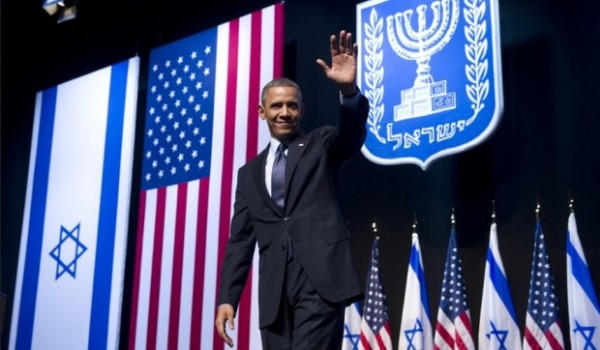 In his speech to the UN General Assembly, Obama repeatedly asserted his country’s respect for the will and choices of the people in the Middle East. However he also warned that the “United States will at times work with governments that do not meet, at least in our view, the highest international expectations, but who work with us on our core interests.”
Obama affirmed that the US is going to preserve good relations with Egypt, saying the US “will maintain a constructive relationship with the interim government that promotes core interests like the Camp David Accords,” as well as counterterrorism efforts.
But he added that US support will also “depend upon Egypt’s progress in pursuing a more democratic path.”
Hamas slams Egypt’s foreign minister for threatening to attack Gaza
Palestine Information Center – 25/09/2013
GAZA — The Hamas Movement strongly denounced Nabil Fahmi, the Egyptian minister of foreign affairs, for threatening to take military and security action against the Palestinian resistance in Gaza.
Its spokesman Fawzi Barhoum stated on Tuesday that Fahmi’s threats were reprehensible and very dangerous and would do a great disservice to Egypt’s reputation and historical stature.
Barhoum added that Fahmi’s remarks in this regard unveiled bad intents and hostile tendencies against the Palestinians in general and Gaza in particular.
He stressed that such position would remove Egypt from its national, Arab and Islamic role in supporting the Palestinian people and their cause.
The spokesman affirmed that Hamas and its people in Gaza have no intention or agenda to engage in any kind of conflict with Egypt.
“We will remain defenders of the Arab and Muslim nations’ pride and dignity, and our main struggle is only against the Israeli occupation, the greatest threat to Egypt and Palestine,” he underscored.
For its part, Al-Ahrar Movement in Gaza also deplored the Egyptian minister’s threat to use military and security options against Gaza.
“We were expecting an Egyptian position supporting the Aqsa Mosque and preventing its division, and not a threat by the foreign minister of Egypt to attack Gaza. We affirm that such remarks undermine Egypt’s ethics and role in protecting our people,” Al-Ahrar Movement stated on Tuesday.
It also said that this new Egyptian position only serves the Israeli occupation regime which has taken advantage of the military coupe and are trying to drive a wedge between Gaza and Egypt.
Tragic Stories From Rafah: Students Mourn Their Future
By Fatima Abdallah | Al-Akhbar | September 20, 2013
At the Rafah border crossing with Egypt – Gaza’s only bridge to the outside world – a young Palestinian man cries profusely. He scrapes a passenger bus with his fingernails as it departs toward Egypt. He wants more than anything to stop the bus and get on it.
Mohammed al-Astal’s situation is shared by dozens of Palestinian students from Gaza studying abroad who wanted to spend their holidays with their families in the Gaza Strip. Unable to travel – Egyptian authorities have closed the border for a week now, citing security reasons – they have now missed the start of the academic year. If their absence continues, they will not be able to carry on with their studies.
Astal, a medical student at al-Mansoura University in Egypt, told Al-Akhbar: “For two weeks, I’ve been coming to the Rafah crossing every day at six in the morning, hoping I would be allowed to travel so I can go back to school, but to no avail.”
More than 2,000 people in Gaza are dreaming of traveling to Egypt today or tomorrow now that the Egyptian authorities have opened the crossing for two days. Egyptian authorities announced on Monday, September 16, the opening of the Rafah crossing on Wednesday and Thursday from 10 am to 2 pm at the request of the Palestinian Authority President Mahmoud Abbas.
Frustrated, the only thing those waiting can do is obstruct the buses full of travelers. Hamas security forces clash with individuals, pushing them back with batons until three buses manage to leave Rafah.
“All students have to come to the Rafah crossing again tomorrow morning. That is what the Palestinian embassy said in a piece of news posted yesterday,” said Hassan, a law student in Egypt. “Missing an entire month of the new semester means losing the whole semester.”
Hassan expressed his right to be on the list of passengers, along with medical patients and other urgent cases, especially after the Palestinian ambassador in Egypt, Barakat al-Farra, issued a statement on Tuesday requested that students come to Rafah after coordination with the embassy.
Maher Abu Sabha, director general of crossings at Egypt’s Interior Ministry, said: “Students stuck in Gaza do have a priority to travel, but there are also humanitarian cases of patients and people with residence permits that might expire at any moment. [These people] need to leave Gaza or else they will lose their lives outside the Strip.”
According to Abu Sabha, there are more than 4,500 Gazans registered on urgent travel lists. He pointed out that all of them can be considered humanitarian cases. They are patients, people with residence permits, and students.
Mufid al-Mukhalalati, health minister in the Hamas government, said at a press conference, “Closing the crossing has prevented more than a thousand patients from reaching Egyptian hospitals and receiving treatment and has also prevented foreign medical delegates from reaching the Gaza Strip.”
Egyptian authorities closed the crossing last Wednesday, September 11, after an armed attack was launched against the Egyptian military intelligence building in Rafah. The attack killed six Egyptian soldiers and injured 17 others.
Palestinians in Gaza continue to face increased difficulties at the Rafah crossing since the Egyptian army deposed former Egyptian president Mohamed Mursi on July 3. In the meantime, Egyptian authorities reduced working hours at the crossing to four hours daily. While thousands waited at the Rafah gate, only 250 were able to leave the Gaza Strip.
Egypt’s coup leaders grateful for Israeli support
By Shazia Arshad | MEMO | September 9, 2013
The Egyptian army and Israel have grown much closer in the weeks since the coup d’etat. In a Ha’aretz report, Amos Harel, suggested that the Egyptian and Israeli relationship now was in fact stronger than it was during the rule of Mubarak. Following the coup, it was Israel that the Egyptians turned to ensure that the American government and the new Egyptian coup regime would reach an understanding. Although the toppling of the democratically elected government was widely accepted as a coup, Israel prevented the use of the term and encouraged America to accept events as a regime change. In doing so, Israel ensured that American financial support to Egypt could continue, as acceptance of a coup would mean that aid would have to be suspended under American law.
Israel’s role in securing continued US aid for Egypt’s army has made it possible for a stronger bond between the two to develop. Events in Egypt since the coup have demonstrated how grateful Egypt’s army are to Israel. Indeed, the Egyptian army’s particular focus on the Sinai and Gaza has won favour with the Israelis. Gazans in particular have been bearing the brunt of the warmer relationship between the two regimes. In recent weeks, the Egyptian army have closed all tunnels between Egypt and Gaza and restricted the border crossing at Rafah. The closure of the tunnels has had a significant impact, forcing Gaza to turn to Israel and import fuel through Israel at six times the cost. The tunnel economy, which has provided basic needs for Gaza’s blockaded residents, has been shut down and will cause further financial stress to the Gazan economy. The restrictions on the Rafah crossing have limited the travel of Palestinians in to and out of Gaza, including those who need access to urgent medical treatment. The Rafah crossing had allowed freer movement during the presidency of Mohamed Morsi, much to Israel’s chagrin.
Egypt’s new political direction has also left Hamas out in the cold, this time much to Israel’s delight. Prior to the coup, with increasing support from the Muslim Brotherhood in Egypt Hamas’ strength in Gaza had increased and Hamas used the opportunity to oppose Assad’s civil war in Syria. With the opposition to Assad, Hamas relied on Egypt, but with the turn of events, Hamas now face increasing isolation. To further weaken Hamas, the Egyptian army circulated rumours of Hamas’s involvement in terrorist activities in Egypt. Last week’s attempted assassination of the Egyptian interior minister was used to implicate Hamas, when local media sources suggested that they had been involved in the bomb attack. Despite the clear fallacy of the claim, the rumours have worked to suppress Hamas in Gaza, as the Israeli’s have wanted to do for some time now.
In the Sinai, the Egyptian army has been circulating rumours of terrorist activity too. With claims that Islamist terror groups are active in the region, the army has increased its presence with more troops, tanks and helicopters in the region. Under the Israel-Egypt peace treaty the Egyptians require Israel’s agreement for them to be able to do so, and in yet another example of the Egypt-Israel bond growing stronger, the Israelis have sanctioned the increase. The Egyptian army has reportedly killed 100 activists in the Sinai, wounded and arrested hundreds of others. Further reports have indicated that the Egyptian army is currently developing a buffer zone in the Sinai to prevent weapons and terrorist smuggling into and out of Gaza. Reports suggested that the buffer zone would be a military controlled area and that the residents currently there were being forced from their homes with no warnings.
The Egyptian army have been able to mount a coup against the democratically elected Egyptian president, ensure that America continues to bank roll the country and strengthen their grip on power since the coup thanks to the work, and the words, of the Israelis. Whilst they may not be making the strengthening of their relationship public, the Egyptians want to ensure that the Israeli’s know how grateful they are for their support. In this vein, the army’s attacks to protect Israel’s interests are sure to increase.
Related articles
Egypt and UAE plot to topple Hamas
MEMO | September 4, 2013
A retired Egyptian general has revealed details of an Egypt-UAE plot to impose a stranglehold on the Gaza Strip and overthrow the Hamas-led government. The plot, claims General Sami Hassan, is for the Egyptian army to act, with funding from the UAE government.
“The plan is led by General Abdel Fattah al-Sisi,” tweeted Hassan. “He aims to achieve political and military gains in the coming days.”
General Hassan said that the military will impose even more restrictions on the Palestinians in Gaza, cutting all essential supplies which currently pass through the tunnels. Fuel supplies in particular are being targeted. The Gaza Strip relies on Egypt for 80 per cent of its fuel.
According to Hassan, the process has already started with a media demonisation campaign against the Palestinians and Hamas. As soon as the army creates calm in the Sinai Peninsula, he asserted, it will stir up popular demonstrations.
Al-Sisi has already met with Shaikh Hazza bin Zayed, an adviser to the UAE National Security Authority, and ex-Fatah “strongman” Mohammed Dahlan, said General Hassan. “A sum of $750 million has been allocated for the plot,” he claims, “which will involve returning Gaza to Egyptian control or handing it over to the Palestinian Authority [in Ramallah].”
The decisive meeting, he noted, lasted one and a half hours in Al-Sisi’s office. The following objectives were agreed upon:
- Sinai will be “cleansed” of militant groups and nomadic tribes on the border with Gaza will be disarmed.
- A drone base will be established by Egypt in Sinai under international supervision. Air strikes will be launched against the “global jihadist movement”.
- All tunnels between Gaza and Egypt will be closed, and Egypt will cut off all essential supplies going to Gaza.
- Electricity supplies from Egypt to Gaza will be cut off altogether.
- An agreement between the Palestinian Authority, Egypt and Israel will be reactivated with the return of international observers to the Rafah Border Crossing.
- Hamas will be toppled and the Gaza Strip will be returned to President Mahmoud Abbas’s control.
- Power in Gaza will handed over to the PA or people in the UAE’s pay and control, such as Dahlan.
Related articles
- Egypt coup enters second phase: the overthrow of Hamas (alethonews.wordpress.com)
- Students campaign to expel Dahlan from UAE (alethonews.wordpress.com)
- Analyst: Mossad is behind Egyptian media’ incitement against Gaza (altahrir.wordpress.com)
- Egypt destroys Gaza tunnels, causes crisis (willyloman.wordpress.com)
- Egypt fires at Palestinian fishermen off Gaza: medics (willyloman.wordpress.com)
Egypt coup enters second phase: the overthrow of Hamas
MEMO | September 2, 2013
The military coup in Egypt is believed to have entered its second phase. The security forces affiliated with General Abdel Fattah al-Sisi, commander-in-chief of the Egyptian armed forces, have begun gradual attacks to topple the Hamas movement in the Gaza Strip, supported by incitement from the pro-Sisi media. A few obscure activists, meanwhile, have organised protests against the government in the Strip. The activists are believed to have received financial aid from the United Arab Emirates.
The news site, Secrets of Arabia, has observed signs of an orchestrated campaign, initiated by Egypt, to attack Hamas and overthrow its government in Gaza. Meanwhile, other sources have claimed that the UAE has been orchestrating the campaign in collaboration with Palestinian, former Fatah leader, Mohammed Dahlan, who works as a consultant for Abu Dhabi Crown Prince, Mohammed bin Zayed. Dahlan was expelled from Gaza following a failed attempt to topple the democratically elected Hamas-led government.
Over the past few weeks, Egyptian troops have launched an extensive campaign against the smuggling tunnels. The tunnels are used to transport essential goods to Gazans, who are suffering from the tight Israeli blockade. News was also leaked of an order by Egyptian security forces to demolish more than 500 houses near the Gaza Strip border and 500 meters deep into the Egyptian territories.
The operation to demolish Palestinian houses, on the border with Gaza, is considered a first of its kind in the history of the Egyptian-Palestinian relations. The operation has raised concerns in the region, of a possible Egyptian military action against Hamas and the tunnels. According to Egyptians residents of the area the Egyptian community believe that the operation is designed to strengthen the siege on Gaza.
Campaign of incitement
The Egyptian military’s actions are supported by an unprecedented campaign by the Egyptian pro-military coup media which calls on Palestinians to revolt against Hamas, in a clear, blatant and unprecedented intervention in the internal affairs of Palestine. Meanwhile, the same media channels have criticised non-Egyptians who interfere in the political affairs of Cairo.
The controversial Egyptian media personality, Tawfiq Okasha, surprised his viewers on Saturday evening with an unprecedented instigation against the Palestinians in Gaza. Okasha said the Palestinians must rise up against Hamas and that the Egyptian army would support them militarily to eliminate the movement.
Okasha is close to the General Sisi regime and is a prominent defender of the military coup. It is widely believed among Egyptians that Okasha reflects the official position of the army. He receives his instructions from the department of moral and military intelligence, which funds his al Faraein TV channel.
Gaza Rebellion
Meanwhile a new movement in Gaza has emerged under the name of Tamarod Gaza or Gaza Rebellion. The movement called on Palestinians in the Gaza Strip to voice their protests against the rule of Hamas on November 11th. The movement has stirred controversy on the Palestinian street.
The majority of the Palestinian residents in Gaza believe that members of the Gaza Rebellion movement are an extension of a counter-revolution led by the United Arab Emirates to topple the Arabs revolutions and Islamist rule in the Arab world. The movement is similar to Egypt’s Tamarod movement led by Egyptian, Mahmoud Badr. Badr is known as Mahmoud Cannabis due to claims of his previous involvement in the cannabis business. Badr built a deep relationship with the United Arab Emirates and was allowed to meet UAE Foreign Minister, Sheikh Abdullah bin Zayed Al Nahyan.
The Palestinians also believe that Mohammed Dahlan has been provoking problems in the Egyptian Sinai to drag the Egyptian army into confrontation with Gaza. Dahlan is also believed to be a supporter of the Gaza Rebellion which aspires to oust the Hamas government in Gaza, as the Muslim Brotherhood were ousted in Egypt.
Related articles
Egypt creates a buffer zone with Gaza
MEMO | September 2, 2013
The Egyptian army is working to create a buffer zone on the Egyptian border with the Gaza Strip in a purported effort to undermine weapon smuggling and chaos caused by militants in the Sinai Peninsula.
The military envisions that the ten kilometres long and 500 metre wide buffer zone is to be a building free area without trees. The area stretches from the Rafah Crossing through to the Mediterranean Sea.
Witnesses said that the Egyptian military bulldozers had started uprooting trees in the area and that 13 Egyptian houses had been destroyed in the al-Sarsouriya neighbourhood on Saturday.
At the time of writing this report, Egyptian military bulldozers were working fast razing sand-hills and trees in the area.
A military source, speaking anonymously, told the AP that homes had been knocked down over the last 10 days as a test of the buffer zone idea.
The interim Egyptian government said that this was a part of its “war on terrorism” campaign. The government and Egyptian mass media have been claiming that the tunnels between Egypt and Gaza have been used to smuggle weapons and Palestinian militants in to Egypt.
Egyptian residents in the neighbourhoods in the planned buffer zone took to the streets on Saturday, torching car tires and hurling stones at the Egyptian army in an effort to delay the demolition of their homes.
Witnesses said that the army called for residents to leave their houses through the loudspeakers of nearby mosques. The army bulldozers then immediately started damaging the houses.
“They did not give residents eviction notices and did not even give them enough time to collect their properties,” a tribal leader told AP.
In an interview with the Egyptian TV, CBC, Egyptian interior minister, Mohamed Ibrahim, claimed that the tunnels were the main cause of the uncertainty in Egypt. He insisted that prominent leaders of the Muslim Brotherhood had used the tunnels to enter and hide in Gaza.
Meanwhile, Hamas spokesman, Sami Abu-Zuhri, denied that the tunnels had been used to smuggle weapons and militants to Egypt or to smuggle Muslim Brotherhood leaders in to Gaza.
“Once they said that Osama Yassin was in Gaza, and two days later, they arrested him in Cairo,” Abu-Zuhri said in an example of the misinformation being reported on Gaza’s involvement in the Egyptian issue and the misuse of tunnels.
Since the end of the Israeli war on Gaza in 2008/2009, the tunnels have been used to smuggle goods, commodities and medicines. Numerous Palestinian, Egyptian and international journalists have observed the work of the tunnels.
They have reported that the tunnels have been used for humanitarian purposes in the light of the strict Israeli blockade on Gaza since 2006.
Egyptian navy attacks Palestinian fishermen
MEMO | September 1, 2013
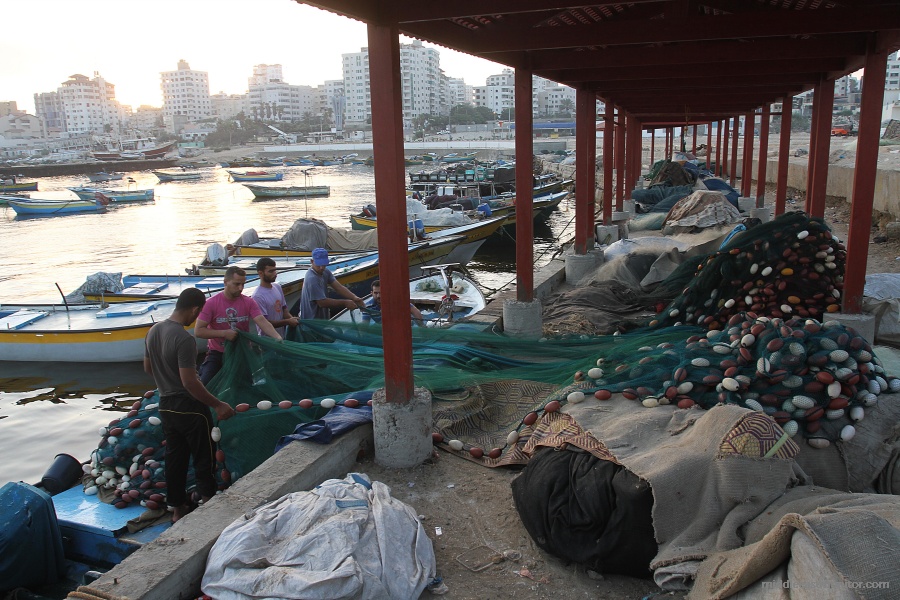
Egyptian navy vessels have attacked Palestinian fishermen going about their work off the coast of Rafah. Five fishermen were arrested and two were shot when their boats were confiscated by the Egyptians.
Local sources say that Ibrahim Abdullah al-Najjar, 19, and his colleague Ismail Wael al-Bardawil, 21, were both shot in the hands during the attack. The men were taken to Abu Yousef al-Najjar Hospital in Rafah for treatment. Shooting fishermen in the hands is a tactic used by the Israeli Navy as it makes it difficult for them to get back to work.
Following the overthrow of President Mohamed Morsi by the army, the coup authorities have warned the Palestinians that the navy will arrest anyone who crosses into Egypt’s territorial waters.
The fishermen expressed deep disappointment at the Egyptian move. It resembles the attacks on them by the Israeli navy, they said.
A spokesman for the Interior Ministry of the Palestinian government in Gaza, Ihab Ghussein, said that he has asked for a formal explanation from Egypt about the attack on the unarmed fishermen.
Egyptian media outlet condemns government intimidation
MEMO | August 26, 2013
The Cairo-based Rassd News Network has condemned the latest intimidation by the coup government which has seen the killing and arbitrary arrests of journalists, including of five of its own correspondents. The network’s Executive Director, Samihi Mustafa, and founding member Dr Abdullah Al-Fakharani are among those detained by the authorities since the start of the bloody campaign against anti-coup demonstrators.
According to Rassd, neither Al-Fakharani nor Mustafa, the father of a new-born boy, were armed when they were arrested. “They were only armed with the truth about what is going on out there,” said a spokesperson. “Professional journalists are attempting to break the media blackout imposed by the coup authorities and government-controlled media on what is happening in Egypt.” Freedom of expression, it was pointed out, is a basic human right.
Describing a “savage and vengeful” campaign of arrests, the spokesperson said that the government is targeting Rassd journalists after killing photographer Musaab Al-Shami while he was covering the violent assault on Rabaa Al-Adawiyya Square. He was shot in the head and chest by soldiers. Rassd correspondents Mahmoud Abdul-Nabi and his brother Ibrahim, both professional journalists, were arrested in Alexandria at the start of the coup. Both men are on hunger strike in protest at the conditions under which they are being held by the authorities.
Rassd not only condemned the killing, arrest and harassment of its staff but also holds the Egyptian coup government fully responsible for the safety and well-being of those in detention. It demanded their immediate release.
“We will not give up in our efforts to protect human rights and the right of journalists to carry out their work unimpeded by the brutal acts of the security forces,” said the Rassd spokesperson. “We will use all legal means to defend them and to hold accountable those responsible for their illegal detention.”
The network insists that it remains committed to the professional ethics of journalism, including accuracy, balance, independence and integrity, to convey the truth as it is without any bias or distortion. Rassd appealed to all colleagues in the profession, international press associations and human rights organisations to stand by all detained journalists, to press for their release, and to ensure their right to work without threats or harassment.
Related articles
- Four journalists killed covering Egypt clashes (alethonews.wordpress.com)
- UNESCO head deplores deaths of Egyptian journalists (dailynewsegypt.com)
Will Gaza have a date with ‘lean’ years in the future?
By Sufian al-Shorbeiji | Alestqlal News* | August 22, 2013
A state of anxiety and confusion has taken over the residents of Gaza as the tunnels leading to the Egyptian border have been almost entirely closed off. Humanitarian crises are beginning to emerge as it becomes increasingly difficult to move consumer goods both into and within the Gaza Strip. Many fear that Gaza will once again be under siege as a result of the tensions occurring in the Egyptian arena. The current situation differs greatly from the sense of relief and mobility that Gazans experienced last year when the blockade was gradually lifted.
Hamas has recently called on regional and international forces to make every possible effort to break the siege on Gaza that occurred after the majority of tunnels were destroyed and the Rafah border was closed off entirely.
Political and economic analyst Mohsen Abu Ramadan believes that the situation in the Gaza Strip is regressing back to the initial stages of the 2007 siege. Ramadan anticipates that this time, the consequences will be more severe in terms of the ability to move both goods and people, which are restricted by Israel’s continued siege of the Strip. Conditions will be worsened by the decreasing amounts of supplies brought in through the tunnels as the chaos in the Egyptian arena continues. He pointed out that the commercial crossing linking Israel to the Gaza strip provides a mere thirty per cent of the needs of the people; whereas, the remaining seventy per cent of goods come through the Egyptian tunnels.
In a conversation with Alesteqlal, Abu Ramadan explained that Egyptian procedures and restrictions related to the tunnels and the closure of the Rafah border have pushed Hamas to call on convoys to break the siege. The group has also asked for the creation of a waterway that would link the Gaza Strip to the world. Abu Ramadan pointed out that while the proposal is legitimate and while Gazans do deserve to have a channel that links it to the international community, it is more important to remedy the lack of connections between the West Bank and the Gaza Strip. The divisions must first be solved by forming a national government as soon as possible, so that any passage that is built would be considered part of the Palestinian Territories and not just particular to Gaza.
Large implications
Abu Ramadan stressed that the return of a severe siege on Gaza would have seriously detrimental repercussions for the residents of the Strip. The humanitarian conditions will also be negatively impacted due to the various crises resulting from the Israeli blockade and the closure of the crossings. He noted that if the situation in Egypt continues in this vein, it would have a negative impact on the social and humanitarian quality of life for Gaza’s population.
Abu Ramadan pointed out that the best way to break the siege on Gaza is to achieve solidarity among the masses, in addition to working towards achieving national reconciliation and the formation of a unified national government. The new unified government would then work towards breaking the siege that has been imposed upon Gaza for years.
All tunnels found under the border of the Gaza Strip and Egypt previously provided residents with supplies, food, fuel and other daily necessities. However operations within the tunnels have been fully stopped in the wake of security threats following the coup against President Morsi.
‘Explosion’ in the South
Political analyst Hamza Abu Shanab confirmed that Gaza is currently living under extremely difficult conditions as a result of the lack of stability in the Sinai and the direct effect this is having on the Palestinian scene. In 2008, the Egyptian leadership broke the barrier that separated Egypt from the Gaza Strip. This resulted in mass migrations of Palestinians towards the city of Al-Arish in order to buy their necessities. Abu Shanab noted that the Egyptian leadership learned from this experience and realised from a humanitarian standpoint that any siege on Gaza leads to an ‘explosion’ of people moving towards the south. For that reason, although restrictions will be likely implemented, they will not reach the severity of a siege.
In regards to the situation’s effect on communication between Gaza and Egypt, Abu Shanab said: “Regardless of how much communication increases or decreases, there will always be common interests between Egypt and the Gaza Strip. Egypt’s national security remains tied to Gaza regardless of what government is in power and for that reason communication will ultimately not change.”
“The political situation differs from the economic situation. This blockade might be directed towards the political leadership affiliated with Hamas and based on the lack of mobility in Egypt. However, in the end, Egypt will cooperate with whoever is running the Gaza Strip because it benefits the country’s strategic interests,” Abu Shanab added. He explained that the government in the Gaza Strip will attempt to revive the issue of breaking the siege in order to relieve some of the pressure on the Rafah border and on working conditions. However, it is currently too early to speak of solidarity efforts due in large part to the conditions in the surrounding areas.
Abu Shanab believes that the Israeli occupation will not tighten the siege on Gaza in the near future due to a truce between Hamas and Israel. He added that the Israeli occupation does not want the situation in Gaza to escalate and that Israel is avoiding the Gaza Strip altogether until the end of negotiations with the Palestinian Authority.
Abu Shanab also noted that Hamas’ attempts to break the siege are currently limited; however, the group can take advantage of one factor, which is to use pressure from the masses to break the siege. It helps that Hamas’ allies in the region, mainly Turkey and Qatar, currently do not have a stable relationship with Egypt. Furthermore, the security situation coupled with Hamas’ ability to control movement within its territory will force Egypt to deal with the government in Gaza.
Insistent force
According to Jamal Khudairi, the chairman of the People’s Committee against the siege, the Israeli occupation is the first force that is responsible for the severe siege imposed on the Gaza Strip over the last few years. They are also responsible for the difficulties that resulted from closing all border crossings with the exception of one, which is used at all times and under all conditions. Israel forces all travellers to travel through the Beit Hanoun crossing and prevents all goods and necessities from entering the Strip, in addition to prohibiting exports. Khudairi also pointed out that speaking about third parties diminishes Israel’s culpability in the matter.
In his conversation with Alesteqlal, Khudairi said that the door for solidarity campaigns with Gaza is open and that efforts that result from them must be put into effect in the coming months. All solidarity projects bring about legitimate results whether they come in the form of ships breaking the siege, or journalists, human rights groups, or parliamentary groups. Khudairi emphasized that all of the efforts are effective in creating a catalyst for breaking the siege. He also stressed the need to form a Palestinian, Arab, and international force that would raise more pressure for breaking the siege that has been imposed on the Gaza Strip for many years.
Khudairi expects a wide international response to the calls for solidarity based on what happened during the last siege; however, he also stressed that each group must be given the ability to determine how much they can help and what means they ought to use based on their own particular capabilities. The most important thing is that these groups call for permanently and completely removing the blockade. He stressed that the occupying forces must be collectively punished and held accountable for the siege, which is in violation of international law.
* Translated by Middle East Monitor
Related articles
- Israeli major general: “If we kill 500 in the Gaza Strip, they will calm down” (alethonews.wordpress.com)
- Hamas calls for biggest ever sea convoy to bust Gaza blockade (occupiedpalestine.wordpress.com)
Erdogan’s policy on Syria counterproductive
By Prof. Rodney Shakespeare | Press TV | August 23, 2013
Turkey’s policy is being smashed apart. It has no depth, no vision, no principle and no morality. It is not just a case of muddle or a failure of cynical opportunism. Rather, it is something which is completely inexplicable without there having been some sort of big bribe (probably of the “We will make you the regional big-wig” variety) for Erdogan, the Prime Minister.
Turkey had a clear, simple policy – be friends with all neighbors. It was a very sensible policy and, as a result, Turkey was able to build its economic and political strength and was increasingly being recognized as a regional leader. (Remember the deal arranged between Turkey, Brazil and Iran over 20% uranium enrichment which made Obama look like a fool, as he is?)
Importantly, Turkey was also seen as a successful example of how Islam and politics can integrate in a modern way.
But now look what has happened! History has many examples of countries, led by incompetent prime ministers, shooting themselves in the foot. However, in the case of Turkey, it’s an instance of shooting itself in both feet.
In Syria, no doubt dreaming of a huge territorial expansion under his benign rule, Erdogan went from friend to not just enemy but to being the worst thing of all – a vicious sectarian out to put the whole of the Middle East at each other’s throats. What a disgraceful turnabout for a man who was being held up as an example to the world!
And look at the consequences! Can anybody guess how many hundreds of thousands, even millions, of refugees will soon be living within Turkey’s borders? What is that going to do for Turkey’s economy?
Can anybody guess what will be the consequences for the unity of Turkey itself (which has a large Kurdish minority) given that the Kurds of Syria have to fight against the Takfiri throat-slitters supported by Turkey?
Will the Kurds in Turkey remain silent? And what about those throat-slitters in Syria (who also like a bit of head-chopping and gas-choking on the side)? Are they going to leave Turkey alone (since they have no intent of leaving anybody else alone)? Turkey is arming them and establishing secret routes for them, in fact, doing everything to ensure that Turkey itself is one day going to be attacked by them. How idiotic can you get?
Moreover, goodness me! What about Turkey’s middle class? They are enraged with Erodogan’s Syria policy and, as history teaches, politicians who upset the middle classes do so at their peril….
Erdogan has been doing some slimy creepy-crawling to the Israelis and Americans (after all, they were the ones promising that he would become the Big Caliph big-wig if he only did a bit of their bidding). But now, Erdogan is being given a nasty dose of reality – the last thing the USA and Israel want is a Big Caliph: rather, all they want is a Greater Israel (from the Mediterranean across to the River Euphrates and down to the Nile).
So, Erdogan is now accusing Israel of being behind Morsi’s ouster in Egypt which is a very reasonable accusation given that Israel (together with the USA and Saudi Arabia) is a member of the Axis of Evil which interferes everywhere in the Middle East. Of course, the USA is angry that anybody should even hint that Israel is behind anything but, then, the USA is another country regularly shooting itself in the foot and, in its case, the feet are very big, clumsy ones.
Thus, Turkey is finding out the hard way that it cannot rely on the USA or Israel as allies (and who, in their right mind, would think otherwise?)
Behind all this, of course, are some big geo-political realities one of which is that China, Russia and Iran are holding firm in backing Assad of Syria. Therefore, the USA is unlikely to intervene in Syria even though it wants to.
So, Turkey’s Syria policy is now down the drain and it’s beginning to look as if Turkey itself is going down the drain (although the country will probably push Erdogan down the drain before it gets near to going down itself….)
Where will Erdogan turn now? He is promoting sectarianism and, by doing so, has betrayed Islam.
The obvious thing to do would be to turn away from the West and Israel and look more to stronger relationships with Muslim countries. But to whom? Saudi Arabia? That would be another strategic mistake (and it is disgraceful that Erdogan has allowed a disgusting Saudi Arabia to become more influential.) Egypt? Unlikely. Iraq? Very unlikely …
Erdogan’s made a ripe mess, hasn’t he? He’s alone. Why should anybody trust him when he has betrayed everybody else? We can expect the Turkish people to be taking action soon.
Related article
Featured Video

Racist Seinfeld Dances for Joy as Bibi Unveils His New Map
or go to
Aletho News Archives – Video-Images
TV Drama Review
Japanese drama projects Japan’s wartime atrocities onto Chinese characters

Global Times | October 25, 2026
By portraying Chinese characters as perpetrators of ruthless violence while casting Japanese Self-Defense Forces (SDF) intelligence operatives as defenders, the season 2 of the Japanese drama Vivant has recently drawn criticism from Chinese netizens, who argue that its depiction turns historical reality on its head while ignoring Japan’s wartime atrocities.
The TBS drama series – a spy suspense story in which an alleged unofficial intelligence unit of the SDF operates across the globe — has attracted a passionate fanbase. Its currently airing season 2 opened with a household rating of 18.8 percent, the highest for a TV drama this year, according toa commentary article by Japanese media Toyo Keizai.
What draws attention is the portrayal of the enemies in the series, the article noted. Scenes in which the Chinese organization subjects kidnapped members of the SDF unit to brutal torture are repeated with unrelenting intensity.
It is rare for Japanese TV dramas to explicitly portray a real-life country as the enemy, the article noted.
Japanese Prime Minister Sanae Takaichi also made a reference to the drama, saying that she has been recording Vivant and hopes to binge-watch it over the year-end and New Year holidays, according to Japanese media outlets.
China’s CCTV News report on Sunday revealed that the drama features scenes in which Chinese personnel cut off the fingers of and stab Japanese intelligence operatives in the abdomen. Such acts bear striking similarities to the torture inflicted on Chinese nationals by invading Japanese troops during the World War II.
The drama distorts the truth by attributing these atrocities to modern Chinese characters. Beneath the surface, it subtly glorifies Japan’s cross-border overseas operations, blurs the functional boundaries of the SDF and implicitly promotes an expansionist narrative, per CCTV News. … continue
Blog Roll
 Aletho News
- Iran FM Araghchi: “Hormuz Will No Longer Be the Same”
- EU facing trillion-euro debt hole while seeking more cash for Kiev
- How US, Europe, Persian Gulf states exhausted missile stockpiles, splurged billions to defend Israel
- Up in arms… Koreans reject U.S. empire’s plan to make South Korea the next Ukraine
- Iran, Turkey, Pakistan, Saudi Arabia could advance region-led security framework in Tehran: FM spox
- Netizens condemn Japanese drama for projecting Japan’s wartime atrocities onto Chinese characters
- Racist Seinfeld Dances for Joy as Bibi Unveils His New Map
- A West Bank War for Netanyahu’s Election Campaign, Could It Backfire?
- Yemen denounces European Parliament’s ‘hypocritical’ push to blacklist Ansarullah
- Qalibaf: UAE’s UN bid aims to ‘clear the runway’ for ‘Greater Israel’, whitewash genocide
- If Americans Knew
- Israel punishes Palestinian prisoners with solitary confinement for making a cake
- US midterms: Where do candidates in key Senate races stand on Israel, Gaza, and Iran?
- Israeli forces demolish Hebron homes, displace thousands of Palestinians as raids expand
- Their Son Died in Israeli Prison. No Answers. No Body
- Biden’s Israel Catastrophe
- Why Israel’s latest assault on Hebron is so significant for the West Bank
- Israel Used “Where’s Daddy?” AI to Relentlessly Murder Palestinian Journalists and Their Families in Their Homes from October to December 2023
- DAILY UPDATE: Latest essential news on Palestine, Israel, & region
- Netanyahu Says Israel Must Prepare for Banking Sanctions, Floats Crypto as a Possible Bypass
- Latest updates from Israeli assault on West Bank
- No Tricks Zone
- Sudden Stratospheric Warming, Powerful El Niño Combination May Lead To Extreme Europe Cold, Energy Crisis!
- Two New Studies Find Thwaites Glacier Melt Cannot Be Driven By Human Activity Or A Warming Ocean
- E-Cars Reduce CO2 Emissions By Only 41% Compared To Internal Combustion Engine Vehicles
- Predictions Made By Renowned Climate Professor Over Past Decades Have Been Proven To Be Poor
- New Study Suggests Large Regions Of The Pacific Ocean Have Been Cooling For The Last 80 Years
- Germany’s Green Energy Debacle: High Energy Costs Force Kahla Porzellan to Close After 182 Years!
- New Study: 50 Years Of The Most Aggressive ‘Net Zero’ Policies Can Only Affect The Global Climate By 0.03°C
- US September “Heat” Was No Record…Many Records Set Decades Ago
- Latest European Green Energy Debacle; Portugal’s Largest Flagship Solar Park Insolvent!
- Green Energy Debacle: German Expert Professor Fritz Vahrenholt Warns Of Severe Economic And Social Consequences

