Europe needs to heed the invitation in the U.S. National Security Strategy and return power to its nation states
By Ian Proud | Strategic Culture Foundation | December 9, 2025
The publication of America’s new National Security Strategy has sent many European commentators into a collective rage. It is perhaps not surprising that those who are most enraged are the same people in favour of maintaining the war in Ukraine. The cold truth is that European citizens want their nations to focus on their national interests. The European Commission would sooner drag them into a war.
Despite the uproar on X and other social media, the U.S. National Security Strategy says relatively little about Europe, precisely because it focuses on U.S. core national interests. And, indeed, that is the core point made about Europe; that in trying to create a unified geopolitical role, it has neglected the core interests of its Member States.
The Strategy expresses a desire to see Europe regain its self-confidence and reestablish strategic stability with Russia. That aspiration appears driven by a desire to maintain Europe as an open market for U.S. goods and investment, and also to avoid it continuing to be a chaotic continent that diverts U.S. resources from its main peer competitor, which is China. There is also an underlying though unstated sense of Europe and Russia maintaining a healthier relationship in part to resist Chinese domination of both.
Europe’s supposed decline is framed in the context of its reduction in economic stature from 25% of global GDP to 14% now. European economic growth has never fully recovered from the shock of the Global Financial Crisis. With the economic centre of gravity shifting to Asia, the continent is being left behind.
Pundits have taken most offence to the notion that Europe faces civilisational erasure, driven by: ‘European Union and other transnational bodies that undermine political liberty and sovereignty.., censorship of free speech and suppression of political opposition, cratering birthrates, and loss of national identities and self-confidence.’
Right at the heart of this critique is the idea that the current ‘trajectory of Europe’ which the U.S. wants to ‘cultivate resistance to’, is eroding national sovereignty and the value of the nations within Europe. The Strategy is shot through with bemusement that culturally rich and diverse Europeans nations, which are the well spring of America’s citizenry, are abandoning their interests in favour of an inchoate supranational identity that is simultaneously unattainable self-harming.
In the aftermath of World War II and centuries of conflict, the European project emerged as a way to allow for the peaceful coexistence of very different nations, linguistically, politically and historically. The adrenalin running through the veins of unprecedented levels of peace and stability until 2014 was the dismantling of economic social and cultural barrier nations, that did not erode their unique sense of self of any nation.
It may well be true that a U.S. security shield avoided the domination of Europe by a hostile Soviet Union until 1991, and for that we should be thankful. But the reason why European states learned to live in peace with each other after that period was largely because politics and security were largely left out of the conversation.
The reason European nations spent less on defence after the Soviet Union collapsed was not because their security was underwritten by American troops in Europe, but because they faced no external threat of invasion either in military terms of through unchecked migration.
The irony, of course, is that the factors that precipitated Europe’s contemporary decline, the ever greater weight and importance given to undemocratic transnational groupings such as NATO – were U.S. led. Impetus from the U.S. to keep expanding NATO gradually reintroduced very real risk to Europe as Russia felt increasingly left out in the cold and threatened. Needing to justify a role for itself, the European Institutions have grabbed ever more competence from Member States to resist so-called Russian aggression.
Once and for all, at least it is hoped, the Strategy attempts to kill ‘the perception… of NATO as a perpetually expanding alliance’. That is being interpreted by the usual pro-war commentators as a sop to Russia. In fact, it is an invitation to European nations to refocus on their national interests, for the benefit of the European continent as a whole.
Without digging over again the history of NATO expansion, the key point is that neither NATO nor the institutions of Europe are states. They have no core interests beyond the bureaucratic need to exist, grow and accrete ever greater powers. You will never see the European Commission or NATO advancing recommendations on how they might reduce in size or hand power back to their members.
At this time of unprecedented threat of a reemergence of continent-wide conflict in Europe, the Americans are simply suggesting that nation states start to wrest back control. Both NATO and the European Commission, in my opinion, have both undermined the national and inflamed the international, while contributing to the stagnation of Europe as an idea of community, rather than a confederation.
A core principle of the U.S. Strategy is to ‘seek good relations and peaceful commercial relations with the nations of the world without imposing on them democratic or other social change that differs widely from their traditions and histories’.
How Trump seeks to coexist with other nations of the world is exactly how European states sought to coexist peacefully with each other after World War II. The European Economic Community, as it was called for a while, didn‘t seek to erode the primacy of the nation state, focussing instead on the economic, social and cultural features to create the idea of common purpose, without the shackles of common identity.
Yet, the European Commission’s concept of expansion – which in any case Europe cannot afford – is rooted in a desire to homogenise states under a fictious notion of common European values, and to prioritise conformity over identity.
Any existing European Member that seeks to raise a hand is called out by the collective as a back-slider, a quisling and a Putin stooge, taking Hungary, as a prime example.
Yet, European nations that focussed first and foremost on their economic wellbeing and the maintenance and protection of their industrial bases would buy Russian gas because it made good economic sense to do so.
A Europe that focussed on the protection of its citizens would seek a negotiated end to the war in Ukraine as soon as possible, instead of rejecting every possibility of dialogue, and raising the spectre of a future war that would kill and displace millions of their citizens.
A Europe that focussed on good neighbourly relations would seek a way to live on good terms with Russia and for Russia and Ukraine to live on good terms with each other, however long it may take to recreate that balance.
And in my experience of engaging with the Russians, they reciprocate with friendship as vigorously as they do with hostility, so the possibility of peace is far less of a mirage than people would have you believe.
Of course, war with Ukraine is used as a reason for why this is neither possible nor desirable. But then, unfortunately, the arguments in favour of perpetual conflict with Russia become self-reinforcing, with both Europe and Russia arguing to their quite separate allies about who is to blame, and no one seeking reconciliation, through the cutting off of contact.
So the European Commission has increasingly sought to dominate continent-wide diplomacy and marshalled the tools of its willing legions of media talking heads who insist that nothing must change, that talking to Russia is tantamount to treason. The bellicose response to the U.S. National Security Strategy is proof of that. Moscow’s signalling of their alignment with its principles offered as further evidence that Trump is selling us out.
Yet, restoring strategic balance between Europe and Russia, which the U.S. strategy claims to want, requires restoring the primacy of the individual Member States of Europe over its institutions, and handing back control to capitals in how to govern their relations with Russia and other countries.
The European institutions have succeeded in defining Europe as something distinct from Russia, when in fact, Russia is a part of Europe. Calls by Defence Commissioner Kubilius to develop a common European geopolitical strategy, is merely another effort to grasp more competence from the nation states of Europe. These should be roundly rejected. The common foreign and security policy has been an abject failure and should be dismantled.
It is the institutions of Europe who are blocking the door of efforts to restore some normality in relations with Russia, most notably in the form of rabid Russophobes such as Kaja Kallas. She would happily take Europe to war from the comfort of a safe distance. I’d invite more European citizens to heed the invitation of the Americans to seek a way out with the implication that she, and other unelected war-mongers, are stripped of their powers.
EU’s X fine a ‘violent attack’ on free speech – French party leader
RT | December 8, 2025
The fine imposed by the EU on social media platform X constitutes a “violent attack” on freedom of speech, the leader of France’s Patriots party, Florian Philippot, told RT in an exclusive interview on Monday.
His comments came after the EU fined X €120 million ($163 million) last week for allegedly failing to comply with transparency requirements under the bloc’s 2022 Digital Services Act. The platform’s US-based majority owner, Elon Musk, responded by denouncing the EU, likening it to “the Fourth Reich.”
“The absolutely crazy fine of €120 million that the European Commission has just imposed on Elon Musk’s social networks is obviously a violent attack against freedom of expression by the European Union,” Philippot told RT.
The EU had used what he described as a thin justification for the decision, pointing to “the blue pastilles on the accounts on X” and calling it a “pretext” that “made no sense.”
The politician went on to say that the EU’s “real face of censorship” was becoming visible “in the eyes of the whole world,” and that influential voices, “like Musk in particular,” were rising “to claim its pure and simple disappearance.”
Philippot said he was watching reactions from abroad, including from the administration of US President Donald Trump, former Russian President Dmitry Medvedev and Hungary’s Prime Minister Viktor Orban, who he said reacted “very firmly against the European Union.”
He said Musk had, “for the first time,” triggered what he called a “worldwide deflagration” by arguing it was necessary “to abolish the European Union,” which Philippot described as “a totalitarian regime.”
The French politician also referenced Musk’s separate remarks branding the EU a “bureaucratic monster” and saying its leadership has been “slowly smothering Europe to death.” Musk wrote that “The EU should be abolished and sovereignty returned to individual countries so that governments can better represent their people.”
Aligning himself with that message, Philippot said his party was a “sovereignist” movement backing a French departure from the bloc. According to him, “Frexit” would restore “freedom of expression,” shift diplomacy toward peace rather than “war against Russia,” and help tackle domestic issues including the economy, agriculture, energy, and immigration.
Two member states to sue EU over Russian energy ban – Szijjarto
RT | December 8, 2025
Hungary will seek to overturn the EU’s RePowerEU Russian energy ban at the European Court of Justice once the plan is adopted next week, Foreign Minister Peter Szijjarto has said.
Brussels launched the initiative in 2022 after the escalation of the Ukraine conflict, aiming to eliminate all Russian fossil fuel imports by the end of 2027.
A provisional agreement between the European Council and the European Parliament was announced last week, setting a halt to Russian liquefied natural gas imports by the end of 2026, with pipeline deliveries to be phased out by November 2027.
Hungary and Slovakia, which remain heavily dependent on Russian supplies, have objected to the plan, arguing that the measures would jeopardize their energy security.
In a post on X on Sunday, Szijjarto said Budapest and Bratislava will file an “annulment request to the European Court of Justice” as soon as the regulation is adopted and will ask for the suspension of the rules while the case is under review.
“We are taking this step because banning Russian oil and gas imports would make the secure energy supply of Hungary and Slovakia impossible and would lead to dramatic price increases,” he wrote, describing the regulation as “massive legal fraud.”
The minister argued that the regulation is a “sanctions measure” that requires the unanimous approval of all 27 member states. The European Commission bypassed the Hungarian and Slovak vetoes by shifting the decision to EU trade and energy laws that only require a qualified majority.
Hungarian Prime Minister Viktor Orban has repeatedly warned that cutting off Russian supplies would raise costs and undermine long-term energy stability. Slovakia has taken a similar position, with Prime Minister Robert Fico saying on Wednesday that his country has “sufficient legal grounds to consider filing a lawsuit.”
EU summit to decide Zelensky’s fate
By Martin Jay | Strategic Culture Foundation | December 8, 2025
There is an EU document in which it is stated there “is a problem with the financing of Ukraine”. No shit. The real problem actually comes with a new lack of confidence from EU member states in this “financing” following recent unconfirmed reports that Donald Trump has told the EU in blunt terms that they can’t dip into the supposed 300 bn USD in Russian “frozen” assets held by the West.
When the war started, Russia’s central bank held around $207 billion in euro assets, $67 billion in U.S. dollar assets and $37 billion in British pound assets.
It also had holdings comprising $36 billion of Japanese yen, $19 billion in Canadian dollars, $6 billion in Australian dollars and $1.8 billion in Singapore dollars. Its Swiss franc holdings were about $1 billion.
And so out of 355 bn USD of so-called “frozen” Russian money around the world, the EU only holds a little over a half of it, despite the EU talking as though they have it all. Yet despite this, much hope was placed on the EU to use this cash to continue to fund the Ukraine war. But even if Trump hadn’t have told the EU to keep their hands off the cash, under international law the case for the EU to seize even the 207 bn euros is a very shaky one, which is likely to be the final nail in the coffin for the project which keeps the war going. On December 18th in Brussels EU leaders will meet and will have to be forced to recognise a reality: if this cash cannot be used, then it will be EU member states themselves which will have to scrape together a rescue package to underwrite Ukraine’s 80bn USD 2026 budget. Recently, the EU announced another 2 billion “loan” but such payments aren’t going to sustain any kind of normality faced with the enormous black hole which needs to be filled. The real problem that the EU has is that it doesn’t put its mouth where its Russian money is. Faced with an ultimatum by ECB figures like Christine Lagarde, EU member states won’t offer their own cash as a guarantee when things go wrong with the cash, if it were to be used to fund the war. This lack of confidence might prove to be detrimental to the West’s support for Zelensky who is currently dealing with his own political demise in Kiev following corruption scandals and key allies resigning and even in some cases fleeing the country.
And with a 28 point peace plan, which most experts agree was “dead on arrival”, the popular narrative now from western commentators is that his time is up. He can’t himself offer a peace deal as it is feared that the moment he signs such a paper he will be assassinated and then a ceasefire is broken and both sides return to fighting. The only hope for the West is to invest their political and financial capital in a new leader who is familiar and respected by the Russians, whose signature will come with real guaranties – but this will have to come with assurances that their own troops won’t pile into Ukraine when the deal is signed. EU leaders can’t get this idea in their heads straightened out, that the whole war started because Ukraine was ushered towards EU and NATO membership and its troops have been equipped and trained by the West, in particular under Trump in 2017 during his first term in office.
Another idea which is unpalatable for all EU leaders – including the UK – is that these countries’ economies are on their knees. The Belgian primes minister recently hinted at a press conference that while he was against using Russian cash to fund the war, for a whole host of reasons he pointed out, it was preferable that if the EU were to go ahead into this unchartered legal area, it would be advisable that the EU had a non-EU partner to join it. He was hinting that this could be London. But someone needs to tell him that the British economy is about to collapse under its own debt interest of 120 billion pounds a year, based on reckless decisions after years of borrowing to resolve problems of its own making. It is inconceivable that the UK could be a partner in underwriting or providing guaranties to using Russian frozen assets to continue the war racket. But in the La-la land of the EU, such BS makes good press fodder for the following day’s copy.
Trump’s orders to lay off the Russian cash comes with a sobering wake-up call to EU leaders that they have run out of cash to throw into the black hole of the Ukraine war, which in private, they know is funding Zelensky’s own network of money-grabbing cronies whose only real occupation is looking at how to syphon off international money and stay in office. The resignation of his chief of staff recently, which followed his own business partner and friend fleeing the country after investigators were about to arrest him for his part in a 100m USD energy firm embezzlement, is the clearest indicator to date what the business model is in Kiev. It’s getting harder and harder for western leaders to close their eyes to the sheer level of corruption, how far it goes, and what figures are when such scandals obviously only represent the tip of the iceberg.
And now for EU leaders to meet on the 18th of December, in many ways, their decision is not to keep on finding more and more ingenious ways to scam their own taxpayers out of hard earned money, but whether they can continue to back Zelensky and his formula. With a corruption scandal now in Brussels with top EU officials making headlines, to add to the graft allegations hanging over the head of Ursula von der Leyen, it seems inconceivable that EU leaders will not be sensitive to the cries of disbelief back home from ordinary people whose main worry is that they will freeze to death in their own homes this Christmas. The priority of the summit will be political survival. Theirs, not Zelensky’s.
France won’t let EU seize chunk of frozen Russian funds – FT
RT | December 8, 2025
Paris does not want to seize frozen Russian state assets held in French private banks, Financial Times reported on Monday, citing sources.
French officials support the European Commission’s plan for a “reparations loan” for Ukraine but oppose any scheme that would draw on Russian money held at commercial banks, arguing those lenders are bound by different contractual obligations than Euroclear, the outlet said.
Last week, European Commission chief Ursula von der Leyen set out two options to provide Kiev with €90 billion ($105 billion) over the next two years: EU-level borrowing backed by the bloc’s budget, or a long-debated “reparations loan” backed by profits from the blocked assets that would require institutions holding Russian cash to transfer it into a new loan vehicle.
For more than two years, France has declined to name the private banks holding about €18 billion in Russian assets, citing client confidentiality – a stance that has angered some other EU governments, the newspaper said.
According to the report, Paris has also withheld details on how any interest accrued on the funds is being used.
The assets immobilized in France are reportedly the second-largest pool in Europe, behind holdings at Belgium’s Euroclear.
After the roughly €185 billion held at Euroclear, most of the remaining €25 billion of blocked Russian state funds is held at commercial banks in France and Belgium, several people familiar with the matter told the FT.
The loan scheme has drawn criticism from several EU members. Belgium has warned that an outright confiscation would pose legal and security risks, while other major holders of Russian assets, including Luxembourg and Germany, also oppose a seizure, along with Italy, Hungary and Slovakia.
Recent media reports have said the US is lobbying several EU members to block plans to use frozen assets as collateral for the €140 billion loan to Ukraine, arguing the funds should be kept as leverage in peace talks with Kiev and Moscow. Politico earlier reported that Washington wants the EU to return the money once Russia signs a peace agreement with Ukraine.
Russia has condemned any use of its sovereign assets as theft and warned of legal action and retaliation.
Baltic MP warns of potential winter gas shortages
RT | December 7, 2025
A major Latvian gas storage facility is only 58% full ahead of the winter heating season, local lawmaker Andris Kulbergs has warned. The MP said that the stocks may not even be enough to see the Baltic nation through three months.
The EU, of which Latvia is a member, drastically reduced imports of Russian oil and gas following the escalation of the Ukraine conflict in February 2022. Moscow, in turn, redirected a significant part of its energy supplies to Asian countries, particularly China and India.
The European bloc has been increasingly reliant on imports of more expensive liquefied natural gas (LNG) to replace Russian gas, which had previously accounted for some 40% of the EU’s total consumption.
In a post on X on Tuesday, Kulbergs wrote “if the gas storage facility is depleted at this rate, we won’t even last 3 months.”
He noted that at present, “there is no sign of additional supply from LNG terminals.”
The low levels of gas stored at the Conexus Inčukalns facility could have long-term adverse effects on Latvia’s energy security, the lawmaker warned.
Late last month, Russian energy giant Gazprom warned that “with several months of winter weather ahead, insufficient gas reserves in storage could put the reliable supply of gas to European consumers at risk.”
Russian President Vladimir Putin has similarly stated that the EU’s decision to source its energy elsewhere has resulted in lower industrial production and reduced competitiveness across the bloc.
Toward the end of November, gas inventories in Germany and the Netherlands, Europe’s first and third largest consumers by storage capacity, reportedly stood at just 76% and 72%, respectively. This was far below the 90% level mandated by EU regulations.
In October, EU energy ministers backed a European Commission proposal to completely phase out remaining Russian oil and gas imports by the end of 2027.
Hungary and Slovakia, two landlocked nations still heavily reliant on Russian pipeline gas, opposed the plan.
New NSS Signals US Ready to ‘Forget’ Ukraine, Snubs ‘Weak’ EU – Analyst
Sputnik – 07.12.2025
Donald Trump’s National Security Strategy (NSS) sketches a future in which the US is “ready to throw the current political leadership in Ukraine under the bus, much as several NATO countries and EU leadership expect,” believes retired US Air Force Lt. Col. Karen Kwiatkowski.
The US signals in the document, where Ukraine is downgraded to just four mentions, that it expects peace and some form of a “viable sovereign state” afterward, Karen Kwiatkowski, a former analyst for the US Department of Defense, tells Sputnik.
“This is a practical US acceptance that the cost of the US/NATO proxy war is not worth it,” stresses the analyst.
The NSS reflects a realization that “no NATO army or combination of armies can stop Russia’s advance or the achievement of its goals,” which include the end of the current neo-Nazi regime in Ukraine, she underscores.
NSS Puts Europe on Notice
Unprecedentedly, the NSS “directly alienates and demeans the current political leadership of the EU and many key NATO countries,” says the pundit.
The strategy depicts the EU as economically frail, politically fractured, and dependent on US support “for a price.”
The message to the EU hawks is: the US will not assist the European establishment in “holding off the new generation of nationalists and populists from taking power.”
According to Kwiatkowski, it is unlikely that the US deep state will “tactically and strategically aid European elites, through money, deals, and color revolutions, or even help with NATO expansion, as they have for the past 30 years.”
As for Europe’s policy toward Ukraine—if determined by the populist movements likely to prevail in coming European elections, it will “settle for a smaller, possibly landlocked Ukraine, and investment in Ukraine will not be charitable but geared primarily to recoup European economic losses.”
Amendments in US’s New Security Doctrine Largely Align With Russia’s Vision – Kremlin
Sputnik – 07.12.2025
The adjustments made to the new US National Security Strategy are largely consistent with Moscow’s vision, Kremlin spokesman Dmitry Peskov said on Sunday.
“The adjustments that we are seeing, I would say, are largely consistent with our vision,” Peskov told Russian journalist Pavel Zarubin.
On Friday, the White House published a new US national security doctrine that calls on Europe to take responsibility for its own defense. The document also suggests that the White House disagrees with European officials on their stance regarding the conflict in Ukraine.
Responsibility for the possible seizure of Russian assets will be shared by individuals and entire countries, Kremlin spokesman Dmitry Peskov also said.
“Listen, we will have both national responsibility and personal responsibility, personal and legal responsibility for these actions,” Peskov told Russian journalist Pavel Zarubin.
Peskov also recalled that the International Monetary Fund (IMF) opposed the seizure of Russian assets and urges caution to avoid negative repercussions on the international financial system.
“We hear that the International Monetary Fund has issued a statement addressing this issue with great caution and calling for such measures to avoid any negative impact on the international financial system. That is, even the IMF [opposes], and what is the IMF? It is what they created, it is the foundation of monetary policy in the monetary world. So it turns out that this foundation is now turning against its progenitors, saying ‘Come to your senses,’” he said.
EU planning for war with Russia by 2030 – Orban
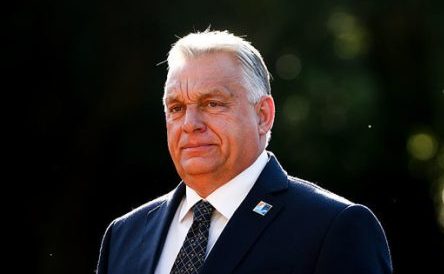
RT | December 7, 2025
Hungarian Prime Minister Viktor Orban has claimed that the European Union is preparing for war with Russia and plans to be fully ready by 2030. Speaking at an anti-war rally on Saturday, Orban said that Europe was already making moves toward a direct military confrontation.
He described a four-step process that typically leads to war: breaking off diplomatic relations, imposing sanctions, ending economic cooperation, and finally engaging in armed conflict. He said that most of these steps have already been taken.
“There is the official European Union position that by 2030 it must be ready for war,” he stated.
He also said that European countries are moving toward a “war economy.” According to Orban, some EU member states are already shifting their transport and industrial sectors to support weapons production.
The prime minister emphasized Budapest’s opposition to war. “Hungary’s task at the same time is to keep Europe from going to war,” he said.
Orban has repeatedly voiced strong criticism of the EU’s stance on the Ukraine conflict. Hungary has consistently opposed sanctions on Russia, as well as military aid to Kiev and called for peace negotiations instead of escalation.
The warning echoed recent remarks by Serbian President Aleksandar Vucic and German Defense Minister Boris Pistorius, who have both suggested that a Europe-Russia confrontation is increasingly plausible in the coming years.
Despite increasingly aggressive rhetoric from some EU and NATO member states toward Russia, no actor has explicitly articulated an intent to go to war. Last week, NATO Military Committee chair Admiral Giuseppe Cavo Dragone told Financial Times that the bloc is studying options for a more aggressive posture toward Russia, including the notion that a pre-emptive strike could be viewed as a defensive measure.
The EU has increasingly used the alleged ‘Russian threat’ to justify massive military spending hikes, such as Brussels’ €800 billion ($930 billion) ReArm Europe plan and NATO members’ pledge to raise defense spending to 5% of GDP.
Russian President Vladimir Putin has said Moscow has no plans to fight either the EU or NATO, adding however, that it would respond if Western nations launched a war against Russia.
Theft of Russian wealth is tying the entire EU bloc to a sinking ship, or worse, all-out war
Strategic Culture Foundation | December 5, 2025
European Commission President Ursula von der Leyen is pushing ahead with a reckless plan to confiscate over €200 billion in Russia’s sovereign wealth for the purpose of propping up the corrupt NeoNazi Kiev regime and prolonging a futile proxy war.
It is hard to imagine a more crass course of action. Yet the so-called European leadership around Von der Leyen is zealously steering towards disaster. At least the hapless captain of the Titanic tried to avert collision with an iceberg. The Euro captains are heading full steam ahead.
Von der Leyen’s proposed scheme is fancifully called a “reparations loan” and pretends, through legalistic rhetoric, not to be a confiscation of Russia’s assets. But it boils down to theft. Theft to continue the bloodiest war in Europe since the Second World War, which marked the defeat of Nazi Germany.
Von der Leyen, a former German defense minister, is supported by other obsessively Russophobic Euro elites. The EU’s foreign minister Kaja Kallas, a former Estonian prime minister, asserts that the seizure of Russian money and pumping it into the Kiev regime is aimed at forcing Moscow to negotiate a peaceful end to the nearly four-year conflict. Such twisted logic is an Orwellian distortion of reality.
Belgium and other European states are extremely wary of the unprecedented and audacious move. Belgium, which holds the majority of frozen Russian wealth – some €185 bn – in its Euroclear depository, is anxious that it will be financially ruined if Moscow holds the EU liable for illegal seizure of wealth. Other EU members, like Hungary and Slovakia, are concerned that the Russophobic leadership is undermining any diplomatic initiatives by the U.S. Trump administration and the Kremlin to negotiate a peace settlement.
Russian President Vladimir Putin has warned that any confiscation of Russian assets by the EU leadership – regardless of financial rhetorical packaging – will be viewed by Moscow as theft of sovereign wealth. Russia has vowed it will respond robustly with legal challenges under existing treaties to exact compensation. This is what Belgium is fearful of and why it is resisting von der Leyen’s loan reparation scheme.
The European leaders are to hold a summit on December 18-19 to decide on the proposal. So desperate are the Russophobic elites that they have been assiduously piling political pressure on the Belgian government to relent in its opposition to go along with the scheme. In trying to get Belgium onboard, von der Leyen has written legal guarantees that all EU members will share any legal and financial repercussions. Thus, the unelected European Commission president is taking it upon herself to write a suicide note for the whole of Europe.
Essentially, the proposed loan reparation scheme is based on using Russian immobilized investments in EU banks as a guarantee to give €140 bn in an interest-free hand-out to Ukraine. The financial life-line is necessary because Ukraine is bankrupt after four years of fighting a proxy war on behalf of NATO against Russia.
Ukraine and its NATO sponsors have lost this conflict as Russian forces gather momentum with superior military force. But rather than meeting Russia’s terms for peace, the Euro elites want to keep on “fighting to the last Ukrainian”. To sue for peace would be an admission of complicity in a proxy war and would be politically disastrous for the European warmongers. In covering up their criminal enterprise and lies, they are compelled to keep the “defense of Ukraine” charade going.
Given the rampant graft and embezzlement at the core of the Kiev regime as indicated by the recent firing of top ministers and aides, it is certain that much of the next EU loan will end up in offshore bank accounts, foreign properties and being snorted up the noses of the corrupt regime.
Von der Leyen’s artful deception of theft claims that the Russian assets are not confiscated permanently but rather will be released when Moscow eventually pays “war damages” to Ukraine. In other words, the scheme is a blackmail operation, one that Russia will never comply with because it is premised on Russia as a guilty aggressor, rather than, as Moscow and many others see it, as acting in self-defense to years of NATO fueled hostility culminating in the CIA coup in Kiev in 2014 and weaponizing of a NeoNazi regime to provoke Russia. Therefore, under von der Leyen’s scheme, Russia’s frozen funds will, in effect, never be returned and, to add insult to injury, will have been routed through to the benefit of Kiev mafia.
Such a criminal move is highly provocative and dangerous. It could be interpreted by Moscow as an act of war given the huge scale of plunder of the Russian nation. At the very least, Russia will pursue compensation under international treaties and laws that could end up destroying Belgium and other EU states from financial liabilities. How absurd is that? Von der Leyen and her Russophobic ilk are setting up Europe for bankruptcy by stealing Russia’s wealth for propping up a corrupt NeoNazi regime that has already sacrificed millions of Ukrainian military casualties?
Alternatively, if the EU leadership does not get away with its madcap robbery scheme at the summit on December 18-19, the “Plan B” is for the EU 27 members to take out a joint debt from international markets to carry the Kiev regime through another two years of attritional war.
The insanity of the EU leaders is unfathomable. It is driven by ideological, futile obsession to “subjugate” Russia. Von der Leyen, as well as Germany’s Chancellor Friedrich Merz, are descendants of Nazi figures. For these people, there is an atavistic quest to defeat Russia and assert European “greatness”.
They lost their proxy war in Ukraine with much blood on their hands. But instead of desisting from their destructive obsession, they are desperately trying to find new ways to keep it going.
The criminal, irresponsible Euro elites like von der Leyen, Kallas, Merz, Macron, and NATO’s Rutte, are lashing the EU financially to a sinking ship. They are bringing the entire European bloc down with them, splintering as they go.
What these elites are doing is destroying the European Union as we know it, and they profess to uphold. Ironically, it is they, not Russia, that is the biggest enemy to democracy and peace in Europe.
Putin’s India Visit Signals Folly of Western Pressure – Academic
Sputnik – 06.12.2025
Russian President Vladimir Putin’s visit to India may have sealed dozens of strategic partnerships, but its core purpose transcends trade: Moscow is using its Soviet-era ally to send a defiant message to the West that it will not be isolated over the conflict in Ukraine, US academic Ramesh Mohan says.
Putin left New Delhi on Friday after witnessing with Indian Prime Minister Narendra Modi the signing of over a dozen bilateral agreements on technology, agriculture, tourism and defense cooperation. The subject of Ukraine or the increasingly bellicose US and EU sanctions against Russian oil weren’t in any of the signed documents.
Yet, those in the room — or thousands of miles away in any of the Western capitals that had been plotting their next move against the Kremlin — could not have missed the true significance of Putin’s two-day visit, said Mohan.
“The core message here is that Russia still maintains strong global alliances despite the multitude of Western sanctions and attempts to isolate Moscow over the war in Ukraine,” Mohan, an economics professor at Bryant University in Smithfield, Rhode Island, told Sputnik.
Mohan, who also teaches about economics in international politics and regularly leads Bryant University study missions to Asia, said Modi was also sending a message to the world that US pressure will not dictate India’s policy.
“Modi is showing the West that India will not be cowed into abandoning its own national and strategic interests,” said Mohan. “The Russia-India alliance, particularly, is a long-standing, privileged partnership rooted in the Soviet era. I don’t ever see India forsaking that.”
The last time Putin met Modi was in the presence of Chinese President Xi Jinping when they attended the Shanghai Cooperation Organization (SCO) Summit in the Chinese port city of Tianjin in September.
The visual display of camaraderie between the three leaders had sent a message to the world even then that the so-called Global South solidarity could not be broken in the face of Western pressure, said Mohan.
EU targets platforms that refuse to censor free speech – Telegram founder
RT | December 6, 2025
The EU is unfairly targeting social media platforms that allow dissenting or critical speech, Telegram founder Pavel Durov has said.
He was responding to a 2024 post by Elon Musk, the owner of X, who claimed that the European Commission had offered the platform a secret deal to avoid fines in return for censoring certain statements. The EU fined X €120 million ($140 million) the day before.
According to Durov, the EU imposes strict and unrealistic rules on tech companies as a way to punish those that do not comply with quiet censorship demands.
“The EU imposes impossible rules so it can punish tech firms that refuse to silently censor free speech,” Durov wrote on X on Saturday.
He also referred to his detention in France last year, which he called politically motivated. He claimed that during that time, the head of France’s DGSE asked him to “ban conservative voices in Romania” ahead of an election, an allegation French officials denied. He also said intelligence agents offered help with his case if Telegram quietly removed channels tied to Moldova’s election.
Durov repeated both claims in his recent post, describing the case as “a baseless criminal investigation” followed by pressure to censor speech in Romania and Moldova.
Later on Saturday, Durov wrote: “The EU exclusively targets platforms that host inconvenient or dissenting speech (Telegram, X, TikTok…). Platforms that algorithmically silence people are left largely untouched, despite far more serious illegal content issues.”
Last year Elon Musk said the European Commission offered X “an illegal secret deal” to quietly censor content. “If we quietly censored speech without telling anyone, they would not fine us. The other platforms accepted that deal. X did not,” he wrote.
On Friday, European Commission spokesperson Tom Rainier said the EU fined X €120 million for violating the Digital Services Act. He claimed the fine was unrelated to censorship and was the first enforcement under the law. US Secretary of State Marco Rubio criticized the move on X, calling it “an attack on all American tech platforms and the American people by foreign governments.”
Durov and Musk have both faced pressure from EU regulators under the Digital Services Act (DSA), which came into force in 2023. The law requires platforms to remove illegal content quickly, though critics say it can be used to suppress lawful expression.
Featured Video
US IRAN TALKS: Who Are the Crazy Ones Here? /Lt Col Daniel Davis
or go to
Aletho News Archives – Video-Images
From the Archives
Wartime internment camps in Australia
National Archives of Australia
World War I
During World War I, for security reasons the Australian Government pursued a comprehensive internment policy against enemy aliens living in Australia.
Initially only those born in countries at war with Australia were classed as enemy aliens, but later this was expanded to include people of enemy nations who were naturalised British subjects, Australian-born descendants of migrants born in enemy nations and others who were thought to pose a threat to Australia’s security.
Australia interned almost 7,000 people during World War I, of whom about 4,500 were enemy aliens and British nationals of German ancestry already resident in Australia.
Records of World War I internment camps
World War II
During World War II, Australian authorities established internment camps for three reasons – to prevent residents from assisting Australia’s enemies, to appease public opinion and to house overseas internees sent to Australia for the duration of the war.
Unlike World War I, the initial aim of internment during the later conflict was to identify and intern those who posed a particular threat to the safety or defence of the country. As the war progressed, however, this policy changed and Japanese residents were interned en masse. In the later years of the war, Germans and Italians were also interned on the basis of nationality, particularly those living in the north of Australia. In all, just over 20 per cent of all Italians resident in Australia were interned. … continue
Blog Roll
 Aletho News
- Diplomats slam US negotiators’ performance in Iran talks
- Trump Refuses Exit Ramp, War with Iran will Continue
- Trump Says US Naval Blockade in Strait of Hormuz Will Begin Shortly
- US, Iran end 21-hour talks without agreement
- US IRAN TALKS: Who Are the Crazy Ones Here? /Lt Col Daniel Davis
- Talks with the US end without a deal over excessive US demands: Iran
- Feeling Better, Getting Worse: How Psychiatric Drugs Create the Illusion They Cure
- ‘Nobody Told Me’: Former Mental Health Patient Calls Out Dangerous Side Effects of Psychiatric Drugs
- Dr. Abu-Sitta: Beirut ‘felt like a day in Shifa Hospital’
- Iran Has Won the War, It Will Be Up to the US to Secure the Peace: Mohammad Marandi
- If Americans Knew
- US-Iran ceasefire negotiations make zero progress – Daily Update
- Pro-Israel ‘Thinktanks’ and Individuals who Influence U.S. Foreign Policy
- Mearsheimer reveals how Israel dictates US policies on Iran, Gaza – video
- After killing 350+, Israel still has a “score to settle” with Lebanon before ceasefire – Daily Update
- Military aid to Israel emerges as the latest political litmus test for Democrats
- The only Palestinian children’s rights organization closes following years-long Israeli campaign against it
- ‘I Can’t Forget the Smell’: Lebanese Reel After Israel Kills Over 300 in Single Day
- DNC Shoots Down Resolutions Calling Out AIPAC and Limiting Arms to Israel
- TCN: Is Israel Blackmailing President Trump?
- Israel killed at least 303 Lebanese yesterday – who were they? Daily Update
- No Tricks Zone
- German Expert: Heat Dome Led To Record Temps In Western USA…Warmer In 1934, 1936
- New Study: No Linear Warming Or Glacier Retreat Along Northern Antarctic Peninsula Since 1980s
- An Inconvenient Tree: Uncovered In Alps… Europe Much Warmer Than Today 6000 Years Ago
- New Study Reports A 60% Slowdown In Greenland’s Ice Loss Rate In The Last Decade
- Low Intensity Tornado Wrecks Major Solar Farm, Creating A Potential Toxic Dump
- New Study Finds Warming Saves Lives…Cold Temperatures 12 Times More Deadly Than Excess Heat
- German Science Blog Accuses PIK Climate Institute Of Hallucinating Climate Tipping Points
- Devastating Assessment Of Comirnaty Vaccine By Former Senior Pfizer Europe Toxicologist
- New Study: CO2 Is ‘Effectively Negligible’ As An Explanatory Climate Change Factor Since 2000
- Former Pfizer Toxicologist Dr. Helmut Sterz Tells Bundestag Hearing Pfizer Vaccine Should Have Never Been Approved
 Aletho News