Forget Oil: Natural Gas Prices Are About to Go Through the Roof If Hormuz Isn’t Reopened Soon
Sputnik – 01.03.2026
“Gas prices may rise, because approximately 20% of the world’s LNG transits through the Strait of Hormuz, including all of Qatar’s production,” Igor Yushkov, a top Russian energy expert, told Sputnik, commenting on the Persian Gulf crisis.
“Qatar is one of the largest producers of LNG in the world, second only to Australia and the US. If there’s a shortage of LNG on the global market…the exchange price could easily exceed $1k or even 1.5k. We’ve seen similar prices in Europe even without such a shortage. So the price could skyrocket.”
According to Yushkov, “everything will depend on how long the tension in the Strait of Hormuz lasts,” including not only Iran’s readiness to reopen it, but gas producers’ willingness to resume transit.
“In any case, we will see higher shipping costs, higher insurance costs for ships,” with the situation “further exacerbated” by the fact that the Northern Hemisphere is still in the heating season, with Europe’s underground gas storage facilities being gradually depleted.
“Even though Qatar gas physically goes primarily to Asian markets, the exchange price will rise everywhere,” same as oil, Yushkov clarified. Qatar itself also has no alternative to Hormuz. “Therefore, if it is unable to export LNG, Qatar will simply have to stop production.”
Message to China
The current crisis is also “a major wake-up call for China,” with the US demonstrating its readiness to flout international law, Yushkov says.
“China is being shown that anything coming from the south is unsafe. Passage through the Strait of Hormuz may be interrupted today as part of the current conflict, but tomorrow the Americans could close it off to Qatari LNG supplies to the Chinese market.”
“Or they could close the Strait of Malacca, through which all the hydrocarbons going to China from Africa and the entire Middle East flow. Therefore, this is a signal to China that anything coming from the north is much safer, and much more difficult to shut down,” the observer summed up.
Hormuz Strait: Iran’s Strategic Trump Card for Forcing Enemies to the Negotiating Table
Sputnik – 01.03.2026
Iran is in an “existential confrontation” with the US and Israel, and restricting access to the Hormuz Strait – entry point to the oil-rich Persian Gulf region, is one of the “most powerful strategic cards” it holds, says Dr. Ali Mamouri, a former strategic communication advisor to Iraq’s prime minister.
“Iran’s broader strategy appears to be buying time and raising the cost of the conflict, hoping to drag the United States into a prolonged and expensive confrontation that would generate domestic political pressure on President Trump to seek a ceasefire,” Mamouri told Sputnik.
“On the other side, Washington and Israel seem to be betting on internal collapse—expecting that military pressure might trigger protests, elite divisions, or defections within Iran’s security forces. So far, however, none of these internal fractures have appeared.”
“A prolonged closure” of the Hormuz Strait would have a profound impact on the global economy, Mamouri says.
“A sustained disruption would likely trigger sharp spikes in global oil prices.” Beyond that, the import-heavy economies of Gulf countries, and oil import-dependent economies of Asia and Europe could descend into crises, shipping insurance premiums would surge, global supply chains wrecked, and inflation skyrocketing, “affecting everything from fuel prices to manufacturing and food supply.”
“In this sense, a prolonged crisis in the Strait of Hormuz could trigger a domino effect across the global economy, combining energy shocks, trade disruptions and financial instability,” Mamouri stressed. “If Iran manages to maintain a sustained disruption, it could become a powerful bargaining tool to force negotiations and potentially halt the current military escalation.”
Ukraine Given $43Bln in Proceeds From Russian Assets Frozen by G7 Since 2024 – Estimates
Sputnik – 27.02.2026
The G7 nations have issued $3.8 billion in loans to Ukraine in 2026 using proceeds generated by frozen Russian state assets, bringing the total amount of loans given to Kiev since 2024 to almost $43 billion, according to calculations by Sputnik based on data from the Ukrainian Finance Ministry and national agencies.
In 2024, the G7 countries approved a $50-billion loan to Ukraine, funded by revenues from frozen Russian assets. By late February 2026, the countries had allocated $42.7 billion to Ukraine under this scheme.
The first billion was transferred to Ukraine by the United States in late 2024. Since then, Washington has not provided any new funding to Kiev from Russian asset proceeds. The other members of the G7 gave Ukraine $37.9 billion in 2025 and $3.8 billion in 2026.
Overall, the European Union has contributed $32 billion in funding to Ukraine as part of the loan secured by Russian assets. Canada has contributed $3.6 billion, while Japan and the United Kingdom have each contributed approximately $3 billion.
Ukrainian military analyst praises use of drones against ‘Russian-Hungarian-Slovak friendship’
Remix News | February 27, 2026
Ukrainian analyst Valery Savchuk spoke in a video about Ukraine’s geopolitical pressure on Hungary by shutting down the Friendship oil pipeline, calling it a correct strategy. He added that drones should also be used to strike at the “Russian-Hungarian-Slovak friendship,” writes Hirado, based on a video the analyst published.
“I personally like this Ukrainian position: the position of a serious player who uses all opportunities to achieve his goals. Blackmail? Yes, geopolitics. It’s time for us to play these games too — on the condition that this game leads to the desired result for us.”
He then went on to say that Ukraine should also use drones against the Hungarians and Slovaks. “Now we will wait for the decision of the European Union. We will wait for the effective work of our diplomats, and most importantly: We will wait for new devastating blows of our drones to this Russian-Hungarian-Slovak friendship,” he said, presumably referring to the Friendship oil pipeline.
Ukraine has been blamed for various attacks on the Friendship pipeline and Russian energy producers, including a massive wave of drone strikes in Russia territory that destroyed the Kaleykino pumping station.
Meanwhile, Parliamentary State Secretary Balázs Hidvéghi posted his own video message on the importance of a new national petition, where Hungarians can say “no” to financing the Russian-Ukrainian war, 10 years of support for Ukraine, and a rise in utility costs.
The Fidesz politician stressed that “Brussels is planning €1.5 trillion in aid for Ukraine and wants its membership by 2027. Given the events of recent days, it is especially important now for Hungarians to make their voices heard: Ukraine has not resumed oil shipments to Hungary for political reasons, while the Brussels leadership has sided with Ukraine.”
“Hungary has become the target of serious threats and pressure, and therefore it cannot remain silent now. He added that the government is calling on Hungarians to stand up against the Brussels-Ukraine-Tisza Pact and join the national petition,” he added.
The petition can be filled out until March 23, and according to estimates, the number of returned forms could exceed one million.
Von der Leyen warns Hungary: We have ways of making you talk
By Finian Cunningham | Strategic Culture Foundation | February 26, 2026
European Commission President Ursula von der Leyen arrived in Kiev this week empty-handed, and she was pissed. She had been planning to mark the fourth anniversary of the Ukraine war on February 24 with a new €90 billion loan to prop up the corrupt Kiev regime.
At the last minute, Hungary announced that it was vetoing the “Ukraine Support Loan.” So, von der Leyen, the former German defense minister and arch Russophobe, had nothing to show the puppet regime. The big anniversary occasion was an embarrassing flop. Hungary was accused of “betraying” European solidarity.
Putting a brave face on the debacle, von der Leyen made a promise, with menacing tone, about delivering the €90 bn “one way or another.” She said: “Let me be clear, we have different options, and we will use them.”
Those options would seem to include inciting regime change in Budapest. Hungary is going to the polls on April 12 for parliamentary elections. It is no secret that the European Union leadership would dearly like to see incumbent Prime Minister Viktor Orbán being turned out of office, and replaced by Péter Magyar, of the opposition Tisza party, who is more amenable to Brussels’ policy of supporting the Kiev regime in the proxy war against Russia.
Orbán’s government vetoed the €90 bn loan – 60 per cent of which is for military aid – because it accuses the Kiev regime of blocking vital oil supplies to Hungary. Slovakia has also joined Budapest in making the accusation. Both countries claim that Ukraine is using energy “blackmail” simply because they refuse to discontinue buying oil supplies from Russia, and because they are opposed to the ongoing war.
On January 27, Russian oil supplies to Hungary and Slovakia transiting Ukraine via the Drushba pipeline were suddenly stopped. The Kiev regime claims that the pipe was hit by a Russian drone.
However, Hungary’s Foreign Minister Péter Szijjártó has bluntly accused Ukraine of lying. He disputes that a Russian attack on the infrastructure even took place. It doesn’t make sense that Russia would harm its customers.
The suspicion is that the Ukrainian regime is using a purported Russian strike as a pretext to cut off the oil supply. The suspicion is deepened by the fact that the Kiev regime has refused requests by Hungary and Slovakia for their inspectors to assess the alleged technical damage. And neither is the EU leadership putting any pressure on Kiev to prove its claims of Russian sabotage.
Ukraine’s nominal president, Vladimir Zelensky, who is mired in allegations of massive fraud, financial corruption, and racketeering, has for a long time been threatening to cut off Russian oil supplies to Hungary and Slovakia. He accuses Budapest and Bratislava of supporting Russia’s war machine by buying its oil. Hungary and Slovakia say that it is their sovereign right to continue obtaining vital energy imports from Russia. The Soviet-era Drushba (“Friendship) pipeline has been supplying Europe since 1964.
The European Union has also been pressuring Hungary and Slovakia to terminate the purchase of Russian crude oil and get in line with the rest of Europe to source alternative, more expensive American energy exports.
Last year, Zelenksy delivered on his threats when the NATO-backed Kiev regime bombed sections of the Drushba pipeline in Russian territory. Those attacks temporarily disrupted supply to Hungary and Slovakia. At the time, the European Union leadership did not condemn the Ukrainian attacks. In other words, Von der Leyen and the Brussels administration were effectively siding with a non-EU member that was harming the interests of two member nations. That indifference was tantamount to greenlighting more sabotage attacks.
The Kiev regime has a record of using attacks on energy as a political weapon against Hungary and Slovakia. It is therefore logical that it has taken such practice to a new level by blocking infrastructure that it can easily control on its own territory. There is no need to bomb the Drushba pipeline in Russia, hundreds of kilometers away. The Kiev regime can handily turn off the pumps of the pipeline section running through its territory – and then blame Russia for “drone strikes”.
Hungary and Slovakia have both accused Zelensky of “slow-walking” the alleged repairs to the pipeline. Zelensky claims that the repairs can’t be carried out because Russia keeps attacking the repair crews.
The Kiev regime has a habit of lying. It has been claiming that Russia is shelling the Zaporozhye Nuclear Power Plant under its control, when in reality it is the Kiev regime that has been carrying out the attacks, which Moscow has condemned as “nuclear blackmail”. Again, the European Union has indulged Kiev’s lies by ignoring the blatant evidence.
On the energy blackmail against Hungary and Slovakia, the knock-on effect has been a growing shortage of fuel and increasing prices for energy and transport.
Hungary’s European Affairs Minister Janos Boka has accused Ukraine and the European Union of deliberately disrupting oil supply to influence the upcoming election. He said: “Ukraine has clearly been reaching for the energy weapon for political reasons, interfering in the ongoing Hungarian elections… to create uncertainty and chaos, and thereby helping the [opposition, pro-EU] Tisza party to power.”
At a closed-door summit in Brussels this week for EU foreign ministers, it was notable that Ukraine’s top diplomat, Andrii Sybiha, was afforded the extraordinary privilege of being permitted to join the conference via video link. How is it that a non-EU member is allowed to participate in a private ministerial summit?
Hungary’s Foreign Minister Péter Szijjártó reportedly complained that EU foreign policy chief, Kaja Kallas, prevented him from grilling the Ukrainian on the specific damage to the Drushba pipeline. Szijjártó said that the “mumbling response” from the Ukrainian official and his abrupt disconnection from the summit demonstrated guilty responsibility.
What the whole saga illustrates is the dictatorship that has emerged in the European Union. Countries like Hungary and Slovakia are not allowed to have independent positions on their energy trade or their opposition to the war in Ukraine.
The Kiev regime is using the disruption of vital energy supply to EU members as a form of blackmail to coerce those members into handing over tens of billions of euros to prolong a bloody conflict, a conflict that could spiral into a nuclear world war. And the EU leadership is effectively supporting this terrorist tactic against its own members to enforce subordination.
When von der Leyen warns that “we have other options,” the inimical image conjured up is that of a Gestapo interrogator twirling pliers in hand.
The strategic defeat of Russia is paramount for the European Russophobic elites, even if it means gouging out the democratic rights of its own member states and endangering international peace.
EU manipulating polls in bid to oust Orban – German opposition leader
RT | February 27, 2026
The EU is desperately attempting to engineer “regime change” against Hungarian Prime Minister Viktor Orban in next month’s parliamentary election, employing tactics such as poll manipulation and energy blackmail, German opposition leader Alice Weidel has claimed.
In a post on X on Wednesday, the co-chair of the Alternative for Germany (AfD) party accused Brussels of using “their puppet,” Hungarian opposition leader Peter Magyar, in a bid to remove Orban.
“They want Orban gone, and they are willing to use any means to achieve it,” Weidel wrote, pointing to the ongoing “blockade of oil supplies” from Ukraine to Hungary through the Druzhba pipeline, and “manipulation of election polls.”
Weidel was responding to a recent survey by Hungarian pollster Median showing Magyar’s opposition Tisza Party with a 55% to 35% lead over Orban’s ruling Fidesz-KDNP alliance. Irish economist Philip Pilkington dismissed the figures as “really crazy polls,” comparing them to surveys in Georgia ahead of elections in 2024, which were followed by unrest.
Hungarian opposition pollsters have a track record of significant inaccuracies. In 2022, left-leaning polling firm Publicus was wide of the mark by 20 points, while Median itself underestimated Fidesz by 7 points in its final pre-election survey. Orban ultimately secured a 20-point victory.
Budapest and Brussels have been in an escalating standoff over Hungary’s continued opposition to EU policy on Ukraine and Russia. Budapest has repeatedly blocked or vetoed EU initiatives, including a recent €90 billion ($106 billion) emergency loan for Kiev and the bloc’s latest sanctions package against Moscow.
Orban has also vehemently opposed Ukraine joining the EU, arguing that Brussels’ support for Kiev draws the bloc closer to direct war with Russia and ignores Ukraine’s failure to meet requirements for candidates.
The Hungarian leader has described recent attempts to offer Kiev a form of ‘membership lite’ as “an open declaration of war against Hungary,” accusing Brussels of disregarding the will of the Hungarian people and being “determined to remove the Hungarian government by any means necessary.”
Orban has also accused Brussels of using “censorship, intervention, and manipulation” to undermine his government, framing the upcoming April 12 election as a choice between “war or peace.”
Could Hungary’s fight over oil change course of Ukraine War?
By Ian Proud | Responsible Statecraft | February 26, 2026
The EU’s plan to impose its 20th package of sanctions against Russia crashed against a seemingly immovable wall of Hungarian resistance this week, when the Central Europe country used its veto to block it.
That is not necessarily the end of the matter, yet I hope it is the beginning of the end, with Europe finally choosing peace over war.
At a fraught EU Council meeting on February 23, agreement could not be reached on a new round of EU sanctions, leading the EU High Representative for Foreign Policy and Security, Kaja Kallas, to announce, “I deeply regret that we did not reach an agreement today, given that tomorrow [February 24] is the solemn anniversary of the start of this war.”
Hungarian resistance to collective decisions on Ukraine policy has been overcome before. In June 2025, Prime Minister Viktor Orban stepped out of the European Council meeting to allow a unanimous vote of those present to extend existing EU sanctions against Russia. Yet, this latest blockage is fueled by growing bad blood between Hungary and its eastern neighbour Ukraine, over the issue of oil.
It is an uncomfortable reality that Europe has continued to purchase Russian oil and gas throughout the war, in the face of President Trump’s exhortations to stop purchases. Gas imports still accounted for 12% of Europe’s total as of October 2025. And while Hungary and Slovakia are the largest importers, other western European powers such as France, the Netherlands, and Belgium, have also continued purchases. The addiction is a hard habit to break, and for largely domestic reasons.
As Gladden Pappin, the American President of the Hungarian Institute for International Affairs, has pointed out, if Hungary agreed to sanction Russian oil and gas, “Hungarian gas at the pump doubles overnight. Household energy prices triple or quadruple, and the German industry moving to Hungary immediately halts. Whatever government imposes that policy will collapse within weeks.”
While sanctioning Russia is a geopolitical tool, it has real world consequences for regular citizens across Europe. Germany has seen its economy tip into deindustrialization since the start of the war in Ukraine and the progressive cutting off of access to Russian [energy], shedding over 250,000 industrial jobs, a contraction of 4.3%, amid widespread factory closures.
Sanctions require European states voluntarily to choose economic self-harm ahead of an end to the war in Ukraine. And in Hungary and Slovakia, that is not a palatable choice, not least ahead of a hotly contested election in Hungary on April 12. Prime Minister Viktor Orban has framed the election as a choice between “war or peace.”
Four years after the war in Ukraine started, increasing numbers of Europeans are desperate for peace and not war, not just for their long-term personal security, but for the benefits to their check books.
Yet that runs counter to Ukraine, which frames the war as existential to them. So, they have pushed Europe to go tougher and faster against Russia’s economy and are doing everything they can to add further pressure. Ukraine launched drone attacks against the Druzhba pipeline network which supplies oil to Hungary and Slovakia, cutting this supply route on January 27.
It is a statement of the crazy world in which we live, that Ukraine can attack facilities that supply EU and NATO countries without opprobrium in the west. Unfortunately, out of sympathy for Ukraine’s war plight, EU member states are quick then to criticize Hungary and Slovakia for taking retaliatory action. Poland’s Foreign Minister, Radek Sikorski, labeled the Hungarian veto as “an escalation.” And yet he doesn’t have to answer to Hungarian voters.
Blocking the EU’s 20th sanctions package is one measure. Hungary and Slovakia have also blocked the promised 90 bln euro loan package for Kviv to keep the war effort going. They have also threatened to cut off supplies of gas, electricity, and diesel to Ukraine (as it no longer imports gas from Russia, Ukraine relies of supplies piped in from proximate EU countries). Ukrainian media has predictably labeled this energy blackmail. Not least given the enormous electricity and heating shortages Ukraine faces in light Russia’s campaign of strategic bombing against their energy infrastructure.
At a TV interview that I attended recently, a Ukrainian MP pointed out that she uses a local app that tells her how many hours of electricity her building will receive each day. Who in Europe would want to live in such conditions, not the least during a bitterly cold winter?
Of course, the stark brutality of the air attacks and Ukraine’s energy crisis drives Europe’s mainstream politicians to pursue more punitive actions against Russia, including economic sanctions. Yet the inescapable reality is that the EU’s 20th sanctions package amounts to more of the same — tactical scrapes at the bottom of the barrel — to bear down on Russia’s energy exports and financial services sector, together with small beer restrictions on some other goods’ exports.
The President of the European Commission, Ursula von der Leyen, claims that Russia’s energy exports were cut by 24% in 2025. And yet, look at the real data, and you’ll see that Russia’s exports in 2025, at $419.4 billion, were down just 3.3% on 2025, with an overall current account surplus of $41.4 billion. That surplus will go into purchases of gold, which now accounts for almost one half of Russia’s soaring international reserves, which stand at $833 billion.
Meanwhile, Ukraine’s current account deficit more than doubled to $31.9 billion in 2025, or 14.9% of GDP, liquidity that will need to be met by printing money or donations from Europe.
At some point, European leaders need to ask themselves, after 19 rounds of sanctions already, “is this really working?”
It’s not only that economic sanctions against Russia hit diminishing marginal returns soon after the war in Ukraine started four years ago. But that the addition of new sanctions, self-evidently, disincentivizes Putin from settling for peace. Yes, Russia’s economy is undoubtedly feeling the pain, through high inflation and interest rates, plus slowing growth. But there has never been a time when it appeared that, for economic reasons, Russia was under greater pressure to end the war than Ukraine and its European sponsors.
So, and as I have said before, sanctions, and their phased removal, could play a positive role in leveraging an end to the war. Continuing to blame Hungary and Slovakia for the continued intransigence in blocking yet another round of EU sanctions misses this point.
Ian Proud was a member of His Britannic Majesty’s Diplomatic Service from 1999 to 2023. He served as the Economic Counsellor at the British Embassy in Moscow from July 2014 to February 2019. He recently published his memoir, “A Misfit in Moscow: How British diplomacy in Russia failed, 2014-2019,” and is a Non-Resident Fellow at the Quincy Institute.
U.S. General Caine Warns: STRIKING IRAN is a HUGE RISK /Glenn Diesen & Lt Col Daniel Davis
Daniel Davis / Deep Dive – February 23, 2026
The Pentagon is raising concerns to Trump about an extended military campaign against Iran, advising that war plans being considered carry risks including U.S. and allied casualties, depleted air defenses and an overtaxed force.
The warnings voiced by Gen. Dan Caine, the chairman of the Joint Chiefs of Staff, within the Defense Department and during meetings of the National Security Council, current and former officials said, but other Pentagon leaders also have noted similar worries.
Such discussions are always part of the contingency-planning process before military operations, some officials said, noting that military leaders—especially the Joint Chiefs chair—provide prudent estimates of possible casualties and other potential costs of military operations.
Hungary Blocks 20th Package of Anti-Russia Sanctions, $106B Loan to Ukraine – Szijjarto
Sputnik – 23.02.2026
Hungary blocked the 20th package of anti-Russia sanctions, as well as the 90 billion euro ($106 billion) loan to Ukraine, due to Kiev’s shutdown of the Druzhba oil pipeline, Hungarian Foreign Minister Peter Szijjarto said on Monday.
“At today’s meeting, I made it clear that we do not support the 20th package of sanctions and do not give permission for this. And I made it clear that we would not agree to Ukraine receiving a military loan of 90 billion euros. Because the Ukrainians cannot blackmail us, they cannot jeopardize the security of Hungary’s energy supply by conspiring with Brussels and the Hungarian opposition,” Szijjarto told reporters, following a meeting of the EU Council of Foreign Ministers.
Hungary considers Ukraine’s suspension of Russian oil transit through Druzhba as encroachment on its sovereignty, Szijjarto concluded.
The termination of Russian oil supplies via Druzhba pipeline was the result of collusion between Kiev and Brussels, Szijjarto said.
“It turned out to be a shocking fact that Ukraine is really colluding with Brussels, really colluding with the European Commission headed by von der Leyen in terms of blocking the supply of [Russian] oil [via Druzhba pipeline]. It was finally revealed and proven today,” Szijjarto told reporters, following a meeting of the EU Council of Foreign Ministers.
On February 18, Szijjarto said that Hungary stopped supplying diesel fuel to Ukraine. He said this was a response to Kiev’s blackmail, as Ukraine is not resuming the transit of Russian oil to Hungary via the Druzhba pipeline for political reasons, trying to cause an energy crisis in the country and influence the April elections.
The EU countries are preparing for a protracted conflict in Ukraine and want to send their troops there as soon as possible, the minister added.
Ukraine demands 155 billion euros ($183 billion) from the EU only for the maintenance of the army in 2026, a loan of 90 billion euros is not enough for it, Peter Szijjarto said.
“Colleagues have made it clear that the 90 billion euros previously agreed upon and now blocked by Hungary are not enough to meet Ukraine’s financial needs, and in the near future it is necessary to make a decision on sending even more resources, even more money to Ukraine. This was also confirmed by the Foreign Minister of Ukraine, who said that this year they need 155 billion euros only for the maintenance of the army,” Szijjarto told Hungarian journalists, following a meeting of the Council of Foreign Ministers of the EU countries.
Hungary’s Blocking of EU Loan to Ukraine May Jeopardize IMF Funding – Reports
Sputnik – 22.02.2026
Hungary’s blocking of a 90 billion euro ($106 billion) EU loan to Kiev could impact a loan to Ukraine worth over $8 billion from the International Monetary Fund (IMF) that has not yet been approved, the Financial Times newspaper reported on Sunday.
On Friday, Hungarian Foreign Minister Peter Szijjarto said that Budapest would block the EU’s loan as Kiev failed to restore oil transit via the Druzhba pipeline. On Saturday, Hungarian Prime Minister Viktor Orban said that Budapest, following Bratislava, was weighing cuts to electricity supplies to Ukraine.
According to the report, the IMF loan depends on plugging Ukraine’s anticipated budget shortfall, which was slated for closure by April using EU funds.
“Without that [EU and IMF] support, Ukraine’s economy would most likely collapse,” Maksym Samoiliuk, an economist at the Kiev-based Centre for Economic Strategy, was quoted as saying by Financial Times.
On December 19, 2025, a summit in Brussels concluded with the EU temporarily abandoning plans to seize Russian state assets and instead agreeing to extend a 90 billion euro loan to Ukraine from the EU budget. Hungary, Slovakia and the Czech Republic refused to take on responsibility for the loan.
On November 26, 2025, the IMF said it had reached a preliminary expert-level agreement on a new Extended Fund Facility arrangement for Ukraine worth approximately $8.2 billion.
EU members divided on 20th Russia sanctions package – media
RT | February 20, 2026
EU ambassadors reportedly failed to reach an agreement on a 20th sanctions package against Russia during a meeting on Friday, Reuters has reported, citing diplomatic sources.
The proposed measures, which Brussels said it hopes to finalize by the fourth anniversary of the Ukraine conflict’s escalation on Monday, face opposition from several member states over key provisions.
The main sticking point is a proposed full ban on maritime services for Russian oil tankers which would scrap the existing price cap system, prohibiting all EU companies from providing insurance, banking, shipping, or port access to any vessel carrying Russian crude.
Greece and Malta, two countries with powerful maritime industries, have reportedly emerged as the main opponents of the new restriction, warning that a unilateral EU ban without full G7 backing would cripple their economies and push shipping business toward competitors in India and China.
They have also opposed possible restrictions on the port of Karimun in Indonesia. Italy and Hungary have been reluctant to support sanctions against the port of Kulevi in Georgia. Madrid and Rome have objected to placing sanctions on one of Cuba’s banks.
Furthermore, Hungary and Slovakia have placed a “general reserve” on the entire package, leveraging their veto power to secure assurances over Russian oil supplies via the damaged Druzhba pipeline which have been halted since January.
Reuters reported that EU diplomats could reconvene over the weekend to discuss the proposed sanctions again, ahead of Monday’s Foreign Affairs Council meeting, where ministers hope to formally adopt the package.
Moscow has repeatedly denounced the EU’s sanctions as illegitimate and counterproductive, saying that they have had little effect on Russia’s economy, while decimating Europe’s.
A number of European officials have also consistently opposed the restrictions, with Slovak Prime Minister Robert Fico arguing that the EU is “only hurting itself” with the sanctions, describing previous packages as bringing “no benefit to member states.”
With Ukraine blamed for cutting oil flows to Hungary, Croatia also refuses to transfer Russian oil in violation of EU law
Election interference?
Remix News | February 20, 2026
The energy supply dispute has reached a new level in Central Europe after Zagreb made it clear that it will not allow Russian crude oil to be transported via the JANAF pipeline to Hungary and Slovakia.
Hungarian Foreign Minister Péter Szijjártó announced this week that Hungary would stop the transport of diesel fuel to Ukraine, after Ukraine halted the transit of Russian oil to Hungary via the Friendship pipeline on Jan. 27 and has not resumed it since. Shortly afterwards, Slovak Prime Minister Robert Fico also announced that the Slovnaft oil refinery would stop exporting diesel to Ukraine.
Szijjártó made it clear that Hungary expects Croatia to comply with EU law and step in to fill the shortage created for Hungary and Slovakia due to Kyiv’s refusal to reopen the Druzhba pipeline.
Economy Minister Ante Susnjar has indicated that Croatia is ready to help the two countries with oil from non-Russian sources, in accordance with European Union legislation and OFAC rules, but Hungary has countered that this is not in compliance with EU rules, which Szijjártó has pointed out state that if land transit of Russian crude oil is impossible, Budapest and Bratislava can also purchase from Russia by sea.
Susnjar said that JANAF is capable of transporting 15 million tons of oil per year, which exceeds the combined capacity of the Százhalombatta and Bratislava refineries, so there are no technical obstacles. He added that transportation fees account for only about one percent of the total cost of oil. According to him, as explained by Index, the real issue is that Russian oil is about 30 percent cheaper than alternatives.
Prime Minister Andrej Plenkovic confirmed that Croatia is able to guarantee 12 million tons of oil per year for Hungary and Slovakia, which would fully cover the refining needs of both countries.
Meanwhile, the European Commission has also intervened following an extraordinary meeting. “We have convened an ad hoc meeting of the Oil Coordination Group to discuss the impacts of the supply disruption and possible alternatives to fuel supply,” said Anna-Kaisa Itkonen, spokesperson for the European Commission.
She further added, as quoted by Euronews, “We are in contact with Ukrainian authorities on the timeline of repairing this (Friendship) pipeline. It is very, very important that this is not misinterpreted to mean that we would be exerting any kind of pressure on Ukraine.”
Still, the EU commission has made it clear that they are concerned about Ukraine’s own energy security, indicating they do not want to see Hungary and Slovakia blocking diesel fuel from the war-torn country. Hungary also stated yesterday that it may decide to cut off electricity and natural gas transports to Ukraine as well, as confirmed by Reuters.
Szijjártó stated that they are in constant contact with the Ukrainian authorities about the schedule for repairing the pipeline. He noted that Hungary expects the European Commission to comply with European Union rules and that the Brussels body should not behave like the “Ukraine Commission.” He also called on them to take the EU rules on the import of Russian crude oil seriously and to signal to the Croatians that they cannot refuse the sea transport of Russian oil from Hungary and Slovakia during the outage of the Friendship pipeline.
The Hungarian foreign minister has also made it clear that there are no physical or technical obstacles to restarting the oil pipeline, claiming that Zelensky’s refusal to restore service on the Druzhba is election interference, given it plays directly into the opposition’s hands right before parliamentary elections in Hungary this April.
Featured Video
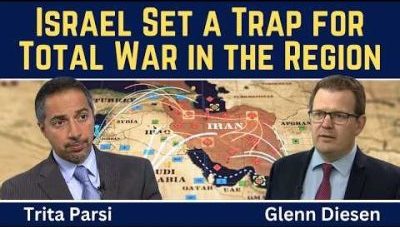
Trita Parsi: Israel Set a Trap for Total War in the Region
or go to
Aletho News Archives – Video-Images
From the Archive
Zionism’s Violent Legacy
By Donald Neff | Washington Report On Middle East Affairs | January 1996
On January 4, 1948, Jewish terrorists drove a truck loaded with explosives into the center of the all Arab city of Jaffa and detonated it, killing 26 and wounding around 100 Palestinian men, women and children.[1] The attack was the work of the Irgun Zvai Leumi – the “National Military Organization,” also known by the Hebrew letters Etzel – the largest Jewish terrorist group in Palestine. The Irgun was headed by Revisionist Zionist Menachem Begin and had been killing and maiming Arabs, Britons and even Jews for the previous ten years in its efforts to establish a Jewish state.
This terror campaign meant that at the core of Revisionist Zionism there existed a philosophical embrace of violence. … continue
Blog Roll
 Aletho News
- Trita Parsi: Israel Set a Trap for Total War in the Region
- Trump’s Iran war is on an Israeli leash
- Saudi oil boss issues global supply warning
- Riyadh Says Its Oil System Is Intact. The Numbers Say Otherwise.
- Trump and Netanyahu Want to “Finish the Job” on Iran
- US ‘one-sided dictation’ not Iran’s beliefs makes rational talks impossible: Baghaei
- Iran’s Next Strike May Not Explode. It Could Shut You Down /Col Doug Macgregor
- Iran: US political targets legitimate if assassinations return
- Iraq shuts key border crossing with Iran under US pressure: Report
- Undersea Internet cables could be targeted in retaliation for attacks on Iran: IRGC deputy chief
- If Americans Knew
- The Israel Lobby’s Changing Fortunes
- AIPAC has become such a political liability that it’s shifting to a more “nimble” approach to buying politicians
- At least 160 Israeli settler attacks in 2 weeks
- Will Gaza’s Ancient Christian Community Disappear Forever?
- Israel’s vision of regional security rests on keeping Arab states weak
- Heidi Levine recounts how Palestinian youths helped save her in settler attack
- DAILY UPDATE: Latest essential news on Palestine, Israel, & region
- Trump’s Intensifying Sabotage of the ICC, for Israel’s Sake
- Israeli military detain US and UK volunteers in West Bank including Democratic NY politician Brad Lander
- Americans at National Conservatism Conference held in Israel this year criticize Israel
- No Tricks Zone
- E-Cars Reduce CO2 Emissions By Only 41% Compared To Internal Combustion Engine Vehicles
- Predictions Made By Renowned Climate Professor Over Past Decades Have Been Proven To Be Poor
- New Study Suggests Large Regions Of The Pacific Ocean Have Been Cooling For The Last 80 Years
- Germany’s Green Energy Debacle: High Energy Costs Force Kahla Porzellan to Close After 182 Years!
- New Study: 50 Years Of The Most Aggressive ‘Net Zero’ Policies Can Only Affect The Global Climate By 0.03°C
- US September “Heat” Was No Record…Many Records Set Decades Ago
- Latest European Green Energy Debacle; Portugal’s Largest Flagship Solar Park Insolvent!
- Green Energy Debacle: German Expert Professor Fritz Vahrenholt Warns Of Severe Economic And Social Consequences
- Two More Paleo Reconstructions Affirm Meters-Higher Sea Levels Across Ireland, Brazil 7000-6000 Years Ago
- New Study: Earth And Venus Surface Warmth Largely Explained By Convection And Lapse Rate, Not CO2 Or Radiation

